
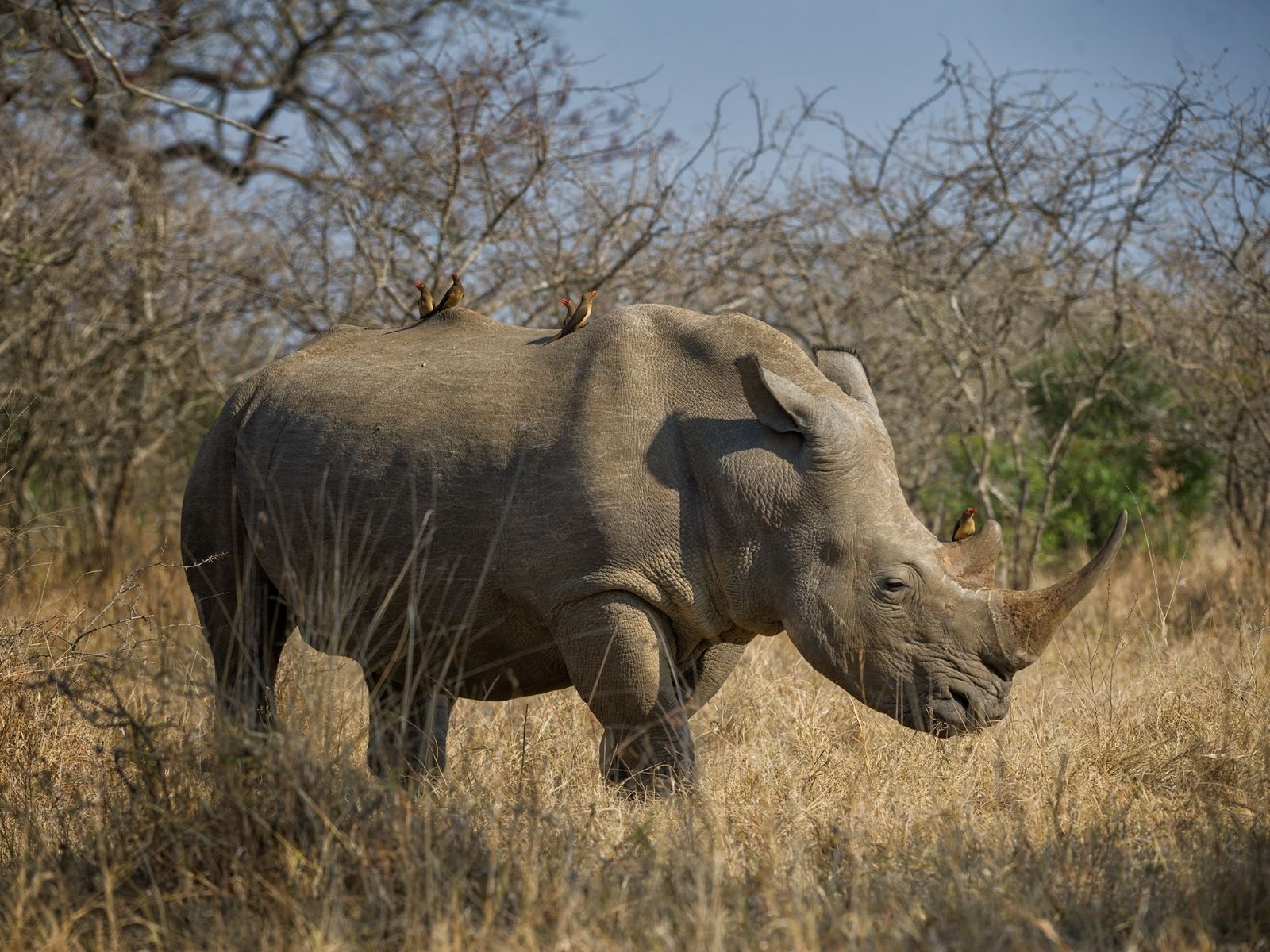
White Rhino
Ceratotherium simum

2025 Red list status
South Africa
Near Threatened

2025 Red list status
Critically Endangered

Regional Population Trend
Unknown
Change compared
to 2016
No Change
Overview
Ceratotherium simum – (Burchell, 1817)
ANIMALIA – CHORDATA – MAMMALIA – PERISSODACTYLA – RHINOCEROTIDAE – Ceratotherium – simum
Common Names: White Rhino, White Rhinoceros, Square-lipped Rhinoceros (English), Witrenoster (Afrikaans), Umkhombo Omhlophe (Ndebele), T’shukudu, Mogohu (Sepedi), Tshukudu, Mogohu, Tshukudi e Molomo o Sephara (Sesotho), Kgêtlwa, Tshukudu, Mogôhu (Setswana), Chipembere (Shona), Umkhombe (Swati, Xhosa), Tshugulu (Tshivenda), Mhelembe (Xitsonga), Ubhejane Omhlophe (Zulu
Synonyms: Rhinoceros simus Burchell, 1817
Taxonomic Note: Recent research on white rhino taxonomy has reignited debates about whether the Northern White Rhino (Ceratotherium simum cottoni) and Southern White Rhino (Ceratotherium simum simum) should be classified as distinct species or subspecies. Some researchers advocate for treating them as separate species due to significant genetic and evolutionary divergence (Groves et al. 2010). However, other studies, using comprehensive genetic data, support the classification of the two groups as subspecies (Harley et al. 2016; Moodley et al. 2018). Harley et al. (2016) compared the mitochondrial genomes of Northern and Southern White Rhinos and found that the groups diverged between 0.5 and 1 million years ago, with a likely split closer to 200,000 years ago. The study also revealed identical 10-base pair DNA repeats in both groups, which are typically unstable. This finding supports their classification as subspecies. Furthermore, Harley noted that the genetic divergence between Northern and Southern White Rhinos (0.9%) is comparable to the genetic variation within modern humans (0.7%), reinforcing the argument for subspecies classification. Harley criticised “species inflation,” where over-reliance on phylogenetic methods can lead to an exaggerated number of species, as seen in other taxa like Mountain zebras.
Moodley et al. (2018) expanded on this analysis by incorporating nuclear and mitochondrial DNA from both recent and historical specimens, estimating a divergence time of approximately 0.97 million years, with a confidence range of ±0.5 million years. Their findings revealed distinct genetic groupings corresponding to Northern and Southern populations but also provided evidence of gene flow during a period of secondary contact. This interaction likely occurred during the last glacial maximum (14,000–26,000 years ago), when expanding grasslands facilitated interbreeding between the groups. This approach informed the classification maintained by the IUCN SSC African Rhino Specialist Group, which continues to recognise the two groups as subspecies.
These findings have significant conservation implications. If Northern and Southern White Rhinos are treated as separate species, conservation strategies must prioritize maintaining the genetic integrity of each group. However, the subspecies classification enables conservationists to explore strategies such as interbreeding to preserve Northern White Rhino genes if deemed a priority (Harley et al. 2016; Moodley et al. 2018). Advanced techniques, such as mitochondrial genome sequencing, microsatellite variability analysis, and assisted reproductive technologies (ART), however, can help top retain subspecies variation (Tunstall et al. 2018; Biasetti et al. 2022).
The taxonomic debate surrounding Northern and Southern White Rhinos underscores the need for careful evaluation of genetic, ecological, and evolutionary data. Classifying them as subspecies provides a flexible framework for conservation efforts, enabling strategies that balance genetic preservation with practical considerations for species recovery
Red List Status:
Regional status: NT – Near Threatened A4ad (IUCN version 3.1)
South Africa: NT – Near Threatened A4ad (IUCN version 3.1)
Eswatini: CE – Critically Endangered D1 (IUCN version 3.1)
Assessment Information
Assessor: Ferreira, S.M.1
Reviewers: Balfour, D.2, & Selier, S.A.J.3
Institutions: 1SANParks,2IUCN SSC African Rhino Specialist Group,3South African National Biodiversity Institute
Previous Assessors & Reviewers: Emslie, R. & Adcock, K.
Assessment Rationale
White rhinos remain Near Threatened even though there is persistent poaching, illegal horn trade, and organised crime driven by demand in Southeast Asia. By 2021, Africa’s white rhino population was 15,942, declining by 3.1% annually. In South Africa, poaching and habitat loss caused notable reductions, though private ownership accounted for 53.2% of the population. Between 2018 and 2020, illegal horn trade declined (575–923 horns annually), reflecting stronger enforcement, though the COVID-19 pandemic disrupted trends. Africa recorded 2,707 rhino killings from 2018 to 2021, primarily in South Africa. Continental poaching rates fell from 3.9% to 2.3% (Ferreira et al. 2022).
Since 2021, South Africa’s Southern White Rhino numbers have grown. By the end of 2023, the population reached at least 14,074, up from 12,968 in 2021—an annual increase of 4.1% (Ferreira et al. 2025). While Kruger National Park’s decline slowed (Ferreira et al. 2024), growth in populations managed by private landowners and provincial authorities offset earlier losses, including in Hluhluwe-Imfolozi Park (Rhino Management Group, Unpublished data, Dave Balfour, environ1@mweb.co.za).
Over the past three generations, white rhino populations have not declined by more than 50%, and future projections do not suggest such a decline. The species’ extent of occurrence (350,000–400,000 km²) and area of occupancy (30,000–40,000 km²) far exceed the thresholds under criteria B1 and B2. The population is neither small nor highly restricted, ruling out criteria D1 and D2.
Rhino poaching peaked in 2015, causing population declines, but growth since 2020 has not pushed mature individuals above 10,000. Despite falling below this threshold, the species does not meet criteria C1 or C2, as there is no evidence of future decline.
While no formal extinction risk evaluation over the next 100 years was conducted, forecasts suggest that poaching rates above 3.5% lead to population decline (Ferreira et al. 2022). Projections for Kruger National Park indicate growth if poaching levels seen during COVID-19 persist (Ferreira and Dziba 2023). Data from 2024 show poaching continued to decline in the park (SANParks, Unpublished data, Sam Ferreira, sam.ferreira@sanparks.org), though trends vary across other protected areas. Thus, Southern White Rhinos are unlikely to meet the criteria under category E.
Although the species does not meet the thresholds for Critically Endangered, Endangered, or Vulnerable categories, it remains Near Threatened on South Africa’s Red List because ongoing conservation interventions are necessary to prevent increased risk (e.g., Ferreira and Dziba 2023).
While Southern White Rhino populations increased overall in the past three generations (Ferreira et al. 2022), the Eswatini subpopulation remains critically small, fluctuating between 91 and 98 individuals since 2020, with fewer than 50 mature rhinos in isolated groups. This qualifies Eswatini’s population as Critically Endangered under criterion D1.
Given Eswatini’s limited contribution to the regional total, the regional assessment aligns with South Africa’s assessment.
Reasons for Change
Reason(s) for Change in Red List Category from the Previous Assessment: The regional listing did not change, but we have added listings for Eswatini and South Africa.
Red List Index
Red List Index: No change
Recommended citation: Ferreira SM. 2025. A conservation assessment of Ceratotherium simum. In Patel T, Smith C, Roxburgh L, da Silva JM & Raimondo D, editors. The Red List of Mammals of South Africa, Eswatini and Lesotho. South African National Biodiversity Institute and Endangered Wildlife Trust, South Africa.
Regional Distribution and occurrence
Geographic Range
Two subspecies of white rhino are recognised today: the Northern White Rhino (NWR) and the Southern White Rhino (SWR). In recent times, their ranges have been very separate. However, fossils suggest that white rhinos once lived in a continuous area. Genetic evidence also shows that the two subspecies may have come into contact again after splitting apart. This likely happened during the last interglacial period, 14,000 to 26,000 years ago, when savanna grasslands expanded (Moodley et al. 2018).
The Northern White Rhino once lived in parts of northwestern Uganda, southern Chad, southwestern South Sudan, eastern Central African Republic, and northeastern Democratic Republic of the Congo (Sydney 1965). The last confirmed population in Garamba National Park, northeastern Democratic Republic of the Congo, is now thought to be extinct. Despite extensive ground surveys, foot patrols, and aerial searches, no live rhinos have been seen since 2006, and no fresh signs have been found since 2007.
There have been unconfirmed reports of rhinos in southern Sudan, but these have not been verified. Due to increased poaching in the area, it is unlikely that any rhinos remain. The last four breeding Northern White Rhinos in captivity were moved from Dvůr Králové Zoo in the Czech Republic to a private conservancy in Kenya in hopes of stimulating reproduction. Although mating occurred, no calves were born. After the two males died, only two females remain, and they are unable to breed.
The Southern White Rhino was on the brink of extinction by the end of the 19th century (c. 1895) having been reduced to just one small population of approximately 20–50 animals in KwaZulu-Natal, after settlers had over-hunted them for sport and to clear land for agriculture throughout almost all of their historical range (Emslie et al. 2009). However, by the end of 2015, after years of protection and many translocations (Emslie and Brooks 1999), the subspecies had grown to ~20,000 animals in the wild and semi-wild (Emslie et al. 2019) in over 400 subpopulations. The Southern White Rhino is now the most numerous of the rhino taxa, with South Africa remaining the stronghold for this sub-species despite increased poaching.
Small, reintroduced populations of Southern White Rhino now exist within their historical range in Namibia, Botswana, Zimbabwe, and Eswatini (formerly Swaziland). In Mozambique, the native population was poached to extinction, but some rhinos have crossed into Mozambique from South Africa’s Kruger National Park. While these rhinos once had a short survival time in Mozambique, improved protection has allowed some to persist.
Southern White Rhino populations have also been introduced outside their historical range to Kenya, Uganda, and Zambia (Emslie and Brooks 1999; Emslie et al. 2007). Uganda, once home to Northern White Rhinos, has seen reintroductions of Southern White Rhinos. Research by Moodley et al. (2018) suggests that some form of white rhino may have lived in Zambia and Kenya in the glacial past.
A few rhinos introduced outside their historical range still survive in two other African countries. While Kenya has not been a white rhino range state in the past 200 years, fossil evidence and cave paintings suggest that white rhinos, likely similar to the northern subspecies (Ceratotherium simum cottoni), lived in East Africa until about 3,000 years ago (M. Leakey pers. comm.; Brett 1993). These animals were likely displaced by early pastoralists who hunted them easily. Subfossils found in Kenya’s Rift Valley (Lake Nakuru area) confirm their presence. Even so, the Southern White Rhinos introduced into Kenya is outside the contemporary range of white rhinos. The recent report of a white rhino hunting trophy from Kenya in an Austrian museum requires further investigation.
The Southern White Rhino is primarily distributed across protected areas and private reserves in South Africa. The species thrives in savannah grasslands and bushveld ecosystems, predominantly in KwaZulu-Natal, Mpumalanga, Limpopo, and parts of the Eastern Cape (Emslie, 2020). The Kruger National Park and Hluhluwe-iMfolozi Park are critical habitats, harbouring some of the largest populations (Ferreira et al. 2015). Additionally, privately managed game reserves have contributed significantly to expanding their geographic distribution within the country (Clements et al. 2022). The species is frequently relocated to maintain genetic diversity and establish new populations across regions (Dalton et al. 2018).
Although primarily found in South Africa, efforts to extend their range involve translocations to neighbouring countries. Conservation programs focus on securing habitats and mitigating poaching threats to ensure their continued survival (Groves et al. 2010). Despite these efforts, habitat fragmentation remains a concern, restricting natural migrations and genetic flow across populations (Russo et al. 2020).
The Southern White Rhino in Eswatini, formerly Swaziland, is primarily found within two key conservation areas: Hlane Royal National Park and Mkhaya Game Reserve. These reserves are essential for maintaining Eswatini’s white rhino populations, with efforts focused on providing secure habitats and mitigating poaching threats (Emslie, 2020). Although these populations are small compared to South Africa, they represent a critical component of regional biodiversity (Penny, 2019). Conservation strategies in Eswatini involve fencing and intensive monitoring to reduce poaching and ensure population stability (Moorman et al. 2024).
Translocations of rhinos to Eswatini have also contributed to restoring their presence within the country’s ecosystems, which are characterized by a mix of savanna and bushveld habitats suitable for their grazing needs (Simelane, 2018). Despite these efforts, challenges such as habitat fragmentation and poaching remain pressing issues for conservationists (Sas-Rolfes et al. 2022).
Elevation / Depth / Depth Zones
Elevation Lower Limit (in metres above sea level): Sea level
Elevation Upper Limit (in metres above sea level): Approximately 2,000 metres above sea level
Depth Lower Limit (in metres below sea level): Not applicable
Depth Upper Limit (in metres below sea level): Not applicable
Depth Zone: Not applicable
Biogeographic Realms
Biogeographic Realm: Afrotropical
Occurrence
Countries of Occurrence
| Country | Presence | Origin | Formerly Bred | Seasonality |
| Botswana | Extant | Reintroduced | – | Resident |
| Central African Republic | Extinct Post-1500 | Native | – | – |
| Chad | Extinct Post-1500 | Native | – | – |
| Congo, The Democratic Republic of the |
Extant
Extinct |
Assisted colonization for out-of-range sub-species Native sub-species |
– |
Resident
– |
| Côte d’Ivoire | Extant | Assisted Colonisation | – | – |
| Eswatini | Extant | Reintroduced | – | Resident |
| Kenya | Extant | Assisted Colonisation | – | Resident |
| Mozambique | Extant | Reintroduced | – | – |
| Namibia | Extant | Reintroduced | – | Resident |
| Senegal | Extant | Assisted Colonisation | – | – |
| South Africa | Extant | Native | – | Resident |
| South Sudan | Possibly Extinct | Native | – | – |
| Sudan | Extinct Post-1500 | Native | – | – |
| Uganda | Extant | Reintroduced | – | Resident |
| Zambia | Extant | Assisted Colonisation | – | Resident |
| Zimbabwe | Extant | Reintroduced | – | Resident |
Large Marine Ecosystems (LME) Occurrence
Large Marine Ecosystems: Not applicable
FAO Area Occurrence
FAO Marine Areas: Not applicable
Climate change
Modelled and projected climate forecasts for southern Africa predict an increase in the frequency and intensity of extreme climate events, such as droughts, floods, and extreme temperatures (Engelbrecht et al. 2015; Clarke et al. 2022). Droughts in Kruger National Park have provided valuable insight into the resilience and vulnerabilities of white rhinos to climate variability. During periods of severe drought, white rhino populations experienced increased mortality and reduced birth rates. However, these populations demonstrated a capacity to recover once conditions improved, with a notable increase in recruitment rates following the drought’s end (Ferreira & le Roex 2021). This resilience suggests that, under natural circumstances, white rhinos can withstand episodic climate stress, though the increasing frequency and intensity of droughts predicted under future climate change scenarios may overwhelm this adaptive capacity.
Future climate models for southern Africa project not only increased temperatures but also greater rainfall variability and prolonged droughts, which could significantly affect white rhino populations in Kruger and other savanna ecosystems (Mamba & Randhir, 2024). These climatic shifts can alter grass availability, the primary forage for white rhinos, by reducing grass cover in dry periods and promoting less palatable, drought-tolerant species when rainfall returns. The re-distribution and decline of key grasses, coupled with increased competition from other grazers, may force rhinos to move greater distances to meet their dietary needs, leading to increased energy expenditure and reduced reproductive success (Ferreira et al. 2019).
Research suggests that water availability also plays a critical role in white rhino distribution and survival during droughts. The closure of artificial waterholes in Kruger resulted in shifts in rhino movements, as they sought to remain within proximity to remaining water sources while trying to access high-quality grazing areas (Mauguiere, 2022). This trade-off can heighten nutritional stress and expose rhinos to increased predation risk, particularly for calves, whose survival rates decline sharply when food and water are scarce (Ndlovu et al. 2023).
Furthermore, as water-dependent species, rhinos may face crowding at remaining water sources during droughts, raising the likelihood of disease transmission and interspecies conflict.
Forecasting models project that climate change could lead to a 20% decline in Southern White Rhino populations by 2036, driven by both direct effects on survival and indirect effects on resource availability (Mamba & Randhir, 2024). Beyond mortality, prolonged droughts can delay conception and extend inter-birth intervals, further slowing population recovery (Ferreira & Dziba 2023). As climate change redistributes grasses and water, the spatial overlap between rhinos and human settlements could increase, escalating human disturbances on rhinos.
Mechanistically, climate-driven shifts in resource availability can undermine the traditional advantage of white rhinos as bulk grazers, particularly if grasses become patchier and interspersed with woody vegetation due to elevated CO2 levels favouring shrub encroachment. Such vegetation changes may reduce the potential of habitats for grazers, compelling rhinos to migrate to less optimal habitats with lower food quality and higher predation risks (Kupika et al. 2017). This process can create a feedback loop in which declining nutrition further weakens reproductive output and calf survival, compounding population decline under future climate stress.
While white rhinos have demonstrated resilience to past droughts, future climate change is likely to exacerbate resource limitations and habitat fragmentation, posing significant challenges to their long-term persistence in South Africa and beyond. Understanding how climate variability redistributes key resources like grasses and water is crucial for developing adaptive management strategies to mitigate these threats.
Population information
Southern White Rhinos have experienced fluctuating population trends over the past three decades, shaped by both conservation successes and persistent poaching pressures. In the early 2000s, their continental population peaked at approximately 20,000, largely due to intensive management within protected areas and private reserves, primarily in South Africa (Emslie, 2020). However, from 2007 onwards, escalating poaching led to population declines in key areas, notably Kruger National Park (Ferreira et al. 2015).
The Southern White Rhino was once nearly extinct in the late 19th century, with only 20 to 50 individuals surviving in KwaZulu-Natal. Due to sustained conservation efforts, their numbers increased to an estimated 21,316 by 2012. However, intensified poaching led to a 15% decline, reducing the population to around 18,064 by 2017 (90% confidence range: 17,212–18,915) (Emslie et al. 2019).
The species is native to southern Africa, with its range spanning South Africa, Namibia, Zimbabwe, and Eswatini. Reintroduced populations, typically sourced from South Africa, are also found in former range states such as Namibia, Botswana, Eswatini, and Zimbabwe, as well as in non-historical regions like Kenya, Zambia, and Uganda. Fossil evidence suggests that Kenya and Zambia may have once been part of the species’ historical range.
White rhinos currently exist in approximately 400 subpopulations, mainly within protected reserves and game ranches (Emslie et al. 2009). These subpopulations vary significantly in size; some key reserves host thousands of individuals, while smaller properties support only a few dozen (Ferreira et al. 2022). In South Africa, rhinos are widely distributed across national parks, private reserves, and game ranches, with notable concentrations in Limpopo, Mpumalanga, KwaZulu-Natal, and the Eastern Cape. Kruger National Park, Hluhluwe-iMfolozi Park, and Pilanesberg National Park are among the reserves with the largest populations. Significantly, 53% of South Africa’s white rhinos are now found on private and other non-state-managed lands (Ferreira et al. 2022).
South Africa remains the stronghold for the species, supporting over 85% of the continental population notwithstanding the poaching. Illegal killing since 2007 reduced the South African population to 12,968 in 2021 (Ferreira et al. 2022). Despite these declines, private game reserves have played a critical role in maintaining numbers. From 2017 to 2018, private ownership increased by 6.9% (Sas-Rolfes et al. 2022). Translocations to establish new populations and enhance genetic diversity continue to be vital conservation strategies (Dalton et al. 2018).
By 2023, South Africa’s population had rebounded to 14,074 individuals, reflecting the benefits of increased protection. However, poaching persists, with 499 rhinos killed in 2023, up from 438 in 2022. Poaching pressure has shifted from Kruger National Park to KwaZulu-Natal, prompting extensive dehorning initiatives to deter illegal hunting. Nonetheless, escalating security costs and reduced financial incentives for private reserves threaten the long-term viability of these conservation efforts (Ferreira et al. 2025).
Poaching and drought since 2007 have severely affected Kruger National Park, home to one of the largest white rhino populations. Although poaching levels have decreased, the population continues to decline, with some carcasses likely going undetected in the vast landscape (Ferreira et al. 2018). However, declines in Kruger have been partially offset by population growth on private lands and in other range states.
South Africa has been a global leader in Southern White Rhino conservation, using strategies such as live animal sales, ecotourism, and limited sport hunting to promote population growth and habitat expansion on private land. However, the rising costs of anti-poaching measures, falling live rhino prices, and declining conservation budgets could undermine future conservation gains (Emslie et al. 2019).
In Eswatini, focused conservation efforts have maintained a small but stable population, primarily in Hlane Royal National Park and Mkhaya Game Reserve (Emslie, 2020). These reserves form the core range in the country, with strong protection minimising poaching (Moorman et al. 2024). By 2023, Eswatini recorded 91 individuals, reflecting continued stability. Unlike South Africa, poaching incidents have been minimal, but the small population size necessitates ongoing conservation vigilance.
Population Information
Continuing decline in mature individuals? (Not specified)
Extreme fluctuations. inthe number of subpopulations: No
Continuing decline in number of subpopulations: No
All individuals in one subpopulation: No
Number of mature individuals in largest subpopulation: South Africa 1750, Eswatini 40-50
Number of subpopulations: South Africa :~2, Eswatini: 2
Quantitative Analysis
Probability of extinction in the wild within 3 generations or 10 years, whichever is longer, maximum 100 years: Not evaluated.
Probability of extinction in the wild within 5 generations or 20 years, whichever is longer, maximum 100 years: Not evaluated.
Probability of extinction in the wild within 100 years: Not evaluated
Population genetics
The genetics of white rhinos (Ceratotherium simum) have been studied to understand the species’ population history, subspecies differentiation, and the effects of human activities on genetic diversity. Genetic evidence has confirmed that the Northern White Rhino (Ceratotherium simum cottoni) and the Southern White Rhino (Ceratotherium simum simum) are distinct evolutionarily significant units (ESUs). Early mitochondrial DNA and protein studies first revealed genetic differences between the two subspecies, which later research confirmed and refined (George et al. 1993).
The Southern White Rhino, though more numerous than the northern, has also experienced genetic challenges. Genome-wide studies have shown that both subspecies suffered genetic erosion due to population crashes during the twentieth century (Sánchez‐Barreiro et al. 2021). This erosion resulted in the loss of genetic diversity, reducing the evolutionary potential of both groups. Despite their recovery, Southern White Rhinos continue to face risks associated with low genetic variation.
Modern genomic studies have provided further insights into white rhino genetics. Research revealed evidence of past gene flow between black and white rhinos, indicating that hybridization played a role in their evolutionary history (Moodley et al. 2020). This gene flow may have introduced genetic variation, but it is unlikely to offset the more recent effects of population decline. Genetic drift, inbreeding, and small population sizes are now the dominant genetic pressures affecting white rhinos. In particular, Moodley et al. (2018), through a comprehensive assessment across its range, showed that southern white rhinos all fall within a single genetic cluster. Moreover, the current effective population size (Ne) was found to be less than 100 individuals (median value between 50-83). Hence, despite a census size > 14,000, Ne shows significant genetic erosion due to a small founding population.
Research in managed white rhino populations in South Africa has revealed that genetic diversity is often lower in smaller, fenced reserves. Parentage analysis in one free ranging but managed population found that related individuals frequently bred with each other, increasing the risk of inbreeding depression (Guerier et al. 2012). Similar risks exist across other small reserves, where isolated populations are vulnerable to genetic drift and inbreeding. A study on single-nucleotide polymorphisms (SNPs) further highlighted the potential for using genetic tools to monitor parentage and manage breeding programs (Labuschagne et al. 2017).
The long-term consequences of inbreeding and genetic drift in white rhinos are not fully understood. However, inbreeding can lead to lower fertility, reduced calf survival, and increased susceptibility to disease. A study on mate choice and reproductive success found that white rhinos do not consistently avoid breeding with relatives, which can increase the likelihood of inbreeding in small populations (Kretzschmar et al. 2020). If genetic diversity continues to decline, the species’ ability to adapt to environmental changes or disease outbreaks may be reduced.
The Northern White Rhino provides a case study of the dangers of small population sizes. The remaining individuals have been subject to high levels of inbreeding and genetic load, which is the accumulation of harmful mutations (Wilder et al. 2024). These genetic issues pose a challenge for efforts to restore the Northern White Rhino population using assisted reproduction technologies. Although southern white rhinos are not yet as genetically compromised, their population history suggests that similar concerns could arise if population sizes decrease or if isolated groups persist without genetic exchange (Moodley et al. 2018).
The future management of white rhinos will require genetic monitoring to prevent further erosion of genetic diversity. Translocations between reserves may reduce inbreeding and maintain population health. Genetic screening should play a role in breeding programs to avoid pairing related individuals. As conservationists attempt to rebuild wild populations, maintaining genetic diversity will be essential for the species’ survival.
Habitats and ecology
The Southern White Rhino thrives in savanna grasslands and open woodlands, favouring areas with a mix of short grasses for grazing and water sources for drinking and wallowing. They are grazers, primarily feeding on low-growing grasses, which makes them dependent on nutrient-rich soil and vegetation (Emslie, 2020). Access to water is critical for thermoregulation, wallowing, and maintaining hydration (Owen-Smith, 2020). They prefer habitats with moderate tree cover, which provides shade but does not obstruct grazing areas (Ferreira et al. 2015).
South Africa offers an abundance of suitable habitat for Southern White Rhinos, particularly in Limpopo, Mpumalanga, KwaZulu-Natal, and the Eastern Cape, where protected areas like Kruger National Park and Hluhluwe-iMfolozi Park are located. These regions provide extensive grasslands, seasonal water availability, and managed grazing areas within reserves. Private game reserves also play a significant role in habitat preservation by maintaining and restoring savanna ecosystems (Sas-Rolfes et al. 2022).
In Eswatini, white rhinos are primarily found in Hlane Royal National Park and Mkhaya Game Reserve, where grasslands and bushveld are carefully managed for conservation. These fenced reserves provide the essential resources needed for rhinos, including grass-rich diets and artificial water points to supplement natural sources during dry periods (Moorman et al. 2024). Despite limited space compared to South Africa, the quality of habitat and intensive management have supported stable populations.
IUCN Habitats Classification Scheme
| Habitat | Season | Suitability | Major Importance? |
| 2.1. Savanna -> Savanna – Dry | – | Suitable | Yes |
| 3.5. Shrubland -> Shrubland – Subtropical/Tropical Dry | – | Suitable | Yes |
| 4.5. Grassland -> Grassland – Subtropical/Tropical Dry | – | Suitable | Yes |
Life History
Generation length: 14.69
Age at Maturity: Female or unspecified: Sexual maturity at 6-7 years
Age at Maturity: Male: Sexual maturity at 10-12 years
Size at Maturity (in cms): Female: 160-180 cm at the shoulder, 1,400-1,700 kgs body weight
Size at Maturity (in cms): Male: 180-200 cm at the shoulder, 2,000-2,300 kgs body weight
Longevity: 40-45 years in the wild
Average Reproductive Age: Females range from 8 to 30 years, males from 12 to 30 years
Maximum Size (in cms): 200 cm at the shoulder, up to 2,500 kgs
Size at Birth (in cms): 60-70cm at the shoulder, 40-65 kgs
Gestation Time: 16-18 months, 480-550 days
Reproductive Periodicity: Calving interval of 2.5 to 3 years.
Average Annual Fecundity or Litter Size: 1 calf
Natural Mortality: Calves <1 year old – 10-25%; Juveniles 1-5 years old: 5-10%; Adults; 2-5% per year
Breeding Strategy
Does the species lay eggs? No
Does the species give birth to live young? Yes
Does the species exhibit parthenogenesis? No
Does the species have a free-living larval stage? No
Does the species require water for breeding? No
Movement Patterns
Movement Patterns: Southern White Rhinos are territorial grazers, moving within well-defined home ranges of 1–20 km², influenced by water and grazing availability (Owen-Smith, 2020). In South Africa and Eswatini, fenced reserves like Kruger National Park and Hlane Royal Park restrict broader natural migrations (Ferreira et al. 2015; Emslie, 2020).
Congregatory: Southern White Rhinos are semi-social, often forming groups of 2–5 individuals, typically females with calves or subadults. Males are more solitary but may aggregate at waterholes or grazing areas. In South Africa and Eswatini, fenced reserves like Kruger and Hlane support such interactions (Owen-Smith, 2020; Emslie, 2020).
Systems
System: Terrestrial
General Use and Trade Information
It has been estimated that around 95% of horn sourced in Africa for illegal markets in Asia in 2016 and 2017 came from poached animals in the wild (Emslie et al. 2019). In some cases, horn for illegal markets has been stolen or illegally sold from horn stockpiles, private trophies, or museum exhibits. “Pseudo-hunting,” where sport hunting has been undertaken by individuals from non-traditional hunting countries with the aim of illegally providing horn to illegal markets, has also been responsible for some of the illegal horn getting onto end-user markets. This practice has significantly decreased since South Africa implemented measures in 2012, reducing its contribution to only 0.7% of horn sourced for illegal markets, compared to 18% previously (Emslie et al. 2012; Emslie et al. 2019).
In legal contexts, the use and trade of Southern White Rhinos primarily revolve around conservation-driven activities. Live specimens are frequently translocated, typically from natural habitats, as part of routine biological management. These translocations are essential to prevent overstocking in established populations, maintain rapid population growth rates, and minimise genetic drift, thereby safeguarding the species’ genetic diversity over time (Ferreira et al. 2015).
Additionally, sport hunting continues to generate significant revenue for conservation efforts, with South Africa permitting the legal hunting of approximately 75 Southern White Rhinos annually. This represents less than 0.5% of the total population and is carefully regulated under international and national laws, including CITES. Eswatini, although hosting smaller populations, also engages in similar management practices to sustain its rhinos while maintaining strict anti-poaching measures (Sas-Rolfes et al. 2022).
In recent years, non-lethal practices such as dehorning have gained prominence as a conservation strategy to deter poaching. Legally harvested horns from dehorning operations, stored in secure stockpiles, are at the centre of ongoing debates about the potential for legal horn trade to support conservation funding (Emslie, 2020).
Subsistence: No
National Commercial Value: Yes
International Commercial Value: Yes
| End Use | Subsistence | National | International | Other (please specify) |
| 3. Medicine – human & veterinary | – | – | true | – |
| 12. Handicrafts, jewellery, etc. | – | – | true | – |
| 15. Sport hunting/specimen collecting | – | true | true | – |
Is there harvest from captive/cultivated sources of this species? Yes.
Harvest Trend Comments: Yes, both lethal and non-lethal harvesting practices occur for Southern White Rhinos within captive-bred populations. These practices are primarily aimed at conservation, management, and economic purposes.
Horn Harvesting: This involves dehorning rhinos to deter poaching. Horns are regrown over time, allowing repeated harvesting without harming the animal (Sas-Rolfes et al. 2022). This is common in South Africa, where private reserves often dehorn rhinos as a conservation strategy.
Live Animal Translocation: Rhinos are moved between reserves or sold to establish new populations or maintain genetic diversity in captive and semi-wild conditions (Ferreira et al. 2015).
Trophy Hunting: Regulated trophy hunting of select individuals is permitted in some countries, including South Africa, as part of sustainable use programs. Revenue generated often supports conservation efforts (Emslie & Brooks, 1999).
Culling: Rarely, individuals may be culled to manage population sizes in overstocked reserves or to prevent environmental degradation.
These practices are guided by strict national and international regulations, such as CITES, to ensure sustainable management while minimising ecological harm.
Threats
The primary threat to rhino populations remains illegal hunting (poaching) to supply the illicit rhino horn trade, which accounts for approximately 95% of horn sourced in Africa for Southeast Asian markets (Emslie et al. 2019). Rhino horn has long been used in traditional Chinese medicine, historically as a fever reducer, and for ornamental purposes. More recently, it has become a highly prized material for high-status carved items like bowls and bangles, while shavings from carvings are illegally sold to medicinal markets at lower prices (Chanyandura et al. 2021). Historically, rhino horn was also used in Yemen and the Middle East for ornately carved dagger handles (jambiyas).
Until recently, white rhino poaching did not significantly affect overall numbers, as population growth in some areas offset losses in others. However, between 2012 and 2015, continental numbers declined by approximately 15%, largely due to severe poaching in the Greater Kruger area, home to the largest subpopulation (Ferreira et al. 2015). Poaching peaked from 2007 to 2014 but reported incidents have declined annually since 2015. As of 2019, data from South Africa showed that this trend was continuing (Emslie et al. 2019). Despite this, the high costs of anti-poaching measures and increased risks to staff have strained resources. Live sale prices for rhinos have dropped, and some private reserves in South Africa have sold off their rhinos, threatening range expansion and conservation funding (Sas-Rolfes et al. 2022).
Consolidation of white rhino populations into larger, well-protected reserves has provided some resilience, but ongoing demand for rhino horn and habitat pressures require continued vigilance and investment in conservation.
Rhino poaching in South Africa has fluctuated significantly since 2016, reflecting the impact of both conservation efforts and ongoing threats. In 2016, 1,054 rhinos were poached, a decline from the peak of 1,215 in 2015 (Ferreira et al. 2025). The trend showed a gradual decrease, with 1,028 poached in 2017 and 910 in 769, but poaching remained a major concern. By 2019, 594 rhinos were lost, signalling a shift due to improved law enforcement and targeted anti-poaching strategies.
In 2020, the COVID-19 pandemic resulted in the lowest poaching rate in over a decade, with only 394 rhinos poached. Travel restrictions and increased law enforcement during lockdowns disrupted illegal wildlife trade routes, leading to a temporary reprieve (Ferreira et al. 2021). However, post-pandemic poaching resumed, with 451 rhinos poached in 2021, 438 in 2022, and 499 in 2023. Notably, KwaZulu-Natal became the new hotspot, as poachers shifted away from Kruger National Park, where dehorning and patrols had intensified (DFFE, 2024).
In contrast, Eswatini has maintained a zero poaching rate since 2016. This success is due to strict anti-poaching laws, including severe penalties for offenders, and smaller, well-protected reserves such as Hlane Royal National Park and Mkhaya Game Reserve (Ferreira et al. 2025).
Poaching methods have evolved, with criminal syndicates adapting to new enforcement tactics. Corruption in wildlife protection units make enforcement challenging (Rademeyer, 2023).
While poaching remains the primary driver of rhino declines in the region, other threats have gained prominence since 2016. Protected areas are increasingly isolated. Private reserves and fenced sanctuaries are playing a critical role in maintaining genetic diversity, but long-term sustainability remains a concern (Clements et al. 2023).
Southern Africa has experienced prolonged droughts in recent years, particularly in Namibia and parts of South Africa. These conditions affect water availability and forage, reducing rhino potential in key conservation areas (e.g. Ferreira et al. 2019; Mamba & Randhir, 2024). Drought-stressed rhinos may have lower reproductive rates, further impacting population recovery.
The debate over legalising the rhino horn trade has intensified since 2016. Proponents argue that controlled trade could finance conservation and reduce poaching, while opponents warn of increased demand fuelling illegal markets (’t Sas-Rolfes & Emslie, 2024). South Africa’s controversial domestic rhino horn trade legalisation in 2017 has had mixed results, with little evidence that it reduced poaching rates (Ferreira et al. 2022).
Poaching is often driven by poverty and lack of economic alternatives for communities near rhino reserves. Conservation programs that involve local people in tourism, employment, and benefit-sharing schemes have been partially effective but require scaling up (Chanyandura, 2020). Addressing historical inequalities in land ownership and conservation management is essential for long-term rhino protection (Hübschle, 2017).
Conservation
Effective field protection of rhinos is crucial. Many rhinos now live in fenced sanctuaries, conservancies, and protected areas, where law enforcement is focused (Ferreira et al. 2022). Monitoring helps guide decisions for managing rhino populations. Rhinos are often relocated to create new populations within and beyond their former ranges. However, rising black market prices for rhino horn, increased poaching, and criminal syndicates pose serious threats.
White rhinos are managed by various stakeholders, including private and state sectors, in several countries to ensure their long-term survival. In Southern Africa, selling live rhinos at auctions and limited sport hunting of surplus males have provided funds for conservation. Nearly half of Africa’s white rhinos are now managed by the private sector, mostly in South Africa. However, declining incentives, rising costs, and increased risks have led some owners to abandon rhino conservation (Ferreira et al. 2022).
By 1977, all African rhino species were listed on CITES Appendix I, banning international trade. In 1994, South Africa’s Southern white rhino was downlisted to Appendix II for live animal trade to approved destinations and trophy exports. Their numbers have since tripled. Eswatini’s Southern white rhino was similarly downlisted in 2004 for live exports and limited trophy hunting under quotas. To reduce illegal trade, many consumer countries strengthened laws and increased enforcement, with demand-reduction efforts ongoing in countries like Vietnam.
Regional and international efforts support rhino conservation, including the South African Development Community (SADC) Rhino Management Group, the East African Rhino Management Group, and the Southern African Rhino and Elephant Security Group. The IUCN SSC African Rhino Specialist Group coordinates rhino conservation at the continental level and oversees the African Rhino Range States Conservation Plan.
The South African government has revised its Biodiversity Management Plan (BMP) for rhinos to ensure their long-term survival (DFFE, 2024). This plan spans from 2024 to 2034 and integrates conservation strategies, anti-poaching measures, legal frameworks, and socio-economic considerations. It consolidates previous separate BMPs for black (2013) and white (2015) rhinos into a single coordinated strategy.
The plan aims to secure national rhino populations while balancing conservation, sustainable use, and community involvement. Its primary objectives include: (1) Biological Management – Ensuring genetic diversity, population growth, and habitat sustainability; (2) Security and Law Enforcement – Strengthening anti-poaching measures and wildlife trafficking enforcement; (3) Community Empowerment – Increasing local community participation in conservation efforts and economic benefits; (4) Demand Management – Controlling illegal and legal trade to prevent the exploitation of rhinos; and (5) Legislative Framework – Enhancing legal protections and policies for sustainable rhino conservation.
Additionally, the plan introduces three enabling objectives: (1) Sustainable Financing: Securing long-term funding through biodiversity-based economic models; (2) Effective Communication: Enhancing public awareness and government-private sector collaboration; and (3) Technology and Innovation: Utilising advanced tracking, monitoring, and security systems.
The BMP aligns with international conservation agreements such as CITES (Convention on International Trade in Endangered Species) and the Convention on Biological Diversity (CBD), as well as the National Environmental Management: Biodiversity Act (NEMBA). Key interventions include: (1) Strengthening the National Rhino Coordination Committee to oversee conservation efforts; (2) Enhancing security efforts through the National Integrated Strategy to Combat Wildlife Trafficking (NISCWT); (3) Rewilding programs to release captive-bred rhinos into natural habitats; (4) Developing a metapopulation approach to manage rhino and distribution across conservation areas.
The South African BMP underscores a whole-of-society approach, integrating government, private owners, local communities, and conservation groups. By enhancing security, increasing economic incentives for rhino conservation, and implementing data-driven management, South Africa aims to reverse poaching trends and ensure rhino population resilience.
Eswatini’s National Rhino Conservation Strategy aims to protect and expand the populations of Black (Diceros bicornis minor) and White Rhinoceroses (Ceratotherium simum simum) within the country (Big Game Parks 2010). The strategy emphasises strict anti-poaching measures, sustainable management, and economic incentives to encourage conservation efforts.
The conservation strategy outlines several primary goals: (1) Achieving Key Rhino Populations – Establish at least one KEY 1 population (100+ individuals) for both black and white rhinos; (2) Ensuring Strict Security Measures – Maintain Eswatini’s zero-tolerance policy on poaching and implement high-level security measures; (3) Expanding Suitable Habitats – Identify and approve safe, ecologically viable lands for rhino populations; (4) Encouraging Sustainable Use – Promote private ownership, ecotourism, and limited hunting under international best practices; (5) Strengthening Legal Protections – Maintain harsh penalties for poaching, including mandatory minimum sentences of 5–7 years; and (6) Enhancing Monitoring & Biological Management – Implement regular tracking, genetic management, and controlled relocations.
Bibliography
t’ Sas-Rolfes, M., Adcock, K., & Knight, M. (2022). Legal hunting for conservation of highly threatened species: The case of African rhinos. OSF Preprints. Available at: https://files.osf.io/v1/resources/q79pc/providers/osfstorage/614b990dca8dda000c043d14?action=download&direct&version=1.
’t Sas-Rolfes, M. & Emslie, R. (2024) ‘African rhino conservation and the interacting influences of property, prices, and policy’, Ecological Economics, 220, pp. 108-123.
Biasetti, P., Hildebrandt, T. B., & Göritz, F. (2022). Ethical analysis of assisted reproduction technologies in white rhinoceros conservation. Frontiers in Veterinary Science. DOI:10.3389/fvets.2022.831675
Big Game Parks, Eswatini (2010). Swaziland National Rhino Conservation Strategy. Mbabane: Big Game Parks, under the authority of the King’s Office.
Brett, R.A. 1993. Conservation Strategy and Management Plan for the Black Rhinoceros (Diceros bicornis) in Kenya. Kenya Wildlife Service.
Chanyandura, A. (2020) ‘Local community participation in rhino conservation – Key to conservation success’, Research in Ecology, 2(3), pp. 10-12.
Chanyandura, A., Muposhi, V. K., & Gandiwa, E. (2021). An analysis of threats, strategies, and opportunities for African rhinoceros conservation. Ecology and Evolution. Available at: https://onlinelibrary.wiley.com/doi/abs/10.1002/ece3.7536.
Clarke, B., Otto, F., Stuart-Smith, R., & Harrington, L. (2022). Extreme weather impacts of climate change: An attribution perspective. Environmental Research: Climate, 1(1), 012001. Available at: https://iopscience.iop.org/article/10.1088/2752-5295/ac6e7d
Clements, H.S., Balfour, D. and Di Minin, E., 2023. Importance of private and communal lands to sustainable conservation of Africa’s rhinoceroses. Frontiers in Ecology and the Environment, 21(3), pp.140-147.
Dalton, D. L., Smith, S., Kotzé, A., et al. (2018). Contrasting evolutionary history, anthropogenic declines, and genetic contact in the northern and southern white rhinoceros (Ceratotherium simum). Proceedings of the Royal Society B. Available at: https://royalsocietypublishing.org/doi/10.1098/rspb.2018.1567.
Department of Forestry, Fisheries, and Environment (DFFE) (2024) ‘KwaZulu-Natal carried the brunt of rhino poaching in 2023, says Creecy’. Available at: https://www.dffe.gov.za/mediareleases/creecy_relasesrhinopoachingstats2024feb27.
Department of Forestry, Fisheries, and the Environment (DFFE) (2024). Biodiversity Management Plan for Black and White Rhinoceros in South Africa (2024–2034). Pretoria: Department of Forestry, Fisheries and the Environment.
Emslie, R.H., 2013. African Rhinoceroses–Latest trends in rhino numbers and poaching. Afr. Indaba e-Newsl, 51, pp.11-12.
Emslie, R. (2020). Ceratotherium simum. The IUCN Red List of Threatened Species 2020. The Rhino Resource Center. Available at: http://www.rhinoresourcecenter.com/pdf_files/158/1589193466.pdf.
Emslie, R.H., Amin, R. and Kock, R. 2009. Guidelines for the in situ re-introduction and translocation of African and Asian rhinoceros. Available at: http://www.iucn.org/dbtw-wpd/html/SSC-OP- 039/cover.html.
Emslie, R. and Brooks, M. (compilers). 1999. African Rhino: Status Survey and Action Plan. IUCN, Gland, Switzerland.
Emslie, R. H., Milledge, S., Brooks, M., Strien, N. J., van and Dublin, H. 2007. African and Asian Rhinoceroses – Status, Conservation and Trade. A report from the IUCN Species Survival Commission (SSC) African and Asian Rhino Specialist Groups and TRAFFIC to the CITES Secretariat pursuant to Decisions 13.23-25 taken at the 13th meeting of the Conference of the Parties, and further deliberations at the 53rd and 54th meetings of the Standing Committee.
Emslie, R., Milliken, T., Talukdar, B., Burgess, G., Adcock, K., Balfour, D. and Knight. M.H. 2019. African and Asian Rhinoceroses – Status, Conservation and Trade: A report from the IUCN Species Survival Commission (IUCN/SSC) African and Asian Rhino Specialist Groups and TRAFFIC to the CITES Secretariat pursuant to Resolution Conf. 9.14 (Rev. CoP17). CoP18 Doc. 83.1 Annex 2. CITES Secretariat, Geneva, Switzerland. http://www.rhinoresourcecenter.com/pdf_files/156/1560170144.pdf.
Engelbrecht, F., Adegoke, J., Bopape, M.-J., Naidoo, M., Garland, R., Thatcher, M., & McGregor, J. (2015). Projections of rapidly rising surface temperatures over Africa under low mitigation. Environmental Research Letters, 10(8), 085004. Available at: https://iopscience.iop.org/article/10.1088/1748-9326/10/8/085004
Ferreira, S.M., ‘t Sas-Rolfes, M., Dublin, H. Gaymer, J., Hofmeyr, M., Makoma K., Moodley, Y., Versteege, L. and Balfour, D. 2025. Recovery of African rhinos despite poaching. Unpublished Report, AfRSG, Gabarone, Botswana. Submitted to Oryx.
Ferreira, S.M., Crowhurst, E.T., Greaver, C. and Simms, C., 2024. Resizing Kruger National Park: Trends in numbers of rhinoceroses within priority zones. Koedoe, 66(1), pp.1-9. https://www.scielo.org.za/pdf/koedoe/v66n1/07.pdf
Ferreira, S.M. and Dziba, L., 2023. Rhinoceros accounting in Kruger National Park, South Africa. Journal for Nature Conservation, 72, p.126359. http://www.rhinoresourcecenter.com/pdf_files/168/1687256069.pdf
Ferreira SM, Ellis S, Burgess G, Baruch-Mordo S, Talukdar B, Knight MH. 2022. The African and Asian rhinoceroses – status, conservation and trade: A report from the IUCN Species Survival Commission (IUCN/SSC) African and Asian Rhino Specialist Groups and TRAFFIC to the CITES Secretariat pursuant to Resolution Conf. 9.14 (Rev. CoP15). CoP19 Doc. 75 (Rev. 1), CITES Secretariat, Geneva, Switzerland. https://cites.org/sites/default/files/documents/E-CoP19-75-R1.pdf
Ferreira, S. M., Greaver, C., Knight, M. H., et al. (2015). Disruption of rhino demography by poachers may lead to population declines in Kruger National Park, South Africa. PLOS One. Available at: https://journals.plos.org/plosone/article?id=10.1371/journal.pone.0127783.
Ferreira, S.M., Greaver, C., Nhleko, Z. and Simms, C., 2018. Realization of poaching effects on rhinoceroses in Kruger National Park, South Africa. African Journal of Wildlife Research, 48(1), pp.1-7.
Ferreira, S.M., Greaver, C., Simms, C. and Dziba, L., 2021. The impact of COVID-19 government responses on rhinoceroses in Kruger National Park. African Journal of Wildlife Research, 51(1), pp.100-110.
Ferreira, S.M., & le Roex, N. (2021). Rhino birth recovery and resilience to drought impact. African Journal of Ecology. Retrieved from http://www.rhinoresourcecenter.com/pdf_files/162/1624633805.pdf.
Ferreira, S.M., le Roex, N. and Greaver, C., 2019. Species-specific drought impacts on black and white rhinoceroses. PLoS One, 14(1), p.e0209678.
George, M., Chemnick, L.G., Cisova, D., Gabrisova, E., Stratil, A. and Ryder, O.A., 1993. Genetic differentiation of white rhinoceros subspecies: diagnostic differences in mitochondrial DNA and serum proteins. In Proceedings International conference on rhinoceros conservation and biology. Zoological Society of San Diego, pp. 105-113.
Groves, C.P., Fernando, P. and Robovský, J. 2010. The sixth Rhino: a taxonomic re-assessment of the Critically Endangered Northern White Rhinoceros. PLoS ONE 5(4): e9703. doi:10.1371/journal.pone.0009703.
Guerier, A.S., Bishop, J.M., Crawford, S.J., Schmidt-Küntzel, A. and Stratford, K.J., 2012. Parentage analysis in a managed free ranging population of southern white rhinoceros: genetic diversity, pedigrees and management. Conservation Genetics, 13, pp. 811-822.
Harley, E. H., De Waal, M., & Murray, S. (2016). Comparison of whole mitochondrial genome sequences of northern and southern white rhinoceroses. Conservation Genetics. DOI:10.1007/s10592-016-0861-2
Hübschle, A.M. (2017) ‘The social economy of rhino poaching: Of economic freedom fighters, professional hunters and marginalized local people’, Current Sociology, 65(3), pp. 427-447.
Kretzschmar, P., Auld, H., Boag, P., Gansloßer, U., Scott, C., Van Coeverden de Groot, P.J. and Courtiol, A., 2020. Mate choice, reproductive success and inbreeding in white rhinoceros: New insights for conservation management. Evolutionary Applications, 13(4), pp. 699-714.
Kupika, O.L., Gandiwa, E., & Kativu, S. (2017). Impacts of climate change and climate variability on wildlife resources in southern Africa: Experience from selected protected areas in Zimbabwe. In Selected Studies in Biodiversity. IntechOpen. Retrieved from https://www.intechopen.com/chapters/56873.
Labuschagne, C., Dalton, D.L., Grobler, J.P. and Kotzé, A., 2017. SNP discovery and characterisation in White Rhino (Ceratotherium simum) with application to parentage assignment. Genetics and Molecular Biology, 40(1), pp. 84-92.
Mamba, H.S. & Randhir, T.O. (2024) ‘Exploring temperature and precipitation changes under future climate change scenarios for black and white rhinoceros populations in Southern Africa’, Biodiversity, 25(1), pp. 52-64.
Mauguiere, J. (2022). Influence of surface water availability on the distribution of White Rhinoceros in central Greater Kruger. Swedish University of Agricultural Sciences. Retrieved from https://stud.epsilon.slu.se/18384/1/Mauguiere.j.20221006.pdf.
Moodley, Y., Russo, I.R.M., Robovský, J., Dalton, D.L., Kotzé, A., Smith, S., Stejskal, J., Ryder, O.A., Hermes, R., Walzer, C. and Bruford, M.W., 2018. Contrasting evolutionary history, anthropogenic declines and genetic contact in the northern and southern white rhinoceros (Ceratotherium simum). Proceedings of the Royal Society B, 285(1890), p. 20181567.
Moodley, Y., Russo, I. R. M., & Robovský, J. (2020). Evolutionary history and conservation genetics of white rhinos. Molecular Biology and Evolution. Available at: https://academic.oup.com/mbe/article-abstract/37/11/3105/5862640.
Moodley, Y., Westbury, M.V., Russo, I.R.M., Gopalakrishnan, S., Rakotoarivelo, A., Olsen, R.A., Prost, S., Tunstall, T., Ryder, O.A., Dalén, L. and Bruford, M.W., 2020. Interspecific gene flow and the evolution of specialization in black and white rhinoceros. Molecular Biology and Evolution, 37(11), pp. 3105-3117.
Ndlovu, L., Marshal, J.P., & van der Goot, A.C. (2023). Survival of young black and white rhinoceroses in relation to rainfall. African Journal of Wildlife Research, 53(1). Retrieved from https://bioone.org/journals/african-journal-of-wildlife-research/volume-53/issue-1/056.053.0196/Survival-of-Young-Black-and-White-Rhinoceroses-in-Relation-to/10.3957/056.053.0196.short.
Owen-Smith, R. N. (2020). Megaherbivores: The influence of very large body size on ecology. Cambridge University Press. Available at: https://www.cambridge.org/core/books/megaherbivores/915D3DD8848AC0277E1FAD7736AB0186.
Penny, S.G. (2019). The impact of dehorning on the white rhinoceros (Ceratotherium simum) and the evaluation of novel anti-poaching tactics. University of Brighton Research Repository. Available at: https://research.brighton.ac.uk/files/21323059/Penny_2019_doctoral_thesis.pdf.
Rademeyer, J. (2023) Landscape of Fear: Crime, Corruption, and Murder in Greater Kruger. Available at: https://enactafrica.org/research/research-papers/landscape-of-fear-crime-corruption-and-murder-in-greater-kruger.
Russo, I. R. M., Gopalakrishnan, S., et al. (2020). Interspecific gene flow and the evolution of specialization in black and white rhinoceros. Molecular Biology and Evolution. Available at: https://academic.oup.com/mbe/article-abstract/37/11/3105/5862640.
Sánchez‐Barreiro, F., Gopalakrishnan, S., Ramos‐Madrigal, J., Westbury, M.V., de Manuel, M., Margaryan, A., Ciucani, M.M., Vieira, F.G., Patramanis, Y., Kalthoff, D.C. and Timmons, Z., 2021. Historical population declines prompted significant genomic erosion in the northern and southern white rhinoceros (Ceratotherium simum). Molecular Ecology, 30(23), pp. 6355-6369.
SANParks (2022). SANParks Annual Report 2021/2022. Available at: https://www.sanparks.org/about/annual/
Simelane, L. (2018). Environmental justice and development projects: A case study of a landscape approach to biodiversity conservation in the Eco-Lubombo programme-Swaziland. Wiredspace Wits Repository. Available at: https://wiredspace.wits.ac.za/bitstreams/201a5983-9c11-43cf-ac53-c60e87ed8f7b/download.
Sydney, J. 1965. The past and present distribution of some African ungulates. Transactions of the Zoological Society of London 3: 1–397.
Tunstall, T., Kock, R., & Diekhans, M. (2018). Evaluating recovery potential of the northern white rhinoceros from cryopreserved somatic cells. Genome Research. DOI:10.1101/gr.237883.118
Wilder, A.P., Steiner, C.C., Hendricks, S., Haller, B.C., Kim, C., Korody, M.L. and Ryder, O.A., 2024. Genetic load and viability of a future restored northern white rhino population. Evolutionary Applications, 17(4), p. e13683.