
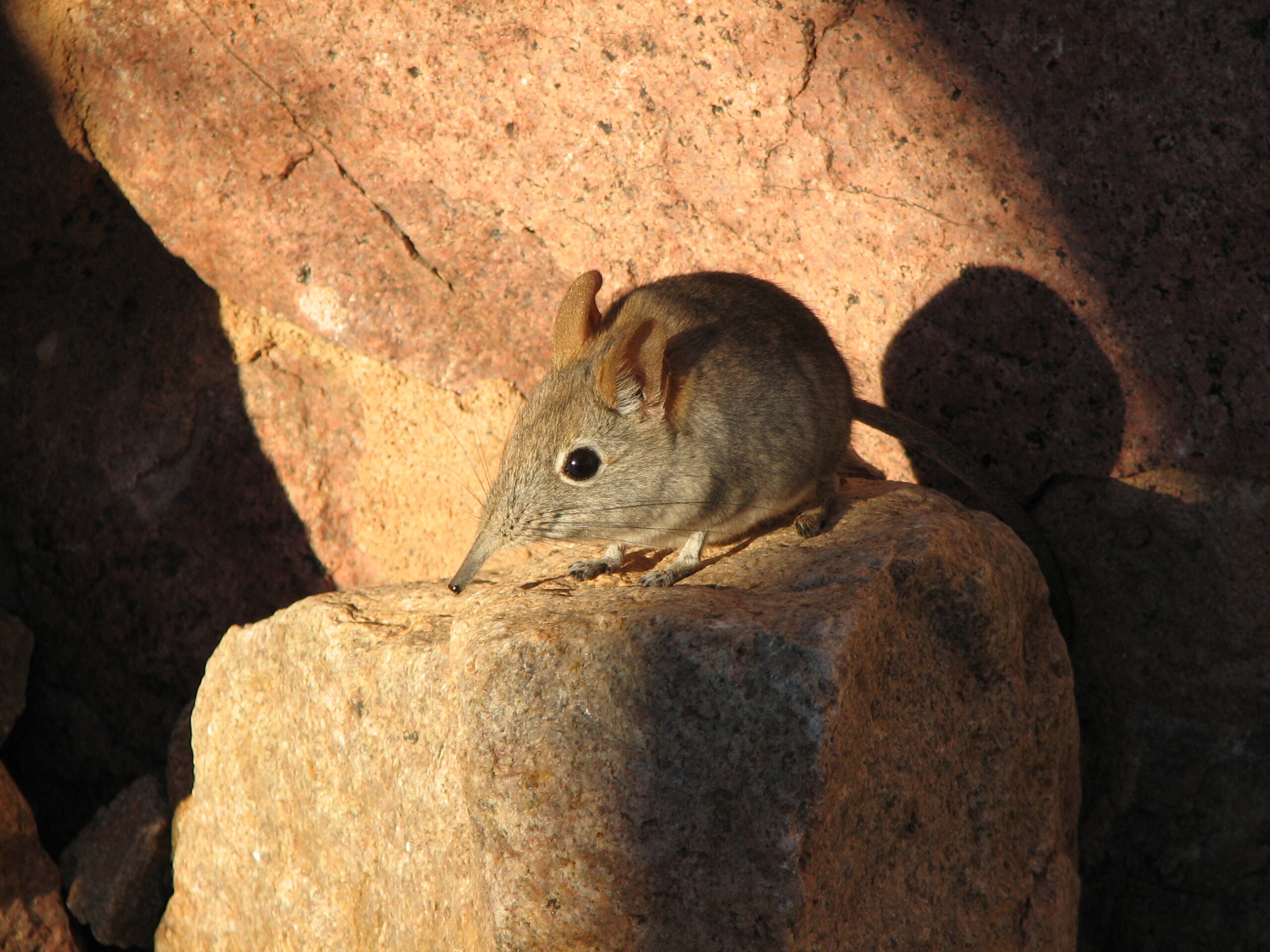
Western Rock Sengi
Elephantulus rupestris

2025 Red list status
Least Concern

Regional Population Trend
Unknown

change compared
to 2016
No Change
Overview
Elephantulus rupestris – (A. Smith, 1831)
ANIMALIA – CHORDATA – MAMMALIA – MACROSCELIDEA – MACROSCELIDIDAE – Elephantulus – rupestris
Common Names: Western Rock Sengi, Western Rock Elephant-shrew, Smith’s Rock Elephant Shrew (English), Smith se Kliklaasneus (Afrikaans)
Synonyms: Macroscelides rupestris A. Smith, 1831
For general biological information on all sengi species, consult Species accounts: Order Macroscelidea, in: Perrin, M. & Rathbun, G. B. 2013. Mammals of Africa, Volume I (Ed. by Kingdon, J., Happold, D., Hoffmann, M., Butynski, T., Happold, M. & Kalina, J.), pp. 261-278. London: Bloombury; Order Macroscelidea, in: Rathbun, G. B., (subeditor). 2005. The Mammals of the Southern African Subregion, 3rd edition (Ed. by Skinner, J. D. & Chimimba, C. T.), pp. 22-34. Cape Town, South Africa: Cambridge University Press; Species accounts, in: Rathbun, G. B. 2013. Mammals of Africa, Volume I (Ed. by Kingdon, J., Happold, D., Hoffmann, M., Butynski, T., Happold, M. & Kalina, J.), pp. 279-287. London: Bloomsbury. Order MACROSCELIDEA, in: Heritage, S. 2018. Handbook of the Mammals of the World, Volume 8. Insectivores, Sloths and Colugos (D.E. Wilson and R.A. Mittermeier, eds), Lynx Edicions, Barcelona, Spain. For current and more technical information, search the on-line bibliography at www.sengis.org.
Taxonomic Note:
In the past, the single family was included in the order Insectivora, but since 1998 the family is in the monophyletic order Macroscelidea and the superorder Afrotheria. Currently, there are 20 living species recognized in six genera. The soft-furred sengis or elephant-shrews include three genera: Petrodromus and Petrosaltator are monospecific, Macroscelides has three species, Galegeeska (previously included in Elephantulus) has two species and Elephantulus contains eight species. The five species of giant sengis belong to the genus Rhynchocyon. The common name “sengi” has been introduced to replace elephant-shrews to try and disassociate the Macroscelidea from the true shrews (family Soricidae) in the order Eulipotyphla.
See the IUCN SSC Afrotheria Specialist Group web site and www.sengis.org for additional information.
| Red List Status |
| LC – Least Concern, (IUCN version 3.1) |
Assessment Information
Assessor: Roxburgh, L.1
Reviewer: Schradin, C.2
Contributor: da Silva, J. M.3
Institutions: 1Endangered Wildlife Trust, 2Institut pluridisciplinaire Hubert Curien, 3South African National Biodiversity Institute
Previous Assessors: Rathbun, G.B. & Smit-Robinson, H.
Previous Reviewer: Taylor, A.
Previous Contributors: Page-Nicholson, S. & Child, M.F.
Assessment Rationale
Although this species is not abundant, it is widespread in suitable habitats over a wide extent of occurrence for South Africa and Namibia. Because it occupies habitats that are very arid that will not support most development without the availability of water, the major threat to the habitats occupied by the Western Rock Sengi is mining, especially in the Northern Cape. Areas close to rivers or reliable sources of water may have been developed, or may be developed in the future, as agricultural and urban areas. For example, a narrow area adjacent to and along the Orange River between Namibia and South Africa has been developed, but this is a relatively small area compared to the overall distribution of the Western Rock Sengi. Intensive goat and sheep grazing, resulting in localised desertification, may also adversely impact relatively small areas. Whether the recent establishment of large wind- and solar farms in the Northern Cape has an influence on sengi populations is not known. On the other hand, bush encroachment and desertification might adversely alter habitats that these sengis occupy, and these processes should be monitored for possible negative impacts on sengi populations. The effect of past, current, and future development in this region of Africa on this sengi and its habitats should be monitored. The species is listed as Least Concern.
Regional population effects: More or less continuous distribution with populations in Namibia, so rescue effect is possible.
Reasons for Change
Reason(s) for Change in Red List Category from the Previous Assessment: No change
Red List Index
Red List Index: No change
Recommended citation: Roxburgh L. 2025. A conservation assessment of Elephantulus rupestris. In Patel T, Smith C, Roxburgh L, da Silva JM & Raimondo D, editors. The Red List of Mammals of South Africa, Eswatini and Lesotho. South African National Biodiversity Institute and Endangered Wildlife Trust, South Africa.
Regional Distribution and occurrence
Geographic Range
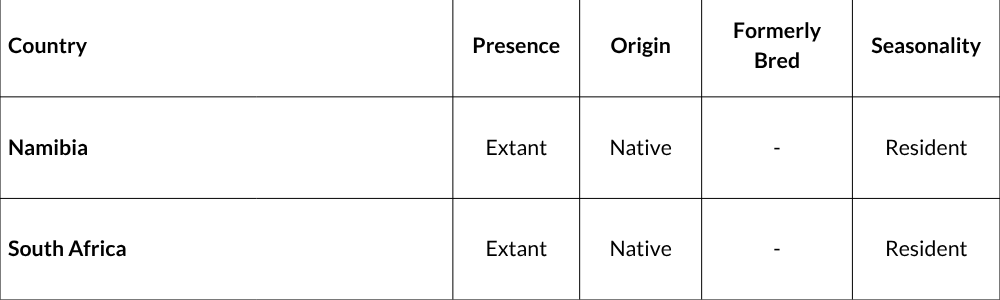
A widespread species found mainly in South Africa and Namibia, but possibly also in southwestern Angola (Corbet & Hanks 1968; Skinner & Chimimba 2005). Within the assessment region, they only occur in the Northern Cape and Eastern Cape provinces (Skinner & Chimimba 2005). Museum records from the Western Cape need to be carefully vetted. Similarly, in the North West Province, there is one museum record from the Schweizer-Reneke area, but no recent specimens have been from the same area during an intensive small mammal survey (Power 2014). Further work on delimiting the distribution of the species within South Africa is necessary.
Elevation / Depth / Depth Zones
Elevation Lower Limit (in metres above sea level): (Not specified)
Elevation Upper Limit (in metres above sea level): (Not specified)
Depth Lower Limit (in metres below sea level): (Not specified)
Depth Upper Limit (in metres below sea level): (Not specified)
Depth Zone: (Not specified)
Biogeographic Realms
Biogeographic Realm: Afrotropical
Map
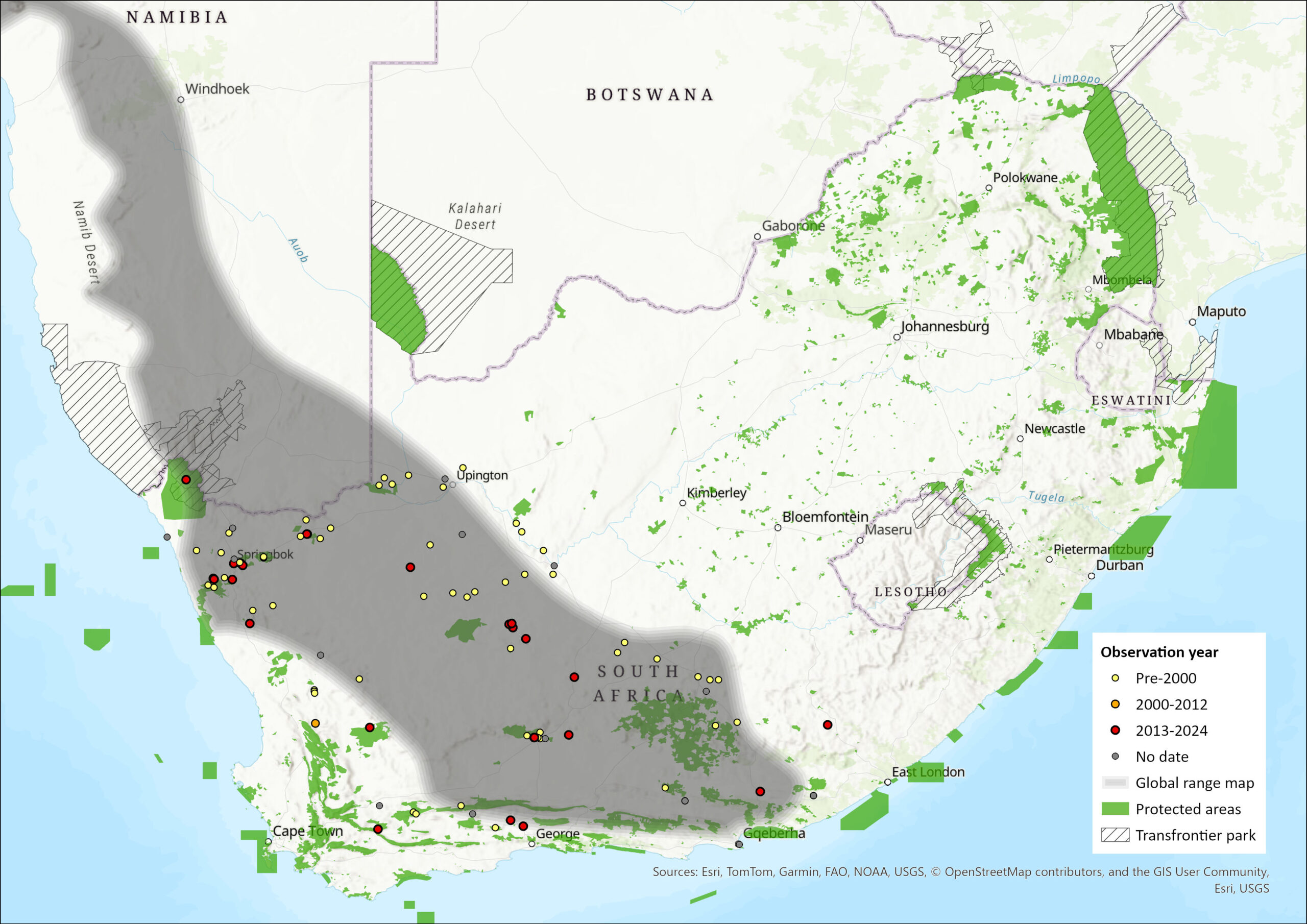
Figure 1. Distribution records for Western Rock Sengi (Elephantulus rupestris) within the assessment region (South Africa, Eswatini and Lesotho). Note that distribution data is obtained from multiple sources and records have not all been individually verified.
Countries of Occurrence
Large Marine Ecosystems (LME) Occurrence
Large Marine Ecosystems: (Not specified)
FAO Area Occurrence
FAO Marine Areas: (Not specified
Climate change
A physiological study showed that this species has pronounced heat tolerance and evaporative cooling capacity (Chalwin-Milton et al. 2024). Under laboratory conditions, individuals tolerated temperatures up to 48°C. Behavioural changes, such as body-flattening, were a major element of thermoregulation during acute heat exposure. Rock crevices are thought to expose small mammals to significantly higher temperatures than subterranean burrows (van Jaarsveld et al. 2021), although this will depend on the structure and depth. Whether this makes them more tolerant of climate change, because they can cope with higher temperatures, or less tolerant, because they are already operating close to their thermal limits, is unknown.
Population information
There are no data on the population status of the Western Rock Sengi, but it is likely to be locally common, and it can be expected that subpopulations will vary greatly in the arid habitats that it occupies. We suspect that it occurs naturally in low numbers, but habitats are reasonably secure.
Population Information
| Continuing decline in mature individuals | Unknown |
| Qualifier | – |
| Justification | – |
Extreme fluctuations in the number of subpopulations: (Not specified)
Continuing decline in number of subpopulations: (Not specified)
All individuals in one subpopulation: (Not specified)
Number of mature individuals in largest subpopulation: (Not specified)
Number of Subpopulations: (Not specified)
Quantitative Analysis
Probability of extinction in the wild within 3 generations or 10 years, whichever is longer, maximum 100 years: (Not specified)
Probability of extinction in the wild within 5 generations or 20 years, whichever is longer, maximum 100 years: (Not specified)
Probability of extinction in the wild within 100 years: (Not specified)
Population genetics
Using mitochondrial sequence data (control region and cytochrome b) to describe the phylogeographic structure of this species indicated an overall structured genetic profile (Smit et al. 2009). In a recent study by Crowhurst (2022), Elephantulus rupestris was found to have high levels of genetic diversity, with up to four genotypes identified across the assessment region, but they did not correspond to geographic structure, with several genotype profiles present within any given site. This suggests that individuals are moving freely within the region, and likely exist as a single metapopulation. There appears to be a central cluster with a lot of mixing, with lower connectivity to the northernmost sampling site in Namibia and an eastern cluster (Potfontein and Prieska). Due to limited information on population sizes, the effective population size (Ne) cannot be estimated.
Habitats and ecology
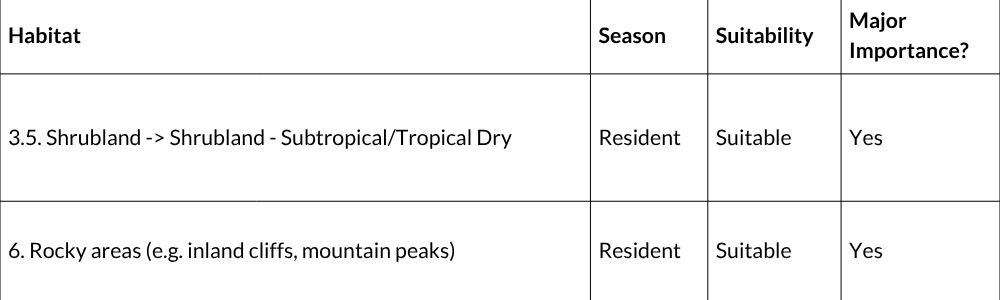
This species occupies arid habitats, including Karoo and Succulent-Karoo semi-desert habitats, deserts, dry savannahs, and dry shrublands. It is typically associated with rocky ridges, outcrops or koppies (rocky hills), and boulder fields at the bases of mountains. The effects of this clustered habitat distribution on population genetics are discussed by Smit et al. (2009). In South Africa, the species occurs in the succulent and Nama Karoo Biomes.
Ecosystem and cultural services: Sengi species are thought to be included in San art and are therefore subject to local folklore.
IUCN Habitats Classification Scheme
Life History
Generation Length: (Not specified)
Age at Maturity: Female or unspecified: (Not specified)
Age at Maturity: Male: (Not specified)
Size at Maturity (in cms): Female: 27
Size at Maturity (in cms): Male: 27
Longevity: (Not specified)
Average Reproductive Age: (Not specified)
Maximum Size (in cms): (Not specified)
Size at Birth (in cms): (Not specified)
Gestation Time: (Not specified)
Reproductive Periodicity: (Not specified)
Average Annual Fecundity or Litter Size: (Not specified)
Natural Mortality: (Not specified)
Breeding Strategy
Does the species lay eggs? No
Does the species give birth to live young? Yes
Does the species exhibit parthenogenesis? No
Does the species have a free-living larval stage? No
Does the species require water for breeding? No
Movement Patterns
Movement Patterns: (Not specified)
Congregatory: (Not specified)
Systems
System: Terrestrial
General Use and Trade Information
There is no evidence that this species is used for local or international trade.
Local Livelihood: (Not specified)
National Commercial Value: (Not specified)
International Commercial Value: (Not specified)
End Use: (Not specified)
Is there harvest from captive/cultivated sources of this species? (Not specified)
Harvest Trend Comments: (Not specified)
Threats
While there are currently no known major threats to the species, the major increase in mining activity as well as the establishment of wind and solar farms in the Northern Cape since 2020 is likely to threaten many local populations, and at present we cannot assess how serious the impact of this is. Also, local declines due to habitat modification to relatively small areas may occur near rivers and human population centres due to small-holder and industrial agriculture, and urban development. In addition, changes in habitats due to desertification and bush encroachment may adversely alter habitats for these sengis.
Conservation
The species occurs in protected areas, but it is not clear which areas and what proportion of the distribution is protected. Key protected areas within South Africa include the Namaqua National Park, Goegap Nature Reserve and Tankwa Karoo National Park. Because we are not aware of any conservation problems facing this species, no conservation measures are necessarily needed at present. However, considering the uncertainties around the impacts of mining and renewables and climate change, the species would still benefit from:
Recommendations for land managers and practitioners:
- Expansion of the protected area network.
Research priorities:
- Determine abundance and range size across its distribution.
- Monitoring in the Northern Cape, especially where new mining activities emerge.
- Biological data including life-history and ecology.
- Vetting of museum records to more accurately delimit distribution.
- Further genetic studies to understand whether there are cryptic species within E. rupestris
Encouraged citizen actions:
- Citizens are encouraged to report sightings on virtual museum platforms (for example, iNaturalist and MammalMAP) with photographic confirmation.
Bibliography
Chalwin‑Milton, O.J.B,,·Freeman, M.T, McKechnie, A.E. 2024. Heat tolerance and evaporative cooling capacity in an arid‑zone elephant shrew. Mammalian Biology 104: 549-557. https://doi.org/10.1007/s42991-024-00431-5.
Corbet, G.B. and Hanks, J. 1968. A revision of the elephant-shrews, family Macroscelididae. Bulletin of the British Museum of Natural History (Zoology) 16: 1-111.
Crowhurst, E.T. 2022. The spatial genetic structure of Elephantulus rupestris (Master’s Dissertation). Johannesburg: University of Johannesburg.
Power, R.J. 2014. The distribution and status of mammals in the North West Province. Department of Economic Development, Environment, Conservation & Tourism, North West Provincial Government, Mahikeng.
Rathbun, G.B. (subeditor). 2005. Macroscelidea. In: J.D. Skinner and C.T. Chimimba (eds), The Mammals of the Southern African Subregion, 3rd edition, pp. 22-34. Cambridge University Press, Cambridge, UK.
Skinner, J.D. and Chimimba, C.T. (eds). 2005. The Mammals of the Southern African Subregion. Cambridge University Press, United Kingdom, Cambridge.
Smit, H.A., Watson, J, and Jansen van Vuuren, B. 2009. Relative importance of habitat connectivity in shaping the genetic profiles of two southern African elephant-shrews. Journal of Biogeography 37: 857-864.
Smithers, R.H.N. 1971. The mammals of Botswana. National Museums of Rhodesia, Museum Memoir 4: 1-340.
van Jaarsveld, B., Bennett, N.C., Kemp, R., Czenze, Z.J., McKechnie, A.E. 2021. Heat tolerance in desert rodents is correlated with microclimate at inter- and intraspecific levels. J Comp Physiol B 191, 575–588. https://doi.org/10.1007/s00360-021-01352-2