
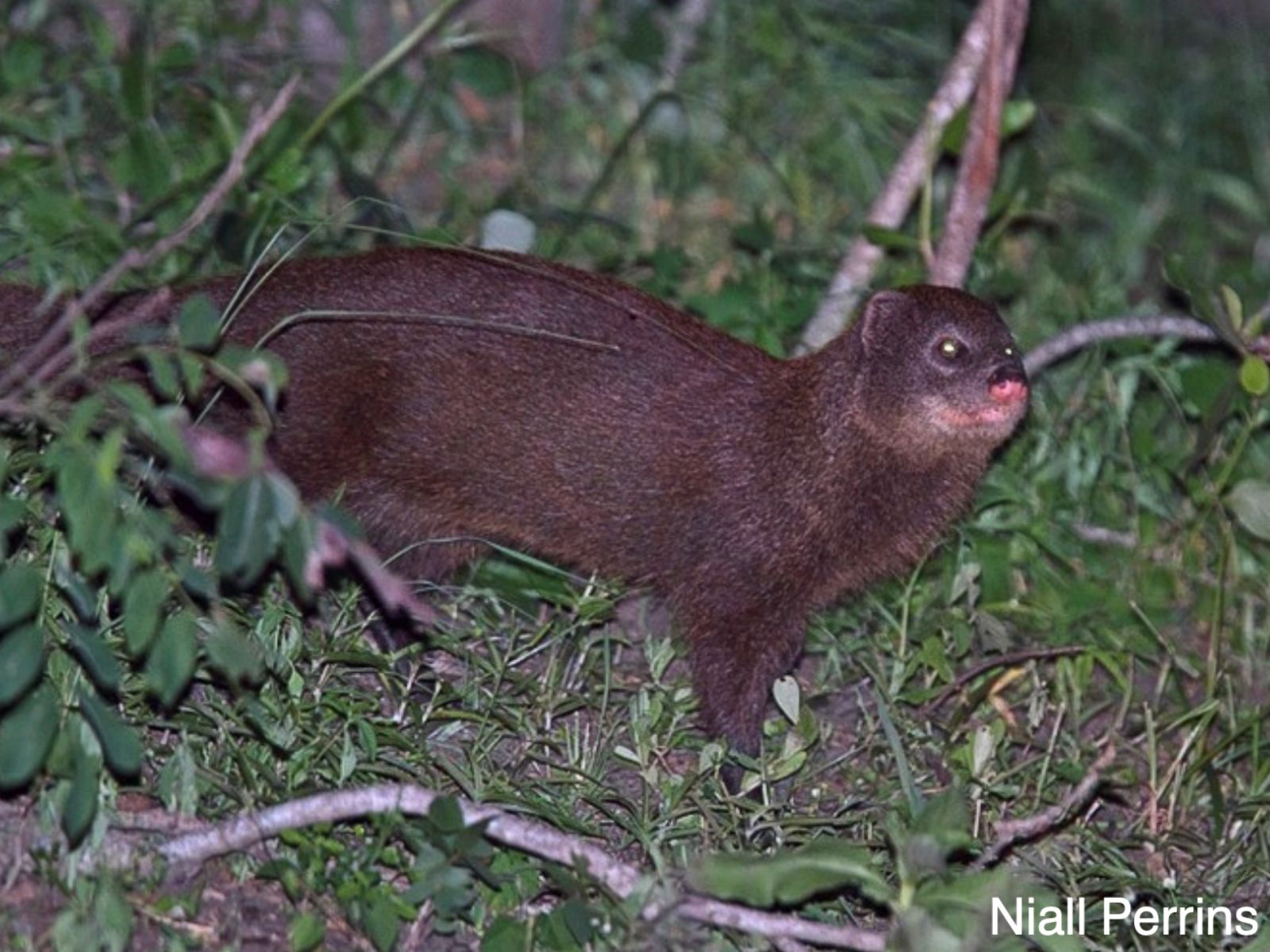
Water Mongoose
Atilax paludinosus

2025 Red list status
Least Concern

Regional Population Trend
Unknown
Change compared
to 2016
No Change
Overview
Atilax paludinosus – (G.[Baron] Cuvier, 1829)
ANIMALIA – CHORDATA – MAMMALIA – CARNIVORA – HERPESTIDAE – Atilax – paludinosus
Common Names: Water Mongoose, Marsh Mongoose (English), Kommetjiegatmuishond (Afrikaans), Imvuzi (Ndebele), Chidzvororo (Shona), Motswiswi (Sotho), Liduha (Swati), Tshaagane (Tswana), Umhlangala (Xhosa), Umvuzi (Zulu)
Synonyms: No Synonyms
Taxonomic Note:
Recent molecular studies have revealed that the Water Mongoose is a sister-species to the Long-nosed Mongoose (Xenogale naso) (Veron et al. 2022).
Red List Status: LC – Least Concern, (IUCN version 3.1)
Assessment Information
Assessors: Streicher, J.P.1,2.3, da Silva, J.M.1 & Ehlers Smith, Y.4,3
Reviewers: Nicholson, S.K.5 & Do Linh San, E6
Institutions: 1South African National Biodiversity Institute, 2BirdLife South Africa, 3University of KwaZulu-Natal, 4Ezemvelo KZN Wildlife, 5Endangered Wildlife Trust, 6Sol Plaatjie University
Previous Assessors & Reviewers: Baker, C., Stuart, C., Stuart, M., Aviwe, N., Peinke, D., Maddock, A.H., Perrin, M., Somers, M.J., Do Linh San, E.
Previous Contributors: Ray, J., Page-Nicholson, S. & Child, M.F.
Assessment Rationale
The Water Mongoose is listed as Least Concern since it has a wide distribution range within the assessment region, occurs in many protected areas, and is generally common in suitable habitat. It is relatively tolerant of modified or disturbed habitats, and there is no reason to believe that it is declining at a rate fast enough to warrant listing in a higher category of threat. However, we advise that monitoring is necessary, especially in areas where development may be affecting water supply and quality, to determine any potential negative impacts. Climate change could also threaten this species in the future, especially local subpopulations, as water sources and systems are affected.
Regional population effects: The distribution of this species in the assessment region is continuous with the rest of the African range, so rescue effects are possible. However, dispersal and movements in general are likely to be dependent upon the presence of water corridors (permanent and seasonal rivers and streams, dam networks, wetlands).
Red List Index
Red List Index: No change
Recommended citation: Streicher JP, da Silva JM & Ehlers Smith Y. 2025. A conservation assessment of Atilax paludinosus. In Patel T, Smith C, Roxburgh L, da Silva JM & Raimondo D, editors. The Red List of Mammals of South Africa, Eswatini and Lesotho. South African National Biodiversity Institute and Endangered Wildlife Trust, South Africa.
Regional Distribution and occurrence
Geographic Range
The Water Mongoose is widely distributed from Senegal, Guinea-Bissau and Sierra Leone, eastward to southern Sudan and Ethiopia, and south to southern Africa, where it is absent from most of Namibia, Botswana and large parts of central South Africa, wherever adequate water and cover are unavailable (Baker & Ray 2013). It has been recorded from sea level to altitudes of 3,950 m asl in the Bale Mountains National Park, Ethiopia (Yalden et al. 1996).
Within the assessment region, it occurs in all provinces of South Africa, along most rivers (including seasonal rivers) and along most of the coastline (except the north of the Northern Cape) in areas where there is running water. It also occurs widely in Eswatini and Lesotho (Lynch 1994, Monadjem 1998)
Elevation / Depth / Depth Zones
Elevation Lower Limit (in metres above sea level): 0
Elevation Upper Limit (in metres above sea level): 3950
Depth Lower Limit (in metres below sea level): (Not specified)
Depth Upper Limit (in metres below sea level): (Not specified)
Depth Zone: (Not specified)
Map
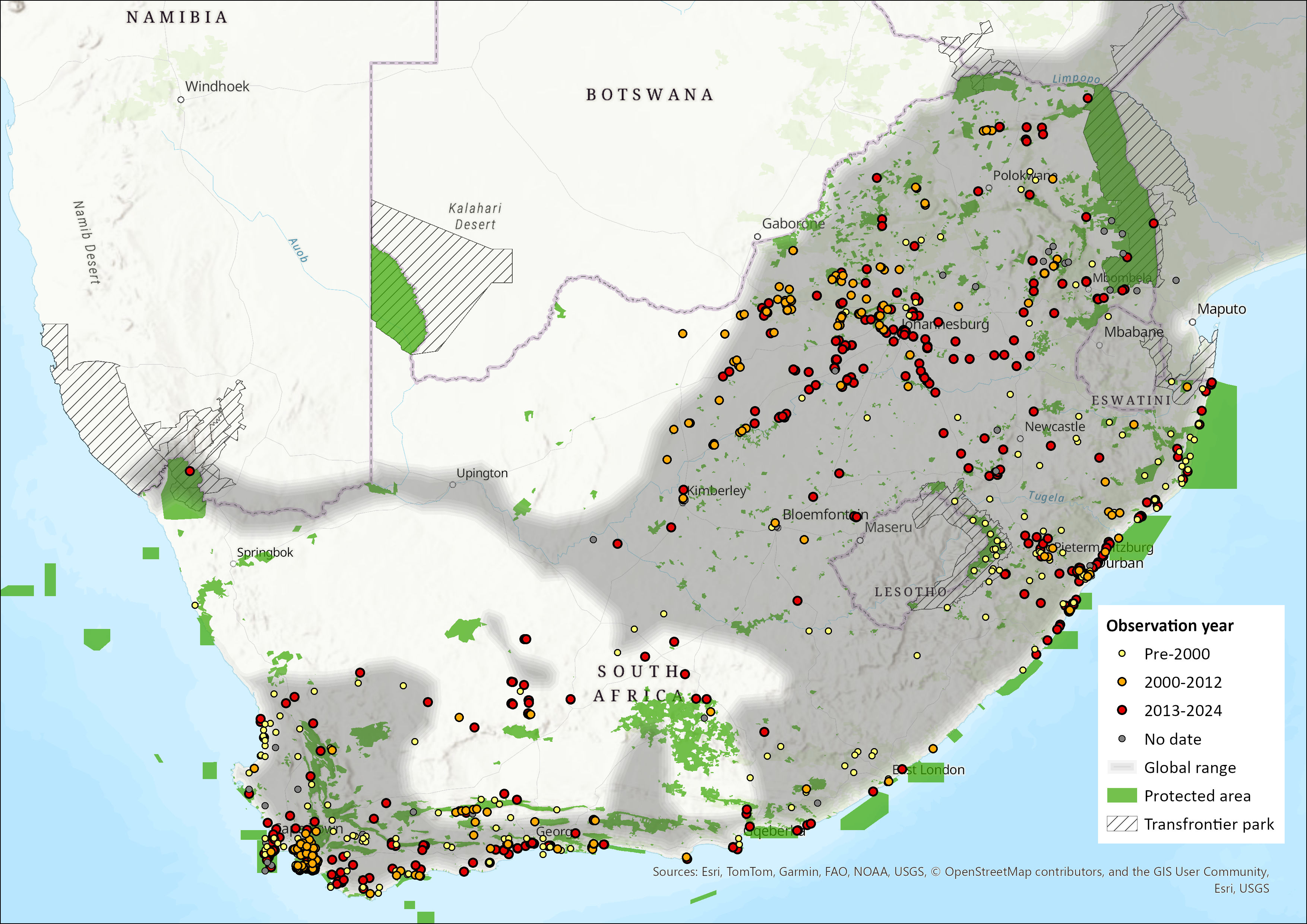
Figure 1. Distribution records for Water Mongoose (Atilax paludinosus) within the assessment region (South Africa, Eswatini and Lesotho). Note that distribution data is obtained from multiple sources and records have not all been individually verified.
Biogeographic Realms
Biogeographic Realm: Afrotropical
Occurrence
Countries of Occurrence
| Country | Presence | Origin | Formerly Bred | Seasonality |
| Angola | Extant | Native | – | – |
| Benin | Extant | Native | – | – |
| Botswana | Extant | Native | – | – |
| Burkina Faso | Extant | Native | – | – |
| Burundi | Extant | Native | – | – |
| Cameroon | Extant | Native | – | – |
| Central African Republic | Extant | Native | – | – |
| Chad | Extant | Native | – | – |
| Congo | Extant | Native | – | – |
| Congo, The Democratic Republic of the | Extant | Native | – | – |
| Côte d’Ivoire | Extant | Native | – | – |
| Equatorial Guinea | Extant | Native | – | – |
| Eswatini | Extant | Native | – | – |
| Eritrea | Extant | Native | – | – |
| Ethiopia | Extant | Native | – | – |
| Gabon | Extant | Native | – | – |
| Gambia | Extant | Native | – | – |
| Ghana | Extant | Native | – | – |
| Guinea | Extant | Native | – | – |
| Guinea-Bissau | Extant | Native | – | – |
| Kenya | Extant | Native | – | – |
| Lesotho | Extant | Native | – | – |
| Liberia | Extant | Native | – | – |
| Malawi | Extant | Native | – | – |
| Mali | Extant | Native | – | – |
| Mauritania | Extant | Native | – | – |
| Mozambique | Extant | Native | – | – |
| Namibia | Extant | Native | – | – |
| Niger | Extant | Native | – | – |
| Nigeria | Extant | Native | – | – |
| Rwanda | Extant | Native | – | – |
| Senegal | Extant | Native | – | – |
| Sierra Leone | Extant | Native | – | – |
| Somalia | Extant | Native | – | – |
| South Africa | Extant | Native | – | – |
| South Sudan | Extant | Native | – | – |
| Sudan | Extant | Native | – | – |
| Tanzania, United Republic of | Extant | Native | – | – |
| Togo | Extant | Native | – | – |
| Uganda | Extant | Native | – | – |
| Zambia | Extant | Native | – | – |
| Zimbabwe | Extant | Native | – | – |
Large Marine Ecosystems (LME) Occurrence
Large Marine Ecosystems: (Not specified)
FAO Area Occurrence
FAO Marine Areas: (Not specified)
Climate change
No studies have been conducted on the impacts of climate change for this species, however, it could threaten the species in the future, especially local subpopulations, as water sources and systems are affected.
Population Information
Water Mongooses are generally common in suitable habitat. For example, they were the second most photographed species in a camera-trapping study in the Udzungwa Mountains, Tanzania (De Luca & Mpunga 2005) and the most photographed species in a camera-trapping study Kibale National Park, Uganda (Mills et al. 2019). Within a restricted area (Vernon Crookes Nature Reserve), in KwaZulu-Natal, the density was recorded at 1.8 individuals / km² (Maddock 1988). We suspect that the population is stable due to its wide distribution. There is currently no evidence to indicate that deteriorating water quantity and quality across the region has impacted significantly on overall density and distribution of this species, although local declines are possible. Thus, deteriorating water quality is not a reliable index for Water Mongoose abundance. There is no doubt that declining water resources will have an impact, but this species is very versatile and can exist without permanent water sources for extended periods. On the other hand, water systems may increase through artificial wetland creation.
Population Information
Current population trend: Unknown, but probably stable.
Continuing decline in number of subpopulations: Unknown. It is not currently possible to determine the extent or number of subpopulations.
Continuing decline in mature individuals? Probably not, although local declines cannot be excluded.
Extreme fluctuations in the number of subpopulations: (Not specified)
All individuals in one subpopulation: (Not specified)
Number of mature individuals in population: Unknown
Number of mature individuals in largest subpopulation: Unknown
Number of Subpopulations: Unknown
Severely fragmented: No, although the Water Mongoose’s dependency on the presence of water and cover means that its distribution is certainly patchy at the landscape scale.
Quantitative Analysis
Probability of extinction in the wild within 3 generations or 10 years, whichever is longer, maximum 100 years: (Not specified)
Probability of extinction in the wild within 5 generations or 20 years, whichever is longer, maximum 100 years: (Not specified)
Probability of extinction in the wild within 100 years: (Not specified)
Population Genetics
Apart from karyological studies examining chromosomal differences between the sexes (e.g., Pathak and Stock 1976), there has been no other genetic study published on this species. Given that the species is widely distributed wherever adequate resources are available, it is assumed to exist as a single metapopulation across the assessment region. A targeted population genetic study across the species range would be informative, not only to confirm the spatial structure within the species, but also to obtain estimates of the effective population size.
Habitats and ecology
The Water Mongoose is mainly restricted to riparian habitats (rivers, streams, swamps, marshes and dams), wherever there is suitable vegetation cover and water in close proximity. It is fairly tolerant of altered flow regimes and pollutants. The species is also found along estuaries and in coastal areas. It is also able to live and survive comfortably some distance from water, but there is a clear preference for riparian habitats (Baker & Ray 2013).
This semi-aquatic mongoose is not suspected to compete significantly with the Cape Clawless Otter (Aonyx capensis) and the Spotted-necked Otter (Hydrictis maculicollis) as it does not forage in the water bodies as such. Since it is a shoreline forager, access via sandy and easily accessible rocky shorelines is desirable. Its diet comprises mostly aquatic prey with crabs and frogs usually dominating (Rowe-Rowe 1978; Whitfield & Blaber 1980; Louw & Nel 1986; MacDonald & Nel 1986; Purves et al. 1994; Streicher et al. 2022), which is unusual among herpestids. However, in some areas, small mammals, terrestrial arthropods, fish and/or birds are also important food sources and may even dominate the diet (du Toit 1980; Maddock 1988; Baker 1989; Somers & Purves 1996; Avenant & Nel 1997; Stuart & Stuart 2003; Nqinana 2009; Do Linh San et al. 2020). The species has been observed to scavenge on carcasses (Power 2014; Keyes et al. 2021). In urban areas of KwaZulu-Natal, the species is documented to supplement their diet with anthropogenic waste (Streicher et al. 2022).
The Water Mongoose is a nocturnal species with peaks of activity in both the early and later hours of the night (Maddock 1988; Ray 1997, Webster et al. 2021), but occasionally it is already active in the late afternoon and/or extends its activity until early morning (Rowe-Rowe 1978, Mills et al. 2019). During the day, individuals sleep in burrows or in high grass or dense reed patches (Ray 1997; E. Do Linh San & M.J. Somers unpubl. data). The day-beds themselves are often located in dry areas on relatively high ground, surrounded by deep mud or water (Ray 1997). In parts of the Karoo Plateau, this mongoose dens up in rock crevices, overhangs and piles (C. Stuart & M. Stuart pers. obs. 1995–2016).
This species is predominantly solitary, although during the breeding season it is not uncommon to observe groups of two or three individuals (mother and offspring) (Photo 1). Adult males and females only meet to mate. The spatial ecology of this species has not been studied thoroughly. In KwaZulu-Natal, Maddock (1988) found home range sizes of 2.04 km² for a male and 1.31 km² for a female, respectively. More recent studies by Streicher and colleagues (2021) in KwaZulu-Natal Midlands found an average (± S.E) home range size of 14.38 km² ± 1.95 km² for males and 10.14 km² ± 1.68 for females. In residential suburbs of KwaZulu-Natal Streicher (2022) found average home range sizes of 1.20 km² ± 0.34 for a male and 0.74 km² ± 0.30 for a female, respectively Often, home ranges are rather linear in shape, with individuals sometimes travelling up and down streams up to 5 km in length (Ray 1997). Baker and Ray (2013) suggested that females likely hold territories, while males are more mobile, but further research is needed to confirm this hypothesis. In urban environments, female water mongoose exhibited non-territorial towards conspecifics, male water mongooses were highly territorial towards other males, with their spatial range only overlapping with potential mates (Streicher et al. 2021; Streicher et al. 2022).
In forested habitats in Southern KwaZulu-Natal the species has an overall occupancy rate of 0.38 (38%) out of 250 camera trap sites. Site occupancy in forested habitats is positively influenced by a high proportion of leaf litter availability but negatively influenced by stem density of trees 6–10 m in height, indicating a preference for old growth forest (Ehlers Smith et al. 2017). The species occupancy is also lower within Protected Areas compared to farmland and urban areas (Ehlers Smith et al. 2018).
Water Mongooses communicate with both vocalisations and behavioural displays (Baker 1988), cheek marking and anal gland marking during defecation (Baker 1998). Scats are deposited in middens, which are located in marshy clearings, sandy beaches near streams, on banks around dams or on rocks above the high water mark in coastal areas (Louw & Nel 1986; Macdonald & Nel 1986; Purves et al. 1994; Ray & Sunquist 2001; E. Do Linh San pers. obs. 2006–2009). This species is reputed to be very fierce and capable of successfully confronting domestic dogs when cornered. The expulsion of anal sac constituents when under stress is well documented.
In the assessment region, mating takes place between August and February (Rowe-Rowe 1978; Stuart 1981). Females give birth to 2–3 young (Baker & Meester 1986) after a gestation period of 73–74 days (Baker 1987). Postnatal physical and behavioural development has been studied thoroughly (Baker & Meester 1986; Baker 1992). This species can live up to 19 years in captivity (Nowak 1999).
Ecosystem and cultural services: None known. In the assessment region, its main predators are likely Black-backed Jackals (Lupulella mesomelas), Caracals (Caracal caracal) and Leopards (Panthera pardus).
IUCN Habitats Classification Scheme
| Habitat | Season | Suitability | Major Importance? |
| 5.1. Wetlands (inland) -> Wetlands (inland) – Permanent Rivers/Streams/Creeks (includes waterfalls) | – | Suitable | – |
| 5.2. Wetlands (inland) -> Wetlands (inland) – Seasonal/Intermittent/Irregular Rivers/Streams/Creeks | – | Suitable | – |
| 5.3. Wetlands (inland) -> Wetlands (inland) – Shrub Dominated Wetlands | – | Suitable | – |
| 5.4. Wetlands (inland) -> Wetlands (inland) – Bogs, Marshes, Swamps, Fens, Peatlands | – | Suitable | – |
| 5.7. Wetlands (inland) -> Wetlands (inland) – Permanent Freshwater Marshes/Pools (under 8ha) | – | Suitable | – |
| 9.10. Marine Neritic -> Marine Neritic – Estuaries | – | Suitable | – |
| 13.5. Marine Coastal/Supratidal -> Marine Coastal/Supratidal – Coastal Freshwater Lakes | – | Suitable | – |
| 15.1. Artificial/Aquatic & Marine -> Artificial/Aquatic – Water Storage Areas (over 8ha) | – | Suitable | – |
Life History
Generation Length: (Not specified)
Age at Maturity: Female or unspecified: (Not specified)
Age at Maturity: Male: (Not specified)
Size at Maturity (in cms): Female: (Not specified)
Size at Maturity (in cms): Male: (Not specified)
Longevity: 17 years in captivity
Average Reproductive Age: (Not specified)
Maximum Size (in cms): (Not specified)
Size at Birth (in cms): 108.5 grams
Gestation Time: 74 days
Reproductive Periodicity: (Not specified)
Litter Size: 2.5
Natural Mortality: (Not specified)
Does the species lay eggs? (Not specified)
Does the species give birth to live young: (Not specified)
Does the species exhibit parthenogenesis: (Not specified)
Does the species have a free-living larval stage? (Not specified)
Does the species require water for breeding? (Not specified)
Movement Patterns
Movement Patterns: (Not specified)
Congregatory: (Not specified)
Systems
System: Terrestrial, Freshwater (=Inland waters)
General Use and Trade Information
The Water Mongoose is commonly found in bushmeat markets in several West African countries. For example, it was the most common carnivore appearing in bushmeat markets in southeastern Nigeria (Angelici et al. 1999) and in village offtakes in Gabon (Bahaa-el-din et al. 2013). It was also commonly recorded in bushmeat surveys in the Classified Forest of Diecke, Guinea (Colyn et al. 2004). This species is not known to be used as bushmeat within the assessment region, but fat and glands are said to be used in some traditional medicine applications (this probably only occurs in the east of South Africa). Pelts have no commercial value.
| Subsistence: | Rationale: | Local Commercial: | Further detail including information on economic value if available: |
| Yes | Used in traditional medicine. | No | – |
National Commercial Value: No
International Commercial Value: No
| End Use | Subsistence | National | International | Other (please specify) |
| 1. Food – human | true | true | – | – |
Is there harvest from captive/cultivated sources of this species? (Not specified)
Harvest Trend Comments: All, but harvest likely very limited.
Threats
No major threats to the species are currently known. However, since it is dependent on riverine vegetation for shelter in some parts of the assessment region (but not all; for example, in the Karoo), the loss of this habitat may result in some localised declines where habitat loss is taking place (Baker & Ray 2013). For example, the drainage of swamplands for conversion to arable land has been identified as a threat to Water Mongooses in eastern Africa (Andama 2000).
However, within the assessment region, a number of threats may synergise together to cause local population declines. These include human development (for example, fracking in the Karoo), agricultural intensification, and climate change causing declining water quality in small streams and watercourses. Poor farming practices also impact on buffer zones along watercourses. These factors are likely to negatively impact the abundance and viability of aquatic food resources for Water Mongooses and other water-dependent species. Already 84% of South African river ecosystem types are threatened, and 54% are Critically Endangered (Nel et al. 2007).
Water Mongooses are not persecuted directly except as bycatch in predator control programmes. In view of their secretive and nocturnal nature, they are less “visible” and thus less subject to direct actions. They are occasionally (and locally) victims of road traffic collisions and domestic dog attacks. In Southern KwaZulu-Natal their preference for urban and agricultural land may render them more vulnerable to anthropogenic threats and land-use change (Ehlers Smith et al. 2018).
Urban regions may pose a future threat to the species through the exposure to anticoagulant poison and consumption of anthropogenic waste, studies are still limited (Serieys et al. 2019; Streicher et al. 2022).
Conservation
The Water Mongoose is present in many protected areas across its range within the assessment region. However, water management practices, especially outside protected areas, should be carefully planned to avoid negatively impacting riverine ecosystems and wetlands. The most important interventions for this species are those that conserve watersheds and riparian valleys and those which improve stream flow and water quality (such as through alien invasive species removal). There is a need to enforce the National Water Act (No. 36 of 1998) and to ensure that the tools provided for in this act – for example, ecological reserve determination and resource quality objectives – are applied to protect our freshwater ecosystems.
Although the Water Mongoose is a potential candidate as an indicator species for evaluating the effectiveness of the Working for Water programme, its versatile habitat preference and diet makes it unlikely to be sensitive enough to changing conditions.
Recommendations for land managers and practitioners:
- Maintain and improve the ecological integrity of river systems by conserving buffer strips of vegetation around water courses and removing alien invasive vegetation. For example, the Working for Water programme should be used to remove alien vegetation and improve water flow.
Research priorities:
- Monitoring Water Mongoose subpopulation trends and measuring the impact of water quality and quantity deterioration.
- Monitoring of river system health status linked to population abundance indices.
Encouraged citizen actions:
- Report sightings or presence of diagnostic spoor (with picture) on virtual museum platforms (for example, iNaturalist and MammalMAP), especially outside protected areas, to improve this species’ distribution map.
- Employ the Working for Water programme to reduce alien vegetation and improve water flow on your land.
- Report illegal land- and water-use practices to the authorities.
- Protect sensitive riparian areas.
Bibliography
Andama, E. 2000. Status and Distribution of Carnivores in Bwindi Impenetrable National Park Southwestern Uganda. Makerere University, Uganda.
Angelici, F.M., Luiselli, L., Politano, E. and Akani, G.C. 1999. Bushmen and mammal fauna: A survey of the mammals traded in bush-meat markets of local people in the rainforests of southeastern Nigeria. Anthropozoologica 30: 51-58.
Andama E. 2000. Status and Distribution of Carnivores in Bwindi Impenetrable National Park Southwestern Uganda. Makerere University, Kampala, Uganda.
Angelici FM, Luiselli L, Politano E, Akani GC. 1999. Bushmen and mammal fauna: a survey of the mammals traded in bush-meat markets of local people in the rainforests of southeastern Nigeria. Anthropozoologica 30:51–58.
Avenant NL, Nel JAJ. 1997. Prey use by four syntopic carnivores in a strandveld ecosystem. South African Journal of Wildlife Research 27:86–93.
Bahaa-el-din L, Henschel P, Aba’a R, Abernethy K, Bohm T, Bout N, Coad L, Head J, Inoue E, Lahm S, Lee ME, Maisels F, Rabanal L, Starkey M, Taylor G, Vanthomme A, Nakashima Y, Hunter L. 2013. Notes on the distribution and status of small carnivores in Gabon. Small Carnivore Conservation 48:19–29.
Baker CM. 1987. Biology of the water mongoose (Atilax paludinosus). Ph.D. Thesis. University of Natal, Pietermaritzburg, South Africa.
Baker CM. 1988. Vocalizations of captive water mongooses, Atilax paludinosus. Zeitschrift für Säugetierkunde 53:83–91.
Baker CM. 1989. Feeding habits of water mongooses (Atilax paludinosus). Zeitschrift für Säugetierkunde 54:31–39.
Baker CM. 1992. Observations on the postnatal behavioural development in the marsh mongoose. Zeitschrift für Säugetierkunde 57:335–342.
Baker CM. 1998. Communication in marsh mongooses (Atilax paludinosus): anal gland secretion and scat discrimination in adults, and individual variation in vocalisations of juveniles. South African Journal of Zoology 33:49–51.
Baker CM, Meester J. 1986. Postnatal physical development of the water mongoose (Atilax paludinosus). Zeitschrift für Säugetierkunde 51:236–243.
Baker CM, Ray JC. 2013. Atilax paludinosus Marsh Mongoose. Pages 298–319 in Kingdon J, Hoffmann M, editors. The Mammals of Africa. Volume V: Carnivores, Pangolins, Equids and Rhinoceroses. Bloomsbury Publishing, London, UK.
Colyn M, Dufour S, Condé PC, Van Rompaey H. 2004. The importance of small carnivores in forest bushmeat hunting in the Classified Forest of Diecké, Guinea. Small Carnivore Conservation 31:15–18.
De Luca DW, Mpunga NE. 2005. Carnivores of the Udzungwa Mountains: Presence, Distributions and Threats. Wildlife Conservation Society, Mbeya, Tanzania.
Do Linh San E, Nqinana A, Madikiza ZJK, Somers MJ. 2020. Diet of the marsh mongoose around a non-permanent reservoir: response of a generalist opportunist forager to the absence of crabs. African Zoology 55(3):240—244.
Driver A, Sink KJ, Nel JN, Holness S, van Niekerk L, Daniels F, Jonas Z, Majiedt PA, Harris L, Maze K. 2012. National Biodiversity Assessment 2011: An Assessment of South Africa’s Biodiversity and Ecosystems. Synthesis Report. South African National Biodiversity Institute and Department of Environmental Affairs, Pretoria, South Africa.
Ehlers Smith, Y.C., Ehlers Smith, D.A., Ramesh, T. et al. The importance of microhabitat structure in maintaining forest mammal diversity in a mixed land-use mosaic. Biodivers Conserv 26, 2361–2382 (2017). https://doi.org/10.1007/s10531-017-1360-6
Ehlers Smith, Y.C., Ehlers Smith, D.A., Ramesh, T. et al. Forest habitats in a mixed urban-agriculture mosaic landscape: patterns of mammal occupancy. Landscape Ecol 33, 59–76 (2018). https://doi.org/10.1007/s10980-017-0580-1
Keyes CA, Myburgh J, Brits D. 2021. Scavenger activity in a peri-urban agricultural setting in the Highveld of South Africa. International Journal of Legal Medicine 135(3):979—991.
Louw CJ, Nel JAJ. 1986. Diets of coastal and inland-dwelling water mongoose. South African Journal of Wildlife Research 16:153–156.
MacDonald JT, Nel JAJ. 1986. Comparative diets of sympatric carnivores. South African Journal of Wildlife Research 16:115– 121.
Maddock AH. 1988. Resource partitioning in a viverrid assemblage. Ph.D. Thesis. University of Natal, Pietermaritzburg, South Africa.
Mills D, Fattebert J, Hunter L, Slotow R. 2019. Maximising camera trap data: Using attractants to improve detection of elusive species in multi-species surveys. Plos One 14(5):e0216447
Monadjem, A. 1998. The Mammals of Swaziland. Conservation Trust of Swaziland and Big Games Parks, Mbabane, Swaziland.
Nel JL, Roux DJ, Maree G, Kleynhans CJ, Moolman J, Reyers B, Rouget M, Cowling RM. 2007. Rivers in peril inside and outside protected areas: a systematic approach to conservation assessment of river ecosystems. Diversity and Distributions 13:341–52.
Nowak RM. 1999. Walker’s Mammals of the World. Sixth edition. The Johns Hopkins University Press, Baltimore, MD, USA.
Nqinana A. 2009. Diet of the marsh mongoose Atilax paludinosus in the Andries Vosloo Kudu Nature Reserve (Eastern Cape Province, South Africa). B.Sc. Honours Thesis. University of Fort Hare, Alice, South Africa.
Power JP. 2014. The Distribution and Status of Mammals in the North West Province. Department of Economic Development, Environment, Conservation & Tourism, North West Provincial Government, Mahikeng, South Africa.
Purves MG, Kruuk H, Nel JAJ. 1994. Crabs Potamonautes perlatus in the diet of otter Aonyx capensis and water mongoose Atilax paludinosus in a freshwater habitat in South Africa. Zeitschrift für Säugetierkunde 59:332–341.
Ray JC. 1997. Comparative ecology of two African forest mongooses, Herpestes naso and Atilax paludinosus. African Journal of Ecology 35:237–253.
Ray JC, Sunquist ME. 2001. Trophic relations in a community of African rainforest carnivores. Oecologia 127:395–408.
Rowe-Rowe DT. 1978. The small carnivores of Natal. Lammergeyer 25:1–48.
Serieys LEK, Bishop J, Okes N, Broadfield J, Winterton DJ, Poppenga RH, et al. 2019. Widespread anticoagulant poison exposure in predators in a rapidly growing South African city. Sci Total Environ 666:581—590.
Somers MJ, Purves MG. 1996. Trophic overlap between three syntopic semi-aquatic carnivores: cape clawless otter, spotted- necked otter and water mongoose. African Journal of Ecology 34:158–166.
Streicher JP, Ramesh T, Downs CT. 2020. Home range and core area utilisation of three co-existing mongoose species: large grey, water and white-tailed in the fragmented landscape of the KwaZulu-Natal Midlands, South Africa. Mammalian Biology 100(3):273—283.
Streicher JP, Ramesh T, Downs CT. 2021. An African urban mesocarnivore: Navigating the urban matrix of Durban, South Africa. Global Ecology and Conservation 26:e01482.
Streicher JP, Streicher MB, Ramesh T, Downs CT. 2022. Diet of a generalist mammalian mesocarnivore in an urban matrix. African Zoology 57(2):126—132.
Stuart CT. 1981. Notes on the mammalian carnivores of the Cape Province, South Africa. Bontebok 1:1–58.
Stuart C, Stuart T. 2003. A note on the diet of the water mongoose Atilax paludinosus in the central Great Karoo, South Africa. Small Carnivore Conservation 29:13–14.
Veron G, Patou M.-L., Jennings AP. 2022. Systematics and evolution of the mongooses (Herpestidae, Carnivora). Pages 61–78 in Do Linh San E, Sato JJ, Belant JL, Somers MJ, editors. Small Carnivores: Evolution, Ecology, Behaviour and Conservation. Wiley-Blackwell, Oxford, UK.
Webster AB, Pretorius ME, Somers MJ. 2021. The determinants of mesocarnivore activity patterns in highveld grassland and riparian habitats. African Journal of Wildlife Research 51(1):178—192.
Whitfield AK, Blaber SJM. 1980. The diet of Atilax paludinosus (water mongoose) at St. Lucia, South Africa. Mammalia 44:315– 318.
Yalden DW, Largen MJ, Kock D, Hillman JC. 1996. Catalogue of the Mammals of Ethiopia and Eritrea 7. Revised Checklist, zoogeography and conservation. Tropical Zoology 9:73–164.