
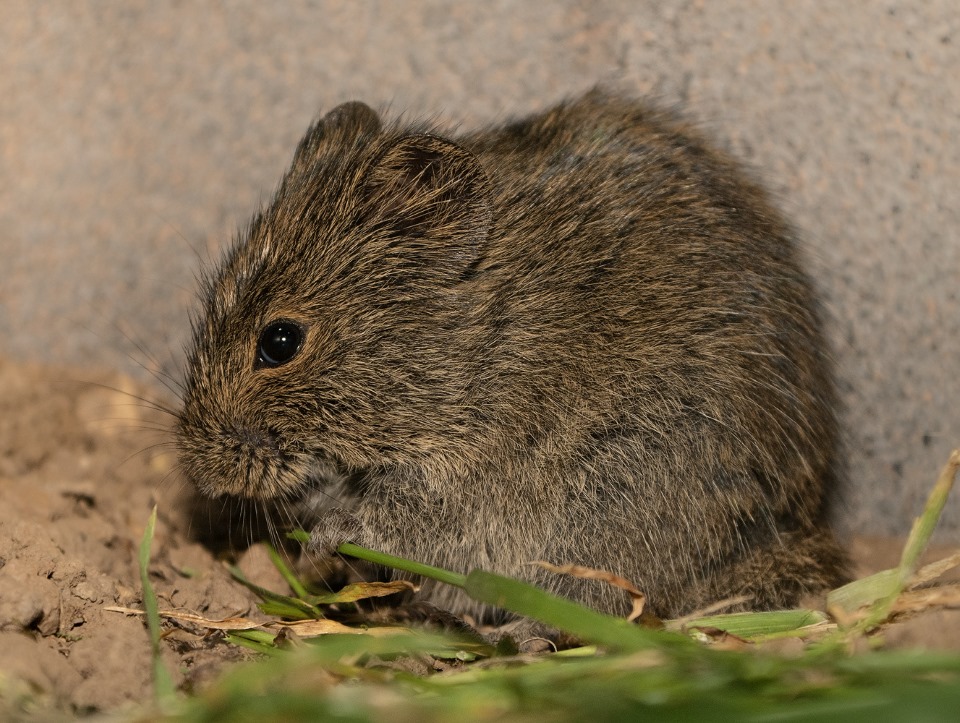
Vlei Rat (Fynbos Type)
Otomys irroratus

2025 Red list status
Least Concern

Regional Population Trend
Declining

Change compared
to 2016
No Change
Overview
Otomys irroratus – (Brants, 1827)
ANIMALIA – CHORDATA – MAMMALIA – RODENTIA – MURIDAE – Otomys – irroratus
Common Names: Southern African Vlei Rat, Vlei Rat (English), Vleirot (Afrikaans)
Synonyms: Euryotis irroratus Brants, 1827; Otomys bisulcatus Cuvier, 1829; Otomys capensis Cuvier, 1829; Otomys coenosus Thomas, 1918; Otomys cupreoides Roberts, 1946; Otomys cupreus Wroughton, 1906; Otomys natalensis Roberts, 1929; Otomys obscura (Lichtenstein, 1842); Otomys orientalis Roberts, 1946; Otomys randensis Roberts, 1929; Otomys saundersiae Roberts, 1929; Otomys typicus Smith, 1834
Cytogenetic, DNA sequence and geometric morphometric data demonstrate the synonymy of O. saundersiae from Grahamstown (Eastern Cape, South Africa) under O. irroratus, and the validity of Otomys karoensis from the Fynbos Biome of the Western Cape (Taylor et al. 2009). This is the new taxonomic concept for Otomys irroratus. It has been split into two species (Otomys irroratus and Otomys auratus) based on genetic evidence and niche modelling by Engelbrecht et al. 2011.
Taxonomic Note: Taylor et al. (2009) and Engelbrecht et al. (2011) used mitochondrial and ecological data to delineate between two cryptic species: Otomys irroratus (Western and Eastern Cape Provinces) and Otomys auratus (Free State, KwaZulu-Natal, Northern Cape, Gauteng and Mpumalanga Provinces), with a contact zone between the two species in the Eastern Cape around Alice. These species correspond to bioregions (O. irroratus pertaining to fynbos and thicket regions; O. auratus pertaining to high-lying grasslands) rather than karyotype; and thus, no subspecies are recognised (Taylor 2013).
Red List Status: LC – Least Concern
Assessment Information
Assessors: Taylor, P.1 & da Silva, J.M.2
Reviewer: Oosthuizen, M.3
Institutions: 1University of the Free State,2South African National Biodiversity Institute,3University of Pretoria
Previous Assessors: Taylor, P. & Baxter, R.
Previous Reviewer: Child, M.F.
Previous Contributors: Roxburgh, L., Avenant, N., Avery, M., MacFadyen, D., Monadjem, A., Palmer, G. & Wilson, B.
Assessment Rationale
This species is listed as Least Concern because it is widespread within the fynbos biomes of the Western Cape and Eastern Cape, is present in several protected areas, and has a degree of tolerance for modified habitats. However, the population is expected to show slow declines in the future from climate change, with niche modelling showing that it will undergo a 12-24% reduction in area of occupancy by 2050 from climate change. Similarly, continued habitat loss of wetlands and associated vegetation will lead to a decline in the future. In the Western Cape, already 31% of all wetlands (plus a 32 m buffer) and riparian habitats have been lost to agricultural expansion and the spread of alien invasive species. Thus, while we infer that the population is not threatened currently, it should be monitored as it may qualify for a threatened category in the future. Key interventions for this species include the conservation and restoration of wetlands and holistic management strategies to curb habitat degradation from overgrazing.
Red List Index
Red List Index: No change
Recommended Citation: Taylor P & da Silva JM. 2025. A conservation assessment of Otomys irroratus. In Patel T, Smith C, Roxburgh L, da Silva JM & Raimondo D, editors. The Red List of Mammals of South Africa, Eswatini and Lesotho. South African National Biodiversity Institute and Endangered Wildlife Trust, South Africa.
Regional Distribution and occurrence
Geographic Range
Otomys species are generally associated with mesic grasslands and moorlands within alpine, montane and sub-montane regions of Southern, Central, East and West Africa (Monadjem et al. 2015). This species is endemic to South Africa and associated with Fynbos and Albany Thicket biomes in the Western Cape and Eastern Cape provinces of South Africa respectively (Monadjem et al. 2015), particularly wetlands. It marginally occurs in the Savannah and Nama Karoo biomes; for example, in the Fish River Valley (Engelbrecht et al. 2011). The contact zone with O. auratus occurs around Alice in the Eastern Cape (Engelbrecht et al. 2011). Its estimated area of occupancy (AOO) is 10,288 km² based on remaining natural fynbos and thicket habitats in 2013 (GeoTerraImage 2015). However, its AOO could be as low as 305 km² if considering only the area around wetlands (32 m buffer strip). Further vetting of museum specimens is needed to more accurately delimit distribution.
Elevation / Depth / Depth Zones
Elevation Lower Limit (in metres above sea level): (Not specified)
Elevation Upper Limit (in metres above sea level): (Not specified)
Depth Lower Limit (in metres below sea level): (Not specified)
Depth Upper Limit (in metres below sea level): (Not specified)
Depth Zone: (Not specified)
Map
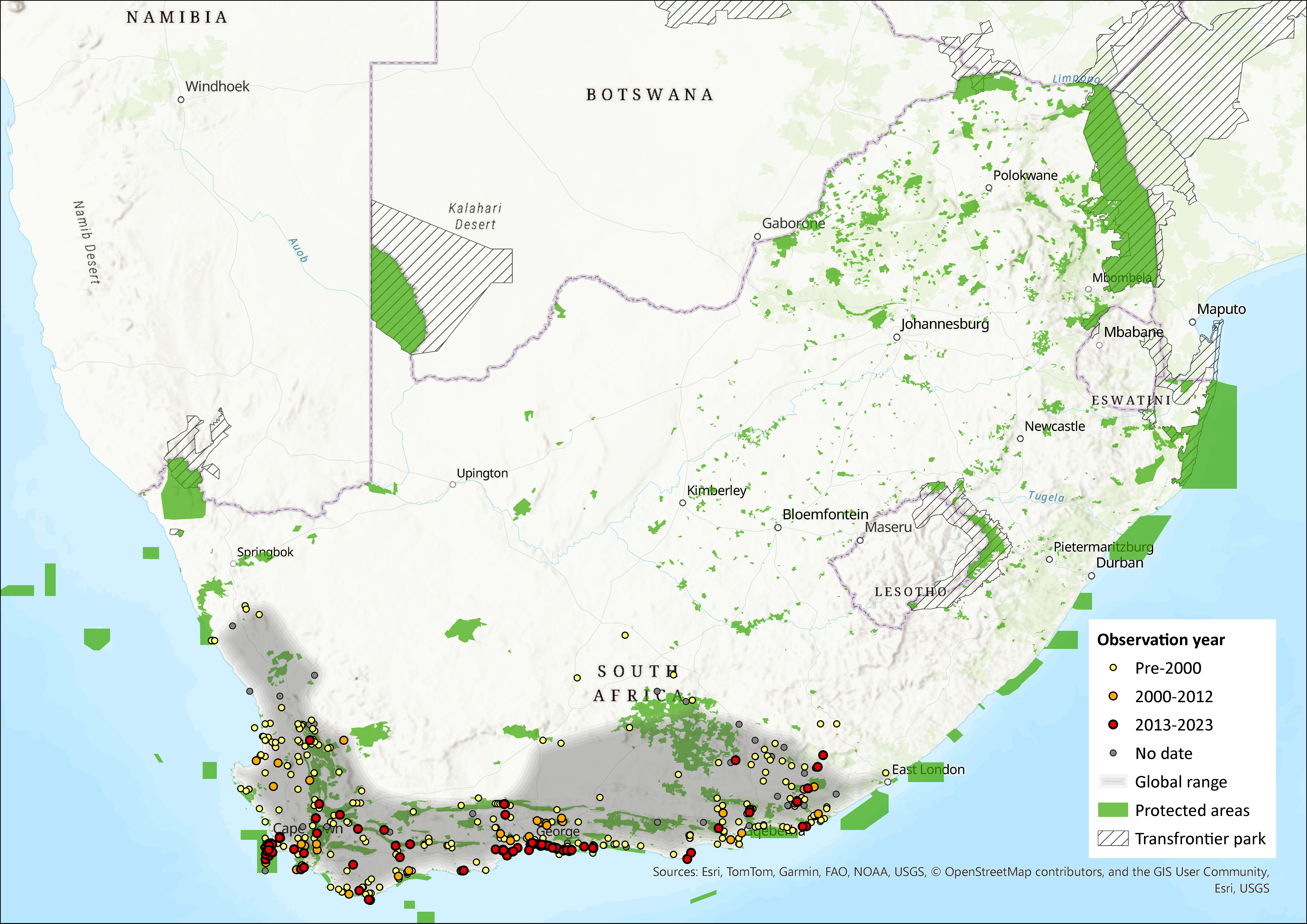
Figure 1. Distribution records for Vlei Rat (Otomys irroratus) within the assessment region (South Africa, Eswatini and Lesotho). Note that distribution data is obtained from multiple sources and records have not all been individually verified.
Biogeographic Realms
Biogeographic Realm: Afrotropical
Occurrence
Countries of Occurrence
| Country | Presence | Origin | Formerly Bred | Seasonality |
| South Africa | Extant | Native | – | – |
Large Marine Ecosystems (LME) Occurrence
Large Marine Ecosystems: (Not specified)
FAO Area Occurrence
FAO Marine Areas: (Not specified)
Climate change
No specific studies have been done on the effect of climate change on this species. Although its distribution is limited to the fynbos region, it is abundant in its range. Climate change distribution models for this species do not indicate a significant decline for this species (Cowan 2025). Nevertheless, there is a consistent loss of habitat in the eastern regions of its range that may impact negatively on the population.
Population Information
It is a common species, especially in wetlands. For example, it is more common than O. laminatus in similar habitats. However, it tends to be trap-shy (Haim and Fairall 1987, Avenant 2011). For example, from 1,170 trap nights inside and outside the Great Fish River Nature Reserve, Eastern Cape, only four individuals were sampled (Lagesse and Thondhlana 2016). The population is suspected to be declining due to ongoing degradation of habitat as a result of alien invasive plants.
Population Information
Current population trend: Declining
Continuing decline in mature individuals: Yes, inferred from ongoing degradation from habitat.
Number of mature individuals in population: Unknown
Number of mature individuals in largest subpopulation: Unknown
Number of subpopulations: Unknown
Severely fragmented: No
Quantitative Analysis
Probability of extinction in the wild within 3 generations or 10 years, whichever is longer, maximum 100 years: (Not specified)
Probability of extinction in the wild within 5 generations or 20 years, whichever is longer, maximum 100 years: (Not specified)
Probability of extinction in the wild within 100 years: (Not specified)
Population Genetics
Molecular evidence was able to identify Otomys auratus as a cryptic species of O. irroratus (Taylor et al. 2009; Engelbrecht et al. 2011). Due to the lack of phylogenetic structure (based on mtDNA), the species is thought to exist as a single ESU; however, considering its occurrence on mountain tops within the Cape Fold Mountains and extensive agricultural practices surrounding these mountains, it is anticipated that more fine scale structure exists, with mountain ranges delimiting distinct subpopulations. As such, it is possible that up to eight subpopulations exist. This will need to be confirmed using fine-scale nuclear studies. While population declines are noted for this species, estimates of effective population size (Ne) are unknown due to the lack of abundance/density data.
Habitats and ecology
This species is known from grassland and marshes in fynbos habitats and thicket biome. It generally occurs in areas of dense vegetation cover and higher moisture content. It also occurs in pine plantations. Vlei rats are exclusively herbivorous, with a diet mainly comprised of grasses (Monadjem et al. 2015). They are generally K-selected, giving birth usually to one or two offspring (maximum five) which are precocial and born with erupted incisors enabling them to nipple-cling to their mother immediately after birth (Monadjem et al. 2015).
Ecosystem and cultural services: Vlei rats are important food for a number of mammalian predators as well as raptors such as Marsh Owls (Asio capensis) and Common Barn Owls (Tyto alba) (Skinner and Chimimba 2005, Monadjem et al. 2015). For example, Vlei rats are favoured food by the Serval (Leptailurus serval) (Bowland 1990), so their range expansion could be interrelated (Power 2014). Otomys skulls typically comprise the bulk of owl pellets.
IUCN Habitats Classification Scheme
| Habitat | Season | Suitability | Major Importance? |
| 4.7. Grassland -> Grassland – Subtropical/Tropical High Altitude | – | Suitable | – |
| 5.4. Wetlands (inland) -> Wetlands (inland) – Bogs, Marshes, Swamps, Fens, Peatlands | – | Suitable | – |
| 14.3. Artificial/Terrestrial -> Artificial/Terrestrial – Plantations | – | Suitable | – |
Life History
| Generation Length | Justification | Data Quality |
| 1-2 | see Pacifici et al. 2013 | medium |
Age at maturity: female or unspecified: (Not specified)
Age at Maturity: Male: (Not specified)
Size at Maturity (in cms): Female: (Not specified)
Size at Maturity (in cms): Male: (Not specified)
Longevity: (Not specified)
Average Reproductive Age: (Not specified)
Maximum Size (in cms): (Not specified)
Size at Birth (in cms): (Not specified)
Gestation Time: (Not specified)
Reproductive Periodicity: (Not specified)
Average Annual Fecundity or Litter Size: (Not specified)
Natural Mortality: (Not specified)
Does the species lay eggs? (Not specified)
Does the species give birth to live young: (Not specified)
Does the species exhibit parthenogenesis: (Not specified)
Does the species have a free-living larval stage? (Not specified)
Does the species require water for breeding? (Not specified)
Movement Patterns
Movement Patterns: (Not specified)
Congregatory: (Not specified)
Systems
System: Terrestrial
General Use and Trade Information
This species is not known to be traded or utilised in any form.
General notes regarding trade and use of this species: (Not specified)
Local Livelihood: (Not specified)
National Commercial Value: (Not specified)
International Commercial Value: (Not specified)
End Use: (Not specified)
Is there harvest from captive/cultivated sources of this species? (Not specified)
Harvest Trend Comments: (Not specified)
Threats
Although this species is not under significant threat at present, there are three main threats that may cause population decline in the future:
1) Wetland habitat loss and degradation from agricultural expansion, human settlement sprawl and agroforestry. Wetlands are the most threatened ecosystem in South Africa (Driver et al. 2012). The South African National Land-Cover change report found a 32.8% decline in natural wetlands nationally from 1990-2013/14, which is a combination of both genuine wetland loss through anthropogenic activities and the generally drier conditions currently that in 1990 (GeoTerraImage 2015). In the Western Cape, specifically, 31% of all wetlands (plus a 32m buffer) and riparian areas have been transformed/lost to agricultural land use (Pence 2012). Water abstraction or filling in of wetlands from human settlement and industrial expansion also leads to habitat loss. Similarly, suppression of natural ecosystem processes, such as fire, can also lead to habitat degradation through bush encroachment or loss of plant diversity through alien invasive species, and is suspected to be increasing with human settlement expansion. Overall, 45% of our remaining wetland area exists in a heavily modified condition, due primarily to on-site modification from crop cultivation, coal mining, urban development, dam construction, and overgrazing (and thus erosion) and off-site modifications from disruptions to flow regime and deterioration of water quality (Driver et al. 2012).
2) Climate change is projected to reduce AOO by 12-24% by 2050 through decreasing habitat suitability (Taylor et al. 2016). Most of these habitat declines will occur in the Western Cape because, while the fynbos component of the Eastern Cape will be reduced (Cowan 2025), the species is able to persist in thicket habitats and thus its future distribution in this region will be relatively unaltered. Climate change distribution models for this species do not indicate a significant decline for this species (Cowan 2025).
3) Overgrazing the vegetation around wetlands reduces ground cover and thus leads to decreased small mammal diversity and abundance (Bowland and Perrin 1989, 1993). The expansion of wildlife ranching will have to be monitored in this regard, as game overstocking may also affect wetland condition.
Overgrazing and climate change may synergise to cause non-linear and accelerating population decline. More research is needed to validate these hypotheses.
Conservation
This species occurs within several protected areas within the Western and Eastern Cape, although these are yet to be comprehensively documented. Although no specific interventions are necessary at present, the conservation and restoration of wetlands would greatly benefit this species. The following interventions are thus encouraged:
- Using previously cultivated areas for development instead of remaining natural areas.
- Land managers should maintain a vegetation buffer around wetlands to reduce impacts of land-use practices (Driver et al. 2012).
- Holistic management of ranchlands: including de-stocking, rotational grazing and buffering wetland vegetation, are encouraged.
Recommendations for land managers and practitioners:
- Land managers should decrease stocking rates to maintain vegetation around wetlands.
- Prioritise old fields for development in systematic conservation planning.
Research priorities:
- Long-term, systematic monitoring is needed to establish subpopulation trends and threat levels.
- Fine scale studies on habitat loss and inferred impact on the species.
- Effects of overgrazing on the density and viability of this species.
- Effects of habitat connectivity on dispersal rates.
- Further vetting of museum records to delimit distribution more accurately.
Encouraged citizen actions:
- Report vlei rat sightings on virtual museum platforms (for example, iNaturalist and MammalMAP); the feeding signs of vlei rat are easy to detect when one delves into the reedbeds (Skinner & Chimimba 2005).
Bibliography
Avenant, N.L. 2011. The potential utility of rodents and other small mammals as indicators of ecosystem “integrity” of South African grasslands. Wildlife Research 38: 626–639.
Bowland, A.E. and Perrin, M.R. 1989. The effect of overgrazing on the small mammals in Umfolozi Game Reserve. Zeitschrift für Säugetierkunde 54: 251–260.
Bowland, J.M. 1990. Diet, home range and movement patterns of serval on farmland in Natal. Department of Zoology and Entomology, University of Natal.
Bowland, J.M. and Perrin, M.E. 1993. Wetlands as reservoirs of small-mammal populations in the Natal Drakensberg. South African Journal of Wildlife Research 23: 39–43.
Cowan, OS. 2025. Modelling the change in potential species distribution of Vlei Rat (Otomys irroratus) under predicted future climate change scenarios. Technical Report, Endangered Wildlife Trust.
Driver, A., Sink, K.J., Nel, J.N., Holness, S., Van Niekerk, L., Daniels, F., Jonas, Z., Majiedt, P.A., Harris, L. and Maze, K. 2012. National Biodiversity Assessment 2011: An assessment of South Africa’s biodiversity and ecosystems. Synthesis Report. South African National Biodiversity Institute and Department of Environmental Affairs, Pretoria, South Africa.
Engelbrecht, A., Taylor, P.J., Daniels, S.R. and Rambau, R.V. 2011. Cryptic speciation in the southern African vlei rat Otomys irroratus complex: evidence derived from mitochondrial cyt b and niche modelling. Biological Journal of the Linnean Society 104: 192–206.
GeoTerraImage. 2015. 1990-2013/14 South African National Land-Cover Change. DEA/CARDNO SCPF002: Implementation of Land-Use Maps for South Africa. Project Specific Data Report.
Haim A., Fairall N. 1987. Bioenergetics of an herbivorous rodent Otomys irroratus. Physiological Zoology 60: 305–309.
IUCN. 2017. The IUCN Red List of Threatened Species. Version 2017-2. Available at: www.iucnredlist.org. (Accessed: 14 September 2017).
Lagesse J.V., Thondhlana G. 2016. The effect of land-use on small mammal diversity inside and outside the Great Fish River Nature Reserve, Eastern Cape, South Africa. Journal of Arid Environments 130: 76–83.
Monadjem, A., Taylor, P.J., Denys, C. and Cotterill, F.P.D. 2015. Rodents of Sub-Saharan Africa – a biogeographic and taxonomic synthesis. De Gruyter, Berlin/Munich/Boston.
Pence, Q.D.K. 2012. Contribution of C.A.P.E. Business and Biodiversity Initiatives to conservation of critical biodiversity, landscape connectivity and ecological support areas: Post-baseline assessment (2010). A Green Choice Alliance project report. Conservation South Africa, Cape Town.
Power, R.J. 2014. The distribution and status of mammals in the North West Province. Department of Economic Development, Environment, Conservation & Tourism, North West Provincial Government, Mahikeng.
Skinner, J.D. and Chimimba, C.T. (eds). 2005. The Mammals of the Southern African Subregion. Cambridge University Press, United Kingdom, Cambridge.
Taylor P.J. 2013. Otomys irroratus Southern African Vlei Rat. In: Happold D.C.D. (ed.), Mammals of Africa Volume III: Rodents, Hares and Rabbits, pp. 583-585. Bloomsbury, London.
Taylor P.J., Lavrenchenko L.A., Carleton M.D., Bennett N.C., Oosthuizen C.J., Maree S. 2011. Specific limits and emerging diversity patterns in East African populations of laminate-toothed rats, genus Otomys (Muridae: Murinae: Otomyini): revision of the Otomys typus complex. Zootaxa 3024: 1-66.
Taylor, P. 1998. The Smaller Mammals of KwaZulu-Natal. University of Natal Press, Pietermaritzburg, South Africa.
Taylor, P.J., Maree, S., van Sandwyk, J., Baxter, R. and Rambau, R.V. 2009. When is a species not a species? Uncoupled phenotypic, karyotypic and genotypic divergence in two species of South African laminate-toothed rats (Murinae: Otomyini). Journal of Zoology 277: 317–332.
Taylor, P.J., Nengovhela, A., Linden, J. and Baxter, R.M. 2016. Past, present, and future distribution of Afromontane rodents (Muridae: Otomys) reflect climate-change predicted biome changes. Mammalia 80: 359–375.
Taylor, P. J., Kearney, K., Dalton, D., Mataruse, G., Kelly, C. M. R. and Barker, N. P. 2020. Biomes, geology and past climate drive speciation of laminate-toothed rats on South African mountains (Murinae: Otomys). Zoological Journal of the Linnean Society 189: 1046–1066, https://doi.org/10.1093/zoolinnean/zlz134.