
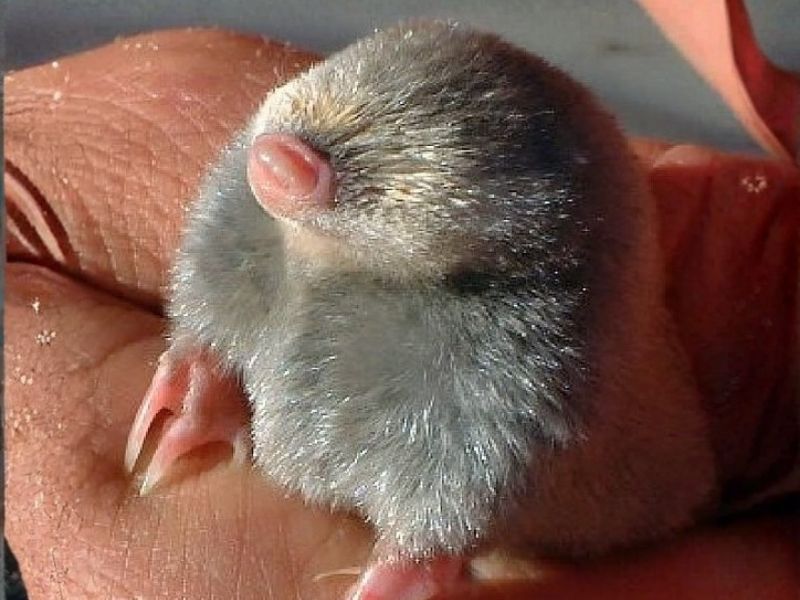
Van Zyl’s Golden Mole
Cryptochloris zyli

2025 Red list status
Endangered

Regional Population Trend
Unknown

Change compared
to 2016
No Change
Overview
Cryptochloris zyli – Shortridge & Carter, 1938
ANIMALIA – CHORDATA – MAMMALIA – AFROSORICIDA – CHRYSOCHLORIDAE – Cryptochloris – zyli
Common Names: Van Zyl’s Golden Mole (English), Van Zyl se Gouemol (Afrikaans)
Synonyms: No Synonyms
Taxonomic Note:
Simonetta (1968) regarded this species as only subspecifically distinct from C. wintoni. Consistent with this, Mynhardt et al. (2024) found relatively low levels of mitochondrial sequence divergence between the two taxa. In the six-gene dataset of Bronner et al. (2024), C. zyli was represented by all of them (12S rRNA, cytB, ND2, GHR, vWF, stat5a) and C. wintoni by four, missing vWF and stat5a. Molecular branch lengths separating these two species are among the shortest in that study (Bronner et al. 2024: fig. 10), but not that much shorter than branch lengths separating other species pairs, such as Chlorotalpa duthieae and C. sclateri and Amblysomus robustus and A. septentrionalis. Anatomically, and although very few specimens from either species are known, there are a few differences in anatomy, with C. wintoni exhibiting a slightly higher ratio of skull width/length (Bronner et al. 2024: character 66), a more pronounced centrobuccal cleft of the upper second molar (Bronner et al. 2024: character 93), a shorter first metacarpal length (Bronner et al. 2024: character 142), and a more laterally directed flexor process on the distal phalanx of digit III (Bronner et al. 2024: character 148) relative to C. zyli. Meester (1986) and Helgen and Wilson (2001) reported a darker pelage in C. zyli compared to C. wintoni; Meester (1986) also referred to a more “elongated” malleus shape in C. zyli.
Red List Status: EN – Endangered, B1ab(iii)+2ab(iii) (IUCN version 3.1)
Assessment Information
Assessor: Mynhardt, S.1 & da Silva, J.2
Reviewer: Asher, R.J.3
Institutions: 1Endangered Wildlife Trust, 2South African National Biodiversity Institute, 3University of Cambridge
Previous Assessor: Bronner, G.
Previous Reviewers: Asher, R.J. & Taylor, A.
Assessment Rationale
This species is known only from two locations near Lambert’s Bay, Western Cape, and near Groenriviermond, Northern Cape (Taylor et al.2018). The extent of occurrence (EOO) is estimated to be just under 5,000 km2 and area of occupancy (AOO) is estimated to be 32 km2 (assuming a grid cell area of 16 km2). Dramatic habitat alteration owing to mining of coastal sands for alluvial diamonds and heavy metals could be impacting on the coastal dune habitats of this species. Large-scale alluvial diamond and mineral mines occur at Hondeklipbaai (about 60 km from the Groenriviermond subpopulation) and are undergoing expansion. Habitat alteration owing to the erection of wind farms near the type locality is a potential but localised threat. The species is therefore confirmed as Endangered under criterion B1ab(iii)+2ab(iii).
Reasons for Change
Reason(s) for Change in Red List Category from the Previous Assessment: No change
Red List Index
Red List Index: No change
Recommended citation: Mynhardt S & da Silva JM. 2025. A conservation assessment of Cryptochloris zyli. In Patel T, Smith C, Roxburgh L, da Silva JM & Raimondo D, editors. The Red List of Mammals of South Africa, Eswatini and Lesotho. South African National Biodiversity Institute and Endangered Wildlife Trust, South Africa.
Regional Distribution and occurrence
Geographic Range
First recorded at the type locality near Lambert’s Bay, Western Cape, South Africa (Helgen and Wilson 2001). Another specimen was collected at Groenriviermond, some 150 km further north along the Namaqualand coast in November 2003 (Northern Cape), suggesting that the range of this species is more extensive than previously recognised, perhaps due to the difficulty in catching these moles. Environmental DNA supports a more widespread distribution of Cryptochloris along the Namaqua coastal region. However, this finding is yet to be corroborated by observations of this species at additional sites (Mynhardt et al. 2024). Range continuity between the two known localities cannot be justifiably assumed as so little is known about the ecological requirements and tolerances of this species.
Estimated AOO: 32 km2
Continuing decline in AOO: Yes
Extreme fluctuations of AOO: No
Estimated EOO: 5,000 km2
Number of locations: 2
Elevation / Depth / Depth Zones
Elevation Lower Limit (in metres above sea level): (Not specified)
Elevation Upper Limit (in metres above sea level): (Not specified)
Depth Lower Limit (in metres below sea level): (Not specified)
Depth Upper Limit (in metres below sea level): (Not specified)
Depth Zone: (Not specified)
Map
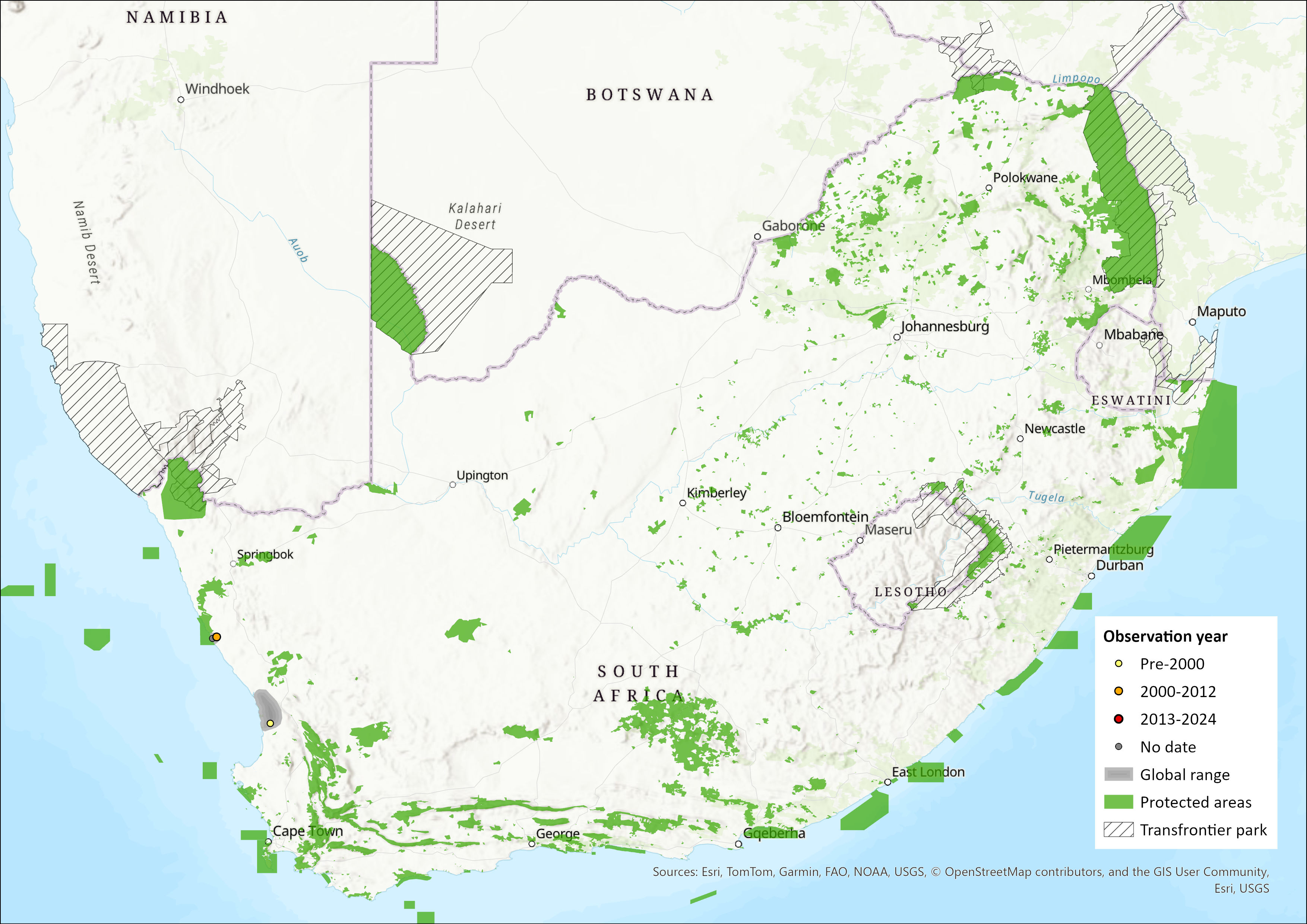
Figure 1. Distribution records for Van Zyl’s Golden Mole (Cryptochloris zyli) within the assessment region (South Africa, Eswatini and Lesotho). Note that distribution data is obtained from multiple sources and records have not all been individually verified.
Biogeographic Realms
Biogeographic Realm: Afrotropical
Occurrence
Countries of Occurrence
| Country | Presence | Origin | Formerly Bred | Seasonality |
| South Africa | Extant | Native | – | Resident |
| South Africa -> Northern Cape Province | Extant | Native | – | Resident |
| South Africa -> Western Cape | Extant | Native | – | Resident |
Large Marine Ecosystems (LME) Occurrence
Large Marine Ecosystems: (Not specified)
FAO Area Occurrence
FAO Marine Areas: (Not specified)
Climate change
Although the potential impacts of climate change on this species have not been directly assessed, climate change is expected to impact most golden mole species. Since these subterranean animals are restricted to soft soils for burrowing, and have very low vagility, their ability to migrate or shift their distribution ranges in response to climate change is very limited. Climate change is likely to impact golden moles through changes in vegetation type, soil moisture and prey availability, and coastal species additionally through reduced available habitat in developed/developing areas, as rising sea levels reduce the area of undeveloped coastal dune habitats between the coast and its associated developments.
Population information
This species is extremely rare even at the two locations where it is known to occur. No quantitative data are available.
Current population trend: Unknown
Continuing decline in mature individuals? Unknown
Extreme fluctuations in the number of subpopulations: (Not specified)
Continuing decline in number of subpopulations: (Not specified)
All individuals in one subpopulation: (Not specified)
Number of mature individuals in population: Unknown
Number of mature individuals in largest subpopulation: Unknown
Number of Subpopulations: 2
Severely fragmented: Yes. Possibly, Only 2 known occurrence records ~150km apart.
Quantitative Analysis
Probability of extinction in the wild within 3 generations or 10 years, whichever is longer, maximum 100 years: (Not specified)
Probability of extinction in the wild within 5 generations or 20 years, whichever is longer, maximum 100 years: (Not specified)
Probability of extinction in the wild within 100 years: (Not specified)
Population genetics
No population genomic studies have been undertaken on this species; however, based on the available information it is assumed to exist as two geographically isolated and genetically distinct subpopulations. Further sampling and molecular investigations are needed to refute or verify this assumption, but this will be difficult due to the cryptic nature of this species. Additional eDNA investigations would be a good start to help refine more intensive search efforts.
Due to limited data, no estimates of effective population size can be provided.
Habitats and ecology
The habitat of this species is expected to consist of the coastal dune belt and adjacent sandy areas in Strandveld Succulent Karoo (Nama-Karoo biome) of the Namaqua coastal plain in the Western and Northern Cape provinces. As yet, nothing is known about the diet, reproduction or behaviour of this species.
IUCN Habitats Classification Scheme
| Habitat | Season | Suitability | Major Importance? |
| 3.5. Shrubland -> Shrubland – Subtropical/Tropical Dry | Resident | Suitable | Yes |
| 3.8. Shrubland -> Shrubland – Mediterranean-type Shrubby Vegetation | Resident | Suitable | Yes |
Life History
Generation Length: (Not specified)
Age at Maturity: Female or unspecified: (Not specified)
Age at Maturity: Male: (Not specified)
Size at Maturity (in cms): Female: (Not specified)
Size at Maturity (in cms): Male: (Not specified)
Longevity: (Not specified)
Average Reproductive Age: (Not specified)
Maximum Size (in cms): 9
Size at Birth (in cms): (Not specified)
Gestation Time: (Not specified)
Reproductive Periodicity: (Not specified)
Average Annual Fecundity or Litter Size: (Not specified)
Natural Mortality: (Not specified)
Breeding Strategy
Does the species lay eggs? No
Does the species give birth to live young? Yes
Does the species exhibit parthenogenesis? No
Does the species have a free-living larval stage? No
Does the species require water for breeding? No
Movement Patterns
Movement Patterns: (Not specified)
Congregatory: (Not specified)
Systems
System: Terrestrial
General Use and Trade Information
General notes regarding trade and use of this species: This species is not known to be utilised or traded in any form.
Local Livelihood: (Not specified)
National Commercial Value: (Not specified)
International Commercial Value: (Not specified)
End Use: (Not specified)
Is there harvest from captive/cultivated sources of this species? (Not specified)
Harvest Trend Comments: (Not specified)
Threats
Dramatic habitat alteration owing to large-scale mining of coastal sands for alluvial diamonds and heavy metals could be impacting on the coastal dune habitats of this species, as large-scale alluvial diamond mines occur at Hondeklipbaai (~60 km from the Groenriviermond subpopulation) and undergoing expansion. However, the extent and impact of this potential threat is unknown. Habitat alteration associated with the establishment of wind farms near the type locality, and tourism developments along the west coast may pose additional threats.
Continuing decline in area, extent and/or quality of habitat: Yes. Ongoing habitat loss from coastal diamond mining and development. Additionally, urban and rural settlements expanded by 15% and 9% between 2000 and 2013 in Northern Cape Province (GeoTerraImage 2015).
Conservation
This species occurs near Lambert’s Bay and near the Groenrivier mouth in Namaqua National Park. Research is needed to establish distribution limits and to gather basic data on natural history of this species.
Recommendations for land managers and practitioners:
- Field surveys to locate additional subpopulations and assess the extent of anthropogenic threats are urgently needed.
- Assessment of population viability within rehabilitated mining areas.
- Assessment of connectivity among subpopulations.
Research priorities:
- Ecological requirements and niche tolerances.
- Systematic surveying to accurately delimit distribution
- Population genetic analysis including representatives of all known subpopulations representative of entire distribution range to identify and quantify population substructure and levels of historic and current gene flow.
- Studies assessing subpopulation trends and the severity of threats outside of protected areas.
- Research into population recoveries in rehabilitated mined areas.
Encouraged citizen actions:
- Report sightings on virtual museum platforms (for example, iNaturalist and MammalMAP), especially outside protected areas.
- Deposit any dead specimens found in a state or provincial museum, together with information on the date and site where found.
- Create indigenous vegetation gardens.
Bibliography
Afrotheria Specialist Group. 2014. Specialist Group website. Available at: http://www.afrotheria.net/index.php.
Asher, R.J., Maree, S., Bronner, G., Bennett, N.C., Bloomer, P., Czechowski, P., Meyer, M. and Hofreiter, M. 2010. A phylogenetic estimate for golden moles (Mammalia, Afrotheria, Chrysochloridae). BMC Evolutionary Biology 10: 69 (doi:10.1186/1471-2148-10-69).
Bronner, G.N. 2013. Cryptochloris zyli. In: J. Kingdon, D. Happold, T. Butynski, M. Hoffmann, M. Happold and J. Kalina (eds), Mammals of Africa, Volume I: Introductory Chapters and Afrotheria, pp. 250-251. Bloomsbury Publishing, London.
Bronner, G.N. and Jenkins, P.D. 2005. Order Afrosoricida. In: D.E. Wilson and D.M. Reeder (eds), Mammal Species of the World, pp. 70-81. The Johns Hopkins University Press, Baltimore, MD, USA.
GeoTerraImage. 2015. Quantifying settlement and built-up land use change in South Africa. Pretoria.
Helgen, K.M. and Wilson, D.E. 2001. Additional material of the enigmatic golden mole Cryptochloris zyli, with notes on the genus Cryptochloris (Mammalia: Chrysochloridae). African Zoology 36: 110-112.
IUCN. 2015. The IUCN Red List of Threatened Species. Version 2015.2. Available at: www.iucnredlist.org. (Accessed: 23 June 2015).
Meester, J. 1974. Family Chrysochloridae. Smithsonian Institution Press, Washington, DC, USA.
Meester, J.A.J., Rautenbach, I.L., Dippenaar, N.J. & Baker, C.M. 1986. Classification of Southern African Mammals. Transvaal Museum Monograph 5:14-24.
Mynhardt, S., Matthew, E., Le Roux, J.P., Little, I., Bloomer, P. and Theron, C., 2024. Environmental DNA from soil reveals the presence of a “lost” Afrotherian species. Biodiversity and Conservation 33(1), pp.31-50.
Simonetta, A.M. 1968. A new golden mole from Somalia with an appendix on the taxonomy of the family Chrysochloridae (Mammalia, Insectivora). Monitore zoologici Italiano, Supplement 2: 27–55.
Smithers, R.H.N. 1986. South African Red Data Book – Terrestrial Mammals. South African National Scientific Programmes Report 125: 1–216.
Taylor WA, Mynhardt S, Maree S (2018). Family Chrysochloridae. In: Handbook of the Mammals of the World – Volume 8 Insectivores, Sloths and Colugos. DE Wilson & RA Mittermeier (eds). Lynx Edicions. ISBN-13: 978-84-16728-08-4.