
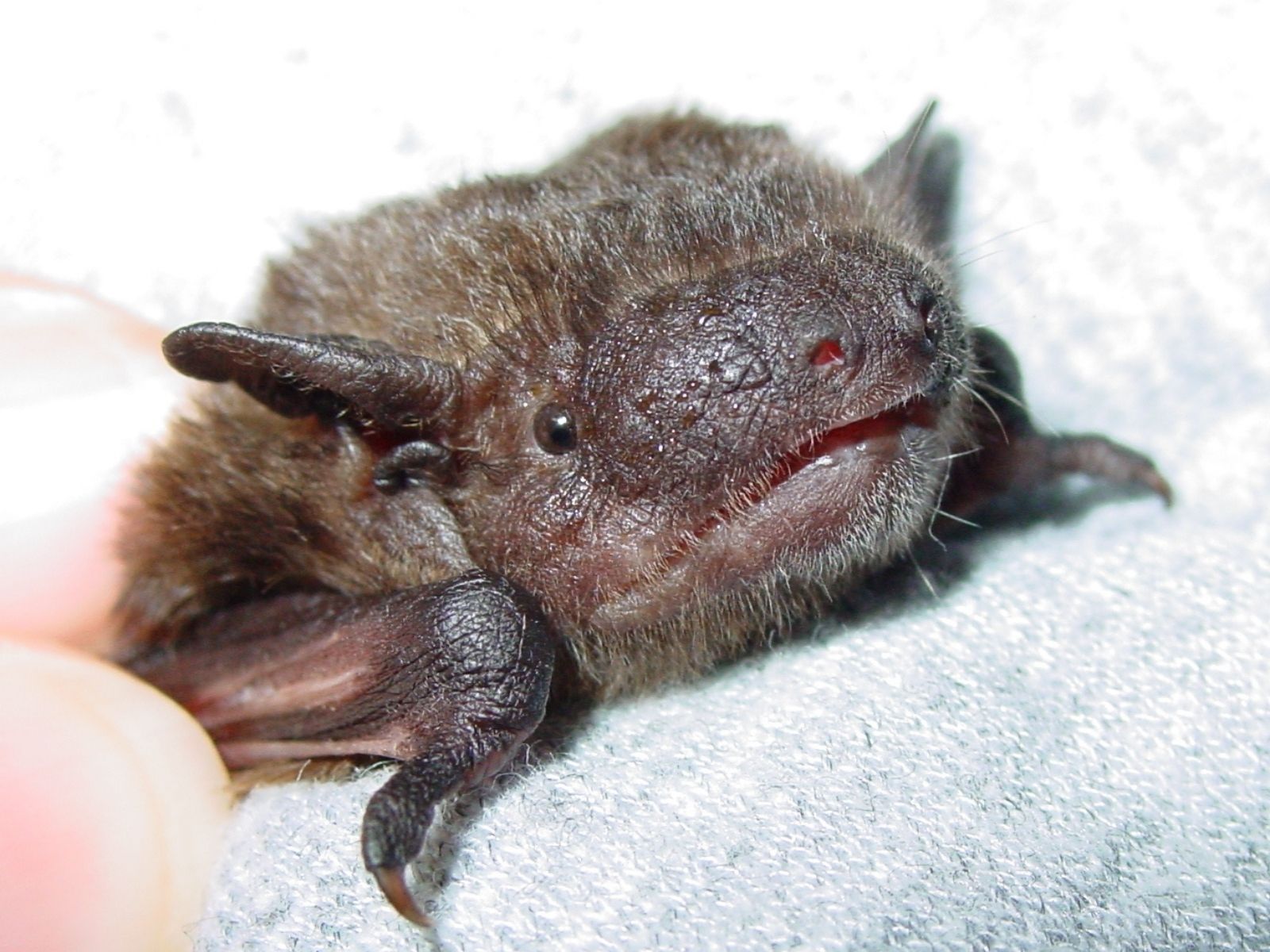
Thomas’ House Bat
Scotoecus albofuscus

2025 Red list status
Near threatened

Regional Population Trend
Unknown

Change compared
to 2016
No Change
Overview
Scotoecus albofuscus – (Thomas, 1890)
ANIMALIA – CHORDATA – MAMMALIA – CHIROPTERA – VESPERTILIONIDAE – Scotoecus – albofuscus
Common Names: Light-winged Lesser House Bat, Thomas’ House Bat, Thomas’s Lesser House Bat (English), Thomas se Vlermuis (Afrikaans)
Synonyms: Scotoecus albofuscus Thomas, 1917 ssp. woodi
Taxonomic Note:
Meester et al. (1986) listed one subspecies from the assessment region: Scotoecus albofuscus woodii Thomas, 1917. However, its relationship with the nominate subspecies is not currently clear, as too few specimens have been collected to enable a taxonomic assessment (Monadjem et al. 2020).
Red List Status: NT – Near Threatened D1 + 2 (IUCN version 3.1)
Assessment Information
Assessors: Richards, L.R.1 & da Silva, J.M.2
Reviewer: Richardson, E.J.3
Institutions: 1Durban Natural Science Museum, 2South African National Biodiversity Institute, 3Independent Consultant at Richardson & Peplow Environmental
Previous Assessors and Reviewers: Richards, L.R., White, W., Cohen, L., Jacobs, D., MacEwan, K., Monadjem, A., Schoeman, C. & Taylor, P.
Previous Contributors: Raimondo, D., Child, M.F. & Sethusa, T.
Assessment Rationale
The species is currently listed as Data Deficient according to the Global IUCN Red List, on account of the uncertainty of its distributional range in Africa, habitat requirements and roosting ecology, and threats to wild populations throughout its range (Jacobs et al. 2019). Within the assessment region, this rarely recorded species is known only from a few KwaZulu-Natal localities, including the iSimangaliso Wetland Park. It is unknown whether its habitat is under threat because its habitat requirements are inadequately understood. Furthermore, it is speculated that the species may be more widespread than the current records suggest (current estimated extent of occurrence is 1,796 km2). Further field studies are needed to ascertain this, and the species should be reassessed once more comprehensive data are available because it could qualify for a threatened status. Based on current information, this species qualifies as Near Threatened D1 + 2 as the number of localities within the assessment region is only five with <1000 individuals, but it is unclear whether there are any plausible threats. Should further data reveal threats that could rapidly affect all individuals within the known localities, the species will qualify for Vulnerable or Endangered D1 + 2.
Regional population effects: It has medium wing loading (Schoeman & Jacobs 2008) and thus presumed to have adequate dispersal capacity but has a disjunct distribution between the assessment region and the closest extra-regional record in Zinave National Park in Mozambique (Monadjem et al. 2020). Thus, we assume no significant rescue effects are possible.
Reasons for Change
Reason(s) for Change in Red List Category from the Previous Assessment: No change
Red List Index
Red List Index: No change
Recommended citation: Richards LR & da Silva JM. 2025. A conservation assessment of Scotoecus albofuscus. In Patel T, Smith C, Roxburgh L, da Silva JM & Raimondo D, editors. The Red List of Mammals of South Africa, Eswatini and Lesotho. South African National Biodiversity Institute and Endangered Wildlife Trust, South Africa.
Regional Distribution and occurrence
Geographic Range
This species has been sparsely recorded from across South Africa, Mozambique, Zambia and southern Malawi and also from scattered localities in Benin, Sierra Leone, The Gambia, Senegal, northern Uganda, southern Kenya, Tanzania, southeastern Democratic Republic of the Congo and Nigeria (Monadjem et al. 2020, ACR 2024). Within southern Africa, it is known from Zinave National Park in southern Mozambique (Cotterill 2001), Lusaka in Zambia and Chiromo in Malawi (Happold et al. 1987). Within the assessment region, it is known from St Lucia (Kearney & Taylor 1997), a suburb of Durban (Taylor et al. 2004). The Bat Interest Group of KwaZulu-Natal (BatsKZN) has grounded bat records from Durban, Empangeni, Merensee and Pongola. It was recorded for the first time in South Africa when two amateur bat workers responded to distress calls by a pregnant female bat (Bat Interest Group of KwaZulu-Natal unpubl. data). The estimated extent of occurrence is 1,796 km2. However, it is probably more widespread than current records suggest (Bronner et al. 2003).
Elevation / Depth / Depth Zones
Elevation Lower Limit (in metres above sea level): Unknown
Elevation Upper Limit (in metres above sea level): Unknown
Depth Lower Limit (in metres below sea level): N/A
Depth Upper Limit (in metres below sea level): N/A
Depth Zone: N/A
Map
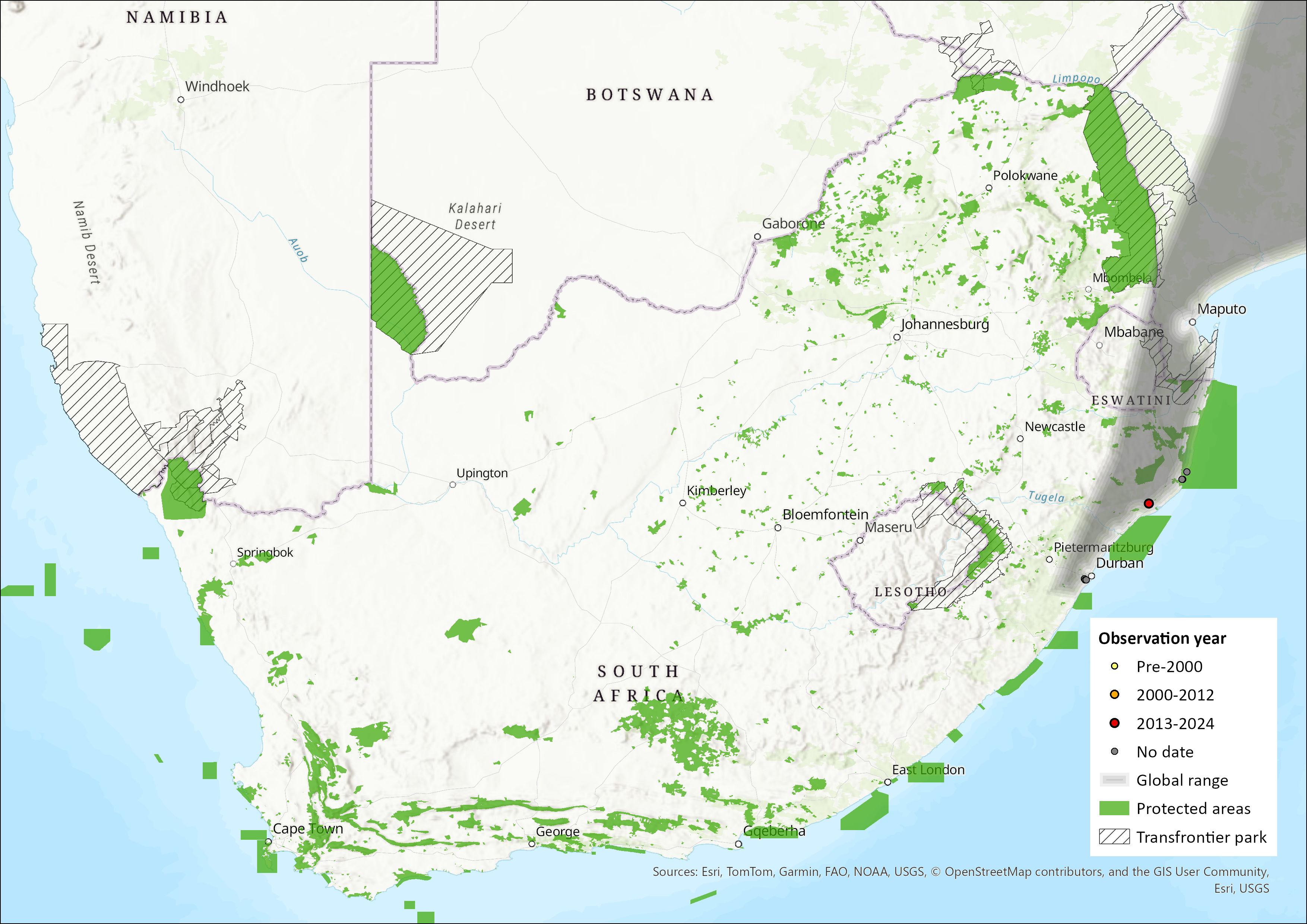 Figure 1. Distribution records for Thomas’ House Bat (Scotoecus albofuscus) within the assessment region (South Africa, Eswatini and Lesotho). Note that distribution data is obtained from multiple sources and records have not all been individually verified.
Biogeographic Realms
Biogeographic Realm: Afrotropical
Occurrence
Countries of Occurrence
| Country | Presence | Origin | Formerly Bred | Seasonality |
| Benin | Extant | Native | – | – |
| Cameroon | Extant | Native | – | |
| Central African Republic | Extant | Native | – | |
| Congo, The Democratic Republic of the | Extant | Native | – | – |
| Côte d’Ivoire | Extant | Native | – | – |
| Gambia | Extant | Native | – | – |
| Ghana | Extant | Native | – | – |
| Kenya | Extant | Native | – | – |
| Malawi | Extant | Native | – | – |
| Mali | Extant | Native | – | – |
| Mozambique | Extant | Native | – | – |
| Niger | Extant | Native | – | – |
| Nigeria | Extant | Native | – | – |
| Senegal | Extant | Native | – | – |
| Sierra Leone | Extant | Native | – | – |
| South Africa | Extant | Native | – | – |
| Sudan | Extant | Native | – | – |
| Tanzania, United Republic of | Extant | Native | – | – |
| Uganda | Extant | Native | – | – |
| Zambia | Extant | Native | – | – |
Large Marine Ecosystems (LME) Occurrence
Large Marine Ecosystems: N/A
FAO Area Occurrence
FAO Marine Areas: N/A
Climate change
No studies have been conducted on the potential impacts of climate change on the species. Given the limited species distribution data, no predictive modelling studies can be undertaken. Despite these limitations, it is presumed that increasing temperatures, coupled with erratic rainfall patterns and increased drought, will likely impact the species distribution, as seen elsewhere (Adams & Hayes 2008).
Population information
This species is rare, reflected by its poor representation in museums with just six records examined in Monadjem et al. (2020). Little information is available on the abundance or population size of this species. Pregnant females have been encountered in November, suggesting that births coincide with the peak of summer. One grounded female gave birth to two young, suggesting twins are possible (Bat Interest Group of KwaZulu-Natal unpubl. data). Further field surveys are needed to determine colony sizes and trends.
Current population trend: Unknown
Continuing decline in mature individuals: Unknown
Number of subpopulations: One
Extreme fluctuations in the number of subpopulations: Unknown
Continuing decline in number of subpopulations: Unknown
All individuals in one subpopulation: Presumed
Number of mature individuals in largest subpopulation: Unknown
Quantitative Analysis
Probability of extinction in the wild within 3 generations or 10 years, whichever is longer, maximum 100 years: Unknown
Probability of extinction in the wild within 5 generations or 20 years, whichever is longer, maximum 100 years: Unknown
Probability of extinction in the wild within 100 years: Unknown
Population genetics
No population genetic study has been conducted on S. albofuscus. While only five localities have been identified in the assessment region for this species, it is possible that additional colonies exist, and the species is more widespread. Considering the high wing load of the species, they are likely capable of travelling distances between colonies. Therefore, it is assumed the species exists as a metapopulation, connected to colonies in Mozambique.
Given that there is insufficient data on population size, it is not possible to estimate effective population size. Population genetic studies, using historic specimen material coupled with genetic material sampled from grounded bats, would be beneficial to better understand the genetic structure and diversity within this species.
Habitats and ecology
The natural history of this species is very poorly known. The Malawi specimen was taken from the leaves of a Hyphaene palm tree in a forest (Happold et al. 1987). In the assessment region, the species is recorded from the Indian Ocean Coastal Belt. It appears to be associated with low-lying, humid savannahs of the coastal plains of Mozambique and northern KwaZulu-Natal, especially where large rivers or wetlands occur. It has been recorded from Dune Forest in KwaZulu-Natal (Kearney & Taylor 1997) and may occur in mangrove forests (W. White unpubl. data). Empangeni and Merensee grounded animals were collected near golf courses and the St Lucia record was collected from a public camp site (Bat Interest Group of KwaZulu-Natal unpubl. data), indicating that it might be synanthropic. It is insectivorous, feeding mainly on Hemiptera, Diptera and Coleoptera (Whitaker & Mumford 1978).
Ecosystem and cultural services: None known
IUCN Habitats Classification Scheme
| Habitat | Season | Suitability | Major Importance? |
| 1.5. Forest -> Forest – Subtropical/Tropical Dry | – | Suitable | – |
|
1.6. 1.5. Forest -> Forest – Subtropical/Tropical Moist |
Suitable | ||
| 2.1. Savanna -> Savanna – Dry | – | Suitable | – |
Life History
Generation Length: Unknown
Age at Maturity: Female or unspecified: Unknown
Age at Maturity: Male: Unknown
Size at Maturity (in cms): Female: Forearm length = 3.1 cm (Durban Natural Science Museum records)
Size at Maturity (in cms): Male: Forearm length = 2.98 cm (Durban Natural Science Museum records)
Longevity: Unknown
Average Reproductive Age: Unknown
Maximum Size (in cms): Unknown
Size at Birth (in cms): Unknown
Gestation Time: Unknown
Reproductive Periodicity: Grounded pregnant females have been recorded in November, suggesting that birth occurs within the summer months (Kearney & Taylor 1997, Taylor 1998, Bats KZN unpublished data)
Average Annual Fecundity or Litter Size: Unknown
Natural Mortality: Unknown
Breeding Strategy
Does the species lay eggs? No
Does the species give birth to live young: Yes
Does the species exhibit parthenogenesis: No
Does the species have a free-living larval stage? No
Does the species require water for breeding? No
Movement Patterns
Movement Patterns: Unknown
Congregatory: Unknown
Systems
System: Terrestrial
General Use and Trade Information
It is not known to be utilised or traded in any form.
|
Subsistence: |
Rationale: |
Local Commercial: |
Further detail including information on economic value if available: |
|
Yes |
– |
– |
– |
National Commercial Value: Yes, as an aerial insectivore that can contribute towards insect pest management
International Commercial Value: No
End Use: N/A
Is there harvest from captive/cultivated sources of this species? None that we know of
Harvest Trend Comments: N/A
Threats
Based on limited knowledge, there appears to be no major threats to this species as its habitats are fairly well protected within the assessment region, and it can occur in human modified habitats. However, the population size is believed to be <1000 individuals, suggesting that this species may be susceptible to rapid changes in the environment, be it natural or human induced. More research is needed into potential local threats facing the species.
Conservation
No specific interventions are possible at present as further studies are needed into the distribution, natural history and possible threats to this relatively widespread yet very poorly known species. Within the assessment region, this species is presumably protected within the iSimangaliso Wetland Park. Protected area expansion will benefit this species, but specialised research into its habitat requirements is a prerequisite. Historic Bat Interest Group records suggest that the species is capable of utilising urbanised areas including eco-estates, however further investigations are necessary to verify the extent of this utilisation. Retention of landscape features such as watercourses and wetlands in such areas may promote the occurrence of the species.
Recommendations for land managers and practitioners:
- Preserve and/or expand riparian habitats and wetlands in the regions where the species is known to occur.
Research priorities:
- Focussed field surveys throughout the northeastern regions of the assessment area, inclusive of natural and urban environments, to delimit the geographical distribution, subpopulation size and habitat preferences (Bronner et al. 2003).
- Gather further echolocation call data for identification of free-flight calls of the species.
- Quantification of threats potentially facing this species, including increased urbanisation and climate change.
- Phylogenetic studies to determine the relationship between individuals within the assessment region to those elsewhere in Africa.
Encouraged citizen actions:
- Report live sightings on virtual museum platforms (for example, iNaturalist and MammalMAP).
- Report all grounded bats to a bat interest group, such as the Bat Interest Group of KwaZulu-Natal
- Deposit any dead specimens with the Durban Natural Science Museum or Ditsong Museum of Natural History.
Bibliography
ACR. 2024. African Chiroptera Report. 2024. AfricanBats NPC, Pretoria. i – xv; 1 – 1397.
Adams, R.A. and Hayes, M.A., 2008. Water availability and successful lactation by bats as related to climate change in arid regions of western North America. Journal of Animal Ecology, pp.1115-1121.
Bronner, G.N., Hoffmann, M., Taylor, P.J., Chimimba, C.T., Best, P., Mathee, C.A. and Robinson, T.J. 2003. A revised systematic checklist of the extant mammals of the southern African subregion. Durban Museum Novitates 28: 56–106.
Cotterill, F.P.D. 2001. New specimens of lesser house bats (Vespertilionidae: Scotoecus) from Mozambique and Zambia. Arnoldia Zimbabwe 10: 219–224.
Driver, A., Sink, K.J., Nel, J.N., Holness, S., van Niekerk, L., Daniels, F., Jonas, Z., Majiedt, P.A., Harris, L. and Maze, K. 2012. National Biodiversity Assessment 2011: An Assessment of South Africa’s Biodiversity and Ecosystems. Synthesis Report. South African National Biodiversity Institute and Department of Environmental Affairs, Pretoria, South Africa.
Happold, D.C.D., Happold, M. and Hill, J.E. 1987. The bats of Malawi. Mammalia 51: 337–414.
Jacobs, D. 2019. Scotoecus albofuscus. The IUCN Red List of Threatened Species 2019:
e.T20054A22025597. http://dx.doi.org/10.2305/IUCN.UK.2019-3.RLTS.T20054A22025597.en
Jewitt, D., Goodman, P.S., Erasmus, B.F.N., O’Connor, T.G. and Witkowski, E.T.F. 2015. Systematic land-cover change in KwaZulu-Natal, South Africa: implications for biodiversity. South African Journal of Science 111: 1–9.
Kearney, T. and Taylor, P.J. 1997. New distribution records of bats in KwaZulu-Natal. Durban Museum Novitates 22: 53–56.
Meester, J.A.J., Rautenbach, I.L., Dippenaar, N.J. and Baker, C.M. 1986. Classification of southern African mammals. Transvaal Museum Monographs 5: 1–359.
Monadjem, A., Taylor, P.J., Cotterill, F.P.D. and Schoeman M.C. 2020. Bats of Southern and Central Africa: a biogeographic and taxonomic synthesis, second edition. University of Witwatersrand Press, Johannesburg.
Schoeman, M.C. and Jacobs, D.S. 2008. The relative influence of competition and prey defenses on the phenotypic structure of insectivorous bat ensembles in southern Africa. PLoS One 3: e3715.
Taylor, P.J. 1998. The Smaller Mammals of KwaZulu-Natal. University of Natal Press, Pietermaritzburg.
Taylor, P.J., Cotterill, F.P.D., van der Merwe, M., White, W. and Jacobs, D.S. 2004. New biogeographical records of five rare bat species (Chiroptera: Rhinolophidae and Vespertilionidae) from South Africa. Durban Museum Novitates 29: 104–109.
Whitaker, J.O. and Mumford, R.E. 1978. Foods and ectoparasites of bats from Kenya, East Africa. Journal of Mammalogy 59: 632–634.