
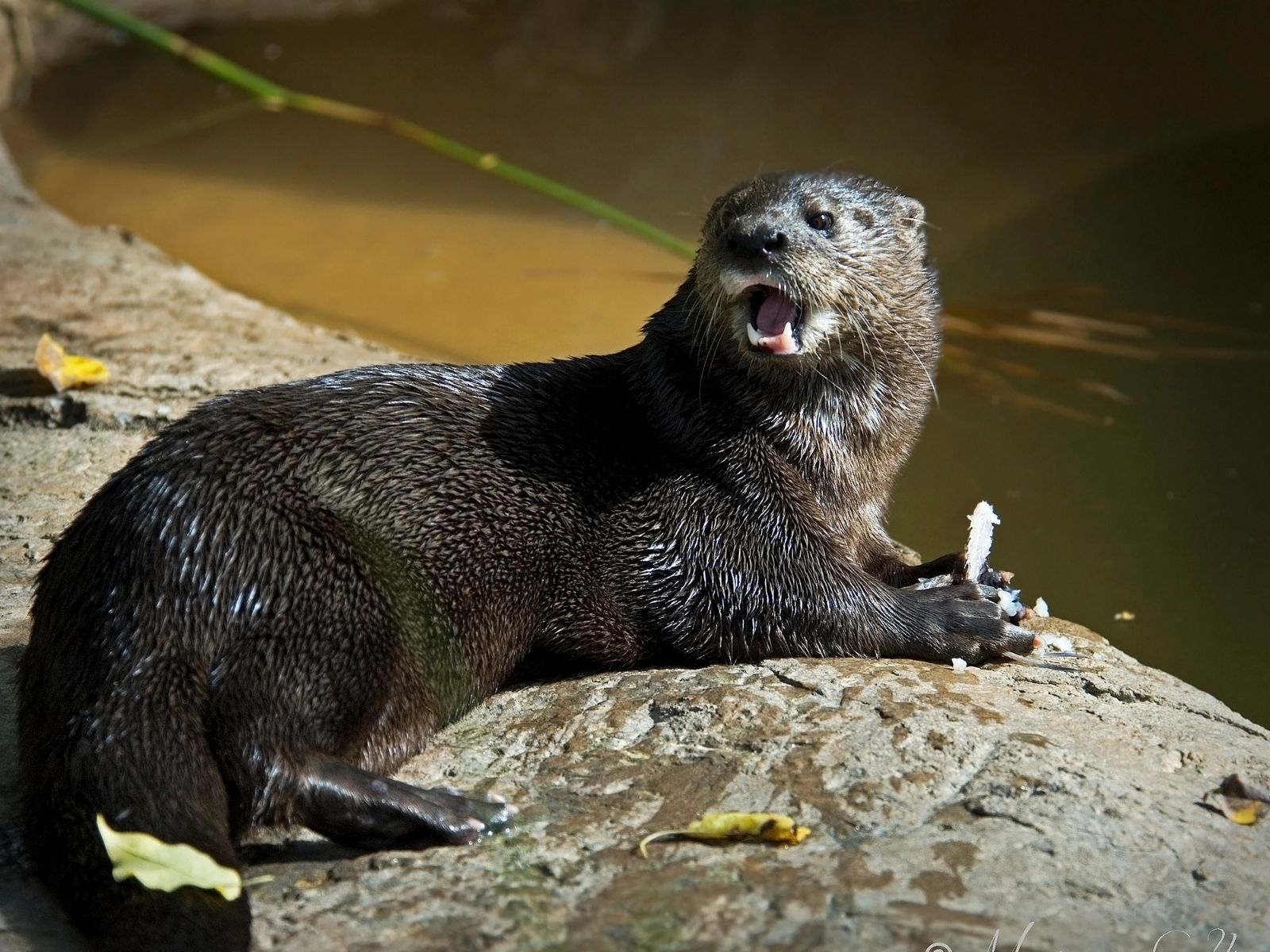
Spotted-necked Otter
Hydrictis maculicollis

2025 Red list status
Vulnerable

Regional Population Trend
Declining

Change compared
to 2016
No Change
Overview
Hydrictis maculicollis – (Lichtenstein, 1835)
ANIMALIA – CHORDATA – MAMMALIA – CARNIVORA – MUSTELIDAE – Hydrictis – maculicollis
Common Names: Spotted-necked Otter, Speckle-throated Otter, Spot-necked Otter (English), Klein Otter (Afrikaans), Lenyebi, leNyibi (Setswana), Ntsini (Swati), iNtini (Zulu)
Synonyms: Lutra maculicollis Lichtenstein, 1835
Taxonomic Note:
While this species was included in the genus Lutra by, amongst others, Koepfli and Wayne (1998), recent molecular research places it in the genus Hydrictis Pocock, 1921 (Koepfli et al. 2008, Sato et al. 2012), and has been included as such in d’Inzillo Carranza and Rowe-Rowe (2013). While five subspecies have been recognised from across the continent (Meester et al. 1986), of which H. m. maculicollis occurs within the assessment region (Skinner and Chimimba 2005), further research is needed to confirm the validity of these.
Red List Status: VU – Vulnerable, C1 (IUCN version 3.1)
Assessment Information
Assessors: Power, R.J.1 & & Nicholson, S.K.2
Reviewer: Do Linh San, E.3
Contributor: da Silva, J.M. 4
Institutions: 1North West Provincial Government, 2Endangered Wildlife Trust, 3Sol Plaatjie University, 4South African National Biodiversity Institute
Previous Assessors and Reviewers: Ponsonby, W., Rowe-Rowe, D., Power, J. & Somers, M.J.
Previous Contributors: Do Linh San, E., Hoffmann, M., Child, M.F. & Nicholson, S.K.
Assessment Rationale
The Spotted-necked Otter is widespread within the assessment region and is restricted to areas of permanent fresh water offering good shoreline cover and an abundant prey base. Overall, the population may be declining as river habitat is lost to development and infestations of alien species in riparian areas, and riverside vegetation degradation from overgrazing. Habitat loss and degradation is exacerbated by human disturbance, including both direct and indirect persecution and/or hunting, reduction of denning sites and diminishment of the species’ prey base which may be attributed to decreasing river quality from agricultural and industrial run-off.
Based on the previous assessment, this species is estimated to occur along an expanse of rivers totalling roughly 31,407 km. Using density estimates of 0.09–1 individual / km yields 2,855–31,407 individuals. However, 49.7% of the rivers within the extent of occurrence are modified, and thus we feel using a low-density estimate of 0.09 otter / km is more appropriate for the disturbed rivers. This yields an estimated 1,413 individuals for the disturbed rivers (15,704 km), and 15,704 individuals for the intact rivers, which yields an estimated total of 17,117 individuals, of which 9,414–10,954 are mature (assuming a 55–64% mature population structure).
Thus, considering the estimated mature population is likely to be at or just below 10,000 mature individuals, and there is an inferred continuing decline in both habitat and mature individuals, we list this species as Vulnerable C1. We construe this as a genuine change based on a study that estimated a c. 42% decline over three generations at one locality. While we choose not to extrapolate this across the region, it is potentially indicative of more widespread continuing declines. We emphasise that far greater monitoring and survey studies (especially along the Orange River) are needed to make this assessment more accurate, particularly long-term monitoring of subpopulation trends, and that the availability of new information should prompt a re-assessment of this species, as it may be both more or less threatened than can currently be determined. River restoration and riverside rehabilitation are key interventions necessary for the prevention of future declines in population numbers.
Regional population effects: While we suspect that dispersal between South Africa and neighbouring countries such as Eswatini, or even Mozambique is possible, it is unlikely to provide significant rescue effects seeing as the southern Mozambique population is disjunct from the rest of the African range (Skinner & Chimimba 2005; Reed-Smith et al. 2015). The species does not traverse large distances (Kruuk 2006), though further research on the dispersal capacities and rates of this species is needed. There is thus a very minor role that our neighbouring countries can play as a rescue effect at a regional population level.
Reasons for Change
Reason(s) for Change in Red List Category from the Previous Assessment: No change
Red List Index
Red List Index: No change
Recommended citations: Power RJ & & Nicholson SK. 2025. A conservation assessment of Hydrictis maculicollis. In Patel T, Smith C, Roxburgh L, da Silva JM & Raimondo D, editors. The Red List of Mammals of South Africa, Eswatini and Lesotho. South African National Biodiversity Institute and Endangered Wildlife Trust, South Africa.
Regional Distribution and occurrence
Geographic Range
Spotted-necked Otters are found in lakes and larger rivers throughout much of Africa south of 10°N, and are believed to be extinct in Burundi, Ghana, Lesotho, and Togo (Reed-Smith et al. 2015). They have not been recorded from Eswatini (Monadjem 1998), though they do occur in dams and rivers to the west, on the Mpumalanga Highveld (Figure 1). Within southern Africa, they are confined to the Cunene River in Namibia and are widespread in the Caprivi Strip and Chobe swamps, extending into the Okavango Delta of Botswana (Skinner and Chimimba 2005). They are mostly absent from Zimbabwe but may occur in the Zambezi River above Victoria Falls (Rowe-Rowe 1997, Skinner and Chimimba 2005, Reed-Smith et al. 2015). They have a patchy distribution within Mozambique, occurring in the Zambezi delta and rivers in the north (Skinner and Chimimba 2005). The South African population is largely separate from the rest of southern Africa, where most of eastern South Africa is part of the species range (Rowe-Rowe and Somers 1998, d’Inzillo Carranza and Rowe-Rowe 2013).
Within the assessment region, they are known to occur in the well-watered eastern parts of the country, north-east of the Bushman’s River in the Eastern Cape (Stuart 1981, 1985; Somers and Purves 1996), east of the escarpment and including the highlands of KwaZulu-Natal (Rowe-Rowe 1992b), Free State (Lynch 1983), Gauteng, and Mpumalanga (Rowe-Rowe 1997, Figure 1), and the southern parts of the North West Province (Power et al. 2019), and have been documented in the Northern Cape along the Orange river (Power and Slater-Jones 2010). Interestingly, they do also occur in the polluted Vaal River of the North West Province (from Parys to Christiana) (Power 2014), though have since not been reported in tributaries upstream of the Vaal river. They occur in the Crocodile upstream of the North West (Ponsonby and Schwaibold 2019), though have not been officially confirmed in the Hartebeestpoort dam area. They occur throughout much of Limpopo Province (except the dry northern parts and along the Limpopo River) but have not been recorded from Kruger National Park (Pienaar et al. 1996, Figure 1).
In KwaZulu-Natal Province they are confined to the montane regions in the western half of the province (Rowe-Rowe 1992b), especially in the headwaters of streams in the Maloti-Drakensberg Park (Perrin and Carugati 2006). Abundance in the latter region may have increased since the 1970s (Perrin and Carugati 2006, but see Kubheka et al. 2013). Since these streams are within the Tugela River basin, it is unclear whether there could be otter dispersal over the Drakensberg watershed into the Orange River headwaters, or whether dispersal via the Vaal River is a more likely candidate (Power and Slater-Jones 2010).
While Skinner and Chimimba (2005) broadly report them occurring extensively within the Eastern Cape Province and even coastal regions of the Western Cape Province, they have not recently been recorded in the Western Cape and have disappeared from many Eastern Cape rivers (Stuart 1985, Somers and Nel 1996; Ponsonby et al. 2016). They have in fact not been reported west of the 26° East meridian the Eastern Cape (Stuart 1985). Similarly, although known from the upper Orange river (Stuart 1985), a possible range contraction or local extinction has occurred in the Tussen-die-Riviere Nature Reserve section of the Orange river in Free State Province where Lynch (1983) recorded this species close to the reserve, but they have not been recorded in more recent years (Watson 2006), though they have recently been reported from the upper Orange river it seems (Figure 1).
In the Northern Cape Province, while they have previously only been recorded from the Vaal River at Warrenton (Stuart 1981, Skinner and Chimimba 2005), they are known from the lower Orange river at Senderlingsdrift in the Richtersveld Transfrontier Park (Power and Slater-Jones 2010) and it seems they have since been discovered in intervening parts of the Orange River as is depicted by more recent records near Upington (Figure 1).
In Gauteng, Spotted-necked Otter have been recorded in the Lower Crocodile, Hennops, Jukskei and Klein Jukskei rivers, even in some urbanised areas (Ponsonby & Schwaibold 2019). Interestingly, in Gauteng Spotted-necked Otters were all in the Limpopo-Crocodile catchment rivers that flow north, and none were recorded in the rivers that flow south into the Vaal (see Ponsonby & Schwaibold 2019), though records have been recorded since (Figure 1). The relative abundance of Spotted-necked Otters is less than that of the Cape Clawless Otters (Aonyx capensis) in the urbanised parts of Gauteng (Ponsonby & Schwaibold 2019).
In the Mpumalanga Highlands, Spotted-necked Otters are present in the trout stocked dams of the area, including the Dullstroom area (De Vos and McIntyre 2024). However, in the area they were not detected at Verloren Vallei Nature Reserve in surveys from 2015 to 2019 (Loock & Swanepoel 2019). There, the habitats are wetlands, and there are no extensive waterbodies which may preclude them.
Although these otters have a large extent of occurrence, they are restricted to areas of permanent fresh water, offering good shoreline cover and an abundant prey base, which means the area of occupancy is substantially smaller and difficult to quantify (Reed-Smith et al. 2015). From the previous assessment, a total viable habitat was estimated at 31,407 km (using the South African section of the range map from Reed-Smith et al. 2015) by summing river condition classes from Unmodified to Moderately Modified from the National Freshwater Ecosystem Priority Area land cover data (Nel et al. 2011). This river length may be an underestimate as they may occur more extensively along the Orange River (Power and Slater-Jones 2010, Figure 1), but more surveys are needed to confirm this distribution. Similarly, using the Department of Water and Sanitation quaternary drainage land cover data (DWS 2010), groupings of connected rivers in each catchment area were construed as individual subpopulations. Isolated rivers were considered to be a single subpopulation and not grouped with rivers further than 5 km away as the Spotted-necked Otter does not traverse large distances of land and remains very close to bodies of water (Kruuk 2006).
The species distribution may have remained similar since the previous assessment (Ponsonby et al. 2016), with less new records in the Eastern Cape, which may be indicative of range loss there (Figure 1). The full extent of the Orange river traversing the Northern Cape can be assumed to be the contemporary distribution range (Figure 1).
Elevation / Depth / Depth Zones
Elevation Lower Limit (in metres above sea level): 0
Elevation Upper Limit (in metres above sea level): 2500
Depth Lower Limit (in metres below sea level): (Not specified)
Depth Upper Limit (in metres below sea level): (Not specified)
Depth Zone: (Not specified)
Map
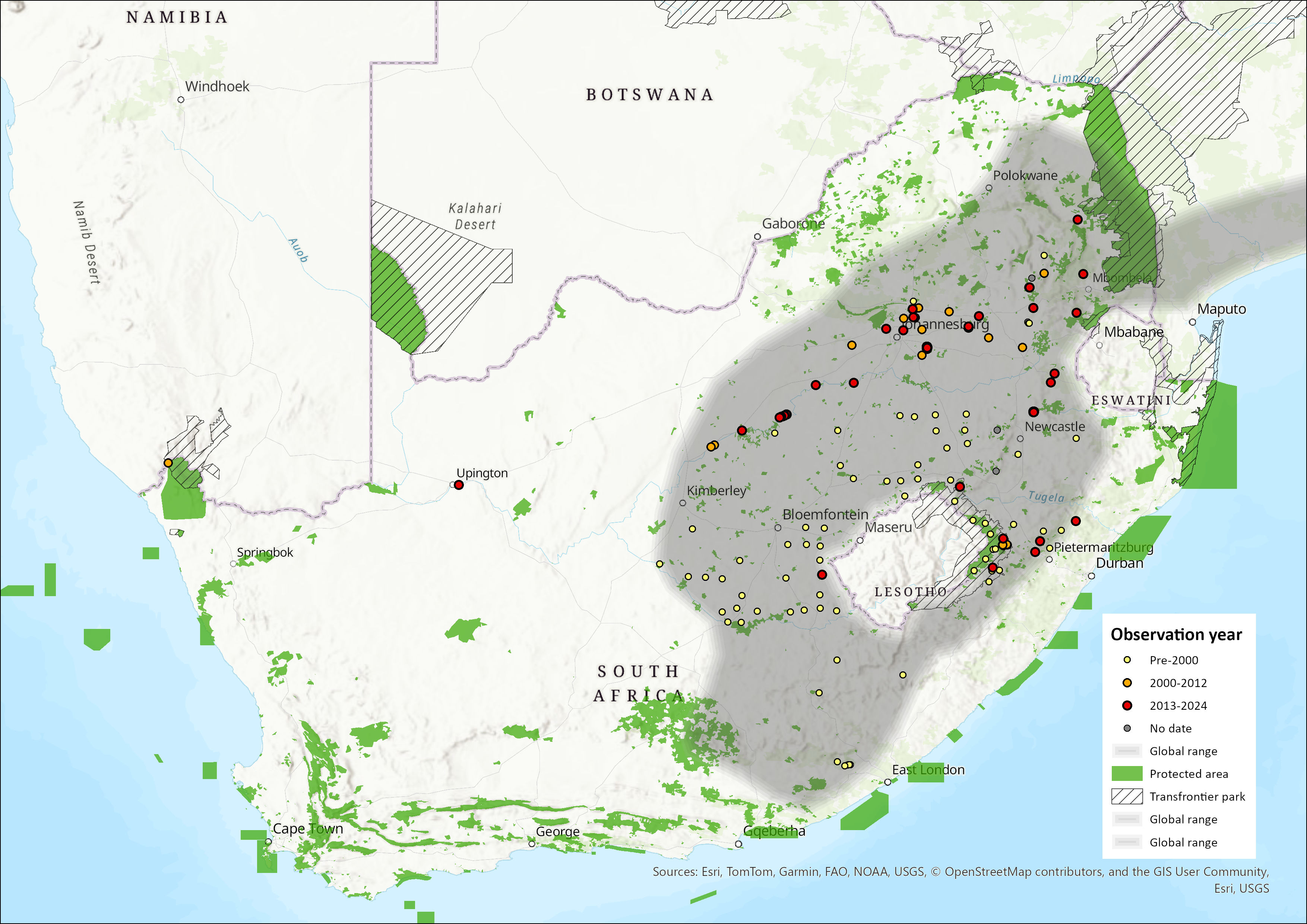
Figure 1. Distribution records for Spotted-necked Otter (Hydrictis maculicollis) within the assessment region (South Africa, Eswatini and Lesotho). Note that distribution data is obtained from multiple sources and records have not all been individually verified.
Biogeographic Realms
Biogeographic Realm: Afrotropical
Occurrence
Countries of Occurrence
| Country | Presence | Origin | Formerly Bred | Seasonality |
| Angola | Extant | Native | – | – |
| Benin | Extant | Native | – | – |
| Botswana | Extant | Native | – | – |
| Burkina Faso | Extant | Native | – | – |
| Burundi | Possibly Extinct | Native | – | – |
| Cameroon | Extant | Native | – | – |
| Central African Republic | Extant | Native | – | – |
| Chad | Extant | Native | – | – |
| Congo | Extant | Native | – | – |
| Congo, The Democratic Republic of the | Extant | Native | – | – |
| Côte d’Ivoire | Extant | Native | – | – |
| Equatorial Guinea | Extant | Native | – | – |
| Eritrea | Extant | Native | – | – |
| Eswatini | Possibly extant | Native | – | – |
| Ethiopia | Extant | Native | – | – |
| Gabon | Extant | Native | – | – |
| Ghana | Possibly Extinct | Native | – | – |
| Guinea | Extant | Native | – | – |
| Guinea-Bissau | Extant | Native | – | – |
| Kenya | Extant | Native | – | – |
| Lesotho | Possibly Extinct | Native | – | – |
| Liberia | Extant | Native | – | – |
| Malawi | Extant | Native | – | – |
| Mali | Extant | Native | – | – |
| Mozambique | Extant | Native | – | – |
| Namibia | Extant | Native | – | – |
| Niger | Extant | Native | – | – |
| Nigeria | Extant | Native | – | – |
| Rwanda | Extant | Native | – | – |
| Sierra Leone | Extant | Native | – | – |
| South Africa | Extant | Native | – | – |
| Sudan | Extant | Native | – | – |
| Tanzania, United Republic of | Extant | Native | – | – |
| Togo | Possibly Extinct | Native | – | – |
| Uganda | Extant | Native | – | – |
| Zambia | Extant | Native | – | – |
| Zimbabwe | Extant | Native | – | – |
Large Marine Ecosystems (LME) Occurrence
Large Marine Ecosystems: (Not specified)
FAO Area Occurrence
FAO Marine Areas: (Not specified)
Climate change
In the Eastern Cape, during a drought period during the 1990s, the diet of Spotted-necked Otter then (Somers & Purves 1996), could give insight into the foraging behaviour of this species should such conditions prevail again. The species still fed on normal prey, but they had a high prevalence of crabs in the diet (38%), while still maintaining dietary separation among the other sympatric semi-aquatic carnivores (Somers & Purves 1996).
It is important to consider a species’ ecological and biological traits to determine the likely mechanisms of climate change impact and quantify this using expert knowledge (Foden & Young 2016), and to use the best available empirical information (Cianfrani et al. 2018).
In an attempt to assess how otters can be impacted by climate change, Cianfrani et al. (2018) considered components of species’ intrinsic sensitivity to climate change (climatic niche specialization and marginality) together with components of extrinsic exposure (changes in range extent, fragmentation, coverage of protected areas, and human footprint) to develop an integrated vulnerability index to climate change for the world’s freshwater otters. As top freshwater predators, otters are among the most vulnerable mammals, with most species being threatened by habitat loss and degradation. All dimensions of climate change exposure were based on present and future predictions of species distributions. For a given species, climate change can have both positive and negative effects on different components of extrinsic exposure, and that measures of species’ sensitivity were not necessarily congruent with measures of exposure. The global vulnerability index predicted that all freshwater otters would be negatively affected by climate change, and the most impacted species would be the three African species, including the Spotted-necked Otter (Cianfrani et al. 2018). A modelled climate change scenario would see the Spotted-necked Otter decline by 16% and 35% for both a mild and severe scenario respectively from its African range by 2050 (Cianfrani et al. 2018). Specifically, when forecasting for the year 2050, most of the South African range is stable for the species for the near future, but a range recession would take place in the arid margins of the Northern Cape and Limpopo fringes (Cianfrani et al. 2018).
However, the forecast distribution may not appear that severe as most of the range appears to be stable (Cianfrani et al. 2018), and the perennial Orange river population will likely buffer any range losses in the arid west of the country. Since the species is a generalist, opportunistic feeder (Perrin and Carugati 2000a), it is likely that it will be able to adapt to potential prey species and abundance changes (Jordaan et al. 2020), a lot of which is associated with future anthropogenically driven changes. Therefore, the forecast may not be as severe as anticipated, though local drying out of catchments may impact populations locally and perhaps even regionally.
Population information
Spotted-necked Otter abundance and density appear to be dependent on the availability of fish (Perrin and Carugati 2006) and suitable habitat cover, which includes dense shoreline vegetation or large boulders (Perrin and Carugati 2000b; Reed-Smith et al. 2015). They are thus uncommon where fish fauna is poor or even reduced due to anthropogenic disturbance and where vegetation has been removed (Stuart 1985; Rowe-Rowe 1990, 1995; Perrin and Carufgati 2006; d’Inzillo Carranza and Rowe-Rowe 2013; Khubeka et al. 2013).
Extensive population survey work has been done in the Kamberg-Loteni sections of the now Maloti-Drakensberg Park on otters from the 1970s (Rowe-Rowe 1992), through 1990s (Perrin et al. 2000b; Perrin and Carugati 2006), and up until 2010 (Khubeka et al. 2013; Rowe-Rowe 2016). In 1994, Spotted-necked Otter relative abundance was 1 Otter per 2.5 km of river in the Loteni river (Perrin and Carugati 2006). While, nearby, the density was 1 Otter per 5 km of river in the Polela river at Cobham (Perrin and Carugati 2006). In Kamberg, along the Mooi river in the ‘Hatchery area’, the density was 1 Otter per 0.75 km, and nearby at Stillerust it was 1 Otter per 2.25 km of river (Perrin & Carugati 2006).The lack of sign of presence of the Spotted-necked Otter in farmland in the Drakensberg foothills, suggests that the species did not occur there, or did not come out of the water there, and was moving only in the water (Perrin and Carugati 2006).
In an earlier time, for the same Stillerust area of Kamberg, up until 1974, otter density was one otter/1.05-1.4 km (Rowe-Rowe 1992), and this remained similar at one otter/1.05 km until 1994 (Perrin & Carugati 2006). In 2010, only 25% of otter signs was found when compared to earlier (Kubheka et al. 2013; Rowe-Rowe 2016). In stark contrast, when comparing to the earlier baselines in the reserve at the ‘hatchery area’, the abundance of sign was the same as before (Kubheka et al. 2013). In the Kamberg ‘hatchery area’ of the reserve, density was higher at one otter/ 0.75 km (Perrin & Carugati 2006), which has similarly remained the same in 2010, i.e. one otter/0.55-0.63 km (Khubeka et al. 2013; Rowe-Rowe 2016).
Similarly, in 2013, at Wolwespruit Nature Reserve, North West Province, maximal sighting frequency was one (group size 1–6) otter group / km of river (Power 2014), though this was not based on a formal counting method. It is uncertain what the status of the population is at present, and neither is there for the province as a whole.
In Gauteng, there was no difference observed between the number of Spotted-Necked Otter sign found in urban and peri‐urban areas (Ponsonby & Schwaibold 2019). However, there was a difference in the frequency of spraint sites, though not statistically different given only one site was discovered in an urban area. The urban area reported 0.03 ± 0.03 spraint/km, where in the less populated peri-urban areas it was 0.11 ± 0.08/km (Ponsonby & Schwaibold 2019), and since spraint sites are fixed, and stable, it may suggest there is a real density difference between the urban and peri-urban areas. As pointed out by Ponsonby and Schwaibold (2019), the urban parts of the range, may be range extremities which may be infrequently used, and the core areas are deeper into the peri-urban areas. Compared to previous studies conducted in areas with lower human activity, fewer signs were found in a relatively urbanised region of Gauteng, suggesting lower otter population densities along rivers in Gauteng. The lack of holts and reduced density of spraint sites further suggest otters are not establishing core home ranges in the heavily urbanised areas of Gauteng (Ponsonby & Schwaibold 2019). The relative abundance of Spotted-necked Otters is less than that of the Cape Clawless Otters in the urbanised parts of Gauteng (Ponsonby & Schwaibold 2019).
In less suitable habitat, Rowe-Rowe (1992a) estimated 0.09–0.17 otter / km of river. Friedmann and Daly (2004) estimated the total population as 1,600 by dividing 8,000 km of river by 5 (1 otter every 5 km). Here, using the river length calculated above (31,407 km) and density estimates of 0.09–1 otter / km river yields 2,855–31,407 individuals. Although further empirical data are needed to estimate mature population size for this species, van der Zee (1982) estimated the adult to juvenile ratio of Cape Clawless Otter as 55–64% (22 adults, 18 juveniles; and 16 adults, 9 juveniles respectively). Given the similar social organisation of Spotted-necked Otters (Skinner and Chimimba 2005), the adult to juvenile ratios can be expected to be similar. If we use this mature proportion, the total mature population size ranges from 1,570–20,100 individuals. However, 49.7% of the rivers are moderately modified (Class C), and thus we feel using the low-density estimate of 0.09 otter / km is more appropriate for the disturbed rivers. This yielded an estimated 1,413 individuals for the disturbed rivers (15,704 km), and 15,703 individuals for the less disturbed rivers, which yielded an estimated total of 17,117 individuals, or 9,414–10,953 mature individuals.
The population is inferred to be declining. A long-term study on the Mooi River in KwaZulu-Natal compared three survey periods (1972–1974, 1993–1994 and 2010) on a human-dense and modified stretch and a near-pristine, protected stretch (Kubheka et al. 2013). While the stretch that had been affected, by agricultural pollution from intensive dairy farming, and hunting pressure caused by high human density, exhibited a decline in both otter sightings and spraint (droppings) sites by 71–75% from the 1970s to 2010, the protected stretch still exhibited the same otter densities between 1993 and 2010 (Kubheka et al. 2013), which suggests population stability and the positive effect of conservation. Similarly, sightings frequency along a 12 km protected section of the Vaal River, in the Wolwespruit Nature Reserve of the North West Province, were higher than any of the non-protected sections of the same river (Power 2014), which may suggest local abundance where protected. The generation length of this species has been estimated as 7.5 years (Pacifici et al. 2013), which equates to a 22.5 year three-generation time period. Assuming a linear rate of decline, the data from Kubheka et al. (2013) equates to a 42% decline over three generations.
Population Information
Current population trend: Declining, inferred from habitat degradation.
Continuing decline in mature individuals: Yes, inferred from direct and indirect persecution.
Number of mature individuals in population: 9,414-10,954
Number of mature individuals in largest subpopulation: Unknown
Number of subpopulations: 7, based on connected rivers within watersheds
Severely fragmented: Unknown. Although rivers may be connected, this species does not traverse large distances over ground, and thus subpopulations may be fragmented.
Quantitative Analysis
Probability of extinction in the wild within 3 generations or 10 years, whichever is longer, maximum 100 years: (Not specified)
Probability of extinction in the wild within 5 generations or 20 years, whichever is longer, maximum 100 years: (Not specified)
Probability of extinction in the wild within 100 years: (Not specified)
Population genetics
Unlike with Cape Clawless Otters (see Ponsonby 2018), genetic structure has not been determined by any study in this species. Therefore, based on occurrence, one can make some inferences on the population. Firstly, the species is highly aquatic (see Habitat and ecology section), and its short limbs do not predispose itself to any long-range dispersal movements on land (cf. Clawless Otter). Given the overlay of its distribution, and the overlay of the primary water catchments of South Africa Department of Water & Sanitation, RSA), we can infer at least seven different subpopulations, with likely the most isolated one being the Lower Orange subpopulation below the Augrabies Falls (see Power & Slater-Jones 2010), as well as the Eastern Cape population (Figure 1). It is likely that the population is structured according to the water catchment systems.
Since no other subpopulations are thought to have gone extinct, the Convention on Biological Diversity’s complementary genetic indicator – proportion of populations maintained (PM) – would receive a value of 1.0 (7/7 subpopulations remain).
The GBF’s headline indicator – proportion of species with an effective population size (Ne) greater than 500 – can be estimated using the total estimated population size for the species (9,414–10,953) and dividing by the number of subpopulations (assuming equal representation). Each subpopulation is therefore thought to have between 1,344 and 1,565 mature individuals. Applying a 0.1-0.3 Ne/Nc conversion ratio, the Ne for each subpopulation is approximately 134 – 470, which is below the Ne 500 threshold, indicating the likelihood of genetic erosion. Given that the population is thought to be declining, it is highly recommended that a comprehensive population genetic study be undertaken to verify the true population genetic structure of the species and genetic health of each subpopulation.
Habitats and ecology
Spotted-necked Otters are thought to inhabit freshwater habitats where water is not silt-laden, and is unpolluted, and rich in small fishes (Perrin and Carugati 2000a, d’Inzillo Carranza and Rowe-Rowe 2013). However, anecdotal observations suggest they can occur, and can be common, in relatively polluted rivers, such as the Jukskei River in Gauteng Province as an example (Ponsonby & Schwaibold 2019), and the Vaal River (Power 2014). More surveys are needed to determine at what threshold of water quality otter densities decline. The home range of these otters has been estimated at 5.9–27.4 km2 and the mean length of river within home ranges was 14.8 km (Perrin et al. 2000).
In rivers of the KwaZulu-Natal Drakensberg, the mean home range area of Spotted-necked Otter males was estimated to range between 5.9 km2 (95% MCP, range 2.87-9.2 km2) to 27.4 km2 (100% MCP, range 14.87-17.14 km2) and core areas at 8.68 km2 (Perrin et al. 2000). The female home-ranges averaged 5.79 km2 (95% MCP) to 6.42 km2 (100% MCP, range 1.14-9.45 km2), with mean core area sizes of 3.43 km2 (Perrin et al. 2000). The average core area sizes across both sexes was 6 km2 (Perrin et al. 2000). There were no significant differences in the home range areas of males, whereas there was a difference in the home-range sizes of females (Perrin et al. 2000). Male Spotted-necked Otters possessed significantly larger home range areas than that of females, which is a typical trait of the Family (Perrin et al. 2000).
Spotted-Necked Otters were usually observed in groups of two, three or more individuals, although adult females avoided association, though they were not said to be territorial (Perrin et al. 2000). They used rivers through farmlands outside protected areas and this was not seen as an obstacle to movement (Perrin et al. 2000). They are aquatic in nature compared to the Cape Clawless Otter (Perrin and Carugati 2000b). The Spotted-necked Otter is mostly diurnal (Perrin & D’lnzillo Carranza 2000; Webster et al. 2021), though will occasionally be nocturnal if it is moonlit (Perrin & D’lnzillo Carranza 2000). They are active when its efficiency in detecting its fish prey by sight is high, that is during daylight and even moonlight (Perrin & D’lnzillo Carranza 2000). On Telperion Nature Reserve, the otter species were most active in the four hours following dawn, with low activity around dawn and dusk and were thus diurnal (Webster et al. 2021).
The Spotted-necked Otter prefers riverine habitats covered with dense vegetation, including trees and tall grass (Rowe-Rowe 1992a; Perrin & Carugati 2000b), while areas of short grass were avoided (Perrin & Carugati 2000b). Adequate riparian vegetation, in the form of long grass, reeds, or bushes, is also essential to provide cover (Rowe-Rowe 1992a; Perrin and d’Inzillo Carranza 2000b), especially during periods of inactivity (Perrin and d’Inzillo Carranza 2000). Holts of the Spotted-Necked Otter were located adjacent to river banks, oxbow lakes or dam shores (Perrin & Carugati 2000b). Spraint sites of Spotted-Necked Otter were found in dense, tall grass cover beside water <1 m deep both within and outside conservation areas (Perrin & Carugati 2000b). These sites were always nearer to water bodies than that of Cape Clawless Otter (Perrin & Carugati 2000b). The holts and sprainting sites of Spotted-necked Otter were associated with cover, and the substrates of the spraint sites varied from sandy alluvium, and grass, to harder rock (Perrin & Carugati 2000b).
The Spotted-necked Otter was always associated with deep water and not shallow waters (Perrin & Carugati 2000b). In the wet season, when rivers may flood, smaller tributaries flow, and these serve as habitat which can be important as movement corridors (Perrin & Carugati 2000b).
Unlike the Cape Clawless Otter, the Spotted-necked Otter does not occur in marine or estuarine waters (Rowe-Rowe and Somers 1998). However, it does co-exist with the Cape Clawless Otter along rivers (Somers and Purves 1996, Perrin and Carugati 2006, Power 2014), and while there is dietary overlap (Rowe-Rowe 1977; Somers and Purves 1996, Rowe-Rowe and Somers 1998, Perrin and Carugati 2000a), it seems to be more of a fish specialist (Rowe-Rowe 1977, Perrin and Carugati 2000b), though they do also feed on crabs and frogs (Rowe-Rowe 1977; Perrin and Carugati 2000b; Jordaan et al. 2020). Interestingly, Spotted-necked Otters also display more dietary adaptation in different habitats than Cape Clawless Otters as they may be more generalist (Perrin and Carugati 2000b). The introduction of exotic trout into South African rivers has presumably benefitted the species (Rowe-Rowe 1992a, Perrin and Carugati 2000a, Perrin and d’Inzillo Carranza 2000b), and their diet may be dominated by this species (Jordaan et al. 2020). Diet selection can fluctuate in the Spotted-necked Otter, but they ate fishes in winter when water temperatures were low (Perrin and Carugati 2000a; Jordaan et al. 2020). When compared to Cape Clawless Otters, Spotted-necked Otters feed on more mobile prey that are hunted by sight and caught with the mouth (Rowe-Rowe 1977; Jordaan et al. 2020; 2021).
In a recent study in the Mpumalanga Highlands, Spotted-necked Otter diet was modelled to be comprised of 34.7% of crab, 21.5% frog, 34.9% of trout specifically and 8.8% of other fish (Jordaan et al. 2020). Otters foraging in and around trout-stocked waters suggests that crab and trout were equally important, followed by frogs. Trout is thus more important in the diet of these otters than has been previously suggested (see Rowe-Rowe 1977). At an individual level, crab dominated the diet of two Spotted-necked Otters studied, while trout dominated the diet of two others (Jordaan et al. 2020). Diet was found to vary between, as well as within, individuals suggesting individual dietary plasticity (Jordaan et al. 2020). Individual animals specialise on trout when available. However, this was not consistent between individuals (Jordaan et al. 2020).
Spotted-necked Otters dived beneath the surface for an average of 8.5 ± 7.6 s (Jordaan et al. 2021). The majority of Spotted-necked Otter dives lasted < 10 s (range 0.66-50.9 s) (Jordaan et al. 2021). They performed different dive types that were evidently dependent on prey behaviour, with dives targeting crabs (16.10 ± 1.91 s) being longer than dives targeting Rainbow Trout (Oncorhynchus mykiss) (5.58 ± 0.17 s) for instance (Jordaan et al. 2021). Spotted-necked Otters sometimes exceeded their theoretical dive durations when performing successful foraging dives. They can thus vary behaviour in relation to their prey, and they do this to maximise the net rate of energy gain (Jordaan et al. 2021). When considering known individual-level dietary specialisation and plasticity in these species (Jordaan et al. 2019), dive behaviours are likely to vary substantially among individuals, and in relation to prey availability and localised habitat conditions (Jordaan et al. 2021).
Where human disturbance is high, Spotted-Necked Otter were not detected (Perrin & Carugati 2000b), and they seemingly vacated an area.
Ecosystem and cultural services: Although they do occasionally persist in poor quality river systems (Power 2014), otters are thought to be indicator species (Rowe-Rowe 1997). The presence of otters in a water body generally indicates a healthy, unpolluted habitat.
Given that the Spotted-necked Otter can prey upon some fish species such as trout (Rowe-Rowe 1977; Perrin & Carugati 2000a; Jordaan et al. 2020), they may be a sort of biological control agent for these species there.
They also have the potential to increase ecotourism in the area, and also to contribute financially to the poverty-stricken local communities (Dumalisile et al. 2005), and they may even be able to serve as flagship or umbrella species.
IUCN Habitats Classification Scheme
| Habitat | Season | Suitability | Major Importance? |
| 1.7. Forest -> Forest – Subtropical/Tropical Mangrove Vegetation Above High Tide Level | – | Suitable | – |
| 5.1. Wetlands (inland) -> Wetlands (inland) – Permanent Rivers/Streams/Creeks (includes waterfalls) | – | Suitable | – |
| 5.2. Wetlands (inland) -> Wetlands (inland) – Seasonal/Intermittent/Irregular Rivers/Streams/Creeks | – | Marginal | – |
| 5.5. Wetlands (inland) -> Wetlands (inland) – Permanent Freshwater Lakes (over 8ha) | – | Suitable | – |
| 5.6. Wetlands (inland) -> Wetlands (inland) – Seasonal/Intermittent Freshwater Lakes (over 8ha) | – | Marginal | – |
| 5.7. Wetlands (inland) -> Wetlands (inland) – Permanent Freshwater Marshes/Pools (under 8ha) | – | Suitable | – |
| 5.13. Wetlands (inland) -> Wetlands (inland) – Permanent Inland Deltas | – | Suitable | – |
| 9.10. Marine Neritic -> Marine Neritic – Estuaries | – | Suitable | – |
| 12.5. Marine Intertidal -> Marine Intertidal – Salt Marshes (Emergent Grasses) | – | Marginal | – |
| 13.4. Marine Coastal/Supratidal -> Marine Coastal/Supratidal – Coastal Brackish/Saline Lagoons/Marine Lakes | – | Marginal | – |
| 13.5. Marine Coastal/Supratidal -> Marine Coastal/Supratidal – Coastal Freshwater Lakes | – | Suitable | – |
| 15.1. Artificial/Aquatic & Marine -> Artificial/Aquatic – Water Storage Areas (over 8ha) | – | Marginal | – |
| 15.2. Artificial/Aquatic & Marine -> Artificial/Aquatic – Ponds (below 8ha) | – | Marginal | – |
| 15.3. Artificial/Aquatic & Marine -> Artificial/Aquatic – Aquaculture Ponds | – | Marginal | – |
| 15.9. Artificial/Aquatic & Marine -> Artificial/Aquatic – Canals and Drainage Channels, Ditches | – | Marginal | – |
Life History
Generation Length: 7.5 years (Pacifici et al. 2013)
Age at Maturity: Female or unspecified: (Not specified)
Age at Maturity: Male: (Not specified)
Size at Maturity (in cms): Female: (Not specified)
Size at Maturity (in cms): Male: (Not specified)
Longevity: (Not specified)
Average Reproductive Age: (Not specified)
Maximum Size (in cms): (Not specified)
Size at Birth (in cms): (Not specified)
Gestation Time: (Not specified)
Reproductive Periodicity: (Not specified)
Average Annual Fecundity or Litter Size: (Not specified)
Natural Mortality: (Not specified)
Does the species lay eggs? (Not specified)
Does the species give birth to live young: (Not specified)
Does the species exhibit parthenogenesis: (Not specified)
Does the species have a free-living larval stage? (Not specified)
Does the species require water for breeding? (Not specified)
Movement Patterns
Movement Patterns: (Not specified)
Congregatory: (Not specified)
Systems
System: Terrestrial, Freshwater (=Inland waters)
General Use and Trade Information
Throughout Africa, otters are killed for food, for medicinal purposes and for their skins (Ray et al. 2005; Reed-Smith et al. 2015), but the extent to which this occurs in the assessment region needs further research (Ponsonby et al. 2016).
Trade in captive animals for tourism
Live animals have been traded for international zoos and aquariums, but this is not expected to impact the population negatively (Ponsonby et al. 2016). At least one South African province (North West) has reported no occurrences of harvest for trade or keeping (Ponsonby et al. 2016). Despite having a CITES listing, there has been virtually no trade in the species.
Trade in body parts for commodity
The skins of the Spotted-necked Otter have been traded in Africa, but mostly in countries to the north of us (Ray et al. 2005).
Trophy hunting
The Professional Hunters register was examined for 2016 until 2023, and there were no records of off-take (SANBI, 2016-2023). The species is not in demand for hunting, though there would be off-takes, whether trapped or shot for persecution related issues, particularly related to fisheries (De Vos & McIntyre 2024).
Ecotourism
Tourism use of the species is opportunistic in most areas, though sightings of the species are appreciated, the species has never been the prime focus of tourism use in any area. Since latrine sites of Spotted-necked Otters are recognisable (Rowe-Rowe 1992a), establishing viewing sites at or near latrines of Spotted-necked Otters would thus seem an effective way to maximise opportunities to see them (Amulike et al. 2013). As with the Cape Clawless Otter, they do have the potential to increase ecotourism in the area, especially to poverty-stricken community areas (Dumalisile et al. 2005). However, it is not known whether any initiative has capitalised upon this there. The idea of poising Wolwespruit Nature Reserve as an ecotourism site for viewing the species has been suggested (NWPG 2014), but no initiative has been advanced yet.
Respondents from a similar questionnaire study in the freshwater fisheries industry believed that fish predators, like otters may attract guests or contribute to guest experience in 59% of the responses (De Vos & McIntyre 2024). Consumptive use of fishing can thus go hand in hand with otter viewing opportunities.
On the whole, there is very little use and trade in the species.
| Subsistence: | Rationale: | Local Commercial: | Further detail including information on economic value if available: |
| Yes | Killed for food, medicine or skins. | No | – |
National Commercial Value: No
International Commercial Value: No
| End Use | Subsistence | National | International | Other (please specify) |
| 1. Food – human | true | – | – | – |
| 3. Medicine – human & veterinary | true | – | – | – |
| 10. Wearing apparel, accessories | true | – | – | – |
Is there harvest from captive/cultivated sources of this species? (Not specified)
Harvest Trend Comments: (Not specified)
Threats
The Spotted-necked Otter is inferred to be decreasing throughout its range, mainly as a result of the alteration or degradation of freshwater habitats and riparian vegetation, exacerbated by the loss of habitat as a consequence of increased agricultural activity (Rowe-Rowe 1990, 1992a, 1995, 1997; Perrin and Carugati 2000b) and increased disturbance to otters resulting from human settlement expansion (Kubheka et al. 2013). Thus, habitat loss from both agricultural and human settlement expansion also increases the rate of habitat degradation and both direct and indirect persecution.
Agricultural expansion:
Crop and livestock agricultural practices have led to both bank and shoreline erosion, denuding of important vegetative cover used by the otters (Perrin and Carugati 2000b; Khubeka et al. 2013), increased human presence which is disruptive to otter denning, increased use of smaller mesh nets and poisoning to improve catches, and the change or depletion of the otters prey base (Kruuk and Goudswaard 1990, Reed-Smith et al. 2015). In KwaZulu-Natal Province, 7.6% of remaining natural vegetation was lost between 2005 and 2011, primarily due to agricultural expansion, afforestation and the built-up environment (Jewitt et al. 2015). Similarly, elsewhere in the world other otter species will respond in the same way and will still frequent areas with moderate vegetation removal but only if human activity is not present as there is not enough cover to remain concealed from human detection (Medina-Vogel et al. 2003). While industrial-scale farming tends to convert entire ecosystems, small-scale farming will tend to degrade localised shoreline habitats. Where human disturbance is high, Spotted-Necked Otter were not detected (Perrin & Carugati 2000b), and they seemingly vacated an area (see also Khubeka et al. 2013). Kubheka et al (2013) reported on the decline in otter relative abundance in a previously pristine habitat and speculate on its causes. They surveyed sign of otters along a river in the Maloti-Drakensberg Park, KwaZulu-Natal. The area, Stillerust, lay downstream of a commercial dairy farm and a rural village–subsistence farming area. The data collected were compared with two previous surveys, carried out in 1972–1974 and 1993–1994 (see Rowe-Rowe 1992a; Perrin & Carugati 2006), and were also compared with a pristine section of river in the nature reserve, upstream of the farming areas. At Stillerust, the number of spraint (scat) sites found, for the otter species, approximated only 25% of those recorded in the earlier studies. In the pristine section of the river, the amount of sign and abundance of otters were similar to those recorded in 1993 (i.e. Perrin & Carugati 2006). Assessments of stream biota and water quality analyses revealed negative changes in the river below the pristine area, down to, and including, Stillerust. Visible signs of pollution were evident. Since the 1970s, the rural village population has increased eightfold, and the commercial farm has changed from an extensive livestock enterprize to an intensive dairy farm (Kubheka et al. 2013).
Human settlement expansion:
In tandem with agricultural expansion is the expansion of human settlements. Human disturbance increases both habitat degradation from pollution and vegetation removal, but also direct mortality or population depression through persecution and disruption. Pollution from agricultural and residential effluents are inferred to be causing population decline (Ponsonby et al. 2016). For example, bioaccumulation of organochlorines and other bio contaminants has been recorded in Spotted-necked Otter scats (Mason and Rowe-Rowe 1992), and this could have negative repercussions for such populations. In KwaZulu-Natal, scats of Spotted-necked Otter contained concentrations of Organochlorine and PolyChlorinated Biphenyls (PCB) contaminants, such as Dieldrin. However, overall levels of contamination were a lot less than that discovered in the sympatric Cape Clawless Otter, which was related to their predominantly crustacean diet (Rowe-Rowe 1977), which forage in sediments (Mason & Rowe-Rowe 1992). The samples site was in a reserve, and thus contaminant levels were low (Mason & Rowe-Rowe 1992), though it might have an impact elsewhere.
Acid mine drainage:
In some regions is likely to impact otters as well. Nationally, 84% of main river ecosystems in South Africa were identified as threatened (Nel et al. 2007, CSIR 2010). In Gauteng, heavy metal analysis showed that there may be potential for arsenic and mercury to bioaccumulate through the species’ food chain as these heavy metals were detected at lower concentrations in the otter’s scat than in its food source, suggesting a high risk for the otter as these contaminants are not being eliminated (Clark 2018). The species is said to be affected by water quality changes, though its abundance in some poor quality waters challenges this supposition (Power 2014).
Habitat quality:
Another pressure caused by increasing human density is the abstraction of water from rivers and other alterations to the timing and quantity of flows, for example, as a result of dams or transfer schemes between catchments (Nel et al. 2007, Driver et al. 2012). The proportion of threatened river ecosystem types is higher among lowland rivers than among upper foothills and mountain streams, reflecting the fact that the intensive agriculture and urban areas are often found in lowlands, as well as the accumulation of impacts on rivers as they flow from source to sea. Only 14% of river ecosystem types are well protected and 50% are not protected at all (Driver et al. 2012). Introduction of alien fish species that out-compete the smaller indigenous fish was identified as a main threat to otters in Lake Victoria, East Africa (Kruuk and Goudswaard 1990). However, the introduction of trout may have benefited this species (Perrin and Carugati 2000a; Jordaan et al. 2020), so the net effect of alien fish introduction should be determined. However, in terms of habitat, the introduction of alien plant species, such as Water Hyacinth (Eichhornia crassipes), may cause habitat degradation (Reed Smith et al. 2015).
Persecution:
Expanding human settlements indirectly increase incidences of persecution. Otters are also killed for food or skins, or as a perceived threat to poultry, or as a competitor for fish (Rowe-Rowe 1990, Ray et al. 2005, Reed-Smith et al. 2015), and the latter is probably more applicable. Occasionally, they are accidentally caught and drowned in gill nets and fish traps (Stuart 1985, Rowe-Rowe 1990) and it was said to have led to their demise in the Eastern Capes Buffalo river (Stuart 1985). The rate of otters becoming entangled in set and discarded fishing nets is impossible to determine. However, based on known entanglement of other species, it has likely increased over the occasional drowning reported previously (Reed-Smith et al. 2015). Hunting dogs on farmsteads and rural communities may also be causing direct mortality (Ray et al. 2005).
Persecution- Fisheries:
Since the Spotted-necked Otter is known to prey upon trout where they occur (Rowe-Rowe 1977; Perrin and Carugati 2000a), they do come into conflict with recreational fishing destination that stock the species (De Vos & McIntyre 2024), or those that simply breed them (De Vos & McIntyre 2024). These conflict areas are mostly in Mpumalanga (Jordaan et al. 2020; De Vos & McIntyre 2024). De Vos and McIntyre (2024) investigated this Human-otter conflict through a questionnaire aimed at owners and managers of fly-fishing properties in South Africa. While perceptions of losses varied, all respondents reported losses to predators. Mitigation measures, including lethal control, were employed mostly against otters. Of respondents, a third of them reportedly used lethal control. For preventative mitigation in recreational fishing, 36% used non-lethal mitigation such as exclusion for instance (De Vos & McIntyre 2024). Human-otter conflict with freshwater fisheries may be primarily due to individual Spotted-necked Otter adapting to diets consisting largely of farmed trout (Jordaan et al. 2020). This suggests that specific problem otters would necessitate removal.
The above-mentioned threats act synergistically. For example, Kubheka et al. (2013) documented a 75% decline in Spotted-necked Otters between 1993 and 2010 at a site downstream of a commercial dairy farm where human density is high; while a similar protected site showed no decline in Spotted-necked Otter density between 1993 and 2010. Thus, while some areas may exhibit a continuing decline in mature individuals, this must be weighed against documented range expansions (along the Orange River at least; Power and Slater-Jones 2010) and the possible ability of the species to survive in polluted water (Power 2014), which was the last status quo from the previous assessment (Ponsonby et al. 2016).
There have been no new threats identified for the species, other than an inferred continuing decline in their habitat.
Conservation
The Spotted-necked Otter is present in a number of protected areas across its range. For example, the protected Wolwespruit Nature Reserve in the North West harbours what appears to be the highest population density along the length of the Vaal (Power 2014), though the status quo is uncertain as no dedicated surveys have been done for a while there.
An extensive amount of work has been conducted on the Spotted-necked Otters occurring in the Kamberg section of the Maloti-Drakensberg Park in KwaZulu-Natal (Rowe-Rowe 1992a; Perrin and Carugati 2000a; 2000b; Perrin and d’Inzillo Carranza 2000a, Perrin et al. 2000 Perrin and Carugati 2006; Kubheka et al. 2013) and it would be worthwhile continuing work there, particularly to do with population monitoring. This population on a World Heritage Site is probably the most important one in the country. Other important protected areas where they persist are the following are Veloren Vallei Nature Reserve (Mpumalanga) (Ponsonby et al. 2016), though they have not been documented there recently (Loock and Swanepoel 2019), which may be of concern, though they are rarely captured on standard biodiversity-focussed camera trap studies (Power et al. 2019). However, the species seem well established elsewhere on non-conserved private land (De Vos and McIntyre 2024). They occur in the Telperion Nature Reserve (Webster et al. 2021), and Ezemvelo Nature Reserves, and they are present at Wakkerstroom too, an important wetland area.
In Gauteng, they occur in the diminutive but important Marievale Bird Sanctuary (Ponsonby et al. 2016) as well as Rietvlei Nature Reserve. Therefore, Mpumalanga and KwaZulu-Natal are important provinces protecting large populations of the species.
The main interventions revolve around riparian protection (Stuart 1985), and enforcement of existing legislation, and indirectly by the controls on the number of fishermen permitted on reserves (Ponsonby et al. 2016). Biodiversity stewardship opportunities of key sites should be sought. For example, stricter regulations and enforcement on development along riverbanks needs to be implemented. Monitoring and mitigation of pollution (chemical and physical) of rivers needs to be implemented or increased. Education and awareness campaigns that position this species as an indicator of river health (Akpona et al. 2016; Ponsonby et al. 2016), and thus prestige for the landowner, should be promoted and tested as a conservation intervention (Ponsonby et al. 2016). Similarly, persecution should also be reduced through education and awareness campaigns, especially with the angling and trout farming industries (De Vos and McIntyre 2024), for instance otter-proof keep nets should be created. The use of extension services to restore riparian habitats, such as alignment with the Working for Water Programme, should continue to be used in key watersheds within the species’ range (P0nsonby et al. 2016). Given that fly-fishing properties potentially provide valuable habitat for protected species such as otters, there is a need for improved mitigation measures and exploring alternative options of potentially generating income from tourism associated with the presence of charismatic predators (De Vos & McIntyre 2024).
Many of the issues facing otters, such as habitat loss, pollution, climate change and problems driven by poverty, are common to other species. Otters also face conflict with fishermen and are hunted for fur and for use in traditional medicine. A main problem for otter conservation is lack of awareness and the resultant paucity of funding available for research, education and conservation (Akpona et al. 2016).
Based on the forecasted future distribution range of the Spotted-necked Otter, in terms of the degree of protection, the protected area coverage is expected to decline by 7-8 % (Cianfrani et al. 2018). Therefore, the impact of range shrinkage may be exacerbated by the decreasing coverage of protected areas and by ranges shifting towards more human-impacted areas (Cianfrani et al. 2018), where they be able to persist (Ponsonby & Schwaibold 2019) to a point.
Recommendations for land managers and practitioners:
- For all rivers, good land-use practices, such as keeping natural vegetation intact along river-banks (Perrin and Carugati 2000b), can make a vital difference to their ecological integrity (Driver et al. 2012). Thus, rivers should be carefully managed to increase flow and reduce turbidity, and development on banks should be restricted (Ponsonby et al. 2016). Vegetation burning on riverbanks should be burnt on alternate banks and in alternate years only (Perrin & Carugati 2000b).
- Conservation agencies should work with the agricultural sector and private landowners to restore and protect riverside habitats and catchments. For example, the Working for Water Programme (Ponsonby et al. 2016).
- Importantly, for researchers and practitioners alike, a key step is to create a network with fellow field biologists working in ecosystems where otters are found, which would create synergy between conservation efforts (Reed-Smith et al. 2015). For example, creating an easy system to report otter sightings (i.e. Citizen Science mapping projects) would significantly contribute to knowledge of their current distribution and aid researchers in future assessments of status and population trends.
- Aside from studying new study sites, continued population monitoring should take place at the Kamberg-Loteni area of the Maloti-Drakensberg Park, aiming at being as comparable as possible with the methodologies of those studies (see Rowe-Rowe 1992a; Perrin & Carugati 2006; Khubeka et al. 2013; Rowe-Rowe 2016). This need may even trump starting to study new populations as this would be the only means of examining regional level trends.
- Since the species is diurnal (Perrin and D’lnzillo Carranza 2000), and they are sometimes easier to monitor via visual observations than camera traps (Power et al. 2019), they are amenable to direct observational monitoring.
Research priorities:
- Subpopulation trends should be monitored. Developing effective long-term monitoring programmes for this species in different habitat types (for example, estuarine, riverine and urban, pristine) can be achieved through molecular techniques. Recently, partial DNA from spraint samples has been used to distinguish between A. capensis and H. maculicollis and could be incorporated into monitoring techniques of distribution, population size and structure over time (Madisha et al. 2015). Given similarity in the scats of Cape Clawless Otter and Spotted-necked Otter (Rowe-Rowe 1992a), and the genetic methods are availed to discriminate the species apart (Madisha et al. 2015). One should explore examining individual differentiation to aide in population surveys.
- Survey studies are needed to examine changes in area of occupancy nationally, but specifically in the Free State and Eastern Cape, as well as determining its occurrence along the Orange River (Ponsonby et al. 2016), so as to fill distributional gaps.
- Research to determine whether this species is an effective ecological indicator of healthy river systems.
- Genetic studies need to be carried out to determine whether this is a separate subspecies from the rest of Africa.
- Research in assessing the effectiveness of conducting public relations campaigns to decrease persecution rates.
- Compared to the other carnivores in South Africa, this is the least known species (Ray et al. 2005). Research is needed to assess habitat suitability and to look at habitat fragmentation on the Spotted-Necked Otter (Perrin et al. 2000).
- Presence of otter signs can be informative (Rowe-Rowe 1992a), but detailed studies are required into otter movement and home range sizes in urban areas, which would provide further insight into the ability of otters to navigate their environment i.e. radio-telemetry. These studies will accurately assess otter movement through the urban environment and will greatly improve upon predictions made on landscape use (Ponsonby 2018).
- Relating to water health, studies into physiology of species reliant on these rivers would also be beneficial for trophic studies (Ponsonby 2018).
- Given some advances in genetics of the species (Madisha et al. 2015; 2019), a national assessment of otter genetics should be conducted to better understand the current situation of the populations (Ponsonby 2018).
- Human-otter conflict is another research area that should be given attention, particularly in rural areas where fishing is a primary source of income and otters are regarded as competitors and pests (De Vos & McIntyre 2024). Since Human-Otter conflict occurs in inland fisheries (De Vos & McIntyre 2024), the extent of Spotted-Necked otter influence on stocked trout needs further investigation (Jordaan et al. 2020).
Encouraged citizen actions:
- Avoid building properties on riverbanks (i.e. word of mouth message spreading).
- Given diurnality in the species (Perrin and D’lnzillo Carranza 2000), and they are sometimes easier to monitor via visual observations moreover camera traps even (Power et al. 2019), and may direct observations does have an aesthetic appeal.
- Citizens can assist the conservation of the species by reporting sightings on virtual museum platforms (e.g., iNaturalist and MammalMAP), and therefore contribute to an understanding of the species distribution.
- Citizens can conduct simple otter surveys using a useful guide: “Otter surveys: a simple and quick method”. This can be obtained here: https://africanotternetwork.org/wp-content/uploads/2016/09/otters-surveys-a-simple-and-quick-method.pdf or one can contact the Otter Specialist Group.
- In some urban areas near rivers and wetlands, citizens can become involved in local NGOs involved with the species or its habitats, i.e. WESSA affiliated Friends of the River groups, which help to ensure the conservation of these systems.
- Supervise hunting dogs in farmlands to prevent unnecessary non-selective otter deaths
Bibliography
Akpona H, Reed-Smith J, Yoxon G. 2016. Capacity building to conserve African otters. Oryx 50(1):15-16.
Amulike B, Stevens SS, Serfass TL. 2013. Enhancing tourist opportunities to view spotted‐necked otters (Lutra maculicollis) at Rubondo Island National Park: can the a priori location of latrines simplify identifying best viewing areas?. African Journal of Ecology. 51(4):609-17.
Cianfrani C, Broennimann O, Loy A, Guisan A. 2018. More than range exposure: Global otter vulnerability to climate change. Biological Conservation 221: 103-113.
Clark KC. 2018.Assessing the potential risk of accumulation of selected freshwater contaminants in urban and peri-urban otters. Msc thesis, University of the Witwatersrand, Johannesburg.
CSIR. 2010. A CSIR perspective on water in South Africa – 2010. Centre for Scientific and Industrial Research, Pretoria, South Africa.
d’Inzillo Carranza, I. and Rowe-Rowe, D.T. 2013. Lutra maculicollis. In: Kingdon, J. and Hoffmann, M. (eds), The Mammals of Africa. Volume V: Carnivores, Pangolins, Equids and Rhinoceroses, Bloomsbury Publishing, London.
De Vos M, McIntyre T. 2024. Stakeholder perceptions of human–predator conflict in the South African fly‐fishing industry. African Journal of Ecology 62(1), p.e13188.
Dumalisile L, Somers M, Walters M, Nel J. 2005. Tourists’ willingness to pay to view otters along the Wild Coast, South Africa: a potential for increased ecotourism.TD: The Journal for Transdisciplinary Research in Southern Africa 1(1): 97-106.
DWS. 2010. Quaternary drainage regions SHP. Department of Water and Sanitation. Available at: https://www.dwaf.gov.za/iwqs/gis_data/river/rivs500k.html.
Driver, A., Sink, K.J., Nel, J.N., Holness, S., Van Niekerk, L., Daniels, F., Jonas, Z., Majiedt, P.A., Harris, L. and Maze, K. 2012. National Biodiversity Assessment 2011: An assessment of South Africa’s biodiversity and ecosystems. Synthesis Report. South African National Biodiversity Institute and Department of Environmental Affairs, Pretoria, South Africa.
Erasmus, B.F.N., van Jaarsveld, A.S., Chown, S.L., Kshatriya, M. and Wessels, K.J. 2002. Vulnerability of South African animal taxa to climate change. Global Change Biology 8: 679-693.
Foden WB, Young BE. 2016. IUCN SSC Guidelines for Assessing Species’ Vulnerability to Climate Change. Version 1.0. Occasional Paper of the IUCN Species Survival Commission No. 59. Cambridge, UK and Gland, Switzerland: IUCN Species Survival Commission. x+114pp.
Friedmann, Y. and Daly, B. 2004. Red Data Book of the Mammals of South Africa: A Conservation Assessment. Conservation Breeding Specialist Group (SSC/IUCN) and Endangered Wildlife Trust, Parkview, South Africa.
GeoTerraImage. 2015. Quantifying settlement and built-up land use change in South Africa. Pretoria.
Hendrix, C.S. and Glaser, S.M. 2007. Trends and triggers: climate, climate change, and civil conflict in Sub-Saharan Africa. Political Geography 26: 695-715.
Jewitt, D., Goodman, P.S., Erasmus, B.F.N., O’Connor, T.G. and Witkowski, E.T.F. 2015. Systematic land-cover change in KwaZulu-Natal, South Africa: Implications for biodiversity. South African Journal of Science 111: 1-9.
Jordaan RK, Somers MJ, Hall G, McIntyre T. 2020. The diet of spotted-necked otters foraging in trout-stocked waters in Mpumalanga, South Africa. African zoology. 55(2):141-8.
Jordaan RK, Somers MJ, McIntyre T. 2021. The diving behavior of African clawless and spotted-necked otters in freshwater environments. Journal of Mammalogy 102(4): 1020-1029.
Koepfli, K.-P., Deer, K.A., Slater, G.J., Begg, C., Begg, K., Grassman, L., Lucherini, M., Veron, G. and Wayne, R.K. 2008. Multigene phylogeny of the Mustelidae: resolving relationships, tempo and biogeographic history of a mammalian adaptive radiation. BMC Biology 6: 10. doi:10.1186/1741-7007-6-10.
Koepfli, K.P. and Wayne, R.K. 1998. Phylogenetic relationships of otters (Carnivora: Mustelidae) based on mitochondrial cytochrome b sequences. Journal of Zoology 246: 410-416.
Kruuk, H. 2006. Otters: ecology, behaviour and conservation. Oxford University Press, Oxford.
Kruuk, H. and Goudswaard, P.C. 1990. Effects of changes in fish populations in Lake Victoria on the food of otters (Lutra maculicollis Schinz and Aonyx capensis Lichtenstein). African Journal of Ecology 28: 322-329.
Kubheka, S.P., Rowe‐Rowe, D.T., Alletson, J.D. and Perrin, M.R. 2013. Possible influence of increased riparian activity (stream modification and agricultural intensification) on abundance of South African otters. African Journal of Ecology 51: 288-294.
Loock D, SwanepoeL L. 2019. Assessing local patterns in carnivore occupancy and richness by camera trapping: a monitoring of diversity at Verloren Vallei Nature Reserve, Dullstroom, Mpumalanga. Wildlife & Resource Association (WRA), Bloemfontein.
Lynch, C.D. 1983. The mammals of the Orange Free State, South Africa. Navorsinge van die Nasionale Museum Bloemfontein 18: 1-218.
Madisha MT, Ponsonby D, Schwaibold U, Kotzé A, Jansen R, Brettschneider H, Dalton DL. 2015. Differentiation of two South African otter species (Aonyx capensis and Lutra maculicollis) from spraint based on partial CytB primer sets. Global Ecology and Conservation 4: 8-13.
Madisha MT, Du Plessis M, Kotzé A, Dalton DL. 2019. Complete mitochondrial genomes of the African clawless (Aonyx capensis) and spotted necked (Hydrictis maculicollis) otter: structure, annotation, and interspecies variation. Mitochondrial Dna Part B 4(1): 1556-1557.
Mason, C.F. and Rowe-Rowe, D.T. 1992. Organochlorine pesticide residues and PCBs in otter scats from Natal. South African Journal of Wildlife Research 22: 29-31.
Medina-Vogel, G., Kaufman, V.S., Monsalve, R. and Gomez, V. 2003. The influence of riparian vegetation, woody debris, stream morphology and human activity on the use of rivers by southern river otters in Lontra provocax in Chile. Oryx 37: 422-430.
Monadjem A. 1998. The mammals of Swaziland. Conservation Trust of Swaziland and Big Games Parks, Mbabane, Swaziland.
Nel JL et al. 2011. Technical Report for the National Freshwater Ecosystem Priority Areas project. Water Research Commission, Pretoria, South Africa.
Nel JL, Roux DJ, Maree G, Kleynhans CJ, Moolman J, Reyers B, Rouget M, Cowling RM. 2007. Rivers in peril inside and outside protected areas: a systematic approach to conservation assessment of river ecosystems. Diversity and Distributions 13: 341-352.
NWPG (North West Provincial Government) 2014. Proposals for the ecological, social and economic upliftment of North West Parks & Tourism Board. Department of Economic Development, Environment, Conservation & Tourism North West Provincial Government, Mahikeng.
O’Keefe JH. 1986. The conservation status of South African rivers. South African National Scientific Programmes.. Pretoria, South Africa.
Pacifici, M., Santini, L., Di Marco, M., Baisero, D., Francucci, L., Grottolo Marasini, G., Visconti, P. and Rondinini, C. 2013. Generation length for mammals. Nature Conservation 5: 87–94.
Perrin MR, Carugati C. 2000a. Food habits of coexisting Cape clawless otter and spotted-necked otter in the KwaZulu-Natal Drakensberg, South Africa. South African Journal of Wildlife Research 30: 85–92.
Perrin MR, Carugati C. 2000b. Habitat use by the Cape clawless otter and the spotted-necked otter in the KwaZulu-Natal Drakensberg, South Africa. outh African Journal of Wildlife Research 30: 103–113.
Perrin MR, Carugati C. 2006. Abundance estimates of the Cape clawless otter Aonyx capensis (Schinz 1821) and the spotted necked otter Lutra maculicollis (Lichtenstein 1835) in the KwaZulu-Natal Drakensberg, South Africa. Tropical Zoology 19: 9-19.
Perrin MR, d’Inzillo Carranza I. 2000. Activity patterns of the spotted-necked otter in the Natal Drakensberg, South Africa. South African Journal of Wildlife Research 30: 1–7.
Perrin MR, d’Inzillo Carranza I, Linn IJ. 2000. Use of space by the spotted-necked otter in the KwaZulu-Natal Drakensberg, South Africa. South African Journal of Wildlife Research 30: 15-21.
Pienaar, U. De V., Joubert, S.C.J., Hall-Martin, A., De Graaf, G. and Rautenbach, I. L. 1996. Field guide to the mammals of the Kruger National Park. Struik, Cape Town.
Ponsonby DW. 2018. The ecology of otters in an urban environment. Doctoral dissertation, University of the Witwatersrand, Johannesburg.
Ponsonby DW, Schwaibold U. 2019. Country otter, city otter: The distribution patterns of two otter species in an urbanized area of Gauteng, South Africa. African Journal of Ecology 57(1): 148-154.
Ponsonby DW, Rowe-Rowe D, Power RJ, Somers MJ. 2016. A conservation assessment of Hydrictis maculicollis. In Child MF, Roxburgh L, Do Linh San E, Raimondo D, Davies-Mostert HT, editors. The Red List of Mammals of South Africa, Swaziland and Lesotho. South African National Biodiversity Institute and Endangered Wildlife Trust, South Africa.
Power, R.J. 2014. The distribution and status of mammals in the North West Province. Department of Economic Development, Environment, Conservation & Tourism, North West Provincial Government, Mahikeng.
Power RJ, Slater-Jones S. 2010. Spotted-necked otter in the lower Orange River, Northern Cape, South Africa. South African Journal of Wildlife Research 40: 181–183.
Power RJ, Van Straaten A, Schaller R, Mooke M, Boshoff T, Nel HP. 2019. An inventory of mammals of the North West Province, South Africa. Annals of the Ditsong Museum of Natural History 8: 6-29.
Ray JC, Hunter L, Zigouris J. 2005. Setting Conservation and Research Priorities for Larger African Carnivores. WCS Working Paper No. 24. Wildlife Conservation Society, New York.
Reed-Smith J, Jacques H, Somers MJ. 2015. Hydrictis maculicollis. The IUCN Red List of Threatened Species 2015.
Rowe-Rowe DT. 1977. Prey capture and feeding behaviour of South African otters. Lammergeyer 15: 13–21.
Rowe-Rowe, D.T. 1990. Action plan for African otters. In: P. Foster-Turley, S. MacDonald and C. Mason (eds), Otters: an Action Plan for their Conservation, pp. 41-51. IUCN, Gland, Switzerland.
Rowe-Rowe DT. 1992a. Survey of South African otters in a freshwater habitat, using sign. South African Journal of Wildlife 22: 49–55.
Rowe-Rowe, D.T. 1992b. The Carnivores of Natal. Natal Parks Board, Pietermaritzburg, South Africa.
Rowe-Rowe, D.T. 1995. Distribution and status of African otters. Habitat 11: 8-10.
Rowe-Rowe DT. 1997. Spotted-necked otter Lutra maculicollis. In: Mills G, Hes L (ed.), he Complete Book of Southern African Mammals, Struik Publishers, Cape Town, South Africa.
Rowe-Rowe, D.T. and Somers, M.J. 1998. Diet, foraging behaviour and coexistence of African otters and the water mongoose. In: N. Dunstone and M. Gorman (eds), Behaviour and Ecology of Riparian Mammals. Symposia of the Zoological Society of London 71, pp. 215-227. Cambridge University Press, Cambridge, UK.
Sato, J.J., Wolsan, M., Prevosti, F.J., Delia, G., Begg, C., Begg, K., Hosoda, T., Campbell, K.L. and Suzuki, H. 2012. Evolutionary and biogeographic history of weasel-like carnivorans (Musteloidea). Molecular Phylogenetics and Evolution 63: 745-757.
Skinner, J.D. and Chimimba, C.T. (eds). 2005. The Mammals of the Southern African Subregion. Cambridge University Press, United Kingdom, Cambridge.
Somers MJ, Nel JAJ. 1996. Otters in the Eastern Cape. Pelea 15: 56–62.
Somers MJ, Purves MG. 1996. Trophic overlap between three syntopic semi-aquatic carnivores: Cape clawless otter, spotted-necked otter and water mongoose. African Journal of Ecology 34(158–166).
Stuart, C.T. 1981. Notes on the mammalian carnivores of the Cape Province, South Africa. Bontebok 1: 1-58.
Stuart, C.T. 1985. The status of two endangered carnivores occurring in the Cape Province, South Africa, Felis serval and Lutra maculicollis. Biological Conservation 32: 375-382.
Watson JP. 2006. Check list of the mammals of Tussen-die-Riviere Provincial Nature Reserve, Free State Province, South Africa. Koedoe 49: 111-117.
van der Zee D. 1982. Density of Cape clawless otters Aonyx capensis (Schinz, 1821) in the Tsitsikarna Coastal National Park. South African Journal of Wildlife Research 12: 8–13.
Webster AB, Pretorius ME, Somers MJ. 2021. The determinants of mesocarnivore activity patterns in highveld grassland and riparian habitats. African Journal of Wildlife Research 51(1): 178-192.