
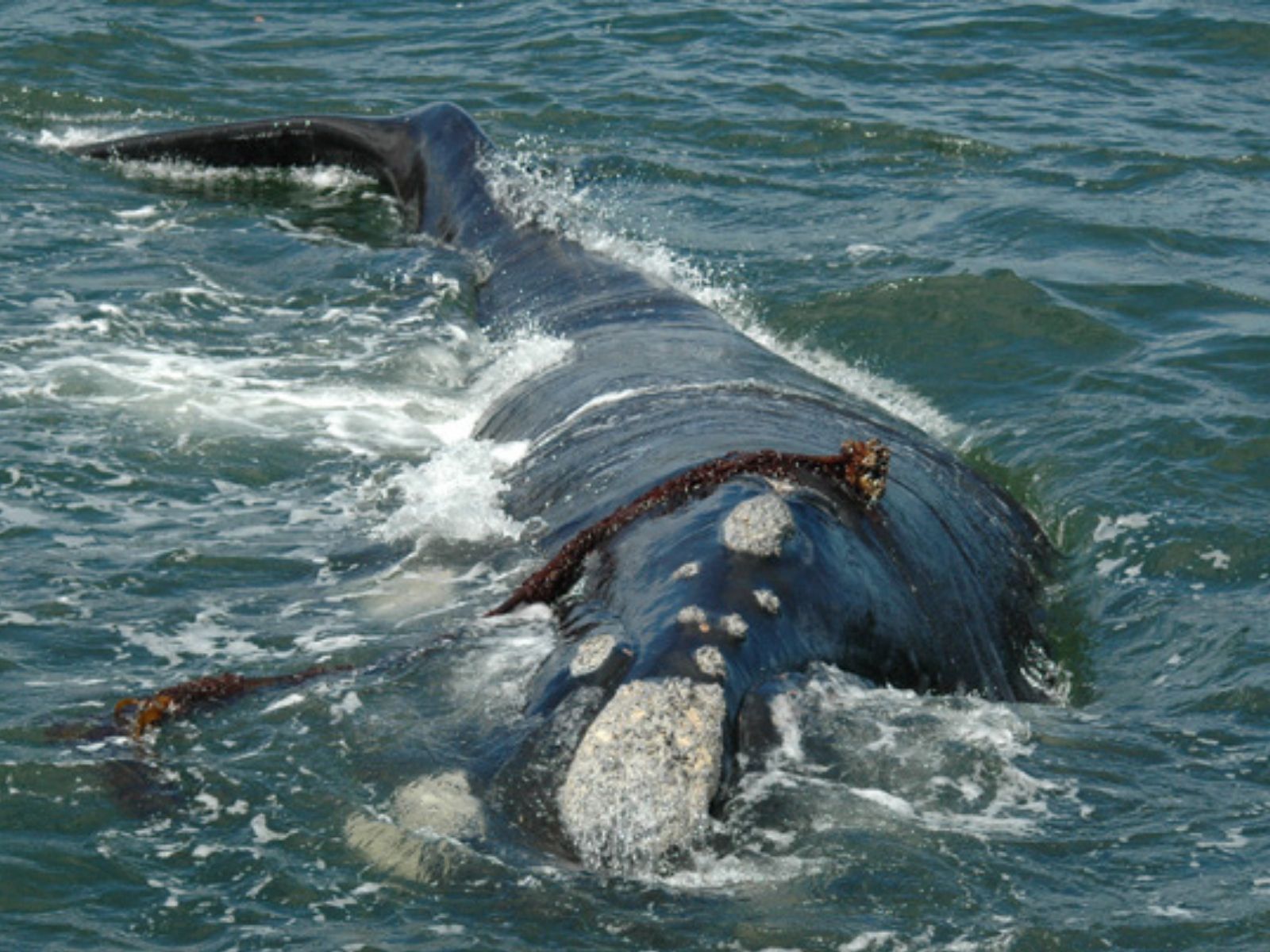
Southern Right Whale
Eubalaena australis

2025 Red list status
Least Concern

Regional Population Trend
Increasing

Change compared
to 2016
No Change
Overview
Eubalaena australis – (Desmoulins, 1822)
ANIMALIA – CHORDATA – MAMMALIA – ARTIODACTYLA – BALAENIDAE – Eubalaena – australis
Common Names: Southern Right Whale (English), Suidelike Noordkapper (Afrikaans), Baleia Franca Austral (Portuguese), Baleine Australe (French), Ballena Franca Austral (Spanish; Castilian)
Synonyms: Balaena antarctica (Lesson 1828), Balaena antipodarum (Gray 1843), Balaena australis (Desmoulins 1822), Balaena capensis (Gray 1868), Balaena hectori (Gray 1874), Eubalaena capensis (Gray 1866)
Taxonomic Note:
Previously Rice (1998) classified all right whales across all oceans as a single species within the genus Balaena, along with the Bowhead Whale (B. mysticetus). However, since right whales seldom venture into equatorial regions, northern and southern hemisphere populations are spatially separated from one another. Thus, the Southern Right Whale is widely acknowledged as a distinct species from its relatives in the northern hemisphere. Based on genetic analyses, three distinct phylogenetic species of right whale have been identified with distributions that do not overlap (Rosenbaum et al. 2000). These are the North Atlantic (Eubalaena glacialis) and North Pacific (Eubalaena japonica) species which are separated by continental landmasses, and a single southern hemisphere species, the Southern Right Whale (Eubalaena australis) (Rosenbaum et al. 2000). This classification is currently accepted by the International Whaling Commission (IWC) Scientific Committee (IWC 2004), as well as the Convention on Migratory Species.
Red List Status: LC – Least Concern, (IUCN version 3.1)
Assessment Information
Assessors: Vermeulen, E.1, Purdon, J.1,2, Shabangu, F.W.1,3 & da Silva, J.4
Reviewer: Plön, S.5
Institutions: 1Mammal Research Institute Whale Unit, University of Pretoria, 2TUT Nature Conservation, 3Department of Forestries, Fisheries and the Environment, 4South African National Biodiversity Institute, 5University of Cape Town
Previous Assessor: Peters, I.
Previous Reviewer: Barendse, J.
Previous Contributors: Child, M.F., Relton, C., Preston-Whyte, F., Elwen, S., Findlay, K., Meyer, M., Oosthuizen, H. & Plön, S.
Assessment Rationale
Within the assessment region, the Southern Right Whale population is increasing, and recent ranges expand into historical parts of its range, suggesting healthy population dynamics. Population numbers are no longer decreasing thanks to the IWC’s moratorium on Right Whale hunting since 1935, followed by the cessation of illegal Soviet captures in 1972. Areas of reduced anthropogenic disturbance located in sheltered coastal waters, such as the De Hoop Marine Protected Area (MPA), may contribute to a continued stable population growth rate. Population trends within the assessment region have been estimated through individual sighting histories of reproductive females (from photo-identification images taken during aerial surveys). Total population size for the Assessment Region was estimated in 2020 at 6,470 (± 285 standard error) individuals with an annual population growth rate projected at 6.5% (Brandao et al. 2023). No major threats have been identified that could cause rapid population decline. However, there has been an increase in calving intervals observed in the population since 2010 (Brandao et al. 2023) as well as decreased maternal body conditions (Vermeulen et al. 2023b). These changes have been identified as indicative of reduced prey availability at high latitude foraging grounds in response to climate change (van den Berg et al. 2021; Germishuizen et al. 2024). The last available global population estimate dates from 2009 and was assessed as 13,611 individuals based on a 7.5% annual increase (IWC 2013). This result was based on an estimated generation time of 29 years. Although still scarce relative to its historic abundance (less than 10%; IWC 2013), no major factors seem to be threatening Southern Right Whale populations. It is therefore listed as Least Concern.
Regional population effects: This Southern Hemisphere species exhibits seasonal migration and is wide-ranging. There are no barriers to dispersal, thus rescue effects are possible.
Reasons for Change
Reason(s) for Change in Red List Category from the Previous Assessment: No change
Red List Index
Red List Index: No change
Recommended Citation: Vermeulen E, Purdon J, Shabangu FW & da Silva JM. 2025. A conservation assessment of Eubalaena australis. In Patel T, Smith C, Roxburgh L, da Silva JM & Raimondo D, editors. The Red List of Mammals of South Africa, Eswatini and Lesotho. South African National Biodiversity Institute and Endangered Wildlife Trust, South Africa.
Regional Distribution and occurrence
Geographic Range
Across the Southern Hemisphere, Southern Right Whales have a circumpolar distribution, present within the South Atlantic, South Pacific and Indian Oceans. Similar to most other mysticete species, Southern Right Whales usually exhibit seasonal migrations southwards in summer to (sub-)Antarctic waters where they feed predominately on Euphausiids and copepods (Tormosov et al. 1998), and northwards in winter (as far as about 20°S) for calving and nursing.
In summer, Southern Right Whales are commonly located between 40°S and 50°S (Ohsumi and Kasamatsu 1986); however, they have been reported as far south as 65°S (Bannister et al. 1999, IWC 2007), and around South Georgia and South Sandwich Islands in the southern Atlantic Ocean (Kennedy et al. 2023; Vermeulen et al. 2023a). These sightings from the Antarctic to the sub-Antarctic (or grounds associated with sub-Antarctic or subtropical convergence zone), do not necessarily signify a range expansion, but rather new information derived from satellite tagging (Vermeulen et al. 2023a, Germishuizen, 2025).
During winter months, the species moves northwards towards coastlines of continents and islands, mainly for calving. Nursery grounds have been identified close to the shores off the southern regions of Australia and New Zealand, especially the Auckland and Campbell Islands (Carroll et al. 2011, 2014, Bannister 2018, Smith et al. 2019, Watson et al. 2021), as well as off the east coast of South America (Cooke et al. 2021) and around southern Africa (Richards 2009, Best et al. 2001). To a lesser extent, they have also been documented off the coasts of Chile, Peru, Tristan da Cunha, and the east coast of Madagascar (IWC 2001, Rosenbaum et al. 2001).
Within the assessment region, this species had a historical distribution northward to southern Angola. Historically, there were three winter concentrations, namely Walvis Bay in Namibia, the Cape of Good Hope in the west coast of South Africa, and up to Delagoa Bay (now Maputo Bay) in Mozambique (Richards 2009, Purdon et al. 2020). In winter, females with calves are concentrated on the southern African coastal calving ground from 18°30’E to 23°50’E (Best 2000). There is a recognised core area for calving females between Saint Sebastian Bay and Walker Bay (Elwen and Best 2004a, b, c). During summer, core areas occur throughout the Benguela (at low frequencies during autumn and winter; Barendse and Best 2014). The main behaviours recorded for whales along the west coast, up to St Helena Bay, is for feeding (Barendse and Best 2014). Migration patterns between low and high latitudes are no longer believed to be annual based on long-term individual sighting histories and satellite telemetry data, with evidence of individuals overwintering at high- and mid-latitude foraging grounds (Vermeulen, unpublished data)
Population increases of the residual population are leading to repopulation of historical habitat, for example into Namibia, Mozambique and Madagascar. Photo-identification and genetic data are needed to determine whether the whales sighted off Mozambique (Banks et al. 2011) and Madagascar (Rosenbaum et al. 2001, Cerchio et al. 2022) are part of the South African population or the remains of the historic Indian Ocean population (IWC 2013). Also, shore-based observation along the South African west coast suggests that there are animals moving from a more northern region, but research coverage north of St Helena Bay is nearly non-existent (Barendse and Best 2014).
Additionally, Southern Right Whales have been seen sporadically at sub-Antarctic Marion Island, a South African territory (Postma et al. 2011), which is part of the Prince Edward Islands MPA, and movement has been recorded between South Africa and Marion Island (Best and Peters 2011).
Elevation / Depth / Depth Zones
Elevation Lower Limit (in metres above sea level): (Not specified)
Elevation Upper Limit (in metres above sea level): (Not specified)
Depth Lower Limit (in metres below sea level): 400
Depth Upper Limit (in metres below sea level): 0
Depth Zone: Epipelagic
Map
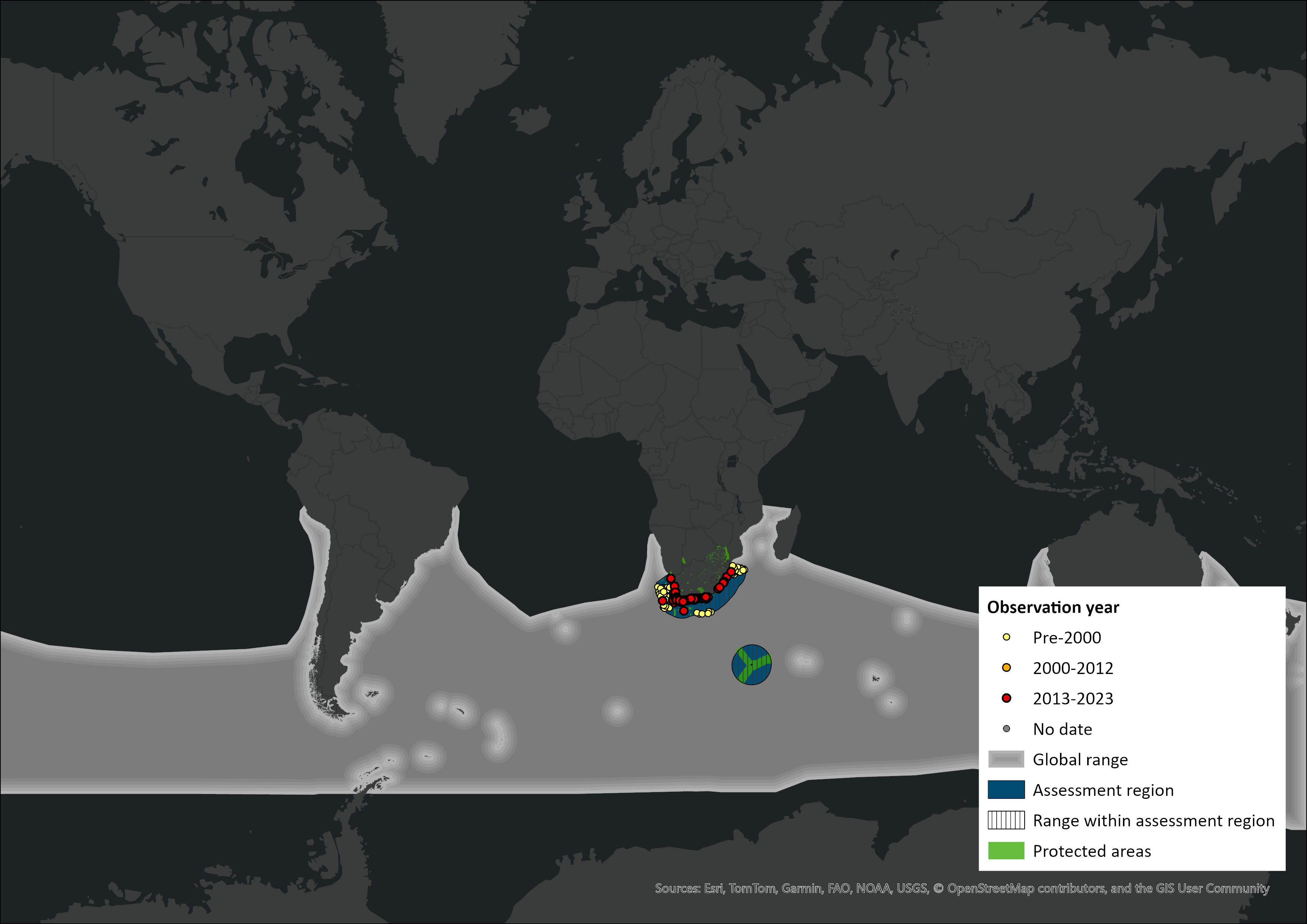 Figure 1. Distribution records for Southern Right Whale (Eubalaena australis) within the assessment region (South Africa, Eswatini and Lesotho). Note that distribution data is obtained from multiple sources and records have not all been individually verified.
Biogeographic Realms
Biogeographic Realm: Afrotropical, Antarctic, Australasian, Neotropical
Occurrence
Countries of Occurrence
| Country | Presence | Origin | Formerly Bred | Seasonality |
| Antarctica | Extant | Native | – | Resident |
| Argentina | Extant | Native | – | Resident |
| Australia | Extant | Native | – | Resident |
| Bouvet Island | Extant | Native | – | Resident |
| Brazil | Extant | Native | – | Resident |
| Chile | Extant | Native | – | Resident |
| Falkland Islands (Malvinas) | Extant | Native | – | Resident |
| French Southern Territories | Extant | Native | – | Resident |
| French Southern Territories -> Kerguelen | Extant | Native | – | Resident |
| Gabon | Extant | Native | – | Resident |
| Madagascar | Extant | Native | – | Resident |
| Mauritius | Extant | Native | – | Resident |
| Mozambique | Extant | Native | – | Resident |
| Namibia | Extant | Native | – | Resident |
| New Zealand | Extant | Native | – | Resident |
| Peru | Extant | Native | – | Resident |
| Réunion | Extant | Native | – | Resident |
| Saint Helena, Ascension and Tristan da Cunha | Extant | Native | – | Resident |
| Saint Helena, Ascension and Tristan da Cunha -> Tristan da Cunha | Extant | Native | – | Resident |
| South Africa | Extant | Native | – | Resident |
| South Georgia and the South Sandwich Islands | Extant | Native | – | Resident |
| South Georgia and the South Sandwich Islands -> South Georgia | Extant | Native | – | Resident |
| Uruguay | Extant | Native | – | Resident |
Large Marine Ecosystems (LME) Occurrence
Large Marine Ecosystems: All LMEs in the Southern Hemisphere (Humboldt Current LME, Patagonian Shelf LME, Southeast South American Shelf LME, Agulhas Current LME, Benguela Current LME, Australian Shelf LMEs, and New Zealand Shelf LME)
FAO Area Occurrence
| Presence | Origin | Formerly Bred | Seasonality | |
| 41. Atlantic – southwest | Extant | Native | – | Resident |
| 47. Atlantic – southeast | Extant | Native | – | Resident |
| 48. Atlantic – Antarctic | Extant | Native | – | Resident |
| 51. Indian Ocean – western | Extant | Native | – | Resident |
| 57. Indian Ocean – eastern | Extant | Native | – | Resident |
| 58. Indian Ocean – Antarctic | Extant | Native | – | Resident |
| 81. Pacific – southwest | Extant | Native | – | Resident |
| 87. Pacific – southeast | Extant | Native | – | Resident |
Climate change
As capital breeders, Southern Right Whales rely on seasonal energy reserves for reproduction (see Jonsson 1997), and female body condition plays a critical role in the success of the reproductive cycle (Christiansen et al. 2018). The success of building such energy reserves is in turn reliant on prey availability at high latitude foraging grounds, which is strongly linked with climatic and oceanographic processes. The impact of changes on these processes on the trophic ecology of oceanic predators is relatively well documented (e.g., Forcada et al. 2005, Fraser and Hofmann 2003, Tulloch et al. 2019). Especially for Southern Right Whales, various studies have indicated a decreased reproductive output correlated to reduced prey availability due to large-scale climatic drivers, like El Niño-Southern Oscillation (ENSO) and Southern Annular Mode (SAM) (Leaper et al. 2006, Seyboth et al. 2016). Agrelo et al (2021) further showed a reduction in adult female survival probability with increasing intensity of El Niño.
Within the Assessment region, there is also evidence of climate change impacting on the Southern Right Whale population that calves off the western Cape coast. A recent study showed large scale environmental changes in the seasonal sea ice zone in important foraging grounds for Southern Right Whales that calve off the South African coast (Germishuizen et al. 2024). These coincide temporally with population-level changes, including (1) a decrease in the population’s reproductive success (Brandao et al. 2023), (2) a reduced maternal body condition (Vermeulen et al. 2023b), (3) a northward shift in foraging location (van den Berg et al. 2021) and (4) a changed migration pattern (Vermeulen et al. 2023a) resulting in strong fluctuations in coastal prevalence (Vermeulen and Wilkinson 2024). The combination of these results indicates the sensitivity of Southern Right Whales to environmental variability in their foraging grounds and the risk that climate change poses to continued population recovery post-whaling. Purdon et al. (2020) also noted that in the assessment area, climate change stressors, which include increasing sea surface temperature, ocean acidification and rising sea levels pose high risks to Southern Right Whales. Rising sea surface temperatures may restrict areas where Southern Right Whales are able to calve as they occur in waters less than 20 ◦C (Purdon et al. 2020). Their thick blubber layer prevents them from inhabiting warmer waters. It was also noted that ocean acidification and sea level rise increased throughout the assessment area, with the highest trends along the west and south coast. Ocean acidification may affect phytoplankton and zooplankton, in turn affecting top marine predators (Simmonds and Isaac, 2007), like the Southern Right Whale. Rising sea levels may increase the runoff of chemical pollution from land-based activities, affecting coastal areas where Southern Right Whales calve (Simmonds and Isaac, 2007).
Population
The most recent assessment of Southern Right Whale populations was conducted by the IWC in 2011 (IWC 2013). Populations were significantly depleted by commercial whaling; however, since then, four breeding populations off New Zealand, Australia, South Africa and the east coast of South America have all shown strong recovery.
Although some illegal Soviet whaling during the 1960s impeded population recovery, subsequently populations appear to have increased. Based on a 7.5% annual increase in 1997, the estimated global population abundance was 13,611 individuals in 2009 (IWC 2013). However, this global population size is likely still less than 20% of historic levels (IWC 2013).
Within the assessment region, the southern African coast is considered to be one breeding assemblage of Southern Right Whales. In 2020 the total population that overwinters off the southern African coast was estimated at 6,470 animals, of which 2,092 were thought to be reproducing females (Brandão et al. 2023). The annual population growth rate within the assessment region is estimated at 6.5% (Brandão et al. 2023). The estimated generation length is 29 years (Taylor et al. 2007).
Current population trend: Increasing
Continuing decline in mature individuals: No
Number of mature individuals in population: 2,092 mature females estimated in South African waters in 2020, but the overall mature population is unknown.
Number of mature individuals in largest subpopulation: Unknown
Severely fragmented: No
Extreme fluctuations in the number of subpopulations: (Not specified)
Continuing decline in number of subpopulations: (Not specified)
All individuals in one subpopulation: (Not specified)
Number of Subpopulations: 5
Quantitative Analysis
Probability of extinction in the wild within 3 generations or 10 years, whichever is longer, maximum 100 years: (Not specified)
Probability of extinction in the wild within 5 generations or 20 years, whichever is longer, maximum 100 years: (Not specified)
Probability of extinction in the wild within 100 years: (Not specified)
Population Genetics
Southern Right Whales occur globally in six breeding populations with some level of genetic differentiation, including populations calving off the coasts of (1) Argentina, Uruguay and Brazil, (2) South Africa and Namibia, (3) Mozambique and Madagascar, (4) Australia, (5) New Zealand and (6) Chile and Peru. Four of these breeding populations show strong recovery post-whaling with doubling times between 10-12 years (Bannister et al. 2001, 2016; Cooke et al. 2001, 2015; Best et al. 2001, Brandão et al. 2013, Jackson et al. 2016). However, breeding populations of Chile/Peru and Mozambique/Madagascar remain at very low numbers with no clear evidence of recovery.
One population is known within the assessment region (Population maintained indicator is therefore 1.0); however, its effective population size is unknown, and caution should be taken to estimate it based on counts given the previous population bottleneck as a result of whaling. While the breeding population has grown, it may have experienced increased levels of inbreeding, which could result in lower estimates than estimates derived from count data and applying a conversion ratio of 0.1-0.3 (6i.e., 74-1941).
Habitats and ecology
Since the cessation of whaling, Southern Right Whales have been extensively studied on the three major breeding populations which calve off South America, Australia, and South Africa (e.g., Payne 1986, Bannister 2001, Best et al. 2001). In the Assessment Area, Southern Right Whales are often seen in cow/calf pairs or small groups within sheltered bays of the Western Cape during the winter months and are frequently observed performing spectacular aerial displays. During the summer months, Southern Right Whale usually migrate to mid-to high latitudes as far south as 64°S (Tormosov et al. 1998). When foraging north of 40°S, Southern Right Whales feed mostly on copepods, while further south (beyond 50°S), their diet consists mostly of Euphausiids, and between these latitudes their diet is made up of a mixture of the two (Tormosov et al. 1998). Despite high-latitude feeding (e.g., Vermeulen et al. 2023a), in the past two decades, a northward shift has been observed in the South African population, with increased foraging effort at mid-latitudes (van den Berg et al. 2021; Derville et al. 2023). Within the Assessment Area, Southern Right Whales are also known to forage in the Benguela Upwelling System along the South African west coast during the summer months, with documented movements between the west and south coasts (Barendse and Best 2014). There are also some movements of individuals recorded between South Africa and Namibia (Roux et al. 2011), and it is likely that maternally directed site fidelity to migratory routes, feeding and breeding sites is a determining factor. Additionally, passive acoustic monitoring off the west coast of South Africa shows that Southern Right Whale calls can be intermittently detected throughout the year, with peak call presence in spring around October (Shabangu et al. 2021).
Females usually give birth at three-year intervals. However, this period has lengthened in recent years to an average of 4 to 5 years (Brandao et al. 2023) likely due to poorer feeding conditions and reduced maternal body condition (Vermeulen et al. 2023b). Most calves are born between June and October, with a peak in August (Best 1994). More recent work using molecular and isotopic analyses has indicated cultural (maternal) transferred fidelity to nursery grounds (Valenzuela et al. 2009), although there have been documented movements between different breeding populations (Pirzl et al. 2009, Vermeulen et al. 2023a, Vermeulen et al. 2024).
Ecosystem and cultural services: Marine mammals integrate and reflect ecological variation across large spatial and long temporal scales, and therefore they are prime sentinels of marine ecosystem change; migratory mysticete whales may be used to investigate broad-scale shifts in ecosystems (Moore 2008).
The Southern Right Whale is a definite flagship species for conservation and nature-based tourism in South Africa, for example, it is the subject of the Hermanus Whale Festival, symbol of the Overberg Municipal District, and the motivation for the Whale Trail in De Hoop Nature Reserve.
IUCN Habitats Classification Scheme
| Habitat | Season | Suitability | Major Importance? |
| 9.1. Marine Neritic -> Marine Neritic – Pelagic | – | Suitable | Yes |
| 10.1. Marine Oceanic -> Marine Oceanic – Epipelagic (0-200m) | – | Suitable | Yes |
Life History
Generation Length: 18.1
Age at Maturity: Female or unspecified: 8 years
Age at Maturity: Male: 10 years
Size at Maturity (in cms): Female: 1240
Size at Maturity (in cms): Male: 1,000-12,000
Longevity: ~130 years (Breed et al. 2024)
Average Reproductive Age: 9 years
Maximum Size (in cms): 1,700
Size at Birth (in cms): 460-600
Gestation Time: approx 16 months (Shuttleworth et al. 2025)
Reproductive Periodicity: 3 years
Average Annual Fecundity or Litter Size: One calf
Natural Mortality: (Not specified)
Breeding Strategy
Does the species lay eggs? No
Does the species give birth to live young: Yes
Does the species exhibit parthenogenesis: No
Does the species have a free-living larval stage? No
Does the species require water for breeding? Yes
Movement Patterns
Movement Patterns: Random and directional in some instances
Congregatory: No, but form small groups of 2 to 10 individuals during mating.
Systems
System: Marine
General Use and Trade Information
This species was specifically targeted during the periods of major commercial whaling but is no longer harvested. There may still be some informal use of baleen and whale bones collected from stranded animals for artistic or ornamental purposes, or for use as educational exhibits in museums.
The value of shore-based whale-watching in South Africa in 1995 was estimated at about R5 million indirect expenditure (Findlay 1997). In 2008 it was estimated that there were > 500,000 whale watchers in South Africa spending > 2.7 million $US directly and > 58.7 million $US indirectly (O’Connor et al. 2009). The boat-based whale-watching industry (based on whale-watcher numbers) has increased by 14% per annum between 1998 and 2008. It is important to note that although these economic numbers are not just for Southern Right Whales, they are major contributors to the overall whale-watching industry in South Africa.
| Subsistence: | Rationale: | Local Commercial: | Further detail including information on economic value if available: |
| No | – | – | – |
National Commercial Value: Yes
International Commercial Value: Yes
| End Use | Subsistence | National | International | Other (please specify) |
| 1. Food – human | true | true | true | – |
Is there harvest from captive/cultivated sources of this species? No
Harvest Trend Comments: (Not specified)
Threats
Right Whales were specifically targeted by commercial Southern Hemisphere whaling since its commencement in the 17th century, and during the 18th and 19th centuries exploitation of these species by American and European whaling increased substantially. There is a great deal of uncertainty over the exact number of animals killed during this period; however, between 1770 and 1900 there is a conservative estimate of 150,000 individuals killed globally, and between 48,000 and 60,000 of these were believed to have been killed during the 1930s alone. At the beginning of the 20th century (the start of the modern whaling era), Southern Right Whales were rare, thus only 1,600 were caught before they were formally protected in 1935 (IWC, 2013).
The Southern Hemisphere population (Southern Right Whales) was estimated at 55,000–70,000 individuals in 1770 but is believed to have dropped to only 300 by the 1920s (Jackson et al. 2008). From American import records of whale oil and baleen, Best (1987) estimated that nearly 60,000 Southern Right Whales were caught by American commercial whalers during the 19th century. Following their protection in 1935, it is presumed that their numbers increased until the 1960s when 3,212 individuals were illegally hunted by Soviet fleets between 1951 and 1970 (Tormosov et al. 1998), thus delaying their recovery.
Currently the species is subjected to entanglement (mostly in fishing gear, including shark nets, trap fisheries) and ship strikes, but neither have any measurable impact on the rate of recovery (Vermeulen et al. 2021). Ranked threats are:
- Climate change can be regarded as the major threat to the species. Population-level changes observed in the past decade, including an increase in calving intervals (Brandao et al. 2023), altered foraging strategies (van den Berg et al. 2021), changed migration patterns (Vermeulen et al. 2023a) and a reduced maternal body condition (Vermeulen et al. 2023b) is likely linked to an alteration in prey availability at high latitude- foraging grounds. Recent research has indicated a link with drastic sea ice declines in the high-latitudes south of South Africa (Germishuizen et al. 2024). Also in South America, correlations have been observed between breeding success and survival of the species and sea surface temperature anomalies foraging grounds (Leaper et al. 2006, Seyboth et al. 2016, Agrelo et al. 2021).
- An additional emerging threat to this species as a result of climate change includes heightened disease transmission and changes in energy expenditure (thus affecting lactation and calf rearing).
- Entanglement increasing with population but not accelerating. Humpback and Southern Right Whales are the two large whale species in southern African waters most likely to become entangled in nets (Meÿer et al. 2011). Reported incidents of Southern Right Whale entanglement in nets other than shark nets increased between 1990 and 2009; however, this was accounted for by the 7% annual increase in population abundance (Best et al. 2001). Most entanglements occur between Cape Town Harbour and Cape Agulhas, with another area of increased incidences on the KwaZulu-Natal coast. Most entanglements occur with either rock lobster fishing gear or bather protection nets (Vermeulen et al. 2022). However, the incidence of entanglements decreased post-2007, likely due to the overall decreased presence of the species on the South African coast (Vermeulen et al. 2022). Nonetheless, although entanglement mortality does not appear to be hindering population growth, increased population numbers are expected to result in increased levels of anthropogenic interaction, thus requiring mitigation improvements.
- The severity of small boat ship strikes increased in the period 1963 – 1997, especially with calves on nursery grounds (Best et al. 2001). Ship strikes from fishing boats also increased (Best et al. 2011). However, this trend reversed post-2007, likely related to the overall decreased presence of the species along the South African coast (Vermeulen et al. 2022). Most ship-strikes occurred in the area between Cape Town Harbour and Cape Agulhas, an area with increased geographic overlap between Southern Right Whale occurrence and shipping activity (Vermeulen et al. 2022). Purdon et al. 2020 also noted that ship strikes were the biggest threat to Southern Right Whales in the South African mainland exclusive economic zone. This threat is concentrated along the south coast where Southern Right Whales are present in high concentrations during the austral winter.
- Anthropogenic underwater noise is another unquantified threat, with dense shipping lanes and an increase in seismic surveys in the South African EEZ. This noise source likely increases the stress levels and alters the communication strategies of whales as observed for other baleen whales in South African waters (Shabangu et al. 2022).
- An emerging and potentially severe threat in South African and Namibian waters is allocation of rights for bulk sediment mining for benthic phosphates (Benkenstein 2014). The disturbance of sediments and extraction of minerals could potentially impact on the dynamics of nutrient cycling and productivity in yet unknown ways.
- Current levels of ecotourism are sustainable, but increases may cause disturbance to calves at nursery sites.
- On Argentina’s important Península Valdés calving ground, parasitism by Kelp Gulls Larus dominicanus, which gouge skin and blubber from the whales’ backs, has been increasing rapidly in recent years and may eventually drive the whales elsewhere (Rowntree et al. 1998). These gull attacks may play a contributing factor in the spike in mortality of Southern Right Whale calves since 2003 (IWC 2013). This appears to be a learned behaviour that has spread through the gull population, and which is likely exacerbated by the elevated gull populations provisioned by the prevalence of uncovered disposal sites for fishery and other waste. This localised threat is used as a warning to closely monitor other populations.
Conservation
Globally, Right Whale species have been formally protected from commercial whaling since 1935; however, this ruling has only been conformed to since the beginning of the 1970s, when illegal whaling by Soviet fleets was ended, and land stations in South America no longer received Right Whales. Additionally, this species is listed in Appendix I of the Convention on International Trade in Endangered Species of Wild Fauna and Flora (CITES) and the Convention on the Conservation of Migratory Species of Wild Animals (CMS).
The Southern Right Whale populations form one of South Africa’s best long-term datasets for a conservation success story of how ending harvesting can restore populations, and it is highly recommended that monitoring of the population is continued. For example, the Mammal Research Institute Whale Unit of the University of Pretoria is currently involved in monitoring the Southern Right Whale nursery grounds from Nature’s Valley to Muizenberg on an annual basis. Within the assessment region, Southern Right Whale calving grounds enjoy added protection in Hermanus, De Hoop and the Breede River Mouth areas, although there are other protected areas also utilised by the species: Table Mountain National Park MPA, West Coast National Park (feeding), Stillbay MPA, Goukamma MPA, Robberg MPA, Tsitsikamma MPA and the proposed Greater Addo MPA. Assessment of critical habitats such as nursing and feeding grounds should be considered.
In 2008, it became mandatory for vessels ≥ 65 feet (19.8 m) to travel at speeds of 10 knots or less in 10 seasonally managed areas (SMAs) off the east coast of the USA in attempts to reduce vessel strikes of large whales, in particular North Atlantic Right Whales and Humpback Whales. Laist et al. (2014) determined that this mitigation effort is effective in reducing vessel strikes of right whales within the designated SMAs. In the future, South Africa could trial reducing boat speeds as an intervention to reduce boat strikes in hotspot areas (for example, harbours), which will in turn reduce underwater noise produced by vessels as this noise decreases with vessel speed.
Recommendations for managers and practitioners:
- Continued systematic monitoring of the population
- Regulate boat traffic in harbours and other important areas
- Device ways to reduce fishing gear entanglements
- Enforce penalties on ecotourism operators who breach code of conduct
- Restrict ecotourism operators to the current level, continuing to protect key habitat like Saint Sebastian Bay and De Hoop Marine Protected Area
Research priorities:
- Assess the impact of climate change on population dynamics, survival, health, and calf rearing
- Continued research into inter-population relationships
- Explore importance of South Africa as a source population for re-occupation of former ranges in Namibian and Mozambique waters through photo-identification and molecular data
- Evaluate the impact of underwater noise on population health and underwater communication
Encouraged citizen actions:
- Citizens should help to enforce whale watching codes of conducts by reporting illegal activities
- Report strandings and entanglements to relevant authorities
- Whale-watching vessels can collect photo-identification data and make opportunistic behavioural observations
- Continue surveys and educate the public regarding whale-watching, to minimise disturbance and marine pollution. An educated public can be watchdogs for compliance during expeditions (audience effect) and help to enforce codes of conduct. Codes of conduct should be displayed on ships and made available to the public
- Uploading location sightings to virtual museum platforms will help in determining the spatial and temporal distribution of the population
Bibliography
Bannister, J. L., Pastene, L. A. and Burnell, L. A. 1999. First record of movement of a southern right whale (Eubalaena australis) between warm water breeding grounds and the Antarctic Ocean, south of 60 degrees South. Marine Mammal Science 15(4): 1337-1342.
Bannister, J.L. 2018. Project A7- Monitoring Population Dynamics of ‘Western’ Right Whales off Southern Australia 2015-2018. Final report to National Environment Science Program, Australian Commonwealth Government. Bannister, J. 2018. Population trend in right whales off southern Australia 1993-2010. S Paper SC/S11/RW10 presented to the IWC Scientific Committee, 2018 (unpublished). [Available from the Office of this Journal].
Barendse J, Best PB. 2014. Shore-based observations of seasonality, movements, and group behavior of southern right whales in a nonnursery area on the South African west coast. Marine Mammal Science 30: 1358-1382.
Benkenstein A. 2014. Seabed Mining: Lessons from the Namibian Experience. South African Institute of International Affairs, Policy Briefing No. 87.
Best PB, Brandão A, Butterworth DS (2001) Demographic parameters of southern right whales off South Africa. Journal of Cetacean Research and Management pp.161-169.
Best PB, Meÿer MA, Kotze D, Hofmeyr GJG, Thornton M. 2011. Mortalities of right whales in South African waters and associated factors (excluding entanglement), 1999-2010. Unpublished Paper SC/S11/RW14. Presented to the Southern Right Whale Assessment Workshop, 13–16 September 2011, Buenos Aires, Argentina.
Best PB, Peters IT. 2011. Linkages between right whales in South African waters and the Southern Ocean. Unpublished Paper SC/ S11/RW13, Presented to the Southern Right Whale Assessment Workshop, 13–16 September 2011, Buenos Aires, Argentina.
Best PB. 2000. Coastal distribution and length of gestation in southern right whale Eubalaena australis off South Africa, 1969- 1998. South African Journal of Marine Science 22: 43-55.
Best, P. B. 1994. Seasonality of reproduction and the length of gestation in southern right whale Eubalaena australis. Journal of Zoology (London) 232: 175-189.
Best, P.B. 1987. Estimates of the landed catch of right (and other whalebone) whales in the American fishery, 1805-1909. Fishery Bulletin 85(3): 403-418.
Best, P.B. 2007. Whales and Dolphins of the Southern African Subregion. Cambridge University Press, Cape Town, South Africa.
Branch G, Griffiths C, Branch M, Beckley L. 2007. Two Oceans. A Guide to the Marine Life of Southern Africa. Struik Publishers, Cape Town, South Africa.
Brandão, A., Butterworth, D.S., Ross-Gillespie, A. and Best, P.B. 2013. Application of a photo-identification based assessment model to southern right whales in South African waters, now including data up to 2012. International Whaling Commission Scientific Committee Document SC/65a/BRG17.
Brandão, A., Ross-Gillespie, A., Vermeulen, E., Butterworth, D. 2023. A photo-identification based assessment model of southern right whales (Eubalaena australis) surveyed in South African waters, with a focus on some recent low counts of mothers with calves. African Journal of Marine Science 45: 1-13 https://doi.org/10.2989/1814232X.2023.2172455
Breed, G.A., Vermeulen, E. and Corkeron, P. 2024. Extreme longevity may be the rule not the exception in Balaenid whales. Science Advances, 10(51), p.eadq3086.
Carroll, E.L., Patenaude, N.J., Childerhouse, S.D., Kraus, R.M., Fewster Baker, C.S. (2011) Abundance of the New Zealand subantarctic southern right whale population estimated from photo-identification and genotype mark-recapture. Marine Biology 432: 1-11. doi: 10.1007/s00227-011-1757-9
Carroll, E.L., Rayment, W.J., Alexander, A.M., Baker, C.S., Patenaude, N.J., Steel, D., Constantine, R., Cole, R., Boren, L.J., Childerhouse, S. (2014) Reestablishment of former wintering grounds by New Zealand southern right whales. Marine Mammal Science 30: 206–220
Clapham, P.J., Young, S.B. and Brownell Jr., R.L. 1999. Baleen whales: conservation issues and the status of the most endangered populations. Mammal Review 29: 35–60.
Cooke JG, Rowntree VJ, Payne R (2001) Estimates of demographic parameters for SRWs (Eubalaena australis) observed off Peninsula Valdes, Argentina. Journal of Cetacean Research and Management (Special Issue) 2:125-132
Elwen SH, Best PB. 2004a. Environmental factors influencing the distribution of southern right whales (Eubalaena australis) on the south coast of South Africa I: Broad scale patterns. Marine Mammal Science 20: 567-582.
Elwen SH, Best PB. 2004b. Environmental factors influencing the distribution of southern right whales (Eubalaena australis) on the south coast of South Africa II: Within bay distribution. Marine Mammal Science 20: 583-601.
Elwen SH, Best PB. 2004c. Female southern right whales Eubalanena australis: Are there reproductive benefits associated with their coastal distribution off South Africa? Marine Ecology Progress Series 269: 289-295.
Findlay KP. 1997. Attitudes and expenditures of whale watchers in Hermanus, South Africa. South African Journal of Wildlife Research 27: 57-62.
Gordon J, Gillespie D, Potter J, Frantzis A, Simmonds MP, Swift R, Thompson D. 2003. A review of the effects of seismic surveys on marine mammals. Marine Technology Society Journal 37: 16-34.
Forcada, J., Trathan, P. N., Reid, K. & Murphy, E. J. The effects of global climate variability in pop production of Antarctic fur seals. Ecology 86, 2408–2417 (2005).
Fraser, W. & Hofmann, E. A predator’s perspective on causal links between climate change, physical forcing and ecosystem response. Mar. Ecol. Prog. Ser. 265, 1–15 (2003).
Germishuizen, M. 2025. Southern right whale (Eubalaena australis) migratory and foraging behaviour in a changing ocean. PhD in Zoology, Mammal Research Institute, University of Pretoria. 207 pp.
IUCN (International Union for Conservation of Nature). 2013. Eubalaena australis. The IUCN Red List of Threatened Species. Version 3.1. Available at: http://www.iucnredlist.org. Downloaded on 21 February 2016
IWC. 2013. Report of the IWC Workshop on the Assessment of Southern Right whales. Journal of Cetacean Research and Management 14: 439-461.
International Whaling Commission. 2001. Report of the workshop on the comprehensive assessment of right whales: a worldwide comparison. Journal of Cetacean Research and Management (Special Issue) 2: 1-60.
International Whaling Commission. 2004. Classification of the order Cetacea. Journal of Cetacean Research and Management 6(1): xi-xii.
International Whaling Commission. 2007. Report of the subcommittee on bowhead, right and gray whales. Journal of Cetcaean Research and Management 9.
International Whaling Commission (2013) Report of the workshop on southern right whales. Journal of Cetacean Research and Management 14: 439-462
Jackson JA, Patenaude NJ, Carroll E, Baker CS (2008) How few whales were there after whaling? Inference from contemporary mtDNA diversity. Molecular Ecology, 17(1), 236-251.
Kennedy, A., Carroll, E.L., Zerbini, A.N., Baker, C.S., … Vermeulen, E., …. Jackson, J.A. 2024. Photo-identification and satellite telemetry connect southern right whales from South Georgia Island (Islas Georgias del Sur) with multiple feeding and calving grounds in the southwest Atlantic. Marine Mammal Science. http://doi.org/10.1111/mms.13089
Laist DW, Knowlton AR, Pendleton D. 2014. Effectiveness of mandatory vessel speed limits for protecting North Atlantic right whales. Endangered Species Research 23: 133-147.
Leaper, R., Cooke, J. G., Trathan, P., Reid, K., Rowntree, V. and Payne, R. 2006. Global climate drives southern right whale (Eubalaena australis) population dynamics. Biology Letters 2: 289-292.
Meÿer MA, Best PB, Anderson-Reade MD, Cliff G, Dudley SFJ, Kirkman SP. 2011. Trends and interventions in large whale entanglement along the South African coast. African Journal of Marine Science 33: 429-439.
Moore SE. 2008. Marine mammals as ecosystem sentinels. Journal of Mammalogy 89: 534-540.
Ohsumi, S. and Kasamatsu, F. 1986. Recent off-shore distribution of the southern right whale in summer. Reports of the International Whaling Commission Special Issue 10: 177-186.
Pirzl R., Patenaude N.J., Burnell S. and Bannister J.L. 2009. Movements of southern right whales (Eubalaena australis) between Australian and subantarctic New Zealand populations. Marine Mammal Science 25(2): 455-461.
Postma M, Wege M, Bester MN, van der Merwe DS, de Bruyn PJN. 2011. Inshore occurrence of southern right whales (Eubalaena australis) at Subantarctic Marion Island. African Zoology 46: 188-193.
Rice, D.W. 1998. Marine Mammals of the World: Systematics and Distribution. Society for Marine Mammalogy, Special Publication Number 4, Lawrence, Kansas.
Purdon, J., Shabangu, F.W., Yemane, D., Pienaar, M., Somers, M.J. and Findlay, K., 2020. Species distribution modelling of Bryde’s whales, humpback whales, southern right whales, and sperm whales in the southern African region to inform their conservation in expanding economies. PeerJ, 8, p.e9997.
Richards, R. 2009. Past and present distributions of southern right whales (Eubalaena australis). New Zealand Journal of Zoology 36: 447-459.
Rosenbaum H.C., Brownell Jr., R.L., Brown, M.W., Schaeff, C., Portway, V., White, B N., Malik, S., Pastene, L.A., Patenaude, N.J., Baker, C.S., Goto, M., Best, P.B., Clapham, P.J., Hamilton, P., Moore, M., Payne, R., Rowntree, V., Tynan, C.T., Bannister, J.L. and DeSalle, R. 2000. World-wide genetic differentiation of Eubalaena: questioning the number of right whale species. Molecular Ecology 9: 1793-1802.
Rosenbaum, H. C., Razafindrakoto, Y., Vahoavy, J. and Pomilla, C. 2001. A note on recent sightings of southern right whales (Eubalaena australis) along the east coast of Madagascar. Journal of Cetacean Research and Management 2: 177-179.
Roux J-P, Braby R, Best PB. 2011. Southern right whales off Namibia and their relationship with those off South Africa. Unpublished paper SC/S11/RW16 submitted to International Whaling Commission Workshop on the Assessment of Southern right whales, September 2011, Buenos Aires, Argentina 11.
Rowntree VJ, McGuinness P, Marshall K, Payne R, Sironi M, Seger J. 1998. Increased harassment of right whales (Eubalaena australis) by kelp gulls (Larus dominicanus) at Península Valdés, Argentina. Marine Mammal Science 14: 99-115.
Rowntree, V. J., Payne, R. S. and Schell, D. S. 2001. Changing patterns of habitat use by southern right whales (Eubalaena australis) on their nursery ground at Peninsula Valdes, Argentina, and in their long-range movements. Journal of Cetacean Research and Management 2: 133-144.
Shabangu, F.W., Andrew, R.K., Findlay, K., 2021. Acoustic occurrence, diel-vocalizing pattern and detection ranges of southern right whale gunshot sounds off South Africa’s west coast. Mar. Mammal Sci. 37, 733–750.
Smith J, Jones D, Travouillon K, Kelly N, Double M, Bannister JL (2019) Monitoring Population Dynamics of ‘Western’ Right Whales off Southern Australia 2018-2021 – Final Report on activities for 2018. Report to the National Environmental Science Program, Marine Biodiversity Hub. Western Australian Museum (lead organisation). pp.20
Shabangu FW, Yemane D, Best G, Estabrook BJ. 2022. Acoustic detectability of whales amidst underwater noise off the west coast of South Africa. Mar. Pollut. Bull. 184, 114122. (doi:10.1016/j.marpolbul.2022.114122)
Shuttleworth, L., Ganswindt, A., Hunt, K.E., Fernández Ajó, A., Pieterse, E., Seakamela, S.M., Schoeman, C. and Vermeulen, E., 2025. Multiyear Baleen Endocrine Profiles Suggest a Longer Estimated Gestation in Southern Right Whales (Eubalaena australis). Ecology and Evolution, 15(6), p.e71528.
Taylor, B.L., Chivers, S.J., Larese, J. and Perrin, W.F. 2007. Generation length and percent mature estimates for IUCN assessments of cetaceans. NOAA, Southwest Fisheries Science Center Administrative Report LJ-07-01. La Jolla, California.
Tormosov, D.D., Mikhaliev, Y.A., Best, P.B., Zemsky, V.A., Sekiguchi, K. and Brownell Jr., R.L. 1998. Soviet catches of Southern Right Whales Eubalaena australis, 1951–1971. Biological data and conservation implications. Biological Conservation 86: 185–197.
Tulloch, V. J. D., Plaganyi, E. E., Brown, C., Richardson, A. J. & Matear, R. Future recovery of baleen whales is imperiled by climate
change. Glob. Change Biol. 25, 1263–1281 (2019).
Valenzuela A.O., Sironi M., Rowntree V.J. and Seger J. 2009. Isotopic and genetic evidence for culturally inherited site fidelity to feeding grounds in southern right whales (Eubalaena australis). Molecular Ecology 18(5): 782-791.
Vermeulen, E., Jouve, E., Best, P., Cliff, G., Dicken, M., Kotze, D., McCue, S., Meyer, M., Seakamela, S.M., Thompson, G., Thornton, M., Wilkinson, C. 2022. Mortalities of southern right whales (Eubalaena australis) and related anthropogenic factors in South African waters, 1999 – 2019. JCRM 23(1):149-6 https://doi.org/10.47536/jcrm.v23i1.357
Vermeulen, E., Germishuizen, M., Kennedy, A., Wilkinson, C., Weir, C., Zerbini, A. 2023a. Swimming across the pond: First documented transatlantic crossing of a female southern right whale. Marine Mammal Science, 40: 309-316.https://doi.org/10.1111/mms.13071
Vermeulen, E., Thavar, T., Glarou, M., Ganswindt, A. and Christiansen, F., 2023b. Decadal decline in maternal body condition of a Southern Ocean capital breeder. Scientific Reports, 13(1), p.3228.
Vermeulen, E., Tixier, P., Carroll, E., Cerchio, S., Collins, T., Gasco, N., Germishuizen, M., Guinet, C., Harcourt, R., Houegnigan, L., Kennedy, A., Samaran, F., Zerbini, A.N., Sprogis, K. 2024. Multi-method observations suggest recolonization of the Crozet Islands by southern right whales with links to different coastal calving grounds. Paper SC/69B/SH12 presented to the 69B IWC scientific committee (Southern Hemisphere Subcommittee), Bled, Slovenia
Watson, M., Stamation, K, Charlton, C. and Bannister, J. 2021. Calving intervals, long-range movements and site fidelity of southern right whales (Eubalaena australis) in south-eastern. J. Cetacean Res. Manage. 22: 17-28.