
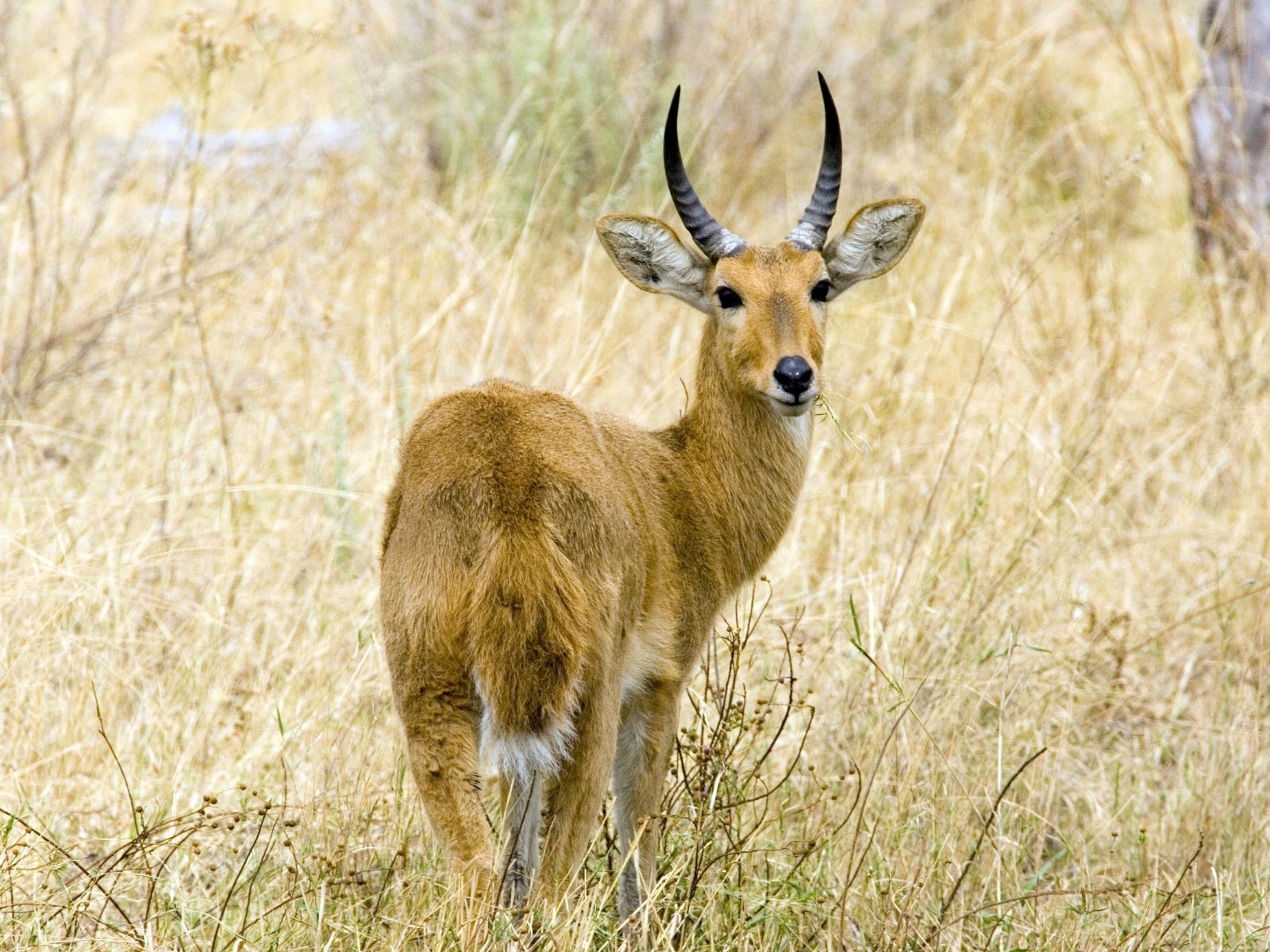
Southern Reedbuck
Redunca arundinum

2025 Red list status
Least Concern

Regional Population Trend
Increasing
Change compared
to 2016
No Change
Overview
Redunca arundinum – (Boddaert, 1785)
ANIMALIA – CHORDATA – MAMMALIA – ARTIODACTYLA – BOVIDAE – Redunca – arundinum
Common Names: Southern Reedbuck, Common Reedbuck (English), Rietbok (Afrikaans), Umziki, Umzigi (Ndebele), Lekwena, Letlabo (Sepedi), Lekwena, Motlapasi (Sesotho), Sebogata, Motsweema, Motsosa (Setswana), Inhlangu (Swati), Nhlangu (Tsonga), Davhu (Venda), Intlangu (Xhosa), Inxala, Inhlangu, Umziki, Umsagogo, Isagogo (Zulu), Grossriedbock (German), Redunca grande (French)
Synonyms: No Synonyms
Taxonomic Note:
A polytypic species; several subspecies have been named, but only two are widely recognised (Kingdon & Hoffmann 2013): a northern (R. a. occidentalis) and a southern (R. a. arundinum) (Skinner & Chimimba 2005), the latter of which is found in the assessment region. Only the species is assessed here.
Red List Status: LC – Least Concern, (IUCN version 3.1)
Assessment Information
Assessor: Patel, T.1 & da Silva, J. M.2
Reviewer: Mallon, D.3
Institutions: 1Endangered Wildlife Trust; 2South African National Biodiversity Institute; 3IUCN SSC Antelope Specialist Group
Previous Assessors: du Plessis, J. & Peel, M.
Previous Reviewer: Child, M.F.
Previous Contributor: Rushworth, I.
Assessment Rationale
Although this species has declined across much of its former range within the assessment region, subpopulations have been reintroduced throughout much of its range, with sizeable numbers on private land. The mature population size was at least 3,884 on both formally protected areas and private lands (based on 2010–2015 counts), which is an underestimate as not all private sector data were available. ISimangaliso Wetland Park in KwaZulu-Natal (KZN) has the largest number of mature individuals at 420-840. Based on a sample of 21 protected areas across the range of Southern Reedbuck, the overall population increased by c. 68–80% over three generations (1997/2002–2015), which is driven primarily by the Free State protected areas, which have experienced an average annual growth rate of 18% between 2006 and 2014. In the absence of the growth in the Free State, there was a net 10–22% decline in the remaining 11 protected areas over the same time period. This species experiences local declines as it is vulnerable to poaching, illegal sport hunting and persecution, and demand for live animals for trade (possibly illegally taken from the wild). Empirical data indicate declines in some protected areas in KZN and North West provinces due to poaching, and anecdotal reports suggest more severe declines outside protected areas due to poaching, sport hunting and habitat loss or degradation. The effects of such threats on local numbers and occupancy should be monitored, especially outside protected areas, as this species may qualify for a more threatened category in the future. Recent data received for this species was not robust enough to update population estimates, hence this assessment was largely based on the data used in the 2016 assessment. Further long-term data on subpopulation sizes and trends should be collected and this species should be reassessed once such data are available. Currently, we retain the Least Concern listing due to a mature population size of at least 3884 individuals and no evidence as yet for net population decline. Key interventions include the formation of conservancies to better safeguard key habitats and reduce poaching threats, as well as the prudent use of fire as a management tool to retain the tall grasses or reed beds needed by this species.
Regional population effects: There is potential dispersal across the northern border of Limpopo from Botswana and Zimbabwe through the Greater Mapungubwe Transfrontier Park and through Mozambique and Zimbabwe through the Great Limpopo Transfrontier Park. However, as fences restrict natural movement, no significant rescue effects are anticipated.
Reasons for Change
Reason(s) for Change in Red List Category from the Previous Assessment: No change
Red List Index
Red List Index: No change
Recommended citation: Patel T & da Silva JM. 2025. A conservation assessment of Redunca arundinum. In Patel T, Smith C, Roxburgh L, da Silva JM & Raimondo D, editors. The Red List of Mammals of South Africa, Eswatini and Lesotho. South African National Biodiversity Institute and Endangered Wildlife Trust, South Africa.
Regional Distribution and occurrence
Geographic Range
The Southern Reedbuck occurs from Gabon and Tanzania to South Africa. It remains widespread in protected areas and other areas with low to moderate levels of settlement, including significant populations on private land in Zimbabwe, South Africa and Namibia (IUCN SSC Antelope Specialist Group 2016). The Namibian population is largely extralimital, as it has been introduced to private land outside its natural range in the northern farming districts, where it is now relatively numerous (East 1999; Skinner & Chimimba 2005). It also occurs throughout Eswatini (Monadjem 1998; Skinner & Chimimba 2005).
The Southern Reedbuck has successfully been reintroduced into several nature reserves in Eswatini (Kingdon & Hoffmann 2013). While currently absent from Lesotho, historical records suggest that they occurred widely in the western lowlands of Lesotho, while it is uncertain to what extent they occurred in the Lesotho highlands (Liebenberg 1964; Boshoff & Kerley 2013). Lynch and Watson (1990) sighted one individual in Sehlabathebe National Park in Lesotho, but this may have been a vagrant from the Drakensberg of KZN (Lynch 1994). Severe hunting persecution may mean that the species is regionally extinct in the lowlands of Lesotho, but further field surveys are needed to confirm this. They occur on the Caledon River and may occasionally cross into the lowlands of Lesotho, but are unlikely to be a viable subpopulation if they do occur there (N. Avenant pers. comm. 2016). Similarly, historical records confirm their presence to areas just south of Lesotho in the Eastern Cape (Skead 2007), where they have become locally extinct in some areas (Lynch 1989).
They were formerly widely distributed across South Africa aside from the drier north-western areas (Skinner & Chimimba 2005). Thunberg (1795) recorded them as far west as Swellendam in the Western Cape (Skinner & Chimimba 2005), but there are no recent records further west than the Komgha District in the Eastern Cape. While their historical versus recent distribution is largely unchanged in KZN, Limpopo and Mpumalanga (Skinner & Chimimba 2005), reintroductions onto ranchlands and agricultural areas have resulted in a range expansion in western North West, southern Eastern Cape, eastern Western Cape, Northern Cape and throughout the Free State provinces. For example, a widespread questionnaire and collection survey published in the 1980s on the mammals of the Free State did not produce any records of the Southern Reedbuck (Lynch 1983) but they currently occur in most of the formally protected areas as well as on many private reserves and ranches in the province. It is uncertain to what extent these confined subpopulations were introduced (Boshoff & Kerley 2013; Kingdon & Hoffmann 2013), as it is likely that they remained in small numbers in scattered localities where their preferred habitats were sheltered from cultivation and domestic stock grazing (sensu Skinner & Chimimba 2005), especially in the northern and northeastern parts of the province. Introductions, however, may have played a major role in the re-establishment of the Southern Reedbuck in its former range and elsewhere in the Free State. Historical records confirm their presence in the wetter areas of the northern, northeastern and eastern Free State (Boshoff & Kerley 2013). No historical records exist on their presence in other areas of the Free State, although they existed in adjacent regions to the west and northwest (Skead 2011), and to the east just south of Lesotho (Skead 2007). It is, however, unlikely that they occurred in the west and west-central regions due to lack of suitable habitats (Boshoff & Kerley 2013).
The species had a wide historical distribution in the North West Province, supposedly occurring in the arid western half of the province (du Plessis 1969), where recent reintroductions and introductions have expanded its range in the province (Power 2014). The only free roaming subpopulation occurs in the thornveld habitats in the northern parts of the province, north of Pilanesberg (Buijs 2010). Finally, while its distribution has shrunk considerably from historical times in the Cape provinces (Skinner & Chimimba 2005), recent reintroductions and introductions are helping to repatriate subpopulations in these regions.
Elevation / Depth / Depth Zones
Elevation Lower Limit (in metres above sea level): 0
Elevation Upper Limit (in metres above sea level): 2000
Depth Lower Limit (in metres below sea level): (Not specified)
Depth Upper Limit (in metres below sea level): (Not specified)
Depth Zone: (Not specified)
Map
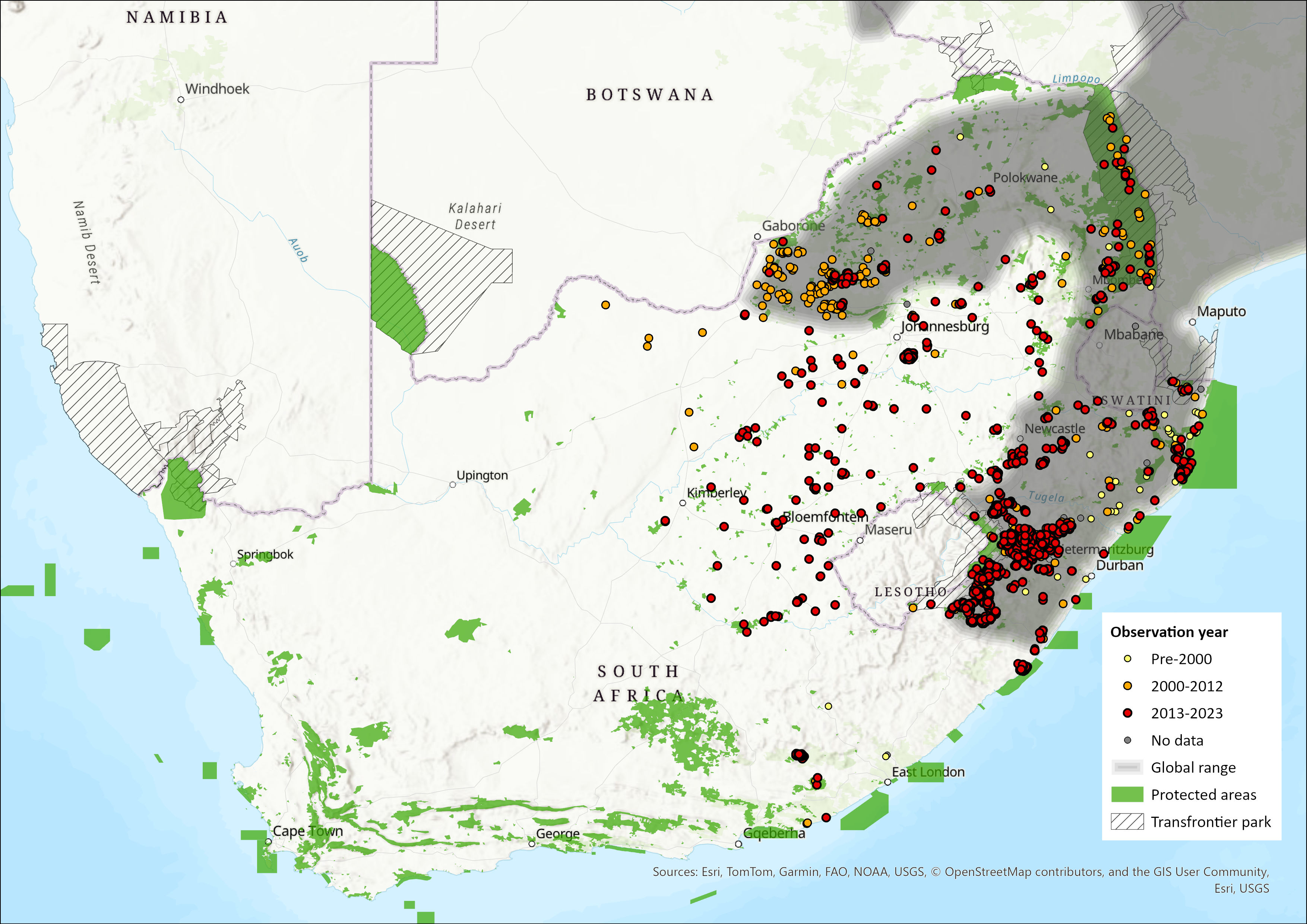
Figure 1. Distribution records for Southern Reedbuck (Redunca arundinum) within the assessment region (South Africa, Eswatini and Lesotho). Note that distribution data is obtained from multiple sources and records have not all been individually verified.
Biogeographic Realms
Biogeographic Realm: Afrotropical
Occurrence
Countries of Occurrence
| Country | Presence | Origin | Formerly Bred | Seasonality |
| Angola | Extant | Native | – | – |
| Botswana | Extant | Native | – | – |
| Congo | Possibly Extinct | Native | – | – |
| Congo, The Democratic Republic of the | Extant | Native | – | – |
| Eswatini | Extant | Native | – | – |
| Gabon | Extant | Native | – | – |
| Lesotho | Extinct Post-1500 | Native | – | – |
| Malawi | Extant | Native | – | – |
| Mozambique | Extant | Native | – | – |
| Namibia | Extant | Native | – | – |
| South Africa | Extant | Native | – | – |
| Tanzania, United Republic of | Extant | Native | – | – |
| Zambia | Extant | Native | – | – |
| Zimbabwe | Extant | Native | – | – |
Large Marine Ecosystems (LME) Occurrence
Large Marine Ecosystems: (Not specified)
FAO Area Occurrence
FAO Marine Areas: (Not specified)
Climate change
There is no evidence that climate change affects this species currently, however, climate change may exacerbate changes in habitat quality and forage availability in the future, which may lead to local declines.
Population information
Throughout Africa, total numbers have been estimated at c. 73,000 based on average densities of 0.3/2 where the species was common, and 0.03/ km² elsewhere (East 1999). However, because Southern Reedbuck occur in “islands” of suitable habitat, extrapolations from generalised density estimates are often misleading (Kingdon & Hoffmann 2013). Aerial counts of Southern Reedbuck, which may underestimate numbers, tend to result in density estimates of 0.1–0.2/ km² (Rowe-Rowe 1994). It can occur at much higher densities within areas of exceptionally favourable habitat; for example, 1.9/ km² in Nyika National Park in Malawi (IUCN SSC Antelope Specialist Group 2016); and 35/ km² on the Eastern Shores of iSimangaliso Wetland Park (Rowe-Rowe 1994).
Within the assessment region, there were estimated to be 1,103–1,826 on 12 formally protected areas in KZN in 2012–2014 (Ezemvelo-KZN Wildlife unpubl. data), the largest of which is the Western Shores with 600–1,200 animals. There was no recent data from this province. In North West Province, they occur on formally protected areas in the east of the province but are not faring well (Power 2014): there were only 22 on formally protected areas in 2010, and 33 in four protected areas in 2015 (Power 2014; Nel 2015). In 2023, there were 22 individuals in five protected areas (North West Department of Economic Development, Environment, Conservation and Tourism; 2023 count). Similarly, in Mpumalanga Province, they occur at low numbers in three formally protected areas (numbering 24 animals in total in 2013; J. Eksteen unpubl. data). In Limpopo Province, they now occur in four protected areas, whereas they previously only occurred on one. Ferreira et al. (2013) suspected there may be 300 in Kruger National Park in 2009, but according to recent counts, there have been no southern reedbuck recorded. In Gauteng Province, they occur on Suikerbosrand Nature Reserve with 10 animals recorded in 2023. They appear to be stable in the Eastern Cape (D. Peinke unpubl. data) in low numbers. They are increasing strongly in Free State provincial protected areas (E. Schulze unpubl. data) found in 11 nature reserves. Additionally, according to a 2010 survey, there were 1,216 individuals on private land in the Free State, which may be an underestimate since it only included subpopulations from farmers with official adequate fencing certificates (Janecke 2011). Southern Reedbuck also occur extensively on private lands, including agricultural landscapes. For example, O’Connor and Krüger (2003) reported high densities on dairy farms in the southern Drakensberg region in KZN, which they attributed to the presence of high-quality winter pastures. Similarly, in North West Province, there were an estimated 1,912 animals on private lands in 2010 (Power 2014). Other areas may contain stable but relatively small and unviable populations (O’Connor & Krüger 2003). Based on the previous regional assessment, there were estimated to be at least 5,549 animals (3,884 mature individuals using a 70% mature population structure) (2010–2015). This is certainly an underestimate as not all private sector data are available. There are likely to be over 10,000 mature individuals nationwide, but this should be verified with further collation of data, including field surveys and population genetic assessments.
Generation length is estimated as 6.3 years (Pacifici et al. 2013), yielding a three-generation period of 18.8 years (1997–2015). However, the IUCN SSC Antelope Specialist Group (2016) estimated generation length as 4.4 years, which yields a 13.2 year three-generation period (1997–2015). Based on a sample of 21 protected areas across the range of Southern Reedbuck, the population has increased by c. 68–80% over three generations. The positive growth was primarily attributable to the Free State protected areas, which have experienced an average annual growth rate of 18% between 2006 and 2014, where the population has increased from 304 in 2004 to 768 in 2014 (E. Schulze unpubl. data). Omitting the Free State protected areas, however, reveals a net population decline of 10–22% in the remaining 11 protected areas over three generations. Further long-term data collation is thus necessary, especially outside protected areas (where severe declines are expected due to the increase of illegal hunting with dogs), to estimate national population trends more accurately. Generally, population trends are thought to be mostly stable in protected areas, increasing on private land (however, many private properties require supplementary feeding to prevent declines; M. Peel unpubl. data), and possibly decreasing elsewhere due to escalating poaching (IUCN SSC Antelope Specialist Group 2016).
Population Information
Continuing decline in mature individuals? Yes
Justification: From poaching, especially outside protected areas.
Current population trend: Increasing, but with local/ regional declines.
Number of mature individuals in population: 3,884
Number of mature individuals in largest subpopulation: 420–840 in iSimangaliso Wetland Park.
Number of subpopulations: At least 36 in formally protected areas.
Severely fragmented: Yes. They are largely confined to fenced protected areas and wildlife ranches and occur in natural fragmented habitat.
Extreme fluctuations in the number of subpopulations: (Not specified)
Continuing decline in number of subpopulations: (Not specified)
All individuals in one subpopulation: (Not specified)
Number of subpopulations: 36 sites
Quantitative Analysis
Probability of extinction in the wild within 3 generations or 10 years, whichever is longer, maximum 100 years: (Not specified)
Probability of extinction in the wild within 5 generations or 20 years, whichever is longer, maximum 100 years: (Not specified)
Probability of extinction in the wild within 100 years: (Not specified)
Population genetics
While a phylogenetic study incorporating this species was undertaken (Birungi and Arctander 2001) to date, no population genetic study has been conducted.
Most animals are confined to fenced areas, with no natural movement expected to occur between sites; however, human-mediated translocations do occur between provincial reserves and private game farms. As such it is possible the species exists as a single metapopulation within the assessment region. However, anecdotal evidence suggests many of these translocations are unsuccessful, which could indicate the possibility that each site is a separate subpopulation. This requires investigation through a fine-scale population genetic study.
Assuming the species exists as a single metapopulation, and based on census estimates of 5,549 animals (3,884 mature individuals), the effective population size (Ne) is between 388 – 1165 individuals (assuming a Ne/Nc conversion ratio between 0.1-0.3). This estimate cradles the Ne 500 threshold. Should more subpopulations exist within the assessment region, this Ne estimate would decrease (due to splitting it between subpopulations), raising concern for the genetic health of the species.
Should the designation of subspecies have a molecular/evolutionary basis, it would be imperative to ensure translocations do not take place between them to ensure the genetic integrity of the species.
Habitats and ecology
Southern Reedbuck occupy floodplain and drainage-line grasslands in savannah woodlands (IUCN SSC Antelope Specialist Group 2016). The most significant habitats in South Africa include valleys in which the grass cover is tall (or there is suitable herbaceous cover) and permanent water is available, such as river beds, depressions and waterlogged areas (wetlands) covered in reed beds or tall grass (Jungius 1971; Howard 1986). They may prefer grassland on hillslopes, because it provides sufficient cover by way of boulder outcrops, gullies and ledges. They have certain essential habitat requirements: tall grass or reed beds (preferably with some woody elements) and a supply of water (Skinner & Chimimba 2005). They avoid areas where bush encroachment is severe. In some areas, they switch to agricultural land during winter because of high quality pastures. For example, in KZN, they thrive on dairy farms planted with rye grass (I. Rushworth pers. comm. 2016). They avoid flat grassland areas (Howard 1986). Southern Reedbucks range to 1,800–2,000 m asl in the Drakensberg Mountains of South Africa (Rowe-Rowe 1994). They are predominantly fresh grass grazers, but will occasionally take small quantities of herbs, and in some areas may even browse extensively (Jungius 1971). Clean burning will lead to their disappearance from an area (Skinner & Chimimba 2005), so it is vital that the fire is patchy to preserve areas of tall grass and herbaceous cover adjacent to wetlands and vleis. Home range size in the highlands of KZN varied from 0.732 for adult males to 1.232 for adult females (Howard 1986), while that of iSimangaliso Wetland Park the mean home range size was 0.05 and 0.06 km2 for males and females, respectively (Venter 1979).
Ecosystem and cultural services: None known.
IUCN Habitats Classification Scheme
| Habitat | Season | Suitability | Major Importance? |
| 2.1. Savanna -> Savanna – Dry | – | Marginal | – |
| 3.4. Shrubland -> Shrubland – Temperate | – | Suitable | – |
| 4.4. Grassland -> Grassland – Temperate | – | Suitable | – |
Life History
Generation Length: (Not specified)
Age at Maturity: Female or unspecified: (Not specified)
Age at Maturity: Male: (Not specified)
Size at Maturity (in cms): Female: (Not specified)
Size at Maturity (in cms): Male: (Not specified)
Longevity: (Not specified)
Average Reproductive Age: (Not specified)
Maximum Size (in cms): (Not specified)
Size at Birth (in cms): (Not specified)
Gestation Time: (Not specified)
Reproductive Periodicity: (Not specified)
Average Annual Fecundity or Litter Size: (Not specified)
Natural Mortality: (Not specified)
Does the species lay eggs? (Not specified)
Does the species give birth to live young: (Not specified)
Does the species exhibit parthenogenesis: (Not specified)
Does the species have a free-living larval stage? (Not specified)
Does the species require water for breeding? (Not specified)
Movement Patterns
Movement Patterns: (Not specified)
Congregatory: (Not specified)
Systems
System: Terrestrial
General Use and Trade Information
The Southern Reedbuck is hunted recreationally and for food and trophies. The percentage of wild offtake versus offtake from ranching activities is unclear. The effect of recreational hunting for trophies is thought to be minimal. In KZN, for instance, the average number of Southern Reedbucks shot per year on quota permits (including those controlled as problem animals) between 1974 and 1991 has been 421 animals / year (Ezemvelo KZN Wildlife unpubl. data). However, some uncontrolled hunting, does occur, and its impact is unknown, although thought to be severe outside protected areas. The impact from illegal poaching for food is also unknown; according to Kingdon and Hoffmann (2014) this impact could be more severe. Furthermore, the demand for live animals is also high; presumably most of the live animals are sourced from ranching activities, although this is uncertain. No Southern Reedbuck have been offered for sale at provincial protected area game auctions, so the inference is that the majority of the stock is provided by wildlife ranchers.
Wildlife ranching and the private sector have generally had a positive effect on this species, as the conversion from livestock to wildlife ranches is speculated to have improved habitat conditions and decreased persecution rates. However, this remains to be empirically justified. While this species has been extensively reintroduced in parts of its former range, it is expected that most of the populations on privately owned ranches are small and unviable (O’Connor & Krüger 2003).
| Subsistence: | Rationale: | Local Commercial: | Further detail including information on economic value if available: |
| Yes | Bushmeat hunting | Yes | Trophy and biltong hunting |
National Commercial Value: Yes
International Commercial Value: Yes
| End Use | Subsistence | National | International | Other (please specify) |
| 1. Food – human | true | true | – | – |
| 15. Sport hunting/specimen collecting | – | true | true | – |
Is there harvest from captive/cultivated sources of this species? Yes
Harvest Trend Comments: (Not specified)
Threats
Although Southern Reedbuck remain widespread, they have been eliminated from large areas within their distribution range by the spread of settlements and associated habitat destruction and hunting for meat and trophies. They have been severely impacted in the past by habitat transformation associated with agricultural activities (Howard 1983; Boshoff & Kerley 2013; Kingdon & Hoffmann 2013). They now mainly remain as isolated, and in many instances, unviable populations on private land and in protected areas (O’Connor & Krüger 2003). On agricultural land, they are subjected to possible persecution because of their damage to pastures and crops (Howard 1983). For example, they favour rye grass and lucerne pastures in the foothills of the Drakensberg where they are directly persecuted as a means of control. The demand for live animals is high, and it is possible that these are illegally taken from natural populations in some areas. Bushmeat poaching and illegal sport hunting with dogs are also severe threats, especially outside protected areas. They are also vulnerable to hunting and poaching due to their slow pace, their “hiding” behaviour and because they are of a small enough size to be hunted by dogs and carried by a single or very few hunters (Jungius 1971; Howard 1986; Kingdon & Hoffmann 2013). Southern Reedbuck also tend to use fixed trails leading to water (Skinner & Chimimba 2005), and are thus vulnerable to snaring in these areas. Poaching has been documented at Borakalalo National Park, North West Province (Nel 2015) and Mpumalanga (Dalton & Kotze 2011); and illegal sport hunting with dogs impacts many antelope species in KZN (Grey-Ross et al. 2010), which is likely to have caused significant declines of this species outside protected areas (I. Rushworth pers. Comm. 2016). The combination of sport hunting, poaching and habitat loss in surrounding areas probably caused the decline in numbers in Coleford Nature Reserve (O’Connor & Krüger 2003).
Habitat trend: Declining. Drainage of wetlands and low-lying areas for agriculture and settlements has likely reduced natural habitat for this species (sensu GeoTerraImage 2015; Jewitt et al. 2015). Encroachment of pastoral agriculture may also have decreased habitat quality, although high-quality winter pastures could provide a good alternative habitat in some areas (Howard 1986; O’Connor & Krüger 2003). Bush encroachment (such as valley bushveld), which they avoid, may also decrease Southern Reedbuck natural habitat. Fire mismanagement may also lead to habitat degradation if it reduces or removes the height of the grass or reed sward needed for cover. Sprouting grass is not enough for Southern Reedbuck to remain in an area (Skinner & Chimimba 2005).
Conservation
Southern Reedbuck occur in numerous protected areas within the assessment region, including iSimangaliso Wetland Park in KZN, and Kruger National Park in Limpopo. While no major interventions are currently necessary as long as they continue to be stable in protected areas, several interventions will benefit the species outside of protected areas: conservancy formation, especially bordering or close to existing protected areas, should be encouraged to protect the habitats on which this specie relies and to help mitigate the threat of poaching through cooperative security measures. Also, this may ensure the formation of viable subpopulation sizes outside protected areas. Biodiversity stewardship for this species should also be promoted as, for example, they can exist on dairy farms with rye grass pastures (I. Rushworth pers. comm. 2016). Fire management is possibly a key tool in ensuring persistence of Southern Reedbuck in the landscape, where fires should be patchy enough to conserve areas of tall grass or reed beds but extensive enough to prevent bush encroachment. Regulation of trophy hunting and translocation may be required to prevent overhunting, unsustainable offtake from natural populations, and/or mixing of subspecies.
Recommendations for land managers and practitioners:
- Regulate translocation to avoid hybridisation between ecotypes and to regulate offtake.
- Sustainable utilisation of the species may encourage private landowner reintroductions and conservancy formation.
- Employ mosaic burning regimes on private lands.
Research priorities:
- Population genomic study examining the genetic structure and health of potential subpopulations across the assessment region, and to investigate the evolutionary relevance of subspecies and ecotypes.
- Quantifying occupancy and subpopulation sizes/trends across its range, especially on private lands. This includes determining the contribution of reintroductions and determining the factors limiting its presence in the landscape.
- Collation of long-termpopulation size data to quantify trends in formally protected areas.
- Quantifying its spatial ecology across protected areas and agricultural landscapes (sensu O’Connor & Krüger 2003), especially in relation to land-use.
- Quantifying the level and impacts of illegal hunting on population persistence.
- Assessing the effects of wildlife ranching.
Encouraged citizen actions:
- Report sightings on virtual museum platforms (for example, iNaturalist and MammalMAP), especially outside protected areas.
- Create conservancies to protect vital wetland and tall grassland habitats.
Bibliography
Birungi, J. and Arctander, P. 2001. Molecular systematics and phylogeny of the Reduncini (Artiodactyla: Bovidae) inferred from the analysis of mitochondrial cytochrome b gene sequences. Journal of Mammalian Evolution 8(2): 125-147.
Boshoff AF, Kerley GIH. 2013. Historical incidence of the larger mammals in the Free State Province (South Africa) and Lesotho. Centre for African Conservation Ecology, Nelson Mandela Metropolitan University, Port Elizabeth.
Buijs, D. 2010. Aerial survey of wildlife and domestic stock on tribal land in North West Province 2010. DACERD, Mmabatho.
Dalton DL, Kotze A. 2011. DNA barcoding as a tool for species identification in three forensic wildlife cases in South Africa. Forensic Science International 207: e51–e54.
East, R. (compiler). 1999. African Antelope Database 1998. IUCN, Gland, Switzerland and Cambridge, UK.
Ferreira S, Gaylard, A, Greaver, C, Hayes, J, Cowell C, Ellis G. 2013. Summary Report: Animal abundances in Parks 2012/2013. Scientific Services, SANParks, Skukuza, South Africa.
GeoTerraImage. 2015. Quantifying settlement and built-up land use change in South Africa. Pretoria.
Grey-Ross R, Downs CT, Kirkman K. 2010. An assessment of illegal hunting on farmland in KwaZulu-Natal, South Africa: implications for oribi (Ourebia ourebi) conservation. South African Journal of Wildlife Research 40: 43-52.
Howard PC. 1983. An integrated approach to the management of common reedbuck on farmland in Kwazulu-Natal. Ph.D. Thesis. University of KwaZulu-Natal, Pietermaritzburg, South Africa.
Howard PC. 1986. Habitat preferences of common reedbuck on farmland. South African Journal of Wildlife Research 16: 99-108.
IUCN SSC Antelope Specialist Group. 2016. Redunca arundinum. The IUCN Red List of Threatened Species 2016: e.T19390A50193692
Janecke BB. 2011. A plant based study of the feeding ecology of introduced herbivore game species in the central Free State. Ph.D. Thesis. University of the Free State, Bloemfontein, South Africa.
Jewitt, D., Goodman, P.S., Erasmus, B.F.N., O’Connor, T.G. and Witkowski, E.T.F. 2015. Systematic land-cover change in KwaZulu-Natal, South Africa: Implications for biodiversity. South African Journal of Science 111: 1-9.
Jungius, H. 1971. The biology and behaviour of the reedbuck Redunca arundinum Boddaert, 1785 in the Kruger National Park. Mammalia Depicta.
Kingdon J, Hoffmann M. 2013. Redunca arundinum Southern Reedbuck. In: Kingdon JS, Hoffmann M (ed.), The Mammals of Africa. Volume VI: Pigs, Hippopotamuses, Chevrotain, Giraffes, Deer and Bovids, pp. 426-431. Bloomsbury Publishing, London, UK.
Liebenberg LCC. 1964. Die grotere soogdiere wat vroër dae voorgekom het in die omgewing van die Golden Gate-Hooglandpark. Koedoe 7: 99-104.
Lynch C.D. 1989. The mammals of the north-eastern Cape Province. Navorsinge van die Nasionale Museum Bloemfontein 25: 1-116.
Lynch, C. D. and Watson, J. P. 1990. The mammals of Sehlabathebe National Park, Lesotho. Navorsinge van die Nasionale Museum, Bloemfontein 6(12): 523-554.
Lynch, C.D. 1983. The mammals of the Orange Free State, South Africa. Navorsinge van die Nasionale Museum Bloemfontein 18: 1-218.
Lynch, C.D. 1994. The mammals of Lesotho. Navorsinge van die Nasionale Museum Bloemfontein 10(4): 177-241.
Monadjem A. 1998. The mammals of Swaziland. Conservation Trust of Swaziland and Big Games Parks, Mbabane, Swaziland.
Nel, P. 2015. Population estimates for large herbivores and predators in protected areas in the North West Parks Board November 2015. North West Parks Board.
O’Connor T, Krüger S. 2003. Synchronous decline of populations of small antelope in a reserve in the southern Drakensberg, South Africa. South African Journal of Wildlife Research 33: 97-107.
Pacifici, M., Santini, L., Di Marco, M., Baisero, D., Francucci, L., Grottolo Marasini, G., Visconti, P. and Rondinini, C. 2013. Generation length for mammals. Nature Conservation 5: 87–94.
Power, R.J. 2014. The distribution and status of mammals in the North West Province. Department of Economic Development, Environment, Conservation & Tourism, North West Provincial Government, Mahikeng.
Rowe-Rowe, D. T. 1994. The ungulates of Natal. Natal Parks Board, Pietermaritzburg, South Africa.
Skead, C.J. 2007. Historical Incidence of the Larger Land Mammals in the broader Eastern Cape, Second Edition.In: Boshoff AF, Kerley GIH, Lloyd PH (ed.), Port Elizabeth: Centre for African Conservation Ecology, Nelson Mandela Metropolitan University.
Skead, C.J. 2011. Historical incidence of the larger land mammals in the broader Western and Northern Cape provinces.In: Boshoff A.F., Kerley G.I.H, Lloyd P. (ed.), Centre for African Conservation Ecology, Nelson Mandela Metropolitan University, Port Elizabeth.
Skinner, J.D. and Chimimba, C.T. (eds). 2005. The Mammals of the Southern African Subregion. Cambridge University Press, United Kingdom, Cambridge.
Venter J. 1979. Ecology of the southern reedbuck Redunca arundinum Boaddaert 1785 on the eastern shores of lake St. Lucia. M.Sc. Thesis. University of KwaZulu-Natal, Pietermaritzburg, South Africa.
du Plessis, SF. 1969. The past and present distribution of the Perissodactyla and Artiodactyla in southern Africa. M.Sc. Thesis. University of Pretoria, Pretoria, South Africa