
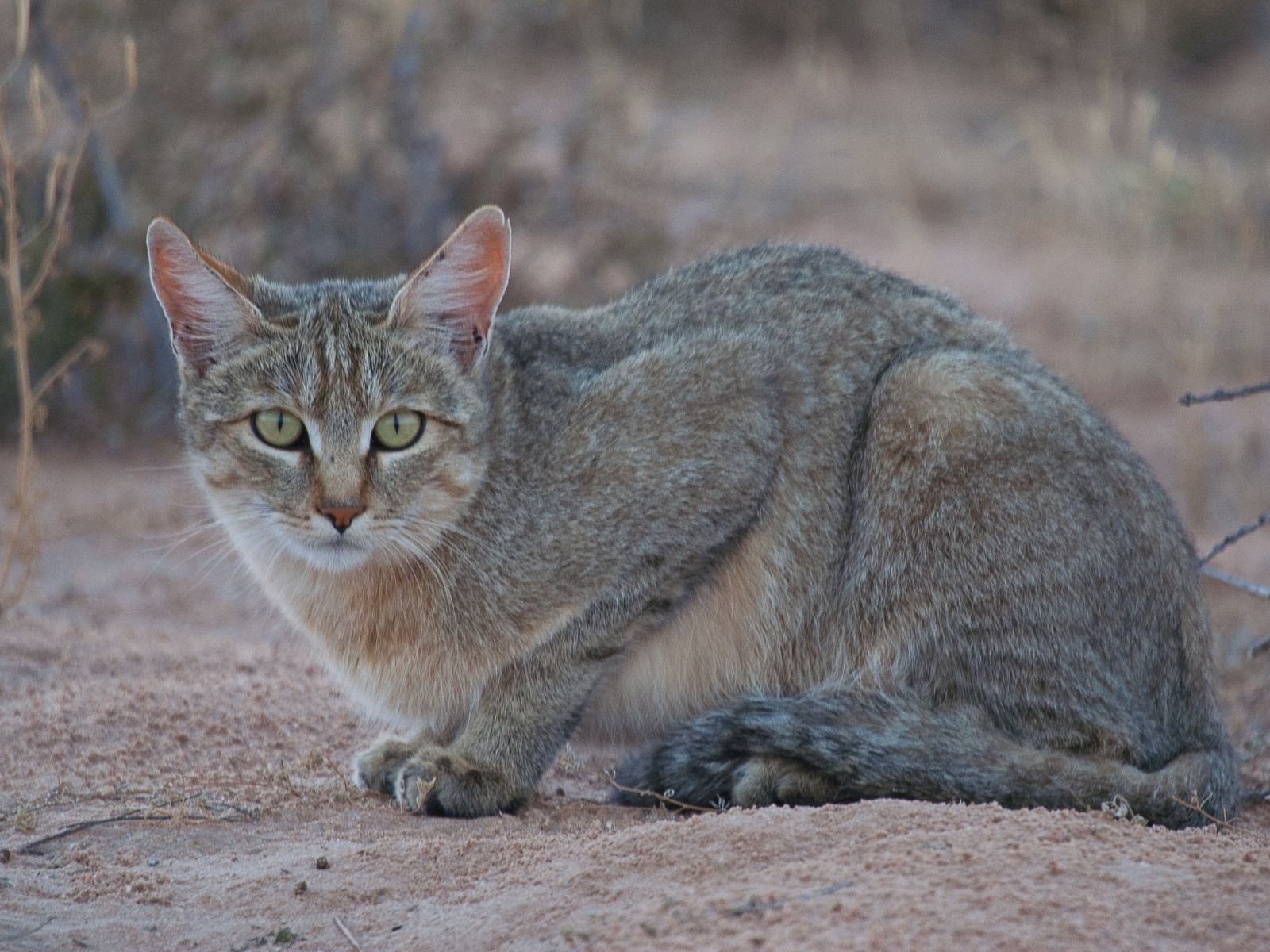
Southern African Wildcat
Felis lybica cafra

2025 Red list status
Least Concern

Regional Population Trend
Stable

Change compared
to 2016
No Change
Overview
Felis lybica cafra – Desmarest, 1822
ANIMALIA – CHORDATA – MAMMALIA – CARNIVORA – FELIDAE – Felis – lybica cafra
Common Names: Southern African Wildcat, African Wildcat (English), Groukat, Vaalboskat (Afrikaans), !Garo (Nama), Igola, Ipaka ye-Afrika (Ndebele), Phaga (Sepedi), Qwabi, Setsetse, Tsetse (Sesotho), Imbodla, Ligoya, Imphaka, Ingewa (Swati), Goya, Mphaha (Tsonga), Phagê, Tibê (Tswana), Phaha, Gowa (Venda), Ingada, Ichathaza, Imbodla (Xhosa), Impaka, Imbodla (Zulu)
Synonyms: Felis silvestris (Schreber 1777)
Taxonomic Note:
There is currently no clear agreement on how to relate geographically linked variation in morphology and genetics to the taxonomy and systematics of the widely distributed Wildcat (Felis silvestris) (Kitchener & Rees 2009). The latest phylogeographical analyses (Driscoll et al. 2007, 2009; Macdonald et al. 2010) suggest that the Wildcat consists of five subspecific groups and three traditional subspecies (Nowell & Jackson 1996; Stuart et al. 2013) including the recent recognition of the Southern African Wildcat (F. l. cafra Desmarest, 1822) (Kitchener et al. 2017). Yu et al. (2021) confirm the phylogenetic separation but conservatively regard it as a subspecies.
Based on genetic, morphological and archaeological evidence, the familiar domestic cat was believed to be domesticated from the Near Eastern Wildcat (F. s. lybica), probably 9,000–10,000 years ago in the Fertile Crescent region (Vigne et al. 2004; Driscoll et al. 2007), coinciding with the first agricultural settlements (Driscoll et al. 2007; Macdonald et al. 2010). Although the domestic cat derived relatively recently from the Wildcat, in terms of biological processes and phylogeny, it can be taxonomically classified either as a subspecies (F. s. catus) of F. silvestris or as a separate species (F. catus) (Macdonald et al. 2010). Genetic evidence supports the classification of domestic cats as genetically distinct from Wildcats (Wiseman et al. 2000; Driscoll et al. 2007; Herbst 2009).
Red List Status: LC – Least Concern (IUCN version 3.1)
Assessment Information
Assessors: Herbst, M.1, Power, R.J.2 & da Silva, J.M.3
Reviewers: Greyling, E.4 & Do Linh San, E.5
Contributor: Patel, T.4
Institutions:1SANParks, 2North West Provincial Government,3South African National Biodiversity, Institute,4Endangered Wildlife Trust, 5Sol Plaatjie University
Previous Assessors & Reviewers: Herbst, M., Foxcroft, L., Le Roux, J., Bloomer, P. & Do Linh San, E.
Previous Contributors: Nowell, K. & Child, M.F.
Assessment Rationale
The Southern African Wildcat is listed as Least Concern because it is common and widely distributed within the assessment region. However, extensive hybridisation and introgression with domestic cats across its global distribution range has been recorded. Studies suggest lower levels of introgression than expected in South Africa (Wiseman et al. 2000; Le Roux et al. 2015). As incidences of hybridisation correlate with human population pressure, high rates of rural and urban expansion, especially around protected area edges, may increasingly threaten this species genetic integrity. Further research on the levels of hybridisation and declines of genetically pure subpopulations may lead to a reassessment of the Southern African Wildcat as a threatened species, under criterion A4e. Key interventions include the establishment of large protected areas to reduce the edge effects of the wild and domestic animal interface (for example the Kgalagadi Transfrontier Park), and spaying and neutering of domestic cats, especially in rural areas and close to protected areas.
Regional population effects: This species has a continuous distribution across the southern African continent and movements between regions and countries are likely to occur. Large protected and open areas like the Kgalagadi Transfrontier Park (KTP) and extended into Botswana are likely source areas (Herbst 2009), while farm and agricultural land to the south most likely serves as a sink effect (see Blaum et al. 2009; Bullock et al. 2011; Stadler 2021), given possible losses there.
Reasons for Change
Reason(s) for Change in Red List Category from the Previous Assessment: No change
Red List Index
Red List Index: No change
Recommended citation: Herbst M, Power RJ & da Silva JM. 2025. A conservation assessment of Felis lybica cafra. In Patel T, Smith C, Roxburgh L, da Silva JM & Raimondo D, editors. The Red List of Mammals of South Africa, Eswatini and Lesotho. South African National Biodiversity Institute and Endangered Wildlife Trust, South Africa.
Regional Distribution and occurrence
Geographic Range
The Wildcat has a large geographic distribution and is found throughout most of Africa, Europe, and southwest and central Asia into India, China, and Mongolia. Two of the five recognised Wildcat subspecies (Driscoll et al. 2007; Macdonald et al. 2010), F. l. lybica and F. l. cafra, are considered African and have the following distributions: the Near Eastern Wildcat (F. l. lybica) occurs across northern Africa and extends around the periphery of the Arabian Peninsula to the Caspian Sea (Driscoll et al. 2007). Further south, it is replaced by the Southern African Wildcat subspecies, F. l. cafra (Driscoll et al. 2007). At present the available genetic data are insufficient to distinguish between subspecies however morphological evidence suggests that the border of transition between the two subspecies is somewhere in the southeastern region of Tanzania and Mozambique (Yamaguchi et al. 2004a, 2004b; Kitchener & Rees 2009).
Southern African Wildcats occur in all South African provinces (Figure 1), as well as in neighbouring Lesotho and Eswatini. Their extremely wide distribution range is due to their broad ecological tolerance. They occur at altitudes ranging from sea level to 2,400 m a.s.l (Skinner & Chimimba 2005). The distribution range within the assessment area has not changed significantly since the last assessment. There are some new records and extinction in areas of the North West Province, as the species seems to have disappeared from the south-eastern grasslands, having been recorded only in the northern Kalahari and bushveld habitats (Power 2014).
Elevation / Depth / Depth Zones
Elevation Lower Limit (in metres above sea level): (Not specified)
Elevation Upper Limit (in metres above sea level): (Not specified)
Depth Lower Limit (in metres below sea level): (Not specified)
Depth Upper Limit (in metres below sea level): (Not specified)
Depth Zone: (Not specified)
Map
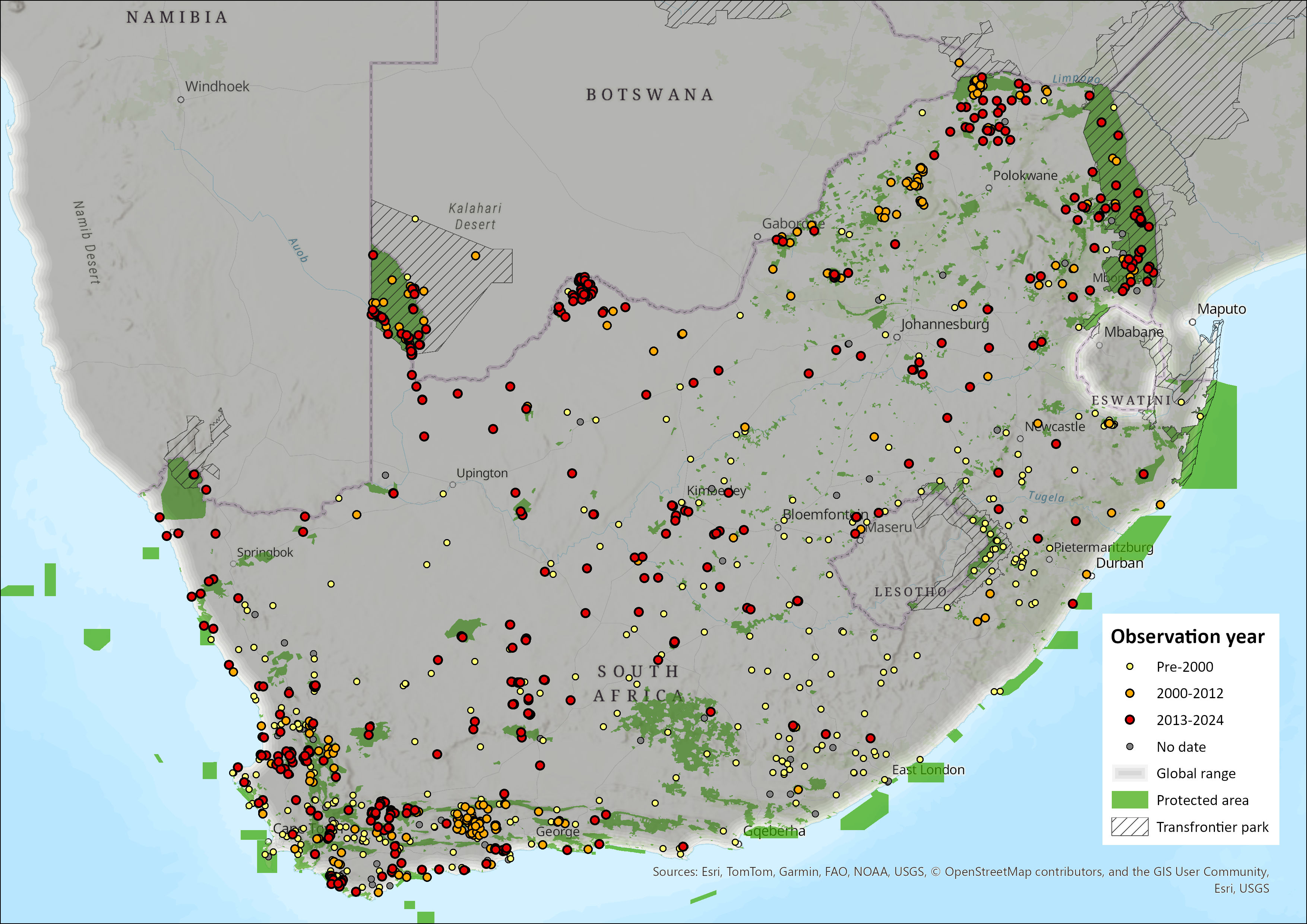
Figure 1. Distribution records for Southern African Wildcat (Felis lybica cafra) within the assessment region (South Africa, Eswatini and Lesotho). Note that distribution data is obtained from multiple sources and records have not all been individually verified.
Biogeographic Realms
Biogeographic Realm: Afrotropical
Occurrence
Countries of Occurrence within southern Africa
| Country | Presence | Origin | Formerly Bred | Seasonality |
| Botswana | Extant | Native | – | – |
| Eswatini | Extant | Native | – | – |
| Lesotho | Extant | Native | – | – |
| Mozambique | Extant | Native | – | – |
| Namibia | Extant | Native | – | – |
| South Africa | Extant | Native | – | – |
| Zimbabwe | Extant | Native | – | – |
Large Marine Ecosystems (LME) Occurrence
Large Marine Ecosystems: (Not specified)
FAO Area Occurrence
FAO Marine Areas: (Not specified)
Climate change
It is important to consider a species’ ecological and biological traits to determine the likely mechanisms of climate change impact and quantify these using expert knowledge (Foden & Young 2016), and empirical information which may have been availed on the species based on predicted habitat changes, regionally (Blaum et al. 2007), as well as continentally (Kitchener & Rees 2009). In the Kalahari rangeland systems, an increase in shrub cover was said to negatively impact the abundance of African Wildcat (Blaum et al. 2009), of which woody plant increases are one of the consequences of a warming climate (Foden & Young 2016). Moderate levels of global warming were hypothesised to impact minimally on Wildcats, except in the Middle East and south-west Asia, while southern Africa is largely unaffected (Kitchener & Rees 2009).
In fact, the changes in probability of Wildcat presence from present day to a future global-warming scenario with a mean global temperature increase of 2˚C as predicted by the deduced distribution model of 9000 years BP, showed no change for southern Africa, with even a few regional increases in occurrence in the Karoo area of southern South Africa (Kitchener & Rees 2009). Despite local or regional habitat changes, future scenarios of climate change are likely to have minimal impact on the distribution of the African Wildcat, at least in the South African part of the species range (Kitchener & Rees 2009).
Population
The world’s domestic cat population is estimated to be around 600 million individuals (Baker et al. 2010), making the domesticated form of F. silvestris one of the world’s most numerous animals. Domestic cats can hybridise freely with Wildcats, for example in Europe (Pierpaoli et al. 2003; Driscoll et al. 2007), southern Africa (Stuart & Wilson 1988; Yamaguchi et al. 2004b; Stuart et al. 2013), and North Africa (Stuart et al. 2013). However, the extent of hybridisation may be lower than previously reported and may vary locally (Herbst 2009; Le Roux et al. 2015). It is believed that today very few genetically distinct Wildcat populations still exist (Nowell & Jackson 1996; Herbst 2009). It is difficult to distinguish morphologically/visually between genetically pure Wildcats and domestic cats and therefore difficult to assess the status of Wildcats in their natural environment (Nowell & Jackson 1996). The morphological criteria listed for Wildcats by Skinner and Chimimba (2005) should help to assist in the visual identification of Wildcats. To date, three studies have determined the genetic structure of Wildcat populations in southern Africa (Wiseman et al. 2000; Herbst 2009; Le Roux et al. 2015). Subsequently several recent papers have developed improved genetic markers for discrimination between Wildcats and domestic cats (Driscoll et al. 2011; Nussberger et al. 2013, 2014a; Devillard et al. 2014) that would assist in future assessments.
Since the species is not readily distinguishable from its stripe patterning, it has not been amenable to various camera trapping protocols reliant on known individuals. However, some studies have estimated relative abundance of the species from spoor surveys (Blaum et al. 2008), as well as total abundance based on spoor measurement discrimination (see Gusset & Burgener 2005). The latter study for instance, estimated five African Wildcats on a 1500 ha ranch in the Waterberg of Limpopo (Gusset & Burgener 2005), though the veracity of the study is uncertain if to extrapolate this figure over the wider landscape.
Some have examined through camera trapping the relative abundance of the species locally (de Satge et al. 2017; Comley et al. 2020), regionally (Stadler 2021), and nationally (Smith et al. 2023). However, these studies do not conclude total population numbers. As population numbers are unknown, it is still assumed that this subspecies is fairly common in most protected areas.
Population Information
Current population trend: Stable, but possibly declining based on ongoing human settlement expansion and subsequent risk of hybridisation with domestic cats. The population may have increased, given recolonisation of parts of their range that were previously declared locally extinct.
Continuing decline in mature individuals: Unknown, but the number of mature individuals will decline if hybridisation increases.
Number of mature individuals in population: Unknown
Number of mature individuals in largest subpopulation: Unknown, but likely to be Kgalagadi Transfrontier Park.
Number of subpopulations: Unknown
Severely fragmented: No. They have a broad habitat tolerance and can exist in some agricultural and rural landscapes (Stuart 1981; Skinner & Chimimba 2005).
Quantitative Analysis
Probability of extinction in the wild within 3 generations or 10 years, whichever is longer, maximum 100 years: (Not specified)
Probability of extinction in the wild within 5 generations or 20 years, whichever is longer, maximum 100 years: (Not specified)
Probability of extinction in the wild within 100 years: (Not specified)
Population Genetics
A population genetic study investigating the level of hybridisation between Southern African Wildcats and domestic cats in South Africa found Southern African Wildcat populations to be relatively genetically pure (Le Roux et al. 2015). However, instances of hybridisation were evident and significantly associated with proximity to human settlements. While an a priori investigation of the species’ spatial genetic structure across its range was not conducted, the study did find genetic differences between two protected areas, with the Kgalagadi Transfrontier Park possessing the most genetically pure individuals compared to Kruger National Park, which showed higher levels of hybridisation. Therefore, while it is not possible to ascertain whether these populations formed a single population historically, they show signs of current differentiation and should be maintained separately. Efforts are needed to ensure hybrid individuals or localities with hybrids are isolated from those that are genetically pure. It is possible additional genetic differentiation is present within this species (e.g. to the south of South Africa), and this should be investigated. Such studies would also help acquire an estimate of each subpopulation’s effective population size, which would prove invaluable given the current difficulties in obtaining any estimates of population size for the species.
Habitats and ecology
African Wildcats are found in a wide variety of habitats, from deserts and scrub grassland to dry and mixed forest, being only absent from rainforest and true deserts. Throughout their range they require some cover and protection such as rocky hillsides, bushes, dwarf shrubs, reed beds and tall grasses (Stuart 1981; Nowell & Jackson 1996; Skinner & Chimimba 2005; Herbst 2009). Where adequate cover is unavailable, they use holes created by species such as Aardvark (Orycteropus afer) or under the roots of trees or holes in termitaria. They have also been recorded from agricultural landscapes where they use tall crops such as maize as shelter (Skinner & Chimimba 2005), though it is thought in the North West province that this has led to their extirpation, owing co-habiting humans and feral cats (Power 2014), and were said to be absent from the Mesic Highveld Grasslands as a result (Power et al. 2019). Their presence in rural landscapes is also confirmed by the presence of House Rats (Rattus rattus) in their diets (Skinner & Chimimba 2005), and they are known by communities in such areas (Williams et al. 2018).
Home range sizes show variability, and this could be due to seasonal changes in prey density and distribution. Annual home range estimates for Southern African Wildcats in the southern Kalahari were 3.5 ± 1.0 km2 for females and 7.7 ± 3.5 km2 for males and fall within the ranges of other Wildcat studies (Herbst 2009), but are interestingly, smaller than that of the smaller Black-footed Cat (Felis nigripes) (Sliwa et al. 2010).
Rodents, other small mammals, and birds constitute the staple food of Wildcats across their distribution range (Stuart 1981; Palmer & Fairall 1988; Kok & Nel 2004; Herbst & Mills 2010); however, diet composition may vary considerably according to seasonal prey availability (Herbst & Mills 2010). Wildcats may also feed on smaller prey and invertebrates or even scavenge when food availability is low (Herbst & Mills 2010). They do sometimes catch the lambs of livestock, such as sheep (Stuart 1981; Stadler 2021), as well as poultry (Von Richter 1972; Stuart & Wilson 1988; Williams et al. 2018), which results in human wildlife conflict. They have been known to catch larger prey such as hares Lepus sp. (Kok & Nel 2004; Herbst 2009), Springhare (Pedetes capensis) (Herbst & Mills 2010), Rock Hyrax (Procavia capensis) (Kok & Nel 2004; Greyling et al. 2022), and Mole-rats Bathyergus sp. (Greyling et al. 2022).
They are almost entirely nocturnal; however, they do show crepuscular activity depending on food availability and temperature (Herbst 2009; de Satge et al. 2017; Smith et al. 2023). African Wildcats are solitary and communicate by actively scent marking their territories, and there is minimal intersexual overlap of home-ranges (Herbst 2009).
Ecosystem and cultural services: Together with sympatric small to medium carnivore species, it is suspected that Wildcats play a role in controlling population numbers of rodent and other small mammal species (Von Richter 1972; Skinner & Chimimba 2005; Herbst 2009). They prey predominantly on rodents, where murids are especially prominent as prey (Stuart 1981; Palmer & Fairall 1988; Kok & Nel 2004; Herbst 2009), and while known to control rodents in agroecosystems, they do catch poultry (Williams et al. 2018).
Life History
Generation Length: (Not specified)
Age at Maturity: Female or unspecified: (Not specified)
Age at Maturity: Male: (Not specified)
Size at Maturity (in cms): Female: (Not specified)
Size at Maturity (in cms): Male: (Not specified)
Longevity: (Not specified)
Average Reproductive Age: (Not specified)
Maximum Size (in cms): (Not specified)
Size at Birth (in cms): (Not specified)
Gestation Time: (Not specified)
Reproductive Periodicity: (Not specified)
Average Annual Fecundity or Litter Size: (Not specified)
Natural Mortality: (Not specified)
Does the species lay eggs? (Not specified)
Does the species give birth to live young: (Not specified)
Does the species exhibit parthenogenesis: (Not specified)
Does the species have a free-living larval stage? (Not specified)
Does the species require water for breeding? (Not specified)
Movement Patterns
Movement Patterns: (Not specified)
Congregatory: (Not specified)
Systems
System: Terrestrial
General Use and Trade Information
Southern African Wildcats may be hunted for their fur; for example, communities in the Kalahari, Khomani San and Mier, wear different pieces of fur as traditional garments (M. Herbst pers. obs. 2003–2006). In addition, body parts of Southern African Wildcats were found for sale at the Faraday Market in Gauteng (2005) (Whiting, Williams & Hibbits 2016). Nieman et al. (2019) found that Southern African Wildcat scats or subcutaneous fat could be used to treat a stroke and could be sell for R700 (Nieman 2018). Pieces of skin can be used to cause a relationship to break up (Nieman et al. 2019), and be sold for R700, to up to R1000 for a whole skin, while the head and paws would be decorative (Nieman et al. 2019), and fetch R750 (Nieman 2018).
However, the Cultural Significance Index (CSI) was 1.25 for the species and considered relatively low when compared to the Leopard Panthera pardus at 15 (Nieman 2018). The species is probably not that important when considering the diversity of other species that are more prominent and in demand for.
Some commercial hunting operations also list African Wildcats as trophy species (M. Herbst pers. obs. 2009–2016) and the CITES trade data base shows that 86 trophies were exported between 2015 and 2019. In the North West for instance, since 2020, there have been 9 applications to hunt the species, and all were recommended, as the applicant hunters are familiar with the restrictions in place, as they are gazetted on the annual hunting regulations. Given the species is cryptic, and non-charismatic, there is not a great demand for the species by hunters. From 2014 to 2017, 1.7±0.5 (1-2) were hunted per year in the North West Province (NWPG 2017).
Southern African Wildcats have been persecuted in predator control operations for a long time in South Africa (Von Richter 1972; Stuart 1981), though they are not a prominent problem animal and were not even classed as vermin (Von Richter 1972). However, of late, they have been controlled in parts of the Northern Cape (Blaum et al. 2009; Stadler 2021), and they were the top livestock predator on 68% of farms and to be responsible for 46% (n = 1542 newborn lambs) of all livestock deaths in 2020 (Stadler 2021).
The impact is unknown for most areas, however it has been shown that they have been depressed where they are controlled (see Blaum et al. 2009), though this is expected to be limited and in specific regions only. The impacts of uncontrolled breeding of pure Wildcats without records of the genetic integrity and selling of individuals as pets are unknown.
National Commercial Use: Yes. Selling of individuals as pets (or breeding stock).
National Commercial Value: (Not specified)
International Commercial Value: (Not specified)
End Use: (Not specified)
Is there harvest from wild populations of this species? No
Is there harvest from ranched populations of this species? No
Is there harvest from captive/cultivated sources of this species? Yes. Production of offspring to be sold as pets (or breeding stock).
Harvest Trend Comments: Unknown.
Threats
Hybridisation with domestic or feral cats
The biggest threat to African Wildcats throughout their range is hybridisation with domestic or feral cats. Hybridisation is widespread (Driscoll et al. 2007), notably in Europe (Pierpaoli et al. 2003; Hertwig et al. 2009; Say et al. 2012; Mattucci et al. 2013; Nussberger et al. 2014b), and it is unknown how many genetically pure populations of Wildcats remain. It can be suspected from large, protected areas and areas distant from high populations of humans (Le Roux et al. 2015). Recent analyses of Southern African Wildcat populations in South Africa found surprisingly low levels of hybridisation between Wildcats and domestic cats but did find evidence that levels of hybridisation were significantly higher outside of protected areas than inside (Le Roux et al. 2015).
Roadkill
Other threats include human-caused mortality, especially roadkill (south of the Kgalagadi Transfrontier Park Herbst 2009; Bullock et al. 2011). The Southern African Wildcat is second most important roadkill after the Bat-eared Fox (Otocyon megalotis) in the Northern Cape, where they recorded as many as 15 in 12 different surveys in a nine month period in 2007 (Bullock et al. 2011), while they feature less adjacent the Mapungubwe Transfrontier Park, where only one was recorded between 2011 and 2012 (Collinson et al. 2015). In the North West province, from 2020 to 2023, three roadkills of the species were recorded (NWPG 2024). Roadkills as a mortality source appear to be regionally important as a threat.
Direct or indirect persecution
Wildcats are also killed as pests, either directly or through bycatch as part of other predator control programmes (Von Richter 1972; Stuart 1981). Although this does not seem to have resulted in population declines (Stuart et al. 2013), regional declines have been documented (Blaum et al. 2009). However, the species is still common (Stadler 2021).
Trophy hunting
African Wildcat are also listed for trophy hunting. Density estimates and relative abundance did not seem to change in areas where hunting was allowed and areas without hunting (NWPG 2016). According to North West Biodiversity Management Records, 2014-2016, 6 applications to hunt the species were made of which two were allowed and thus two were hunted on these properties. A seasonal hunting restriction was put in place from April to September for African Wildcat (NWPG 2017).
Human-predator conflict
The African Wildcat’s human-predator conflict status was determined through interview questionnaires (n = 22) with participants who owned or managed farms in the southern Kalahari. African Wildcats were perceived to occur on all farms and were the top livestock predator on 68% of farms and responsible for 46% (n = 1542 newborn lambs) of all livestock deaths in 2020 (Stadler 2021). In the North West province, the species is infrequently dealt with as a problem animal (by regional problem animal control officers (NW Directorate of Biodiversity Management records). African Wildcats were, however, not viewed in the same negative light as Black-backed Jackals (Lupulella mesomelas) and Caracals (Caracal caracal), who received more negativity from participants and who had the highest persecution rates in the Kalahari area (Stadler 2021). This result could potentially be explained by a combination of generationally taught hatred towards certain species and due to the perceived livestock loss (e.g. livestock size and species) caused by each predator species (Stadler 2021).
Other threats
Minor additional threats include possible competition for space between feral cats and Wildcats; and the potential for disease transmission between the two taxa (Daniels et al. 1999).
It was also found among farmers in Namibia that keep Livestock Guarding Dogs that they sometimes kill African Wild Cats (Potgieter et al. 2016). The African Wildcat may regionally be an important problem species in the Northern Cape Kalahari (Blaum et al. 2009; Stadler 2012) and less so in the rest of the country.
Conservation
Although domestic cats and African Wildcats are genetically distinct (Wiseman et al. 2000), they can still interbreed, and therefore there is a need to control feral cats in and around rural and protected areas (Wiseman et al. 2000). It is important to identify genetically pure subpopulations (e.g. Kgalagadi Transfrontier Park; Le Roux et al. 2015) and focus conservation efforts to prevent hybridisation. Such efforts are complicated by the difficulty in distinguishing Wildcats from domestic/feral cats, especially where hybridisation has already taken place (Macdonald et al. 2010; Devillard et al. 2014). New methods have recently been developed to improve detection of hybridisation (see Driscoll et al. 2011; Nussberger et al. 2013, 2014a; Devillard et al. 2014; Le Roux et al. 2015). Some important medium-sized protected areas with the species are the following: Pilanesberg, Madikwe, Tswalu, Tankwa Karoo, Namaqua and the Karoo National Park, and efforts should be aimed at protecting these and other similar reserves.
Creating large, connected protected areas that contain core areas away from human settlements has demonstrated success. Levels of hybridisation were significantly lower for individuals inside or within 5 km of a protected area, and showed higher genetic purity, than individuals outside protected areas (Le Roux et al. 2015). We recommend buffer zones around protected areas where increased awareness and responsible pet ownership are promoted. The conservation of African Wildcats is dependent on protected area expansion strategies, consolidation and conservancy design. The expansion of wildlife ranches, game farms and large, isolated protected areas will become increasingly important as habitats for pure African Wildcats and efforts need to be made to prevent introduction of domestic cats into these areas, as well as where possible, maintain exclusion zones around the peripheries of protected areas, and to sustain a natural prey base of small mammals (Le Roux et al. 2015).
Recommendations for land managers and practitioners: It is recommended to spay or neuter domestic/feral cats, especially in areas where Wildcats are likely to occur and around the borders of large, protected areas/national parks. The keeping of domestic cats in state- and privately-owned protected areas should be prohibited. Feral cats can be lethally controlled, though such operations can be labour intensive but effective in the long-term (see Bester et al. 2022).
Research priorities: Further research on the extent of hybridisation between domestic/feral cat and African Wildcat populations is needed. Current data indicate that levels of hybridisation in the larger protected areas in the southern African region (e.g. Kgalagadi Transfrontier Park) are low. However, the data are inadequate to fully ascertain the status of subpopulations outside protected areas. There are some parts of the country where minimal genetic sampling took place (see Le Roux et al. 2015), and these gaps need to be filled with information.
There is a need to:
- Continue research studies using recently developed genetic markers to determine the genetic purity of subpopulations of the Southern African Wildcat.
- Determine the transition zone between the distribution ranges of the Near Eastern Wildcat and Southern African Wildcat and assess the subspecies level to inform future conservation efforts and plans.
- Research and monitor the effectiveness of the following interventions:
- Site/area protection: establish and connect large, protected areas or transfrontier spaces to minimise the edge of wild-domestic animal interfaces. Current conservation in South Africa is done through SANParks protected area expansion strategy and Peace Parks Foundation.
- Site/area management: promote domestic/feral cat exclusion zones around protected areas through removal and/or sterilisation. Alos the clearing of bush encroached landscapes.
- Invasive/problematic species control: neuter or spay domestic/feral cats on game farms, ranches, conservancies, rural and peri-urban areas.
- Awareness and communications: establish a national campaign to educate the public about responsible domestic cat ownership, especially in rural areas.
Encouraged citizen actions:
- Report sightings on virtual museum/social media platforms (for example, iNaturalist and MammalMAP), especially outside protected areas.
- All pet owners (urban or rural) should be advised to spay or neuter their domestic cats to limit unregulated population growth of feral cats.
Bibliography
Baker PJ, Soulsbury CD, Iossa G, Harris, S. 2010. Domestic cat (Felis catus) and domestic dog (Canis familiaris). Pages 157–171 in Gehrt SD, Riley SPD, Cypher BL, editors. Urban Carnivores: Ecology, Conflict, and Conservation. The Johns Hopkins University Press, Baltimore, Maryland, USA.
Bester, M.N., Bloomer, J.P., Van Aarde, R.J., Erasmus, B.H., Van Rensburg, P.J.J., Skinner, J.D., Howell, P.G. & Naude, T.W. 2002. A review of the successful eradication of feral cats from sub-Antarctic Marion Island, Southern Indian Ocean. South African Journal of Wildlife Research, 32(1), pp.65-73.
Blaum, N., Engeman, R.M., Wasiolka, B. & Rossmanith, E. 2008. Indexing small mammalian carnivores in the southern Kalahari, South Africa. Wildlife Research, 35(1), pp.72-79.
Blaum, N., Rossmanith, E., Popp, A. & Jeltsch, F. 2007. Shrub encroachment affects mammalian carnivore abundance and species richness in semi arid rangelands. Acta Oecologica,31(1), pp.86-92.
Blaum, N., Tietjen, B. & Rossmanith, E. 2009. Impact of livestock husbandry on small‐and medium‐sized carnivores in Kalahari savannah rangelands. The Journal of Wildlife Management, 73(1), pp.60-67.
Bolus L. 1921. Mammals at Kirstenbosch. Veld & Flora. 7(1):19.
Bullock, K.L., Malan, G. & Pretorius, M.D. 2011. Mammal and bird road mortalities on the Upington to Twee Rivieren main road in the southern Kalahari, South Africa. African Zoology, 46(1), pp.60-71.
Collinson, W.J., Reilly, B.K., Parker, D.M., Bernard, R.T. & Davies-Mostert, H.T. 2015. An inventory of vertebrate roadkill in the greater Mapungubwe Transfrontier conservation area, South Africa. African Journal of Wildlife Research, 45(3), pp.301-311.
Comley, J., Joubert, C.J., Mgqatsa, N. & Parker, D.M. 2020. Lions do not change rivers: complex African savannas preclude top-down forcing by large carnivores. Journal for Nature Conservation, 56, p.125844.
Daniels, M., Golder, M.lC., Jarrett, O. & Macdonald, D.W. 1999. Feline viruses in Wildcats from Scotland. Journal of Wildlife Diseases 35:121–124.
de Satgé, J., Teichman, K. & Cristescu, B. 2017. Competition and coexistence in a small carnivore guild. Oecologia, 184, pp.873-884.
Devillard S, Jombart T, Léger F, Pontier D, Say L, Ruette S. 2014. How reliable are morphological and anatomical characters to distinguish European wildcats, domestic cats and their hybrids in France? Journal of Zoological Systematics and Evolutionary Research 52:154–162.
Driscoll, C.A., Menotti-Raymond, M., Roca, A.L., Hupe, K., Johnson, W.E., Geffen, E., Harley, E.H., Delibes, M., Pontier, D., Kitchener, A.C., Yamaguchi, N., O’Brien, S.J. & Macdonald, D.W. 2007. The Near Eastern origin of cat domestication. Science 317:519–523.
Driscoll, C.A., Macdonald, D.W. &, O’Brien, S.J. 2009. From wild animals to domestic pets, an evolutionary view of domestication. Proceedings of the National Academy of Sciences 106:9971– 9978.
Driscoll, C., Yamaguchi, N., O’Brien, S.J. & Macdonald, D.W. 2011. A suite of genetic markers useful in assessing wildcat (Felis silvestris ssp.)–domestic cat (Felis silvestris catus) admixture. Journal of Heredity 102:S87–S90.
Foden, W.B. & Young, B.E. 2016. IUCN SSC Guidelines for Assessing Species’ Vulnerability to Climate Change. Version 1.0. Occasional Paper of the IUCN Species Survival Commission No. 59. Cambridge, UK and Gland, Switzerland: IUCN Species Survival Commission. x+114pp.
GeoTerraImage. 2015. Quantifying settlement and built-up land use change in South Africa.
Greyling, E., Herbst, M. & de Villiers, M.S. 2022. Photographic evidence of predation on Cape dune mole‐rat (Bathyergus suillus) and rock hyrax (Procavia capensis) by African wildcat (Felis lybica cafra). African Journal of Ecology, 60(4), pp.1274-1277.
Gusset, M. & Burgener, N. 2005. Estimating larger carnivore numbers from track counts and measurements. African Journal of Ecology, 43(4), pp.320-324.
Hargey, A. 2022. Estimating leopard density in a coastal protected area of the Western Cape, South Africa. Msc thesis, University of Cape Town, Cape Town.
Herbst, M. 2009. Behavioural ecology and population genetics of the African wild cat, Felis silvestris Forster 1980, in the southern Kalahari. Ph.D. Thesis. University of Pretoria, Pretoria, South Africa.
Herbst, M. & Mills, M.G. 2010. The feeding habits of the Southern African wildcat, a facultative trophic specialist, in the southern Kalahari (Kgalagadi Transfrontier Park, South Africa/Botswana). Journal of Zoology 280:403–413.
Hertwig ST, Schweizer M, Stepanow S, Jungnickel A, Böhle U-R, Fischer MS. 2009. Regionally high rates of hybridization and introgression in German wildcat populations (Felis silvestris, Carnivora, Felidae). Journal of Zoological Systematics and Evolutionary Research 47:283–297.
Kitchener AC, Rees EE. 2009. Modelling the dynamic biogeography of the wildcat: implications for taxonomy and conservation. Journal of Zoology 279:144–155.
Kitchener AC, Yamaguchi N, Ward JM, Macdonald DW. 2005. A diagnosis for the Scottish wildcat (Felis silvestris): a tool for conservation action for a critically-endangered felid. Animal Conservation 8:223–237.
Kitchener A. C., Breitenmoser-Würsten Ch., Eizirik E., Gentry A., Werdelin L., Wilting A., Yamaguchi N., Abramov A. V., Christiansen P., Driscoll C., Duckworth J. W., Johnson W., Luo S.-J., Meijaard E., O’Donoghue P., Sanderson J., Seymour K., Bruford M., Groves C., Hoffmann M., Nowell K., Timmons Z. & Tobe S. 2017. A revised taxonomy of the Felidae. The final report of the Cat Classification Task Force of the IUCN/ SSC Cat Specialist Group. Cat News Special Issue 11, 80 pp.
Kok, O.B. & Nel, J.A.J. 2004. Convergence and divergence in prey of sympatric canids and felids: opportunism or phylogenetic constraint? Biological Journal of the Linnean Society, 83(4), pp.527-538.
Loock D, SwanepoeL L. 2019. Assessing local patterns in carnivore occupancy and richness by camera trapping: a monitoring of diversity at Verloren Vallei Nature Reserve, Dullstroom, Mpumalanga. Wildlife & Resource Association (WRA), Bloemfontein.
Le Roux JJ, Foxcroft LC, Herbst M, MacFadyen S. 2015. Genetic analysis shows low levels of hybridization between African wildcats (Felis silvestris lybica) and domestic cats (F. s. catus) in South Africa. Ecology and Evolution 5:288–299.
Macdonald DW, Yamaguchi N, Kitchener AC, Daniels M, Kilshaw K, Driscoll C. 2010. Reversing cryptic extinction: the history, present and future of the Scottish Wildcat. Pages 471–492 in Macdonald DW, Loveridge AC, editors. Felid Biology and Conservation. Oxford University Press, Oxford, UK.
Mattucci F et al. 2013. Genetic structure of wildcat (Felis silvestris) populations in Italy. Ecology and Evolution 3:2443–2458.
Nieman WA. 2018. Culture, Conflict, and Cuisine: A Quantitative Assessment of Terrestrial Vertebrate Off-Take at the Human Wildlife Interface. MSc thesis, University of Stellenbosch, Stellenbosch.
Nieman WA, Leslie AJ, Wilkinson A. 2019. Traditional medicinal animal use by Xhosa and Sotho communities in the Western Cape Province, South Africa. Journal of ethnobiology and ethnomedicine 15: 1-14.
Nowell K, Jackson P. 1996. Wild Cats. Status Survey and Conservation Action Plan. IUCN SSC Cat Specialist Group, Gland, Switzerland and Cambridge, UK.
Nussberger B, Greminger MP, Grossen C, Keller LF, Wandeler P. 2013. Development of SNP markers identifying European wildcats, domestic cats, and their admixed progeny. Molecular Ecology Resources 13:447–460.
Nussberger B, Wandeler P, Camenisch G. 2014a. A SNP chip to detect introgression in wildcats allows accurate genotyping of single hairs. European Journal of Wildlife Research 60:405–410.
Nussberger B, Wandeler P, Weber D, Keller LF. 2014b. Monitoring introgression in European wildcats in the Swiss Jura. Conservation Genetics 15:1219–1230.
NWPG (North West Provincial Government) 2016. Report examining the status of small carnivores and the detriment of hunting them in the Molopo Bushveld of the Dr Ruth Segomotsi Mompati District of the North West. Department of Rural, Environment and Agricultural Development, North West Provincial Government, Mahikeng.
NWPG (North West Provincial Government) 2017. The status of free ranging carnivores in Bokone Bophirima and impacts of hunting them. Department of Rural, Environment and Agricultural Development, North West Provincial Government, Mahikeng.
NWPG (North West Provincial Government) 2024 The impact of roadkill on mammal populations in the North West Province. Department of Economic Development, Environment, Conservation & Tourism, North West Provincial Government, Mahikeng.
NW READ. 2014. North West Environment Outlook Report 2013. North West Provincial Government, Mahikeng, South Africa.
Palmer, R. & Fairall, N. 1988. Caracal and African wild cat diet in the Karoo National Park and the implications thereof for hyrax. South African Journal of Wildlife Research 18(1), pp.30-34.
Phelan P, Sliwa A. 2006. Range size and den use of Gordon’s wildcats in the Emirate of Sharjah, United Arab Emirates. Cat News 44:16–17.
Pierpaoli M, Biro ZS, Herrmann M, Hupe K, Fernandes M, Ragni B, Szemethy L, Randi E. 2003. Genetic distinction of wildcat (Felis silvestris) populations in Europe, and hybridization with domestic cats in H un ga ry. Molecular Ecology 12:2585–2598.
Potgieter GC, Kerley GI, Marker LL, 2016. More bark than bite? The role of livestock guarding dogs in predator control on Namibian farmlands. Oryx 50(3): 514-522.
Power RJ. 2014. The Distribution and Status of Mammals in the North West Province. Department of Economic Development, Environment, Conservation & Tourism, North West Provincial Government, Mahikeng.
Power, R.J., Van Straaten, A., Schaller, R., Mooke, M., Boshoff, T. and H. P. Nel. 2019. An inventory of mammals of the North West Province, South Africa. Annals of the Ditsong Museum of Natural History 8: 6-29.
Say L, Devillard S, Léger F, Pontier D, Ruette S. 2012. Distribution and spatial genetic structure of European wildcat in France. Animal Conservation 15:18–27.
Schurch MP, McManus J, Goets S, Pardo LE, Gaynor D, Samuels I, Cupido C, Couldridge V, Smuts B. 2021. Wildlife-friendly livestock management promotes mammalian biodiversity recovery on a semi-arid Karoo farm in South Africa. Frontiers in Conservation Science 2:6. https://doi.org/10.3389/fcosc.2021.652415
Skinner JD, Chimimba CT. 2005. The Mammals of the Southern African Subregion. Third edition. Cambridge University Press, Cambridge, UK.
Sliwa, A., Herbst, M. & Mills, M. 2010. Black-footed cats (Felis nigripes) and African wild cats (Felis silvestris): a comparison of two small felids from South African arid lands. In: Biology and conservation of wild felids (DW Macdonald and AJ Loveridge, eds.). Oxford University Press, Oxford, United Kingdom, pp.537-558.
Smith, K., Venter, J.A., Peel, M., Keith, M. & Somers, M.J. 2023. Temporal partitioning and the potential for avoidance behaviour within South African carnivore communities. Ecology and Evolution, 13(8), p.e10380.
Stadler, C. 2021. African wildcats on unprotected land in the Northern Cape, South Africa: potential prey and conflict status. Msc thesis, Rhodes University, Grahamstown.
Stuart, C.T. 1981. Notes on the mammalian carnivores of the Cape Province, South Africa. Bontebok 1: 1-58.
Stuart C, Stuart T, De Smet KJ. 2013. Felis silvestris Wildcat. Pages 206–210 in Kingdon J, Hoffmann M, editors. The Mammals of Africa. Volume 5: Carnivores, Pangolins, Equids and Rhinoceroses. Bloomsbury Publishing, London, UK.
Stuart, C.T. & Wilson, V.J. 1988. The cats of southern Africa. The Chipangali Wildlife Trust, Bulawayo.
Vigne J-D, Guilaine J, Debue K, Haye L, Gérard P. 2004. Early taming of the cat in Cyprus. Science 304:259–259.
Von Richter, W. 1972. Remarks on present distribution and abundance of some South African carnivores. South African Journal of Wildlife Research, 2(1), pp.9-16.
Whiting MJ. Williams VL, Hibbits TJ. 2016. A picture of health? Animal use and the Faraday traditional medicine market, South Africa. Journal of Ethnopharmacology 179:265-73.
Williams, S.T., Maree, N., Taylor, P., Belmain, S.R., Keith, M. & Swanepoel, L.H. 2018. Predation by small mammalian carnivores in rural agro-ecosystems: an undervalued ecosystem service? Ecosystem Services, 30, pp.362-371.
Wiseman R, O’Ryan C, Harley EH. 2000. Microsatellite analysis reveals that domestic cat (Felis catus) and southern African wild cat (F. lybica) are genetically distinct. Animal Conservation 3: 221–228.
Wittemyer G, Elsen P, Bean WT, Burton ACO, Brashares JS. 2008. Accelerated human population growth at protected area edges. Science 321:123–126.
Woodgate Z, Drouilly M, Distiller G, O’Riain MJ. 2023. The effect of multi-use landscapes on mammal assemblages and its implication for conservation land. 12(3):599. https://doi.org/10.3390/land12030599
Yamaguchi N, Driscoll CA, Kitchener AC, Ward JM, Macdonald DW. 2004a. Craniological differentiation between European wildcats (Felis silvestris silvestris), African wildcats (F. s. lybica) and Asian wildcats (F. s. ornata): implications for their evolution and conservation. Biological Journal of the Linnean Society 83: 47–63.
Yamaguchi N, Kitchener AC, Driscoll CA, Ward JM, Macdonald DW. 2004b. Craniological differentiation amongst wild-living cats in Britain and southern Africa: natural variation or the effects of hybridisation? Animal Conservation 7:339–351.
Yu, H., Xing, Y.-T., Meng, H., He, B., Li, W.-J., Qi, X.-Z., Zhao, J.-Y., Zhuang, Y., Xu, X., Yamaguchi, N., Driscoll, C.A., O’Brien, S.J. & Luo, S.-J. 2021. Genomic evidence for the Chinese mountain cat as a wildcat conspecific (Felis silvestris bieti) and its introgression to domestic cats. Science Advances 7, eabg0221.