
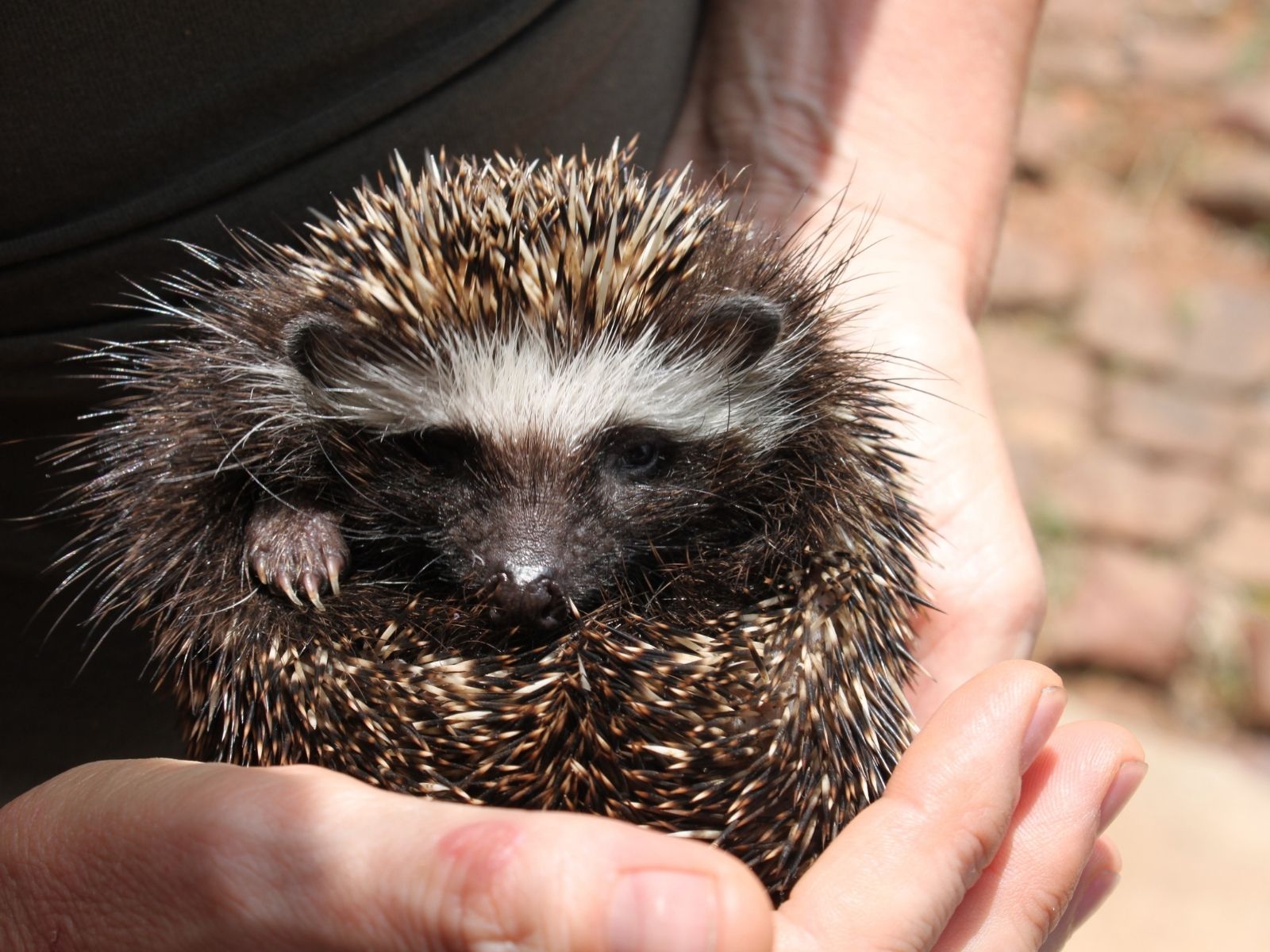
Southern African Hedgehog
Atelerix frontalis

2025 Red list status
Near threatened

Regional Population Trend
Declining

Change compared
to 2016
No Change
Overview
Atelerix frontalis – A. Smith, 1831
ANIMALIA – CHORDATA – MAMMALIA – EULIPOTYPHLA – ERINACEIDAE – Atelerix – frontalis
Common Names:
Southern African Hedgehog (English), Suid-Afrikaanse Krimpvarkie (Afrikaans), Inhloni (Ndebele, Zulu), Tlhong, Hlong (Sepedi, Setswana, Sesotho), Indvundvundvwane (Swati), Thoni, Tshitoni (Tshivenda), Umahau, Intloni (Xhosa)
Synonyms: Erinaceus frontalis
Taxonomic Notes: Meester et al. (1986) recognise two putative subspecies: A. f. frontalis, occurring throughout the assessment region as well as western Zimbabwe and eastern Botswana; and A. f. angolae (Thomas, 1918) in northern Namibia and, extra-limitally (Skinner & Chimimba 2005), southern Angola.
Red List Status: NT, Near Threatened, A4cde (IUCN version 3.1)
Assessment Information
Assessors: Smith, C.1 & da Silva, J.2
Reviewers: Patel, T.1
Institutions: 1Endangered Wildlife Trust, 2South African National Biodiversity Institute
Previous Assessors & Reviewers: Light, J., Pillay, N., Avenant, N. & Child, M.F.
Previous Contributors: Roxburgh, L., Hoffmann, M. & Power, J.
Assessment Rationale
Although this charismatic species has a wide range across the assessment region, and occurs across a variety of habitats, including rural and peri-urban gardens, there is a suspected continuing decline in the population. From 1980 to 2014, there has been an estimated 5% loss in extent of occurrence and 11–16% loss in area of occupancy (based on quarter degree grid cells) due to agricultural, industrial and urban expansion. This equates to a c. 3.6–5.3% loss in occupancy over three generations (c. 11 years). Since the 1900s, there is estimated to have been a total loss in occupancy of 40.4%. Similarly, a study using species distribution modelling has projected a further decline in occupancy by 2050 due to climate change. Corroborating these data, many anecdotal reports from landowners across the country suggest a decline of some sort due to predation by domestic pets, fire frequency, pesticide usage, electrocution on game fences, and ongoing illegal harvesting for the pet trade and traditional medicine trade. For example, there has been an 8% decrease in reported questionnaire-based sightings frequency in a section of the North West Province since the 1980s. Simultaneously, from 2000 to 2013, there has been a rural and urban settlement expansion of 1–39% and 6–15% respectively in all provinces where the species occurs. While it is not urban and rural expansion per se that threatens this species (but rather the associated threats of domestic animals, harvesting and restricted movement), and thus the rate of settlement expansion is not necessarily linear with population decline, we suspect it to be qualitatively indicative of increasing threat levels and thus a declining population.
Research is urgently needed to quantify local rates of decline over a three-generation period, which will require systematic monitoring. This species should be reassessed as such data become available, as it may qualify for uplisting to a more threatened category. Currently, we retain the listing of Near Threatened A4cde due to very little new research being undertaken since the last assessment update. Key interventions include creating conservancies and indigenous gardens, enforcement of legislation that regulates illegal harvesting and trading, and the continued collection of distribution records by both conservationists and the public.
Regional population effects: This species’ distribution is discontinuous, with two broad subpopulations recognised – one comprised of Namibia and Angola and the other subpopulation connecting South Africa, Botswana and Zimbabwe (Skinner & Chimimba 2005). Movement between these two subpopulations is expected to be limited or completely restricted due to the large geographic distance separating them, and low vagility of the species. Dispersal of individuals from Botswana and Zimbabwe into South Africa is likely, as well as emigration of South African hedgehogs into these neighbouring countries. However, dispersal rates have not been documented for the species and further studies are required to determine whether the movements are increasing or decreasing. Thus, the Near Threatened listing is retained.
Reasons for Change
Reason(s) for Change in Red List Category from the Previous Assessment: No change
Red List Index
Red List Index: No change
Recommended citation: Smith C & da Silva JM. 2025. A conservation assessment of Atelerix frontalis. In Patel T, Smith C, Roxburgh L, da Silva JM & Raimondo D, editors. The Red List of Mammals of South Africa, Eswatini and Lesotho. South African National Biodiversity Institute and Endangered Wildlife Trust, South Africa.
Regional Distribution and occurrence
Geographic Range
Southern African Hedgehogs range from southwestern Angola in the west, through northwestern and central Namibia, eastern Botswana, much of South Africa and western Zimbabwe. The species also may, possibly, occur marginally in the lower elevation areas of Lesotho and the western edge of Eswatini (Skinner & Chimimba 2005). However, it has not been recorded in Eswatini to date (Monadjem 1998; A. Monadjem pers. comm. 2016). In Lesotho, no records have been found or reported since the 1970s (Lynch 1994; Ambrose 2006; N.L. Avenant unpubl. data); following a recent series of questionnaires in the highlands and lowlands of Lesotho (between 2000 and 2014) this species is unknown in the Highlands, and only the older inhabitants remember them previously occurring in the lowlands. Lynch visually recorded them from the north-eastern areas of the Eastern Cape Province (Lynch 1989), but there are no known recent records.
In South Africa, the species occurs throughout Gauteng, Free State and North West provinces, western Limpopo and Mpumalanga provinces. In the Northern Cape, they occur in the northeast and southwards towards the Grahamstown district of the Eastern Cape. Although previously thought not to occur in KwaZulu-Natal, data suggest that they marginally occur along the northern boundary with Free State and Mpumalanga provinces. They have not been recorded to occur in the coastal Namib Desert and have limited recorded occurrence in the Kalahari Desert (Skinner & Chimimba 2005).
Systematic sampling across the species’ range and collection of incidental sightings data are greatly needed to further establish to what degree a range contraction has taken place. For example, there is much controversy about whether the species distribution is truly discontinuous. Morphometric analysis found low levels of variation between the two populations within the southern African distribution, suggesting a recent separation or ongoing movement (Rotherham 2007). With little development in the Kalahari Desert and no records found in the area, it would require extensive sampling to provide evidence of a continuous distribution.
The extent of occurrence (EOO) was estimated to be 748,169 km2 which was estimated to have declined by 9% over the last century (since 1900) from 820,633 km2. This equated to a 5% decline in EOO since 1980. Similarly, using quarter degree grid cells as a proxy of area of occupancy (AOO), there was a 40% decline in AOO since 1900 and a 11–16% decline between 1980 and 2014 (Light 2015). It is difficult to determine the exact rate of habitat loss due to lack of systematic monitoring, historical under-sampling and inconsistent search effort across vast areas of the country. Although these estimates cannot be used to estimate a reduction in abundance directly, there has certainly been some inferred decline.
Elevation / Depth / Depth Zones
Elevation Lower Limit (in metres above sea level): (Not specified)
Elevation Upper Limit (in metres above sea level): (Not specified)
Depth Lower Limit (in metres below sea level): (Not specified)
Depth Upper Limit (in metres below sea level): (Not specified)
Depth Zone: (Not specified)
Map
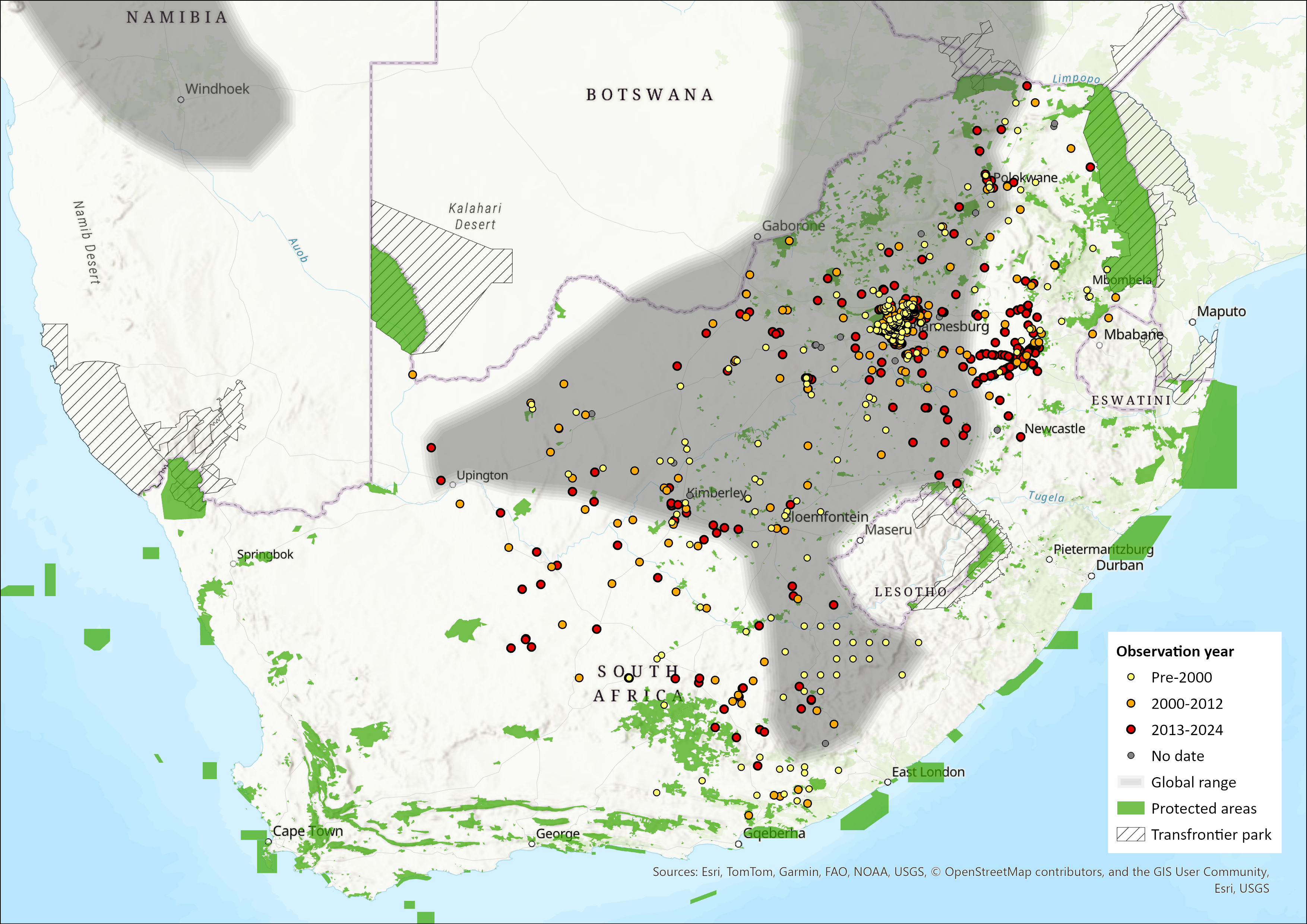
Figure 1. Distribution records for Southern African Hedgehog (Atelerix frontalis) within the assessment region (South Africa, Eswatini and Lesotho). Note that distribution data is obtained from multiple sources and records have not all been individually verified
Biogeographic Realms
Biogeographic Realm: Afrotropical
Occurrence
Countries of Occurrence
| Country | Presence | Origin | Formerly Bred | Seasonality |
| Angola | Extant | Native | – | – |
| Botswana | Extant | Native | – | – |
| Eswatini | Possibly Extant | Native | – | – |
| Lesotho | Possibly Extant | Native | – | – |
| Namibia | Extant | Native | – | – |
| South Africa | Extant | Native | – | – |
| Zimbabwe | Extant | Native | – | – |
Large Marine Ecosystems (LME) Occurrence
Large Marine Ecosystems: (Not specified)
FAO Area Occurrence
FAO Marine Areas: (Not specified)
Climate change
This species occurs in most provinces in South Africa. There is a possibility that it might be affected by the 1.5-4°C increase in temperature predicted under various climate change scenarios (Engelbrecht et al. 2024). Rainfall is predicted to decrease in its range. These decreases will result in a more arid and drought-prone habitat which could affect food availability in the species distribution range.
Population information
Not enough is known about the species to describe a population trend. However, many areas across the assessment region have reported fewer sightings over the years (Light 2015; N.L. Avenant pers. obs.). Similarly, there has been an inferred 8% decline since the 1980s in reported sightings from questionnaire-based surveys in the former Cape Province region of the North West Province (Power 2014), and the species is uncommon throughout the province (Power 2014). This decrease in reporting rate could be from the combination of intensifying threats of predation by domestic pets, electrocution on electric fences, road-related mortality, increase in fire frequency, illegal harvesting for the pet trade and traditional medicine trade, and loss of habitat or habitat fragmentation from agriculture and urbanisation. Unfortunately, no new research has been conducted to establish the rate of decline between 2004 (Friedmann & Daly 2004) and present. However, due to the elusive nature of the species, the suspected decline would require extensive survey and tracking to confirm (Light 2015). A study, using species distribution modelling, has projected a continuing loss in range by 2050 due to climate change. The areas expected to show the greatest decline are Angola, Namibia, Botswana, Zimbabwe and South Africa (in the Northern Cape and North West provinces) (Light 2015).
It is possible that declines could be mitigated through the occurrence of hedgehogs in gardens, although most gardens are likely to be unsuitable due to the presence of domestic dogs and cats, electric fences and pools. The frequent number of individuals brought to rehabilitation centres attest to this. Numerous hedgehogs have been known to drown in pools or be electrocuted on electric fences, as well as sustain fatal injuries from dog and cat bites (Light 2015).
Generation length for this species is estimated to be 3.7 years (Pacifici et al. 2013), which equates to c. 11 years for a three-generation length window. Further surveying and monitoring over is required to determine a more accurate rate of decline for this species. They are expected to be more threatened in areas of high human settlement density (for example, in Lesotho and the eastern Free State; N.L. Avenant pers. obs.). As no density studies have been performed, a baseline density is urgently needed against which future densities can be evaluated. This species is cause for concern and should be reassessed when new data are available as uplisting may be appropriate.
Population Information
| Continuing decline in mature individuals? | Qualifier | Justification |
| Yes | – | From electrocution, veld fires, road collisions, predation from domestic pets and illegal harvesting. |
Current population trend: Decreasing. Inferred from habitat loss and reporting rates.
Number of mature individuals in population: Unknown
Number of mature individuals in largest subpopulation: Unknown
Number of subpopulations: Unknown
Severely fragmented: Yes, based on fragmentation of suitable habitat, fencing and low dispersal capacities of the species.
Extreme fluctuations in the number of subpopulations: (Not specified)
Continuing decline in number of subpopulations: (Not specified)
All individuals in one subpopulation: (Not specified)
Quantitative Analysis
Probability of extinction in the wild within 3 generations or 10 years, whichever is longer, maximum 100 years: (Not specified)
Probability of extinction in the wild within 5 generations or 20 years, whichever is longer, maximum 100 years: (Not specified)
Probability of extinction in the wild within 100 years: (Not specified)
Population genetics
The genetic diversity and structure of A. frontalis within the assessment region has not been documented; however, the species is known to occur as two disjunct subpopulations, with South Africa falling within one of them along with neighbouring countries Botswana and Zimbabwe where dispersal is considered highly likely.
Whether there is more fine scale structure within this subpopulation remains to be investigated, especially considering the estimated declines in the species’ AOO over the past 40 years, which may have created fragmented groups.
Based on the available information, the proportion of populations maintained (PM) indicator, which is a complementary indicator under the Convention on Biological Diversity’s Global Monitoring Framework, would be 1.0 (1 subpopulation within the assessment region that still exists, with no known extinctions of other subpopulations recorded, hence only 1 subpopulation is known; 1/1).
Estimates of effective population size (Ne) have not been quantified using molecular techniques, nor can they be estimated using proxy data since census and density estimates are lacking. Consequently, the headline genetic indicator for the Global Biodiversity Framework (proportion of populations with Ne > 500) cannot be quantified.
Habitats and ecology
The distribution mainly falls within savannah and grassland vegetation types, within which it is found in a wide variety of semi-arid and sub-temperate habitats, including scrub brush, western Karoo, grassland and suburban gardens (Skinner & Chimimba 2005). They require ample ground cover, for cover, nesting and insect food sources (Skinner & Chimimba 2005). Key grassland vegetation types include the Soweto Highveld, Eastern Highveld, Rand Highveld, Carletonville Dolomite, Vaal-Vet Sandy and Frankfort Highveld Grasslands. The main savannah vegetation types include Polokwane Plateau Bushveld, Central Sandy Bushveld, Kimberley Thornveld, Moot Plains Bushveld, and Queenstown Thornveld (Mucina & Rutherford 2006). Northern Upper Karoo vegetation is also one of the important vegetation types for the species. It occurs in areas where mean annual rainfall ranges between 200–800 mm, mean annual temperature ranges between 10–25 °C and altitude ranges between 800–2000 m asl. (Artingstall 2013; Light 2015). On a local scale, the species appears to prefer dense vegetation habitats and rocky outcrops that may provide food, cover and nesting materials. It is nocturnal.
Southern African Hedgehogs move slowly but are capable of surprising speed when fleeing. They spend the day curled up in a ball under the cover of vegetation, emerging in the evening to forage (Skinner & Chimimba 2005). They are omnivorous, where invertebrates (such as beetles, earwigs, grasshoppers, termites, slugs, snails, centipedes, moths and earthworms) form the bulk of the diet, but they also consume eggs, mice, lizards, fungus and even dog food (Skinner & Chimimba 2005). This species readily enters torpor during low ambient temperatures or a decline in food availability, spending as much as 84% of their time in torpor (Hallam & Mzilikazi 2011).
Ecosystem and cultural services: Hedgehogs have often been referred to as an eco-friendly form of pest control. Many farmers and homeowners in South Africa have reported actively encouraging hedgehogs onto their properties because they consume a variety of garden dwelling insects, helping to protect their plants (J. Light pers. obs. 2015).
A report on European Hedgehogs (Erinaceus europaeus) produced by Roos et al. (2012) suggests that hedgehogs are an indicator species. While this was reported for the European Hedgehog, our Southern African Hedgehog plays a similar environmental role and therefore their presence could be indicative of the quality of the habitat and the presence of many other species.
Southern African Hedgehogs are also a common character in African cultural stories and for some are considered good luck.
IUCN Habitats Classification Scheme
| Habitat | Season | Suitability | Major Importance? |
| 2.1. Savanna -> Savanna – Dry | – | Suitable | – |
| 2.2. Savanna -> Savanna – Moist | – | Suitable | – |
| 3.5. Shrubland -> Shrubland – Subtropical/Tropical Dry | – | Suitable | – |
| 3.6. Shrubland -> Shrubland – Subtropical/Tropical Moist | – | Suitable | – |
| 3.8. Shrubland -> Shrubland – Mediterranean-type Shrubby Vegetation | – | Suitable | – |
| 4.4. Grassland -> Grassland – Temperate | – | Suitable | – |
| 4.5. Grassland -> Grassland – Subtropical/Tropical Dry | – | Suitable | – |
| 14.2. Artificial/Terrestrial -> Artificial/Terrestrial – Pastureland | – | Unknown | – |
| 14.4. Artificial/Terrestrial -> Artificial/Terrestrial – Rural Gardens | – | Suitable | – |
| 14.5. Artificial/Terrestrial -> Artificial/Terrestrial – Urban Areas | – | Unknown | – |
Life History
Generation Length: (Not specified)
Age at Maturity: Female or unspecified: (Not specified)
Age at Maturity: Male: (Not specified)
Size at Maturity (in cms): Female: (Not specified)
Size at Maturity (in cms): Male: (Not specified)
Longevity: (Not specified)
Average Reproductive Age: (Not specified)
Maximum Size (in cms): (Not specified)
Size at Birth (in cms): (Not specified)
Gestation Time: (Not specified)
Reproductive Periodicity: (Not specified)
Average Annual Fecundity or Litter Size: (Not specified)
Natural Mortality: (Not specified)
Does the species lay eggs? (Not specified)
Does the species give birth to live young: (Not specified)
Does the species exhibit parthenogenesis: (Not specified)
Does the species have a free-living larval stage? (Not specified)
Does the species require water for breeding? (Not specified)
Movement Patterns
Movement Patterns: Not a Migrant
Congregatory: (Not specified)
Systems
System: Terrestrial
General Use and Trade Information
This species is a delicacy (food source) in some African cultures and is harvested locally (Skinner & Chimimba 2005). It is also locally and commercially sold as pets, although many tenrecs are sold masquerading as South African Hedgehogs. Their spines and bones are also sold locally and are commonly seen in muti markets; for example, at Faraday Market in Johannesburg (Whiting et al. 2011), and in Xhosa-speaking regions (Simelane & Kerley 1998). Similarly, in the Basotho-speaking areas of the eastern Free State and Lesotho, questionnaires indicate that traditional healers use them when they can find them (N.L. Avenant unpubl. data). Their spines are also often sold ornamentally in curio shops across the country. The effects of these uses are unknown but, when coupled with habitat loss, will likely result in declines in local population numbers.
|
Subsistence: |
Rationale: |
Local Commercial: |
Further detail including information on economic value if available: |
|
Yes |
– |
Yes |
Commercially sold as pets, although this is prohibited by provincial legislation. Breeders often sell tenrecs as South African Hedgehogs as tenrecs are less regulated. They are also sold as traditional medicine. |
National Commercial Value: No
International Commercial Value: No
|
End Use |
Subsistence |
National |
International |
Other (please specify) |
|
1. Food – human |
true |
– |
– |
– |
|
3. Medicine – human & veterinary |
true |
– |
– |
– |
|
12. Handicrafts, jewellery, etc. |
– |
true |
– |
– |
Is there harvest from captive/cultivated sources of this species? Unknown
Harvest Trend Comments: It seems that they are simply collected and sold quite quickly into the pet trade or as traditional medicine.
Threats
No direct research has been conducted to empirically document threats to this species. However, we suspect that a number of threats may be causing the population to decline. The most severe threats currently, are habitat loss, degradation and fragmentation from urban sprawl and agriculture which leads to habitat fragmentation; and illegal harvesting from the wild for food, or for sale as pets and traditional medicine (Skinner & Chimimba 2005). The latter threats may be intensified by the former. Similarly, land-use change leads to secondary effects, such as poisoning from control schemes aimed at insects (for example, vegetable farm owners in the Bainsvlei area of the Free State Province mention a severe decrease in numbers over the past 20 years; N.L. Avenant unpubl. data); increased predation from domestic animals; and increased electrocutions from electric fencing, the extent of which is increasing with the expansion of the wildlife ranching industry and similarly threatening other species (Pietersen et al. 2011).
Roads are also suspected to be a threat to hedgehogs, especially after the first summer rains when they emerge to forage on insects (Skinner & Chimimba 2005). For example, in the dry western and southern Free State, hedgehogs killed on roads have often been observed after rain (N.L. Avenant pers. obs.) and are also recorded on the Endangered Wildlife Trust’s Roadkill database (W. Collinson unpubl. data).
Further research is needed to document how these threats are impacting the population, but since anecdotal evidence suggests fewer sightings of this species over the years, we suspect that the threats are causing population decline. In the western and southern Free State some farm workers have reported numbers to be low, but stable over the last 20 years; some hunters have, however, reported them to now be more frequently seen, potentially due to stricter dog control on farms; some other farmers in the same region are concerned that increased Black-backed Jackal (Lupulella mesomelas) densities may have a detrimental impact on the already low hedgehog numbers (N.L. Avenant pers. obs.). The net effect of such land-use and management practice changes must be evaluated.
Current habitat trend: Declining. Agriculture and urbanisation are causing a decrease in available habitat area and quality. Its occurrence in rural, peri-urban and suburban gardens may mitigate declines in natural habitat but this has not been quantified. Rural settlement expansion has proceeded rapidly over approximately the past three generations (2000–2013) in all provinces where the species predominantly occurs (GeoTerraImage 2015): 39% (Gauteng), 9% (Northern Cape), 8.8% (Limpopo), 7.2% (Mpumalanga), 7% (Free State), 6.5% (North West), and 0.8% (Eastern Cape). Additionally, urban settlement expansion over the same period has been 15% (Northern Cape), 14.9% (Limpopo), 13.5% (North West), 10.6% (Free State), 10.5% (Mpumalanga), 8.1% (Gauteng), and 5.9% (Eastern Cape). Climate change is expected to reduce the amount of suitable habitat as the climatic envelopes occupied by Southern African Hedgehogs move to higher altitudes (Hulme et al. 2001; Light 2015). Specifically, Erasmus et al. (2002) modelled the effects of a 2° C increase in temperature, projecting a range shift from west to east and an absolute reduction in total occupancy for most South African mammal species, which will affect Southern African Hedgehogs.
Conservation
The Southern African Hedgehog has been recorded in a number of protected areas across its range. Currently, there are no conservation interventions for this species and no management plans or monitoring schemes. The first step to redress this is to establish systematic long-term monitoring at key points across its range. Similarly, one of the most important interventions currently is to launch a systematic monitoring scheme into both the local and international trade of Southern African Hedgehogs, which, as for many other hedgehog species, may become an increasingly severe threat in the future (Nijman & Bergin 2015).
Education and awareness campaigns are also a key intervention. Southern African Hedgehogs are protected under nature conservation ordinances in each province of South Africa. In the Northern Cape, they are listed as a specially protected species, and they are considered a protected species in Limpopo. These Nature Conservation Ordinances indicate that permits are required to own, possess, restrain, hunt, sell, trade, import, export, transport, donate or release a Southern African Hedgehog. In these ordinances it does not always specifically identify Southern African Hedgehogs but uses the broader term “wild animal”, which in all the ordinances is defined as a vertebrate animal that is not domesticated and where part of the species’ natural habitat is within the Republic of South Africa. Owning Southern African Hedgehogs is therefore an illegal activity if the owner does not possess a permit. Many people are aware that they are indigenous to South Africa and so become very concerned when seeing individuals for sale. Hedgehogs are frequently sold in pet shops but generally these are African Pygmy Hedgehogs (a hybrid species) and Madagascan Lesser Hedgehog Tenrecs (Echinops telfairi). While it may seem like an interesting pet to own, one must keep in mind that these animals are not domesticated and are poorly understood. Adequate provision for these animals’ needs can be nearly impossible to attain. Species from more tropical climates, such as tenrecs, are not physiologically suited to foreign environments. As such, they require the provision of heating lamps and a water source for humidity (Macdonald 2010). Such pets also pose a risk to their owners, both tenrecs and hedgehogs are carriers of zoonotic disease. The nature of the spines covering their body provide an opportune breeding site for ticks, fleas and other organisms (Macdonald 2010). They are unable to clean these areas and so the growth of parasites and zoonotic diseases is uncontrolled. Additionally, few veterinarians are familiar with working on such animals and so owning these types of wild animals is not advised.
While the species in pet shops are typically exotic, occasionally opportunistic people try to sell Southern African Hedgehogs. Due to lack of knowledge, some can purchase indigenous species from so called “breeders” on internet sites, only to find out later it was an illegal activity (J. Light pers obs. 2015). The species is also illegally harvested for the muti market and bush meat trade. Another threat, born out of good intention, is that residents discover a Southern African Hedgehog and assume that it must be lost and/or injured. These animals are then taken away to rehabilitation centres or relocated out of the area. Southern African Hedgehogs are one of a few urban-living species that occupy open areas in our cities and one which we can help to thrive as a resident in the community. Any removal from nature will impact the breeding potential and genetic variability of free-living subpopulations, so relocation or keeping Southern African Hedgehogs as pets should be actively discouraged.
We also need to educate landowners on how to create garden habitat that is suitable for this species and to encourage rural landowners to drop fences or provide access points (through or under fences) between their properties. Conservationists should also educate and encourage local communities to substitute this species with an alternative source of food or work with communities to set up a sustainable trade.
The restoration of natural habitat in urban and rural areas, with corridors between such areas, will also benefit this species. The European Hedgehog is known to move between pockets of suitable habitat using riverine and road corridors (Dickman & Doncaster 1987). Preservation of riverine and roadside vegetation could provide suitable corridors of movement for our species. Since the Southern African Hedgehog is known to be an urban-living species, members of the public could support its existence in urban environments by releasing stray animals into a nearby nature reserve rather than removing the animal from its home and releasing it at a nature reserve some distance away. Biodiversity stewardship schemes could be used in heavily urbanised regions such as Gauteng to provide refuges and corridors under an urban and rural spatial planning framework (Light 2015).
Recommendations for land managers and practitioners: Very little is known about this species and that creates the first dilemma. The most important starting point for conservation is monitoring the species and keeping records of when and where Southern African Hedgehogs are seen. Monitoring can be done using active searching at night or setting up camera traps near insect feeding stations. You can report sightings of Southern African Hedgehogs on iNaturalist. From research in urban areas, hedgehogs appear to prefer dense vegetation habitats, which would provide suitable nesting sites and food availability (Artingstall 2013). These habitats should be restored and protected by land managers and conservation managers.
Research priorities:
- Throughout southern Africa, occurrence data are limited for the species and so in-depth surveys are required to accurately determine the species’ distribution.
- Long-term monitoring at key sites, in conjunction with survey work, is needed to estimate population trends within the assessment region.
- Similarly, research on harvest trends needs to be conducted, including field surveys and internet searches.
- As no density studies have been performed, baseline densities from representative ecological settings are urgently needed against which future declines can be evaluated.
- Genetic studies are urgently required across the distributional range to assess the level of genetic variation and population health and viability.
Encouraged citizen actions:
- Citizens can help by reporting sightings and roadkills of Southern African Hedgehog on virtual museum platforms (for example, iNaturalist and MammalMAP), especially outside protected areas, which will help to better record the distribution of the species and determine population trends.
- Citizens can also help by not participating in the trade of the species as pets, food or medicine, as well as not removing hedgehogs from protected or natural areas.
- The presence of natural vegetation in urban areas is important in preserving wild hedgehog populations, but the presence of predators such as people and dogs threatens their survival. Homeowners should thus leave sections of their property natural and undisturbed, as well as prevent pets from accessing these areas. Compost heaps and leaf litter are also good ways of promoting insect life and facilitating hedgehog presence.
Bibliography
Ambrose D. 2006. Mammals, including annotated species checklist. House 9 Publications, National University of Lesotho, Roma, Lesotho.
Artingstall JL. 2013. The Goldilocks effect: picky southern African hedgehogs (Atelerix frontalis). B.Sc. (Hons) Thesis. University of the Witwatersrand, Johannesburg, South Africa.
Compaan PC. 2011. Gauteng Conservation Plan Version 3.3 (C-Plan 3.3). Gauteng Department of Agriculture and Rural Development, Pretoria, South Africa.
Dickman CR, Doncaster CP. 1987. The ecology of small mammals in urban habitats. I: Populations in a patchy environment. Journal of Animal Ecology 56: 629-640.
Engelbrecht, FA., Steinkopf, J., Padavatan, J. & Midgley, GF. 2024. Projections of future climate change in southern Africa and the potential for regional tipping points. In: von Maltitz, G.P., et al. Sustainability of Southern African Ecosystems under Global Change. Ecological Studies, vol 248. Springer, Cham. https://doi.org/10.1007/978-3-031-10948-5_7
Erasmus, B.F.N., van Jaarsveld, A.S., Chown, S.L., Kshatriya, M. and Wessels, K.J. 2002. Vulnerability of South African animal taxa to climate change. Global Change Biology 8: 679-693.
Friedmann, Y. and Daly, B. 2004. Red Data Book of the Mammals of South Africa: A Conservation Assessment. Conservation Breeding Specialist Group (SSC/IUCN) and Endangered Wildlife Trust, Parkview, South Africa.
GeoTerraImage. 2015. Quantifying settlement and built-up land use change in South Africa. Pretoria.
Hallam SL, Mzilikazi N. 2011. Heterothermy in the southern African hedgehog, Atelerix frontalis. Journal of Comparative Physiology B 181: 437-445.
Hulme M, Doherty R, Ngara T, New M, Lister D. 2001. African climate change: 1900–2100. Climate research 17: 145-168.
Light JL. 2015. The distribution and urban occurrence of the elusive southern African hedgehog (Atelerix frontalis). M.Sc. Thesis. University of the Witwatersrand, Johannesburg, South Africa.
Lynch C.D. 1989. The mammals of the north-eastern Cape Province. Navorsinge van die Nasionale Museum Bloemfontein 25: 1-116.
Lynch, C.D. 1994. The mammals of Lesotho. Navorsinge van die Nasionale Museum Bloemfontein 10(4): 177-241.
Macdonald DW. 2010. The Encyclopedia of Mammals. Oxford University Press, London, UK.
Meester, J.A.J., Rautenbach, I.L., Dippenaar, N.J. and Baker, C.M. 1986. Classification of Southern African Mammals. Monograph number 5. Transvaal Museum , Pretoria, South Africa.
Monadjem A. 1998. The mammals of Swaziland. Conservation Trust of Swaziland and Big Games Parks, Mbabane, Swaziland.
Mucina, L. and Rutherford, M.C. 2006. The Vegetation of South Africa, Lesotho and Swaziland. Strelitzia 19. South African National Biodiversity Institute, Pretoria, South Africa.
Nijman, V. and Bergin, D. 2015. Trade in hedgehogs (Mammalia: Erinaceidae) in Morocco, with an overview of their trade for medicinal purposes throughout Africa and Eurasia. Journal of Threatened Taxa 7(5): 7131-7137.
Pacifici, M., Santini, L., Di Marco, M., Baisero, D., Francucci, L., Grottolo Marasini, G., Visconti, P. and Rondinini, C. 2013. Generation length for mammals. Nature Conservation 5: 87–94.
Pietersen, D.W., McKechnie A.E. and Jansen, R. 2011. A review of the anthropogenic threats faced by Temminck’s ground pangolin, Smutsia temminckii, in southern Africa. South African Journal of Wildlife Research 44: 167-178.
Power, R.J. 2014. The distribution and status of mammals in the North West Province. Department of Economic Development, Environment, Conservation & Tourism, North West Provincial Government, Mahikeng.
Roos S, Johnston A, Noble D. 2012. UK Hedgehog Datasets and their Potential for Long-Term Monitoring. BTO Research Report No. 598. The British Trust for Ornithology, Norfolk, UK.
Rotherham LS. 2007. Morphometric molecular analysis of variation in the southern African hedgehog, Atelerix frontalis (Eulipotyphla: Erinaceidae). M.Sc. Thesis. University of Pretoria, Pretoria, South Africa.
Simelane T.S., Kerley G.I.H. 1998. Conservation implications of the use of vertebrates by Xhosa traditional healers in South Africa. South African Journal of Wildlife Research 28: 121–126.
Skinner, J.D. and Chimimba, C.T. (eds). 2005. The Mammals of the Southern African Subregion. Cambridge University Press, United Kingdom, Cambridge.
Whiting, M.J., Williams, V.L. and Hibbitts, T.J. 2011. Animals traded for traditional medicine at the Faraday market in South Africa: species diversity and conservation implications. Journal of Zoology 284: 84-96.