
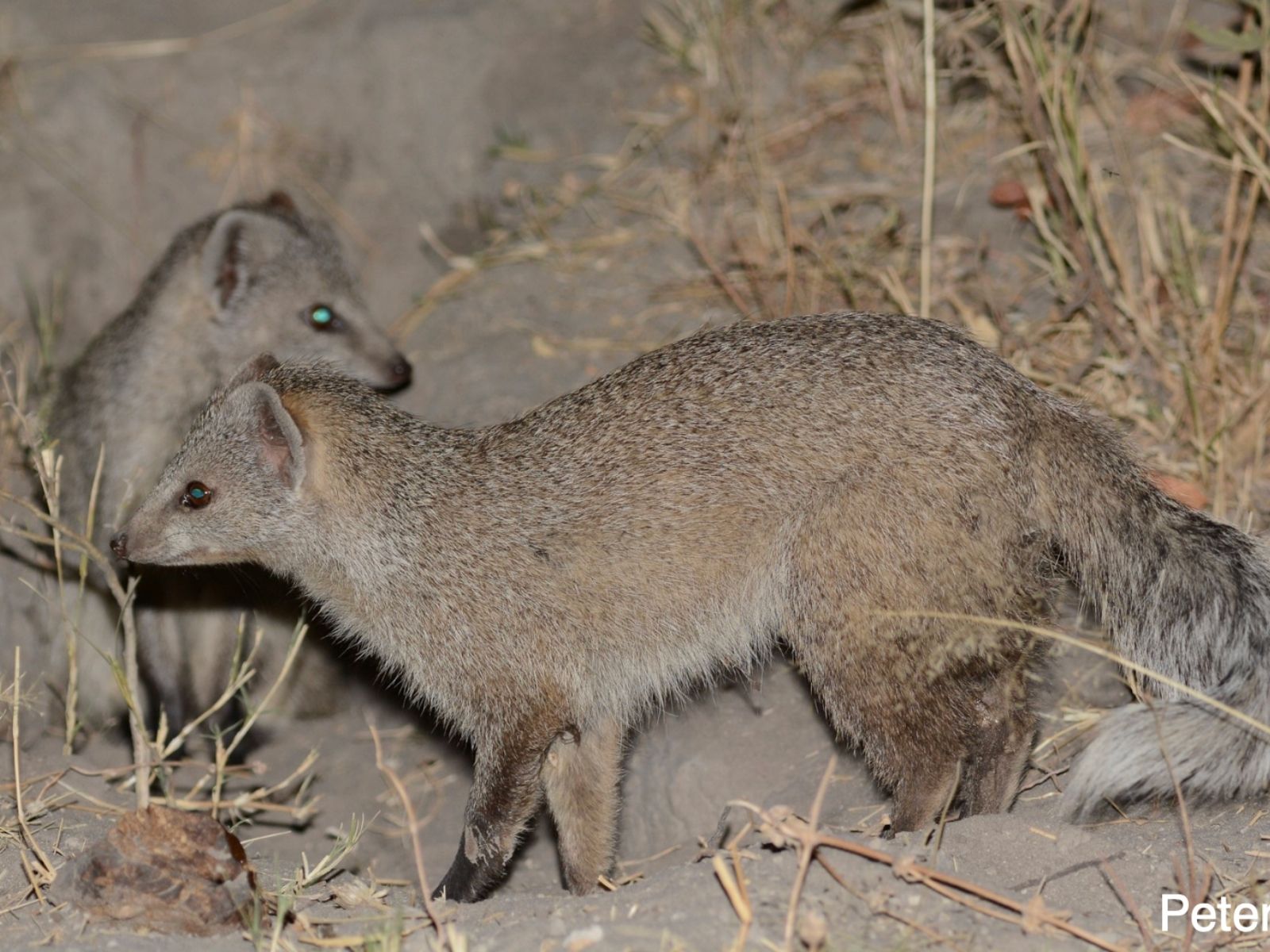
Selous’s Mongoose
Paracynictis selousi

2025 Red list status
Least Concern

Regional Population Trend
Unknown
Change compared
to 2016
No Change
Overview
Paracynictis selousi – (de Winton, 1896)
ANIMALIA – CHORDATA – MAMMALIA – CARNIVORA – HERPESTIDAE – Paracynictis – selousi
Common Names: Selous’s Mongoose (English), Klein Wistertmuishond (Afrikaans), Iduwha, Ubuchakide (Ndebele), Phefô (Setswana), Jerenyenje (Shona), Insengane (Zulu)
Synonyms: Cynictis selousi de Winton, 1896
Taxonomic Note:
Coetzee (1977) recognised four subspecies: 1) P. s. selousi (De Winton 1896), 2) P. s. sengaani Roberts 1931, 3) P. s. ngamiensis Roberts 1932 and 4) P. s. bechuanae Roberts 1932. However, Meester et al. (1986) regarded ngamiensis and bechuanae as synonyms of P. s. selousi, with the latter occurring throughout the southern African subregion, excluding northeastern KwaZulu-Natal and southern Mozambique, occupied by P. s. sengaani.
Red List Status: LC – Least Concern, (IUCN version 3.1)
Assessment Information
Assessors: Do Linh San, E.1, Adams, E.C.2 & da Silva, J.M. 3
Reviewer: Power, R.J.4
Institutions: 1Sol Plaatje University,2Endangered Wildlife Trust, 3South African National Biodiversity Institute, 4North West Provincial Government
Previous Assessors & Reveiwers: Do Linh San, E., Camacho, G., Swanepoel, L.H., Page-Nicholson, S., Stuart, C. & Stuart, M.
Previous Contributor: Madikiza, Z.
Assessment Rationale
Selous’ Mongoose is listed as Least Concern since although it is uncommon and likely living at low-density across its range (with possibly fewer than 1,000 mature individuals in the assessment region), it occurs in well-protected savannah woodland habitats. The expansion of wildlife ranching in Limpopo may have created additional suitable habitat. Although it may be experiencing local declines from dog hunting, snaring, and poisoning, there is no evidence to suggest that this is causing range-wide decline as there are recent records across its distribution. However, camera-trap monitoring should be used to assess occupancy more comprehensively and to estimate densities. This species’ conservation status should be reassessed when better data become available.
Regional population effects: Although this species is on the edge of its range in the assessment region, dispersal is likely across the northern borders and therefore rescue effects are presumably possible.
Reasons for Change
Reason(s) for Change in Red List Category from the Previous Assessment: No change
Red List Index
Red List Index: No change
Recommended citation: Do Linh San E, Adams EC & da Silva JM. 2025. A conservation assessment of Paracynictis selousi. In Patel T, Smith C, Roxburgh L, da Silva JM & Raimondo D, editors. The Red List of Mammals of South Africa, Eswatini and Lesotho. South African National Biodiversity Institute and Endangered Wildlife Trust, South Africa.
Regional Distribution and occurrence
Geographic Range
Selous’ Mongoose ranges from Angola in the west to Malawi in the east, with its most southward extension in northeastern KwaZulu-Natal in South Africa (Skinner & Chimimba 2005; Stuart & Stuart 2013). A recent study found that the species is likely to occur in the Lower Zambezi Protected Area Complex in Zambia (Bird & Mateke 2013). It also occurs in Zimbabwe (except in the northeast) and in Mozambique (Skinner & Chimimba 2005). While it does occur in Namibia, its distribution within the country is marginal and it is only found in the most northeastern reaches of the country (close to the Quito and Okavango rivers) (Skinner & Chimimba 2005; Namibian Chamber of Environment et al. 2022).
Within the assessment region, Selous’ Mongooses have been recorded in Limpopo and Mpumalanga eastern lowveld, the Limpopo River Valley and northern KwaZulu-Natal, but sightings are rare. The northeastern KwaZulu-Natal marks their southernmost limit at present (Skinner & Chimimba 2005), though with extensive camera trapping on some reserves in the province, there have been no records of the species (see Da Rosa 2019; Pretorius 2019), which may suggest an absence or decline from the region. The species has always been said to be rare in northern Zululand, and one of the earliest record known was in 1931 (Pringle 1977). In a recent camera trap study, the species has been documented to still be present in Zululand communal areas (Curveira-Santos et al. 2021).
Camera-trapping studies in the Ka- dengeza and Vyeboom villages, Vhembe district (Limpopo Province, South Africa) had numerous detections of this species (Williams et al. 2018). It has not been recorded from Eswatini (Monadjem 1998; A. Monadjem pers. comm. 2025) but may well occur in the eastern areas of the country (Skinner & Chimimba 2005). There have been reports of sightings in the Madikwe area of North West, but there has been no confirmation of this.
Elevation / Depth / Depth Zones
Elevation Lower Limit (in metres above sea level): (Not specified)
Elevation Upper Limit (in metres above sea level): (Not specified)
Depth Lower Limit (in metres below sea level): (Not specified)
Depth Upper Limit (in metres below sea level): (Not specified)
Depth Zone: (Not specified)
Map
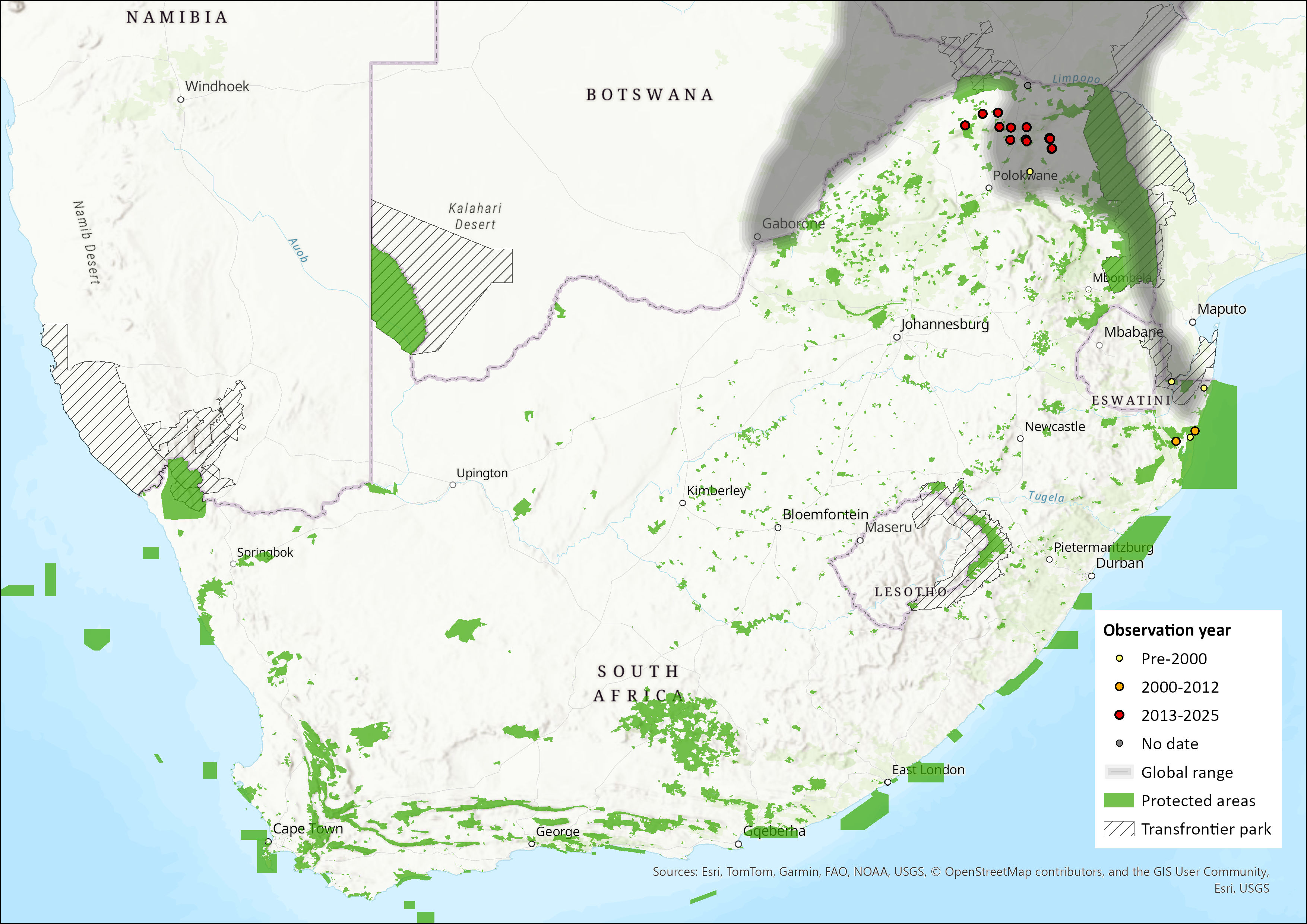
Figure 1. Distribution records for Selous’s Mongoose (Paracynictis selousi) within the assessment region (South Africa, Eswatini and Lesotho). Note that distribution data is obtained from multiple sources and records have not all been individually verified.
Biogeographic Realms
Biogeographic Realm: Afrotropical
Occurrence
Countries of Occurrence
| Country | Presence | Origin | Formerly Bred | Seasonality |
| Angola | Extant | Native | – | – |
| Botswana | Extant | Native | – | – |
| Eswatini | Possibly Extinct | Origin Uncertain | – | – |
| Malawi | Extant | Native | – | – |
| Mozambique | Extant | Native | – | – |
| Namibia | Extant | Native | – | – |
| South Africa | Extant | Native | – | – |
| Zambia | Extant | Native | – | – |
| Zimbabwe | Extant | Native | – | – |
Large Marine Ecosystems (LME) Occurrence
Large Marine Ecosystems: (Not specified)
FAO Area Occurrence
FAO Marine Areas: (Not specified)
Climate change
No recent research or literature has focused on how climate change might affect this species in the future. As temperatures increase, the current Savanna biome may retreat further South into the current Grassland biome (Midgley et al. 2008). If rainfall continues to increase, this could result in the shrinking of Savanna regions and the expansion of forests into current Savanna and Grassland regions (Moncrieff et al. 2015; Moncrieff et al. 2016), this could result in less favourable habitat for the Selous’ Mongoose, as they prefer woodland, rather than dense forest regions (Stuart & Stuart 2013).
Population
Selous’ Mongoose is generally uncommon, although many parts of its known range have not been well surveyed (Stuart & Stuart 2013). In addition, it can easily be confused with the more common White-tailed Mongoose (Ichneumia albicauda) or the relatively rare Meller’s Mongoose (Rhynchogale melleri), which often live in sympatry (Williams et al. 2018). Within the assessment region, there are probably fewer than 1,000 mature individuals but more surveys are needed to estimate population size and trends. However, because there are no major threats to this species, we infer that the population is stable.
Population Information
Current population trend: Unknown, but probably stable.
Continuing decline in mature individuals: No
Number of mature individuals in population: Probably < 1,000
Number of mature individuals in largest subpopulation: Unknown
Number of subpopulations: It is not currently possible to determine the extent or number of subpopulations.
Severely fragmented: No. Favourable habitat is relatively well connected across this species’ range.
Quantitative Analysis
Probability of extinction in the wild within 3 generations or 10 years, whichever is longer, maximum 100 years: (Not specified)
Probability of extinction in the wild within 5 generations or 20 years, whichever is longer, maximum 100 years: (Not specified)
Probability of extinction in the wild within 100 years: (Not specified)
Population Genetics
While the species has been examined in a phylogenetic context (Patou et al. 2009), to date no population genetic study has been undertaken on the species. Considering the species has been poorly surveyed in some areas, inference of the population genetic structure and diversity of the species based on other data should be taken with caution.
Given the assessment region is considered to be the edge of the species range and dispersal between neighbouring countries is possible, it is likely that the species exists as a single metapopulation. However, structure could be present, as has been found with other mongoose species in Africa (Veron et al. 2022). Assuming no obstructions to gene flow and no known subpopulation extinctions, the Convention on Biological Diversity’s Global Biodiversity Framework’s (GBF’s) complementary genetic indicator – proportion of populations maintained (PM) – would receive a value of 1.0 (all populations remaining).
While no census (Nc) or effective population size (Ne) data exists, it is estimated that well fewer than 1,000 individuals exist within the assessment region. If individuals within the assessment region formed their own genetically distinct group/population, the 1,000 estimated could be used a proxy for census, thereby enabling the quantification of the GBF’s headline genetic indicator – proportion of populations with an effective population size, Ne, greater than 500. This would translate to an Ne of 100-300 individuals, based on a Ne/Nc conversion ratio of 0.1-0.3, which is below the Ne 500 threshold signalling concern for the species. However, given the likely possibility of gene flow beyond the assessment region, the Ne for the metapopulation is likely to exceed 100-300 and could very well be above 500. Given this uncertainty, it is ill advised to quantify the Ne 500 indicator until more detailed information is available for the species. It is recommended that a population genetic study be undertaken across its range within the assessment region and beyond to investigate the genetic structure and diversity within the species.
Habitats and ecology
Selous’ Mongoose is restricted to savannah grassland and woodland; it is absent from forest and arid areas (Gelderblom et al. 1995; Stuart & Stuart 2013). It often occurs in habitats such as Acacia scrub and woodland which have a sandy substrate (Skinner & Chimimba 2005). Selous’ Mongooses prefer habitats with a softer, sandy substrate where they can excavate their burrows more efficiently. Cultivation and bush clearing does not seem to limit this species’ distribution as it is often found in these habitats (Skinner & Chimimba 2005), which suggests some tolerance to agriculture and pastoralist farming. In a recent Limpopo study, they were found in croplands via camera traps (Williams et al., 2018). It has not been found to be water dependent, which might be related to the fact that water is often restricted within its distribution (Skinner & Chimimba 2005).
Like that of other mongooses, its diet mainly consists of insects, murids, small birds, frogs reptiles and eggs (Skinner & Chimimba 2005; Apps 2012; Stuart & Stuart 2015). They also show a strong preference for coleopterans and their larvae (Kingdon 2015).
Selous’ Mongoose is believed to be solitary, although pairs have been occasionally recorded (Skinner & Chimimba 2005). It is described as essentially nocturnal, with individuals lying in burrows during the day. Such burrows are excavated by themselves in sandy ground. The entrances to their burrows are often located under the shelter of a low bush but will occasionally appear in the open (Skinner & Chimimba 2005). Besides the fact that females give birth to two to four young during the warm and wet summer period, little is known of the reproductive biology of this species. Selous’ Mongoose makes use of anal scent marking as a means of inter and intraspecific communication (Apps et al. 2019). A short survey conducted in Zambia found that Selous’ Mongoose does not play a role in the epidemiology of rabies in that country (Sawchuk & Rottcher 1978). Parasites and diseases of this species have never been studied thoroughly.
Ecosystem and cultural services: None reported, but it is likely that Selous’ Mongoose may play an important role in insect and rodent pest control in crop plantations (see Williams et al. 2018). Further research is needed to quantify both the use of, and the diet of this species in agricultural habitats.
IUCN Habitats Classification Scheme
| Habitat | Season | Suitability | Major Importance? |
| 2.1. Savanna -> Savanna – Dry | – | Suitable | – |
| 4.5. Grassland -> Grassland – Subtropical/Tropical Dry | – | Suitable | – |
Life History
Generation Length: (Not specified)
Age at Maturity: Female or unspecified: (Not specified)
Age at Maturity: Male: (Not specified)
Size at Maturity (in cms): Female: (Not specified)
Size at Maturity (in cms): Male: (Not specified)
Longevity: (Not specified)
Average Reproductive Age: (Not specified)
Maximum Size (in cms): 63 – 89 cm
Size at Birth (in cms): (Not specified)
Gestation Time: (Not specified)
Reproductive Periodicity: (Not specified)
Average Annual Fecundity or Litter Size: Litters of up to four
Natural Mortality: (Not specified)
Does the species lay eggs? No
Does the species give birth to live young: Yes
Does the species exhibit parthenogenesis: No
Does the species have a free-living larval stage? No
Does the species require water for breeding? No
Movement Patterns
Movement Patterns: (Not specified)
Congregatory: (Not specified)
Systems
System: Terrestrial
General Use and Trade Information
Selous’ Mongoose is not suspected to be utilised in any form. The expansion of wildlife ranching likely created additional suitable and preserved habitat for this species, notably in Limpopo Province.
Local Livelihood: (Not specified)
National Commercial Value: (Not specified)
International Commercial Value: (Not specified)
End Use: (Not specified)
Is there harvest from captive/cultivated sources of this species? (Not specified)
Harvest Trend Comments: (Not specified)
Threats
There are no major threats to the species, although we believe that domestic/feral dogs and cats outcompete or even kill Selous’ Mongoose at a local level. It is also suspected that the species is accidentally killed by hunting dogs and caught as bycatch in snares which are intended for other game species, and killed occasionally for perceived predation on poultry.
Leptospirosis, a bacterial disease which can affect the kidneys, has been found in Selous’ Mongoose in Botswana (Jobbins et al. 2014). However, its effect on the species and its South African population are not yet well understood.
Conservation
Selous’ Mongoose is known to be present in several protected areas in the assessment region, including Kruger National Park.
There are currently no conservation actions which target this small carnivore. It is recommended to collect more information on its biology and ecology and better evaluate the impact of identified and suspected threats in view of properly determining whether conservation interventions have to be devised and implemented. Until this is achieved, some general conservation interventions will certainly benefit the species.
Recommendations for land managers and practitioners:
- Use holistic (selective or non-lethal) control methods for damage-causing animals.
Research priorities:
- Assessing occupancy and estimating densities in selected areas of this species’ distribution, possibly by means of camera-trapping.
- More information is required on the species basic biology (e.g. reproduction) and ecology (e.g. home range size, habitat use, activity patterns).
- There must be a concerted geographic focus on the southern edge of the species range, i.e southern Lowveld of Mpumalanga, and Kwazulu-Natal.
Encouraged citizen actions:
- Report sightings on virtual museum platforms (forexample, iNaturalist and MammalMAP), especially outside protected areas. As confusion with other mongoose species is possible, a photograph is required for confirmation of identification.
Bibliography
Apps, P. 2012. Smithers’ Mammals of Southern Africa: A Field Guide. Fourth Edn. Struik Nature, Penguin Random House, Capet Town, South Africa.
Apps, P., Rafiq, K., & McNutt, J. W. (2019). Do carnivores have a world wide web of interspecific scent signals?. In Chemical signals in vertebrates 14 (pp. 182-202). Cham: Springer International Publishing.
Bird, T.L.F. and Mateke, C.W. 2013. A preliminary survey of the presence and distribution of small carnivores in the Lower Zambezi Protected Area Complex, Zambia. Small Carnivore Conservation 48: 47-59.
Coetzee, C.G. 1977. Order Carnivora. Part 8. In: J. Meester and H.W. Setzer (eds), The Mammals of Africa: An Identification Manual, pp. 1-42. Smithsonian Institution Press, Washington, DC, USA.
Curveira‐Santos, G., Sutherland, C., Santos‐Reis, M. and Swanepoel, L.H. 2021. Responses of carnivore assemblages to decentralized conservation approaches in a South African landscape. Journal of Applied Ecology, 58: 92–103.
Da Rosa BRP. 2019. Optimizing Small Mammal Relative Abundance Measures Using Non-Invasive Sampling and Assessment of its Contribution to Occupancy Modelling of Small Carnivores in Dry Woodland Savannah of South Africa. Master’s thesis, University of Lisbon, Lisbon.
Gelderblom, C.M., Bronner, G.N., Lombard, A.T., Taylor, P.J. and Benn, G.A. 1995. Patterns of distribution and the current protection status of the Chiroptera, Insectivora and Carnivora in South Africa. South African Journal of Zoology 30: 103–114.
Jobbins SE, Sanderson CE, Alexander KA. 2014. Leptospira interrogans at the human–wildlife interface in northern Botswana: a newly identified public health threat. Zoonoses and Public Health 61: 113–123.
Kingdon, J. 2015. The Kingdon field guide to African mammals, Second Ed. Princeton University Press.
Meester, J.A.J., Rautenbach, I.L., Dippenaar, N.J. and Baker, C.M. 1986. Classification of Southern African Mammals. Monograph number 5. Transvaal Museum, Pretoria, South Africa.
Midgley, G., Rutherford, M. C., and Bond, W. J. 2008. The heat is on: impacts of climate change on plant diversity in South Africa. South African National Biodiversity Institute.
Monadjem, A. 1998. Mammals of Swaziland. The Conservation Trust of Swaziland and Big Game Parks.
Moncrieff, G. R., Scheiter, S., Slingsby, J. A. and Higgins, S. I. 2015. Understanding global change impacts on South African biomes using Dynamic Vegetation Models. South African Journal of Botany, 101, 16-23.
Moncrieff, G. R., Scheiter, S., Langan, L., Trabucco, A. and Higgins, S. I. 2016. The future distribution of the savannah biome: model-based and biogeographic contingency. Philosophical Transactions of the Royal Society B: Biological Sciences, 371(1703), 20150311.
Sawchuk AM, Rottcher D. 1978. Mongoose rabies in Zambia. Journal of Wildlife Diseases 14: 54–56.
Namibian Chamber of Environment, Large Carnivore Management Association of Namibia, Ministry of Environment, Forrestry and Tourism (eds) 2022. Conservation Status and Red List of the Terrestrial Carnivores of Namibia. Ministry of Environment, Forestry and Tourism; Large Carnivore Management Association of Namibia; Namibian Chamber of Environment, Windhoek, Namibia.
Pretorius, M. 2019. Mesocarnivores in Protected Areas: ecological and anthropogenic determinants of habitat use in northern Kwa-Zulu Natal, South Africa. Msc thesis, University of Cape Town, Cape Town.
Pringle, J.A., 1977. The distribution of mammals in Natal. Part 2. Carnivora. Annals of the Natal Museum, 23(1), pp.93-115.
Skinner, J.D. and Chimimba, C.T. (eds). 2005. The Mammals of the Southern African Subregion. Cambridge University Press, Cambridge, United Kingdom.
Stuart, C. and Stuart, T. 2013. Paracynictis selousi Selous’s Mongoose. In: J. Kingdon and M. Hoffmann (eds), The Mammals of Africa. Volume V: Carnivores, Pangolins, Equids and Rhinoceroses, pp. 339-341. Bloomsbury Publishing, London, UK.
Stuart, C. and Stuart, M. 2015. Stuarts’ Field Guide to Mammals of Southern Africa including Angola, Zambia & Malawi. Struik Nature, Penguin Random House, Cape Town, South Africa.
Veron, G., Daniel, C., Pagani, P., Do Linh San, E., Kitchener, A. C., & Hassanin, A. (2023). A tale of two African mongooses (Carnivora: Herpestidae): differing genetic diversity and geographical structure across a continent. Mammalian Biology, 103(1), 37-52.
Williams, S. T., Maree, N., Taylor, P., Belmain, S. R., Keith, M., & Swanepoel, L. H. (2018). Predation by small mammalian carnivores in rural agro-ecosystems: an undervalued ecosystem service?. Ecosystem Services, 30, 362-371.