
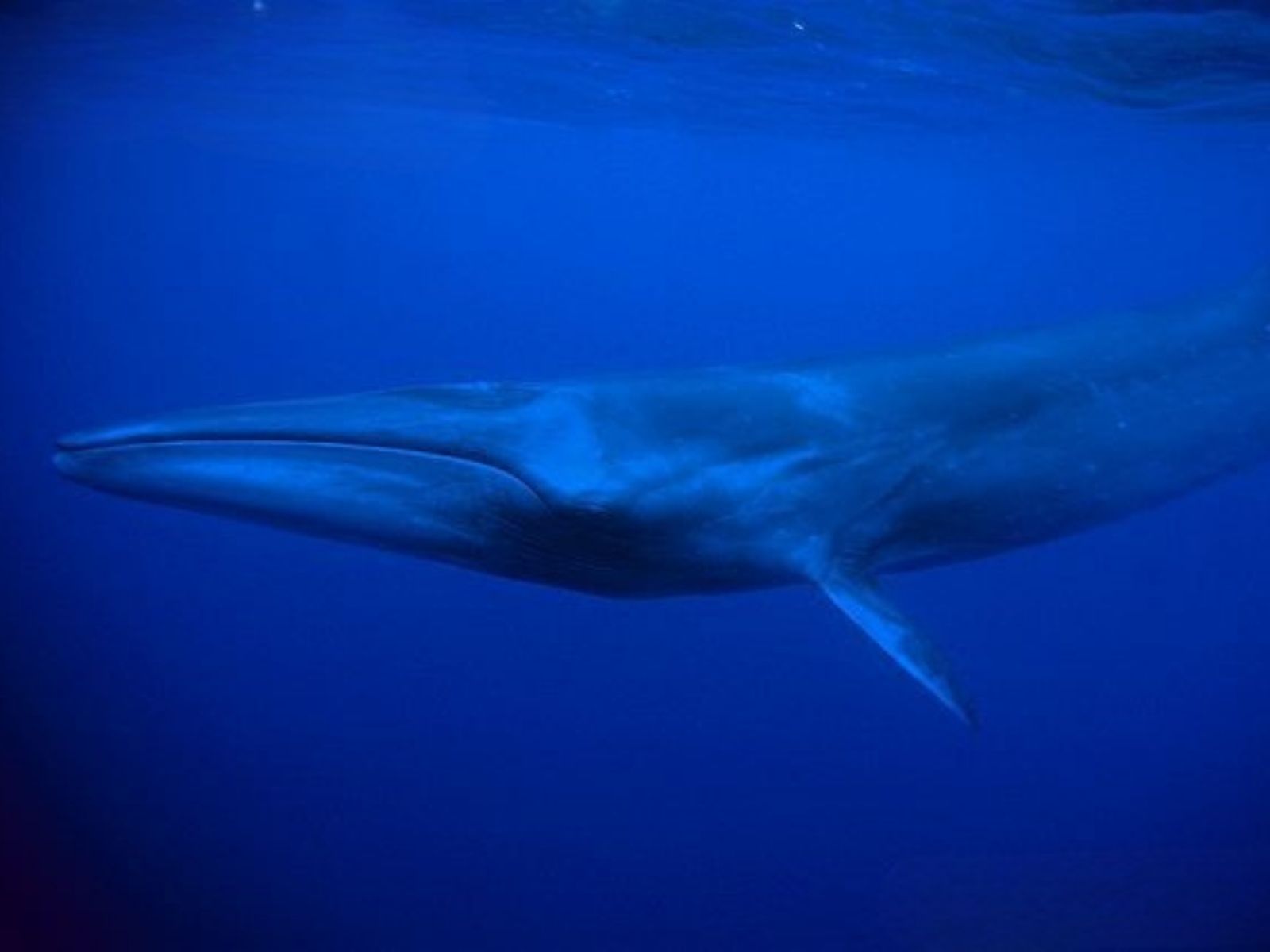
Sei Whale
Balaenoptera borealis

2025 Red list status
Endangered

Regional Population Trend
Unknown

Change compared
to 2016
No Change
Overview
Balaenoptera borealis – Lesson, 1828
ANIMALIA – CHORDATA – MAMMALIA – ARTIODACTYLA – BALAENOPTERIDAE – Balaenoptera – borealis
Common Names: Sei Whale, Coalfish Whale, Japan Finner, Northern Rorqual, Pollack Whale, Rudolph’s Rorqual, Sardine Whale (English), Seiwalvis (Afrikaans)
Synonyms: No Synonyms
The subspecies for this species have never been assessed; they are attached here to ensure the full cetacean taxonomy is accounted for in SIS, and to make these available to the Cetacean SG if they decide to assess these taxa in future.
Taxonomic Note: Although currently recognised as a distinct species, the Sei Whale is closely related to the Omura’s Whale (B. omurai) and Bryde’s Whale (B. edeni) (Wada et al. 2003) and was often confused with these species in whaling statistics. In particular, prior to 1972, most catch and sighting records were in fact Bryde’s Whales, and those in the western Pacific may have been Omura’s Whales. While two subspecies have been suggested: B. b. borealis (Tomilin, 1957) in the Northern Hemisphere and B. b schlegeli (Flower, 1884) in the Southern Hemisphere, these have not been widely accepted by the scientific community.
Red List Status: EN – Endangered, A1ad (IUCN version 3.1)
Assessment Information
Assessors: Shabangu, F.1,2, da silva, J. M.2 & Patel, T.3
Reviewer: Purdon, J.4,5
Institutions: 1Department of Forestry, Fisheries and the Environment, 2South African National Biodiversity Institute, 3Endangered Wildlife Trust, 1\4TUT Nature Conservation, 5The Whale Unit, University of Pretoria
Previous Assessors & Reviewers: Elwen, S. & Relton, C.
Previous Contributors: Findlay, K., Meÿer, M., Oosthuizen, H., Plön, S. & Child, M.F.
Assessment Rationale
As a direct result of commercial whaling between 1910 and 1979, an estimated total of 176,000 Sei Whales were killed in the Southern Hemisphere. Aside from the Antarctic, the west coast of Africa was considered the most productive region for Sei Whales, and between 1912 and 1967, approximately 9,480 Sei Whales were caught in this region. Following the substantial decline of the Blue, Fin and Humpback Whales, commercial whaling of this species peaked in the early 1960s, where the total catch increased from 3,629 in 1959 to 22,207 in 1965. This resulted in a major population collapse from which individuals that frequented African waters may have originated. It is suggested that the exploited Sei Whale population in the region of Antarctica due south of Africa decreased from 21,000 individuals in 1960 to an estimated 5% of that in 1979. Furthermore, by 1979 the total Southern Hemisphere populations are believed to have decreased from 100,000 to 24,000, however, the accuracy of these data may have been affected by catch per unit effort and may have underestimated the population decline.
While no recent surveys have been conducted for this species, the population is expected to be recovering, however, not as rapidly as other whale species, and no increases have been observed in strandings data. Sei Whales are rarely sighted in South African waters, but historically were considered common; for example, Sodwana Bay previously exhibited high catch and sightings records between the 1940s and 1960s. Any specific increases in population abundance of Sei Whales would be difficult to detect within the assessment region. The national assessment for this species is considered in line with that of the global assessment, and most of the decline is attributable to the Southern Hemisphere, thus this species is listed as Endangered A1d. However, continued monitoring is needed to estimate the population trend for the assessment region more accurately. This species should be reassessed once such data are available.
Regional population effects: Sei Whales are highly migratory and wide-ranging. There are no barriers to dispersal, thus rescue effects are possible.
Reasons for Change
Reason(s) for Change in Red List Category from the Previous Assessment: No Change
Red List Index
Red List Index: No Change
Recommended citation: Shabangu F, da Silva JM & Patel T. 2025. A conservation assessment of Balaenoptera borealis. In Patel T, Smith C, Roxburgh L, da Silva JM & Raimondo D, editors. The Red List of Mammals of South Africa, Eswatini and Lesotho. South African National Biodiversity Institute and Endangered Wildlife Trust, South Africa.
Regional Distribution and occurrence
Geographic Range
Sei Whales occur worldwide across all major ocean basins, except the extreme high latitudes of the Arctic and Antarctic polar regions. Like other balaenopterid species, sei whales migrate between the warmer tropics and subtropics in winter, and the cooler temperate and subpolar regions in summer. The extent of their winter range remains uncertain in parts, but is widely dispersed (Horwood 1987, 2002). Their distribution is usually restricted to offshore areas, with water temperatures typically between 6 and 18°C. They are known to avoid areas of anthropogenic disturbance. In peak summer in the Southern Hemisphere (January–February), they usually occur between 40 and 50°S in the southern Indian oceans and the South Atlantic (Joiris et al. 2015), and between 45 and 60°S in the South Pacific, but only the larger individuals are known to travel further south than the Antarctic Convergence (± 55°S) (Skinner and Chimimba 2005). Sei Whales in the waters off South Africa are typically en route northwards from their summer feeding grounds (predominantly in May/June), or southwards from their tropical breeding grounds (generally between August and October) (Bannister and Gambell 1965, Best 1967). Passive acoustic monitoring research off the sub-Antarctic region, Prince Edward Islands (Shabangu et al. 2024), reveals that the Sei Whales are acoustically present there in autumn (March to May) before they arrive in South African waters (Elwen et al. 2023). Increased Sei Whale catches off the western (Donkergat) and eastern (Durban) coasts of South Africa during spring and autumn are indicative of these migration routes (Horwood 1987). They are usually encountered off the edge of the continental shelf on the west coast (Best and Lockyer 2002).
Elevation / Depth / Depth Zones
Elevation Lower Limit (in metres above sea level): (Not specified)
Elevation Upper Limit (in metres above sea level): (Not specified)
Depth Lower Limit (in metres below sea level): ~300
Depth Upper Limit (in metres below sea level): 0
Depth Zone: Mesopelagic
Map
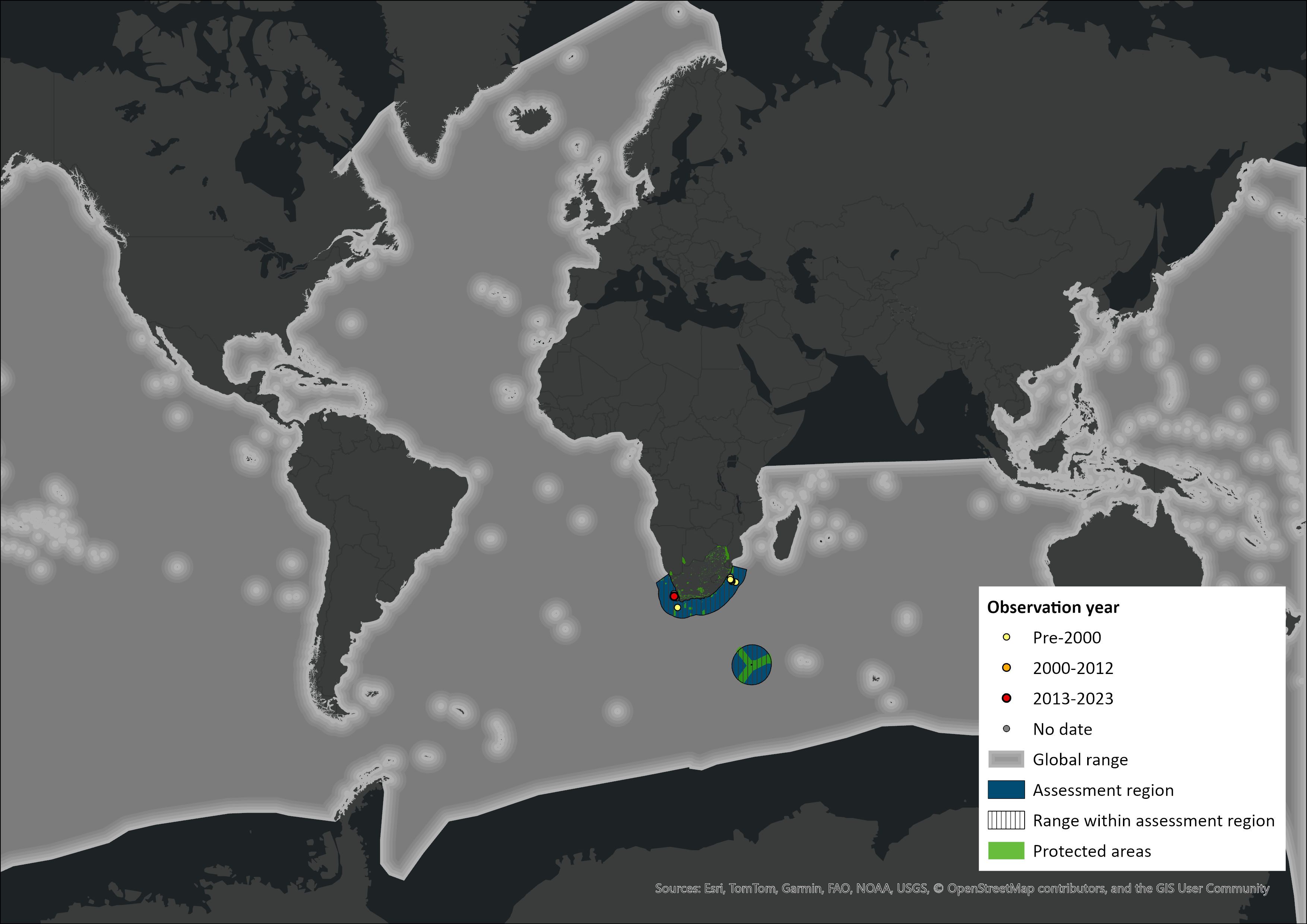 Figure 1. Distribution records for Sei Whale (Balaenoptera borealis) within the assessment region (South Africa, Eswatini and Lesotho). Note that distribution data is obtained from multiple sources and records have not all been individually verified.
Biogeographic Realms
Biogeographic Realm: Afrotropical, Antarctic, Australasian, Nearctic, Neotropical, Oceanian, Palearctic
Occurrence
Countries of Occurrence
| Country | Presence | Origin | Formerly Bred | Seasonality |
| Angola | Extant | Native | – | – |
| Argentina | Extant | Native | – | – |
| Australia | Extant | Native | – | – |
| Bahamas | Extant | Native | – | – |
| Bermuda | Extant | Native | – | – |
| Brazil | Extant | Native | – | – |
| Cabo Verde | Extant | Native | – | – |
| Canada | Extant | Native | – | – |
| Chile | Extant | Native | – | – |
| Congo | Extant | Native | – | – |
| Congo, The Democratic Republic of the | Extant | Native | – | – |
| Cuba | Extant | Native | – | – |
| Dominican Republic | Extant | Native | – | – |
| Falkland Islands (Malvinas) | Extant | Native | – | – |
| Faroe Islands | Extant | Native | – | – |
| French Southern Territories | Extant | Native | – | – |
| Gibraltar | Extant | Native | – | – |
| Greenland | Extant | Native | – | – |
| Haiti | Extant | Native | – | – |
| Iceland | Extant | Native | – | – |
| Ireland | Extant | Native | – | – |
| Japan | Extant | Native | – | – |
| Kenya | Extant | Native | – | – |
| Korea, Democratic People’s Republic of | Extant | Native | – | – |
| Korea, Republic of | Extant | Native | – | – |
| Madagascar | Extant | Native | – | – |
| Mauritania | Extant | Native | – | – |
| Mexico | Extant | Native | – | – |
| Morocco | Extant | Native | – | – |
| Namibia | Extant | Native | – | – |
| New Zealand | Extant | Native | – | – |
| Northern Mariana Islands | Extant | Native | – | – |
| Norway | Extant | Native | – | – |
| Peru | Extant | Native | – | – |
| Portugal | Extant | Native | – | – |
| Prince Edward Islands | Extant | Native | – | – |
| Russian Federation | Extant | Native | – | – |
| Réunion | Extant | Native | – | – |
| Saint Helena, Ascension and Tristan da Cunha | Extant | Native | – | Resident |
| Saint Helena, Ascension and Tristan da Cunha -> Tristan da Cunha | Extant | Native | – | – |
| Saint Pierre and Miquelon | Extant | Native | – | – |
| South Africa | Extant | Native | – | – |
| South Georgia and the South Sandwich Islands | Extant | Native | – | – |
| Spain | Extant | Native | – | – |
| Turks and Caicos Islands | Extant | Native | – | – |
| United Kingdom of Great Britain and Northern Ireland | Extant | Native | – | – |
| United States of America | Extant | Native | – | – |
| Uruguay | Extant | Native | – | – |
| Western Sahara | Extant | Native | – | – |
Large Marine Ecosystems (LME) Occurrence
Large Marine Ecosystems: (Not specified)
FAO Area Occurrence
| Presence | Origin | Formerly Bred | Seasonality | |
| 21. Atlantic – northwest | Extant | Native | – | – |
| 27. Atlantic – northeast | Extant | Native | – | – |
| 31. Atlantic – western central | Extant | Native | – | – |
| 34. Atlantic – eastern central | Extant | Native | – | – |
| 41. Atlantic – southwest | Extant | Native | – | – |
| 47. Atlantic – southeast | Extant | Native | – | – |
| 48. Atlantic – Antarctic | Extant | Native | – | – |
| 51. Indian Ocean – western | Extant | Native | – | – |
| 57. Indian Ocean – eastern | Extant | Native | – | – |
| 58. Indian Ocean – Antarctic | Extant | Native | – | – |
| 61. Pacific – northwest | Extant | Native | – | – |
| 67. Pacific – northeast | Extant | Native | – | – |
| 71. Pacific – western central | Extant | Native | – | – |
| 77. Pacific – eastern central | Extant | Native | – | – |
| 81. Pacific – southwest | Extant | Native | – | – |
| 87. Pacific – southeast | Extant | Native | – | – |
| 88. Pacific – Antarctic | Extant | Native | – | – |
Climate change
Climate change can affect the distribution, migration, abundance, mortality, reproductive success and prey resources for cetaceans (Simmonds & Isaac 2007; Prieto et al. 2012). Sei Whales have a wide feeding range, which can make them resilient to climate change should it affect their prey (NMFS 2011). In the Southern Hemisphere, increased frequencies of El Niño events and increased sea surface temperatures have been known to affect Munida gregaria, which is an important prey species for Sei Whales (Häussermann et al. 2017). Häussermann et al. (2017) indicated a death of 343 (primarily) Sei Whales during an El Niño event. If the frequency and magnitude of mass mortality events increase due to climate change, this would have a significant impact on the Sei Whale population as well as their prey, which could threaten the recovery of the Sei Whale population in the Southern Hemisphere (Häussermann et al. 2017).
Overall, climate change may have several impactions for Sei Whales, impacting their habitat and food availability. Migration, feeding, breeding locations and prey availability may be influenced by ocean currents or water temperature, and any changes in these could alter habitat, prey and foraging areas (NMFS 2011). However, there is a lot of uncertainty around whether reduced prey abundance due to climate change is a threat to Sei Whales, and further research is needed to identify the impacts of climate change on Sei Whale prey and mass mortality events.
Population information
Following the major decline of Blue, Humpback and Fin Whales in the 1960s, commercial whaling of Sei Whales increased substantially. Between 1910 and 1979, records suggest that approximately 176,000 Sei Whales were caught in the Southern Hemisphere. Aside from the Antarctic, the west coast of Africa was considered the most productive area for whaling of Sei Whales (Best and Lockyer 2002). Without species-specific quotas (quotas were set only for a combination of Sei Whales and Fin Whales, and were not partitioned geographically), more than 28,000 Sei Whales were caught during the two major whaling seasons between 1964 and 1966 in the Atlantic Ocean. This caused the most substantial collapse of any whale stock during recent times, where population abundance of this species declined by 80% at the Donkergat and Durban whaling stations between 1965 and 1967 (Gambell 1974, Best and Lockyer 2002). Records suggest that in 1964 alone over 20,000 Sei Whales were caught, but on average between 1960 and 1972, 5,000 individuals were taken per year. Most Sei Whaling operations took place from pelagic fleets south of 40°S in summer; and it is suggested that the exploited Sei Whale population in the region of Antarctica due south of Africa decreased from 21,000 individuals in 1960 to an estimated 5% of that in 1979 (IWC 1980). However, land-based whaling was also conducted in winter from Brazil, Peru, South Africa, and to a lesser extent, Chile, where some confusion with Bryde’s Whales occurred.
Sei Whales in the Southern Hemisphere were vaguely divided into six key management areas by the IWC, and only in 1979 were all Southern Hemisphere stocks formally protected. The most recent population assessment of Sei Whales in the Southern Hemisphere was coordinated by the IWC Scientific Committee in 1979 (IWC 1980), and built on by Horwood (1987). These results estimated the Sei Whale population, excluding those of the southern Atlantic (Area II), to have decreased from approximately 64,000 in 1960 to 11,000 in 1979. Importantly, this estimate represents only those individuals of legal size, which are projected as 67% of the total population. These data were collected from Japanese whaling and surveying vessels, and were based on catches/sightings per unit effort. There are no current population size or trend estimates (Prieto et al. 2012).
Discrepancy between abundance indices and population models in the southern Atlantic (Area II) suggested that the IWC’s management areas delineated for this species do not correlate to genuine reproductive populations. Additionally, as previously mentioned, nearly all of the South Atlantic stock was removed during the two major whaling operations in the late 1960s. Considering the lack of survey effort for this species, estimating the current population abundance and trends for this species is extremely challenging. The only recent estimate of abundance for Sei Whales is from a portion of their range in the North Pacific. Their abundance in the central North Pacific was projected as approximately 9,286 (CV = 0.35) individuals in 2010 (Hakamada et al. 2011). The IWC provided a 1989 population estimate for Sei Whales south of 30°S at approximately 10,500, but no variance was supplied. This estimate was based on sighting data from the International Decade of Cetacean Research (IDCR) and the Japanese Scout Vessel (JSV). Exhibiting a generation time of 23.4 years (Taylor et al. 2007), this species has an estimated maximum rate of increase of less than 3% / year (Horwood 1987, Best and Lockyer 2002).
Continuing decline in mature individuals: No
Number of mature individuals in population: Unknown
Number of mature individuals in largest subpopulation: Unknown
Number of subpopulations: Unknown
Severely fragmented: No
Extreme fluctuations in the number of subpopulations: (Not specified)
Continuing decline in number of subpopulations: (Not specified)
All individuals in one subpopulation: (Not specified)
Current population trend: Unknown
Quantitative Analysis
Probability of extinction in the wild within 3 generations or 10 years, whichever is longer, maximum 100 years: (Not specified)
Probability of extinction in the wild within 5 generations or 20 years, whichever is longer, maximum 100 years: (Not specified)
Probability of extinction in the wild within 100 years: (Not specified)
Population genetics
While population genetic studies have been conducted on this species (e.g., Kanda et al. 2011, Huijser et al. 2018, Taguchi et al. 2021), they primarily focused on northern populations. Limited genetic research have incorporated animals from the assessment region, and of the studies that have been undertaken conflicting findings are reported. An earlier study suggests that the Sei Whale from the Southern Hemisphere form their own genetically distinct subpopulation (Wade & Numachi 1991), yet Baker et al. (2004) failed to detect clear differentiation. A comprehensive global population genetic/genomic study is needed to resolve this uncertainty.
Despite this uncertainty, it is accepted that the animals within the assessment region for a single population.
Consequently, the Convention on Biological Diversity’s Global Biodiversity Framework’s (GBF’s) complementary genetic indicator – proportion of populations maintained (PM) – would receive a value of 1.0 (all populations remaining).
Due to limited current knowledge on population size and the fact that a genetic bottleneck likely transpired from the 1950s/60s onward, applying a general conversion ratio of Ne/Nc between 0.1-0.3 based on only population estimates could provide an overestimation of the effective population size for this population. Consequently, it would be ill advised to use proxies to quantify the GBF’s headline genetic indicator – proportion of populations with an Ne > 500. Acknowledging the difficulty in sourcing fresh tissue within the assessment region, it is highly recommended that a population genetic study be conducted using samples collected within the past 20-25 years (i.e., approximate generation length of the species) to more accurately estimate the genetic health and diversity of this potential subpopulation.
Habitats and ecology
Although usually moving in small schools of between three and eight individuals (often segregated by age and sex), Sei Whales congregate at feeding grounds and may develop aggregations of more than 100 individuals. The blow shape of Sei Whales is similar to that of the Fin Whale, but does not project as high or as broadly. In comparison to that of the Fin Whale, the dorsal fin of the Sei Whale is more upright. Sei Whales are also considered fast swimmers, and have been recorded to reach speeds of up to 30 knots over short distances.
Their diet is greater in variety than that of the Blue Whale, but they usually only feed on one food type at a time. For example, 21,713 North Pacific Sei Whale stomachs were dissected, revealing that 82.7% consisted only of copepods and the stomach contents of 12.6% comprised only of euphausiids; while in the Southern Hemisphere, 31,494 stomachs were examined, revealing that 54.3% contained only euphausiids, 30.5% consisted only of copepods and 14.4% of the dissected stomachs held only amphipods (Nemoto and Kawamura 1977). In the Southern Hemisphere, their most important prey is considered to be copepods, but in Antarctica specifically, they may take krill (Euphausia superba). Within the waters surrounding the assessment region, Sei Whales consume both euphausiids and copepods, however in small quantities (Bannister and Baker 1967, Best 1967). Sei Whales do not consistently return to the same feeding grounds every year, and may inexplicably disappear from a particular site during certain years, or even decades (Horwood 1987).
Breeding in the Southern Hemisphere usually takes place between the months of April and August, with a peak in June. The gestation period lasts for approximately 12 months. Newly born calves are usually about 4.5 m, and over the next six months grow rapidly to a length of approximately 8.0 m (Skinner and Chimimba 2005).
Ecosystem and cultural services: Marine mammals integrate and reflect ecological variation across large spatial and long temporal scales, and therefore they are prime sentinels of marine ecosystem change; migratory mysticete whales may be used to investigate broadscale shifts in ecosystems (Moore 2008).
IUCN Habitats Classification Scheme
| Habitat | Season | Suitability | Major Importance? |
| 9.1. Marine Neritic -> Marine Neritic – Pelagic | – | Suitable | Yes |
| 10.1. Marine Oceanic -> Marine Oceanic – Epipelagic (0-200m) | – | Suitable | Yes |
Life History
| Generation Length | Justification | Data Quality |
| 23.4 | – | – |
Age at Maturity: Female or unspecified: 6-12 years
Age at Maturity: Male: 6-12 years
Size at Maturity (in cms): Female: 1300
Size at Maturity (in cms): Male: 1300
Longevity: >50 years
Average Reproductive Age: 10 years
Maximum Size (in cms): (Not specified)
Size at Birth (in cms): 450
Gestation Time: 10-12 months
Reproductive Periodicity: 2-3 years
Average Annual Fecundity or Litter Size: 1
Natural Mortality: Unknown
Breeding Strategy
Does the species lay eggs? No
Does the species give birth to live young: Yes
Does the species exhibit parthenogenesis: No
Does the species have a free-living larval stage? No
Does the species require water for breeding? Yes
Movement Patterns
Movement Patterns: Daily and monthly
Congregatory: (Not specified)
Systems
System: Marine
General Use and Trade Information
Major commercial whaling of the Sei Whale has ceased, although annually approximately 100 individuals are taken from the waters of the North Pacific by Japanese whalers under a permit of scientific research. During the whaling era, Sei Whale blubber and baleen were used for products such as lamp oil, margarine, cooking oil, candles, soaps, cosmetics, corsets, umbrellas and tennis racquets, while whale meat was sold for human consumption, animal feed and fertiliser.
| Subsistence: | Rationale: | Local Commercial: | Further detail including information on economic value if available: |
| No | – | – | – |
National Commercial Value: Yes
International Commercial Value: No
| End Use | Subsistence | National | International | Other (please specify) |
| 1. Food – human | – | true | – | – |
| 14. Research | – | true | – | – |
Is there harvest from captive/cultivated sources of this species? No
Harvest Trend Comments: (Not specified)
Threats
Subsequent to the decline of Blue, Fin and Humpback Whales due to commercial whaling, Sei Whales were specifically targeted by whalers in the Southern Hemisphere and North Pacific, leading to a rapid and intensive exploitation of this species from the late 1950s to the mid-1970s. Although occurring over a longer period, Sei whaling in the North Atlantic was less intensive.
Commercial exploitation of this species ended in 1975, 1979 and 1989 in the North Pacific, Southern Hemisphere and North Atlantic, respectively. Under a scientific research permit, Japanese whaling in the North Pacific recommenced in 2002, and records showed that since 2004, approximately 100 individuals are caught each year. Sei Whales are documented to avoid areas of anthropogenic influence, and are usually limited to an offshore distribution. As a result, they appear to have a fairly low risk of trauma and death as a result of ship strikes. However, two fatal ship strikes were recorded on the east coast of the United States between 2000 and 2004 (Cole et al. 2006). The frequency or severity of this threat is unknown within the assessment region. Sei Whales seem to be well adapted to underwater noise as the probability of detecting their calls increases with underwater noise (Shabangu et al. unpublished data); however, this adaptation could come at an energetic costs.
Current habitat trend: Declining in quality due to climate change (Burns & Baker 2000).
Conservation
Since 1975 in the North Pacific and 1979 in the Southern Hemisphere, Sei Whales have been independently and formally protected by the International Whaling Commission. Additional protection includes the general moratorium on commercial whaling (since 1986); however, this does not shelter Sei Whales from catches taken under a scientific permit. The Sei Whale is listed on Appendix I of the Convention on International Trade in Endangered Species of Wild Fauna and Flora (CITES), however since 2000, Iceland has opposed this listing. This species is also listed on Appendix II of the Convention on the Conservation of Migratory Species of Wild Animals (CMS). There is insufficient data to assess the present status of this species in the Southern Hemisphere, and according to the IWC, surveys have discovered little evidence of population recovery in the northeastern Atlantic.
Within South Africa’s Exclusive Economic Zone, they are fully protected. The major intervention necessary for this species is the collection of more data relating to its current population status and trends using ship-based surveys.
Recommendations for managers and practitioners:
- Systematic monitoring: design and implement a monitoring programme (acoustic and sightings) that effectively samples Sei Whales to determine population size and trends within the assessment region.
- Develop best practice guidelines for seismic surveys and enforce regulations.
Research priorities:
While research output for other whale species has increased significantly over time, this is not the case for Sei Whales (Prieto et al. 2012). Research priorities include:
- Estimate of current population size and trend estimates within the assessment region.
- Identification of threats and threat severity to this species, including the effects of climate change.
- Clear definition of stock units for management purposes.
- Studies detailing distribution and migration patterns, including the identification of wintering areas.
Encouraged citizen actions:
- Report whale strandings to relevant authorities.
- Participate as volunteers in Sei Whale research projects.
- Whale watching operators could contribute to photo- ID catalogues and behavioural observations.
Bibliography
Austin, H., 2021. Sei Whale (Balaenoptera borealis) 5-Year Review: Summary and Evaluation. National Marine Fisheries Service, Office of Protected Resources, Silver Spring, MD.
Bannister JL, Gambell R. 1965. The succession and abundance of fin, sei and other whales off Durban. Norsk Hvalfangsttid 54: 45–60.
Best PB, Lockyer CH. 2002. Reproduction, growth and migrations of Sei Whales Balaenoptera borealis off the west coast of South Africa in the 1960s. South African Journal of Marine Science 24: 111–133.
Best PB. 1967. Distribution and feeding habits of baleen whales off the Cape Province. Republic of South Africa, Department of Commerce and Industries, Division of Sea Fisheries.
Burns WC, Baker DJ. 2000. From the harpoon to the heat: Climate change and the International Whaling Commission in the 21st century. Journal of International Wildlife Law & Policy 3: 50– 72.
Cole, T., Hartley, D. and Garron, M. 2006. Mortality and serious injury determinations for large whale stocks along the eastern seaboard of the United States 2000-2004.
Elwen, S. Fearey, J., Ross-Marsh, E., Thompson, K., Maack, T., Webber, T. & Gridley, T. 2023. Cetacean Diversity of the Eastern South Atlantic Ocean and Vema Seamount Detected during a Visual and Passive Acoustic Survey, 2019. Journal of the Marine Biological Association of the United Kingdom 103: e41. https://doi.org/10.1017/S0025315423000255.
Gambell R. 1974. The fin and sei whale stocks off Durban. In: Schevill WE (ed.), The Whale Problem: A Status Report, pp. 82–86. Harvard University Press, Cambridge, USA.
Hakamada T, Kiwada H, Matsuoka K, Kitakado T. 2011. Preliminary estimation of North Pacific sei whale abundance derived from 2010 IWC/Japan Joint Cetacean Sighting Survey data. 63rd IWC..
Häussermann, V., C.S. Gutstein, M. Beddingon, D. Cassis, C. Olavarria, A.C. Dale, A.M. Valenuela-Toro, M. Perez Alvarez, H.H. Sep lveda, K.M. McConnell, F.E. Horwitz, G. F sterra. 2017. Largest baleen whale mass mortality during strong El Ni event is likely related to harmful toxic algal bloom. PeerJ 5:e3123.
Horwood J. 2002. Sei whale Balaenoptera borealis. Pp. 1069-1071 in W. F. Perrin, B. Wursig and J. G. M. Thewissen (eds.) Encyclopedia of marine mammals. Academic Press..
Horwood, J. 1987. The sei whale: Population biology, ecology, and management. Croom Helm, London, New York, Sydney.
IUCN (International Union for Conservation of Nature). 2012. Balaenoptera borealis. Available at: http://www.iucnredlist.org.. (Accessed: 21 February 2016).
International Whaling Commission. 1980. Report of the Special Meeting on Southern Hemisphere sei whales. Report of the International Whaling Commission 30: 493-505.
Joiris CR, Humphries GRW, de Broyer A. 2015. Summer distribution of marine mammals encountered along transects between South Africa and Antarctica during 2007–2012 in relation to oceanographic features. Advances in Polar Science 26: 265–273.
Kanda, N., Goto, M., Matsuoka, K., Yoshida, H. and Pastene, L. A. 2011. Preliminary microsatellite analysis of sei whales obtained from the North Pacific in 2010. Paper SC/63/IA12. http://www.icrwhale.org/pdf/SC-63-IA12.pdf
Moore SE. 2008. Marine mammals as ecosystem sentinels. Journal of Mammalogy 89: 534-540.
Nemoto, T. and Kawamura, A. 1977. Characteristics of food habits and distribution of baleen whales with special reference to the abundance of North Pacific sei and Bryde’s whales. Reports of the International Whaling Commission Special Issue 1: 80-87.
NMFS. 2011. Final Recovery plan for the sei whale (Balaenoptera borealis). National Marine Fisheries Service, Silver Spring, MD. 108 pages.
Prieto R., Janiger D., Silva M.A., Waring G.T., Gonçalves J.M. 2012. The forgotten whale: a bibliometric analysis and literature review of the North Atlantic sei whale Balaenoptera borealis. Mammal Review 42(3): 235–272.
Shabangu, F.W., Munoz, T., Van Uffelen, L., Estabrook, B.J., Yemane, D., Stafford, K.M., Branch, T.A., Vermeulen, E., van den Berg, M.A., Lamont, T., 2024. Diverse baleen whale acoustic occurrence around two sub-Antarctic Islands: A tale of residents and visitors. Scientific Reports 14: 21663. https://doi.org/10.1038/s41598-024-72696-2.
Simmonds M.P., S. Isaac. 2007. The impacts of climate change on marine mammals: early signs of significant problems. Oryx 41: 19-26.
Skinner, J.D. and Chimimba, C.T. (eds). 2005. The Mammals of the Southern African Subregion. Cambridge University Press, United Kingdom, Cambridge.
Taguchi, M., Goto, M., Milmann, L., Siciliano, S., Tiedemann, R. & Pastene, L.A. 2021. New insights into the genetic structure of Sei Whales (Balaenoptera borealis) at the inter-oceanic scale. Cetacean Popul. Stud. (CPOPS), 3: 152-163.
Taylor, B.L., Chivers, S.J., Larese, J. and Perrin, W.F. 2007. Generation length and percent mature estimates for IUCN assessments of cetaceans. NOAA, Southwest Fisheries Science Center Administrative Report LJ-07-01. La Jolla, California.
Wada, S., Oishi, M. and Yamada, T.K. 2003. A newly discovered species of living baleen whale. Nature 426: 278-281.