
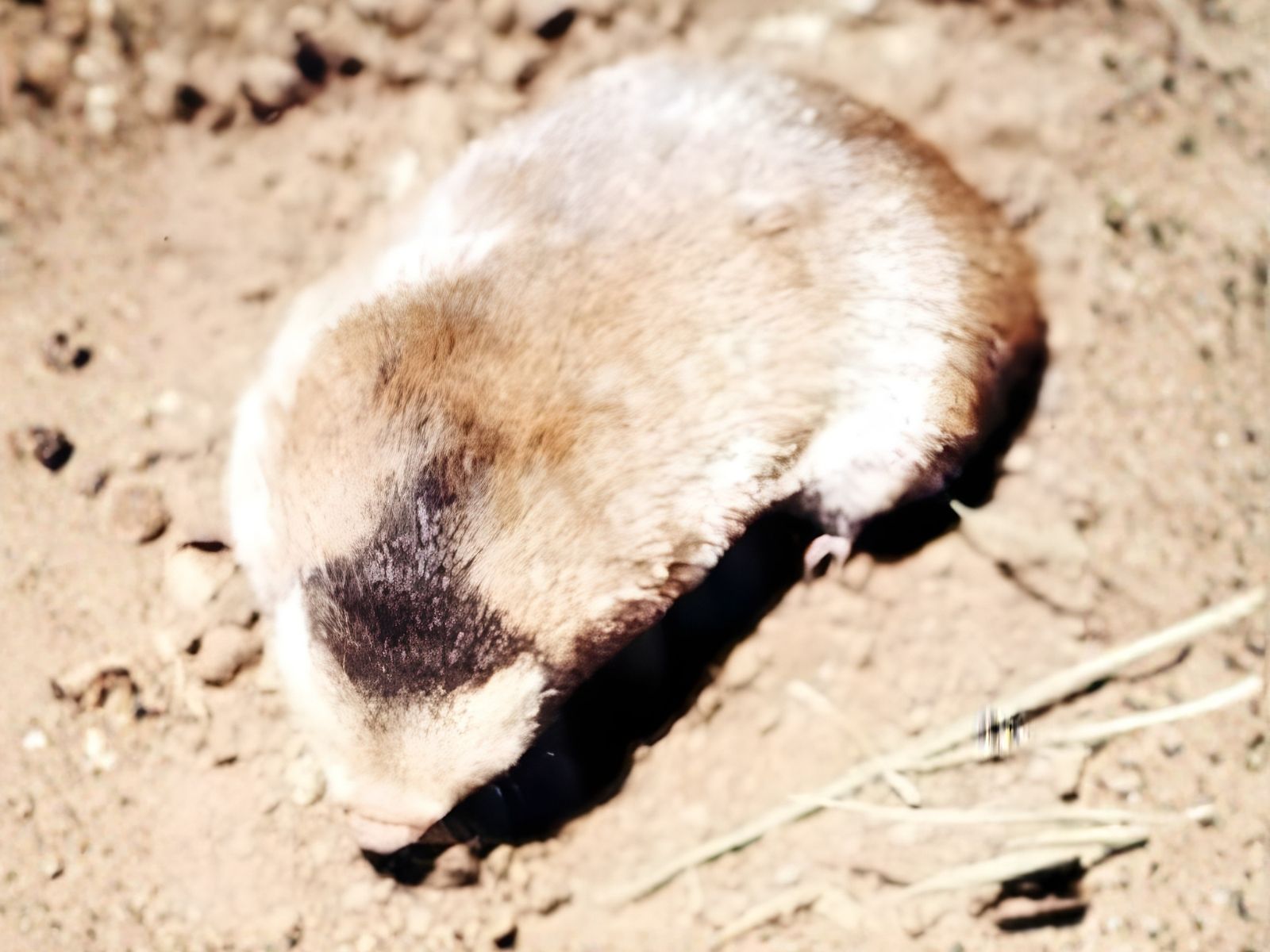
Sclater’s Golden Mole
Chlorotalpa sclateri

2025 Red list status
Least Concern

Regional Population Trend
Unknown

Change compared
to 2016
No Change
Overview
Chlorotalpa sclateri – (Broom, 1907)
ANIMALIA – CHORDATA – MAMMALIA – AFROSORICIDA – CHRYSOCHLORIDAE – Chlorotalpa – sclateri
Common Names: Sclater’s Golden Mole (English), Sclater se Gouemol, Sclater se Kruipmol (Afrikaans), Sclater-Goldmull (German)
Synonyms: Chrysochloris sclateri Broom, 1907
Taxonomic Note:
Although previously included within the genus Amblysomus by Petter (1981), the group, currently listed under the genus Chlorotalpa, were found to differ significantly in morphological, chromosomal and geographic traits (Meester 1974), and thus those genera are considered distinct (Skinner and Chimimba 2005). Based on geographic variation and cranial size and shape, four subspecies have been recognised: C. s. sclateri, C. s. guillarmodi, C. s. montana, and C. s. shortridgei (Bronner 2013). The apparent geographic discontinuity between these subspecies and the isolation of their preferred habitat appears to warrant this subspecific separation (Bronner 1995).
Red List Status: LC – Least Concern, (IUCN version 3.1)
Assessment Information
Assessor: Patel, T.1 & da Silva, J.2
Reviewer: Mynhardt, S.1
Institutions: 1Endangered Wildlife Trust, 2South African National Biodiversity Institute
Previous Assessor: Bronner, G.
Previous Reviewers: Bennett, N.C. & Taylor, A.
Assessment Rationale
Sclater’s Golden Mole is a relatively widespread species that coexists and often thrives in close proximity to humans, provided that habitat disturbance is not too extensive; much of its range coincides with mountains where human influence on habitats is not substantial, so population decline is unlikely. The species is thus assessed as Least Concern.
Reasons for Change
Reason(s) for Change in Red List Category from the Previous Assessment: No change
Red List Index
Red List Index: No change
Recommended citation: Patel T & da Silva JM. 2025. A conservation assessment of Chlorotalpa sclateri. In Patel T, Smith C, Roxburgh L, da Silva JM & Raimondo D, editors. The Red List of Mammals of South Africa, Eswatini and Lesotho. South African National Biodiversity Institute and Endangered Wildlife Trust, South Africa.
Regional Distribution and occurrence
Geographic Range
This species occurs in South Africa and Lesotho. Restricted to montane habitats from Beaufort West and Sutherland in Western Cape north-eastwards to the Drakenberg mountains of Eastern Cape, western KwaZulu-Natal and southern Mpumalanga, and the Maluti Mountains of Lesotho and western Free State. Distributional limits of the four subspecies are unclear owing to poor geographic sampling, but their known ranges are separated by seemingly inhospitable habitat suggesting that they may be geographically isolated (Bronner 1995).
Elevation / Depth / Depth Zones
Elevation Lower Limit (in metres above sea level): (Not specified)
Elevation Upper Limit (in metres above sea level): (Not specified)
Depth Lower Limit (in metres below sea level): (Not specified)
Depth Upper Limit (in metres below sea level): (Not specified)
Depth Zone: (Not specified)
MAP
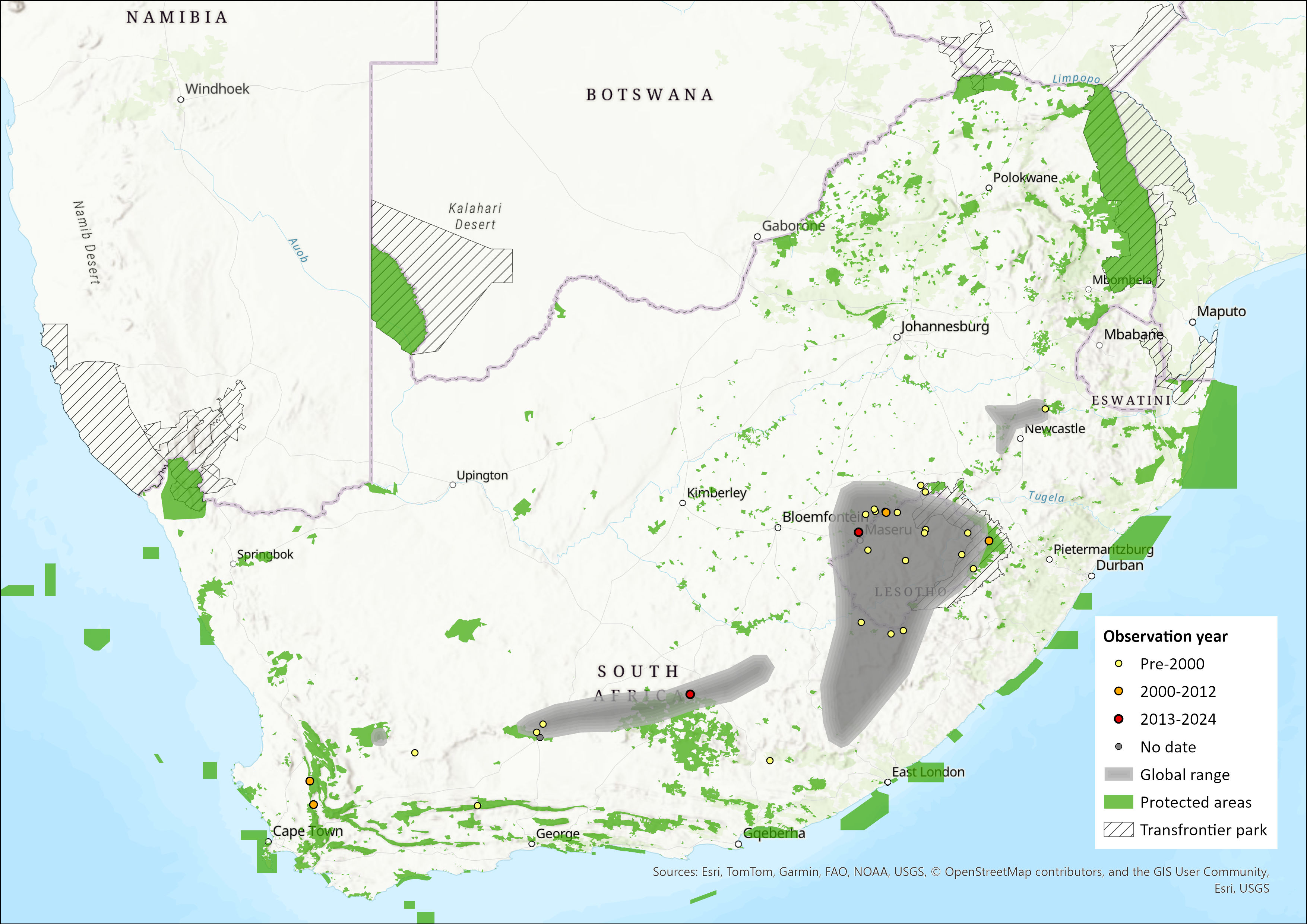
Figure 1. Distribution records for Sclater’s Golden Mole (Chlorotalpa sclateri) within the assessment region (South Africa, Eswatini and Lesotho). Note that distribution data is obtained from multiple sources and records have not all been individually verified.
Biogeographic Realms
Biogeographic Realm: Afrotropical
Occurrence
Countries of Occurrence
| Country | Presence | Origin | Formerly Bred | Seasonality |
| Lesotho | Extant | Native | – | Resident |
| South Africa | Extant | Native | – | Resident |
| South Africa -> Eastern Cape Province | Extant | Native | – | Resident |
| South Africa -> Free State | Extant | Native | – | Resident |
| South Africa -> KwaZulu-Natal | Extant | Native | – | Resident |
| South Africa -> Western Cape | Extant | Native | – | Resident |
Large Marine Ecosystems (LME) Occurrence
Large Marine Ecosystems: (Not specified)
FAO Area Occurrence
FAO Marine Areas: (Not specified)
Climate change
Although the potential impacts of climate change on this species have not been directly assessed, climate change is expected to impact most golden mole species. Since these subterranean animals are restricted to soft soils for burrowing, and have very low vagility, their ability to migrate or shift their distribution ranges in response to climate change is very limited. Climate change is likely to impact golden moles through changes in vegetation type, soil moisture and prey availability.
Population Information
The species is locally abundant, but no quantitative data are available.
Current population trend: Unknown
Continuing decline in mature individuals: Unknown
Number of mature individuals in population: Unknown
Number of mature individuals in largest subpopulation: Unknown
Number of subpopulations: Unknown
Severely fragmented: No
Extreme fluctuations in the number of subpopulations: (Not specified)
Continuing decline in number of subpopulations: (Not specified)
All individuals in one subpopulation: No
Quantitative Analysis
Probability of extinction in the wild within 3 generations or 10 years, whichever is longer, maximum 100 years: (Not specified)
Probability of extinction in the wild within 5 generations or 20 years, whichever is longer, maximum 100 years: (Not specified)
Probability of extinction in the wild within 100 years: (Not specified)
Population Genetics
While no population genomic study has been undertaken on Chlorotalpa sclateri, strong genetic differences are anticipated between the four recognised subspecies given that each occupies different habitats with significant geographic isolation between them. Additional substructure within each subspecies is possible since the localities in which they are known to occur are also separated by wide expanses of seemingly inhospitable habitat. Accordingly, based on the currently known distribution there could be more than seven subpopulations within the species. This would need confirmation using molecular investigation.
Due to the unavailability of population size or density data, estimates of effective population size for each subpopulation or subspecies are not possible at this time.
Habitats and ecology
This species is restricted to high-altitude grasslands, scrub and forested kloofs in the Nama-Karoo and Grassland biomes of South Africa. C. s. shortridgei occurs in Escarpment Mountain Renosterveld. C. s. sclateri and C. s. guillarmodi in South-eastern Mountain Grassland with marginal intrusion into Wet Cold Highveld Grassland. C. s. montana is known from only North-eastern Mountain Grassland where it favours scrub and thickets in kloofs rather than valley grasslands where A. septentrionalis is the dominant species.
Occasionally located in association with African Mole-rat (Cryptomys hottentotus) (Lynch 1994), Sclater’s Golden Moles construct both shallow foraging tunnels and deeper nesting chambers. They are predominantly nocturnal but have been reported to be active following rainfall events during the day (Skinner and Chimimba 2005). One specimen collected in KwaZulu-Natal was found to have foraged almost exclusively on earthworms (Taylor 1998).
IUCN Habitats Classification Scheme
| Habitat | Season | Suitability | Major Importance? |
| 3.5. Shrubland -> Shrubland – Subtropical/Tropical Dry | Resident | Suitable | No |
| 3.7. Shrubland -> Shrubland – Subtropical/Tropical High Altitude | Resident | Suitable | Yes |
| 3.8. Shrubland -> Shrubland – Mediterranean-type Shrubby Vegetation | Resident | Suitable | Yes |
| 4.4. Grassland -> Grassland – Temperate | Resident | Suitable | Yes |
| 14.1. Artificial/Terrestrial -> Artificial/Terrestrial – Arable Land | Resident | Suitable | No |
| 14.2. Artificial/Terrestrial -> Artificial/Terrestrial – Pastureland | Resident | Suitable | No |
| 14.4. Artificial/Terrestrial -> Artificial/Terrestrial – Rural Gardens | Resident | Suitable | No |
| 14.5. Artificial/Terrestrial -> Artificial/Terrestrial – Urban Areas | Resident | Suitable | No |
Life History
Generation Length: (Not specified)
Age at Maturity: Female or unspecified: (Not specified)
Age at Maturity: Male: (Not specified)
Size at Maturity (in cms): Female: 8-13
Size at Maturity (in cms): Male: 8-14
Longevity: (Not specified)
Average Reproductive Age: (Not specified)
Maximum Size (in cms): (Not specified)
Size at Birth (in cms): (Not specified)
Gestation Time: (Not specified)
Reproductive Periodicity: Seasonally polyoestrus, breeds in wet austral summer months (Bronner 2013).
Average Annual Fecundity or Litter Size: Litter size =2 (Bronner 2013)
Natural Mortality: (Not specified)
Breeding Strategy
Does the species lay eggs? No
Does the species give birth to live young? Yes
Does the species exhibit parthenogenesis? No
Does the species have a free-living larval stage? No
Does the species require water for breeding? No
Movement Patterns
Movement Patterns: (Not specified)
Congregatory: (Not specified)
Systems
System: Terrestrial
General Use and Trade Information
General notes regarding trade and use of this species: This species may be culturally significant and utilised traditionally in Lesotho. In some villages is believed that one’s home is protected from lightning strikes, if a Sclater’s Golden Mole carcass is displayed on a stake outside the home.
Local Livelihood: (Not specified)
National Commercial Value: (Not specified)
International Commercial Value: (Not specified)
End Use: (Not specified)
Is there harvest from captive/cultivated sources of this species? (Not specified)
Harvest Trend Comments: (Not specified)
Threats
There are currently no recognised major threats to this species. Habitat modification as a result of agricultural practices and urbanisation may have an impact on some subpopulations, but given the widespread distribution of this species and its ability to survive in mildly transformed habitat, these are considered to be low impact threats. Additionally, much of this species’ habitat coincides with mountains where human influences are not substantial.
Conservation
Recorded from the uKhahlamba Drakensberg Park (KwaZulu-Natal), Karoo National Park (Western Cape), Golden Gate National Park (Free State) as well as the Lesotho National Park. The species is not thought to be threatened by human actions and thus no specific interventions are needed at present.
Recommendations for land managers and practitioners:
- Monitoring subpopulations in existing conservation and peri-urban areas to assess trends.
- Field surveys to discover additional subpopulations.
Research priorities:
- Genetic analyses to assess validity of currently recognised subspecies.
- Field studies to determine life history traits and ecological tolerances.
- Surveys needed to determine subpopulation size, trend and distribution limits of subspecies.
- Studies assessing the severity of threats.
Encouraged citizen actions:
- Report sightings on virtual museum platforms (for example, iNaturalist and MammalMAP), especially outside protected areas.
- Deposit any dead specimens found in a state or provincial museum, together with information on the date and site where found.
- Create native vegetation gardens.
Bibliography
Afrotheria Specialist Group. 2014. Specialist Group website. Available at: http://www.afrotheria.net/index.php.
Bronner, G.N. 1995. Systematic revision of the golden mole genera Amblysomus, Chlorotalpa and Calcochloris (Insectivora: Chrysochloromorpha; Chrysochloridae). Ph.D. Thesis, University of Natal.
Bronner, G.N. 2013. Chlorotalpa sclateri. In: J. Kingdon, D. Happold, T. Butynski, M. Hoffmann, M. Happold and J. Kalina (eds), Mammals of Africa, Volume I: Introductory Chapters and Afrotheria, pp. 240-241. Bloomsbury Publishing, London.
Bronner, G.N. and Jenkins, P.D. 2005. Order Afrosoricida. In: D.E. Wilson and D.M. Reeder (eds), Mammal Species of the World, pp. 70-81. The Johns Hopkins University Press, Baltimore, MD, USA.
Broom, R. 1907. A contribution to the knowledge of the Cape golden moles. Transactions of the South African Philosophical Society 18: 283–311.
IUCN. 2015. The IUCN Red List of Threatened Species. Version 2015.2. Available at: www.iucnredlist.org. (Accessed: 23 June 2015).
Lynch, C.D. 1994. The mammals of Lesotho. Navorsinge van die Nasionale Museum Bloemfontein 10(4): 177-241.
Meester, J. 1974. Family Chrysochloridae. Smithsonian Institution Press, Washington, DC, USA.
Nicoll, M.E. and Rathbun, G.B. 1990. African Insectivora and elephant-shrews: An action plan for their conservation. IUCN/SSC Insectivore, Tree-Shrew and Elephant-Shrew Specialist Group. IUCN, Gland, Switzerland.
Petter, F. 1981. Remarques sur la systématique des Chrysochloridés. Mammalia 45: 49–53.
Skinner, J.D. and Chimimba, C.T. (eds). 2005. The Mammals of the Southern African Subregion. Third edition. Cambridge University Press, United Kingdom, Cambridge.
Taylor, P. 1998. The Smaller Mammals of KwaZulu-Natal. University of Natal Press, Pietermaritzburg, South Africa.