
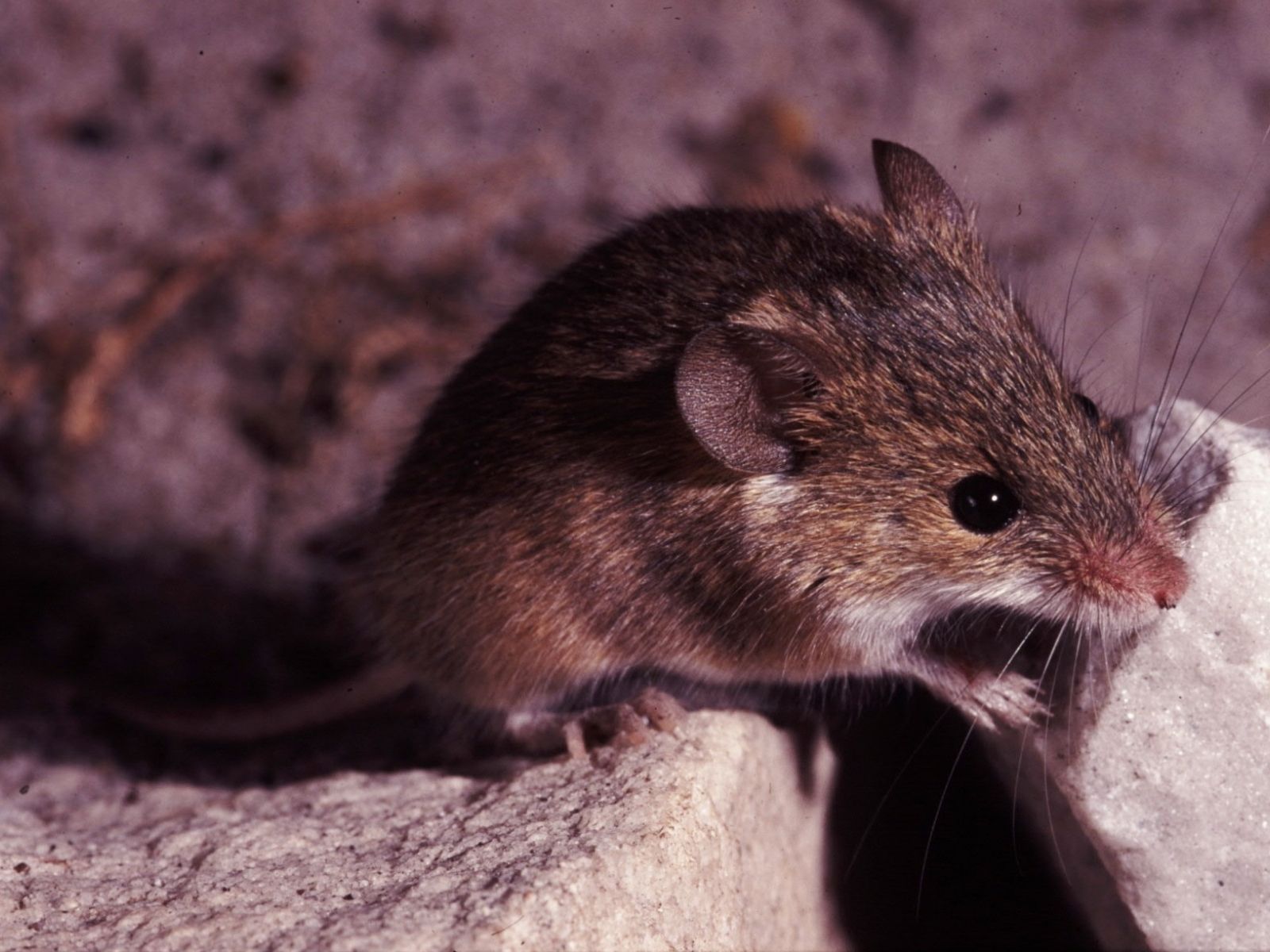
Pygmy Mouse
Mus minutoides

2025 Red list status
Least Concern

Regional Population Trend
Stable

Change compared
to 2016
No Change
Overview
Mus minutoides – Smith, 1834
ANIMALIA – CHORDATA – MAMMALIA – RODENTIA – MURIDAE – Mus – minutoides
Common Names: Pygmy Mouse, Tiny Pygmy Mouse (English), Dwergmuis (Afrikaans)
Synonyms: Mus kasaicus (Cabrera, 1924)
Taxonomic Note: The taxonomic status of this species is uncertain (see Monadjem 2013). Although previously considered a species complex with Mus musculoides, molecular markers and chromosomal data unambiguously discriminate M. musculoides from Mus minutoides (Veyrunes et al. 2004, 2005). However, they are closely related phylogenetically, i.e., sister species. Phylogeographical surveys using mitochondrial sequences (Cytb) have uncovered four distinctive clades throughout sub-Saharan Africa (but possibly more, see Bryja et al. 2014): West Africa, western Central Africa, East Africa and southern Africa. The latter two clades occur within the assessment region where they can be further subdivided into chromosomal groups. Pygmy Mice from the East African clade have a diploid number of 33 < 2n < 35, while the southern African clade harbours two subclades: one with 2n = 34 and the other 2n = 18. The 2n = 18 subclade is endemic to South Africa (Veyrunes et al. 2004, 2005, 2010, 2014; Kouassi et al. 2008; Mboumba et al. 2011; McDonough et al. 2013; Chevret et al. 2014; Lamb et al. 2014).
Red List Status: LC – Least Concern
Assessment Information
Assessor: Patel, T.1 & da Silva, J.M.2
Reviewer: Smith, C.1
Institutions: 1Endangered Wildlife Trust, 2South African National Biodiversity Institute
Previous Assessors and Reviewers: MacFadyen, D., Watson, J, Britton-Davidian, J., Robinson, T.J. & Richards, L.R.
Previous Contributors: Relton, C., Child, M.F., Avenant, N., Avery, M., Baxter, R., Monadjem, A., Palmer, G., Taylor, P. & Wilson, B.
Assessment Rationale
Listed as Least Concern in view of its wide distribution within the assessment region, including many protected areas, as well as being able to survive in modified and agricultural landscapes. Additionally, this species is connected to its extensive range throughout West, East and southern Africa, and there are no major threats within the assessment region that could cause population decline. Further research is necessary to define its geographical distribution more accurately and to resolve the potential species complex.
Regional population effects: Based on recent molecular studies, the species range is believed to be continuous throughout eastern Africa (Eastern Clade) and the western and central regions of southern Africa (Southern Clade) (Chevret et al. 2014) (see Distribution). There is possible migration between South Africa’s northern border regions, especially through the Great Limpopo Transfrontier Conservation Area (GLTFCA), and northern KwaZulu-Natal.
Reasons for Change
Reason(s) for Change in Red List Category from the Previous Assessment: No change
Red List Index
Red List Index: No change
Recommended Citation: Patel T & da Silva JM. 2025. A conservation assessment of Mus minutoides. In Patel T, Smith C, Roxburgh L, da Silva JM & Raimondo D, editors. The Red List of Mammals of South Africa, Eswatini and Lesotho. South African National Biodiversity Institute and Endangered Wildlife Trust, South Africa.
Regional Distribution and occurrence
Geographic Range
This species is widely distributed across sub-Saharan Africa where it occurs in a wide variety of savannah and grassland habitats (Monadjem et al. 2015). Based on molecular and chromosomal data (see Monadjem et al. 2015), its distribution is more extensive than previously thought; for example, it is now thought to occur in the arid regions of southern Africa in sympatry with M. indutus (Monadjem et al. 2015). Until recently, M. minutoides was restricted to southern Africa, the northern limits of its range remaining unknown. Through molecular phylogeny and cytogenetic data, its northern distribution limits have been extended to Kenya–Tanzania in East Africa, and Guinea in West Africa, in sympatry with M. musculoides (Veyrunes et al. 2004, 2005; Monadjem et al. 2015).
Within the assessment region, the species occurs in the Cape Macchia Zone, the savannah grassland and woodland areas to the east and northeast, Highveld grassland, and in areas with a mean annual rainfall from about 100 mm in the southwest to 1,000 mm in the Drakensberg (Skinner & Chimimba 2005), also occurring at higher altitudes in Eswatini (Monadjem 2013). It marginally occurs in the North West Province, and is generally distributed further east of the province (Power 2014). However, it is speculated that misidentifications of this species and Mus spp. juveniles may have taken place, and thus any younger than sub-adult specimens must be examined via the available keys (e.g. de Graaff 1981; Meester et al. 1986), as the past museum records of this species may now be M. indutus. Further research is thus necessary to delimit its distribution more accurately.
Elevation / Depth / Depth Zones
Elevation Lower Limit (in metres above sea level): (Not specified)
Elevation Upper Limit (in metres above sea level): (Not specified)
Depth Lower Limit (in metres below sea level): (Not specified)
Depth Upper Limit (in metres below sea level): (Not specified)
Depth Zone: (Not specified)
Map
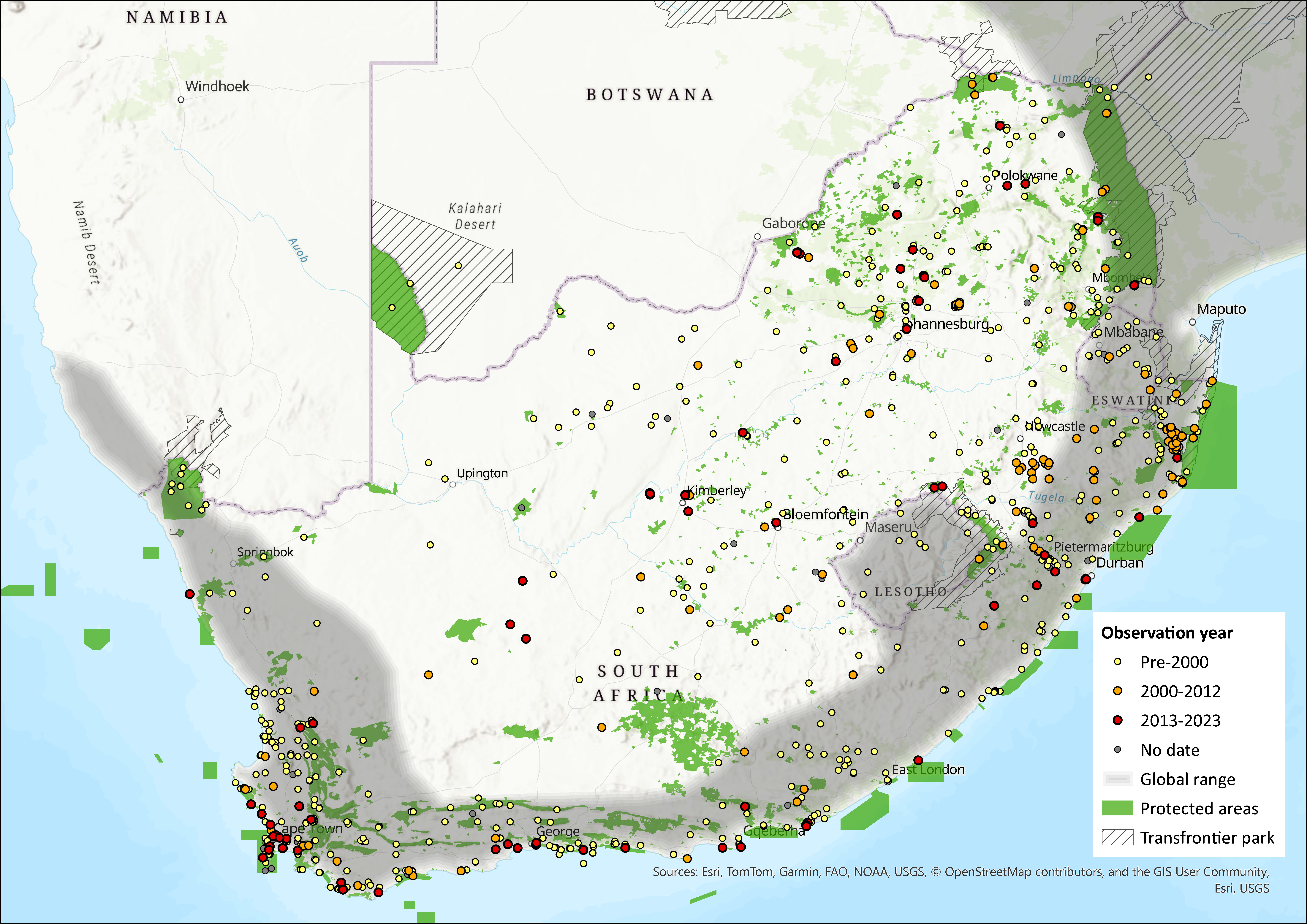
Figure 1. Distribution records for Pygmy Mouse (Mus minutoides) within the assessment region (South Africa, Eswatini and Lesotho). Note that distribution data is obtained from multiple sources and records have not all been individually verified
Biogeographic Realms
Biogeographic Realm: Afrotropical
Occurrence
Countries of Occurrence
| Country | Presence | Origin | Formerly Bred | Seasonality |
| Angola | Extant | Native | – | – |
| Burundi | Presence Uncertain | Native | – | – |
| Cameroon | Presence Uncertain | Native | – | – |
| Central African Republic | Presence Uncertain | Native | – | – |
| Congo | Presence Uncertain | Native | – | – |
| Congo, The Democratic Republic of the | Presence Uncertain | Native | – | – |
| Eswatini | Extant | Native | – | – |
| Gambia | Presence Uncertain | Native | – | – |
| Kenya | Presence Uncertain | Native | – | – |
| Malawi | Extant | Native | – | – |
| Mozambique | Extant | Native | – | – |
| Namibia | Presence Uncertain | Native | – | – |
| Rwanda | Presence Uncertain | Native | – | – |
| South Africa | Extant | Native | – | – |
| Sudan | Presence Uncertain | Native | – | – |
| Tanzania, United Republic of | Presence Uncertain | Native | – | – |
| Uganda | Presence Uncertain | Native | – | – |
| Zambia | Extant | Native | – | – |
| Zimbabwe | Extant | Native | – | – |
Large Marine Ecosystems (LME) Occurrence
Large Marine Ecosystems: (Not specified)
FAO Area Occurrence
FAO Marine Areas: (Not specified)
.
Climate change
The species is widespread across the southern and eastern parts of South Africa. It is uncertain how the 1.5-4°C increase in temperature predicated under various climate change scenarios, and the decrease in rainfall (Engelbrecht et al. 2024) will affect this species, but being so abundant across a number of habitat types, and being generalist feeders, the impact of climate of change on this species is expected to be low.
Population
Generally, this species is considered abundant to very abundant. Recorded population densities reach 28 individuals / ha and, during favourable environmental conditions, even higher densities are probable (Monadjem 2013). Population sizes are highly variable with peaks and subsequent crashes occurring. Although its abundance fluctuates widely, it is more numerous in dry winter months (Monadjem & Perrin 2003). Although previous literature may refer to this species as uncommon, this is expected to be a result of low capture rates, as it can be difficult to trap. In Phinda Private Game Reserve, KwaZulu-Natal, Pygmy Mice occurred in the greatest number of sampled vegetation types, where abundance was significantly different amongst seasons but not amongst vegetation types (Rautenbach et al. 2014).
Population Information
Current population trend: Stable, although fluctuates widely across seasons.
Continuing decline in mature individuals: Unknown
Number of mature individuals in population: Unknown
Number of mature individuals in largest subpopulation: Unknown
Number of subpopulations: Unknown
Severely fragmented: No
Quantitative Analysis
Probability of extinction in the wild within 3 generations or 10 years, whichever is longer, maximum 100 years: (Not specified)
Probability of extinction in the wild within 5 generations or 20 years, whichever is longer, maximum 100 years: (Not specified)
Probability of extinction in the wild within 100 years: (Not specified)
Population Genetics
Phylogeographical surveys using mitochondrial sequences (Cytb) have uncovered four distinctive clades throughout sub-Saharan Africa (but possibly more, see Bryja et al. 2014): West Africa, western Central Africa, East Africa and southern Africa. The latter two clades occur within the assessment region where they can be further subdivided into chromosomal groups, totalling three distinct genetic groups (Bryja et al. 2014). More finescale molecular methods might reveal additional structure within this species.
While no estimates of population size are available, because the species is considered very abundant and its distribution is connected to neighbouring countries, it is expected that each subpopulation would have a stable effective population size (Ne) likely greatly exceeding 500 (threshold for a stable and healthy population), which would translate to more than 5,000 individuals per subpopulation (assuming a conservative Ne/Nc conversion ratio of 0.1).
Habitats and ecology
This is a generalist species, well distributed across the southern and eastern parts of South Africa, where it prefers grassland, but also occurs in lightly wooded areas and on the fringes of semi-forested areas. It occurs across a number of habitat types, including savannah, fynbos, grassland, rocky habitats, as well as vlei and riverine regions (Monadjem 2013). Pygmy Mice have also been recorded in grasslands that have been recently burnt and disturbed (for example, Umvoti Vlei Conservancy, KwaZulu-Natal; Fuller & Perrin 2001), in areas affected by agriculture, livestock production and forestry. It also occurs in suburban areas, although it is not usually found inside buildings (Skinner & Chimimba 2005). In Rolfontein Nature Reserve, Northern Cape Province, it was found in short vegetation and hard calcareous soil, and near human settlements (Jooste & Palmer 1982). In Eswatini, this species was recorded in rocky, riparian floodplain forest and low rocky thicket in the Maguga Dam area (Avenant & Kuyler 2002). In the arid regions of southern Africa, this species occurs in sympatry with M. indutus (Monadjem et al. 2015).
It is nocturnal and terrestrial, and is not a communal species, thus burrows are used only by a pair or a family group. In soft ground it constructs shallow burrows, but much more commonly uses existing shelter under fallen logs, piles of debris, boulders or holes in termite mounds. The species appears to forage singly at night and may not be tied closely to a single shelter. An effective way of catching Pygmy Mice is to lay a tarpaulin or sheets of corrugated iron on the ground which it will use as a temporary diurnal shelter (Skinner & Chimimba 2005). Its main diet is grass seeds, insects and termites (Monadjem 2013); Wilson (1975) recorded the seeds of couch grass Cynodon dactylon in stomach contents.
The colloquial name is appropriate as Mus minutoides is among the smallest of the murids. The adults of this species have a total length of about 97 mm, with tails of 41 mm and a mass of 5.5 g (Skinner & Chimimba 2005). The upper parts of the body are brownish-buff and this brownish colour is imparted to the pelage by the presence of black-tipped hairs that become fewer on the flanks, which are orange-buffy in colour. The border between the colour of the flanks and the white of the underparts is sharply defined. The tail is brown above and buffy below, the ears brownish, the hands and feet buffy-white.
Ecosystem and cultural services: This species represents a valuable prey species for a number of small predators, and may also contribute to seed dispersal throughout the assessment region.
IUCN Habitats Classification Scheme
| Habitat | Season | Suitability | Major Importance? |
| 1.5. Forest -> Forest – Subtropical/Tropical Dry | – | Suitable | – |
| 1.6. Forest -> Forest – Subtropical/Tropical Moist Lowland | – | Suitable | – |
| 1.9. Forest -> Forest – Subtropical/Tropical Moist Montane | – | Suitable | – |
| 2.1. Savanna -> Savanna – Dry | – | Suitable | – |
| 2.2. Savanna -> Savanna – Moist | – | Suitable | – |
| 3.5. Shrubland -> Shrubland – Subtropical/Tropical Dry | – | Suitable | – |
| 3.6. Shrubland -> Shrubland – Subtropical/Tropical Moist | – | Suitable | – |
| 3.7. Shrubland -> Shrubland – Subtropical/Tropical High Altitude | – | Unknown | – |
| 3.8. Shrubland -> Shrubland – Mediterranean-type Shrubby Vegetation | – | Suitable | – |
| 4.5. Grassland -> Grassland – Subtropical/Tropical Dry | – | Suitable | – |
| 4.7. Grassland -> Grassland – Subtropical/Tropical High Altitude | – | Suitable | – |
| 14.1. Artificial/Terrestrial -> Artificial/Terrestrial – Arable Land | – | Suitable | – |
| 14.2. Artificial/Terrestrial -> Artificial/Terrestrial – Pastureland | – | Suitable | – |
| 14.3. Artificial/Terrestrial -> Artificial/Terrestrial – Plantations | – | Suitable | – |
| 14.4. Artificial/Terrestrial -> Artificial/Terrestrial – Rural Gardens | – | Suitable | – |
| 14.5. Artificial/Terrestrial -> Artificial/Terrestrial – Urban Areas | – | Suitable | – |
| 15.7. Artificial/Aquatic & Marine -> Artificial/Aquatic – Irrigated Land (includes irrigation channels) | – | Suitable | – |
Life History
Generation Length: (Not specified)
Age at maturity: female or unspecified: (Not specified)
Age at Maturity: Male: (Not specified)
Size at Maturity (in cms): Female: (Not specified)
Size at Maturity (in cms): Male: (Not specified)
Longevity: (Not specified)
Average Reproductive Age: (Not specified)
Maximum Size (in cms): (Not specified)
Size at Birth (in cms): (Not specified)
Gestation Time: (Not specified)
Reproductive Periodicity: (Not specified)
Average Annual Fecundity or Litter Size: (Not specified)
Natural Mortality: (Not specified)
Does the species lay eggs? (Not specified)
Does the species give birth to live young: (Not specified)
Does the species exhibit parthenogenesis: (Not specified)
Does the species have a free-living larval stage? (Not specified)
Does the species require water for breeding? (Not specified)
Movement Patterns
Movement Patterns: (Not specified)
Congregatory: (Not specified)
Systems
System: Terrestrial
General Use and Trade Information
This species is not thought to be traded or utilised in any form. However, closely related species are involved in international pet trade, and this species may be marketed as African Pygmy Mice.
Local Livelihood: (Not specified)
National Commercial Value: (Not specified)
International Commercial Value: (Not specified)
End Use: (Not specified)
Is there harvest from captive/cultivated sources of this species? (Not specified)
Harvest Trend Comments: (Not specified)
Threats
Although no specific threats have been identified, there is some concern surrounding the pet trade. If this species is involved in the pet trade and it is of a different geographical population, genetic pollution of resident populations could take place from escapees or deliberate releases.
Current habitat trend: Stable
.
Conservation
This species is widespread across the assessment region and occurs within a number of protected areas, including the Kruger National Park. No conservation interventions are currently necessary.
Recommendations for land managers and practitioners:
- No management recommendations have been identified.
Research priorities:
- Taxonomic resolution is necessary.
Encouraged citizen actions:
- Report sightings on virtual museum platforms (for example, iNaturalist and MammalMAP), especially outside protected areas. However, due to their morphological similarities, misidentification of this species with M. indutus is common.
- Citizens can plant indigenous gardens and create corridors of natural vegetation between properties.
- Reduce the use of pesticides.
Bibliography
Avenant NL, Kuyler P. 2002. Small mammal diversity in the Maguga Dam inundation area, Swaziland. South African Journal of Wildlife Research 32: 101-108.
Bryja, J., Mikula, O., Šumbera, R., Meheretu, Y., Aghová, T., Lavrenchenko, L.A., Mazoch, V., Oguge, N., Mbau, J.S., Welegerima, K., Amundala, N., Colyn, M., Leirs, H., and Verheyen, E. 2014. Pan-African phylogeny of Mus (subgenus Nannomys) reveals one of the most successful mammal radiations in Africa. BMC Evolutionary Biology 14(256): 1-20.
Chevret, P., Robinson, T.J., Perez, J., Veyrunes, F., Britton-Davidian, J. 2014. A Phylogeographic Survey of the Pygmy Mouse Mus minutoides in South Africa: Taxonomic and Karyotypic Inference from Cytochrome b Sequences of Museum Specimens. PLoS ONE 9(6): e98499.
Engelbrecht, F.A., Steinkopf, J., Padavatan, J. and Midgley, G.F., 2024. Projections of future climate change in Southern Africa and the potential for regional tipping points. In Sustainability of Southern African Ecosystems under Global Change: Science for Management and Policy Interventions (pp. 169-190). Cham: Springer International Publishing.
Fuller, J.A. and Perrin, M.R. 2001. Habitat assessment of small mammals in the Umvoti Vlei Conservancy, KwaZulu-Natal, South Africa. South African Journal of Wildlife Research 31: 1-12.
Jooste JF, Palmer NG. 1982. The distribution and habitat preference of some small mammals in the Rolfontein Nature Reserve. South African Journal of Wildlife Research 12: 26-35.
Kouassi SK, et al. 2008. Taxonomy and biogeography of the African Pygmy mice, subgenus Nannomys (Rodentia, Murinae, Mus) in Ivory Coast and Guinea (West Africa). Mammalia 72: 237–252.
Lamb, J., Downs, S., Eiseb, S. and Taylor, P.J. 2014. Increased geographic sampling reveals considerable new genetic diversity in the morphologically conservative African Pygmy Mice (Genus Mus; Subgenus Nannomys). Mammalian Biology 79: 24-35.
Mboumba JF, Deleporte P, Colyn M, Nicolas V. 2011. Phylogeography of Mus (Nannomys) minutoides (Rodentia, Muridae) in West Central African savannahs: singular vicariance in neighbouring populations. Journal of Zoological Systematics and Evolutionary Research 49: 77–85.
McDonough M, Sotero-Caio CG, Ferguson AW, Lewis PJ, Tswiio M, Thies M. 2013. Mitochondrial DNA and karyotypic data confirm the presence of Mus indutus and Mus minutoides (Mammalia, Rodentia, Muridae, Nannomys) in Botswana. ZooKeys 359: 35.
Meester, J.A.J., Rautenbach, I.L., Dippenaar, N.J. and Baker, C.M. 1986. Classification of Southern African Mammals. Monograph number 5. Transvaal Museum , Pretoria, South Africa.
Monadjem A, Perrin M. 2003. Population fluctuations and community structure of small mammals in a Swaziland grassland over a three-year period. African Zoology 38: 127-137.
Monadjem A. 2013. Mus minutoides Tiny Pygmy Mouse. In: Happold DCD (ed.), Mammals of Africa. Volume III: Rodents, Hares and Rabbits., pp. 484–486. Bloomsbury Publishing, London, UK.
Monadjem, A., Taylor, P.J., Denys, C. and Cotterill, F.P.D. 2015. Rodents of Sub-Saharan Africa: A Biogeographic and Taxonomic Synthesis. . De Gruyter, Berlin, Germany.
Power, R.J. 2014. The distribution and status of mammals in the North West Province. Department of Economic Development, Environment, Conservation & Tourism, North West Provincial Government, Mahikeng.
Rautenbach A, Dickerson T, Schoeman MC. 2014. Diversity of rodent and shrew assemblages in different vegetation types of the savannah biome in South Africa: no evidence for nested subsets or competition. African Journal of Ecology 52: 30-40.
Skinner, J.D. and Chimimba, C.T. (eds). 2005. The Mammals of the Southern African Subregion. Cambridge University Press, United Kingdom, Cambridge.
Veyrunes F, Britton-Davidian J, Robinson TJ, Calvet E, Denys C, Chevret P. 2005. Molecular phylogeny of the African pygmy mice, subgenus Nannomys (Rodentia, Murinae, Mus): implications for chromosomal evolution. Molecular Phylogenetics and Evolution 36: 358–369.
Veyrunes F, Catalan J, Sicard B, Robinson TJ, Duplantier J-M, Granjon L, Dobigny G, Britton-Davidian J. 2004. Autosome and sex chromosome diversity among the African pygmy mice, subgenus Nannomys (Murinae; Mus). Chromosome Research 12: 369–382.
Veyrunes F, Chevret P, Catalan J, Castiglia R, Watson J, Dobigny G, Robinson TJ, Britton-Davidian J. 2010. A novel sex determination system in a close relative of the house mouse. Proceedings of the Royal Society of London B: Biological Sciences 277: 1049–1056.
Veyrunes F, Perez J, Borremans B, Gryseels S, Richards LR, Duran A, Chevret P, Robinson TJ, Britton-Davidian J. 2014. A new cytotype of the African pygmy mouse Mus minutoides in Eastern Africa. Implications for the evolution of sex-autosome translocations. Chromosome Research 22: 533–543.
Wilson, V. J. 1975. Mammals of the Wankie National Park.
de Graaff, G. 1981. The Rodents of Southern Africa: Notes on their Identification, Distribution, Ecology, and Taxonomy. Butterworths, Durban, Pretoria, South Africa.