
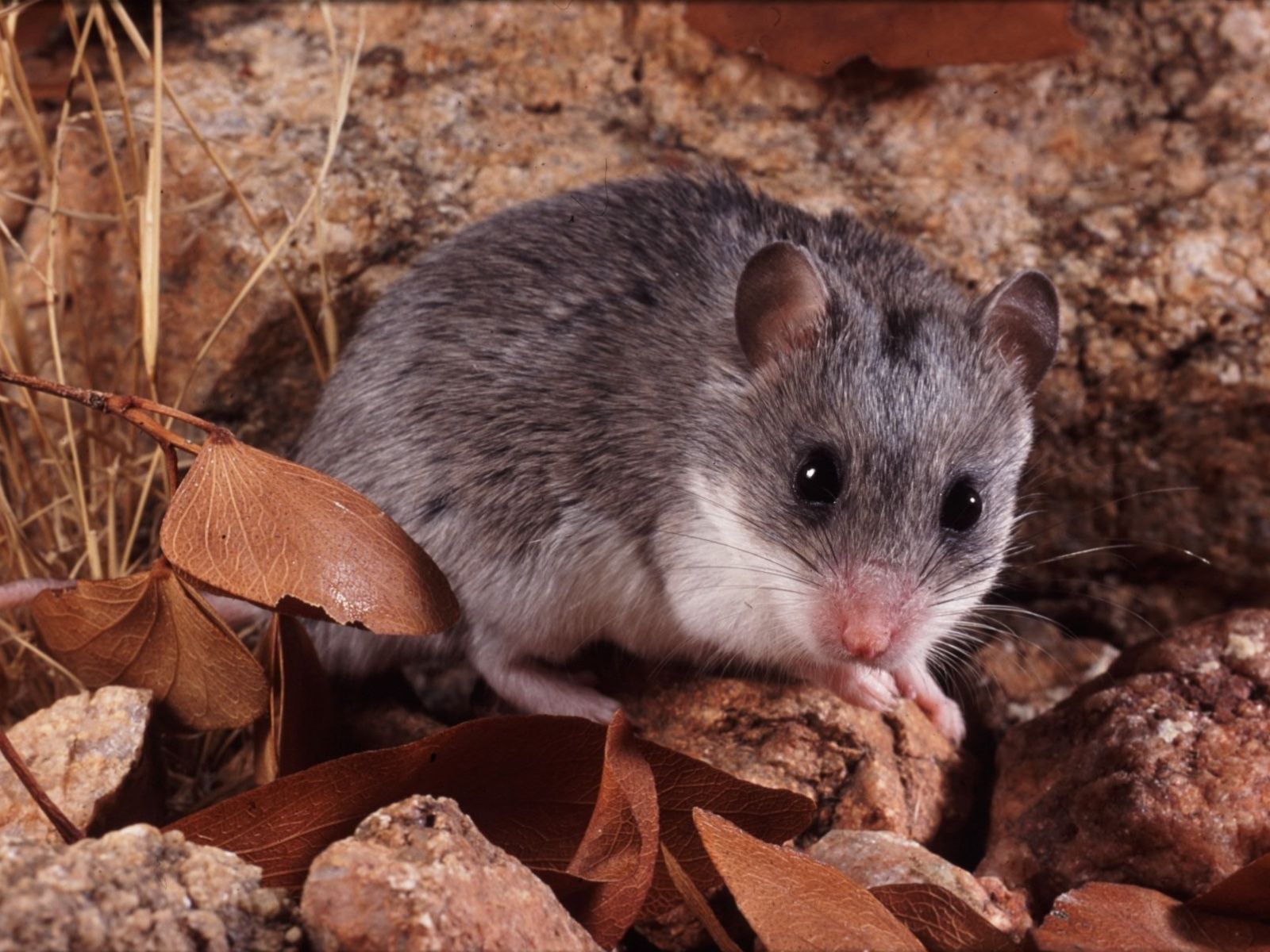
Pouched Mouse
Saccostomus campestris

2025 Red list status
Least Concern

Regional Population Trend
Unknown

Change compared
to 2016
No Change
Overview
Saccostomus campestris – Peters, 1846
ANIMALIA – CHORDATA – MAMMALIA – RODENTIA – NESOMYIDAE – Saccostomus campestris
Common Names: Pouched Mouse, Southern African Pouched Mouse (English), Wangsakmuis (Afrikaans)
Synonyms: Saccostomus campestris campestris Peters, 1846; Saccostomus lapidarius Peters, 1852; Saccostomus fuscus Peters, 1852; Saccostomus campestris mashonae de Winton, 1897; Saccostomus elegans Thomas, 1897; Saccostomus anderssoni de Winton, 1898; Saccostomus hildae Schwann, 1906; Saccostomus limpopoensis Roberts, 1914; Saccostomus streeteri Roberts, 1914; Saccostomus pagei Thomas and Hinton, 1923; Saccostomus anderssoni angolae Roberts, 1938: 240
Taxonomic Note: Saccostomus campestris is known by eleven synonyms (Musser and Carlton, 2005; see above). The species has a remarkably high degree of chromosomal variability across its geographic range, leading to speculation that it represents a species complex (Fadda et al. 2001; Corti et al. 2004, 2005; Perrin 2013). Mikula et al. (2016) demonstrated that this chromosomal variability is uncoupled from DNA-based phylogenies. Using mitochondrial and nuclear markers, in combination with cranial morphometrics, Mikula et al. (2016) recognised a single monophyletic taxon comprising two subspecies, S. campestris campestris (Peters, 1846) and S. campestris mashonae (de Winton, 1897), with the latter occurring in the assessment region.
Red List Status: LC – Least Concern
Assessment Information
Assessors: Richards, L.R.1, Naidoo, T.1 & da Silva, J.M.2
Reviewer: Oosthuizen, M.3
Institutions: 1Durban Natural Science Museum,2South African National Biodiversity Institute,3University of Pretoria
Previous Assessors and Reviewers: MacFayden, D., Relton, C. & Child, M.F.
Previous Contributors: Avenant, N., Avery, M., Baxter, R., Mondajem, A., Palmer, G., Taylor, P. & Wilson, B.
Assessment Rationale
Listed as Least Concern because this is a widespread and locally common species within the assessment region, occurring in several protected areas, including Kruger National Park, Mapungubwe National Park, Karoo National Park, Tswalu Kalahari Reserve, Richtersveld National Park, Hluhluwe-iMfolozi Game Reserve and Isimangaliso Wetland Park. This species is easily adaptable and can live in modified habitats such as rural gardens, and there is no identified threat that could cause widespread population declines. Its wide habitat use allows this species to inhabit semi-deserts, grasslands, savannahs and forests and it has also been recorded on the edges of marshes and vleis.
Regional population effects: It is distributed widely in the sub-region, and there is possible movement from Mozambique, Zimbabwe, Botswana and Namibia into South Africa. The ability of this species to utilise transformed habitats, including degraded grassland and agricultural land, increases the rescue effect of this species.
Reasons for Change
Reason(s) for Change in Red List Category from the Previous Assessment: No change
Red List Index
Red List Index: No change
Regional Distribution and occurrence
Geographic Range
This species occurs extensively across the savannahs of southern Africa (Monadjem et al. 2015, Mikula et al. 2016), and is present within southwestern Tanzania, Angola (Crawford-Cabral 1998), Zambia, Malawi, Zambia, Zimbabwe, Mozambique, Botswana, Namibia (although they are absent along the coast and in the south), Eswatini and South Africa. Generally, their range extends from 0 m to about 2,000 m asl (Skinner and Chimimba 2005).
Within the assessment region, the Pouched Mouse occurs in all provinces, however there is a notable gap in its distribution that extends from KwaZulu-Natal to the northern reaches of the Eastern Cape province. This species occurs in high numbers on the northern plains of the Kruger National Park (MacFadyen 2007) in the Limpopo Province, Tswalu Kalahari Reserve in the Northern Cape, and Venetia Limpopo Nature Reserve in the Limpopo Province (MacFadyen pers. comm). It was absent from Telperion Nature Reserve, between Emalahleni (Witbank) and Bronkhorstspruit (MacFadyen 2014; L. Richards and M. Oosthuizen, pers. obs.). The species occurs throughout the bushveld parts of the North West Province and was particularly numerous in the Kuruman Mountain Bushveld vegetation type (Power 2014). In the Free State, this species generally only inhabits the southern portions of the province (Lynch 1983) but has been recorded in the Sandveld Nature Reserve in the western Free State (Avenant & Watson 2002). In Eswatini, this species is abundant in regions of suitable habitat (A. Monadjem pers. comm. 2015).
Elevation / Depth / Depth Zones
Elevation Lower Limit (in metres above sea level): 0
Elevation Upper Limit (in metres above sea level): 2000
Depth Lower Limit (in metres below sea level): N/A
Depth Upper Limit (in metres below sea level): N/A
Depth Zone: N/A
Map
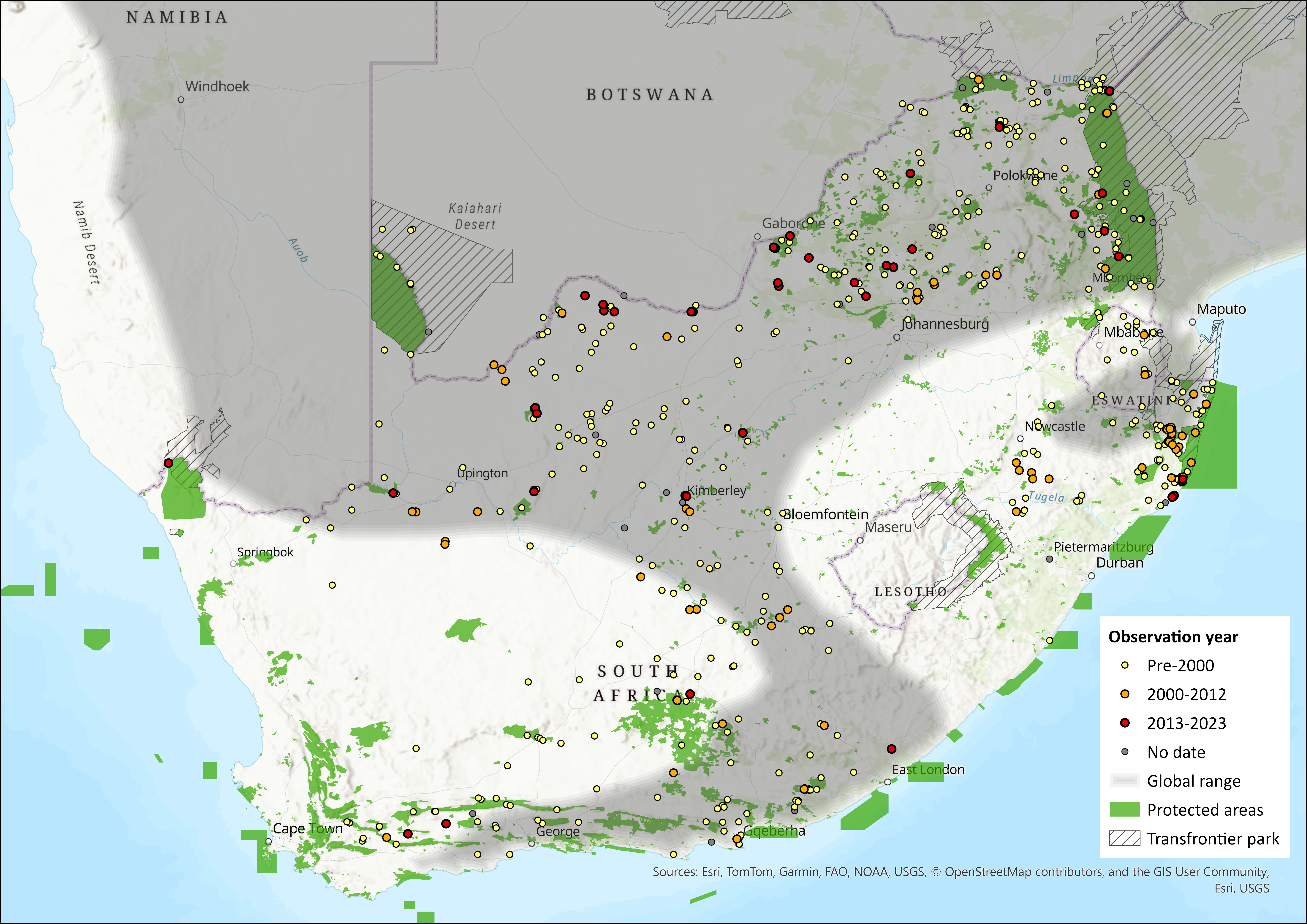
Figure 1. Distribution records for Pouched Mouse (Saccostomus campestris) within the assessment region (South Africa, Eswatini and Lesotho). Note that distribution data is obtained from multiple sources and records have not all been individually verified.
Biogeographic Realms
Biogeographic Realm: Afrotropical
Occurrence
Countries of Occurrence
|
Country |
Presence |
Origin |
Formerly Bred |
Seasonality |
|
Angola |
Extant |
Native |
– |
– |
|
Botswana |
Extant |
Native |
– |
– |
|
Congo, The Democratic Republic of the |
Extant |
Native |
– |
– |
|
Eswatini |
Extant |
Native |
– |
– |
|
Malawi |
Extant |
Native |
– |
– |
|
Mozambique |
Extant |
Native |
– |
– |
|
Namibia |
Extant |
Native |
– |
– |
|
South Africa |
Extant |
Native |
– |
– |
|
Tanzania, United Republic of |
Extant |
Native |
– |
– |
|
Zambia |
Extant |
Native |
– |
– |
|
Zimbabwe |
Extant |
Native |
– |
– |
Large Marine Ecosystems (LME) Occurrence
Large Marine Ecosystems: (Not specified)
FAO Area Occurrence
FAO Marine Areas: (Not specified)
Climate change
No studies have investigated the potential effects of climate change on the species. However, the species distribution is limited to regions characterised by a subtropical cline and reciprocally warm, wet season (Mikula et al. 2016). Thus, the distributional range of the species may be affected or contract in response to the predicated increased temperatures and reduced precipitation across southern African in future (Lim Kam Sian et al. 2021).
Conversely, physiological studies have shown that Pouched mice from environments characterised by high temperature seasonality more readily altered their activity patterns through extended bouts of torpor than those from environments with a homogenous bioclimatic cline (Ellison 1993; Lovegrove and Raman 1998). This suggests that this generalist species is more adaptable than other similar-sized rodents to unpredictable bioclimatic conditions.
Population
This species is relatively common across its range. Numbers fluctuate seasonally with fewer occurring in cool, dry weather (Perrin 2013). It was the second most common species after Mastomys natalensis on the northern plains, Kruger National Park, and the population at N’washitshumbe enclosure site in northern Kruger is estimated at 9 animals / ha (MacFadyen 2007), a number similar to that reported for Namibia (10 animals / ha) (Massawe et al. 2011). At Tswalu Kalahari Reserve there were 5 animals / ha (D. MacFadyen unpubl. data). Density varies according to habitat and burning regime (see Perrin 2013). In the Acacia woodland habitats of iMfolozi Game Reserve, abundance was found to increase during drought periods (Bowland 1986); however, this region is more mesic compared to the rest of this species’ distribution.
Population Information
Continuing decline in mature individuals? None reported
Extreme fluctuations in the number of subpopulations: None reported
Continuing decline in number of subpopulations: one subpopulation with no obvious decline
All individuals in one subpopulation: Yes
Number of mature individuals in largest subpopulation: Unknown
Number of Subpopulations: one
Quantitative Analysis
Probability of extinction in the wild within 3 generations or 10 years, whichever is longer, maximum 100 years: Has not been established, but unlikely due to its widespread distribution and high abundance in certain areas, as well as possible recruitment from neighbouring countries
Probability of extinction in the wild within 5 generations or 20 years, whichever is longer, maximum 100 years: Has not been established, but unlikely due to its widespread distribution and high abundance in certain areas, as well as possible recruitment from neighbouring countries
Probability of extinction in the wild within 100 years: Has not been established, but unlikely due to its widespread distribution and high abundance in certain areas, as well as possible recruitment from neighbouring countries
Population Genetics
Mikula et al. (2016) using both mitochondrial and nuclear data proposed two subspecies within S. campestris (S. campestris campestris and S. campestris mashonae). The Kafue and Zambezi Rivers appear to separate S. c. campestris and S. c. mashonae and are reported as an effective ecological barrier to gene flow in several species in Mikula et al. (2016). Therefore, denser sampling and fine scale genetics using microsatellite markers may provide further clarity on the distinctness of S. c. campestris and S. c. mashonae at the areas of interest specifically the proposed Kafue-Zambezi contact zone, as well close to Kafue flats at the upper reaches of the river and north-west in the Katanga province of the DRC (Mikula et al. 2016).
Within S. c. campestris, additional structure as detected using mitochondrial cytochrome b sequence data; however, this was not supported by broad nuclear markers, likely suggested a more recent splitting of these two groups. This may be confirmed using fine scale markers such as microsatellites or single nucleotide polymorphisms, as well as more comprehensive sampling, especially in the area of the Shire River.
Based on the available information, at least 3 genetically distinct groups or subpopulations can be identified within the species (the two clades within S. c. campestris and S. c. mashonae). Each of these groups are thought to estimate as separate metapopulations. Given that no additional metapopulations are thought or known to have gone extinct, the Convention on Biological Diversity’s Global Biodiversity Frameworks (GBFs) complementary genetic indicator – the proportion of populations maintained within a species – can be quantified. All three of the known genetically distinct groups remain, hence the indicator receives a value of 1.0 (3/3).
While some densities estimates are available for the species, they have not been quantified for each of the known metapopulations; hence the GBF’s headline indicator – proportion of populations with an effective population size (Ne) greater than 500 – cannot be quantified.
Habitats and ecology
The Pouched Mouse is a generalist that inhabits savannah woodland and mixed grassland areas across southern Africa, occurring in various habitat types. For example, in the Kalahari they occur in the short grass habitats surrounding dry pans (Skinner & Chimimba 2005), in Namibia they are present in the arid western regions and along riverbeds of the Namib Desert, but in Tussen-die-Riviere Nature Reserve, Free State province, they were caught in shrub grassland regions (Watson 2006). They are also associated with rocky habitats (such as in Rolfontein Nature Reserve, Northern Cape; Jooste & Palmer 1982), lowveld forest edges, closed coastal forests, and marshy habitats (Skinner & Chimimba 2005). Rautenbach et al. (2014) sampled one at Phinda Private Game Reserve, KwaZulu-Natal in Acacia nilotica/Dichrostachys cinera bushveld. In Hluhluwe-iMfolozi Park and the greater Isimangaliso Wetland Park, KwaZulu-Natal, they only occurred in areas where large herbivores were absent (Hagenah et al. 2009). This species can also make use of modified landscapes, including degraded grasslands, old lands and gardens.
The species is crepuscular or nocturnal in habits and often trapped shortly after dark (MacFadyen 2007). They are slow moving and mild tempered and may be handled with ease. It is an important prey species and is regularly recorded from owl pellets (MacFadyen 2007). They usually dig burrows, but also readily use the burrows of other animals or excavate burrows within abandoned termite mounds (Perrin 2013); on release they readily take refuge in the nearest burrow (MacFadyen 2007). They appear to be affected by cool temperatures and are often inactive in traps after cold evenings (MacFadyen 2007). They are solitary, with only one individual occupying a single burrow, except during the breeding season when females are found together with their young (Ellison 1993).
Reproduction is seasonal, with females giving birth during the warm, wet, summer months (Swanepoel 1972; Rautenbach 1982) following a gestation period of 20–21 days (Earl 1978). Large litters are produced, with an average of 7.1 young (range = 1–10; N = 15) (Smithers 1971; Smithers & Wilson 1979) and young are weaned after a period of about 25 days (Westlin-van Aarde 1989).
They hoard food opportunistically (Ellison 1993), and are omnivorous, feeding on a variety of seeds, vegetation and insects (Watson 1987; Kerley 1992; Monadjem 1997). Watson (1987) found that in Kruger National Park their diets varied with season, with insects constituting a larger proportion of their diet during drought periods, compared to periods of high rainfall. However, throughout both seasons, seeds formed the dominant food type, compared to both insects and herbage (Watson 1987).
Ecosystem and cultural services: This species forms an important prey base for nocturnal carnivores and raptors. As a result of its digging ability, it will be involved in soil nutrition and aeration and is a valuable species for seed dispersal.
IUCN Habitats Classification Scheme
|
Habitat |
Season |
Suitability |
Major Importance? |
|
2.1. Savanna -> Savanna – Dry |
– |
Suitable |
– |
|
3.4. Shrubland -> Shrubland – Temperate |
– |
Suitable |
– |
|
3.5. Shrubland -> Shrubland – Subtropical/Tropical Dry |
– |
Suitable |
– |
|
4.4. Grassland -> Grassland – Temperate |
– |
Suitable |
– |
|
4.5. Grassland -> Grassland – Subtropical/Tropical Dry |
– |
Suitable |
– |
|
8.2. Desert -> Desert – Temperate |
– |
Suitable |
– |
|
14.1. Artificial/Terrestrial -> Artificial/Terrestrial – Arable Land |
– |
Suitable |
– |
|
14.4. Artificial/Terrestrial -> Artificial/Terrestrial – Rural Gardens |
– |
Suitable |
– |
Life History
Generation Length: Unknown
Age at maturity: female or unspecified: Unknown
Age at Maturity: Male: 3 months (Earl 1978)
Size at Maturity (in cms): Female: mean total length = 16.6 cm (Rautenbach 1982)
Size at Maturity (in cms): Male: mean total length = 16.5 cm (Rautenbach 1982)
Longevity: 2.8 years in captivity (Jones 1982)
Average Reproductive Age: Females = 96 days old (Earl 1978)
Maximum Size (in cms): Females = 19.5 cm; Males = 23.6 cm (Rautenbach 1982)
Size at Birth (in cms): Mass = 2.8 g (Earl 1978)
Gestation Time: 3 weeks (20-21 days) (Earl 1978)
Reproductive Periodicity: seasonally polyoestrus, with reproductive activities coinciding with the austral late spring and summer months (Skinner and Chimimba 2005)
Average Annual Fecundity or Litter Size: mean = 4.8, range = 2-8 young (Earl 1978); mean = 7.1, range = 1-10 young (Smithers 1971, Smithers and Wilson 1979)
Natural Mortality: important prey species for several predators, including owls and small carnivores (Perrin 2013)
Does the species lay eggs? No
Does the species give birth to live young: Yes
Does the species exhibit parthenogenesis: No
Does the species have a free-living larval stage? No
Does the species require water for breeding? No
Movement Patterns
Movement Patterns: Not specified
Congregatory: No, typically a solitary species
Systems
System: Terrestrial
General Use and Trade Information
Although currently unconfirmed, this species may be used for bushmeat, due to its mild nature and slow movements, but this is not suspected to occur on a large scale. There is some potential for this species to enter the pet trade, and they are kept in captivity as pets (D. MacFadyen pers. obs.)
|
Subsistence: |
Rationale: |
Local Commercial: |
Further detail including information on economic value if available: |
|
Yes |
– |
– |
– |
National Commercial Value: No
International Commercial Value: No
|
End Use |
Subsistence |
National |
International |
Other (please specify) |
|
1. Food – human |
true |
– |
– |
– |
Is there harvest from captive/cultivated sources of this species? (Not specified)
Harvest Trend Comments: (Not specified
Threats
There are no major threats to this adaptable species as they are widely distributed and locally common (Perrin 2013). However, the following pressures may cause local population declines:
- Urbanisation: this species is impacted by traffic, dogs and urban security practices, i.e. high walls, etc.
- Mining: areas which are transformed by incorrect mining practices would impact abundance and distribution.
- Pet trade: this species complex behaves similarly to hamsters and are known to habituate well; thus they are occasionally kept as pets. This is, however, expected to have a minimal impact on the population.
- Bushmeat: it is likely that this species is eaten opportunistically, because they are easily caught and are mild in nature.
Conservation
This species occurs in several protected areas throughout its range, including Kruger National Park, Tswalu Kalahari Reserve, Rooipoort Nature Reserve,Venetia Limpopo Nature Reserve, Hluhluwe-Imfolozi Game Reserve and Isimangaliso Wetland Park. The threats of hunting and collecting of this species as bushmeat or pets is thought to have limited impact on the population. No specific conservation interventions are necessary at present.
Recommendations for land managers and practitioners:
- Develop or maintain corridors of natural vegetation in urban areas.
- Educate communities on the contribution of small mammals to healthy ecosystems.
- Enforce correct mining practices, including post mining rehabilitation practices.
- Monitor the pet trade for trafficking of indigenous species.
Research priorities:
- Conduct fine-scale molecular studies, inclusive of microsatellite markers, to investigate population-level genetic diversity.
- Determine distribution range based on genetic variations within the species.
- Estimate population densities across its range.
Encouraged citizen actions:
- Report sightings on virtual museum platforms (for example, iNaturalist and MammalMAP), especially outside protected areas
- Educate rural communities on the contribution of small mammals to healthy ecosystems.
- Exert pressure on mining and forestry companies to rehabilitate areas and promote conservation offsets.
- Plant indigenous plants, especially wild grasses, as well as provide corridors of natural vegetation to allow for movement through areas of suitable habitat.
Bibliography
Avenant NL, Watson JP. 2002. Mammals recorded in the Sandveld Nature Reserve, Free State province, South Africa. Navorsinge van die Nasionale Museum, Bloemfontein 18: 1-12.
Bowland AE. 1986. The effect of the 1982/3 drought on small mammals in the Umfolozi Game Reserve. Cimbebasia Series A 8: 194–198.
Corti M, Castiglia R, Annesi F, Verheyen W. 2004. Mitochondrial sequences and karyotypes reveal hidden diversity in African pouched mice (subfamily Cricetomyinae, genus Saccostomus). Journal of Zoology 262: 413–424.
Corti, M., Castiglia, R., Colangelo, P., Capanna, E., Beolchini, F., Bekele, A., Oguge, N.O., Makundi, R.H., Sichilima, A.M., Leirs, H., Verheyen, W., and Verhagen, R. 2005. Cytotaxonomy of rodent species from Ethiopia, Kenya, Tanzania and Zambia. Belgian Journal of Zoology 135(supplement): 197-216.
Crawford-Cabral, J. 1998. The Angolan rodents of the superfamily Muroidea. An account on their distribution. Estudos, Ensaios e Documentos 161: 1-222.
Earl Z. 1978. Postnatal development of Saccostomus campestris. African Small Mammal Newsletter 2: 10–12.
Ellison GTH. 1993. Group size, burrow structure and hoarding activity of pouched mice (Saccostomus campestris: Cricetidae) in southern Africa. African Journal of Ecology 31: 135–155.
Fadda C, Castiglia R, Colangelo P, Corti M, Machang’u R, Makundi R, Scanzani A, Tesha P, Verheyen W, Capanna E. 2001. The Rodent fauna of Tanzania: a cytotaxonomic report from the Maasai Steppe (1999). Rendiconti Lincei 12: 29–49.
Hagenah N, Prins HH, Olff H. 2009. Effects of large herbivores on murid rodents in a South African savanna. Journal of Tropical Ecology 25: 483–492.
Jones,M.L. 1982. Longevity of captive animals. Zoological Garten N.F. Jena 52:113-128.
Jooste JF, Palmer NG. 1982. The distribution and habitat preference of some small mammals in the Rolfontein Nature Reserve. South African Journal of Wildlife Research 12: 26-35.
Kerley, G.I.H. 1992. Trophic status of small mammals in the semi-arid Karoo, South Africa. Journal of Zoology 226: 563-572.
Lim Kam Sian, K.T.C.; Wang, J.; Ayugi, B.O.; Nooni, I.K.; Ongoma, V. 2021. Multi-Decadal Variability and Future Changes in Precipitation over Southern Africa. Atmosphere 12, 742. https://doi.org/10.3390/atmos 12060742
Lynch, C.D. 1983. The mammals of the Orange Free State, South Africa. Navorsinge van die Nasionale Museum Bloemfontein 18: 1-218.
MacFadyen D. 2007. A comparative study of rodent and shrew diversity and abundance in and outside the N’washitshumbe enclosure site in the Kruger National Park. M.Sc. Thesis. University of Pretoria.
MacFadyen DN. 2014. The dynamics of small mammal populations in Rocky Highveld Grassland, Telperion, South Africa. Ph.D. Thesis. University of Pretoria, Pretoria, South Africa.
Mikula O, Šumbera R, Aghova T, Mbau JS, Katakweba AS, Sabuni CA, Bryja J. 2016. Evolutionary history and species diversity of African pouched mice (Rodentia: Nesomyidae: Saccostomus). Zoologica Scripta 45(6):595-617.
Monadjem A. 1997. Stomach contents of 19 species of small mammals from Swaziland. South African Journal of Zoology 32: 23–26.
Monadjem, A., Taylor, P.J., Denys, C. and Cotterill, F.P.D. 2015. Rodents of Sub-Saharan Africa: A Biogeographic and Taxonomic Synthesis. De Gruyter, Berlin, Germany.
Perrin MR. 2013. Saccostomus campestris Cape Pouched Mouse (Southern African Pouched Mouse). In: Happold DCD (ed.), Mammals of Africa. Volume III: Rodents, Hares and Rabbits., pp. 162–163. Bloomsbury Publishing, London, UK.
Power, R.J. 2014. The distribution and status of mammals in the North West Province. Department of Economic Development, Environment, Conservation & Tourism, North West Provincial Government, Mahikeng.
Rautenbach IL. 1982. Mammals of the Transvaal. Ecoplan Monograph 1: 111 – 211.
Rautenbach A, Dickerson T, Schoeman MC. 2014. Diversity of rodent and shrew assemblages in different vegetation types of the savannah biome in South Africa: no evidence for nested subsets or competition. African Journal of Ecology 52: 30-40.
Skinner, J.D. and Chimimba, C.T. (eds). 2005. The Mammals of the Southern African Subregion. Cambridge University Press, United Kingdom, Cambridge.
Smithers, R.H.N. 1971. The mammals of Botswana. National Museums of Rhodesia, Museum Memoir 4: 1-340.
Smithers, R.H.N. and Wilson, V.J. 1979. Check List and Atlas of the Mammals of Zimbabwe Rhodesia. Trustees of the National Museums and Monuments of Rhodesia, Salisbury, Rhodesia.
Swanepoel P. 1972. The population dynamics of rodents at Pongola, Northern Zululand, exposed to Dieldrin cover spraying. MSc dissertation, University of Pretoria, South Africa.
Watson CRB. 1987. The comparative ecology of two small mammal communities in the Kruger National Park. M.Sc. Thesis. University of Pretoria.
Watson JP. 2006. Check list of the mammals of Tussen-die-Riviere Provincial Nature Reserve, Free State Province, South Africa. Koedoe 49: 111-117.
Westlin-van Aarde LM. 1989. Pre-and post-natal development of pouched mice, Saccostomus campestris. Journal of Zoology 218: 497–501.