
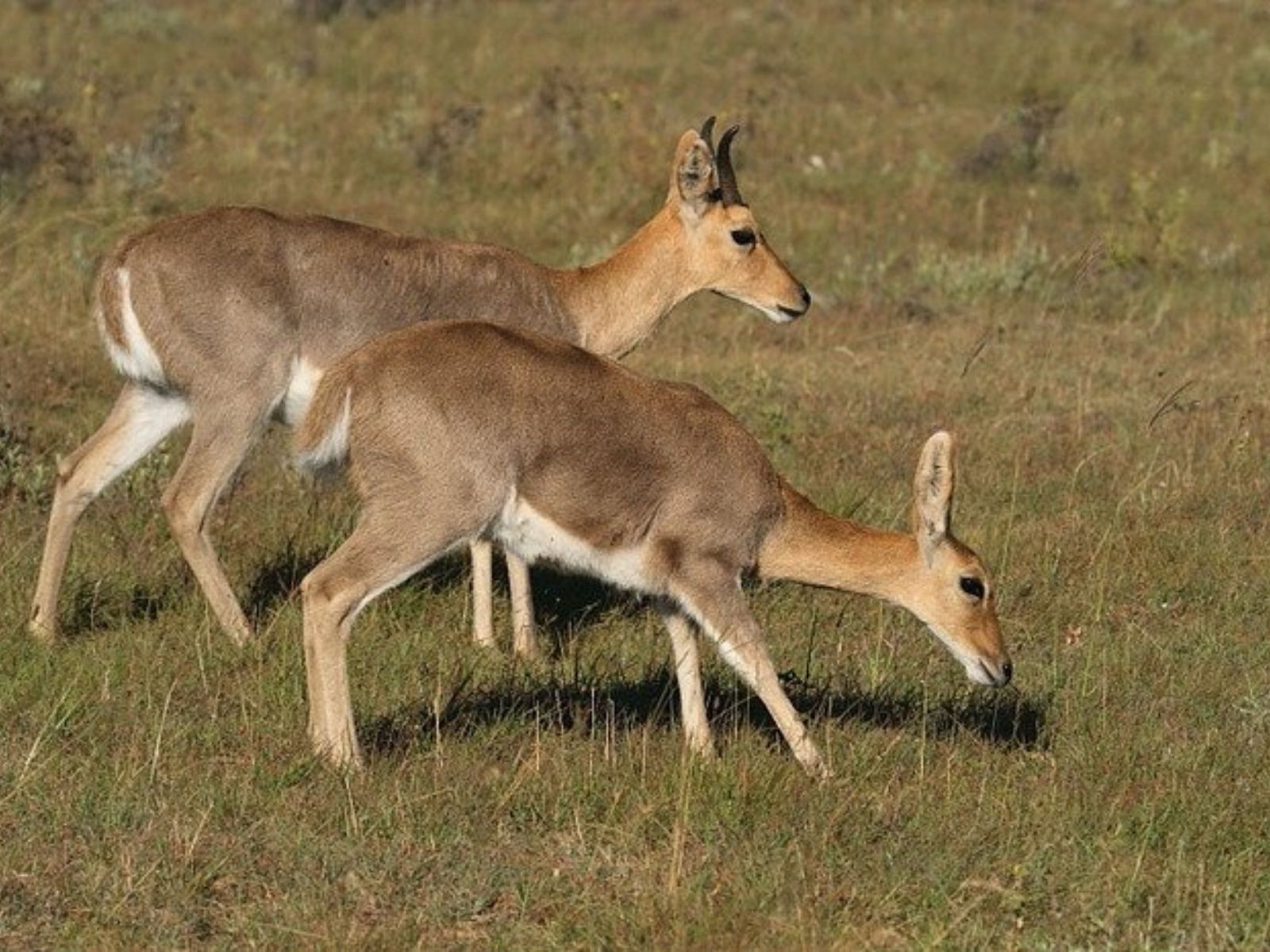
Mountain Reedbuck
Redunca fulvorufula

2025 Red list status
Endangered

Regional Population Trend
Declining
change compared
to 2016
No Change
Overview
Redunca fulvorufula – (Afzelius, 1815)
ANIMALIA – CHORDATA – MAMMALIA – ARTIODACTYLA – BOVIDAE – Redunca – fulvorufula
Common Names: Mountain Reedbuck (English), Rooiribbok (Afrikaans), Letlabo (Sepedi), Letlabo, Lebele (Sesotho), Phele, Mohele, Mhele (Setswana), Incala (Swati), Nhlangu, Nhlangu ya Ntshava (Tsonga), Davhu (Venda), Inxala (Xhosa), Inxala, Ingxala, Inhlangu (Zulu)
Synonyms: No Synonyms
Taxonomic Note:
There are three recognised subspecies (Ansell 1972; IUCN SSC Antelope Specialist Group 2008; Avenant 2013): Western Mountain Reedbuck (R. f. adamauae), Chanler’s Mountain Reedbuck (R. f. chanleri), and Southern Mountain Reedbuck (R. f. fulvorufula), which is the only subspecies to occur in the assessment region (Skinner & Chimimba 2005).
| Red List Status |
| EN – Endangered, A2b (IUCN version 3.1) |
Assessment Information
Assessors: Patel, T.1, Taylor, A.2, Power, J.3 & da Silva, J.4
Reviewer: Mallon, D.5
Contributor: Buijs, D.3†
Institutions: 1Endangered Wildlife Trust, 2Panthera, 3North West Provincial Government, 4South African National Biodiversity Institute, 5IUCN SSC Antelope Specialist Group
Previous Assessors: Avenant, N., Schulze, E. & Viljoen, P.
Previous Reviewers: Child, M.F., Mallon, D.P. & Hoffmann, M.
Previous Contributors: Kraft, C., Rushworth, I., Power, J. & Birss, C.
Assessment Rationale
The near–endemic Southern Mountain Reedbuck is widely but patchily distributed within the assessment region, restricted to rocky and grassy hillsides. Over three generations (2008-2023), there has been an estimated decline of 77% in 28 formally protected areas across its entire range (and thus broadly representative of trends for all subpopulations), where only 2 protected areas are increasing. This equates to an estimated decline in abundance from 2,585 to 577 individuals in the sampled protected areas. Analysing only the 16 protected areas with count data available for the full time period (thus omitting extrapolation of subpopulation size), the estimated population reduction is 70% (1,918 to 574 individuals). Of particular concern is the decline in the three Eastern Cape protected areas where the estimated population size of 958 in 2008 declined to 43 in recent years. Thus, based on available data from formally protected areas, we list this subspecies as Endangered A2b due to an estimated population decline of 70–77% on all protected areas for which there are long-term count data available. While Mountain Reedbuck are difficult to survey accurately, we assume systemic error is constant in the counts and thus this represents a genuine decline. Although there are many groups existing on private land, and long-term monitoring is needed to quantify trends outside of protected areas, anecdotal reports suggest similar declines and we suspect threats are similar or more intense outside protected areas and thus privately protected groups are probably not mitigating the losses on formally protected areas. Once such data are available, this subspecies should be reassessed as the trends may corroborate the current existing decline or conversely be mitigating losses in formally protected areas (and thus justify downlisting).
It is uncertain why the population has declined so dramatically and research quantifying potential threats is desperately needed. Current hypotheses include increased predation rates, possibly from higher abundances of Black-backed Jackal (Lupulella mesomelas) and Caracal (Caracal caracal) possibly associated with lack of holistic land management, increased frequency of drought spells, break-outs from protected areas, and illegal hunting, directly or indirectly, for bushmeat or sport. There may be a subtle effect of climate change, given the uncertainty in clear causes of their declines. It is crucial that conservationists gather enough information to develop a Biodiversity Management Plan and engage with private landowners to implement identified interventions.
Regional population effects: This subspecies has a disjunct distribution between the assessment region and the rest of its African range. It occurs marginally in Botswana and Mozambique but no other neighbouring countries and thus no strong rescue effect is possible. The Botswana subpopulation may be isolated from South Africa, but separation between subpopulations has not been measured, and would likely be a function of the connectedness of rugged terrain and watersheds.
Reasons for Change
Reason(s) for Change in Red List Category from the Previous Assessment: No change
Red List Index
Red List Index: No change
Recommended citation: Patel T, Taylor A, Power J & da Silva JM. 2025. A conservation assessment of Redunca fulvorufula. In Patel T, Smith C, Roxburgh L, da Silva JM & Raimondo D, editors. The Red List of Mammals of South Africa, Eswatini and Lesotho. South African National Biodiversity Institute and Endangered Wildlife Trust, South Africa.
Regional Distribution and occurrence
Geographic Range
The Mountain Reedbuck species occurs in three separate populations in East and southern Africa, and in a restricted area of eastern Nigeria and north-central Cameroon (East 1999; Avenant 2013). The Southern Mountain Reedbuck (R. f. fulvorufula) occurs extensively in South Africa, being present in all provinces, although only marginally in the Western Cape and the eastern Northern Cape provinces. They still occur throughout much of their former range, largely on private land but also in many formally protected areas throughout their range (Skinner & Chimimba 2005). They have also been extensively reintroduced in parts of their former range. They are rare in Lesotho, having been observed by Lynch (1994), Avenant (2004) and Avenant et al. (2014) only in a few scattered localities, but occur in the Drakensberg in KwaZulu-Natal Province up to 2,200 m asl (Rowe-Rowe 1994). They also occur in the hills of Eswatini (Monadjem 1998) and only narrowly in southeastern Botswana and the Lebombo Mountains of southwestern Mozambique (Skinner & Chimimba 2005), and thus the subspecies is near endemic to the assessment region. They have also been introduced into Namibia, as evidenced by their advertisement in Namibian hunting operations and permits having been issued to export the subspecies from South Africa to Namibia (E. Schulze pers. comm. 2016). Due to their specialised habitat requirements, they have a patchy and discontinuous distribution (Skinner & Chimimba 2005).
Elevation / Depth / Depth Zones
Elevation Lower Limit (in metres above sea level): (Not specified)
Elevation Upper Limit (in metres above sea level): (Not specified)
Depth Lower Limit (in metres below sea level): (Not specified)
Depth Upper Limit (in metres below sea level): (Not specified)
Depth Zone: (Not specified)
Biogeographic Realms
Biogeographic Realm: Afrotropical
Map
Click on map to view/enlarge
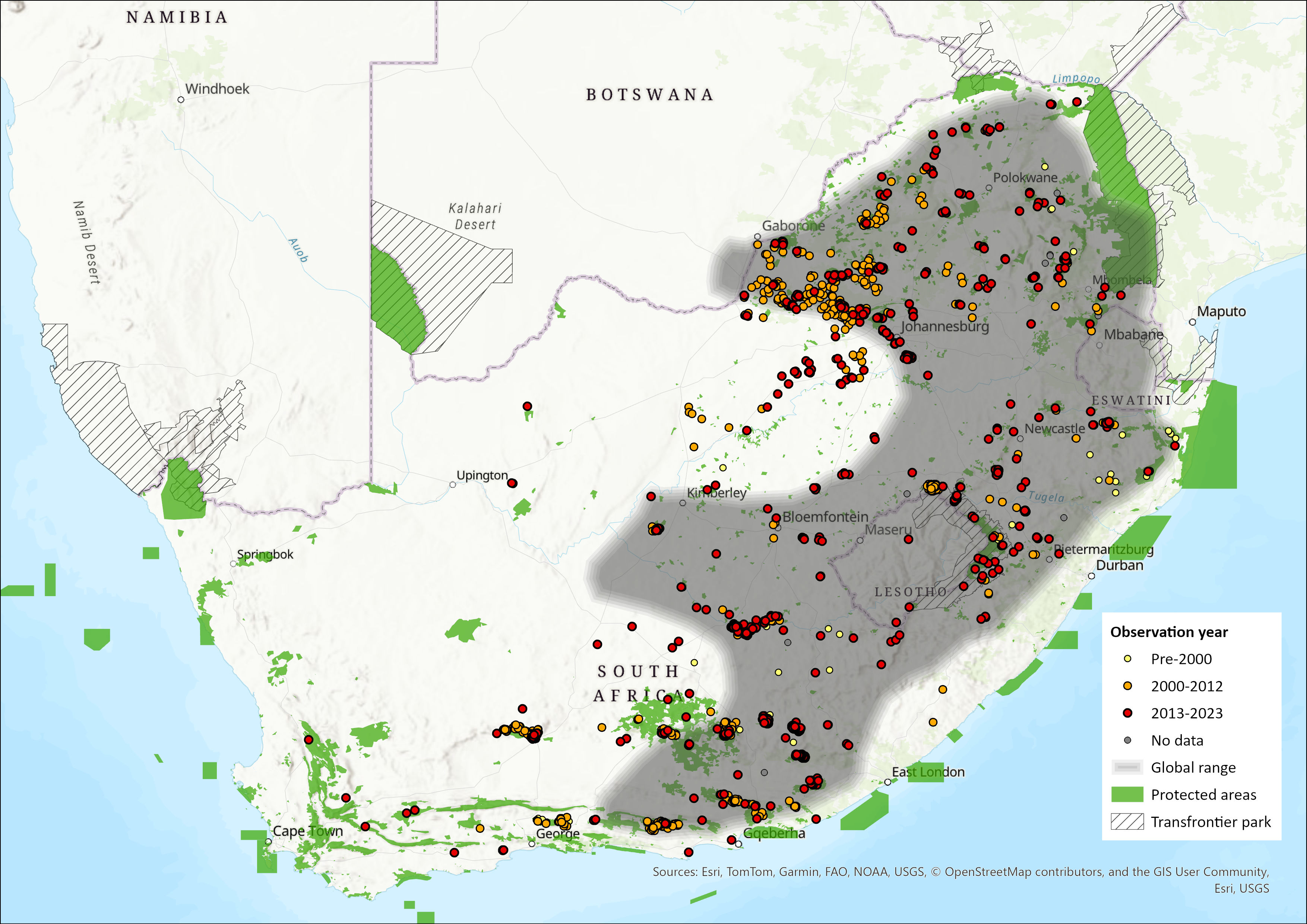
Figure 1. Distribution records for Mountain Reedbuck (Redunca fulvorufula) within the assessment region (South Africa, Eswatini and Lesotho). Note that distribution data is obtained from multiple sources and records have not all been individually verified.
Countries of Occurrence
| Country | Presence | Origin | Formerly Bred | Seasonality |
| Botswana | Extant | Native | – | – |
| Cameroon | Extant | Native | – | – |
| Eswatini | Extant | Native | – | – |
| Ethiopia | Extant | Native | – | – |
| Kenya | Extant | Native | – | – |
| Lesotho | Extant | Native | – | – |
| Mozambique | Extant | Native | – | – |
| Namibia | Extant | Introduced | – | – |
| Nigeria | Extant | Native | – | – |
| South Africa | Extant | Native | – | – |
| Sudan | Extant | Native | – | – |
| Tanzania, United Republic of | Extant | Native | – | – |
| Uganda | Extant | Native | – | – |
Large Marine Ecosystems (LME) Occurrence
Large Marine Ecosystems: (Not specified)
FAO Area Occurrence
FAO Marine Areas: (Not specified)
Climate change
In southern Africa, climate change is predicted to impact threatened antelope species (Erasmus et al. 2002), and particularly those with relatively small distribution ranges (Payne & Bro-Jørgensen 2016). A distribution range contract of 38,7-43,7% was predicted by 2018 for the Mountain Reedbuck (Payne 2015). Fortunately, it is a species that thrives in mountains, and such landscapes tend to be climate refugia (Gentili et al. 2015). Relative to other antelope in Africa, this species does have a relatively small range and may be partly vulnerable to a changing climate.
Climate change is also predicted to lead to changes in vegetation composition in grasslands. In particular, higher CO2 levels are leading to increasing woody plant encroachment (along with other causes) (O’Connor et al. 2014), while increasing CO2 levels are also predicted to lead to changes in grass composition (Havrilla et al. 2022). Both of these mechanisms can lead to significant shifts in grassland composition, potentially reducing availability of forage for Mountain Reedbucks. Droughts, which are predicted to increase in frequency (Engelbrecht et al. 2024), may affect the species as they move down from suitable habitat areas due to a lack of sufficient food resources and to obtain water, which makes them more vulnerable to predation as they are forced into more open habitat areas. In the Northern Cape, kills have been noted in areas where you would not expect the animals to be found (C. Kraft unpubl. data). Further research is needed on this.
Population information
Densities of Mountain Reedbuck within protected areas vary greatly according to factors such as the extent of suitable habitat and predator density. Estimated densities of the Southern Mountain Reedbuck in protected areas in South Africa vary from 10 individuals / 100 km² or less in areas such as Karoo, Addo Elephant (the Zuurberg section) and Marakele National Parks; 300–350 individuals / 100 km² in Golden Gate Highlands and Royal Natal National Parks; 750 individuals / 100 km² in Mountain Zebra National Park, to as high as 1,150 individuals / 100 km² in Sterkfontein Dam Nature Reserve (Taylor et al. 2007; IUCN SSC Antelope Specialist Group 2008). Based on these densities, the total population was estimated to be 33,000 (East 1999; IUCN SSC Antelope Specialist Group 2008). In much earlier years, densities of between 470-670 reedbuck/ km² were recorded at the Loskop dam Reserve (Irby 1977).
However, the species is patchily distributed and can be uncommon in certain areas. For example, there only were a suspected 150 individuals in Kruger National Park in 2009 (Ferreira et al. 2013), but no long-term data are available to show a trend. Based on all available data at the time of the previous assessment, it was estimated to have a total population size of at least 15,000, of which 10,214–13,669 individuals were mature, where the proportion of mature individuals is inferred to range from 68–91%. While Bothma et al. (2010) describes herd structure as 32% adult rams, 36% adult ewes, 23% juvenile rams and 9% juvenile ewes, field experience suggests a much lower proportion of immature individuals, as juveniles are rarely seen. For example, herd composition data from Goedemoed, Free State Province, in 2004 and 2009 using both ground and aerial surveys indicate a mature population structure of 90.7–91.6%, consisting of 19.3–23.1% adult rams and 68.5–71.4% adult females (E. Schulze unpubl. data). The mature population size was an underestimate since we did not have comprehensive census data from private lands or formally protected areas. Similarly, it did not include the group in the Maloti-Drakensberg Transfrontier Park for which there was no overall estimate but was suspected to be large (I. Rushworth unpubl. data).
What is certain is that the formally protected population is declining across many areas of the country and possibly declining outside protected areas too). For example, in the North West Province across four protected areas, the population declined to 93 in 2024, from a 2016 baseline of 116 (North West Province Game Count data, 2024). This c. 20% decline is not drastic though, but maybe part of a natural fluctuation. There has also been a 34% decline in numbers of Mountain Reedbuck on private land in the North West Province, with numbers dropping from 3,192 in 2010 (Power 2014) to 2,116 in 2024 (North West Province Game Farm database, 2025).
Generation length for this species is estimated at 4–8 years because most females breed for the first time in their second year and will reproduce every year as long as grazing conditions remain suitable. Although the average longevity is unknown in the wild, it can be assumed to be 8–10 years. Corroborating this, Pacifici et al. (2013) estimate generation length as 5.2 years, which equates to a 15.7 year three-generation period. Based on long-term subpopulation estimates from 28 protected areas across the breadth of its range (all provinces), the population is estimated to have declined by 77% (2,585 to 577 individuals) between 2008 and 2023 (three generations). This estimate is based on current (2023) data from all sampled protected areas and historical data between 2008 and 2023. A more conservative estimate (based only on 16 protected areas for which the data span the three-generation window) yields an estimated reduction of 70% (1,918 to 574 individuals), of which the declines in the Eastern Cape (Commando Drift Nature Reserve, Oviston Nature Reserve and Tsolwana Nature Reserve) are particularly worrying, having declined from 958 individuals to 43 individuals, especially because two of these reserves were mentioned in the previous assessment as being stable or increasing and being the largest subpopulations in the Eastern Cape.
As the subpopulation estimates are restricted to protected areas with long-term and accurate count data, we believe this represents a genuine decline as the errors are likely to be systemic rather than random and thus the long-term trends are reliable while the absolute counts are questionable. However, further research and analysis is needed to more accurately determine the rate of decline on a national scale. For example, controlling for observer effort from field ranger patrols in Maloti-Drakensberg Transfrontier Park suggested a decline of 1.2% per annum between 1995 and 2014, which yielded an estimated 18% subpopulation reduction in the area over three generations (I. Rushworth unpubl. data). However, later more detailed analyses revealed this to be a slow decline of 0.6% per annum for the species, which was not significant though (Patel et al. 2021).
The losses on formally protected areas may be mitigated through potential subpopulation growth of this subspecies on private lands and game farms. However, few subpopulation trends are available for private lands and monitoring should be established in key areas to assess corroborating or contradicting trends. Given the species is not a commercially important game species, any declines in numbers may not have been noticed by private landowners.
Population Information
| Continuing decline in mature individuals? | Qualifier | Justification |
| Unknown | – | Possibly, due to illegal hunting and predation. |
Current population trend: Declining
Extreme fluctuations in the number of subpopulations: (Not specified)
Continuing decline in number of subpopulations: (Not specified)
All individuals in one subpopulation: (Not specified)
Number of mature individuals in largest subpopulation: (Not specified)
Number of subpopulations: Unknown
Severely fragmented: The level of fragmentation is unknown, but it is unlikely to be significant because Mountain Reedbuck occur extensively outside of protected areas and are therefore suspected to move fairly freely.
Quantitative Analysis
Probability of extinction in the wild within 3 generations or 10 years, whichever is longer, maximum 100 years: (Not specified)
Probability of extinction in the wild within 5 generations or 20 years, whichever is longer, maximum 100 years: (Not specified)
Probability of extinction in the wild within 100 years: (Not specified)
Population genetics
It has been noted that several subpopulations exist and that because of its specialised habitat requirements, the Mountain Reedbuck has a patchy and discontinuous distribution. Gene flow in the species is contingent on the connectivity of the species preferred habitat, i.e. rugged terrain. This would suggest a continuous corridor is likely along the Greater escarpment from the Eastern Cape, along the eastern seaboard of KwaZulu-Natal, and extending into Mpumalanga and Limpopo. Westward across the country there are several ranges of hills, including the Waterberg, and other hills in the North West, which extend into Botswana. It can be suspected that the Lebombo group along the Mozambique border is the most isolated, though it may be connected to Eswatini and northern KwaZulu-Natal.
A population genomic study would be greatly beneficial to clarify the population genetic structure and diversity within the species.
Habitats and ecology
Mountain Reedbuck are grazers (Irby 1977; Taylor & Skinner 2006) and live on grass-covered ridges and hillsides in broken rocky country and high-altitude grasslands often with some tree or bush cover (Mason 1977; Avenant 2013). This distinguishes their habitat use from the more lowland grassland species, such as the Southern Reedbuck (R. arundinum) (Skinner & Chimimba 2005), or upland plateaus, as in the Grey Rhebok (Oliver et al. 1978). They also occur in drier hilly areas (such as the Nama Karoo), utilising steep slopes and the bases of hills for grazing. They are predominantly grazers and eat the greenest, softest parts of grasses such as Red Grass (Themeda triandra) and Thatch Grass (Hyparrhenia spp.) (Irby 1977). They tend to avoid very open areas with no cover (Mason 1977). In parts of their range, they prefer grassland, open scrub (Rowe-Rowe 1983), and Protea-woodland on hillslopes as well as lightly wooded savanna (Mason 1977; Oliver 1978). The availability of drinking water is crucial. As such, they are often associated with the lower slopes, making use of moister, cooler more southerly aspects than other antelopes, though they still prefer the drier north facing slopes (Rowe-Rowe 1983). In the Drakensberg, they are partial to grazing on post-burn grasslands (Rowe-Rowe 1982), and these areas are sought out when foraging.
They spend more time resting than Grey Rhebok (Pelea capreolus) and both species are active at night (Irby 1981; Taylor et al. 2006a). Mountain Reedbuck are territorial (Taylor & Skinner 2006), and they live mostly in small groups of up to 3 individuals (Mason 1977), and even up to 8 individuals (Irby 1977; Mason 1977). In the Loskop Dam Nature Reserve, the mean area of a male territory was 0.28 km2 and that of female herds was 0.57 km2 (Irby 1977). At Sterkfontein Dam Nature Reserve, male territories averaged 0.15 km2, while females often ranged over areas > 2 km2 (Taylor et al. 2007). Within Northern Cape protected areas, group size is usually 1–5, but anecdotal reports from Doornkloof Nature Reserve suggest groups were often larger than eight individuals nearly 20 years ago (C. Kraft pers. comm. 2016).
The species is a seasonal breeder, with birth peaks between October and December in the eastern Free State (Tayor et al. 2006b), though they are reported to breed throughout the year too (Oliver et al. 1978; Els 1991). They hide their young for periods of time when they are born (Taylor & Skinner 2006).
Ecosystem and cultural services: As a medium-sized ungulate, they serve as important prey in hilly areas for Leopards (Panthera pardus) (Skinner & Chimimba 2005), Caracal (Caracal caracal) (Grobler 1981; Stuart & Hickman 1991; Pohl 2015) and Black-backed Jackal (Lupulella mesomelas) (Pohl 2015), such that well-managed subpopulations may buffer livestock that utilise hilly pastures.
IUCN Habitats Classification Scheme
| Habitat | Season | Suitability | Major Importance? |
| 3.7. Shrubland -> Shrubland – Subtropical/Tropical High Altitude | – | Marginal | – |
| 4.7. Grassland -> Grassland – Subtropical/Tropical High Altitude | – | Suitable | – |
| 6. Rocky areas (eg. inland cliffs, mountain peaks) | – | Suitable | – |
Life History
| Generation Length | Justification | Data Quality |
| 5.2 | – | – |
Age at maturity: female or unspecified: (Not specified)
Age at Maturity: Male: (Not specified)
Size at Maturity (in cms): Female: (Not specified)
Size at Maturity (in cms): Male: (Not specified)
Longevity: (Not specified)
Average Reproductive Age: (Not specified)
Maximum Size (in cms): (Not specified)
Size at Birth (in cms): (Not specified)
Gestation Time: (Not specified)
Reproductive Periodicity: (Not specified)
Average Annual Fecundity or Litter Size: (Not specified)
Natural Mortality: (Not specified)
Does the species lay eggs? (Not specified)
Does the species give birth to live young: (Not specified)
Does the species exhibit parthenogenesis: (Not specified)
Does the species have a free-living larval stage? (Not specified)
Does the species require water for breeding? (Not specified)
Movement Patterns
Movement Patterns:(Not specified)
Congregatory: (Not specified)
Systems
System: Terrestrial
Please scroll horisontal on mobile to view the tables
General Use and Trade Information
The Mountain Reedbuck is hunted for sport and food (Taylor et al. 2019). Trophy hunting is managed by provincial permit systems, with annual numbers hunted varying from ~ 400 to 1,000 animals across South Africa. Live animal translocations occur between provincial reserves and private game farms, but unpublished observations have found that many animals disappear from their new areas, suggesting that translocations may not be very successful. Subpopulations may recover slowly from disturbances such as translocation and hunting (E. Schulze pers. obs.) and should be investigated as a cause for decline.
Relative to other antelope species, they are not as important commercially.
| Subsistence: | Yes |
| Rationale: | Suspected bushmeat poaching. |
| Local Commercial: | Yes |
| Further detail including information on economic value if available: | Trophy hunting and live sales. |
National Commercial Value: Yes
International Commercial Value: Yes
| End Use | Subsistence | National | International | Other (please specify) |
| 1. Food – human | true | true | – | – |
| 12. Handicrafts, jewellery, etc. | – | – | true | – |
| 13. Pets/display animals, horticulture | – | true | – | – |
| 15. Sport hunting/specimen collecting | – | true | true | – |
Is there harvest from captive/cultivated sources of this species? Yes
Harvest Trend Comments: Herds outside and on edge of protected areas vulnerable to poaching. Many ranchlands stock Mountain Reedbuck for trophy hunting. No known captive breeding of the subspecies.
Threats
While Friedmann and Daly (2004) listed no threats in the previous assessment, Avenant (2013) listed the main threats as the expansion of human settlements, which is likely to increase the rates of poaching, disturbance by cattle herders and their livestock, and hunting by dogs (see also Oliver et al. 1978; Lynch 1994; O’Connor & Kruger 2003; Avenant et al. 2014). This certainly may be affecting the Southern Mountain Reedbuck, especially as human density increases along protected area edges (Wittemyer et al. 2008). For example, human settlement expansion along the Maloti-Drakensberg Transfrontier Park may be increasing poaching rates (I.pers. comm. 2016), possibly leading to the observed declines. Compression into small, isolated reserves has resulted in declines in populations, specifically the Coleford Nature Reserve (1272 ha), in the early 2000s, which may have arisen from domestic dog pressure outside the reserve at the time (O’Connor & Kruger, 2003).
In 2023, a subadult individual entered the town of Rustenburg and died of stress from the urban environment when attempts were made to capture it for safe repatriation. This again emphasises the threat of urbanisation, and the species sensitivity, and perhaps the individual was dispersing from the Kgaswane Mountain Reserve above the town. It is well known that adult-male directed aggression prompts subadults to disperse (Mason 1977).
The species is preyed upon, especially by Black-backed Jackals (Lupulella mesomelas) (Irby 1977; Oliver et al. 1978), Caracal (Caracal caracal) and Leopard (Panthera pardus) (Irby 1977). In the North West Province, several Mountain Reedbuck have been recorded as preyed upon by satellite collared Leopards there, likely related to habitat as well as the species being optimally sized prey for them (Hayward et al. 2006). Camera trap evidence has been obtained of Black-backed Jackals pursuing Mountain Reedbuck in the Botsalano Game Reserve, North West Province (J. Power pers. comm. 2016). However, on ranchlands where mesopredators are controlled, numbers are still declining (C. Kraft unpubl. data). Similarly, increasing Chacma Baboon (Papio ursinus) abundance may damage suitable habitat and lead to increased lamb predation, but this needs to be investigated. Reintroduction of larger predators into national parks may also be affecting numbers, as the reintroduction of Cheetah (Acinonyx jubatus) in Mountain Zebra National Park correlated with the decline in Mountain Reedbuck numbers (A. Gaylard pers. comm. 2016). Break-outs from protected areas have also been suggested as a reason for declining numbers. However, more research is required to understand the cause of the declines.
The species is subject to natural mortality such as hypothermia particularly in the colder eastern Free State (Taylor et al. 2006b), and KwaZulu-Natal Drakensberg (Oliver et al. 1978; O’Connor & Kruger 2003). They are also impacted by nutritional stress, particularly in the winter months when the crude protein content declines (Irby 1977; Oliver et al. 1978; O’Connor & Kruger 2003), and this could have a bottom-up effect on population growth.
Conservation
The primary intervention at this stage is research to investigate the causes of the decline and to then outline appropriate interventions. Adaptive management of formally protected areas is recommended to trial strategies that are effective in stabilising or increasing subpopulations. Private landowners should also be encouraged to continue to form conservancies to reduce the edge effects of small areas of natural habitat, such that vulnerability to poaching is lessened. There are currently no incentives for private landowners to provide stock to provincial nature reserves or to manage them holistically. More stakeholder engagement and research thus needs to be undertaken to understand how the private and public sector populations can interact for the conservation of the species. A more detailed analysis of trophy hunting and translocation impacts is necessary. With regards the latter, unpublished data suggest that the success rates of translocations between provincial nature reserves are not high. For example, most Mountain Reedbuck translocated into Sterkfontein Dam Nature Reserve during a single translocation event in 2001 disappeared and could not be accounted for (A. Taylor unpubl. data). Caution should be used, therefore, when using translocation as a conservation measure with this species, and further research is recommended.
Recommendations for land managers and practitioners:
- A Biodiversity Management Plan should be formulated by pooling knowledge from all stakeholders (conservationists, private landowners and local communities).
- Monitor and enforce penalties for illegal hunting.
- Patrols of private land for the purposes of apprehending would-be hunter trespassers, and snare removals must be regularly performed.
- More suitable survey methodologies should be considered to assist in getting more reliable population numbers. General multi-species aerial surveys tend to result in under-counts in many of the typical habitat types.
- Judicious burning of grazing areas will facilitate their occurrence, especially since they may be nutritionally stressed in dystrophic ecosystems, especially during the winters.
- Species identification training courses (distinguishing apart the three similarly looking species), or production of simple training manuals highlighting the differences.
Research priorities:
- Investigating the reasons why the formally protected subpopulations have declined and quantifying the severity of various threats.
- Assessing subpopulation trends on private lands and establishing long-term monitoring sites.
- Identifying and testing suitable conservation interventions, such as the outcomes of translocations.
- Identification of suitable habitat areas, particularly in areas where wildlife ranching is commonplace.
- Population models have been developed (see Nortin 1994), though more complex models would be more applicable at present, similar analyses should be done on reserve populations to better understand their population trends.
- Analysing mesocarnivore numbers to determine if there is any overlap of increasing predator numbers with Mountain Reedbuck distribution.
Encouraged citizen actions:
- Report sightings, especially outside protected areas, on virtual museum platforms (for example, iNaturalist and MammalMAP).
- Encourage wildlife ranchers to introduce them in suitable areas.
- Create conservancies to protect suitable habitats.
Bibliography
Ansell, W.F.H. 1972. Part 2, 15 Family Artiodactyla. In: J. Meester and H.W. Setzer (eds), The Mammals of Africa: An Identification Manual, pp. 1-84. Smithsonian Institution Press, Washington, DC, USA.
Avenant NL, du Plessis J, Senoge J. 2014. Mammals of the Mohale Dam catchment. Specialist report for Contract 1273: Biological Resources Monitoring within Phase 1 of the LHWP Catchments 2013-14. Report no. AEC/14/12 submitted by Anchor Environmental Consultants to the Lesotho Highlands Development Authority.
Avenant NL. 2004. Conserving Mountain Biodiversity in Southern Lesotho: Mammal report. United Nations Development Plan, Lesotho.
Avenant, N.L. 2013. Redunca fulvorufula Mountain Reedbuck. In: Kingdon, J. and Hoffmann, M. (eds), The Mammals of Africa. Volume 6. Pigs, Hippopotanuses, Chevrotain, Giraffes, Deer, and Bovids, pp. 422-426. Bloomsbury Publishing, London, UK.
Bothma J du P, Van Rooyen N, Du Toit JG. 2010. Antelope and other smaller herbivores. In: J. du P. Bothma and J. G. Du Toit (eds), Game Ranch Management 5th edition, pp. 210–245. Van Schaik Publishers, Pretoria, South Africa.
East, R. (compiler). 1999. African Antelope Database 1998. IUCN, Gland, Switzerland and Cambridge, UK.
Els, D.A., 1991. Aspects of reproduction in mountain reedbuck from Rolfontein Nature Reserve. South African Journal of Wildlife Research, 21(2): .43-46.
Engelbrecht, F.A., Steinkopf, J., Padavatan, J., Midgley, G.F. 2024. Projections of Future Climate Change in Southern Africa and the Potential for Regional Tipping Points. In: von Maltitz, G.P., et al. Sustainability of Southern African Ecosystems under Global Change. Ecological Studies, vol 248. Springer, Cham.
Erasmus, B.F.N., van Jaarsveld, A.S., Chown, S.L., Kshatriya, M. and Wessels, K.J. 2002. Vulnerability of South African animal taxa to climate change. Global Change Biology 8: 679-693.
Ferreira S, Gaylard, A, Greaver, C, Hayes, J, Cowell C, Ellis G. 2013. Summary Report: Animal abundances in Parks 2012/2013. Scientific Services, SANParks, Skukuza, South Africa.
Friedmann, Y. and Daly, B. 2004. Red Data Book of the Mammals of South Africa: A Conservation Assessment. Conservation Breeding Specialist Group (SSC/IUCN) and Endangered Wildlife Trust, Parkview, South Africa.
GeoTerraImage. 2015. Quantifying settlement and built-up land use change in South Africa. Pretoria.
Gentili, R., Badola, H.K. & Birks, H.J.B., 2015. Alpine biodiversity and refugia in a changing climate. Biodiversity, 16(4): 193-195.
Grobler JH. 1981. Feeding behaviour of the caracal Felis caracal Schreber 1776 in the Mountain Zebra National Park. South African Journal of Zoology 16: 259-262.
Havrilla C.A., Bradford J.B., Yackulic C.B., and S.M. Munson. 2023. Divergent climate impacts on C3 versus C4 grasses imply widespread 21st century shifts in grassland functional composition. Diversity and Distributions. 29: 379-394. https://doi.org/10.1111/ddi.13669.
Hayward, M.W., Henschel, P., O’Brien, J., Hofmeyr, M., Balme, G. Kerley, G.I. 2006. Prey preferences of the leopard (Panthera pardus). Journal of Zoology, 270(2): 298-313.
Hoffman LC, van Schalkwyk S, Muller NM. 2008. Physical and chemical properties of male and female mountain reedbuck (Redunca fulvorufula) meat. South African Journal of Wildlife Research 38: 11-16.
IUCN SSC Antelope Specialist Group. 2008. Redunca fulvorufula. The IUCN Red List of Threatened Species 2008: .T19391A8874377.
Irby, L. R. 1977. Studies on mountain reedbuck populations with special reference to Loskop Dam Nature Reserve. South African Journal of Wildlife Research 7: 73-86.
Irby, L.R., 1981. Mountain reedbuck activity patterns in the Loskop Dam Nature Reserve. South African Journal of Wildlife Research, 11(4): 115-120.
Lloyd, P.H. & Millar, J.C.G., 1983. A questionnaire survey (1969-1974) of some of the larger mammals of the Cape Province. Bontebok, 3: 1–49.
Lynch, C.D. 1994. The mammals of Lesotho. Navorsinge van die Nasionale Museum Bloemfontein 10(4): 177-241.
Mason, D.R., 1977. Notes on social, ecological and population characteristics of mountain reedbuck in the Jack Scott Nature Reserve. South African Journal of Wildlife Research, 7(1): 31-35.
Monadjem A. 1998. The mammals of Swaziland. Conservation Trust of Swaziland and Big Games Parks, Mbabane, Swaziland.
Norton, P.M.1994. Simple spreadsheet models to study population dynamics, as illustrated by a mountain reedbuck model. South African Journal of Wildlife Research, 24(4): 73-81.
O’Connor, T. & Kruger, S., 2003. Synchronous decline of populations of small antelope in a reserve in the southern Drakensberg, South Africa. South African Journal of Wildlife Research, 33(2): 97-107.
O’Connor, T. G., Puttick, J. R., & Hoffman, M. T. 2014. Bush encroachment in southern Africa: changes and causes. African Journal of Range & Forage Science, 31(2), 67–88. https://doi.org/10.2989/10220119.2014.939996
Oliver, MDN, Short, NRM & Hanks, J. 1978. Population ecology of oribi, grey rhebuck and mountain reedbuck in Highmoor State Forest Land. South African Journal of Wildlife Research 8(3): 95-105.
Pacifici, M., Santini, L., Di Marco, M., Baisero, D., Francucci, L., Grottolo Marasini, G., Visconti, P. and Rondinini, C. 2013. Generation length for mammals. Nature Conservation 5: 87–94.
Patel, T., O’Connor, T., Parrini, F. & Krüger, S. 2021. Using a relative abundance index to determine population trends of large mammals in the uKhahlamba Drakensberg Park, South Africa, between 2000 and 2010. African Journal of Wildlife Research, 51(1): 68-74.
Payne, B.L. 2015. The impact of climate change on the distribution and conservation status of African antelopes. The University of Liverpool, Liverpool.
Payne, B.L. & Bro-Jørgensen, J., 2016. Disproportionate climate-induced range loss forecast for the most threatened African antelopes. Current Biology, 26(9): 1200-1205.
Pohl, C.F. 2015. The diet of caracal (Caracal caracal) in the Southern Free State. Department of Zoology and Entomology, University of the Free State.
Power, R.J. 2014. The distribution and status of mammals in the North West Province. Department of Economic Development, Environment, Conservation & Tourism, North West Provincial Government, Mahikeng.
Power, R.J., Van Straaten, A., Schaller, R., Mooke, M., Boshoff, T. & Nel, H.P. 2019. An inventory of mammals of the North West province, South Africa. Annals of the Ditsong National Museum of Natural History, 8(1): 6-29.
Rowe-Rowe, D.T. 1982. Influence of fire on antelope distribution and abundance in the Natal Drakensberg. South African Journal of Wildlife Research, 12(4).124-129.
Rowe-Rowe DT. 1983. Habitat preferences of five Drakensberg antelopes. South African Journal of Wildlife Research 13: 1-8.
Rowe-Rowe, D. T. 1994. The ungulates of Natal. Natal Parks Board, Pietermaritzburg, South Africa.
Skinner, J.D. and Chimimba, C.T. (eds). 2005. The Mammals of the Southern African Subregion. Cambridge University Press, United Kingdom, Cambridge.
Stuart CT, Hickman GC. 1991. Prey of caracal Felis caracal in two areas of Cape Province, South Africa. Journal of African Zoology 105: 373-381.
Taylor, W.A. & Skinner, J.D. 2006. A review of the social organisation of mountain reedbuck, Redunca fulvorufula, and grey rhebok, Pelea capreolus, in relation to their ecology. Transactions of the Royal Society of South Africa, 61(1): 8-10.
Taylor WA, Skinner JD, Krecek RC. 2006a. The activity budgets and activity patterns of sympatric grey rhebok and mountain reedbuck in a highveld grassland area of South Africa. African Journal of Ecology 44: 431-437.
Taylor, W.A., Skinner, J.D., Williams, M.C., Krecek, R.C. 2006b. Population dynamics of two sympatric antelope species, grey rhebok (Pelea capreolus) and mountain reedbuck (Redunca fulvorufula), in a highveld grassland region of South Africa. Journal of Zoology, 268(4), pp.369-379.
Taylor WA, Skinner JD, Krecek RC. 2007. Home ranges of sympatric grey rhebok and mountain reedbuck in a South African highveld grassland. African Zoology 42: 145-151.
Taylor, A., Avenant, N., Schulze, E., Viljoen, P. & Child, M.F. 2019. Redunca fulvorufula ssp. fulvorufula. The IUCN Red List of Threatened Species 2019: e.T19394A50194334.
Wittemyer, G., Elsen, P., Bean, W.T., Burton, A.C.O. and Brashares, J.S. 2008. Accelerated human population growth at protected area edges. Science 321: 123-126.