
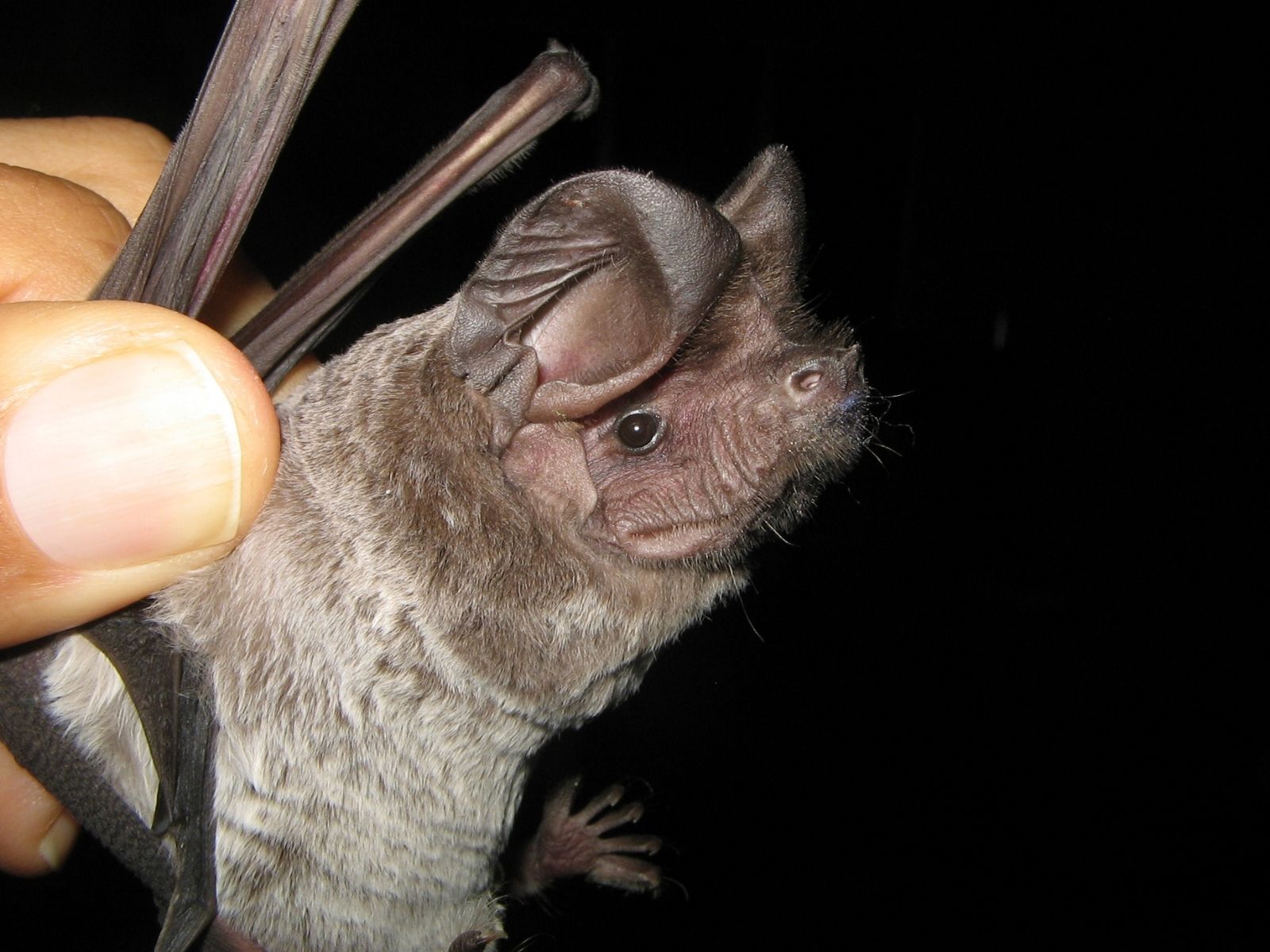
Midas Free-tailed Bat
Mops midas

2025 Red list status
Least Concern

Regional Population Trend
Unknown

Change compared
to 2016
No Change
Overview
Mops midas – (Sundevall, 1843)
ANIMALIA – CHORDATA – MAMMALIA – CHIROPTERA – MOLOSSIDAE – Mops – midas
Common Names: Midas Free-tailed Bat, Midas Mops Bat, Midas Bat, Midas Groove-cheeked Bat, Sundevall’s Free-tailed Bat (English), Midas se Losstertvlermuis (Afrikaans), Molosse Midas, Molosse de Midas, Tadarida de Midas, Tadaride Midas (French)
Synonyms: Dysopes midas Sundevall, 1843; Mops midas ssp. miarensi (A. Grandidier, 1869); Mops unicolor (A. Grandidier, 1870); Tadarida midas (Sundevall, 1843)
Taxonomic Note:
The entire African continental population of Mops midas is considered to constitute the same subspecies, M. midas midas, while the population of Madagascar forms the other distinct subspecies, M. midas miarensis (Hayman & Hill 1971; Dunlop 1999). However, Ratrimomanarivo et al. (2007) found that the South African and Madagascan populations do not exhibit genetic differences, and this may be evidence of historical movement between southern Africa and Madagascar (Samonds et al. 2012). Additionally, the southern African population may be geographically isolated from the northern African population by about 1,000 km, which could translate into phylogenetic distinction between the two regions (Monadjem et al. 2020). Further research is required to substantiate the taxonomic relationship between populations and subspecies.
Red List Status: LC – Least Concern, (IUCN version 3.1)
Assessment Information
Assessors: Lötter, C.1, Balona, J.2, Naidoo, T.3 & da Silva, J.M.4
Reviewer: Smith, C5.
Institutions: 1Inkululeko Wildlife Services (Pty) Ltd, 2Gauteng and Northern Regions Bat Interest Group, 3Durban Natural Science Museum, 4South African National Biodiversity Institute, 5Endangered Wildlife Trust
Previous Assessors and Reviewers: Taylor, P., Cohen, L., Jacobs, D., MacEwan, K., Monadjem, A., Richards, L, Schoeman, C. & Sethusa, T.
Previous Contributors: Nicholson, S.K., Relton, C. & Raimondo, D.
Assessment Rationale
This species is listed as Least Concern in view of its estimated 140,236 km2 extent of occurrence and its occurrence in several large, protected areas in the assessment region, where it appears to be associated with hot, low-lying savannah and woodland (Monadjem et al. 2020). Additionally, it can use human structures as roost sites. Though locally hunted and persecuted, the species is not likely to be declining. However, as it is patchily distributed across its range and considered to be generally rare, data on subpopulation sizes and trends are needed and this species should be reassessed once such data are available. The rapidly growing number of proposed wind farms in Mpumalanga and further north in southern Africa, if approved, could pose a serious threat to this species. This is because, like other aerial-foraging Molossid species, the Midas Free-tailed Bat is categorised as having a “High” risk of fatality from wind turbines (MacEwan et al. 2020). If/When there are operational wind farms within the distribution range of this species, fatalities of this species must be carefully monitored and adequately mitigated. If not, this species, like the similar Egyptian Free-tailed Bat (Tadarida aegyptiaca) will likely be heavily impacted by wind farm development (Aronson 2022).
Regional population effects: Although patchily distributed through southern Africa, the distribution of this species probably extends into southern Mozambique and Zimbabwe through transfrontier parks. Given its high wing-loading (Monadjem et al. 2020), dispersal capacity is assumed to be sufficient for rescue effects.
Reasons for Change
Reason(s) for Change in Red List Category from the Previous Assessment: No change
Red List Index
Red List Index: No change
Recommended citation: Lötter C, Balona J, Naidoo T & da Silva JM. 2025. A conservation assessment of Mops midas. In Patel T, Smith C, Roxburgh L, da Silva JM & Raimondo D, editors. The Red List of Mammals of South Africa, Eswatini and Lesotho. South African National Biodiversity Institute and Endangered Wildlife Trust, South Africa.
Regional Distribution and occurrence
Geographic Range
The Midas Free-tailed Bat is widespread but patchily distributed across the lowland and savannah regions of West and East Africa (including Senegal, Nigeria, Chad, the Democratic Republic of the Congo, Sudan, Ethiopia, Kenya, Uganda, Rwanda), Madagascar, and into southern Africa (Monadjem et al. 2016). In Madagascar, this species is generally restricted to the drier western and southern habitats at altitudes below 150 m asl. (Ratrimomanarivo et al. 2007). The species has been recorded from northeastern South Africa, through the Kruger National Park in South Africa to Zimbabwe, northern Botswana, northern Namibia, southwestern Zambia and southern Malawi, and Eswatini (Monadjem et al. 2020). Habitat models suggest that suitable conditions occur in the western parts of southern Mozambique, but it is yet to be collected there (Monadjem et al. 2010). In the assessment region, it occurs in the Limpopo and Mpumalanga provinces of South Africa, where calls of this species have been recorded as far west as Ermelo town (Inkululeko Wildlife Services unpubl. data). It may also occur in KwaZulu-Natal (Monadjem et al. 2020). The estimated extent of occurrence in the assessment region is 140,236 km2.
Elevation / Depth / Depth Zones
Elevation Lower Limit (in metres above sea level): (Not specified)
Elevation Upper Limit (in metres above sea level): (Not specified)
Depth Lower Limit (in metres below sea level): (Not specified)
Depth Upper Limit (in metres below sea level): (Not specified)
Depth Zone: (Not specified)
Map
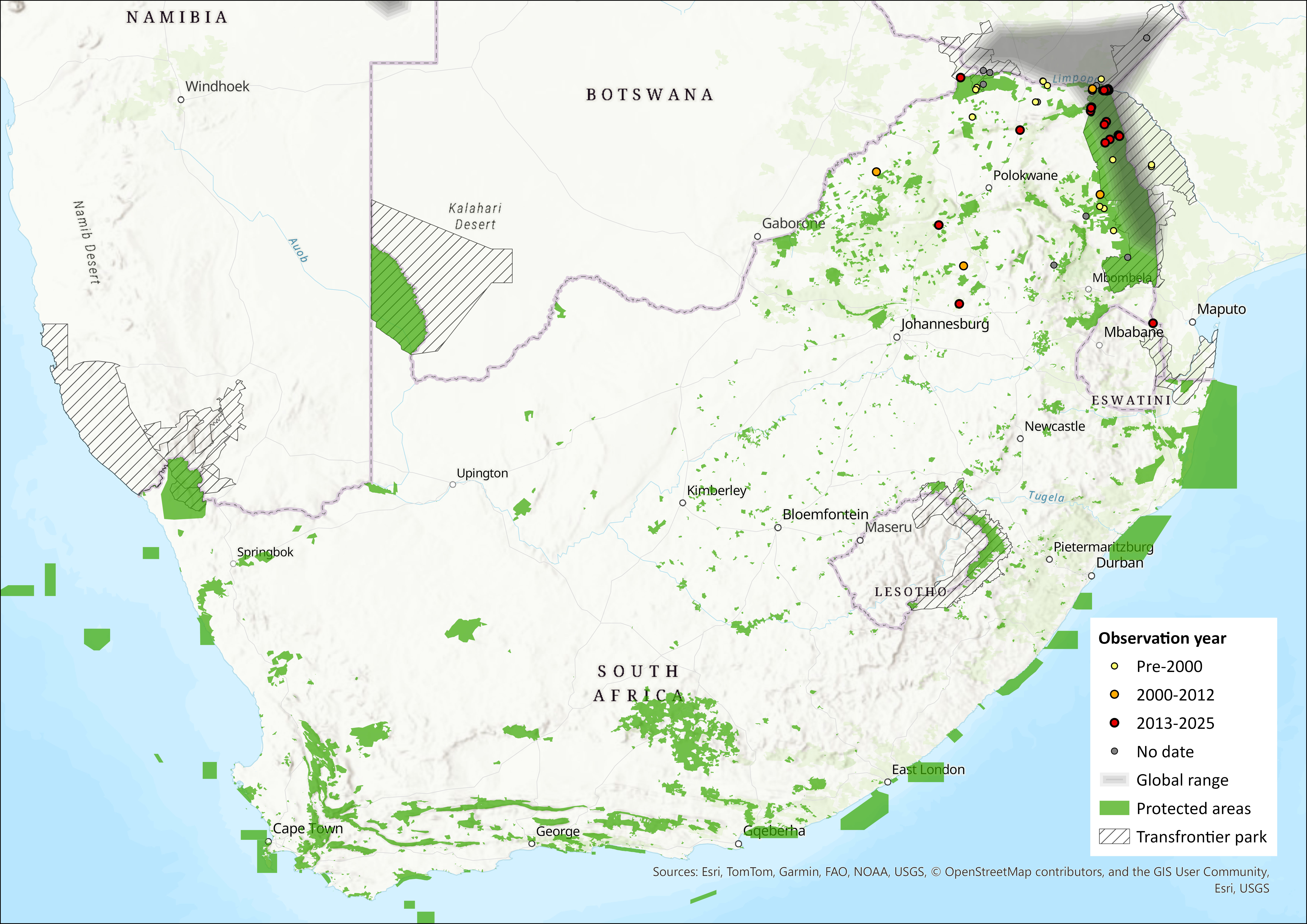 Figure 1. Distribution records for Midas Free-tailed Bat (Mops midas) within the assessment region (South Africa, Eswatini and Lesotho). Note that distribution data is obtained from multiple sources and records have not all been individually verified.
Biogeographic Realms
Biogeographic Realm: Afrotropical
Occurrence
Countries of Occurrence
| Country | Presence | Origin | Formerly Bred | Seasonality |
| Benin | Extant | Native | – | – |
| Botswana | Extant | Native | – | – |
| Burkina Faso | Extant | Native | – | – |
| Burundi | Extant | Native | – | – |
| Central African Republic | Extant | Native | – | – |
| Chad | Extant | Native | – | – |
| Congo, The Democratic Republic of the | Extant | Native | – | – |
| Eritrea | Extant | Native | – | – |
| Eswatini | Extant | Native | ||
| Ethiopia | Extant | Native | – | – |
| Gambia | Extant | Native | – | – |
| Ghana | Extant | Native | – | – |
| Kenya | Extant | Native | – | – |
| Madagascar | Extant | Native | – | – |
| Malawi | Extant | Native | – | – |
| Mali | Extant | Native | – | – |
| Mozambique | Extant | Native | – | – |
| Namibia | Extant | Native | – | – |
| Niger | Extant | Native | – | – |
| Nigeria | Extant | Native | – | – |
| Rwanda | Extant | Native | – | – |
| Saudi Arabia | Extant | Native | – | – |
| Senegal | Extant | Native | – | – |
| South Africa | Extant | Native | – | – |
| Sudan | Extant | Native | – | – |
| Tanzania, United Republic of | Extant | Native | – | – |
| Togo | Extant | Native | – | – |
| Uganda | Extant | Native | – | – |
| Zambia | Extant | Native | – | – |
| Zimbabwe | Extant | Native | – | – |
Large Marine Ecosystems (LME) Occurrence
Large Marine Ecosystems: (Not specified)
FAO Area Occurrence
FAO Marine Areas: (Not specified)
Climate change
The effect of climate change on this species is unknown.
Population Information
It is generally considered to be rare across its range (Monadjem et al. 2016). In the eastern regions of the species’ distribution, it is considered to be locally abundant, where it roosts communally in small to large groups that may number in the hundreds (Monadjem et al. 2010), but globally the population is thought to be declining (ACR 2015; Monadjem et al. 2016). No population trends are available for the assessment region.
Current population trend: Unknown
Continuing decline in mature individuals? Unknown
Extreme fluctuations in the number of subpopulations: (Not specified)
Continuing decline in number of subpopulations: (Not specified)
All individuals in one subpopulation: (Not specified)
Number of mature individuals in population: Unknown
Number of mature individuals in largest subpopulation: Unknown
Number of Subpopulations: Unknown
Severely fragmented: No
Quantitative Analysis
Probability of extinction in the wild within 3 generations or 10 years, whichever is longer, maximum 100 years: (Not specified)
Probability of extinction in the wild within 5 generations or 20 years, whichever is longer, maximum 100 years: (Not specified)
Probability of extinction in the wild within 100 years: (Not specified)
Population Genetics
To date, the proposed subspecies within this species have not been validated using genetic techniques. Indeed, a phylogenetic study has shown genetic similarity between individuals from continental Africa (i.e., one locality in South Africa) and Madagascar (Ratrimomanarivo et al. 2007). Due to limited sampling and the use of only a single mitochondrial marker incorporated in this study, further research is needed to substantiate the taxonomic relationships within the species. Despite the species being considered rare, the ecological evidence (e.g., high wing-loading allowing for high dispersal capacity: Monadjem et al. 2020; presence in transfrontier parks) could suggest the species exists as a single population within the assessment region, connected with neighbouring countries. Due to a lack of information on population sizes, a measure of effective population size is not possible. More fine-scale population genomic studies are recommended to better quantify the genetic structure and health of this species.
Habitats and ecology
This species is generally restricted to the Savannah Biome, specifically within lowland and woodland regions (Monadjem et al. 2020) and is frequently associated with large rivers and swamps (Smithers 1983; Dunlop 1999). It has been recorded from hot, low-lying river valleys and permanent water bodies in northeastern South Africa (Monadjem et al. 2020). In Maun, Botswana, this species was noted to prefer roosting in areas of complete darkness (Skinner & Chimimba 2005). Individuals make use of corrugated roofs, wooden roof rafters and other small spaces within the roofs of buildings for communal rooting sites (Monadjem et al. 2020), where they pack themselves extremely tightly (Skinner & Chimimba 2005).
In the assessment region, the species has been recorded from the Mopane Bioregion, Lowveld and Central Bushveld. The species has also been recorded with ultrasonic bat detectors on the Mpumalanga Highveld around the town of Ermelo (Inkululeko Wildlife Services unpubl. data). This is an open aerial species and is not considered an agile flier, thus it flies in uncluttered airspaces, usually at heights of above 40 m from the ground (Aldridge & Rautenbach 1987). Consequently, as is the case with other South African Molossids, the Midas Free-tailed Bat is categorised as having a “High” risk of fatality from wind turbines (MacEwan et al. 2020). It is a fast flier and is known to range considerable distances during excursions (Skinner & Chimimba 2005). It is insectivorous, feeding primarily on Coleoptera species (Archer 1977; Monadjem et al. 2020).
Ecosystem and cultural services: Insectivorous bats are expected to contribute to controlling insect populations, including populations of insect species that destroy crops (Boyles et al. 2011; Kunz et al. 2011), which may decrease the use of pesticides. A molecular study on faecal samples from Midas Free-tailed Bats in a macadamia-growing area in South Africa revealed that at least seven insect orders were consumed, and that the diet of M. midas contained a much higher prevalence and diversity of lepidopteran (81 taxa from 17 families) compared to coleopteran (two taxa) prey (Taylor et al. 2017). About one third of all faecal pellets contained DNA from the significant macadamia pest species, Nezara viridula (Order Heteroptera), indicating the value of intact bat communities in the biological control of pest stink bugs in macadamia orchards.
IUCN Habitats Classification Scheme
| Habitat | Season | Suitability | Major Importance? |
| 1.5. Forest -> Forest – Subtropical/Tropical Dry | – | Suitable | – |
| 2.1. Savanna -> Savanna – Dry | – | Suitable | – |
| 2.2. Savanna -> Savanna – Moist | – | Suitable | Yes |
| 8.1. Desert -> Desert – Hot | – | Marginal | – |
| 14.5. Artificial/Terrestrial -> Artificial/Terrestrial – Urban Areas | – | Suitable | – |
Life History
Generation Length: (Not specified)
Age at Maturity: Female or unspecified: (Not specified)
Age at Maturity: Male: (Not specified)
Size at Maturity (in cms): Female: Forearm mean = 6.15 cm (Monadjem et al. 2020)
Size at Maturity (in cms): Male: Forearm mean = 6.38 cm (Monadjem et al. 2020)
Longevity: (Not specified)
Average Reproductive Age: (Not specified)
Maximum Size (in cms): (Not specified)
Size at Birth (in cms): (Not specified)
Gestation Time: (Not specified)
Reproductive Periodicity: In southern Africa, limited data on the reproductive seasonality suggest a parturition period between December and March (Monadjem et al. 2020).
Average Annual Fecundity or Litter Size: Females give birth to a single young, weighing between 9.6 and 10.0 g (Skinner & Chimimba 2005).
Natural Mortality: (Not specified)
Breeding Strategy
Does the species lay eggs? No
Does the species give birth to live young: Yes
Does the species exhibit parthenogenesis: No
Does the species have a free-living larval stage? No
Does the species require water for breeding? No
Movement Patterns
Movement Patterns: (Not specified)
Congregatory: This species roosts communally in small to large groups, which may number in the hundreds (Smithers 1971 from Monadjem et al. 2020).
Systems
System: Terrestrial
General Use and Trade Information
There is no evidence to suggest that this species is traded or harvested within the assessment region. However, it is hunted for bushmeat in other parts of its range (ACR 2015).
|
Subsistence: |
Rationale: |
Local Commercial: |
Further detail including information on economic value if available: |
|
Yes |
– |
– |
– |
National Commercial Value: No
International Commercial Value: No
|
End Use |
Subsistence |
National |
International |
Other (please specify) |
|
1. Food – human |
true |
– |
– |
– |
Is there harvest from captive/cultivated sources of this species? (Not specified)
Harvest Trend Comments: (Not specified)
Threats
Globally, the Midas Mops Bat is believed to be locally vulnerable to general persecution (pest control), collection for food, and habitat loss (ACR 2015; Monadjem et al. 2016). The impact of these threats should be investigated within the assessment region. Additionally, this aerial-foraging species will likely be significantly negatively impacted by wind farms if/when these are operational in the Mpumalanga and Limpopo provinces of South Africa, and further north in southern Africa. This is because, like other aerial-foraging Molossid species, the Midas Free-tailed Bat is categorised as having a “High” risk of fatality from wind turbines (MacEwan et al. 2020). If/When there are operational wind farms within the distribution range of this species, fatalities of this species must be carefully monitored and adequately mitigated. If not, this species, like the similar Egyptian Free-tailed Bat (Tadarida aegyptiaca) will likely be heavily impacted by wind farm development (Aronson 2022).
Conservation
Within the assessment region, this species occurs within protected areas such as the Great Limpopo Transfrontier Park and Greater Mapungubwe Transfrontier Conservation Area. No specific conservation efforts have been identified for this species at present. However, more research on population size and trends is needed. This species is likely to benefit from enhanced protection of key roost sites, especially large trees (Monadjem et al. 2016). Future work should focus on monitoring and effectively mitigating fatalities of this species at wind farms, once these are operational within the distribution range of this species.
Recommendations for land managers and practitioners:
- Reduce pesticide use in agricultural landscapes.
- Protect large trees in conservancies and ranch lands.
- Development of wind farms must avoid encroachment into the prescribed buffers around confirmed and potential roosts of this species.
- Quantify numbers of fatalities of this species if/where wind farms are developed in South Africa’s Mpumalanga and Limpopo provinces (and further north in southern Africa).
- Turbine-fatalities of this species must be reduced with interventions such as ultrasound to deter bats and curtailing turbines during low wind speeds.
Research priorities:
- Studies detailing subpopulation distribution, sizes and trends are urgently needed (Monadjem et al. 2016).
- Taxonomic resolution of M. midas, and the genetic relationship between southern and northern African populations, as well as the Malagasy population.
- Possible future wind farm carcasses of this species could be used to obtain greater insight into the biogeography, genetics, reproductive biology, ecology, and ecosystem services of this species in southern Africa.
Encouraged citizen actions:
- Citizens can assist the conservation of the species by reporting sightings on virtual museum platforms (for example, iNaturalist and MammalMAP) and therefore contribute to an understanding of the species distribution.
Bibliography
ACR. 2015. African Chiroptera Report 2015. Pretoria, South Africa.
Aldridge HDJN, Rautenbach IL. 1987. Morphology, echolocation and resource partitioning in insectivorous bats. The Journal of Animal Ecology 56: 763–778.
Archer AL. 1977. Results of the Winifred T. Carter Expedition 1975 to Botswana, Mammals – Chiroptera. Botswana Notes and Records 9: 145–154.
Aronson, J. 2022. Current state of knowledge of wind energy impacts on bats in South Africa. Acta Chiropterologica 24: 221-238.
Boyles JG, Cryan PM, McCracken GF, Kunz TH. 2011. Economic importance of bats in agriculture. Science 332: 41–42.
Driver, A., Sink, K.J., Nel, J.N., Holness, S., Van Niekerk, L., Daniels, F., Jonas, Z., Majiedt, P.A., Harris, L. and Maze, K. 2012. National Biodiversity Assessment 2011: An assessment of South Africa’s biodiversity and ecosystems. Synthesis Report. South African National Biodiversity Institute and Department of Environmental Affairs, Pretoria, South Africa.
Dunlop, J. 1999. Mops midas. Mammalian Species 615: 1-4.
Hayman, R.W. and Hill, J.E. 1971. Order Chiroptera. In: J. Meester and H.W. Setzer (eds), The Mammals of Africa: An Identification Manual, pp. 73. Smithsonian Institution Press, Washington, D.C., USA.
Kunz TH, Braun de Torrez E, Bauer D, Lobova T, Fleming TH. 2011. Ecosystem services provided by bats. Annals of the New York Academy of Sciences 1223: 1–38.
MacEwan, K., Sowler, S., Aronson, J. and Lötter, C. 2020. South African Best Practice Guidelines for Pre-construction Monitoring of Bats at Wind Energy Facilities. Edition 5. South African Bat Assessment Association. South Africa.
Monadjem A, Cotterill F, Ratrimomanarivo FH, Jenkins RKB, Mickleburgh S, Fahr J, Bergmans W, Ranivo J, Racey PA, Hutson AM. 2016. Mops midas.
Monadjem, A., Taylor, P.J., Cotterill, F.P.D. and Schoeman M.C. 2010. Bats of Southern and Central Africa: a biogeographic and taxonomic synthesis. University of Witwatersrand Press, Johannesburg.
Monadjem, A., Taylor, P.J., Cotterill, F.P.D. and Schoeman M.C. 2020. Bats of Southern and Central Africa: a biogeographic and taxonomic synthesis. 2nd Edition. University of Witwatersrand Press, Johannesburg.
Ratrimomanarivo, F. H., Vivian, J., Goodman, S. M. and Lamb, J. 2007. Morphological and molecular assessment of the specific status of Mops midas (Chiroptera: Molossidae) from Madagascar and Africa. African Zoology 42: 237-253.
Samonds KE, Godfrey LR, Ali JR, Goodman SM, Vences M, Sutherland MR, Irwin MT, Krause DW. 2012. Spatial and temporal arrival patterns of Madagascar’s vertebrate fauna explained by distance, ocean currents, and ancestor type. Proceedings of the National Academy of Sciences 109: 5352–5357.
Skinner, J.D. and Smithers, R.H.N. 1990. The Mammals of the Southern African Subregion, second edition University of Pretoria, Pretoria. South Africa.
Smithers, R.H.N. 1983. The Mammals of the Southern African Subregion. University of Pretoria, Pretoria, South Africa.
Taylor, P.J., Matamba, S., Steyn, J.N.K., Nangammbi, T., Zepeda-Mendoza, M.L., and Bohmann, K. 2017. Diet determined by next generation sequencing reveals pest consumption and opportunistic foraging by bats in macadamia orchards in South Africa. Acta Chiropterologica 19: 239-354.