
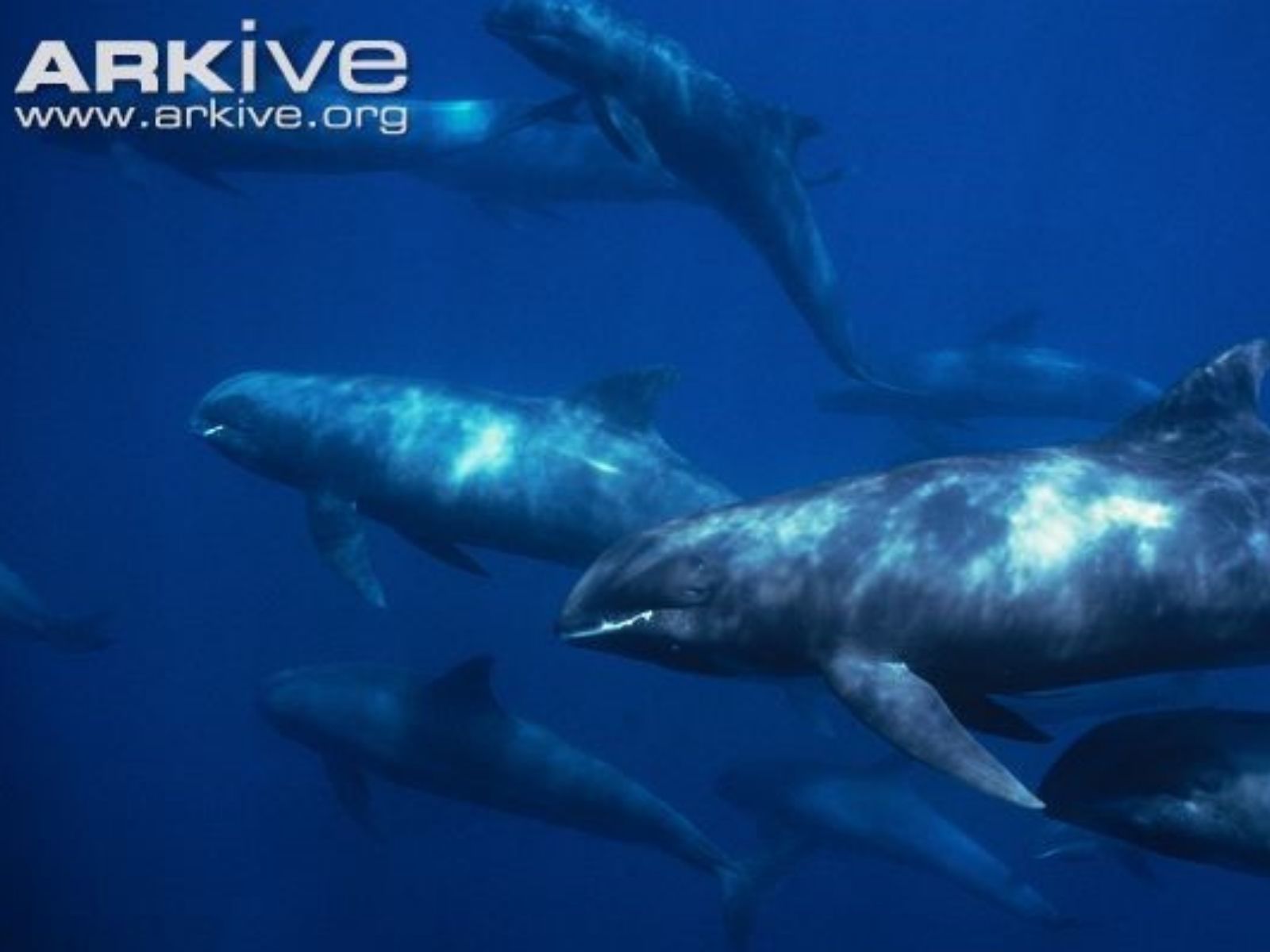
Melon-headed Whale
Peponocephala electra

2025 Red list status
Least Concern

Regional Population Trend
Unknown

Change compared
to 2016
No Change
Overview
Peponocephala electra – (Gray, 1846)
ANIMALIA – CHORDATA – MAMMALIA – ARTIODACTYLA – DELPHINIDAE – Peponocephala – electra
Common Names: Melon-headed Whale, Electra Dolphin, Hawaiian Blackfish, Hawaiian Porpoise, Indian Broad-beaked Dolphin, Many-toothed Blackfish (English), Bolkopdolfyn (Afrikaans), Dauphin d’Electre (French), Delfín Cabeza de Melón (Spanish; Castilian), Electra (Spanish; Castilian), Péponocéphale (French)
Synonyms: Electra electra (Gray, 1846); Lagenorhynchus electra (Gray, 1846)
Taxonomic Note:
No subspecies of the Melon-headed Whale (Peponocephala electra) are currently recognised (Committee on Taxonomy 2018). This species is morphologically like the Pygmy Killer Whale (Feresa attenuata) and the two species can be easily confused in the field. Although they sometimes form resident populations around oceanic islands, Melon-headed Whales show low levels of genetic differentiation both within and between ocean basins, suggesting high levels of population connectivity (Martien et al. 2017).
Red List Status: LC – Least Concern, (IUCN version 3.1)
Assessment Information
Assessor: Purdon, J.1,2
Reviewer: Patel, T.3
Institutions: 1TUT Nature Conservation, 2Whale Unit, University of Pretoria, 3Endangered Wildlife Trust
Previous Assessor: Plön, S.
Previous Reviewer: Cockcroft, V.
Previous Contributors: Relton, C., Atkins, S., Findlay, K., Elwen, S., Meyer, M., Oosthuizen, H. & Child, M.F.
Assessment Rationale
Abundance data for this widely distributed species are unavailable for the assessment region. However, the population is suspected to be abundant and robust in many parts of its range. For example, there are estimated to be over 45,000 animals in the eastern tropical Pacific. As this species is deep diving, it is potentially increasingly threatened by the emerging threats of marine noise (especially military sonar and seismic surveys), plastic pollution and climate change, the effects of which should be monitored. Competition with fisheries may also cause local declines. However, no threats are suspected to be causing net population to decline currently. Therefore, in line with the global assessment, this species remains Least Concern.
Regional population effects: In South African waters, this species is believed to be at the extreme southern edge of its range. Sightings of this species have been recorded from the Mozambique Channel, and no barriers to dispersal have been identified, thus rescue effects are possible.
Reasons for Change
Reason(s) for Change in Red List Category from the Previous Assessment: No change
Red List Index
Red List Index: No change
Recommended citations: Purdon J. 2025. A conservation assessment of Peponocephala electra. In Patel T, Smith C, Roxburgh L, da Silva JM & Raimondo D, editors. The Red List of Mammals of South Africa, Eswatini and Lesotho. South African National Biodiversity Institute and Endangered Wildlife Trust, South Africa.
Regional Distribution and occurrence
Geographic Range
Although Melon-headed Whales have a worldwide distribution across tropical, subtropical and warm temperate regions (Perryman et al. 1994), there is a general lack of knowledge surrounding the ecology of this species. This is partly because this species is primarily distributed offshore making scientific research challenging. However, recent studies indicate that in some areas, such as French Polynesia in the South Pacific (Brownell et al. 2009), the Comoros in the Indian Ocean (Kiszka et al. 2011), the Hawaiian Islands (Aschettino et al. 2011) and Palmyra Atoll in the tropical Pacific (Baumann-Pickering 2009), Melon-headed Whales occasionally occur within shallower, nearshore regions, around oceanic islands. Generally, their distribution extends from 20°N to 20°S (Perryman 2002).
Within the assessment region, there have been no sightings of this species, however, it was first identified in South Africa from a stranding record in Hout Bay. Best and Shaughnessy (1981) suggest that the individual stranded at Hout Bay may have been at the extreme southern edge of its range. Additional possible stranding records from East London remain unconfirmed, as these specimens may be confused with F. attenuata, the pygmy killer whale. Another standing of this species occurred in St Helena in 1990. These stranding data may be the only record of this species from South Africa (Skinner & Chimimba 2005). The closest other records are sightings from the Mozambique Channel (Kiszka et al. 2006), the Seychelles (Ballance & Pitman 1998), and Tanzania (Peddemors & Ross 1988).
Elevation / Depth / Depth Zones
Elevation Lower Limit (in metres above sea level): (Not specified)
Elevation Upper Limit (in metres above sea level): (Not specified)
Depth Lower Limit (in metres below sea level): (Not specified)
Depth Upper Limit (in metres below sea level): (Not specified)
Depth Zone: (Not specified)
Map
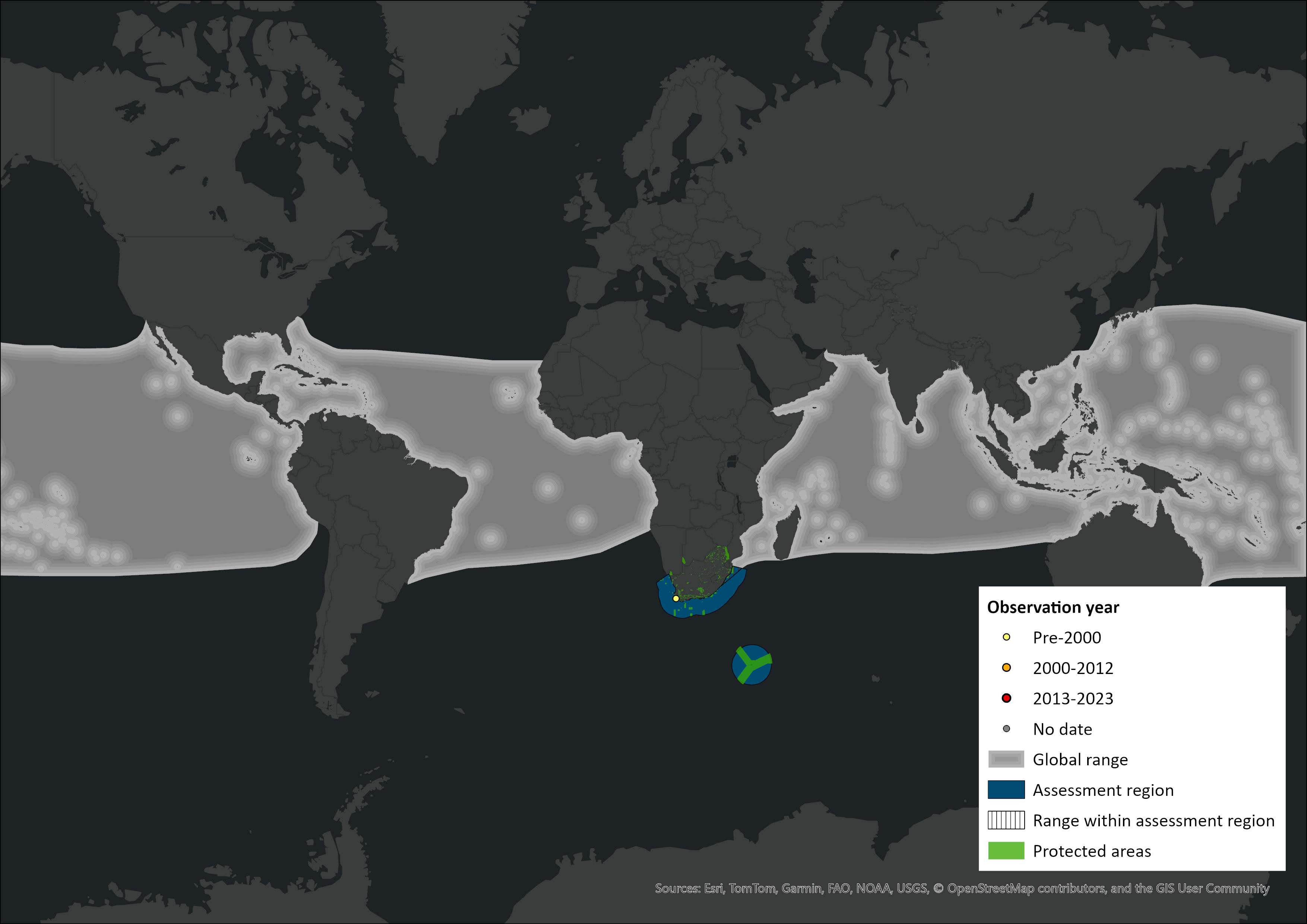 Figure 1. Distribution records for Melon-headed Whale (Peponocephala electra) within the assessment region (South Africa, Eswatini and Lesotho). Note that distribution data is obtained from multiple sources and records have not all been individually verified.
Biogeographic Realms
Biogeographic Realm: Afrotropical, Australasian, Indomalayan, Nearctic, Neotropical, Oceanian
Occurrence
Countries of Occurrence
| Country | Presence | Origin | Formerly Bred | Seasonality |
| American Samoa | Extant | Native | – | – |
| Angola | Presence Uncertain | Native | – | – |
| Anguilla | Extant | Native | – | – |
| Antigua and Barbuda | Extant | Native | – | – |
| Aruba | Extant | Native | – | – |
| Australia | Extant | Native | – | – |
| Bahamas | Extant | Native | – | – |
| Bangladesh | Extant | Native | – | – |
| Barbados | Extant | Native | – | – |
| Belize | Extant | Native | – | – |
| Benin | Extant | Native | – | – |
| Bermuda | Extant | Native | – | – |
| Bonaire, Sint Eustatius and Saba | Extant | Native | – | – |
| Brazil | Extant | Native | – | – |
| Brunei Darussalam | Extant | Native | – | – |
| Cabo Verde | Presence Uncertain | Native | – | – |
| Cambodia | Extant | Native | – | – |
| Cameroon | Extant | Native | – | – |
| Cayman Islands | Extant | Native | – | – |
| Cocos (Keeling) Islands | Extant | Native | – | – |
| Colombia | Extant | Native | – | – |
| Comoros | Presence Uncertain | Native | – | – |
| Congo | Extant | Native | – | – |
| Congo, The Democratic Republic of the | Extant | Native | – | – |
| Cook Islands | Extant | Native | – | – |
| Costa Rica | Extant | Native | – | – |
| Cuba | Extant | Native | – | – |
| Curaçao | Extant | Native | – | – |
| Côte d’Ivoire | Extant | Native | – | – |
| Djibouti | Extant | Native | – | – |
| Dominica | Extant | Native | – | – |
| Dominican Republic | Extant | Native | – | – |
| Ecuador | Extant | Native | – | – |
| El Salvador | Extant | Native | – | – |
| Equatorial Guinea | Extant | Native | – | – |
| Fiji | Extant | Native | – | – |
| France | Extant | Vagrant | – | – |
| French Guiana | Extant | Native | – | – |
| French Polynesia | Extant | Native | – | – |
| Gabon | Extant | Native | – | – |
| Gambia | Extant | Native | – | – |
| Ghana | Extant | Native | – | – |
| Grenada | Extant | Native | – | – |
| Guadeloupe | Extant | Native | – | – |
| Guam | Extant | Native | – | – |
| Guatemala | Extant | Native | – | – |
| Guinea | Extant | Native | – | – |
| Guinea-Bissau | Extant | Native | – | – |
| Guyana | Extant | Native | – | – |
| Haiti | Extant | Native | – | – |
| Honduras | Extant | Native | – | – |
| Hong Kong | Presence Uncertain | Native | – | – |
| India | Extant | Native | – | – |
| Indonesia | Extant | Native | – | – |
| Iran, Islamic Republic of | Extant | Native | – | – |
| Jamaica | Extant | Native | – | – |
| Japan | Extant | Native | – | – |
| Kenya | Extant | Native | – | – |
| Kiribati | Extant | Native | – | – |
| Korea, Democratic People’s Republic of | Presence Uncertain | Native | – | – |
| Korea, Republic of | Presence Uncertain | Native | – | – |
| Liberia | Extant | Native | – | – |
| Madagascar | Extant | Native | – | – |
| Malaysia | Extant | Native | – | – |
| Maldives | Extant | Native | – | – |
| Marshall Islands | Extant | Native | – | – |
| Martinique | Extant | Native | – | – |
| Mauritania | Extant | Native | – | – |
| Mauritius | Presence Uncertain | Native | – | – |
| Mayotte | Extant | Native | – | – |
| Mexico | Extant | Native | – | – |
| Micronesia, Federated States of | Extant | Native | – | – |
| Montserrat | Extant | Native | – | – |
| Morocco | Extant | Vagrant | – | – |
| Mozambique | Extant | Native | – | – |
| Myanmar | Extant | Native | – | – |
| Namibia | Extant | Native | – | – |
| Nauru | Extant | Native | – | – |
| New Caledonia | Extant | Native | – | – |
| Nicaragua | Extant | Native | – | – |
| Nigeria | Extant | Native | – | – |
| Niue | Extant | Native | – | – |
| Northern Mariana Islands | Extant | Native | – | – |
| Oman | Extant | Native | – | – |
| Pakistan | Extant | Native | – | – |
| Palau | Extant | Native | – | – |
| Panama | Extant | Native | – | – |
| Papua New Guinea | Extant | Native | – | – |
| Peru | Extant | Native | – | – |
| Philippines | Extant | Native | – | – |
| Pitcairn | Extant | Native | – | – |
| Puerto Rico | Extant | Native | – | – |
| Réunion | Presence Uncertain | Native | – | – |
| Saint Barthélemy | Extant | Native | – | – |
| Saint Helena, Ascension and Tristan da Cunha | Presence Uncertain | Native | – | – |
| Saint Kitts and Nevis | Extant | Native | – | – |
| Saint Lucia | Extant | Native | – | – |
| Saint Martin (French part) | Extant | Native | – | – |
| Saint Vincent and the Grenadines | Extant | Native | – | – |
| Samoa | Extant | Native | – | – |
| Sao Tome and Principe | Presence Uncertain | Native | – | – |
| Senegal | Extant | Native | – | – |
| Seychelles | Presence Uncertain | Native | – | – |
| Sierra Leone | Extant | Native | – | – |
| Singapore | Extant | Native | – | – |
| Sint Maarten (Dutch part) | Extant | Native | – | – |
| Solomon Islands | Extant | Native | – | – |
| Somalia | Extant | Native | – | – |
| South Africa | Extant | Native | – | – |
| Sri Lanka | Extant | Native | – | – |
| Suriname | Extant | Native | – | – |
| Taiwan, Province of China | Extant | Native | – | – |
| Tanzania, United Republic of | Extant | Native | – | – |
| Thailand | Extant | Native | – | – |
| Timor-Leste | Extant | Native | – | – |
| Togo | Extant | Native | – | – |
| Tonga | Extant | Native | – | – |
| Trinidad and Tobago | Extant | Native | – | – |
| Turks and Caicos Islands | Extant | Native | – | – |
| Tuvalu | Presence Uncertain | Native | – | – |
| United States of America | Extant | Native | – | – |
| Uruguay | Presence Uncertain | Native | – | – |
| Vanuatu | Extant | Native | – | – |
| Venezuela, Bolivarian Republic of | Extant | Native | – | – |
| Viet Nam | Extant | Native | – | – |
| Virgin Islands, British | Extant | Native | – | – |
| Virgin Islands, U.S. | Extant | Native | – | – |
| Wallis and Futuna | Extant | Native | – | – |
| Western Sahara | Extant | Native | – | – |
| Yemen | Extant | Native | – | – |
Large Marine Ecosystems (LME) Occurrence
Large Marine Ecosystems: (Not specified)
FAO Area Occurrence
| Presence | Origin | Formerly Bred | Seasonality | |
| 21. Atlantic – northwest | Extant | Native | – | – |
| 31. Atlantic – western central | Extant | Native | – | – |
| 34. Atlantic – eastern central | Extant | Native | – | – |
| 41. Atlantic – southwest | Extant | Native | – | – |
| 47. Atlantic – southeast | Extant | Native | – | – |
| 51. Indian Ocean – western | Extant | Native | – | – |
| 57. Indian Ocean – eastern | Extant | Native | – | – |
| 61. Pacific – northwest | Extant | Native | – | – |
| 71. Pacific – western central | Extant | Native | – | – |
| 77. Pacific – eastern central | Extant | Native | – | – |
| 81. Pacific – southwest | Extant | Native | – | – |
| 87. Pacific – southeast | Extant | Native | – | – |
Climate change
Melon-headed Whales are found in tropical and subtropical waters. With temperatures expected to rise, it is possible that their habitat range will shift further south where water temperatures will be within their preferred range (Kebke et al. 2022). Melon-headed Whale distribution will ultimately be reliant on their prey species. In the assessment area stomach contents of one stranded Melon-headed Whale indicated that prey may consist of chokka squid (Loligo reynaudi) and hake (Merluccius sp.) (Best, 2007). Through models, climate change has been shown to affect prey species by both a reduction in prey species and a shift in their distribution (Kebke et al. 2022). Reduced prey availability will have consequences for the population as a whole. Climate change will also increase the concentration of contaminants in the marine environment. The full consequences of these contaminants are unknown but will ultimately influence fecundity and population (Derville et al. 2019, Kebke et al. 2022).
Population
Although, this species has been recorded as relatively common in some portions of its range (Taylor et al. 2008), it has an extralimital distribution into South African waters. Thus, this species is likely to be considerably rare within the assessment region and has only been confirmed from two stranding records along the west coast (MRI Whale unit unpublished data). No abundance estimates exist for this species in South African waters.
The following global population estimates are available (Taylor et al. 2008), indicating that they are fairly abundant in some regions: 45,400 (CV = 47%) animals in the eastern tropical Pacific (Wade & Gerrodette 1993); 3,451 (CV = 55%) in the Gulf of Mexico (Mullin & Fulling 2004); 2,947 animals (CV = 111%) in Hawaii (Barlow 2006); and 921 (CV = 80%) in the eastern Sulu Sea, Philippines (Dolar et al. 2006).
| Continuing decline in mature individuals? | Qualifier | Justification |
| Unknown | – | – |
Current population trend: Unknown
Continuing decline in mature individuals: Unknown
Number of mature individuals in population: Unknown
Number of mature individuals in largest subpopulation: Unknown
Number of subpopulations: Unknown
Severely fragmented: No
Extreme fluctuations in the number of subpopulations: (Not specified)
Continuing decline in number of subpopulations: (Not specified)
All individuals in one subpopulation: (Not specified)
Quantitative Analysis
Probability of extinction in the wild within 3 generations or 10 years, whichever is longer, maximum 100 years: (Not specified)
Probability of extinction in the wild within 5 generations or 20 years, whichever is longer, maximum 100 years: (Not specified)
Probability of extinction in the wild within 100 years: (Not specified)
Population Genetics
There is no information regarding the genetic structure of Melon-headed Whales in the assessment region; however, some work has been conducted on Melon-headed Whales from the Hawaiian Islands, Mayotte, Guam, Johnston, Palmyra, Bahamas and Brazil (Martien et al. 2017). Mitochondrial data and genotypes from 14 nuclear microsatellite loci were used to examine genetic population structure of Melon-headed Whales. It was thought that because of their strong social cohesion and global distribution, of which some are residents of oceanic islands there would be strong regional genetic differentiation. Their results show that there is only moderate genetic differentiation among populations, suggesting occasional long-distance dispersal with larger pelagic subpopulations (Martien et al. 2017). Based on these results, it is possible that some subpopulation structure could be detected within the assessment region, but this will need to be verified using genetic/genomic approaches. Until such time, there is insufficient information to quantify the genetic diversity indicators.
Habitats and ecology
Melon-headed Whales primarily occur in deep waters extending from the continental shelf seaward, and around oceanic islands; usually associated with warm, oceanic waters, particularly the tropical and subtropical Agulhas Current. High latitude strandings, e.g. the two along the Western Cape coastline, are thought to be extralimital records (Best & Shaughnessy 1981), and are generally associated with incursions of warm water. In shallow water, they are likely to become disoriented and strand but do occur in nearshore regions with steep coastal gradients (Watkins et al. 1997; Wang et al. 2001a, 2001b). They occasionally, but rarely, extend into temperate regions, and are primarily associated with regions of upwelling and equatorial waters (Perryman et al. 1994).
The feeding ecology of this species is poorly known, however, in general, they are considered to consume small fish, shrimp and varying species of ommastrephid squid (Skinner & Chimimba 2005). The stomach contents of the male Melon-headed Whale stranded at Hout Bay contained squid (Loligo reynaudi) and fish (Merluccius spp.) remains (Best & Shaughnessy 1981). In other regions where this species occurs sympatrically with Spotted or Spinner Dolphins (Stenella spp.), the Melon-headed Whale feeds on larger squid compared to the Stenella spp. (Perryman et al. 1994).
Multiple populations of Melon-headed Whales may exist adjacently or in overlapping ranges, suggesting that these populations may make use of varying foraging niches and probably display differing social and behavioural patterns (Brownell et al. 2009; Aschettino et al. 2011). This species occurs in large groups, ranging from 15–500 individuals (Bryden et al. 1977), and exhibits strong social bonds (Jefferson & Barros 1997). They have also been sighted in mixed groups, associating commonly with Fraser’s Dolphin (Lagenodelphis hosei) (Skinner & Chimimba 2005). In the southern hemisphere, Melon-headed Whales have been found to breed seasonally, giving birth between August and December after a gestation period of approximately 12 months (Skinner & Chimimba 2005).
Ecosystem and cultural services: Marine mammals integrate and reflect ecological variation across large spatial and long temporal scales, and therefore they are prime sentinels of marine ecosystem change (Moore 2008).
IUCN Habitats Classification Scheme
| Habitat | Season | Suitability | Major Importance? |
| 10.1. Marine Oceanic -> Marine Oceanic – Epipelagic (0-200m) | – | Marginal | – |
| 10.2. Marine Oceanic -> Marine Oceanic – Mesopelagic (200-1000m) | – | Suitable | Yes |
| 10.3. Marine Oceanic -> Marine Oceanic – Bathypelagic (1000-4000m) | – | Suitable | Yes |
Life History
Generation Length: (Not specified)
Age at Maturity: Female or unspecified: (Not specified)
Age at Maturity: Male: (Not specified)
Size at Maturity (in cms): Female: (Not specified)
Size at Maturity (in cms): Male: (Not specified)
Longevity: (Not specified)
Average Reproductive Age: (Not specified)
Maximum Size (in cms): (Not specified)
Size at Birth (in cms): (Not specified)
Gestation Time: (Not specified)
Reproductive Periodicity: (Not specified)
Average Annual Fecundity or Litter Size: (Not specified)
Natural Mortality: (Not specified)
Does the species lay eggs? (Not specified)
Does the species give birth to live young: (Not specified)
Does the species exhibit parthenogenesis: (Not specified)
Does the species have a free-living larval stage? (Not specified)
Does the species require water for breeding? (Not specified)
Movement Patterns
Movement Patterns: (Not specified)
Congregatory: (Not specified)
Systems
System: Marine
General Use and Trade Information
This species is not utilised or traded within the assessment region
Local Livelihood: (Not specified)
National Commercial Value: (Not specified)
International Commercial Value: (Not specified)
End Use: (Not specified)
Is there harvest from captive/cultivated sources of this species? (Not specified)
Harvest Trend Comments: (Not specified)
Threats
No major threats to this species were identified within the assessment region. However, the threats generally associated with offshore species may also impact Melon-headed Whales, including the loss of prey base due to overfishing, incidental catches in fisheries, loud anthropogenic sounds, and ingestion of plastics. Additionally, climate change is expected to have both direct and indirect effects on prey species, which will indirectly affect the distribution, migration, population structure and reproductive success of cetacean species, and furthermore may enhance their vulnerability to disease, anthropogenic marine pollution and contaminants (Learmonth et al. 2006).
Inconclusive evidence suggests that Melon-headed Whales are vulnerable to high intensity marine noise pollution (Aschettino et al. 2011). For example, in 2004 a group of over 150 Melon-headed Whales uncommonly roamed into the shallow waters of Hanalei Bay (Hawaii); this event coincided with mid-frequency sonar operations conducted during naval training (Southall et al. 2006). Another more recent example from the east coast of China shows that the concentrated mass strandings were probably due to noise exposure from intense transient anthropogenic sonar. They found that melon-headed whales had hearing thresholds of between 20 dB to 65 dB higher than their phylogenetically closest relatives the Pygmy Killer Whales (Wang et al. 2021). As the intensity of marine noise pollution is thought to be increasing within South African waters (Koper & Plön 2012), this potentially represents an emerging threat.
Like other deep-diving species, ingestion of marine plastic pollution may also represent an emerging threat, as it has been known to cause fatalities in sperm whales (for example, Scott et al. 2001) and similar species.
Conservation
The Melon-headed Whale is listed in Appendix II of Convention on International Trade in Endangered Species of Wild Fauna and Flora (CITES) and is protected by the Marine Living Resources Act (No. 18 of 1998). Estimates of population size and distribution are needed to determine the status of this species in South African waters. Additionally, research is needed to assess the impacts and trends of potential threats. No specific conservation interventions are necessary at present or can be recommended until further data are available.
Recommendations for managers and practitioners:
- Sightings, strandings and bycatch data should be recorded, especially during ship-based surveys aimed at other cetacean species, as well as commercial fisheries and marine tour operators.
Research priorities:
- It is recommended that population census surveys are undertaken in South African waters to determine abundance estimates and trends.
- The severity and potential impacts of threats to this species should be investigated.
- Genetic analysis should be carried out on the two stranded specimens, if there is preserved tissue available.
Encouraged citizen actions:
- Use information dispensed by the South African Sustainable Seafood Initiative (SASSI) to make good choices when buying fish in shops and restaurants, e.g. wwfsa.mobi, FishMS 0794998795.
- Save electricity and fuel to mitigate CO2 emissions and, hence, the rate of climate change.
- Buy local products that have not been shipped.
- Sightings data from pelagic commercial tourism operators may be particularly valuable.
- Report any strandings to the relevant local authorities.
Bibliography
Aschettino JM, Baird RW, McSweeney DJ, Webster DL, Schorr GS, Huggins JL, Martien KK, Mahaffy SD, West KL. 2011. Population structure of melon-headed whales (Peponocephala electra) in the Hawaiian Archipelago: Evidence of multiple populations based on photo identification. Marine Mammal Science 28: 666-689.
Ballance, L. T. and Pitman, R. L. 1998. Cetaceans of the western tropical Indian Ocean: distribution, relative abundance, and comparisons with cetacean communities of two other tropical ecosystems. Marine Mammal Science 14: 429-459.
Barlow, J. 2006. Cetacean abundance in Hawaiian waters estimated from a summer/fall survey in 2002. Marine Mammal Science 22(2): 446-464.
Barron GL, Jefferson TA. 1993. First records of the Melon-headed Whale (Peponocephala electra) from the Gulf of Mexico. The Southwestern Naturalist 38: 82-85.
Baumann-Pickering S. 2009. Species identification and measurement of activity in odontocete species off Palmyra Atoll by Acoustic Monitoring. Ph.D. Thesis. Eberhard Karls Universität Tübingen, Tübingen, Germany.
Best P, Shaughnessy PD. 1981. First record of the Melon-headed whale Peponocephala electra from South Africa. Annals of the South African Museum 83: 33-47.
Best, P. B. B. 2007. Whales and Dolphins of the Southern African Subregion. Cambridge University Press, Cape Town. 338pp.
Brownell RL, Ralls K, Baumann-Pickering S, Poole MM. 2009. Behavior of melon-headed whales near oceanic islands. Marine Mammal Science 25: 639-658.
Bryden MM, Harrison RJ, Lear RJ. 1977. Some aspects of the biology of Peponocephala electra (Cetacea: Delphinidae). I. General and reproductive biology. Marine and Freshwater Research 28: 703-715.
Derville, S., Torres, L.G., Albertson, R., Andrews, O., Scott Baker, C., Carzon, P., Constantine, R., Donoghue, M., Dutheil, C., Gannier, A., Oremus, M., Poole, M.M., Robbins, J., Garrigue, C. 2019. Whales in warming waters: Assessing breeding habitat diversity and adaptability in Oceania’s changing climate. Global Change Biodiversity: 25(4): 1466-1481. https://doi.org/10.1111/gcb.14563
Dolar, M. L. L., Perrin, W. F., Taylor, B. L., Kooyman, G. L. and Alava, M. N. R. 2006. Abundance and distributional ecology of cetaceans in the central Philippines. Journal of Cetacean Research and Management 8(1): 93-112.
Gray, J. E. 1846. Mammalia: on the cetaceous animals. In: Richardson, J., Gray, J.E. (ed.), The Zoology of the voyage of H.M.S. “Erebus” and “Terror” Under the Command of the Captain Sir James Clark Ross R.M.F.R.S. During the Years 1839 to 1843. Volume I. Mammalia, Birds, pp. 13-53. Jansen, London, UK.
IUCN (International Union for Conservation of Nature). 2012. Peponocephala electra. The IUCN Red List of Threatened Species. Version 3.1. Available at: http://www.iucnredlist.org. Downloaded on 21 February 2016.
Jefferson, T. A. and Barros, N. B. 1997. Peponocephala electra. Mammalian Species 553: 1-6.
Kebke, A., Samarra, F. & Detous, D. 2022. Climate change and cetacean health: impacts and future directions. Philosophical Transactions of the Royal Society B 377: 20210249. https://doi.org/10.1098/rstb.2021.0249.
Kiszka J, Breysse O, Vely M, Boinali K. 2006. Marine mammals around the Comoros archipelago (Mozambique Channel): recent records and review of available information. Report for the International Whaling Commission SC/58/O6.
Kiszka, J., Simon-Bouhet, B., Martinez, L., Pusineri, C., Richard, P. and Ridoux, V. 2011. Ecological niche segregation within a community of sympatric dolphins around a tropical island. Marine Ecology Progress Series 433: 273-288.
Koper RP, Plön S. 2012. The potential impacts of anthropogenic noise on marine animals and recommendations for research in South Africa. EWT Research & Technical Paper No. 1. Endangered Wildlife Trust, South Africa.
Learmonth, J.A., Macleod, C.D., Santos, M.B., Pierce, G.J., Crick, H.Q.P. and Robinson, R.A. 2006. Potential effects of climate change on marine mammals. Oceanography and Marine Biology: An Annual Review 44: 431-464.
Martien, KK., Hancock-Hanser, BL., Baird, RW., Kiszka, JJ. & Aschettino, JM. 2017. Unexpected patterns of global population structure in melon-headed whales Peponocephala electra. Marine Ecology Progress Series 577: 205-220.
Moore SE. 2008. Marine mammals as ecosystem sentinels. Journal of Mammalogy 89: 534-540.
Mullin KD, Fulling GL. 2004. Abundance of cetaceans in the oceanic northern Gulf of Mexico, 1996–2001. Marine Mammal Science 20: 787-807.
Nishiwaki M, Norris KS. 1966. A new genus Peponocephala for the odontocete cetacean species Electra electra. Scientific Reports of the Whales Research Institute, Tokyo 20: 95-99.
Peddemors VM, Ross GJB. 1988. First record of the melonheaded whale Peponocephala electra (Gray, 1846) for the East African coast. African Journal of Ecology 26: 345-346.
Perryman WL. 2002. Melon-headed whale Peponocephala electra Gray, 1846. In: Perrin WF, Würsig B, Thewissen JGM (ed.), Encyclopedia of Marine Mammals, pp. 733-734. Academic Press, San Diego, California, USA.
Perryman, W. L., Au, D. W. K., Leatherwood, S. and Jefferson, T. A. 1994. Melon-headed whale Peponocephala electra Gray, 1846. In: S. H. Ridgway and R. Harrison (eds), Handbook of marine mammals, Volume 5: The first book of dolphins, pp. 363-386. Academic Press.
Scott, M. D., Hohn, A. A., Westgate, A. J., Nicolas, J. R., Whitaker, B. R. and Campbell, W. B. 2001. A note on the release and tracking of a rehabilitated pygmy sperm whale (Kogia breviceps). Journal of Cetacean Research and Management 3(1): 87-94.
Shimura E, Numachi K. 1987. Genetic variability and differenciation in toothed whales. Scientific Reports of the Whales Research Institute, Tokyo 38: 141-163.
Skinner, J.D. and Chimimba, C.T. (eds). 2005. The Mammals of the Southern African Subregion. Cambridge University Press, United Kingdom, Cambridge.
Southall, B. L., Braun, R., Gulland, F. M. D., Heard, A. D., Baird, R. W., Wilkin, S. and Rowles, T. K. 2006. Hawaiian melon-headed whale (Peponocephala electra) mass stranding event of July 3-4, 2004. NOAA Technical Memorandum NMFS-OPR 31: 73 pp.
Taylor BL, Baird R, Barlow J, Dawson SM, Ford J, Mead JG, Notarbartolo di Sciara G, Wade P, Pitman RL. 2008. Peponocephala electra. The IUCN Red List of Threatened Species 2008: e.T16564A6077027.
Wade, P.R. and Gerrodette, T. 1993. Estimates of cetacean abundance and distribution in the eastern tropical Pacific. Reports of the International Whaling Commission 43: 477-493.
Wang, J. Y., Yang, S. C. and Liao, H. C. 2001. Records of melon-headed whales, Peponocephala electra (Gray, 1846), from the waters of Taiwan. Bulletin of the National Museum of Natural Science 14: 85-92.
Wang, Z-T., Supin, AY., Akamatsu, T., Duan, P-X., Yang, Y-N., Wang, K-X. & Wang, D. 2021. Auditory evoked potential in stranded melon-headed whales (Peponocephala electra): With severe hearing loss and possibly caused by anthropogenic noise pollution. Ecotoxicology and Environmental Safety 228: 113047. https://doi.org/10.1016/j.ecoenv.2021.113047
Wang, J. Y., Yang, S. C. and Liao, H. C. 2001. Species composition, distribution and relative abundance of cetaceans in the waters of southern Taiwan: Implications for conservation and eco-tourism. Journal of the National Parks of Taiwan 11: 136-158.
Watkins WA, Dahier MA, Samuels A, Gannon DP. 1997. Observations of Peponocephala electra, the Melon-headed Whale, in the Southeastern Caribean. Caribbean Journal of Science 33: 34-40.