
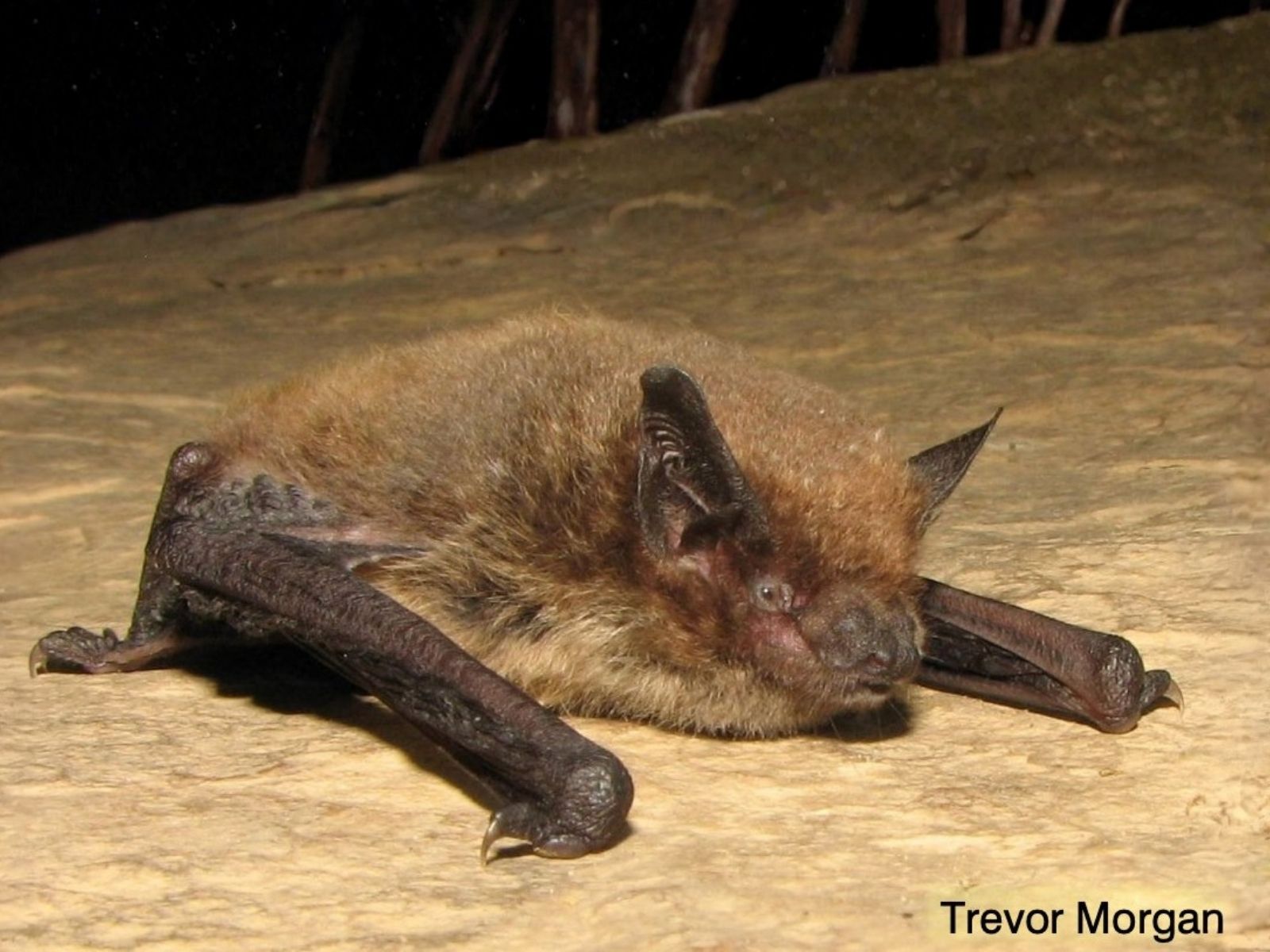
Lesueur’s Hairy Bat
Cistugo lesueuri

2025 Red list status
Vulnerable

Regional Population Trend
Declining

Change compared
to 2016
Uplisted
Overview
Cistugo lesueuri – Roberts, 1919
ANIMALIA – CHORDATA – MAMMALIA – CHIROPTERA – CISTUGIDAE – Cistugo – lesueuri
Common Names: Lesueur’s Hairy Bat, Lesueur’s Wing-gland Bat, Lesueur’s Myotis, Wing-gland bat (English), Lesueur se Langhaarvlermuis (Afrikaans)
Synonyms: Myotis lesueuri (Roberts, 1919)
Taxonomic Note: Historically this species has been included in the genus Myotis (family Vespertilionidae), but molecular studies show that the genus is distinct from all other Vespertilionidae, and in fact is distinctive enough to be placed in its own family, Cistugidae (Rautenbach et al. 1993, Lack et al. 2010). Further taxonomic revision is needed to fully understand the relationship between the species of C. lesueuri and C. seabrae, which are currently retained as separate species (Monadjem et al. 2020).
Red List Status: VU – Vulnerable, C2a(i) (IUCN version 3.1)
Assessment Information
Assessors: Howard, A1., Lötter, C.A2., Balona, J3., & da Silva, J.M.4
Reviewer: Richards, L.R.5
Institutions: 1University of the Free State, 2Inkululeko Wildlife Services (Pty) Ltd, 3Gauteng and Northern Regions Bat Interest Group, 4South African National Biodiversity Institute, and 5Durban Museum.
Previous Assessors and Reviewers: Avenant, N., MacEwan, K., Balona, J., Cohen, L., Jacobs, D., Monadjem, A., Richards, L., Schoeman, C., Sethusa, T. & Taylor, P.
Previous Contributors: Roxburgh, L., Raimondo, D. & Child, M.F.
Assessment Rationale
Lesueur’s Wing-gland Bat is restricted to South Africa and Lesotho below a latitude of 27 degrees south, in areas of rocky terrain with suitable crevices and water sources. It has a 371,663km² extent of occurrence, and an area of occupancy of 144 km², but is known from fewer than 40 locations, which are mostly old or unverified. This species has a very patchy recorded distribution. However, it is likely that this species is under sampled and additional colonies are suspected to occur, especially within the Nama and Succulent Karoo ecoregions of South Africa. Despite being rarely encountered/undersampled, it is not common and appears to be absent from many sites which do harbour suitable habitat within this species’ range. The species occurs at low densities, and no subpopulation is expected to comprise more than 1,000 mature individuals. Indeed, the population size is projected to be lower than 10,000 mature individuals. Renewable energy development represents an emerging threat, since the preferred habitat of this species coincides with areas in South Africa that are being targeted for wind and solar energy development (DEA 2015; DEFF 2019). Although this species has a “Low” risk of fatality from turbines (MacEwan et al. 2020), which may partly explain why no carcasses were reported by Aronson (2022) from data that were collated from 25 operational wind farms in South Africa for the period 2011-2020, this species could be impacted by other impacts from renewable energy development such as habitat loss, degradation, or displacement from, e.g., light pollution. Based on these considerations, the species is inferred to be declining. However, systematic long-term monitoring should be used to estimate rates of decline across its range. The species is thus listed as Vulnerable C2a(i) based on a continuing population decline and less than 1,000 mature individuals in each subpopulation.
Reasons for Change
Reason(s) for Change in Red List Category from the Previous Assessment: Uplisted, based on an inferred continuing decline in the population and emerging threats to the species habitat.
Red List Index
Red List Index: Uplisted
Recommended citation: Howard A, Lötter CA, Balona J & da Silva JM. 2025. A conservation assessment of Cistugo lesueuri. In Patel T, Smith C, Roxburgh L, da Silva JM & Raimondo D, editors. The Red List of Mammals of South Africa, Eswatini and Lesotho. South African National Biodiversity Institute and Endangered Wildlife Trust, South Africa.
Distribution
Geographic Range
This species is endemic to South Africa and Lesotho, occurring from the Cedarberg Mountains (Seamark and Brand 2005) south to the Cape Peninsula and east into the Free State and Lesotho. Watson (1998) first recorded Lesueur’s Wing-gland Bat from the northern Free State Province, and in Lesotho this species seems to be widely distributed (Lynch 1994). It also occurs in the Drakensberg and marginally in KwaZulu-Natal Province, where it has been recorded from Kamberg (Monadjem et al. 2010). The species has been reported as occurring more widely in the Karoo regions of the Northern Cape Province (Herselman and Norton 1985, Skinner and Chimimba 2005, ACR 2013), which has been confirmed by further field surveys (Monadjem et al. 2010; Inkululeko Wildlife Services unpubl. data). The area of occupancy (AOO) is 144 km2.
Elevation / Depth / Depth Zones
Elevation Lower Limit (in metres above sea level): 70m (Mondajem et al. 2024)
Elevation Upper Limit (in metres above sea level): 2,888m (Mondajem et al. 2024)
Depth Lower Limit (in metres below sea level): N/A
Depth Upper Limit (in metres below sea level): N/A
Depth Zone: N/A
Map
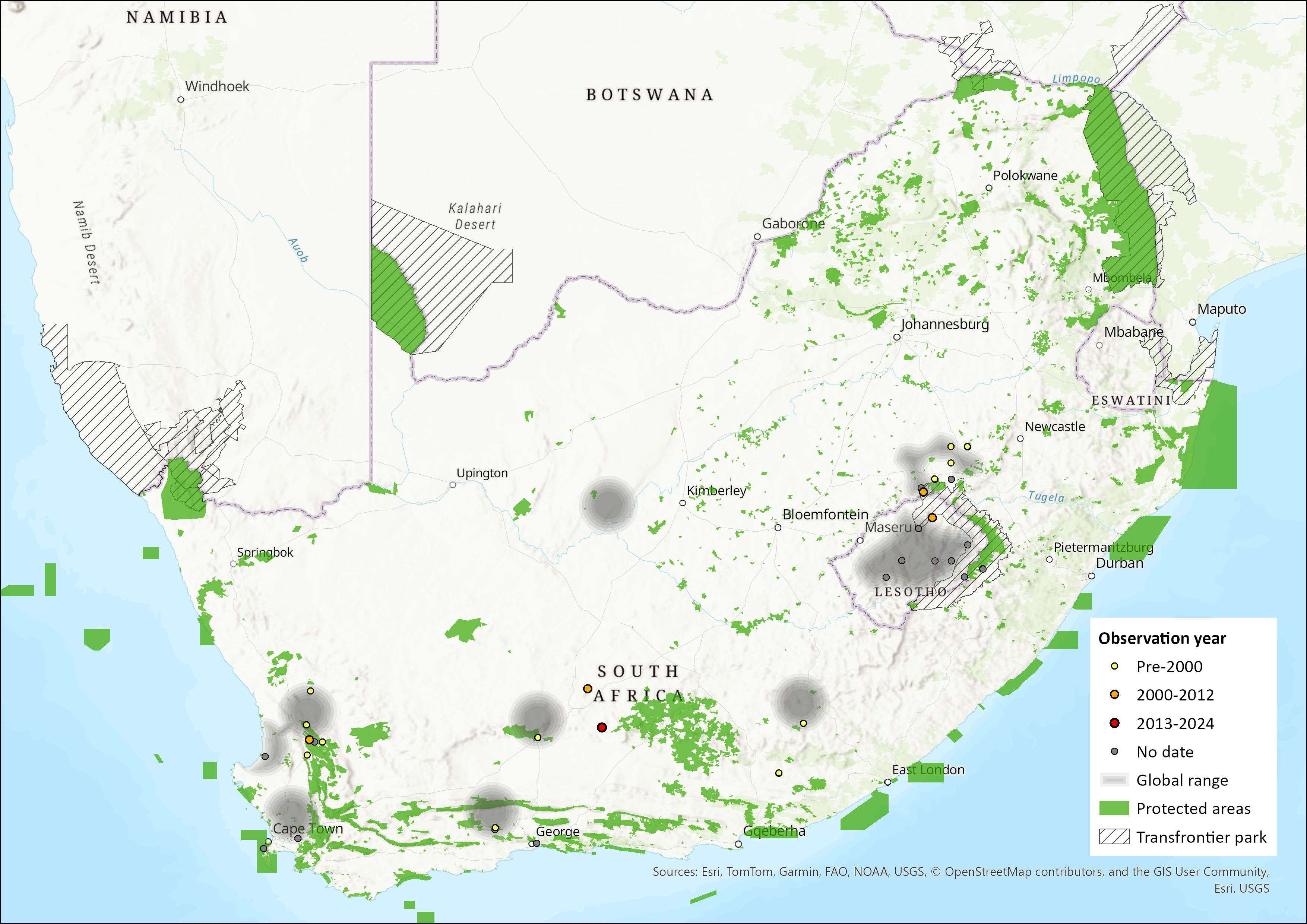 Figure 1. Distribution records for Lesueur’s Hairy Bat (Cistugo lesueuri) within the assessment region (South Africa, Eswatini and Lesotho). Note that distribution data is obtained from multiple sources and records have not all been individually verified.
Biogeographic Realms
Biogeographic Realm: Afrotropical
Occurrence
Countries of Occurrence
| Country | Presence | Origin | Formerly Bred | Seasonality |
| Lesotho | Extant | Native | – | – |
| South Africa | Extant | Native | – | – |
Large Marine Ecosystems (LME) Occurrence
Large Marine Ecosystems: (Not specified)
FAO Area Occurrence
FAO Marine Areas: (Not specified)
Climate change
Taylor et al. (2024) reported minimal range changes for this species under future climate models by suggesting that high-elevation mountains provide a potential refugia for temperate montane species including C. lesueuri. Most studies on the effects of climate change on bats are based on predictive species distribution modelling, thus there is a lack of empirical studies measuring behavioural, physiological, phenological or genetic responses to extreme and seasonal climatic changes, especially in the Global South (Festa et al. 2023; Pio et al. 2014). Globally, there have been documented declines in bat populations, species richness and distributions in relation to water availability with increasing global aridity which may become a growing concern as heat waves and maximum temperatures are expected to increase over much of South Africa (Adams & Hayes 2021; Mbokodo et al. 2020).
Population information
Although the endemic Lesueur’s Wing-gland Bat occurs widely within then assessment region, known locations of this species are sparse, and the species is rarely recorded. Acoustic surveys in agricultural landscapes in the eastern Free State showed that C. lesueuri calls compromised only 5.6% and 6.1% of the total bat calls recorded in summer and winter, respectively (Howard et al. unpub. data). During a 14-month pre-construction bat monitoring monitoring study for a proposed wind farm cluster site in the north-eastern Free State, C. lesueuri contributed on average 2% of all the bat calls that were recorded near (at 10m above) ground level (Inkululeko Wildlife Services unpubl. data). In the Free State Province of South Africa, a group of approximately 40 individuals was located in a day roost (Watson 1998). In the Western Cape, Cedarberg area, this species made up only 4.6% of the overall catch (Seamark and Brand 2005). In inland Western Cape, near the border with the Northern Cape, a group of approximately 30 individuals was located in a day roost (T. Morgan unpubl. data). Systematic long-term monitoring should be used to estimate rates of decline across its range, as this species may be increasingly threatened by expansion of renewable (wind and solar) energy development.
Current population trend: Declining
Continuing decline in mature individuals: Yes
Extreme fluctuations in the number of subpopulations: (Not specified)
Continuing decline in number of subpopulations: (Not specified)
All individuals in one subpopulation: No
Number of subpopulations: 2 (genetic lineages), based on Taylor et al. (2024) who demonstrated two distinct southern African lineages, based on mitochondrial DNA and cranial morphometrics (Western Cape lineage and Free State + KwaZulu Natal lineage).
Number of mature individuals in largest subpopulation: Unknown
Subpopulation trend: Unknown
Quantitative Analysis
Probability of extinction in the wild within 3 generations or 10 years, whichever is longer, maximum 100 years: Unknown
Probability of extinction in the wild within 5 generations or 20 years, whichever is longer, maximum 100 years: Unknown
Probability of extinction in the wild within 100 years: Unknown
Population genetics
No population genetic study has been conducted on the species. However, an integrated phylogenetic study using mitochondrial DNA (incorporating acoustic, morphological and ecological data) found clear differentiation among two localities within the assessment region (Western Cape and the Drakensberg Escarpment) (Taylor et al. 2024). Given that this species is considered to be highly localised, it is likely that additional genetic structure might exist, such as in the Karoo and within the two broad subpopulations. A fine-scale nuclear genomic assessment is encouraged to investigate the current population structure and diversity within the species. Considering the total population size is estimated at less than 1,000 mature individuals, it is possible that the two genetic subpopulations are at or just below an Ne 500. This inference would need verification using genetic analyses.
Habitats and ecology
Cistugo lesueuri appears to be associated with broken terrain (koppies and cliffs) in high-altitude montane vegetation (>1,500 m asl) with suitable rock crevices and water in the form of dams, rivers or marshes (Monadjem et al. 2010), where colonies seem to roosts in rock crevices usually near water (Lynch 1994, Watson 1998). In the Free State, specimens were collected in a rock crevice behind a waterfall and more recently in a river gorge. In the Karoo, specimens were caught during mist-netting over a stream in a rocky gulley (Inkululeko Wildlife Services, unpubl. data). It occurs away from human habitations and constructions (ACR 2013).
This species is named after J.S. le Sueur of L’Ormarins in Paarl, Western Cape Province, who recovered the original specimen from his cat (Skinner and Chimimba 2005). C. lesueuri is similar to Laephotis capensis in general size, colour, and flight patterns (Herselman and Norton 1985, Seamark and Brand 2005) but, while C. lesueuri is quiet and docile when netted, L. capensis is noisy and active (Watson 1998), and both species appear to use different roosting sites (Skinner and Chimimba 2005). It also pulls its head within its shoulders when handled (Seamark and Brand 2005), which has not been observed in L. capensis, making the presence of the wing gland a key diagnostic feature. It is a clutter-edge forager and feeds predominantly on Diptera and Hemiptera (Schoeman and Jacobs 2003).
The echolocation calls of this species may be misclassified as Miniopterus natalensis or Pipistrellus hesperidus by automated bat identification software and filters, as the intermediate peak frequency of 45-48 kHz overlaps (Taylor et al. 2024).
IUCN Habitats Classification Scheme
| Habitat | Season | Suitability | Major Importance? |
| 3.8. Shrubland -> Shrubland – Mediterranean-type Shrubby Vegetation | – | Suitable | – |
| 4.4. Grassland -> Grassland – Temperate | – | Suitable | – |
| 4.7. Grassland -> Grassland – Subtropical/Tropical High Altitude | Seasonal Occurrence Unknown | Suitable | – |
| 6. Rocky areas (e.g. inland cliffs, mountain peaks) | – | Suitable | Yes |
| 8.2. Desert -> Desert – Temperate | – | Suitable | – |
Life History
Generation Length: 5.62 (inferred, see Pacifici et al. 2013)
Age at Maturity: Female or unspecified: (Not specified)
Age at Maturity: Male: (Not specified)
Size at Maturity (in cms): Female: Forearm mean = 3.62 cm (Monadjem et al. 2020)
Size at Maturity (in cms): Male: Forearm mean = 3.59 cm (Monadjem et al. 2020)
Longevity: (Not specified)
Average Reproductive Age: (Not specified)
Maximum Size (in cms): (Not specified)
Size at Birth (in cms): (Not specified)
Gestation Time: (Not specified)
Reproductive Periodicity: Reported to coincide with the austral summer months (October to December; Lynch 1994), with post-lactating females recorded in January (Seamark and Brand 2005).
Average Annual Fecundity or Litter Size: (Not specified)
Natural Mortality: (Not specified)
Does the species lay eggs? No
Does the species give birth to live young: Yes
Does the species exhibit parthenogenesis: No
Does the species have a free-living larval stage? No
Does the species require water for breeding? No
Movement Patterns
Movement Patterns: Unknown.
Congregatory: Roosts comprising up to 40 individuals have been observed (Watson 1998).
System: Terrestrial
General Use and Trade Information
This species is not known to be traded.
Local Livelihood: (Not specified)
National Commercial Value: (Not specified)
International Commercial Value: (Not specified)
End Use: (Not specified)
Is there harvest from captive/cultivated sources of this species? (Not specified)
Harvest Trend Comments: (Not specified)
Threats
The species is locally threatened, in parts of its range, by conversion of land to agricultural use (Driver et al. 2012). However, as this species occurs mostly in high-altitude areas, this is not a severe threat; but habitat is threatened by overgrazing in the Free State and Lesotho. The rapidly growing number of renewable (wind and solar) energy developments in the assessment region may pose a significant threat to this species. Although this species has a “Low” risk of fatality from turbines (MacEwan et al. 2020), this species could be impacted by other impacts from renewable energy development such as habitat loss, degradation, or displacement from e.g. light pollution. The degree of impact and levels of decline to the population are currently unknown and should be monitored.
Conservation
In the Western Cape, the species has been recorded from the Cedarberg Wilderness Area, Gamkaberg Nature Reserve, and Karoo National Park. In the Free State the species has been recorded in the Golden Gate National Park. In Lesotho it has been found in Sehlabathebe National Park, as well as in the Maloti-Drakensbergn Transfrontier Conservation Area. Renewable energy developments should avoid locations with suitable habitat for this species (i.e. rocky terrain with crevices near water). Any suspected carcasses of this species should be sent to experts for identification. This will require more streamlined permit procedures, which currently prevent transportation to accredited national biodiversity facilities (Alexander et al. 2021; Hamer et al. 2021)
Recommendations for land managers and practitioners:
- Conservation and restoration of natural habitat, riparian edges and methods to ensure suitable insect prey availability and clean rivers, streams and water ways through reduced run-off and pollution.
- Development of wind farms must avoid encroachment into the prescribed buffers around confirmed roosts and suitable habitat (such as rocky gorges with streams) where this species may potentially occur.
- Since C. lesueuri can be mistaken for e.g. Laephotis capensis, bat carcasses found on wind farms should be sent to national museums or biobanks to confirm identification and support further molecular research. As more robust acoustic recognition has recently been established, research into historic acoustic datasets should be used to determine to what extent this species may have been overlooked during wind farm bat monitoring assessments.
Research priorities:
- Further molecular analysis of this species is required to determine the distributional range and dynamics of the two subpopulations currently identified.
- Field surveys are needed to locate roosts of this species to identify the dietary, spatial and temporal ecology of this species, as well as to enable protection of roost sites, but this is hindered by current permit regulations of field-based research (Alexander et al. 2021; Hamer et al. 2021).
Encouraged citizen actions:
- Limit disturbance to roost sites.
- Citizens can assist the conservation of the species by reporting sightings on virtual museum platforms (for example, iNaturalist and MammalMAP).
Bibliography
ACR. 2013. African Chiroptera Report 2013. AfricanBats, African Chiroptera Project, i-xix. Pretoria.
Adams, R.A. and Hayes, M.A. 2021. The importance of water availability to bats: climate warming and increasing global aridity. 50 years of bat research: foundations and new frontiers, pp.105-120.
Alexander, G.J., Tollev, K.A., Maritz, B., McKechnie, A., Manger, P., Thomson, R.L., Schradin, C., Fuller, A., Meyer, L., Hetem, R.S. and Cherry, M., 2021. Excessive red tape is strangling biodiversity research in South Africa. South African Journal of Science, 117(9-10), pp.1-4.
Aronson, J. 2022. Current state of knowledge of wind energy impacts on bats in South Africa. Acta Chiropterologica 24: 221-238.
Avenant, N., MacEwan, K., Balona, J., Cohen, L., Jacobs, D., Monadjem, A., Richards, L., Schoeman, C., Sethusa, T. and Taylor, P. 2016. A conservation assessment of Cistugo lesueuri. In: M.F. Child, L. Roxburgh, E. Do Linh San, D. Raimondo, J., Selier & H.T. Davies-Mostert (ed.), The Red List of Mammals of South Africa, Swaziland and Lesotho, South African National Biodiversity Institute and Endangered Wildlife Trust, South Africa.
DEA (Department of Environmental Affairs) 2015. Strategic Environmental Assessment for wind and solar photovoltaic energy in South Africa. CSIR Report Number: CSIR/CAS/EMS/ER/2015/0001/B. Stellenbosch, Western Cape.
DEFF (Department of Environment Forestry and Fisheries) 2019. Phase 2 Strategic Environmental Assessment for wind and solar PV energy in South Africa. CSIR Report Number: CSIR/SPLA/SECO/ER/2019/0085 Stellenbosch, Western Cape.
Driver, A., Sink, K.J., Nel, J.N., Holness, S., Van Niekerk, L., Daniels, F., Jonas, Z., Majiedt, P.A., Harris, L. and Maze, K. 2012. National Biodiversity Assessment 2011: An assessment of South Africa’s biodiversity and ecosystems. Synthesis Report. South African National Biodiversity Institute and Department of Environmental Affairs, Pretoria, South Africa.
Friedmann, Y. and Daly, B. 2004. Red Data Book of the Mammals of South Africa: A Conservation Assessment. Conservation Breeding Specialist Group (SSC/IUCN) and Endangered Wildlife Trust, Parkview, South Africa.
Hamer, M., Behr, K., Engelbrecht, I. and Richards, L. 2021. Permit requirements, associated challenges and recommendations for biodiversity collections and research in South Africa. South African Journal of Science, 117(9-10), pp.1-4.
Herselman, J. C. and Norton, P. M. 1985. The distribution and status of bats (Mammalia: Chiroptera) in the Cape Province. Annals of the Cape Provincial Museums 16: 74-126.
Howard, A., Mdluli, M., Monadjem, A., Taylor, P.J. 2024. Ecosystem services of bats in apple orchards of the eastern Free State. PhD Thesis. University of the Free State.
IUCN. 2017. The IUCN Red List of Threatened Species. Version 2017-2. Available at: www.iucnredlist.org. (Accessed: 14 September 2017).
Lack, J.B., Roehrs, Z.P., Stanley, C.E., Ruedi, M. and Van Den Bussche, R.A. 2010. Molecular phylogenetics of Myotis indicate familial-level divergence for the genus Cistugo (Chiroptera). Journal of Mammalogy 91(4): 976–992.
Lynch, C.D. 1994. The mammals of Lesotho. Navorsinge van die Nasionale Museum Bloemfontein 10(4): 177-241.
MacEwan, K., Sowler, S., Aronson, J. and Lötter, C. 2020. South African Best Practice Guidelines for Pre-construction Monitoring of Bats at Wind Energy Facilities. Edition 5. South African Bat Assessment Association, South Africa.
Mbokodo, I., Bopape, M.J., Chikoore, H., Engelbrecht, F. and Nethengwe, N. 2020. Heatwaves in the future warmer climate of South Africa. Atmosphere, 11(7), p.712.
Monadjem, A., Taylor, P.J., Cotterill, F.P.D. and Schoeman M.C. 2010. Bats of Southern and Central Africa: a biogeographic and taxonomic synthesis. 2nd Edition. University of Witwatersrand Press, Johannesburg.
Monadjem, A., Montauban, C., Webala, P.W., Laverty, T.M., Bakwo-Fils, E.M., Torrent, L., Tanshi, I., Kane, A., Rutrough, A.L., Waldien, D.L. and Taylor, P.J., 2024. African bat database: curated data of occurrences, distributions and conservation metrics for sub-Saharan bats. Scientific Data, 11(1), p.1309.
Pacifici, M., Santini, L., Di Marco, M., Baisero, D., Francucci, L., Grottolo Marasini, G., Visconti, P. and Rondinini, C. 2013. Generation length for mammals. Nature Conservation 5: 87–94.
Pence, G.Q.K. 2014. Western Cape Biodiversity Framework 2014 status update: Critical Biodiversity Areas of the Western Cape. CapeNature, Cape Town.
Rautenbach, I. L., Bronner, G. N. and Schlitter, D. A. 1993. Karyotypic data and attendant systematic implications for the bats of southern Africa. Koedoe 36: 87-104.
Schoeman, C. M., Jacobs, D. S. 2003. Support for the allotonic frequency hypothesis in an insectivorous bat community. Oecologia 134: 154–162.
Seamark, E. C. J. and Brand, M. 2005. Bat survey in the Cedarberg Wilderness Area, Western Cape, South Africa (28 January – 3 February 1999). African Bat Conservation News 3: 7-9.
Skinner, J.D. and Chimimba, C.T. (eds). 2005. The Mammals of the Southern African Subregion. Cambridge University Press, United Kingdom, Cambridge.
Taylor, P.J., Kearney, T.C., Clark, V.R., Howard, A., Mdluli, M.V., Markotter, W., Geldenhuys, M., Richards, L.R., Rakotoarivelo, A.R., Watson, J., Balona, J., Monadjem, A. 2024. Southern Africa’s Great Escarpment as an amphitheater of climate‐driven diversification and a buffer against future climate change in bats. Global Change Biology, 30(6), p.e17344.
Watson, J. P. 1998. New distributional records for three microchiropteran bats (Vespertillionidae [Vespertilionidae], Rhinolophidae) from the Free State Province, South Africa. South African Journal of Wildlife Research 28(4): 127-131.