
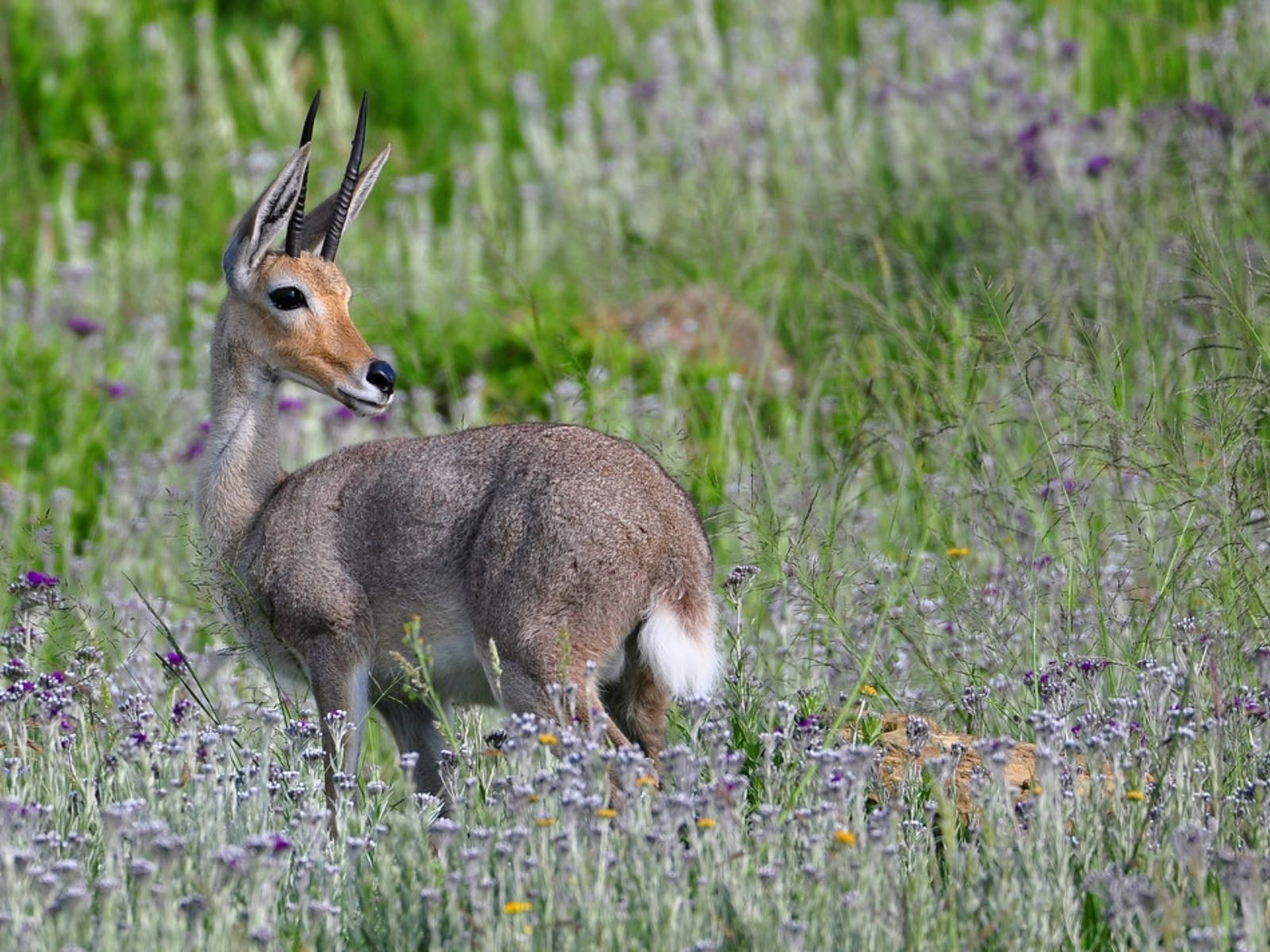
Grey Rhebok
Pelea capreolus

2025 Red list status
Near Threatened

Regional Population Trend
Declining
Change compared
to 2016
No Change
Overview
Pelea capreolus – (Forster, 1790)
ANIMALIA – CHORDATA – MAMMALIA – ARTIODACTYLA – BOVIDAE – Pelea – capreolus
Common Names: Grey Rhebok, Common Rhebok (English), Vaal Ribbok (Afrikaans), Letsa (Sesotho), Phele (Setswana), Liza (Swati), Iza, Iliza (Xhosa, Zulu)
Synonyms: No Synonyms
Taxonomic Note:
Recent molecular work indicates that this species is a sister taxon to a clade that includes both waterbuck (Kobus) and reedbuck (Redunca) species (Robinson et al. 2014). No subspecies are recognised (Skinner & Chimimba 2005).
| Red List Status |
| Near Threatened – NT, A2bd (IUCN version 3.1) |
Assessment Information
Assessors: Taylor, A1., Patel, T.2 & da Silva, J.3
Reviewer: Anderson, J.4,5
Institutions: 1Panthera; 2Endangered Wildlife Trust; 3South African National Biodiversity Institute; 4IUCN SSC Antelope Specialist Group, 5International Conservation Services
Previous Assessors: Cowell, C. & Drouilly, M.
Previous Reviewers: Schulze, E., Avenant, N., Birss, C., Child, M.F. & Mallon, D.P.
Previous Contributors: Rushworth, I., Power, J., Kraft, C. & Eksteen, J.
Assessment Rationale
This species is endemic to South Africa, Lesotho and Eswatini occurring in rocky grassland habitats. According to the previous assessment, the population declined by 20% over three generations in 13 formally protected areas across its range. This assessment relies heavily on the data from the previous three generations of the species (1999-2014) as recent data were not robust enough to update the metrics and the long-term data available were not consistent across the years to determine trends. There were previous anecdotal reports of declines or local extinctions in North West, Western Cape, Northern Cape and Mpumalanga provinces, as well as the Lesotho Highlands. No Grey Rhebok have been recorded in North West protected areas or in Ohrigstad Dam Nature Reserve (Mpumalanga Province) since 2013. We thus retain the listing of this species as Near Threatened, close to meeting Vulnerable A2bd, under a precautionary purview, due to an estimated continuing decline and increased levels of illegal hunting. Further long-term data are needed to improve the accuracy of the population reduction estimate, as subpopulations are suspected to be faring poorly outside of protected areas too. This species should be reassessed as further reliable data become available as it may qualify for a more threatened listing. Reasons for the decline are poorly understood but are most likely due to increases in illegal sport hunting with dogs, bushmeat poaching, incidental snaring and the emerging threat of inflated predation rates and the decline in capacity of state–run conservation agencies. Long-term monitoring sites should be established to quantify subpopulation trends and threat severity.
Reasons for Change
Reason(s) for Change in Red List Category from the Previous Assessment: No change
Red List Index
Red List Index: No change
Recommended citation: Taylor A, Patel T & da Silva JM. 2025. A conservation assessment of Pelea capreolus. In Patel T, Smith C, Roxburgh L, da Silva JM & Raimondo D, editors. The Red List of Mammals of South Africa, Eswatini and Lesotho. South African National Biodiversity Institute and Endangered Wildlife Trust, South Africa.
Please scroll horizontal on mobile to view the tables
Regional Distribution and occurrence
Geographic Range
Grey Rhebok are endemic to South Africa, Lesotho and parts of Eswatini (although they formerly occurred widely in the western regions), existing patchily in areas of suitable habitat. They may marginally occur in southwestern Namibia (Irish 2016), but this remains to be validated. Although believed to have occurred in hilly country around Gaborone in south-east Botswana (Skinner and Chimimba 2005), they no longer occur there (Smithers 1971). Similarly, while no formal records are available, they once occurred throughout Lesotho as the “only bovid found in reasonable numbers” (Lynch 1994 p. 212), but now probably only exist in a few scattered subpopulations (Avenant 2013).
Generally, Grey Rhebok still occur throughout much of their historical range in both protected areas and private lands (Skinner and Chimimba 2005), but agricultural transformation and human settlement expansion and illegal hunting may have reduced occupancy. While there is doubt that they historically occurred on Table Mountain, they are accepted to have occurred in the Cape Peninsula and the mountains near Stellenbosch (Skinner and Chimimba 2005, Radloff 2008, Skead 2011). While they are fairly common in the Karoo and fynbos regions (for example, Anysberg Nature Reserve; M. Drouilly unpubl. data), they no longer occur north of the Orange River in the Northern Cape, or in parts of the North West Province. Indeed, a recent province-wide survey in North West did not find any Grey Rhebok in protected areas (Nel 2015). They may have historically occurred in the Kgaswane and Rustenberg areas (Kettlitz 1962, Bigalke 1968, Rautenbach 1978), and may still persist in the Magaliesberg and Waterberg (although surveys are required to confirm this) (Power 2014). Despite its supposedly widespread occurrence in the eastern part of the province (see Friedmann and Daly 2004), reported subpopulations from private landowners could not be ground-truthed (Power 2014). Confusion with Mountain Reedbuck (Redunca fulvorufula) may explain the difficulty in confirming its presence (Lloyd and Millar 1983, Power 2014). In Mpumalanga, they still occur in Songimvelo Nature Reserve but are no longer present in Ohrigstad Nature Reserve where Esser (1973) had done his study (J. Anderson pers. comm.). In Limpopo they may occur in the Waterberg and the northern escarpment (for example, the Wolkberg Mountains). In the Northern Cape, this species only naturally occurs within the Namaqualand District but is rarely observed (K. Craft pers. comm. 2016). Recently, however, it has been positively identified in Nababiep Nature Reserve, situated 140 km north of Springbok (Pienaar 2010), which indicates that they still occur in the Succulent Karoo Biome and on private lands.
Although its area of occupancy has not been calculated for protected areas, this species also occurs outside protected areas on private land in a number of provinces, so its occupancy is likely to be higher than the minimum for the Vulnerable category (2,000 km²).
Elevation / Depth / Depth Zones
Elevation Lower Limit (in metres above sea level): 500 m
Elevation Upper Limit (in metres above sea level): above 2800 m
Depth Lower Limit (in metres below sea level): (Not specified)
Depth Upper Limit (in metres below sea level): (Not specified)
Depth Zone: (Not specified)
Biogeographic Realms
Biogeographic Realm: Afrotropical
Map
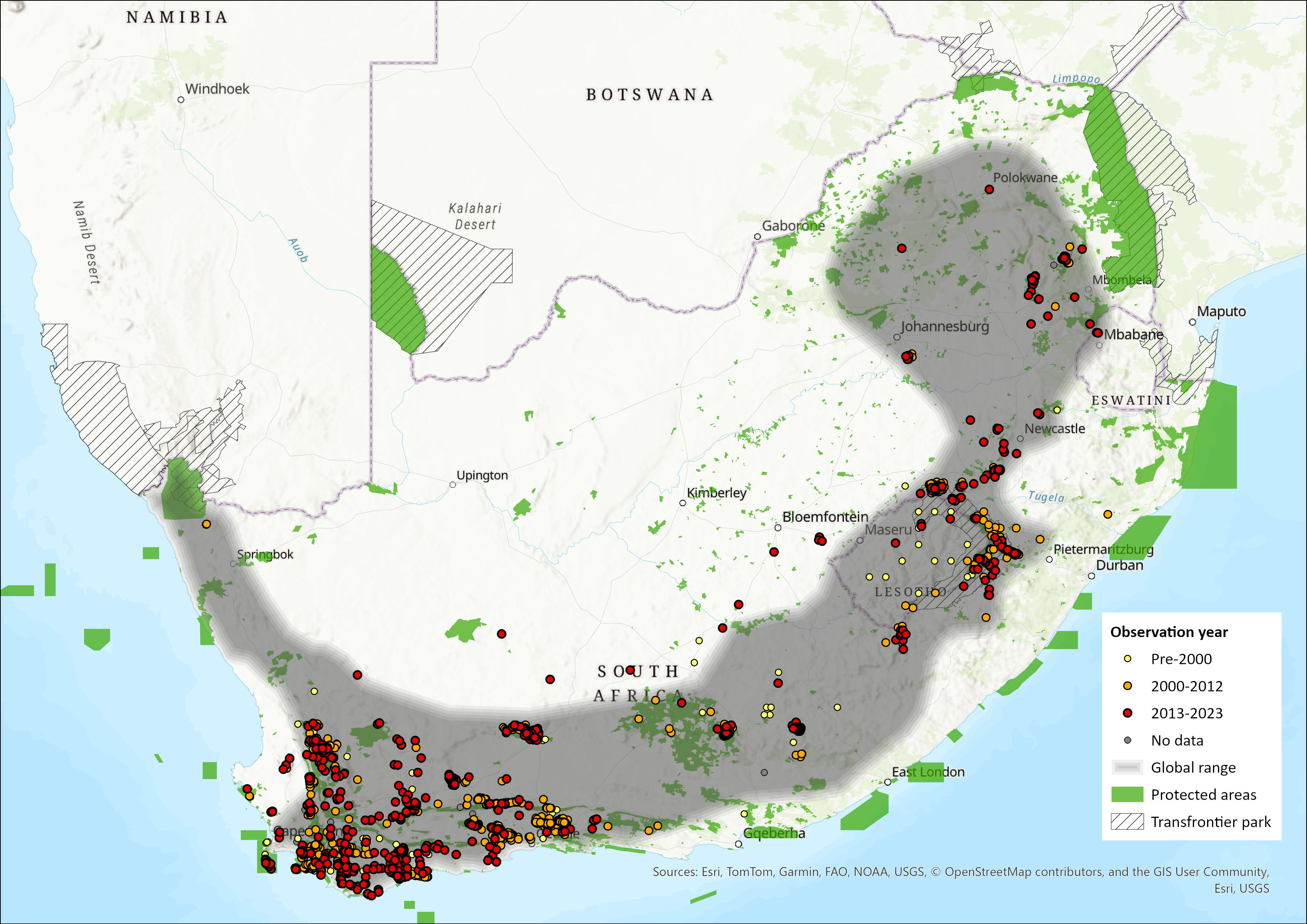
Figure 1. Distribution records for Grey Rhebok (Pelea capreolus) within the assessment region (South Africa, Eswatini and Lesotho). Note that distribution data is obtained from multiple sources and records have not all been individually verified.
Countries of Occurrence
| Country | Presence | Origin | Formerly Bred | Seasonality |
| Eswatini | Extant | Native | - | - |
| Lesotho | Extant | Native | - | - |
| Namibia | Absent – but perhaps marginally in the southwest | Native | - | - |
| South Africa | Extant | Native | - | - |
Large Marine Ecosystems (LME) Occurrence
Large Marine Ecosystems: (Not specified)
FAO Area Occurrence
FAO Marine Areas: (Not specified)
Climate change
Climate change could possibly affect this species by altering the availability of suitable habitat. Further research is needed to assess this.
Population information
While East (1999) suggested a total population of about 18,000, at least 25% occurring in protected areas and more than 30% on private land, the lack of comprehensive data prevents an accurate estimate of current population size. The remaining proportion of the population, which is in decline, is made up of scattered populations on the peripheries of protected areas in South Africa, as well as remnant populations in Lesotho and Eswatini. There is estimated to be a minimum of 2,000 individuals in formally protected areas, but further research is needed to determine whether there are over 10,000 individuals across its range. The largest known localities occur in the Maloti-Drakensberg Park World Heritage Site, where numbers were estimated to be 2,000-3,000 in 1994 (Rowe-Rowe 1994), but which are thought to have declined by at least 15-20% (and possibly more) (1999–2015; I. Rushworth pers. comm. 2016); and Golden Gate Highlands National Park, where an aerial survey counted 414 individuals at 1.3 animals / km² (Bissett et al. 2016). Estimated population densities of the Grey Rhebok in protected areas are generally in the range 0.5-1.7 animals / km² (IUCN SSC Antelope Specialist Group 2008), but occasionally lower, for example, 0.2-0.3 animals / km² in Addo-Zuurberg and Karoo National Parks; or higher, for example, 4.3 animals / km² in Bontebok National Park (Beukes 1987); or 6.4 animals / km² at Sterkfontein Dam Nature Reserve (summarised in East 1999, Taylor et al. 2007). Grey Rhebok individuals in the Coleford Nature Reserve (southern Drakensberg) vary greatly in size due to their utilisation of adjacent lands. An increase in subpopulation size was described between 1986 and 1988 with 27 individuals in the 1,272 ha reserve, probably due to compression of individuals from adjoining properties as a result of an increase in hunting by dogs. This increase was followed by a decrease until 1993, likely due to poaching and a succession of long, dry winters (O’Connor and Krüger 2003). Between 1993 and 2001, the mean population size in the reserve was 7.6 individuals (O’Connor and Krüger 2003).
Generation length for this species has been calculated as 4.9 years (based on a longevity of 12 years in captivity) (Pacifici et al. 2013), which yields a 14.7 year three generation period (1999-2014). The IUCN SSC Antelope Specialist Group estimate generation length as 4.4 years, yielding a 13 year three generation window (D. Mallon pers. comm. 2016). The Grey Rhebok is a difficult species to count accurately, and inconsistent counting methods in many areas have resulted in a paucity of reliable trend data on which to base an assessment. Recent population data received for this species was not robust enough to update the population information. The assessment is largely based on the 2016 data and thus, the species retains its Near Threatened listing until new data becomes available to warrant a reassessment.
Collation of available subpopulation data from 13 formally protected areas across its range with adequate long-term count data suggested a decline of 17-25% over three generations at the time of the previous assessment. Additionally, anecdotal evidence in other protected areas confirms a generally declining trend. In the Northern Cape there were no reliable population trend data, but numbers were suspected to be declining primarily due to poaching (K. Craft pers. comm. 2016). In the Western Cape (where trend data were also lacking) there were similar reports of declining subpopulations across national and provincial protected areas, private lands and the Boland Mountain Complex (T. Barry pers. comm. 2016, C. Birss and C. Cowell unpubl. data). Additionally, only two individuals were counted in Table Mountain National Park in 2011 (C. Cowell unpubl. data), and Grey Rhebok were absent from a number of private farms in the Western Cape where their occurrence would be expected. Conversely, the subpopulation in Golden Gate Highlands National Park appeared to be genuinely increasing (Bissett et al. 2016). However, counts of the Golden Gate Highlands National Park were excluded because the count methods have changed significantly over the three- generation period and the park had increased in size, rendering comparisons between 1999 and 2016 spurious (C. Bissett pers. comm. 2016). Further collation of long-term data, especially outside protected areas, is necessary to more accurately estimate population reduction over three generations. Overall, while the decline is ca 20% from a sample of protected areas, the net decline may be greater, as subpopulations may be declining more severely outside protected areas. As the Near Threatened category (for criterion A) is based on declines that are close to meeting the criterion A threshold of 30% (IUCN Standards and Petitions Subcommittee 2014), we thus feel a precautionary listing is appropriate.
The level of fragmentation is unknown. While the distribution of Grey Rhebok is discontinuous and patchy, they occur outside of protected areas and will be able to move fairly freely in many areas. They are also accomplished leapers known to jump fences (Skinner and Chimimba 2005). There is natural geographic fragmentation by mountain ranges and fragmentation caused by agricultural land uses. Grey Rhebok are quite widespread and free-roaming, and although the number of locations is unknown, they are unlikely to be affected by any single threat. That being said, given the declines in numbers across the country, the level of fragmentation may be increasing.
Population Information
Current population trend: Declining
Continuing decline in mature individuals: Yes, from hunting, poaching and increased predation rates. Possibly also due to the Allee effect.
Extreme fluctuations in the number of subpopulations: (Not specified)
Continuing decline in number of subpopulations: (Not specified)
All individuals in one subpopulation: (Not specified)
Number of mature individuals in population: Unknown
Number of mature individuals in largest subpopulation: 248–290 in Golden Gate Highlands National Park, assuming a 60–70% mature population structure. The Maloti-Drakensberg Park World Heritage Site may be the largest subpopulation but subpopulation size is currently unknown (based on 2016 assessment).
Number of Subpopulations: Unknown
Severely fragmented: Unknown
Quantitative Analysis
Probability of extinction in the wild within 3 generations or 10 years, whichever is longer, maximum 100 years: (Not specified)
Probability of extinction in the wild within 5 generations or 20 years, whichever is longer, maximum 100 years: (Not specified)
Probability of extinction in the wild within 100 years: (Not specified)
Population genetics
To date, the only published molecular investigation of this species used a combination of DNA sequences, chromosomal characteristics and quantitative and qualitative morphological features to reveal this species to be a sister taxon to a clade that comprises the waterbuck, reedbuck and allies (Robinson et al., 2014). There have been no population genetic studies undertaken; therefore, the species’ genetic structure and effective population size are unknown. With that said, natural fragmentation (via mountain ranges) may suggest the presence of genetic structure. Artificial fragmentation due to land being transformed to agricultural land, may have also impacted the genetic structure of the Grey Rhebok. However, considering the species is widespread and free roaming, with translocations between farms and reserves known to occur, it is likely that the species exists as a single metapopulation. While numbers across the country are thought to be declining, if this species exists as a single metapopulation, with census data broadly ranging from 2,000-10,000 individuals, the species could be craddling the Ne 500 threshold. Confirmation through more updated census counts or more fine-scale population genetic studies are needed. Only translocations between localities following the natural (historical) dispersal of the species should be considered so as to mimic, as much as possible, natural gene flow.
Habitats and ecology
Grey Rhebok are associated with rocky hills, grassy mountain slopes, and plateau grasslands in the eastern extent of their distribution. In the south and southwest, their distribution is associated with the rocky hills of mountain fynbos and the little Karoo. They are predominantly browsers, often feeding on ground-hugging forbs, and largely water independent, obtaining most of their water requirements from their food (Avenant 2013). Forbs constitute the majority of their diet, especially the flowers and leaves of the plants (Esser 1973, Rowe-Rowe 1983a, Beukes 1988). They require good grass cover within their home ranges for shelter and to hide from predators, but often use steep open areas with little cover when feeding. In the Western Cape, they are often observed on agricultural lands (Radloff 2008, C. Birss pers. obs. 2016). For example, there is seasonal movement between Bontebok National Park and surrounding agricultural lands (C. Cowell unpubl. data). Similarly, in the southern Drakensberg, Grey Rhebok move over large areas that encompass protected areas and adjacent farmlands (O’Connor and Krüger 2003).
Home range size is estimated at 30-100 ha in the eastern Free State mountain grasslands (Taylor et al. 2007). The social system of Grey Rhebok is female defence polygyny, with males aggressively defending a harem of 2-7 females plus accompanying young in a stable herd (Taylor and Skinner 2006). This harem system of females remaining permanently with a single territorial male for long periods is very unusual amongst antelope species. Non-territorial males generally remain solitary. This behaviour may exacerbate an allee effect in this species (whereby there is a decline in individual fitness at low population size or density) since family groups are closed to outsiders and male offspring disperse as yearlings and remain peripheral until they gain a territory, but further research is required to investigate this.
Ecosystem and cultural services: Grey Rhebok are an important foraging species in hilly areas. In many small protected areas, or those close to urban areas, Grey Rhebok are the largest browsing ungulate that can be stocked, thus performing a pivotal role in the ecosystem. The Dutch spelling of the species, reebock, gave its name to the sport brand Reebok. The name “roebuck” appears often in early records of settlers in the Cape (South Africa); this animal probably reminded these settlers very much of the European Roebuck (Roe Deer, Capreolus capreolus). The pronunciation and spelling over the years have changed through Roe, Rabock, Reebok, Raybuck to Rhebok in English and “Ribbok” in Afrikaans (Skead 2011).
IUCN Habitats Classification Scheme
| Habitat | Season | Suitability | Major Importance? |
| 2.1. Savanna -> Savanna – Dry | - | Suitable | - |
| 4.4. Grassland -> Grassland – Temperate | - | Suitable | - |
Life History
| Generation Length | Justification | Data Quality |
| 4.4 | - | - |
Age at maturity: female or unspecified: 16 months
Age at Maturity: Male: Probably by two years old
Size at Maturity (in cms): Female: Shoulder height 710 cms
Size at Maturity (in cms): Male: Shoulder height 720 cms
Longevity: up to 12 years in captivity
Average Reproductive Age: (Not specified)
Maximum Horn Size (in cms): 30.2 cms
Size at Birth (in cms): (Not specified)
Gestation Time: 37.3 weeks
Reproductive Periodicity: mating peak February to May. Births mainly November to February
Average Annual Fecundity or Litter Size: One per year
Natural Mortality: Highest in winter especially if snowfall
Does the species lay eggs? No
Does the species give birth to live young: Yes
Does the species exhibit parthenogenesis: No
Does the species have a free-living larval stage? No
Does the species require water for breeding? No
Movement Patterns
Movement Patterns: Territorial year-round and non-migratory. Territory size range from 53 ha in the Free State to 77 ha on Highmoor Nature Reserve. Territory size being inversely correlated with the quality of the habitat.
Congregatory: Rhebok do not congregate, other than the small breeding herds of up to five females and single adult territorial males (Esser 1973).
Systems
System: Terrestrial
General Use and Trade Information
They are used on a commercial basis for trophy hunting, both locally and internationally, with prices between $900 and $1,400 for the trophy itself (M. Drouilly unpubl. data, Department of Environmental Affairs, trophy hunting statistics). Roughly 100 individuals are trophy hunted every year. Although Grey Rhebok are occasionally hunted by domestic hunters, they do not appear to be a popular species for game meat. All legal hunting activities should theoretically be based on sustainable use principles, so should not negatively impact on populations. However, this should be monitored. They are also increasingly used on a subsistence basis by local communities as bushmeat, or recreationally as part of sport hunting with dogs (O’Connor and Krüger 2003, Grey-Ross et al. 2010). There is also commercial value in live animal sales and translocating animals between game farms and protected areas, but translocations should not mix ecotypes.
| Subsistence: | Yes |
| Rationale: | Suspected from general poaching levels. |
| Local Commercial: | Yes |
| Further detail including information on economic value if available: | Live animal sales and trophy hunting. |
National Commercial Value: Yes
International Commercial Value: Yes
| End Use | 1. Food – human |
| 15. Sport hunting/specimen collecting | |
| Subsistence | 1. true |
| 15. – | |
| National | 1. true |
| 15. true | |
| International | 1. true |
| 15. true | |
| Other (please specify) | 1. – |
| 15. – |
Is there harvest from captive/cultivated sources of this species? Yes
Harvest Trend Comments: Inferred from reports from game farms and wildlife ranches. Anecdotal reports of captive breeding.
Threats
While the threats to Grey Rhebok and their severity require more research, the primary threat is suspected to be increased levels of bushmeat and illegal sport hunting with dogs (Avenant 2013, Avenant et al. 2014, du Plessis et al. 2014). In KwaZulu-Natal alone, a survey of 92 people in rural settlements in the Wartburg, Estcourt and Creighton areas found that 82% of respondents hunt illegally (42% for meat and 46% hunted with dogs) on a regular basis, with 51% hunting every week (Grey-Ross et al. 2010). While Grey Rhebok was not explicitly mentioned as a target, we infer such hunting to affect this species. Protected areas close to urban areas exhibit increased predation by illegal sport hunting with packs of dogs and also feral dogs, such as in Bontebok National Park where recently eight Grey Rhebok were killed by dogs (C. Cowell unpubl. data). Similarly, the Cape Leopard Trust has raised serious concerns about the general decline of prey species and suspect that, due to the proximity of the Boland Mountains to the urban areas and expanding informal settlements, that the smaller antelope are targeted by snaring and hunted with dogs for bushmeat (C. Birss pers. comm. 2016). In Coleford Nature Reserve in the southern Drakensberg, where the Grey Rhebok subpopulation declined between 1986 and 2001, 79 dogs were removed from 1985–2002 and 96 snares were removed during 1990/91 alone (O’Connor and Krüger 2003). An initial subpopulation spike was coincident with the first removal of dogs from the reserve, which was probably symptomatic of escalated dog hunting in the adjacent properties and thus Grey Rhebok moving into Coleford Nature Reserve (O’Connor and Krüger 2003). In the Northern Cape, illegal hunting of Grey Rhebok by communal farmers is also a problem (C. Kraft pers. comm. 2016).
Local declines are also suspected from increased densities of natural predators (Avenant 2013). Anecdotal reports from the Free State and Northern Cape suggest that an emerging threat is increased predation levels from higher abundances of mesopredators, especially Black-backed Jackal (Lupulella mesomelas) (Rowe-Rowe 1983b, C. Kraft and N. Avenant pers. obs. 2015), Caracals (Caracal caracal) (Palmer and Fairall 1988) and perhaps Leopard (Panthera pardus) in the arid areas (C. Kraft pers. comm. 2016). Poor carnivore management may be responsible for increased mesopredator abundance (Minnie et al. 2016).
Habitat degradation may also play a role, such as climate-change or land-use induced bush encroachment (Hudak and Wessman 2001, Wigley et al. 2009) in areas such as the North West and Limpopo (Power 2014). There is no evidence for disease as a threat (Taylor et al. 2006), but Grey Rhebok may occasionally be affected by parasite infestation (Beukes 1988).
It is likely that several threats synergise to cause subpopulation decline. For example, in Sterkfontein Dam Nature Reserve, Free State, the reasons behind declines are the observed increase in poaching (mainly hunting with dogs), increased predation rates due to the closure of the local vulture restaurant, and possibly habitat degradation related to increased frequency of fires (E. Schulze unpubl. data). Underlying the poaching threat and the inability to control it, is the decline capacity of the state-run conservation agencies (Patel et al. 2023).
Current habitat trend: Unknown. Although agricultural transformation has likely reduced suitable habitat for this species, the conversion to wildlife ranching may have created additional protected habitat. Furthermore, camera trap data suggest that Grey Rhebok can occupy farmlands in the central Karoo, despite the livestock that may overgraze these lands (M. Drouilly unpubl. data). Across the range of the species, rural and urban settlements have expanded by 0.8–39% and 6–15%, respectively, between 2000 and 2013 (GeoTerraImage 2015), which we infer to correlate with increased levels of illegal hunting. Similarly, in the Mohale and Katse areas in the Lesotho Highlands, the intact grassland decreased by c. 6% over the period from 1993–2013, while the percentage area under subsistence farming increased by c. 5% (Turpie et al. 2014a, 2014b).
Conservation
Grey Rhebok are reported to occur in many provincial reserves and national parks in the assessment region, with two strongholds in the Maloti-Drakensberg Park World Heritage Site and Golden Gate Highlands National Park. The primary intervention at this stage is to investigate the causes of the decline and to then outline appropriate interventions. Adaptive management of formally protected areas is recommended to trial strategies that are effective in stabilising or increasing subpopulations. For example, while Grey Rhebok were previously threatened by unplanned fires, poaching and livestock overgrazing in QwaQwa National Park, its amalgamation with Golden Gate Highlands National Park in 2008 saw the subpopulation increase from 150 in 2003 to 269 in 2016 (Schulze 2016), with 414 animals overall in the combined area in 2016 (Bissett et al. 2016). This positive growth is attributed to improved fences and fence maintenance, decreased poaching and livestock overgrazing (following land restitution settlement), and habitat improvement due to better fire management and vegetation rehabilitation (Schulze 2016). Such interventions could be trialled in other protected areas and private lands. In Seekoeivlei Nature Reserve, Free State, the subpopulation is stable or increasing due it being fairly secure from poaching as well as the relatively high abundance of other prey species, in this case waterbirds (E. Schulze unpubl. data).
Programmes to remove or control feral dogs should also be implemented. Private landowners should be encouraged to continue to form conservancies to reduce the edge effects of small areas of natural habitat, such that vulnerability to poaching is lessened. The maintenance of indigenous grassland through livestock ranching under private tenure is particularly important around small reserves that are too small to maintain Grey Rhebok subpopulations (O’Connor and Krüger 2003).
The effects of translocations and reintroduction success should also be monitored, especially in the case of translocating adult males. Given the highly aggressive nature of territorial males towards foreign males, it is hard for new males to establish themselves if pre-existing territories are present. Vegetation types such as the Waterberg-Magaliesberg Mountain Sourveld (Mucina and Rutherford 2006) are suitable for this species, and reintroduction should be considered in, for example, Kgaswane Nature Reserve, North West, to restore former antelope diversity and to gather information on the causes on subpopulation persistence or decline (Power 2014). Private conservancies and stewardship lands should also be encouraged to reintroduce Grey Rhebok where they are absent.
Recommendations for land managers and practitioners:
- Monitor and work with the people and communities who hunt to seek ways to lessen their impact.
- Patrols for snare removals must be regularly performed.
- More suitable survey methodologies should be considered to assist in acquiring more reliable population numbers. General multi-species aerial surveys tend to result in under-counts in many of the typical habitat types. Implement consistent monitoring projects to assess trends consistently throughout the species’ distribution range.
- Identify areas of suitable habitat and safe areas where Grey Rhebok could be reintroduced. Eg. Ohrigstad Nature Reserve.
- Engage with Forestry companies in Mpumalanga and KwaZulu-Natal to encourage them to leave corridors for wildlife to use.
- Investigate the possibility of high fee trophy hunting where Pelea occurs on communally owned land.
Research priorities:
- Monitor the outcomes of reintroductions to see what happens to translocated animals.
- Investigate the reasons why the formally protected subpopulations have declined and quantify the severity of various threats.
- Assess subpopulation trends on private lands and establish long-term monitoring sites.
- Identify and test suitable conservation interventions, such as the outcomes of translocations.
- Potential effects of removals from wild subpopulations for game ranching and the occurrence and popularity of the species on private land.
- Identify suitable habitat areas, particularly in areas where wildlife ranching is commonplace.
- Status surveys of the species in the Magaliesberg and Waterberg mountains of both the North West and Limpopo provinces respectively.
- Status survey in Mpumalanga Province and along the northern Drakensberg into Limpopo Province.
- Identify appropriate and accurate methods of census for this species depending on the vegetation type.
Encouraged citizen actions:
- Report sightings on virtual museum platforms (for example, iNaturalist and Mammal MAP), especially outside protected areas, and submit a photograph if possible as this species is easily confused with Mountain Reedbuck (Redunca fulvorufula).
- Encourage reintroduction onto private land where suitably large open areas and adequate protection from poaching occur.
- Create conservancies to protect suitable habitats.
Bibliography
Avenant NL, du Plessis J, Senoge J. 2014. Mammals of the Mohale Dam catchment. Specialist report for Contract 1273: Biological Resources Monitoring within Phase 1 of the LHWP Catchments 2013-14. Report no. AEC/14/12 submitted by Anchor Environmental Consultants to the Lesotho Highlands Development Authority.
Avenant, N.L. 2013. Pelea capreolus. In: J.S. Kingdon and M. Hoffmann (eds), The Mammals of Africa, Academic Press., Amsterdam, The Netherlands.
Beukes PC. 1988. Diet of grey rhebuck in the Bontebok National Park. South African Journal of Wildlife Research 18: 11-14.
Beukes, P.C. 1987. Responses of grey rhebuck and bontebok to controlled fires in coastal renosterveld. South African Journal of Wildlife Research 17: 103-108.
Bigalke R. 1968. Nature Conservation in the Transvaal. Bulletin No 2, Nature Conservation Branch, Pretoria.
Bissett, C., Ferreira, S., Bezuidenhout, H., Smit, I., Daemane, E., Mokoena, V. and Sikhosana, T. 2016. Golden Gate Highlands National Park herbivore off-take recommendations 2016: An integrated approach combining local knowledge with data derived from animal census, herbivore models, vegetation field monitoring and satellite imagery. Scientific Services, South African National Parks.
East, R. (compiler). 1999. African Antelope Database 1998. IUCN, Gland, Switzerland and Cambridge, UK.
East, R. 1999. African Antelope Database 1999. Gland, Switzerland and Cambridge, UK.
Esser J. 1973. Beiträge zur Biologie des Afrikanischen Rhebockes (Pelea capreolus Forster 1790). Christian-Albrechts-Universität.
Esser J. 1973. Beiträge zur Biologie des Afrikanischen Rhebockes (Pelea capreolus Forster 1790). Ph.D Thesis. Christian-Albrechts-Universität, Kiel, Germany.
Friedmann, Y. and Daly, B. 2004. Red Data Book of the Mammals of South Africa: A Conservation Assessment. CBSG Southern Africa, IUCN SSC Conservation Breeding Specialist Group, Endangered Wildlife Trust, South Africa.
GeoTerraImage. 2015. Quantifying settlement and built-up land use change in South Africa. Pretoria.
Grey-Ross R, Downs CT, Kirkman K. 2010. An assessment of illegal hunting on farmland in KwaZulu-Natal, South Africa: implications for oribi (Ourebia ourebi) conservation. South African Journal of Wildlife Research 40: 43-52.
Hudak AT, Wessman CA. 2001. Textural analysis of high resolution imagery to quantify bush encroachment in Madikwe Game Reserve, South Africa, 1955-1996. International Journal of Remote Sensing 22: 2731-2740.
IUCN SSC Antelope Specialist Group. 2008. Pelea capreolus. The IUCN Red List of Threatened Species 2008: e.T16484A5930581. Available at: http://dx.doi.org/10.2305/IUCN.UK.2008.RLTS.T16484A5930581.en
IUCN Standards and Petitions Subcommittee. 2014. Guidelines for Using the IUCN Red List Categories and Criteria. Version 11.
IUCN. 2017. The IUCN Red List of Threatened Species. Version 2017-2. Available at: www.iucnredlist.org. (Accessed: 14 September 2017).
Irish J. 2016. Pelea capreolus (Forster 1790) in Namibia. Available from http://www.biodiversity.org.na/taxondisplay.php?nr=115, accessed at: 2016-09-21T13:51:11+02:00.
Kettlitz WK. 1962. The distribution of some large game animals in the Transvaal (excluding the Kruger National Park). Annals of the Cape Province Museum 11: 118-137.
Lloyd PH, Millar JCG. 1983. A questionnaire survey (1969-1974) of some of the larger mammals of the Cape Province. Bontebok 3: 1-49.
Lynch, C.D. 1994. The mammals of Lesotho. Navorsing van die Nasionale Museum Bloemfontein 10: 177-241.
Minnie L, Gaylard A, Kerley GI. 2016. Compensatory life-history responses of a mesopredator may undermine carnivore management efforts. Journal of Applied Ecology 53: 379-387.
Mucina, L. and Rutherford, M.C. 2006. The Vegetation of South Africa, Lesotho and Swaziland. Strelitzia 19. South African National Biodiversity Institute, Pretoria, South Africa.
Nel, P. 2015. Population estimates for large herbivores and predators in protected areas in the North West Parks Board November 2015. North West Parks Board.
O’Connor T, Krüger S. 2003. Synchronous decline of populations of small antelope in a reserve in the southern Drakensberg, South Africa. South African Journal of Wildlife Research 33: 97-107.
Pacifici, M., Santini, L., Di Marco, M., Baisero, D., Francucci, L., Grottolo Marasini, G., Visconti, P. and Rondinini, C. 2013. Generation length for mammals. Nature Conservation 5: 87–94.
Palmer R, Fairall N. 1988. Caracal and African wild cat diet in the Karoo National Park and the implications thereof for hyrax. South African Journal of Wildlife Research 18: 30-34.
Patel. T, O. Cowan, I. Little, Y. Friedmann, A. Blackmore. 2023. The State of Provincial Reserves in South Africa, Challenges and Recommendations. https://ewt.org.za/resources/cpsu-programme/
Pienaar C. 2010. Preliminary Survey to determine the feasibility of re-introducing Grey Rhebok Pelea capreolus to Goegap Nature Reserve. Department of Environment and Nature Conservation.
Power, R.J. 2014. The distribution and status of mammals in the North West Province. Department of Economic Development, Environment, Conservation & Tourism, North West Provincial Government, Mahikeng.
Radloff FGT. 2008. The ecology of the large herbivores native to the coastal lowlands of the Western Cape, South Africa. Ph.D Thesis. University of Stellenbosch, Stellenbosch, South Africa.
Rautenbach, I.L. 1978. Ecological distribution of the mammals of the Transvaal (Vertebrata: Mammalia). Annals of the Transvaal Museum 31: 131-156.
Robinson TJ, Cernohorska H, Diedericks G, Cabelova K, Duran A, Matthee CA. 2014. Phylogeny and vicariant speciation of the Grey Rhebok, Pelea capreolus. Heredity 112: 325-332.
Rowe-Rowe DT. 1983b. Black-backed jackal diet in relation to food availability in the Natal Drakensberg. South African Journal of Wildlife Research 13: 17-23.
Rowe-Rowe, D. T. 1983a. Habitat preferences of the five Drakensberg antelopes. South African Journal of Wildlife Research 13: 1-8.
Rowe-Rowe, D. T. 1994. The ungulates of Natal. Natal Parks Board, Pietermaritzburg, South Africa.
Schulze E. 2016. Grey rhebok population evaluation – QwaQwa section of Golden Gate Highlands National Park. Department of Economic, Small Business Development, Tourism and Environmental Affairs, Free State Province.
Skead, C.J. 2011. Historical incidence of the larger land mammals in the broader Western and Northern Cape provinces.In: Boshoff A.F., Kerley G.I.H, Lloyd P. (ed.), Centre for African Conservation Ecology, Nelson Mandela Metropolitan University, Port Elizabeth.
Skinner J.D. and Chimimba C.T. 2005. The Mammals of the Southern African Subregion. Cambridge University Press, Cambridge, England.
Smithers RH. 1971. The mammals of Botswana. Museum Memoir No. 4. The Trustees of the National Museums of Rhodesia, Salisbury.
Taylor WA, Skinner JD, Krecek RC. 2007. Home ranges of sympatric grey rhebok and mountain reedbuck in a South African highveld grassland. African Zoology 42: 145-151.
Taylor WA, Skinner JD, Williams MC, Krecek RC. 2006. Population dynamics of two sympatric antelope species, grey rhebok (Pelea capreolus) and mountain reedbuck (Redunca fulvorufula), in a highveld grassland region of South Africa. Journal of Zoology 268: 369-379.
Taylor WA, Skinner JD. 2006. A review of the social organisation of mountain reedbuck, Redunca fulvorufula, and grey rhebok, Pelea capreolus, in relation to their ecology. Transactions of the Royal Society of South Africa 61: 8-10.
Turpie J, Barker N, Clark B, Diedericks G, Marneweck G, Allan D, Harvey J, Avenant N, Forsythe K. 2014a. State of the Katse Dam Catchment: synthesis of the 2013/14 monitoring studies. Contract 1273: Biological Resources Monitoring within Phase 1 of the LHWP Catchments 2013-14. Report submitted by Anchor Environmental Consultants to the Lesotho Highlands Development Authority.
Turpie J, Barker N, Clark B, Diedericks G, Marneweck G, Allan D, Harvey J, Avenant N, Forsythe K. 2014b. State of the Mohale Dam Catchment: synthesis of the 2013/14 monitoring studies. Contract 1273: Biological Resources Monitoring within Phase 1 of the LHWP Catchments 2013-14. Report submitted by Anchor Environmental Consultants to the Lesotho Highlands Development Authority.
Wigley BJ, Bond WJ, Hoffman MT. 2009. Bush encroachment under three contrasting land-use practices in a mesic South African savanna. African Journal of Ecology 47: 62-70.
du Plessis J, Avenant N, Putsane T. 2014. Mammals of the Katse Dam catchment. Report no. AEC/14/12, Specialist report for Contract 1273: Biological Resources Monitoring within Phase 1 of the LHWP Catchments 2013-14. Submitted by Anchor Environmental Consultants to the Lesotho Highlands Development Authority.
du Plessis J, Avenant N, Putsane T. 2014. Mammals of the Katse Dam catchment. Report no. AEC/14/12, Specialist report for Contract 1273: Biological Resources Monitoring within Phase 1 of the LHWP Catchments 2013-14. Submitted by Anchor Environmental Consultants to the Lesotho Highlands Development Authority.