

Gray’s Beaked Whale
Mesoplodon grayi

2025 Red list status
Data Deficient

Regional Population Trend
Unknown

Change compared
to 2016
No Change
Overview
Mesoplodon grayi – Von Haast, 1876
ANIMALIA – CHORDATA – MAMMALIA – ARTIODACTYLA – ZIPHIIDAE – Mesoplodon – grayi
Common Names: Gray’s Beaked Whale, Scamperdown Whale, Southern Beaked Whale (English), Gray se Snoetwalvis (Afrikaans), Ballena De Pico De Gray, Zifio De Gray (Spanish; Castilian), Mésoplodon De Gray (French)
Synonyms: Mesoplodon grayi von Haast, 1876
Red List Status: DD – Data Deficient, (IUCN version 3.1)
Assessment Information
Assessors: James, B.S.1 & da Silva, J. M.2
Reviewers: Purdon, J.3,4 & Patel, T.5
Institutions: 1University of Cape Town, 2South African National Biodiversity Institute, 3TUT Nature Conservation, 4University of Pretoria, 5Endangered Wildlife Trust
Previous Assessors: Relton, C., Cockcroft, V. & Hofmeyr, G.J.G.
Previous Contributors: Elwen, S., Findlay, K., Meÿer, M., Oosthuizen, H., Plön, S. & Child, M.F.
Assessment Rationale
There is no demographic information pertaining to the population abundance of this species within the assessment region, however extrapolating from historical estimates of effective population size, the species appears to be stable and abundant. Current threats to this species include climate change, military sonar, vessel strikes, persistent organic pollutants and plastics. In addition, marine noise pollution, usually in the form of seismic surveys, navy operations and marine construction have been identified as emerging and escalating threats to beaked whales. Anecdotal evidence suggests that beaked whales are more vulnerable to marine noise (particularly mid-frequency active sonar) than other cetaceans. The compounding influences of these threats could potentially cause beaked whale population declines. With the exception of the Southern Bottlenose Whale, beaked whales in the assessment region are listed as Data Deficient, which highlights the need for additional research, specifically on assessments of abundance, changes in abundance, distribution and anthropogenic threats, including marine noise pollution.
Regional population effects: Beaked whales are considered to be wide-ranging, seasonally migrating species. Those present within South African waters in summer presumably spend winters in the southern oceans, thus there are no barriers to dispersal, and rescue effects are possible.
Reasons for Change
Reason(s) for Change in Red List Category from the Previous Assessment: No change
Red List Index
Red List Index: No change
Recommended citation: James BS & da Silva JM. 2025. A conservation assessment of Mesoplodon grayi. In Patel T, Smith C, Roxburgh L, da Silva JM & Raimondo D, editors. The Red List of Mammals of South Africa, Eswatini and Lesotho. South African National Biodiversity Institute and Endangered Wildlife Trust, South Africa.
Regional Distribution and occurrence
Geographic Range
R. M. grayi has a circumpolar distribution within the cold temperate waters of the south Pacific, Indian and Atlantic Oceans (Mead 1989; Macleod et al. 2006) (Figure 1). This species is predominantly restricted to the region between 30°S and 53°S (Ross 1984), with the exception of the cold Benguela Current, where its range extends northwards beyond these latitudes (Findlay et al. 1992). There is a solitary extralimital stranding record of this species in the northern hemisphere, in the Netherlands (Boschema 1950). Along with stranding records from New Zealand, Argentina, Chile, Peru and southern Australia, specimens of this species have been confirmed from along the South African and Namibian coasts (Meester et al. 1986; Best 2007). Due to the seasonal trend associated with strandings data, this species is expected to exhibit definite migrations from wintering grounds in Antarctic waters, northwards to lower latitudes in summer (Ross 1984).
Elevation / Depth / Depth Zones
Elevation Lower Limit (in metres above sea level): (Not specified)
Elevation Upper Limit (in metres above sea level): (Not specified)
Depth Lower Limit (in metres below sea level): (Not specified)
Depth Upper Limit (in metres below sea level): (Not specified)
Depth Zone: (Not specified)
Map
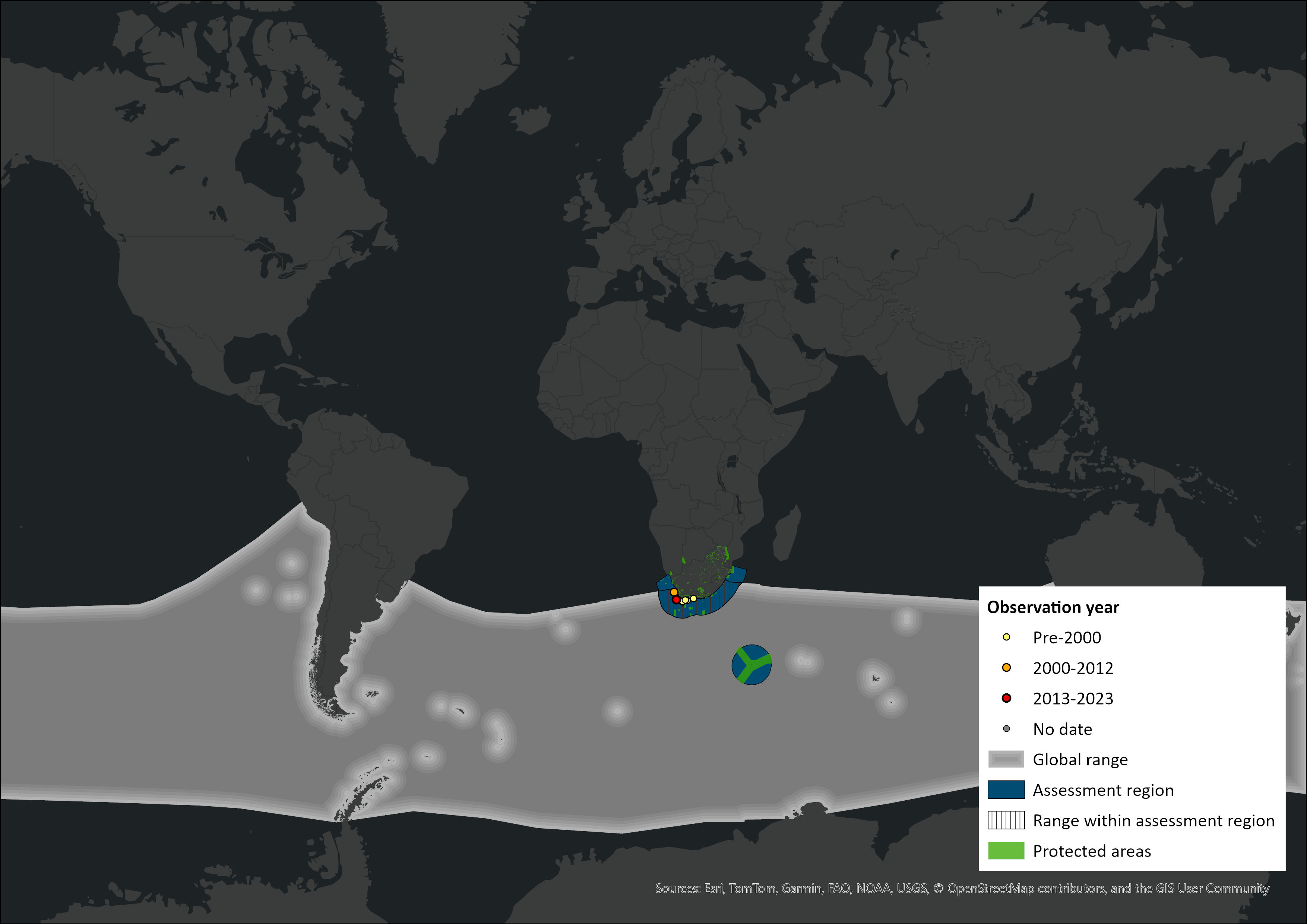 Figure 1. Distribution records for Gray’s Beaked Whale (Mesoplodon grayi) within the assessment region (South Africa, Eswatini and Lesotho). Note that distribution data is obtained from multiple sources and records have not all been individually verified.
Biogeographic Realms
Biogeographic Realm: Afrotropical, Antarctic, Australasian, Neotropical
Occurrence
Countries of Occurrence
| Country | Presence | Origin | Formerly Bred | Seasonality |
| Antarctica | Presence Uncertain | Native | – | – |
| Argentina | Extant | Native | – | – |
| Argentina -> Buenos Aires | Extant | Native | – | – |
| Argentina -> Chubut | Extant | Native | – | – |
| Argentina -> Tierra del Fuego | Extant | Native | – | – |
| Australia | Extant | Native | – | – |
| Australia -> New South Wales | Extant | Native | – | – |
| Australia -> South Australia | Extant | Native | – | – |
| Australia -> Tasmania | Extant | Native | – | – |
| Australia -> Victoria | Extant | Native | – | – |
| Australia -> Western Australia | Extant | Native | – | – |
| Brazil | Extant | Native | – | – |
| Chile | Extant | Native | – | – |
| Falkland Islands (Malvinas) | Extant | Native | – | – |
| French Southern Territories | Extant | Native | – | Resident |
| French Southern Territories -> Amsterdam-St. Paul Is. | Extant | Native | – | – |
| French Southern Territories -> Crozet Is. | Extant | Native | – | – |
| French Southern Territories -> Kerguelen | Extant | Native | – | – |
| Heard Island and McDonald Islands | Extant | Native | – | – |
| Maldives | Extant | Native | – | – |
| Netherlands | Extant | Vagrant | – | – |
| New Zealand | Extant | Native | – | – |
| New Zealand -> Antipodean Is. | Extant | Native | – | – |
| New Zealand -> Chatham Is. | Extant | Native | – | – |
| New Zealand -> Kermadec Is. | Extant | Native | – | – |
| Peru | Extant | Native | – | – |
| South Africa | Extant | Native | – | – |
| South Africa -> Marion-Prince Edward Is. | Extant | Native | – | – |
| South Georgia and the South Sandwich Islands | Extant | Native | – | – |
| South Georgia and the South Sandwich Islands -> South Georgia | Extant | Native | – | – |
| Uruguay | Extant | Native | – | – |
Large Marine Ecosystems (LME) Occurrence
Large Marine Ecosystems: (Not specified)
FAO Area Occurrence
| Presence | Origin | Formerly Bred | Seasonality | |
| 41. Atlantic – southwest | Extant | Native | – | – |
| 47. Atlantic – southeast | Extant | Native | – | – |
| 48. Atlantic – Antarctic | Extant | Native | – | – |
| 51. Indian Ocean – western | Extant | Native | – | – |
| 57. Indian Ocean – eastern | Extant | Native | – | – |
| 58. Indian Ocean – Antarctic | Extant | Native | – | – |
| 81. Pacific – southwest | Extant | Native | – | – |
| 87. Pacific – southeast | Extant | Native | – | – |
Climate change
The specific effects of climate change on Gray’s Beaked Whales is currently unknown however it has been suggested that similar to other cetaceans, beaked whales will likely undergo extensive range shift towards higher latitudes where they may be exposed to additional stressors such as increased noise exposure, interactions with fisheries, incidence of disease outbreaks and risk of ship strikes as well as reduced prey availability (Feyrer et al. 2024). Drastic reductions in suitable habitat and available prey for beaked whales due to climate change may result in future population declines, which would be difficult to quantify give the scarcity of abundance, life history and population level information we currently have for many beaked whale species.
Population information
There is very little information pertaining to the population abundances and trends of this species as they are rarely sighted at sea. They are, however, considered fairly common in New Zealand waters, but uncommon elsewhere in the southern hemisphere.
Continuing decline in mature individuals? (Not specified)
Extreme fluctuations in the number of subpopulations: (Not specified)
Continuing decline in number of subpopulations: (Not specified)
All individuals in one subpopulation: (Not specified)
Number of mature individuals in largest subpopulation: (Not specified)
Number of Subpopulations: (Not specified)
Quantitative Analysis
Probability of extinction in the wild within 3 generations or 10 years, whichever is longer, maximum 100 years: (Not specified)
Probability of extinction in the wild within 5 generations or 20 years, whichever is longer, maximum 100 years: (Not specified)
Probability of extinction in the wild within 100 years: (Not specified)
Population genetics
Mitochondrial and microsatellite markers both suggest an absence of population structure in Gray’s Beaked Whales between South Africa and Australasia (Thompson et al. 2016; Westbury et al. 2021). This suggests the species exists as a single metapopulation across the southern hemisphere. It is suggested that high rates of dispersal, a flexible social system in combination with the rich oceanic habitat of the Southern Hemisphere, facilitate gene flow and potentially support a surprisingly large number of Gray’s Beaked Whales (Westbury et al. 2021).
Through an exploration of historical effective population sizes, relatively stable and high female effective population sizes (Ne) have been found over the past 1.1 million years, with an approximate doubling of Nef approximately 250 kya, to the value of 270,500 whales (95% CI 116,544–1,244 228) (Thompson et al. 2016; Westbury et al. 2021). While these estimates were obtained by analysing the genetic profiles of animals from Australia and New Zealand, the metapopulation status of this species across the southern hemisphere (i.e., presence of gene flow/connectivity) suggests that these Ne values also incorporate the assessment region. These historical Ne estimates must not be confused with contemporary Ne estimates; however, it may be that this species has remained healthy and stable since the last glacial maxima and at the very least may exceed an Ne of 500.
Based on this information, the two genetic indicators in the Convention of Biological Diversity’s Global Biodiversity Framework can be quantified. The complementary indicator- proportion of populations maintained with a species – would receive a value of 1.0 (1/1 population remains) given that a single metapopulation remains in the assessment region and no other subpopulations are known to have gone extinct. Additionally, the headline indicator – proportion of populations with an Ne > 500 – would also receive a score of 1.0, as the one population likely exceeds the 500 threshold.
Habitats and ecology
Mesoplodon species occur commonly in deep-waters and along continental slopes, where prey availability may be enhanced by the interactions between ocean currents and topography (MacLeod & Zuur 2005). Beaked whales are believed to be suction feeders (Heyning & Mead 1996), feeding predominantly on squid and deep-water fish. Gambell et al. (1975) suggested that M. grayi form small schools. M. grayi calves may be born in spring and summer, at lengths of approximately 2.1 m (Baker 1983). Stable isotope analyses also suggest that M. grayi consumes subantarctic benthopelagic fish and both neritic and oceanic squid (Riccialdelli et al. 2017).
Ecosystem and cultural services: Marine mammals integrate and reflect ecological variation across large spatial and long temporal scales, and therefore they are prime sentinels of marine ecosystem change; migratory whales may be used to investigate broad-scale shifts in ecosystems (Moore 2008).
IUCN Habitats Classification Scheme
| Habitat | Season | Suitability | Major Importance? |
| 10.1. Marine Oceanic -> Marine Oceanic – Epipelagic (0-200m) | – | Marginal | – |
| 10.2. Marine Oceanic -> Marine Oceanic – Mesopelagic (200-1000m) | – | Suitable | Yes |
| 10.3. Marine Oceanic -> Marine Oceanic – Bathypelagic (1000-4000m) | – | Suitable | Yes |
Life History
Generation Length: (Not specified)
Age at Maturity: Female or unspecified: (Not specified)
Age at Maturity: Male: (Not specified)
Size at Maturity (in cms): Female: (Not specified)
Size at Maturity (in cms): Male: (Not specified)
Longevity: (Not specified)
Average Reproductive Age: (Not specified)
Maximum Size (in cms): (Not specified)
Size at Birth (in cms): (Not specified)
Gestation Time: (Not specified)
Reproductive Periodicity: (Not specified)
Average Annual Fecundity or Litter Size: (Not specified)
Natural Mortality: (Not specified)
Breeding Strategy
Does the species lay eggs? No
Does the species give birth to live young: Yes
Does the species exhibit parthenogenesis: No
Does the species have a free-living larval stage? No
Does the species require water for breeding? Yes
Movement Patterns
Movement Patterns: (Not specified)
Congregatory: (Not specified)
Systems
System: Marine
General Use and Trade Information
In general, beaked whales in the southern hemisphere are not utilised or traded commercially.
Local Livelihood: (Not specified)
National Commercial Value: (Not specified)
International Commercial Value: (Not specified)
End Use: (Not specified)
Is there harvest from captive/cultivated sources of this species? (Not specified)
Harvest Trend Comments: (Not specified)
Threats
There appear to be no widely distributed major threats to beaked whales. The impact of potential threats are unknown but, considering that most Ziphiidae species are naturally rare, especially within the assessment region, they may have unsustainable impacts on local populations and further research is required. Current threats to this species include climate change, military sonar, vessel strikes, persistent organic pollutants and plastics (Feyrer et al. 2024).
Anthropogenic noise pollution has become an increasing and well-known threat to beaked whales, as they appear to be more vulnerable to noise pollution than other cetacean species (Dalebout et al. 2005). A number of mass stranding events involving beaked whales have been attributed to seismic exploration and high-powered navy sonar (Simmonds & Lopez-Jurado 1991; Mignucci-Giannoni 1996; Frantzis 1998, 2004; Balcomb & Claridge 2001; Jepson et al. 2003; Cox et al. 2006). Although the exact mechanistic causes are not clearly understood, the formation of gas bubbles (Fernández et al. 2005), appears to be attributed to sonar activities and noise pollution (Cox et al. 2006). Jepson et al. (2003) described the physiological damage, including acute and chronic tissue damage, inflicted on beaked whales by the deployment of military sonar at the Canary Islands. In 2004 a moratorium on naval activities in the Canary Islands was enforced by the Spanish government, and since then no mass stranding events have occurred in this area (Fernández et al. 2013). Within the assessment region, marine noise pollution is intensifying due to coastal industrial development, shipping traffic and energy exploration, and thus represents a potentially severe threat.
Plastic pollution is a large-scale and increasing problem in all marine environments. The ingestion of plastic marine pollution has been documented in several species of beaked whales and may eventually lead to mortality as a result of choking, a reduction in appetite or starvation (e.g. Scott et al. 2001).
Accidental entanglement of beaked whales in fisheries is widespread, particularly in deep-water gillnets, although the number of recorded mortalities is not high. Extensive gillnet and longline fishing practises throughout the ranges of many beaked whales may become an increasing risk to these species as a result of accidental entrapment and drowning.
The expansion of high-latitude fisheries, such as those directed at Antarctic Toothfish (Dissostichus mawsoni), which are largely unregulated and illegal, threaten the food stocks available for large cetaceans such as beaked whales. There is substantial evidence of large-scale reductions in many predatory fish populations (Baum et al. 2003, 2005; Polacheck 2006; Sibert et al. 2006), over-fishing and the collapse of several important “prey” fish stocks world-wide (e.g. Jackson et al. 2001). Although the effects of anthropogenic fish exploitation and the subsequent ecosystem changes on beaked whales is considered to be fairly low in comparison to other cetaceans in the Pacific Ocean (Trites et al. 1997), the degree of impact associated with high-latitude fisheries world-wide is largely unknown and could result in population declines.
The marine-related threats associated with global climate change may pose unquantified and complex threats to beaked whales, particularly within cool temperate and cold Antarctic habitats (Learmonth et al. 2006). Increasing ocean temperatures may result in range shift or contraction (Learmonth et al. 2006); however, no direct predictions pertaining to the direction or size of these shifts in range are currently known.
Unlike many whale species, beaked whales have not experienced large-scale historic or recent exploitation for meat or other products. This may be attributed to their general scarcity and inconspicuous nature, deep-sea distributions and/or deep-diving behaviour.
Conservation
More research into the distribution, abundance, migration patterns, bycatch rate and diet of beaked whales is essential for the effective development of species-specific mitigation measures for these species in South African waters. Mitigation measures associated with anthropogenic marine noise is probably most vital for Ziphiidae species locally and world-wide. The avoidance of beaked whale habitats in South African waters is currently challenging due to their wide distribution, and the lack of data pertaining to habitat preferences and geographical extent across this region.
Passive acoustic monitoring is a valuable technique used to detect marine mammals in order to modify marine activities so as to avoid the animals, decrease the amplitude or temporarily stop the source of sound when animals are within a critical distance (Barlow & Gisiner 2006). Although beaked whales are acoustically difficult to detect, all species are assumed to give off echolocation clicks, some may also produce whistles (Dawson et al. 1998; MacLeod & D’Amico 2006). Generally, the clicks of Ziphiidae species are more narrow-banded than those of other marine mammals of a similar frequency, thus electronic filtering methods may be more effective than other methods (Barlow & Gisiner 2006).
Maintaining sightings records of beaked whales, during ship-based surveys directed at other species, is a valuable means with which to monitor the distribution and abundance of these cryptic and unknown species in South African waters.
All Ziphiidae species within the assessment region are listed either on Appendix I or II of the Convention on International Trade in Endangered Species of Wild Fauna and Flora (CITES).
Recommendations for managers and practitioners:
- Critical beaked whale habitats, and areas of high beaked whale concentration should be identified, so as to effectively mitigate the effects of noise pollution.
- Although species-specific monitoring is deemed unnecessary for Ziphiidae species in the assessment region, sightings data should be recorded during systematic monitoring of other cetacean species.
- Establish a nationwide strandings network and databases (comprised of whale-watching operators, coastal protected areas, police stations, hotels, etc.) to gather and pool information.
Research priorities:
- Population size and trend estimates.
- Effects of marine noise pollution and plastic pollution on beaked whale populations.
- The identification of high concentration areas in South African waters, including distributional limits, seasonal movements and diving behaviour.
- Diet, reproduction and general biology.
Encouraged citizen actions:
- Report strandings east of Mossel Bay to the Port Elizabeth Museum, and west of Mossel Bay to Iziko Museums, Cape Town.
- Report sightings on virtual museum platforms (for example, iNaturalist and MammalMAP) to help with mapping geographical distribution.
- Avoid using plastic bags.
- Save electricity and fuel to mitigate CO2 emissions and hence the rate of climate change.
Bibliography
Anderson, R. C., Clark, R., Madsen, P. T., Johnson, C., Kiszka, J. and Breysse, O. 2006. Observations of Longman’s beaked whale (Indopacetus pacificus) in the Western Indian Ocean. Aquatic Mammals 32(2): 223-231.
Baker AN. 1983. Whales and Dolphins of New Zealand and Australia. An Identification Guide. University Press, Wellington, Victoria.
Balcomb, K. C. 1989. Baird’s beaked whale Berardius bairdii Stejneger, 1883: Arnoux’s beaked whale Berardius arnuxii Duvernoy, 1851. In: S. H. Ridgway and R. Harrison (eds), Handbook of marine mammals, Vol. 4: River dolphins and the larger toothed whales, pp. 261-288. Academic Press.
Balcomb, K.C. and Claridge, D.E. 2001. A mass stranding of cetaceans caused by naval sonar in the Bahamas. Bahamas Journal of Science 8(2): 2-12.
Barlow, J. 1999. Trackline detection probability for long-diving whales. In: G. W. Garner, S. C. Amstrup, J. L. Laake, B. J. F. Manley, L. L. McDonald and D. G. Robertson (eds), Marine mammal survey and assessment methods, pp. 209-221. Balkema Press, Netherlands.
Barlow, J. 2006. Cetacean abundance in Hawaiian waters estimated from a summer/fall survey in 2002. Marine Mammal Science 22(2): 446-464.
Barlow, J. and Gisiner, R. 2006. Mitigating, monitoring and assessing the effects of anthropogenic sound on beaked whales. Journal of Cetacean Research and Management 7(3): 239-250.
Baum, J.K., Kehler, D. and Myers, R.A. 2005. Robust estimates of decline for pelagic shark populations in the northwest Atlantic and Gulf of Mexico. Fisheries 30: 27–30.
Best, P.B. 2007. Whales and Dolphins of the Southern African Subregion. Cambridge University Press, Cape Town, South Africa.
Boschema, H. 1950. Maxillary teeth in specimens of Hyperoodon rostratus (Muller) and Mesoplodon grayi Von Haast stranded on the Dutch coasts. Koninklijke Nederlandse Akademie van Wetenschappen 53: 775-786.
Brownell Jr., R. L., Yamada, T., Mead, J. G. and van Helden, A. 2006. Mass strandings of Cuvier’s beaked whales in Japan: U.S. naval acoustic link? International Whaling Commission.
Caretta JV, Price T, Petersen D, Read R. 2004. Estimates of marine mammal, sea turtle, and seabird mortality in the California drift gillnet fishery for swordfish and thresher shark, 1996–2002. Marine Fisheries Review 66: 21–30.
Cockcroft VG, De Kock AC, Ross GJB, Lord DA. 1990. Organochlorines in common dolphins caught in shark nets during the Natal “sardine run”. South African Journal of Zoology 25: 144-148.
Cox, T.M., Ragen, T.J., Read, A.J., Vos, E., Baird, R.W., Balcomb, K., Barlow, J., Caldwell, J., Cranford, T., Crum, L., D’Amico, A., D’Spain, A., Fernández, J., Finneran, J., Gentry, R., Gerth, W., Gulland, F., Hildebrand, J., Houser, D., Hullar, T., Jepson, P.D., Ketten, D., Macleod, C.D., Miller, P., Moore, S., Mountain, D., Palka, D., Ponganis, P., Rommel, S., Rowles, T., Taylor, B., Tyack, P., Wartzok, D., Gisiner, R., Mead, J. and Benner, L. 2006. Understanding the impacts of anthropogenic sound on beaked whales. Journal of Cetacean Research and Management 7(3): 177-187.
Dalebout, M. L. 2002. Species identity, genetic diversity, and molecular systematic relationships among the Ziphiidae (beaked whales). Thesis, University of Auckland.
Dalebout, M. L., Mead, J. G., Baker, C. S., Baker, A. N. and van Helden, A. L. 2002. A new species of beaked whale Mesoplodon perrini sp. n. (Cetacea: Ziphiidae) discovered through phylogenetic analyses of mitochondrial DNA sequences. Marine Mammal Science 18(3): 577-608.
Dalebout, M. L., Ross, G. J. B., Baker, C. S., Anderson, R. C., Best, P. B., Cockcroft, V. G., Hinsz, H. L., Peddemors, V. M. and Pitman, R. L. 2003. Appearance, distribution and genetic distinctiveness of Longman’s beaked whale, Indopacetus pacificus. Marine Mammal Science 19(3): 421-461.
Dalebout, M.L., Robertson, K.M., Frantzis, A., Engelhaupt, D., Mignucci-Giannoni, A.A., Rosario-Delestre, R.J. and Baker, C.S. 2005. Worldwide structure of mtDNA diversity among Cuvier’s beaked whales (Ziphius cavirostris): Implications for threatened populations. Molecular Ecology 14: 3353-3371.
Dalebout, M.L., Van Helden, A., Van Waerebeek, K. and Baker, C.S. 1998. Molecular genetic identification of southern hermisphere beaked whales (Cetacea: Ziphiidae). Molecular Ecology 7: 687-694.
Dawson S, Barlow J, Ljungblad D. 1998. Sounds recorded from Baird’s beaked whale, Berardius bairdii. Marine Mammal Science 14: 335-344.
Dayaratne, P. and Joseph, L. 1993. A study on dolphin catches in Sri Lanka. Bay of Bengal Programme, Madras, India.
Dixon, J. 1980. A recent stranding of the strap-toothed whale, Mesoplodon layardii (Gray) (Ziphiidae) from Victoria, and a review of Australian records of the species. Victorian Naturalist 97: 34-41.
Ferguson, M. C. and Barlow, J. 2001. Spatial distribution and density of cetaceans in the eastern Pacific Ocean based on summer/fall research vessel surveys in 1986-96. Southwest Fisheries Science Center Adminstrative Report LJ-01-04: 61 pp.
Fernández A, Arbelo M, Martín V. 2013. Whales: No mass strandings since sonar ban. Nature 497: 317–317.
Fernández, A., Edwards, J. F., Rodriguez, F., Espinosa, A., De Los Monteros, Herraez, P., Castro, P., Jaber, J. R., Martin, V. and Arebelo, M. 2005. “Gas and fat embolic syndrome” involving a mass stranding of beaked whales (family Ziphiidae) exposed to anthropogenic sonar signals. Veterinary Pathology 42: 446-457.
Feyrer, L.J., Stanistreet, J.E. and H.B. Moors-Murphy. 2024-Navigating the unknown: assessing anthropogenic threats to beaked whales, family Ziphiidae. Royal Society Open Science 11: 240058.
Frantzis A. 2004. The first mass stranding that was associated with the use of active sonar (Kyparissiakos Gulf, Greece, 1996). ECS Newsletter 42: 14–20.
Frantzis, A. 1998. Does acoustic testing strand whales? Nature 392(5): 29.
Gambell R, Best PB, Rice DW. 1975. Report on the International Indian Ocean whale marking cruise, 24th Nov 1973 – 3rd Feb 1974. Reports of the International Whaling Commission.
Heyning, J. E. 2002. Cuvier’s beaked whale Ziphius cavirostris. In: W. F. Perrin, B. Wursig and J. G. M. Thewissen (eds), Encyclopedia of Marine Mammals, pp. 305-307. Academic Press, San Diego, USA.
Heyning, J. E. and Mead, J. G. 1996. Suction feeding in beaked whales: morphological and observational evidence. Natural History Museum of Los Angeles County, Contributions in Science 464: 12.
Heyning, J.E. 1989. Cuvier’s beaked whale Ziphius cavirostris G. Cuvier, 1823. In: S. H. Ridgway and R. Harrison (eds), Handbook of marine mammals, pp. 289-308. Academic Press.
Hofmeyr GJG, Findlay KP, Cockcroft VG, Kotze G, Meyer M, Plön S, Thornton M, Best PB. 2014. Spatial and temporal distribution of beaked whale strandings on the South African coast. South African Marine Sciences Symposium, Stellenbosch.
IUCN (International Union for Conservation of Nature). 2012e. Mesoplodon grayi . Available at: http://www.iucnredlist.org. (Accessed: 21 February 2016).
Jackson, J. B. C., Kirby, M. X., Berger, W. H., Bjorndal, K. A., Botsford, L. W., Bourque, B. J., Bradbury, R. H., Cooke, R., Erlandson, J., Estes, J. A., Hughes, T. P., Kidwell, S., Lange, C. B., Lenihan, H. S., Pandolfi, J. M., Peterson, C. H., Steneck, R. S., Tegner, M. J. and Warner, R. R. 2001. Historical overfishing and the recent collapse of coastal ecosystems. Science 293: 629-637.
Jefferson, T. A., Leatherwood, S. and Webber, M. A. 1993. Marine Mammals of the World: FAO Species Identification Guide. United Nation Environment Programme and Food and Agricultural Organization of the UN.
Jepson, P.D., Arebelo, M., Deaville, R., Patterson, I.A.P., Castro, P., Baker, J.R., Degollada, E., Ross, H.M., Herraez, P., Pocknell, A.M., Rodriguez, F., Howie, F.E., Espinosa, A., Reid, R.J., Jaber, J.R., Martin, V., Cunningham, A.A. and Fernandez, A. 2003. Gas-bubble lesions in stranded cetaceans. Nature 425: 575-576.
Julian, F. and Beeson, M. 1998. Estimates of marine mammal, turtle, and seabird mortality for two California gillnet fisheries: 1990-95. Fishery Bulletin 96: 271-284.
Kasamatsu, F. and Joyce, G. G. 1995. Current status of odontocetes in the Antarctic. Antarctic Science 7: 365-379.
Kasamatsu, F., Hembree, D., Joyce, G., Tsunoda, L., Rowlett, R. and Nakano, T. 1988. Distribution of cetacean sightings in the Antarctic: results obtained from the IWC/IDCR minke whale assessment cruises, 1978/79 to 1983/84. Report of the International Whaling Commission 38: 449–473.
Kasuya T, Brownell Jr RL, Balcomb III KC. 1997. Life history of Baird’s beaked whales off the Pacific coast of Japan. Report of the International Whaling Commission 47: 969–979.
Kasuya, T. 2002. Giant beaked whales Berardius bairdii and B. arnuxii. In: W. F. Perrin, B. Wursig and J. G. M. Thewissen (eds), Encyclopedia of Marine Mammals, pp. 519-522. Academic Press, San Diego, California, USA.
Koper RP, Plön S. 2012. The potential impacts of anthropogenic noise on marine animals and recommendations for research in South Africa. EWT Research & Technical Paper No. 1. Endangered Wildlife Trust, South Africa.
Learmonth, J.A., Macleod, C.D., Santos, M.B., Pierce, G.J., Crick, H.Q.P. and Robinson, R.A. 2006. Potential effects of climate change on marine mammals. Oceanography and Marine Biology: An Annual Review 44: 431-464.
MacLeod C.D. 2005. Niche partitioning, distribution and competition in North Atlantic beaked whales. PhD Thesis. University of Aberdeen.
Macleod, C. D., Perrin, W. F., Pitman, R. L., Barlow, J., Balance, L., D’amico, A., Gerrodette, T., Joyce, G., Mullin, K. D., Palka, D. L. and Waring, G. T. 2006. Known and inferred distributions of beaked whale species (Ziphiidae: Cetacea). Journal of Cetacean Research and Management 7(3): 271-286.
Malakoff, D. 2002. Suit ties whale deaths to research cruise. Science 298: 722-723.
McCann C. 1975. A study of the genus Berardius. Reports of the Whales Research Institute 27: 111–137.
Mead, J.G. 1981. First records of Mesoplodon hectori (Ziphiidae) from the northern hemisphere and a description of the adult male. Journal of Mammalogy 62: 430-432.
Mead, J.G. 1989. Beaked whales of the genus Mesoplodon. In: S. H. Ridgway and R. Harrison (eds), Handbook of marine mammals, Vol. 4: River dolphins and the larger toothed whales, pp. 349-430. Academic Press.
Meester, J.A.J., Rautenbach, I.L., Dippenaar, N.J. and Baker, C.M. 1986. Classification of Southern African Mammals. Monograph number 5. Transvaal Museum , Pretoria, South Africa.
Mignucci-Giannoni AA. 1996. Marine mammal strandings in Puerto Rico and the United States and British Virgin Islands. Ph.D. Thesis. University of Puerto Rico.
Miyazaki N, Wada S. 1976. Observation of Cetacea during whales cruise in the western tropical Pacific. Scientific Reports of the Whales Research Institute 30: 179–195.
Moore JC. 1968. Relationships among the living genera of beaked whales. Fieldiana Zoology 53: 209–298.
Moore SE. 2008. Marine mammals as ecosystem sentinels. Journal of Mammalogy 89: 534-540.
Moritz, C. 1994. Defining ‘Evolutionarily Significant Units’ for conservation. Trends in Ecology and Evolution 9: 373–375.
Nishiwaki, M. and Oguro, N. 1972. Catch of Cuvier’s beaked whales off Japan in recent years. Scientific Reports of the Whales Research Institute 24: 35-41.
Omura, H., Fujino, K. and Kimura, S. 1955. Beaked whale Berardius bairdi of Japan, with notes on Ziphius cavirostris. Scientific Reports of the Whales Research Institute 10: 89-132.
Paterson RA, van Dyck S. 1990. Records of beaked whales in Queensland. Scientific Reports of Cetacean Research 1: 63–77.
Paterson, R. A. and Parker, A. E. 1994. Aerial observations of large ziphiid whales, possibly Berardius arnuxii, off the southern coast of New South Wales. Memoirs of the Queensland Museum 37: 301-306.
Pitman, R. L., Palacios, D. M., Brennan, P. L. R., Brennan, B. J., Balcomb III, K. C. and Miyashita, T. 1999. Sightings and possible identity of a bottlenose whale in the tropical Indo-Pacific: Indopacetus pacificus. Marine Mammal Science 15(2): 531-549.
Pitman, R.L. 2002. Indo-Pacific Beaked Whale Indopacetus pacificus. In: W. F. Perrin, B. Würsig, and J. G. M. Thewissen (eds) Encyclopedia of Marine Mammals, pp. 615–617. Academic Press, San Diego, California.
Podesta, M.D., Amico, A., Pavan, G., Drougas, A., Komnenou, A. and Portunato, N. 2005. A review of Cuvier’s beaked whale strandings in the Mediterranean Sea. Journal of Cetacean Research and Management 7(3): 251-261.
Polacheck, T. 2006. Tuna longline catch rates in the Indian Ocean: did industrial fishing result in a 90% rapid decline in the abundance of large predatory species? Marine Policy 30: 470-482.
Reeves, R.R., Smith, B.D., Crespo, E.A. and Notarbartolo di Sciara, G. 2003. Dolphins, Whales and Porpoises: 2002-2010 Conservation Action Plan for the World’s Cetaceans. IUCN, Gland, Switzerland and Cambridge, UK.
Rice, D.W. 1998. Marine Mammals of the World: Systematics and Distribution. Society for Marine Mammalogy, Special Publication Number 4, Lawrence, Kansas.
Ross GJ. 1984. Smaller cetaceans of the south east coast of southern Africa. Annals of the Cape Provincial Museums. Natural History 16: 309-319.
Ross GJB, Cockcroft VG, Cliff G. 1985. Additions to marine faunas of South Africa and Natal. Lammergeyer 35: 36–40.
Ross GJB. 1970. The occurrence of Hector’s beaked whale Mesoplodon hectori (Gray) in South African waters. Annals of the Cape Provincial Museums (Natural History) 8: 195–204.
Scott, M. D., Hohn, A. A., Westgate, A. J., Nicolas, J. R., Whitaker, B. R. and Campbell, W. B. 2001. A note on the release and tracking of a rehabilitated pygmy sperm whale (Kogia breviceps). Journal of Cetacean Research and Management 3(1): 87-94.
Sekiguchi, K., Klages, N. T. W. and Best, P. B. 1996. The diet of strap-toothed whales (Mesoplodon layardii). Journal of Zoology (London) 239: 453-463.
Sekiguchi, K., Klages, N.T.W. and Best, P.B. 1992. Comparative analysis of the diets of smaller odontocete cetaceans along the coast of southern Africa. South African Journal of Marine Science 12: 843-861.
Shallenberger EW. 1981. The status of Hawaiian cetaceans. Marine Mammal Commission.
Sibert, J., Hampton, J., Kleiber, P. and Maunder, M. 2006. Biomass, size, and trophic status of top predators in the Pacific Ocean. Science 314: 1773-1776.
Slip, D. J., Moore, G. J., and Green, K. 1995. Stomach contents of a southern bottlenose whale, Hyperoodon planifrons, stranded at Heard Island. Marine Mammal Science 11: 575-584.
Taylor RJF. 1957. An unusual record of three species of whale being restricted to pools in Antarctic sea-ice. Proceedings of the Royal Society of London 129: 325–331.
Trites AW, Christensen V, Pauly D. 1997. Competition between fisheries and marine mammals for prey and primary production in the Pacific Ocean. Journal of Northwest Atlantic Fishery Science 22: 173-187.
Yamada TK. 2002. On an unidentified beaked whale found stranded in Kagoshima. National Science Museum, Tokyo.