
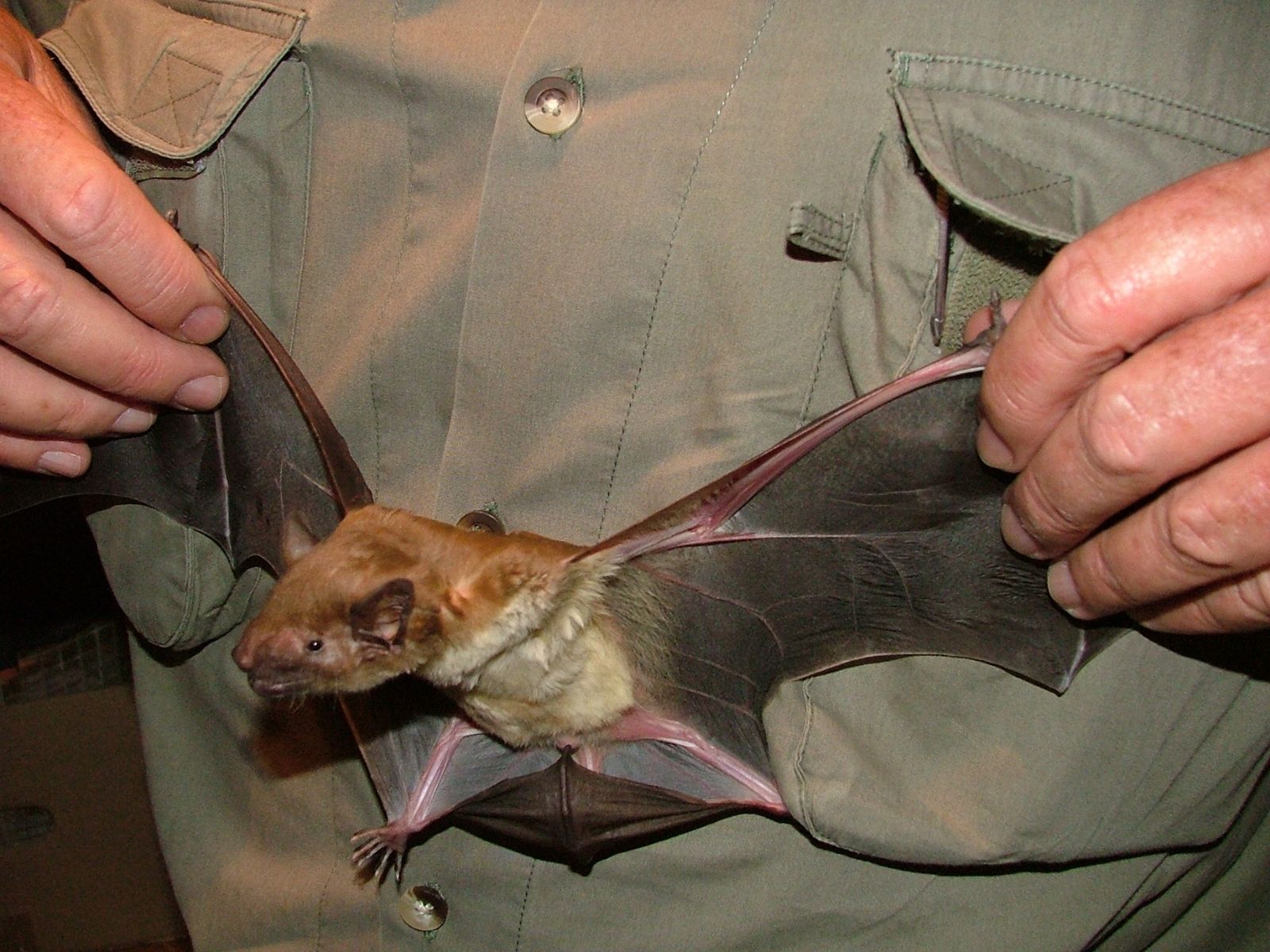
Giant Yellow House Bat
Scotophilus alvenslebeni

2025 Red list status
Near threatened

Regional Population Trend
Unknown

Change compared
to 2016
No Change
Overview
Scotophilus alvenslebeni – Dalquest 1965
ANIMALIA – CHORDATA – MAMMALIA – CHIROPTERA – VESPERTILIONIDAE – Scotophilus – nigrita
Common Names: Giant Yellow House Bat, Giant House Bat, Schreber’s Yellow Bat, Dalquest’s Giant Yellow House Bat (English), Groot Geel Dakvlermuis (Afrikaans)
Synonyms: Scotophilus alvenslebeni, Scotophilus nigrita Dalquest, 1965 ssp. alvenslebeni
Taxonomic Note:
South Africa
The largest species of Scotophilus in Africa, this species was originally known as Scotophilus nigrita, and before that as S. gigas, owing to a mistaken double description of two different species (Monadjem et al. 2020), but work by Vallo et al. (2015) elevated the two subspecies of Scotophilus nigrita (S. nigrita nigrita and S. nigrita alvenslebeni) to species level. As the holotype locality of S. alvenslebeni is from Zinave, southwest of Beira, Mozambique (Dalquest 1965) and the type locality of S. nigrita is Senegal (Robbins et al. 1985) the southern African forms have been designated S. alvenslebeni (Vallo 2015). However, the lineages and nomenclatural priority of the species of Scotophilus across Africa, as well as their specific distributions, are still unclear (see, for example, Demos et al. 2018), and so the use of this name for the southern African form of the largest Scotophilus species is tentative pending further investigation (Vallo 2015).
The uncertainty surrounding the correct name for this species does not, however, affect the species assessment, as there is only one form of the large Scotophilus species in the assessment region (Vallo 2015).
Red List Status: NT – Near Threatened D1+2 (IUCN version 3.1)
Assessment Information
Assessors: Balona, J.1, Richardson, E.J.2, Richards, L.R.3 & da Silva, J.M.4
Reviewer: Smith, C.5
Institutions: 1Gauteng and Northern Regions Bat Interest Group, 2Independent Consultant at Richardson & Peplow Environmental, 3Durban Natural Science Museum, 4South African National Biodiversity Institute, 5Endangered Wildlife Trust
Previous Assessors and Reviewers: Fernsby, N., Cohen, L., Richards, L.R., Taylor, P. & Child, M.F.
Previous Contributor: Raimondo, D.
Assessment Rationale
This species is sparsely distributed throughout its range, and only known from four localities (Komatipoort, Malelane, Hectorspruit, and Londolozi Game reserve) in the northeast of the assessment region. The first three localities are on the outskirts of the Kruger National Park (KNP) alongside what is known as the Peripheral Development Zone, which may mean the localities are not subject to the same responsibility of environmental protection as the core area of KNP. However, most of these specimens were collected from bat houses, which suggests the species may tolerate modified habitats and human habitation. The most recent record was a mist-netted individual from the privately protected area, Londolozi Game Reserve (K. MacEwan & J. Balona, unpubl. data, 2016), which is also adjacent the KNP. The threats to this species are poorly understood, but with only four known sites of occurrence, an EOO of 41 km2and probably less than 250 animals within the assessment region, this species would qualify for VU D1+2. However, the species does exist in Mozambique and marginally in Zimbabwe, so we conclude that rescue effects might be possible. We thus assess it as Near Threatened D1+2. However, further field surveys are needed to delimit distribution and population size within the assessment region and to quantify potential threats. Additionally, molecular research may reveal this species to be endemic to southern Africa. Thus, a reassessment is required once more comprehensive data are available.
Regional population effects: In the assessment region it is on the edge of the species range, but the population is discontinuously distributed between the assessment region and Mozambique/ Zimbabwe. While it is probably more evenly distributed than currently recorded (Monadjem et al. 2020), little is known about its dispersal capability, but we assume rescue effects are possible. While they do not migrate, they are likely capable of dispersing to the neighbouring countries of Mozambique and Zimbabwe.
Reasons for Change
Reason(s) for Change in Red List Category from the Previous Assessment: No change
Red List Index
Red List Index: No change
Recommended citaiton: Richards LR & da Silva JM. 2025. A conservation assessment of Tadarida ventralis. In Patel T, Smith C, Roxburgh L, da Silva JM & Raimondo D, editors. The Red List of Mammals of South Africa, Eswatini and Lesotho. South African National Biodiversity Institute and Endangered Wildlife Trust, South Africa.
Regional Distribution and occurrence
Geographic Range
Since Vallo’s (2015) revision of the species, elevating the two subspecies of Scotophilus nigrita (S. n. nigrita and S. n. alvenslebeni) to probable species level, delimiting the geographic range of S. alvenslebeni becomes problematic. Pending more investigation it probably exists in the eastern Democratic Republic of the Congo, Tanzania, Mozambique, Malawi, eastern Zimbabwe and northeastern South Africa.
Throughout its range it is sparsely distributed and known from only a few scattered localities. A record from Botswana (Cotterill 1996, Taylor 2000) is erroneous (Happold 2013) as it actually refers to S. dinganii.
While previously not assessed in South Africa due to it being considered a vagrant (Friedmann and Daly 2004), the first South African records of the rare S. nigrita were discovered in bat houses in Komatipoort and Malelane in 2004 (Monadjem et al. 2020), and have since also been recorded from bat houses in Hectorspruit, and captured by mistnet at Londolozi Game Reserve. It may have been overlooked in the past even in inhabited areas. It could be that it adapts easily to artificial roosting sites like S. dinganii or that habitat destruction forced it to inhabit built areas including bat houses. It is unknown whether it extends deeper into KNP or other areas of the assessment region. Further field surveys and monitoring of bat houses are necessary. The EOO for this species is 41 km2.
Elevation / Depth / Depth Zones
Elevation Lower Limit (in metres above sea level): 0
Elevation Upper Limit (in metres above sea level): 1,100
Depth Lower Limit (in metres below sea level): N/A
Depth Upper Limit (in metres below sea level): N/A)
Depth Zone: N/A
Map
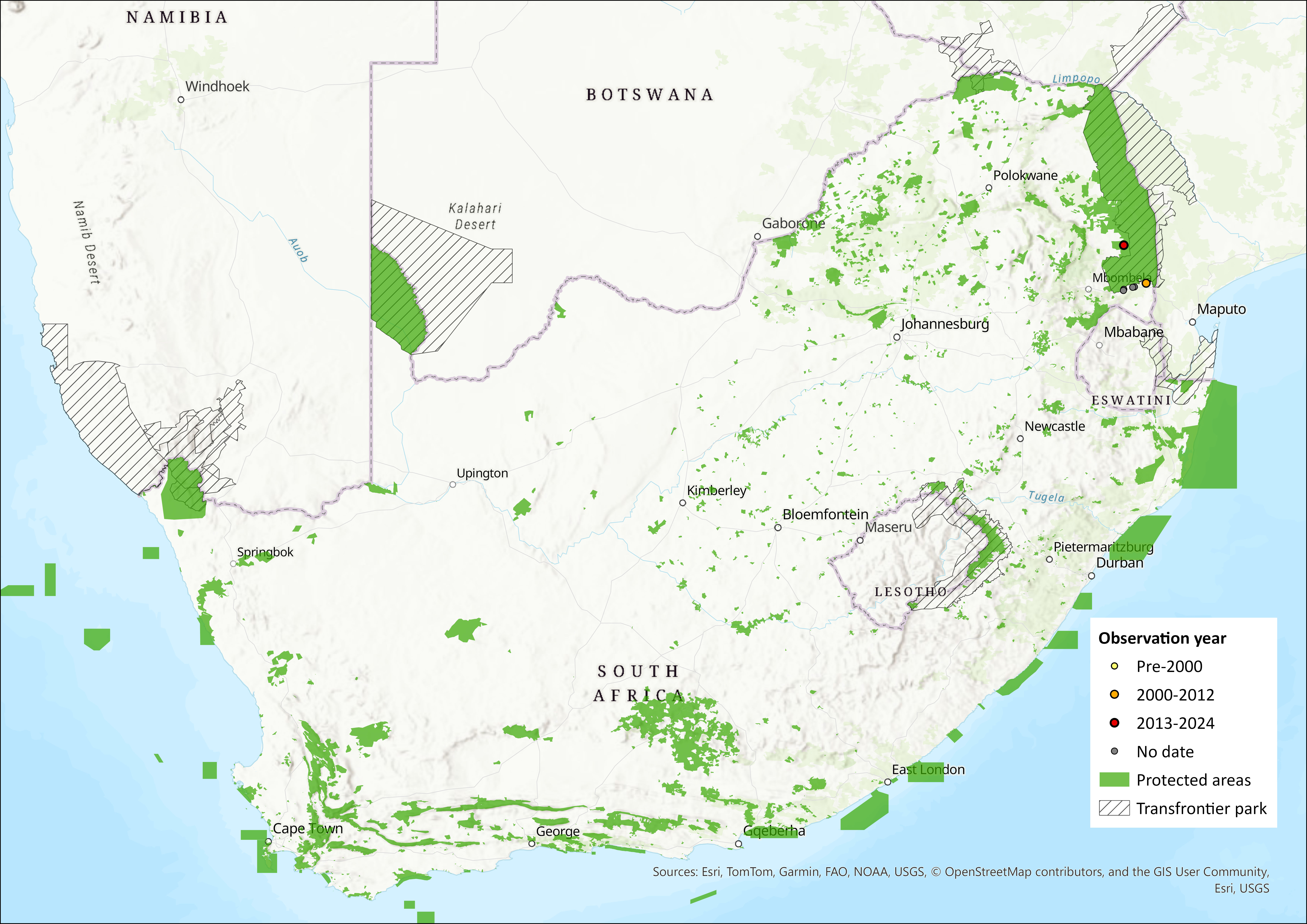 Figure 1. Distribution records for Giant Yellow House Bat (Scotophilus alvenslebeni) within the assessment region (South Africa, Eswatini and Lesotho). Note that distribution data is obtained from multiple sources and records have not all been individually verified.
Biogeographic Realms
Biogeographic Realm: (Not specified)
Occurrence
Countries of Occurrence
| Country | Presence | Origin | Formerly Bred | Seasonality |
| Mozambique | Extant | Native | – | – |
| South Africa | Extant | Native | – | – |
| Zimbabwe | Extant | Native | – | – |
Large Marine Ecosystems (LME) Occurrence
Large Marine Ecosystems: (Not specified)
FAO Area Occurrence
FAO Marine Areas: (Not specified)
Climate change
Nothing is known about the potential impact of climate change on this species, but globally, there have been documented declines in bat populations, species richness and distributions in relation to water availability with increasing global aridity which may become a growing concern as heat waves and maximum temperatures are expected to increase over much of South Africa (Adams & Hayes 2021; Mbokodo et al. 2020). Bats may also be more susceptible to extreme weather events than to climate shift (see, for example, Matthew et al. 2020).
Bats of the closely related S. dinganii have been recorded leaving their roof roosts and hanging exposed on the exterior walls of houses during extremely hot days (Bats KZN data), suggesting that this genus may be affected more by heat waves and increasing maximum temperatures.
Population information
Abundance is uncertain but it is considered rare (Happold 2013) and is also rarely recorded. It is estimated that fewer than 250 mature individuals exist within the assessment region. For example, it is poorly represented in museums, with only six records examined in Monadjem et al. (2020). In South Africa, c. 16 individuals were observed in 2005 in bat houses of Malelane, Hectorspruit, and Komatipoort, which may indicate a stable population in the region (N. Fernsby unpubl. data). Further field surveys are needed to discover new localities and to monitor population trends.
Current population trend: Unknown
Continuing decline in mature individuals? Not known
Number of subpopulations: One. Four known colonies/occurrence sites in close proximity: Komatipoort, Hectorspruit,Malelane and Londolozi.
Extreme fluctuations in the number of subpopulations: Not known
Continuing decline in number of subpopulations: Not known
All individuals in one subpopulation: Likely
Number of mature individuals in largest subpopulation: Not known, but a single colony can comprise 16 individuals (N. Fernsby unpubl. data)
Quantitative Analysis
Probability of extinction in the wild within 3 generations or 10 years, whichever is longer, maximum 100 years: Cannot be determined without detailed information on the number of individuals in the region and likely threats to the species
Probability of extinction in the wild within 5 generations or 20 years, whichever is longer, maximum 100 years: Cannot be determined without detailed information on the number of individuals in the region and likely threats to the species
Probability of extinction in the wild within 100 years: Not known
Population genetics
Given the large-size and probable high dispersal capabilities (in the absence of published wing morphology data, we cannot say for certain that the species is a good flyer / has high dispersal capability, however, this is very likely the case based on its size and what we know of other congenerics) of this species, it is likely to exist as a single metapopulation within the assessment region, likely connected to Zimbabwe and Mozambique. It is broadly estimated that fewer than 250 mature individuals exist within the assessment region; however, because populations they are likely associated with neighbouring countries, it is not possible to provide an estimate of the species’ effective population size within the region without more information. It is recommended that a more fine-scale population genomic study be undertaken using nuclear markers.
Habitats and ecology
This species has been recorded from moist savanna and seems to favour riverine woodland; the type specimen of S. alvensbeni is from the banks of Save River in Mozambique (ACR 2023), while Komatipoort and Londolozi records are also from this habitat (Hectorspruit and Malelane unknown, but these areas are close to the Crocodile River). It is known to feed on Coleoptera (Fenton et al. 1977; Monadjem et al. 2020). Otherwise, little is known of this bat’s ecology It’s most likely natural roost is hollow trees, as with other Scotophilus species.
IUCN Habitats Classification Scheme
| Habitat | Season | Suitability | Major Importance? |
| 2.1. Savanna -> Savanna – Moist | – | Suitable | – |
Life History
Generation Length: (Not specified)
Age at Maturity: Female or unspecified: (Not specified)
Age at Maturity: Male: (Not specified)
Size at Maturity (in cms): Female: Mean forearm length = 8.05 ±0.21 cm (Monadjem et al. 2020; based on combined sex data)
Size at Maturity (in cms): Male: Total length = 17.4 cm (Durban Natural Science Museum specimen records); Forearm length 8.02 cm (Durban Natural Science Museum specimen records)
Longevity: Not known
Average Reproductive Age: (Not specified)
Maximum Size (in cms): Total length = 17.5 cm, Forearm length = 8.40 cm (Monadjem et al. 2020)
Size at Birth (in cms): Not known
Gestation Time: (Not specified)
Reproductive Periodicity: Males have been found in breeding condition in November, suggesting that mating may coincide with the austral summer (Monadjem et al. 2020)
Average Annual Fecundity or Litter Size: Not known
Natural Mortality: Not known
Does the species lay eggs? No
Does the species give birth to live young: Yes
Does the species exhibit parthenogenesis: No
Does the species have a free-living larval stage? No
Does the species require water for breeding? No
Movement Patterns
Movement Patterns: Not yet known
Congregatory: Can be found in small colonies (Monadjem et al. 2020)
Systems
System: Terrestrial
General Use and Trade Information
This species is not known to be utilised or traded in any form.
Local Livelihood: (Not specified)
National Commercial Value: N/A
International Commercial Value: N/A
End Use: N/A
Is there harvest from captive/cultivated sources of this species? (Not specified)
Harvest Trend Comments: (Not specified)
Threats
Globally, this species is threatened by the conversion of its habitat to agricultural use in parts of its range. Within the assessment region, it is unknown whether there are significant threats facing the population. While there is agricultural intensification around three of the four known localities, and thus a possible impact of pesticides reducing its prey base, this species can exist in human modified habitats and forages close to large river systems where its preferred insect prey may be abundant. Quantifying the impacts of specific threats is required.
Conservation
Given the close proximity of the known subpopulations to KNP, this species may occur in in this protected area (but this remains to be verified). At least one population is known to occur in a private protected area (Londolozi Game Reserve). No direct conservation interventions are recommended until more is known about the threats facing the population. However, as it occurs in the Peripheral Development Zone (PDZ) of KNP, which is not subject to the same responsibility of environmental protection and management, several basic interventions are recommended until more detailed information is available: limiting disturbance to known roost sites and decreasing pesticide use and/or retaining buffer strips of natural vegetation in surrounding landscapes to sustain the insect prey base. This can be achieved through an education campaign in local communities to highlight the importance of ecosystem services and distribute best practice guidelines. As this species was first recorded from bat boxes, the installation of bat boxes may become a future intervention if community willingness and responsibility is nurtured.
Recommendations for land managers and practitioners:
- Maintenance of bat houses currently occupied.
- Protect remaining natural habitat outside KNP.
- Minimise environmental pesticide/insecticide contamination (e.g., in agro-industry).
Research priorities:
- Field surveys to identify further colonies and identify specific threats.
- Gathering echolocation reference calls to detect the species in acoustic surveys. Investigating patterns of movement to establish level of demographic and genetic exchange between colonies and quantifying the effects on transformation/fragmentation on such processes.
- Taxonomic resolution through ongoing integrative taxonomic research.
Encouraged citizen actions:
- Limit disturbance to roost sites.
- Avoid or limit the use of pesticides/insecticides for household purposes, especially in areas adjacent to known roosts.
- Citizens can assist the conservation of the species by reporting sightings on virtual museum platforms (for example, iNaturalist and MammalMAP) and therefore contribute to an understanding of the species distribution.
Bibliography
ACR. 2024. African Chiroptera Report 2023. Van Cakenberghe, V. and Seamark, E.C.J. (Eds.) African Chiroptera Project, Pretoria. i – xviii; 1 – 1210 pp.
Adams, R.A. and Hayes, M.A. 2021. The importance of water availability to bats: climate warming and increasing global aridity. 50 years of bat research: foundations and new frontiers, pp.105-120.
Cotterill, F. P. D. 1996. New distribution records of insectivorous bats of the families Nycteridae, Rhinolophidae and Vespertilionidae (Microchiroptera: Mammalia) in Zimbabwe. Arnoldia Zimbabwe 10(8): 71-89.
Demos, T.C., Webala, P.W., Bartonjo, M. and Patterson, B.D. 2018. Hidden diversity of African Yellow House Bats (Vespertilionidae, Scotophilus): Insights from multilocus phylogenetics and lineage delimitation. Frontiers in Ecology and Evolution 6: 86.
Fenton, M.B., Boyle, N.H., Harrison, T.M. and Oxley, D.J. 1977. Activity patterns, habitat use, and prey selection by some African insectivorous bats. Biotropica, 1:73-85.
Friedmann, Y. and Daly, B. 2004. Red Data Book of the Mammals of South Africa: A Conservation Assessment. Conservation Breeding Specialist Group (SSC/IUCN) and Endangered Wildlife Trust, Parkview, South Africa.
Happold, M. 2013. Scotophilus nigrita Giant House Bat. In: Happold, M. Happold, D.C.D. (ed.), Mammals of Africa. Volume IV: Hedgehogs, Shrews and Bats, pp. 678–679. Bloomsbury Publishing, London.
Hutton, J.M. 1986. The status and distribution of bats in Zimbabwe. Cimbebasia 8: 219–236.
Matthew, M. et al. 2022. Estimating flying-fox mortality associated with abandonments of pups and extreme heat events during the austral summer of 2019–20. Pacific Conservation Biology 28, 124-139
Maze, K. 2012. National Biodiversity Assessment 2011: An assessment of South Africa’s biodiversity and ecosystems. Synthesis Report. South African National Biodiversity Institute and Department of Environmental Affairs, Pretoria, South Africa.
Mbokodo, I., Bopape, M.J., Chikoore, H., Engelbrecht, F. and Nethengwe, N. 2020. Heatwaves in the future warmer climate of South Africa. Atmosphere, 11(7), p.712.
Meester, J.A.J., Rautenbach, I.L., Dippenaar, N.J. and Baker, C.M. 1986. Classification of Southern African Mammals. Monograph number 5. Transvaal Museum, Pretoria, South Africa.
Monadjem, A., Taylor, P.J., Cotterill, F.P.D. and Schoeman M.C. 2020. Bats of Southern and Central Africa: a biogeographic and taxonomic synthesis. 2nd Ed., University of Witwatersrand Press, Johannesburg.
Robbins, C.B. 1978. Taxonomic identification and history of Scotophilus nigrita (Schreber) (Chiroptera: Vespertilionidae). Journal of Mammalogy 59: 212–213.
Robbins, C. B., De Vree, F. and Van Cakenberghe, V. 1985. A systematic revision of the African bat genus Scotophilus (Vespertilionidae). Ann. Musée R. Afr. Cent. Sci. Zool. 246, 53–84.
Skinner, J.D. and Chimimba, C.T. (eds). 2005. The Mammals of the Southern African Subregion. Cambridge University Press, United Kingdom, Cambridge.
Taylor, P.J. 2000. Bats of Southern Africa: Guide to Biology, Identification, and Conservation. University of Natal Press, Pietermaritzburg, South Africa.
Vallo, P., Benda, P., Červenỳ, J. and Koubek, P. 2015. Phylogenetic position of the giant house bat Scotophilus nigrita (Chiroptera, Vespertilionidae). Mammalia 79: 225–231.