
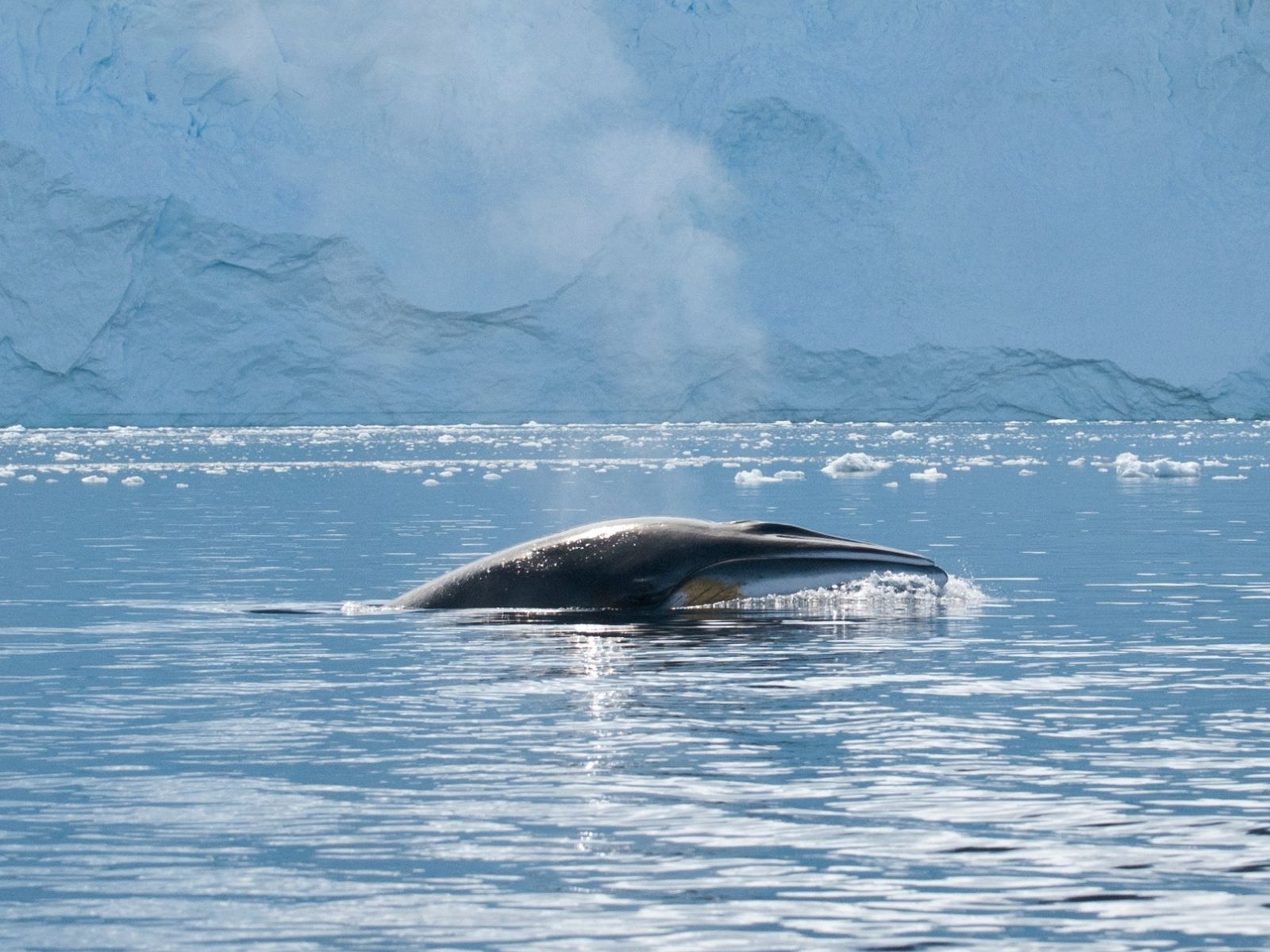
Dwarf Minke Whale
Balaenoptera acutorostrata subsp.

2025 Red list status
Least Concern

Regional Population Trend
Stable
Change compared
to 2016
No Change
Overview
Balaenoptera acutorostrata subsp. – Lacépède, 1804
ANIMALIA – CHORDATA – MAMMALIA – ARTIODACTYLA – BALAENOPTERIDAE – Balaenoptera – acutorostrata
Common Names: Dwarf Minke Whale, Common Minke Whale, Lesser Rorqual, Little Finner, Little Piked Whale, Minke, Minke Whale, Sharp-headed Finner (English), Minkewalvis (Afrikaans)
Synonyms: Balaenoptera acutorostrata Lacépède, 1804
The subspecies for this species have never been assessed; they are attached here to ensure the full cetacean taxonomy is accounted for in SIS, and to make these available to the Cetacean SG if they decide to assess these taxa in future.
Taxonomic Note:
The taxonomic status of Minke Whales is yet to be resolved, and prior to the 1990s only one species was recognised, B. acutorostrata (Lacépède, 1804), which was thought to exhibit one of the most extensive distributions of all cetaceans (Stewart & Leatherwood 1985). The most common Minke Whale in the southern hemisphere (B. bonaerensis Burmeister, 1867) was found to differ morphologically from those in the North Atlantic and North Pacific. The International Whaling Commission (IWC) Scientific Committee (SC) recently recognised the larger Antarctic Minke Whales (B. bonaerensis) as a distinct species from those in the northern hemisphere (IWC 2001).
To complicate matters further, a further southern hemisphere form (assessed here) was described, which was smaller in size compared to B. bonaerensis. Best (1985) recognised this ‘diminutive’ form of Minke Whales based on specimens from South Africa and described visual differences between them and the Antarctic Minke Whale, including light baleen plates, a white shoulder patch and a darker colouration in the neck region. This smaller form, termed the “Dwarf” Minke Whale, may be genetically distinct from B. bonaerensis, and more closely related to the North Pacific Minke Whales, and thus has been classified B. acutorostrata (Wada et al. 1991; IWC 2001). The colour patterns are consistent with Dwarf Minke Whales throughout the southern hemisphere (Arnold et al. 2005). The taxonomic position delineating between Antarctic Minke Whales, B. bonaerensis and Dwarf Minke Whales, B. acutorostrata has been accepted by the Convention on International Trade in Endangered Species of Wild Fauna and Flora (CITES), and the Convention on Migratory Species (CMS). Three subspecies of B. acutorostrata have been suggested, including B. a. acutorostrata from the North Atlantic, B. a. scammoni from the North Atlantic, and the Dwarf Minke Whale in the southern hemisphere (unnamed) (Rice 1998).
Red List Status: LC – Least Concern, (IUCN version 3.1)
Assessment Information
Assessors: Purdon, J.1,2 & da Silva, J.3
Reviewer: Smith, C.4
Institutions: 1TUT Nature Conservation, 2The Whale Unit, University of Pretoria, 3South African National Biodiversity Institute, 4Endangered Wildlife Trust
Previous Assessor & Reviewer: Relton, C.
Previous Contributors: Butterworth, D.S., Findlay, K., Elwen, S., Meÿer, M., Oosthuizen, H., Plön, S. & Child, M.F.
Assessment Rationale
This subspecies is fully protected in South African waters under national legislation and an IWC moratorium on commercial whaling. Thus, although there are no reliable data available with which to assess the population status of Dwarf Minke Whales, there is no reason to suspect that there is a decline in the local population of this subspecies. The Dwarf Minke Whale is therefore listed as Least Concern because, although it has very low numbers naturally, there are no specific identified threats that could cause major population decline. However, further monitoring and an estimate of population size and trend is necessary. Taxonomic and distributional resolution and delimitation is also necessary. This subspecies should be reassessed once such data are available.
Regional population effects: Dwarf Minke Whales have a broad distribution across the southern hemisphere. There are no barriers to dispersal, thus rescue effects are possible.
Reasons for Change
Reason(s) for Change in Red List Category from the Previous Assessment: No change
Red List Index
Red List Index: (Not specified)
Recommended citations: Purdon J & da Silva JM. 2025. A conservation assessment of Balaenoptera acutorostrata. In Patel T, Smith C, Roxburgh L, da Silva JM & Raimondo D, editors. The Red List of Mammals of South Africa, Eswatini and Lesotho. South African National Biodiversity Institute and Endangered Wildlife Trust, South Africa.
Regional Distribution and occurrence
Geographic Range
The Dwarf Minke Whale occurs in both tropical and warm temperate waters of the southern hemisphere. Their distribution extends along both the east and west coasts of South Africa (Best 1985) and Australia (Arnold et al. 1987, Bannister et al. 1996, Arnold 1997), and they have been recorded off Mozambique, New Zealand (Dawson and Slooten 1990), New Caledonia (Garrigue and Greaves 2001), Brazil (Baldas and Castello 1986, Zerbini et al. 1996) and in the Beagle Channel (Chile/Argentina; Acevedo et al. 2005). Dwarf Minke Whales may primarily occur within coastal habitats (Best 1985, Zerbini et al. 1996, Perrin and Brownell 2002), however Zerbini et al. (1997) recorded them over the continental shelf off Brazil within fairly shallow waters (4–200 m deep). Their range extends from approximately 7°S to 58°S (Best 1985, Perrin and Brownell 2002). The range limits of B. acutorostrata and B. bonaerensis in the southern hemisphere are ambiguous, because parts of their range are thought to overlap. Dwarf Minke Whales are present at higher latitudes and are considered to be a more subtropical species compared to Antarctic Minke Whales, but are significantly less common than Antarctic Minke Whales. Off the east coast of South Africa, B. acutorostrata are generally present closer inshore than B. bonaerensis (Skinner and Chimimba 2005).
During the summer months, most records of Dwarf Minke Whales are from sub-Antarctic waters. Their large-scale movements and migration patterns remain uncertain, as some whales are present year-round, whereas others may exhibit migratory behaviour. Acevedo et al. (2007) describes a seasonal north/south movement of Dwarf Minke Whales off South America, and similarly in the western South Pacific, Arnold (1997) observed the seasonal occurrence of this species between May and September, with peaks in June and July. These individuals are suggested to spend summer in Antarctic waters south of New Zealand, between 55° and 62°S (Pastene et al. 2010). Pastene et al. (2010) proposed that there may be multiple populations of Dwarf Minke Whales in the southern hemisphere, which exhibit seasonal spring/summer migrations due south to Antarctic waters.
Elevation / Depth / Depth Zones
Elevation Lower Limit (in metres above sea level): (Not specified)
Elevation Upper Limit (in metres above sea level): (Not specified)
Depth Lower Limit (in metres below sea level): (Not specified)
Depth Upper Limit (in metres below sea level): (Not specified)
Depth Zone: (Not specified)
Map
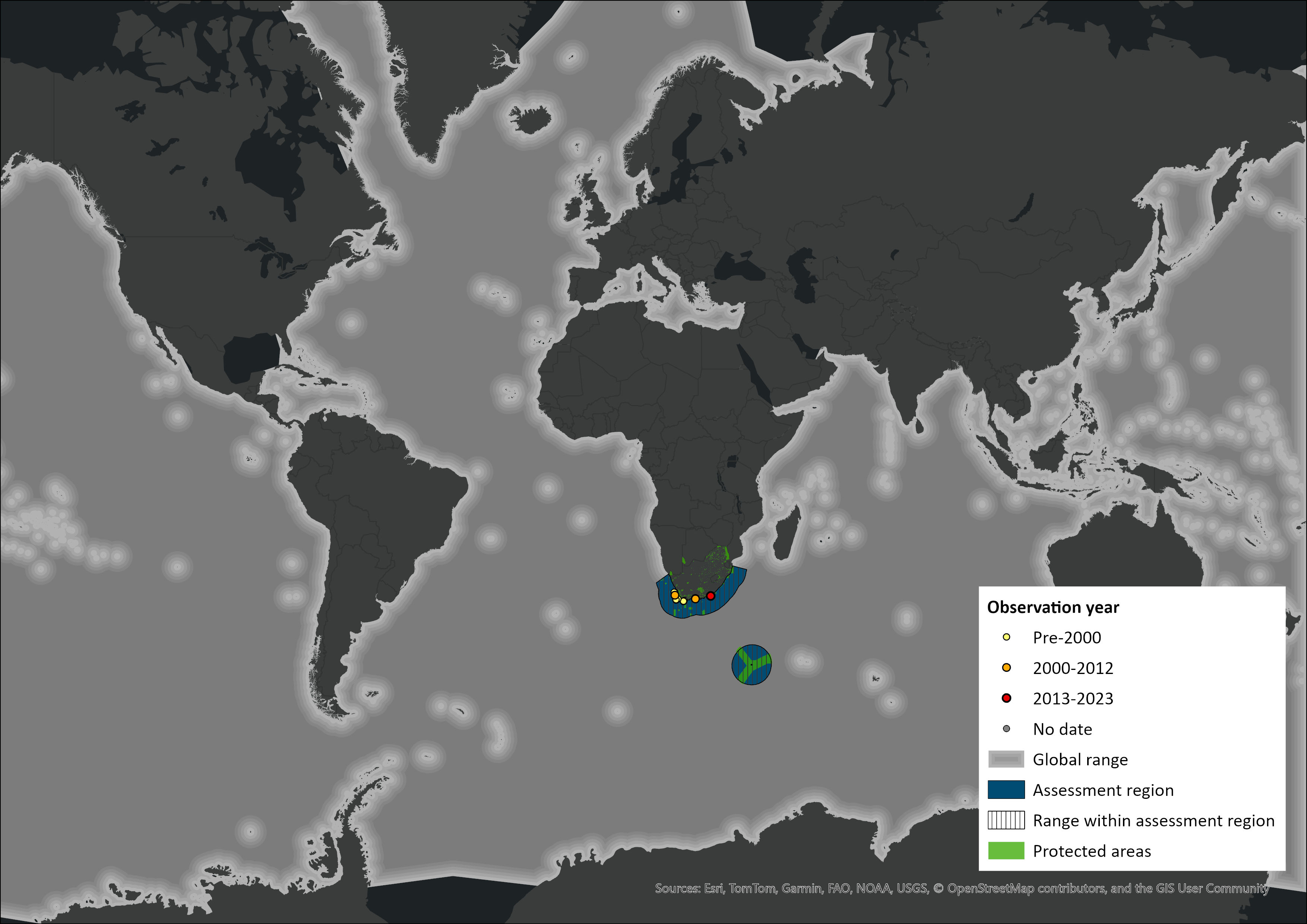 Figure 1. Distribution records for Dwarf Minke Whale (Dwarf Minke Whale) within the assessment region (South Africa, Eswatini and Lesotho). Note that distribution data is obtained from multiple sources and records have not all been individually verified.
Biogeographic Realms
Biogeographic Realm: Afrotropical, Antarctic, Australasian, Indomalayan, Nearctic, Neotropical, Oceanian, Palearctic
Occurrence
Countries of Occurrence
| Country | Presence | Origin | Formerly Bred | Seasonality |
| Anguilla | Extant | Native | – | – |
| Antarctica | Extant | Native | – | – |
| Antigua and Barbuda | Extant | Native | – | – |
| Argentina | Extant | Native | – | – |
| Australia | Extant | Native | – | – |
| Bahamas | Extant | Native | – | – |
| Bangladesh | Extant | Native | – | – |
| Belgium | Extant | Native | – | – |
| Bermuda | Extant | Native | – | – |
| Brazil | Extant | Native | – | – |
| Cabo Verde | Extant | Native | – | – |
| Canada | Extant | Native | – | – |
| Chile | Extant | Native | – | – |
| China | Extant | Native | – | – |
| Cuba | Extant | Native | – | – |
| Denmark | Extant | Native | – | – |
| Dominica | Extant | Native | – | – |
| Dominican Republic | Extant | Native | – | – |
| Ecuador | Extant | Native | – | – |
| Faroe Islands | Extant | Native | – | – |
| France | Extant | Native | – | – |
| French Guiana | Extant | Native | – | – |
| Gambia | Extant | Native | – | – |
| Greece | Extant | Native | – | – |
| Greenland | Extant | Native | – | – |
| Guadeloupe | Extant | Native | – | – |
| Iceland | Extant | Native | – | – |
| Indonesia | Extant | Native | – | – |
| Ireland | Extant | Native | – | – |
| Israel | Extant | Native | – | – |
| Italy | Extant | Native | – | – |
| Japan | Extant | Native | – | – |
| Korea, Democratic People’s Republic of | Extant | Native | – | – |
| Korea, Republic of | Extant | Native | – | – |
| Mauritania | Extant | Native | – | – |
| Mexico | Extant | Native | – | – |
| Morocco | Extant | Native | – | – |
| Mozambique | Extant | Native | – | – |
| Netherlands | Extant | Native | – | – |
| New Caledonia | Extant | Native | – | – |
| New Zealand | Extant | Native | – | – |
| Norway | Extant | Native | – | – |
| Papua New Guinea | Extant | Native | – | – |
| Portugal | Extant | Native | – | – |
| Puerto Rico | Extant | Native | – | – |
| Russian Federation | Extant | Native | – | – |
| Saint Pierre and Miquelon | Extant | Native | – | – |
| Senegal | Extant | Native | – | – |
| South Africa | Extant | Native | – | – |
| Spain | Extant | Native | – | – |
| Svalbard and Jan Mayen | Extant | Native | – | – |
| Sweden | Extant | Native | – | – |
| Taiwan, Province of China | Extant | Native | – | – |
| Thailand | Extant | Native | – | – |
| Tunisia | Extant | Native | – | – |
| Turks and Caicos Islands | Extant | Native | – | – |
| United Kingdom of Great Britain and Northern Ireland | Extant | Native | – | – |
| United States of America | Extant | Native | – | – |
| Uruguay | Extant | Native | – | – |
| Virgin Islands, British | Extant | Native | – | – |
| Virgin Islands, U.S. | Extant | Native | – | – |
| Western Sahara | Extant | Native | – | – |
Large Marine Ecosystems (LME) Occurrence
Large Marine Ecosystems: (Not specified)
FAO Area Occurrence
| Presence | Origin | Formerly Bred | Seasonality | |
| 18. Arctic Sea | Extant | Native | – | – |
| 21. Atlantic – northwest | Extant | Native | – | – |
| 27. Atlantic – northeast | Extant | Native | – | – |
| 31. Atlantic – western central | Extant | Native | – | – |
| 34. Atlantic – eastern central | Extant | Native | – | – |
| 41. Atlantic – southwest | Extant | Native | – | – |
| 47. Atlantic – southeast | Extant | Native | – | – |
| 51. Indian Ocean – western | Extant | Native | – | – |
| 57. Indian Ocean – eastern | Extant | Native | – | – |
| 58. Indian Ocean – Antarctic | Extant | Native | – | – |
| 61. Pacific – northwest | Extant | Native | – | – |
| 67. Pacific – northeast | Extant | Native | – | – |
| 71. Pacific – western central | Extant | Native | – | – |
| 77. Pacific – eastern central | Extant | Native | – | – |
| 81. Pacific – southwest | Extant | Native | – | – |
| 87. Pacific – southeast | Extant | Native | – | – |
| 88. Pacific – Antarctic | Extant | Native | – | – |
Climate change
Dwarf Minke whales feed mainly on Antarctic krill (Euphausia superba) in Antarctic waters and small fish species like herring and capelin in other areas. The loss of sea ice drastically reduces the recruitment of krill as a result of krill larvae loss. A study by Sun et al. (2022) show that the distribution of dwarf Minke whales is predominantly determined by sea ice thickness which correlates to their prey larvae survival. With climate change it was predicted that there will be habitat loss in offshore waters of Antarctica and along the offshore area of the west coast in the assessment area.
Population
According to the IWC, there are no reliable data available with which to assess the population status of Dwarf Minke Whales, as the older available quantitative sighting data of Minke Whales in the southern hemisphere does not distinguish B. acutotostrata from B. bonaerensis. However, B. bonaerensis is considerably more numerous compared to the Dwarf Minke Whale. Only recently has it been possible to distinguish Dwarf Minke Whales from Antarctic Minke Whales at sea, using colouration patterns and the identification of shoulder patches, and sightings are too few to provide a population estimate.
It is likely that B. acutorostrata was not subjected to substantial overexploitation during commercial whaling activities directed at Minke Whales, because its range falls predominantly outside of the Antarctic Minke whaling areas. Between 1987 and 1993, more than 1,700 Minke Whales were captured by Antarctic pelagic fleets, and only 16 of these were recorded to have been Dwarf Minke Whales (Nishiwaki et al. 2006). These individuals were predominantly taken from the northern limits of the whaling operations, between 55° and 62°S. Best (1985) suggested that only 3–4% of Minke Whales landed off Durban were Dwarf Minke Whales, and very few individuals are thought to have been caught off Brazil (Zerbini et al. 1997).
Within the assessment region, although numbers are likely to be low, there is no reason to suspect a decline since no major threats have been recognized at present.
Current population trend: Probably stable
Continuing decline in mature individuals: Unknown
Number of mature individuals in population: Unknown
Number of mature individuals in largest subpopulation: Unknown
Number of subpopulations: Unknown
Severely fragmented: No
Extreme fluctuations in the number of subpopulations: (Not specified)
Continuing decline in number of subpopulations: (Not specified)
All individuals in one subpopulation: (Not specified)
Quantitative Analysis
Probability of extinction in the wild within 3 generations or 10 years, whichever is longer, maximum 100 years: (Not specified)
Probability of extinction in the wild within 5 generations or 20 years, whichever is longer, maximum 100 years: (Not specified)
Probability of extinction in the wild within 100 years: (Not specified)
Population Genetics
Since 1998, several population genetic studies have been conducted to resolve the population structure within B. acutorostrata. Pastene et al. (2010) reported genetic differentiation within Southern Hemisphere common minke whale, in particular between Western South Pacific (WSP) and Western South Atlantic (WSA) whales. However, this study used a single mitochondrial DNA (mtDNA; maternally inherited) marker and limited sampling, which reduced the confidence in these results. Building upon this work, a recent molecular study incorporating both mtDNA and microsatellite (nuclear markers detect biparental inheritance) data, as well as more comprehensive sampling, found clear differentiation between North Pacific and Southern Hemisphere (WSA and WSP) whales; however, there was no support for the separation of whales between WSA and WSP (Milmann et al. 2021). Despite the little to no population structure between WSA and WSP, whales from these two regions did show different levels of genetic diversity for certain indices, with very low levels of net nucleotide diversity in WSA compared to the high levels observed in WSP. This could suggest that WSP has a large historical effective population size or is the result of a more ancient founder event compared to WSA. Interestingly, the level of differentiation was greater between WSA and WSP than between WSA and the North Atlantic whales. Because of the genetic differences observed (albeit limited), Milmann et al. (2021) recommend WSA and WSP be treated as separate populations and managed accordingly.
To more definitively resolve the population structure and diversity within this species. it is recommended that additional molecular studies be conducted specifically incorporating samples from unsurveyed localities, and that they use markers spread across the genome (e.g., SNPs), and report on additional genetic diversity metrics, including effective population size. Additionally, these studies should be further complemented by ecological studies investigating possible differences in the morphology, reproductive biology and diets of these two groups.
Habitats and ecology
The Dwarf Minke Whale is a relatively cryptic species, occurring in both coastal as well as offshore waters. Very little data is available on the behavioural ecology, diet, movement patterns and reproduction of this species. In South African waters, some degree of habitat separation between Dwarf Minke Whales and Antarctic Minke Whales has been proposed, where the Dwarf Minke Whale appears to prefer coastal waters (Best 1985). This trend is not consistent throughout their range however, as Dwarf Minke Whales have been documented in deep oceanic waters off the coast of Australia (Kasamatsu et al. 1988), and range overlap, although exceptional, does occur (e.g. Arnold et al. 2005).
The feeding habits of Dwarf Minke Whales have been poorly documented. Balaenoptera acutorostrata in the North Atlantic showed spatially and temporally varied diets, dominated by krill in their most northern regions, but by herring and capelin in other areas. When herring and capelin were scarce, they were found to consume gadoids (Lindstrøm and Haug 2002). Contrastingly, in the North Sea, Minke Whales may feed almost entirely on sandeels, whereas those off Iceland fed on sandeels, capelin and gadoids (Víkingsson et al. 2006). No food remains were found in the stomachs of Dwarf Minke Whales examined off Durban or Australia; however, in Antarctica, they have been reported feeding on myctophid fish and euphausiids (Ichii and Kato 1991, Kato and Fujise 2000), and the stomach contents of animals caught off Brazil contained Euphausia similis (Secchi et al. 2003).
Dwarf Minke Whales were recorded occurring singly off the coast of Durban, although pods of up to eight individuals have been recorded off Australia (Arnold 1997). During the winter, Dwarf Minke Whales are thought to move into warmer, lower latitudes to breed and give birth (Williamson 1975, Best 1985). They are generally smaller than Antarctic Minke Whales both at birth and once they reach maturity (Best 1982). Calves are approximately 1.92 m in length when they are born, following a gestation period of 10 months (Best 1985).
Dwarf Minke Whales commonly approach slow-moving or stationary ships, but unlike northern hemisphere Minke Whales, will usually avoid cruising ships (Skinner and Chimimba 2005). Studies off the northern region of the Great Barrier Reef have used external characteristics, such as colour patterns, to identify over 200 individuals between 1999 and 2001 which frequent the area (Arnold et al. 2005).
Ecosystem and cultural services: Marine mammals integrate and reflect ecological variation across large spatial and long temporal scales, and therefore they are prime sentinels of marine ecosystem change; migratory mysticete whales may be used to investigate broadscale shifts in ecosystems.
IUCN Habitats Classification Scheme
| Habitat | Season | Suitability | Major Importance? |
| 9.1. Marine Neritic -> Marine Neritic – Pelagic | – | Suitable | Yes |
| 10.1. Marine Oceanic -> Marine Oceanic – Epipelagic (0-200m) | – | Suitable | Yes |
Life History
Generation Length: (Not specified)
Age at Maturity: Female or unspecified: (Not specified)
Age at Maturity: Male: (Not specified)
Size at Maturity (in cms): Female: (Not specified)
Size at Maturity (in cms): Male: (Not specified)
Longevity: (Not specified)
Average Reproductive Age: (Not specified)
Maximum Size (in cms): (Not specified)
Size at Birth (in cms): (Not specified)
Gestation Time: (Not specified)
Reproductive Periodicity: (Not specified)
Average Annual Fecundity or Litter Size: (Not specified)
Natural Mortality: (Not specified)
Breeding Strategy
Does the species lay eggs? No
Does the species give birth to live young: Yes
Does the species exhibit parthenogenesis: No
Does the species have a free-living larval stage? No
Does the species require water for breeding? Yes
Movement Patterns
Movement Patterns: (Not specified)
Congregatory: (Not specified)
Systems
System: Marine
General Use and Trade Information
This northern subspecies was heavily hunted in the past, and harvesting is ongoing in parts of the North Atlantic and North Pacific. There is currently no trade in this subspecies of Minke Whale in the assessment region as it has been largely excluded from the Antarctic catches.
|
Subsistence: |
Rationale: |
Local Commercial: |
Further detail including information on economic value if available: |
|
Unknown |
– |
– |
– |
National Commercial Value: Unknown
International Commercial Value: No
|
End Use |
Subsistence |
National |
International |
Other (please specify) |
|
1. Food – human |
true |
true |
– |
– |
|
14. Research |
– |
true |
– |
– |
Is there harvest from captive/cultivated sources of this species? (Not specified)
Harvest Trend Comments: (Not specified)
Threats
Although the northern subspecies were hunted in the northern hemisphere under both commercial and scientific permits, this subspecies has not been hunted in the assessment region since 1993/94. As it occurs mainly outside the whaling grounds for Antarctic Minke Whales, it has never been substantially exploited.
This subspecies occasionally occurs inshore, where it is vulnerable to entanglement in fishing gear and shark nets. Although entanglement of Minke Whales in South African waters is considered uncommon compared to Humpback Whales (Megaptera novaeangliae) and Southern Right Whales (Eubalaena australis), occasionally Minke Whales have been recorded trapped in shark nets off the coast of Durban, KwaZulu-Natal (IWC 2001, Meÿer et al. 2011). Between 1981 and 2009, 10 Minke Whales were recorded caught in shark nets off Durban and, of these, three were positively identified as Dwarf Minke Whales (IWC 2001, Meÿer et al. 2011).
The effects of anthropogenic climate change, resulting in decreased sea ice in the polar regions, may severely diminish the food resources of Minke Whales. The exact implications of these effects remain unclear; however, systematic monitoring of the compounding threats of climate change is warranted (Moore 2008).
Similar to other cetaceans, collision with vessels, plastic marine debris and noise pollution, including the threats of seismic survey operations, may become accumulating minor threats to this species, but no quantitative species-specific data exists. Although apparently largely fish-eating, there is no documented conflict with commercial fisheries in or outside of the assessment region. A recent study by the MRI Whale unit compiled data on Minke whales to determine the effect that anthropogenic activities have on them. Data did not always distinguish between the different Minke whale species. However, as the data depicted mostly inshore sightings it can be assumed that most of the minke whales in this study were in fact dwarf Minke whales. This study found that 90% of Minke whale predicted habitat overlapped with high levels of shipping. This indicates a high risk of ship strikes within the assessment area, especially during winter. Pelagic fishing overlapped with 24% of Minke whale habitat suggesting a possibility of entanglements in the assessment area.
Current habitat trend: Possibly declining in habitat quality through climate change and noise pollution.
Conservation
The Convention on International Trade in Endangered Species of Wild Fauna and Flora (CITES) listed B. acutorostrata on Appendix I, with the exception of West Greenland where it is listed in Appendix II. The Dwarf Minke Whale is fully protected in South African waters, and no specific conservation efforts have been identified. This subspecies would benefit from the development of methods to clearly distinguish it from Antarctic Minke Whales, during ship-based surveys. This could lead to a more comprehensive, systematic monitoring programme for Dwarf Minke Whales.
Recommendations for managers and practitioners:
- Design a monitoring scheme that can distinguish this subspecies from Antarctic Minke Whales, B. bonaerensis.
- Ensure that accidental catches (in fishing or shark nets), strandings or collisions of Dwarf Minke Whales are reported, and managed by the relevant authorities, and in the case of mortality, make certain that the remains are made available for ongoing scientific investigation of the life history and genetics of this species.
Research priorities:
- Investigation into the distribution, abundance and taxonomic status of Dwarf Minke Whales within the southern hemisphere.
- General ecology, including diet, distribution, reproduction, movement patterns and behaviour of this subspecies.
- Effect of the cumulative impacts of anthropogenic influences, such as pollution, commercial fishing practices and ecotourism on Dwarf Minke Whales.
- The identification of individuals using shoulder patches and colouration has proved to be a valuable means of assessing population structure and distribution of this species in the waters off Australia (Arnold et al. 2005) and may be equally useful in other parts of its range.
Encouraged citizen actions:
- Submit location sightings to conservation authorities, which will help in determining the spatial and temporal distribution of the population.
- Save electricity and fuel to mitigate CO2 emissions and hence the rate of climate change.
- Report any stranding reports to the relevant local authorities.
- When participating in whale/dolphin watching tours, ensure regulations are followed.
Bibliography
Acevedo J, Aguayo-Lobo A, Acuna P, Goto M, Zerbini AN, Pastene LA. 2005. First record of the Dwarf Minke Whale Balaenoptera acutorostrata in Chilean waters. International Whaling Commission.
Acevedo J, Olavarria C, Plana J, Cortes D, Aguayo-Lobo A, Pastene LA. 2007. Dwarf minke whales (Balaenoptera acutorostrata) in Antarctic Areas I and II. IWC Scientific Committee.
Arnold, P. W. 1997. Occurrence of dwarf minke whales (Balaenoptera acutorostrata) on the northern Great Barrier Reef, Australia. Reports of the International Whaling Commission 47: 419-24.
Arnold, P., Marsh, H. and Heinsohn, G. 1987. The occurrence of two forms of minke whales in east Australian waters with a description of external characters and skeleton of the diminutive or dwarf form. Scientific Reports of the Whales Research Institute 38: 1-46.
Arnold, P.W., Birtles, R.A., Dunstan, A., Lukoschek, V., and Mathews, M. 2005. Colour patterns of the dwarf minke whale Balaenoptera acutorostrata sensu lato: description, cladistic analysis and taxonomic implications. Memoirs of the Queensland Museum 51: 277-307.
Baldas, M. I. and Castello, H. P. 1986. Sobre el hallazgo de ejemplares juveniles de ballena minke, Balaenoptera acutorostrata, en el estuario del Rio de la Plata y sur de Brasil. 1st Reunião de Trabalho Especialistas em. Mamíferos Aquaticos America do Sul: 1-13. Buenos Aires, Argentina.
Bannister J.L., Kemper, C.M., and Warneke, R.M. 1996. The Action Plan for Australian Cetaceans. Australia Nature Conservation Agency, Canberra.
Best, P. B. 1982. Seasonal abundance, feeding, reproduction, age and growth in minke whales off Durban (with incidental observations from the Antarctic). Reports of the International Whaling Commission 32: 759-786.
Best, P.B. 1985. External characters of southern minke whales and the existence of a diminutive form. Scientific Reports of the Whales Research Institute 36: 1-33.
Burns WC. 2001. From the harpoon to the heat: climate change and the International Whaling Commission in the 21st century. Georgetown International Environmental Law Review 13: 335–339.
Dawson, S. M. and Slooten, E. 1990. Stranding of a dwarf minke whale at Banks Peninsula, New Zealand. New Zealand Natural Science 17: 89-93.
Garrigue, C. and Greaves, J. 2001. Cetacean records for the New Caledonian area (southwest Pacific Ocean). Micronesica 34: 27-33.
Gedamke J, Costa DP, Dunstan A. 2001. Localization and visual verification of a complex minke whale vocalization. The Journal of the Acoustical Society of America 109: 3038–3047.
Grobler, A. 2025. A risk assessment of anthropogenic activities on cetaceans in South Africa in light of the expanding oceans economy. MSc Thesis. MRI Whale Unit, University of Pretoria, South Africa.
IUCN (International Union for Conservation of Nature). 2012. Balaenoptera acutorostrata. Available at: http://www.iucnredlist.org. (Accessed: 21 February 2016).
Ichii T, Kato H. 1991. Food and daily food consumption of southern minke whales in the Antarctic. Polar Biology 11: 479–487.
International Whaling Commission. 2001. Report of the Scientific Committee. 11.4. Nomenclature. Journal of Cetcaean Research and Management 3(Suppl.): 37.
Kasamatsu, F., Hembree, D., Joyce, G., Tsunoda, L., Rowlett, R. and Nakano, T. 1988. Distribution of cetacean sightings in the Antarctic: results obtained from the IWC/IDCR minke whale assessment cruises, 1978/79 to 1983/84. Report of the International Whaling Commission 38: 449–473.
Kato, H. and Fujise, Y. 2000. Dwarf minke whale; morphology, growth and life history with some analyses on morphometric variation among the different forms and regions. International Whaling Commission Scientific Committee.
Lindstrøm, U. and Haug, T. 2002. On the whale-fisheries issue: A review of Norwegian studies of the feeding ecology of northeast Atlantic minke whales (Balaenoptera acutorostrata) during the past decade. Paper SC/54/E6 presented to the IWC Scientific Committee,April 2002.. International Whaling Commission Scientific Committee.
Meÿer MA, Best PB, Anderson-Reade MD, Cliff G, Dudley SFJ, Kirkman SP. 2011. Trends and interventions in large whale entanglement along the South African coast. African Journal of Marine Science 33: 429-439.
Milmann, L., Taguchi, M., Siciliano, S., Baumgarten, J.E., Oliveira, L.R., Valiati, V.H., Goto, M., Ott, P.H. and Pastene, L.A., 2021. New genetic evidences for distinct populations of the common minke whale (Balaenoptera acutorostrata) in the Southern Hemisphere. Polar Biology, 44(8), pp.1575-1589.
Moore SE. 2008. Marine mammals as ecosystem sentinels. Journal of Mammalogy 89: 534-540.
Nishiwaki, S., Ishikawa, H. and Fujise, Y. 2006. Review of the general methodology and survey procedure under JARPA. International Whaling Commission Scienitific Committee doc. SC/D06/J2.
Pastene, L.A., Acevedo, J., Goto, M., Zerbibi, A.N., Acufia, P. and Aguayo-Lobo, A. 2010. Population structure and possible migratory links of common minke whales, Balaenoptera acutorostrata, in the Southern Hemisphere. Conservation Genetics 11: 1553-1558.
Perrin, W.F. and Brownell, R.L. 2002. Minke Whales Balaenoptera acutorostrata and B. bonaerensis. In: Perrin WF, Würsig B, Thewissen JGM. (ed.), Encyclopedia of Marine Mammals, pp. 750–754. Academic Press, San Diego, California, USA.
Rice, D.W. 1998. Marine Mammals of the World: Systematics and Distribution. Society for Marine Mammalogy, Special Publication Number 4, Lawrence, Kansas.
Secchi, E. R., Barcellos, L., Zerbini, A. N. and Dalla Rosa, L. 2003. Biological observations on a dwarf minke whale, Balaenoptera acutorostrata, caught in southern Brazilian waters, with a new record of prey for the species. Latin American Journal of Aquatic Mammals 2(2): 109-116.
Skinner, J.D. and Chimimba, C.T. (eds). 2005. The Mammals of the Southern African Subregion. Cambridge University Press, United Kingdom, Cambridge.
Stewart BS, Leatherwood S. 1985. Minke whale – Balaenoptera acutorostrata. In: Ridgway SH, Harrison R. (ed.), Handbook of Marine Mammals, pp. 91–136. Academic Press, New York, USA.
Sun, B., Zhao, L., Shao, F., Lu, Z., Tian, J. and Liu, C., 2022. Estimating the impacts of climate change on the habitat suitability of common minke whales integrating local adaptation. Frontiers in Marine Science, 9, p.923205.
Víkingsson GA, Ólafsdóttir D, Gunnlaugsson T, Halldórsson SD, Galan A, Svansson V, Jörundsson E, Kjeld M, Daníelsdóttir A, Gíslason D. 2006. Research programme on common minke whales (Balaenoptera acutorostrata) in Icelandic waters – A progress report, May 2006. Paper SC/58/O20 presented to the IWC Scientific Committee, May 2006. International Whaling Commission Scientific Committee.
Wada, S., Kobayashi, T. and Numachi, K. 1991. Genetic variability and differentiation of mitochondrial DNA in minke whales. Reports of the International Whaling Commission 13: 203-215.
Williamson GR. 1975. Minke whales off Brazil. Scientific Reports of the Whales Research Institute, Tokyo 27: 37–59.
Zerbini, A. N., Secchi, E. R., Siciliano, S. and Simoes-Lopes, P. C. 1996. The dwarf form of the minke whale, Balaenoptera acutorostrata Lacepede, 1804, in Brazil. Reports of the International Whaling Commission 46: 333-340.
Zerbini, A.N., Secchi, E.R., Siciliano, S. and Simoes-Lopes, P.C. 1997. A review of the occurrence and distribution of whales of the genus Balaenoptera along the Brazilian coast. Reports of the International Whaling Commission 47: 407-417.