
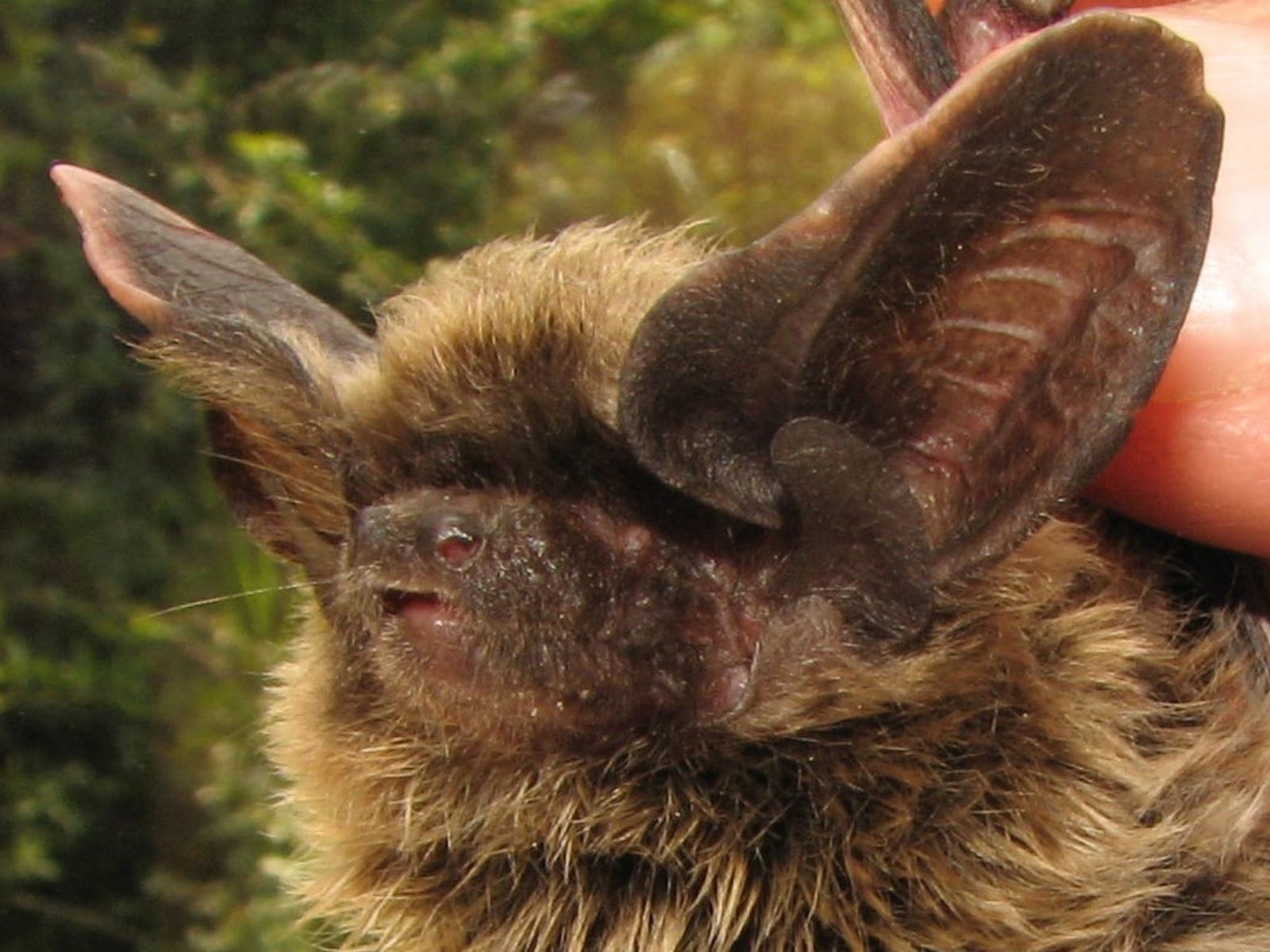
Laephotis cf. wintoni
Laephotis cf. wintoni

2025 Red list status
Vulnerable

Regional Population Trend
Unknown

Change compared
to 2016
No Change
Overview
Laephotis cf. wintoni – Monadjem, Demos, Dalton, Webala, Musila, Kerbis Peterhans, Patterson, 2021
ANIMALIA – CHORDATA – MAMMALIA – CHIROPTERA – VESPERTILIONIDAE – Laephotis – wintoni
Common Names: no available common name, however it was previously included under De Winton’s Long-eared Bat, Winton’s Long-eared Bat (English)
Synonyms: None
Taxonomic Note:
Recent molecular studies have revealed genetic divergence among populations, with the Lesotho-South Africa group constituting at least one, possibly two distinct genetic lineages, here termed L. cf. wintoni pending formal naming of this species (Taylor et al. 2024; Torrent et al. 2025)
Red List Status: VU – Vulnerable D1 (IUCN version 3.1)
Assessment Information
Assessors: Richards, L.R.1, Naidoo, T.1 & da Silva, J.M.2
Reviewer: Taylor, P.3
Institutions: 1Durban Natural Science Museum, 2South African National Biodiversity Institute, 3University of the Free State
Previous Assessors & Reviewers: Avenant, N., Balona, J., Cohen, L., Jacobs, D., MacEwan, K., Monadjem, A., Richards, L.R., Schoeman, C., Sethusa, T. & Taylor, P.
Previous Contributors: Relton, C., Raimondo, D. & Child, M.F.
Assessment Rationale
This montane taxon has been confirmed in only two localities within the assessment region: the Clarens district in the eastern Free State and the Maloti-Drakensberg Transfrontier Conservation Area on the Lesotho side. Laephotis cf. wintoni is described as a South African endemic (Taylor et al. 2024; Torrent et al. 2025). It qualifies for Vulnerable D2 based on only two known locations and a suspected limited population size. However, there are no known plausible future threats that could drive the taxon to a more threatened listing. While there are no plausible threats because the species occurs chiefly in a protected area, presumably inhabits inaccessible rock crevices as day roosts, it is rare and recent sampling efforts have not yielded new information on the taxon (P.J. Taylor, the Gauteng and Northern Region Bat Interest Group, & L.R. Richards, pers. obs.). The EOO for this species is 690 km2. The AOO, using the IUCN method of a 2×2 km grid, is 24 km2. Using a more conservative grid of 10×10 km yields an AOO of 600 km2, with 6 occupied grid cells. New molecular DNA studies have revealed the species may not be continuous with population extralimital to the assessment region. This in combination with a restricted distribution and suspected low population size (<500 mature individuals), may qualify it for an Endangered listing, however, in the absence of known threats to the species it is thus listed as Vulnerable according to criterion D1.
Regional population effects: We assume no rescue effects are possible as there is a disjunct distribution between the assessment region and the rest of its African range. Molecular research may reveal this species to be endemic, although new comparative material is required to augment molecular sampling efforts.
Reasons for Change
Reason(s) for Change in Red List Category from the Previous Assessment: No change
Red List Index
Red List Index: No change
Recommended citation: Richards LR, Naidoo T & da Silva JM. 2025. A conservation assessment of Laephotis cf. wintoni. In Patel T, Smith C, Roxburgh L, da Silva JM & Raimondo D, editors. The Red List of Mammals of South Africa, Eswatini and Lesotho. South African National Biodiversity Institute and Endangered Wildlife Trust, South Africa.
Regional Distribution and occurrence
Geographic Range
This yet to be formally described species is endemic to the assessment region Africa, having only been recorded from the Free State province of South Africa and Lesotho (Monadjem et al. 2020), and are believed to be isolated. Within the assessment region, records have been confirmed from montane grasslands on the Lesotho side of Maloti-Drakensberg Transfrontier Conservation Area (Lynch 1994; Kearney & Seamark 2005), and the Clarens District of the eastern Free State (Schaapplaats Farm) (Kearney & Seamark 2005). Previous specimens from the KwaZulu-Natal Province (Hella Hella, Richmond) listed as L. cf. wintoni (Kearney & Taylor 1997) have been reassigned to L. botswanae (Kearney & Seamark 2005). Similarly, specimens collected from Algeria Forest, Western Cape (Rautenbach & Nel 1978; Jacobs et al. 2005) were subsequently reassigned as L. namibensis (Skinner & Smithers 1990). According to Torrent et al. (2025), L. cf. wintoni is endemic to the assessment region.
Elevation / Depth / Depth Zones
Elevation Lower Limit (in metres above sea level): 1,856 m asl (Monadjem et al. 2024)
Elevation Upper Limit (in metres above sea level): 2,656 m asl (Monadjem et al. 2024)
Depth Lower Limit (in metres below sea level): N/A
Depth Upper Limit (in metres below sea level): N/A
Depth Zone: N/A
Map
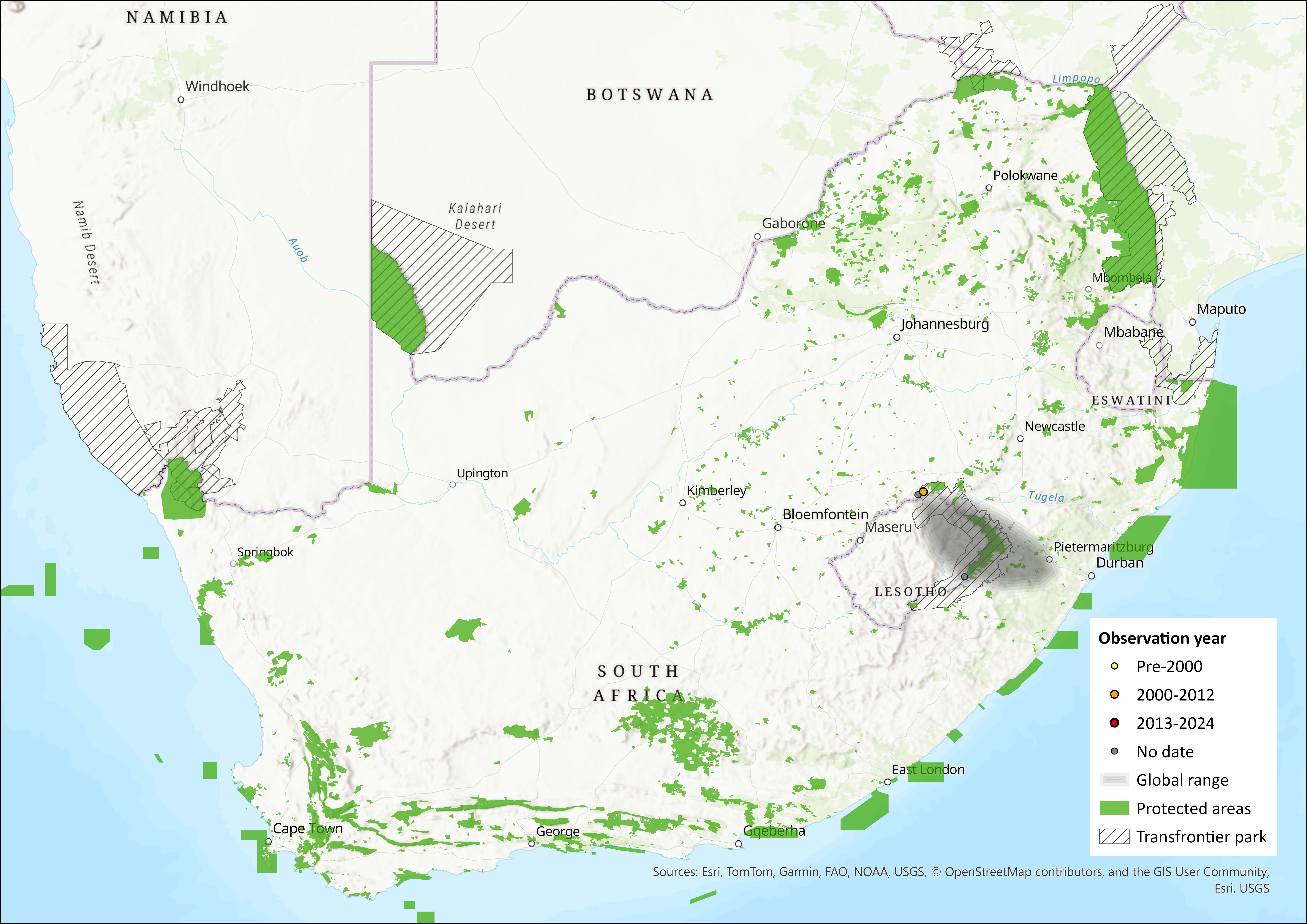 Figure 1. Distribution records for Laephotis cf. wintoni within the assessment region (South Africa, Eswatini and Lesotho). Note that distribution data is obtained from multiple sources and records have not all been individually verified.
Biogeographic Realms
Biogeographic Realm: Afrotropical
Occurrence
Countries of Occurrence
| Country | Presence | Origin | Formerly Bred | Seasonality |
| Lesotho | Extant | Native | – | – |
| South Africa | Extant | Native | – | – |
Large Marine Ecosystems (LME) Occurrence
Large Marine Ecosystems: N/A
FAO Area Occurrence
FAO Marine Areas: N/A
Climate change
No formal studies have investigated the potential effects of climate change on the ecology or physiology of the species. Predictive distribution modelling, however, indicates that the range of temperate-montane species associated with the Maloti-Drakensberg Transfrontier Conservation Area are likely to remain stable and buffered from the impacts of climate change (Taylor et al. 2024).
Population information
It is an uncommon species and is poorly represented in museums, with only seven individuals were examined in Monadjem et al. (2020). Five individuals were caught by Lynch (1994) in Lesotho. Since 2021, focused efforts to sample within the known range of the species have been undertaken, yet the species has not been detected (P.J. Taylor and L.R. Richards, pers. obs). Need improved echolocation records/data.
Current population trend: Unknown
Continuing decline in mature individuals? Cannot be determined as population numbers has not yet been established.
Number of subpopulations: Unknown, but 11 colonies suspected.
Extreme fluctuations in the number of subpopulations: No
Continuing decline in number of subpopulations: No
All individuals in one subpopulation: No
Number of mature individuals in largest subpopulation: Cannot be determined but presumed to be <500 individuals.
Quantitative Analysis
Probability of extinction in the wild within 3 generations or 10 years, whichever is longer, maximum 100 years: Cannot be determined, however, the known area of occurrence coincides with the montane areas of the Maloti-Drakensberg Transfrontier Conservation Area and therefore offers some level of protection.
Probability of extinction in the wild within 5 generations or 20 years, whichever is longer, maximum 100 years: Cannot be determined
Probability of extinction in the wild within 100 years: Cannot be determined
Population genetics
The species has been poorly studied, largely owing to it being uncommon and difficult to capture/record. Although historically recorded having a broader distribution extending into East Africa, its current distribution appears disjunct. Recent molecular studies suggest that populations in Lesotho and South Africa represent at least one, but possibly two genetic lineages. These distinctions are likely based on their specific habitat requirements (Taylor et al. 2024; Torrent et al. 2025).
Habitats and ecology
Within the assessment region, this species appears to prefer highland, mountainous grassland regions (Kearney 2013). Both records of this species in the assessment region are from high altitudes (> 1,500 m asl) (Kearney & Seamark 2005). In Lesotho, specimens were caught over a small dam surrounded by a vlei (Lynch & Watson 1990; Lynch 1994). In the Free State, specimens were caught among exotic trees along a drainage line bordered by sandstone cliffs on Schaapplaats Farm (Watson 1990).
The diurnal roosts of this species are unknown. However, similar to L. cf. namibensis, it is assumed that they make use of rock crevices (Jacobs et al. 2005). For example, one individual was found under exfoliating rock (Kearney 2013). Currently, there is no information pertaining to the diet and feeding ecology of this species (Monadjem et al. 2020). Similarly, limited data exists for the reproductive ecology of this species, although, in Lesotho, one pregnant female was netted in November (Lynch 1994).
Ecosystem and cultural services: Although limited data is available, similar to L. cf. namibensis, this is an insectivorous bat, thus it is likely to play an important role in controlling insect populations (Boyles et al. 2011; Kunz et al. 2011).
IUCN Habitats Classification Scheme
| Habitat | Season | Suitability | Major Importance? |
| 4.7. Grassland -> Grassland – Subtropical/Tropical High Altitude Grassland | – | Suitable | – |
Life History
Generation Length: Unknown
Age at Maturity: Female or unspecified: Unknown
Age at Maturity: Male: Unknown
Size at Maturity (in cms): Both sexes combined: mean forearm length = 4.0 cm, range = 3.9 – 4.0 cm; Mean total length = 10.8 cm, range = 10.6 – 11.1 (Lynch 1994)
Size at Maturity (in cms): Male: Unknown
Longevity: Unknown
Average Reproductive Age: Unknown
Maximum Size (in cms): Unknown
Size at Birth (in cms): Unknown
Gestation Time: Unknown
Reproductive Periodicity: Unknown
Average Annual Fecundity or Litter Size: Unknown
Natural Mortality: Unknown
Breeding Strategy
Does the species lay eggs? No
Does the species give birth to live young: Yes
Does the species exhibit parthenogenesis: No
Does the species have a free-living larval stage? No
Does the species require water for breeding? No
Movement Patterns
Movement Patterns: No available data on movement patterns
Congregatory: Unknown
Systems
System: Terrestrial
General Use and Trade Information
There is no evidence to suggest that this species is traded or harvested within the assessment region.
Local Livelihood: None reported
National Commercial Value: Likely to hold agroeconomic importance in respect of insect population control.
International Commercial Value: Likely to hold agroeconomic importance in respect of insect population control and agricultural avoidance costs for exported produce.
End Use: None reported
Is there harvest from captive/cultivated sources of this species? None reported
Harvest Trend Comments: N/A
Threats
No major threats have been identified for this poorly known species. However, intense efforts in the Clarens farming area have not located; this might point to threats in the South African part of the range such as widespread use of agricultural pesticides. The species occurs primarily in protected area in South Africa and Lesotho (Maloti-Drakensberg Transfrontier Conservation Area) and is believed to inhabit inaccessible rock crevices as day roosts. This high-altitude area is characterised by montane temperate grasslands. Grassland areas adjacent to the transfrontier area, that could provide potential roosting and foraging habitats, may be subject to fragmentation and transformation, in favour of agricultural development (see Carbutt et al. 2011). It is possible that a reduction in insect prey base through pesticide use or overgrazing the vegetation surrounding wetlands and vleis may cause local declines, but this remains to be investigated. Additionally, as this species is rare, and is known from only two localities in high-altitude grassland regions, their vulnerability to climate change should be further investigated, as this has been identified as an increasing global threat to other bat species (Sherwin et al. 2013). Although potentially occurring in areas of high wind farm density, this species has a low risk of impact with turbines (MacEwan et al. 2020). If this species is revealed to have a wider distribution than currently known, threats will have to be reassessed.
Conservation
This species has been recorded from the Maloti-Drakensberg Transfrontier Conservation Area. No direct conservation interventions are possible until more is known about its distribution, ecology and population status. However, this species would benefit from the long-term protection of additional key roost sites when identified, as well as holistic land management that reduces pesticide use and conserves buffer strips of natural vegetation (especially around wetlands).
Recommendations for land managers and practitioners:
- Private landowners adjacent to the Maloti-Drakensberg Conservation Area should conserve and maintain natural montane grasslands and wetlands.
- Farmers ought to reduce pesticide use in agricultural landscapes, as such practices may be of detriment to insectivorous associated with the general area.
- Farmers to report sites that may harbour roosting bats.
Research priorities:
- Targeted field surveys to acquire additional genetic samples
- Further taxonomic research to resolve the status of the taxon.
- Systematic monitoring to identify key roost sites, measure population size and trends.
- Studies into habitat selection, foraging and reproductive ecology.
Encouraged citizen actions:
- Citizens can assist the conservation of the species by reporting sightings on virtual museum platforms (for example, iNaturalist and MammalMAP) and therefore contribute to an understanding of the species distribution.
- Dead specimens to be donated to an established natural science museum.
Bibliography
ACR. 2024. African Chiroptera Report. 2024. AfricanBats NPC, Pretoria. i – xv; 1 – 1397.
Boyles JG, Cryan PM, McCracken GF, Kunz TH. 2011. Economic importance of bats in agriculture. Science 332: 41–42.
Carbutt, C., Tau, M., Stephens, A. and Escott, B. 2011. The conservation status of temperate grasslands in southern Africa. Grassroots, 11(1), pp.17-23.
Jacobs DS, Barclay RM, Schoeman MC. 2005. Foraging and roosting ecology of a rare insectivorous bat species, Laephotis wintoni (Thomas, 1901), Vespertilionidae. Acta Chiropterologica 7: 101–109.
Kearney T, Taylor PJ. 1997. New distribution records of bats in KwaZulu-Natal. Durban Museum Novitates 22: 53–56.
Kearney T. 2013. Laephotis wintoni De Winton’s Long-eared Bat. Pages 584–585 in Happold M, Happold DCD, editors. Mammals of Africa. Volume IV: Hedgehogs, Shrews and Bats. Bloomsbury Publishing, London, UK.
Kearney TC, Seamark EC. 2005. Morphometric analysis of cranial and external characters of Laephotis Thomas, 1901 (Mammalia: Chiroptera: Vespertilionidae) from southern Africa. Annals of the Transvaal Museum 42: 71–87.
Kunz TH, Braun de Torrez E, Bauer D, Lobova T, Fleming TH. 2011. Ecosystem services provided by bats. Annals of the New York Academy of Sciences 1223: 1–38.
Lynch CD, Watson JP. 1990. The mammals of Sehlabathebe National Park, Lesotho. Navorsinge van die Nasionale Museum, Bloemfontein 6: 523–554.
Lynch CD. 1994. The mammals of Lesotho. Navorsinge van die Nasionale Museum, Bloemfontein 10: 177–241.
MacEwan, K., Sowler, S., Aronson, J., and Lötter, C. 2020. South African Best Practice Guidelines for Pre-construction Monitoring of Bats at Wind Energy Facilities – ed 5. South African Bat Assessment Association
Monadjem, A., Taylor, P.J., Cotterill, F.P.D. and Schoeman M.C. 2020. Bats of Southern and Central Africa: a biogeographic and taxonomic synthesis, Second Edition. University of Witwatersrand Press, Johannesburg.
Peterson RL. 1973. The first known female of the African longeared bat Laephotis wintoni (Vespertilionidae: Chiroptera). Canadian Journal of Zoology 51: 601–603.
Rautenbach IL, Nel JAJ. 1978. Three species of microchiropteran bats recorded for the first time from the south-west Cape Biotic zone. Annals of the Transvaal Museum 31: 157–63.
Sherwin HA, Montgomery WI, Lundy MG. 2013. The impact and implications of climate change for bats. Mammal Review 43: 171–182.
Skinner JD, Smithers RHN. 1990. The Mammals of the Southern African Subregion. University of Pretoria, Pretoria, South Africa.
Taylor, P.J., Kearney, T.C., Clark, V.R., Howard, A., Mdluli, M.V., Markotter, W., Geldenhuys, M., Richards, L.R., Rakotoarivelo, A.R., Watson, J. and Balona, J. 2024. Southern Africa’s Great Escarpment as an amphitheater of climate‐driven diversification and a buffer against future climate change in bats. Global Change Biology, 30(6), p.e17344.
Torrent, L., Juste, J., Garin, I., Aihartza, J., Dalton, D.L., Mamba, M., Tanshi, I., Powell, L.L., Padidar, S., Garcia Mudarra, J.L. and Richards, L. 2025. Taxonomic revision of African pipistrelle-like bats with a new species from the West Congolean rainforest. Zoological Journal of the Linnean Society, 204(2), p.zlaf020.
Watson JP. 1990. New distribution records for Laephotis in South Africa and Lesotho. Navorsinge van die Nasionale Museum Bloemfontein 7: 61–70.