
Damara Woolly Bat
Kerivoula argentata

2025 Red list status
Near threatened

Regional Population Trend
Declining

Change compared
to 2016
No Change
Overview
Kerivoula argentata – Tomes, 1861
ANIMALIA – CHORDATA – MAMMALIA – CHIROPTERA – VESPERTILIONIDAE – Kerivoula – argentata
Common Names: Damara Woolly Bat, Silver Woolly Bat, Silvered Woolly Bat, Silvery Woolly Bat (English), Damara-wolhaarvlermuis, Damaralandse Wolhaarvlermuis (Afrikaans)
Synonyms: nidicola (J. Kirk, 1865); zuluensis A. Roberts, 1924 (see Mammal Diversity Database, 2025).
Taxonomic Note:
Meester et al. (1986) listed three subspecies: 1) Kerivoula argentata argentata from Northern Namibia, Angola, Zambia, Malawi, the Democratic Republic of the Congo (DRC), Tanzania and Kenya; 2) K. a. nidicola from central Mozambique to the Zambezi Valley; and 3) K. a. zuluensis from Zimbabwe, southern Mozambique and KwaZulu-Natal Province of South Africa (Cotterill 2013). However, owing to the limited number of specimens available, the validity of these subspecies cannot currently be determined (Monadjem et al. 2020).
Red List Status: NT – Near Threatened C2a(i) (IUCN version 3.1)
Assessment Information
Assessors: Richards, L.R.1 & da Silva, J.M.2
Reviewer: Smith, C.3
Contributor: Patel T.3
Institutions: 1Durban Natural Science Museum, 2South African National Biodiversity Institute, 3Endangered Wildlife Trust.
Previous Assessors and Reviewers: Monadjem, A., Cohen, L., Jacobs, D., MacEwan, K., Richards, L, Schoeman, C., Sethusa, T. & Taylor, P.
Previous Contributors: Child, M.F., Page-Nicholson, S. & Raimondo, D.
Assessment Rationale
This species is generally associated with moist savannah habitats and has not been recorded from agricultural landscapes but has been recorded from a human-modified river landscape in the Durban region (KwaZulu-Natal Province). While previously known from fewer than 10 locations in the assessment region, survey work of Moir et al. (2020), revealed an expanded distribution within the KwaZulu-Natal and Eastern Cape provinces of South Africa, resulting in a wider extent of occurrence (130,763 km2) than previously reported (92,854 km2). This species seems rare but is also difficult to catch without the use of harp traps, so it may have been under-sampled.
Deforestation is a major threat because of its reliance on forest and woodland habitats. There is thus an inferred population decline due to ongoing loss of forest habitat, especially in KwaZulu-Natal Province where an average of 1.2% per year of natural habitat has been lost between 1994 and 2011 (Jewitt et al. 2015, 2018). Not enough is known about its population size and it is possible that there are fewer than 10,000 mature individuals. It has low wing loading and suitable habitat is fragmented; hence subpopulations may be isolated. This species may thus qualify for Vulnerable C2a(i) under a precautionary purview. However, it exists primarily in protected areas and thus it is uncertain whether inferred decline outside protected areas is causing a net population decline. Thus, we list as Near Threatened C2a(i). Further monitoring and field surveys are required to estimate population sizes and trends more accurately. This species should be reassessed once such data are available.
Regional population effects: The Damara Woolly Bat is a tiny species with short and broad wings with low wing loading (Norberg & Rayner 1987), it is therefore likely that there is limited immigration into the assessment region from extra-regional populations, and we assume no significant rescue effects. However, habitat is connected between regions through transfrontier reserves.
Reasons for Change
Reason(s) for Change in Red List Category from the Previous Assessment: No change
Red List Index
Red List Index: No change
Recommended citation: Richards LR & da Silva JM. 2025. A conservation assessment of Kerivoula argentata. In Patel T, Smith C, Roxburgh L, da Silva JM & Raimondo D, editors. The Red List of Mammals of South Africa, Eswatini and Lesotho. South African National Biodiversity Institute and Endangered Wildlife Trust, South Africa.
Regional Distribution and occurrence
Geographic Range
This species is distributed in East Africa and southern Africa, with some records in southern parts of the Democratic Republic of the Congo and possibly northern Angola (records are uncertain from this country) in Central Africa. In East Africa, it has been recorded in Kenya, Tanzania, Zambia, and Malawi. In southern Africa, it appears to be widespread in Zimbabwe, with additional scattered records from northeastern Namibia, Mozambique and South Africa. Gaps in the distribution, especially from Zambezian Woodland biotic zone, probably reflect insufficient sampling rather than genuine absence (Cotterill 2013). Habitat models suggest that extensive tracts of land in southern and central Mozambique have conditions suitable for this species (Monadjem et al. 2020). In the assessment region, it is found in South Africa along the east coast of KwaZulu-Natal Province down into the Eastern Cape, Eswatini, and in northern Limpopo (Pafuri) through to Zimbabwe and Mozambique (Monadjem et al. 2020). It is absent from Lesotho. Current extent of occurrence is estimated to be 130,763 km2.
Elevation / Depth / Depth Zones
Elevation Lower Limit (in metres above sea level): 4 m asl (Monadjem et al. 2024)
Elevation Upper Limit (in metres above sea level): 1,685 m asl (Monadjem et al. 2024)
Depth Lower Limit (in metres below sea level): N/A
Depth Upper Limit (in metres below sea level): N/A
Depth Zone: N/A
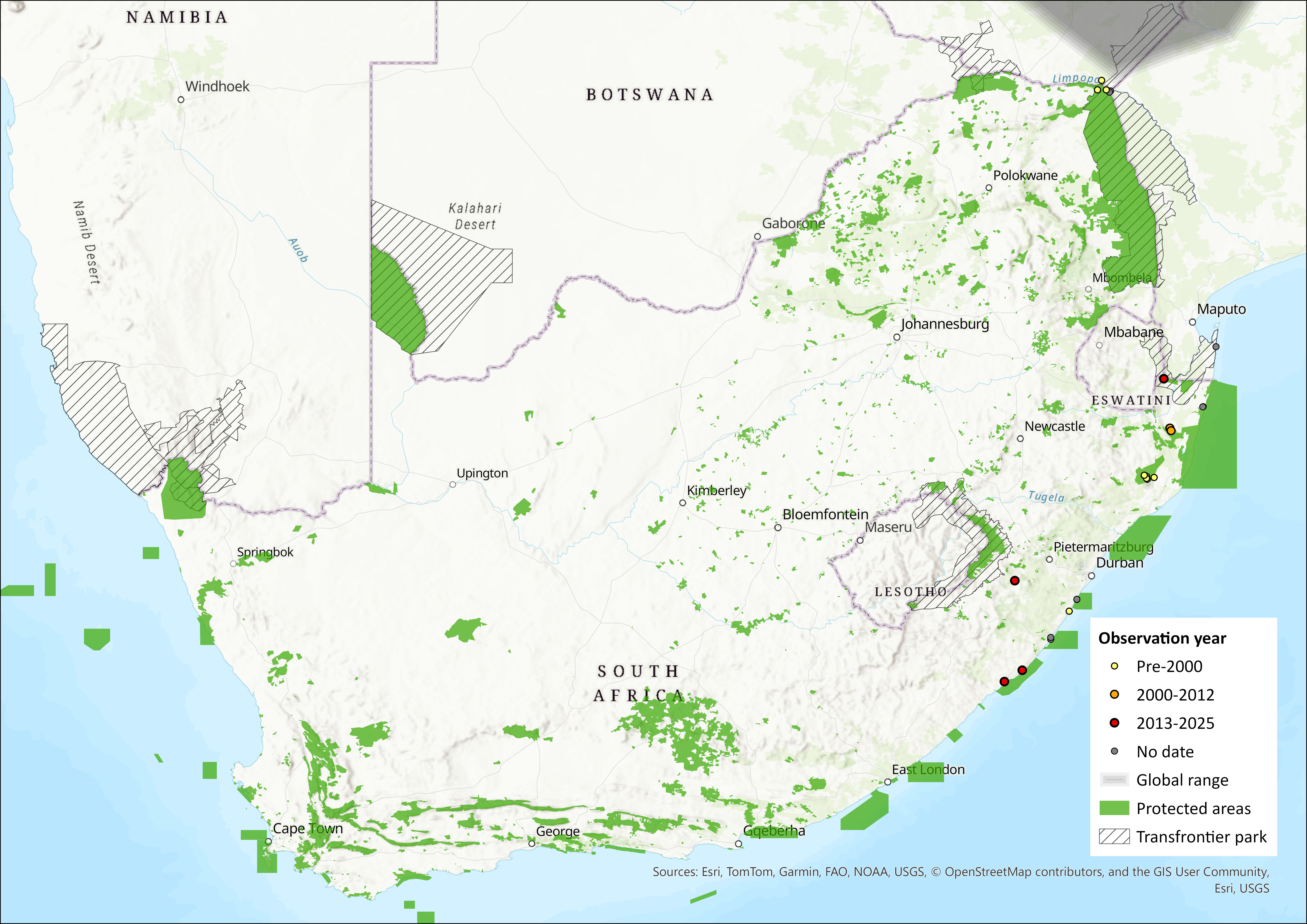 Figure 1. Distribution records for Damara Woolly Bat (Kerivoula argentata) within the assessment region (South Africa, Eswatini and Lesotho). Note that distribution data is obtained from multiple sources and records have not all been individually verified.
Biogeographic Realms
Biogeographic Realm: Afrotropical
Occurrence
Countries of Occurrence
| Country | Presence | Origin | Formerly Bred | Seasonality |
| Angola | Presence Uncertain | Native | – | – |
| Congo, The Democratic Republic of the | Extant | Native | – | – |
| Eswatini | Extant | Native | – | – |
| Kenya | Extant | Native | – | – |
| Malawi | Extant | Native | – | – |
| Mozambique | Extant | Native | – | – |
| Namibia | Extant | Native | – | – |
| Rwanda | Extant | Native | – | – |
| South Africa | Extant | Native | – | – |
| Tanzania, United Republic of | Extant | Native | – | – |
| Zambia | Extant | Native | – | – |
| Zimbabwe | Extant | Native | – | – |
Large Marine Ecosystems (LME) Occurrence
Large Marine Ecosystems: N/A
FAO Area Occurrence
FAO Marine Areas: N/A
Climate change
There are no studies on the impacts of climate change on this species. It is a widespread species but due to low wing loading there may be little connectivity between populations. Rainfall in parts of the species range in South Africa is predicted to increase by 10% and decrease by 10% in others (Englebrecht et al. 2024). However, overall, there will be an increase in intense rainfall events, while temperatures are predicted to increase in line with global averages, with drought indexes also increasing.
Population information
The population size in the assessment region is unknown, it appears to be rare however the species is very difficult to capture and can only be caught using harp traps or when opportunistically found roosting in weaver nests e.g. Oschadleus 2008, hence it is extremely difficult to determine the population size.
Current population trend: Inferred decline
Continuing decline in mature individuals? Unknown
Extreme fluctuations in the number of subpopulations: Unknown
Continuing decline in number of subpopulations: Unknown
All individuals in one subpopulation: Unknown
Number of mature individuals in largest subpopulation: Unknown
Number of Subpopulations: Unknown
Quantitative Analysis
Probability of extinction in the wild within 3 generations or 10 years, whichever is longer, maximum 100 years: Cannot be determined in the absence of data on population size and trends
Probability of extinction in the wild within 5 generations or 20 years, whichever is longer, maximum 100 years: Unknown
Probability of extinction in the wild within 100 years: Unknown
Population genetics
No molecular evidence exists for the species within the assessment region, and limited mitochondrial data exists for the species overall (Monadjem et al. 2020; Gonzalez and Banerjee 2022). Due to limited data, it is not possible to infer connectivity within this species; and hence the number of presumed subpopulations and their effective sizes.
Habitats and ecology
While little information is available on the preferred habitat of the species (Monadjem et al. 2020), it occurs in evergreen forests, riverine forests and both mesic and dry woodland savannahs (including bushveld and miombo), mostly occurring in riverine associations (Cotterill 2013), such as riparian corridors. For example, it has been recorded from riverine forest in Pafuri (Kruger National Park) and coastal forests from Mozambique and Durban, South Africa (Monadjem et al. 2020). Within the assessment region, it is generally associated with moist savannah habitats (Taylor 2000). The species appears to make use of riverine habitats and watercourses, with one individual captured in a harp trap set across a small stream in swamp forest in Mkambathi Nature Reserve in the Eastern Cape (L. Richards, pers. obs.).
In 2008, it was recorded from the polluted Umbilo River in the Durban area, which may have been facilitated by the availability of roosting sites in nearby Paradise Valley Nature Reserve (Naidoo et al. 2011).
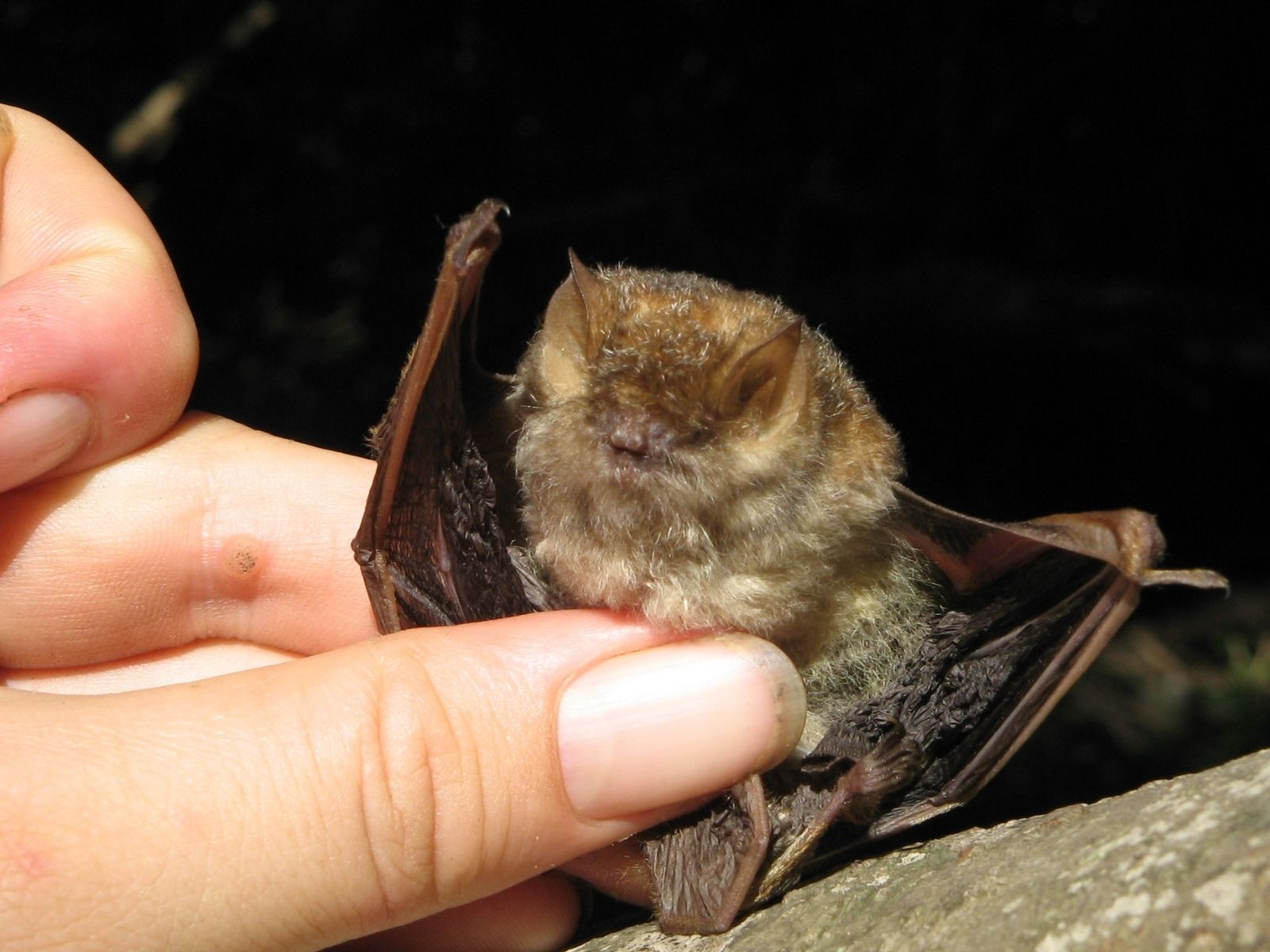
Roosting sites include deserted weaver bird nests (Oschadleus 2008), among clusters of leaves, on the bark of trees, and under the eaves of houses (rondavels) (Roberts 1951; Skinner & Chimimba 2005). Typical of all woolly bats, its pelage aids camouflage when the bats roost in foliage (F.P.D. Cotterill, unpubl. data); and groups (2–5 individuals) resemble the nests of mud wasps, with the group clinging together in a tight cluster (Monadjem et al. 2020). Additionally, the long, dense fur may also be a physiological adaptation to extreme temperatures, experienced when these small bats roost in foliage or birds’ nests (Monadjem et al. 2020). Although only weighing 7 grams, the Damara Woolly Bat is the heavier of the two African Kerivoula species (Monadjem et al. 2020). Limited information is available for the diet of this clutter-forager species (Monadjem et al. 2020), but it is known that they are insectivorous (Skinner & Chimimba 2005).
Ecosystem and cultural services: As this species is insectivorous, it may contribute to controlling insect populations that damage crops (Boyles et al. 2011; Kunz et al. 2011). Ensuring a healthy population of insectivorous bats can thus decrease the need for pesticides.
IUCN Habitats Classification Scheme
| Habitat | Season | Suitability | Major Importance? |
| 2.2. Savanna -> Savanna – Moist | – | Suitable | – |
| 14.4. Artificial/Terrestrial -> Artificial/Terrestrial – Rural Gardens | – | Unknown | – |
Life History
Generation Length: Unknown
Age at Maturity: Female or unspecified: Unknown
Age at Maturity: Male: Unknown
Size at Maturity (in cms): Female: Forearm length = 3.70 cm, total length = 9.10 cm (DNSM records)
Size at Maturity (in cms): combined: Mean forearm length = 3.77 ±0.15 cm; mean total length = 9.4 ±0.68 cm (Monadjem et al. 2020)
Longevity: Unknown
Average Reproductive Age: Unknown
Maximum Size (in cms): Forearm length = 4.03 cm, Total length = 10.10 cm (Monadjem et al. 2020)
Size at Birth (in cms): Unknown
Gestation Time: Unknown
Reproductive Periodicity: No available information
Average Annual Fecundity or Litter Size: No available information
Natural Mortality: No available information
Breeding Strategy
Does the species lay eggs? No
Does the species give birth to live young: Yes
Does the species exhibit parthenogenesis: No
Does the species have a free-living larval stage? No
Does the species require water for breeding? No
Movement Patterns
Movement Patterns: Unknown, but owing to low wing loading, unlikely capable of long-distance movement or migration.
Congregatory: Yes, known to roost in small ‘clusters’ of 4-5 individuals (Cotterill 2013).
Systems
System: Terrestrial
General Use and Trade Information
Not known to be traded or utilised in any form.
Local Livelihood: None reported.
National Commercial Value: Unknown as the diet of species has not been reported before. Likely to contribute to insect population control.
International Commercial Value:
End Use: Unknown
Is there harvest from captive/cultivated sources of this species? None reported
Harvest Trend Comments: None reported
Threats
Across its range, deforestation is a major threat. Within the assessment region, they occur predominantly in protected areas (but see Naidoo et al. 2011) and thus the severity of deforestation is unknown. Habitat loss, resulting from crop cultivation and afforestation, is occurring in KwaZulu-Natal (Jewitt et al. 2015, 2018). Logging of indigenous trees may lead to localised loss of roosting sites.
Conservation
This species occurs in numerous protected areas within the assessment region, such as Great Limpopo Transfrontier Park, Hluhluwe-iMfolozi Park and iSimangaliso Wetland Park. It also occurs in urban reserves in the Durban region of South Africa. While no specific interventions are possible until further research has assessed the severity of local threats and identified important subpopulations outside protected areas, this species would benefit from further protected area expansion, such as that being planned to link Maputaland to the Lubombo Transfrontier Conservation Area (Smith et al. 2008).
Recommendations for land managers and practitioners:
- Identification and protection of key roost sites.
- Conservation of riverine habitats, as such areas appear to be important for the species.
Research priorities:
- Surveys are needed to identify further subpopulations, quantify the size of the population and determine population trend in the assessment region.
- Use harp traps (instead of mist nets) for field surveys.
- Primary research on habitat selection, key roosting sites, diet and reproductive behaviour.
Encouraged citizen actions:
- Citizens can assist the conservation of the species by reporting sightings on virtual museum platforms (for example, iNaturalist and MammalMAP) and therefore contribute to an understanding of the species distribution.
Bibliography
Boyles JG, Cryan PM, McCracken GF, Kunz TH. 2011. Economic importance of bats in agriculture. Science 332: 41–42.
Cotterill FPD. 2013. Kerivoula argentata Damara Woolly Bat. Pages 726–727 in Happold M, Happold DCD, editors. Mammals of Africa. Volume IV: Hedgehogs, Shrews and Bat. Bloomsbury Publishing, London, UK.
Engelbrecht, F.A., Steinkopf, J., Padavatan, J. and Midgley, G.F. 2024. Projections of future climate change in Southern Africa and the potential for regional tipping points. In Sustainability of Southern African Ecosystems under Global Change: Science for Management and Policy Interventions (pp. 169-190). Cham: Springer International Publishing.
Friedmann, Y. and Daly, B. 2004. Red Data Book of the Mammals of South Africa: A Conservation Assessment. CBSG Southern Africa, IUCN SSC Conservation Breeding Specialist Group, Endangered Wildlife Trust, South Africa.
Jewitt D, Goodman PS, Erasmus BFN, O’Connor TG, Witkowski ETF. 2015. Systematic land-cover change in KwaZulu-Natal, South Africa: implications for biodiversity. South African Journal of Science 111: 1–9.
Jewitt, D., 2018. Vegetation type conservation targets, status and level of protection in KwaZulu-Natal in 2016. Bothalia-African Biodiversity & Conservation, 48(1), pp.1-10.
Kunz TH, Braun de Torrez E, Bauer D, Lobova T, Fleming TH. 2011. Ecosystem services provided by bats. Annals of the New York Academy of Sciences 1223: 1–38.
Mammal Diversity Database. 2025. Mammal Diversity Database (Version 2.2). Zenodo. https://doi.org/10.5281/zenodo.15007505
Meester, J.A.J., Rautenbach, I.L., Dippenaar, N.J. and Baker, C.M. 1986. Classification of southern African mammals. Transvaal Museum Monographs 5: 1–359.
Moir, M.I., Richards, L.R., Rambau, R.V. and Cherry, M.I., 2020. Bats of Eastern Cape and southern KwaZulu-Natal forests, South Africa: diversity, call library and range extensions. Acta Chiropterologica, 22(2), pp.365-381.
Monadjem, A., Taylor, P.J., Cotterill, F.P.D. and Schoeman M.C. 2010. Bats of Southern and Central Africa: a biogeographic and taxonomic synthesis. University of Witwatersrand Press, Johannesburg.
Monadjem, A., Taylor, P.J., Jacobs, D. & Cotterill, F.P.D. 2017. Kerivoula argentata. The IUCN Red List of Threatened Species 2017: e.T10969A21970780. https://dx.doi.org/10.2305/IUCN.UK.2017-2.RLTS.T10969A21970780.en. Accessed on 07 July 2025.
Monadjem, A., Taylor, P.J., Cotterill, F.P.D. and Schoeman M.C. 2020. Bats of Southern and Central Africa: a biogeographic and taxonomic synthesis, Second Edition. University of Witwatersrand Press, Johannesburg.
Monadjem, A., Montauban, C., Webala, P.W., Laverty, T.M., Bakwo-Fils, E.M., Torrent, L., Tanshi, I., Kane, A., Rutrough, A.L., Waldien, D.L. and Taylor, P.J., 2024. African bat database: curated data of occurrences, distributions and conservation metrics for sub-Saharan bats. Scientific Data, 11(1), p.1309.
Naidoo S, Mackey RL, Schoeman CM. 2011. Foraging ecology of insectivorous bats (Chiroptera) at a polluted and an unpolluted river in an urban landscape. Durban Museum Novitates 34: 21–28.
Norberg, U. M. and Rayner, J. M. V. 1987. Ecological morphology and flight in bats (Mammalia; Chiroptera): wing adaptations, flight performance, foraging strategy and echolocation. . Phil. Trans. R. Soc. Lond B 316: 335–427.
Oschadleus HD. 2008. Bird nests as roost sites for Kerivoula bats in southern Africa. African Journal of Ecology 46: 693–696.
Roberts, A. 1951. The Mammals of South Africa. Central New Agency, Johannesburg, South Africa.
Skinner, J.D. and Chimimba, C.T. (eds). 2005. The Mammals of the Southern African Subregion. Cambridge University Press, United Kingdom, Cambridge.
Smith RJ et al. 2008. Designing a transfrontier conservation landscape for the Maputaland centre of endemism using biodiversity, economic and threat data. Biological Conservation 141: 2127–2138.
Taylor, P.J. 2000. Bats of Southern Africa: Guide to Biology, Identification, and Conservation. University of Natal Press, Pietermaritzburg, South Africa.