
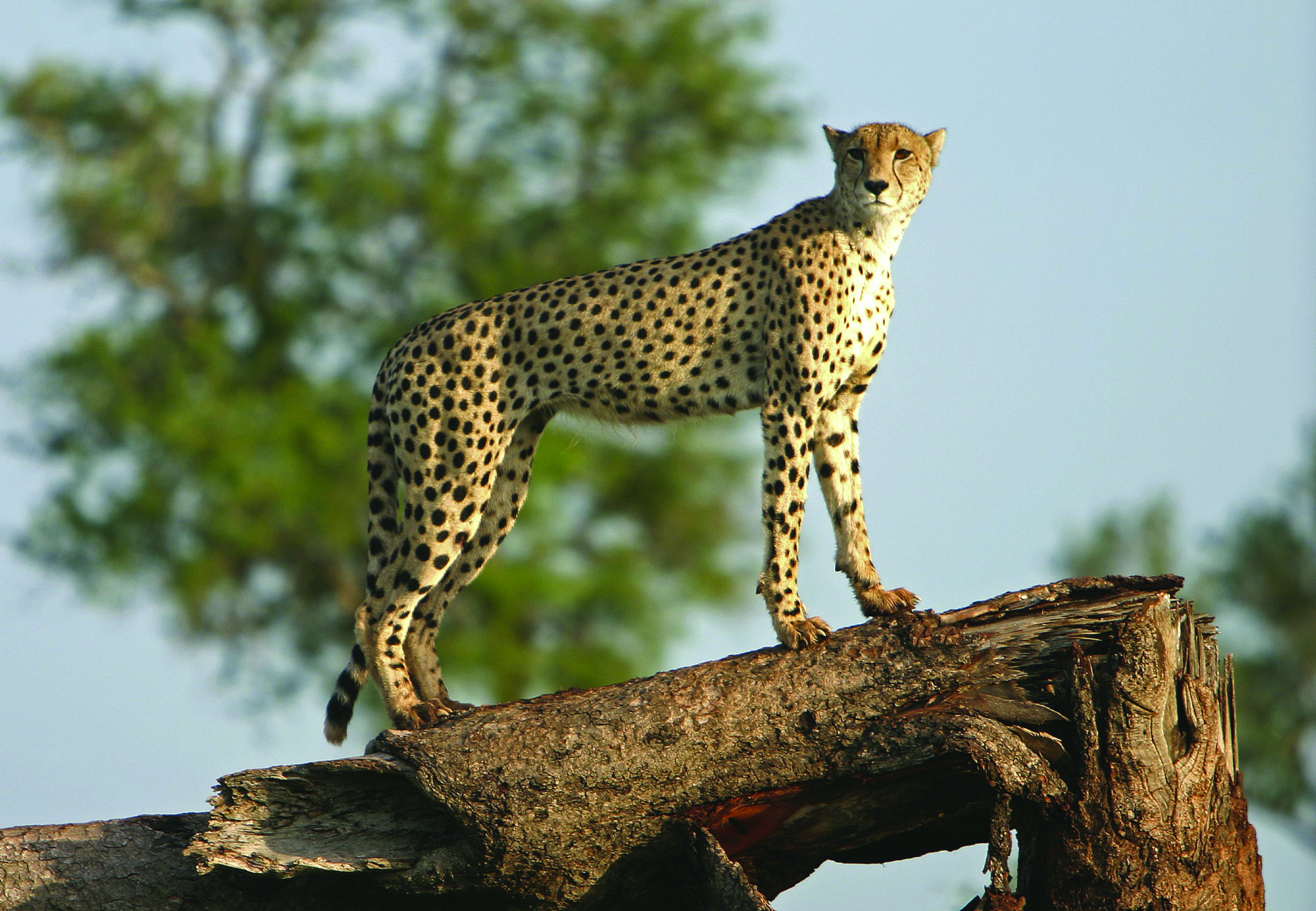
Cheetah
Acinonyx jubatus

2025 Red list status
Vulnerable

Regional Population Trend
Stable

Change compared
to 2016
No Change
Overview
Acinonyx jubatus – (Schreber, 1775)
ANIMALIA – CHORDATA – MAMMALIA – CARNIVORA – FELIDAE – Acinonyx – jubatus
Common Names: Cheetah (English), Jagluiperd (Afrikaans), !Arub (Damara, Nama), Ihlosi (Ndebele, Shona, Xhosa, Zulu), Lengau (Sepedi, Setswana, Sotho, Tswana), Lepôgô (Sepedi), Dindingwe (Shona), Lihlosi, Sinkankanka (Swati), Didinngwe, Dagaladzhie (Tshivenda), Ndloti, Xinkankanka (Tsonga), Ingulule (Zulu)
Synonyms: Felis jubata Schreber, 1775
Taxonomic Note: (Adapted from Durant et al. 2024) Formerly included in the subfamily Acinonychinae, which is a monophyletic group (e.g., Wozencraft 1993), molecular evidence now clusters the Cheetah with the Puma (Puma concolor) and Jaguarundi (Herpailurus yagouaroundi) in the tribe Acinonychini, diverging some 6.9 million years ago (O’Brien & Johnson 2007). A close relationship between these three species is in agreement with earlier studies (Johnson & O’Brien 1997, Bininda-Emonds et al. 1999). The English name is derived from the Hindi “Chita”, meaning “spotted one”. The genus Acinonyx refers to its semi-retractile claws (Caro 1994) while the species name jubatus comes from Latin, meaning crested and referring to the long hair on the neck.
The most recent genome wide survey supports the division of five subspecies (Prost et al. 2021):
- Acinonyx jubatus jubatus (Schreber 1775) distributed across southern Africa
- Acinonyx jubatus raineyi (Heller 1913) in east Africa
- Acinonyx jubatus soemmeringii (Fitzinger 1885) in north-eastern Africa
- Acinonyx jubatus hecki (Hilzheimer 1913) in western and north-western Africa
- Acinonyx jubatus venaticus (Griffith 1821) in southwestern Asia and India
Prost et al. (2021) showed that three Tanzanian individuals were not only distinct from southern African individuals, but that they clustered closer to A. j. soemeringii than to A. j. jubatus, supporting the separate management of east African and southern African Cheetah. The boundary (or cline) separating A. j. jubatus and A. j. raiynei lies somewhere between the Zambezi River and Tanzania, and more sampling in this region is required. Furthermore, the eastern extent of A. j. hecki and the boundary with A. j. soemeringii in Chad has yet to be confirmed.
Red List Status: VU – Vulnerable, C2a(ii); D1 (IUCN version 3.1)*
*Conservation Dependent
Assessment Information
Assessors:
Marnewick, K.1, Weise, F.J.2, Nicholson, S.3, Kerley, G.I.H.4, Selier, S.A.J.5,6,Sievert, O.3 and Moodley, Y.7
Reviewers: Groom, R.8 and Naude, V.9
Contributors: Chellam, R. (Metastring Foundation, Bengaluru, India), da Silva, J.M. (South African National Biodiversity Institute), Fouché, J. (Department of Nature Conservation, Tshwane University of Technology, Pretoria, South Africa) & Smit, M. (Ashia Cheetah Conservation, South Africa).
Institutions:
1Department of Nature Conservation, Tshwane University of Technology, Pretoria South Africa;
2Zambian Carnivore Programme, Nkwali Camp, Mfuwe, Eastern Province, Zambia;
3Endangered Wildlife Trust, South Africa;
4Centre for African Conservation Ecology, Nelson Mandela University, Gqeberha, South Africa;
5South African National Biodiversity Institute, South Africa;
6Faculty of Law, North West University, South Africa;
7Department of Biological Sciences, University of Venda, Thohoyandou, South Africa;
8Institute of Zoology, Zoological Society of London, London, United Kingdom;
9African Parks, South Africa
Acknowledgements:
Van der Merwe, V; Bissett, C., Groom, R., Mills, M.G.L. & Durant, S.M. provided input into the 2016 assessment that this was updated from.
Assessment Rationale
Cheetah once ranged widely across southern Africa where they currently occupy a fraction of their historical range. The South African Cheetah population is contiguous with Cheetah distribution in Botswana, Zimbabwe, Namibia and Mozambique. The Cheetah population in South Africa is considered in three groups based on intensity of management: 1) a free-roaming group outside protected areas and in large, protected areas that are contiguous with the distribution in neighbouring countries; 2) a managed metapopulation of Cheetah reintroduced into fenced reserves and managed by human-mediated reintroductions and reinforcements; and 3) a captive population.
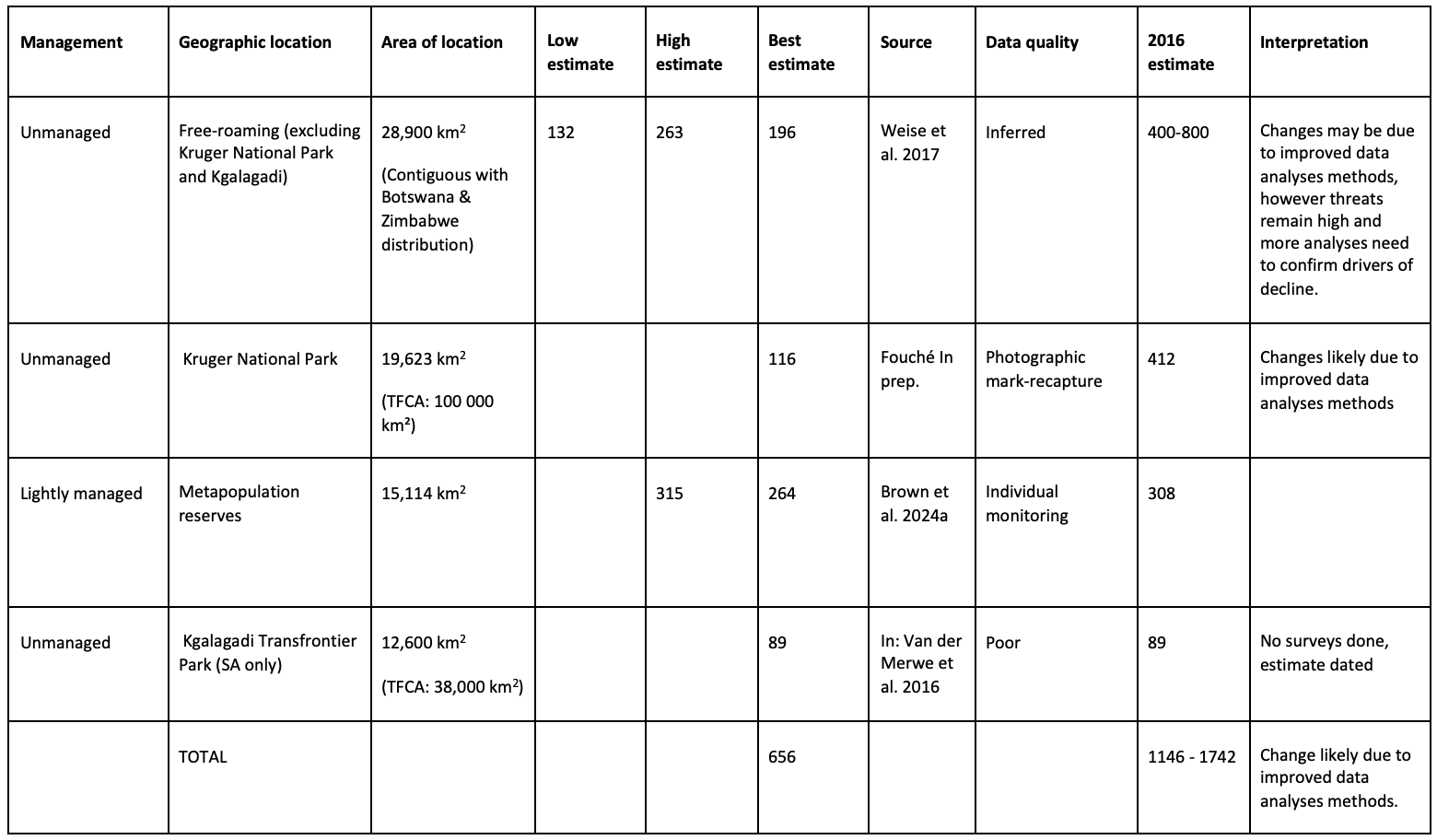
The Free-Roaming Population: The free-roaming population within South Africa occurs over 28,900 km2 and was estimated at 196 mature individuals at densities between 0.21–2.10 individuals/100 km2 (Weise et al. 2017). A large-scale Free Roaming Cheetah Census is currently underway, and preliminary results suggest that Cheetahs are absent from parts of this range and that the population size is reduced (Smit In prep.). Key protected areas include the Greater Mapungubwe Transfrontier Conservation Area that provides connectivity for Cheetah between South Africa and Botswana, while the Greater Limpopo Transfrontier Conservation Area connects the Kruger National Park with the sparse and poorly known Cheetah populations in western Mozambique. The 19,623 km2 Kruger National Park has approximately 116 mature Cheetah (Fouché In prep.). The South African section of the Kgalagadi Transfrontier Park (9,591 km2) supports about 80 resident Cheetahs and provides connectivity with Botswana and Namibia (In: Van der Merwe et al. 2016). These protected areas provide large, contiguous, transnational protected areas for Cheetah with limited threats. While snaring is of general conservation concern in these areas, there are no data to support significant, direct impacts on Cheetah. The free-roaming Cheetah range also includes large tracts of land that are not formally protected, are under private ownership and contiguous with neighbouring countries. Land use is mostly agricultural and wildlife ranching, and threats are significant and largely conflict-related.
The Managed Metapopulation: Cheetah have been reintroduced into 67 metapopulation reserves in South Africa covering 15,114 km2, supporting 264 mature individuals (18 months and older) (Brown et al. 2024a). While the Cheetah on these reserves are considered wild, active management is required to mimic some natural processes to ensure long-term viability at reserve level and demographic and genetic integrity at national level, while also meeting individual reserve objectives. Their conservation potential is not fully realised due to fragmented management at national level. This is being addressed through the development of a national Biodiversity Management Plan for the species as well as National Metapopulation Management Guidelines, which collectively will allow for shared management objectives, standardised data collection and transparent science-based decision-making.
The Captive Population: South Africa has the largest captive Cheetah population in the world, with ~600 Cheetah in 68 facilities. These Cheetah are maintained for commercial purposes (live trade and tourism). At present, two such facilities are CITES-registered captive breeding facilities for Cheetah. The captive industry posed a major threat to Cheetah in the previous assessment, but improved regulation of the export of captive Cheetah has reduced the risks of laundering of wild Cheetah into the international captive trade. Captive Cheetah are not considered in the Red List assessment as per the IUCN guidelines but are mentioned here for noting and due to threats identified in the previous assessment as a result of poorly regulated exports.
The total wild Cheetah population estimate for South Africa is 656 including the managed metapopulation and free-roaming Cheetah. This estimate is much lower than the previous assessment in 2016 of 1,166-1,742. The decline is partly attributable to decreased population estimates outside of protected areas and in the Kruger National Park. The decrease is not thought to represent a genuine decline in numbers, but rather improved survey and analytical methodology leading to more accurate estimates. The current Kruger National Park estimate used pattern recognition software to identify individual animals compared to manual identification in the past.
Key threats to Cheetah in South Africa include conflict-related persecution; lack of a formal national-level plan for Cheetah in metapopulation reserves; reported low survival rates of Cheetah translocated into open systems and reserves outside of South Africa for restoration purposes; snaring; and road mortalities.
There are emerging areas of concern to Cheetah conservation that are poorly understood and need further investigation to determine the magnitude of the impacts including: the (re)wilding of captive Cheetah for reintroduction and population supplementation purposes (and associated disease implications); a lack of collated information on the impact of various management interventions on the success of reintroductions into metapopulation reserves; demand for Cheetah outside of South Africa for restoration efforts and unconfirmed reports of movement of wild Cheetah into captive facilities for local trade. The magnitude of these threats cannot currently be assessed, and these are not included in the assessment, but they are noted for record purposes.
The Red List Status of Cheetah remains unchanged in South Africa from the previous assessment as Vulnerable, based on criteria C2a(i) and D1. This is due to a small and fragmented population with less than 1,000 mature individuals. The species requires careful monitoring and is conservation-dependent, especially due to the largest portion of its range being located outside of protected areas where it is exposed to threats that appear to be persistent and may be increasing.
Reasons for Change
Reason(s) for Change in Red List Category from the Previous Assessment: No change
Red List Index
Red List Index: No change
Recommended Citation: Marnewick K, Weise FJ, Nicholson S, Kerley GIH, Selier SAJ, Sievert O & Moodley Y. 2025. A conservation assessment of Acinonyx jubatus. In Patel T, Smith C, Roxburgh L, da Silva JM & Raimondo D, editors. The Red List of Mammals of South Africa, Eswatini and Lesotho. South African National Biodiversity Institute and Endangered Wildlife Trust, South Africa.
Distribution
Geographic Range
This is a regional assessment encompassing South Africa, Lesotho and Eswatini. There are no historical records for Cheetah in Lesotho, and Cheetah became extinct in Eswatini (formerly Swaziland) in the 1960s (Boshoff & Kerley 2013). Cheetah were reintroduced into Mlawula Nature Reserve and Hlane Royal National Park, Eswatini, in the 1980s (Monadjem 1998). Limited information is available on the current status of Cheetah in these two reserves and no CITES records exist on the export of Cheetah to Eswatini from South Africa in the past 10 years, thus it is unlikely that these reserves have received any subsequent supplements.
Cheetah historically occurred throughout most of southern Africa (Skinner & Chimbimba 2005; Boshoff et al. 2016). Historical records exist from the Western Cape Province at Beaufort West in the 1860s, in the KwaZulu-Natal Province in the 1920s, in the Eastern Cape Province and south of the Orange River from the first quarter of the 20th century, as well as in the Northern Cape Province in Bushmanland and Kenhardt districts in 1942 and at the mouth of the Orange River in 1965 (Skinner & Chimbimba 2005; Boshoff et al. 2016). As in the rest of their distribution range (Durant et al. 2015), Cheetah have been extirpated from more than 80% of their historical range in South Africa. Cheetah became locally extinct in KwaZulu-Natal Province prior to 1930 (Pringle 1977). In Limpopo, Cheetah sightings were recorded near the Brak River in the Zoutpansberg region in 1966 (Myers 1975) with no further records until recent years. Along the northern and western regions of Limpopo Province, ranchers reported more frequent Cheetah sightings since the early 2000’s (Marnewick 2016) as well as in the north of North West Province. These areas are under private wildlife and agricultural land uses with a depleted large carnivore guild, with Cheetah and Leopard (Panthera pardus) remaining the only large felids that occur outside of protected areas. These sightings are linked to an increase in available habitat and prey due to a shift in land use from cattle to wildlife ranching, with approximately 20,000 km2 of livestock farming being converted to wildlife (Pasmans & Hebinck 2015). Cheetah in this area represent the southern limit of the transboundary population that spans South Africa, Botswana, Zimbabwe, Mozambique and Namibia and are generally referred to as the ‘free-roaming’ Cheetah. Using verifiable observations, Weise et al. (2017) assessed that free-roaming Cheetah occurred across approximately 28,900 km2 in South Africa between 2010 and 2016, with potentially 94,100 km2 of suitable habitat in the country. A large-scale Free Roaming Cheetah Census is currently underway (Smit In prep.). Preliminary results suggest that distribution range has decreased, particularly between North West Province and Limpopo where connectivity inside South Africa appears to have been lost (Smit in Prep.). The largest formal conservation areas for Cheetah in South Africa are the Transfrontier Conservation Areas, including the Kruger National Park (19,623 km2) as part of the Greater Limpopo TFCA, the Kgalagadi National Park (9,591 km2) part of the Kgalagadi TFCA, and the Greater Mapungubwe TFCA (640 km2 in South Africa).
Cheetah have been reintroduced into metapopulation reserves across South Africa including privately-owned reserves, provincial nature reserves and National Parks. These 67 reserves comprise 15,114 km2 (mean = 226 km2; range 25 km2 – 1,000 km2; Brown et al. 2024a). While these reserves are fenced and managed at a reserve-level in terms of demographics, the Cheetah hunt, breed and utilise habitat and face a range of natural threats. These Cheetah exist in the wild and contribute to the species’ national persistence, thereby meeting the criteria for inclusion according to the Red List Guidelines (IUCN Standards and Petitions Committee 2022). Genetic studies show that these Cheetah are genetically similar to the free-roaming Cheetahs from where they mostly originated (Magliolo et al. 2023).
There is movement of Cheetah between these varying management regimes, including: natural dispersal between large national parks and TFCAs and adjacent non-conservation areas; free-roaming Cheetahs moving into metapopulation reserves; Cheetahs from metapopulation reserves escaping and becoming free-roaming (e.g. Banasiak et al. 2021); injured Cheetahs from metapopulation reserves being placed into captivity and captive Cheetahs being released into metapopulation reserves (e.g. Magliolo et al. 2023). South African Cheetah have also been exported from metapopulation reserves to other countries for restoration projects, including to Malawi (Sievert et al. 2022), Zambia, Mozambique (Neethling et al. 2025) and India (Marnewick et al. 2023).
Map
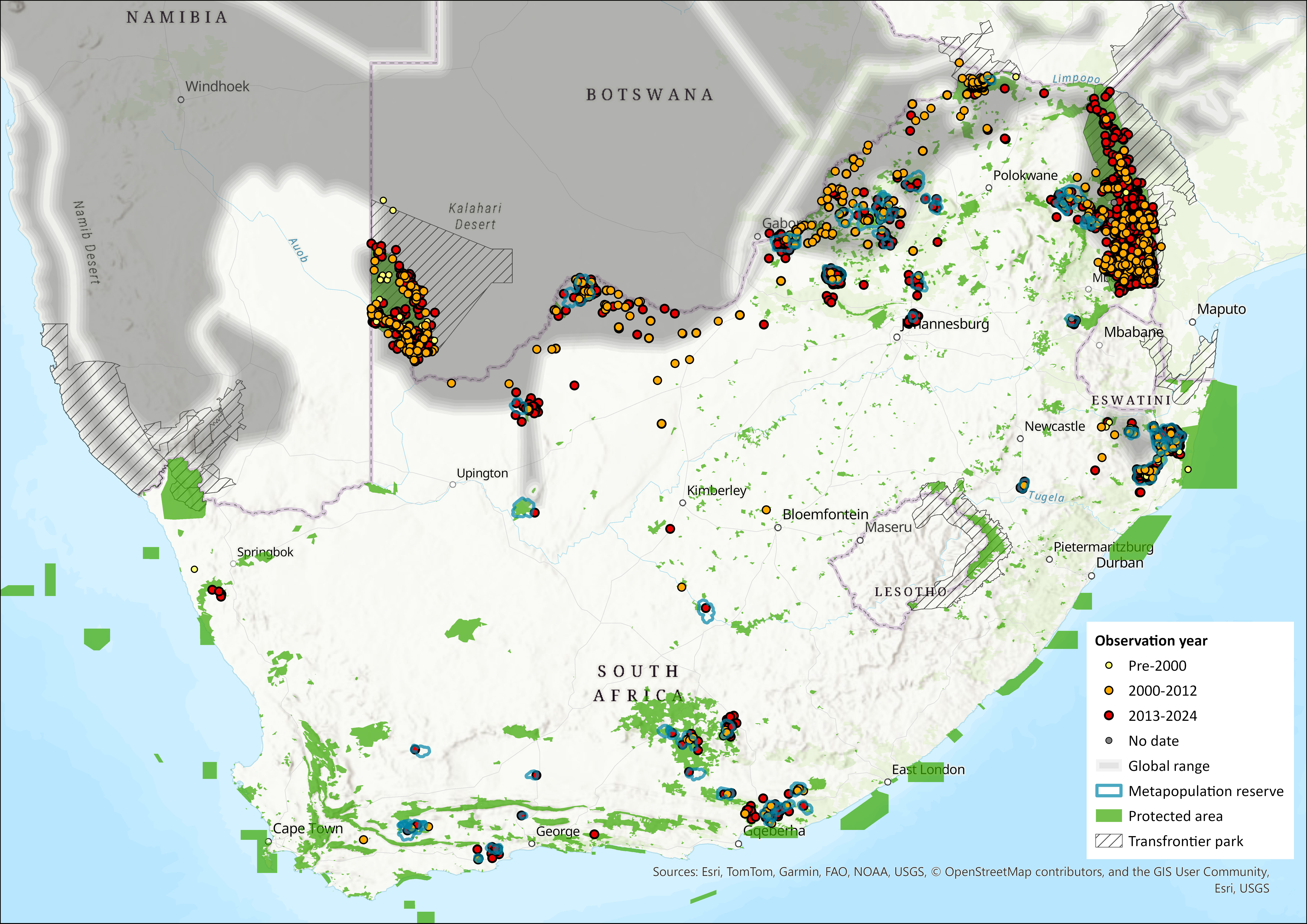
Figure 1. Distribution records for Cheetah (Acinonyx jubatus) within the assessment region (South Africa, Eswatini and Lesotho). Note that distribution data is obtained from multiple sources and records have not all been individually verified.
Biogeographic Realms
Biogeographic Realm: Afrotropical, Palearctic
Climate change
Climate change is expected to result in decreased rainfall, increasing temperatures and droughts and water scarcity through most of the current Cheetah range in South Africa. These are unlikely to have a large impact directly on Cheetah, which are able to survive in hot arid areas as long as prey is available. However, climate-related changes in prey abundance could have significant impacts on Cheetah (Siavashan et al. 2024). Annear et al. (2023) postulated that Cheetah may be particularly vulnerable to a decline in prey availability, reflecting their reliance on juvenile prey whose production may be affected by extreme climatic events. The effects of climate change on Cheetah habitat are not available in the literature, with some areas possibly becoming more suitable for Cheetahs and other less suitable. Some parts of Cheetah range in South Africa may become unsuitable for livestock production and force a shift in land use to wildlife-based enterprises, which may benefit Cheetah. Conversely, the increased pressure on livestock ranchers due to increasingly challenging conditions could result in increased conflict-related killings. The impacts of climate change on Cheetah are not currently known and require further investigation.
Population Information
The most recent population estimates available have been utilised and report on specific study areas. Thus, these estimates may represent smaller sections of Cheetah range. There may be movement (natural or managed) between each of these, e.g. Cheetah can move between the Kruger National Park and areas outside of the park including neighbouring countries. Captive Cheetahs have been released into the managed metapopulation and free-roaming Cheetahs have been recorded moving through fences into the managed metapopulation.
Free-roaming Cheetah: the Cheetah occurs across the northern parts of Limpopo, North West and Northern Cape provinces. Land use is variable and can include wildlife ranching, stock ranching and provincial and private protected areas. These Cheetahs occur at medium to high densities (0.21 – 2.10 individuals / 100 km2). (Weise et al. 2017). Applying mean inferred densities from study sites across different southern African biomes to verified free-roaming Cheetah occurrence in South Africa, the population may number approximately 196 mature individuals (minimum = 132, maximum of 263 animals) (Weise et al. 2017). This study excluded the Kruger National Park and Kgalagadi Transfrontier Park and the metapopulation. The Free-Roaming Cheetah Census recorded low photographic capture rates, with preliminary results from 361 camera- trapping sites surveyed over two years across the free-roaming range identifying approximately 61 adults, 7 subadults, and 13 cubs (Smit In prep.).
Kruger National Park: A PhD study is underway using spatially explicit capture- recapture analyses for photographic data obtained from tourist photographic surveys in the Kruger National Park, using African Wild Book for computer-aided identification of Cheetah. This study resulted in a population estimate of approximately 116 mature Cheetahs in Kruger National Park (Fouché In prep.). This is 296 individuals less than the estimates of Marnewick et al. (2014) using manual identification and using Program MARK. This is not thought to represent a genuine decline in Cheetah numbers but rather more accurate identification and improved analytical methods (Fouché In prep.).
Managed Metapopulation: Cheetah in metapopulation reserves are mostly known individually through intensive monitoring (Brown et al. 2024a). These reserves harbour 264 mature Cheetah (125 females; 136 males), 51 sub-adults (13-17 months) and 140 cubs (<12 months). An additional 51 mature individuals can be added to this total to account for reserves that do not implement intensive monitoring. The largest population occurs in Hluhluwe–iMfolozi Park Park in KwaZulu-Natal, with 20 known mature individuals whereas 14 reserves have only one or two Cheetah (Brown et al. 2024a).
Table 1: Summary of the Cheetah Acinonyx jubatus population in South Africa presented as number of mature individuals.
All individuals in one subpopulation: Yes
| Number of Subpopulations | Justification | Mature Individuals | Trend |
|---|---|---|---|
| 1 | Movement of animals between all management regimes: captive-metapopulation, metapopulation to free-roaming, free-roaming to metapopulation and KNP and Kgalagadi contiguous with free-roaming and neighbouring range state distribution. Limited genetic study provides no evidence to support the existence of subpopulations. | 1,146 – 1,742 | Suspected stable, changes noted in numbers likely due to improved survey methodology. |
Population Genetics
Although Cheetah populations are genetically differentiated in other parts of Africa, populations in South Africa, as well as Namibia, Botswana, Zimbabwe and southern Mozambique, belong to the same subspecies: A. j. jubatus. This subspecies is replaced by A. j. rainyei to the north (Prost et al. 2021). The genetic status of Zambian Cheetah is still unclear as data from the country have yet to be published.
Magliolo et al. (2023) sampled 172 (164 analysed) Cheetah from South Africa and found that their genetic diversity could be structured into one of five groups (free-roaming (n = 12), the managed metapopulation (n = 40) and three captive facilities: Ashia Cheetah Center (n = 40), Ann van Dyk Cheetah Centre (n = 40) and Hoedspruit Endangered Species Centre (n = 40)). The study showed that Cheetah within the managed metapopulation closely matched the genetics of free-roaming Cheetah in South Africa, as did one of the three sampled captive populations. However, two captive populations (Ashia Cheetah Centre and Hoedspruit Endangered Species Centre) were genetically different from the metapopulation and free-roaming group and from each other. The metapopulation and free-roaming group were not found to be statistically differentiated from each other, suggesting they should be considered a single population. All groups retained similar levels of genetic diversity (with respect to heterozygosity, allelic richness and inbreeding), indicating that genetic drift or inbreeding may not have caused the observed levels of differentiation. Thus, the two differentiated captive populations may represent previously unsampled natural genetic variation that is almost absent in the metapopulation and not present in sampled free-roaming Cheetah of South Africa. It must be noted however that the number of free-roaming Cheetah incorporated in the analyses was very small (n=11), and hence the presence of those alleles in the free-roaming population cannot be discounted. Moreover, there may be a lag effect in the genetic metrics quantified. The captive groups are essentially a founder (bottlenecked) group, which likely explains their prevalence of seemingly unique alleles. In time, the effects of inbreeding and/or drift might become apparent. Consequently, the captive groups should not be kept in isolation, but rather the two differentiated groups could be used as sources for the metapopulation, to increase the level of genetic variation within the metapopulation. Genetically, this would be more desirable than supplementation with individuals from the wild, which are already very similar to those in the metapopulation. This recommendation assumes that the founders of the two differentiated populations belonged to the same subspecies (A. j. jubatus) and have not been introduced from elsewhere in Africa. Based on the available information, four distinct genetic groups/populations likely exist in South Africa, one of which is comprised of wild animals.
Habitats and ecology
Cheetah occur in a wide range of habitats where a sufficient prey base is available. In South Africa, the largest (and relict) part of the Cheetah population is found in the Savanna biome. However, Cheetah have also been reintroduced into reserves located in the Thicket, Grassland, Nama Karoo, Fynbos and Succulent Karoo biomes.
Cheetah are the fastest land mammals and can run up to 103 km / hour (29 m/s; Wilson et al. 2013). They predominantly prey on the most abundant medium-sized antelope, but prey can range from ground-dwelling birds and small mammals, like Hares (Lepus spp.), up to large ungulates including Blue Wildebeest (Connochaetes taurinus), Greater Kudu (Tragelaphus strepsiceros) and Eland (Tragelaphus oryx). Annear et al. (2023) recently showed that approximately 67% of Cheetah kills comprised neonates and sub-adults, particularly when killing larger ungulate species, and that Cheetah exhibited a preference for neonates, juveniles, and sub-adults during the wet season, but adults of smaller species and juveniles during the dry season. Cheetah rarely scavenge, and do not remain long with their kills, some of which may be stolen by other carnivores, but they are energetically well-adapted to cope with kleptoparasitism (Scantlebury et al. 2014). However, scavenging by Cheetah has been documented in metapopulation reserves and is likely linked to feeding in bomas during soft release practices (Overton et al. 2025).
In comparison to other large felids, Cheetah occur at relatively low densities of 10–30% of the typical densities of other large cat species in prime habitat (Durant 2007). Lower Cheetah densities have been attributed to interspecific competition, especially with larger species such as Lion (Panthera leo) and Spotted Hyaena (Crocuta crocuta) that kill cubs (Caro 1994). The role of Lion is increasingly disputed in savanna systems where prey is not migrant, more refuges for cubs are available and carnivore densities differ (Mills & Mills 2014). Cheetah do coexist alongside other competitors and have developed avoidance strategies to minimise the loss of kills and cubs where competitor densities are high (Durant 1998; 2000a; 2000b; Broekhuis et al. 2013, Rostro-Garcia et al. 2015; Swanson et al. 2014; Cornhill & Kerley 2020a; 2020b; Cornhill et al. 2022; 2023). Cheetah social structure is unique among felids (Durant et al. 2010b). Females are solitary unless accompanied by dependent young, and males are either solitary or live in stable coalitions of two or three (Caro 1994, Broomhall et al. 2003). Coalitions are generally brothers, but unrelated males may also form or join coalitions (Caro 1994). In metapopulation reserves, these coalitions can be formed artificially for management purposes.
Cheetah home range sizes vary according to habitat and prey behaviour. Where prey are non-migrant, the general pattern appears to be one of territorial males holding smaller territories near female home ranges and non-territorial males using large home ranges between these. On Namibian farmlands, territorial male home ranges averaged 379 km² compared with home ranges of non-territorial males of 1,595 km² (Melzheimer et al. 2018). The same study estimated female Cheetah home ranges to average 650 km² (n = 17). On farmland in Limpopo, male Cheetah home ranges ranged from 121 km² to 607 km² (95% UDs) while female ranges comprised 14.7 km² to 703.3 km² (95% UDs), with a general trend of males having larger ranges (mean minimum convex polygon (MCP) = 1,236 km²) than females (mean MCP = 698 km²) (Marnewick & Somers 2015).
Cheetah utilise scent-marking sites for territorial and reproductive signalling. These sites can be any conspicuous item in the landscape including trees with sloping branches, concrete structures like road markers or clay or termite mounds. Cheetah will climb onto the structure to urinate and defecate on it. Scent-marking is done frequently, and different males visit the same site(s) repeatedly. When re-entering an area, males will visit and mark the same site, even following the same path that was used by other males to reach the site. Females visit scent-marking sites infrequently, likely to signal oestrous and teach dependent cubs about signalling sites, while males visit the sites frequently for territorial marking and information gathering (Cornhill & Kerley 2020c). Territorial males scent-mark the most and are reactive to female visitation by vocalising, whereas non-territorial males generally do not scent-mark or vocalise while visiting marking posts (Cornhill & Kerley 2020c). Cornhill & Kerley (2020a) showed that the use of scent-marking sites can be inhibited or delayed when these are used by lions or leopards, and that female Cheetah were particularly sensitive to these risks.
Female Cheetah give birth to their first litter at about two years of age after a three-month gestation period (Caro 1994). In the Kgalagadi Transfrontier Park, cub survival from birth to independence was 35.7%, with predation being the primary cause of cub mortality (Mills & Mills 2014). Cubs are dependent on their mother for about 18 months, thereafter they leave her and remain with their siblings for approximately six months (Caro 1994). At around two years of age, females become solitary and produce their first litter, whereas males will remain as coalitions or singletons (Caro 1994).
Cheetah in protected areas can live as long as 14 years (females) and 10 years (males) (Durant et al. 2010b). However, outside protected areas this may be significantly reduced due conflict-related persecution. In Limpopo, five out of nine collared Cheetahs died from anthropogenic causes (Marnewick & Somers 2015). In Namibia, the measured mean adult lifespan on private farmlands with mixed livestock and wildlife land uses is 4.6 years (SD = 1.8, n = 161) (Weise et al. 2017).
Cheetah likely play a key ecological role in sustaining biodiversity in the lower trophic levels, particularly in areas where they are the only large carnivore present, like farmlands. Cheetah may also regulate herbivore numbers in reserves where hunting or live sale is not practical or desirable. Cheetah are a key tourist species bringing in revenue to both state and private lands, being the 5th most desired species by tourists (Maciejewski & Kerley 2014) and 62% of reserves claim to reintroduce Cheetahs for tourism purposes (Buk et al. 2018). They are not a danger to people and rarely take livestock where sufficient wild prey is available, for example, Cheetahs broke out of 33% of the reserves (n = 13) to which they had been reintroduced to in the Eastern Cape, but neighbouring landowners only reported few livestock losses due to Cheetah, with six of 38 (13%) predation reports being attributed to the species (Banasiak et al. 2021). This makes Cheetah a potentially desirable species for community conservation and eco-tourism initiatives.
General Use and Trade Information
South Africa is the largest exporter of live Cheetah worldwide (CITES Wildlife Trade View 2025; accessed 20 February 2025). In South Africa, Cheetah are listed as vulnerable in terms of the National Environmental Management: Biodiversity Act (Act No. 10 of 2004; NEMBA), meaning that a permit is required to carry out any restricted activity involving Cheetah such as keeping, hunting, catching, breeding, selling, conveying or exporting from the country. The permit system is regulated through the Threatened or Protected Species (TOPS) Regulations (2007), which have been promulgated in terms of the National Environmental Management: Biodiversity Act (NEMBA). Various provincial ordinances and acts provide further legislative protection. Cheetah are listed on Appendix I of the Convention on International Trade in Endangered Species of Wild Fauna and Flora (CITES), allowing international trade in captive live Cheetah for commercial purposes from CITES-registered captive breeding facilities, currently two registered facilities in South Africa: Ann van Dyk Cheetah Centre (previously the De Wildt Cheetah Centre) and Hoedspruit Endangered Species Centre. The most recent estimate of the captive Cheetah population exceeds 600 animals in about 68 facilities in eight of the nine South African provinces (SANBI 2020).
There were concerns about the movement of wild Cheetah from metapopulation reserves and the free-roaming population into captive facilities for trade, resulting in a negative Non-detriment Finding (NDF) (Scientific Authority 2015). As a result, in 2015 the Scientific Authority of South Africa recommended specific measures to improve the management of captive-bred Cheetah and to prevent the laundering of wild specimens as captive-bred. The implementation of these measures resulted in a significant reduction in the number of captive-bred Cheetah exported from facilities not registered with the CITES Secretariat in accordance with Resolution Conf. 12.10 (Rev. CoP15). The overall average number of live Cheetahs exported per annum decreased from 72 between 2010 and 2014 to 46 per annum from 2015 to 2024 (CITES Trade Database UNEP World Conservation Monitoring Centre, Cambridge, UK Accessed 01/08/2025). Exports of Cheetah bred in South Africa’s two CITES-registered captive breeding facilities now dominate exports (SANBI 2020). China, India and the United Arab Emirates imported the most Cheetah from South Africa. No reports were received of wild Cheetah from metapopulation reserves entering captive facilities after implementation of the recommendations and the subsequent NDF outcome was positive (SANBI 2020). Some concerns still exist over the domestic regulation of captive facilities involved in local trade as there are unconfirmed indications that wild Cheetah may be entering these facilities.
Cheetah have cultural value, their skins are used in cultural regalia (Naude et al. 2020) and are believed to provide strength to the wearer (Whitting et al. 2013). Cheetah skins have been recorded for sale in traditional markets in the Western Cape (Nieman et al. 2019) but not in the Eastern Cape (Simelane & Kerley 1998) or the large markets in Gauteng (Whiting et al. 2013). A single Cheetah skin was confiscated from a traditional medicine dealer in Gqeberha in 2024 (G. Kerley pers. obs.). They do not appear to have as large a cultural significance as leopard skins.
Is there harvest from captive/cultivated sources of this species? Yes
Harvest Trend: Cheetah are harvested through conflict-related killing, killing for parts and derivatives and from the metapopulation for export for restoration projects.
Threats
Conflict-related persecution
The largest part of the distribution of Cheetah in South Africa is outside protected areas where they are vulnerable to conflict-related killing. In the North West Province, reported Cheetah persecution rates were 0.3 Cheetahs / 100 km² (Thorn et al. 2012), akin measured persecution of 0.30 adult Cheetahs per 100 km² per year on Namibian ranchlands (Weise et al. 2017). In Limpopo five out of nine collared Cheetahs died due to anthropogenic causes (Marnewick & Somers 2015) and the Free Roaming Cheetah Census reported 58% of collared Cheetahs dying due to anthropogenic causes (Smit In prep.). Despite several long-term projects to alleviate conflict and assist landowners (see https://Cheetahoutreachtrust.co.za/), there does not appear to be a marked improvement in attitudes or a reduction in killing (K. Marnewick pers. obs.). Lack of consistent reporting and inability to monitoring illegal killing makes accurate detection in trends and impacts impossible.
Lack of a formal metapopulation plan for Cheetahs in metapopulation reserves
There is no formal management plan for metapopulation reserves with national targets and objectives. Such a plan has been considered a priority for several years. This has resulted in fragmented management, lack of a national database, disparate management of individual animals and management at a reserve- or individual animal-level rather than a national process. As a result, there is a lack of information sharing, best practice development and focused research to answer management-related questions. A metapopulation plan is needed that provides the opportunity to integrate Cheetah management across the entire gradient of management conditions in South Africa.
Several processes are underway to better coordinate the management of Cheetah within South Africa. A Biodiversity Management Plan (BMP), that will include a metapopulation management plan, is currently being developed for Cheetah, using a whole-of-society approach to ensure stakeholder representation and full participation. National Guidelines for the Metapopulation Management of Large Mammal Species including specific National Guidelines for the Management of the South African Cheetah Metapopulation (Selier & Ferreira 2024) have been compiled and are currently within the intergovernmental processes for approval for implementation.
Snaring
Snaring is an increasing threat to many species in South Africa. Snares are generally set for bushmeat, with carnivores caught as bycatch. With increasing human populations on the borders of parks, in rural areas and ongoing poor economic opportunities, snaring is increasing with detrimental impacts on carnivores and their prey. In the Greater Kruger National Park, 9,440 snares were removed in 2023, but only two Cheetah were killed (C. Dreyer unpublished data. Head Ranger: Ranger Services, KNP). The Free Roaming Cheetah Census has recorded three snare-related deaths outside protected areas (Smit In prep.). No reports of snaring have been noted from the metapopulation reserves. The extent of the impact of snaring on Cheetahs in South Africa appears to be low but requires monitoring especially when considering the considerable impact snaring can have on other carnivores.
Apparent low success rates of translocation of Cheetah outside of South Africa for restoration purposes
The outcomes of Cheetah translocations outside South Africa—whether into open or closed systems—are poorly documented in both the scientific literature and publicly accessible management reports. Thus, it is not possible to make clear conclusions on the successes of these initiatives. The use of translocation as a Cheetah conflict mitigation tool in unrestrained farming and tourism landscapes in Namibia had mixed success due to high mortality in year one post-translocation, high costs, resuming conflict at source sites and a general lack of suitable space for high numbers of conflict Cheetah (Weise et al. 2015). The reintroduction of Cheetah into the fenced Liwonde National Park in Malawi shows short term success (Sievert et al. 2022). The lack of agreement on what constitutes a successful reintroduction further complicates evaluation of success.
Since the last assessment (Van der Merwe et al. 2016), the CITES Trade Dashboard (https://tradeview.cites.org/, accessed 19 February 2025) shows a total of 47 wild origin Cheetah being exported from South Africa for restoration purposes, of these, 23 went to Mozambique, 17 to Malawi and seven to Zambia. These figures are likely not fully inclusive of 2023 or 2024 due to lags in reporting times.
The Endangered Wildlife Trust (unpublished data 2024) reports that 81 Cheetah have left South Africa for restoration purposes into open systems in other range states. A conference presentation reported on 48 of these exported Cheetah, of which 46% (n = 22) died, stating that reintroductions into open (unfenced) systems have never been successful (Brown et al. 2024a).
In addition to the above reported exports, 12 Cheetah were translocated to India from South Africa in February 2023 (Marnewick et al. 2023), which are not yet reflected on the CITES Trade Dashboard. Another eight Cheetah were translocated from Namibia to India in November 2022, resulting in the birth of 18 cubs; yet the project has experienced high mortality rates with 40.0% adult mortality and 29.4% cub mortality (Qureshi et al. 2024), thus mirroring recorded mortalities during free-range relocations in Namibia (Weise et al. 2015). In December 2024, all Cheetah were being held in captive or semi-captive conditions in bomas ranging from 0.5 to 1.5 km² (R. Chellam pers. comm.). In February 2025 two males were released after 16 months in bomas (R. Chellam pers. comm.).
Thus, it is likely that 59 Cheetah were exported from South Africa and at least 32 of these have died or are held in captive or semi-captive conditions. This not only raises serious welfare concerns but also highlights the need for information sharing on successes and failures to improve future efforts through data-driven planning and risk assessments.
Areas of concern with threat status or conservation benefit poorly understood
Re-wilding of captive Cheetah for reintroduction purposes
It is unknown how many captive-bred Cheetah have been released into the metapopulation over time, and from the data presented here, it is unclear which studies refer to which animals and if there is duplicated reporting. One source reports that from April 2012 to March 2021, 39 captive Cheetah are known to have been released into the metapopulation with 16 of these released in 2020 alone (Endangered Wildlife Trust, unpublished data) Another report refers to 44 captive Cheetah being released, of which 27 died, a 38.6% mortality rate (V. Naude, Cheetah Advisory Group Meeting, 23 July 2024). An unpublished study reports three out of 12 reintroduced captive bred Cheetah died, a 25% mortality rate, but that 33 of 55 (60%) of cubs born survived to adulthood (V. Naude pers. comm.).
The unpublished Population Viability Assessment (PVA) (Brown et al. 2024a) reports 70 captive Cheetah released into the metapopulation from January 2012 – December 2024; of these 31.4% (n = 22) are alive, 64.3% (n = 45) died, 2.9% (n = 2) were returned to captivity, and 18.5% (n = 13) are recorded as translocated, with one unknown fate.
A study published in 2011 concluded that “Given the frequency and intensity of injuries sustained and the extensive human influence in the form of veterinary treatment, the reintroduction was not a success” (Maruping 2011).
More transparent reporting is needed to effectively evaluate the success, value, need and welfare implications of these reintroductions.
Conservation
The Cheetah is an umbrella species that requires large areas of natural or near-natural habitats. As such, by conserving Cheetah, many other species and habitats can be protected (Caro 2003). Furthermore, it is an indicator species of functional ecosystems with medium-sized herbivores (Dalerum et al. 2008).
Conservation requirements for Cheetah in South Africa are:
- Regular, quick and accurate surveys of free-roaming Cheetah outside of protected areas and in Kruger and Kgalagadi National Parks to monitor changes in distribution and status;
- Large-scale, effective human-wildlife conflict mitigation measures and new, innovative approaches to incentivise Cheetah-friendly agricultural and other land-use practices;
- National-level conservation plan for metapopulation reserves to be finalised and implemented;
- A science-based prioritisation process for restoration projects for Cheetah in other range states to ensure that exports maximise conservation benefit;
- An effective, transparent reporting system for all Cheetah translocations that clearly shows the fate of the animals and is designed to provide a framework for improved success though lessons learned;
- Understanding of what is needed to successfully reintroduce Cheetah into open systems.
Bibliography
Annear, E., Minnie, L., Andrew, K. and Kerley, G.I.H., 2023. Can smaller predators expand their prey base through killing juveniles? The influence of prey demography and season on prey selection for Cheetahs and lions. Oecologia 201(3): 649-660.
Banasiak, N.M., Hayward, M.W. & Kerley, G.I.H. 2021. Emerging human-carnivore conflict following large carnivore reintroductions highlights the need to lift baselines. African Journal of Wildlife Research 51: 136-143. https://doi.org/10.3957/056.051.0136
Bininda-Emonds, O.R.P., Gittleman, J.L. & Purvis, A. 1999. Building large trees by combining phylogenetic information: a complete phylogeny of the extant Carnivora (Mammalia). Biological Reviews of the Cambridge Philosophical Society 74: 143-175.
Boshoff, A.F. & Kerley, G.I.H. 2013. Historical incidence of the larger mammals in the Free State Province (South Africa) and Lesotho. Centre for African Conservation Ecology, Nelson Mandela Metropolitan University, Port Elizabeth, South Africa.
Boshoff, A.F., Landman, M. & Kerley, G.I.H. 2016. Filling the gaps on the maps: historical distribution patterns of some larger mammals in part of southern Africa. Transactions Royal Society of South Africa. 71: 23-87. https://doi.org/10.1080/0035919X.2015.1084066
Broekhuis, F., Cozzi, G., Valeix, M., McNutt, J.W. & Macdonald, D.W. 2013. Risk avoidance in sympatric large carnivores: reactive or predictive? Journal of Animal Ecology 82: 1097-1105.
Broomhall, L.S., Mills, M.G.L. & du Toit J.T. 2003. Home range and habitat use by Cheetahs (Acinonyx jubatus) in the Kruger National Park. Journal of Zoology 261: 119-128.
Brown, K., Sievert, O., Smit, M., & Naude, V. 2024a. South African Cheetah Metapopulation: Population Viability and Annual Harvest Model (2024/5). Solicited report to the Scientific Authority of South Africa (October 2024).
Brown, K.L, van der Merwe, V.C. & De Swardt, D. 2024b. The reintroduction of Cheetah (Acinonyx jubatus) into unfenced protected areas. Southern African Wildlife Management Association Annual Symposium, Windhoek, Namibia. 6-18 October 2024.
Buk, K.G., van der Merwe, V.C., Marnewick, K. & Funston, P.J., 2018. Conservation of severely fragmented populations: lessons from the transformation of uncoordinated reintroductions of Cheetahs (Acinonyx jubatus) into a managed metapopulation with self-sustained growth. Biodiversity and Conservation 27(13): 3393-3423.
Caro T.M. 2003. Umbrella species: critique and lessons from East Africa. Animal Conservation 6: 171-181.
Caro, T.M. 1994. Cheetahs of the Serengeti Plains: Group living in an asocial species. University of Chicago Press, Chicago, USA and London, UK.
CITES Wildlife Trade View 2025. UNEP-WCMC and the CITES Secretariat. Available at: TradeView.cites.org. Accessed 10/02/2025.
Cornhill, K. & Kerley, G.I.H. 2020a. Cheetah communication at scent-marking sites can be inhibited or delayed by predators. Behavioral Ecology and Sociobiology 74:21, https://doi.org/10.1007/s00265-020-2802-9
Cornhill, K. & Kerley, G.I.H. 2020b. Does competition shape Cheetah prey use following African wild dog reintroductions? African Journal of Wildlife Research 50: 75-85. https://doi.org/10.3957/056.050.0075
Cornhill, K.L. and Kerley, G.I.H., 2020c. Cheetah behaviour at scent‐marking sites indicates differential use by sex and social rank. Ethology 126(10): 976-986.
Cornhill, K., Kelly, C. & Kerley, G.I.H. 2022. Lion reintroduction demonstrates that resident Cheetah have a spatially reactive response to lion. African Journal of Ecology 60: 1-12. https://doi.org/10.1111/aje.12926
Cornhill, K., Balme, G.A., Hunter, L.T.B. & Kerley, G.I.H. 2023. Cheetah spatiotemporal overlap with other large carnivores and prey at camera trap sites: do they fit the niche-complementarity hypothesis? Mammalian Biology 103: 505-517. https://doi.org/10.1007/s42991-023-00368-1
Dalerum, F., Somers, M., Kunkel, K. & Cameron, E. 2008. The potential for large carnivores to act as biodiversity surrogates in southern Africa. Biodiversity and Conservation 17: 2939-2949.
Durant, S. 2007. Range-wide conservation planning for Cheetah and wild dog. Cat News 46: 13.
Durant, S., Mitchell, N., Ipavec, A. & Groom, R. 2015. Acinonyx jubatus. The IUCN Red List of Threatened Species 2015: e.T219A50649567. Available at: http://dx.doi.org/10.2305/IUCN.UK.2015-4.RLTS.T219A50649567.en.
Durant, S.M. 1998. Competition refuges and coexistence: an example from Serengeti carnivores. Journal Animal Ecology 67: 370-386.
Durant, S.M. 2000a. Living with the enemy: avoidance of hyenas and lions by Cheetahs in the Serengeti. Behavioral Ecology 11: 624-632.
Durant, S.M. 2000b. Predator avoidance, breeding experience and reproductive success in endangered Cheetahs (Acinonyx jubatus). Animal Behaviour 60: 121-130.
Durant, S.M., Dickman, A.J., Maddox, T., Waweru, M.N., Caro, T. & Pettorelli, N. 2010b. Past, present, and future of Cheetahs in Tanzania: their behavioural ecology and conservation. In: Biology and Conservation of Wild Felids. (eds. Macdonald, D. & Loveridge, A.J.) pp. 373-382.
Durant, S.M., Groom, R., Ipavec, A., Mitchell, N. & Khalatbari, L. 2024. Acinonyx jubatus (amended version of 2023 assessment). The IUCN Red List of Threatened Species 2024: e.T219A259025524. Accessed on 03 November 2024.
Everatt, K. 2020. Conservation biology of an apex predator in the Anthropocene: poaching, pastoralism and lions in multi-use landscapes, south-eastern Africa. PhD thesis, Nelson Mandela University.
Fouché, J. In Prep. Citizen science as a tool to measure population demographics and habitat selection of Cheetah (Acinonyx jubatus) in the Kruger National Park, South Africa. PhD Thesis, Department of Nature Conservation, Tshwane University of Technology, Pretoria, South Africa.
IUCN Standards and Petitions Committee. 2022. Guidelines for Using the IUCN Red List Categories and Criteria. Version 15.1. Prepared by the Standards and Petitions Committee. Available at: https://www.iucnredlist.org/resources/redlistguidelines.
Johnson, W. E. & O’Brien, S. J. 1997. Phylogenetic reconstruction of the Felidae using 16S rRNA and NADH-5 mitochondrial genes. Journal of Molecular Evolution 44: S98-S116.
Maciejewski, K, & Kerley, G.I.H. 2014. Understanding Tourists’ Preference for Mammal Species in Private Protected Areas: Is There a Case for Extralimital Species for Ecotourism? PLoS ONE 9(2): e88192. https://doi.org/10.1371/journal.pone.0088192.
Magliolo, M., Naude, V.N., van der Merwe, V.C., Prost, S., Orozco‐terWengel, P., Burger, P.A., Kotze, A., Grobler, J.P. & Dalton, D.L., 2023. Simulated genetic efficacy of metapopulation management and conservation value of captive reintroductions in a rapidly declining felid. Animal Conservation 26(2): 250-263.
Marnewick & Selier in prep. No more cheating with Cheetahs: How effective regulation stopped illicit international trade in Cheetahs from South Africa.
Marnewick, K., Ferreira, S.M., Grange, S., Watermeyer, J., Maputla, N. & Davies-Mostert, H.T. 2014. Evaluating the status of African wild dogs Lycaon pictus and Cheetahs Acinonyx jubatus through tourist-based photographic surveys in the Kruger National Park. PloS One 9: e86265.
Marnewick K. 2016. Conservation biology of Cheetahs Acinonyx jubatus and African wild dogs Lycaon pictus in South Africa. Ph.D Thesis. University of Pretoria, Pretoria, South Africa.
Marnewick, K. & Somers, M.J. 2015. Home ranges of Cheetahs (Acinonyx jubatus) outside protected areas in South Africa. African Journal of Wildlife Research 45(2): 223-232.
Marnewick, K.A., Somers, M.J., Venter, J.A. & Kerley, G.I.H. 2023. Are we sinking African Cheetahs in India? South African Journal of Science 119(7-8): 1-3.
Maruping, E.M. 2011. The re-introduction of captive bred Cheetah into a wild environment, Makulu Makete Wildlife Reserve, Limpopo province, South Africa, MSc dissertation, University of Pretoria, Pretoria, viewed 25/07/2025 < http://hdl.handle.net/2263/26057 >
Melzheimer, J., Streif, S., Wasiolka, B., Fischer, M., Thalwitzer, S., Heinrich, S.K., Weigold, A., Hofer, H. & Wachter, B. 2018. Queuing, takeovers, and becoming a fat cat: Long‐term data reveal two distinct male spatial tactics at different life‐history stages in Namibian Cheetahs. Ecosphere 9(6): p.e02308. https://doi.org/10.1002/ecs2.2308
Mills, M.G.L. & Mills, M.E.J. 2014. Cheetah cub survival revisited: a re‐evaluation of the role of predation, especially by lions, and implications for conservation. Journal of Zoology 292(2): 136-141.
Monadjem A. 1998. The mammals of Swaziland. Conservation Trust of Swaziland and Big Games Parks, Mbabane, Swaziland.
Myers N. 1975. The Cheetah Acinonyx jubatus in Africa. Report of a Survey in Africa from the Sahara Southwards. IUCN/WWF joint project. IUCN Monograph No. 4. International Union for Conservation of Nature and Natural Resources, Morges, Switzerland.
Naude, V.N., Balme, G.A., Rogan, M.S., Needham, M.D., Whittington‐Jones, G., Dickerson, T., Mabaso, X., Nattrass, N., Bishop, J.M., Hunter, L. & O’Riain, M.J. 2020. Longitudinal assessment of illegal leopard skin use in ceremonial regalia and acceptance of faux alternatives among followers of the Shembe Church, South Africa. Conservation Science and Practice 2(11): p.e289. https://doi.org/10.1111/csp2.289
Neethling, J., Smit, M., Selier, J., Kendon, T., Briers-Louw, W., Gaylard, A., Marnewick, K., Lindsey, P., Sievert, O., Maseka, H. & Gonçalves, M., 2025. Guidelines for evaluating the conservation value of African Cheetah (Acinonyx jubatus) translocations. Biodiversity and Conservation 34: 2657-2681.
Nieman, W.A., Leslie, A.J. & Wilkinson, A., 2019. Traditional medicinal animal use by Xhosa and Sotho communities in the Western Cape Province, South Africa. Journal of Ethnobiology and Ethnomedicine (15): 1-14.
O’Brien, S.J. & Johnson, W.E. 2007. The evolution of cats. Scientific American July: 68-75.
Overton, E.K., Davis, R.S., Prugnolle, F., Rougeron, V., Honiball, T.L., Sievert, O. & Venter, J.A. 2025. Carrion in bomas: multiple observations of Cheetah (Acinonyx jubatus) scavenging events and potential causes in managed populations. Ecology and Evolution 15(1): p.e70776.
Pasmans, T. & Hebinck, P., 2017. Rural development and the role of game farming in the Eastern Cape, South Africa. Land Use Policy (64): 440-450.
Pringle JA. 1977. The distribution of mammals in Natal. Part 2. Carnivora. Annals of the Natal Museum 23: 93-115.
Prost, S., Machado, A.P., Zumbroich, J., Preier, L., Mahtani‐Williams, S., Meissner, R., Guschanski, K., Brealey, J.C., Fernandes, C.R., Vercammen, P. & Hunter, L.T. 2022. Genomic analyses show extremely perilous conservation status of African and Asiatic Cheetahs (Acinonyx jubatus). Molecular Ecology 31(16): 4208-4223.
Rostro-Garcia, S., Kamler, J.F. & Hunter, L.T.B. 2015. To kill, stay or flee: The effects of lions and landscape factors on habitat and kill site selection of Cheetahs in South Africa. PLoS One 10(2): e0117743. DOI: 10.1371/journal.pone.0117743
Qureshi, Q., Bipin, C.M., Sharma, U.K., Bhardwaj, G. S., Mallick, A., Yadav, S. P., Shrivastav, A., Sen, S. and Tiwari, V. R. (Eds.) 2024. Bringing back the Cheetah to India Annual Progress Report 2023-2024 (Bhopal and Dehradun, India: National Tiger Conservation Authority, Government of India, New Delhi, Madhya Pradesh Forest Department, Bhopal and Wildlife Institute of India, Dehradun). TR No/2024/25.
SANBI 2020. Non-detriment finding for Acinonyx jubatus (Cheetah), South African National Biodiversity Institute. 24 September 2020. Government Gazette No 45552, 26 November 2021. https://www.gov.za/sites/default/files/gcis_document/202111/45552gon1532.pdf
Scantlebury, D.M., Mills, M.G.L., Wilson, R.P., Wilson, J.W., Mills, M.E.J., Durant, S.M., Bennett, N.C., Bradford, P., Marks, N.J. & Speakman, J.R. 2014. Flexible energetics of Cheetah hunting strategies provide resistance against kleptoparasitism. Science 346: 79-81.
Selier, J. & Ferreira, S. 2024. National guidelines for the metapopulation management of large mammal species. Metapopulation Guidelines V1, October 2024. South African National Biodiversity Institute.
Siavashan, N.N., Salmanmahiny, A. & Moradi, H.V. 2024. Impacts of climate change on the Asiatic Cheetahs (Acinonyx jubatus venaticus) habitat (case study: Touran Protected Complex). Animal Environment Journal 16(1): 1-12.
Sievert, O., Fattebert, J., Marnewick, K. & Leslie, A., 2022. Assessing the success of the first Cheetah reintroduction in Malawi. Oryx 56(4): 505-513.
Simelane, T.S. & Kerley, G.I.H. 1998. Conservation implications of the use of vertebrates by Xhosa traditional healers in South Africa. South African Journal of Wildlife Research 28: 121-126.
Skinner, J.D. & Chimbimba, C.T. (eds). 2005. The Mammals of the Southern African Subregion. Cambridge University Press, United Kingdom, Cambridge.
Smit, M. In prep. Free- Roaming Cheetah Census Report, Ashia Cheetah Conservation, South Africa.
Swanson, A., Caro, T., Davies-Mostert, H., Mills, M.G.L., Macdonald, D.W., Borner, M., Masenga, E. & Packer, C. 2014. Cheetahs and wild dogs show contrasting patterns of suppression by lions. Journal of Animal Ecology 83: 1418-1427.
Thorn, M., Green, M., Dalerum, F., Bateman, P.W. & Scott, D.M. 2012. What drives human–carnivore conflict in the North West Province of South Africa? Biological Conservation 150: 23-32.
Van der Merwe, V., Marnewick, K., Bissett, C., Groom, R., Mills, M.G.L. & Durant, S.M. 2016. A conservation assessment of Acinonyx jubatus. In Child, M.F., Roxburgh, L., Do Linh San, E., Raimondo, D. & Davies-Mostert, H.T. editors. The Red List of Mammals of South Africa, Swaziland and Lesotho. South African National Biodiversity Institute and Endangered Wildlife Trust, South Africa.
Weise, F.J., Lemeris Jr., J.R., Munro, S.J., Bowden, A., Venter, C., van Vuuren, M., van Vuuren, R. 2015. Cheetahs (Acinonyx jubatus) running the gauntlet: an evaluation of translocations into free-range environments in Namibia. PeerJ (3): e1346; DOI 10.7717/peerj.1346Weise, F.J., Vijay, V., Jacobson, A.P., Schoonover, R.F., Groom, R.J., Horgan, J., Keeping, D., Klein, R., Marnewick, K., Maude, G., Melzheimer, J., Mills, G., van der Merwe, V., van der Meer, E., van Vuuren, R.J., Wachter, B. & Pimm, S.L. 2017. The distribution and numbers of Cheetah (Acinonyx jubatus) in southern Africa. PeerJ (5): e4096. DOI 10.7717/peerj.4096
Whiting, M.J., Williams, V.L. & Hibbitts, T.J., 2013. Animals traded for traditional medicine at the Faraday market in South Africa: species diversity and conservation implications. Animals in traditional folk medicine: implications for conservation, pp. 421-473.
Wilson, J.W., Mills, M.G.L., Wilson, R.P., Peters, G., Mills, M.E.J., Speakman, J.R., Durant, S.M., Bennett, N.C., Marks, N.J., & Scantlebury, M. 2013. Cheetahs, Acinonyx jubatus, balance turn capacity with pace when chasing prey. Biology Letters 9: 20130620.
Wozencraft, W.C. 1993. Order Carnivora. In: D.E. Wilson and D.M. Reeder (eds), Mammal Species of the World: A Taxonomic and Geographic Reference. Second Edition, pp. 279-344. Smithsonian Institution Press, Washington, DC, USA.