
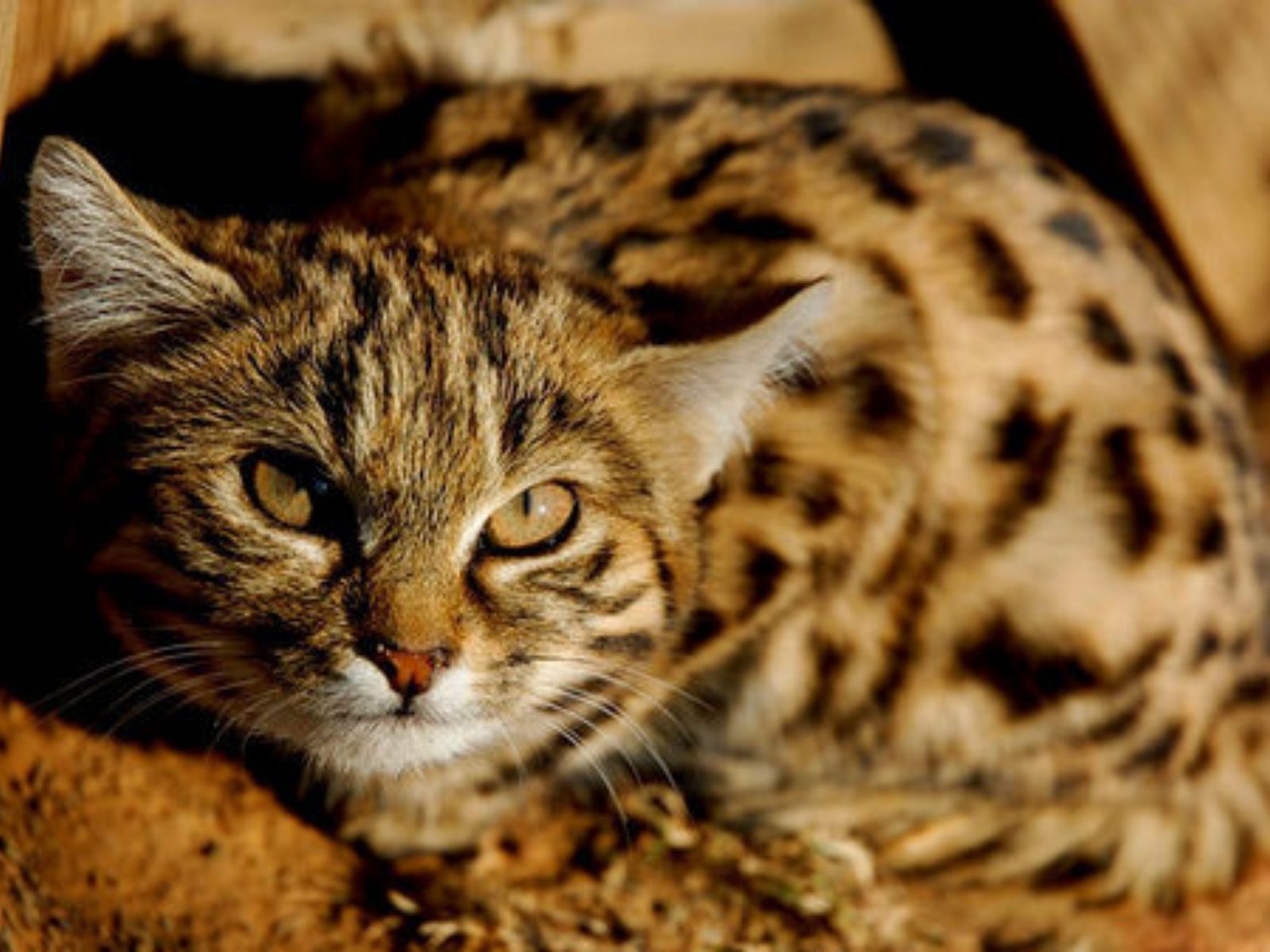
Black-footed Cat
Felis nigripes

2025 Red list status

Regional Population Trend
Declining

Change compared
to 2016
No Change
Overview
Felis nigripes – Burchell, 1824
ANIMALIA – CHORDATA – MAMMALIA – CARNIVORA – FELIDAE – Felis – nigripes
Common Names: Black-footed Cat, Small-spotted Cat (English), Klein Gekolde Kat, Swart-poot Kat, Miershooptier (Afrikaans), Tsetse (Sesotho), Sebalabolokwane, Sebala-molokwane, Sebala, Sebalabala, Sebala-manokwane, Kêkêtlane (Tswana), Ingwe Yeziduli (Xhosa)
Synonyms: No Synonyms
Taxonomic Note:
Two subspecies have been described (Meester et al. 1986) and these persist in theory. Felis nigripes nigripes, the dominate phenotype form described by Burchell, was first described from near Kuruman in the Northern Cape. Its range includes present-day southeastern Namibia, Botswana, Northern Cape, North West, Gauteng, Limpopo and marginally into Mpumalanga. Felis nigripes thomasi (Shortridge 1931) is described from a specimen collected near Grahamstown in the Eastern Cape. Its range includes the present-day Eastern Cape, westwards to the southern regions of the Northern Cape and the Free State.
However, Smithers (1971) doubted the validity of two subspecies, and his thoughts are shared by Sliwa (2013) and Kitchener et al. (2017). They suggest that the species is monotypic but may be polymorphic in the centre of its range with some geoclinal variations towards the extremes of its range. The northern race typically tends to be paler with less distinct striping whereas the southern race has a tawnier appearance with bolder patterning. However, since there are no obvious geographical or ecological barriers between the ranges which are the leading causes of genetic drift and speciation (Hoskin et al. 2005), it is likely that the subspecies status is invalid (Wilson 2016).
Fortunately, unlike the African Wildcat (Felis lybica), this species does not hybridise easily with other cat species. The only confirmed hybrid cases (Black-footed Cats and domestic cats) were under captive conditions (Leyhausen 1979). None have been recorded from the wild, and where there have been suspicions (Rautenbach 1982), these have been dismissed as misidentifications (Wilson 2015).
Red List Status: VU – Vulnerable, C2a(i) (IUCN version 3.1)
Assessment Information
Assessors: Schroeder, M.1, Drouilly, M.2 & Power, R.J.3
Reviewers: Nicholson, S.K.4, Davis, R.S.5 & Do Linh San, E.6
Contributors: Patel, T.4, Roxburgh, L.4 & da Silva, J.M.7
Institutions: 1Canines for Africa, 2Panthera, 3North West Provincial Government, 4Endangered Wildlife Trust, 5Nelson Mandela University, 6Sol Plaatjie University, 7South African National Biodiversity Institute
Previous Assessors & Reviewers: Wilson, B. & Sliwa, A.
Previous Contributors: Roxburgh, L., Vivier, J., Power, J., Child, M.F., Nowell, K. & Hoffmann, M.
Assessment Rationale
Felis nigripes is listed on Appendix I of the Convention for the International Trade of Endangered Species of Wild Fauna and Flora (2024) and is listed as “Vulnerable” by the IUCN (2016). Black-footed Cats are endemic to the arid regions of southern Africa and have the most limited distribution among African felids (Nowell and Jackson 1996). South Africa’s central Karoo region is suspected to be the species stronghold, where most records and research on the species has taken place.
Black-footed Cats are solitary with large home-ranges relative to their size occurring at low densities. The global population size is estimated to be fewer than 10,000 mature individuals with nearly two-thirds occurring in South Africa, with suspected range-wide continuing decline. Using density estimates of 0.03/km², 0.02/km², and 0.01/km² for high-, medium-, and low-density areas, respectively (Sliwa et al. 2016), the population in South Africa is estimated to be 3091 (1545-4637) adults assuming a 70% mature age structure with no subpopulation greater than 1,000.
Continuing decline in the number of mature individuals is inferred based on the Benfontein Nature Reserve long- term study site on the border of the Northern Cape and the Free State Provinces by the Black-footed Cat Working Group (BFCWG), where densities fell from 0.17 cats/km² in 1998–1999 (Sliwa 2004) to 0.08 cats/km² in 2005–2015, and 0.03 in 2024 (Sliwa et al. 2016, Sliwa et al. 2025), representing over a 50% decline every three generations. The most recent spotlight surveys indicate a recent decline with the lowest sightings rate recorded in 30 years (Sliwa et al. 2024), assuming a linear relationship between sighting frequency and abundance. The suspected cause of decline is attributed to overabundant mesopredators and disease (Sliwa et al. 2024). The first annual survival rate estimates of adult Black-footed Cats were relatively low (0.62) for a small wild cat species, with most mortality attributed to natural rather than human-related causes (Lai et al. 2024). While one study site should not be extrapolated across the region, as a protected area with ideal habitat, it is potentially indicative of more widespread continuing decline. Furthermore, distribution records show measurable continued loss in both the extent and area of occurrence in recent decades with an over 20% loss since the turn of the century. Continued decline is predicted under future climate change scenarios with an 8-24% loss of suitable habitat over the next 15 years (2040) and 43-45% loss in 50 years (2070). Black-footed Cats also face numerous observed and potential natural and anthropogenic threats throughout their distribution.
The majority of the species’ distribution occurs outside of formally protected areas, dominated by small livestock farms, where widespread persecution of predators, including use of illegal poison is pervasive (Drouilly et al. 2023). Human-related mortalities are reported throughout the species’ range including widespread indiscriminate predator control, domestic dogs, and vehicles. Historical and current land use practices are suspected to have negative impacts to Black-footed Cat habitat suitability including; bush encroachment, desertification, loss of prey and mutualistic burrowing species. Additional threats include illegal pet trade, emerging diseases, and habitat loss from mining, energy development, agricultural and rural development. Additional environmental threats include habitat loss, unpredictable rainfall patterns, severe drought, and other effects of climate change that may negatively impact habitat suitability for Black-footed Cats and their prey. Genomic investigations have revealed Black-footed Cats exhibit low levels of heterozygosity, among the lowest of all felid species which may affect their ability to adapt to a changing environment and increased risk of familiar health issues (Yaun et al. 2024). Indeed, both in the wild and in captivity, the species is susceptible to renal failure linked to AA amyloidosis which they are genetically susceptible to (Sliwa et al. 2022; Terio et al. 2008; Yaun et al. 2024). All these factors suggest that the species is becomingly increasingly threatened.
The regional assessment supports maintaining the species as Vulnerable C2a(i), consistent with the global listing currently under review by the IUCN SSC Red List Authority. Since most of the species’ range lies within South Africa, the regional and global assessments are aligned. However, we note regional estimates should be interpreted with caution due to a lack of systematic field surveys, limited density data, and potential bias and uncertainties in reported sightings data. Despite these uncertainties, documented and predicted declines necessitate a conservative approach, but highlight the urgent need for more robust population size and trend estimates.
Reasons for Change
Reason(s) for Change in Red List Category from the Previous Assessment: No change
Red List Index
Red List Index: No change
Recommended citation: Schroeder M, Drouilly M & Power RJ. 2025. A conservation assessment of Felis nigripes. In Patel T, Smith C, Roxburgh L, da Silva JM & Raimondo D, editors. The Red List of Mammals of South Africa, Eswatini and Lesotho. South African National Biodiversity Institute and Endangered Wildlife Trust, South Africa.
Regional Distribution and occurrence
Geographic Range
Black-footed Cats have the most restricted distribution of any of the African felid species (Nowell & Jackson 1996; Wilson 2016). The species is endemic to the arid grasslands, dwarf shrub, and savannah of the Karoo and Kalahari in southern Africa (Sliwa 2013; Wilson 2016), and in the Southwest Arid zone (Skinner & Chimimba 2005). Most of the range occurs within the boundaries of South Africa, thinning out northwards into Botswana, Namibia and marginally in Zimbabwe and likely marginally in extreme southern Angola (Sliwa 2013; Wilson 2015). They have been known from earlier baselines to inhabit most of South Africa’s arid interior (Stuart 1982; Skinner & Chimimba 2005), including northern parts of the Western Cape (Skead 2011), northern parts of the Eastern Cape (Von Richter 1972; Stuart 1981; Lynch 1989), Northern Cape (Skead 2011; Stuart 1981), Free State (Von Richter 1972; Lynch 1983), North West (Von Richter 1972; Rautenbach 1982), KwaZulu-Natal (Rowe-Rowe 1992), and marginally so, in Gauteng (Rautenbach 1982), Mpumalanga (Rautenbach 1982), and in Limpopo (Power 2000). The occurrence of the species in Eswatini (M. Reilly pers. comm. 2024, and A. Monadjem pers. comm. 2014) and Lesotho (N. Avenant pers. comm. 2024) is considered highly unlikely, and no records exist to date.
In South Africa, where most research effort has taken place, a review of the range has suggested extending it in all directions from these earlier baselines (Wilson 2016), however no further range expansion has been recorded since 2015. The results of the previous assessment likely reflected increased awareness and outreach efforts by researchers, rather than a true expansion (Wilson 2016). Comparing the extent of occurrence over contemporary time periods with relatively even records shows a 14% contraction since 2012 and 20% since 2000.
The largest extant population occurs in the Nama Karoo region in central South Africa (~73,500 km²). The region has relatively contiguous habitat with low human and livestock population densities, however populations may be highly variable due to low rainfall and extended periods of draught exacerbated by widespread persecution of predators, including poison (Nattrass & Conradie 2018). Densities likely decrease westerly with lower rainfall and the absence of Springhare (Pedetes capensis) and Ground Squirrel (Geosciurus inauris) populations, with Black-footed Cat dependent on these fossorial species for access to burrows (Brindley et al. 2024). The Karoo is divided laterally by the escarpment of the Greater Karoo plateau where the Baviaans Kloof pass likely restricts genetic exchange. The lower Karoo region south of this plateau has a narrow lateral band of records with densities likely decreasing to the west which is more arid and does not support Springhare or Ground Squirrel populations, and to the east with increasing rainfall and thicket vegetation. However, recent camera trap and photographic records confirm the species occurs in suitable pockets of habitat in this region. The southern and western most extent of the species’ distribution in the Western Cape has likely constricted from previous reports. Two specimens collected near the town of Montagu (Stuart 1982), and two sighting records in Namaqualand region prior to the 21st century are likely extinct but are historical outliers (over 250 kms from the nearest extant record) and may not have represented viable populations anyway. Fynbos habitat is characteristically brushy with low prey densities and population persistence may have relied on patches of grassland in the valley regions which have since largely been converted to crop production. No other sightings have been reported in these outlying regions before or since. Perhaps concerningly, no new records have been reported in the Western Cape province since the previous assessment, although populations likely persist considering proximity of bordering Northern and Eastern Cape records.
Further inland, where the Nama Karoo merges into the savannah and grassland biomes, the Orange River and the extensive crop production along its boundaries likely limit gene flow Northeast into the Free State province. On the Northeastern side of its range, occurrence records were confirmed 90 km west of the Kruger National Park in Mpumalanga Province with sparce records extending into northwestern KwaZulu-Natal (Wilson 2016). Previously, there was a southern bias in occurrence records (Wilson 2016), although there has been a progressive shift in occurrence records in the northern part of its national range (see Map). In the North West province for instance, the species occurs in all bioregions across the province (Power et al. 2019) but is mostly localised in the south-west of the province (Power 2014).
Black-footed Cats have been reported in formally-protected areas such as the Karoo National Park in the Western Cape, Mokala National Park in the Northern Cape, Mountain Zebra National Park (Smith et al. 2023), Addo Elephant National Park and Camdeboo National Park in the Eastern Cape (Wilson 2016), SA Lombard Nature Reserve and Meerkat National Park in the North West Province (Power 2014; Wilson 2016), and recently in the Verloren Vallei Nature Reserve in Mpumalanga (Loock & Swanepoel 2019). Black-footed Cats are also present in Telperion Nature Reserve (Webster et al. 2021) and camera trap records from the Molemane Eye Nature Reserve (D. Buijs, Unpublished records, North West Province Directorate of Biodiversity Management). The lack of formal protected areas within the core range of Black-footed Cats is probably one of the reasons for the relatively low number of sightings of Black-footed Cats in formally protected areas, despite considerable research effort and game drive reporting (Wilson 2016). This is likely due to unsuitable habitat or the presence of a higher density of mesopredators which increases competition and incidences of intraguild predation (Wilson 2016). This may be true in the North West at least, as occurrences of the species are frequently reported outside local protected areas (Power 2014), and it is well known that the protected areas have high Black-backed Jackal (Lupulella mesomelas) abundances (NWPTB 2023). Interestingly, the species is thought to occur in the Kgalagadi Transfrontier Park, but the status is uncertain there (Wilson 2016), although records exist on the Botswana side (Keeping 2012). Further field surveys are needed to determine in which protected areas subpopulations of the species are resident (Wilson et al. 2016). Of the private reserves, their presence has been confirmed through video evidence in 2016 from Tswalu Kalahari Reserve, Northern Cape (W. Panaino unpubl. data), from genetic testing of scats and camera trap observations in Samara Karoo Reserve, Eastern Cape (Nelson Mandela University, unpubl. data), and they are known from the Kwandwe Private Game Reserve in the Eastern Cape.
For this assessment, we attempted to define, delineate and map the contemporary distribution of Black-footed Cat populations across the assessment region using landscape and habitat characteristics (Küsters et al 2025). The extant population structure was delineated using post-2000 locality records and considered separate when >100 km apart or by dispersal barriers (large rivers, mountain ranges, unsuitable habitat).
The updated EOO for South Africa since 2000 is 679,737 km². There has been a 14% decline in the EOO over the last three generations (678,754 km² 2000-2012, 585, 108 km² 2012-2024). The AOO estimate for South Africa is roughly 408,936 km² across six populations calculated as the area within a 50 km buffer (approximately 2 times the estimated dispersal distance) of all recent (since 2012) reliable sightings records adjusted to suitable habitat and landscape barriers. There has been more than a 20% measured decline in the AOO since 2012 (548,261 km² 2000-2012, 408,936 km² 2012-2024. However, we caution mapping accuracy may be confounded by highly uneven reporting across the range. There is a critical need for targeted species surveys, including genetic assessments to refine population connectivity assumptions.
Elevation / Depth / Depth Zones
Elevation Lower Limit (in metres above sea level): (Not specified)
Elevation Upper Limit (in metres above sea level): 2000 m (see Loock & Swanepoel 2019)
Depth Lower Limit (in metres below sea level): (Not specified)
Depth Upper Limit (in metres below sea level): (Not specified)
Depth Zone: (Not specified)
Map
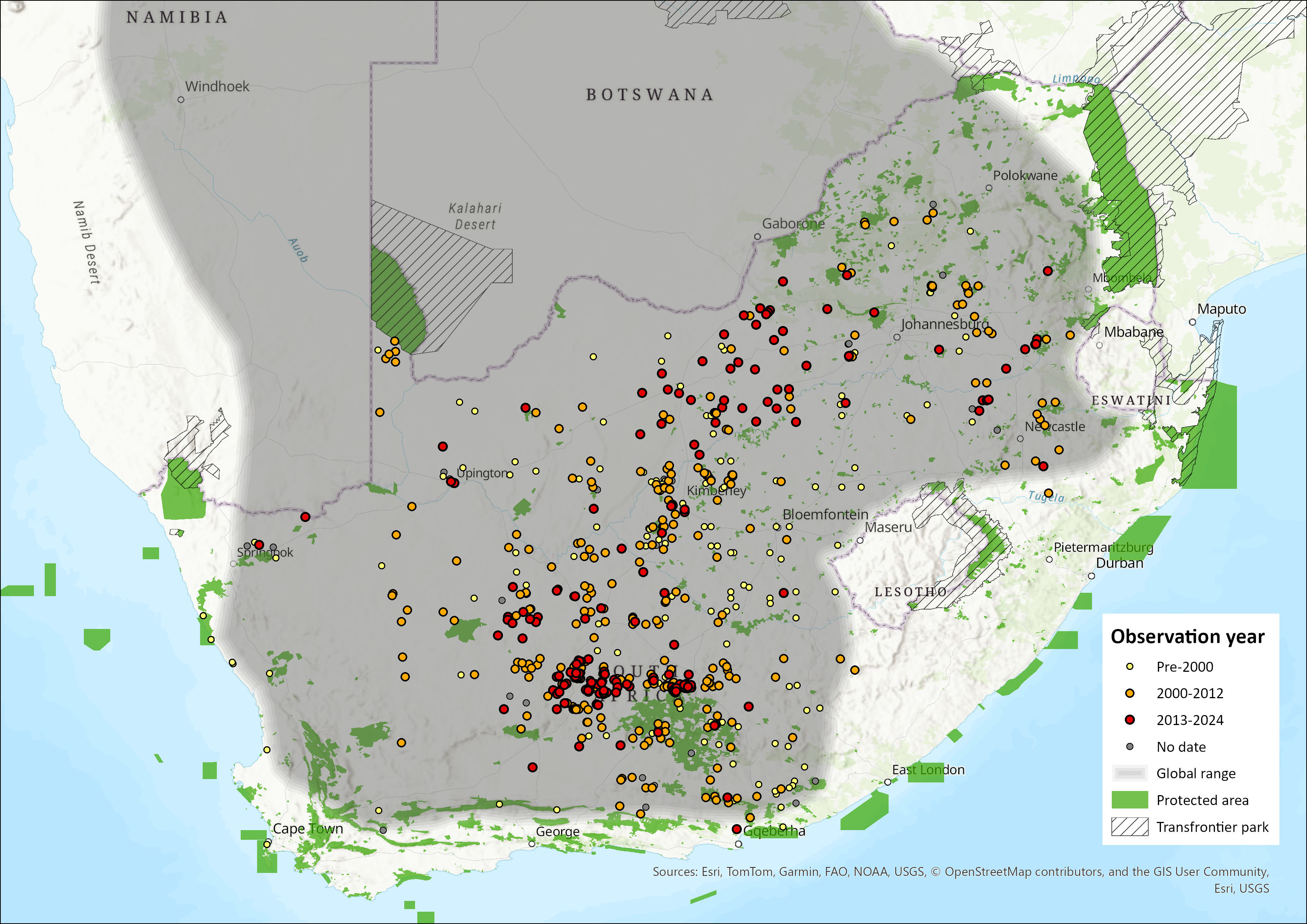
Figure 1. Distribution records for Black-footed Cat (Felis nigripes) within the assessment region (South Africa, Eswatini and Lesotho). Note that distribution data is obtained from multiple sources and records have not all been individually verified
Biogeographic Realms
Biogeographic Realm: Afrotropical
Occurrence
Countries of Occurrence
| Country | Presence | Origin | Formerly Bred | Seasonality |
| Angola | Presence uncertain | Native | – | – |
| Botswana | Extant | Native | – | – |
| Eswatini | Presence uncertain | Native | – | – |
| Lesotho | Presence uncertain | Native | – | – |
| Namibia | Extant | Native | – | – |
| South Africa | Extant | Native | – | – |
| Zimbabwe | Extant | Native | – | – |
Large Marine Ecosystems (LME) Occurrence
Large Marine Ecosystems: (Not specified)
FAO Area Occurrence
FAO Marine Areas: (Not specified)
Climate change
Overall, climate change is more often predicted to have rapid and severe negative influences in Southern Africa’s arid regions with greater increases in average temperatures and more severe weather such as flooding and droughts. The rate of change often exceeds the ability of animals to adapt or disperse to more climatically favourable regions where prey densities are sufficient to support viable populations. Black-footed Cats have already seemed to adapt to changing climates over the past two million years (see Kuhn et al. 2011; 2017). However, this has resulted in genetic bottlenecks and the ability to adapt further may be compromised because of current low genetic diversity. Since the species is an inhabitant of arid environments (Smithers 1971; Sliwa et al. 2010; Skinner & Chimimba 2005), the drying out of landscapes in central South Africa (see Foden & Young 2016), may favour range expansions into mesic regions. However, this may be contradicted by increased woody biomass. Current and historic overgrazing and invasive species have resulted in bush encroachment. This is further exacerbated by increased atmospheric CO2 because of climate change, which favours C3 tree growth over C4 grasses, aiding in densification of woody species (Bond and Midgley 2001). As an open habitat specialist, increased woody densification will negatively impact the Black-footed Cat through further habitat loss and fragmentation. Currently, a minimal portion of the black-footed cat’s habitat falls within protected areas, and this is predicted to further decrease in future scenarios with limited dispersal further heightening the risk of extinction (Zanin et al. 2021). Furthermore, climate change is predicted to increase the frequency and intensity of severe weather events. Black-footed Cats (especially kittens) can fall victim to flash floods by drowning or collapse of dens. Springhare and burrowing species are susceptible to flooding events which could further reduce availability of burrows to Black-footed Cats (Peinke et al. 2016).
The suitability and availability of Black-footed Cat habitat is predicted to decline through desertification and bush encroachment. Based on the Local Government Climate Change Support Program LTAS Factsheet, the most threatened biomes in South Africa under all predicted climate change scenarios are Grassland, followed by Nama Karoo. Large portions of Grassland will be replaced by Savannah through the invasion of woody plants (indigenous and invasive). Grassland habitats within the species’ range are also endangered to land use change with conversion to agriculture. In the Nama Karoo, desertification will expand with large portions converting to Savannah (Cadman et al 2010). Thus, continuing and projected loss and degradation of semi-arid open landscapes is of major concern.
Climate Change Species Distribution Models predict an 8-24% loss of suitable habitat over the next 15 years (2040) and 43-45% loss in 50 years (2070) (Cowan 2025). The important variables revealed from the model align with the Black-footed Cat’s functional ecology; adapted to arid environments like the Nama Karoo, with relatively moderate annual temperatures but considerable diurnal temperature variations. Thermoregulatory adaptations include being nocturnal, which helps it avoid the extreme heat during the day by taking refuge in burrows and take advantage of the cooler nighttime temperatures for hunting. This behavioural adaptation is crucial for the species’ thermoregulatory needs as a small carnivore with relatively long nightly distances travelled to meet prey resource needs. Rising temperatures may compromise the species’ thermoregulatory adaptations, for example warmer nighttime temperatures may reduce hunting activity duration during the summer breeding season leading to decreased fitness. Climate change is disproportionately impacting the semi-arid parts of Southern Africa, and consequently species specially adapted to these environments like the Black-footed Cat, face greater adaptive challenges and changes in range.
Population
Quantifying the population abundance for the species is particularly difficult due to secretive behaviour and small size (Sliwa et al. 2018). Black-footed Cats move quickly and do not habitually use game tracks or roads like larger carnivores, thus traditional methods such as camera traps are generally less effective (Sliwa 2018). Since 2006, there has been extensive efforts to establish the historical and current distribution of the species (Wilson 2016, Küsters 2022). Prior to 2000, there were only 251 distribution records including fossil specimens. Since then, 788 records have been collected in the assessment region, of which 296 could be reliably mapped. As such, it is difficult to determine density, and thus a population estimate for this species, and only two sites offered local abundance information (Wilson et al. 2016). High-density estimates come from two study sites in the Northern Cape Province of South Africa, a private nature reserve and in farmland (Sliwa 2004, Sliwa et al. 2010). For Benfontein Nature Reserve, between 1998 and 2024, density (based on radio-collared individuals) has ranged from 0.03 – 0.17 cats / km² (Sliwa 2004, Sliwa et al. 2016, Sliwa et al. 2025) For Nuwejaarsfontein study area near De Aar in the southern Northern Cape province, density was estimated at 0.06 cats / km² from 2009–2014 (Sliwa et al. 2014). These two sites may represent high densities due to favourable habitat and human management, and population densities in low-quality habitat are probably much lower (Sliwa 2013). Densities as low as 0.005 cats / km² were recorded in south-western Botswana, estimated from track counts (Keeping 2014). For the purpose of estimating population size, we use conservative estimates of 0.01 – 0.03 cats / km² to account for resource-driven population fluctuations and occupancy gaps across larger scales.
Using these density estimates on our extant population delineations, we calculated the South Africa population to be 1,545-4,637 (mean 3091) mature individuals (assuming a 70% mature population structure). Estimates using the species distribution model of potentially suitable habitat under current conditions (binary surface map with threshold of 0.21) produced similar estimates (1,899-3,799 mature individuals). This estimate is lower when averaged compared to the 2016 assessment which reported 5,269-7,747 mature individuals (assuming a 70% mature age structure), but caution estimates are not directly comparable due to differences in reporting frequencies and mapping methods. For example, the previous assessment included historical records whereas only recent records (since 2012) were included for this assessment. Estimates are also broader to reflect realistic uncertainty considering the limited population data available, although the population does not exceed 10,000 mature individuals even under high site-specific densities of 0.06 cats / km².
Highest densities are expected in the central Karoo region of South Africa. Using the same density ranges, the largest extant subpopulation is considered to be in the Nama Karoo, with contiguous habitat across the eastern half of the Northern Cape Province, estimated between 515-1,545 mature individuals. Followed by Griqualand in the North West Province with 494-1,481 adult cats. Lower density thresholds are supported to account for gaps in occupancy within these large areas, thus caution no subpopulation is predicted to exceed 1000 mature individuals. Outlying populations are highly fragmented with limited records in patches of suitable habitat. Subpopulations were delineated using AOO polygons separated by at least 50 kms (estimated maximum species dispersal distance) incorporating landscape scale habitat features (Küsters et al. 2025). Again, these estimates should be taken with caution and emphasize the need to enhance scientific capacity for targeted species surveys to improve the accuracy of assumptions regarding densities, distribution and population connectivity.
A site-specific decline is estimated and inferred based on evidence from long-term monitoring of collared Black-footed Cats at Benfontein Nature Reserve in the Northern Cape, which has documented an overall continuous negative trend. Density of mature individuals based on home-range data declined from 0.17 cats / km² in 1998–1999 (Sliwa 2004) to 0.08 cats / km² in 2005–2015 (Sliwa 2016), and 0.03 in 2024 based on recent unpublished surveys representing over a 50% decline every 3 generations. The most recent spotlight surveys indicate a possible severe decline with the lowest sightings rate recorded in 30 years, assuming a linear relationship between sightings per night and population size (Sliwa et al. 2024). Adult mortality rates are high with about 50% of all radio-collared cats lost annually to larger predators and disease (Sliwa et al. 2022). Annual survival rates of adult Black-footed Cats, based on two telemetry study sites in South Africa, is relatively low (0.62) regardless of protected area status or lethal management of larger predators (Lai et al. 2024). Recent evidence from a study site in southern Namibia, shows that populations can experience unpredictable high mortality rates over a short period of time resulting in the death (n=6) and unknown fate (n=4) of ten radio-collared study animals in ten months (Küsters 2024, Sliwa et al. 2024). Localised extinctions and population recovery may be limited in areas with high mesopredator populations due to interspecific competition (Blaum et al. 2009), including intraguild predation (Kamler et al. 2015, Sliwa et al. 2022), and disease (Lai et al. 2024) potentially exacerbated by inbreeding depression (Yung et al. 2024). Due to challenges in collecting demographic data on the species, age-specific survival (especially juveniles) and fecundity data are currently lacking from any study site from which to extrapolate temporal population extinction probabilities.
Population Information
Current population trend: Assumed to be declining.
Continuing decline in mature individuals? Yes
Extreme fluctuations in the number of subpopulations: (Not specified)
Continuing decline in number of subpopulations: (Not specified)
All individuals in one subpopulation: (Not specified)
Number of mature individuals in population: 1,545-4,637
Number of mature individuals in largest subpopulation: 515-1,545 (Nama Karoo)
Number of Subpopulations: (Not specified)
Severely fragmented: No. Habitat is largely connected across its range but may be patchy in parts.
Quantitative Analysis
Probability of extinction in the wild within 3 generations or 10 years, whichever is longer, maximum 100 years: (Not specified)
Probability of extinction in the wild within 5 generations or 20 years, whichever is longer, maximum 100 years: (Not specified)
Probability of extinction in the wild within 100 years: (Not specified)
Population genetics
Black-footed Cats and African and European Wildcats likely experienced sequential population splitting that started during the Late Pliocene and continued through the Early Pleistocene (Mattuci et al. 2019).
Recent whole genome research on Black-footed Cats has revealed important evolutionary history and loss of genetic diversity as well as deleterious traits. They have low nucleic genetic diversity (𝝿 ≈ 0.0004), which is even lower than that of larger endangered cat species in the genera Panthera. Higher fraction of runs of homozygosity reflect high levels of historic inbreeding (Grant et al. 2024, Yaun et al. 2024). The species has incurred several genetic bottlenecks with a general long-term historical decline in effective population size. As a result (potentially coinciding with repeated glacial periods), Black-footed Cats have among the lowest effective population size of Felis species during the last 500,000 years (Yaun et al. 2024).
These analyses revealed that the most significant genetic changes in the evolution of the Black-footed Cat were the rapid evolution of sensory and metabolic-related genes, reflecting genetic adaptations to its characteristic nocturnal hunting and high metabolic rate (Yuan et al. 2024). Unfortunately, the Black-footed Cat also faces a number of potentially deleterious genes potentially linked to health issues and may affect its overall ability to adapt to a changing environment.
A study investigating the innate immune system in felid species Leukocyte Immunoglobulin-like Receptor (LILR) gene, found Black-footed Cats, have only two LILR genes (LILRB6 and LILRB7), which may suggest reduced diversity in immune receptors, potentially affecting the species’ ability to respond to pathogens (Jelinek et al. 2021). Importantly, inbreeding associated with two deleterious mutated genes TTR and B may exacerbate the risk of amyloidosis, the dominant disease that causes mortality in both captive and wild populations (Yuan et al. 2024, Terio et al. 2008, Sliwa et al. 2022). DNA metabarcoding using the COI region to identify gastrointestinal parasites of Black-footed Cat scat samples collected at Benfontein Nature Reserve revealed three nematode species belonging to the genera Ancylostoma, Mammonogamus, and Strongyloide, one bacterial (Citrobacter), and one fungal species (Cladosporium) known to be parasitic in domestic cats were found (Siziba 2024).
Mattuci et al. (2019) provided the first reliable and cost-effective molecular multilocus characterisation of non-invasively collected hair samples of Black-footed Cats. Though solely tested on captive-bred individuals, their method could be applied to design and implement effective long-term monitoring, and conservation plans of poorly investigated Black-footed Cat wild populations (Mattucci et al. 2019). These same microsatellite markers were further tested on Black-footed Cat scat samples collected from the wild with the aid of a specially trained detection dog. All nine microsatellites were successfully amplified and polymorphic, proving their efficacy in distinguishing individuals. However, scat samples exhibited reduced heterozygosity and higher allelic dropout compared to blood samples, which highlights the importance of using lab techniques adopted for degraded DNA (Siziba et al. 2024). Further surveys combining detection dogs and non-invasive DNA sampling are underway to estimate population densities and reveal site level genetic structure (Schroeder in progress). Comprehensive analysis from whole genome sequencing of over 50 wild origin museum and tissue/blood samples are underway to investigate evolutionary gene flow and population structure (Grant in progress). Broad scale non-invasive genetic studies to assess contemporary population connectivity (structure), levels of heterozygosity and effective population size are highly recommended.
Despite the lack of specific population genetic assessments and metrics as of yet, information does exist to suggest possible genetic subpopulations within the assessment region. Given that this species is an open habitat dryland specialist, it is highly probable that the Orange and Vaal rivers in addition to mountain ranges of the Great Escarpment act as barriers to gene flow, forming genetically isolated subpopulations. In this instance, it is predicted that at least four subpopulations exist – a) North West, Gauteng, Mpumalanga, Limpopo (north of the Vaal river, b) Free State (between the Vaal river to the north and Orange river to the south), c) Northern Cape (south of Orange & Vaal rivers), and d) Eastern and Western Cape (south of the escarpment), likely fragmented east to west by rivers and canyons, with the westerly populations below the Cape Fold Belt and in Namaqualand likely extinct due to isolation and habitat loss.
Based on these morphological and geographic proxies, the Convention on Biological Diversity’s Global Biodiversity Framework’s genetic diversity indicators can be calculated. Since no significant subpopulations are thought to have gone extinct, the complementary genetic indicator – proportion of populations maintained (PM) – would receive a value of 1.0 (3/3 subpopulations remain). The GBF’s headline indicator – proportion of species with an effective population size (Ne) greater than 500 – can be estimated using the total estimated population size for the species (2,208-6624) and dividing by the number of subpopulations (assuming equal representation, which may over represent Ne in the Free State, and under represent Ne in the south. Accordingly, each subpopulation is roughly between 964-2 892. Using a conversion ratio of Ne/Nc between 0.1-0.3, Ne for the whole population would be between and 74-883 individuals, cradling the Ne 500 threshold. As noted above, population genetics are highly recommended and needed to verify the population genetic structure and diversity within the species and provide more accurate indicator estimates.
Habitats and ecology
The Black-footed Cat is one of the world’s smallest cats, with females weighing an average of 1.3 kg and males larger at 1.93 kg (Sliwa 2013). The congeneric and more common African Wildcat is considerably larger (females 3.9 kg; males 5.1 kg) (Sliwa et al. 2010). Unlike most cat species, these cats are predominantly ground-dwellers and will not readily take to trees, instead preferring to take cover in burrows, hallow termite mounds, and short dense vegetation. They lead a solitary existence except when with kittens or during brief mating periods (Molteno et al. 1998). They are strictly crepuscular and nocturnal and are active throughout the night (Olbricht & Sliwa 1997; Kamler et al. 2015), even hunting at temperatures of -8˚C (Olbricht & Sliwa 1997). During the day, the cats take refuge in dens excavated by other burrowing mammals, especially Springhare, or hallowed out abandoned termite mounds, which are also important for maternal dens (Smithers 1971, Olbricht & Sliwa 1997, Brindley et al. 2024).
The Black-footed Cat is a semi-arid specialist inhabiting Nama Karoo, open savannah, and grassland habitats with sparse shrub and tree cover, with a mean annual rainfall of between 100 and 700 mm at altitudes up to 2,100 m associated with grasslands (Loock & Swanepoel 2019). It is not found in the driest and sandiest parts of the Namib and Kalahari Deserts (Sliwa 2013). The Black-footed Cat prefers open short grass areas with an abundance of small rodents and ground-roosting birds and avoids wooded vegetation and rocky areas (Sliwa et al. 2010). However, at the local home-range scale, it has been found to select habitat in the proportion with which it occurs in (Kamler et al. 2015) but is less of a habitat generalist than the African wildcat (Sliwa et al. 2010). They can also occur in Kimberley Thornveld and Central Bushveld vegetation types (Mucina & Rutherford 2006), but associated with patches of naturally open savanna, likely related to burning regimes, and in secondary grasslands that are undergoing succession in a matrix of denser woodland (Power 2000, Power 2014, Wilson 2016). In the Highveld they prefer dry open grasslands and are absent in riparian areas (Webster et al. 2021). In the Kalahari xeric savanna, they are associated with dry pans (Keeping 2018). Black-footed Cats appear tolerant to veld fires and continued to use burned portions of their home-range for foraging and daily refuge in burrows following a fire (BFCWG, unpubl. data). Natural disturbance regimes including fire and grazing may play a critical role in maintaining open patches suitable for their movement and hunting, although may temporarily increase vulnerability to predators.
Hollow termite mounds and burrow systems, especially Springhare, are considered key resources for refuge and maternal dens and may be a habitat requirement for Black-footed Cats (Wilson 2015; Brindley et al. 2024). Though notably they can appear absent across large areas for example in the North West where there is still a paucity of Black-footed Cats despite abundant springhare (Power 2014). Springhare burrows are strongly associated with sandy soils, as well as flat, open short-grassed areas (Butynksi & Mattingly 1979), which is where Black-footed Cat can be expected through extension (Wilson 2016). Until recently, Black-footed Cat have been studied in relatively pristine, lightly managed livestock farms (Sliwa 2004; 2006; Kamler et al. 2015, Kusters et al. 2023) but have been reported hunting in cultivated agricultural lands where they may be taking advantage of abundant prey (Wilson 2015, N. Avenant personal communication). While presence has been verified in fallow fields and adjacent to recently cultivated maize fields in the central Free State, detection rates (using dog-assisted scat surveys) were nearly 10-fold less compared to the Benfontein Nature Reserve and Southern Namibia study sites using the same method (M. Schroeder unpubl. data). Habitat use of agricultural land does not equate to fitness and may represent population sinks, used by subordinate individuals such as young or diseased cats seeking easier prey or water resources due to renal failure.
Black-footed Cats mate throughout the year but in the wild they have a distinct season from late winter (August) over the summer months up to March. Up to two litters a year may be produced, with one to four kittens (normally two) born after 63–68-day gestation inside a burrow or hollow termitarium (Brindley et al. 2024; Olbricht & Sliwa 1997; Skinner & Chimimba 2005). Births are timed to coincide with rains and food availability. Kittens are independent after 3–4 months but remain within the range of their mother for extended periods (Sliwa 2013). Whilst they are reported to live up to 16 years in captive situations, life expectancy in the wild is about five years (BFCWG unpubl. data), although two monitored individuals lived at least to seven years (Sliwa et al. 2014).
As with most small cat species, Black-footed Cats are obligate carnivores. During a 6-year field study on a game farm in central South Africa, 1,725 prey items were observed consumed by 17 free-ranging habituated individuals (Sliwa 2006). Average prey size was 24.1 g. Eight males fed on significantly larger prey (27.9 g) than nine females (20.8 g), which is thought to reduce inter-sexual competition for resources (Sliwa 2006). Small mammals (5–40 g) constituted the most important prey class (39%) of total prey biomass followed by larger mammals (> 100 g; 17%) and small birds (< 40 g; 16%). Mammals and birds pooled comprised 72% and 26% of total prey biomass, respectively, whereas invertebrates and amphibians/reptiles combined constituted just 2% of total prey mass consumed. Heterothermic prey items were unavailable during winter, when larger birds and mammals (> 100 g) were mainly consumed. Small rodents like the Large-eared Mouse (Malacothrix typica), were captured the most by both sexes, and were particularly important during the reproductive season for females with kittens. Males showed less variation between prey size classes consumed among climatic seasons (Sliwa 2006). In terms of interspecific competition, Sliwa et al. (2010) found that Black-footed Cats captured smaller prey on average than African Wildcats, although both captured approximately the same number (12–13) of prey animals per night. The Black-footed cat preyed more on birds than African wild cats, particularly ground-roosting birds in the grass, and perhaps its low profile facilitated this (Sliwa et al. 2010).
Typical of felids, adult male Black-footed Cat home ranges tend to be larger and will overlap that of multiple females, although all individuals hunt solitarily (Sliwa 2004). Both sexes spray mark, especially during the mating season, although males tend to do so with greater frequency. Marking likely plays a role in both social spacing and signalling reproductive status (Molteno et al. 1998; Sliwa et al. 2010). Adults travel an average of 8.42 ± 2.09 km per night – a greater distance than the African Wildcat (5.1 ± 3.4 km per night) despite their smaller size (Sliwa et al. 2007).
Home range size seems to be related to prey availability with cats in more arid regions having larger home ranges. Of 17 VHF radio-collared Black-footed Cats (7 males, 10 females) studied at Benfontein Game Farm, Northern Cape Province, from 1997 to 1998, the home ranges of adult of females were 8.6–10 km2 (95%- 100% MCP) and resident males averaged 16.1–20.7 km2 (95% -100%MCP). Annual home range sizes at Benfontein were comparable over generations, e.g. 7.1 km² for an adult female, and 15.6 and 21.3 km² for two adult males during 2006 to 2008 (Kamler et al. 2015), and 7.1 km² (range 3.2-17.6 km²) for adult females and 14.3 km² (range 6.6-23.1 km²) for adult males from 2019 to 2023 (BFCWG Annual Reports 2019-2023). Data collected between 2014 to 2018 in the study site near De Aar in the Northern Cape, showed average overall home range sizes for resident males reached 65.9 km² (n=4, MCP 100%, range 52.7 – 95.2 km²) and for non-resident males 66.0 km² (n=3, MCP 95 %, range 21.7 – 109.4 km²). Average overall home ranges for resident females were 20.1 km² (n=4, MCP 100%, range 15.4 – 26.8 km²), while non-resident and young females (n=2) had ranges of 14.3 km² (n=2, MCP 95% range 11.4-17.2 km²) (Küsters in prep.). The Black-footed Cat Research Project in southern Namibia, reported annual home ranges of adult females were 19.1 km² (range 3.0 – 82.8 km², n=7) from 2020-2023 with smaller home ranges associated with higher rainfall and dependant kittens. Home ranges of adult male Black-footed Cats in southern Namibia are estimated to be 7.25 km² (range 2.5 – 18.8 km2, n=4), but data is limited to four males over a period of six months, hence may not be representative (Sliwa et al. 2024, Küsters 2024).
Ecosystem and cultural services:
- A Khoisan legend tells of a Black-footed Cat that took down a Giraffe (Giraffa camelopardalis) by piercing its jugular (Sunquist & Sunquist 2002), which serves only to emphasis the ferocity and courage contained in such a tiny cat.
- Following on from this knowledge of it being ferocious, its Afrikaans name, the ‘Miershooptier’ is reference to it being the ‘Antheap tiger’, no doubt someone was not only inspired by the lower leg striping, but its unexpected ferocity when cornered inside a termite mound.
- This species has the potential to be an iconic flagship species of southern Africa, particularly in the Karoo region.
- Individuals can consume large amounts of rodents each year, making this species highly beneficial to agricultural and livestock farmers where rodents are considered problematic, although most of the rodents fed upon are not problematic species, except for the Bushveld Gerbil (Gerbillurus leucogaster) (Sliwa 2006), and although its role may be limiting, it potentially plays a bigger role in true agroecosystems where cash crops are grown.
- As an enigmatic species, it is a highly prized species to be seen in the wild by mammal watchers and felid enthusiasts, and several private game farms in the Northern Cape have marketed guided night drives to search for the species (see Wilson 2016).
IUCN Habitats Classification Scheme
| Habitat | Season | Suitability | Major Importance? |
| 2.1. Savanna -> Savanna – Dry | – | Suitable | No |
| 3.8 Mediterranean-type Shrubby Vegetation | – | Suitable | Yes- Nama Karoo |
| 4.5.7 Grassland -> Grassland – Subtropical/Tropical Dry Lowland and High Altitude Grassland | – | Suitable | Yes |
| 8.2. Desert -> Desert – Temperate | – | Suitable | No |
| 14.1.2 Artificial-> Arable Land – Pastureland | – | Marginal | No |
Life History
Generation Length: 3
Age at Maturity: Female or unspecified: >1 year
Age at Maturity: Male: >1 (resident male rather 2 or older)
Size at Maturity (in cms): Female: 40 cm
Size at Maturity (in cms): Male: 45 cm
Longevity: Maximum recorded is 8 years
Average Reproductive Age: 3 years
Maximum Size (in cms): 46 cm
Size at Birth (in cms): 10 cm
Gestation Time: 63-68 days
Reproductive Periodicity: Yes
Average Annual Fecundity or Litter Size: 2 born (average), only 1 surviving (after 2 months), fecundity unknown
Natural Mortality: 30-75%
Does the species lay eggs? (Not specified)
Does the species give birth to live young: (Not specified)
Does the species exhibit parthenogenesis: (Not specified)
Does the species have a free-living larval stage? (Not specified)
Does the species require water for breeding? (Not specified)
Movement Patterns
Movement Patterns: (Not specified)
Congregatory: (Not specified)
Systems
System: Terrestrial
General Use and Trade Information
The Black-footed Cat is infrequently utilised intentionally and is most often utilised as in being captured or killed as by-catch while targeting other problem predator species (Wilson 2016).
Skin trade
In terms of skin trade use, at least one record was reported of a Khoisan man in the Kalahari wearing a skin as part of a loincloth. He indicated that he obtained the skin from a roadkill from the neighbouring Botswana area (Wilson 2016). Similarly, there have been anecdotal reports of skins in households in the central Karoo (M. Drouilly pers. obs. 2014, M. Schroeder prs. Obs. 2023), and one flat skin was obtained from a sheep guard close to the farm Biesjiesfontein in the Victoria West area in 2012, likely killed by his hunting dogs (A. Sliwa pers. obs. 2012).
Trophy hunting
In the past, applications have been made for legal hunting permits in the Northern Cape and the Eastern Cape provinces, but these have never been granted (Wilson et al. 2016). Only one legal hunting trophy export from South Africa to the US has been documented in 2004 (CITES https://trade.cites.org). However, since then from 2010 to 2019, there were four hunted off-takes recorded, all from the Eastern Cape, and all from 2010 (Professional Hunters Register, SANBI, 2010-2019) It seems since then, there has been a reluctance by provinces to issue these permits, and the North West for instance, have in principle prohibited hunting of the species by awarding a zero quota for the hunting of the species (North West Directorate of Biodiversity Management records, 2020-2023).
Captivity and commercial exhibition
In the 1970s, there was a demand for the species by overseas zoos and export permits were granted for cats to be caught and exported from the Eastern Cape Province. During further investigations, it was revealed that many of these cats actually came from the then-Cape Province (now part of the Northern Cape Province), from the Victoria West/Britstown area (Olbricht and Sliwa 1997). Similarly in Namibia, Black-footed Cats were caught on farms in the Gobabis and Mariental districts in the late 1970s and sold to overseas zoological gardens and safari parks (Küsters unpubl. data, Küsters 2022). The exact numbers and sex of cats is unknown, but one farmer caught at least 10 cats in total during the 1980s for sale to European zoos through a local game capture operator (Anonymous pers. comm. 2012). In addition, several reports suggest that young and adult cats are found in the wild and subsequently kept as pets (Küsters 2013, 2014). These animals rarely survive, as they are not suitable pets and need specialised care and nutrition (Olbricht & Sliwa 1997). More recently, it has become an acknowledged fact that this species does not thrive in captivity and the demand for wild-caught individuals for zoos has diminished considerably (Sliwa & Schürer 2006). However, 10 live animals were legally traded to zoos and commercial purposes from South Africa since 2018 (CITES https://trade.cites.org). AZA accredited Zoos now maintain and exchange animals between institutions. To increase genetic diversity in these captive populations, in-vitro fertilisation attempts have been made using oocytes of a captive female and semen collected from a wild-caught male during annual field research trips conducted by the BFCWG (BFCWG, Herrick et al. 2010), but without generating a viable embryo.
The extent to which the species is traded illegally as pets cannot be quantified, but given their small size and attractive appearance, demand would not be surprising and could pose a threat to wild populations. The interest in ownership of Black-footed Cats is evident in social media, for example, the YouTube video “Meet the Deadliest Cat on the Planet” by Nature on PBS had over 19 million views, with 40% of the 33,646 comments related to ownership or desire to have one as a pet, while only 3.3% focus on conservation-related topics. Demand, whether real or perceived, creates a monetary incentive for trade.
In South Africa, some wild cat breeders have acknowledged ownership of Black-footed Cats, with prices between R30,000 – 45,000 (~2,000 USD) within South Africa (Kara Heynis pers comm). A facility in Mpumalanga reportedly bought Black-footed Cats from Bethlehem in the Free State and was looking to buy more using fake permits. This is concerning since the species does not thrive in captivity which could increase pressure to poach individuals from the wild, especially vulnerable kittens that would be easy to capture if found. Incidentally, zoos in Gauteng receive contacts from individuals offering to sell them wild sourced Black-footed Cat kittens, demanding R40,000 (Kara Heynis pers comm). Local environmental authorities are notified when this occurs, but the chances of kittens surviving capture and trade is unlikely given their vulnerability and special needs. The illegal pet trade may be an emerging threat with social media amplifying interest in exotic cats as pets with online platforms facilitating sale, often bypassing regulations (Redding 2023, Mamalakis et al. 2024).
| Subsistence: | Rationale: | Local Commercial: | Further detail including information on economic value if available: |
| Yes | No reports of bushmeat poaching. However, skins are probably used on a small scale. | Yes | Some illegal hunting. |
National Commercial Value: Yes
International Commercial Value: Yes
End Use: Wearing apparel, accessories – Subsistence – National – extremely rare
Pets/display animals – National – International
Sport hunting/specimen collecting – National – rare
Establishing ex-situ production – National – International – Not from wild sources
Is there harvest from captive/cultivated sources of this species? No
Harvest Trend Comments:
Threats
Following 32 years of reach effort by the BFCWG, the threats to the species have become more apparent (Wilson 2016), even if they remain hard to assess and quantify. Previously recognised and ongoing threats include habitat degradation, intraguild predation, indiscriminate predator persecution, and diseases. These threats are synergistic and further compounded by the recently realised low genetic diversity (Yuan et al. 2024) and predicted and modelled negative impacts of climate change (Cowan, 2025). Additional unnatural threats include road collisions, domestic dogs, illegal pet trade, emerging diseases, and habitat loss from mining, energy development, agricultural and rural development. All of these suggest that the species is becomingly increasingly threatened. Currently, most of their distribution occurs outside of formally protected areas and of those where the species occurs are suspected to be too small to support viable populations. Essentially, this means the conservation of the species in South Africa relies on the stewardship of private landowners. Whilst the current area of extent is widespread within their historical distribution in South Africa, the actual area of occurrence of the species is significantly lower and patchy within this area, and it is suspected that populations may be highly fragmented and isolated, although systematic surveys including genetic information is needed to validate this assumption.
Intra-guild predation
In general, larger carnivores have a negative impact on subordinate specialised small carnivores due to intraguild predation, competition, behavioural suppression, and lower reproductive success (Pereira et al. 2022; Monterroso et al. 2020; Fisher et al. 2023). Anthropogenic farming practices across South African rangelands can inadvertently increase generalist mesopredators populations such as Black-backed Jackal (Avenant & du Plessis 2008; Drouilly et al. 2018; Drouilly & O’Riain 2019; Nattrass et al. 2020; Woodgate et al. 2023a), which in turn impacts Black-footed Cat populations (Bagniewska & Kamler 2014; Kamler et al. 2015; Sliwa et al. 2022). Annually, the BFCWG loses about 30% of all radio-collared (adult) cats to larger predators (Sliwa et al. 2022), and this loss is likely much greater to juveniles and kittens, although this rate of loss is unknown due to the difficulty in monitoring vulnerable small kittens. As a natural part of the ecosystem, Black-footed Cats can co-exist with larger carnivores by taking refuge in burrows or partitioning activity and diets (Kamler 2015), but the restructuring of predator systems due to anthropogenic influences across most South African rangelands poses a risk to Black-footed Cat persistence.
Black-footed Cats fatalities from domestic dogs have been reported, including the loss of whole litters (Wilson 2015). This is not likely to be reported by dog owners, plus feral or free ranging dogs are more likely culprits, so the degree of threat is difficult to quantify. Black-footed Cats near homesteads and human settlements are likely at risk from attacks by domestic dogs. Wilson (2016) reported evidence of cats killed by livestock herding dogs, thus the promotion of their use by conservation organizations as a non-lethal solution to livestock loss by larger carnivores, may have unintended consequences to small carnivores which should be assessed.
Persecution and incidental human killings
Black-footed Cats are sometimes trapped by farmers in cage traps set for larger problem-causing predators (Stuart 1981; Wilson 2016) but reportedly released upon recognition of the species (Wilson 2016). They have, however, been killed in reprisals for raiding chicken coops (Wilson 2015). Despite landowners and problem animal control agents admitting to deliberately or accidentally killing Black-footed Cats, reporting of incidence are unlikely and thus difficult to quantify (Wilson 2016). Most interviewees who had killed Black-footed Cats, claimed to have accidentally shot them after mistaking the bright eyes at a distance for that of a targeted larger predator such as Black-backed Jackal or Caracal (Wilson 2016). Indiscriminate problem species control such as such as accidental poisonings (for example locust spraying, predator control lures/baits) and leghold traps are common practice throughout most of their range in South Africa (Nowell and Jackson 1996, Sliwa 2013, Drouilly et al. 2023). The illegal pet trade may be an emerging threat with social media amplifying interest in Black-footed Cats as pets. Demand, whether real or perceived, creates a monetary incentive for capture and trade of wild individuals. While adult Black-footed Cats are not easy to capture as recognised by researchers in tagging efforts (BFCWG pers comm.), kittens and young or malnourished individuals can easily be caught if found.
Road collision mortalities
The previous assessment noted very few Black-footed Cat sighting records were roadkill, with only 3% out of 790 locality records, but acknowledged that roadkill mortalities are underreported (Wilson 2015). With less intense efforts to obtain sightings records, 23% out of 61 locality records are from road kills. In the North West Province there have been 4 Black-footed Cat roadkill recorded since 2019 (North West Directorate of Biodiversity Management records, 2019-2023, NWPG 2024). Between April 2022 and March 2024, a driven systematic roadkill circuit of 150 km connecting the towns of Lichtenburg, Ottoshoop and Mafikeng recorded only one Black-footed Cat roadkill and this circuit was driven on 76 days (NWPG 2024). However, in the same time period, two other records were obtained from external parties. in this part of the North West province, the low rate of road kills may be a function of abundance or behaviour on the part of the cats. A male Black-footed Cat was observed and photographed deliberating and successfully negotiating busy traffic on the N8 national road near Kimberley, Northern Cape (Wilson 2015). Although Black-footed Cat infrequently use roads when foraging, their wide-ranging movements inherently increase crossing events, with dispersing individuals at greater risk. In a region with an already vast and growing road network, this poses a growing and unquantifiable risk (Wilson 2015).
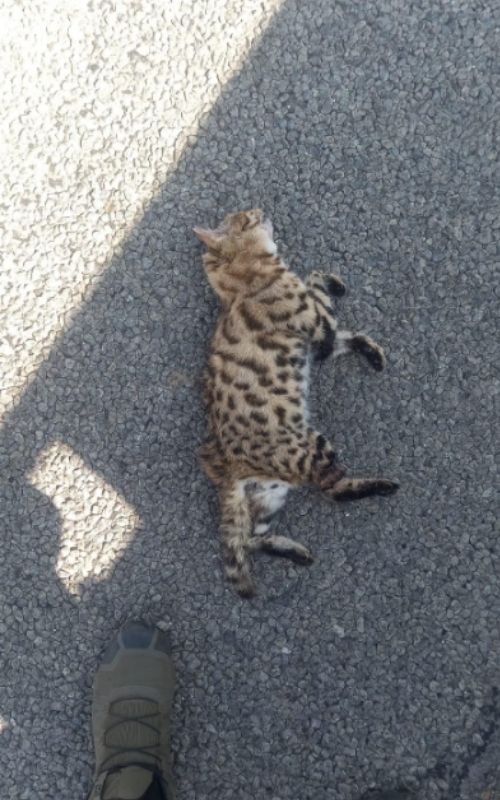
Picture of a roadkill record obtained near Ottoshoop, North West, August 2022 (Photo by Dawie Meyer).
Disease
Of 38 known causes of mortality in Black-footed Cat, 15.8% were related to disease and may be an important factor in structuring populations (Sliwa et al. 2022). Black-footed Cats show a high prevalence for AA-amyloidosis, a fatal disease associated with deleterious genetic mutations and believed to be inherited (Olbricht & Sliwa 1997; Terio et al. 2008, Sliwa et al. 2022, Yaun et al. 2024). This is a disease characterised by fibrillar protein depositions in many organs as a result of chronic inflammatory processes usually cumulating in renal failure. About 70% of the documented deaths of captive cats, and 16% of known mortality in the wild are attributed to this disease. The presence of amyloid in free-ranging subpopulations was first detected by Terio et al. (2008) further wild samples provided by the BFCWG from two South Africa study sites 300 kms apart confirmed the disease through histopathology of cats displaying clinal signs prior to death (Sliwa et al. 2022). Recent genomic analysis provides additional evidence for inherited predisposition of the disease and increased risk due to low genetic diversity in the species (Yaun et al. 2024). Thus, the species is especially vulnerable to the negative fitness impacts of inbreeding depression in small and isolated populations. Black-footed Cats have fewer immunoreceptor genes compared to other felids reducing their ability to respond to pathogens (Jelinek at at. 2021). Considering they share their territory, prey base, and infectious disease susceptibility with many small carnivores, in addition to domestic dogs and cats, numerous opportunities exist for disease transmission (Lamberski et al. 2009).
Conservation
Formally protected areas covering high-quality Black-footed Cat habitat remain limited, and securing areas large enough to sustain viable subpopulations is unlikely. The actual number of protected areas where Black-footed Cats occur is uncertain due to the lack of systematic surveys. Nonetheless, several major protected areas within the Karoo biome (Karoo, Mountain Zebra, Camdeboo, Meerkat, and Addo Elephant National Parks) may each harbour small, but non-viable, populations. The recently established Mountain Zebra–Camdeboo Protected Environment encompasses approximately 8,500 km² of potentially suitable habitat, with a few confirmed recent records and a dense cluster of reported sightings on adjacent private lands to the north. Given the relatively high densities estimated for the species (0.04–0.06 cats/km²), this area could potentially support a viable population (Ne/Nc ≈ 50/500). Conversely, the newly created Meerkat National Park, which includes the Square Kilometre Array (SKA) site designated for astronomical research, adds another 13,245 ha of protected land in the arid Upper Karoo of the south-western Northern Cape, but no Black-footed Cat sightings have been reported there, and habitat suitability is predicted to be low.
In the North West Province, the Biodiversity Sector Plan has incorporated local distribution records of Black-footed Cats into its map of Critical Biodiversity Areas (Desmet & Schaller 2015). Importantly, this means that these areas must be considered during spatial development planning.
Hunting of this species is banned in South Africa (Nowell & Jackson 1996). Although the Black-footed Cat has been recorded at least marginally in all of the South African provinces, the effectiveness of local protection measures remains in question.
Key interventions for the species include:
- Sustainable management of farmland and predator populations, particularly mesopredators, requires a holistic approach. This should involve targeting only problem animals rather than using poison or indiscriminate control methods, preventing overgrazing to maintain healthy small mammal prey populations, and encouraging the presence or reintroduction of apex predators to help regulate mesopredator numbers. Such measures are expected to lower artificially high mesopredator densities and create more suitable farmland habitat for the Black-footed Cat. In parallel, improved sheep-farming practices, such as synchronized lambing, night-time kraaling, and the use of shepherding systems, should be tested as complementary strategies.
- The establishment of large conservancy areas to create viable Black-footed Cat subpopulations and facilitate ecological separation between Black-footed Cats and larger carnivores (Kamler et al. 2015). The fragmentation of suitable habitats and potential isolation of subpopulations makes the formation or maintenance of dispersal corridors important in the prevention of inbreeding and prevalence of inherited diseases such as AA-amyloidosis. Despite their small size, individuals have very large home ranges, and to conserve subpopulations and create corridors, the emphasis should be on the establishment of large conservancy areas with suitable conditions for the species. This is particularly important in areas where the prospects of a formally protected area are unlikely.
- Conservancies and private lands with low mesopredator density or conflict can be targeted as possible sites for Black-footed Cat stewardship. In particular, areas like the Mountain Zebra Camdeboo Protected Environment that looks at bringing landowners and multiple land uses under greater environmental control and stewardship is a new model (for SA) that could benefit species like the Black-footed Cat.
- Human activities that lead to habitat degradation and the loss of prey and burrowing species need to be addressed, particularly in the Karoo region, which is likely to be the remaining stronghold region for the species. This should also be achieved by creating awareness to the presence and needs of the species among landowners to reduce accidental persecution, whilst providing information about the special needs of Black-footed Cats that would enable them to be actively involved in the protection of the species.
- General public awareness raising campaigns for the cryptic species and encouragement of citizen scientists to submit distribution records through the promotion of citizen science platforms. This has been done previously by the BFCWG to establish a more accurate geographical distribution of the species (Wilson 2015). Further outreach and effective methods to incorporate indigenous knowledge with modern science would broaden participation in data deficient regions.
- Applying stiffer legal penalties to people involved in deliberate persecution of the species or illegally keeping or trading with the species needs to be trialled.
- With less than 2% of the Karoo biome under formal protection, 95% private land, Black-footed Cat conservation in South Africa is reliant on private landowners. The development of outreach programs for landowners and managers to promote custodianship and discourage indiscriminate lethal predator killing, which carries the risk to all non-target small carnivores, including the Black-footed Cat, should be supported. This should also include better staffing and policing through wildlife authorities. In addition, Black-footed Cats need to be promoted as flagship and indicator species of rangeland ecosystem in the Karoo.
All these interventions could be listed and implemented through the development of a Regional Conservation Strategy and National Action Plans for the species.
Recommendations for ex-situ management:
The Biodiversity Management Plan, already developed in South Africa, could be updated and implemented, as an interim or pre-emptive conservation measure, which could be linked to the already existing international and national ex-situ management plans. Currently, there is no consistent and self-sustaining breeding and survival of Black-footed Cats in South African facilities and some only maintain their stocks by receiving rescued/confiscated individuals from the wild. We suggest the establishment of a national breeding studbook for Black-footed Cats, which would then allow a better overview on the stocks, which could in turn also feed into the international studbook, maintained by Lory Park Zoo, Midrand, South Africa since 2018 (previously Frankfurt Zoo and Wuppertal Zoo, Germany). The keeping of captive Black-footed Cats via license from local wildlife authorities should carry the responsibility to register stocks with the studbook, providing accurate data annually as data sharing of many holders is the exception. It is important to note that success in captive conditions is fraught by failure of individuals to thrive due to their highly specialized needs and the effects of inbreeding and/or AA-amyloidosis, thus should not be used for reintroduction efforts, as this risks inbreeding depression and reduced fitness in wild populations. Thus, ex-situ conservation efforts are not to be relied upon, but can serve multiple services in awareness raising, education, fund raising, research support for in-situ research and conservation. Translocation or reintroduction/restocking of individuals without the monitoring of potential impacts to the source population and survival rates of released cats is not advised, as displaced individuals may suffer a high mortality rate.
Research priorities:
The Black-footed Cat has been extensively studied for more than 30 years in the Kimberley area, along the Free State-Northern Cape border, South Africa. The BFCWG (BFCWG) focuses on the ecology, reproductive biology, geographical range, habitat preferences, health and conservation of the species. This provided information about the diet (Sliwa 2006, Sliwa et al. 2010), home range size and social organisation (Sliwa 2004), and ecological relationships between the species and other sympatric carnivores (Kamler et al. 2015). The BFCWG extended this study to include farms south of De Aar, in the Northern Cape Province of South Africa, in a different habitat type with different farming practices in place, a study run between 2009-2018. However, there is little information for elsewhere within the Black-footed Cat range in South Africa and the following are considered research priorities:
- Fine-scale distributional studies across the distributional range in South Africa and systematic monitoring in areas identified as under-sampled should be established to improve population estimates in the country and scan for stewardship sites.
- Long-term monitoring of subpopulation trends is also needed throughout the species’ geographic range, particularly in ecologically distinct areas and under varying farming practices.
- The presence/absence of the species in formally protected areas must be ascertained.
- Novel camera trapping methods should be trialled (e.g., wide-angle, quick shutter-speed cameras to detect the cats at a distance), as well as detection dogs in medium- to high-density areas, to gather presence/absence data and genetic samples allowing to obtain individual ID capture history data (with the potential to estimate density through SCR models).
- Studies on changes in density across a spectrum of habitat quality are needed to refine conservation plans and subpopulation estimates. Fine-scale determination on what habitat characteristics and prey populations are required for female Black-footed Cats to successfully raise their kittens is also needed.
- Kitten mortality and survival rates also need to be quantified.
- The impacts and extent of persecution (both direct and indirect) on Black-footed Cats and the efficacy of outreach and awareness programs targeted at landowners.
- Further genetic investigation into the possible subspecies status is needed, as the results may have conservation implications.
- Genetic investigations to improve subpopulation definitions, genetic diversity, population connectivity across landscapes.
- Investigation into causes and extent of AA-amyloidosis in wild populations
- The effects of black-backed Jackals and Caracals, and possibly apex carnivores like leopard, lion, cheetah, and hyaenas, need to be quantified.
- The degree of inquilism and dependence on Springhare burrow systems for refuge, and thus long-term survival of cats following of the removal of Springhare subpopulations, needs to be determined.
- Studies into the survival and subsequent dispersal abilities of subadult Black-footed Cats in different habitats and the influence of linear infrastructure such as electric fences have on local movements and dispersal patterns. This will help predict long-term geographical isolation risk to subpopulation structure and enable us to define and delineate subpopulations more accurately.
- Information is needed on whether reintroductions or genetic augmentations are warranted for the species based on IUCN guidelines
- The range and impact of transmittable diseases from sympatric wild and domestic carnivores on Black-footed Cats.
- The numbers of Black-footed Cats being removed for illegal trophies or pet industries.
Other research projects include:
- WAZA Conservation Project 06016 – Cologne Zoo (Germany), McGregor Museum (Kimberley, South Africa), San Diego Zoo Safari Park (USA), Wuppertal Zoo (Germany)
- Ecology and conservation of the black-footed cat (Felis nigripes) in Namibia. Black-footed Cat Research Project Namibia. Martina Küsters, bfootedcat@gmail.com or kusters.m@hotmail.com.
- How Black-footed Cats choose and use dens of other species. MSc Thesis 2023. University of Cape Town, BFCWG. Hal Brindley – halbrindley@hotmail.com.
- Black-footed Cat Conservation Genomics – Victoria Belle Grant, PhD Candidate University of Stanford, vbg6@stanford.edu.
- The application of scat detection dogs and molecular techniques for monitoring Black-footed Cat populations – BFCWG, Panthera, University of Cape Town – Michelle Schroeder, mustelamichellea@gmail.com.
Encouraged citizen actions:
- Report sightings (live or dead) to the BFCWG – bfc.sightings@gmail.com, bfc.sightings@gmail.com or via http://black-footed-cat.wild-cat.org/contact and to repositories of virtual museums using apps such as MammalMap, and iNaturalist.
Bibliography
Avenant, N.L. and du Plessis, J.J. 2008. Sustainable small stock farming and ecosystem conservation in southern Africa: a role for small mammals? Mammalia 72: 258-263.
Bagniewska JM, Kamler JF. 2014. Do black‐backed jackals affect numbers of smaller carnivores and prey?. African Journal of Ecology 52(4): 564-567.
Bamford MK, Neumann FH, Pereira LM, Scott L, Dirks PHGM, Berger LR. 2010. Botanical remains from a coprolite from the Pleistocene hominin site of Malapa, Sterkfontein Valley, South Africa. Palaeontologia africana 45: 23-28.
Bell, E., Fisher, J.T., Darimont, C. et al. Influence of heterospecifics on mesocarnivore behaviour at shared scavenging opportunities in the Canadian Rocky Mountains. Sci Rep 13, 11026 (2023). https://doi.org/10.1038/s41598-023-34911-4
Blaum N, Engeman RM, Wasiolka B, Rossmanith E. 2008. Indexing small mammalian carnivores in the southern Kalahari, South Africa. Wildlife Research 35(1): 72-79.
Blaum N, Rossmanith E, Popp A, Jeltsch F. 2007. Shrub encroachment affects mammalian carnivore abundance and species richness in semiarid rangelands. Acta Oecologica 31(1): 86-92.
Blaum N, Tietjen B, Rossmanith E. 2009. Impact of livestock husbandry on small‐and medium‐sized carnivores in Kalahari savannah rangelands. The Journal of Wildlife Management 73(1): 60-67.
Brindley H, O’Riain J, Sliwa A. 2024. The underground cat: burrow use by female black-footed cats (Felis nigripes). African Zoology 1-12.
Brodie JF. 2009. Is research effort allocated efficiently for conservation? Felidae as a global case study. Biodiversity and Conservation 18: 2927-2939.
Butynski, T.M. 1973. Life history and economic value of the springhare (Pedetes capensis Forster) in Botswana. Botswana Notes and Records 5: 200-2013.
Butynski, T.M. 2013. Pedetes capensis Southern African Springhare. In: D.C.D. Happold (ed.), Mammals of Africa. Volume III: Rodents, Hares and Rabbits, Bloomsbury Publishing, London.
Butynski TM. Mattingly R. 1979. Burrow structure and fossorial ecology of the springhare Pedetes capensis in Botswana. African Journal of Ecology 17(4): 205-215.
Cadman M, Petersen C, Driver A, Sekhran N, Maze, K and Munzhedzi S. 2010. Biodiversity for Development: South Africa’s landscape approach to conserving biodiviersity and promoting ecosystem resilience. Pretoria: South African National Biodiversity Institute.
Cowan, OS. 2025. Modelling the change in potential species distribution of Black-footed Cat (Felix nigripes) under predicted future climate change scenarios. Technical Report, Endangered Wildlife Trust.
Desmet PG, Schaller R. 2015. North West Biodiversity Sector Plan Technical Report, Department of Rural, Environment and Agricultural Development, Mahikeng.
Drouilly, M., Nattrass, N., & O’Riain, M. J. (2023). Small-livestock farmers’ perceived effectiveness of predation control methods and the correlates of reported illegal poison use in the South African Karoo. Ambio, 52(10), 1635-1649.
Foden, W.B. and Young, B.E. (eds.) 2016. IUCN SSC Guidelines for Assessing Species’ Vulnerability to Climate Change. Version 1.0. Occasional Paper of the IUCN Species Survival Commission No. 59. Cambridge, UK and Gland, Switzerland: IUCN Species Survival Commission. x+114pp.
Gelderblom CM, Bronner GN, Lombard AT, Taylor PJ. 1995. Patterns of distribution and current protection status of the Carnivora, Chiroptera and Insectivora in South Africa. African Zoology 30(3): 103-114.
Herrick, J.R., Campbell, M., Levens, G., Moore, T., Benson, K., D’Agostino, J., West, G., Okeson, D.M., Coke, R., Portacios. C., Leiske, K., Kreider, C., Polumbo, P.J. and Swanson, W.F. 2010. In vitro fertilization and sperm cryopreservation in the black-footed cat (Felis nigripes) and sand cat (Felis margarita). Biology of Reproduction 82: 552-562.
Hoskin, C.J., Higgie, M.A., McDonald, K.R. and Moritz, C. 2005. Reinforcement drives rapid allopatric speciation. Nature 437: 1353–1356.
Jelinek, April L., Jan Futas, Pamela A. Burger, and Petr Horin. “Comparative Genomics of the Leukocyte Receptor Complex in Carnivores.” Frontiers in Immunology 14 (May 10, 2023). https://doi.org/10.3389/fimmu.2023.1197687.
Kamler, J. F., Stenkewitz, U., Sliwa, A., Wilson, B., Lamberski, N., Herrick, J.R. and Macdonald, D.W. 2015. Ecological relationships of black-footed cats (Felis nigripes) and sympatric canids in South Africa. Mammalian Biology – Zeitschrift für Säugetierkunde 80: 122-127.
Karanth KU, Funston P, Sanderson E. 2010. Many ways of skinning a cat: tools and techniques for studying wild felids. Biology and conservation of wild felids 7: 197-216.
Koeppel KN. 2019. Faculty vets rescue female black-footed cat and her kittens with cesarean section. UPSpace Institutional repository. http://hdl.handle.net/2263/71447
Kuhn BF, Werdelin L, Hartstone-Rose A, Lacruz RS, Berger LR. 2011. Carnivoran remains from the Malapa hominin site, South Africa.PLOS one 6(11), p.e26940.
Kuhn BF, Hartstone-Rose A, Lacruz RS, Herries AI, Werdelin L, Bamford MK, Berger LR. 2016. The carnivore guild circa 1.98 million years: biodiversity and implications for the palaeoenvironment at Malapa, South Africa. Palaeobiodiversity and Palaeoenvironments 96: 611-616.
Küsters, Martina, Michelle M. Schroeder, and Alexander Sliwa. In press. “Using Landscape and Habitat Characteristics to Delineate Distribution of Black-footed Cats (Felis nigripes) in Southern Africa.” African Journal of Wildlife Research.
Lamberski, N., Sliwa, A., Wilson, B., Herrick, J. and Lawrenz, A. 2009. Conservation of Black-footed cats (Felis nigripes) and prevalence of infectious diseases in sympatric carnivores in the Northern Cape Province, South Africa. In: G. Wibbelt, P. Kretzschmar, H. Hofer, and S. Seet (eds), Proceedings of the International Conference on Diseases of Zoo and Wild Animals. Berlin, Germany.
Leyhausen, P. 1979. Cat Behaviour: The predatory and social behaviour of domestic and wild cats. Garland STPM Press, New York, USA.
Lindsey, P.A., Balme, G., Becker, M., Begg, C., Bento, C., Bocchino, C., Dickman, A., Diggle, R.W., Eves, H., Henschel, P., Lewis, D., Marnewick, K., Mattheus, J., McNutt, J.W., McRobb, R., Midlane, N., Milanzi, J., Morley, R., Murphree, M., Opyene, V., Phadima, J., Purchase, G., Rentsch, D., Roche, C., Shaw, J., Van der Westhuizen, H.,Van Vliet, N. and Zisadza-Gandiwa, P. 2013a. The bushmeat trade in African savannas: Impacts, drivers, and possible solutions. Biological Conservation 160: 80-96.
Loock D, SwanepoeL L. 2019. Assessing local patterns in carnivore occupancy and richness by camera trapping: a monitoring of diversity at Verloren Vallei Nature Reserve, Dullstroom, Mpumalanga. Wildlife & Resource Association (WRA), Bloemfontein.
Lynch CD. 1983. Mammals of the Orange Free State. Memoirs van die Nasionale Museum, Bloemfontein 18: 1-218.
Lynch CD. 1989. The mammals of the north-eastern Cape Province. Memoirs van die Nasionale Museum, Bloemfontein 25: 1-116.
Mattucci F, Galaverni M, Pertoldi C, Fabbri E, Sliwa A. & Caniglia R. 2019. How to spot a black-footed cat? Successful application of cross-species markers to identify captive-bred individuals from non-invasive genetic sampling. Mammal research 64: 133-145.
Meester, J.A.J., Rautenbach, I.L., Dippenaar, N.J. and Baker, C.M. 1986. Classification of Southern African Mammals. Monograph number 5. Transvaal Museum , Pretoria, South Africa.
Molteno, A. J., Sliwa, A. and Richardson, P.R.K. 1998. The role of scent marking in a free-ranging, female black-footed cat (Felis nigripes). Journal of Zoology 245: 35-41.
Monterroso, P., F. Díaz-Ruiz, P. M. Lukacs, P. C. Alves, and P. Ferreras. 2020. Ecological traits and the spatial structure of competitive coexistence among carnivores. Ecology 101(8):e03059. 10.1002/ecy.3059
Mucina I, Rutherford MC. 2006. The vegetation of South Africa, Lesotho and Swaziland. Strelitzia 19: South African National Biodiversity Institute, Pretoria.
Nowell, K. and Jackson, P. 1996. Wild Cats. Status Survey and Conservation Action Plan. IUCN/SSC Cat Specialist Group, Gland, Switzerland and Cambridge, UK.
NWPG (North West Provincial Government) 2024 The impact of roadkill on mammal populations in the North West Province. Department of Economic Development, Environment, Conservation & Tourism, North West Provincial Government, Mahikeng.
NWPTB (North West Parks & Tourism Board) 2023. Population estimates for animals under the North West Parks and Tourism Board. Ecological services and Reserve management units, Biodiversity Conservation Management Division, Mahikeng, North West Province.
Olbricht, G. and Sliwa, A. 1997. In situ and ex situ observations and management of black-footed cats (Felis nigripes). In: P.J.S. Olney and F.A. Fisken (eds), International Zoo Yearbook 35: Felids, he Zoological Society of London, London, UK.
Palmero, S., Premier, J., Kramer‐Schadt, S., Monterroso, P. & Heurich, M. 2023. Sampling variables and their thresholds for the precise estimation of wild felid population density with camera traps and spatial capture–recapture methods. Mammal Review, 53(4): 223-237.
Peinke D, Wilson B, Anderson C. 2016. A conservation assessment of Pedetes capensis. In Child MF, Roxburgh L, Do Linh San E, Raimondo D, Davies-Mostert HT, editors. The Red List of Mammals of South Africa, Swaziland and Lesotho. South African National Biodiversity Institute and Endangered Wildlife Trust, South Africa.
Power R.J. 2000. A new distribution record for the small spotted cat in the Northern Province bushveld. South African Journal of Wildlife Research 30(4): 165–168.
Power RJ. 2014. The distribution and status of mammals in the North West Province. Department of Economic Development, Environment, Conservation & Tourism, North West Provincial Government, Mahikeng.
Power RJ, Van Straaten A, Schaller R, Mooke M, Boshoff T, Nel HP. 2019. An inventory of mammals of the North West Province, South Africa. Annals of the Ditsong Museum of Natural History 8: 6-29.
Rautenbach IL. 1982. Mammals of the Transvaal. Ecoplan Monograph 1:111-211.
Rautenbach IL, Nel JAJ.1981. Coexistence in Transvaal Carnivora. Bulletin of the Carnegie Museum of Natural History 6: 138 – 145.
Rowe-Rowe DT. 1992. The carnivores of Natal. Natal Parks Board, Pietermaritzburg.
Schroeder MM. 2023. How to spot Africa’s smallest cat: the application of scat detection dogs and genetics for black-footed cat research [Conference Presentation]. South Africa Wildlife Management Association, Golden Gate Highlands National Park, Free State, South Africa.
Scott L. 1982. A Late Quaternary pollen record from the Transvaal bushveld, South Africa. Quaternary research 17(3): 339-370.
Shortridge, G.C. 1931. Felis (Microfelis) nigripes thomasi subsp. nov. Records of the Albany Museum 4: 1.
Siziba, Vimbai I., Michelle M. Schroeder, Beryl Wilson, Alexander Sliwa, and Sandi Willows-Munro. “A Method for Noninvasive Individual Genotyping of Black-Footed Cat (Felis Nigripes).” Ecology and Evolution 14, no. 4 (2024): e11315. https://doi.org/10.1002/ece3.11315.
Skead CJ. 2011. Historical incidences of the Larger Land Mammals in the broader Western and Northern Cape. (Eds: Boshoff, A.F., Kerley, G. I. H. & Lloyd, P. H.). Centre for African Conservation Ecology, Nelson Mandela Metropolitan University, Port Elizabeth.
Skinner, J.D. and Chimimba, C.T. (eds). 2005. The Mammals of the Southern African Subregion. Cambridge University Press, United Kingdom, Cambridge.
Sliwa A, Schürer U. 2006. International Studbook for Black-footed Cat (Felis nigripes), Vol. 14 – 2004/2005. Zoologischer Garten der Stadt Wuppertal, Wuppertal, Germany.
Sliwa, A. 2004. Home range size and social organisation of black-footed cats (Felis nigripes). Mammalian Biology 69: 96-107.
Sliwa, A. 2006. Seasonal and sex-specific prey composition of black-footed cats Felis nigripes. Acta Theriologica 51: 195-204.
Sliwa, A. 2013. Felis nigripes. In: J. Kingdon and M. Hoffmann (eds), The Mammals of Africa. Volume V: Carnivores, Pangolins, Equids and Rhinoceroses, Bloomsbury Publishing, London.
Sliwa, A., Herbst, M. and Mills M. 2010. Black-footed cats (Felis nigripes) and African wild cats (Felis silvestris): a comparison of two small felids from South African arid lands. Case study. In: Macdonald, D. and Loveridge, A. (eds), The Biology and Conservation of Wild Felids, pp. 537-558. Oxford University Press.
Sliwa, A., Herbst, M. and Mills, M. J. 2007. Prey consumption and distances covered by black-footed cat (Felis nigripes) and African wildcats (Felis silvestris) – a comparison of two small felids from South African arid lands. In: J. Hughes and R. Mercer (eds), Felid Biology and Conservation: Conference Abstracts, pp. 56 pp. Wildlife Conservation Research Unit, University of Oxford, Oxford, UK.
Sliwa, Alexander, Martina Küsters, Michelle Swanepoel, Michelle Schroeder, Arne Lawrenz, and Beryl Wilson Hartmann. 2025. Report on Catching, Monitoring, and Censusing Black-footed Cats (Felis nigripes) in Central South Africa and Namibia in 2024. Technical Report. Black-footed Cat Working Group. https://doi.org/10.13140/RG.2.2.25301.74725
Sliwa A, Lai S, Kusters M, Herrick J, Lawrenz A, Lamberski N, Eggers B, Tordiffe ASW, Marais S, Marais P. & Schroeder M. 2022. Causes of mortality in a population of black-footed cats in central South Africa. African Journal of Ecology 60(4): 1311-1317.
Sliwa, A., Wilson, B., Lamberski, N. and Lawrenz, A. 2009. Report on surveying and catching Black-footed cats (Felis nigripes) on Benfontein Nature Reserve / Nuwejaarsfontein.
Sliwa, A., Wilson, B., Lamberski, N. and Tordiffe, A. 2014. Report on surveying, catching and monitoring black-footed cats (Felis nigripes) on Benfontein Nature Reserve, Nuwejaarsfontein and Taaiboschpoort Farms in 2013.
Sliwa A, Wilson B, Lawrenz A, Lamberski N, Herrick J. & Küsters M. 2018. Camera trap use in the study of black‐footed cats (Felis nigripes). African journal of ecology 56(4): 895-897.
Smith K, Venter JA, Peel M, Keith M, Somers MJ. 2023. Temporal partitioning and the potential for avoidance behaviour within South African carnivore communities. Ecology and Evolution. 13(8):e10380.
Smithers, R.H.N. 1971. The mammals of Botswana. National Museums of Rhodesia, Museum Memoir 4: 1-340.
Sunquist, M. and Sunquist, F. 2002. Wild Cats of the World. University of Chicago Press.
Stuart CT. 1981. Notes on the mammalian carnivores of the Cape Province. Bontebok 1: 1 – 58.
Stuart CT. 1982. The distribution of the small-spotted cat, Felis nigripes. The Naturalist 26(3):8-9.
Terio, K.A., O’Brien, T., Lamberski, N., Famula, T.R. and Munson, L. 2008. Amyloidosis in black-footed cats (Felis nigripes). Veterinary Pathology Online 45: 393-400.
Von Richter W.1972. Remarks on present distribution and abundance of some South African carnivores. South African Journal of Wildlife Research 2(1): 9-16.
Webster AB, Pretorius ME, Somers MJ. 2021. The determinants of mesocarnivore activity patterns in highveld grassland and riparian habitats. African Journal of Wildlife Research 51(1): 178-192.
Wilson, B. 2016. Geographical distribution and status of the black-footed cat Felis nigripes. M.Tech dissertation. Tshwane University of Technology.
Wilson B, Sliwa A, Drouilly M. 2016. A conservation assessment of Felis nigripes. In: Child MF, Roxburgh L, Do Linh San E, Raimondo D, Davies-Mostert HT, editors. The Red List of Mammals of South Africa, Swaziland and Lesotho. South African National Biodiversity Institute and Endangered Wildlife Trust, South Africa.
Wright, N. Undated. Rescue and release of black-footed cats. All About Cats 72: 10-11.
Yuan J, Kitchener AC, Lackey LB, Sun T, Jiangzuo Q, Tuohetahong Y, Zhao L, Yang P, Yaun G, Huang C. & Yaun J. 2024. The genome of the black-footed cat: Revealing a rich natural history and urgent conservation priorities for small felids. Proceedings of the National Academy of Sciences 121(2), p.e2310763120.
Zanin, M., Palomares, F. & Mangabeira Albernaz, A.L. Effects of climate change on the distribution of felids: mapping biogeographic patterns and establishing conservation priorities. Biodivers Conserv 30, 1375–1394 (2021). https://doi.org/10.1007/s10531-021-02147-1
Extent of Occurance (EOO)
| Felis nigripes EOO Assessment Area 2024 | |
| Area (km2) | |
| EOO pre 2000 (historic) | 850212 |
| B. EOO 2000-2024 (contemporary) | 679737 |
| EOO 2000-2012 (recent) | 678754 |
| EOO 2012-2024 (currant extant) | 585108 |
| Change in EOO historic-contemporary | 20% |
| Change in EOO recent-current (~3-4 generations) | 14% |
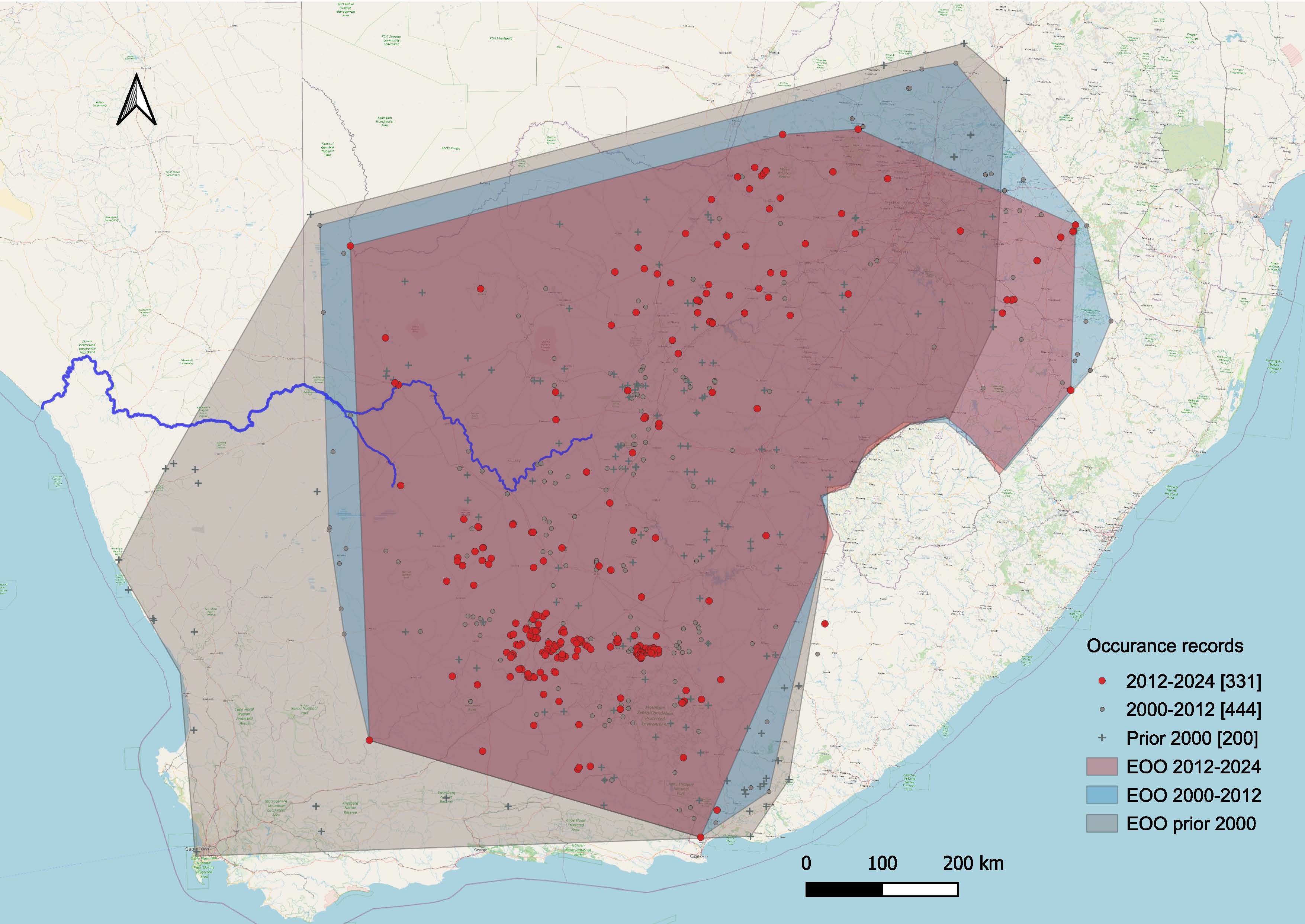 Figure 4. Extent of Occurrence (EOO) of the Black-footed Cat (Felis nigripes) within the assessment region (South Africa, Eswatini and Lesotho).
Area of Occupancy (AOO)
Felis nigripes AOO Assessment Area 2024
Please scroll horizontal to see the entire table
| Density/km2 | ||||||
| Area (km2) | Low (0.01) | Med (0.02) | High (0.03) | Median | ||
| Fig 2. | ||||||
| AOO Ecological (50 km buffer, dissolved, clip RSA only) | ||||||
| Historic (pre-2000) | 533470 | 5335 | 10669 | 16004 | 10669 | |
|
Previous 3 generations (2000-2012) |
548261 | 5483 | 10965 | 16448 | 10965 | |
|
Recent 3 generations (2012-2024) |
408936 | 4089 | 8179 | 12268 | 8179 | |
|
Recent Mature (70% adult population structure) |
2863 | 5725 | 8588 | 5725 | ||
| % Change in AOO 3-4 generations | 25% | |||||
| AOO per IUCN Guidelines (record intercept 2×2 km grid, 1 to 1 output) | ||||||
| 2000-2012 | 1684 | 17 | 34 | 51 | 34 | |
| 2012-2024 | 1320 | 13 | 26 | 40 | 26 | |
| % Change in AOO 3-4 generations | 22% | |||||
| TOTAL | Density/km2 | Functional density | ||||
| AOO subpopulations | Area (km2) | 0.01 | 0.02 | 0.03 | 0.04 | 0.06 |
| Central Karoo | 73561 | 736 | 1471 | 2207 | 2942 | 4414 |
| Northwest | 70524 | 705 | 1410 | 2116 | 2821 | 4231 |
| Free State | 26285 | 263 | 526 | 789 | 1051 | 1577 |
| Lower Karoo | 20349 | 203 | 407 | 610 | 814 | 1221 |
| Highveld | 6971 | 70 | 139 | 209 | 279 | 418 |
| Kgalagadi | 6413 | 64 | 128 | 192 | 257 | 385 |
|
Other (small isolated extant pops) |
16713 | 167 | 334 | 501 | 669 | 1003 |
| Total extant | 220816 | 2208 | 4416 | 6624 | 8833 | 13249 |
| Total extant mature | 1546 | 3091 | 4637 | 6183 | 9274 | |
| Ne (Ne/Nc 0.1) | 221 | 442 | 662 | 883 | 1325 | |
| Ne (Ne/Nc 0.3) | 662 | 1325 | 1987 | 2650 | 3975 | |
| Ne range for 3 equal subpopulations | 74 | 662 | 883 | 1325 | ||
| Largest subpopulation mature (70% adult population structure) | 73561 | 515 | 1030 | 1545 | 2060 | 3090 |
| Possibly extinct (50km buffer around historic records with no recent locations within 50 km since pre 2000 | 14829 | |||||
| Probably extinct | 46628 | |||||
| % pop possibly or probably extinct | 28% | |||||
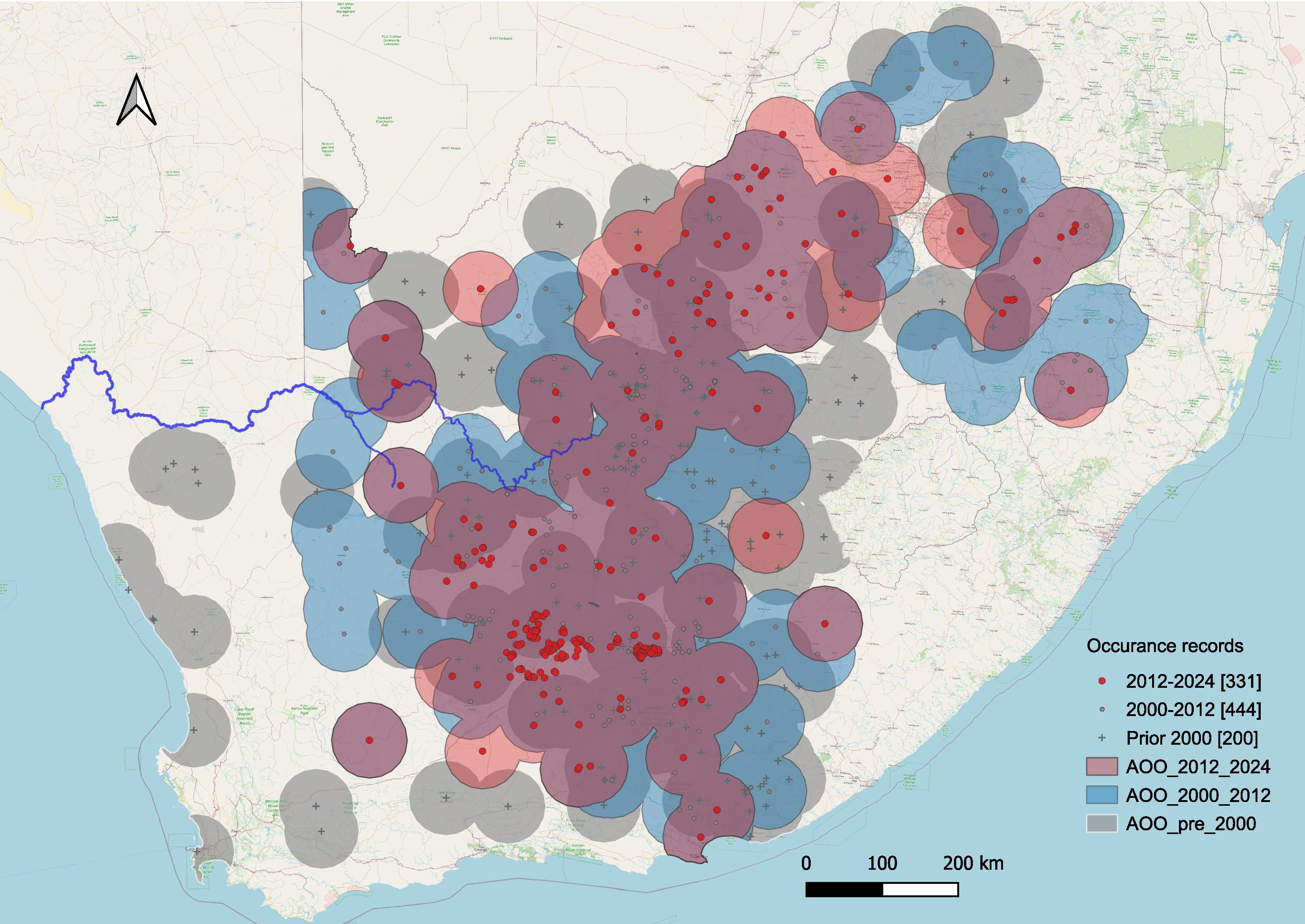 Figure 2. Extant populations of the Black-footed Cat (Felis nigripes) within the assessment region (South Africa, Eswatini and Lesotho).
Species Distribution Modelling (SDM)
Taken from Cowen 2025 Felis nigripes
| Density/km2 | |||||
| Area (km2) | Low (0.01) | Med (0.02) | High (0.03) | Median | |
| SDM | 271354 | 2714 | 5427 | 8141 | 5427 |
| SDM Mature (70%) | 1899 | 3799 | 5698 | 3799 |
Projected SDM Climate Change
| Time Period | 2011-2040 | |||
| Model_SSP | Future | Change in Area | % Change in Area | Overlap D’ |
| GFDL_126 | 239,701 km2 | -31,653 km2 | -12% | 0.65 |
| GFDL_585 | 235,161 km2 | -36,193 km2 | -13% | 0.66 |
| MPI_126 | 234,302 km2 | -37,052 km2 | -14% | 0.72 |
| MPI_585 | 205,921 km2 | -65,433 km2 | -24% | 0.61 |
| UKESM_126 | 251,070 km2 | -20,284 km2 | -8% | 0.73 |
| UKESM_585 | 238,605 km2 | -32,748 km2 | -12% | 0.72 |
| -14% | ||||
| Time Period | 2041-2070 | |||
| Model_SSP | Future | Change in Area | % Change in Area | Overlap D’ |
| GFDL_585 | 149,562 km2 | -121,791 km2 | -45% | 0.51 |
| MPI_585 | 153,326 km2 | -118,028 km2 | -44% | 0.53 |
| UKESM_585 | 155,526 km2 | -117,828 km2 | -43% | 0.55 |
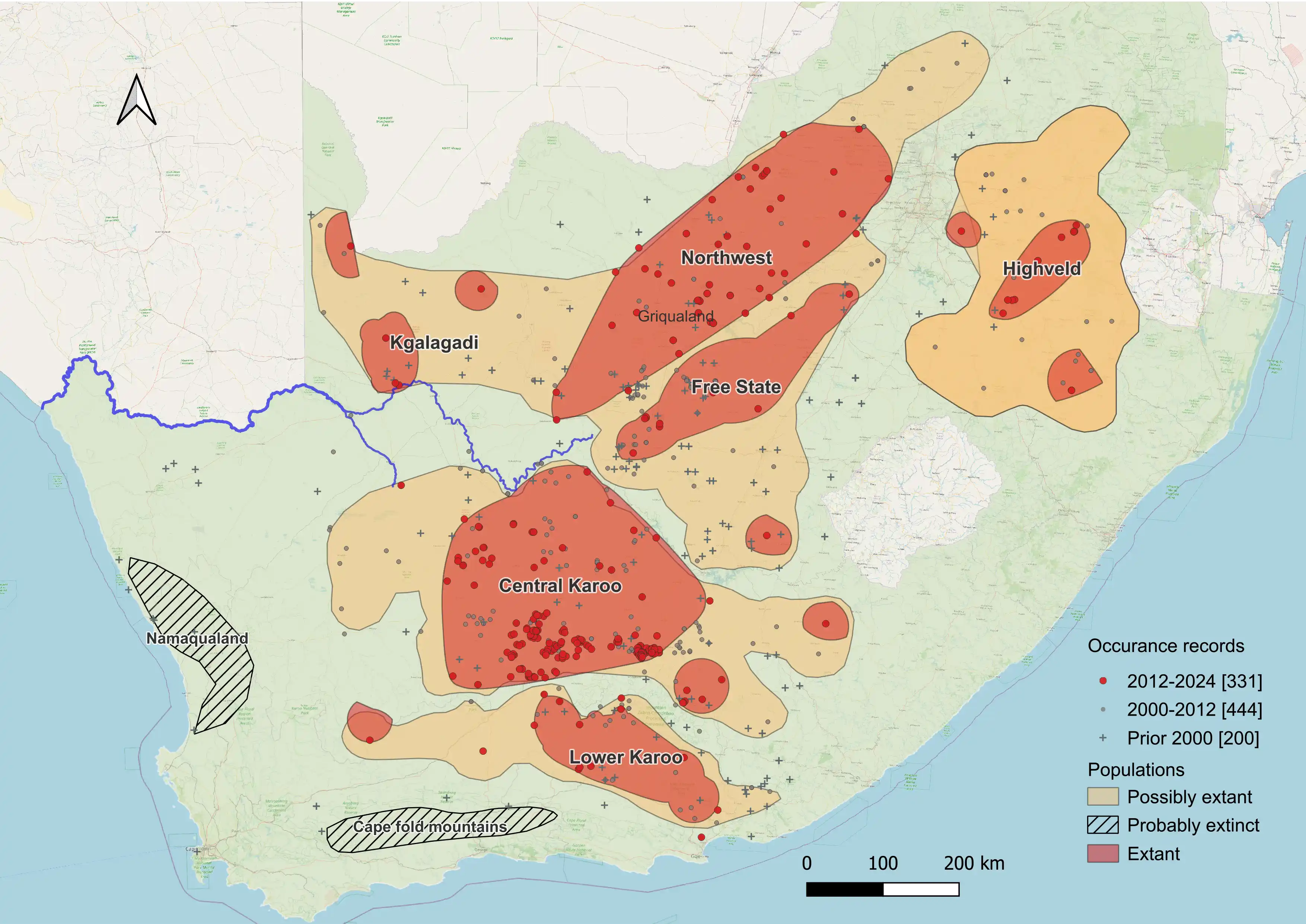 Appendix 1. Distribution and Population information of the Black-footed Cat (Felis nigripes) within the assessment region (South Africa, Eswatini and Lesotho).
Meta
| Field | Description |
| Assessment species | Felis nigripes (Black-footed Cat) |
| Raw data source | Endangered Wildlife Trust Red List Database for Felis nigripes last updated 12/08/2024 |
| Date complete | Sep-25 |
| Author | Michelle M. Schroeder, University of Cape Town |
| Projection/CRS | WGS84 / UTM Zone 34S |
| Spatial software | QGIS (attribute field calculator, convex hull, buffer, dissolve, clip) |
| Time periods used | Historic (pre-2000), Recent (2000–2012), Current (2012–2014), 12-year intervals approximating 3–4 generations, ~ even sampling effort |
| EOO method | Minimum convex polygon (convex hull) |
| AOO method | 50 km buffer around occurrence records, dissolved overlaps, clipped to South Africa boundaries; also 2×2 km grid counts following IUCN AOO standards and count of number of occurance records intersecting grid |
| SDM data | Obtained from ‘Modelling the change in potential species distribution of the Black-footed Cat (Felis nigripes) under predicted future climate change scenarios – Dr Oliver Cowan, EWT ‘ |
| Buffer distance | 50 km (based on species mobility, dispersal capacity, and sparse occurrence records) |
| Clipping boundary | South Africa national boundary |
| Subpopulation delineation criteria | Unique if >100 km apart or separated by dispersal barriers (major rivers, mountain ranges, highly modified landscapes) |
| Habitat adjustment sources | Adjusted buffers clipped to suitable habitat based on satellite imagery, Biome, topography, Rivers class 6-7, Springhare distribution, and National Land Use and Biome spatial data layers |
| Area units | Square kilometers (km²) |
| Population estimate method | SDM binary surface of suitable habitat (threshold = 0.21) combined with density estimates |
| Density assumptions | Allee threshold ~0.01-0.03 cats/km² based on the probability ≥ p of at least one male within mate-search radius (𝑅) using sex based home range diameters. Functional density is ideal viable density considering high demographic fluctuations typical of arid environments |
| Mature population assumption | 70% of individuals assumed mature |