
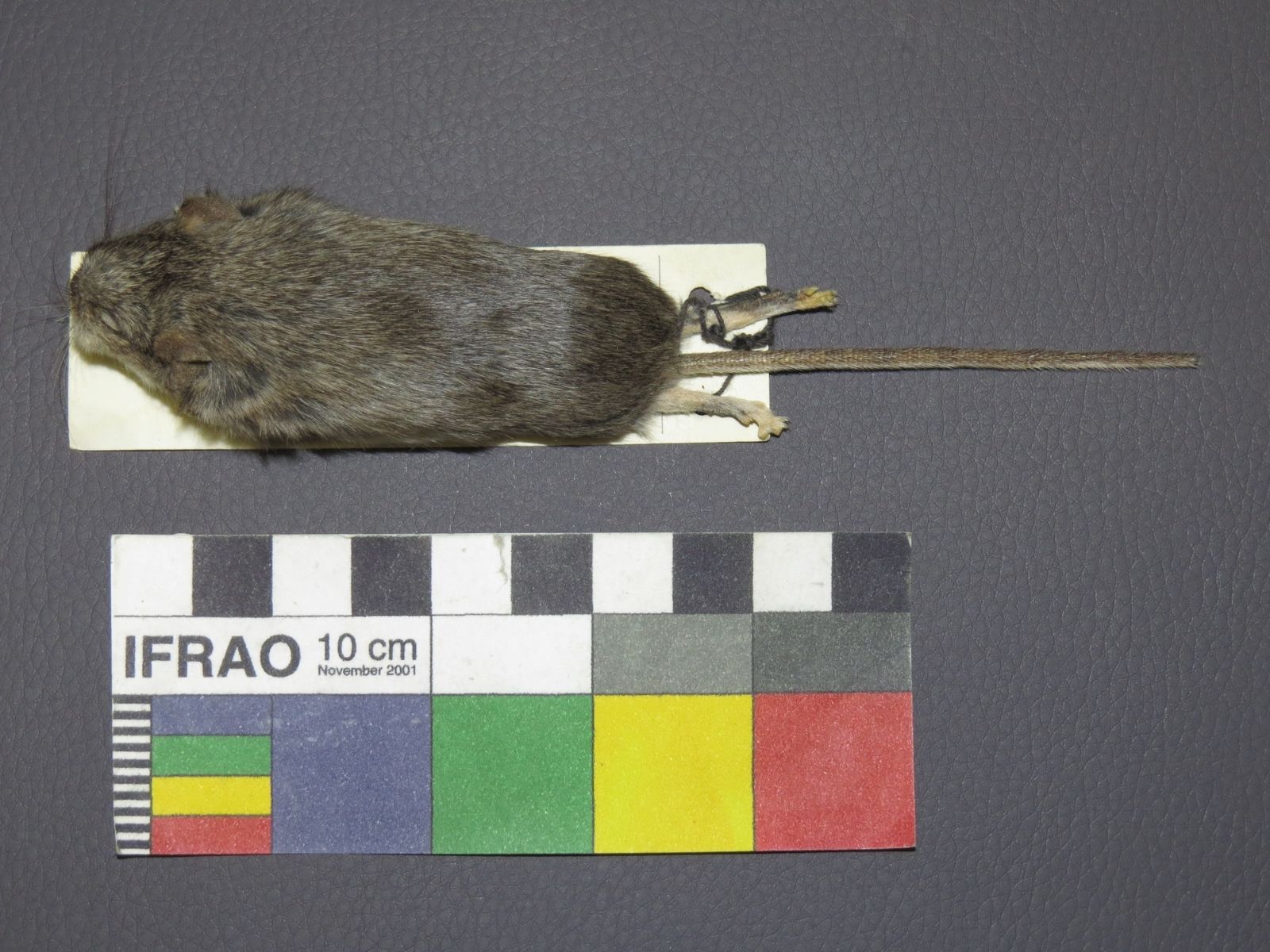
Barbour’s Rock Mouse
Petromyscus barbouri

2025 Red list status
Least Concern

Regional Population Trend
Stable

Change compared
to 2016
No Change
Overview
Petromyscus barbouri – Shortridge & Carter, 1938
ANIMALIA – CHORDATA – MAMMALIA – RODENTIA – NESOMYIDAE – Petromyscus – barbouri
Common Names: Barbour’s Rock Mouse, Barbour’s Pygmy Rock Mouse, Namaqua Pygmy Rock Mouse (English), Barbour se Klipmuis (Afrikaans)
Synonyms: No Synonyms
Taxonomic Note:
Barbour’s Rock Mouse was formerly classified as a subspecies of Petromyscus collinus (Shortridge & Carter 1938; de Graaf 1981) but was elevated to species status by Musser and Carleton (2005), which is accepted by Monadjem et al. (2015). Although P. barbouri occur sympatrically with P. collinus, they can be comparatively distinguished by a shorter, bicoloured tail, smaller skull and shorter rostrum (Musser & Carleton 2005). Further taxonomic research is required
Red List Status: LC – Least Concern
Assessment Information
Assessor: Patel, T.,1 Smith, C.1 & da Silva, J.M.2
Reviewer: Gazzard, A.3
Institutions:1Endangered Wildlife Trust,2South African National Biodiversity Institute, 3IUCN SSC Small Mammal Specialist Group
Previous Assessors & Reviewers: Wilson, B., Schlitter, D. & Relton, C.
Previous Contributors: Child, M.F., Avenant, N.L., Avery, M., Baxter, R., MacFayden, D., Monadjem, A., Palmer, G. & Talor, T.
Assessment Rationale
Although this species is endemic to northwest South Africa, and has a relatively small distributional range, we list it as Least Concern because most of its habitat falls within protected areas, its current population is considered stable, it exists in rocky areas unlikely to be transformed and no current major threats have been identified. Calculated using the available natural habitat within its geographic range, the estimated area of occupancy is 20,725 km². While the extensive construction of solar and wind projects across the Northern Cape may become a threat to this species, the effects should be minimal since much of the distribution is in protected areas. However, outside these areas, extensive alternative energy projects may be problematic. Additionally, goat farming could have harmful and destructive effects on the habitat outside protected areas due to the grazing and browsing of goats amongst the rocks. Thus, all impacts should be carefully monitored. Additionally, extreme climate change may represent an emerging threat, especially due to its restricted range. Further field surveys, vetting of museum records and molecular research is necessary to resolve the distribution of this species and to quantify potential threats. This species should be reassessed once such data are available.
Red List Index
Red List Index: No change
Recommended Citation: Patel T Smith C & da Silva JM. 2025. A conservation assessment of Petromyscus barbouri. In Patel T, Smith C, Roxburgh L, da Silva JM & Raimondo D, editors. The Red List of Mammals of South Africa, Eswatini and Lesotho. South African National Biodiversity Institute and Endangered Wildlife Trust, South Africa.
Regional Distribution and occurrence
Geographic Range
Endemic to the arid northwestern region of South Africa (Monadjem et al. 2015), this species has been identified from the Namaqua National Park, Skilpad Nature Reserve and Goegap Nature Reserve in the region of Springbok (Northern Cape) (Coetzee 2013), southeastwards to the Tankwa Karoo National Park (Western and Northern Cape). It appears to be widely distributed in Namaqualand (Shortridge 1942; Coetzee 2013). In the lower Orange River basin, it is sympatric or parapatric with P. collinus and P. monticularis (Coetzee 2013). It ranges at altitudes between 100 m and 700 m asl. Further vetting of museum records is necessary to delimit distribution more accurately.
Elevation / Depth / Depth Zones
Elevation Lower Limit (in metres above sea level): 100
Elevation Upper Limit (in metres above sea level): 700
Depth Lower Limit (in metres below sea level): (Not specified)
Depth Upper Limit (in metres below sea level): (Not specified)
Depth Zone: (Not specified)
Map
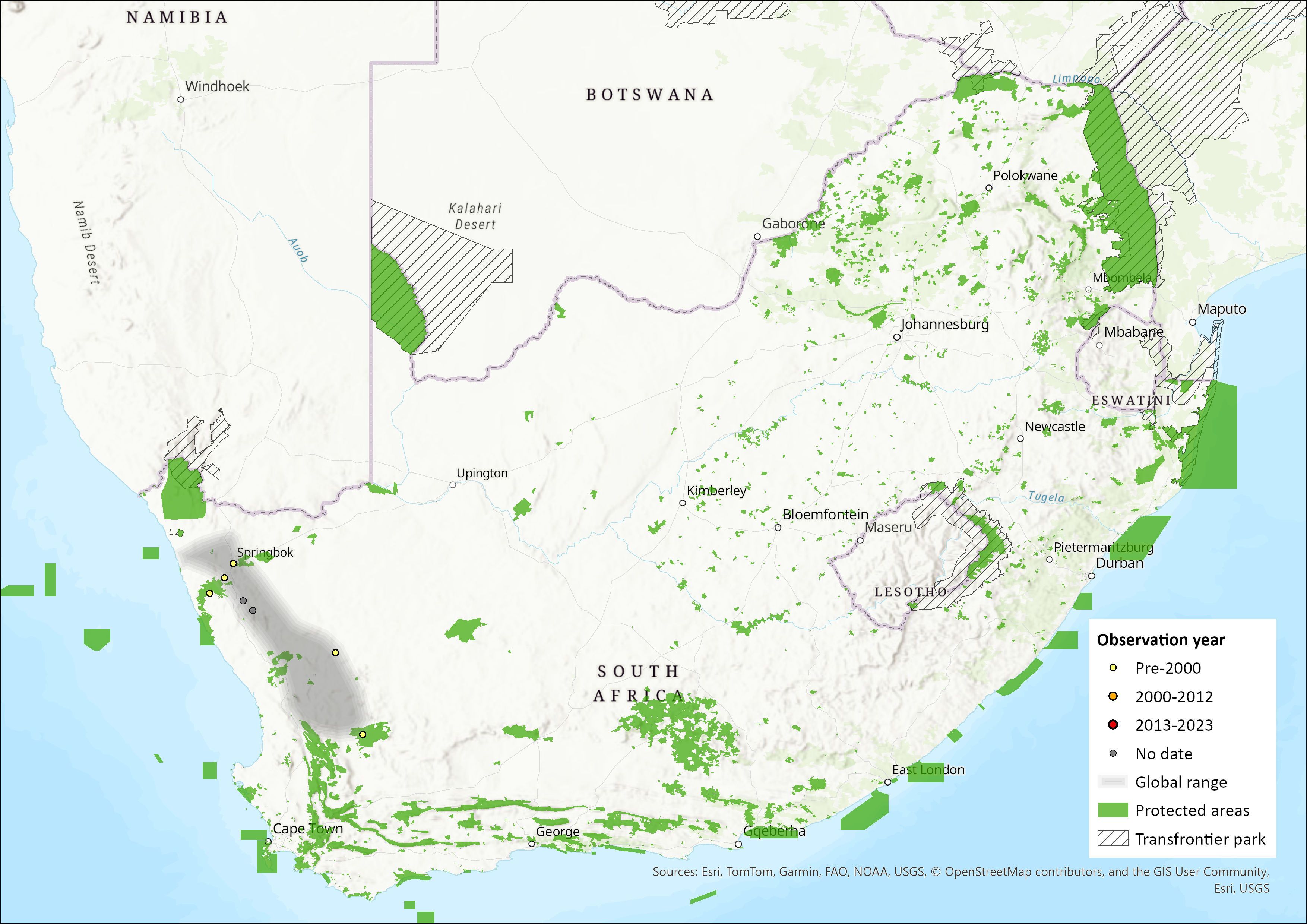
Figure 1. Distribution records for Barbour’s Rock Mouse (Petromyscus barbouri) within the assessment region (South Africa, Eswatini and Lesotho). Note that distribution data is obtained from multiple sources and records have not all been individually verified.
Biogeographic Realms
Biogeographic Realm: Afrotropical
Occurrence
Countries of Occurrence
| Country | Presence | Origin | Formerly Bred | Seasonality |
| South Africa | Extant | Native | – | – |
| South Africa -> Northern Cape Province | Extant | Native | – | – |
Large Marine Ecosystems (LME) Occurrence
Large Marine Ecosystems: (Not specified)
FAO Area Occurrence
FAO Marine Areas: (Not specified)
Climate change
To quantify the potential threat of climate change on the species habitat, species distribution modelling under future climate projections were performed. From a conservation perspective, the models show a consistent reduction in habitat for P. barbouri ranging between 1%-3% by 2040 (Cowan 2025).
Population Information
The population size or density of the species is unknown. Although the geographic range of this species is limited, it is not considered uncommon within its range. However, Coetzee (2013) considers it to be rare.
Population Information
Current population trend: Stable
Continuing decline in mature individuals? No
Extreme fluctuations in the number of subpopulations: (Not specified)
Continuing decline in number of subpopulations: (Not specified)
All individuals in one subpopulation: (Not specified)
Number of mature individuals in population: Unknown
Number of mature individuals in largest subpopulation: Unknown
Number of Subpopulations: Unknown
Severely fragmented: No
Quantitative Analysis
Probability of extinction in the wild within 3 generations or 10 years, whichever is longer, maximum 100 years: (Not specified)
Probability of extinction in the wild within 5 generations or 20 years, whichever is longer, maximum 100 years: (Not specified)
Probability of extinction in the wild within 100 years: (Not specified)
Population Genetics
No population genetics studies have been undertaken on the species; however, it is possible the species exists as a metapopulation. While the population is listed as Least Concern, no measures of population density or overall size are known.
A population genetic study across the species range would be highly informative at informing it structure and diversity.
Habitats and ecology
As a nocturnal and solitary species (Skinner & Chimimba 2005), the Barbour’s Rock Mouse is restricted to the arid regions of western South Africa, specifically within rocky areas of succulent shrubland. It is mainly granivorous (Coetzee 2013). There is limited research pertaining to its diet, reproduction and behaviour.
Ecosystem and cultural services: This species is not known to provide any specific cultural services, but as a small rodent of the Succulent Karoo, it may be a valuable prey species for small predators and birds of prey and may also contribute to seed dispersal.
IUCN Habitats Classification Scheme
|
Habitat |
Season |
Suitability |
Major Importance? |
|
3.5. Shrubland -> Shrubland – Subtropical/Tropical Dry |
– |
Suitable |
– |
|
6. Rocky areas (e.g. inland cliffs, mountain peaks) |
– |
Suitable |
– |
Life History
|
Generation Length |
Justification |
Data Quality |
|
2-3 |
Inferred (see Pacifici et al. 2013) |
– |
Age at maturity: female or unspecified: (Not specified)
Age at Maturity: Male: (Not specified)
Size at Maturity (in cms): Female: (Not specified)
Size at Maturity (in cms): Male: (Not specified)
Longevity: (Not specified)
Average Reproductive Age: (Not specified)
Maximum Size (in cms): (Not specified)
Size at Birth (in cms): (Not specified)
Gestation Time: (Not specified)
Reproductive Periodicity: (Not specified)
Average Annual Fecundity or Litter Size: (Not specified)
Natural Mortality: (Not specified)
Does the species lay eggs? (Not specified)
Does the species give birth to live young: (Not specified)
Does the species exhibit parthenogenesis: (Not specified)
Does the species have a free-living larval stage? (Not specified)
Does the species require water for breeding? (Not specified)
Movement Patterns
Movement Patterns: (Not specified)
Congregatory: (Not specified)
Systems
System: Terrestrial
General Use and Trade Information
This species does not appear to be utilised or traded in any form.
General notes regarding trade and use of this species: (Not specified)
Local Livelihood: (Not specified)
National Commercial Value: (Not specified)
International Commercial Value: (Not specified)
End Use: (Not specified)
Is there harvest from captive/cultivated sources of this species? (Not specified)
Harvest Trend Comments: (Not specified)
Threats
There are no major threats that have been recognised for this species. However, overgrazing by nomadic livestock, in particular goats, may become a threat in parts of its range as they graze and browse the vegetation amongst the rocks (sensu Anderson & Hoffman 2007; Coetzee 2013). Additionally, alternative energy projects are expanding across much of the Northern Cape (van der Westhuizen 2013) and may pose a threat in the form of habitat fragmentation and/or alteration in areas outside of projected areas. Finally, climate change is predicted to affect resource availability and distribution in the region of the Succulent Karoo (Hoffman et al. 2009), which may have negative implications for this species.
Current habitat trend: Stable
Conservation
Barbour’s Rock Mouse is present within at least four protected areas within the assessment region, namely: Goegap Nature Reserve, Namaqua National Park, Skilpad Nature Reserve and the Tankwa Karoo National Park. Currently, no species-specific conservation interventions are necessary. However, further research is necessary to delineate the population dynamics, quantify current and potential threats, and investigate the general ecology and life history traits of this species.
Recommendations for land managers and practitioners:
- Systematic surveys needed to gather information on population size, trend and distribution.
Research priorities:
- Accurate distribution mapping and the identification of population size and trend estimates is necessary.
- Potential threats to this species, as well as the implications and type of habitat loss and fragmentation impacting this species. For example, an analysis of the impact of alternative energy projects.
- Understanding the life history and ecology, paying particular attention to food and dispersal mechanisms.
- Research into the reproductive rate and breeding success of this species.
- Species contribution to ecosystem functioning.
- Vetting of museum records to delimit distribution more accurately.
Encouraged citizen actions:
- Report sightings on virtual museum platforms (for example, iNaturalist and MammalMAP), especially outside protected areas. However, due to their morphological similarities, misidentification of this species with other Petromyscus species is common. See Taxonomic notes for distinguishing characteristics.
- Save electricity and fuel to mitigate CO2 emissions and hence the rate of climate change.
Bibliography
Anderson PML, Hoffman MT. 2007. The impacts of sustained heavy grazing on plant diversity and composition in lowland and upland habitats across the Kamiesberg mountain range in the Succulent Karoo, South Africa. Journal of Arid Environments 70:686–700.
Campbell, T.L. 2019. Taxonomic and Ecological Functional Analysis of Modern and Fossil Southern African Rodent Postcrania (Doctoral dissertation, Texas A&M University).
Coetzee CG. 2013. Petromyscus barbouri Barbour’s Rock Mouse. Pages 204–205 in Happold DCD, editor. Mammals of Africa. Volume III: Rodents, Hares and Rabbits. Bloomsbury Publishing, London, UK.
Cowan, O.S. 2025. Modelling the change in potential species distribution of Barbour’s Rock Mouse (Petromyscus barbouri) under predicted future climate change scenarios. Technical Report, Endangered Wildlife Trust.
de Graaf G. 1981. The Rodents of Southern Africa. Butterworths & Co. Publishing, Durban, South Africa.
Hoffman MT, Carrick PJ, Gillson L, West AG. 2009. Drought, climate change and vegetation response in the succulent karoo, South Africa. South African Journal of Science 105:54–60.
IUCN. 2016. The IUCN Red List of Threatened Species. Version 2016-2. Available at: www.iucnredlist.org. (Accessed: 04 September 2016).
Monadjem A, Taylor PJ, Denys C, Cotterill FPD. 2015. Rodents of Sub-Saharan Africa: A Biogeographic and Taxonomic Synthesis. De Gruyter, Berlin, Germany.
Musser, G.G. and Carleton, M.D. 2005. Superfamily Muroidea. In: D.E. Wilson and D.A. Reeder (eds), Mammal Species of the World: a geographic and taxonomic reference, pp. 894-1531. The John Hopkins University Press, Baltimore, USA.
Pacifici, M., Santini, L., Di Marco, M., Baisero, D., Francucci, L., Grottolo Marasini, G., Visconti, P. and Rondinini, C. 2013. Generation length for mammals. Nature Conservation 5: 87–94.
Rathbun, G.B. (subeditor). 2005. Macroscelidea. In: J.D. Skinner and C.T. Chimimba (eds), The Mammals of the Southern African Subregion, 3rd edition, pp. 22-34. Cambridge University Press, Cambridge, UK.
Shortridge GC. 1942. Field notes on the first and second expeditions of the Cape Museums mammal survey of the Cape Province and descriptions of some new subgenera and species. Annals of the South African Museum 36:27–100.
Shortridge GC, Carter D. 1938. A new genus and new species and subspecies of mammals from Little Namaqualand and the North-West Cape Province; and a new subspecies of Gerbillus paeba from the Eastern Cape Province. Annals of the South African Museum 32:282–291.
Skinner JD, Chimimba CT. 2005. The Mammals of the Southern African Subregion. Cambridge University Press, Cambridge, England.
van der Westhuizen C. 2013. Determination of Development Potential: Department of Environmental Affairs National Wind and Solar PV Strategic Environmental Assessments – To facilitate the efficient and effective rollout of wind and solar PV energy in South Africa. Second Expert Reference Group Meeting. Centre for Scientific and Industrial Research, Pretoria, South Africa.