
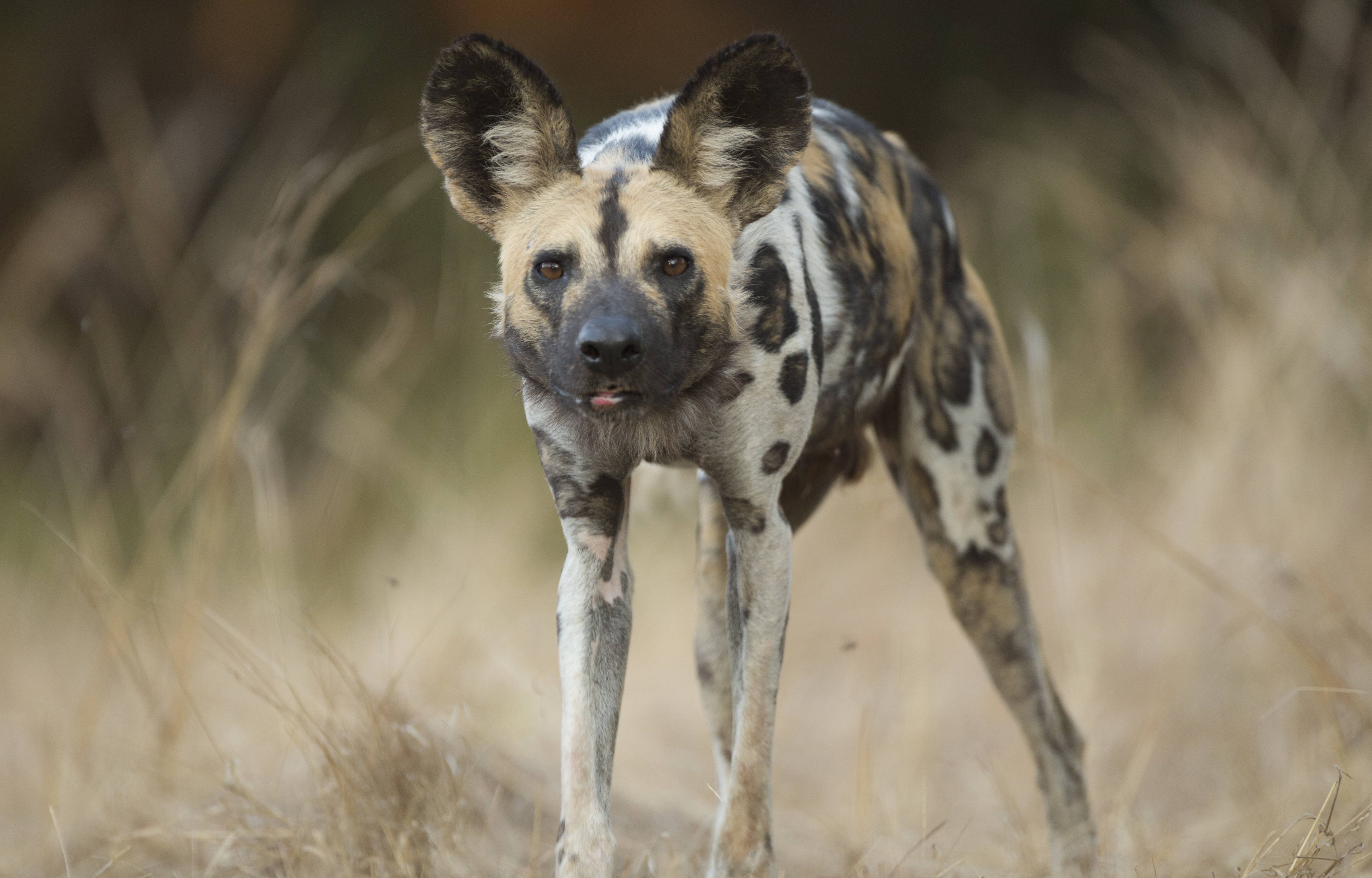
African Wild Dog
Lycaon pictus

2025 Red list status
Endangered

Regional Population Trend
Stable
Change compared
to 2016
No Change
Overview
Lycaon pictus – (Temminck, 1820)
ANIMALIA – CHORDATA – MAMMALIA – CARNIVORA – CANIDAE – Lycaon – pictus
Common Names: African Wild Dog, Cape Hunting Dog, Painted Hunting Dog, Painted Wolf (English), Wildehond (Afrikaans), Iganyana (isiNdebele), Ixhwili (isiXhosa), nKentshane (isiZulu), Lehlaerwa (Sepedi), Lekanyana (Sesotho), Lethalerwa (Setswana), Budzatja (SiSwati), Dalerwa (Thsivenda), Hlolwa (Xitsonga)
Synonyms: Hyena picta (Temminck, 1820)
Taxonomic Note:
Temminck originally described the African Wild Dog (hereafter Wild Dog) in 1820 from a specimen collected in coastal Mozambique. It was originally thought to be a species of hyaena and, as such, was classified as Hyena picta (Creel & Creel 2002). Later, in 1930, Wild Dogs were placed in the subfamily Canidae (Creel & Creel 2002), and today, they belong to the family Canidae. DNA sequencing suggests that Wild Dogs are phylogenetically distinct from other wolf-like canids (such as wolves and jackals; Creel & Creel 2002). Thus, they are considered as the only remaining representatives of the monotypic genus Lycaon (Mills et al. 1998; Creel & Creel 2002).
Red List Status: EN – Endangered, D (IUCN version 3.1)
Assessment Information
Assessors: Nicholson, S.K.1, Davies-Mostert, H.2, Marneweck, D.3, Greyling, E.1, Beverley, G.4, & Power, J.5
Reviewer: Groom, R. J.G.6
Institutions: 1Endangered Wildlife Trust, 2Conserve Global, 3Conservation Alpha, 4Contemplate Wild, 5North West Provincial Government, 6Institute of Zoology, Zoological Society of London
Contributors: da Silva, J.M., Wild Dog Advisory Group, Waterberg Wild Dog Initiative (Mooney, R.), Hluhluwe-iMfolozi Park, !Khamab Kalahari Game Reserve, Lapalala Wilderness Reserve, Mabula Private Game Reserve, Madikwe Game Reserve, Makalali Private Game Reserve, Manyoni Private Game Reserve, Mapesu Private Game Reserve, Selati Game Reserve, Somkhanda Community Game Reserve, Tswalu Kalahari Reserve, uMkhuze Game Reserve
Previous Assessors & Reviewers: Davies-Mostert, H., Nicholson, S., Marneweck, D., Marnewick, K., Cilliers, D., Whittington-Jones, B., Killian, H., Mills, M., Parker, D., Power, J., Rehse, T. & Child, M.F.
Assessment Rationale
Wild Dogs have disappeared from most of their historic range within the assessment region. Notably, Wild Dogs are absent from Lesotho and Eswatini. In South Africa, the species occupies three distinct populations: 1) a monitored and relatively large subpopulation in the Greater Kruger National Park, including the adjoining Private Nature Reserves (hereafter Kruger); 2) a monitored but small and fragile free-roaming subpopulation residing on and traversing land primarily outside of formally protected areas, mostly in the northern parts of the Limpopo Province and particularly the Waterberg district; and 3) an intensively managed metapopulation across several protected public and private reserves. The latter was established through a managed metapopulation strategy of active reintroduction and population management implemented by the Wild Dog Advisory Group (hereafter WAG) since 1998 (Mills et al. 1998). Although the area of land occupied by Wild Dogs under metapopulation management within South Africa has expanded (from three reserves covering 2,082 km2 in March 2000 to nine reserves covering 4,892 km2 in January 2024; Endangered Wildlife Trust, Unpublished Data), a range contraction (which has stabilised since the previous assessment; Contemplate Wild, Unpublished Data) has been observed in northern Kruger and the distribution range outside protected areas remains poorly understood. Therefore, the overall change in the extent of occurrence (EOO) and area of occupancy (AOO) is unknown. The total number of breeding packs in South Africa (defined as potential breeding groups containing unrelated adults, i.e., >24 months, of each sex) has increased from an estimated 34 in 2000 to an estimated 37 in 2016 (as per previous assessment) and to 69 in 2024 (WAG Population Reports, January 2024; Endangered Wildlife Trust, Unpublished Data; Contemplate Wild, Unpublished Data). The current number of mature individuals is estimated at 120, representing a 33% increase since the previous assessment in 2016. Most of this increase has historically occurred in the managed metapopulation, which increased nearly five-fold between 2000 and 2016 and has remained relatively stable since. More recently, a more considerable increase has been recorded in Kruger. Although an overall population increase has been observed in the past two decades, primarily due to active population management and snare removal efforts, the population remains small (<250 mature individuals), and the Endangered listing remains.
Threats facing Wild Dogs within the assessment region are severe and widespread, and while some are stable (direct persecution and disease), others may be increasing (road mortalities, habitat fragmentation and accidental mortalities through snares). These threats, combined with natural fluctuations in pack number and pack size, make the species susceptible to population decline and uplisting to Critically Endangered in the future. Continued work by WAG to reintroduce packs into suitably large areas to create resilient subpopulations should be encouraged, and this species should be regularly reassessed to monitor its extinction risk.
Regional population effects: The species’ range is continuous in parts with the rest of its African range, and although dispersal can be impeded by fences and habitat fragmentation, infrequent long-distance dispersals from inside and outside the assessment region have been recorded (Davies-Mostert et al. 2012; WAG Minutes 1998-2025). Dispersals from Kruger to neighbouring Mozambique reserves (e.g. Karingani Private Game Reserve and Limpopo National Park) have been observed. While northern parts of the assessment region may potentially be colonised naturally, anthropogenic mortality from direct persecution may preclude any significant rescue effect from outside the region (Davies-Mostert et al. 2016).
Reasons for Change
Reason(s) for Change in Red List Category from the Previous Assessment: No change
Red List Index
Red List Index: No change
Recommended citation: Nicholson SK, Davies-Mostert H, Marneweck D, Greyling E, Beverley G & Power J. 2025. A conservation assessment of Lycaon pictus. In Patel T, Smith C, Roxburgh L, da Silva JM & Raimondo D, editors. The Red List of Mammals of South Africa, Eswatini and Lesotho. South African National Biodiversity Institute and Endangered Wildlife Trust, South Africa.
Regional Distribution and occurrence
Geographic Range
Wild Dogs were formerly distributed throughout sub-Saharan Africa, from desert to mountain summits (Thesiger 1970), and were probably absent only from lowland rainforest and the driest desert (Schaller 1972). They have disappeared from much of their former range. The largest populations remain in southern Africa (especially northern Botswana) and the southern part of East Africa (especially Tanzania; Creel & Creel 2002).
Wild Dog range appeared to have receded northwards in South Africa (Visser 1972; Stuart et al. 1985; Skinner & Chimimba 2005) and the last known reports were until 1925 in the Eastern Cape (Skead 2007), the 1820s in the Western Cape, 1908 in the Northern Cape, and 1836 in the Mafikeng area of the North West (Skead 2011). By the 1970s, Wild Dogs were only reported in the Kruger and occasionally in the adjacent Lowveld of Mpumalanga and Limpopo (Von Richter 1972), while the last was shot in KwaZulu-Natal in 1960 (Pringle 1977), and they were not heard of in the Free State then (Von Richter 1972). By the mid-1980s, the Wild Dog was officially considered extinct as a breeding species in the Eastern Cape, Western Cape and Northern Cape (Stuart et al. 1985). From the late 1990s into the 2000s, the species was reintroduced into enclosed reserves in its former range (Mills et al. 1998; Skinner & Chimimba 2005; Hayward et al. 2007; Davies-Mostert et al. 2015; Banasiak et al. 2021a), a restoration approach that is still applied to this day.
Within the assessment region, Wild Dogs continue to occur naturally in the Kruger, and in a free-roaming population which seemingly extends from northern KwaZulu-Natal; through eastern Mpumalanga; eastern, northern and western Limpopo (Nicholson et al. 2020); the northern and western North West (Power et al. 2019; Nicholson et al. 2020) and marginally into the Northern Cape (Nicholson et al. 2020). Wild Dogs have always been marginal in the Northern Cape (Lindsey et al. 2004a), and due to aridity, there is an insufficient prey base to sustain the species in the Kalahari of the Kgalagadi Transfrontier Park (Mills 2015).
Outside protected areas in South Africa, Wild Dogs occur on game ranches with unmodified land cover and low human densities, close to source populations (Lindsey et al. 2004a), which still seems to be the case (Nicholson et al. 2020; WAG Minutes, 1998-2025). Most recent reports suggest that Wild Dogs resident in the Waterberg and other parts of northern Limpopo are the only free roamers to persist. Notably, the subpopulation in Limpopo’s Waterberg, which had previously been reported on 42% of farms in the district (Thorn et al. 2013), has become better studied in the last decade (Ramnanan et al. 2013; Dube 2020). There have also been a few outlier localities which may represent dispersers, particularly in the upper Karoo of the Northern Cape and in the south-eastern Highveld of the North West (see Map).
Additionally, Wild Dogs still occur in several metapopulation reserves throughout South Africa (Nicholson et al. 2020; WAG Minutes, 1998-2025). However, they do not occur in the Free State and Western Cape Provinces and by 2015 they had been removed from Eastern Cape reserves (Banasiak et al. 2021a).
Although Wild Dogs were extirpated from most of their range within the assessment region over the past few centuries, the Wild Dog Range Expansion Project (as coordinated by the Endangered Wildlife Trust and guided by WAG since 1998) has actively expanded the area of occupancy for the species by applying the managed metapopulation approach, increasing the number of metapopulation reserves from three (March 2000) to nine (January 2024), and the area of occupancy of managed subpopulations to 4,892 km2 in the last 25 years (Mills et al. 1998; Davies-Mostert et al. 2016; Endangered Wildlife Trust, Unpublished Data, 2024). The success of the project allowed South Africa’s Wild Dog population to serve as a source for reintroduction and successful reestablishment of the species in areas beyond the assessment region, across Southern Africa (including into Mozambique, Malawi, Zambia, and Botswana) without negatively impacting the population resident within the assessment region.
Elevation / Depth / Depth Zones
Elevation Lower Limit (in metres above sea level): 0
Elevation Upper Limit (in metres above sea level): 4000
Depth Lower Limit (in metres below sea level): (Not specified)
Depth Upper Limit (in metres below sea level): (Not specified)
Depth Zone: (Not specified)
Map
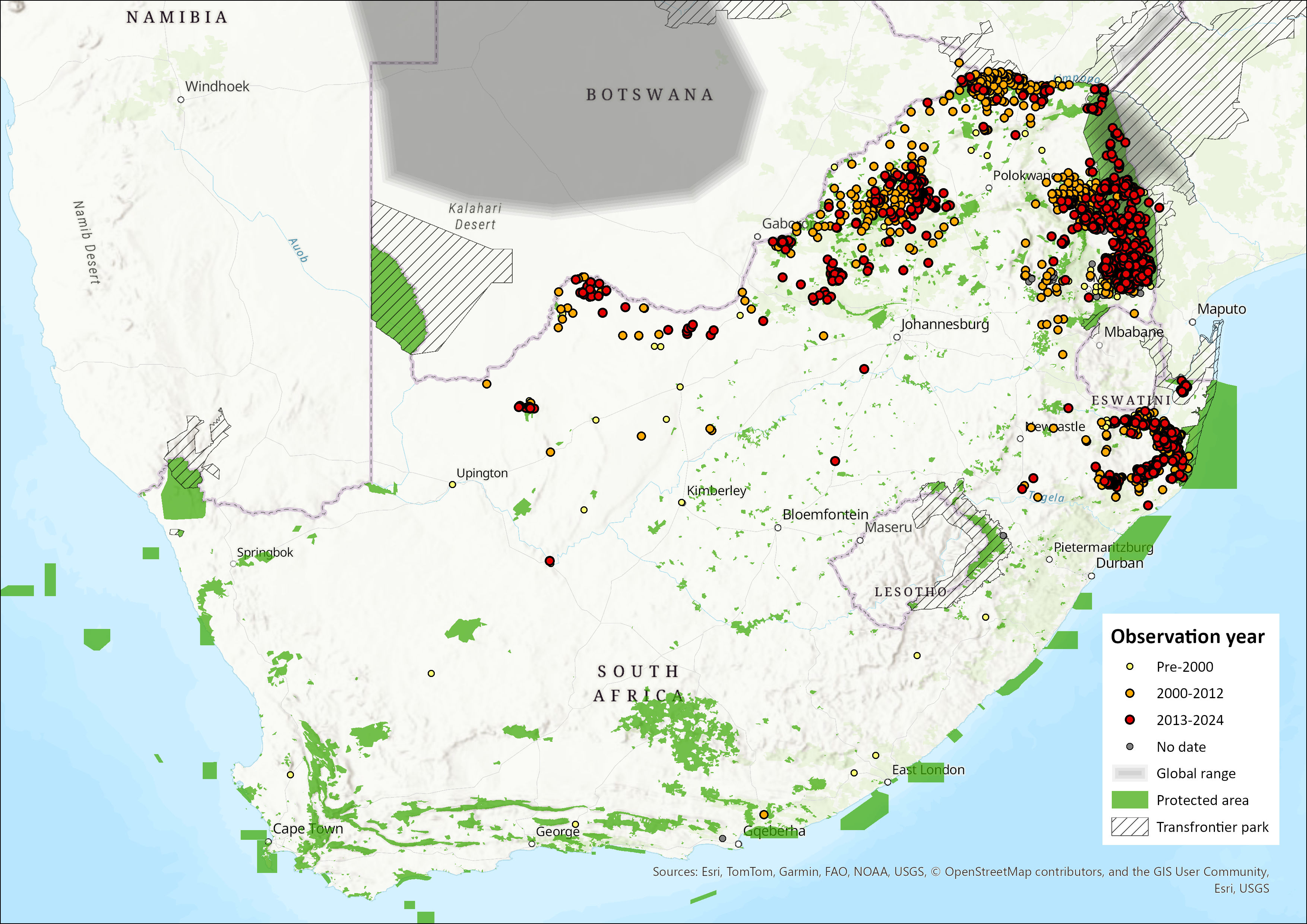
Figure 1. Distribution records for African Wild Dog (Lycaon pictus) within the assessment region (South Africa, Eswatini and Lesotho). Note that distribution data is obtained from multiple sources and records have not all been individually verified.
Biogeographic Realms
Biogeographic Realm: Afrotropical
Occurrence
Countries of Occurrence
| Country | Presence | Origin | Formerly Bred | Seasonality |
| Algeria | Presence Uncertain | Native | – | Resident |
| Angola | Extant | Native | – | Resident |
| Benin | Extant | Native | – | Resident |
| Botswana | Extant | Native | – | Resident |
| Burkina Faso | Extant | Native | – | Resident |
| Burundi | Extinct Post-1500 | Native | – | Resident |
| Cameroon | Extinct Post-1500 | Native | – | Resident |
| Central African Republic | Extant | Native | – | Resident |
| Chad | Extant | Native | – | Resident |
| Congo, The Democratic Republic of the | Possibly Extinct | Native | – | Resident |
| Côte d’Ivoire | Possibly Extinct | Native | – | Resident |
| Egypt | Extinct Post-1500 | Native | – | Resident |
| Eritrea | Extinct Post-1500 | Native | – | Resident |
| Eswatini | Extinct Post-1500 | Native | – | Resident |
| Ethiopia | Extant | Native | – | Resident |
| Gabon | Extinct Post-1500 | Native | – | Resident |
| Gambia | Extinct Post-1500 | Native | – | Resident |
| Ghana | Extinct Post-1500 | Native | – | Resident |
| Guinea | Presence Uncertain | Native | – | Resident |
| Guinea-Bissau | Possibly Extinct | Native | – | Resident |
| Kenya | Extant | Native | – | Resident |
| Malawi | Extant | Native | – | Resident |
| Mali | Possibly Extinct | Native | – | Resident |
| Mauritania | Extinct Post-1500 | Native | – | Resident |
| Mozambique | Extant | Native | – | Resident |
| Namibia | Extant | Native | – | Resident |
| Niger | Extant | Native | – | Resident |
| Nigeria | Possibly Extinct | Native | – | Resident |
| Rwanda | Extinct Post-1500 | Native | – | Resident |
| Senegal | Extant | Native | – | Resident |
| Sierra Leone | Extinct Post-1500 | Native | – | Resident |
| South Africa | Extant | Native | – | Resident |
| Sudan | Extant | Native | – | Resident |
| Tanzania, United Republic of | Extant | Native | – | Resident |
| Togo | Possibly Extinct | Native | – | Resident |
| Uganda | Extant | Native | – | Resident |
| Zambia | Extant | Native | – | Resident |
| Zimbabwe | Extant | Native | – | Resident |
Large Marine Ecosystems (LME) Occurrence
Large Marine Ecosystems: (Not specified)
FAO Area Occurrence
FAO Marine Areas: (Not specified)
Climate change
It is important to consider a species’ ecological and biological traits to determine the likely mechanisms of climate change impact and quantify this using expert knowledge (Foden & Young 2016), and empirical information, if it is available.
Given some of the predictions of climate change of drying out of the interior of South Africa (Foden & Young 2016), and since aridity is already a limiting factor for Wild Dogs in the arid Kalahari (Mills 2015), such parts will become even less desirable, with a consequence that fractions of the range of free roamers in parts of the Northern Cape and western North West (see Map, Nicholson et al. 2020), may become uninhabitable for them. In contrast to this, since Wild Dogs can utilise dense vegetation, whether for foraging (Mills & Gorman 1997; Krüger et al. 1999; Bisset 2007; Woodroffe et al. 2007; Jenkins et al. 2015; Crossey et al. 2021), dispersing (Whittington-Jones 2014) or reproduction (Jenkins et al. 2015; Davies et al. 2016), the species may be able to expand its range in tandem. Given that widespread bush encroachment is expected under enhanced CO2 levels (Foden & Young 2016), the species may thus be able to increase its occupancy in areas or expand its range onto the Highveld steppe periphery – persecution levels aside.
Recent research has revealed troubling impacts of climate change on African Wild Dogs (Rabaiotti et al. 2023). A study conducted by the Zoological Society of London (ZSL) analysed 16 years of data from northern Kenya and projected that a 3°C increase in local temperatures, which could occur by the end of the century, may cause the population of Wild Dogs to decline sharply by 2070 (Raibaiotti et al. 2023). In fact, the species could face local extinction within just a few decades if warming continues. Additionally, a study from the University of Washington, based on over 30 years of data from Botswana, found that rising temperatures have led Wild Dogs to delay the timing of their births by about 22 days. Unfortunately, this shift results in pups being born during hotter periods, which harms their survival rates during the vulnerable denning phase. With just a 1°C increase in temperature, the population could drop by 40%, and with a 3°C rise, Wild Dogs could face total collapse (Rabaiotti et al. 2023). These findings underscore the critical need for effective conservation measures and global efforts to curb climate change.
Population information
Although Wild Dogs are crepuscular, they are infrequently seen, and it appears that populations have always existed at low densities compared to other large African carnivores (Creel & Creel 1996). Extreme fluctuations in population size and rapid pack fusion and dissolution, mean that the number of mature individuals alone is often not a good indicator of overall population size and trends. Pack number (the number of potential breeding groups) is therefore thought to be a more robust indicator of population viability. The number of breeding packs in the assessment region has increased from an estimated 34 in 2000 to 69 in 2024 (across five generations), mainly through the expansion of the managed metapopulation in the last two decades (Gusset et al. 2008b; Davies-Mostert et al. 2009) and intensive de-snaring efforts in Kruger. Given the active management to ensure that dispersers find mates and form breeding groups, the population is likely to be more robust than suggested simply by calculating the number of actively breeding animals (see explanation below).
Estimating the number of mature individuals is challenging, because Wild Dogs are near-obligate cooperative breeders; within a pack, the alpha male and female are the parents of the majority of surviving pups (Girman et al. 1997; Van der Berghe et al. 2012) but see Spiering et al. (2010) and Groom et al. (in review, 2025) for exceptions. In Wild Dogs, a high proportion of individuals are indeed reproductively suppressed (Creel & Creel 2002; Van der Berghe et al. 2012), but these animals do not quickly become reproductive if an alpha individual dies, because in southern Africa they are usually locked into a seasonal reproductive cycle (only breeding once a year; Courchamp & Macdonald 2001). Death of an alpha may therefore lead to the disintegration of the pack, with no breeding until new packs are formed (although this depends on how much time is available before the next breeding season and can sometimes be countered by direct management). In instances where there are enough unrelated adult males and females (not alphas) to assume dominance, following the death of one or both alpha animals, there is a high probability of pack persistence in the next breeding season (Davies-Mostert et al. 2016)
We used the method followed in the global Wild Dog Red List assessment to determine the number of mature individuals (Woodroffe & Sillero-Zubiri 2016). We based our calculations on the census data of 69 breeding packs and 525 adults (>24 months) and yearlings (12-24 months) in January 2024. Mature individuals are defined as those animals considered capable of reproduction within the current breeding season (Davies-Mostert et al. 2016).
The following is a summary for each population segment as of 2024 as a baseline, which informed our calculations:
Kruger
One of the largest remaining Wild Dog populations is found in the Kruger (Nicholson et al. 2020). By 2024, Kruger had consistently supported the highest proportion of the national population over the previous two decades (Nicholson et al. 2020; WAG Minutes 2024). In 2009, a photographic census estimated 132 mature individuals in Kruger (Endangered Wildlife Trust, 2009). This was a lower estimated population size compared to earlier baselines, where in 1989 for instance, a total of 357 Wild Dogs were identified (Maddock and Mills 1994). In February 2024, there were an estimated 399 adults and yearlings in 54 breeding packs in Kruger (Contemplate Wild, Unpublished Data, 2024). Notwithstanding natural population fluctuations, Kruger supports a substantial Wild Dog population (Nicholson et al. 2020).
Free roamers
Free-roaming Wild Dogs, those that are unmanaged and wide-ranging, are rare in South Africa (Nicholson et al. 2020). The population of resident free-roaming Wild Dogs remaining in South Africa was estimated in 2002 at 75 – 92 individuals, occurring in Limpopo through to KwaZulu-Natal (Lindsey et al. 2004), but has recently been reported at fewer than 30 individuals in two packs, all remaining in the Waterberg district of Limpopo (WAG Reports, 2023; Waterberg Wild Dog Initiative, Unpublished Data, 2024). Occasionally, additional Wild Dogs are observed that traverse the borders between South Africa, Botswana, and Zimbabwe. The last resident free roamers to have been reported from outside the Waterberg district were in 2017 when dispersals spent significant amounts of time outside of reserves in KwaZulu-Natal, but this hasn’t happened since.
In the Waterberg, conservationists have gathered data on the presence of free-roaming Wild Dogs since the 1990s. This resident population occurs naturally and has been maintained by documented dispersal routes that connect the region to neighboring populations in northern Limpopo and Botswana (Davies-Mostert et al., 2012; Endangered Wildlife Trust, Unpublished Data). Since 2017, four established resident packs, which formed naturally over time with one pack and some dispersing individuals being removed due to intense human-wildlife conflict, have been recorded and monitored ranging across the mountainous regions between the towns of Lephalale, Thabazimbi, Melkrivier, Modimolle, and Marken. As of February 2024, the Waterberg’s fragile population is estimated at 15 adults and yearlings, comprising two resident packs (Waterberg Wild Dog Initiative WWDI, Unpublished Data).
Human-related causes, including persecution, snaring, poisoning and infrastructure-related mortalities, are the primary causes of free-roaming Wild Dog mortalities in the Waterberg (Waterberg Wild Dog Initiative, Unpublished Data) making them particularly susceptible. As a result, in order to mitigate these, an early-warning system and other support mechanisms have been developed and implemented for landowners in recent years. Wild Dogs experience conflict with humans when they’re suspected of predating on financially valuable game and livestock species, which results in retaliation (Thorn et al. 2013). Notably, Wild Dogs that frequent private and community lands outside of the western boundary of Kruger face similar threats to these free-roaming individuals.
Metapopulation
Between 2017 and 2024, the mean annual national metapopulation size was 126 ± 26.81 adults and yearlings. In 2024, there were 89 adults and yearlings recorded in 10 breeding packs in nine reserves across the country (WAG Minutes 2024). The current state of the national metapopulation reflects demand by reserves and the costs of keeping them (Lindsey et al. 2005a), including considerations that relate to prey populations (Banasiak et al. 2021a), adequate fencing, and monitoring capacity (Endangered Wildlife Trust, Unpublished Data). It likely also reflects the lasting impact of the COVID-19 pandemic on the conservation industry and availability of resources, with a steep decrease in safe space, and consequently the number of breeding packs, observed between 2020 and 2022/3. Notably, although safe space within the assessment region have decreased since the previous assessment (2016), which impacts the number of packs considered to be potentially breeding at the time, the overall number of individuals (adults and yearlings) remained relatively stable. At the beginning of 2024, an additional nine packs and single-sex groups comprising of 32 individuals (adults and yearlings) were in temporary holding and thereby not accounted for. As of February 2025, a single same-sex group of five females were in temporary holding whilst four more reserves have been added to the managed metapopulation framework.
National population
In 2024, the national population of Wild Dogs was 525 adults and yearlings in ~69 breeding packs (WAG Minutes, 2024; Endangered Wildlife Trust, Unpublished Data, 2024; Contemplate Wild, Unpublished Data, 2024). The overall Wild Dog population has probably remained stable since the previous assessment even though the number of packs has increased in recent years (Nicholson et al. 2020). The contribution of the metapopulation has increased significantly over time.
Method for calculating the number of mature individuals (following the 2020 global assessment):
This method allows the estimation of numbers of mature individuals (Nm) from the census population of adults and yearlings (Nc), based on demographic data from large unmanaged populations. It assumes that the number of mature individuals thus comprises the sum of the number of alpha males (NaM), alpha females (NaF) and subdominant (that is, non-alpha) animals (Nsub) that breed successfully (Woodroffe & Sillero-Zubiri 2012). It assumes an adult sex ratio of 0.56:0.44 males to females.
The number of mature individuals is therefore estimated as:
NaM = Nc x 0.56 x PaM
+ NaF = Nc x 0.44 x PaF
+ Nsub = (NaM x 0.10) + (NaF x 0.08)
where PaM and PaF are the proportion of adults and yearlings that are alpha males and females, respectively. This equation was applied to each segment of the population, providing an estimate of 120 mature individuals within the assessment region.
Table 1: Population summary and the estimates of mature individuals following the calculation done by (Woodroffe & Sillero-Zubiri 2012)
| 2024 | Metapopulation | Free-roaming | Kruger National Park and Adjoining Private Nature Reserves | Total | Reference |
| Number adults and yearlings in breeding packs (Feb 2024) | 891, 2 | 371,3 | 3994 | 525 | |
| Number breeding packs | 10 | 5 | 54 | 69 | |
| Sex ratio (prop males) | 0.56 | 0.54 | 0.54 | 5, 6, 7 | |
| Sex ratio (prop females) | 0.44 | 0.46 | 0.46 | ||
| Number of breeding packs | 10 | 5 | 54 | 69 | |
| Mean pack size | 8.9 | 7.4 | 7.4 | ||
| PaM | 0.209 | 0.191 | 0.191 | 8 | |
| PaF | 0.27 | 0.224 | 0.224 | 8 | |
| NaM (total pop x prop males x PaM) | 10.42 | 3.82 | 41.15 | ||
| NaF (total pop x prop females x PaF) | 10.57 | 3.81 | 41.11 | ||
| NaAll (NaM + NaF) | 20.98 | 7.63 | 82.27 | 110.88 | |
| Prop pups subdominant fathers | 0.1 | 5, 6 | |||
| Prop pups subdominant mothers | 0.08 | 5, 6 | |||
| Nsub (NaM x 0.10) + (NaF x 0.08) | 1.89 | 0.69 | 7.40 | ||
| Total mature individuals (NAll + Nsub) 2024 | 22.88 | 8.32 | 89.67 | 120.86 | |
| 1 WAG Reports 2024; 2 Endangered Wildlife Trust, Unpublished Data, 2024; 3 Waterberg Wild Dog Initiative, Unpublished data, 2024; 4 Contemplate Wild, Unpublished Data, 2024; 5 Maddock & Mills 1994; 6Girman et al. 1997; 7Davies-Mostert et al. 2015; 8 Woodroffe & Sillero-Zubiri 2012 | |||||
The changes observed over the past five generations can largely be attributed to an increase in the number of reserves within South Africa participating in the Wild Dog Range Expansion Project, which have increased from three in 2000 (Hluhluwe-iMfolozi Park, Madikwe Game Reserve, and Pilanesberg National Park) to 9 in 2024 (Endangered Wildlife Trust, Unpublished Data). This increase occurred despite several interim setbacks when Wild Dogs have been removed from some participating reserves (Banasiak et al. 2021a). Continued work is required to maintain this status quo and secure areas large enough to sustain resilient and dynamic packs of Wild Dogs (such as in Kruger).
Populations of Wild Dogs are prone to marked fluctuations at a variety of temporal and geographical scales, which are likely to both increase extinction risks and undermine the precision of population estimates (Davies-Mostert et al. 2016; Nicholson et al. 2020). At the local scale, a combination of high mortality, high fecundity and dispersal by both sexes means that pack size fluctuates substantially over short periods, although fluctuation in numbers of mature individuals would be less dramatic. Because Wild Dogs are seasonal breeders across most of their remaining geographic range, fluctuations may be synchronised across packs. Managed subpopulations in metapopulation reserves are typically small (often only a single pack) and these populations are highly prone to stochastic events, further exacerbating population fluctuations (Davies-Mostert et al. 2016).
The same demographic characteristics – high mortality, high fecundity, and long-distance dispersal – likewise lead to fluctuations at the population scale. This pattern is further exaggerated by the species’ susceptibility to infectious diseases which can cause rapid localised die-offs. Massive local declines are not uncommon and are often both rapid and unanticipated. This is exemplified by the case of Madikwe Game Reserve where, in 1997, a population of 24 animals was reduced to just three individuals following a rabies outbreak (Hofmeyr et al. 2000). During other past incidents, 23 of the 25 Wild Dogs in !Khamab Kalahari Reserve (North West) were killed due to a canine distemper virus (CDV) outbreak in 2013, and a rabies outbreak in Madikwe Game Reserve (North West) reduced the population from 30 individuals to just five in December 2015 (WAG Minutes; Davies-Mostert et al. 2016). In 2014, two Wild Dogs also succumbed to rabies in Madikwe (Sabeta et al. 2018) and in 2016, Kruger, Tswalu Kalahari Reserve, and Hluhluwe-iMfolozi Park recorded 12, 15, and 12 deaths by CDV respectively (WAG Minutes, 2016).
Similar die-offs have been documented in larger Wild Dog populations. For example, five of 12 study packs in Botswana (Alexander et al. 2010) and three of eight study packs in Kenya (Woodroffe 2011) have been reported as having died within short time periods during disease outbreaks. In 2017, the Wild Dog population in Laikipia, Kenya, collapsed as a result of a CDV outbreaks. This collapse highlighted the vulnerability of endangered species to environmental and human pressures. However, as most Wild Dogs in the metapopulation are regularly vaccinated against rabies and CDV, they are less vulnerable to extirpation from disease. Under good conditions, possibly inversely linked to rainfall (see Buettner et al. 2007), or few competing predators (Mills & Gorman 1997), Wild Dog subpopulations are able to grow relatively quickly, and rapid die-offs can be offset naturally by successful reproduction, or by active management, including artificial pack formation and reintroduction (Davies-Mostert et al. 2016). This has been most notable in Hluhluwe-iMfolozi Park, where in an area of 900 km2, there were once 11 packs and 109 individuals in the population, comprising one of the highest Wild Dog densities in Africa (Marneweck et al. 2022).
Wild Dogs’ capacity for very long-range dispersal (Davies-Mostert et al. 2012), means that subpopulations sometimes reappear unexpectedly and grow rapidly. Within the assessment region, however, the capacity to seed new subpopulations that grow rapidly is severely compromised by habitat fragmentation, geographic isolation and persecution, which will limit any population recovery. Although Wild Dog populations can exhibit substantial temporal changes, fluctuations in the assessment region have largely been contained by active metapopulation management. Nevertheless, the potential for rapid population fluctuations, combined with severe habitat fragmentation, contribute to their vulnerability to extinction within the region (Davies-Mostert et al. 2016).
Population Information
Current population trend: Stable
Continuing decline in mature individuals: No
Extreme fluctuations in the number of subpopulations: (Not specified)
Continuing decline in number of subpopulations: (Not specified)
All individuals in one subpopulation: No
Number of mature individuals in largest subpopulation: 89 (Greater Kruger)
Number of subpopulations: 12
Quantitative Analysis
Probability of extinction in the wild within 3 generations or 10 years, whichever is longer, maximum 100 years: (Not specified)
Probability of extinction in the wild within 5 generations or 20 years, whichever is longer, maximum 100 years: (Not specified)
Probability of extinction in the wild within 100 years: (Not specified)
Population genetics
Wild Dogs are not geographically restricted to eastern or southern African populations; rather, there is a significant admixture zone spanning populations, particularly in countries north of South Africa (Girman et al. 2001). Over the past million years, Wild Dogs across the continent have likely undergone at least two effective population size reductions (Campana et al. 2016), with low genetic diversity suggesting inbreeding or population-specific selection (Campana et al. 2016). Campana et al. (2016) only had two samples to utilise, one from Kwazulu-Natal, and further research is needed to clarify whether these reductions and low diversity regions are characteristic of the species as a whole. In contrast, the South African metapopulation exhibits high levels of genetic variation, likely resulting from translocations, artificial pack formation and outbreeding (Tensen et al. 2019). Under the current management scenario, this metapopulation is expected to maintain 95% of its heterozygosity (Tensen et al. 2019), although genetic evidence suggests limited recent dispersal between the metapopulation and Kruger (Tensen et al. 2019). The metapopulation management plan is considered to have successfully achieved both population growth and the preservation of genetic diversity, with translocations playing a vital role in restoring genetic variability (Tensen et al. 2019). However, weakly differentiated genetic clusters across southern Africa represent the Lowveld of Limpopo, Kruger, and the managed metapopulation (Tensen et al. 2022). All extant Wild Dog populations exhibit relatively small effective population sizes (Kruger: Ne = 21.8 (11.6–43.5); Lowveld: 10.2 (8.4–12.7), with a genetic signature indicating a recent, substantial demographic decline, likely correlated with human expansion (Marsden et al. 2012). The strong structuring of populations, due to habitat fragmentation and loss of gene flow between patches, further exacerbates genetic challenges (Marsden et al. 2012). Whole genome sequencing of 71 Wild Dogs from Kruger National Park revealed low genetic variation, but low inbreeding levels, likely due to their cooperative breeding system (Meiring et al. 2022). However, this population’s low genomic variation may influence its long-term viability, highlighting the importance of assessing population genomic parameters to set conservation priorities. Future studies should investigate the species’ potential to adapt to environmental changes in light of its limited genomic diversity (Meiring et al. 2022).
Habitats and ecology
With the exception of desert and tropical forests, Wild Dogs historically inhabited most of sub-Saharan Africa (Fuller et al. 1992). They are the first large carnivore to disappear down the rainfall gradient at about 350 mm (Mills 2015). Previously believed to be a primarily open plains species, based on early studies, for example, those done in the Serengeti National Park, Tanzania (Frame et al. 1979), Wild Dogs are now known to occupy a wide range of habitats including short-grass plains, savannahs and uplands forest. Studies in fact show that Wild Dogs reach their highest densities in thicker bush, for example in Selous Game Reserve (Tanzania), Mana Pools National Park (Zimbabwe) and northern Botswana (Creel & Creel 2002). Within the assessment region, they occur in the Lowveld and have also been known to occur in thicket-type vegetation specifically found in the Eastern Cape (Skead 2007). Whether dispersing or resident, vegetation cover is generally important to Wild Dogs (Whittington-Jones et al. 2014; Jackson et al. 2016), specifically bush or woodland, indicative of preferred prey habitats (Whittington-Jones et al. 2014). In terms of vegetation types, Wild Dogs have been known to select closed Thornveld habitats (Jenkins et al. 2015), or generally denser vegetation (Davies et al. 2016).
Wild Dogs tend to spatially avoid Lions (Panthera leo), both on large open ecosystems such as Kruger (Mills and Gorman 1997), as well as on smaller confined reserves (Van Dyk and Slotow 2003; Darnell et al. 2014; Pretorius et al. 2021), which sometimes entails peripheral movements on the perimeters of reserves (Van Dyk and Slotow 2003; Pretorius et al. 2021). However, in some of the larger fenced reserves, such as Hluhluwe-iMfolozi Park, Wild Dogs mostly temporally avoid Lions (Saleni et al. 2007; Darnell et al. 2014, Davies et al. 2021). On the same reserve, Wild Dogs, neither spatially or temporally avoided Spotted Hyaena Crocuta crocuta, likely because Wild Dog pack sizes were large enough to adequately defend their kills against them (Darnell et al. 2014, but see Saleni et al. 2007).
Across their range it seems Wild Dogs select den sites which are either in or near rugged terrain (Jackson et al. 2014; Davies et al. 2016), or dense vegetation (Davies et al. 2016), of which fitness benefits are accrued from the latter in particular (Davies et al. 2016), and minimising encounters with Lions is hypothesised (Jackson et al. 2014).
In recent years, Wild Dog distribution has been limited primarily due to limited safe space, human activities and availability of prey, rather than habitat preferences (Davies-Mostert et al. 2016). In human-modified landscapes, Wild Dogs avoid human-related features such as settlements (Whittington-Jones et al. 2014), high densities of roads (Whittington-Jones et al. 2014, but see Pretorius et al. 2019), and may use some agricultural landscapes, but tend to avoid livestock areas (Pretorius et al. 2019).
Wild Dogs are coursing predators that mostly hunt medium-sized ungulates ranging from 16–140 kg, which are usually the most abundant prey species available (Hayward et al. 2006). Weighing between 25 and 30 kg, Wild Dogs cross the 21.5 kg threshold considered for obligate carnivory; meaning that they lack the physiological ability to digest plant matter (Creel & Creel 2002). Due to their high metabolic demands, Wild Dogs consume more meat per day (about 3 kg) relative to their size than any other carnivore (Creel & Creel 2002).
Across the savannas where they occur, Wild Dogs prey, and specialise, upon medium to large ungulates such as Impala Aepyceros melampus (Pienaar 1969; Mills and Gorman 1997; Krüger et al. 1999; Van Dyk and Slotow 2003; Davies-Mostert et al. 2013; Ramnanan et al. 2013; Vogel et al. 2018; Crossey et al. 2021; Honiball et al. 2021), Kudu Tragelaphus strepsiceros (Pienaar 1969; Mills and Gorman 1997; Van Dyk and Slotow 2003; Davies-Mostert et al. 2013; Ramnanan et al. 2013), Nyala Tragelaphus angasii (Krüger et al. 1999; Vogel et al. 2018), and Bushbuck Tragelaphus scriptus (Ramnanan et al. 2013). Wild Dogs have shown a preference for Kudu, Impala and Bushbuck in particular (Hayward et al. 2006; Mbizah et al. 2012). Furthermore, they are said to have a bimodal prey preference for prey in the 16-32 kg weight range, as well as those between 120-140 kg (Hayward et al. 2006). Of late, in Kruger, Wild Dogs have been found to predominantly prey on smaller browsing and mixed-feeding species (accounting for ~73% of their diet), and only occasionally hunt large grazers (~24%) and large browsers (~3%, Crossey et al. 2021).
On the Hluhluwe section of Hluhluwe-iMfolozi Park, nyala were recorded as the most consumed ungulate species, accounting for 77% of the diet (Krüger et al. 1999). Recorded hunting success of Wild Dgs in Hluhluwe-iMfolozi Park was 48% (Krüger et al. 1999). More recent research, evaluating diet across several KwaZulu-Natal reserves, found that impala and nyala collectively formed 75% of Wild Dog diet, and 67% of edible biomass (Vogel et al. 2018). Wild Dogs can be relatively specialised in their diet (Honiball et al. 2021) and can exhibit a narrow dietary niche breadth on small reserves (Vogel et al. 2018), though it is much broader in the Kruger (Crossey et al. 2021). On Madikwe Game Reserve, Wild Dogs exhibit a high dietary overlap with sympatric carnivores such as Cheetah Acinonyx jubatus and Leopard Panthera pardus (Honiball et al. 2021). They will furthermore prey upon Common Duiker (Sylvicapra grimmia) and Common Warthogs (Phacochoerus africanus) (Davies-Mostert et al. 2016). They will give chase of larger species, such as Common Eland (Tragelaphus oryx) and African Buffalo (Syncerus caffer), but rarely kill such large prey. However, in smaller fenced systems the presence of perimeter fencing at fenced reserves is a complicating factor (Lindsey et al. 2004b); Wild Dogs learn to use fences as a hunting tool permitting the killing of large prey (Van Dyk & Slotow 2003; Rhodes and Rhodes 2004; Bisset 2008; Davies-Mostert et al. 2013, but see Vogel et al. 2018) i.e. Waterbuck Kobus ellipsiprymnus (260 kg) (Van Dyk and Slotow 2003). Fences thus facilitate the killing of larger prey than normal by Wild Dog, and older age categories of certain species are also killed in this manner (Davies-Mostert et al. 2013). Wild Dogs may also take very small prey such as hares, lizards and even eggs, but these make an insignificant contribution to their diet (Davies-Mostert et al. 2016).
Ecosystem and cultural services: As coursing predators, Wild Dogs exert higher selection for animals in poorer condition than ambush predators and tend to select weaker animals from prey populations (Pole 2000). They therefore help to regulate ecosystems from the top down by reducing the proportion of weaker prey animals, creating landscapes of fear for prey species and helping to regulate prey numbers. It should be noted, however, that human-mediated changes in habitat structure (such as those resulting from habitat fragmentation, roads and particularly fencing) can lead to both quantitative and qualitative shifts in prey selection patterns by Wild Dogs, potentially undermining the positive ecosystem benefits of their predation (Davies-Mostert et al. 2013).
The Wild Dog is a flagship species for the African continent. It symbolises the need for unbroken and wild landscapes (Davies-Mostert et al. 2016). Wild Dogs have the potential to raise significant income through specialist wildlife-viewing initiatives (Lindsey et al. 2005b), as has been illustrated through the ecotourism initiatives at both the De Beers Venetia Limpopo Nature Reserve (Davies-Mostert et al. 2016), and recent attempts to resurrect this by the Waterberg Wild Dog Initiative in partnership with the Endangered Wildlife Trust. Reserves such as Madikwe Game Reserve has been marketed as a Wild Dog “haven”, where several private lodges have even made use of the Wild Dog in their branding.
IUCN Habitats Classification Scheme
| Habitat | Season | Suitability | Major Importance? |
| 1.5. Forest -> Forest – Subtropical/Tropical Dry | – | Suitable | Yes |
| 1.7. Forest -> Forest – Subtropical/Tropical Mangrove Vegetation Above High Tide Level | – | Marginal | – |
| 1.9. Forest -> Forest – Subtropical/Tropical Moist Montane | – | Marginal | – |
| 2.1. Savanna -> Savanna – Dry | – | Suitable | Yes |
| 2.2. Savanna -> Savanna – Moist | – | Suitable | Yes |
| 3.5. Shrubland -> Shrubland – Subtropical/Tropical Dry | – | Suitable | Yes |
| 4.5. Grassland -> Grassland – Subtropical/Tropical Dry | – | Suitable | Yes |
| 8.1. Desert -> Desert – Hot | – | Not suitable | – |
Life History
Generation length: 5 years
Age at Maturity: Female or unspecified: ~18-24 months
Age at Maturity: Male: ~18-24 months
Size at Maturity (in cms): Female: (Not specified)
Size at Maturity (in cms): Male: (Not specified)
Longevity: 10-12 years
Average Reproductive Age: (Not specified)
Maximum Size (in cms): (Not specified)
Size at Birth (in cms): (Not specified)
Gestation Time: ~70 days
Reproductive Periodicity: April to September
Average Annual Fecundity or Litter Size: (Not specified)
Natural Mortality: (Not specified)
Breeding Strategy
Does the species lay eggs? No
Does the species give birth to live young? Yes
Does the species exhibit parthenogenesis? No
Does the species have a free-living larval stage? No
Does the species require water for breeding? No
Movement Patterns
Movement Patterns: (Not specified)
Congregatory: (Not specified)
Systems
System: Terrestrial
General Use and Trade Information
Across most of its geographical range, there is minimal human use of this species. There is evidence of localised traditional use in Zimbabwe (Davies & du Toit 2004) and South Africa (WAG Minutes), but this is unlikely to threaten the species’ persistence. There are also some reports of trade in captive and wild-caught animals from southern Africa, although this is not believed to be significant. Wild Dogs are persecuted as a damage-causing animal (shot, poisoned or captured and removed from the wild) over their entire range within the assessment region (Davies-Mostert et al. 2016). They are not trophy hunted anywhere in their range.
Trade is local (traditional medicine), international (zoos and traditional medicine) and commercial. Medicinal uses for Wild Dogs do still exist in some South African traditional cultures (Page et al. 2015). Uses include curing illnesses such as headaches, and smoking the fur is believed to allow one to sleep (Page et al. 2015).
According to the Ministerial Task Team Report of 2024 on the Captive Lion Industry, at least 233 individuals are currently known to be in captivity in South Africa (Chetty et al. 2024). While an African Regional Studbook is run under the auspices of the Pan-African Association for Zoos and Aquaria (PAAZA), the number of private facilities that do not participate in the studbook is unclear and could be more than 20. Fewer than ten facilities submit data to the studbook, with only two facilities known to be actively breeding Wild Dogs. These facilities once played an important role in the formation of the metapopulation by providing animals for reintroduction purposes (Davies-Mostert et al. 2016). Indeed, a significant proportion (24%) of founder stock for the managed metapopulation was sourced from captive centres in South Africa and Botswana between 1998 and 2009 (Van Dyk & Slotow 2003; Gusset et al. 2006; Davies-Mostert & Gusset 2013; Marneweck et al. 2019). However, without a current significant need for release from ex situ institutions, surplus Wild Dogs are often sold to private facilities both locally and internationally. Some ex-situ facilities continue to play a small part in the conservation of the Wild Dogs through participation in research projects, as temporary holding facilities for the managed metapopulation and through education and awareness (Davies-Mostert et al. 2016). However, significant improvements must be implemented before captive facilities can be regarded as making a valuable overall contribution to the conservation of this species, such as: 1) a fully functioning self-sustainable breeding programme with clear goals, and which only requires the addition of new founders based on sound population management principles; 2) research programmes that have clear benefits to the in situ population; and 3) a well-developed education programme to be implemented across all ex situ facilities (Davies-Mostert et al. 2016)
Wildlife ranching has generally increased the prey base for Wild Dogs (Ramnanan et al. 2013; Dube 2020), but they are heavily persecuted by landowners (Thorn et al. 2013) and can be unfeasibly expensive to sustain on small private nature reserves (Lindsey et al. 2005a; Davies-Mostert et al. 2016).
Tourism revenue from Wild Dogs in large, protected areas is more than sufficient to offset the costs and could potentially be used to subsidise Wild Dog reintroductions or the conservation of Wild Dogs in situ on ranchland. On ranchland (i.e., free-roaming) and for reintroduced, managed populations, tourism revenue was generally predicted to offset most of the costs of conserving Wild Dogs where predation costs were low, and to exceed the costs where ‘willingness to pay’ was high, and/or where the costs of predation by Wild Dogs are zero (Lindsey et al. 2005b).
Conservation efforts should facilitate the derivation of eco-tourism-related benefits from Wild Dogs on ranchland and in private reserves to create incentives for Wild Dog conservation. Ecotourism should be part of a multifaceted approach to Wild Dog conservation which also includes education and awareness campaigns (Lindsey et al. 2005b).
The Waterberg Wild Dog Initiative (WWDI) has been successful in being able to showcase sightings of free-roaming Wild Dogs to local lodges and generating income for private landowners who temporarily allow the safe residence of Wild Dogs during denning on their properties (EWT unpublished data, WWDI unpublished data).
| Subsistence: | Rationale: | Local Commercial: | Further detail including information on economic value if available: |
| No | Subsistence/ad hoc medicinal use. | Yes | Ecotourism |
National Commercial Value: No
International Commercial Value: (Not specified)
End Use: (Not specified)
Is there harvest from captive/cultivated sources of this species? No
Harvest Trend Comments: (Not specified)
Threats
The causes of Wild Dog decline are reasonably well understood and primarily include sensitivity to habitat fragmentation as a consequence of wide-ranging behaviour, direct persecution as a result of conflict with livestock and game farmers, accidental killing through poachers’ snares and vehicle collisions (Davies-Mostert et al. 2016), and infectious disease, especially in small populations (Hofmeyr et al. 2000). The illegal hunting of Wild Dogs for their use in traditional medicine is also possible (Page et al. 2015) but not thought to be widespread. Harvesting of body parts have been recorded as an opportunistic activity after Wild Dogs have been caught in snares, presumably as untargeted by-catch (Endangered Wildlife Trust, Unpublished Data). All these causes are associated with human encroachment on Wild Dog habitat and, as such, have not ceased and are unlikely to be reversible across most of the species’ historical range. Snares and diseases in the buffer zone on the periphery of protected areas may also serve as an ecological trap for this species (van der Meer et al. 2014; Davies-Mostert et al. 2016). Natural causes of death include inter- and intraspecific competition, particularly by lions, and the occasional, often assumed to be hunting-related, injury, but these do not generally pose a threat to population persistence. Decline of natural prey may also aggravate human-wildlife conflict.
Threats to the different groups of Wild Dogs within the assessment region are as follows:
Kruger:
At the end of the 1980s, Kruger was deemed to have stable prey populations, and a low incidence of disease and poaching, which would have enhanced the Wild Dog population (Maddock and Mills 1994). This has changed drastically to the present, where the threat of snares has increased substantially (Davies-Mostert et al. 2016; Contemplate Wild, Unpublished Data; Endangered Wildlife Trust, Unpublished Data).
- Road mortalities: likely to be 1–2 Wild Dog(s) / year (Endangered Wildlife Trust, Unpublished. Data; Davies-Mostert et al. 2016).
- Accidental persecution through poachers’ snares: In the last five years, 80 dogs with snares or snare-related injuries were detected in the greater Kruger (including the adjoining private nature reserves). Of these, 64 were successfully treated and 15 either died due to the snaring incident or could not be found after being reported and were eventually assumed dead.
- The potential for disease transmission from domestic dogs: Although no clinical disease was detected in any of the packs, viral diseases, such as canine distemper and rabies remains a threat to Kruger’s Wild Dog population
- Wild Dogs that reside on the periphery of Kruger, within and adjacent to the Adjoining Private Nature Reserves, face threats similar to that of the free roamers., ongoing human-wildlife conflict mitigation is required to limit the impact
Free roamers:
Our understanding of rates and causes of mortality in this segment of the population is severely limited by the fact that few of these packs are closely monitored, resulting in a bias towards anthropogenic causes of mortality (see Woodroffe et al. 2007). However, instances of the following threats have been documented. Human-related causes, including persecution, snaring, and infrastructure-related mortalities, are the primary causes of African Wild Dog mortalities in the region (WWDI, unpublished data). African Wild Dogs experience conflict with humans when they’re suspected of predating on financially valuable game and livestock species, which results in retaliatory persecution in the region (Thorn et al. 2013). South Africa’s game ranching industry has provided a high financial value to game species, which creates human-wildlife conflict when carnivores, like African Wild Dogs, predate on natural prey (Pitman et al. 2017). In addition to being victims of retaliatory persecution for actual predation, African Wild Dogs are often wrongly blamed for stock losses and persecuted to mitigate potential predation risk (Gusset et al., 2009; Rasmussen, 1999), even with abundant, naturally occurring game species such as impala, kudu, and blue wildebeest. In December 2023, six Wild Dogs from the TOOG Area Pack, including four adults/yearlings and two pups, died by poisoning on a privately owned game farm conducting ecotourism activities in the center of their range. Including pups, this single incident eliminated 18% of the region’s free-roaming population in less than a few hours.
- Direct persecution by farmers and communities: In the Waterberg Biosphere Reserve of Limpopo, in the period 2009-2011, 15 Wild Dogs were reported killed, which amounted to 0.65 killed/100 km2 (Thorn et al. 2013), which may not be sustainable given the known packs that are monitored by the Waterberg Wild Dog Initiative and Endangered Wildlife Trust. Across all game and livestock, Wild Dog were to blame for only 6.2% of all losses (Thorn et al. 2013). Given the increased educational awareness in the Waterberg, it is likely that this off-take estimate has declined, but perhaps not appreciably so. Since 2013, at least 18 persecution-related mortalities have been recorded across the district (Endangered Wildlife Trust, Unpub. Data; Waterberg Wild Dog Initiative; Unpub. Data). This includes the deliberate poisoning of six Wild Dogs in 2023. Fortunately, it has been shown that satellite collared Wild Dogs avoid farms and areas that house livestock (Pretorius et al. 2019), but areas where commercially valuable game species are farmed remains a challenge. Several initiatives have been established in the past few years to assist landowners in mitigating losses as much as possible.
- Vehicle collisions: Satellite collared packs of Wild Dogs demonstrate high odds of occurrence on roads with fast-moving traffic and thus road mortality is to be highlighted as a concern (Pretorius et al. 2019). Road mortalities (sometimes this is a form of deliberate persecution; Davies-Mostert et al. 2016) accounts for a minimum mortality rate of 1–2 Wild Dog(s) / year. At least 23 mortalities have been recorded in the free-roaming population since 1999 (Davies-Mostert et al. 2016; Endangered Wildlife Trust, Unpublished data; Waterberg Wild Dog Initiative, Unpublished Data). Since 2021, a total of five Wild Dogs have been killed through road incidents, with three observed in 2024 alone (Mooney, R. Pers Comm. 2025).
- Accidental persecution through poachers’ snares: not possible to estimate the extent of this threat as free-roaming animals are not all closely monitored and very few individuals (four since 2020 recorded, but at least 6 more suspected in Waterberg/Limpopo) have been recorded carrying snares, though this has increased substantially. Snaring seems to be a serious risk in many areas of northern KwaZulu-Natal (Zululand) and the Lowveld adjacent to Kruger though, which likely contributed to the extirpation of known free roamers form the former.
- Potential disease transmission from domestic dogs: although this has the potential to decimate entire packs, no known occurrences have been documented at the time of this assessment (Mooney, R. Pers Comm. 2025). Canid diseases that can affect Wild Dogs have been detected in KwaZulu-Natal (Flacke et al. 2013), and across the country as a whole (Prager et al. 2012). Domestic dogs Canis familiaris are a likely source of several diseases and any contact with Wild Dogs can risk exposure to CDV (Prager et al. 2012), rabies (Prager et al. 2012; Flacke et al. 2013), coronavirus (Prager et al. 2012) and Canine ParvoVirus (CPV) (Prager et al. 2012; Flacke et al. 2013). Exposure of Wild Dogs to CDV was associated with unprotected and protected-unfenced areas where Wild Dogs likely have a high probability of domestic dog contact and, in the case of protected-unfenced areas, likely reside in nodes of high wildlife densities (Prager et al. 2012).
- Habitat fragmentation: This has reduced the ability of Wild Dogs to survive in suitable areas: the increasing use of impenetrable fencing for wildlife ranching and game breeding activities is likely to negatively impact the small number of free-roaming packs that remain in South Africa (Taylor et al. 2015).
Metapopulation:
- Economic sustainability: Wild Dogs are expensive to sustain in small, protected areas due to high prey consumption (abetted by their use of fences to hunt; Davies-Mostert et al. 2013), as well as their general management (Lindsey et al. 2005a). Ecotourism benefits must outweigh the costs at sites where economic benefits are the driver for reintroduction (Lindsey et al. 2005b).
- Human–wildlife conflict following escapes: this results in direct mortality through persecution and reduces social capital between communities and reserve managers, therefore reducing the desirability of holding subpopulations. Incidental persecution through poachers’ snares (both inside and outside reserves). It is estimated that 2–3 Wild Dogs die per year (EWT unpubl. data), although in some instances multiple simultaneous mortalities have occurred when a pack becomes entangled in a single snare line. Snaring has caused mortality of Wild Dog in Mkhuze (Jenkins et al. 2015), and it seems to be a serious risk in many areas of northern KwaZulu-Natal. Potential inbreeding as a result of inadequate population management: Although genetic evidence suggests that management has performed well to date by ensuring that translocated groups are unrelated to receiving populations (Edwards 2009; Tensen et al. 2019), continued effort is required to avoid inbreeding in small subpopulations (Davies-Mostert et al. 2016).
- Within the metapopulation, most recorded mortalities (44.6%; N = 142) between 1998 and 2014 were due to natural causes, including disease (51.8%), predation by other carnivores (26.8%), death by conspecifics (13.4%) and death from injury (8.5%) (EWT unpubl. data). Anthropogenic mortality made up 15.7% (N = 50) of recorded mortalities and included snaring (76.5%), persecution (23.5%) and vehicle collisions (4.4%). Other mortalities (N = 126) made up 39.6% of mortalities, and included veterinary complications and unknown causes (Davies-Mostert et al. 2016).
- Volatility of subpopulation participation due to management/owner perceptions: Continued participation in the managed metapopulation is heavily dependent on the attitude of managers. For example, when reserve management perceives that Wild Dog populations are too high this can result in pressure to remove packs (see Banasiak et al. 2021a).
- While disease remains a threat to the species, individuals are often vaccinated before release, occasional outbreaks have been known to occur. For example: 23 of the 25 Wild Dogs in Khamab Kalahari Reserve were killed due to a CDV outbreak in 2013 and a rabies outbreak in January 2015 killed most of the Madikwe Game Reserve Wild Dogs (Davies-Mostert et al. 2016). Canid diseases that can affect Wild Dogs have been detected in North West (Sabeta et al. 2018), and across the country as a whole (Prager et al. 2012). Domestic dogs Canis familiaris are a likely source of several diseases and any contact with Wild Dogs can risk exposure to Canine Distemper Virus (CDV) (Prager et al. 2012), rabies (Prager et al. 2012; Flacke et al. 2013; Sabeta et al. 2018), coronavirus (Prager et al. 2012) and Canine ParvoVirus (CPV) (Prager et al. 2012; Flacke et al. 2013). Exposure of Wild Dogs to CDV was associated with unprotected and protected-unfenced areas where Wild Dogs likely have a high probability of domestic dog contact and, in the case of protected-unfenced areas, likely reside in nodes of high wildlife densities (Prager et al. 2012). Lyssavirus infection (i.e rabies) was confirmed in two Wild Dogs in the Madikwe Game Reserve in 2014 (Sabeta et al. 2018). The source of the mortalities and possible reservoir host(s) for the virus could only be speculated upon from data on specific predator numbers, movements and behaviour, kills, park management and the changing environmental ecology, which were monitored closely over several years. The most likely rabies sources were from boundary fence contacts between wild carnivores within the reserve, with domestic dogs or cats and/or naturally occurring wild carnivores outside the park (Sabeta et al. 2018). However, since the last assessment, given many reserves vaccinate, there have been few reports of mortalities related to this.
- Road mortalities: although Wild Dogs are generally kept to the confines of metapopulation reserves and strict speed limits are enforced within them, road mortalities do occur. Since 2003, 13 Wild Dogs have been killed through vehicle collisions; 12 of those occurring in KwaZulu-Natal—especially on the corridor road in Hluhluwe-iMfolozi Park (Davies-Mostert et al. 2016).
Human-induced Wild Dog mortality has two significant and long-term conservation implications in the assessment region. First, it reduces the likelihood that Wild Dogs may coexist outside protected areas unless land-use plans and other conservation management actions are implemented. Second, although “predator-proof” fencing around small reserves to protect intensively managed subpopulations has proved reasonably effective at keeping dogs confined to these reserves, such fencing is not 100% effective (Gusset et al. 2008a; Davies-Mostert et al. 2009). Conflict with neighbouring communities is therefore not always prevented (although most Wild Dog encounters with electrified fences ensure they do not escape [Stone et al. 2022]), and alternative proactive strategies such as keeping neighbours informed about breakouts, developing clear breakout strategies and the use of insurance and/or compensation to reduce costs of conflict are necessary (Davies-Mostert et al. 2016). In addition, the military-style electric fencing has undesirable impacts on other wildlife species, in particular Temminck’s Ground Pangolin (Smutsia temminckii) and tortoises that are regularly electrocuted (Beck 2010).
Even in large, well-protected reserves, or in stable subpopulations remaining largely independent of protected areas (as in northern Botswana), small subpopulations are vulnerable to local extinction. “Catastrophic” events such as outbreaks of epidemic disease may severely reduce numbers (Hofmeyr et al. 2000) when larger subpopulations have a greater probability of recovery. Problems of small population sizes will be exacerbated through edge effects if subpopulations occur in small reserves or habitat patches. Thus, small subpopulations might be expected to suffer disproportionately high mortality as a result of their contact with humans and human activity, and it is desirable to encourage the establishment of populations in large areas (Lindsey et al. 2004b; Davies-Mostert et al. 2016).
Due to the negative attitude of farmers towards this species (Lindsey et al. 2005c; Thorn et al. 2013), there is limited hope for further free-roaming pack establishment, other than maintaining the status quo. For example, farmers and community members in the Opathe (KwaYanguye) area of KwaZulu-Natal tolerated the presence of a pack of Wild Dogs for a few months during 2014, however such tolerance is unusual and active engagement with landowners and users is only likely to successfully reduce conflict in particular sites (Davies-Mostert et al. 2016).
Conservation
Regional conservation strategies have been developed for Wild Dogs throughout their range (IUCN SSC 2008, 2009, 2012, 2015), and these have catalysed the development of national action plans in many range states. Key conservation strategies for the species include improving coexistence between people and Wild Dogs, encouraging land-use planning to maintain and expand subpopulations, building capacity for Wild Dog conservation within range states, outreach to improve public perceptions of Wild Dogs at all levels of society, and ensuring a policy framework compatible with Wild Dog conservation (IUCN/SSC 2015; Davies-Mostert et al. 2016).
Nationally, there is no consolidated strategy or Biodiversity Management Plan for Wild Dogs, and this would represent an important step forward. The previous National Action Plan for Wild Dogs and Cheetahs is out of date (gazetted in 2004) and conservationists in South Africa should devise a single consolidated strategy for the species.
Within the assessment region, continued investment in the managed metapopulation strategy of WAG, has successfully increased Wild Dog numbers and distribution. For example, the decline in Wild Dogs in Kruger (from 450 to 250) did not affect the overall numbers in South Africa, due to the managed metapopulation approach.
There has been a substantial amount of research done on the social integration and formation of artificial packs for the metapopulation, whether these be with unrelated individuals (Graf et al. 2006; Gusset et al. 2006; 2008b; 2009; 2010; Potgieter et al. 2015; Marneweck et al. 2019), or even captive-bred animals (Van Dyk & Slotow 2003; Gusset et al. 2006; Marneweck et al. 2019). When fence integrity was good, the probability of a pack escaping was very low (only 1% occurrence) (Stone et al. 2022), which is important (Banasiak et al. 2021b), as they are already not well tolerated by many landowners (Lindsey et al. 2005c).
Interestingly, the success of social integration and reproductive success of artificially formed packs was higher than for natural pack formations (Marneweck et al. 2019). Guidelines were formulated for optimising future artificial pack formation in Wild Dogs so as to garner reintroduction success (Marneweck et al. 2019).
Aside from this management-oriented research, fundamental biological aspects of Wild Dog sociality have been investigated such as pack size being a driver for pup provisioning and general helping behaviour (Forssman et al. 2018).
The ecotourism potential of Wild Dogs needs to be exploited, to enhance the sustainability of new tourism ventures that will make Wild Dogs more desirable and ultimately result in increased habitat availability (Lindsey et al. 2005b).
To support area-based conservation, habitat suitability modelling can be used from occurrence data (Jackson et al 2016), radio-collaring (Whittington-Jones et al. 2014) and satellite collar data (Pretorius et al. 2019), and the information can be used to spatially predict the use and importance of various landscape features to Wild Dogs. Various questions have been asked which may relate to dispersal (Whittington-Jones et al. 2014; Jackson et al. 2016), or to assessing reintroduction suitability (Gusset et al. 2009; Bach et al. 2010). Various models have been used, such as Maxent (Whittington-Jones et al. 2014; Jackson et al 2016), Resource Selection Functions (Pretorius et al. 2019), VORTEX (Bach et al. 2010; Page, 2015), and Individual-based models (Gusset et al. 2009).
The role of conservancies and larger conservation areas in Wild Dog conservation needs to be researched, promoted and implemented. This is particularly important as the newly drafted (2022) National White paper on Conservation and Sustainable use advocates strongly for large, extensive connected conservation areas, which would be compatible with the species ranging behaviour. Furthermore, it has been encouraging that there have been positive attitudes towards Wild Dogs from several rural landscapes, locally so from the Eastern Cape (Page et al. 2015), and KwaZulu-Natal (Parker et al. 2014), and more regionally adjacent to Kruger (Parker et al. 2018).
Specifically, the following interventions should be continued or tested:
- Promote the formation of multi-landowner conservancies and transfrontier parks large enough to sustain resilient subpopulations of Wild Dogs. Dropping fences may well provide positive economic benefits for landowners by reducing prey costs (allowing Wild Dogs to roam across the landscape) (Lindsey et al 2005a), reducing poaching (less wires for snares) and increasing ecotourism value (Lindsey et al. 2009).
- Ensure that Wild Dog conservation is adequately considered in land-use planning and infrastructure development, and especially protected area expansion strategies, in order to drive landscape-level connectivity among subpopulations (Davies-Mostert et al. 2016).
- Continued coordinated metapopulation management by WAG to ensure demographic viability and genetic diversity of subpopulations within the assessment region. An important caveat is that reintroductions take place only onto properties that meet the minimum ecological and other requirements to support Wild Dogs, and are properly coordinated through WAG and the relevant provincial authorities.
- Research to understand how to manage the ‘boom and bust’ in Wild Dog numbers at a reserve level within managed subpopulations (Davies-Mostert et al. 2016)
- Reduce persecution of free-roaming packs through appropriate conflict mitigation measures, including but not limited to placement of livestock guarding dogs (Rust et al. 2013, but see Van der Weyde et al. 2020), compensation/revenue generation schemes and education campaigns (Davies-Mostert et al. 2016). The continued existence of the free-roaming packs in the Waterberg region shows that packs can persist even in fenced landscapes where they are heavily persecuted (Davies-Mostert et al. 2016; Dube 2020).
- Vaccinating metapopulation packs to guard against disease transmission from feral dogs and other canids. Vaccination of domestic dogs in communities surrounding reserves with Wild Dogs will protect Wild Dogs, be good for community relations and also provide an opportunity to raise awareness among community members (Prager et al. 2012; Flacke et al. 2013; Davies-Mostert et al. 2016; Sabeta et al. 2018).
- Raising the public profile of Wild Dogs. Di Minin et al. (2013) illustrate that tourists have nuanced viewing preferences, with first-time tourists more interested in the Big Five and more experienced tourists interested in a wider range of species (including Wild Dogs). Promotional and marketing work should be done to increase tourist willingness to pay for Wild Dog sightings, which would then make private reserves more willing to reintroduce Wild Dog packs to their properties. One mechanism could be to begin referring to Wild Dogs as Painted Dogs (Blades 2020). The “painted dog” may be the most positive option for use by charitable organisations and in education (Blades 2020). Preliminary research suggests that tourists are more intrigued by, and incentivised to pay, to see Painted Dogs rather than Wild Dogs (Davies 1998).
- Communities should be made responsible for the conservation and management of Wild Dog packs with input and advice from WAG. If people are given ownership under practical conditions, attitudes towards these packs might change due to pressure from within the communities who have to live with these dogs (Davies-Mostert et al. 2016).
- Collaring free-roaming Wild Dogs to serve as an early warning system for farmers. This initiative, coordinated with the EWT and the Waterberg Wild Dog Initiative, allows farmers to receive alerts when a pack is approaching, enabling them to safely corral livestock and take preventive measures (Dube 2020).
- To use attentive, adult herders with livestock, as attacks by Wild Dogs were the only ones for which effects of herder characteristics were detectable, where wild dogs were more likely to attack sheep and goat herds when accompanied by larger numbers of child herders (Woodroffe et al. 2007). While the detrimental effect of multiple child herders was unforeseen, community members had an immediate explanation for this, and it was simply that lone herd boys were likely to be more attentive to their flocks than those with companions that could distract them (Woodroffe et al. 2007).
- Bioboundaries- Jackson et al. (2012) used targeted foreign scent-mark exposure in a pack of relocated Wild Dogs which resulted in them moving closer to the centre of their home-range, and they travelled faster in returning (Jackson et al. 2012), ostensibly returning to their core range. Targeted exposure to foreign, conspecific scent marks has proved to be a viable alternative to recapturing dogs that had ranged beyond the boundaries of the wildlife area (Jackson et al. 2012).
- Haring et al. (2023) tested simulation of lion presence as a deterrent to African Wild Dogs. They found that with the placement of lion faeces in an area Wild Dogs were to be dissuaded from an area, resulting in a 55.5% reduction in incursion rate (Haring et al. 2023). They further found that with the placement of lion faeces in an area, resulted in a 72.7 % reduction in period of incursion by Wild Dogs in that area (Haring et al. 2023).
Recommendations for land managers and practitioners:
- Continued work in local communities to mitigate prey loss and raise understanding of and concern for the Wild Dog.
- Reintroduced (small) populations must continue to be managed and monitored closely by WAG, and new reintroduction sites identified and incorporated into the managed metapopulation.
- Wild Dog habitat requirements should be incorporated into conservation and land-use planning exercises.
- The non-consumptive economic value of Wild Dogs should be promoted through expanding ecotourism ventures.
- Vaccination of managed populations, in particular against rabies and CDV.
- Indiscriminate captive breeding of Wild Dogs should be discouraged as this does not make a contribution to their conservation and can negatively impact metapopulation management. Ex situ programmes need to focus on genetically known individuals that can be linked to the metapopulation management plan for reintroduction to the wild and for education, research and export to registered international facilities registered with the World Associations of Zoos and Aquariums (WAZA). Captive breeding needs to be coordinated, and genetic lineages documented (in a studbook).
- Try to become part of conservancies where fences are dropped and larger more economically viable wildlife management enterprises can be realised.
- Pastoralists and ranchers to herd livestock away from dense vegetation and focus on more open areas, since Wild Dogs were more likely to attack sheep and goat herds when they were grazing in less open habitat (Woodroffe et al. 2007). Farmers in Limpopo’s Waterberg do move livestock to more open areas to reduce predation risk (Thorn et al. 2013).
Research priorities:
- Understanding the reasons behind the shrinkage of Wild Dog distribution range in the north of Kruger could provide management insights for increasing the subpopulation overall within the Great Limpopo Transfrontier Park.
- Developing cost-effective methods for surveying Wild Dogs across large geographical scales.
- Developing locally-appropriate and effective means to reduce conflict between Wild Dogs and farmers.
- Establishing which techniques will be most effective and sustainable for protecting Wild Dogs from disease.
- Determining the landscape features which facilitate (or prevent), Wild Dog movement over long distances and hence promote (or block) landscape connectivity. This question has been researched to some degree in KwaZulu-Natal.
- Investigating the effectiveness of awareness and education campaigns in reducing persecution outside of protected areas.
- Establishing which population management interventions are most effective at maintaining Wild Dogs at acceptable numbers at reintroduction sites.
- Investigating the feasibility of Wild Dog-based ecotourism outside of protected areas.
Some current Wild Dog research and conservation projects include:
- Wild Dog Range Expansion Project, Endangered Wildlife Trust
- Conflict mitigation between farmers and predators including Wild Dog as a secondary species of focus: Cheetah Outreach Trust, www.cheetah.co.za
- Contemplate Wild currently monitor the Kruger Wild Dog population and provide rapid veterinary intervention where required.
- PAAZA Regional studbook for the Wild Dog: Pan-African Association of Zoos and Aquaria, www.zoosafrica.com
- Various student projects including those on genetics and prey use.
- Waterberg Wild Dog & Livestock Guardian Dog Project: Carnivore Conservation Unit, Endangered Wildlife Trust.
- Waterberg Wild Dog Initiative, www.waterbergwilddogs.org.za
- Wild Dog monitoring projects on various reserves: Wildlife ACT, www.wildlifeact.com
Encouraged citizen actions:
- Report all Wild Dog sightings to iNaturalist or MammalMAP or the EWT; especially those of the free-roaming packs in northern South Africa
- Participate in photographic censuses conducted in Kruger and the Waterberg region.
- Tourists should actively visit reserves with reintroduced packs belonging to the managed metapopulation, and support these reserves simply by paying to stay at them, and enjoying the opportunity to seek and view Wild Dogs.
- Motorists should drive slowly and carefully through areas known to contain Wild Dog packs.
- Attention should be put on increasing tolerance levels and creating and acknowledging predator friendly areas where Wild Dogs can move freely with minimal persecution.
- Landowners should be encouraged to become custodians of the free-roaming packs.
- Tourism and conservation publications should actively promote Wild Dog conservation success stories and encourage fact-based tolerance.
- Dissemination of accurate information on Wild Dog behaviour, threats and positive conservation stories available to field guide training establishments.
- Purchase of commercially available products which contribute percentages to financially support Wild Dog conservation initiatives.
- Increased tolerance from landowners in areas occurring within the area of occupancy of Wild Dogs.
Bibliography
Alexander, K. A., McNutt, J. W., Briggs, M. B., Standers, P. E., Funston, P., Hemson, G., Keet, D. & van Vuuren, M. 2010. Multi-host pathogens and carnivore management in southern Africa. Comparative Immunology Microbiology and Infectious Diseases 33: 249-265.
Andreka G, Linn IJ, Perrin R, Maddock AH. 1999. Range use by the wild dog in the Hluhluwe-Umfolozi Park, South Africa. South African Journal of Wildlife Research 29(1): 1-9.
Bach LA, Pedersen RB, Hayward M, Stagegaard, J, Loeschcke V, Pertoldi C. 2010. Assessing re-introductions of the African Wild dog (Lycaon pictus) in the Limpopo Valley Conservancy, South Africa, using the stochastic simulation program VORTEX. Journal for Nature Conservation 18(4): 237-246.
Banasiak NM, Hayward MW, Kerley GI. 2021a. Ten years on: have large carnivore reintroductions to the Eastern Cape Province, South Africa, worked? African Journal of Wildlife Research 51(1): 111-126.
Banasiak NM, Hayward MW, Kerley GI. 2021b. Emerging human-carnivore conflict following large carnivore reintroductions highlights the need to lift baselines. African Journal of Wildlife Research 51(1): 136-143.
Beck A. 2010. Electric fence induced mortality in South Africa. M.Sc. Thesis. University of the Witwatersrand.
Bissett C. 2008. The feeding and spatial ecologies of the large carnivore guild on Kwandwe Private Game Reserve. Ph.D. Thesis. Rhodes University.
Blades B. 2020. What’s in a name? An evidence-based approach to understanding the implications of vernacular name on conservation of the painted dog (Lycaon pictus). Lang. Ecol 1: 1-27.
Buettner UK, Davies-Mostert HT, du Toit JT, Mills MGL. 2007. Factors affecting juvenile survival in African wild dogs (Lycaon pictus) in Kruger National Park, South Africa. Journal of Zoology 272: 10–19.
Campana MG, Parker LD, Hawkins MT, Young HS, Helgen KM, Szykman Gunther M, Woodroffe R, Maldonado JE, Fleischer RC. 2016. Genome sequence, population history, and pelage genetics of the endangered African wild dog (Lycaon pictus). BMC genomics 17: 1-10.
Chetty, K., De Waal, L., Katumba, O., Marnewick, K., Mnisi, J., Steyrer, C., & Van der Vyver, C. 2024. The Ministerial Task Team Report, To Identify and Recommend Voluntary Exit Options and Pathways for the Captive Lion Industry. Report to the Minister of Forestry, Fisheries and the Environment. Pretoria, South Africa.
Courchamp F, Macdonald DW. 2001. Crucial importance of pack size in the African wild dog Lycaon pictus. Animal Conservation 4: 169–174.
Creel, S. & Creel, N. M. 2002. The African wild dog: behavior, ecology and conservation. Princeton University Press, Princeton.
Creel S, Mills MG, McNutt JW. 2004. Demography and population dynamics of African wild dogs in three critical populations. Biology and conservation of wild canids, 12: 337-350.
Creel, S. and Creel N.M. 1996. Limitation of African wild dogs by competition with larger carnivores. Conservation Biology 10(2): 526-538.
Crossey B, Chimimba C, Du Plessis C, Hall G, Ganswindt A. 2020. Using faecal glucocorticoid metabolite analyses to elucidate stressors of African wild dogs Lycaon pictus from South Africa. Wildlife Biology 2020(1): 1-10.
Crossey B, Chimimba C, Du Plessis C, Ganswindt A, Hall G. 2021. African wild dogs (Lycaon pictus) show differences in diet composition across landscape types in Kruger National Park, South Africa. Journal of Mammalogy 102(5): 1211-1221.
Darnell AM, Graf JA, Somers MJ, Slotow R, Szykman Gunther M. 2014. Space use of African wild dogs in relation to other large carnivores. PloS one 9(6): p.e98846.
Davies HT. 1998. The suitability of Matusadona National Park, Zimbabwe, as a site for wild dog (Lycaon pictus) introduction. M.Sc. Thesis. University of Zimbabwe.
Davies, H. and Du Toit, J.T. 2004. Anthropogenic factors affecting wild dog Lycaon pictus reintroductions: a case study in Zimbabwe. Oryx 38: 32-39.
Davies AB, Marneweck DG, Druce DJ, Asner GP. 2016. Den site selection, pack composition, and reproductive success in endangered African wild dogs. Behavioral Ecology 27(6): 1869–1879.
Davies AB, Tambling CJ, Marneweck DG, Ranc N, Druce DJ, Cromsigt JPGM, le Roux E, Asner GP. 2021. Spatial heterogeneity facilitates carnivore coexistence. Ecology 102(5): e03319
Davies-Mostert HT, Gusset M. 2013. Restoring African Wild Dogs in South Africa: a managed metapopulation approach. WAZA Magazine 14: 41–44.
Davies-Mostert HT, Kamler JF, Mills MG, Jackson CR, Rasmussen GS, Groom RJ, Macdonald DW. 2012. Long-distance transboundary dispersal of African wild dogs among protected areas in southern Africa. African Journal of Ecology 50: 500–506.
Davies-Mostert, H., Mills, M. G. L. & Macdonald, D. W. 2009. A critical assessment of South Africa’s managed metapopulation strategy for African wild dogs. In: M. W. Hayward & M. J. Somers (ed.), Reintroduction of top order predators, Wiley-Blackwell, Oxford.
Davies-Mostert HT, Mills MG, Macdonald DW. 2013. Hard boundaries influence African wild dogs’ diet and prey selection. Journal of Applied Ecology 50: 1358–1366.
Davies-Mostert HT, Mills MG, Macdonald DW. 2015. The demography and dynamics of an expanding, managed African wild dog metapopulation. South African Journal of Wildlife Research 45: 258–273.
Davies-Mostert HT, Page-Nicholson S, Marneweck DG, Marnewick K, Cilliers D, Whittington-Jones B, Killian H, Mills MGL, Parker D, Power J, Rehse T, Child MF. 2016. A conservation assessment of Lycaon pictus. In Child MF, Roxburgh L, Do Linh San E, Raimondo D, Davies-Mostert HT, editors. The Red List of Mammals of South Africa, Swaziland and Lesotho. South African National Biodiversity Institute and Endangered Wildlife Trust, South Africa.
Di Minin E, Fraser I, Slotow R, MacMillan DC. 2013. Understanding heterogeneous preference of tourists for big game species: implications for conservation and management. Animal Conservation 16: 249–258.
Driver, A., Sink, K.J., Nel, J.N., Holness, S., Van Niekerk, L., Daniels, F., Jonas, Z., Majiedt, P.A., Harris, L. and Maze, K. 2012. National Biodiversity Assessment 2011: An assessment of South Africa’s biodiversity and ecosystems. Synthesis Report. South African National Biodiversity Institute and Department of Environmental Affairs, Pretoria, South Africa.
Dube L. 2020. Drivers of farmer-African wild dog (Lycaon pictus) conflict in the Waterberg Biosphere Reserve, South Africa. Masters dissertations, University of Pretoria, Pretoria.
Edwards JM. 2009. Conservation genetics of African wild dogs Lycaon pictus (Temminck, 1820) in South Africa. M.Sc. Thesis. University of Pretoria.
Frame LH, Mal Flacke G, Becker P, Cooper D, Gunther MS, Robertson I, Holyoake C, Donaldson R, Warren K. 2013. An infectious disease and mortality survey in a population of free-ranging African wild dogs and sympatric domestic dogs. International journal of biodiversity 2013: http://dx.doi.org/10.1155/2013/497623
Foden WB, Young BE. 2016. IUCN SSC Guidelines for Assessing Species’ Vulnerability to Climate Change. Version 1.0. Occasional Paper of the IUCN Species Survival Commission No. 59. Cambridge, UK and Gland, Switzerland: IUCN Species Survival Commission. x+114pp.
Forssman KR, Davies-Mostert HT, Marneweck C, O’Riain MJ, Mills MG. 2018. Pup provisioning in the cooperatively breeding African wild dog, Lycaon pictus, is driven by pack size, social status and age. African Journal of Wildlife Research 48(1): 1-10.
Frame LH, Malcolm JR, Frame GW, Lawick H. 1979. Social organization of African wild dogs (Lycaon pictus) on the Serengeti plains, Tanzania 1967–19781. Zeitschrift für Tierpsychologie 50: 225–249.
Frantzen MAJ, Ferguson JWH, De Villiers MS. 2001. The conservation role of captive African wild dogs (Lycaon pictus). Biological Conservation 100(2): 253-260.
Fuller TK, Kat PW, Bulger JB, Maddock AH, Ginsberg JR, Burrows R, McNutt JW, Mills MGL. 1992. Population dynamics of African wild dogs. In: McCullough DR, Barrett RH. (ed.), Wildlife 2001: Populations, pp. 1125–1139. Elsevier Applied Science, London, UK.
Girman, D., Mills, M. G. L., Geffen, E. & Wayne, R. K. 1997. A molecular genetic analysis of social structure, dispersal, and interpack relations of the African wild dog (Lycaon pictus). Behavioural Ecology and Sociobiology 40: 187-198.
Graf JA, Gusset M, Reid C, Van Rensburg SJ, Slotow R, Somers MJ. 2006. Evolutionary ecology meets wildlife management: artificial group augmentation in the re‐introduction of endangered African wild dogs (Lycaon pictus). Animal Conservation 9(4): 398-403.
Gusset M, Macdonald DW. 2010. Group size effects in cooperatively breeding African wild dogs. Animal Behaviour 79(2): 425-428.
Gusset M, Slotow R, Somers MJ. 2006. Divided we fail: the importance of social integration for the re‐introduction of endangered African wild dogs (Lycaon pictus). Journal of Zoology 270(3): 502-511.
Gusset M, Stewart GB, Bowler DE, Pullin AS. 2010. Wild dog reintroductions in South Africa: a systematic review and cross-validation of an endangered species recovery programme. Journal for Nature Conservation 18(3): 230-234.
Gusset M, Maddock AH, Gunther GJ, Szykman M, Slotow R, Walters M, Somers MJ. 2008a. Conflicting human interests over the re-introduction of endangered wild dogs in South Africa. Biodiversity and Conservation 17: 83-101.
Gusset M, Ryan SJ, Hofmeyr M, van Dyk G, Davies-Mostert HT, Graf JA, Owen C, Szykman M, Macdonald DW, Monfort SL. 2008b. Efforts going to the dogs? Evaluating attempts to re-introduce endangered wild dogs in South Africa. Journal of Applied Ecology 45: 100–108.
Gusset M, Jakoby O, Müller MS, Somers MJ, Slotow R, Grimm V. 2009. Dogs on the catwalk: modelling re-introduction and translocation of endangered wild dogs in South Africa. Biological conservation 142(11): 2774-2781.
Haring RD, Beverley G, Thompson PN, Taylor A, O’Dell JH. 2023. Evaluation of lion (Panthera leo) scat as a wild dog (Lycaon pictus) deterrent on game farms. Wildlife Research, 50(12): 1021-1030.
Hayward MW, Kerley GI, Adendorff J, Moolman LC, O’brien J, Sholto-Douglas A, Bissett C, Bean P, Fogarty A,
Howarth D, Slater R. 2007. The reintroduction of large carnivores to the Eastern Cape, South Africa: an assessment. Oryx 41(2): 205-214.
Hayward MW, O’Brien J, Hofmeyr M, Kerley GI. 2006. Prey preferences of the African Wild Dog Lycaon pictus (Canidae: Carnivora): ecological requirements for conservation. Journal of Mammalogy 87: 1122-1131.
Hofmeyr M, Hofmeyr D, Nel L, Bingham J. 2004. A second outbreak of rabies in African wild dogs (Lycaon pictus) in Madikwe Game Reserve, South Africa, demonstrating the efficacy of vaccination against natural rabies challenge. Animal Conservation 7: 193–198.
Hofmeyr, M., Bingham, J., Lane, E. P., Ide, A. & Nel, L. 2000. Rabies in African wild dogs (Lycaon pictus) in the Madikwe Game Reserve, South Africa. Veterinary Record 146: 50-52.
Honiball TL, Somers MJ, Fritz H, Venter JA. 2021. Feeding ecology of the large carnivore guild in Madikwe Game Reserve, South Africa. African Journal of Wildlife Research 51(1): 153-165.
IUCN SSC. 2008. Regional conservation strategy for the cheetah and wild dog in eastern Africa. IUCN, Gland.
IUCN SSC. 2009. Regional conservation strategy for the cheetah and wild dog in southern Africa. IUCN, Gland.
IUCN SSC. 2012. Regional conservation strategy for the cheetah and wild dog in West, Central and North Africa. IUCN, Gland.
IUCN/SSC. 2015. Review of the Regional Conservation Strategy for the Cheetah and African Wild Dogs in Southern Africa. IUCN/SSC Gland, Switzerland and Range Wide Conservation Program for Cheetah and African Wild Dogs, www.cheetahandwilddog.org
Jackson CR, Power RJ, Groom RJ, Masenga EH, Mjingo EE, Fyumagwa RD, Røskaft E, Davies-Mostert H. 2014. Heading for the hills: risk avoidance drives den site selection in African wild dogs.PLoS One 9(6): p.e99686.
Jackson CR, McNutt JW, Apps PJ. 2012. Managing the ranging behaviour of African wild dogs (Lycaon pictus) using translocated scent marks. Wildlife Research 39(1): 31-34.
Jackson CR, Marnewick K, Lindsey PA, Røskaft E, Robertson MP. 2016. Evaluating habitat connectivity methodologies: a case study with endangered African wild dogs in South Africa. Landscape Ecology 31: 1433-1447.
Jenkins E, Silva-Opps M, Opps SB, Perrin MR. 2015. Home range and habitat selection of a reintroduced African wild dog (Lycaon pictus) pack in a small South African game reserve. African Journal of Wildlife Research 45(2): 233-246.
Krüger SC, Lawes MJ, Maddock AH. 1999. Diet choice and capture success of wild dog (Lycaon pictus) in Hluhluwe‐Umfolozi Park, South Africa. Journal of Zoology 248(4): 543-551.
Kuiper T, Dickman AJ, Hinks AE, Sillero‐Zubiri C, Macdonald EA, Macdonald DW. 2018. Combining biological and socio‐political criteria to set spatial conservation priorities for the endangered African wild dog. Animal conservation 21(5): 376-386.
Leijenaar S-L, Cilliers D, Whitehouse-Tedd K. 2015. Reduction in livestock losses following placement of livestock guarding dogs and the impact of herd species and dog sex. Journal of Agriculture and Biodiversity Research 4: 9–15.
Lindsey P, du Toit JT, Mills MGL. 2004a. The distribution and population status of African wild dogs (Lycaon pictus) outside protected areas in South Africa. South African Journal of Wildlife Research 34: 143–151.
Lindsey PA, Du Toit JT, Mills MG.L. 2004b. Area and prey requirements of African wild dogs under varying habitat conditions: implications for reintroductions. South African Journal of Wildlife Research 34(1): 77-86.
Lindsey PA, Alexander R, Du Toit JT, Mills MGL. 2005a. The cost efficiency of wild dog conservation in South Africa. Conservation Biology 19(4): 1205-1214.
Lindsey PA, Alexander RR, du Toit JT, Mills MGL. 2005b. The potential contribution of ecotourism to African wild dog Lycaon pictus conservation in South Africa. Biological Conservation 123: 339–348.
Lindsey PA, Du Toit JT, Mills MGL. 2005c. Attitudes of ranchers towards African wild dogs Lycaon pictus: conservation implications on private land. Biological Conservation 125(1): 113-121.
Lindsey PA, Romanach SS, Davies-Mostert HT. 2009b. The importance of conservancies for enhancing the value of game ranch land for large mammal conservation in southern Africa. Journal of Zoology 277: 99-105.
Maddock, A. H. & Mills, M. G. L. 1994. Population characteristics of the African wild dogs Lycaon pictus in the eastern Transvaal lowveld, South Africa, as revealed through photographic records. Biological Conservation 67: 57-62.
Marneweck D, Druce DJ, Cromsigt JPGM, le Roux E, Somers MJ. 2022. The relative role of intrinsic and extrinsic drivers in regulating population change and survival of African wild dogs (Lycaon pictus). Mammalian Biology 102: 1215-1229
Marneweck C, Becker PA, Beverley G, Davies‐Mostert HT, Du Plessis C, Forssman K, Graf J, Gusset M, Hofmeyr M, Kelly C, Kilian PJ. 2019. Factors affecting the success of artificial pack formation in an endangered, social carnivore: the African wild dog. Animal Conservation 22(5): 493-502.
Marnewick K, Ferreira SM, Grange S, Watermeyer J, Maputla N, Davies-Mostert HT. 2014. Evaluating the status of and African wild dogs Lycaon pictus and cheetahs Acinonyx jubatus through tourist-based photographic surveys in the Kruger National Park. PloS One 9: e86265.
Marsden CD, Woodroffe R, Mills MG, Mcnutt JW, Creel S, Groom R, Emmanuel M, Cleaveland S, Kat P, Rasmussen GS, Ginsberg J. 2012. Spatial and temporal patterns of neutral and adaptive genetic variation in the endangered African wild dog (Lycaon pictus). Molecular Ecology 21(6): 1379-1393.
Mbizah, M.M., Marino, J. & Groom R.J. 2012. Diet of four sympatric carnivores in Savé Valley Conservancy, Zimbabwe: implications for conservation of the African wild dog (Lycaon pictus). Sth Afr J. Wildl Res, 42, 94-103.
Meiring C, Schurz H, Van Helden P, Hoal E, Tromp G, Kinnear C, Kleynhans L, Glanzmann B, Van Schalkwyk L,
Miller M, Möller M. 2022. African wild dogs (Lycaon pictus) from the Kruger National Park, South Africa are currently not inbred but have low genomic diversity. Scientific Reports 12(1): 14979.
Miller JR, Stoner KJ, Cejtin MR, Meyer TK, Middleton AD, Schmitz OJ. 2016. Effectiveness of contemporary techniques for reducing livestock depredations by large carnivores. Wildlife Society Bulletin 40(4): 806-815.
Mills MGL. 2015. Living near the edge: a review of ecological relationships between large carnivores in the arid Kalahari. African Journal of Wildlife Research 45: 127–137.
Mills MG, Gorman ML. 1997. Factors affecting the density and distribution of wild dogs in the Kruger National Park. Conservation Biology 11: 1397–1406.
Mills MGL et al. 1998. Population and Habitat Viability Assessment for the African wild dog (Lycaon pictus) in Southern Africa. IUCN SSC Conservation Breeding Specialist Group, Minnesota, USA.
Nicholson SK, Marneweck DG, Lindsey PA, Marnewick K, Davies-Mostert HT. 2020. A 20-year review of the status and distribution of African wild dogs (Lycaon pictus) in South Africa. African Journal of Wildlife Research 50(1): 8-19.
Page SK, Parker DM, Peinke DM, Davies-Mostert HT. 2015. Assessing the potential threat landscape of a proposed reintroduction site for carnivores. PLoS One 10.
Parker DM, Whittington-Jones BM, Bernard RT, Davies-Mostert HT. 2014. Attitudes of rural communities toward dispersing African wild dogs in South Africa. Human dimensions of wildlife 19(6): 512-522.
Parker DM, Watermeyer JP, Davies-Mostert HT, Beverley G, Marnewick K. 2018. Attitudes and tolerance of private landowners shape the African wild dog conservation landscape in the greater Kruger National Park. Endangered Species Research 36: 173-181.
Pienaar, U.D.V. 1969. Predator-prey relationships amongst the larger mammals of the Kruger National Park. Koedoe 12(1): 108-176.
Pole, A.2000. The behaviour and ecology of African wild dogs (Lycaon pictus) in an environment with reduced competitor density. Department of Zoology, University of Aberdeen. Power RJ, Van Straaten A, Schaller R, Mooke M, Boshoff T, Nel HP. 2019. An inventory of mammals of the North West Province, South Africa. Annals of the Ditsong Museum of Natural History 8: 6-29.
Prager KC, Mazet JA, Munson L, Cleaveland S, Donnelly CA, Dubovi EJ, Gunther MS, Lines R, Mills G, Davies-Mostert HT, McNutt JW. 2012. The effect of protected areas on pathogen exposure in endangered African wild dog (Lycaon pictus) populations. Biological conservation 150(1): 15-22.
Pretorius ME, Seoraj-Pillai N, Pillay N. 2019. Landscape correlates of space use in the critically endangered African wild dog Lycaon pictus. Plos One 14(3), p.e0212621.
Pretorius M, Distiller GB, Photopoulou T, Kelly CP, O’Riain JM. 2021. African wild dog movement ecology in a small protected area in South Africa. African Journal of Wildlife Research 51(1): 54-67.
Pringle JA. 1977. The distribution of mammals in Natal. Part 2. Carnivora. Annals of the Natal Museum 23(1): 93-115.
Rabaiotti, D., Coulson, T. and Woodroffe, R., 2023. Climate change is predicted to cause population collapse in a cooperative breeder. Global Change Biology, 29(21), pp.6002-6017.
Ramnanan R, Swanepoel LH, Somers MJ. 2013. The diet and presence of African wild dogs (Lycaon pictus) on private land in the Waterberg region, South Africa. South African Journal of Wildlife Research 43(1): 68-73.
Rhodes R, Rhodes G. 2004. Prey selection and use of natural and man-made barriers by African wild dogs while hunting. African Journal of Wildlife Research 34: 135–142.
Rust NA, Whitehouse-Tedd KM, MacMillan DC. 2013. Perceived efficacy of livestock-guarding dogs in South Africa: implications for cheetah conservation. Wildlife Society Bulletin 37: 690–697.
Sabeta CT, Janse van Rensburg DD, Phahladira B, Mohale D, Harrison-White RF, Esterhuyzen C, Williams JH. 2018. Rabies of canid biotype in wild dog (Lycaon pictus) and spotted hyaena (Crocuta crocuta) in Madikwe Game Reserve, South Africa in 2014–2015: Diagnosis, possible origins and implications for control. Journal of the South African Veterinary Association, 89(0), a1517. https://doi.org/10.4102/jsava.v89i0.1517.
Saleni P, Gusset M, Graf JA, Szykman M, Walters M, Somers MJ. 2007. Refuges in time: temporal avoidance of interference competition in endangered wild dogs Lycaon pictus. Canid News 10(2): 1-5.
Schaller, G.B. 1972. The Serengeti Lion. University of Chicago Press, Chicago, IL, USA.
Skead, C.J. 2007. Historical Incidence of the Larger Land Mammals in the broader Eastern Cape.In: Boshoff AF, Kerley GIH, Lloyd PH (ed.), Centre for African Conservation Ecology, Nelson Mandela Metropolitan University., Port Elizabeth, South Africa.
Skead, C.J. 2011. Historical incidence of the larger land mammals in the broader Western and Northern Cape provinces.In: Boshoff A.F., Kerley G.I.H, Lloyd P. (ed.), Centre for African Conservation Ecology, Nelson Mandela Metropolitan University, Port Elizabeth.
Spiering PA, Somers MJ, Maldonado JE, Wildt DE, Gunther MS. 2010. Reproductive sharing and proximate factors mediating cooperative breeding in the African wild dog (Lycaon pictus). Behavioral Ecology and Sociobiology 64: 583–592.
Stone DW, Kelly C, Marneweck DG, Druce DJ, Hopcraft JGC, Marneweck CJ. 2022. Fence management and time since pack formation influence African wild dog escapes from protected areas in South Africa. Journal for Nature Conservation 70, p.126291.
Stuart CT, Macdonald IAW, Mills MGL. 1985. History, current status and conservation of large mammalian predators in Cape Province, Republic of South Africa. Biological Conservation 31(1): 7-19.
Taylor WA, Lindsey PA, Davies-Mostert HT. 2015. An assessment of the economic, social and conservation value of the wildlife ranching industry and its potential to support the green economy in South Africa. Green Economy Research Report, Endangered Wildlife Trust, Johannesburg, South Africa.
Tensen L, Van Vuuren BJ, Du Plessis C, Marneweck DG. 2019. African wild dogs: genetic viability of translocated populations across South Africa. Biological Conservation 234: 131-139.
Tensen L, Jansen van Vuuren B, Groom R, Bertola LD, de Iongh H, Rasmussen G, Du Plessis C, Davies-Mostert H, Van der Merwe D, Fabiano E, Lages F. 2022. Spatial genetic patterns in African wild dogs reveal signs of effective dispersal across southern Africa. Frontiers in ecology and evolution 10, p.992389.
hesiger, W. 1970. Wild dog at 5,894 m (19,340 ft). East African Wildlife Journal 8: 202.
Thorn, M., Green, M., Scott, D. and Marnewick, K. 2013. Characteristics and determinants of human-carnivore conflict in South African farmland. Biodiversity Conservation 22: 1715-1730.
Van Den Berghe F, Paris DBBP, Van Soom A, Rijsselaere T, Van der Weyde L, Bertschinger HJ, Paris MC. 2012. Reproduction in the endangered African wild dog: basic physiology, reproductive suppression and possible benefits of artificial insemination. Animal reproduction science 133(1-2): 1-9.
Van Der Weyde LK, Kokole M, Modise C, Mbinda B, Seele P, Klein R. 2020. Reducing livestock-carnivore conflict on rural farms using local livestock guarding dogs. Journal of Vertebrate Biology 69(3), p. 20090-1.
Van Dyk G, Slotow R. 2003. The effects of fences and lions on the ecology of African wild dogs reintroduced to Pilanesberg National Park, South Africa. African Zoology, 38(1): 79-94.
Von Richter W. 1972. Remarks on present distribution and abundance of some South African carnivores. South African Journal of Wildlife Research 2(1): 9-16.
Vogel JT, Somers MJ, Venter JA. 2018. The foraging ecology of reintroduced African wild dog in small protected areas. Wildlife Biology 2018(1): 1-10.
Whittington-Jones BM, Parker DM, Bernard RT, Davies-Mostert HT. 2011. Habitat selection by transient African wild dogs (Lycaon pictus) in northern KwaZulu-Natal, South Africa: implications for range expansion. South African Journal of Wildlife Research 44: 135–147.
Woodroffe R, Lindsey P, Romañach S, Stein A, ole Ranah SM. 2005. Livestock predation by endangered African wild dogs (Lycaon pictus) in northern Kenya. Biological conservation 124(2): 225-234.
Woodroffe R, Frank LG, Lindsey PA, ole Ranah SM, Romanach S. 2007. Livestock husbandry as a tool for carnivore conservation in Africa’s community rangelands: a case–control study. Vertebrate conservation and biodiversity, pp 419-434.
Woodroffe R et al. 2007. Rates and causes of mortality in endangered African wild dogs Lycaon pictus: lessons for management and monitoring. Oryx 41: 215–223.
Woodroffe, R. 2011. Demography of a recovering African wild dog (Lycaon pictus) population. Journal of Mammalogy 92: 305-315.
Woodroffe, R. and Sillero-Zubiri, C. 2012. Lycaon pictus. The IUCN Red List of Threatened Species. Version 2014.3. IUCN.
Van der Meer E, Fritz H, Blinston P, Rasmussen GS. 2014. Ecological trap in the buffer zone of a protected area: effects of indirect anthropogenic mortality on the African wild dog Lycaon pictus. Oryx 48:285–293.