
In memorium
The Endangered Wildlife Trust mourns two former colleagues
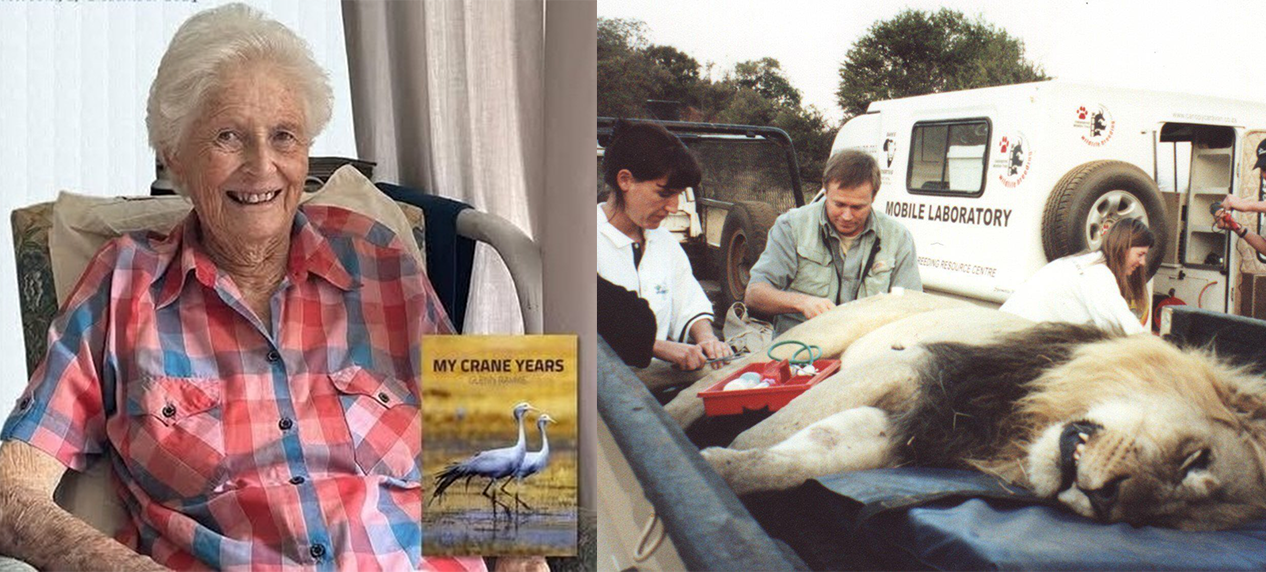
Endangered Wildlife Trust staff this month mourned the passing of two former colleagues who had played an important role not only in their personal development as conservationists, but also within their respective fields of expertise.
Dr Paul Bartels was considered a leader in the use of assisted reproductive technology for wildlife conservation. He was a pioneer in this cutting-edge field which merges science and conservation by aiming to futureproof the genetic composition of captive and wild gene pools when wildlife populations may not be able to do this naturally.
His vision led to the establishment of the first wildlife biobank in Africa—the Wildlife Biological Resource Centre (wBRC), was established in 1996 as a working group within the EWT. The wBRC was dedicated to the collection, processing, banking, use, and distribution of wildlife biomaterials for biodiversity conservation and biotechnology development.
In 1998, the wBRC made global history with the birth of the world’s first artificially inseminated wildlife baby, an eland female called Graca, after South Africa’s then First Lady. The birth of Graca showed the world that the genetics from wild species can still play a role in maintaining genetic diversity, even after the donor animal has died before collection.
Paul’s work was considered of strategic importance, resulting in the wBRC moving from the Endangered Wildlife Trust to the National Zoological Gardens under the National Research Foundation, and later became the National Wildlife Biobank under the South African National Biodiversity Institute (SANBI).
Paul worked for the EWT for more than a decade, and we are deeply saddened by the loss of this visionary leader in biotech and wildlife conservation. We are, however, eternally grateful for the legacy he leaves in the form of cutting-edge science, dozens of empowered and highly trained scientists, an African wildlife biobank and leading science that can be used to save wildlife, support ethically and sustainably food security and secure the genetic diversity and future of dozens of threatened African wildlife species.
Glenn Ramke was not only instrumental in the conceptualisation of community engagement facilitation on issues that affected cranes, but also considered the matriarch and a loved and valuable member of the African Crane Conservation (ACCP) team. Her career at the EWT is outlined in her book My Crane Years.
Announcing her passing, ACCP manager Kerryn Morrison said that Glenn, who was a member of the South African crane team for more than 20 years, left a legacy and is now at peace.
Mwape Sishilongo said Glenn was not only gentle, funny, friendly and knowledgeable, and had showed him his first Blue Crane at Wakkestroom when he visited the area with colleagues Adalbert Aineo-mucunguzi and Bradley Gibbons.
“It was a spiritual experience for me – to have my first Blue Crane fly a full circle around us!,” he said.
Bradley Gibson said Glenn’s death had marked a sad day for him and Samson Phakathi as she had been such a big part of their lives for the best part of 25 years.
“She taught us a lot. She knew all the Wakkerstroom crane pairs and could tell us many stories about each pair. She would spend hours watching them and could monitor the growth of the chicks and the behaviour of the parents,” said Bradley adding the most valuable lesson she taught him was that believing you could do something only became possible when you put your mind to it.
Samson said it was after volunteering for the EWT for two years at Wakkerstroom that it was Glenn who reached out to Kerryn Morrison and Kevin McCann to employ him full-time, marking the start of a relationship characterised by adventures, learnings and above all the love and appreciation for cranes, habitats, and people.
“Glenn honestly believed in me, and she would go out of her way to see to it that I receive all the opportunities and support I needed to make it into the conservation field,” he said.
It was because of their work in Wakkerstroom that an education and awareness initiative was developed in the EWT, with the two running a successful farm worker education and awareness programme, which assisted them to discover new breeding pairs of cranes.
Samson’s words echo those of his colleagues: Glenn was a mentor, teacher, friend, mother figure and a resolute conservationist who taught the EWT’s craniacs to be critical and independent thinkers.