ALL ABOARD THE CONSERVATION EXPRESS
Wendy Collinson, Manager, EWT Wildlife and Transport Programme
wendyc@ewt.org.za
Prior to COVID-19, animals had, over time, adapted their ways in response to our increased transportation networks, namely railways and roads. Many avoided these corridors due to the impact on their survival – that is, a mortality caused by colliding with a train or a vehicle. With fewer people travelling and limited transportation of goods on our rail networks, it has not taken long for wildlife to notice and take advantage of this, reverting to their normal and preferred ways. They are now foraging and hunting through moving back and forth at will between various parts of their habitats, including crossing railways and roads that are now quieter. We have also seen increased animal presence in many of our towns and cities as animal confidence increases due to low human presence.
From a research perspective, this begs the question, what happens as more people return to their usual travel habits? We are presented with a unique, once-in-a-lifetime opportunity and insight into studying animal behaviour from before, during, and after the current restrictions placed on travel. The variation in transport volumes due to different phases of allowed activity for multiple species across the world will be incredibly interesting to monitor. With this in mind, the EWT’s Wildlife and Transport Programme (WTP) is launching two new projects, both supported by GreenMatter, with two Master’s students jumping on board to expand on the work already being undertaken by the programme. Research will be conducted on the Balule Nature Reserve to determine wildlife-rail mortality rates as well as animal behaviour adjacent to the railway. Wendy Collinson, the WTP’s programme manager states that, “whilst we had initially already decided on the focus of these two research projects, we had not anticipated the global pandemic and current travel restrictions. Consequently, these projects have since evolved to incorporate the current situation and will be pioneering in understanding animal behaviour. The research will provide possible answers to the potential difference that can be made to reduce railkill, simply through reducing train volumes on routes, particularly in a protected area or nature reserve”.
In Africa, the expansion of railway networks is associated with the projected rapid urbanisation and the development of mines that will produce large volumes of bulk goods. Railways are essential transportation corridors that facilitate the movement of goods and people, but railways and trains can also negatively affect wildlife through collision mortalities, habitat loss, barrier effects, and disturbances such as noise and light. The occurrence of mortalities due to train collision can contribute to the population decline of wildlife and pose a serious threat to biodiversity conservation. This has been observed in Scandinavia with Reindeer, as well as Black Bear in North America. The occurrences of wildlife mortalities as a result of collision with trains have serious implications in protected areas, such as the Balule Nature Reserve, where the railway traverses the landscape, potentially impacting conservation and wildlife management on the reserve, not to mention the potential costs to Transnet through repairs to the line and train.
Siboniso Thela and Nthabiseng Mampa are two GreenMatter Fellows who will be working in collaboration with the EWT to understand how the Phalaborwa–Hoedspruit railway line in Balule Nature Reserve affects animals. Siboniso has begun his initial fieldwork, under strict conditions, with the correct personal protective equipment and will be examining the differences between seasons and mortalities of mammals on the railway. He has been setting up camera traps adjacent to the railway line to monitor animal movements, as well as what type of animals make use of the railway line. Nthabiseng will determine whether railways act as a barrier against the movement of animals across the landscape, with the unique opportunity of monitoring this during the various stages of the lockdown periods. South Africa has the 10th longest rail network in the world, one of the most advanced in Africa. These lines are used for both passenger transport and freight and cross a variety of landscapes from urban developments to agricultural farmland and wildlife conservation areas, often bringing trains into conflict with wildlife. Almost no attention has been paid to the threat this poses to the country’s biodiversity and the people using the rail network. Therefore, the information gleaned from projects such as this are of extreme importance to conservation and economic development in the country.
Users of our transportation networks need to be mindful that wildlife has become used to our absence. They may not be expecting trains and vehicles and we therefore need to be extra cautious of wildlife activity in these areas, giving them time to adapt back to knowing we are there. Ultimately, as our transportation corridors eventually reopen, we should embrace practices that reflect human-wildlife coexistence, rather than human-wildlife conflict and take the opportunity of this lockdown to reflect and see how we can be more organised in the future to find a balance.
This project is supported by GreenMatter and is a collaborative project amongst the EWT and the Universities of Venda, Witwatersrand, the Swedish University of Agricultural Sciences, Wildlife and Ecological Investments and Transfrontier Africa-Balule. This huge team of experts is devoted to this project and hopes to gain a real understanding of the how animals behave around railways, and what preventative measures can be put in place to curb wildlife mortalities.
SNAKES ON THE PLAIN? THE SOUTHERN ADDER: SMALL, CAMOUFLAGED AND VERY VULNERABLE
Dr Oliver Cowan, Conservation Scientist, EWT Conservation Science Unit
oliverc@ewt.org.za
The Southern Adder was once found in coastal Fynbos plains throughout the Western Cape; however, due to urban development and increased agriculture it is now only found in two disjunct populations: one on the Southern Cape coast; the other along the West Coast. This cryptic, dwarf adder is classified by the IUCN as Vulnerable and its future is in peril due to predicted habitat loss. While its distribution along the Southern Cape coast is fairly well understood, the same cannot be said about the West Coast sub-population. Once considered wild and desolate, the last few decades have seen a rapid rise in coastal development and confirmed observations of the Southern Adder have been few and far between. It was in this context that members of the Conservation Science Unit, alongside collaborators from SANBI, set out at the end of last year to extensively survey suitable habitat along the West Coast as part of the ongoing project to map the distribution of species of conservation concern.
The Southern Adder does not however, want to be found. Indeed, as an ambush predator its livelihood relies on staying hidden – allowing its prey to unwittingly approach within striking range. The species is small (on average the size of a ruler) and highly camouflaged. It is adept at both lying motionless, half covered in sand, and climbing shrubs to seek refuge in the branches. During our week of active searching, trekking for kilometres through sandy soils and prickly Strandveld, we encountered numerous fascinating creatures but did not catch sight of a single Southern Adder. In the sandier areas, we could even find snake tracks, but distinguishing between species is challenging and just as we thought our search had been a success we ended up eye-to-eye with a grumpy Puff Adder, the Southern Adder’s larger and more venomous relation.
The next day we had another near miss, but this time we had something tangible to show for it: a photograph. We had arranged to meet the conservation manager of Grotto Bay Private Nature Reserve to get the lay of the land before surveying the reserve. Upon arrival he showed us a picture one of the residents had sent him from her morning dog walk – a pic of a supposed baby Puff Adder. In fact, the snake in question was clearly a Southern Adder and we rushed off to where the photo had been snapped. Despite spending the entire afternoon scouring the adjacent veld, we could not rediscover it. Nevertheless, we were heartened. The picture was irrefutable proof that the species was still present in the region and provided a valuable new occurrence record! We subsequently reckoned that active searching may not be the most efficient method of locating these serpentine Houdinis and decided to implement Plan B.
Plan B involved using the relationship we had forged with private landowners to implement a longer-term strategy and utilise citizen science. A popular residential model in the area is private nature reserves – large areas containing permanent and holiday residences within fenced-off nature reserves. We had been based at one such reserve, Jakkalsfontein, during the course of our trip and had been allowed by the reserve manager to place coverboards strategically throughout the reserve. These 1×1 metre wooden boards provide cover for reptiles from predators and, by marking their location, we could return to them each day to inspect them. With our time in the field drawing to a close we requested whether we could leave the boards in place and visit them on occasion. Not only was this request granted but the reserve manager kindly volunteered for his own rangers to inspect them when able to do so. In addition, we posted a brief note in the local newsletter explaining the purpose of our work and what residents should do if they encounter a Southern Adder.
The Southern Adder (Bitis armata) found at Jakkalsfontein (photo credit: Nick Telford, SANBI)
Early in the new year we received word that a resident at Jakkalsfontein had found a “slangetjie” (small snake) in the shrubs on his front yard and alerted a ranger who had subsequently caught it. Although I was busy at a workshop, my colleague from SANBI raced up the N7 to confirm the Southern Adder’s identification and take a DNA sample before releasing it unharmed into the reserve. The DNA sample will be used to compare this Western sub-population to its Southern counterpart, with important conservation implications. Furthermore, we have been encouraged by the interest shown by both the land managers and residents of the region for this small, but beautiful creature. So much so that we have tentatively begun exploring the potential to set up and maintain natural corridors between farms and nature reserves to increase habitat connectivity. Increasing connectivity allows for greater dispersal, hopefully preventing genetic bottlenecking which can often occur within isolated populations. If this proves viable, it will be directly attributable to motivated and conservation-minded citizens. But, from the experience of our brief stay in the region, this will be the smallest hurdle to overcome!
We are grateful to Rand Merchant Bank for funding the project; Les from Grotto Bay Private Nature; !Kwha Ttu San Cultural and Heritage Centre; Steyn Marais; Prof. Greta Geert; and Therese Hulme at Jakkalsfontein Private Nature Reserve.
MARKING POWER LINES IN BHUTAN FOR BLACK-NECKED CRANES
Ndzalama Chauke, Junior Field Officer, EWT Wildlife and Energy Programme
ndzalamac@ewt.org.za
The EWT’s Wildlife and Energy Programme was recently able to assist the Royal Society for Protection of Nature (RSPN), an NGO in Bhutan, to mark power lines to reduce potential crane collisions. Lourens Leeuwner, the Wildlife and Energy Programme manager, held a webinar with members of the RSPN, explaining a solution used in South Africa, as part of our strategic partnership with local power utility, Eskom. He also provided the supplier’s details and advised on how to fit the product. The Eskom/EWT partnership has been testing the effectiveness and durability of bird flight diverters, including the Eberhardt Martin Bird Flapper, for over nine years in the Karoo. Results have indicated that the device will reduce collision incidents of crane species by 90%. The team at RSPN elaborates:
“We are writing to update you on exciting new project developments. We suspect much of your work amidst the current COVID-19 pandemic has changed. The current circumstances have barred most of our work as well, especially given our focus on direct community engagement. However, since the situation in Bhutan is relatively stable, we have been able to carry out field work that does not require large gatherings. One important activity has been the marking of key power lines to reduce potential crane collisions. This is the first time such an endeavour has been attempted in Bhutan, and the initial pilot phase looks very promising.
The proactive burying of power lines in Phobjikha, which hosts the largest wintering population in the country (approximately 490 in the winter of 2019-2020), has proved beneficial for cranes as well as the local communities. However, in other wintering habitats, overland power line systems were already laid out. In recent years, we have received a few reports of crane collisions, especially in the central winter habitat of Bumthang. While this habitat only receives a few wintering Black-necked Cranes (5 – 11) annually, it represents how human pressure, and development can displace wildlife from historically important areas. According to community elders, Bumthang used to receive more than 100 Black-necked Cranes in the past.
To ensure a safe environment for the cranes in this area, we have been working with the local community and government stakeholders to consider innovative approaches to conservation and management. For the installation of flight diverters in Tang and Chumey (Bumthang), where power lines are in close proximity to Black-necked Crane roosting sites, we partnered with the Bhutan Power Corporation (BPC), the responsible agency for power line distribution in the country. As recommended by experts from South Africa/ICF, we used Eberhardt Martin Bird Flappers.
We installed 47 diverters in total, with two alternating colours (Yellow and Black with glowing yellow stickers in the centre) at 2.5 m apart. A hot stick was used to install the diverters with help from RSPN and BPC staff. For lines higher than 45-50 feet, the hot stick was not rigid enough to hang the diverters in the right position. For the higher tensioned power lines, a crane would be needed for installation, though the cost for operation would increase. These efforts represent the pilot phase of a long-term project to safeguard Bhutan’s wintering crane populations by mitigating the impact of energy development and distribution in-country. Our team intends to keep a close eye on these sites in the fall to assess the efficacy of these early efforts. RSPN and BPC are presently discussing plans to scale up these initial efforts in additional habitats. We are also considering the use of this technology in the riverine territories of the critically endangered, White-bellied Heron, a species that is arguably more vulnerable to power line collisions and the impacts of energy development.
RABBIT IN THE HEADLIGHTS
Innocent Buthelezi, Field Officer, EWT Wildlife and Transport Programme
innocentb@ewt.org.za
Have you ever wondered what the difference is between a rabbit and a hare?
Many people often get confused between rabbits and hares, or simply refer to them all as ‘bunnies’. In South Africa, we have three hare species – the Scrub Hare, Cape Hare and African Savannah Hare, and several rabbit species; these include a number of Rock Rabbit species and the Critically Endangered Riverine Rabbit, which the EWT’s Drylands Conservation Programme is working to conserve. Despite its name, the Spring Hare is not in the ‘bunny’ family but is more related to rodents!
Facts about South Africa’s best-known bunny
Hares are much larger than rabbits, with longer hind legs and ears. The Scrub Hare has a distinct colouration, with a white stomach and a brown-grey back with black-flecks, giving the coat a grizzled appearance. Its tail is like that of a typical bunny – a fluffy marshmallow look, which is black on top and white underneath. Probably its most distinguishing feature is its enormous doe-like eyes and long, pointy ears. And you see them everywhere – they are found all over the country.
To see them, you have to be out at night, as they are nocturnal. They also prefer open areas so they can spot potential predators. They are very good at hiding from predators during the day and often create a small dent in the ground and lie flat in a motionless form, with their ears tucked back to their shoulders. If they remain motionless, predators cannot detect them because their coloration blends in with the scrubland and vegetation. A big difference between rabbits and hares is that rabbits nest in burrows, underground, whilst hares nest above ground.
What’s a baby bunny called?
Baby rabbits are called kittens or bunnies whilst baby hares are called leverets – and a female can have between 1-3 per litter as many as four times a year. In general, you will only ever see them alone, except during the breeding period between September and February.
Favourite food
Just like your pet bunny, Scrub Hares are herbivores, but they don’t live on lettuce! They prefer green grass. They also practice coprophagia, which is the consumption of dung and helps them maximise digestion. It doesn’t sound very tasty!
Bunny abundance and threats
According to the IUCN Red List, the total population of Scrub Hares is more than 10,000 individuals. That’s a lot of bunnies although some experts say their numbers are dropping. As with many wildlife species, this is mainly due to habitat fragmentation, commercial plantations, hunting (for traditional medicines, bushmeat and for fur) and roads.
Scrub Hares are renowned for running onto the road at night, and then when they see the headlights of a vehicle – they treat it like a predator. They zig-zag as they run to try and escape into the shadows, or stand still, startled and blinded by the headlights – this is often to their demise, and eventually the vehicle runs them down, and they become roadkill.
The EWT’s Wildlife and Transport Programme has been recording animal road mortalities since 2011, and the Scrub Hare is by far the most common roadkill, with almost 1,000 reported by members of the public and toll concessionaire companies Bakwena, N3TC and TRAC N4 over a three year period. Due to their abundance, it is often challenging to obtain support to reduce the threats from roads to this humble species – but they can cause damage to vehicles when hit, as well as cause secondary roadkill to larger species who may come onto the road to scavenge on them. Therefore, it is critical that we make an effort now to prevent their demise on roads through creating safe crossing points and utilising the culverts underneath the road.
‘You can’t shut the stable door after the horse has bolted’ – so whilst the Scrub Hare seems to be flourishing at the moment, there may come a day when unlawful hunting, the loss of natural areas, and roadkill will place them alongside the Critically Endangered Riverine Rabbit.
Please report any roadkill sightings to roads@ewt.org.za or download our app, EWT Road Watch, from Google Play.
The core supporters of the Wildlife and Transport Programme are Bakwena Platinum Corridor Concessionaire, De Beers Group of Companies, Ford Wildlife Foundation, N3 Toll Concession and TRAC N4, dedicated to minimising the negative interactions between wildlife and transport infrastructure.
GIVING TUESDAY NOW
The EWT is excited to be participating in Giving Tuesday Now, a new global day of giving and unity that will take place on 5 May 2020 – in addition to the regularly scheduled 1 December 2020 Giving Tuesday – as an emergency response to the unprecedented need caused by COVID-19. Giving Tuesday Now is an opportunity for people around the world to stand together in unity – to use their individual power of generosity to remain connected and heal. During these unprecedented times, when we are all experiencing the pandemic, generosity is what brings us together, and allows us to stay connected through kindness, even as we are physically apart.
We are living through history, and the only thing one can be certain of right now is that change will continue to define our lives for the foreseeable future. It is safe to say that the world will never be as we knew it to be just a few months ago. In itself, this may not be a bad thing and we have a unique opportunity to rewrite the story of humankind’s modern colonisation of Planet Earth, and to redefine what it means to live in harmony with each other and sustainably with Mother Nature, going forward.
Conservation and wildlife protection are deemed essential services under the current lockdown regulations, which has allowed the EWT to continue undertaking critical conservation work in the interests of saving some of our most threatened species. In recent weeks, our team members have continued to work tirelessly to relocate Cheetahs and Wild Dogs, and respond to calls for animals in distress such as injured raptors, cranes and snared Wild Dogs.
The EWT’s continued fight to save our wildlife does not just benefit those species. We are working tirelessly to support our rural communities whose livelihoods have been suspended, through the provision of skills development and training resources, online capacity building courses, water provision and even food parcel delivery. Many of our staff members are contributing, in their personal capacity, to food provision for the most vulnerable, and the spirit of Ubuntu runs deep in our culture.
We’re sharing the stories of a few of the Conservation Champions who have made a difference to the EWT in the past.
Conservation Champions Mandy Quin and Stephen Tregoning from Quinn Real Estate in Bedfordview have always been avid fans of our Country Club talks and supporters of the EWT especially our work on carnivore conservation. We caught up with them to find out more about why they choose to give to the EWT:
“We are thankful to be in a position to contribute, and give because of our passion for wildlife. We choose to support the EWT because of their tireless commitment to the conservation and preservation of Africa’s wildlife. Knowing that our contribution may make even a small difference to the conservation and preservation of wildlife is very meaningful. Our top tip for others who wish to make a difference is that you shouldn’t think your contribution is small – it could be the difference that could offer the support required.”
Conservation Champion Shaun Schneier, a philanthropist living in Cape Town, is a long-time supporter of the EWT. Shaun’s background is marine environmental science and coastal management as well as environmental economics. We caught up with him to find out more about why he chooses to give to the EWT:
“I believe their mission is vitally important and that the EWT selects important projects and is professionally and competently run as an organisation. This makes it gratifying to assist the EWT by giving in order for them to keep protecting endangered species. If you are considering becoming a donor, my top tip is to choose an organisation with sound objectives, that has a proven track record, issues tax certificates and has professional and competent staff.”
Want to be a Conservation Champion too? There are so many ways to make a difference. You could make a donation, no matter the size, towards our Giving Tuesday Now target of R50,000 at https://www.givengain.com/cc/help-us-to-help-them-during-the-fight-against-covid19/ or you could start an online fundraiser and encourage all your friends to get involved! To find out more, contact Tammy Baker at TammyB@ewt.org.za
[vc_row][vc_column][vc_row_inner css=”.vc_custom_1564132218313{margin-right: 2% !important;margin-left: 2% !important;}”][vc_column_inner width=”2/3″ css=”.vc_custom_1564134365074{padding-right: 8% !important;padding-left: 8% !important;}”][vc_column_text]
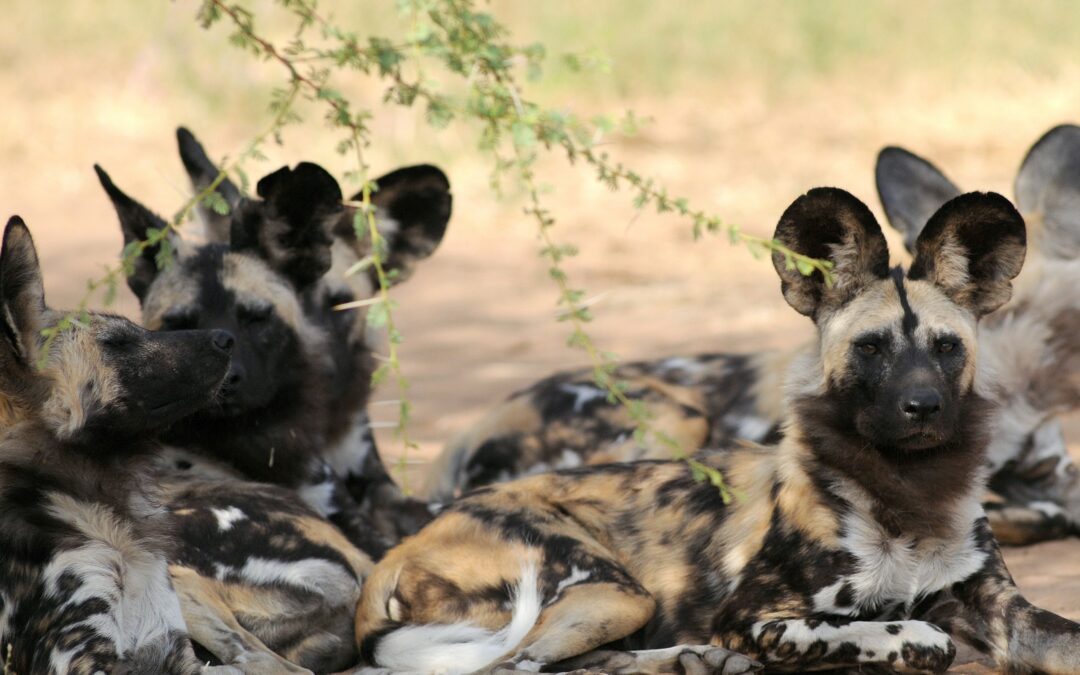
SCIENCE SNIPPET: WILD DOGS – SOUTH AFRICA’S MOST ENDANGERED CARNIVORE
[/vc_column_text][vc_single_image image=”5468″ img_size=”full” alignment=”center”][vc_column_text]Samantha Nicholson, Science Officer and African Lion Database Coordinator, EWT Conservation Science Unit
SamanthaN@ewt.org.za
[/vc_column_text][vc_column_text]Across Africa, there are only an estimated 6,600 Wild Dogs that occur in the wild, making them the continent’s 2nd most Endangered carnivore behind the Ethiopian Wolf. In Africa, Wild Dogs inhabit only 14 of the 39 countries where they historically occurred, having lost approximately 93% of their historic range due to habitat loss and a rapidly expanding human population. Sadly, this species faces many other threats such as loss of prey, conflict-related killings, snaring and roadkill incidents.
In a recent published study (Nicholson, S. K., Marneweck, D. G., Lindsey, P. A., Marnewick, K. & Davies-Mostert, H. T. 2020. A 20-year review of the status and distribution of African Wild Dogs (Lycaon pictus) in South Africa. African Journal of Wildlife Research 50: 8-19.), we completed a national assessment of the status and distribution of South Africa’s population of Wild Dogs – the country’s most Endangered carnivore. We looked at two decades of population and distribution data for the species, from 1998 to 2017, and found some interesting results.
South Africa is considered to have three subpopulations of Wild Dogs:
1) The Kruger National Park
2) A managed metapopulation that has been established through reintroductions into isolated, fenced reserves across the country
3) A free-roaming population that occurs naturally outside protected areas – predominantly in KwaZulu-Natal, Limpopo and Mpumalanga provinces.
For the study period, the Kruger population has generally averaged 163 adults and yearlings and although the population growth has declined slightly, the population has remained stable through the years. Kruger has consistently supported the highest proportion of the national population of Wild Dogs over the last two decades.
South Africa’s managed metapopulation is made up of a series of individual reserves with intensive management among the reserves, to ensure that there is genetic flow between them. This subpopulation is managed by the Endangered Wildlife Trust and the Wild Dog Advisory Group (WAG). The number of metapopulation reserves has increased over the years, and the average annual population is 108 adults and yearlings. The metapopulation is the only subpopulation that has increased significantly over time and this is due to intensive conservation efforts and the reintroduction of Wild Dogs into 15 additional reserves since 1998. The contribution of the metapopulation to South Africa’s national population has increased significantly over time.
Free-roaming Wild Dogs make up the smallest subpopulation in the country with an average annual population of approximately 79 adults and yearlings. This subpopulation faces the largest number of threats as it is largely unprotected and generally outside of protected areas.
The overall South African population of Wild Dogs has remained stable for our study period and while it is a small population (< 500 individuals), the good news is that it is increasing.[/vc_column_text][vc_single_image image=”5469″ img_size=”large” add_caption=”yes”][vc_single_image image=”5470″ img_size=”large” add_caption=”yes”][/vc_column_inner][vc_column_inner width=”1/3″][vc_column_text css=”.vc_custom_1566891493571{margin-top: 8px !important;border-bottom-width: 6px !important;}”]
LATEST STORIES
[/vc_column_text][vc_widget_sidebar sidebar_id=”cs-1″][/vc_column_inner][/vc_row_inner][/vc_column][/vc_row][vc_row][vc_column width=”1/3″][vc_googleplus][/vc_column][vc_column width=”1/3″][vc_facebook][/vc_column][vc_column width=”1/3″][vc_tweetmeme][/vc_column][/vc_row]
GRASS-OWL SURVEYS PUT ON HOLD
Rebothile Rachuene, African Grass-owl Project Field Officer, EWT Birds of Prey Programme
TselaneR@ewt.org.za
The African Grass-owl Project has recently done its first pre-season nest check survey in the Mpumalanga province. Amidst the coronavirus pandemic, the project field officer, Rebotile Rachuene, was well prepared and took all the precautions to perform this much-needed survey at this time – the species’ peak breeding period. He was joined by the Wildlife and Transport Programme field officer, Innocent Buthelezi, who helped to look for the active nests in the thick, tall and dense grasses around the wetlands/vleis/water streams. A total of four key known breeding sites were targeted and searched intensively, looking for the nests. After a few hours of searching in these dense grasses, the team discovered two nests from two different territories. The first active nest to be discovered was from the 1km-long grass site which had one freshly laid egg of about four days old. The second, 4-egg nest was discovered from a separate territory and was estimated to be about ten days old. This is a very good start for the project for this season, with most known breeding sites being in a suitable condition to support nesting requirements. Apart from these exciting results from the survey, the team also observed around 20 Marsh Owl individuals in total from all four Grass-owl breeding sites. These are indeed the most critical sites for these two ground nesting owl species within the fragmented landscape of Mpumalanga province. For this season, the project is focusing on implementing its conservation measures which are driven by over a decade research data. Our main objective is to protect all the known breeding habitats against anthropogenic activities such farming, mining and development. A number of strategies to achieve this are planned, such as fire break maintenance around these habitats, offering protection against the fires which are often destroying over 60% of them. We are also aiming to trial the restoration of the African Grass-owl habitats which were lost through the land changes caused by opencast mining in the Mpumalanga province. For us to achieve most of these objectives, we will be engaging with lots of partners and stakeholders such as landowners and communities around these areas. While we will be working towards achieving this goal, we are monitoring approximately ten key breeding sites which have been secured for nesting for the past 3-6 years for the owls. We will also continue to monitor the breeding pairs, ring the fledglings for a dispersal study, and educate the communities about the importance of protecting these habitats for the benefit of the ecosystem and human beings. However, the current global COVID-19 situation and national lockdown has put our fieldwork on hold at this time, when the owls are actively nesting.
COLLABORATIVE CONSERVATION
Dr Joseph Mwangi, Kenya Country Coordinator, EWT African Crane Conservation Programme
JosephM@ewt.org.za
The African Crane Conservation Programme (ACCP) under the ICF/ EWT partnership, recently formalised their conservation partnership with local communities by signing conservation agreements. A conservation agreement is a formal voluntary partnership between conservation bodies and local communities geared towards conserving biodiversity while improving the quality of life for local communities. Grey Crowned Cranes in Kenya are predominantly found outside protected areas in wetlands surrounded by community lands. These community wetlands are critical habitats for Grey Crowned Crane survival, especially for breeding, but communities are also dependent on the ecosystem goods and services offered by these wetlands for their livelihoods.
The ACCP, in partnership with community members, is working to maintain the ecological integrity of wetlands in western Kenya as Grey Crowned Crane habitats, as well as contribute to communities’ wellbeing. Through this initiative, we aim to reverse the downward population trend in Grey Crowned Cranes, a species currently Endangered with a population that has declined by over 50% in 19 years (BirdLife International 2020). By signing the agreements, the ACCP, through its local Kenyan partner organisations Kipsaina Crane and Wetland Conservation Group and Community Action for Nature Conservation (CANCO) committed to assist the community groups establish income-generating alternative resilient livelihood options to reduce over reliance on wetlands as their main source of livelihoods.This was a culmination of a long community-led initiative facilitated by the ACCP to identify priority livelihood projects that can improve the economic wellbeing of the communities, and consequently decrease reliance on the wetlands. Identification of alternative livelihoods was through a community participatory process, with the ACCP only providing guidance and facilitation. All the projects were identified by community members and endorsed by conservation stakeholders in the region of implementation, local and national government. The ACCP signed conservation agreements with community groups neighbouring three key wetlands in Kenya of King’wal, Saiwa and Sio Siteko. These brought together 11 community groups with a total membership of 199 members (67 male and 132 females).
Through the partnership, community groups made conservation commitments to refrain from farming in the wetlands, report capture of Grey Crowned Cranes, and create a buffer zone between their farms and the wetland boundary by planting indigenous trees and other wetland friendly vegetation, while acting as crane ambassadors in their areas to educate others on the importance of wetlands and the threats facing Grey Crowned Cranes. In return, the ACCP agreed to:
- Assist three self-help groups located in Lower part of King’wal wetland in Nandi County start up a tea and tree nursery livelihood business,
- Assist four groups in upper King’wal wetland located in Nandi County and one group neighbouring Saiwa wetland in Trans Nzoia County start up beekeeping businesses, and
- Assist one community group bordering Aaiwa wetland, Trans Nzoia County and two groups neighbouring Sio Siteko wetland, Busia County to start up poultry keeping businesses.
The partnership is already showing results, with increased reporting of crane sightings and breeding records by local community members, cutting down of Eucalyptus trees along wetland boundaries and planting of Indigenous trees, and reporting of poaching incidences by community members.
SAVING LIVES WITH CAMERA TRAPS
Wendy Collinson, Manager, EWT Wildlife and Transport Programme
WendyC@ewt.org.za
The N3 Toll Concession (N3TC) started collecting records of animals killed on their roads in 2011, and as part of their ongoing safety programme began working with the EWT’s Wildlife and Transport Programme (WTP) to address the concerns they had in this regard. Since 2014, the WTP has provided training to their staff responsible for patrolling the N3 route and dealing with safety hazards such as dead animals on the road, analysing the data they have collected to date with a view to implementing actions to reduce the number of animals killed on their route; and, providing quarterly reports with directions for future work.As a result of our partnership, we have identified roadkill hotspots through the production of a roadkill sensitivity map, as well as publishing national guidelines to minimise the impacts of roads on wildlife. Of almost 2,500 roadkill data points received from N3TC, we have identified sections of the route where roadkill reports are highest and generated maps to highlight this.
From the roadkill hotspot sections of the route, we undertook site visits to assess areas where mitigation could take place through looking at existing road structures to determine how they benefit wildlife. We identified sites to deploy cameras rotated between different culverts / tunnels under the N3 in 2019, to determine which species occurred in the vicinity of, and which species actually used the crossing structures to move from one side of the road to the other.
Although these structures were mostly not built or erected for the express purpose of being wildlife passages, the hypothesis is that some structures will still fulfil this function. Currently there is little data available on the benefits of existing structures in South Africa that highlight areas where wildlife utilise crossings. Therefore, surveys will enable us to obtain a quick and cost-effective method of gaining a greater understanding of these benefits and propose appropriate recommendations to existing structures to address the threat of roads to wildlife. We have identified a number of species using these corridors, such as porcupine, mongoose and Serval. Based on data received from the camera traps, it is apparent that some species are definitely electing to use the structures beneath the road as safer options to cross the road, so we are now embarking on a project to actively direct animals towards the culverts under the road.
For small vertebrates (i.e. amphibians, reptiles and rabbit-size and smaller), low-level mesh fences have proven successful when added to the roadside verge to guide the individuals towards passages. Whilst this method is unlikely to prevent animals larger than a rabbit from crossing a road, it may aid in preventing scavenging by the meso-carnivores as well as owls or other birds of prey, since much of their prey should be prevented from crossing the road by the fence and ‘forced’ to use the culverts instead. This ultimately not only saves wildlife from becoming roadkill but can save human lives through preventing collisions resulting in vehicle damage, injury or death to vehicle occupants.
Watch this space for more updates and thank you to the route patrollers on the N3TC, Bakwena and TRAC N4 routes who continue to work during this difficult period to keep those working in the essential services and having to use roads safe!
LION CONSERVATION IN THE GREAT LIMPOPO TRANSFRONTIER CONSERVATION AREA
Marnus Roodbol, Lion Conservation Field Officer, EWT Carnivore Conservation Programme
MarnusR@ewt.org.za
The African Lion is an iconic species that represents strength and courage to many cultures around the globe. As a flagship and umbrella species, protecting Lions also protects the millions of animals that share their habitat. Despite their importance as apex predators and cultural significance, they are under threat. An estimated 200,000 lions once roamed across the African continent. Over the last hundred years, Lions have disappeared from 95% of their historic range. This has coincided with a severe decline in population. Only 23,000–39,000 mature individuals remained in Africa in 2015, and some estimates suggest that there may currently be as few as 20,000 individuals remaining. The main cause of this catastrophic decline is the loss of Lion habitat and prey caused by human expansion. Lions pose a risk to human livelihoods, particularly livestock farming, and to human life. This has caused people to kill Lions and other predators in retaliation for loss of property or out of fear. The historical landscapes once belonging to lions have swiftly disappeared into agricultural spaces, which brings forth new human-related conflict issues.
One of the most effective, and most destructive, methods used to kill Lions and other predators is poison. Pesticides such as Temik and carbofuran are freely available in local agricultural stores. They are used in across Africa to combat bacterial, fungal, and insect infestations in their crops. These pesticides don’t only kill insects. When carnivores kill livestock, farmers lace the livestock carcass with these poisons. While this is often highly effective in killing the offending Lion, it also kills large numbers of scavengers, including Leopards, hyaenas, jackals, and vultures. The impact on vultures and other raptors is particularly severe. According to records maintained by the EWT’s Vultures for Africa Programme, more than 1,200 vultures were poisoned across southern and East Africa in 2019. In late February 2020, more than 1,000 vultures, mostly the Endangered Hooded Vulture, died in a mass poisoning incident in Guinea-Bissau.
Wild Lion populations have faced numerous challenges during the last two decades. In addition to conflict with humans, Lion body parts have been used for centuries across the African continent to capture the strength and courage of the mighty Lion and cure various human bodily ailments. However, the trade of body parts in east and southern Africa was not as frequent before demand from Asia infiltrated into the local market, thus fuelling the demand and exposing free roaming populations to an increased threat of poaching for body parts. It is believed that this new demand originated as an offshoot of the tiger bone industry in Asia. As tiger populations dwindled, demand for a substitute species increased. The targeted poaching of Lions for their body parts is now on the rise as wildlife markets try to meet the demand for Lion parts from a growing human population in Africa and in the relatively new Asian markets. The pragmatic requirements of survival in rural communities that live in Lion range interact with traditional mythological and ceremonial perceptions of Lions. The desire to protect property and human life, to supplement meagre incomes, and for a rapidly growing population to participate in ancient traditions that use Lion body parts fuel the looming threat of widespread poisoning of Lions and severe impacts on entire ecosystems.
The Great Limpopo Transfrontier Conservation Area (GLTFCA), which includes Kruger National Park, in South Africa, and Limpopo National Park, in Mozambique, is one of the last ten Lion strongholds in Africa. These strongholds occur in formally protected areas and contain a stable or increasing population of at least 500 Lions. Impoverished pastoral communities along the boundaries of this conservation area resort to illegally killing Lions both in retaliation for livestock losses and for the potential income they can earn by selling their body parts. Protecting this population of Lions requires a multi-pronged approach. We have partnered with Peace Parks Foundation (PPF) in Mozambique to address the targeted poisoning of Lions. We will monitor Lion prides across the landscape using GPS satellite collars. By understanding their movements and habitat use, we can inform anti-poaching patrols to better protect areas that are important to these prides. Through our Vultures for Africa Programme, we will also provide Poison Intervention Training for rangers in both South Africa and Mozambique so that first responders are equipped to safely protect evidence and decontaminate sites to reduce the impact of the poison on the ecosystem. Our Wildlife in Trade Programme will provide training to Mozambican customs officials that will enable them to identify the parts of Lions and other priority species and to distinguish them from similar legally graded species. Through PPF and their Herding 4 Health Programme, we will work with local communities to provide an early warning system when collared Lions approach communities. Finally, we are working with Freeland to identify and disrupt Illegal Wildlife Trade routes used to get Lion parts to both local and Asian markets. Protecting this critical and threatened Lion population requires evidence-based and culturally sensitive solutions. Over the next three years, we will work with our partners to develop these solutions and to stop targeted Lion poisoning in the GLTFCA.
This work is funded by the UK Government through the Illegal Wildlife Trade Challenge Fund.
