LEAVE A LEGACY FOR LIFE: WILLS WEEK 2020
Emily Taylor, EWT Communications Officer, emilyt@ewt.org.za
The EWT celebrated Wills Week from the 26–30 October 2020. During this week, we highlighted the importance of having an up-to-date will to ensure the fulfilment of your last wishes, and that including in your will a bequest to an organisation like the EWT is a perfect way to ensure that your legacy contributes to a better future for our planet. And donations to the EWT from your estate also qualify for tax relief on your estate, which means that your beneficiaries benefit more.
Established in Clive Walker’s garage in the 1970s, the Endangered Wildlife Trust has steadily grown into an international conservation NGO with a staff of over 100, saving threatened species and ecosystems across southern and eastern Africa. The EWT is proud of the positive impact we have had on some of Africa’s most endangered wildlife over the past 48 years, all of which was done with our strong partners and loyal supporters. With your support, and that of many before you, we have taken conservation in Africa to new heights. As a trust reliant entirely on donor funding, we haven’t done this alone. Our legacy has been borne and carried by the support we have received, and much of our work is only made possible through bequests. You can become an integral part of wildlife conservation when you join the EWT family, working together to save the species and natural spaces on our beautiful continent.
The EWT has been privileged to receive bequests from the following individuals, and through their generosity, we have achieved significant milestones in species conservation and habitat protection, and we extend our sincerest thanks.Bequests received 2019/20
Harvey Trust
Simmon Estate
Yvonne Morris
Conor Tomlin
Gaynor Estate
BA Nicholson
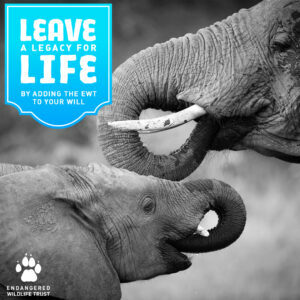 None of us can avoid the need to have an up-to-date will that ensures that our last wishes are carried out, and our legacy is continued in the way that we want it to. We have joined forces with Capital Legacy to make the process as simple as possible. Capital Legacy is also committed to protecting forever, together, and for every Legacy Protection Plan™ referral they receive from the EWT, they will make a donation to our critical conservation work. Please use this link if you would like to use their services and please specify that you are an EWT supporter The EWT Forever Forest
All bequests made to the EWT create legacies for life that are immeasurable and remembered through the survival of our Endangered species and their wild spaces. However, as an organisation, we feel it is important to do more to celebrate the legacies bequeathed to us, and the contribution they make towards protecting forever, together. To this end, we have created a Forever Forest on our Conservation Campus in Midrand, in which we plant an indigenous Forever tree for each person who leaves a Legacy for Life, providing a living memorial that will be cared for and continue to grow for generations to come!
Forever Forests are beautiful, tranquil places for friends and family to gather, pay tribute, heal, remember, and to celebrate all life. If you yearn for a better future for your children, leave a Legacy for Life by remembering the EWT in your will, and help us to secure the health of our planet and its wildlife, beyond your lifetime.
For more information, contact Tammyb@ewt.org.za
SOME OF OUR FASCINATING SCIENCE SATURDAY POSTS
GUARDIANS OF THE FUTURE
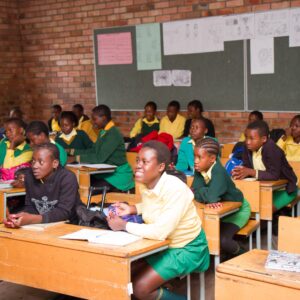
Even though the kids are back at school, our fun, curriculum-aligned Guardians of the Future education resources are still available online to boost the knowledge that your kids are learning in class. There are also educator resources that can be used by parents and teachers to guide you through engaging activities that cover curriculum content and incorporate the learning processes and design skills required for that topic.
Have a look at our Curriculum Boosters here: https://ewt.org/resources/educational-material-3/ and contact emilyt@ewt.org.za to tell us what you think!
A POWERFUL PARTNERSHIP LEADING THE WAY FOR CONSERVATION IN GAUTENG
Emily Taylor, Project Coordinator, EWT’s People in Conservation Programme, emilyt@ewt.org.za
“Stewardship” is the careful and responsible management of something entrusted to one’s care.
www.merriam-webster.com/dictionary/stewardship
What makes nature so enchanting and why it has us all hooked is that there is always more to learn, discover and benefit from it – we can never know enough! The range of benefits that nature provides to us is not a new discovery. A disconnect between people and the natural chains of production has been created through the rapid growth of cities and infrastructure providing electricity and running water, and the instant availability of food and other necessities. Many people are under the illusion that we do not need nature to provide anything for us in urban areas.
The growth and development of our cities, and the impacts they are having on human and environmental health, have collectively revealed the critical services that green spaces and wildlife provide for humans, even in these transformed landscapes. The towns and cities that we construct, and the preparation of land for agricultural purposes, transform natural landscapes. However, cities and agricultural activities also depend on the ecosystem services provided by natural landscapes to function effectively. It is increasingly clear that natural or semi-natural areas in and around urbanised landscapes need to be conserved, just as we need to conserve the vast and more untransformed rural landscapes.
Located in the Grassland Biome, Gauteng is the smallest and most prosperous province in South Africa with the highest population density, socio-economic pressures, and competition for land use. The rapid transformation of the province’s Critically Endangered natural grasslands is jeopardising the ecosystem services that they provide.
Grasslands are not often associated with a wealth of wildlife, but they are indeed second only to Fynbos in species richness and play an essential role in the mitigation of climate change through their capacity for carbon sequestration (carbon capture and the long-term storage of atmospheric carbon dioxide). Therefore, they help reduce the effects of climate change.
The wetlands, drainage features, and the groundwater stores associated with grasslands also provide critical services, including water provision, maintaining water quality, and regulating floods. The conservation of Gauteng’s grasslands and these related services is identified as a high priority in the national and provincial Protected Area Expansion Strategies (NPAES and GPAES).
Unfortunately, the multiple and urgent competing land and resource uses have resulted in limited available options for securing protected area targets. Furthermore, the majority of the land is fragmented into small portions and privately owned. Efforts to conserve threatened grassland areas need to involve private and communal landowners and communities, and the support of provincial conservation officers. In response to this need, the Gauteng Biodiversity Stewardship Programme (GBSP) was established in 2015 as a partnership between an environmental NGO, the Endangered Wildlife Trust (EWT) and the Gauteng Department of Agriculture and Rural Development (GDARD), funded by the WWF Nedbank Green Trust.The success of this conservation Programme can perhaps be measured by what GDARD’s protect partners and project evaluators say. “It is clear in evaluating the Gauteng Biodiversity Stewardship Programme that biodiversity stewardship has been enthusiastically embraced within GDARD,” said a 2019 GSBP assessment. “The levels of support provided by the GDARD Scientific Services and Legal Services and the apparent value that they have seen in the programme are testament to how it has become entrenched within the organisation.”
External programme evaluation report from Conservation Matters (NGO)
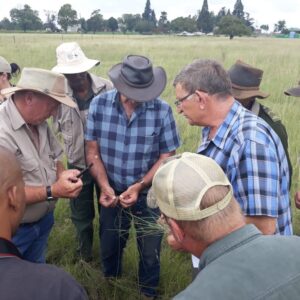
Biodiversity stewardship (BDS) is a landscape approach to conservation that preserves habitats, the wildlife that occupies them, the ecosystem services that they provide, and the livelihoods derived from them by local communities. The approach is truly collaborative. It involves the establishment of positive, proactive partnerships between conservation authorities, municipalities, NGOs, other government entities, and private and communal landowners. These partnerships are forged to support and encourage these landowners as they take on the responsibility of managing and protecting the natural assets that are in their care.]  The EWT works with partners on several BDS projects around the country, determined to preserve and expand areas of conservation priority. BDS projects are intended to increase connectivity between natural spaces to facilitate increased migration of wildlife, and in turn, genetic diversity within populations, and reduce the burden on overpopulated habitats. The GBSP partnership aimed to build on the EWT’s BDS experience, and that of other partners, to develop the capacity within the GDARD to implement the BDS process in the province in the future and to publish the intent to declare of at least 5,000 hectares of high priority conservation land, as a working case study. On 2 October 2019, after four years of hard work and perseverance, the declaration notices for the Klipkraal Protected Area (KPA), the Devon Protected Environment (DPE), and the Crocodile River Reserve (CRR) were published in the government gazette (no. 302, Notice no. 967 of 2019). This gazette legally declared these sites as protected areas under the National Environmental Management: Protected Areas Act, 57 of 2003 (NEM: PAA), adding 13,256 hectares to South Africa’s conservation estate. The KPA, situated in the Midvaal Local Municipality, includes 2,656 ha owned by two landowners. Species of conservation concern present on the site include amongst others, Secretarybirds, Caracal, and Khadia beswickii, a plant species classified as vulnerable. The site also features cultural heritage features dating back from the Early to Middle Stone Age, tools from the Late Stone Age, and Late Iron Age ruins. The site offers self-catering accommodation, hiking trails and a wedding venue, and has featured in many outdoor magazines. Please see www.klipskuur.co.za for more information. The Devon Protected Environment (DPE) is situated in the Lesedi Local Municipality and comprises 7,979 ha, owned by seven landowners. This area is ecologically important for its natural grasslands and wetlands and is registered as an Important Bird and Biodiversity Area by BirdLife South Africa. More than 17 bird species of conservation concern occur in the broader area, including the Secretarybird, Blue Crane, Greater Flamingo, Black Harrier and Wattled Crane. The declaration of the DPE also affords legal protection to a portion of one of South Africa’s 22 identified Strategic Water Source Areas (SWA), as the DPE is situated near to the Upper Vaal Catchment. The properties within the DPE also contain structures of cultural and heritage value such as gravesites dating back to 1919, and old buildings dating back to the 1930s ]
 The Crocodile River Reserve (CRR) contains 2,620 ha of beautiful grassland habitat situated in the City of Tshwane Metropolitan Municipality, in the buffer zone of the Cradle of Humankind World Heritage Site and the Magaliesberg Biosphere Reserve. In addition to providing legal protection to many species of conservation concern, it also preserves threatened ecosystems, vegetation types and the Jukskei, Hennops, and Crocodile rivers. The CRR is also rich in cultural heritage features. These include the stone-walled settlement sites from the Late Iron Age (500–150 years ago) and post-colonial historical sites, including the location in which gold was first discovered in 1853. The CRR conducts regular public information days on topics such as stargazing, geology, and grassland ecology to raise awareness on the conservation value of the area, and local schools are invited to visit the reserve. Don’t worry if you have not visited Gauteng’s conservation ‘islands’ because we can now give you a quick online tour of these beautiful lands. Visit the CRR social media for exciting sightings and information about the wildlife occurring on the border of one of the most urbanised areas in Africa. www.crocodileriverreserve.co.za Not only has the GBSP succeeded in its objectives and expanded Gauteng’s protected area network by over 13,000 hectares, but the Programme has also had further benefits for both landowners and communities, for the government stakeholders involved, and for environmental organisations operating in the landscape. One of the most valuable outcomes of the GBSP has been the increased collaboration between units within the GDARD, particularly between the BDS unit and the Scientific Services officials on the ground. These officials have been essential to the work of the GBSP in the site selection, assessment, and management planning phases. They have, in turn, benefited by increased access to privately owned sites that were previously inaccessible, and therefore excluded, from provincial biodiversity assessments. This access has improved the accuracy of ecological assessments, and in turn conservation planning tools, for the Gauteng Province.
The GDARD Biodiversity Stewardship Unit will continue to build on the tremendous work achieved by the GBSP, supporting the declared sites and engaging landowners of additional priority sites. To maintain the momentum of the GBSP, the GDARD and the EWT are extending our strategic partnership and establishing a Gauteng Biodiversity Stewardship Working Group to continue to support each other, private and communal landowners, and other stakeholders involved in conservation-related activities in Gauteng. It is to this strong partnership and open, consistent, and transparent engagement between the GBSP team and landowners that we attribute the GBSP’s success Trust, collaboration, and consistency are fundamental to the success of biodiversity stewardship. The GBSP team would like to thank the landowners of the KPA, DPE, and CRR for trusting the team and the process. We thank them also, for their unwavering determination to legally protect the unique biodiversity of the province, for future generations to enjoy. These landowners are true ambassadors for biodiversity stewardship, and champions of conservation. To our partners and the greater BDS community of practice, particularly members of the National Biodiversity Stewardship Technical Working Group, we are sincerely grateful for the support, knowledge sharing, and many capacity-building opportunities provided. “We were impressed with the commitment, enthusiasm and professionalism of the staff involved with the process – this is what brought us on board,”
GBSP Protected Area landowner
The GDARD and the EWT are very grateful to the WWF Nedbank Green Trust for supporting the establishment of the GBSP and catalyse the implementation of biodiversity stewardship in the province, including the facilitating the conservation of irreplaceable natural areas in Gauteng, despite the extreme economic pressures for the rapid development of natural open spaces.
In loving memory of Maurice Leonard and Mercia Komen, two of the first private landowners to trust in the GBSP and champion Biodiversity stewardship in Gauteng. They left a legacy of life that will be preserved into perpetuity. May they rest in peace.
A WORD FROM THE CEO
Yolan Friedmann, EWT CEO
yolanf@ewt.org.za
A key question we are often asked these days is whether the lockdown has benefitted rhino and reduced poaching in general. With rhino poaching having escalated in recent years, and species like elephant and lions beginning to show worrying poaching trends in South Africa, one would hope that the strict lockdown regulations that crippled our economy and disrupted lives, would have at least benefitted species whose existence is being threatened by the illegal wildlife trade.
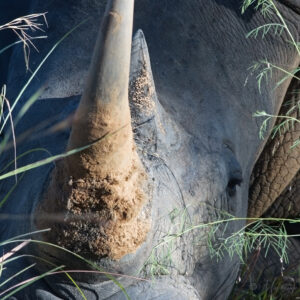
The short answer is that yes, to some degree, the poaching of rhino and trade in rhino horn did decrease during the strict lockdown period. According to official figures, rhino poaching in South Africa decreased by around 53% in the first six months of 2020 with only 166 rhino being killed since the beginning of the year, compared to 316 during the first six months of 2019. Minister of Environment, Forestry and Fisheries, Barbara Creecy, noted that “…the decline in rhino poaching … was specifically welcome in the Kruger National Park where, during April, no rhino were killed in the Intensive Protection Zone, for the first time in almost ten years.” The Kruger National Park recorded 88 cases of rhino poaching in the first six months of 2020, compared to 153 in the first six months of 2019.
The lockdown did not, however, spell good news for all wildlife, and incidences of poaching for bushmeat using snares and poisons unfortunately increased. The EWT staff, and our associates working in the field, noted a significant increase in the use of snares to catch species such as various antelope, bushpig and birds. Secondary consequences of this scourge include the increase in snaring of threatened species such as Wild Dogs, who are unfortunately prone to being caught in snares set for other animals. Much of this kind of poaching has been attributed to rapidly escalating levels of starving people, and around the country, we noted an increased reliance by many people on wildlife such as hares, birds and small game for food. If successful, this kind of poaching can also assist with income generation in cash-strapped households, and the lockdown has pushed thousands of people to rely on their natural environment for food, income and even medicinals, with plant harvesting also increasing in some areas. Whether or not the relaxed lockdown regulations will result in a reversal of this trend is yet to be seen, and if not, this could spell disaster for many species who will not withstand the impact of rampant countrywide snaring.
But back to rhino: what is clear is that there are indeed actions that can be taken to reduce rhino poaching in the future, and this does not necessarily have to be another severe national lockdown. Visible policing followed by roadblocks (albeit that police may have been looking for alcohol and cigarettes, some roadblocks in fact identified wildlife products in transit) and strict monitoring of vehicles entering and leaving our parks, definitely played a role in reducing poaching. Whilst we want our borders to remain open, it is also evident that consistent and strict monitoring of what goes out and screening of all baggage and cargo for illicit wildlife products can make a difference. Despite many reserves having fewer ranger patrols and less human activity in their reserves (or because of it) poaching of high value, internationally traded species reduced as markets could not be accessed as easily. This is a clear indication of how, if we can control trade routes and reduce the ease of access to markets, one can reduce the incentive to poach.
Going forward, this is a clear indication of where our priorities need to lie in the future and how we can stay ahead of the poaching and illegal wildlife trade scourge before it gets the better of us again. Let there be these positive take-home lessons for conservation into the future and may our rhino continue to enjoy a little more peace for a little bit longer.
Yolan Friedmann
CEO
RHINO ROUNDUP
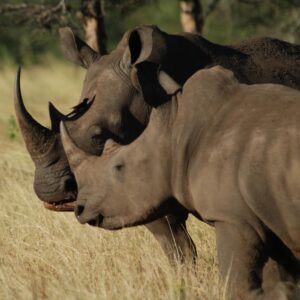
22 September 2020 was World Rhino Day! To celebrate, the EWT hosted a panel discussion to provide an update on the various rhino conservation initiatives we are involved in, to raise awareness about the plight of rhinos, and to encourage people to support the conservation of this iconic species. Yolan Friedmann facilitated the discussion and panellists included Dr. Andrew Taylor, Ashleigh Dore, and Shayen Seebran from the EWT’s Wildlife in Trade Programme. If you missed this, be sure to watch it on our Youtube below!

SPEAKING UP FOR RHINOS
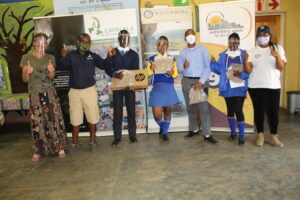
For the fifth year in a row, Lapalala Wilderness School and the EWT hosted a World Rhino Day public speaking competition. Two Grade ten learners from six schools participated, speaking on this year’s topic: “What are the social, political and economic impacts of rhino poaching in South Africa?” The future conservation champions were asked to present their arguments and possible solutions to the impacts and challenges we face in the battle against rhino poaching. The winners were as follows:
1st prize – John Tawanda Chauke from Leseding High School (Vaalwater).
2nd prize – Machuene Sikalo from Lemetja (Dipere village).
3rd prize – Ephraim Ramashita from Nkgoru High (Nkgoru village).
4rth prize – Maphuti Malope from George Langa (Marulaneng village).
Congratulations to all the schools that participated and all of the learners who spoke beautifully.
A WORD FROM THE CEO: AN INTERVIEW WITH OUR LEADING LADY, YOLAN FRIEDMANN
Yolan Friedmann, EWT CEO
yolanf@ewt.org.za
With all the challenges facing our country, and our environment, which ones keep you awake at night and why?
South Africa is faced with massive challenges generally and despite some of those not emanating from the environmental sector, they do spill over. So the issue of corruption means that there is less money to be spent on environmental issues and so our planet suffers; with escalating crime, our staff and colleagues are exposed to risk whilst they do their work in remote areas, or the travel, or even in their personal lives. I have seen first-hand the stress that this puts them under and the costs associated with paying for increased safety and protection. The loss of critical skills with young people emigrating also effects our sector severely and we have lost too many talented people to other countries as a result of crime in South Africa. Our future as a stable, thriving society and economy keeps me awake at night.
What unique strengths and characteristics do you believe women have, that add value to being a person of influence in the environmental sector?
By nature, women tend to be more consultative and like to work in teams. We can lead, and we can also follow, and we generally know when to do either or both. We are able and willing to ask for help and to admit when we don’t know the answers, and to show strength and leadership in finding them, together. I think that this creates a more dialogue-based approach to finding solutions, which is vital in the highly complex world of conservation. Nothing in the conservation sector can be solved with linear thinking, and one must integrate social, economic, environmental, political, cultural and ecological imperatives with science and compassion and sensitivity, and this requires continual juggling and consultation. Women tend to be better jugglers, in my opinion, and understand the need to balance shifting priorities – we tend to be able to lead from the front as well as the back. Our sector has also required massive skills and capacity development over the past years, with the need for human development being at the core of increasing environmental awareness and action. Women have thrived in this environment which is evident by the increasing number of civil society action groups caring for the earth, in almost all neighbourhoods these days, which are mostly lead by women.
Are there any women in conservation who inspire you?
They all do! Every one of them is drawn to our sector because they are passionate, want to make a difference, are willing to work long hours and sacrifice a lot personally, and care for the earth and all its inhabitants so yes, they ALL inspire me!
Do you have a female role model?
These change all the time as one learns from different people as you develop and events in your life require adaptation and growth. But I always admire my female friends that are entrepreneurs, who create jobs, who create beautiful things and change the lives of their employees and friends; who are selfless and caring and never falter; who are strong and compassionate and honest and flawed and always wonderful! They know who they are 😊
What advice would you give to young women of today?
Be willing to do anything that is required of you to make your first job really count. Don’t be stuck on what role you believe you should play and what your qualifications have prepared you to do. In today’s competitive market employers are looking for team members who are willing and able to dive in and do anything that is required and who add value to the organisation as a whole. If you add value, you will have a thriving career. Today I see too many young people asking what is in it for them, and this puts employers off. Post-COVID, we are also going to see the end of the silo employment position and the emergence of more circular, integrated roles that continually shift and form part of different teams. You must, therefore be willing to be flexible, and you must add value as a person before you can rely on your skills set alone. Other people have the same qualifications as you do so you need to offer a lot more than just your degree. In an interview, how about asking the employer what THEY need and how YOU can add value to them?
What has your time working with the EWT taught you?
Way too much to write here… I have worked in every role in the EWT – from volunteer to CEO, so every position has taught me different things. But from where I sit today I would say that I have learned to work with (and not hide) many female traits that I often used to think would work against me as a female leader in a very male-dominated sector (at the time). These traits include compassion, humility,; consultation, teamwork, the ability to lead from behind and not be ego-driven, being just as happy, if not more so, when your staff are in the limelight and get all the accolades, admitting when you are wrong, and owning up when you don’t have all the answers. I have surrounded myself with people who all know more than I do and my greatest lessons have come from working with them, listening to them, seeing things through their eyes, making them better at their jobs and serving them, and knowing that as their leader, that is my role.
Can you share a bit about what you do? What does a typical workday look like for you?
These days it’s 12 hours on a laptop, like everyone else I suppose. Under ‘normal’ conditions, I still spend a lot of time on emails and in meetings, writing documents and approving things like marketing and fundraising material, budgets, contracts etc. My role is mostly on corporate governance and strategic development, but I do get to interact with my conservation teams every day, which is good for my soul! I get into the field a few times a year, but it is never enough, but again, my role is to facilitate my staff getting to do the fieldwork as they are the experts. I come from a strong field and technical background, so I miss getting my hands dirty! I also spend a lot of time liaising with the media, our partners, stakeholders and supporters. I like to be creative, so I work closely with my fundraising and communications teams. I work closely with my Board of Trustees and am ultimately responsible for ensuring that our strategy is sound, meaningful, and implemented as planned. My role is to find the resources to get the work done, establish the partnerships that make us effective and empower the team to make the magic happen.
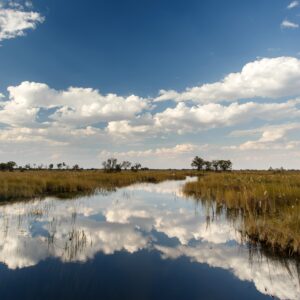
FLOODING ENHANCES THE VULNERABILITY OF WETLAND-DEPENDENT COMMUNITIES IN SOUTH WESTERN UGANDA
Phionah Orishaba, Project Assistant, Nature Uganda (NU), Endangered Wildlife Trust (EWT), and International Crane Foundation Partnership (ICF), PhionaO@ewt.org.za
In the 1950s, as a result of the growing population and resultant increased demand for food, communities in the Kabale region of south western Uganda began draining intact wetlands for agriculture. With their rich, fertile soils, wetlands, riverbanks, and lakeshores were considered prime areas for crop production. Natural wetland resources are also harvested for food, building materials, and craft construction. Intact, functioning wetlands provide critical ecosystem services, such as water absorption and storage, which reduce flooding in the rainy season. Wetlands also release stored water during the onset of the dry season, thereby delaying water shortages during times of drought. However, extensive wetland encroachment and degradation has impacted the ecological functioning of wetlands, including the regulation of flooding.
Prolonged rainfall events from March to May of this year, resulted in excessive flooding and landslides throughout most wetland areas in south western Uganda. Floodwaters carry substrates such as soil, stones and small boulders which endanger wildlife and degrade natural ecosystems. Resultantly, the floods impacted the survival and breeding success of local Grey Crowned Cranes, as they occurred during the peak of the crane breeding season.
The floods caused other forms of devastation, including the loss of crops and animals, and the destruction of buildings and roads. Maziba Primary School in Maziba Sub-County and Kakoma Church of Uganda in Katuna Town Council are among the buildings that were destroyed during the ordeal. Roads in Rubaya Sub-County were also ravaged. According to the District Natural Resources Officer of Kabale, Mr Rogers Akatwijuka, the floods resulted from increased rainfall, coupled with wetland encroachment and poor farming practices in the upslope regions. Mr Akatwijuka recommended that wetland restoration, and soil and water conservation initiatives be implemented to minimise the impact of future flooding events.
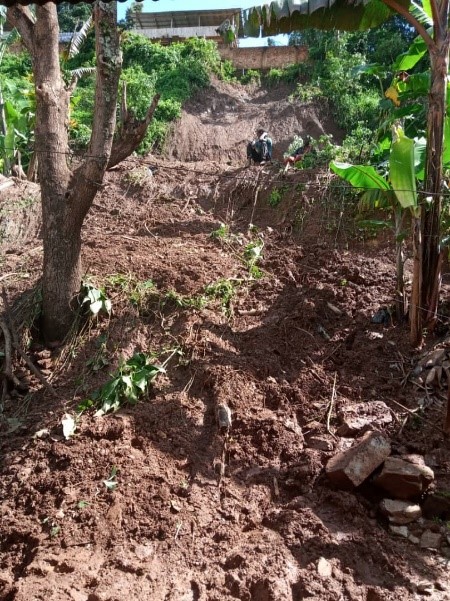
Ms Evas Asiimwe, the District Environment Officer of Kabale, said that economic activities such as agriculture, sand mining, brick making, industrialisation, infrastructure development, and wetland encroachment were the main drivers of habitat degradation. She continued, “Currently the region is facing weather-related challenges because most of the natural vegetation resources have been depleted, leaving the soils bare”. Ms Asiimwe emphasised that there is an urgent need to restore degraded habitats, guided by the national environmental policies and guidelines.
Mr John Zinkubire, the chairperson of the Kibuga Abarihamwe Community Group, and Crane Custodian Mr David Musinga reported that their crops were washed away by the floods and they are expecting that their community will face increased food insecurity and poverty. Amid the devastation, they did happily report that the six pairs of cranes, usually seen foraging in the wetland and cattle farms near their homes, survived the floods, and have been seen with juveniles. Similarly, Mr Francis Mwebesa, a community member of Mayengo Ward, Katuna Town Council, said the flooding this year was particularly extreme. The two families of cranes in the nearby wetlands are reported to have narrowly survived the floods. He witnessed the chicks floating on the water surface and navigating their way to safety.
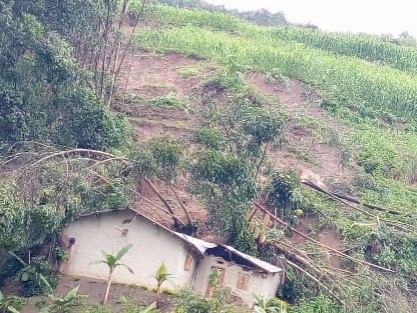
Unfortunately, not all crane families would have been so lucky. In an attempt to locate the two families of cranes in the wetland near Hakiheiga Trading Centre, Crane Custodians, Annet Tusiime and Jeniffer Tumuhimbise reported that, although the adult cranes were seen feeding near the flooded wetlands, none of their chicks were observed. They were unable to investigate further due to excessive flooding in the area. Mr Kamuzinzi Edward, a Crane Custodian from Kahungye Sub-County, reported that landslides had devasted his crops, and soil from the upland slopes had been washed into the wetlands. He feared that any eggs that had not yet hatched would have been unlikely to survive.
Lt Col Robert Nahamya of the Uganda Peoples Defence Forces and his army provided a helping hand to the families in Kaharo, whose homes had been affected by the flood. The Kabale LCV Chairperson, Mr Patrick Besigye Keihwa, extended comforting words to households whose properties were destroyed, promising to inform the office of the Prime Minister and the Ministry of Risks and Disaster Management, who would be able to provide additional relief services. Milton Kwesiga, the Executive Director of Africa Disaster Reduction Research and Emergency Missions, said that according to the constitution of Uganda, wetlands are protected areas. He continued that any agricultural activity in wetlands, except for recommended sustainable livelihoods, like apiary and harvesting of local materials for handicrafts, is illegal and should be punishable. He noted that wetlands provide essential ecological services, including water filtration, hydrological cycling, and flood control.
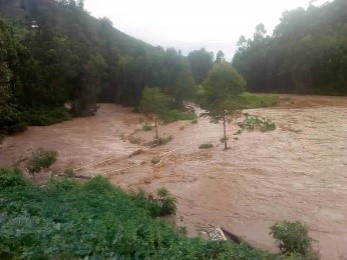
All Ugandans are called upon to curb wetland degradation by becoming conservation ambassadors and taking action to restore and conserve wetlands and reduce risks associated with climate change. There is an urgent need to implement environmental protection interventions, such as tree planting along wetland buffer zones, and soil and water conservation initiatives using bamboo and elephant grass. Most people in the Kigezi region depend on wetlands for survival and economic security. Thus, a collaborative approach between communities, government, and NGOs is essential to conserve wetland habitats for the benefit of both people and biodiversity.
BIOPIRACY: WHAT IS IT?
Megan Murison, Communications Officer, Endangered Wildlife Trust, meganm@ewt.org.za
Patent laws were designed to protect intellectual property and ensure that the rights of those involved in the development of the product or service be safeguarded. However, some use these laws to infringe upon the rights of others. Biopiracy occurs when individuals or companies take indigenous knowledge of species provided by others and patent this information without official sanction or permission. These biopirates do not acknowledge those who have taken the time to understand and nurture plants over generations (farmers, communities, traditional healers, etc.), neither do they compensate them for their contribution of knowledge and experience.
An interesting case study for biopiracy is the use of stevia. Any consumer in this day and age will have heard of the use of stevia as a sugar replacement in cooldrinks and food items. Public Eye, a global justice initiative, classifies the use of the Steviol glycosides as a classic case of biopiracy. This plant was historically used as a natural sweetener by the Guarani peoples of Brazil and Paraguay. Unfortunately, with no legislative backing, the use of stevia glycosides is uncontrolled, and many large organisations are applying for the patent. Even more concerning is that 80% of commercially used stevia is produced in China. While it is indigenous to Brazil and Paraguay, they only make up 3% of the commercial use. Moreover, the impact on the genetic biology of the plant is also worrying. As large companies quickly race to produce synthetic stevia material, small scale farmers are at risk of losing their livelihoods. And in the end, the large companies will receive the monetary benefits.
International agreements, such as the Convention on Biological Diversity, do not appear to stop large companies from conducting acts of biopiracy under the guise of bioprospecting. The legislation regulating its implementation, the Nagoya Protocol, is often improperly applied by countries, and others, including the United States, have yet to sanction them.
Africa is no stranger to cases of biopiracy, and the Hoodia cactus was the subject of a landmark biopiracy case. The San people of the Kalahari have used this plant to suppress hunger pains for centuries. The active molecule involved in this function was identified and sold to Pfizer, a massive pharmaceutical company, for use as an appetite suppressant. Following a complaint and a case brought against Pfizer by the San Council, the community was, after a fight, awarded a share of the royalties, and a precedent was set that clearly communicated the right indigenous people have to stake a claim to their knowledge and to profit from it. A South African example originates in the small Eastern Cape town of Alice. The heavyweight pharmaceutical company, Schwabe, manufactures a syrup for respiratory tract infections made from the roots of Pelargonium sidoides and Pelargonium reniforme, marketed as Umckaloabo. Not only is this the use of the plant for this purpose theft of indigenous knowledge, but there are also many cases of the exploitation of labour during harvesting, and of unsustainable farming practices, which put the plants at risk of extinction.
Patent legislation requires that the product or service in question be novel and unique. Therefore, in the fight against biopiracy, scientists and researchers are attempting to collect and publish these plants’ properties and uses on public domains. Countries are also fighting back, with India battling to prevent the patent of the wound healing capabilities of Turmeric, and Thailand has appealed the patent of Jasmine Rice. With the threats associated with climate change, even more cases of biopiracy will come to light with the increased need for medicine and food sources that are resistant to drought, heat, and salt. While finding sustainable and resilient sources is a priority, it should not come at the expense of indigenous people.