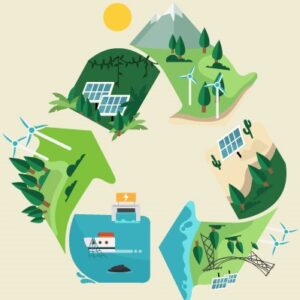
How well are we considering nature in covid recovery plans in Africa?
Harriet Davies-Mostert, EWT Head of Conservation, harrietd@ewt.org.za
Panel Discussion, IUCN Global Virtual Members’ Conference on Nature-based Recovery
1 February 2022
The Covid-19 pandemic triggered a global economic crisis, and Africa’s GDP shrank by 2.1% in 2020, its worst recession in more than five decades. Southern Africa was hardest hit, with an economic contraction of 7%. Food insecurity and debt have been rising, and many development gains are being lost. The African Development Bank estimates that Covid-19 has increased the proportion of people living in extreme poverty, with as many as 38.7 million more Africans sliding into this category.
As in other parts of the world, immediate responses to the pandemic have been to focus on containing the virus, addressing the immediate health crisis, and limiting economic fallout. But a large part of the conversation has also been about the pandemic, which represents an opportunity to shift our economic models onto a greener and more inclusive trajectory.
Africa is home to tremendous biodiversity and natural resources, but these are experiencing dramatic losses due to agricultural expansion, overharvesting, alien invasive species, pollution, and climate change. It is vital that governments use post-Covid recovery spending to meet economic objectives like jobs, health, education, and economic growth – while also meeting the environmental goal of a greener, inclusive, and sustainable development trajectory.
As part of broader recovery efforts on the African continent, the African Union Commission launched a 5-year Green Recovery Action Plan in July 2021. This plan aims to ramp up action on five priority areas, including improving climate finance; supporting the just transition to renewable energy; nature-based solutions and a focus on biodiversity; resilient agriculture; and green and resilient cities.
To support this action plan, the African Ministerial Conference on the environment adopted the African Green Stimulus Programme, which seeks to address the socio-economic and environmental impacts of the pandemic and to unlock and harness the opportunities which a sustainable approach can bring for the continent of Africa.
An online platform was launched in September 2021 to support the roll-out of the stimulus programme. However, there is still a lot of work to be done. The programme aims to mobilise sufficient, additional resources and the effective use of these resources to implement a diverse portfolio of initiatives. And it will only be able to deliver impactful results at scale when these resources materialise.
Several grants have been made towards promoting green and inclusive recovery. For example, GIZ recently approved an award of nearly 1 million euros to a consortium led by South African National Parks to support Covid-19 relief efforts along the boundary of Kruger National Park in South Africa. This programme will support sustainable supply chains, enterprise development, green entrepreneurship, and responsible resource use to drive sustainable jobs and livelihoods.
Nature-based tourism was one of the main casualties of the economic shutdowns, and there have been many grants and green recovery initiatives aimed at recovering this critical sector.
The African Nature-Based Tourism Platform was initiated in April last year with funding from the Global Environment Facility (GEF) to forge connections between funders and communities, nature-based tourism enterprises, and conservation areas in southern and eastern Africa. The 3-year project aims to mobilise at least $15 million. The platform gathers data on the impacts of COVID-19 on local communities and small businesses in the nature-based tourism sector and shares this information to unlock funding streams that will bring greater resilience to nature-based tourism in the future.
While Africa’s agenda 2063 aims to industrialise the continent, there is widespread recognition and commitment that this must be done in a low carbon, nature-positive way. We need a new paradigm for development that centres on sustainable development and building forward better. And this isn’t just because it’s the right thing to do: for example, work done by the United Nations Economic Commission for Africa shows that in South Africa, investing in the green economy and nature-based solutions provides 250% more jobs than investing in similar fossil-fuel-based industries. So investment in nature-based economies and nature-based solutions in Africa makes good business sense.
Most of us would agree that post-covid recovery packages have failed to incorporate nature in the seismic way that many of us had hoped they would at the start of the pandemic. Our region has some excellent and ambitious programmes and initiatives, but they remain largely underfunded and under-capacitated. Most African countries cannot raise money from their own economies to implement their recovery plans, and the cost of finance is disproportionately high for African countries compared to more developed nations. Global financial flows, from both the public and private sectors, need to be unlocked to ensure that development in Africa moves along a pathway in which people can have sustainable livelihoods without exacerbating the climate and biodiversity crises.
LATEST STORIES
Sungazer Custodians
Bradley Gibbons, African Crane Conservation Programme, bradleyg@ewt.org.za
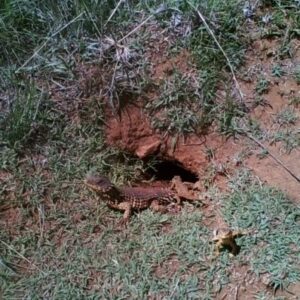
Sungazer lizards Smaug giganteus are more commonly known as Ouvolk in South Africa’s Free State province, the only place on earth where these Vulnerable charismatic lizards can be found in the wild together with a very small population located in the south of Mpumalanga.
Since 2015, the EWT has awarded Sungazer custodian boards to exactly 30 farmers, five of which were awarded during 2021.
Sungazer custodians are farmers who go the extra mile for Sungazers and assist the EWT to conserve these reptiles on their farms and act as champions for Sungazer conservation in their area. It is never difficult to select a Sungazer custodian, because they show an extra passion for Sungazers on their properties. They ensure that their farms are safe for Sungazers, by conserving the habitat used by Sungazers and minimising disturbance to them. Another example of going the extra mile is to ensure that areas where Sungazers occur are avoided and farmers won’t drive too close to their colonies. It is important to note that Sungazers are found in colonies in natural grasslands which differs from typical lizards found in rocky areas. The EWT recognises these landowners’ conservation actions through the Sungazer Custodianship Programme.
The custodian agrees to sign a short agreement to cement their commitment to protect the Sungazers for the five-year custodianship period (with the option to renew). Through this they commit to report any useful or relevant information to the EWT, such as new areas where Sungazers are found on the farm (and in some cases to send photos of baby Sungazers) and report potential or current threats to prevent further harm to Sungazers as much as possible in their respective region. We hope that other farmers from the areas will notice the board when they visit a custodian and then follow the example of the custodian. One of the five custodians in 2021 is a couple from Koppies in the Free State, Dawie and Natasha Smalberger, who have not only reported their Sungazer sightings regularly but even put up their own camera trap to keep a watchful eye on the Sungazers on their farm! There is no doubt that they deserve to be awarded a custodian board for this type of involvement, and the EWT appreciates their efforts to conserve Sungazers.
As part of conservation efforts on privately-owned farms, the EWT would like encourage farmers to further protect their farms using another form of a conservation agreement known as the ‘Biodiversity Stewardship’ approach. Not every farm can be declared a nature reserve if a landowner would like these reptiles to be protected. Therefore, conservation on privately-owned land is made possible with the use of this strategy. An example of an agreement like this is a protected environment where livestock farming and even crop farming can operate as it currently is. However, intact vegetation such as grasslands will remain intact from not further extending any cultivated fields. These farmers will in most cases also adhere to a management plan that has been compiled to further improve the habitat on the farm.
LATEST STORIES
Protecting our rich culture and biodiversity for future generations
Jenny Botha, EWT People in Conservation Programme Manager, jennyb@ewt.org.za
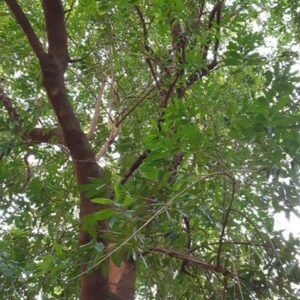
Although the leaves of the Pepper-bark Tree (Warburgia salutaris) are reportedly used in curries and to flavour other foods in Kenya, the species is more commonly known for its healing properties throughout its range in East and southern Africa. This attractive evergreen tree grows in diverse habitats, including forest, kloofs, thickets, and open woodlands. Historically, it was distributed from north-eastern KwaZulu-Natal and Swaziland to Mpumalanga, Limpopo, and Zimbabwe, extending into Mozambique and Malawi. Today though, the Pepper-bark is classified as Endangered on the IUCN’s Red List of Threatened Species, and many of its habitats are degraded and fragmented through human activities and the impacts of alien plants.
In 2020, the Endangered Wildlife Trust (EWT), with the support of the Fondation Franklinia, initiated a strategic conservation project in Limpopo to safeguard the Pepper-bark for future generations. To achieve this, we need to protect and improve the management of existing Pepper-bark Tree habitats and ensure that people who have historically depended on this tree for medicine, and continue to do so, have legal access to it.
To secure habitat for the Pepper-bark and other plant and animal species of high conservation value, the EWT has been collaborating with the Limpopo Department of Development and Tourism (LEDET) and private landowners in Limpopo to increase formal protection of these sites. It is also important to manage these habitats effectively. Over the past two years, we cleared alien vegetation from 25 hectares of Pepper-bark habitat.
Despite the Covid-19 pandemic, we were able to meet with over 100 traditional healers, community leaders, and other community members from 25 villages or towns to discuss mutual challenges arising through the loss of the Pepper-bark through overharvesting. Traditional healers, leaders, and community members welcomed donations of Pepper-bark saplings that will enable them to harvest directly from their gardens in future. Thanks to a year of high rainfall, the trees are growing well and will provide the traditional healers with a vital source of bark, roots, and root-bark in upcoming years. The traditional healers can also use the tree’s leaves now that scientists have verified that they contain the same phytochemical constituents as the bark and roots. This has the potential to substantially reduce the impacts of harvesting from the wild, as it is far easier to harvest sustainably if the leaves can be used instead of bark or roots.
We would like to thank SAPPI, the Agricultural Resource Council, and SANParks for the donation of 2,000 trees to this project and look forward to continuing this exciting journey with the many traditional healers, communities, and other conservation partners who are participating in this initiative.
LATEST STORIES
Cats and crickets: Testing the naivety of reintroduced Cheetahs to predatory cues
By Erin Adams
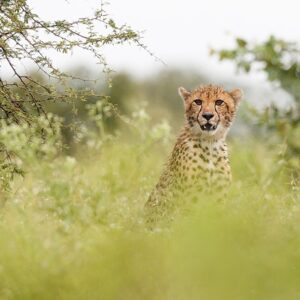
As wildlife numbers decline, it is becoming an increasingly popular theory that it is viable to reintroduce once captive individuals back into the wild. However, reintroductions may fail as newly introduced animals could be naïve to the threats around them. As Cheetahs are listed as Vulnerable and have been extirpated from much of their original range, reintroductions have become an important exercise in Cheetah conservation. In a recent publication* co-authored by EWT scientists, the perception of threats was tested on reintroduced cheetah populations to gauge the effectiveness of reintroduction programmes on Cheetah’s survival.
As lions pose the biggest threat to Cheetahs in the wild, recordings of territorial lions were obtained. In addition to lion cues, recordings of African Bush Crickets were used as a control to test whether Cheetah could distinguish between danger (predation due to lions) and no danger (crickets). These recordings were then played to three different groups of Cheetahs. The three groups included a population that had been raised and kept in captivity; a semi-wild population that had been raised in captivity and was undergoing a “soft-release”, meaning that they were released into a reserve with prey species where they could hear and smell lions but not directly interact with them; and a population of fully wild Cheetahs that interact with both prey and other predators. It was predicted that the group of captive Cheetahs would be least sensitive to the lion recordings, as they have had no prior experience of other predators.
The results showed that the captive Cheetah population showed no fear of the lion or the bush cricket cues and spent more time near the stimulus than the other Cheetah groups. The semi-wild and wild populations consistently fled at the sound of the lion’s roar. The semi-wild Cheetah individuals approached the sound of the bush cricket (the control, or “no danger” sound), while the wild Cheetah individuals were indifferent to them.
The authors concluded that there is a great need for this pre-release testing as it could help assess the readiness of individual Cheetahs for release into the wild and the potential success of Cheetah rewilding. Assessing the Cheetahs’ response to potential threats before release could increase the rate of Cheetah survival in the wild, post-release. This study only looked at one aspect of the readiness of captive-bred Cheetah to be released into the wild – other issues such as fitness and the ability to hunt, amongst others, could also affect the readiness of Cheetahs for release into the wild, and thus their survival.
* Wemer, N., Naude, V. N., van der Merwe, V. C., Smit, M., de Lange, G., & Komdeur, J. (2021). Successful predatory‐avoidance behaviour to lion auditory cues during soft‐release from captivity in Cheetah. Ethology.
LATEST STORIES
Healthy wetlands: people and cranes in Uganda
Dr. Adalbert Aine-omucunguzi, International Crane Foundation/Endangered Wildlife Trust Partnership, adalberta@ewt.org.za
Kathryn Lloyd, Margaret Pyke Trust, kathryn@margaretpyke.org
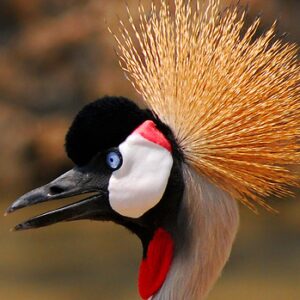
The wetlands of Rukiga in south-west Uganda are home to Uganda’s National Bird, the Grey Crowned Crane, and they are vital to their human neighbours, who rely on the wetlands for their food, water, and livelihoods. But increasing human activity is putting pressure on the wetlands and their cranes. A new project between the International Crane Foundation (ICF) / Endangered Wildlife Trust (EWT) Partnership, Rugarama Hospital, the Margaret Pyke Trust, and the London School of Hygiene & Tropical Medicine is working to respond to these pressures for the benefit of Rukiga’s wetlands, its cranes, and its people.
The population of Grey Crowned Cranes in East Africa has declined by over 80% in the last twenty-five years, largely due to increasing pressure on wetlands. As cranes are pushed into smaller and more marginal wetlands to care for their eggs and young, they are increasingly disturbed by people, domestic dogs, and livestock and are unable to breed successfully. Chicks raised on fragmented and degraded wetlands are easily captured for traditional medicine use, domestication within Africa, or exported to captive facilities at zoos and safari parks. The population of Grey Crowned Cranes in Uganda (a stronghold for the species) is now believed to consist of only 10,000-20,000 individuals.
As a first stage, the project team spent six months undertaking ethnographic research in Rukiga to properly understand the communities’ health, livelihood, social, and environmental challenges and views, and how they saw the connections between them. They reported a diversity of challenges, not least of which was inadequate healthcare provision, poor soil and water quality, and increasing sub-division and fragmentation of land on which to farm their crops.
For these reasons, project partners are implementing a Population, Health and Environment, or PHE, project that aims to empower communities to conserve their cranes and manage wetlands while also meeting the health and livelihood needs of Rukiga’s communities. The project research highlighted that the people of Rukiga District wanted better health services, including family planning, to promote strong and sustainable families. The project also keeps women involved in local livelihood activities to support their families and reduce pressure on local natural resources, benefiting people, cranes, and the wetlands we all depend on.
Population Health and Environment, or PHE, is a conservation model defined by the Conservation Measures Partnership as “a multi-sectoral partnership approach to biodiversity conservation, human health, and sustainable livelihoods. PHE approaches are developed inclusively and equitably in response to local situations and the expressed needs of the people most closely linked to biodiversity conservation. PHE is intended to improve human health, particularly reproductive health, while empowering communities to achieve sustainable livelihoods, manage natural resources, conserve biodiversity, and maintain ecosystem services.”
Family planning allows couples and individuals to plan if and when to have children and how many. Making our own decisions about our health, bodies, and family size is a fundamental human right. But there remain many parts of the world where exercising this right is much more challenging due to barriers to family planning. One such place is Rukiga, where, prior to the launch of this project, accessing family planning was largely impossible due to the scarcity of local healthcare providers and other local challenges.
As those in the health sector know all too well, “healthy timing and spacing of pregnancy” is critical to improving health outcomes for women and infants. For instance, becoming pregnant too soon after a previous pregnancy puts mothers and their newborns at a higher risk of illness and even death. As well as the health impacts of not being able to choose if and when to have children, unintended pregnancies can lead to women withdrawing from the livelihood activities critical to supporting their families. The ethnographic research highlighted that the people of Rukiga District want better health services, including family planning, and that one of the reasons is because larger families place further pressures on them as parents at home and in the longer term, on the finite amount of agricultural land to sub-divide among children
Given that the people of Rukiga understand the connections between their own health and that of their local environment and their desire for adequate health services, the ICF/EWT Partnership’s habitat restoration, alternative and sustainable livelihood interventions, and crane monitoring actions are integrated with the work of the Margaret Pyke Trust and Rugarama Hospital, to ensure the people of Rukiga receive the health services they want and need. Outreach clinics are now providing health services, clinicians are being trained to provide better services, and “service improvement” measures are being implemented.
The project team engages community members in various ways to raise awareness about wetland and crane conservation, sustainable livelihoods, and family planning. For instance, in the same session, the ICF/EWT conservation experts and Rugarama Hospital nurses raise awareness about the importance of wetlands for health, livelihoods, and cranes, and the benefits of family planning. This integrated approach means that men and women hear messages that they might not have heard before. This approach has wide-reaching benefits as frequently in Rukiga; men stop their female family members from using family planning services as they hold myths and misconceptions, such as family planning causes women to be promiscuous or causes cancer. Similarly, even though both men and women are involved in livelihoods, men are more likely to attend livelihood training, meaning that women often miss these important messages.
Community members themselves are also raising awareness about sustainable farming techniques, sound waste disposal methods, and healthcare. Leading this approach are the Conservation and Health Mobilizers, volunteers who engage their neighbours with messages around crane and wetland conservation and healthcare, in addition to monitoring cranes and reporting crane incidents, such as poisoning and capture, monitoring wetland water quality, and referring people for healthcare services.
Community members themselves are also raising awareness about sustainable farming techniques, sound waste disposal methods, and healthcare. Leading this approach are the Conservation and Health Mobilizers, volunteers who engage their neighbours with messages around crane and wetland conservation and healthcare, in addition to monitoring cranes and reporting crane incidents, such as poisoning and capture, monitoring wetland water quality, and referring people for healthcare services.
Project interventions include activities designed to increase community capacity for sustainable land use planning and management, such as soil and water conservation, to meet food security and conservation objectives. These interventions aim to prevent soil erosion and restore the soil fertility and productivity of hillslopes exhausted through unsustainable farming practices. This intervention aims to reduce the expansion of agriculture into wetlands.
The project’s alternative sustainable livelihood provision enables communities to generate additional income to meet their families’ needs. Community members selected the livelihoods they wanted, and ICF/EWT provided them with materials, training, and mentoring to benefit their income generation and access to local markets.
By integrating actions across multiple sectors, PHE can reach more people linked to biodiversity outcomes, engage more men in reproductive health, and more women in livelihood and natural resource management. PHE can, ultimately, achieve more significant and longer-lasting conservation outcomes than would likely occur without integration. There is a further benefit of PHE, which the project team already sees. It is known as the “goodwill effect”. The ethnographic research highlighted the challenges that the people of Rukiga see in their everyday lives, and health services were a key priority. By listening to the community, ICF/EWT has built a partnership with the deeply respected local hospital. In the minds of the community, ICF/EWT is now associated with Rugarama Hospital and the provision of healthcare services. Conservation messages are broadcast at Rugarama Hospital’s health centres and by Rugarama Hospital’s staff. The people of Rukiga see that ICF/EWT cares about them and their health and wellbeing, not only cranes and wetlands. That can only be a good thing in a project so deeply embedded within the community.
LATEST STORIES
Loxton pet sterilisation drive 2022
Esther Matthew, EWT Drylands Conservation Programme, estherm@ewt.org.za and Bonnie Schumann, EWT Drylands Conservation Programme, bonnies@ewt.org.za
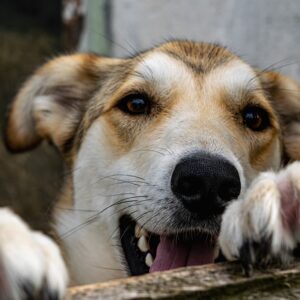
In South Africa, communities in rural areas seldom have access to veterinary care for domestic animals. As a result, many unwanted litters are produced by unsterilised animals, and many animals die of diseases that vaccinations could have prevented. Loxton in the Northern Cape is one of the communities that struggles with these issues.
The Loxton community and their pets were however, fortunate when a team arrived in February 2022 to carry out a pet sterilisation drive and sterilised 150 cats and dogs in just three days. All the animals that were sterilised were also vaccinated and dewormed. In addition, the team shared information on pet care with the community.
The team consisted of a veterinarian and her assistants from EnviroVets, who were supported by the Karoo SPCA Beaufort West. The Endangered Wildlife Trust’s staff and volunteers carried out logistical support during the steri-drive and compiled a list of people with animals ahead of time. The initiative was made possible with generous funding from the Aldor Trust.
The International Fund for Animal Welfare (IFAW) EnviroVets and the Endangered Wildlife Trust carried out the first pet steri-drive in Loxton in 2017, and repeat visits are carried out every few years to reduce domestic animal population growth and the resulting plethora of unwanted and uncared for animals. The presence and spread of domestic pet diseases are also reduces when the densities of animals are kept low, and sick domestic animals can transmit diseases, including rabies, to humans and wildlife. Besides the risk of disease transmission, this is also an animal welfare issue of unnecessary suffering that can be avoided by interventions such as these. The effects of sterilisation initiatives are long-lasting and benefit domestic animals, the community, and wildlife species in the area. Please support pet sterilisation drives in your communities wherever possible
LATEST STORIES
Dr. Mike the Cape Vulture
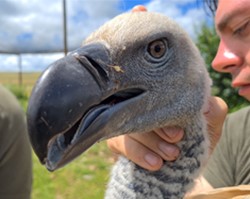
On 3 October 2021, the Lowveld BOPP team was alerted that a Cape Vulture had been found grounded on Licata Nature Reserve, northwest of Hoedspruit. The bird was initially found at sunset by the reserve wardens’ son, Stuart Reid, and although it was unclear why it could not fly, it was speculated that the bird sustained a wing injury at some point.
We arranged to collect the bird immediately after approval from LEDET, and it was taken through to Moholoholo Wildlife Rehabilitation Centre, where it was stabilised and monitored overnight by Nikkita Jackson and Rebecca Lambert. The staff there have always put an exceptional amount of effort into the rehabilitation of birds of prey and have been important allies in the past with dealing with poisoned and injured birds. The following morning, we took the bird to ProVet for x-rays, where it was immediately established that the bird had suffered a bad break to its right metacarpal. Following some emergency arrangements with LEDET, MTPA and the State Veterinary Department, we moved the bird to White River Animal Hospital, where Dr Bennie Pienaar, Dr Karien Prinsloo, and Dr Mike York did an incredible job at pinning the wing. Considering the severity of the break, it was hard to be completely confident that the bird would make a full recovery, but fortunately, the procedure was a success, and the bird could start the next part of its journey.
From here, it was then taken to Dullstroom Birds of Prey Centre, where Magdali Theron and Frith Douglas spent the next few months working their magic to get the bird back to fitness and ready to release. This is not always an easy process, and particularly at the beginning, the birds require a great deal of attention to prevent re-injury of the wing before it has fully healed. After a successful stint in the clinic, it was time to remove the bandages and the pins before placing him in one of the outside enclosures with three other Cape Vultures, two of which are non-releasable, and the third is still being rehabilitated. Fortunately, the entire process had gone incredibly well, and over the following six weeks, the bird slowly began to build up some muscle mass again until he was ready for release.
The BOPP team met up in Dullstroom on 28 January 2022 to give the bird a final check and attach a tracking device and identification ring before finally releasing it. This process could not have gone any better, and the bird immediately shot off and glided through the valley and into the distance, a great success after so much effort from several people. Although it’s still early days for this Dr Mike, he has already flown a significant distance, heading straight back to the colony at Manoutsa, popping into Mozambique, and spending some time near Shingwedzi in the Kruger National ParkThe case of Dr Mike highlights the value of collaboration between protected area management, veterinary clinics, rehabilitation centres, and conservation organisations. In combination with state-of-the-art GPS tracking, this network ensures the effective rescue, recovery, and safe release of injured birds back into the wild, where they can once again sail through the African skies. With the current declines vultures are experiencing across Africa, every individual counts. Thanks to all who played a role in the rescue and rehabilitation of this magnificent bird.
LATEST STORIES
HIDDEN IN THE GOLDEN SANDS OF TIME
Golden Moles Part One
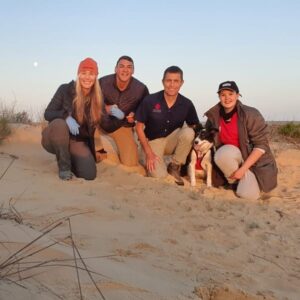
Cobus Theron, Dr Samantha Mynhardt, JP Le Roux, Esther Matthew, and Esther’s detection dog, Jessie, set out to find the Critically Endangered De Winton’s Golden Mole, a species that hasn’t been seen for more than 80 years. The team planned to use environmental DNA (eDNA) to identify these mysterious moles. eDNA refers to trace amounts of DNA that organisms ‘shed’ or leave behind in their environment in the form of skin cells, hair, blood, or scat. No, this isn’t an episode of CSI, but it’s much more exciting
The expedition time (left to right)
Dr Samantha Mynhardt, JP Le Roux, Cobus Theron, Jessie the Border Collie, and Esther Matthew. Photo credit: Nicky SounessTheir starting point was the site where the golden moles were last seen over eight decades ago – the dunes of Port Nolloth. JP Le Roux is a master scout, proficient at finding sites showing recent golden mole activity where the team could collect soil samples – hopefully containing eDNA from their target species. Another tool up our sleeve is Jessie, the Border Collie, a scent detection dog trained to detect and track various species, including the notoriously difficult to find Riverine Rabbit. She is now training to differentiate between different golden moles species, and when Jessie picks up the scent of a specific golden mole, she alerts her handler. The golden mole active at the expedition site in Port Nolloth was not one Jessie had smelled before – a promising and exciting indication.
Foraging signs from a golden mole (left) and Grant’s Golden Mole (right), a species Jessie has been trained to detect
Traditionally, eDNA is applied to aquatic environments, and working with terrestrial eDNA is a novel and challenging technique, but Samantha has successfully adapted it to soil samples. Upon her return from Port Nolloth, she extracted and analysed the eDNA through a specialised process. Preliminary results confirm that the activity seen at sample sites was that of a Cryptochloris species, either De Winton’s or its close relation, the Endangered Van Zyl’s Golden Mole. Either one is an extraordinary find, and we eagerly await more detailed results.
Finding De Winton’s Golden Mole would be a beacon of hope for conservationists – indicating that hidden wonders still wait to be discovered. Locating the areas inhabited by threatened species enables us to better protect them against the threats that endanger our wildlife, sometimes causing species to go extinct. The team will continue their research on the West Coast, hoping to find more locations inhabited by golden moles and increase community awareness and engagement around the species through social media campaigns, videos, and posters illustrating identifying features of different golden mole species.
We encourage people to report sightings of these fascinating creatures so that we can prioritise our conservation efforts, one of which is to formally secure sites containing priority golden mole habitat through biodiversity stewardship. Stay tuned to learn more!
The expedition was sponsored by Re: Wild, and the second phase of the project is supported by IUCN Save Our Species and co-funded by the European Union
LATEST STORIES
Science Snippets: Wildlife Ranches – South Africa’s Conservation Powerhouses
Private Ranches: A Growing Conservation Force
Science Snippets: Wildlife Ranches highlights a remarkable conservation success story. Across South Africa, roughly 20 million hectares of private land are dedicated to wildlife ranching—areas where sustainable wildlife-based activities generate income while protecting biodiversity. A groundbreaking study co-authored by EWT scientists* surveyed 226 wildlife ranches, revealing their untapped potential for species conservation.
Rich Biodiversity on Private Lands
The research uncovered staggering biodiversity:
- 40 wild herbivore species recorded across ranches
- 15 species per ranch on average
- Key groups included antelopes, zebras, rhinos, and elephants
- Most properties hosted at least one threatened species
- Many held translocated species outside their natural ranges
Notably, these ranches often outperformed protected areas in species richness per hectare. Larger properties consistently supported more species.
Tourism vs. Hunting: A Conservation Comparison
The study revealed key differences:
- Trophy hunting ranches had high species diversity but fewer threatened animals
- Ecotourism-focused ranches protected more vulnerable species
- Hybrid models (tourism + hunting) showed the highest overall biodiversity
Millions of Herbivores Thriving
South Africa’s ranches now sustain an estimated 4.66–7.25 million wild herbivores—a rare global example of thriving indigenous mammal populations. This success has even improved Red List statuses, like the Cape Mountain Zebra, which rebounded from Vulnerable (1930s) to Least Concern today.
Challenges: Fences and Genetics
While beneficial, ranches face conservation hurdles:
- Fencing restricts natural migration, fragmenting landscapes
- Extralimital species risk hybridization (e.g., Bontebok × Blesbok)
- Over ⅔ of Bontebok populations now show hybrid traits
Conclusion: A Vital Conservation Tool
Despite challenges, Science Snippets: Wildlife Ranches confirms these lands are critical strongholds for indigenous herbivores, including threatened species. Their blend of economic viability and ecological impact offers a model for sustainable conservation worldwide.
Study Reference:
Taylor, W. A., et al. (2021). Biodiversity and Conservation, 1-25.
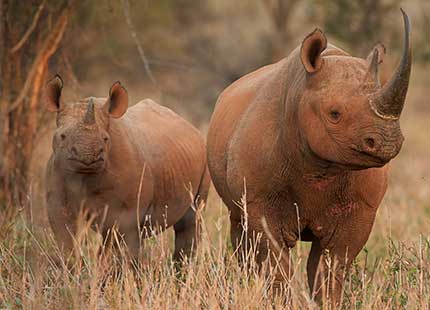
Rhino Peak Challenge Success: Conservation Heroes Summit for Endangered Species
The Rhino Peak Challenge success story continues, with this year’s event raising a record-breaking R1.15 million for endangered species conservation. On 6 November, 44 determined ambassadors conquered Rhino Peak’s gruelling 21km route (1,300m elevation) in the Southern Drakensberg, while global supporters joined through virtual runs.
Rhino Peak Challenge Success: Record-Breaking Conservation Fundraiser
- Marion Leiberich finished first in 03:10, praising this year’s “spectacular” views
- Top fundraiser Alexander Babich contributed over R100,000 single-handedly
- Funds support EWT, Wildlife ACT (90%) and Ezemvelo KZN Wildlife (10%)
Where the Money Goes
Key conservation programmes benefiting include:
- Vulture conservation: Project Vulture, Bearded Vulture Recovery Programme
- Rhino protection: Dehorning initiatives in protected areas
- Crane conservation: EWT’s African Crane Conservation Programme
Global Participation Expands Impact
The inaugural RPC Global Run allowed international supporters to contribute through:
- Minimum R100 donations for virtual participation
- Expanded awareness of Southern African conservation needs
Art for Amphibians Initiative
In related conservation news:
- Robyn Ansell Art’s ‘Spring Range’ highlights KZN frog species
- Proceeds support EWT’s Threatened Amphibian Programme
Looking Ahead
Organiser Spurgeon Flemington praised participants’ “fantastic effort”, while EWT’s Tammy Baker noted the challenge’s role in protecting South Africa’s natural heritage. With the Rhino Peak Challenge, anticipation builds for the 2022 event.
