Help African Wild Dogs 

Donate today  

A fond farewell to three of our pack members

A fond farewell to three of our pack members

A fond farewell and best wishes to three of our pack members

Chris Joubert

Cath Vise, Soutpansberg Protected Area Manager

Chris Joubert, our Medike Nature Reserve & Eco-Tourism Manager, will sadly be leaving Medike and the EWT at the end of March 2023, and I’d like to take this opportunity to express my sincere appreciation to him for all his efforts in the Soutpansberg.
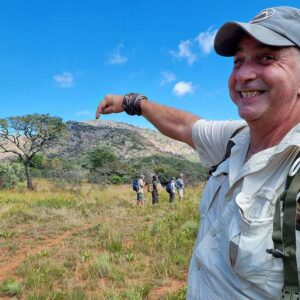
Chris – thank you so much for all your hard work over the past two years. For the endless hours fixing old infrastructure and questionable plumbing, wrangling multiple contractors to get upgrades done, and keeping Medike and our rangers safe and sound. Thank you, especially for all your efforts in opening up Thomas Wilson Pass – the many long hours in the heat of the bush, enduring all the Mopani Bee bites, early mornings, late evenings, and a lot of excavator issues and breakdowns. The road is spectacular and something you can be extremely proud of. Thank you for taking so much care while manoeuvring an excavator through such a sensitive environment. It is very rough terrain and not easy for building a road, and I am so impressed that you and Frank (the excavator driver) managed to get through some of the areas you did and that we can now drive from Medike West to East, on the most spectacular 4×4 mountain pass. I am sure all who drive it will love and be grateful for it!

Thank you for being the friendly, welcoming face of Medike, for guiding and contributing to the development of our now Green Flag accredited Old Salt Trail, for managing marathon support stations and ensuring trails were good to go, for looking after visiting students, and especially for the role you play in our mountain conservation community.

I’d like to wish you all the best and good luck in your new opportunities. Enjoy the dry, northern side of our mountain and remember that you are always welcome at Medike and will always be part of our extended EWT Soutpansberg family.

Suzette Britz

Emily Taylor, EWT Communications Manager
Suzette joined the EWT in October 2021 during a whirlwind time for the Communications and Marketing Department with lots of projects that needed design assistance and us a short way into our biggest project of the year – the annual Integrated Report. She hit the ground running – calm, collected, and extremely capable – she took it in her stride and, despite the pressure, produced incredible work time and again. In 2022, Suzette was tasked with a mammoth project – revamping our digital platforms and website. For those of you who saw our previous site, I’m sure you will agree that the new site is streets ahead, both to look at and to use. Few people realise the work that goes on behind the scenes in a project like that, and despite performing all her day-to-day graphic work, she delivered a flawless product in record time.

As a fairly new manager, it was a great relief to have her working beside me – taking on any task I threw at her capably and calmly. I never had to worry that she wouldn’t deliver or impress. We have received nothing but praise for our digital and print materials produced during Suzette’s time with the EWT, and she leaves a truly remarkable legacy with designs that will be used and loved for years to come.

Thank you, Suzette, for your hard work and commitment, your calm in sometimes turbulent waters, and your support and friendship. The EWT is honoured and grateful for all you have achieved in your time with us, and we wish you all the best for your bright future. You will always be part of the EWT family.

Sean Kelly

Dr Andrew Taylor and Shadi Henrico, EWT Wildlife in Trade Programme
Sean Joined our EWT canine unit in September 2021 to work with us on our IUCN SOS project to deploy conservation dogs to reserves with important populations of threatened species. Sean brought many years of dog handling experience with him and strengthened our team considerably. He is very energetic and is constantly on the go, and even when not working with the dogs, he makes sure everything involving the infrastructure needed for the dogs is functioning. As one would hope for in a good dog handler, Sean always put the dogs first and even took on the responsibility of housing two of our working dogs at home when we were short of kennel space. We are very thankful to Sean for his hard work and commitment to our dog projects and wish him all the very best in his future endeavours.
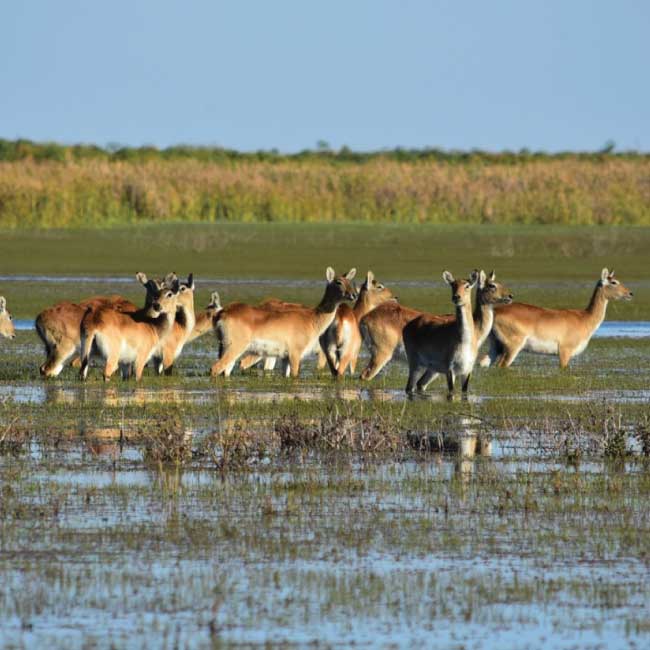
Kafue Lechwe numbers on a steep decline on the flats

Kafue Lechwe numbers on a steep decline on the flats

Kafue Lechwe numbers on a steep decline on the flats

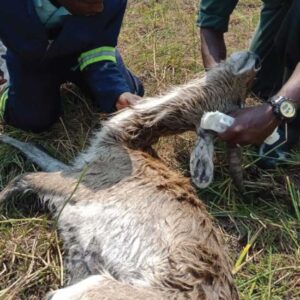
A dead Endangered Kafue Lechwe Antelope (Kobus leche kafuensis)

Saziso Moyo, EWT-ICF Partnership African Crane Conservation Programme

The Endangered Kafue Lechwe antelope (Kobus leche kafuensis) is the predominant antelope species of the Kafue basin. These lechwes are semi-aquatic, medium-sized antelopes that live in large groups close to water bodies or marshes. The antelope engage in competitive displays and courtship rituals, known as lekking, to entice visiting females who are surveying prospective partners with whom to mate. The lechwe population in the Kafue basin has steadily declined from an estimated 80,000 in 1975 to about 23,000 in 2018, leading to its inclusion on the IUCN Red List of Threatened Species. For this reason, the International Crane Foundation/Endangered Wildlife Trust (ICF/EWT) Partnership has, in addition to the crane species we focus on, included the Kafue Lechwe on the list of important species to monitor and conserve. To achieve this, it has become increasingly important to investigate all potential factors contributing to the decline of the Kafue Lechwe population.

During the dry season in 2022, the Kafue Lechwe were dying daily, sometimes as many as 10-20, with the females and young being among the most affected. The ICF/EWT research team and field patrol officers detected this during mandatory monitoring activities.

A team of veterinarians from the University of Zambia (UNZA), the Department of National Parks and Wildlife (DNPW), and the Central Veterinary Research Institute (CVRI) was put together by ICF/EWT to investigate the cause of the alarming mortalities. The DNPW permitted the team to hunt down three lechwes to collect substantial samples of the internal organs. The reports revealed that the lechwes had various health issues, including bacteria and endo- and ectoparasites. The vet team argued that the bacteria and other health issues uncovered were not enough to kill the lechwe, but a combination of the disease load and poor nutritional value of their remaining food source could be acting together to cause the high number of deaths observed.

The report specifically indicates the presence of bacteria such as E. coli, Moraxella spp, and Klebsiella spp. The E. coli is because of the open defecation practised in the fishing villages. The villages have open pit toilets released directly into the water during flood season, presenting a significant public health issue for the people living in fishing villages and for the lechwe that drink from these water holes. Other causes of high mortality rates in the lechwe are human encroachment and the competition for food with the cattle that now number around 80,000 on the Kafue Flats.

The next step will involve presenting these results to relevant stakeholders and authorities for further action. Solutions may include developing a sanitation programme for the villages and a comprehensive management plan for the Kafue Flats for the well-being of people and wildlife.

Additionally, this calls for a deliberate, aggressive monitoring programme of the Kafue Lechwe involving the institutions mentioned above. Monitoring will help us to understand the stress factors and the potential mitigation measures to implement to ensure a thriving wetland for ALL.

Earthly Eating: Lentils Kasha

Earthly Eating: Lentils Kasha

EARTHLY EATING: Lentils Kasha

Green Lentils with Kasha (Roasted Buckwheat)

Each month, we bring you delicious, nutritious, and eco-friendly recipes that our staff members or followers love! Here is a Earthly Eating: Lentils Kasha from Emily Taylor, the EWT’s Communications Manager

Preparation time: 20-30 minutes

Ingredients

  • 1 1/2 cups uncooked French green lentils
  • 3/4 cup uncooked kasha
  • 4 large garlic cloves, chopped
  • 1 cup unsalted crushed tomatoes
  • 4 tablespoons fresh lemon juice (about two lemons)
  • 2 teaspoons ground coriander
  • 1 teaspoon ground cumin
  • 1 1/2 teaspoons dried oregano
  • 1/4 teaspoon ground cayenne pepper
  • 1 teaspoon salt, or to taste
  • 2 cups fresh parsley, chopped
  • 1/2 cup good quality extra-virgin olive oil
  • 1/2 cup feta cheese, crumbled

Preparation:

  • Bring 2 1/2 cups of water to a pot, add the green lentils, and simmer on medium-low heat with the lid on until the lentils are tender (but not mushy). This should take about 15 minutes. Be sure to taste the lentils for doneness. If you need more water, add some during the cooking process. Once the lentils are finished cooking, drain the water from the pot and set aside.
  • In a pot, bring 1 1/2 cups water to a boil, add the kasha, and simmer on low heat with the lid on the pot for about ten minutes until the kasha is finished cooking. Set aside.
  • Place a large sauté pan on the stove. Over low heat, add the lentils and kasha to the pan and mix. Mix in the raw garlic, tomatoes, lemon juice, coriander, cumin, oregano, cayenne pepper, salt, and most of the chopped parsley.
  • Sprinkle the remaining parsley atop the lentils and kasha mixture, and then pour the olive oil all over the mixture. Do not skimp on the olive oil; it adds necessary flavour to the dish.
  • Sprinkle a generous amount of feta cheese and drizzle additional olive oil atop the individual servings.
Science Snippets: Wild Dogs steer clear of lion scat

Science Snippets: Wild Dogs steer clear of lion scat

Science Snippets: Wild Dogs steer clear of lion scat

Erin Adams and Lizanne Roxburgh, the EWT Conservation Planning and Science Unit

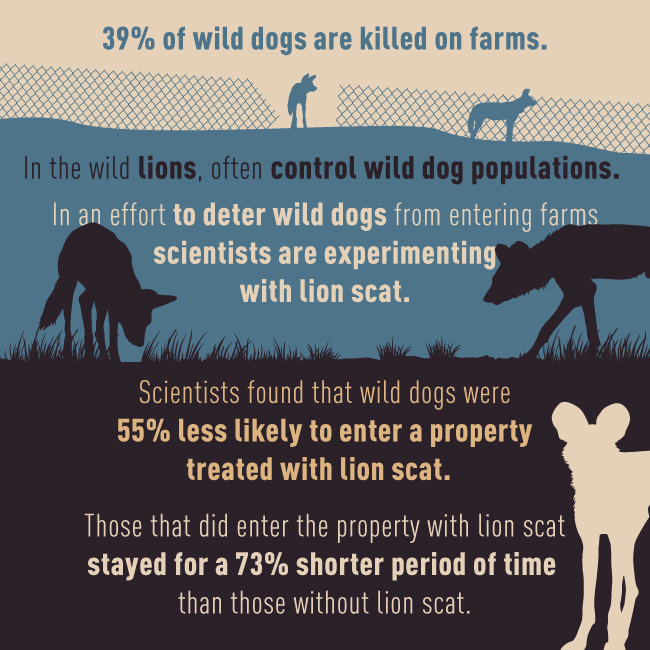
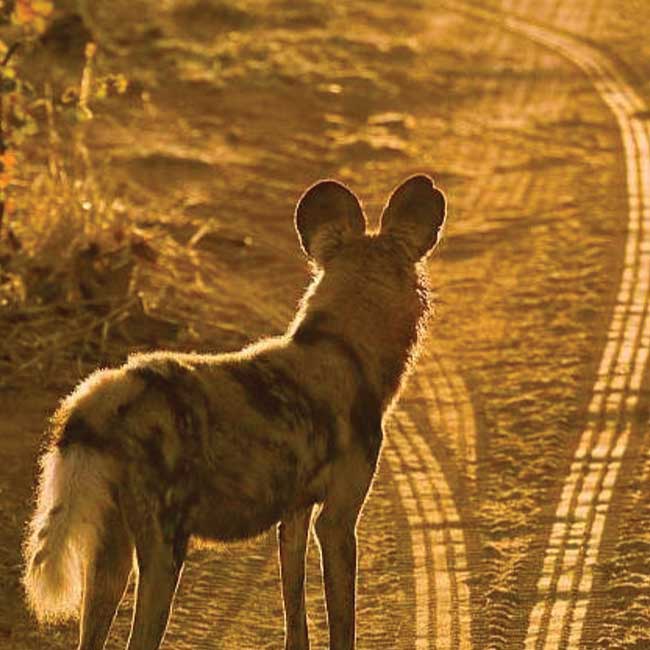
African Wild Dogs (Lycaon pictus) are currently classified as “Endangered” on the IUCN Red List. Within South Africa, there is a free-roaming population, which is a population of Wild Dogs that occur outside of protected areas. This population makes up as much as 20% of South Africa’s population. As they are not within protected areas, natural prey for Wild Dogs is often limited. Therefore, the Wild Dogs may move through private farming lands and consume the livestock and game, which brings them into conflict with the landowners. An estimated 39% of free-roaming Wild Dogs are killed through direct persecution resulting from this conflict. A recent study* co-authored by EWT scientists has tested a novel way of keeping Wild Dogs off private land and safe from persecution.

In their natural environment, dominant predators, such as lions, often control Wild Dog populations. Therefore, scientists aimed to keep Wild Dogs out of certain areas by using the scat of lions as a proxy for lion presence. As some of the Wild Dogs were already fitted with GPS trackers, it was easy to monitor their movements. The scientists tested whether the lion scats alone could deter Wild Dogs from entering private property and causing a threat to livelihoods. Within the study, some properties were treated with lion scat, while others were not treated with lion scat as a control to test the effectiveness of lion scat as a deterrent.

infographic on Wild Dogs

A recent study* co-authored by EWT scientists has tested a novel way of keeping Wild Dogs off private land and safe from persecution.

The scientists found that Wild Dogs were 55% less likely to enter a property treated with lion scat. Those that did enter the property with lion scat stayed for a 73% shorter period than those without lion scat. The scientists also found that some Wild Dog packs were more sensitive to the presence of lions than other packs were, likely due to the packs’ different exposure to and interaction with lions.

The results of the novel approach to managing free-roaming Wild Dogs tested in this study may benefit Wild Dog conservation by reducing conflict with farmers and other landowners. Further studies on using biological cues to control large carnivore movements should be conducted as this could play a significant role in their conservation.

*Haring, R. D., Beverley, G., Thompson, P. N., Taylor, A., & O’Dell, J. H. (2023). Evaluation of lion (Panthera leo) scat as a Wild Dog (Lycaon pictus) deterrent on game farms. Wildlife Research. https://doi.org/10.1071/WR22084.

A word from the CEO March 2023

A word from the CEO March 2023

Word from the CEO

Yolan Friedmann


When Clive Walker, Neville Anderson, and James Clarke registered the Endangered Wildlife Trust in 1973 with the sole intention, at that time, of addressing the unsustainable trade in Cheetah skins and reversing the decline in this species. They had no idea where it would go or what it would do; they just knew they had to do something to save Cheetahs. 18,250 Days later, give or take a few, the EWT now works across southern and east Africa on more than 50 species of wild animals and plants threatened with extinction and, most important, has successfully reversed the decline in Cheetah across South Africa, which is now the ONLY country in the world with an increasing population size of Cheetah.

This year the Endangered Wildlife Trust commemorates 50 years of conservation excellence. The EWT has achieved remarkable gains for many species, where downward trends in the local populations of Wattled and Grey Crowned Cranes, Piggersgill’s Frogs, the Amathole Toad, and the Riverine Rabbit have joined the Cheetah as species on a pathway to recovery. Not satisfied with just doing this well, the EWT has further trailblazed by developing a range of technologies to safeguard powerlines against bird collisions and electrocutions, to deploy drones for safe and effective conservation-based activities, and to introduce the first wildlife detection dogs for rhino horn in many points of entry and exit in South Africa. These are just the tip of the iceberg, and throughout our Golden Anniversary year, we will share many stories of success and tales of triumph.

With more than 110 staff members working across 13 countries in Africa, the EWT is arguably one of the most effective and impactful conservation organisations in the region, and we certainly work across the widest diversity of species, habitats and issues. Often recognised for our role in safeguarding charismatic species like the Wild Dog and Cheetah, the EWT was one of the first organisations to galvanise serious conservation action for the entire range of vultures found in our region, and our 50 years of working with this group of eco-cleaning scavengers have taken a continental direction where our impact has been felt in almost every range state for African vultures and across the most significant threats such as poisoning and illegal trade. Less known to many people is the key role that the EWT played in preventing the extinction of the Brenton Blue Butterfly and safeguarding the future of one of the region’s most important centres of endemism: the Soutpansberg Mountain range. In recent years we have taken on the plight of reptiles and even some highly threatened plants. Just as important are the thousands of human lives improved by the work of the EWT through job creation, education, empowerment, resource protection and provision, livelihood creation and empowerment to take control of their environment and their futures.

There is a lot to celebrate, but no time to waste. What would you do if you were Clive, James or Neville today? What species in peril would prompt YOU to start a movement and establish a giant that will, in 2073, be saving those species and so many more? Pop us a comment below or tell us on our socials what you would do for nature!

If this is what the EWT has achieved so far, imagine what we can STILL do and how much we can still achieve. This is the theme for commemorating the EWT’s five decades of conservation in action. We will reflect on our past successes as much as we imagine the world ahead and plan for the milestones we want to achieve in future celebrations. In many ways, our work has just begun, and with the world continuing to reduce wildlife populations and destroy wild places, the Endangered Wildlife Trust is needed more than ever.

With your support, we can achieve even greater things and protect all our futures together. We cannot wait to celebrate our birthday with you, so watch the EWT socials, publications, and website for all the details and ways YOU can be part of the story we write for the next fifty…..

Happy Birthday, EWT.

Yolan Friedmann

Decoding alphabet soup reveals a historical achievement in global conservation

Decoding alphabet soup reveals a historical achievement in global conservation

Decoding alphabet soup reveals a historical achievement in global conservation

 
Dr Gabi Teren, EWT National Biodiversity and Business Network, Programme Manager


On December 19, The UN CBD COP-15 adopted the Post-2020 GBF with the key 30×30 target for NBSAPs.

Scientists love talking in acronyms or alphabet soup. Let me unpack this for you by describing a recent momentous conservation achievement. The UN CBD – The United Nations Convention on Biological Diversity (CBD), ratified by 196 nations in 1992, encourages actions that will lead to a sustainable future, including:

“the conservation of biological diversity, the sustainable use of its components and the fair and equitable sharing of the benefits arising out of the utilisation of genetic resources”

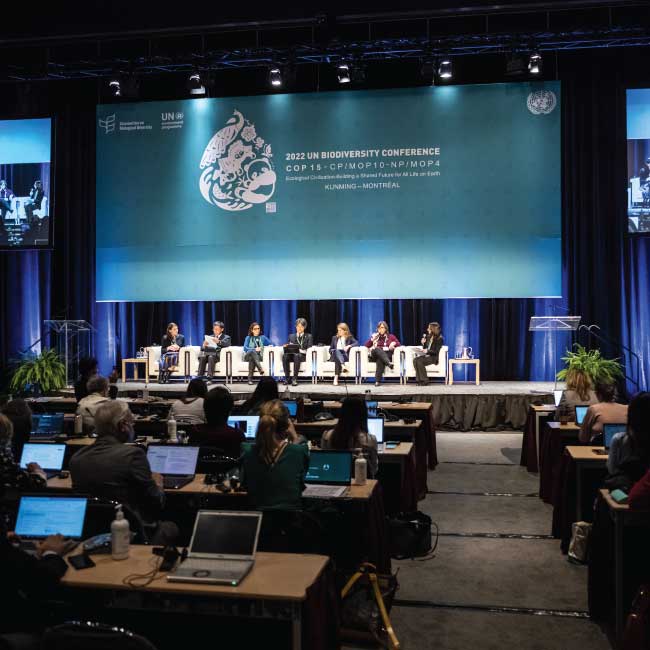
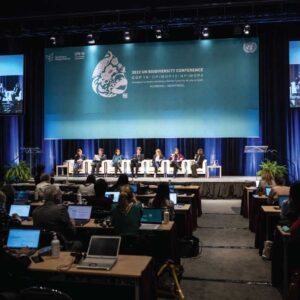
COP15 Business and Biodiversity Forum plenary session

Every few years, the 196 countries party to the convention (including South Africa, but notably not the USA) meet at a Conference of the Parties (COP). The COP27, the 27th meeting of the UN Framework Convention on Climate Change (UNFCCC) parties, was held in November in Sharm el-Shaikh. COP15 was subsequently held in Montreal, Canada. You may be thinking someone really can’t do arithmetic, but there are different conventions that focus on different aspects of environmental action. The former COP (27) was the annual UN Climate Change Conference that advances global climate talks, mobilises action, and provides opportunities to look at the impacts of climate change and potential innovation and solutions in Africa.

COP15, on the other hand, united parties to the Convention on Biological Diversity to review and sign into the Post-2020 Kunming-Montreal Global Biodiversity Framework (GBF). This was essentially equivalent to the famed Paris Agreement signed by the UNFCCC, which is THE international agreement to try and keep the rise in mean global temperature below 1.5 °C to help countries adapt to the disastrous effects of climate change.

The GBF is trying to help the world adapt to the disastrous effects of extinction and biodiversity loss.

“ An average of around 25 per cent of species in assessed animal and plant groups are threatened, suggesting that around 1 million species already face extinction, many within decades unless action is taken to reduce the intensity of drivers of biodiversity loss. Without such action, there will be a further acceleration in the global rate of species extinction, which is already at least tens to hundreds of times higher than it has averaged over the past 10 million years.

The biosphere, upon which humanity as a whole depends, is being altered to an unparalleled degree across all spatial scales. Biodiversity – the diversity within species, between species and of ecosystems – is declining faster than at any time in human history.

Nature can be conserved, restored and used sustainably while other global societal goals are simultaneously met through urgent and concerted efforts fostering transformative change.” GBF page 4.

The framework sets out four global goals and 23 targets. Target 3 is particularly important. Known as the 30×30 target, it sets out to ensure that by 2030, 30% of all land and water on Earth are effectively conserved and managed. To put that in perspective, despite being the third most biodiverse country on the planet, only 9.2% of South Africa’s mainland is formally protected[1] (although that doesn’t include other effective conservation areas). It is also an important target as it is quantified with a timeline. The quantification of some of the global goals got watered down in the final version to words like ‘significant’, which are vague and don’t promote action.

So how do countries now meet these targets? Or show progress towards meeting them? National Biodiversity Strategies and Action Plans (NBSAP) are the principal instruments of implementing the CBD at a national level and provide for integrating conservation and sustainable use into national decision-making policy. Of the 196 parties to the convention, 185 have developed NBSAPs. You can access all of them, including South Africa’s, at https://www.cbd.int/nbsap/. So now South Africa and all the other parties must immediately begin to revise their existing NBSAPs to implement the GBF and show progress at COP16, to be held in the latter half of 2024. While this doesn’t give us much time, the EWT is working hard to contribute to the process so that we can measurably address biodiversity loss on the ground.

Dr Gabi Teren, the EWT’s National Biodiversity and Business Network Manager

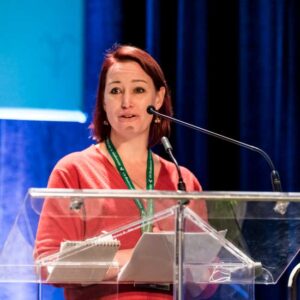
EWT programmes like the National Biodiversity and Business Network are already working to accelerate meaningful dialogues around the business-centred targets, which aim to address the private sector’s role in destroying nature and to equip people to make responsible and sustainable choices. We had a large presence in Montreal, where I, as the Manager of the NBBN, was the MC of the B&B… sorry, the Master of Ceremonies of the official UN Business and Biodiversity Forum. It was an incredible privilege to give the opening speech to hundreds of business leaders, policymakers, and conservationists and introduce renowned global thinkers like the economist Jeffrey Sacchs and Hank Paulson, the ex-US Secretary of the Treasury, and high-profile CEOs and ministers. I spoke about Ubuntu and how the world needs to come together more than ever in the spirit of ‘I am because we are’. Covid taught us that in a crisis, we can mobilise entire nations overnight and disrupt entire value chains within days to go from making gin to hand sanitiser, and in the face of our planetary crisis, the biggest disaster humanity faces, we need to do more. You can view my impassioned speech and those of all the keynote speakers here (really worth a listen!).

The EWT also partnered with DFFE (Department of Forestry Fisheries and Environment) at an official side event, which we were lucky to get as hundreds of applications could not be accommodated. Supported by UNDP (UN Development Programme), BirdLife International, and the South African National Biodiversity Institute (SANBI). At this event, we spoke about the importance of collaborations between private-public-NGO bodies and how South Africa has some incredible success stories from such collaborations, such as the National EIA Screening Tool developed by SANBI, the EWT, – the world’s first biodiversity accounting framework for businesses to measure and disclose their footprints, which was proudly developed by the EWT with funding from Eskom. The audience’s reactions showed how these collaboration demonstrations could inspire action.

In a Post-2020 world, we need to work together to live more harmoniously with nature. Watch this space as we build that action to conserve our world with your help. In follow-up articles, I will unpack some key targets and how we plan to achieve them. Follow our socials here for more.

[1] http://www.statssa.gov.za/publications/D04012/D040122020.pdf

Careers in Conservation – Samantha Mynhardt

Careers in Conservation – Samantha Mynhardt

CAREERS IN CONSERVATION – DR SAMANTHA MYNHARDT

Dr Samantha Mynhardt is the EWT’s Drylands Conservation Programme new Researcher. Here is a little bit about Sam’s journey to a career in conservation.

Dr Samantha Mynhardt

Job title: DCP Researcher

Location: Stellenbosch

Where did you grow up?  Pretoria

What are your hobbies/things you like to do in your spare time? Hiking, trail running, cycling, guitar.

Any pets? Two cats (even though I’m more of a dog person)

Favourite animal and why: Dog. Dogs are just the best! I can’t resist them.

Favourite food? I’ll take pizza any day.

Pet peeve? Mouth noises. Especially when people make noises with their lips that make my lips itch! haha

Why did you want to work for the EWT?

I love EWT’s work and what the organisation stands for. I have worked alongside the Drylands Conservation Programme for three years now and have seen the passion and dedication with which this team works towards conserving our planet, its species, habitats, and people. I would like my life and work to contribute to such a worthy objective too.

What excites you about this new position?

I am excited to explore the unearthed potential of environmental DNA, both in species research and monitoring and in applied conservation. I am excited to learn more about the field of conservation generally because, as a geneticist and career academic, I haven’t had much experience in applied conservation, and this is where my research can add real value. So I am excited to bring my unique skills to the table to benefit the DCP team, the EWT, and the PLANET!

What are you passionate about? 

I am passionate about South Africa’s unique biodiversity, its multitude of unique biomes, habitats, and species, and I am highly motivated to contribute towards protecting and conserving this biodiversity. I enjoy music, outdoor sports, exercise, and my two incredibly delightful children!

What’s the best advice you’ve ever received, and who did it come from?

It’s hard to say. My dad always encouraged me to stay true to myself, not compare myself to others, or allow others to define me. I know it’s pretty cliche, but it’s still the best advice ever!

What is your go-to feel-good song? 

I feel better when I’m dancing – Meghan Trainor

Tale from the field – wetland restoration in Zambia

Tale from the field – wetland restoration in Zambia

TALE FROM THE FIELD

Wetland restoration in Zambia

Saziso Moyo, ICF/EWT African Crane Conservation Project Assistant

Wetlands are important food, materials, and freshwater sources and play various ecological functions. Important socioeconomic and cultural services are derived from wetlands, including pasture for livestock grazing; and traditional ceremonies such as the Kuomboka. Wetlands also provide other ecosystem services such as maintaining good water quality by acting as filters, recharging groundwater, storing carbon, recycling soil nutrients, and preventing soil erosion by acting as soil control. They are also important habitats for biological diversity.

For this reason, the International Crane Foundation/Endangered Wildlife Trust Partnership in Zambia (ICF/EWT) was part of this year’s wetlands day celebrations in Lochinvar National Park. The event was led by the Ministry of Lands and Natural Resources (MLNR) in collaboration with different stakeholders, including the Worldwide Fund for Nature (WWF), Bird Watch Zambia, the Department of National Parks and Wildlife (DNPW), and Zambia Sugar. The Minister for Lands and Natural Resources, Honorable Elijah Muchima, was the Guest of Honor and joined by four Traditional Leaders from the Kafue Flats namely Chief Nalubamba, Chief Hamusonde, Chief Choongo, and Chieftainess Muwezwa. Other senior Government officials included the Provincial Permanent Secretary, Dr Namani Moonze, the Permanent Secretary Ministry of Lands, Mrs Daphne Chabu, and representatives of the Departments of Forestry and Department of Climate Change. The national Focal Point for the Convention on Wetlands was also in attendance.

The event started with a courtesy call on His Royal Highness Chief Hamusonde at his palace, where all four chiefs gathered. A series of events followed, which included a march by the pupils from Lochinvar Primary School accompanied by their teachers and members of various organisations that attended the event. The hosting Chief, His Royal Highness Chief Hamusonde, gave the welcoming remarks, and in his speech, he expressed happiness that the four chiefs could come together and celebrate this important day.

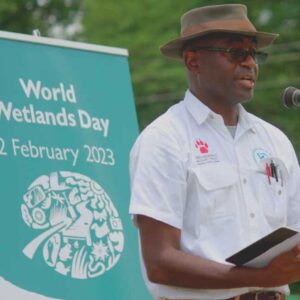
ICF/EWT Southern African Regional Manager, Mwape Sichilongo, speaking about the importance of the Kafue Flats and emphasised the need to act now to protect wetlands.

As one of a series of speeches that followed, ICF/EWT Southern African Regional Manager, Mwape Sichilongo, echoed the importance of the Kafue Flats and emphasised the need to act now to protect wetlands. He called upon the government to invest more in regulating the use of our environment so that our economic aspirations do not unnecessarily compromise environmental integrity and he also asked the government to maintain areas set aside for conservation to preserve their ecosystem services on which local livelihoods and other economic activities depend. Chief Nalubamba, as Chairperson of the Southern Province Chiefs Council, challenged the crowd to think of ways to balance the people’s competing needs and what the wetland needs for restoration to take place. He also asked the government to set aside US$ 2 million to restore the Kafue Flats as it was facing serious degradation and threatening the ecosystem and local livelihoods.

The Honorable Minister of Lands and Natural Resources spoke about the importance of the Government and traditional leaders working together to combat poaching that has been ongoing in the Flats for some time. He applauded ICF/EWT for their great work removing the invasive Mimosa Pigra to restore the Kafue Flats.

Traditional dancers from the Ila community of Choongo Chiefdom entertained the gathering. They performed educative dances and songs about conserving nature and its wonderful benefits, songs of praise for the traditional leaders, and many others. School children sang songs and presented poems about the conservation of wetlands, including the words, “the animals of the wild are free to move around. Please don’t stop patrolling the park and continue to support the patrols.” The peer educators also performed a play to educate people on the dangers of poaching.

A tribute to a beloved pack member – Dr Peter Mundyn

A tribute to a beloved pack member – Dr Peter Mundyn

A tribute to a beloved pack member – Dr Peter Mundy

Pioneering African Vulture Conservationist: 1941-2023

Dr John Ledger

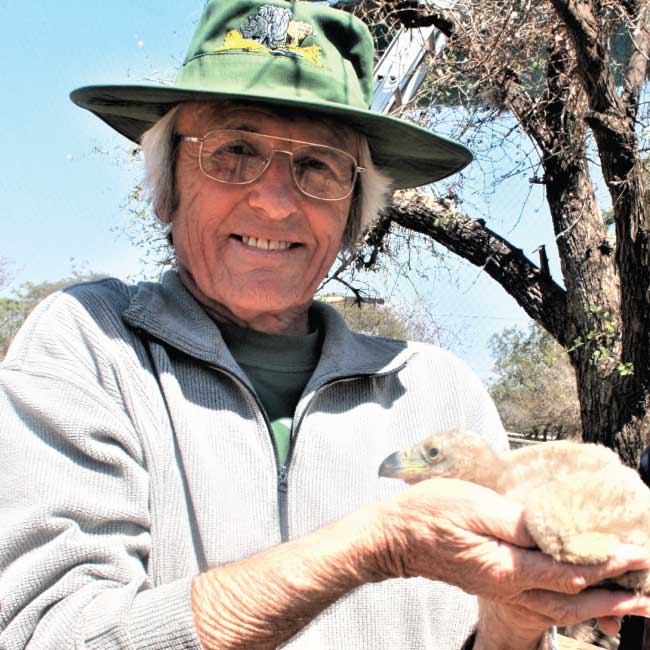
Peter Mundy cradles a baby Palm-nut Vulture hatched at Vulpro. 24 September 2021. Photo: John Ledger.

While numerous tributes to Peter have poured in following his death on 3 February, it is regrettable that he did not get to write his own story, which would have been a fascinating autobiography. This is but a brief tribute to his full and exceptional life.

Born in  London, Peter showed early signs of leadership and self-motivation. In 1957 he became a Queen’s Scout and attended the World Jamboree. In 1960 he was a member of the British Schools Exploring Society expedition to Iceland, and in that year, he finished his schooling at the Royal Liberty School in Essex, winning a State Scholarship to Worcester College at Oxford University, where he ostensibly studied Zoology for a year.

But, in his own words, “he was not yet ready for such training”, and instead of zoology textbooks, he read Dostoevsky, learnt to play the saxophone, and had a fully wild time. Oxford divested itself of his continued presence. Thereafter followed time at the University of Life, where Peter undertook diverse types of work (including grave-digging) until he became a blues musician in the outfit called ‘Screaming Lord Sutch and the Savages’. The band toured in Europe, and Peter’s stories of those days were hilarious and unforgettable. But after a few years, he tired of the frenetic but jaded life of an itinerant musician and managed to get back into university, this time at King’s College, London, whence he emerged with a BSc (Hons) in Zoology in 1969. He started birding with his university friend Clive Slater (“when we were on a rather boring entomology field course”).

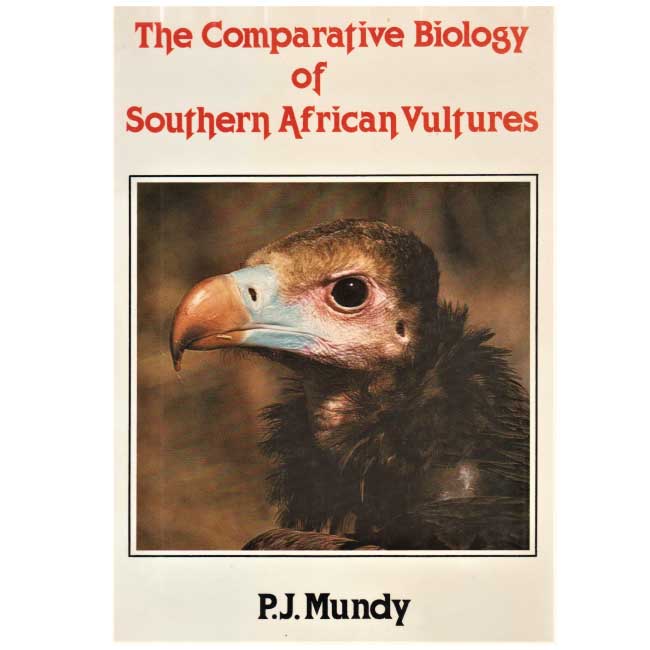
Then followed nearly three years in northern Nigeria, where he was a secondary school teacher (biology and mathematics) at the Government College in Sokoto. Here he became interested in vultures and, with another friend (Allan Cook), studied the Hooded Vultures that were abundant in the heart of the city and had developed a symbiotic relationship with the humans of Sokoto. After that, he became a junior research fellow at the University of Rhodesia in 1972 to pursue a doctoral study on the ‘Comparative Biology of Southern African Vultures’.

He researched vultures in the north-east of Rhodesia in the Chirisa and Chizarira Game Reserves and the south-east in the Gonarezhou Game Reserve. With his young assistant Gabriel Ruguma, he worked for three years in wild areas full of large and dangerous animals, armed with only a Swiss army knife. His tales about their escapades in the bush were entertaining, to say the least! To fulfil the broad scope of his research, Peter had to include the Cape Vulture (or Cape Griffon as he liked to call it) in his studies, and that brought him to South Africa, the stronghold of the species,  where we met in 1972 and became close friends for fifty years. I had been involved with ringing Cape Vultures with the Witwatersrand Bird Club when I was a student at Wits and a member of the university Mountain Club.

The following year Peter joined our annual expedition to ring Cape Griffon nestlings at Roberts Farm in the Magaliesberg, and with his sharp wit, combative world views, and vigorous usage of strong expletives, had a powerful impact on the young students of the Wits Mountain Club who had never encountered such an unusual character! Over the next few years, ringing efforts were extended to several Cape Griffon breeding colonies at Manoutsa, Colleywobbles (then Transkei), Zastron (Free State), and Botswana.

Peter also had a galvanising effect on several local vulture enthusiasts. Many people were attracted to work for vultures with the enthusiasm that he generated about the hidden charms and unique features of the big birds. The core of the Vulture Study Group (VST) comprised Mundy, Ledger, Russel Friedman (fundraising), Steven Piper (academic/statistician), Duncan Butchart (artist)  and Marilyn Blignaut (secretary). We funded the work of the VSG mainly by selling T-shirts at shopping centres, organised by our entrepreneurial ‘cousin’ Russel, and attracting the inquisitive crowds with a real live vulture called ‘Bonaparte (because of his crippled wing).

In 1976 we started reading about Clive Walker and the Endangered Wildlife Trust in various newspapers, and Mundy said he sounded like ‘the sort of bloke who might give us some money’. Clive was taken on a heart-stopping climb up the face of the Magaliesberg to see the vultures. He persuaded the Board that these young lunatics deserved support, and I was subsequently appointed as an EWT Trustee in 1976 with a brief to make sure the Vulture Study Group was run with business-like discipline, and it became the first ‘Working Group’ of the EWT.

At the South African Ornithological Society (SAOS) Symposium on African Predatory Birds. Peter Mundy, John Ledger, Dr Leslie Brown, Dr Ian Newton, Russel Friedman, Dr Alan Kemp; seated: Steven Piper and ‘Timofy Vulcha’. Photographed on the steps of the Transvaal Museum in Pretoria by John Cooper, August 1977.

At a South African Ornithological Society (SAOS) symposium on ‘African Predatory Birds’ at the Transvaal Museum in August 1977, we interacted with an audience that included leading specialists like Dr Leslie Brown from Kenya and Dr Ian Newton from Oxford University. Two years later, in 1979, Peter, Russel, and I attended and made presentations at the first International Conference on the Vultures, held in Santa Barbara, California. Our participation put the Vulture Study Group on the international map and resulted in us working with the California Condor Rescue Programme in 1981 and attending a Bird of Prey conference in Thessaloniki, Greece, in 1982.

Peter graduated with a D Phil from the University of Zimbabwe in 1981 and was employed by the EWT as its first Scientific Officer. He later joined the Department of National Parks and Wildlife in Zimbabwe as their Ornithologist and also represented his country at various international meetings such as CITES. Peter and I attended several vulture conferences around the world and met regularly on his visits to South Africa.

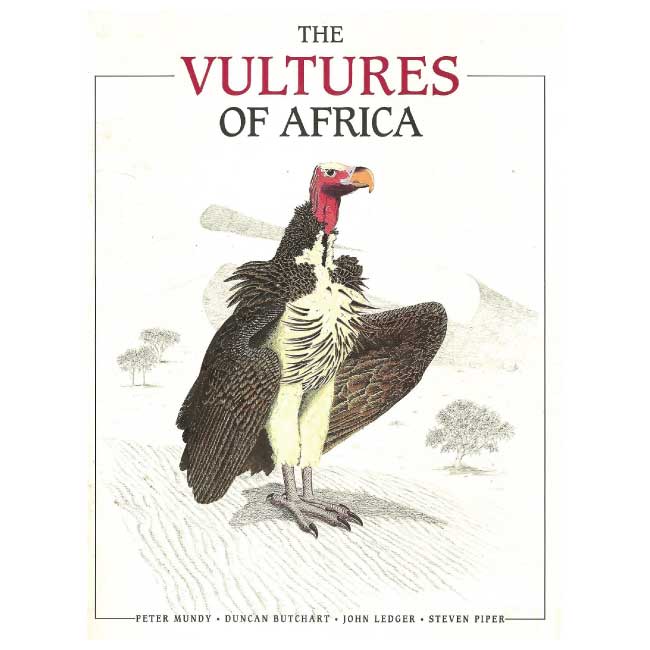
He was subsequently appointed Professor of Forestry and Wildlife at the National University of Science and Technology in Bulawayo, where he played a major role in training young Zimbabweans, many of whom went on to remarkable achievements at the tertiary level and employment in the fields of biology and conservation. He was an excellent and prolific writer and published numerous popular and scientific articles. The ultimate milestone was the publication of The Vultures of Africa in 1992, authored by Peter Mundy, Duncan Butchart, John Ledger and Steven Piper. The citation index for this large 464-page book is remarkable and continues growing to this day.

When Peter was diagnosed with cancer, he came to Johannesburg several times for treatment, where we saw one another and also made two rather nostalgic visits to the Magaliesberg in 2021, one to the Nyoka Ridge vulture restaurant on International Vulture Awareness Day on 4 September, and another to Vulpro on  Heritage Day, 24 September. What struck me about these gatherings was how Peter Mundy’s legacy has inspired future generations of people to appreciate and treasure these great birds and go to great efforts to conserve and care for them. This is a notable achievement that will long be associated with this remarkable man and will hopefully be a solace to his wife Verity and children Matthew and Emily as they come to terms with their loss. I certainly miss him deeply.

Saving species through habitat conservation: Sungazers

Saving species through habitat conservation: Sungazers

Saving species through habitat conservation: Sungazer Lizards

Bradley Gibbons, Senior Field Officer, ICF/EWT African Crane Conservation Programme

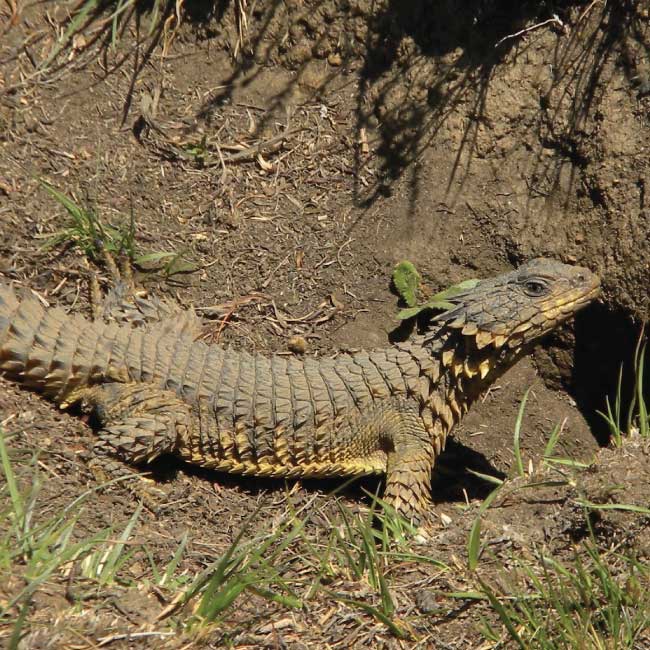
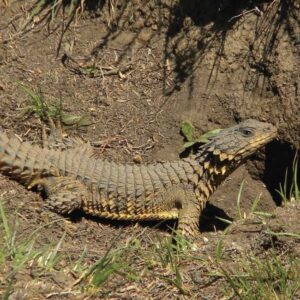
South Africa’s Free State Province is thought to be home to 95% of the population of Sungazer Lizards (Smaug giganteus), with the remaining population found in Mpumalanga. Sungazers are endemic to South Africa, meaning they occur nowhere else in the world. They were named “Sungazers” because of their habit of standing in the sun in a unique posture with their front legs upright, underside not touching the ground, and faces angled toward the sky. They are given the name “Ouvolk” in Afrikaans, which means “old folk” in English. The theory is that they were given this name due to their dinosaur-like appearance.

Sungazer Lizard outside burrow

Sungazer Lizard outside burrow

Sungazers are threatened because their virgin grassland habitat is being rapidly transformed for agricultural expansion, mining activities, overgrazing, and the collection of individuals for the pet trade or local traditional use. They are found in a specific type of grassland, making them habitat specialists, and they do not translocate easily, with many individuals not surviving the process. Therefore, protecting the habitat that Sungazers depend on is paramount.

Currently, very few sites are protected to conserve Sungazers because approximately 99% of these lizards occur on privately-owned farms and properties. Sungazers are not rock-dependent and construct burrows underground – roughly 45 cm below the ground surface, extending up to 2 metres. The association with the short grass makes it easier for Sungazers to be on the lookout for predators. When danger approaches, their only defence is to run into their burrows. For this reason, they spend a lot of time in their burrows, but if you’re lucky, you can catch these fascinating dragon-like lizards when they emerge to find food and show their reverence for the sun!

The Endangered Wildlife Trust is working to protect the habitat of the Sungazer Lizard and other threatened species through Biodiversity Stewardship and by reducing threats such as illegal wildlife trade. Visit  www.ewt.org.za to find out more about Sungazers and what you can do to help.

Case study: The Eeram Protected Environment

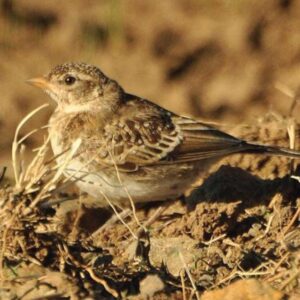
The Endangered Wildlife Trust (EWT) is currently busy with a project to proclaim the Eeram Protected Environment, and a gazette notice was published at the end of October 2022. This area is located between Warden and Harrismith in the Free State and is 7,398 hectares in size. It will be the first area proclaimed to conserve the Endangered Botha’s Lark. Not only will this offer protection for this bird, but also for Sungazers and Blue Cranes.

Botha’s Lark. Photo credit: David Weaver

A protected environment is a form of habitat conservation on privately-owned properties and is an agreement made by a landowner to conserve the biodiversity in the area. The area is proclaimed through the National Environmental Management: Protected Areas Act – No 31 of 2004 (NEMPAA), allowing the farmer to continue farming in a manner that does not compromise the biodiversity and ecology in the declared area.

Grasslands are one of South Africa’s most endangered biomes, with only 2.5% formally conserved and 60% permanently damaged. These grasslands are critical for the long-term provision of ecosystem services, and all grasslands play this role, even a small farm close to a city. The grassland biome is also in a water production zone and critical to water supply to cities in Gauteng and the Free State. This protected environment will be valuable for conserving threatened species in this important area, including the Sungazer Lizard.

This work is made possible by Eskom Holdings SOC Ltd, Ezemvelo KZN Wildlife, the Ford Wildlife Foundation, the HCI Foundation, Heather Henson, International Crane Foundation Conservation Impact Fund, the African Wildlife Initiative Rapid Action Grant co-funded by IUCN Save our Species (SOS) and the European Union, National Lotteries Commission, Millstream Farm, N3 Toll Concession, Paul L King, Rand Merchant Bank, and the Whitley Fund for Nature.