Help African Wild Dogs 

Donate today  

On the edge of the ledge

On the edge of the ledge

The edge of the ledge – don’t look down!

Clive Walker, Founder

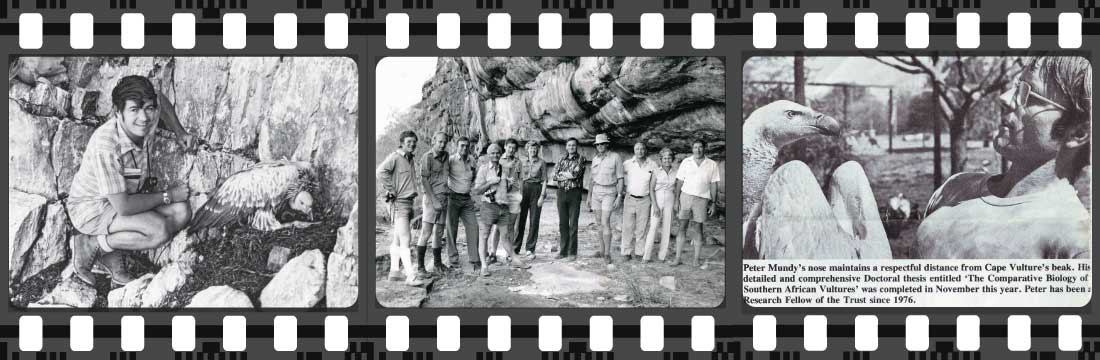
My entry into the world of vultures was at the invitation by John for me to spend a Saturday morning with the group in the Magaliesberg to the north of Johannesburg. My hosts were businessman Russel Friedman and a well-known ornithologist called Dr Peter Mundy. I had no idea what I was in for. Upon arrival at a private farm, I found a group with binoculars and telescopes sitting in deck chairs, scanning a rugged mountain landscape. Waiting for me was Russel Friedman, who was to escort me to the cliff face. I had not planned on climbing anywhere, and Russel looked like one of those disaster volunteers who rescued people in distress. I was about to be a victim. We headed to base, with me now wearing a helmet and beginning to feel I had shown too much enthusiasm.

What began as a gentle walk soon became an increasingly steep climb through grass and stunted bush, which turned into a rock face. Eventually, we reached a high running ledge with incredible views of Johannesburg in the distance and a man clad in a helmet with metres of rope wrapped around his neck. It was none other than Dr Mundy, doyen of the vulture world. Sitting on a narrow ledge flying vultures could be seen up close as they wheeled on spectacular widespread wings, and I knew then why these volunteers risked life and limb for them. However, when a large chick was pointed out to me, and I looked down, I realised, with horror, how high up we were and that the only way down was using the rope around Peter’s neck. I felt instantly ill and grateful that I wasn’t one of those volunteers.

Suffice it to say I never accepted another invitation from Dr Ledger, but after witnessing such passion and commitment from a group of volunteers for wildlife, I could not wait to get back down to earth and urge the board to support the Vulture Study Group. The board agreed, and a long and fruitful relationship took flight.


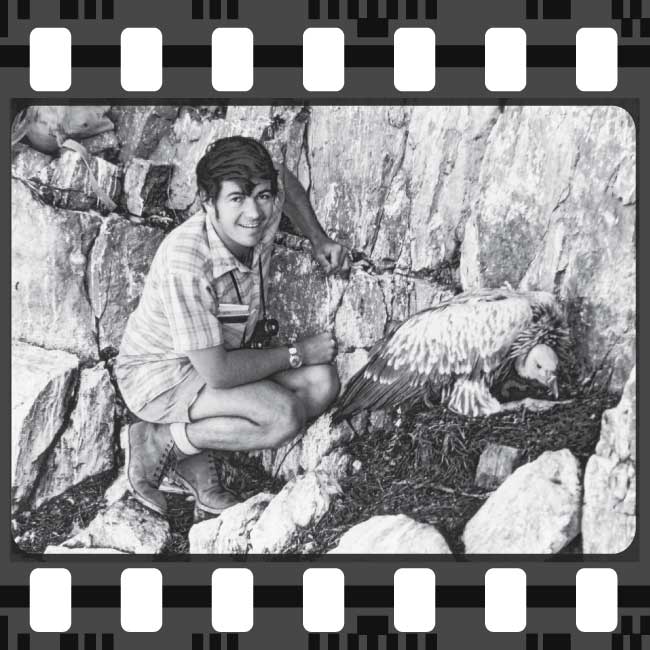
Filmstrip of members of the vulture study group in 1976

The brave volunteers of the Vulture Study Group. 1976

Why the Cheetah?

Why the Cheetah?

Why the Cheetah Paw?

Clive Walker, Founder of the EWT


Cheetah (Acinonyx jubatus)

“An Endangered species which has declined through loss of range, the insidious fur trade and shooting due to stock predation.”

The choice of the Cheetah as the EWT’s logo was an obvious one for me. My first encounter with this graceful, swift feline was as a game ranger in Bechuanaland in 1966. I came across a young, tame female in the garden of a farmer. Her mother had been killed because of predation on the farmer’s sheep before he realised she had a young cub with her. The cheetah was on a chain attached to a long wire, and she had the run of the large lawn. I got right up close to her and was deeply struck by the beautiful large eyes and the continuous purring sound.

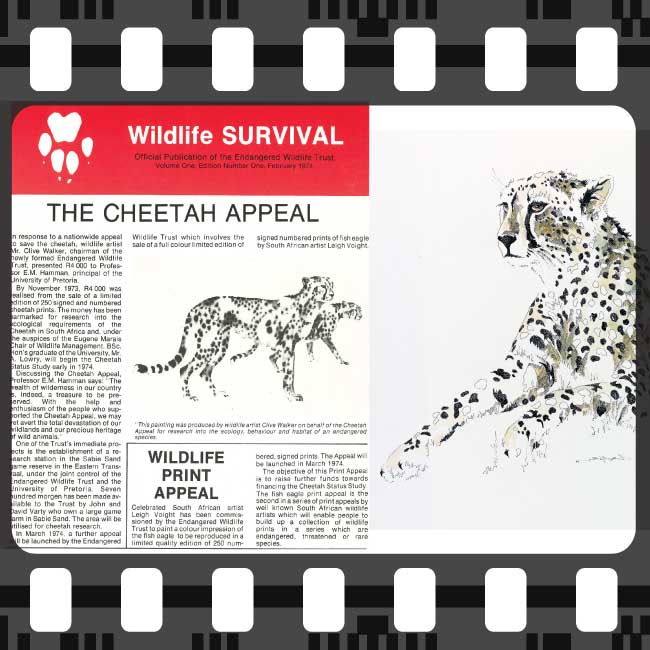
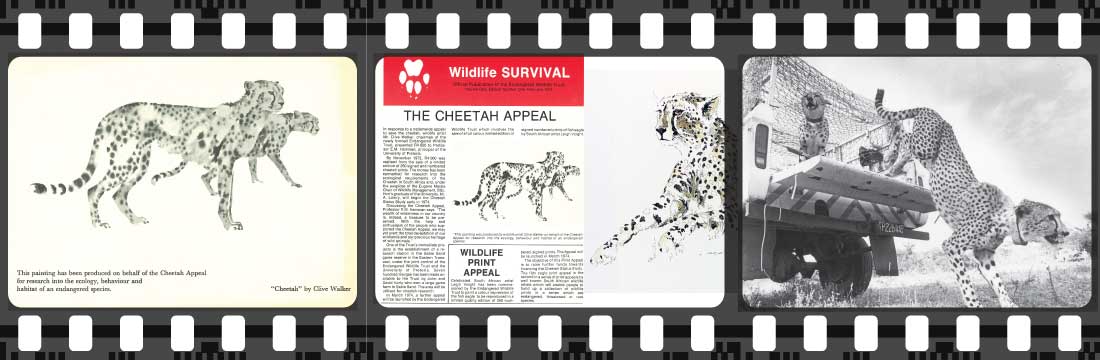
My next encounter was after visiting the Africana Library on Diagonal Street in downtown Johannesburg one Saturday afternoon in 1972. I was horrified to spot cheetah skins hanging like washing on a line in a ‘muthi’ shop. Even more so when the owner was happy to sell me one and advised me he could get more. The memory of it was etched in my brain as I thought back to my first encounter in Bechuanaland. I continued to prepare for an exhibition scheduled for October of the same year and included in my subjects a pair of cheetahs with the objective of following David Shepherd’s idea of a print appeal and at my own cost had 250 prints produced and announced as a CHEETAH APPEAL as James Clarke of the STAR newspaper opened the exhibition at the Lister Art Gallery in Bree street, Johannesburg on 1 October 1973. James was later to become a founding trustee of the Endangered Wildlife Trust. All numbered prints were sold at R20.00 each. After printing expenses, the appeal raised a nice sum of R4,500 to be donated for cheetah conservation.

As I write this today, in 2023, the cheetah is considered vulnerable, and with the transformation of the wildlife industry, it is in a far better position today than back in 1973, thanks in no small part to the work of the EWT and private landowners.

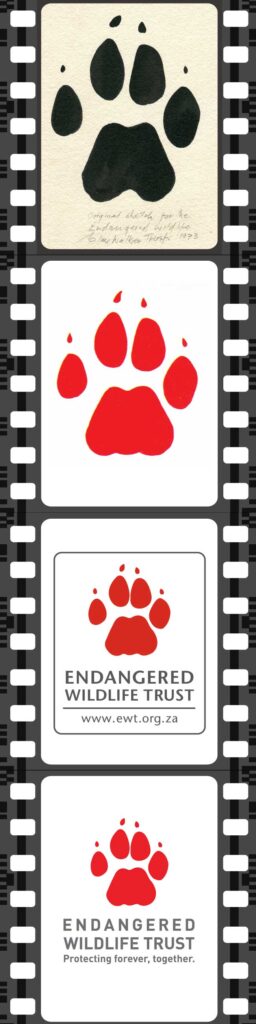
The original logo was adapted from the publication by the Late Dr Rheay Smithers, Mammals of Southern and Northern Rhodesia. Whilst accurate in dimension, the original paw lacked the small indentation between the back pad. This was rectified during Dr Ledger’s time after I retired in 1985.

Filmstrip with EWT logos over 50 years
The historical role of women in the ewt

The historical role of women in the ewt

Celebrating women in conservation

National Women’s Day draws attention to the challenges African women still face but also the ever-increasing opportunities for them to empower themselves.

In South Africa, August (Women’s Month) acknowledges these challenges and celebrates the many achievements of women in South Africa. It encourages others to learn from those who came before them and how they overcame the limitations they encountered.  Women now have louder and more powerful voices, playing a necessary role in highlighting many issues, including environmental degradation, women and child abuse, unequal pay, lack of good education for their children, and many more.

During this Women’s Month, the EWT pays homage to women in the conservation space who do their bit to save species, conserve habitats, and benefit people.

Meet these amazing women here and on social media under #EWTWomanCrushWednesday.

The historical role of women in the EWT

Clive Walker, Founder and Former Director of the EWT

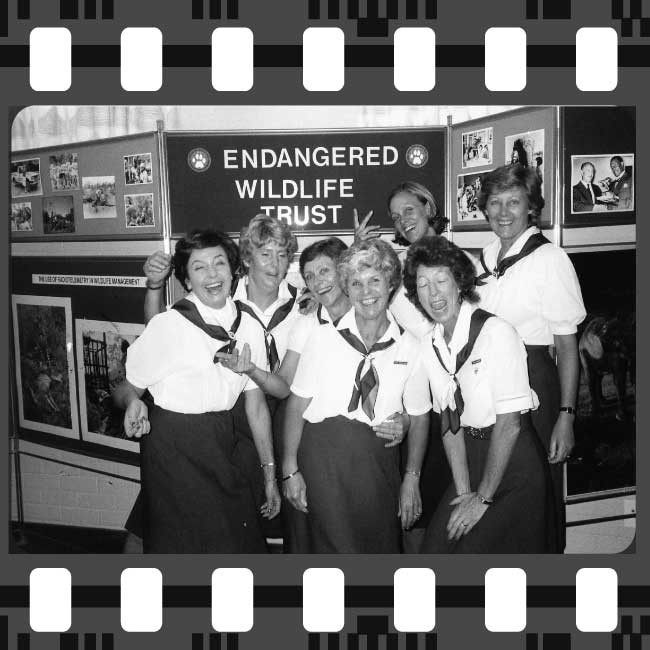
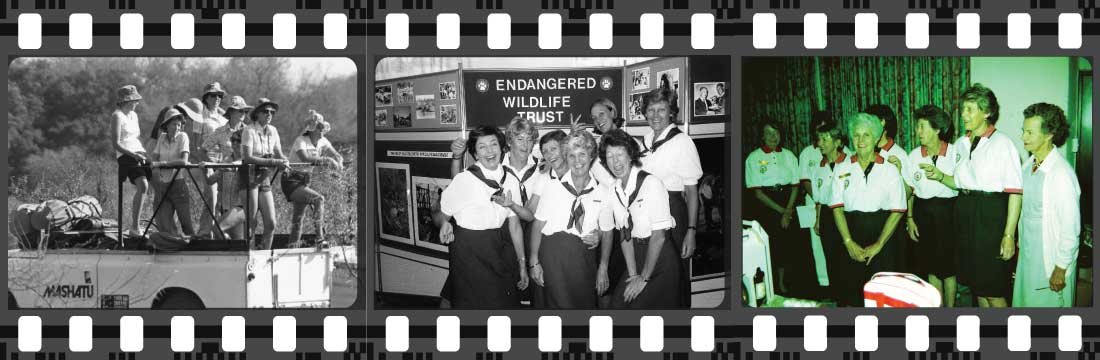
In 1975, I took a group of eight women on a walking trail in the Mashatu Game Reserve in northeastern Botswana. They had told their husbands they were off to the bush for five days, and their husbands had to take care of their kids while on ‘trail’. Among them were Wendy Farrant, whose husband was an EWT trustee, and her friend Joy Cowan. Both husbands were accountants who made up a number of the professionals who made up the board of directors. The very first afternoon, we encountered on foot some 100 elephants standing in the dry Shashe river bed that borders Zimbabwe. One can only imagine the experiences that were to follow over the next four days. On the last night around our campfire, a number asked what they could do to help the EWT as they had become so fired up by their experiences, and my response was why don’t we form a ‘ladies’ committee’ and, after discussing it with the board, we did just that. The committee consisted of Wendy Farrant, Jill Morrison, Felicity Street, Joy Cowan, Maureen McCall, Jenny Doak, and Conita Walker. As volunteers, they contributed 100s of hours in administration work, ran all the fundraising functions, organised three symposiums and various workshops during my tenure and became the flag bearers of the Trust’s work. I must commend my secretary, the late Petra Mengal, who ran the zoo office, and my PA, Jane Zimmerman, who were the only two permanently employed staff and were a tower of strength to the organisation.


Ladies accompanying Clive Walker on a wilderness trail in the Mashatu Game Reserve in northeastern Botswana in 1975 (Left) and The Endangered Wildlife Trust’s Ladies Committee , formed in 1975. As volunteers, they contributed hundreds of hours in administration work, ran all the fundraising functions, organised three symposiums and various workshops, and became the flag bearers of the Trust (Right).

FAST FORWARD TO 1999

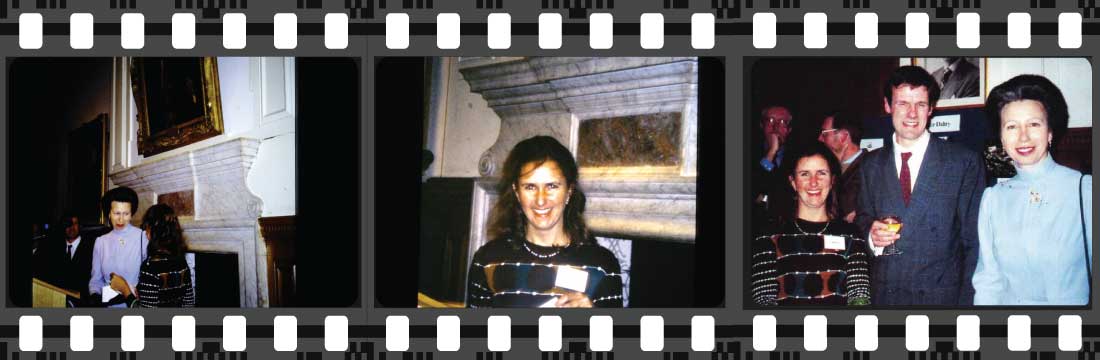
Twenty years later, another woman was trailblazing through conservation – the conservation of cranes in particular. Lindy Rodwell cofounded the EWT’s  South African Crane Working Group (SACWG) with Kevin McCann, having established and grown the Highlands Crane Group two years prior. The SACWG was formed to coordinate all crane conservation efforts across South Africa. In 1999, Lindy was the first person from the EWT, and from South Africa, to win the Whitley Award, often referred to as the ‘Green Oscars’. The award is awarded annually to individuals from the Global South by UK-based conservation charity the Whitley Fund for Nature.


Lindy Rodwell, Edward Whitley Junior, and HRH Princess Anne at the 1999 Whitley Awards at the Geographical Society in London. Lindy won a Whitely Award for her work conserving cranes.


A word from the CEO August 2023

A word from the CEO August 2023

Word from the CEO

 
Yolan Friedmann, CEO


As we mark Women’s Month in South Africa, with Women’s Day being celebrated on 9 August annually, it is worrying that a 2022 report by the UN states that gender disparities are, in fact, worsening globally and that it will take nearly 300 years to achieve gender parity at the current rate of global gender transformation. Despite efforts by NGOs, community groups and government agencies around the globe, drivers that have amplified this negative trend include the COVID-19 pandemic, conflict, climate change and a backlash against the rights of women to own and manage their own reproductive health. As a result, most countries stand no chance of achieving the targets set under SDG (Sustainable Development Goal) number 5 by its 2030 deadline.

In many countries, there are not even laws that ban violence against women or protect their rights in marriage, and it is feared that this may continue to exist for generations to come. The UN warns that at the current rate of progress, it will take up to 286 years to close gaps in legal protection and remove discriminatory laws, 140 years for women to achieve equal representation in leadership positions in the workplace, and 40 years for the same to happen in national parliaments. Instead of seeing a rapid and meaningful decline in poverty and poor education of girl children, by 2030, it is estimated that more women and girls in sub-Saharan Africa will live in extreme poverty than today.

One of the tools that needs urgent and focused attention with significantly increased resource allocation is, of course, education. Each additional year of schooling can increase a girl’s future earnings by up to 20%, according to the report, with further impacts on poverty reduction, better maternal health, lower child mortality, greater HIV prevention and reduced violence against women. A study in 2013 on education and fertility in Ethiopia estimated that an additional year of schooling in Ethiopia would lead to a 7% reduction in the probability of teenage birth and a 6% decrease in the probability of marriage. Furthermore, the same study showed that 61% of women with no schooling have a child before turning 20 compared to 16% of women with eight years of schooling.

Additionally, women with eight years of schooling would have a fertility rate 53% lower than those without schooling at all, and female education has a greater impact on the age of marriage and delayed fertility than male education.

The EWT has a range of initiatives aimed at empowering and supporting women and girls to own their own bodies, own their own lives and own their own futures. The ICF-EWT Partnership has constructed private, dignified girls-only toilets in communities in Uganda, thus supporting girl children to attend school when they have their periods. It has also handed out hundreds of environmentally sustainable sanitary ware products to girls in rural communities in Limpopo with the same objective. We run several projects to train and empower women to earn their own livings and feed and support their own families. Across many of our programmes, gender equality is supported through workshops, education drives and awareness programmes that empower girls, offering them opportunities for further education and development. We are proud that we are one of the few female-headed conservation NGOs in the country and have a ratio of 50:50 women to men in the organisation.

However, we also recognise the startling fact that this is not enough and that more needs to be done if society is to make inroads towards gender balance and the promotion of the equitable and just treatment of women. Even when women are empowered to take their rightful places in society in business, politics and academia, they remain more likely to be the subject of cyberbullying, workplace harassment, discrimination, violence, and hostility, even as educated, empowered members of society.

During Women’s Month 2023, the EWT pledges to do more to promote the fair, equitable and dignified treatment of all women. And of all men. This goes for our staff, volunteers, communities, colleagues, partners, and everyone we interact with. We pledge to do this every day and for every year hereafter, for until we have a world that values and respects all human forms of life, we cannot ever expect or hope to achieve this for our wildlife and animal counterparts.  

#TheNextFifty

Yolan Friedmann

A fond farewell from the Editor

A fond farewell from the Editor

A fond farewell from the Editor

 
Emily Taylor, Communications Manager

I have had the pleasure of compiling and editing the remarkable stories the EWT’s staff members have written over the last three years and reading and contributing to them for eight years before that. It’s a little late to introduce myself, but I am sadly leaving the EWT and wanted to say a few words about my EWT story and acknowledge those who have walked beside me.

I stumbled into conservation after being on a very different track, and the second I did, it was like the clouds were parting. The sun was shining on the vast and exciting paths I could take that would make my life meaningful and allow me to make a difference.

Despite growing up in Joburg with little first-hand experience of the bush, I have wanted to work with animals since I was old enough to want anything. Back then, it was to be a vet. Unfortunately, I was not (to put it mildly) very strong in the maths and sciences at school, and I felt like this was a hurdle too high to scale. And so, not knowing my true path, I ended up with many others in a lecture hall for Psychology 101 – where hundreds of other first-year students with the same difficulty often find themselves. While it was fascinating, and if I didn’t encounter the same obstacle I faced in school (Statistics), I might have followed that path to Post-grad, but I didn’t. However, I found myself at least somewhat taken with Media Studies and Sociology, which I ultimately completed my honours in. The one thing that must be said is that one writes their way through Sociology, with endless weekly essays and assignments for four years. You’d think I’d have grown tired of writing, but it’s the one thing I do that has always helped me make sense of the world and express myself much more articulately than when I speak. It has also led me to the career I have had, even if I took the back roads and arrived later than I ever imagined.

When I was almost halfway through my Sociology Honours, two parallel events changed – you could say corrected – my route and my destination. I was doing my Honours through coursework, and I chose and was enthralled by Environmental Sociology. The course was led by Jacklyn Cock, who authored “The war against ourselves” –worth a read! The course was intended to broaden our thinking of the natural world and how we relate to it – how it has been affected by the deep injustices of South Africa’s past – not only the social, political, and economic, but also environmental injustices that disproportionately affect the disadvantaged. It cracked my city-girl mind wide open and showed me the many paths leading back to nature – that didn’t require too many encounters with maths! I could still do something worthwhile that married my deep-seated yearning for nature and the skills and critical thinking I had developed in my study of social sciences. The other event was a trip to Limpopo a few months into that year. My sister was doing community service in Tintswalo Hospital, and my mother and I drove up to see her one weekend. While there, I visited Moholoholo Wildlife Rehabilitation Centre. I saw the path not taken and was hooked after a tour, during which Stoffels the Honeybadger decided he would join while wrapped around my legs. There was no going back.

And after a few more pitstops, I found myself in my first year of varsity again in 2010 – this time, in the Nature Conservation Department at the Tshwane University of Technology. One of my first courses was called “Conservation Development” by Mr Andrew Lowry, who was one of the first students to work on Cheetahs in Etosha with the EWT in its early years. Most of the coursework was based on the EWT’s Vision Annual. I loved the course, and after learning about the work the EWT was doing, I decided it was my next destination!

As the pattern seems to follow, my career in the EWT has also been a bouncy and zigzagging (but exciting) road. After volunteering for the EWT for nine months, there was an opening for a Conservation Science Intern. I thought it would be a hard sell until the then Head of Conservation, Harriet Davies-Mostert, gave me a writing assignment as part of the application process. And that, as they say, was that. 11 Years later, I have played many roles in the EWT – volunteer Assistant Reserve Manager of the Modderfontein Reserve, Science Intern, Project Coordinator for the former Urban Conservation and the People in Conservation programmes, Head Writer, and last but not least, the Communications Manager.

I am honoured and grateful to have been a member of the EWT pack for more than a quarter of my life, and I am humbled every day by the passion and dedication of the EWT team. I am sad to leave the organisation I have grown to love and respect. However, due to health concerns, it is necessary for me to bow out and hope that this is not the last you see of me and my EWT journey. Thank you to all the past and present staff members who have become friends and colleagues. You are all truly inspiring, and I will follow your careers in anticipation of the remarkable achievements I know are still coming your way!

Conscious Conservation

Conscious Conservation

Conscious Conservation: why knowing where species are is crucial for protecting them

Oliver Cowan, the EWT’s Conservation Planning and Science Unit
How can we protect what we do not fully understand?

That is the key question driving our work on ‘uplisting’ species considered Data Deficient according to the IUCN Red List Assessment Criteria (See Box 1). The Conservation Planning and Science Unit has been working with experts across different taxonomic groups (Amphibians, Reptiles, and Mammals) to identify Data Deficient species most likely to need protection and enhanced conservation efforts (See Box 2). If a species is ‘uplisted’ to a threat category, then it is afforded some form of protection by law, and its presence must be taken into account during the Environmental Impact Assessment process (See Box 3).

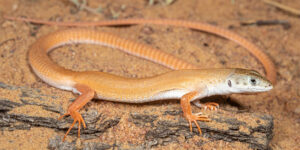
One species identified early on as requiring urgent work was the Orange Sandveld Lizard (Nucras aurantiaca). Sometimes referred to as Lambert’s Bay Sandveld Lizard, the species had only been captured once when farm workers caught two individuals from a location just outside of Lambert’s Bay on the West Coast of South Africa in 2005. Having never seen an animal like it, the farmer sent the specimens to the provincial conservation body, whereafter they arrived at Stellenbosch University, after which it was formally described. Since then, it has only been recorded once – by a   camera trap set up by researchers looking for something else entirely – in 2011 on a farm 20 km northeast of the original locality.

Its apparent scarcity has made it an almost revered species among the Southern African herpetological community. However, the need for more records has more important implications than merely ticking it off one’s ‘lifer’ list. The habitat in which the species is known to occur has undergone substantial historical transformations, much due to agriculture, and in more recent years, a slew of mining developments have occurred along the West Coast. Indeed, in 2022, a right to prospect for phosphate ore was granted that encompassed both known localities. The need to gather the data to uplist the species is thus crucial to ensure it is safeguarded against irresponsible development.

With this in mind, a team of some of the country’s top herpetologists from the South African National Biodiversity Institute (SANBI) and Bayworld Museum joined the EWT for two weeks of intensive surveys in November 2022. Braving the summer heat, storms, and deep sand roads, they employed a combination of pitfall traps, drift fences and active searching to find additional records and information that may shed light on the lizard’s ecology, habitat requirements, and population dynamics. Their hard work was rewarded with three more occurrence records, all from a single site adjacent to the camera trap site where the species was recorded. The data gathered from this survey will be used to conduct an updated Red List assessment later this year, with the likely outcome that the species will be placed in the Vulnerable or Endangered category. Once the assessment has been reviewed, the species will be incorporated into the Environmental Screening Tool and accounted for during subsequent development proposals.

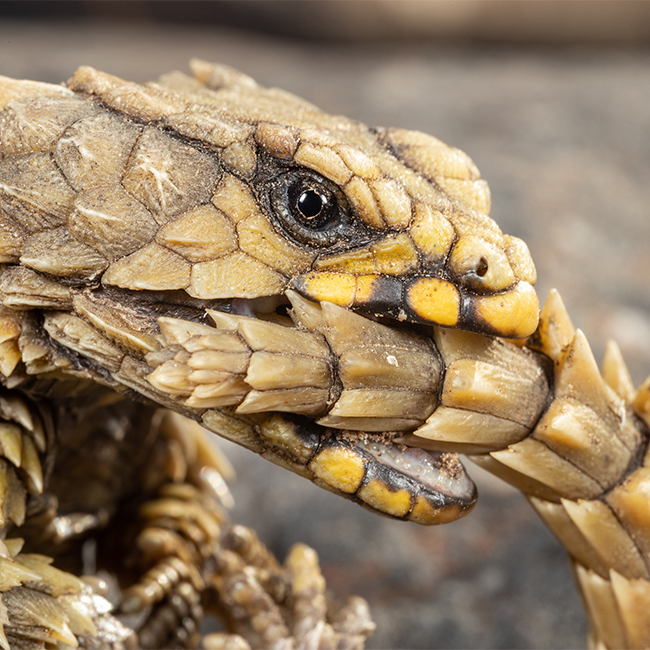
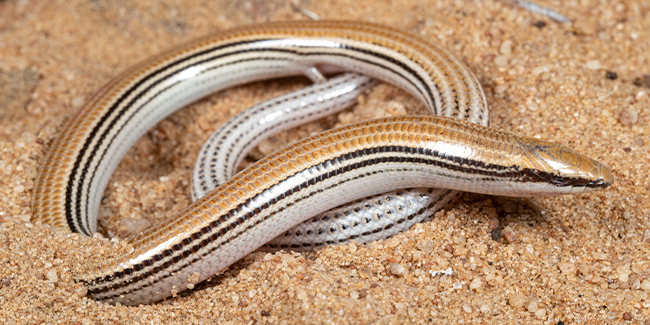
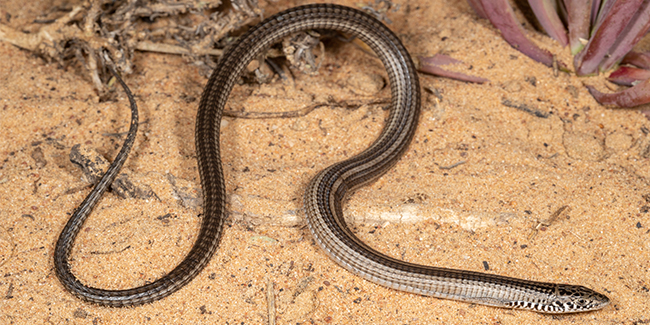
In total, 37 amphibian and reptile species were recorded on this highly successful trip, including species of conservation concern such as the Endangered Kasner’s Dwarf Burrowing Skink (Scelotes kasneri) and the Near Threatened Armadillo Girdled Lizard (Ouroborus cataphractus), as well as a potential range expansion for the Cape Long-tailed Seps (Tetradactylus tetradactylus).

Box 1 IUCN Threat Categories

 The different Red List categories as defined by the IUCN

Established in 1964, the International Union for Conservation of Nature’s (IUCN) Red List of Threatened Species has evolved to become the world’s most comprehensive information source on the global extinction risk status of animal and plant species. Species experts assess species according to set criteria considering population dynamics, ecological and habitat requirements, and past, current and future threats to ultimately assign a species into an extinction risk category.

Box 2: Data Deficient Animals in South Africa

The Data Deficient Orange Sandveld Lizard (Nucras aurantiaca) – photo credit: Chad Keates

“Data Deficient” is an IUCN Red List Category assigned to species where there is not enough information to conduct an extinction risk assessment. Listing of species in this category indicates that more information is required and acknowledges the possibility that future research will show that threatened classification is appropriate. In South Africa, there are currently seven Mammal, five Amphibian, seven Reptile, and one Butterfly species listed as Data Deficient.

Box 3: Environmental Screening Tool

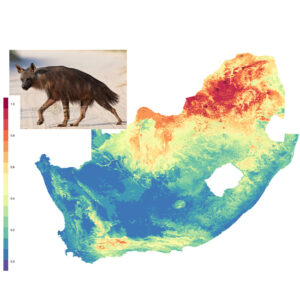
An example of a species distribution model – Brown Hyena (Parahyaena brunnea) – which informs the Environmental Screening Tool Animal Layer

The National Environmental Screening Tool is an online tool which contains, amongst other things, spatial information on the distribution of plant and animal species of conservation concern, that is regionally listed as Vulnerable, Endangered, or Critically Endangered according to the IUCN criteria. By law, the tool must be used in the screening process for any proposed development in the scoping phase of the Environmental Impact Assessment process. The EWT collaborated with SANBI and Birdlife South Africa to create and collate the animal and plant layers used in the tool.

The EWT would like to thank the Anglo-American Foundation for funding this project, our expert collaborators (particularly Dr Krystal Tolley at SANBI and Werner Conradie from Bayworld Museum), and of course, the landowners for kindly allowing access to their properties, supporting our work, and being at the forefront of protecting the biodiversity of the region.   

Protect what you love

Protect what you love

Protect what you love


Lawren Lotter

Under a blanket of southern stars, sitting around a crackling fire, one of the Jocks kept watch whilst the rest of the group slept soundly in the Shikomu river bed. A silent giant approached, the only sound was his padded feet and knobbly toes gently separating the soft thick sand. Their eyes locked, a midnight moment lasting a few minutes. Should he wake the others? How close is too close? A male white rhino can grow up to 1.8 m tall and weigh up to 2,500 kg. There was no getaway car or tree to climb, so he spared the others and sat still, stiff, staring ahead. They shared that space for a while, until the Rhino turned around and made his way back to the trail, a trail his ancestors had carved out for him, the one the Jocks were grateful to borrow and follow and just like that, he disappeared into the thick of the night, never to be seen again.

 It was a humble beginning for the Jocks of the Bushveld, a group of young men living with their heads in Johannesburg and their hearts in the bush. Ten years ago, they swopped their work shoes for vellies and took to those footpaths on a quest to walk each section of the Kruger National Park. Each year they set aside a few days to pick up where they left off, taking in each zone, the shifting eco-systems and varying vegetation along with an array of wildlife they met along the way. During these trips, they had the pleasure of meeting and connecting with some of the EWT fieldworkers and were inspired by their dedication and passion on the front line. 

 One evening on the Wolhuter trail, gunfire started ringing through their surroundings. The fight against rhino poaching was taking place a few kilometers away while they sat feeling helpless and hopeless. As the years went on, rhinos in the park became few and far between. Many trips left them with only sightings of scattered bones, smoothened rhino posts or derelict middens. A stark reminder of the wildlife war hidden within the hills.

 A conservation conversation came alongside an evening of Amarula on ice around a bustling fire. The rumbling roar of a lion was broken by the sharp short call of a spotted hyena. The bush was alive, its beating heart battered and needing help. 

  One of the Jocks spoke, his tone serious and sincere. “Gents, we need to start protecting what we love. We need to connect our community with the conservationists, or only in our future will we face the consequences.” The connection was there, and each time the group left the Lowveld, they became deeply invested and inspired by who they had met along the way and the causes they were fighting for. From this day forward, a valued connection with the EWT was born.

 The group started their fundraising efforts, linking their love for all things wild alongside the expertise of the EWT. Each year since 2020, the Jocks have arranged events, working closely with the EWT, and sending the funds raised to areas that need it the most.

 As fate would have it, in 2023, the Jocks were celebrating their 10th year anniversary alongside the EWT celebrating their 50th year. It was time for the biggest collaboration yet.

 The bush legends ball.

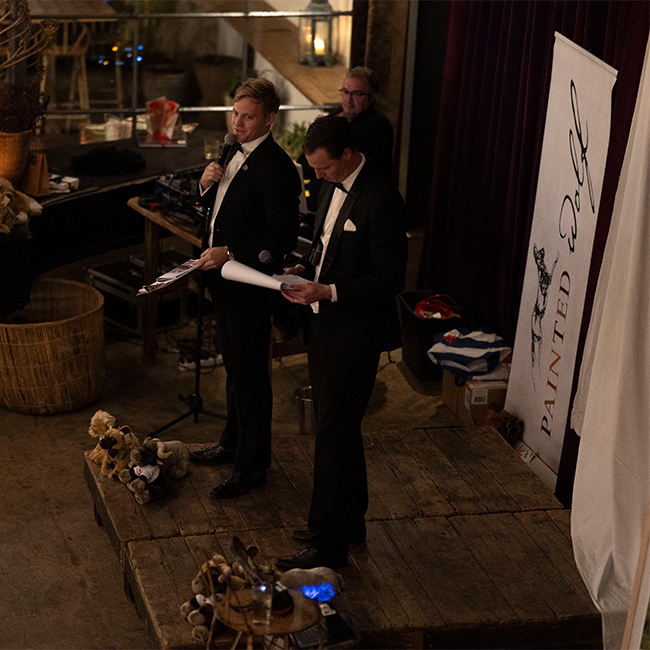
 It’s not a common occurrence to see the legends of the bush suited up in the heart of Johannesburg. Alongside a local jazz band, the black-tie event bought with it smart appearances with snippets of Khaki that filled the room. The night was 180 strong, and each table honoured a bush legend. The teams shared their stories and strategies of how they are shaping the future of conservation. Moving presentations by some of our senior field officers, Grant Beverley and Marnus Roodbol, were a few highlights from the evening.

 The concept was built around networking and sharing ideas of conservation. The connection was integral for those working in the field and the city dwellers who were motivated and moved to get involved. The night was a memorable milestone, alongside a generous auction, the evening managed to raise over R800 000 for conservation. 

 Wilderness areas and big game wildlife are some of Southern Africa’s greatest natural resources. It is not just about the animals, these areas provide more than most realise – the air we breathe and the water we drink – it’s the butterfly effect of the natural world. The one we are all a part of.  It is up to us to step up as the protectors of what is left. What other incentive is needed than being able to give the gift of the wild to the next generation? That is why we will continue to connect and collaborate so we can all move forward in protecting what we love. 

Science Snippets: Can farming actually save threatened species?

Science Snippets: Can farming actually save threatened species?

Science Snippets: Can farming actually save threatened species?

Christie Craig, the ICF/EWT African Crane Conservation Programme

As human development and global change accelerate, natural ecosystems are under immense and ever-growing pressure. In some cases, ecosystems are altered to such an extent that they can be considered novel. Intensively farmed areas are an example, and these novel ecosystems affect biodiversity. As conservation biologists, we anticipate this would spell disaster for wildlife, particularly threatened species, but this isn’t always true.

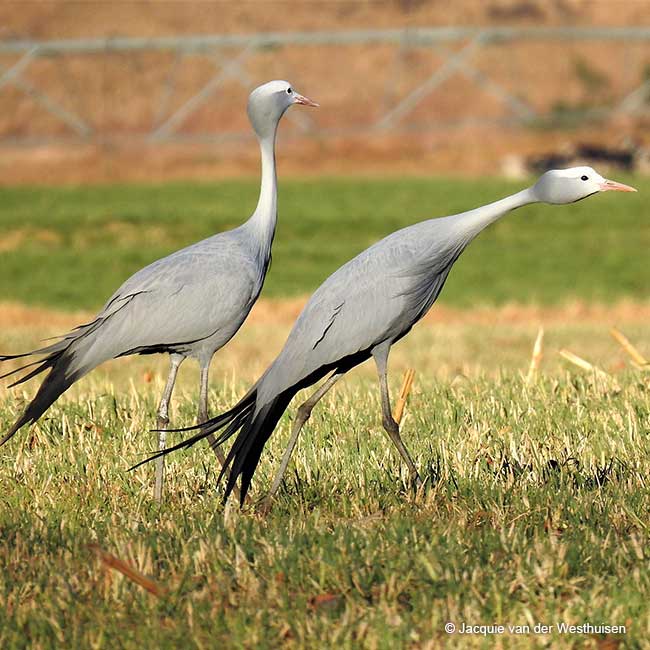
We have seen this in the case of South Africa’s National Bird, the Blue Crane (Anthropoides paradiseus). In the 1990s, alarms were raised as this species was declining rapidly in their natural range, the eastern grasslands and the Karoo, due to grasslands being degraded and transformed for agriculture and forestry and other threats such as poisoning and powerline collisions. Interestingly, however, on the other side of the country, in the Western Cape wheatlands, Blue Cranes responded to agricultural transformation in a remarkably different way. In the early 1900s, when people began clearing fynbos (generally unsuitable habitat for Blue Cranes), Blue Cranes started to move into the Western Cape. Since then, the population has boomed in this area. Today, 50% of all Blue Cranes in the world are found in this novel ecosystem.

Conservationists were concerned because it is challenging to conserve wildlife in highly transformed landscapes like this. We have seen Blue Crane numbers decline rapidly once before, and we were concerned that this could happen again if something shifted in the Western Cape wheatlands. Intensively farmed landscapes are dynamic and influenced by social factors such as farmers’ decisions, politics, economics, and climate change. In modern conservation, many are moving away from crisis management and taking a ‘fighting fires’ approach by being more proactive and foreseeing risks to prevent species declines before they happen and to maintain conservation success. With this in mind, the African Crane Conservation Programme set up a PhD project to investigate the Blue Crane’s conservation status, specifically focusing on understanding threats in the Western Cape wheatlands.

PhD candidate & Western Cape Field Officer Christie Craig has spent the last four years conducting this research and is in the process of wrapping up her thesis. Bringing all these data together, we now have a clearer picture of the state of the Blue Crane population. Over the last 30 years, we have seen an overall recovery in Blue Crane numbers, with the current national estimate obtained from aerial surveys at 44,500 Blue Cranes, which is 44% higher than the last estimate in 2002. This recovery was largely due to increases in the Western Cape wheatlands in the 1990s and early 2000s, as shown by citizen science data, i.e. Coordinated Avifaunal Roadcounts. Aerial surveys have also shown increased numbers in KZN, thanks to continued conservation action. However, the Blue Crane numbers in the grasslands are still a small remnant of what they used to be. Looking at the South African Bird Atlas Project data, we see changes in Blue Crane reporting rates, which tell us how many cranes there are. These data show that several areas of the eastern grasslands no longer have cranes, compared to the 1980s (in red, Figure 1). We hope Blue Crane numbers will recover to their full potential in the grasslands with continued conservation.

The Blue Crane’s adaptation to wheat and pasture agriculture in the Western Cape has been their saving grace and aided their recovery. However, we have some concerns that this population is no longer thriving. Analysis of citizen science data shows that the population trend changed from positive to negative in 2010, and since then, Blue Crane counts have declined by 22% in the Overberg. If this decline is sustained, we could see the national population decline by an estimated 53% over the next 37 years. We do not know whether these declines will continue at this stage, and we are monitoring the population carefully. We cannot pinpoint a single reason for this decline, but we know from research that Western Cape breeding success is lower than it used to be and lower than the Blue Cranes in the Karoo and grasslands. In the Karoo and grasslands, EWT field workers have documented an average fledgling rate of 1.01 chicks/pair (95% confidence intervals = 0.82-1.24) in the grasslands and 1.02 chicks/pair (95% CI = 0.76-1.35) in the Karoo. Western Cape Blue Cranes only fledge an average of 0.64 (95% CI 0.42-0.95) in the Swartland and 0.81 fledglings/pair (95% CI 0.57-1.12) in the Overberg. The agricultural landscape can be challenging for breeding Blue Cranes as they attempt to breed in the dry season, when wheat is being harvested, and there is a lot of disturbance in fields. Other threats to Blue Cranes, once they fledge, include powerline collisions and poisoning.
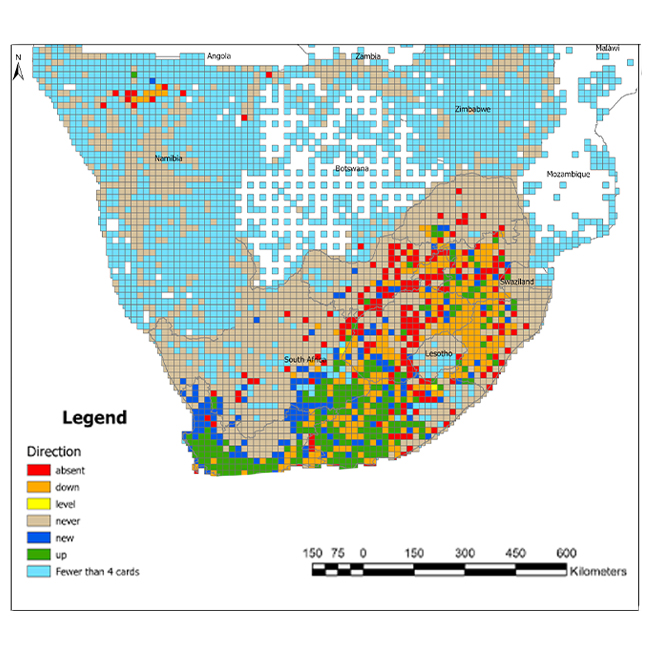
Map showing Blue Crane reporting rates in SABAP1 vs SABAP2

Figure: Comparison of Blue Crane reporting rates in SABAP1 vs SABAP2, indicating Quarter Degree Grid Cells (QDGCs) where cranes have never been recorded (never), where they were recorded in SABAP1 but weren’t in SABAP2 (absent) and vice versa (new), and where they were recorded in both projects, the direction of reporting rates from SABAP1 to SABAP2 (down, level or up). QDGCs with fewer than four cards in either project are indicated in blue.

Now that we have data on the population trends and threats, we will feed this directly into conservation action. The first step is to develop a conservation plan. We will host a workshop in the coming months, bringing together all the stakeholders and experts to develop a conservation planning document and implementation strategy.

This work is kindly sponsored by Neuwied Zoo, Jacksonville Zoo, Safari West, Nashville Zoo, and the Leiden Conservation Foundation. The PhD research was funded by the Leiden Conservation Foundation, Eskom & the Hall-Johnson Fellowship.

Careers in Conservation – Danielle du Toit

Careers in Conservation – Danielle du Toit

CAREERS IN CONSERVATION – Danielle du Toit

Danielle is a Field Officer with the EWT’s Birds of Prey Programme. Here is a little bit about Danielle’s journey to a career in conservation with the EWT.

Job title: Field Officer

What do you do in your day-day work?

image of Danielle du Toit

I meet with farmers and other landowners to sign them on and assist them in making their land safe for vultures. I also work to mitigate threats to vultures and address the reasons behind the threats so we can ensure the longevity of the threat-free landscape. These include addressing livestock loss to predation through implementing non-lethal ways of predation management (mobile kraaling, livestock guardian dogs etc.), minimising potential lead poisoning from lead ammunition used by hunters, awareness campaigns, and working with ammunition industry professionals to promote a reliable and affordable alternative to lead ammunition. 

Location: I’m based in Graaff-Reinet (in the Eastern Cape) but work across the broader Eastern Cape and in the Beaufort West area. 

Where did you grow up? I grew up on a farm outside Graaff-Reinet 

What are your hobbies/things you like to do in your spare time? Anything that gets me outside and busy with my hands. I love to try my hand at gardening, woodwork and super basic home renovation projects – none of which I’ve quite mastered yet!

Any pets? One precious dog and three cats. 

Favourite animal and why:  This changes all the time. Although I’m supposed to say vultures, I think I’ll go with Meerkats (Suricates). They’re feisty things for their size. I just love their attitude. 

Favourite food? I love a good hearty meal – rys, vleis and aartappels, as my Ouma used to say. 

Pet peeve?  Jeans with fake pockets. Please, can the fashion industry stop selling me dreams?

Why did you want to work for the EWT? The EWT is a forward-thinking organisation with plenty of room to grow personally and professionally. 

What are you passionate about?  Changing the perception of the relationship between farming and conservation. I think that in the past, a few bad apples ruined it for many conservation-orientated farmers who manage their land in a way that is super beneficial to biodiversity and food security. I also really love finding different ways to approach and overcome challenges and seeing how we, as an organisation, can leave a positive and lasting impact on our environment and its people.

What’s the best advice you’ve ever received, and who did it come from? “There’s no such thing as can’t. You either don’t want to or don’t know how to. Either way, it’s your decision.” 

My parents and grandparents taught me that, and I still live by it. I always remind myself that I’m capable of anything I put my mind to, so long as I’m open to learning (and probably failing a few times) along the way! 

What is your go-to feel-good song? Feel it Still – Portugal, the Man. 

Earthly Eating: Ultimate Nachos

Earthly Eating: Ultimate Nachos

EARTHLY EATING

Nachos


Each month, we bring you delicious, nutritious, and eco-friendly recipes that our staff members or followers love! This month’s recipe is Ultimate Nachos from Shadi Henrico, our Conservation K9 expert.

Ultimate Nachos

For the vegetarians: Mexican favourites! Swap the ground beef for soya mince, or add spoon-fulls of fruity salsa for a refreshing twist. Treat this tray of nachos as a blank canvas and let your creative juices flow!

There’s nothing quite like a tray overflowing with nachos for an entertaining and playful appetiser. The base starts with everyone’s favourite – crunchy tortilla chips. The chips then get layered with all the savoury toppings you can imagine – spiced mince,  cheese, beans, pickled jalapenos, avocado chunks, salsa – you name it!

Preparation time: 15 minutes


Cook time: 15-20 mins

Ingredients

This recipe is a basic formula for a solid tray of loaded nachos – tortilla chips, meat, cheese, beans, and simple, fresh taco toppings. It may seem like a lot, but once you start adding everything onto the sheet pan, it’s a cinch. Here’s what you’ll need.

  • Mince: Beef is my default for a classic nachos recipe. But you can also use chicken or soya if you’re not big on beef.
  • Cheese: The key here is to use grated cheese for the perfect melted, gooey texture. But the type of cheese is up to you. I personally like a mix of cheddar and mozzarella.
  • Pickled Jalapenos: This is completely optional, but I do find that pickled jalapenos add a deliciously tart and moderately spicy contrast.
  • Fresh Toppings: I’m using a combination of diced tomatoes, red onion, avocados, and sour cream.
Instructions
  1. Some of the best appetisers don’t require a lot of effort. And this ultimate nachos is one of them. The only cooking you need to do is to saute the mince and refried beans. Then everything else goes into the oven for baking as you prep the fresh toppings. But first, get your oven preheated to 200°C.
  2. Cook the mince. Add the mince to a skillet over medium heat and cook for about 5 minutes. Then add the taco seasoning and cook for five extra minutes until it’s browned.
  3. Cook the refried beans. Add the refried beans and water to the skillet and stir everything until combined.
  4. Layer on a sheet pan. First, spread the tortillas on a rimmed sheet pan and layer on the mince mixture, cheese, and jalapenos. Bake for 10 to 15 minutes, until the cheese is melted and the edges of the tortilla chips are golden.
  5. Add the toppings. Immediately add the diced tomatoes, onion, avocado, sour cream, and cilantro. Your nachos recipe is ready to serve!