
In the field
Ringing Lesser Kestrels in the Karoo
By Ronelle Visagie, Field Officer in the Birds of Prey Unit
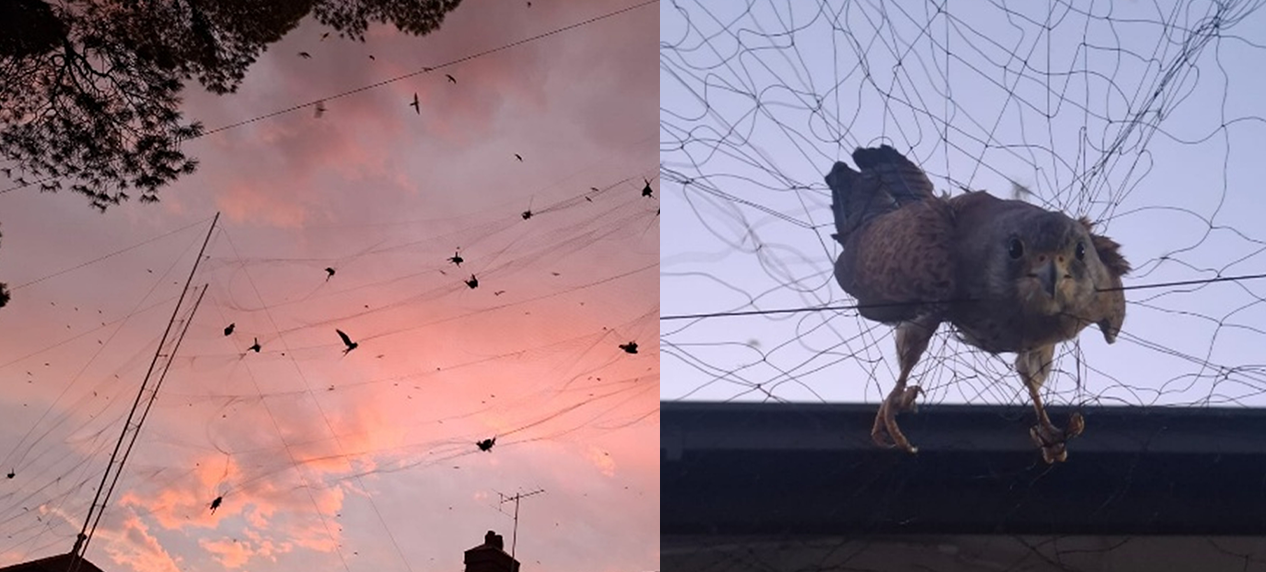
Above: Lesser Kestrels in the mist net.
During January a group of researchers from Italy, Spain and South Africa captured and ringed 90 Lesser Kestrels at the city hall in De Aar. Also captured and ringed were three juvenile Common Kestrels which breed on the roof of the city hall at De Aar.
The birds were captured by using a 12 m high system with mist nets that could be hoisted to reach the height of the trees where the kestrels were roosting. As it is quite a difficult system to put up, it took about 2 hours to get everything in place.
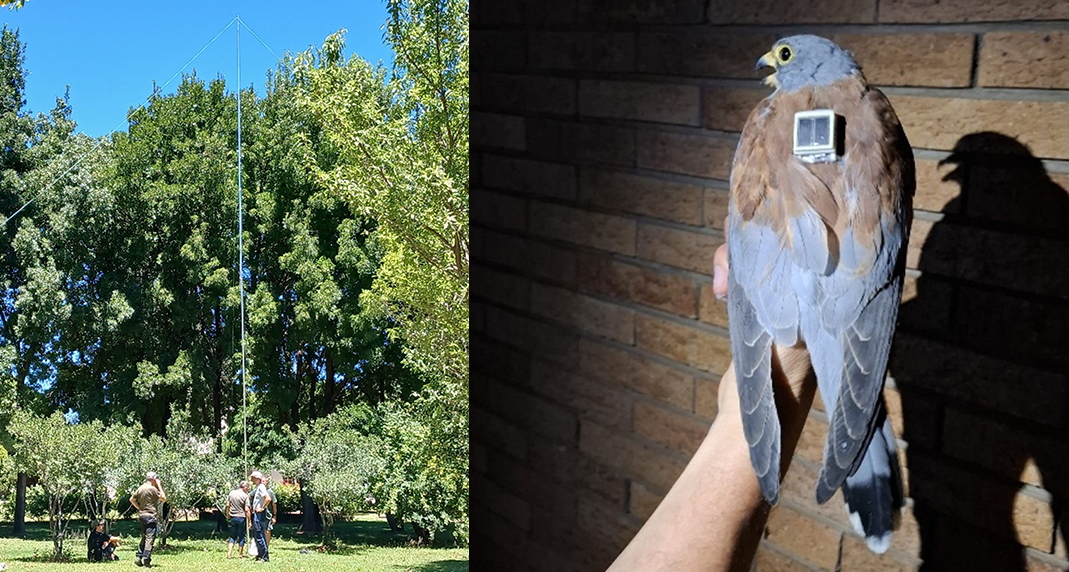
Left: The team busy testing the equipment before doing the real thing. The height of the poles is clearly visible. Right: A male Lesser Kestrel with a transmitter.
Once the nets were in place, we waited for the birds to return to their roosts. When there were 10 or 12 birds in the nets, they were lowered to extract the kestrels and start processing them. As more birds arrived, the nets were raised again and the process repeated.
It should be noted that using this method means the birds are secured in the net and are not injured. If they are not well entangled in the net, they escape. Kestrels are raptors with sharp claws and they are quick to bite. It is not easy to get them out of the net without being bitten or attacked with their claws. Because of this, they sometimes draw blood!
As can be seen in the photos, the work is done in the evening. Extracting and processing the kestrels took a few hours and we only left in the early mornings.
The 93 birds were measured, weighed and ringed with metal Safring leg rings. A total of 29 birds were fitted with transmitters to track their migration and movements. The very small transmitters weigh only 4 grams and are fitted to the birds with a small harness around the base of their wings.
Once processed, the kestrels were kept overnight to make sure that they are rested and less stressed so that they were able to fly properly the next morning.
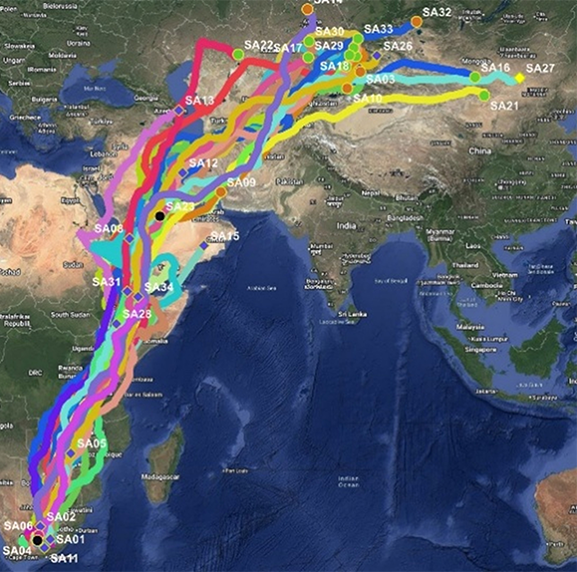
Above: The map shows the migration routes of the birds that were fitted with transmitters in January 2025 at Richmond.
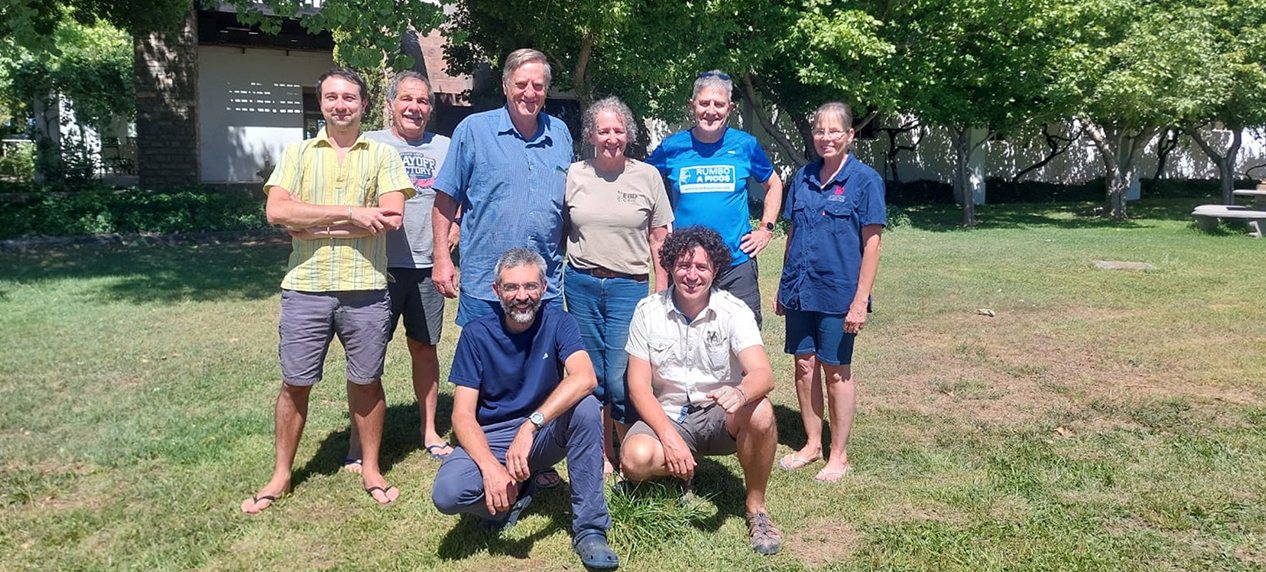
The Team: at the back: Andrea Romano and Maurizio Sará from Italy, Chris and Rina Pretorius from South Africa, Javier Bustamante from Spain, and Ronelle Visagie from South Africa. In front: Diego Rubolini and Michelangelo Morganti of Italy.