My daunting first Vulture poisoning as a new EWT field officer
By Kyle Walker, field officer in the Birds of Prey Programme and Carnivore Conservation Programme
It’s my first week working for the Endangered Wildlife Trust in April 2023 and I’ve just moved to the Lowveld from the Cape. The temperature in the Mopani veld is beyond uncomfortable and much to my surprise, I’m missing the Cape winds.
Having just secured a field officer position with the EWT, I am aware that it is only a matter of time before a vulture poisoning event occurs. It will be my job to respond to these events in future, although, up to this point I have only ever seen photos and videos posted on social media. My days of being an arm-chair warrior are about to change.
Mid-way through my morning meeting I’m told that the rangers in Kruger National Park’s, Mooiplaas section (or Beautiful Farm in English), have discovered a poisoning scene with an unknown number of dead vultures. The information trickles in throughout the next hour as we race up north with our mobile veterinary trailer, the EWT’s Vulture Ambulance, in tow. It sounds as if only a couple birds are still alive, but we are prepared to treat as many survivors as possible. It’s a long drive and I have time to reflect upon what I’m about to see. Thoughts like – how am I going to hold the vulture? Will I get bitten? What happens if I come in to contact with the poison? Will I cope with seeing a lot of dead animals? Will I get there in time to save a few survivors? All these thoughts consume my mind, but I sit back and concentrate on the drive ahead. After all, what’s the use if I don’t arrive at the scene in one piece.
We drive through the Phalaborwa gate with a quick wave to the guards. This is not the first time they’ve seen this vehicle. John Davies, our Raptor Conservation and Research Project coordinator, as well as my predecessors, have been attending vulture poisonings in this area since 2014 and there are not many people better equipped to handle the situation ahead.
Unlike the slow-moving cars filled with eager-eyed tourists, ours darts past with little time spared to view the herds of Elephant and Buffalo. It’s a strange feeling knowing that I’m no longer on a tourist permit and that the lives of a few animals now hang in the balance of our arrival. Up the H14 road towards Mopani, hook right towards Letaba and a further 15 km along the dirt road to the scene.
We arrive at what looks to be a very peaceful dam. An Elephant bull is slowly wading through the water and a Marabou Stork is perched atop a Leadwood tree. Our vehicle pulls up to the ranger’s vehicle and we jump out to greet everyone and get the lowdown. The area adjacent to the dam is completely open and as I get my bearings I start seeing the aftermath of the poison.
Strewn around the area are small, feathered carcasses. A Tawny Eagle below the giant Green Thorn tree, three White-backed Vultures below another tree, a Lappet-faced Vulture facedown in the open.
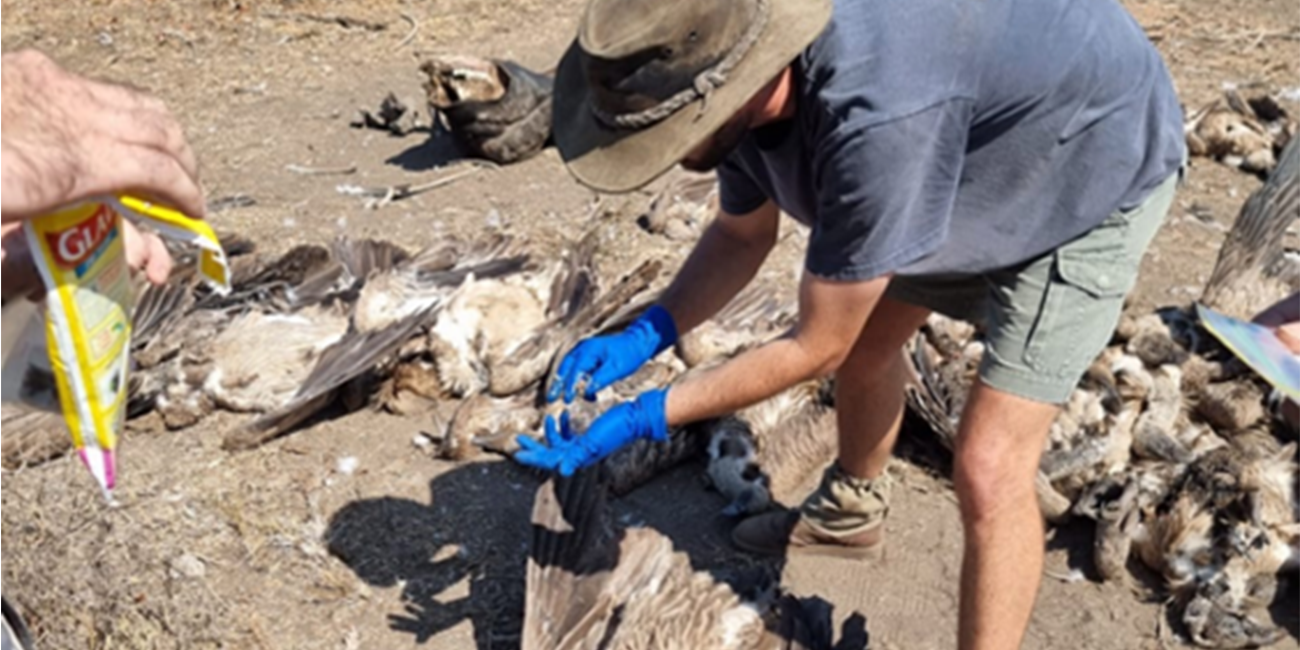
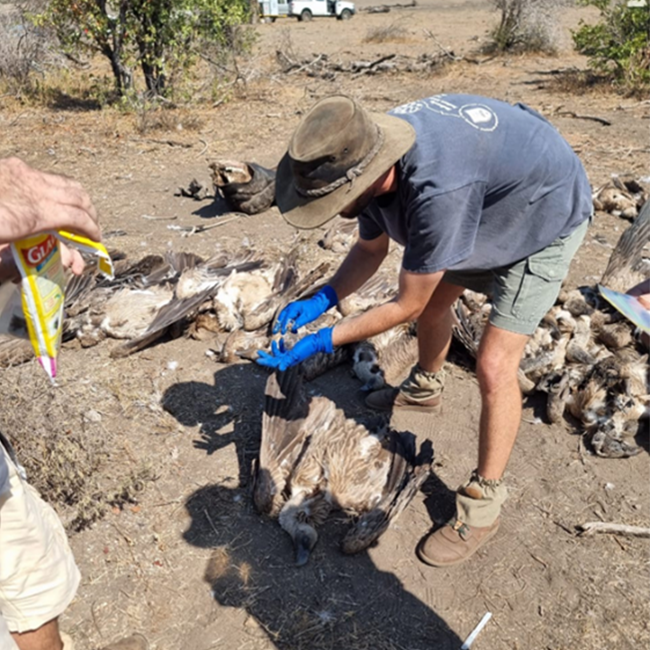
But, first things first, there are two very weak White-backed Vultures lying in the shade in front of us. John sets about mixing an activated charcoal mixture while instructing me on how to hold the vultures safely. Holding birds is not new to me, but never have I held one this size. With the vulture cradled in my arm and its head firmly in my hand, we begin administering fluids. The fluids are used to flush the remaining poison from the bird’s system. It is not the final solution, but it does allow us time to transport them back to a veterinary facility where they will receive the necessary care and attention. With both birds safely stowed in travel boxes, we move on to the cleanup, intermittently checking in to keep the survivors hydrated.
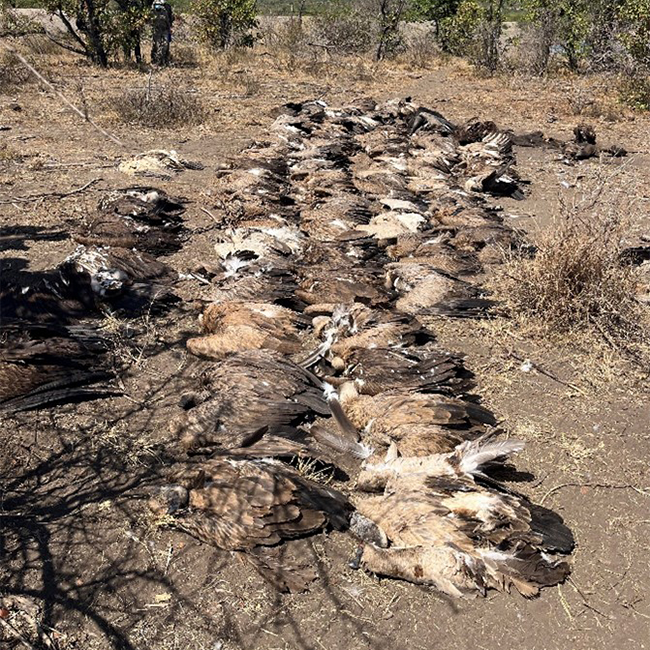
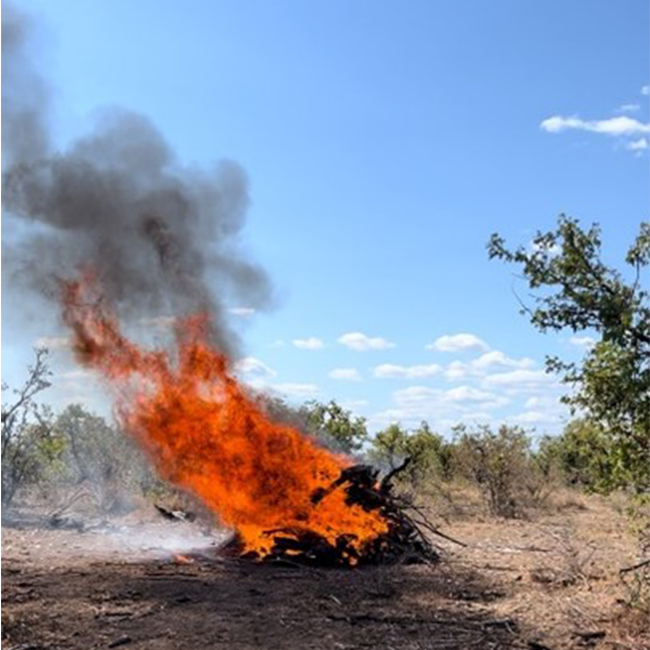
The scene was worse than expected. A 500 metre radius around the poisoned Buffalo carcass was searched and the field rangers are now unloading carcasses by the wing-load. We line the birds up and group them by species. It’s a hammer blow to the senses. Everything smells rancid. Some carcasses are fresh, and others are a few days old. One by one we photograph each of the 80 dead birds before pilling them up to dispose of everything. Wood, diesel and carcasses make for one big bonfire, but its not the type I enjoy watching.
With the area cleaned up we head home with the two rescued vultures. I’m burnt, dehydrated and emotionally drained. The only thing keeping my spirits intact is the hope that these two vultures make a recovery and return to the African sky.
One month later and I’m standing in Moholoholo Rehabilitation Center with our two vultures looking fit and healthy. They have made a full recovery and it’s finally time to release them. We fit each bird with a GPS satellite tracking device which we will monitor to help locate future poisoning events in the Greater Kruger National Park region.
Scenes like these have become an all-too-common feature of conservation throughout Africa. Although there have been significant inroads made regarding the treatment of poisoned wildlife, the locating of poison sources, and the management of poisoning scenes, there is still significant work to do. One positive is that, should the severity of these poisonings be controlled, and their frequency reduced, we can still maintain viable populations of avian scavengers throughout these vast landscapes.
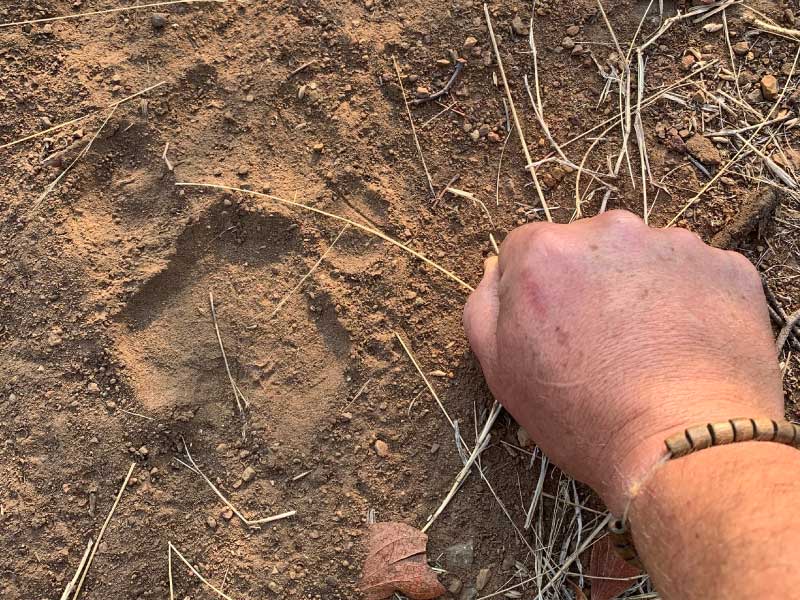
Looking for Lions
Marnus Roodbol, EWT Carnivore Conservation Programme, Lion Project Coordinator
There aren’t many people who truly know how difficult it is to locate and sedate WILD Lions. The Endangered Wildlife Trust (EWT), SANParks, the National Administration of Conservation Areas in Mozambique, the Mozambique Wildlife Alliance, and Peace Parks Foundation are monitoring the distribution and movement of Lion prides across the Great Limpopo Transfrontier Conservation Area (GLTFCA) using GPS satellite collars. By monitoring prides over time, we can identify priority areas where Lions are likely to be at certain times, informing anti-poaching teams where to go to protect the Lions under their care. But to collar them, we need to find and sedate them. Not so hard, right? We are the most intelligent species, after all…
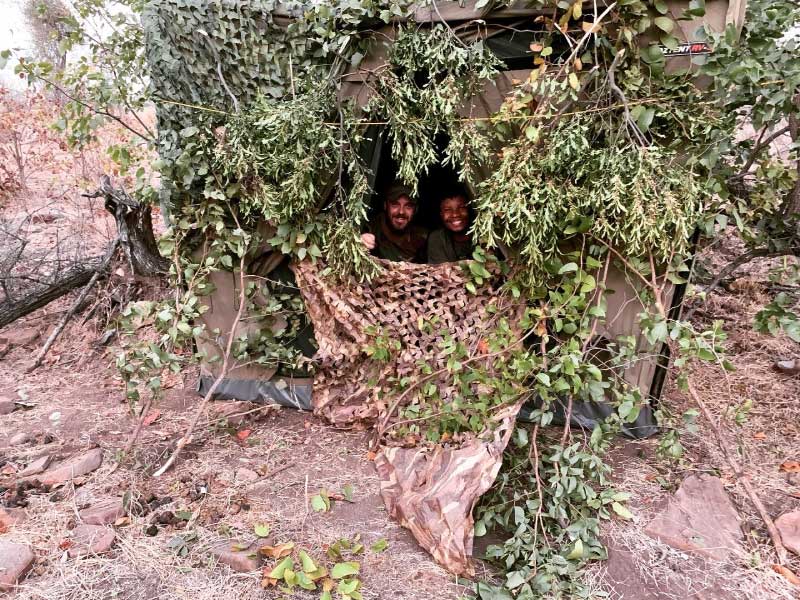
We’ve tried everything – including hiding and hoping the Lions wouldn’t know we were there so we could study them.
Alas, we have spent countless hours setting up the “perfect” trap, but these clever cats show us time after time just how intelligent they are. We searched on foot, by air, and yes – found a spoor here and there – but barely catch sight of them. My colleagues and I decided to set some bait for them, call them in using prey distress calls on a loudspeaker, and see if they were willing to participate in a feast.
We heard a Lion calling back softly, letting us know they were in the area, and we decided to head back to camp, shut off all the lights, and get an early one, so we could find them at the bait first thing. We did this so they wouldn’t feel threatened by our presence and leave the area before the vet arrived the following day. Plus, they’re always a little lazy after a meal, and we had set out a nice buffet for them.
I was woken up at 2 am by a roar near the camp. I was more excited than scared that this magnificent beast was so close by, not to mention relieved that they were indeed heading towards the bait…or so we assumed, not silly enough to leave the “safety” of my tent to check.
Early the next morning, we rose full of hope and energy and with a spring in our steps, knowing the Lions were close. We had no idea how close. We grabbed some hot coffee before sunrise and, at first light, decided to take a walk to the bait to see what transpired during the night. We took several steps, and then what had happened during the night hit us like a freight train.
These lions came to visit US before going to the bait. One got to within 3 m of my little tent, with two others approaching from the other side. We didn’t hear their footsteps. We didn’t smell them. We had no idea they were so close! With my knees a little shaky, I was truly humbled. But, it was an experience I will treasure forever – coming so close to the species I have dedicated my life to conserving.
How long will it take us to collar one? Find out in the next instalment of this epic tale.
Donate to save Lions here
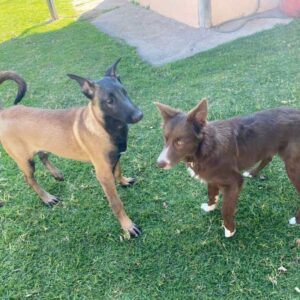
A new member of the EWT Pack
Conservation Canine Delta
Hi, I am Delta, a six-month-old brown and white Border collie. My parents work with sheep on a farm in the Eastern Cape, so I have good working genes. I recently moved to the Nama-Karoo to train as a scent detection dog with the EWT’s Drylands Conservation Programme. I hope my nose and enthusiasm will help the EWT with their conservation research projects. My first job is to find Riverine Rabbit scat, so I have started my training on the scent. However, I am still a little bit young to start working full-time, so my human (Esther Matthew) has made it her goal to expose me to as many things as possible. These include places, people and other animals! She recently took me to the EWT head office in Johannesburg. What a great experience! After around 12 hours in the car (not my favourite part), I got to play with some of the other EWT working dogs, which was fantastic. My new buddy, Mufassa, is also a Conservation Canine Cadet in training! I also got to meet loads of new people, saw my first rabbits and chickens, and see all the new sights and smell all the different smells. It was also interesting to live in a different house for a week. I’m already looking forward to my next adventure…
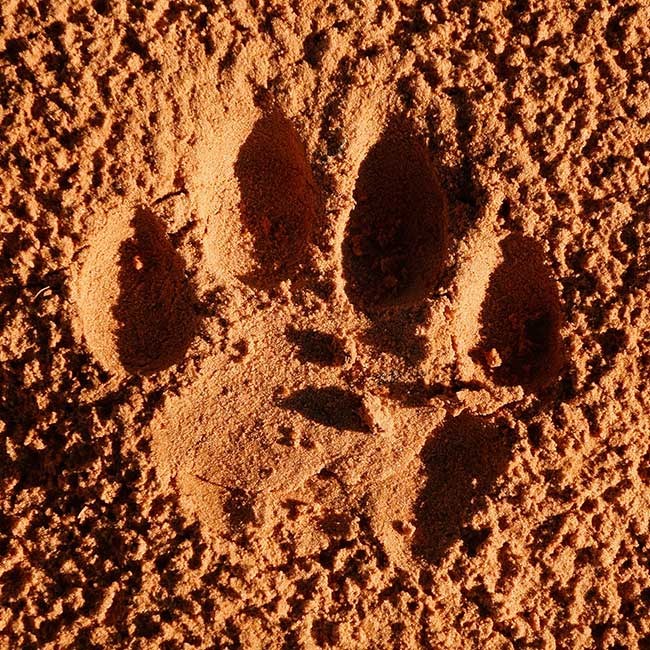
Becoming a Conservation Canine
Mufassa, Conservation Canine Cadet

Hey guys! Thanks for all the attention – I know I’m super cute! So, I thought you might like to hear a bit about me. I joined the Endangered Wildlife Trust’s pack as a Conservation Canine Cadet in March 2022. Boy was I nervous! Here were all of my heroes and little old me – leaping after them to follow in their paw prints. But I was born to do this job! Join me on my adventure as I prove I have what it takes to become a canine defender of wildlife.
Becoming a Conservation Canine is a lot of work, takes a lot of time, and treats (and Sean’s shoes) aren’t cheap! And I can’t rush it. I think it’s because, if I skip steps, I won’t be ready for all the situations I might come across if I qualify one day (claws crossed). Well that’s what I’ve been told anyway – so far I’ve been playing and racing around meeting the staff at the EWT’s Conservation Campus – easy peasy! Apparently I don’t do any real work for the first few months. Tough life hey? I’m just supposed to go everywhere and see everything I possibly can so nothing scares me (as if!). I think I heard them say it’s also so I don’t get distracted too easily when I do start working.
Anyway, lots to see and smell but I’ll give you another update soon!
LATEST STORIES
PUSHING THE BOUNDARIES FOR RIVERINE RABBITS IN THE ANYSBERG
Bonnie Schumann, the EWT’s Drylands Conservation Programme, bonnies@ewt.org.za
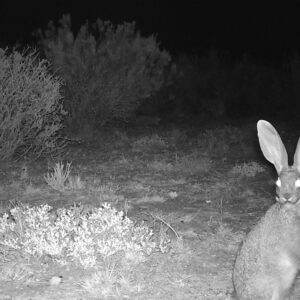
The ancient landscapes of the Karoo are home to one of South Africa’s most elusive and Critically Endangered species, the Riverine Rabbit. Riverine Rabbits occur in three known populations in three separate regions of the Karoo. Originally thought to only occur in the Nama Karoo, where they were first discovered in 1901, rabbits were later discovered near Touwsriver in the Succulent Karoo in 2003. This discovery completely upended the applecart on what we knew about the distribution and behaviour of this species. However, at least one other surprise was awaiting us when a third population was discovered west of the Baviaanskloof in 2018.

In the 1990s, landowners and conservationists joined forces to create Riverine Rabbit conservancies in the Loxton-Fraserburgh-Beaufort West area of the Nama Karoo to conserve the species. These conservancies still exist today. Even though many of these landowners rarely, or in some cases, have never seen a Riverine Rabbit, they are passionate about conserving them on their properties. While rabbits occur in three different regions of the Karoo, their threats are the same in all three landscapes. The most severe threats are habitat loss and damage to the remaining habitat. The floodplains of the seasonal rivers in the Karoo consist of deep alluvial soil areas that make for fertile agricultural soil in an otherwise arid landscape. These areas are largely transformed into ploughed lands, which in many cases now lie fallow and abandoned. The changing economic situations and erratic rainfall make it risky to depend on rain-fed cropping and flood irrigation. In recent decades, it has not been worthwhile to grow rain-fed crops in many places across the drylands.
 In the past, the riparian areas, often comprising floodplains a few kilometres wide, were densely vegetated and would have provided a unique habitat to a range of species, including the Riverine Rabbit. The loss of over 60% of the riparian vegetation was devastating for the Nama Karoo Riverine Rabbit population. Outside of the riparian zone, the vegetation does not provide enough cover for a species that relies on dense vegetation to avoid detection and capture by predators. Rabbits have disappeared from areas where the vegetation is overgrazed and “opened up” by livestock. They are an indicator species for ecosystem health, and If the riparian vegetation is managed sustainably, rabbits will persist. If not, they will continue to quietly vanish.
Following the initial discovery of rabbits in the Succulent Karoo, surveys for rabbits took place in the riparian areas, based on the assumption that the “southern” rabbits use the landscape similarly to their Nama Karoo counterparts, which are riparian habitat specialists. Here is where it became interesting. What is now clear is that rabbits in the Succulent Karoo can range more widely across the landscape, occurring outside of riparian areas where the vegetation on the gently sloping hills is often quite dense. They occur outside the riparian zones, and their range also extends into a third Biome, the Fynbos Biome, where they primarily favour the Renosterveld vegetation. The fact that the rabbits can persist in vegetation units outside the riparian zones in the Succulent Karoo is very fortunate, given that much of their riparian habitat has been lost to agriculture. This means that the gently sloping areas that are unsuitable for ploughing and are densely vegetated have provided critical refuges for rabbits. It is probably safe to speculate that Riverine Rabbits were once widely distributed along the valleys and hills of the Little Karoo. However, the extensive loss of habitat across this region has resulted in them remaining only in pockets of suitable intact vegetation. Conservationists are researching the genetics of the region’s rabbit populations – how closely they are related to each other and their overall genetic health – to understand how viable the populations are and if any connectivity (gene-flow) between the three populations still exists.
The spectacular Anysberg Nature Reserve was officially declared in 1990 to formally protect the incredible but highly threatened biodiversity of the Succulent Karoo, an internationally recognised biodiversity “hotspot”. Riverine Rabbits were recorded in the reserve for the first time in 2013. This was the best news of the century for rabbit conservation because the discovery meant that the reserve was the first formally protected area to boast a Riverine Rabbit population. What is doubly exciting is that landowners bordering the reserve had a vision for conservation going back 25 years. Several individuals bought properties in this area to conserve the land and wildlife. Livestock was removed, and the land has been resting and recovering ever since. In 2018, one of the landowners approached the Endangered Wildlife Trust to assist him in taking his conservation efforts to the next level by declaring the property a contractual Nature Reserve. As a result, the Endangered Wildlife Trust, CapeNature (the designated authority with statutory responsibility for biodiversity conservation in the Western Cape) and six landowners are collaborating to declare a cluster of properties as nature reserves. These contractual reserves will be formally protected and attain the same status as the Provincial Reserves, effectively expanding protected areas at a national level. This essentially means that the Anysberg Nature Reserve, also a World Heritage Site, will be buffered by an additional 20,000 hectares of protected landscapes. Several additional vegetation units, each supporting unique and, in many cases, endemic plant and animal species, not yet included in the Anysberg Nature Reserve, will now also be formally protected.This initiative is testimony to what can be achieved when stakeholders combine forces to achieve a shared vision. Many species facing severe persecution outside protected areas, including Leopard, Brown Hyaena and Honey Badger, will now be able to safely roam over an increasingly vast area. And, of course, as the largest formally protected area cluster for Riverine Rabbits, it now represents the single most important stronghold for Riverine Rabbits in South Africa. In this case, size is critical, as only a small portion of the entire area will meet the habitat requirements for rabbits, so the bigger the area, the better.
 Ecotourism, including adventure tourism and, in some cases, limited agricultural activities, provide a diversified income for the landowners around the Anysberg Nature Reserve. This is an extremely marginal area for extensive livestock production, and the reality is that the veld has been utilised to, and in some cases beyond, its limits and can no longer support herds of goats and sheep. Developing a “green” conservation-based economy can breathe new life into this region where poverty and unemployment are rife. Ecotourism provides jobs, supports livelihoods, and can help fund the restoration work that needs to be done in the degraded areas. The Anysberg is only approximately 260 kilometres from Cape Town, making it easily accessible as a weekend getaway. It is also easily accessible to international tourists looking for some peace and quiet in one of the most beautiful and safe regions of South Africa.
There are few undiscovered natural gems left out there. The Anysberg area is truly one of the most exciting and largely undiscovered gems in South Africa. The shared vision for this area is to develop an economy based on what the region has to offer in terms of unspoiled landscapes, wide-open skies, and incredible scenic beauty while conserving the unrivalled unique biodiversity of the Succulent Karoo. The project’s next phase is supported by IUCN Save Our Species and co-funded by the European Union.
For more information, visit:
www.ewt.org.za
https://www.capenature.co.za/reserves/anysberg-nature-reserve
www.karooforever.co.za
LATEST STORIES
HIDDEN IN THE GOLDEN SANDS OF TIME
Golden Moles Part One
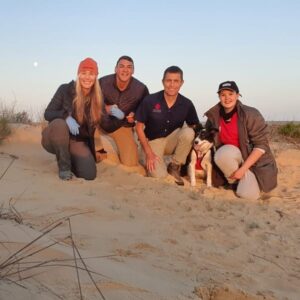
Cobus Theron, Dr Samantha Mynhardt, JP Le Roux, Esther Matthew, and Esther’s detection dog, Jessie, set out to find the Critically Endangered De Winton’s Golden Mole, a species that hasn’t been seen for more than 80 years. The team planned to use environmental DNA (eDNA) to identify these mysterious moles. eDNA refers to trace amounts of DNA that organisms ‘shed’ or leave behind in their environment in the form of skin cells, hair, blood, or scat. No, this isn’t an episode of CSI, but it’s much more exciting
The expedition time (left to right)
Dr Samantha Mynhardt, JP Le Roux, Cobus Theron, Jessie the Border Collie, and Esther Matthew. Photo credit: Nicky SounessTheir starting point was the site where the golden moles were last seen over eight decades ago – the dunes of Port Nolloth. JP Le Roux is a master scout, proficient at finding sites showing recent golden mole activity where the team could collect soil samples – hopefully containing eDNA from their target species. Another tool up our sleeve is Jessie, the Border Collie, a scent detection dog trained to detect and track various species, including the notoriously difficult to find Riverine Rabbit. She is now training to differentiate between different golden moles species, and when Jessie picks up the scent of a specific golden mole, she alerts her handler. The golden mole active at the expedition site in Port Nolloth was not one Jessie had smelled before – a promising and exciting indication.
Foraging signs from a golden mole (left) and Grant’s Golden Mole (right), a species Jessie has been trained to detect
Traditionally, eDNA is applied to aquatic environments, and working with terrestrial eDNA is a novel and challenging technique, but Samantha has successfully adapted it to soil samples. Upon her return from Port Nolloth, she extracted and analysed the eDNA through a specialised process. Preliminary results confirm that the activity seen at sample sites was that of a Cryptochloris species, either De Winton’s or its close relation, the Endangered Van Zyl’s Golden Mole. Either one is an extraordinary find, and we eagerly await more detailed results.
Finding De Winton’s Golden Mole would be a beacon of hope for conservationists – indicating that hidden wonders still wait to be discovered. Locating the areas inhabited by threatened species enables us to better protect them against the threats that endanger our wildlife, sometimes causing species to go extinct. The team will continue their research on the West Coast, hoping to find more locations inhabited by golden moles and increase community awareness and engagement around the species through social media campaigns, videos, and posters illustrating identifying features of different golden mole species.
We encourage people to report sightings of these fascinating creatures so that we can prioritise our conservation efforts, one of which is to formally secure sites containing priority golden mole habitat through biodiversity stewardship. Stay tuned to learn more!
The expedition was sponsored by Re: Wild, and the second phase of the project is supported by IUCN Save Our Species and co-funded by the European Union
LATEST STORIES