A WORD FROM THE CEO
Yolan Friedmann, EWT CEO
yolanf@ewt.org.za
In recent weeks there has been a flurry of social media posts around some proposed regulatory changes that would, if implemented, have a significant impact on the future management, wellbeing, and conservation value of our wildlife resources in South Africa. As with all news that goes viral, there will be some elements that are accurate and many that are not. Humans appear to need to amplify hard facts to get the attention that they want and perhaps in this day of extreme media overload and noise, this may well be a relevant strategy. Be that as it may, the EWT prides itself on being a science and fact based organisation whose contributions are credible, meaningful and evidence based. We have been inundated lately with messages across all platforms, asking what we are doing about, and what the public can do about, a series of proposed regulatory changes and the following is a brief description of the issues, our concern and our responses:
- The Animal Improvement Act – this act promotes the intensive and selective breeding and cross-breeding of animals. On 17 May 2019, a notice was published to include the following species as landrace breeds in terms of this Act: Lechwe, Giraffe, Zebra, White Rhinoceros, Black Rhinoceros, Lion and Cheetah. We have launched an application in the North Gauteng High Court, challenging and seeking the review of the decision to list wild animals in the Animal Improvement Act. Our grounds of review include legitimate concerns regarding the conservation value of breeding animals that are claimed to be genetically superior animals and the possible detrimental impact on natural selection and evolutionary processes.
- The Meat Safety Act – the amendment to the Meat Safety Act as read with the proposed regulations on game meat (if and when they are promulgated) aims to facilitate and regulate the processing of meat from game animals that have been hunted or culled. We have submitted extensive comments to the Department of Agriculture, Land Reform and Rural Development in this regard, holding that while we wholly support the move to create a legal framework to support the commercial sale of game meat from wild animals from natural free-living conditions, we do not support the intensive and selective breeding of wild animals in general, or for commercial meat production specifically.
- The Threatened or Protected Species Regulations of 2007 have been undergoing amendment since March 2015, when the public was afforded an opportunity to comment on proposed amendments. Early in 2020 we received information of the submission of a version of these regulations to the National Council of Provinces for their approval (the 2019 Amendments). We have extensively compared the 2015 version of Amendments with the 2019 version of Amendments, and found well over 200 changes between these two versions, 56 of which are substantial changes in our view. We have written to the Minister of Environment Forestry and Fisheries, raising concern about the lack of public participation in the finalization of the 2019 Amendments, considering this process has taken five years and the two versions are fundamentally different. We are awaiting feedback in this regard.
The EWT has an experienced and highly skilled team of experts who developed our submissions on all of these proposed regulations, and we are vigilantly watching the process to ensure that our concerns, as well as those of several other specialists, are considered. We will keep our readers updated. We cannot guarantee that our opinions will triumph, but our voice will be heard. Your support keeps the EWT in a position to engage with government and hopefully, improve the outcomes to the benefit of our wildlife. Please keep supporting the EWT during these times, every bit helps.Yolan Friedmann
CEO: Endangered Wildlife Trust
A WORD FROM THE CEO
Yolan Friedmann, EWT CEO
yolanf@ewt.org.za
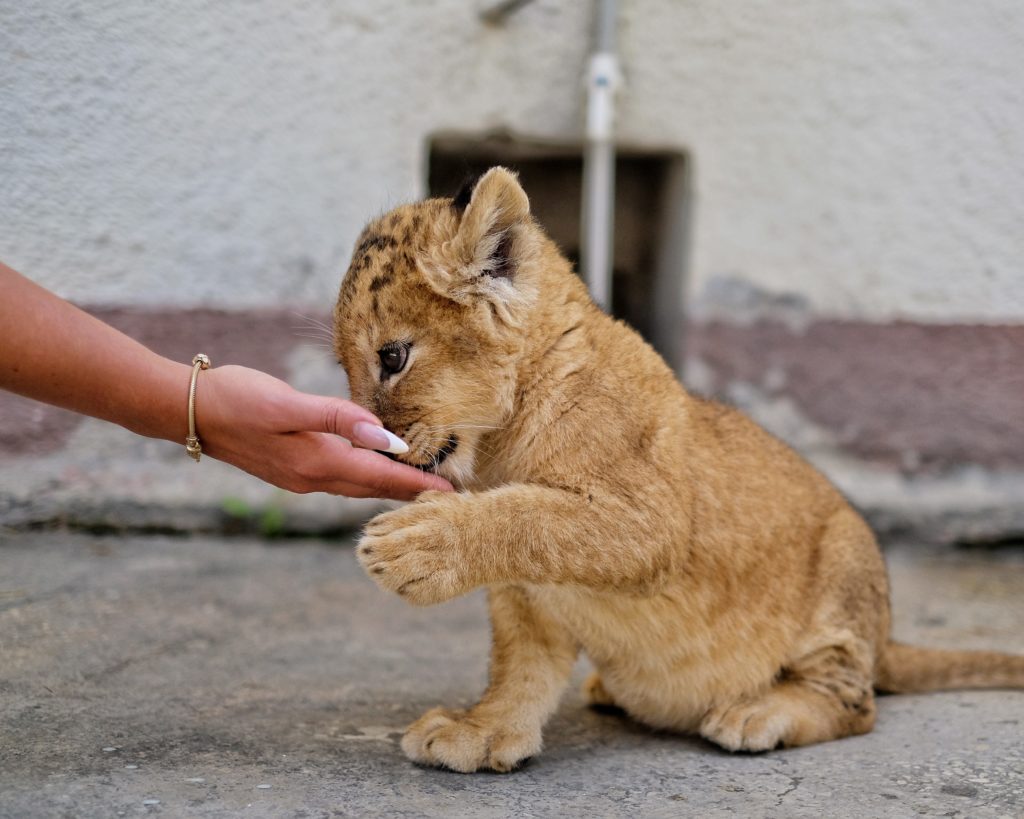
For a number of years, South Africa has seen an ongoing increase in in the number of facilities that claim to be wildlife rehabilitation or rescue centres, or even to have wildlife breeding ‘for conservation’ as their purpose. In the meantime, the majority of them are nothing more than commercial operations that masquerade as conservation centres, with financial gain for profit, being their main driver. The public has been duped into believing that lionesses frequently abandon perfectly healthy cubs, which then need to be rescued and bottle fed by well meaning, pound (or dollar) paying volunteers. The public has been paying for years to see camps of Cheetahs and Wild Dogs with the narrative being that they have been rescued from farmers who may have shot them, or from roads on which they may have been killed. The public has also been told that the always-present number of cubs and pups (and other wildlife offspring) is so that these new generations can be introduced into the wild to ‘save the species’. And for all of this, the public has been asked to pay. Whether for ‘educational’ family visits or through donations and fundraising asks, the public has been supporting a large number of these institutions for decades.
The trouble is that many of these facilities are in fact breeding and selling wildlife for commercial gain, supplying a multitude of zoos, wildlife dealers and private collectors, globally. This in itself is not necessarily a problem for the EWT, and you may in fact ask why the EWT would even care, given that we are not a welfare organisation. The trouble is, these institutions do not tell the unsuspecting public the truth and they don’t declare up front that the animals that they are paying to see are in fact often being bred or raised for sale to one of various institutions along the global wildlife supply chain. Furthermore, the so-called ‘rescue’ of animals that may have been shot or killed on roads is also problematic. The reality in South Africa today is that many wild species are exposed to being killed in human-wildlife conflict situations but removing them never solves the problem and certainly doesn’t enhance the protection of the species when increased range and tolerant landowners is what needs to be the goal. Finally, there is no conservation plan for any carnivore species and almost no other wildlife species in our country that requires the intentional breeding of additional animals, for release.
The problem is in fact a lack of space for many, already-wild animals and captive bred animals compound the situation. So, consider the truth exposed when, as a result of the COVID induced national lockdown, and the closure of the borders and airlines, which have rendered many of these facilities unable to trade in their animals. Suddenly we are seeing packs of Wild Dogs, high numbers of Cheetahs and Lions and a range of other captive bred wildlife that cannot be traded and which are costing too much to keep and who may not be sold anytime soon, being offered for ‘conservation purposes’, release or threatened with euthanasia. In some cases, the public is again being asked to help fund the upkeep of the animals. It is true that the facilities have also been hard-hit by the lack of gate takings and visitor income and it is also true that most facilities do in fact need to sell animals in order to cover costs. Again, the EWT is not necessarily against this. What we are, however, against is the lack of transparency, the lack of honesty about the destination of many of the animals being bred, the lack of accountability by some, as to the final destination of the animal (this may be at the end of its life and not just the end of its initial journey), and the ongoing misinformation to the public about the role of captive bred wildlife for genuine conservation value. What we are against is the use of wild caught animals to bolster the genetics of a captive population for commercial breeding purposes and what we are against is the rampant wildlife trade that exploits wildlife and the public, but lets everyone involved believe that they are saving a species.
If one thing stems from the COVID crisis, then let it be a more honest society that is more accountable for how we treat our natural world and its wildlife. It is not just the illicit wildlife trade that needs to be vanquished, but the legal trade must also be checked and better controlled in order to account for the impact it may have on wild populations, the impact on public funding and the impact on supporting markets that commodify wildlife with no benefit to the conservation of free living species. Until we have this in place, we urge the public to be aware that what you see may hide another truth that you also have a right to know.
The EWT is not against a legal, sustainable, and controlled trade in wildlife that benefits wild populations and their habitats. For more on our position on the matter see https://ewt.org/resources/perspectives/
A WORD FROM THE CEO
Yolan Friedmann, EWT CEO
yolanf@ewt.org.za We are living through history, and the only thing one can be certain of right now is that change will continue to define our lives for the foreseeable future. It is safe to say that the world will never be as we knew it to be just a few months ago.
In itself, this may not be a bad thing and we have a unique opportunity to rewrite the story of humankind’s modern colonisation of Planet Earth, and to redefine what it means to live in harmony with each other and sustainably with Mother Nature, going forward.
The Endangered Wildlife Trust is in full support of the measures taken to curb the rapid spread of COVID-19 by our national leadership, despite the significant socio-economic impacts of the lockdown on all South Africans. We too, are not untouched by the pandemic and the economic crisis that has taken hold and threatens to grow in the oncoming months. But we are also determined to be part of developing solutions and to play a big role in rebuilding our economy and reshaping our society.
Conservation and wildlife protection are deemed essential services under the current lockdown regulations, which has allowed the EWT to continue undertaking critical conservation work in the interests of saving some of our most threatened species. Under stringent social distancing and hygienic practices, our staff have used essential work permits to:
- save an entire pack of ten Endangered Wild Dogs from near certain persecution in the Waterberg and relocate to them their new home in the Lapalala Wilderness;
- rescue an injured juvenile Black Sparrowhawk from possible persecution due to repeated chicken killing;
- rescue a Blue Crane entangled in bailing twine on a farm in the Overberg;
- rescue an injured Tawny Eagle and a Cape Vulture;
- screen cargo at our airports through our K9 teams, for wildlife contraband; and
- conduct an investigation on an Eskom transmission line that was responsible for killing several Pelicans.
The EWT’s continued fight to save our wildlife does not just benefit those species. We are working tirelessly to support our rural communities whose livelihoods have been suspended, through the provision of skills development and training resources, online capacity building courses, water provision and even food parcel delivery. Many of our staff members are contributing, in their personal capacity, to food provision for the most vulnerable, and the spirit of Ubuntu runs deep in our culture.
Despite our committed actions in the present, our vision is firmly on the future and we are clear in our purpose. We understand the challenges felt by the tourism industry and the threats posed to the sector by a world under continued lockdown. We know that this won’t end overnight. But we also know this:
Africa with her extraordinary wildlife diversity, vast wilderness, open landscapes, spirit of adventure and unique cultural heritage can present endless opportunities for the emergence of a thriving low touch tourism economy. Wildlife and ecotourism lends itself better than any other form of tourism to low density, social distancing oriented activities and high value experiences, which are rewarding to both the tourist and the communities and conservation areas they support.
We know that tourism can potentially absorb the most unskilled people in South Africa, a large number of entrepreneurs, a high percentage of women and those of a lower mean age than many other sectors. We also recognise the importance of this sector to the upliftment of rural communities and to the continued conservation of our most threatened species. We know that tourism brings much needed funding to maintain the integrity of our protected area network and above all, we recognise the simple truth that tourists largely come to Africa to see and experience wildlife.
What is our role in a COVID world? The EWT’s work ensures that we retain our broad diversity of wild species and wild places for tourists to visit; that we have functioning ecosystems on which rural people can depend and thrive; that we continue to train rural farmers to be resilient and self-sufficient; that the illicit wildlife trade is brought under better control; and that our country emerges from this crisis as a stronger leader in global conservation in a world that has begun to finally understand the impact of undervaluing and under protecting wildlife.
If you would like to support this critical work, please visit https://ewt.org/campaigns/ewt-donations/
Together, apart
Yolan Friedmann
A WORD FROM THE CEO
Yolan Friedmann, EWT CEO
yolanf@ewt.org.za If there is one thing that 2020 has taught us so far, it is that life can change, rapidly, and dramatically. Just when we think that we are in control of our lives and the world in which we conduct them, everything we know changes and suddenly we are forced to stay at home, refrain from touching people, change our consumer and socialising patterns and pay attention to our health as well as that of the people around us. But out of every crisis arises an opportunity and much has already been said about the impact of COVID-19 presenting an opportunity for the planet to ‘reset itself’ or for Mother Nature to ‘recover’. Regardless of whether or not you support these statements, the virus and its rapid global spread and dramatic impact on lives across the globe has certainly taught us a few things.
Number one: we are all connected, and we are all the same. Nothing drives home the point of human fallibility and commonality, regardless of race, age, gender or wealth status like a virus that attacks the lung tissue of the species known only as Homo sapiens. We are ALL susceptible and we are ALL potential carriers. The most vulnerable may suffer the most impact but the human species is the target of this virus, regardless of demographics.
Secondly, we can change. We are all capable of instant, dramatic changes to our lives, when we are forced to change. Yes, with consequences and with impacts that can devastate lives and countries. But change IS possible. So, imagine if we all worked together to effect positive, harmonious change that could in fact improve lives, make our economies more robust and sustainable and lead to equitable and just societies in which we all prosper? Don’t ever forget, we CAN change so imagine if we did this voluntarily and for the benefit of society instead only out of fear and desperation.
Third, we are a global village and what we do on one side of the world has the potential to change everything, for everyone. If climate change has not taught us this, then COVID-19 should. As much as nations base their responses to developing their trade, developmental and economic agendas on sovereignty, as well as their social-political and cultural ideologies, the consequences of these decisions can be global and far-reaching and can potentially traverse generations.
Fourth, we are resourceful beyond measure and the solutions lie within all of us. Scientists in laboratories may develop vaccines and cures, but the solutions to preventing this, and numerous other catastrophes arising out of humanity’s destruction of the earth, lie within the simple things that all people can do: Treat nature with respect, reduce our carbon emissions, ensure equitable access to resources for all, sustain functioning ecosystems, use natural resources sustainably and with future generation’s rights to them in mind; refrain from participating in the illicit, inhumane and unstainable illegal trade in wildlife; and above all, remember how little we actually all need from this earth in order to have the things that really matter.
During this time of uncertainty and risk, the EWT wishes all our followers well. We remain open for business although we are all working remotely. The EWT remains committed to working for a healthy planet that can sustain us all.
Yolan Friedmann
A WORD FROM THE CEO
Yolan Friedmann, EWT CEO
yolanf@ewt.org.za What a way to end an incredible year! A year filled with challenges and frustrations yes, but many highs and successes and at the EWT, we tend to focus on those. Uncovering the secrets of Riverine Rabbit breeding biology; saving Wild Dogs from snares; seeing reintroduced Cheetah breed and expand their ranges; conserving over 10,000 hectares of biodiversity land in Gauteng, a province in desperate need of conservation; expanding our conservation footprint in the Soutpansberg with an additional property purchase, and more… the list is long and we are proud of the great strides we have taken, using YOUR support, to conserve our natural world.
These, and many more conservation wins, are detailed in the EWT’s 2018/19 Integrated Report, which can be found here. The report is evidence of what can happen when the right people work with the right partners, and get the right support. We may not always win every time, but we can achieve great things with your support, and we will always keep trying!
It therefore stands to reason that a fitting end-of-year gift to our staff and our stakeholders was relocating to the new Conservation Campus, the EWT’s forever home! The timing was perhaps not ideal, given that a move of this scale was severely hampered by the persistent rain and loadshedding that seemed to have been perfectly timed with the transfer of boxes and furniture in large trucks and trailers! But team spirit prevailed and mud and address certainly can’t keep the EWT down! Trenches were dug, streams were cleared, drains were opened up, and gumboots were regularly emptied – most of all, the joy of owning our little piece of conservation heaven in the heart of Joburg, never faded and finally, the EWT is home…
We will formally launch the Gauteng Conservation Camps in the New Year and for now, we are unpacking and settling in, followed by taking a much-needed break over the festive season. We wish each and every person that contributes to conservation, and keeps the EWT at the forefront of saving species, habitats and people, a peaceful, happy and safe summer holiday. We look forward to hosting you at our new home and doing even more in 2020 to protect forever, together.
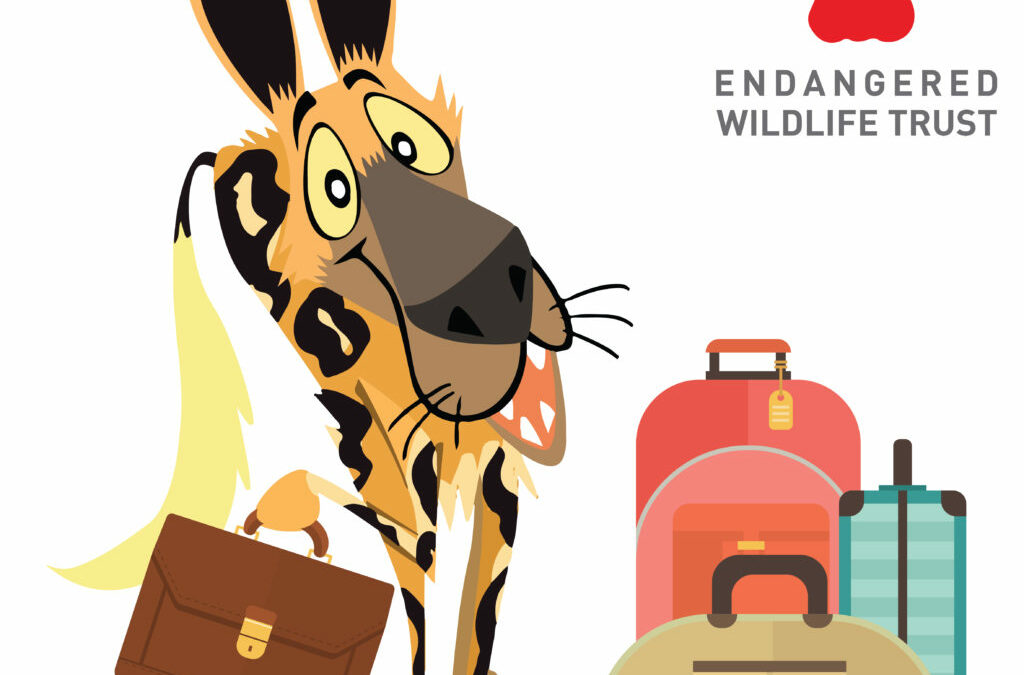
OUR PACK IS ON THE MOVE! AND THIS TIME, WE ARE DENNING FOR GOOD
Yolan Friedmann, EWT CEO
YolanF@ewt.org.zaThe EWT has, for over 47 years, been a champion of conservation in southern Africa, putting a wide diversity of threatened species on the road to a secure future. Our work to successfully address human-wildlife conflict, developmental impacts, habitat loss, over-utilisation, and inadequate enforcement of our robust legal framework, has seen a number of species recover from their perilous fates and begin their journey towards a sustainable, albeit a conservation-dependant future. Our innovative spirit, based on generating new ideas and conceptualising ground-breaking solutions, and developing inclusive partnerships for collaborative thinking, supports the possibility of a sustainable future for the wildlife and communities we serve.
With a focus firmly on the future, and to ensure that the EWT remains a strong and impactful conservation force forever, we have long since recognised the need to secure our own foundation, but by achieving this ‘the EWT way’, that encompasses innovative, collaborative and future-ready thinking. The EWT has now taken a giant step towards protecting our own forever.
The Wild Dog pack chooses its den wisely. The best dens offer the pack – and their pups, their future leaders – a safe home, with good access to resources, security from major threats, and ease of access for pack members. A safe haven in which the future of the pack can be nurtured and developed, and where the best of the species will not only survive, but will grow and thrive.
After a long search, the EWT has found its den and will soon be relocating to our forever home in Glen Austin, Midrand. Nestled in the middle of Johannesburg’s bustling development circle, the EWT’s den offers more than 6 hectares of prime under-developed property encompassing a protected wetland and Highveld grass cover. With close proximity to all major highways and byways, the EWT’s new home is also within easy cycling distance from the Gautrain station. Set midway between Pretoria and Johannesburg, it is quite extraordinary that the EWT was able to find a 15-acre site that is not only perfect for our own dream, but also worthy of conservation in itself. The site forms part of a critical waterway connecting a series of wetlands and streams in the Glen Austin area, a suburb renowned for its high diversity of wildlife, and in particular, the rare Giant Bullfrog. Despite increasing urbanisation, this area still offers refuge to Cape Clawless Otters, Grey Herons, and even an occasional African Python.
The EWT has achieved great gains for the conservation of several threatened species and their habitats, over many years, with the support and teamwork of our great partners. With their eyes also firmly set on the future and how we will protect forever together, the Hans Hoheisen Charitable Trust, and Rand Merchant Bank have helped to secure the EWT’s future by investing in the dream of developing a Wildlife Campus in the City. Our dream is to create much more than a den for only the EWT and, in time, the true scale of our vision will be revealed.
Our future is bright and we look forward to embarking on an ambitious project that will revolutionise the way in which the EWT operates as an entity, interacts with our stakeholders, shares resources, educates and informs all people, builds capacity, initiates enterprises, embraces new partnerships, and showcases the marvels of our natural world.
Our pack is on the move and, by the end of 2019, the EWT will be setting up home for the last time. A home that offers refuge, sanctuary, and safety for wildlife and wildlife lovers far and wide, and which will catalyse life-changing moments for decades to come.
From 2020 onwards, please note our new contact information:
Physical address: 27 and 28 Austin Road, Glen Austin AH, Midrand, 1685
Phone: 011 372 3600
Several other partners have contributed significantly to making this dream a reality including Standard Bank, SpeedSpace, Wiggett Architects, Ryobi, Duram Paints and The Meter Man. We are immensely grateful to all those who share our vision and to those who will soon join us in this journey.
