A WORD FROM THE CEO
Yolan Friedmann, EWT CEO
yolanf@ewt.org.za As I write this, our country has moved to lockdown level one and hopefully, with that, a return to some kind of normal life for millions of South Africans as they struggle to rebuild their lives and businesses from the wreckage of the past 12 months and mourn the loss of what can never be recovered or rebuilt. What the ‘new normal’ will be is anyone’s guess, and no-one seems to want to predict life beyond the next 30 days anymore. What 12 months have done to change our world and ourselves! A year ago, human beings around the world were anxiously debating the possibility of the “Wuhan virus” ever reaching our various shores or alternatively, were bracing for millions of deaths along the lines of the Spanish Flu, whilst just as many were pretending that life would never change so why worry?
But life DID change; let’s recount just some of the ways: In just 12 months, humans the world over have witnessed complete and total economic shutdown; buried family members and friends; lost businesses and jobs, created new ones online; seen corporate giants like MSC Cruises and Victoria Secret crash whilst Zoom shares skyrocketed; learned a new language that included words like “pivot”, “unmute” and “lockdown”; we all learned to wear earphones and masks, some more stylishly than others. And some of us not, just as a political statement. COVID turned us into pandemic denialists, anti/pro-vaxers, statisticians, fake news mongers, PPE tenderpreneuers, homeschoolers, beggars, thieves, heroes, medical experts, ginger horticulturalists, cultural bigots, and social connectors, all online, of course. Essential permits were issued, and homebrew recipes were exchanged. We lambasted rules that made no sense whilst we fed an insatiable black market that grew on the side. Beachgoers became criminals, and the skies became quiet with the absence of air traffic. Our conversations transformed in 12 months from blaming China to blaming Bill Gates. We admired Sweden, and we all know more about herd immunity than our GP does. It’s a crazy world for sure, and I cannot imagine anymore what the next 12 months will bring.
But here’s the thing: all of this has only affected the human species and the crazy, artificial world that we have built for ourselves, under the guise of development and civilisation. For all the madness in our world, Mother Nature continued to pass the passage of time with very little interruption or disorder. Lions continued to hunt their prey, Southern Right Wales went south to Antarctica, and tadpoles grew from eggs into frogs, all in the perfect order of things. Rain fell on the savannahs and prairies and night stars shone (more brightly perhaps) as they have for millennia. Humans believe that our world is tough and robust and built to last, whilst in fact, the more we construct a civilisation that is removed from nature, the more vulnerable we become. We rely on governments to give us food grants and supply us with water, to remove our effluent and educate our children. We rely on businesses to feed our families, and we need strangers who may not even exist to tell us the ‘truth’. We value paper with presidents’ heads printed on it above compassion and equality, and we demean those who tell us otherwise. And all the while, we believe we have dominion over the Earth and must control everything that lives on it – whether they need us or not. It is a strange world, isn’t it, and we are a very strange species.
I hope that some people have at least learned some important things this past year. It may not be the politicians or big business, and it probably won’t even be those we most trust to lead us in times just like these. It will probably be those we write off as weird or different, or perhaps even a vegan or two. But maybe some people took note of how much better and safer and healthier our lives would be, and how more predictable our future could be if we took a few steps backwards and were a little less ‘civilised’ and a little more ‘back to nature’. I, for one, hope that the next 12 months take us back a little if it means creating a healthy planet and an equitable world that values and sustains the diversity of all life. And, as this is the Vison of the Endangered Wildlife Trust, we believe that this is the only future that we should be working towards in the 12 months to come. Either way, we will be with you on this journey as we learn from nature the most important survival lessons we will ever need.
Here’s to the 2021 ride.
Yolan Friedmann
CEO
A WORD FROM THE CEO
Yolan Friedmann, EWT CEO
yolanf@ewt.org.za There is not much more to say about 2020 that has not already been said. But if you are reading this then you, like us, have a lot to be grateful for despite the hardships of the year. The EWT staff and trustees have banded together in an unprecedented way to ensure that we forge ahead in a time of grave uncertainty and change and that above all else, conservation and wildlife do not suffer. The year forced us to reset our priorities and ensure that we keep our own heads above water whilst supporting the wellbeing of the communities we serve – human and wildlife – and safeguarding the most vulnerable. We have not been unaffected by the turbulence of the year, and yet we have continued to provide essential lifesaving services to thousands of people, and support the conservation of many wildlife species. The pages ahead detail just some of these triumphs and make for uplifting reading at a time when joy and gratitude are so important.
We could not have done this without the support of our followers and your help has helped to save lives. From my desk, I never take for granted how blessed I am to be part of team of people that puts each other, their work, their commitment to conservation and their desire to build a better world first. The sacrifices made by the EWT staff during this time, to keep us all moving forward together, have been extraordinary I am grateful to the EWT team that has become stronger and more united as a result. Protecting tomorrow together has never been more real or more relevant as it was this year, or as we step forward into another year of uncertainty. Thank you to the EWT staff, the Board of Trustees and to all our supporters who kept making conservation happen this year. The reset button on all of our lives has had some positive benefits and, at this time of global gratitude and joy, may these opportunities for change and to count our blessings prevail as we build this tomorrow, together.
Yolan Friedmann
A WORD FROM THE CEO
Yolan Friedmann, EWT CEO
yolanf@ewt.org.za
A key question we are often asked these days is whether the lockdown has benefitted rhino and reduced poaching in general. With rhino poaching having escalated in recent years, and species like elephant and lions beginning to show worrying poaching trends in South Africa, one would hope that the strict lockdown regulations that crippled our economy and disrupted lives, would have at least benefitted species whose existence is being threatened by the illegal wildlife trade.
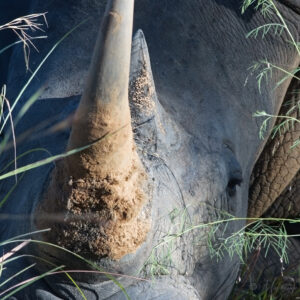
The short answer is that yes, to some degree, the poaching of rhino and trade in rhino horn did decrease during the strict lockdown period. According to official figures, rhino poaching in South Africa decreased by around 53% in the first six months of 2020 with only 166 rhino being killed since the beginning of the year, compared to 316 during the first six months of 2019. Minister of Environment, Forestry and Fisheries, Barbara Creecy, noted that “…the decline in rhino poaching … was specifically welcome in the Kruger National Park where, during April, no rhino were killed in the Intensive Protection Zone, for the first time in almost ten years.” The Kruger National Park recorded 88 cases of rhino poaching in the first six months of 2020, compared to 153 in the first six months of 2019.
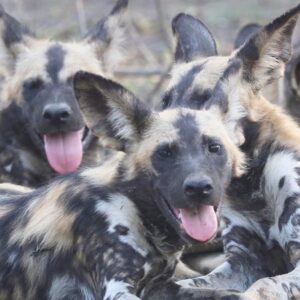
The lockdown did not, however, spell good news for all wildlife, and incidences of poaching for bushmeat using snares and poisons unfortunately increased. The EWT staff, and our associates working in the field, noted a significant increase in the use of snares to catch species such as various antelope, bushpig and birds. Secondary consequences of this scourge include the increase in snaring of threatened species such as Wild Dogs, who are unfortunately prone to being caught in snares set for other animals. Much of this kind of poaching has been attributed to rapidly escalating levels of starving people, and around the country, we noted an increased reliance by many people on wildlife such as hares, birds and small game for food. If successful, this kind of poaching can also assist with income generation in cash-strapped households, and the lockdown has pushed thousands of people to rely on their natural environment for food, income and even medicinals, with plant harvesting also increasing in some areas. Whether or not the relaxed lockdown regulations will result in a reversal of this trend is yet to be seen, and if not, this could spell disaster for many species who will not withstand the impact of rampant countrywide snaring.
But back to rhino: what is clear is that there are indeed actions that can be taken to reduce rhino poaching in the future, and this does not necessarily have to be another severe national lockdown. Visible policing followed by roadblocks (albeit that police may have been looking for alcohol and cigarettes, some roadblocks in fact identified wildlife products in transit) and strict monitoring of vehicles entering and leaving our parks, definitely played a role in reducing poaching. Whilst we want our borders to remain open, it is also evident that consistent and strict monitoring of what goes out and screening of all baggage and cargo for illicit wildlife products can make a difference. Despite many reserves having fewer ranger patrols and less human activity in their reserves (or because of it) poaching of high value, internationally traded species reduced as markets could not be accessed as easily. This is a clear indication of how, if we can control trade routes and reduce the ease of access to markets, one can reduce the incentive to poach.
Going forward, this is a clear indication of where our priorities need to lie in the future and how we can stay ahead of the poaching and illegal wildlife trade scourge before it gets the better of us again. Let there be these positive take-home lessons for conservation into the future and may our rhino continue to enjoy a little more peace for a little bit longer.
Yolan Friedmann
CEO
A WORD FROM THE CEO: AN INTERVIEW WITH OUR LEADING LADY, YOLAN FRIEDMANN
Yolan Friedmann, EWT CEO
yolanf@ewt.org.za
With all the challenges facing our country, and our environment, which ones keep you awake at night and why?
South Africa is faced with massive challenges generally and despite some of those not emanating from the environmental sector, they do spill over. So the issue of corruption means that there is less money to be spent on environmental issues and so our planet suffers; with escalating crime, our staff and colleagues are exposed to risk whilst they do their work in remote areas, or the travel, or even in their personal lives. I have seen first-hand the stress that this puts them under and the costs associated with paying for increased safety and protection. The loss of critical skills with young people emigrating also effects our sector severely and we have lost too many talented people to other countries as a result of crime in South Africa. Our future as a stable, thriving society and economy keeps me awake at night.
What unique strengths and characteristics do you believe women have, that add value to being a person of influence in the environmental sector?
By nature, women tend to be more consultative and like to work in teams. We can lead, and we can also follow, and we generally know when to do either or both. We are able and willing to ask for help and to admit when we don’t know the answers, and to show strength and leadership in finding them, together. I think that this creates a more dialogue-based approach to finding solutions, which is vital in the highly complex world of conservation. Nothing in the conservation sector can be solved with linear thinking, and one must integrate social, economic, environmental, political, cultural and ecological imperatives with science and compassion and sensitivity, and this requires continual juggling and consultation. Women tend to be better jugglers, in my opinion, and understand the need to balance shifting priorities – we tend to be able to lead from the front as well as the back. Our sector has also required massive skills and capacity development over the past years, with the need for human development being at the core of increasing environmental awareness and action. Women have thrived in this environment which is evident by the increasing number of civil society action groups caring for the earth, in almost all neighbourhoods these days, which are mostly lead by women.
Are there any women in conservation who inspire you?
They all do! Every one of them is drawn to our sector because they are passionate, want to make a difference, are willing to work long hours and sacrifice a lot personally, and care for the earth and all its inhabitants so yes, they ALL inspire me!
Do you have a female role model?
These change all the time as one learns from different people as you develop and events in your life require adaptation and growth. But I always admire my female friends that are entrepreneurs, who create jobs, who create beautiful things and change the lives of their employees and friends; who are selfless and caring and never falter; who are strong and compassionate and honest and flawed and always wonderful! They know who they are 😊
What advice would you give to young women of today?
Be willing to do anything that is required of you to make your first job really count. Don’t be stuck on what role you believe you should play and what your qualifications have prepared you to do. In today’s competitive market employers are looking for team members who are willing and able to dive in and do anything that is required and who add value to the organisation as a whole. If you add value, you will have a thriving career. Today I see too many young people asking what is in it for them, and this puts employers off. Post-COVID, we are also going to see the end of the silo employment position and the emergence of more circular, integrated roles that continually shift and form part of different teams. You must, therefore be willing to be flexible, and you must add value as a person before you can rely on your skills set alone. Other people have the same qualifications as you do so you need to offer a lot more than just your degree. In an interview, how about asking the employer what THEY need and how YOU can add value to them?
What has your time working with the EWT taught you?
Way too much to write here… I have worked in every role in the EWT – from volunteer to CEO, so every position has taught me different things. But from where I sit today I would say that I have learned to work with (and not hide) many female traits that I often used to think would work against me as a female leader in a very male-dominated sector (at the time). These traits include compassion, humility,; consultation, teamwork, the ability to lead from behind and not be ego-driven, being just as happy, if not more so, when your staff are in the limelight and get all the accolades, admitting when you are wrong, and owning up when you don’t have all the answers. I have surrounded myself with people who all know more than I do and my greatest lessons have come from working with them, listening to them, seeing things through their eyes, making them better at their jobs and serving them, and knowing that as their leader, that is my role.
Can you share a bit about what you do? What does a typical workday look like for you?
These days it’s 12 hours on a laptop, like everyone else I suppose. Under ‘normal’ conditions, I still spend a lot of time on emails and in meetings, writing documents and approving things like marketing and fundraising material, budgets, contracts etc. My role is mostly on corporate governance and strategic development, but I do get to interact with my conservation teams every day, which is good for my soul! I get into the field a few times a year, but it is never enough, but again, my role is to facilitate my staff getting to do the fieldwork as they are the experts. I come from a strong field and technical background, so I miss getting my hands dirty! I also spend a lot of time liaising with the media, our partners, stakeholders and supporters. I like to be creative, so I work closely with my fundraising and communications teams. I work closely with my Board of Trustees and am ultimately responsible for ensuring that our strategy is sound, meaningful, and implemented as planned. My role is to find the resources to get the work done, establish the partnerships that make us effective and empower the team to make the magic happen.
A WORD FROM THE CEO: AN INTERVIEW WITH OUR LEADING LADY, YOLAN FRIEDMANN
Yolan Friedmann, EWT CEO
yolanf@ewt.org.za
With all the challenges facing our country, and our environment, which ones keep you awake at night and why?
South Africa is faced with massive challenges generally and despite some of those not emanating from the environmental sector, they do spill over. So the issue of corruption means that there is less money to be spent on environmental issues and so our planet suffers; with escalating crime, our staff and colleagues are exposed to risk whilst they do their work in remote areas, or the travel, or even in their personal lives. I have seen first-hand the stress that this puts them under and the costs associated with paying for increased safety and protection. The loss of critical skills with young people emigrating also effects our sector severely and we have lost too many talented people to other countries as a result of crime in South Africa. Our future as a stable, thriving society and economy keeps me awake at night.
What unique strengths and characteristics do you believe women have, that add value to being a person of influence in the environmental sector?
By nature, women tend to be more consultative and like to work in teams. We can lead, and we can also follow, and we generally know when to do either or both. We are able and willing to ask for help and to admit when we don’t know the answers, and to show strength and leadership in finding them, together. I think that this creates a more dialogue-based approach to finding solutions, which is vital in the highly complex world of conservation. Nothing in the conservation sector can be solved with linear thinking, and one must integrate social, economic, environmental, political, cultural and ecological imperatives with science and compassion and sensitivity, and this requires continual juggling and consultation. Women tend to be better jugglers, in my opinion, and understand the need to balance shifting priorities – we tend to be able to lead from the front as well as the back. Our sector has also required massive skills and capacity development over the past years, with the need for human development being at the core of increasing environmental awareness and action. Women have thrived in this environment which is evident by the increasing number of civil society action groups caring for the earth, in almost all neighbourhoods these days, which are mostly lead by women.
Are there any women in conservation who inspire you?
They all do! Every one of them is drawn to our sector because they are passionate, want to make a difference, are willing to work long hours and sacrifice a lot personally, and care for the earth and all its inhabitants so yes, they ALL inspire me!
Do you have a female role model?
These change all the time as one learns from different people as you develop and events in your life require adaptation and growth. But I always admire my female friends that are entrepreneurs, who create jobs, who create beautiful things and change the lives of their employees and friends; who are selfless and caring and never falter; who are strong and compassionate and honest and flawed and always wonderful! They know who they are 😊
What advice would you give to young women of today?
Be willing to do anything that is required of you to make your first job really count. Don’t be stuck on what role you believe you should play and what your qualifications have prepared you to do. In today’s competitive market employers are looking for team members who are willing and able to dive in and do anything that is required and who add value to the organisation as a whole. If you add value, you will have a thriving career. Today I see too many young people asking what is in it for them, and this puts employers off. Post-COVID, we are also going to see the end of the silo employment position and the emergence of more circular, integrated roles that continually shift and form part of different teams. You must, therefore be willing to be flexible, and you must add value as a person before you can rely on your skills set alone. Other people have the same qualifications as you do so you need to offer a lot more than just your degree. In an interview, how about asking the employer what THEY need and how YOU can add value to them?
What has your time working with the EWT taught you?
Way too much to write here… I have worked in every role in the EWT – from volunteer to CEO, so every position has taught me different things. But from where I sit today I would say that I have learned to work with (and not hide) many female traits that I often used to think would work against me as a female leader in a very male-dominated sector (at the time). These traits include compassion, humility,; consultation, teamwork, the ability to lead from behind and not be ego-driven, being just as happy, if not more so, when your staff are in the limelight and get all the accolades, admitting when you are wrong, and owning up when you don’t have all the answers. I have surrounded myself with people who all know more than I do and my greatest lessons have come from working with them, listening to them, seeing things through their eyes, making them better at their jobs and serving them, and knowing that as their leader, that is my role.
Can you share a bit about what you do? What does a typical workday look like for you?
These days it’s 12 hours on a laptop, like everyone else I suppose. Under ‘normal’ conditions, I still spend a lot of time on emails and in meetings, writing documents and approving things like marketing and fundraising material, budgets, contracts etc. My role is mostly on corporate governance and strategic development, but I do get to interact with my conservation teams every day, which is good for my soul! I get into the field a few times a year, but it is never enough, but again, my role is to facilitate my staff getting to do the fieldwork as they are the experts. I come from a strong field and technical background, so I miss getting my hands dirty! I also spend a lot of time liaising with the media, our partners, stakeholders and supporters. I like to be creative, so I work closely with my fundraising and communications teams. I work closely with my Board of Trustees and am ultimately responsible for ensuring that our strategy is sound, meaningful, and implemented as planned. My role is to find the resources to get the work done, establish the partnerships that make us effective and empower the team to make the magic happen.
A WORD FROM THE CEO: THE EWT CALLS FOR THE URGENT REOPENING OF NATURE-BASED TOURISM IN THE NO-TOUCH ECONOMY
Yolan Friedmann, EWT CEO
yolanf@ewt.org.za
The coronavirus or COVID-19 global pandemic has affected every aspect of life as we know it. There is speculation about whether the world will return to ‘normal’ or if society will ever be the same again. However, we do know that the COVID-19 virus will not merely disappear and until a vaccine becomes available, or until human beings have developed a minimum immunity response rate, the world will not return to normal, if ever.
Despite job losses in major South African industries in recent years, the tourism sector has shown resilience. In 2017 the industry created 31,752 net new jobs, which was the most number of net new jobs generated by tourism within a year in at least the previous eight years.
“Africa’s unique diversity of wildlife and habitat has the potential to radically transform the continent’s economy” (UNEP, 2019).
There were 705,871 persons (or 4,5% of total employment) directly engaged in producing goods and services purchased by visitors in 2016, 681,619 persons (or 4,2% of total employment) in 2017, and 739,657 (or 4,5% of total employment) in 2018. (Tourism Satellite Account for South Africa, final 2016 and provisional 2017 and 2018/ Statistics South Africa). Over 60% of employed people in the sector are women (mostly in the areas of catering and accommodation) with a younger mean average age than all other sectors. Furthermore, Stats SA published data in 2018 show that one in every 22 working South Africans, and more than 2,892,303 people, are employed in the tourism sector.
The tourism industry in South Africa is heavily reliant on nature-based tourism, which is one of the main attractions for travellers in South Africa, as it is for 80% of foreign tourists (Saayman, 2017).
Nature-based tourism refers to all forms of tourism, where relatively undisturbed natural environments form the primary attraction or setting. The wildlife and nature-based sector specifically, supports a vast number of associated industries and sectors such as the conservation sector through generating income for park management, wildlife protection, anti-poaching, and to some degree border control through the management of human movement in transfrontier parks. For years, national and provincial conservation agencies have been generating significant revenue through nature-based tourism that contributes substantially to conservation management. The sector generates 40% more full-time employment than agriculture and provides greater opportunities for women than other sectors. (UNEP, 2019).
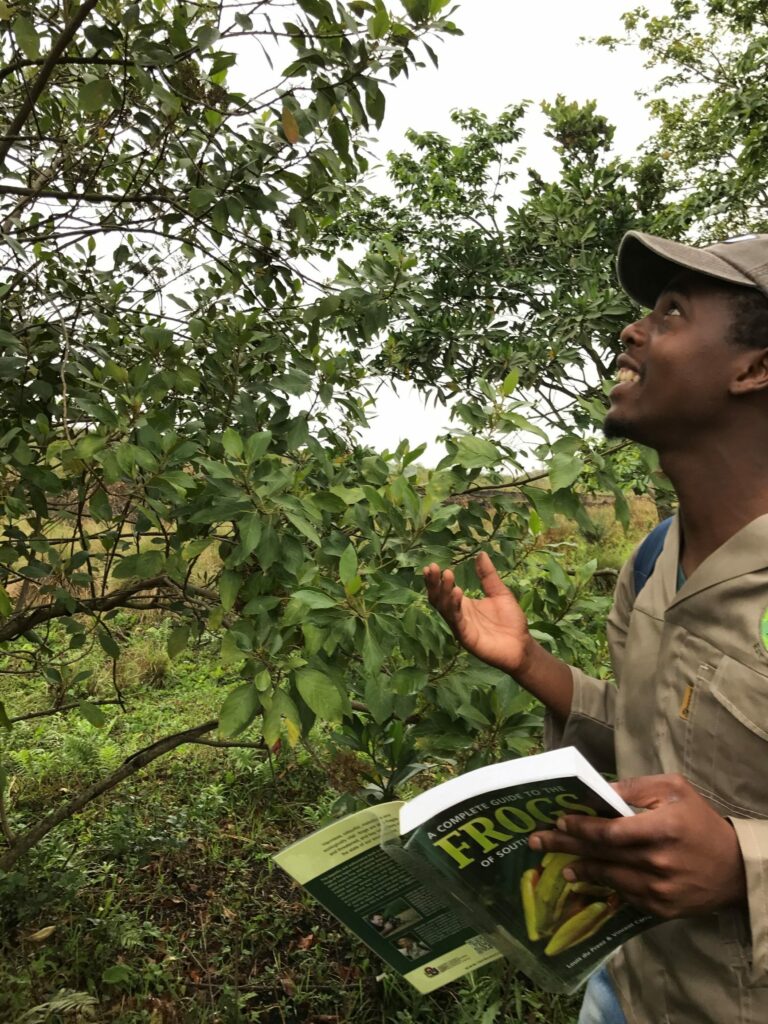
Game reserves in South Africa also generate significant benefits to the surrounding communities who contribute to goods and services consumed by visitors. In the absence of economic activity in these parks, there is an increased risk of poaching, illegal resource extraction and park invasion. It has taken years of stakeholder engagement and hard work for communities to have equitable access to benefits arising from conservation and nature-based tourism, and this will be for nothing if our protected areas lose their economic value to the communities who depend on them. To survive, these communities may resort to illegal resource use. It must be noted that many people employed in the nature-based tourism sector are unskilled/semi-skilled and are usually breadwinners in their families. Reopening local tourism ASAP will contribute to securing their employment and to safeguarding livelihoods in the most vulnerable households.
SANParks, as the custodian of approximately 70% of South Africa’s state-owned protected area network, derives 80% of its income from nature-based tourism activities. A significant component of this revenue funds park management, anti-poaching, management of marine protected areas, ranger patrol, and protection services, including the aircraft and associated rhino security technologies, as well as management of wildlife. Many community-owned reserves generate income for clinics, schools, community recreation facilities and contribute many jobs linked to goods and services associated with these reserves, including catering and accommodation. A number of these community-owned reserves are related to national and provincial parks and benefit from visitors to parks, or their own concessionaire managed lodges.
“To preserve their wildlife and wild places, governments should look at protected areas not only as environmental assets but economic ones as well, with the continent’s 8,400 protected areas producing US$48 billion in revenue.” (UNEP, 2019).
Tourism, and in particular wildlife and nature-based tourism, should, therefore, be prioritised in the measures to ease the economic impact of COVID-19. Nature-based tourism is also a major outlet for people who have been confined in urban areas. Many studies have shown a close link between human wellbeing and nature-based tourism. Approximately 70% of visitors to our national parks are local tourists, and the tourism sector can continue to support thousands of livelihoods, even before our borders reopen.
Other consumptive forms of nature-based tourism such as hunting for biltong and game meat also have a local market and might contribute to food security.
The consequences of any extended lockdown for the wildlife and nature-based tourism sector, and by extension to the entire tourism industry, will be dire and potentially devastating as a result of:
- significant job losses (in particular for those with a low skill base and less likelihood of finding alternative employment);
- revenue losses for the parks’ agencies, communities, NGOs, conservation authorities, and government (through taxes);
- eroded protection of South Africa’s biodiversity and protected areas;
- eroded infrastructure (fences, road networks, camp maintenance etc.);
- an increase in poaching, wildlife crime, and illicit wildlife trade;
- reduced benefits to communities whose land has been returned to them in the land restitution process;
- over-reliance on the unsustainable use of natural resources by rural communities;
- potential negative sentiment towards the protected area network should communities lose all the benefits derived from them; and
- reduced income for conservation NGOs who play a significant role in biodiversity conservation and community conservation in South Africa, and are major employers in the sector.
Most of our parks and game reserves are in areas that have lower infection rates and where economic activity could open faster than in metros. It is possible to introduce nature-based tourism into the economic recovery now, through a phased approach that sees this form of tourism being allowed to begin operating, under stable conditions and Standard Operating Procedures. This is based on the fact that:
- guests can participate in almost all nature-based tourism activities in semi-isolation and applying physical distancing principles. People could only visit the parks and reserves within their own provinces and limited numbers can be accommodated at any given time;
- wildlife and nature-based tourism offers guests the chance to self-drive, or go on game drives in open-air vehicles with reduced numbers of guests or family members only; providing a more exclusive and interactive experience;
- adventure tourism offers guests the opportunity to undertake outdoor activities such as hiking, trail running, mountain biking, canoeing/paddling, bird guiding and more, in semi-isolation states and with expert guides, thus reducing social interactions and in low numbers.
- Standard Operating Procedures have been developed for game reserves and parks, specifying acceptable sizes of groups for different activities, and enforcing strict protocol in restaurants and reception areas
The EWT believes that nature-based tourism not only offers guests the opportunities to have enjoyable, safe, and healthy vacation opportunities but is one of the few sectors that stands to revitalise our economy and bring much-needed income back into South African households in the short term.
Allowing a limited but early phased reopening of this sector offers the opportunity to increase the economic, mental and physical wellbeing of millions of people, and sustain the conservation of South Africa’s natural resources for future generations.
