A WORD FROM THE CEO
Yolan Friedmann, EWT CEO
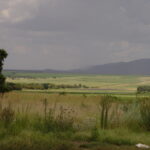
yolanf@ewt.org.za It all began with an email in March 2015 from a wonderful ally and friend in conservation, Rob Brett, who works with our partner Conservation International. Rob asked me if we could meet regarding the potential for the EWT to get involved in the conservation of land in the Soutpansberg Mountains as he was engaging with Phil and Sue Roberts, an Australian couple who had visited the area, fallen in love with it, and wanted to help purchase a property to secure this critical landscape for Leopard conservation. For 40 odd years, the EWT had held the belief that our most effective position was to support other landowners to conserve habitats and species and not be in the ‘land game’ ourselves. But this conservation with Rob sparked my interest, and the more we spoke about this forgotten mountain, the urgent need for its formal protection, the critical importance of its water catchments, cultural heritage sites and extraordinary levels of species endemism, the more it became evident that the best way to catalyse urgent conservation attention was to have some skin in the game as a landowner ourselves.
From what began with Phil and Sue’s passionate desire to invest in African conservation in 2015 has now become a conservation success story unfolding before our eyes, where an overlooked and little-known Garden of Eden is becoming a model for sustainable conservation and an emerging nature-based local economy.
The Roberts’ funding resulted in the initial purchase of the 1,400-hectare Medike Nature Reserve. In just six short years, with the extraordinary support of partners like the Rainforest Trust and Doug Wilson, we doubled the reserve’s size to include Medike West. The dream to create a 23,000-hectare Protected Area is fast becoming a reality, with the commitment of several landowners to include their properties through the establishment of the Western Soutpansberg Nature Reserve Association in 2020 to protect and manage the area through the biodiversity stewardship programme, increasing the protection of the mountain’s unique biodiversity. With funding from the F E van Pletzen / L Steynberg Trust, we reached another fantastic milestone last week by opening up over 40 km of trail running paths and another 68 km of hiking trails across several spectacular landscapes and farms in the magical mountain. I was fortunate enough to be part of the recce team, which spent five days testing these virgin trails that will open access to nature lovers globally to enjoy this serene wilderness and support its ongoing conservation. Moreover, it is part of creating sustainable, nature-based employment opportunities for our trail-cutters, rangers, and guides who hail from local communities and are eager to share their natural and cultural heritage with visitors. This is a unique opportunity to undertake a true wilderness hike in which you can experience absolute quiet, untampered vistas, pristine wilderness, overwhelming beauty, unique biodiversity, large numbers of endemic and highly threatened species, and ancient cultural history. Just some of the features you will see on this hike and nowhere else is a Yellowwood forest with trees of over 80 m high, Euphorbias, Giant Strelitzias, and Samango monkeys and a Leopard density that turns sand roads into veritable tracking highways every morning.
Watch this space for the official opening of hiking, trail running, and mountain bike trails next month, as well as opportunities to do specialist experiences for birders and tree huggers, all to the benefit of conservation and the upliftment of communities in this special place. For more, visit our EWT Destinations page and watch the video The Forgotten Mountain.
LATEST STORIES

A WORD FROM THE CEO
Women’s Month – a month of Gold
Yolan Friedmann, EWT CEO
yolanf@ewt.org.za What better way to kick off Women’s Month in South Africa than with outstanding performances of our lady Olympians Tatjana Schoenmaker (swimming) and Bianca Buitendag (surfing), who racked up the first South African medals of the Games, with Tatjana setting a new world record! The Olympics provide a unique and magical platform where the world comes together to recognise and celebrate extraordinary feats of human brilliance, underpinned by unfathomable dedication, commitment, hard work, and unwavering vision. And in a world shaken by the Covid-19 pandemic, the Tokyo Olympic Games also symbolise hope, triumph, and perseverance for millions of people around the globe. To add to the inspiration offered by any athlete on the start line is the number of athletes this year that are mothers, with Canadian basketball player Kim Boucher even having her three months old infant with her at the Games whom she is still breastfeeding. With 49% of the athletes in this year’s Games being women, the Tokyo Olympics claims to be the most gender-balanced Games of all times, and features nine more mixed events than at Rio 2016, raising the overall number to 18. Progress of gender equity and the rights of women in many respects.
Back home, South Africa has a very long way to go before women can not only feel equal to men in our society (in terms of pay, equity in the workplace, a voice in the media, and more) but can feel safe and free, in our country and our homes. We wish that days and months dedicated to empowering women and raising the profile of the challenges they face would not be necessary but, given that they are, that they will result in immediate, measurable, and impactful change, not just rhetoric clever campaigns. The EWT is a gender-balanced organisation with a ratio of 50:50 men to women and is one of the few in our sector that is female lead. We believe firmly in the role that women play in building not only a resilient, nurturing and compassionate society, but we also embrace and hold dear the value of the female of the species in bringing all these qualities and more to the EWT and conservation in general. The EWT’s ladies are mothers, academics, scientists, field workers, caregivers, teachers, wives, daughters, and leaders, often all in one. Importantly, we are also blessed to work with men who give high regard to the role of the ladies in their personal and professional lives and who are fundamental to creating a society that is empowering and respectful of women.
This Women’s Month, I wish that all the ladies in the EWT know how valued they are, how much they contribute, and how much impact they have on conservation, the EWT, their families, and society. It is equally my wish that all the men in the EWT also know how important they are, how invaluable is their contribution and how irreplaceable their roles as fathers, brothers, colleagues, and friends are. From all at the EWT, may you spend this Women’s month celebrating each and every woman in your life, and the many good men too, and make the changes that are necessary for a long lasting impact to come from this August that will empower and keep safe ALL the ladies in our country. May we all work this month and every month to create an equitable, safe, just and celebratory society of the gold that exists in all of us.
LATEST STORIES

A WORD FROM THE CEO
Yolan Friedmann, EWT CEO
yolanf@ewt.org.za It is probably a coincidence but a wonderful opportunity that Youth Day/month in South Africa and World Environment Day are both celebrated in June. I say this not just for the obvious rhetoric that the youth are the future and therefore the best hope we have for saving our fragile environment from the havoc being reeked on it by the current generation; but more importantly, to highlight the critical opportunity that it gives us to both empower and protect the vulnerable, and in South Africa today, this includes both our youth and our environment. With all the problems facing both young people and our environment, what if solutions could assist both simultaneously? Here are two of my crazy suggestions that may just be able to achieve both….:
1. South Africa needs Kibbutzim. A kibbutz is a type of settlement that is unique to Israel. A collective community of people living together in mostly agricultural settlements. Not economically motivated, the residents of the communes share everything and work as members of a collective. In the early days, times were tough, everything was shared, and life was hard. The members all had different jobs in the community, either in agriculture or elsewhere. Some were in the kitchen, the kindergarten, or schooling children. Members lived in modest accommodation, and all meals were eaten in the dining hall with a strong sense of community. Since the 1980s, many kibbutzim have become privatised and have diversified away from their agricultural roots, largely into manufacturing. Companies on Kibbutzim account for about 10% of the country’s agricultural output, and many of these industrial pursuits have led to great successes. Activities include diamond cutting, manufacturing of drip irrigation equipment, and tourism, and skills development is offered for all these industries. Imagine if, in South Africa, unemployed youth could join a Kibbutz (called by another more appropriate local name) and learn valuable life skills and the meaning of common good; whilst developing valuable hard skills such as manufacturing, teaching, farming, or other artisanal/trade skills (motor trade, welding, boiler making, electrical, fitter, and turner). Imagine if they could contribute to the national targets for food security and contribute to building a better future for all, whilst learning invaluable skills, all at no cost to the taxpayer? And even better, if they did this whilst farming organically, and with regard for Sustainable Land Management (Farming for the Future principles) by conserving water, rotating crops, farming organically or with indigenous species, possibly applying permaculture principles and critically, giving value to land that developers currently eye for its potential as a coal mine, golf course, or fracking well due to it being ‘fallow’ and ‘useless’? Imagine what generation of caretakers we would be producing if this was an option for the 74% unemployed youth instead of crime, childbearing, or boredom?
2. South Africa needs better (and free) education for all young people. But the Fees must Fall campaign went about this all wrong. The COVID-19 pandemic has proven how thousands of students locally (and millions globally) have successfully managed to complete a year of university, all online. Why not give all willing and eager young South Africans access to FREE university education ONLINE? It is vastly cheaper to arm them all with an iPad and free data than trying to fund university fees as they stand, and qualifying students could easily be granted free access to a wide variety of online courses, the quality and diversity of which has vastly improved in the last year; with targets being set that speak to the need to pass and pass well for the next year to be unlocked. I will bet that most taxpayers would be delighted to see their contributions spent on this rather than a range of politically motivated demands that don’t actually move this generation forward. And how does our environment benefit? Well, having thousands of students learning from home (or Kibbutzim) saves countless carbon emissions, reduces transport costs and the need for accommodation, infrastructure, and wasted printing. Yes, universities need fee-paying students to keep them going, but for those who cannot pay fees, why not help them to study online for free?
These are just two suggestions of how supporting a better future for our youth can and should be, about finding solutions that also save the planet. After all, both the future of humanity and the planet depend on each other and the sooner we learn to think differently about how we save both, the better chance both may have,
I’d love to hear about other ideas, crazy or not, that could benefit both the youth and our environment – send them to ewt@ewt.org.za and let’s keep talking!
Yolan
A WORD FROM THE CEO
Yolan Friedmann, EWT CEO
yolanf@ewt.org.za June signals a brand-new month, the middle of the year (can you believe it?), almost mid-winter and most important, World Environment Month, with World Environment Day (WED) being celebrated on the 5th. There are Special Days on almost every day of the year, with many being quite silly, like World Television Day (21 December) and World Yoga Day (21 June), but many being critically important days for us to take stock of our lives, our loved ones, those less fortunate, those in need, our impact on others and this Earth, and how we can be better humans. World Environment Day encapsulates all of this. Since 1973, June 5th has been observed as the UN-established World Environment Day to heighten awareness of global environmental concerns, like climate change, deforestation, ocean pollution, over-harvesting and unsustainable development that harm plant and animal species and derail natural systems and processes that are essential for life on Earth.
It is not a day just about the birds and the bees, but a day in which people globally should take note of and celebrate the bountiful gifts we get from Mother Nature and how much all of our lives, present and future, depend on them to continue, regardless of who and where we are. WED is about recognising that our lives are interlinked and woven together by our dependency on, and vulnerability to, changes in nature above all else; how none of us can survive without the lifegiving ecosystem goods and services that only nature can provide; and how, despite the poor being the most vulnerable to the impact of the loss of nature’s protection and provisions, we are all vulnerable. It only takes a pandemic or a flood or an avalanche for the rich to be reminded that they, too, are at nature’s mercy. Sometimes a day is not enough for us to really take cognisance of our need to live less harmfully, and these days, the whole month of June is often marked by celebrations, campaigns, events, and tributes to our environment.
This World Environment Day, celebrate with the EWT and Hot 91.9 as we bring nature a little closer and into your homes with stories from the conservation frontlines, tips on how you can live a less impactful life, and competitions with great prizes up for grabs. Watch the EWT staff saving Endangered species on our YouTube channel and see our Conservation rats at work on the Waterbear Network. Check out our Wild Diaries blog and follow our daily updates from the field on our Facebook page.
This June 5th, and every day, do something different to live lighter, be kinder, and take care of our Earth and all the creatures we share it with. There is no Planet B.
A WORD FROM THE CEO
Yolan Friedmann, EWT CEO
yolanf@ewt.org.za South Africans and nature lovers around the world celebrated the news that the film My Octopus Teacher won not only a BAFTA award but a much-coveted Oscar as well. A remarkable achievement indeed, and a big congratulations must go to the team – a collaboration between Off the Fence, Netflix, and the Sea Change Project, an NGO raising awareness of the beauty and ecological importance of South Africa’s kelp forest. Directed by Pippa Ehrlich and James Reed, executive produced by Ellen Windemuth, and produced by Craig Foster, My Octopus Teacher is a tribute to the extraordinary relationship between a human being and a species primarily viewed only as food to many.
Amidst a sea of films about the state of our natural world, the loss of biodiversity and the devastating impact that humans are having on the planet, this film stands out for its emphasis on the intimate relationship between two individuals across the species divide, as well as its focus on the power of human connection to nature and other animals. Most conservationists baulk at the idea of naming the subjects of their wildlife research or getting too personally involved with individuals, preferring to focus on systems and processes instead. Most would criticise interspecies friendships as being anti-science. And yet we know that the intimate connection to nature in small bites that we can touch, feel and, yes, name is what attracts and retains most people’s interest in and empathy for those with whom we share our natural world. I can even admit that EWT staff have, on occasion, named some standout individuals, including Wild Dogs, Cheetah, and Leopards, for their resilience, courage, persistence, and of course, the teachings they imparted as their stories were told. So, is it a bad thing for conservationists to name, individualise, and share personal relationships with specific animals when taught to focus on systems and species instead?
Humans need to connect for anything to matter. The COVID pandemic has certainly brought home the suffering that goes with the loss of human connection, and nature keeps paying the price for our increasing disconnect with the natural world characterised by children who think that milk comes from a carton and that waste no longer impacts the planet if it is put into a bin. We also know that human connections with other species have helped prolong lives in care homes and rehabilitate offenders in the prison system. Humans connect to nature in dozens of ways, through experiences like hiking, diving, trail running, camping, and so much more. Mountain ranges are named, and dreams are borne out of a desire to experience and – as humans do – conquer extreme climbs, trails, and ski slopes. It is our own personal relationship with nature and what this does for us on an intimate level that changes us the most – and may well be the saving grace for much of our imperilled natural world in the end. Stories about the natural world that centre around the human-nature connection are more adept at driving home messages about the fragility of our world and our own role in it, as well as the complexity and interdependence of all relationships, human or otherwise.
Craig Foster talks about how his relationship with his Octopus Teacher improved his relationship with his son and many other people, teaching him much more than just lessons about marine biology. This is probably true for many biologists, too, as life lessons about survival, communication, and above all, love are often better learned from our relationship with other species. Should there even be a debate about whether or not anthropomorphism has a place, not just in film-making and storytelling, but also in science-based conservation and the race to save the planet? Or perhaps both are just different sides to the same story after all.
A WORD FROM THE CEO
Yolan Friedmann, EWT CEO
yolanf@ewt.org.za We have many challenges in our country, and one that plagues us all too often is poor decision-making on behalf of the authorities who have the mandate to safeguard our environment for current and future generations. We fully appreciate the fine balancing act that our decision-makers face, with millions of unemployed people needing jobs at all costs. But we cannot lose sight of the long-term devastation that can arise out of many developments that are, in fact, only opportunities for very limited, short-term gain for a select few. In cases like these, it behoves organisations like the EWT and our partners to fight for a greater good that considers not only the needs of future generations but those of the current as well. A case in point is the ongoing fight to protect the Mabola Protected Environment in Mpumalanga from inappropriate mining activity, which will destroy its critical biodiversity, its important contribution to water security, and its unique variety of threatened species.
The EWT is a member of a coalition of eight civil society organisations, which has been working since 2015 to prevent the development of the proposed Yzermyn coal mine near Wakkerstroom, Mpumalanga proceeding. Our reasons for wanting to stop this mine are based on our grave concern for the negative impact of this proposed coal mine, which would fall within a Strategic Water Source Area – one of only 22 areas from which more than 50% of South Africa’s freshwater originates. Protecting strategic water source areas is crucial for South Africa’s water security, provide water for people and economic activity, food security, and meaningful, long-term job creation.
There are currently five court challenges to various permits granted for the proposed mine, which are pending before the High Court, with more in the wings as decisions are taken which, in our view, are not in the interest of sustainable living and environmental protection to the benefit of all.
Whilst we await the courts’ decisions on the pending matters, the coalition went to court in March to seek an urgent interdict to halt any form of development. The matter went before the Pretoria High Court, which issued a ruling on 23 March that interdicts the coal mining company from commencing mining and related activities in a Strategic Water Source Area. The interdict was issued to allow the legal challenges of its various permits to be decided first before harm is done to this fragile system.
The EWT is not a litigious organisation by nature but takes seriously our commitment to ensuring a healthy planet and an equitable world that values and sustains the diversity of all life, so if we need to resort to the courts to help us secure critical water sources and fragile ecosystems, we will. The Mabola Protected Environment is one of these critical areas that cannot be lost to future generations for the unique and critically important life-giving services it provides. The other coalition members feel the same, and hence we joined forces to defend the Mabola Protected Environment along with the Mining and Environmental Justice Communities Network of South Africa, groundWork, Earthlife Africa Johannesburg, BirdLife South Africa, the Federation for a Sustainable Environment, the Association for Water and Rural Development (AWARD), and the Bench Marks Foundation, and we are all represented by the Centre for Environmental Rights in this critical and landmark case.
The EWT is pleased with the outcome of this court action, which builds confidence around the balancing role that our courts still play by upholding the rule of law in a country where competing interests can drown out the voices of many. We will continue to update you on this matter as the various court proceedings come to a head later this year.