Yolan Friedmann, CEO
As we mark Women’s Month in South Africa, with Women’s Day being celebrated on 9 August annually, it is worrying that a 2022 report by the UN states that gender disparities are, in fact, worsening globally and that it will take nearly 300 years to achieve gender parity at the current rate of global gender transformation. Despite efforts by NGOs, community groups and government agencies around the globe, drivers that have amplified this negative trend include the COVID-19 pandemic, conflict, climate change and a backlash against the rights of women to own and manage their own reproductive health. As a result, most countries stand no chance of achieving the targets set under SDG (Sustainable Development Goal) number 5 by its 2030 deadline.
In many countries, there are not even laws that ban violence against women or protect their rights in marriage, and it is feared that this may continue to exist for generations to come. The UN warns that at the current rate of progress, it will take up to 286 years to close gaps in legal protection and remove discriminatory laws, 140 years for women to achieve equal representation in leadership positions in the workplace, and 40 years for the same to happen in national parliaments. Instead of seeing a rapid and meaningful decline in poverty and poor education of girl children, by 2030, it is estimated that more women and girls in sub-Saharan Africa will live in extreme poverty than today.
One of the tools that needs urgent and focused attention with significantly increased resource allocation is, of course, education. Each additional year of schooling can increase a girl’s future earnings by up to 20%, according to the report, with further impacts on poverty reduction, better maternal health, lower child mortality, greater HIV prevention and reduced violence against women. A study in 2013 on education and fertility in Ethiopia estimated that an additional year of schooling in Ethiopia would lead to a 7% reduction in the probability of teenage birth and a 6% decrease in the probability of marriage. Furthermore, the same study showed that 61% of women with no schooling have a child before turning 20 compared to 16% of women with eight years of schooling.
Additionally, women with eight years of schooling would have a fertility rate 53% lower than those without schooling at all, and female education has a greater impact on the age of marriage and delayed fertility than male education.
The EWT has a range of initiatives aimed at empowering and supporting women and girls to own their own bodies, own their own lives and own their own futures. The ICF-EWT Partnership has constructed private, dignified girls-only toilets in communities in Uganda, thus supporting girl children to attend school when they have their periods. It has also handed out hundreds of environmentally sustainable sanitary ware products to girls in rural communities in Limpopo with the same objective. We run several projects to train and empower women to earn their own livings and feed and support their own families. Across many of our programmes, gender equality is supported through workshops, education drives and awareness programmes that empower girls, offering them opportunities for further education and development. We are proud that we are one of the few female-headed conservation NGOs in the country and have a ratio of 50:50 women to men in the organisation.
However, we also recognise the startling fact that this is not enough and that more needs to be done if society is to make inroads towards gender balance and the promotion of the equitable and just treatment of women. Even when women are empowered to take their rightful places in society in business, politics and academia, they remain more likely to be the subject of cyberbullying, workplace harassment, discrimination, violence, and hostility, even as educated, empowered members of society.
During Women’s Month 2023, the EWT pledges to do more to promote the fair, equitable and dignified treatment of all women. And of all men. This goes for our staff, volunteers, communities, colleagues, partners, and everyone we interact with. We pledge to do this every day and for every year hereafter, for until we have a world that values and respects all human forms of life, we cannot ever expect or hope to achieve this for our wildlife and animal counterparts.
#TheNextFifty
Yolan Friedmann

Word from the CEO
Yolan Friedmann
The older I have got – and I have definitely gotten older this year– the more I realise that life is really much simpler than we make it out to be. Within just my career, I can attest to the fact that the conservation/environmental sector follows the same cycle: making simple solutions seem much more technical, complicated, and high-tech than what they actually are: simple.
To demonstrate, our sector is full of jargon and terminology that evolves every few years, mostly in synchrony with the international gatherings of important bodies such as government signatories to multi-lateral agreements, the expiry of international treaties, or the upcoming renewal of same, perhaps all designed to give new impetus to age-old concepts in a way that ensures that they make their way into renewed commitments and invigorated negotiations, but which are simply all about doing the right thing. But why does ‘doing the right thing’ need to have clever new names and technical descriptions to gain traction? Let me demonstrate: At the upcoming Convention on Biological Diversity Conference of the Parties (CoP), as well as the impending United Nations Framework Convention on Climate Change CoP, our leaders will be negotiating our futures around concepts such as “Nature Positive”, “No Nett Loss”, “Net-Zero Standard”, and “Clean Development Mechanism” whilst terms like “future-proofing”, “resilience”, “natural capital”, and “carbon offsetting” will be more common than “hello” and “how are you?”. This is on the back of the evolution of terms like “sustainable use” and hot on the heels of the demise of the term “sustainable development”, which is so last season…
However, underneath it all are some very simple concepts which appear to be beyond human beings to adopt, no matter how you spin it. Live simply, honestly, and fairly; don’t use more than you really need; share; don’t waste; live compassionately and with consideration for others that live on the same planet; do business with minimal impact and maximum benefit to the most for now, and into the future; don’t be greedy; and live with kindness. These are really not complicated concepts; yet, we seem to need complex terms that sound important enough for leaders to shake hands over the documents that espouse them and lock them in as the solutions that will save humanity from destruction. The problem with this is that it alienates ordinary human beings from doing what is right, and changing our lives by ourselves and for our own benefit, along the lines of the concepts above. We stand back and wait for new agreements with complex language and confusing jargon to be adopted and driven by leaders who we know will almost never really take them seriously.
In the run-up to both Conferences of the Parties, we hold out for stronger commitments to more aggressive targets and more effective change that will lead to better futures. But we must remember that the truth is far simpler and more achievable if we all learn that it comes down to some simple truths humans have been hardwired to know for millennia. Don’t hold out for technical agreements and confusing jargon, do what is right and important right now. Make that change today to a diet, a lifestyle, a business and a home that is less impactful and kinder to the planet. Buy local, eat less, waste nothing, repurpose and recycle, consume less, live lighter, be less greedy, love more and want less, share more, destroy less and nurture more, and be more aware of the impact we all have, which can be positive or a blight on the natural world around us. Imagine if all people and all national policies ensured that this is how all people lived worldwide. Life really is sometimes that simple.
As 2022 races towards an end and we all get a little older, may the wisdom we have gained be to live with more kindness and grace and nurture the natural world that gives us all life.
Word from the CEO
Yolan Friedmann
The world has many challenges facing it right now, and life is not easy for almost anyone anywhere. No matter how diverse the problems are, they are all characterised by a single factor: a deepening and widening lack of ethical, honest leadership. From the Ukraine – Russian war; to corruption and the collapse of South African SOEs; the lack of service delivery; human-induced climate change; the poor management of the COVID pandemic, and the shocking decisions in the USA to reduce a woman’s right to govern her own body whilst at the same time reducing the limits on carrying handguns in public in New York, leading to “a significant increase in handgun license applications” (Observer, 6/27/22)…. The list is endless. One can hardly think of a political or institutional leader with the faith and trust of their people right now as communities increasingly lose hope that their futures are safeguarded by those they elected to protect them.
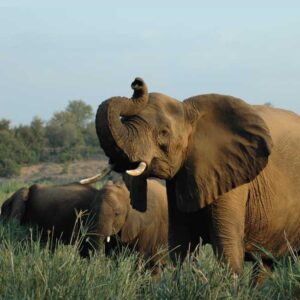
How did we find ourselves in a global crisis of the decline in the legitimacy and credibility of leadership almost everywhere? In nature, leadership is earned, after hard and often damaging battles are won, where one’s right to lead is earned by a show of strength, tactical brilliance, commitment and courage. All of which only has meaning because it demonstrates one’s ability to protect, safeguard and ensure future life in the herd/pack /flock you will lead. And leadership is temporary. For once you fail, once you are weak, once you cannot defend, protect, feed, lead or secure the future of your followers, you are out. You do not retain your position through a rigged election or well-funded campaigns, and you cannot continue in a position of power if the future of your followers and the survival of your species is at risk by your actions. Selfishness is not rewarded, and personal gain is punished in a world where leadership is a great responsibility awarded to only the finest and for only that time in which they can prove their worth to the larger group. Every single day.
So how does the most intelligent species of them all find itself in a position where our leaders may well be our downfall and the biggest risk to the future of humanity? Of all the distinctions between humans and the rest of the creatures on this planet, this is the one that puzzles me the most. It is as if we have lost our ability to understand the most basic of all things required from our leaders and to choose them based on millennia-old criteria that really only focus on the survival of the species as the prevailing goal of all leadership.
In nature, leadership is determined entirely by the willingness of followers to be led by that individual. And what makes other animals fall into line and follow their leader? They will follow a leader they can trust to keep them safe, fed and protected; a leader that has their back at all times, a leader that acts with the best interest of the whole; and can demonstrate on a daily basis their ability to sustain the future of their species. This may require tactics like nurturing relationships, creating alignments, choosing allies, fending off enemies, following ancient traditions and demonstrating power through elaborate rituals or combats. And winning the position of leadership will most often then mean less sleep, more courage, a willingness to fight and often. Facing risk, enduring injuries, and often being quite alone.
It seems to me that human beings are doing it quite wrong when it comes to the most fundamental survival tactics of all times: that of choosing our leaders. And the proof lies in where we find ourselves as a species, with all our hardships and difficulties, all of which are entirely manmade. How did the most developed, intelligent species on earth get this one survival tactic so wrong? It is time to revert back to the hardwired expectations of leadership that are engrained in our DNA and to choose a new generation of leaders to demonstrate the kind of behaviours that will sustain our species. At the end of the day we really are just that: another species on this planet. And one which seems to have lost the instinct for survival that is so strong in the wildlife that surrounds us. It’s time to look around and learn.
LATEST STORIES
A WORD FROM THE CEO
Yolan Friedmann, EWT CEO
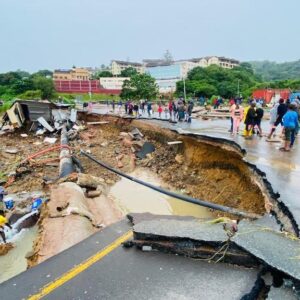
yolanf@ewt.org.za The recent Durban floods made history for all the wrong reasons and the devastation and mayhem caused shocks to thousands of people, our economy, and our environment. Much has been said, and there is almost no room to say much else if it weren’t for us needing to take stock of how a significant amount of the impact could have been prevented. And I don’t only mean addressing the complexity of reducing human-induced climate change, as the jury is still out if this was a climate change-related event. It is tricky to attribute extreme weather events to climate change anywhere, but more so in KwaZulu-Natal, where the lack of comprehensive long-term rainfall records makes systematic climate analysis close to impossible. And given that extreme weather events do occur, to attribute them all to climate change requires much more robust record-keeping and scientific evaluation.
What we do know is that over the 24-hours on 11 April, more than 300 mm of rain fell over KZN, around 75% of South Africa’s annual precipitation. These rains were caused by a cold-weather system that seldom reaches South Africa but often causes large-scale destruction in Mozambique. Much of the havoc was unavoidable, but let’s focus on what should not have happened. Mass landslides triggered by destabilised ridges and embankments due to the removal of indigenous vegetation and land clearing for development could have been reduced, and some even prevented entirely. Stormwater drains that were clogged with litter or overgrown weeds could have cleared roads and infrastructure of lethal water levels, and well-maintained infrastructure dealing with sewage management and water provision may have withstood the floods or been offline for less time, thus reducing a human healthcare catastrophe. Fast-moving debris that killed people and destroyed homes, in many cases resulted from illegal dumping and poor construction, and the tons of plastic, waste and rubble that now litters beaches and riverbanks will be pillars paying tribute to the role of humans in this not-so-natural disaster after all.
Developers who insist on flouting environmental regulations to build into flood lines, strip vegetation, and ignore natural seams should be held accountable for at least a portion of the losses; regulators who sign off on these developments should shoulder a portion, too; and municipalities that ignore spatial planning principles and laws to authorise rampant urban creep should be held accountable for the balance. The lack of well-planned and properly constructed and maintained infrastructure along with reliable service delivery to the most vulnerable communities, combined with the overcrowded inhabitation by millions of vulnerable people in shacks built on steep hillsides, riverbanks and in valleys, played a big role in the increased death toll from the floods and mudslides.
As the floodwaters began to subside, stories of triumph and heroism emerged to bear testimony to human resilience and the spirit of survival. People came together to support, assist, and care for one another. The reality is that this spirit of common purpose, Ubuntu, and mutual dependence must prevail if we are to prevent similar devastation in the future. We may not be able to control weather systems and extreme rainfall, but we MUST prepare for it by taking heed of our reliance on intact habitats and our susceptibility to the power of nature; our vulnerability to natural processes that we cannot control and, therefore our need to protect the natural systems designed to protect us from those very events. The KZN floods demonstrated the dire need for entrenching sustainability into our development plans and paying due regard to the integration of intact natural systems into spatial planning as opposed to the removal thereof as an obstacle to progress. The adherence to environmental regulations, and the promotion of climate education, robust monitoring, functional early warning systems, maintained and functioning infrastructure, and equitable social development should all underpin the rebuilding of KZN with resilience as the cornerstone of all rebuilding and planning in this province and its cities which are arguably the most vulnerable to weather events and climate change going forward. Without this, rest assured that this WILL happen again.
LATEST STORIES

Insights From The CEO: A Year of Environmental Progress and Persistent Challenges
These Insights From The CEO, Yolan Friedmann, reflect on pivotal conservation developments as 2021 draws to a close. The past months have brought both encouraging victories and sobering realities in South Africa’s environmental landscape.
Conservation Triumphs
We celebrate critical wins:
- Constitutional Court victory blocking the Yzermyn coal mine in Mpumalanga’s Mabola Protected Environment
- $8.5 billion international investment pledged for South Africa’s clean energy transition
- Strategic Water Source protection for one of only 22 areas producing 50% of our freshwater
Urgent Climate Concerns
Despite progress, alarming developments persist:
- South Africa’s refusal to sign the global coal phase-out pledge
- Continued reliance on coal despite renewable energy potential
- Ongoing load-shedding crippling economic recovery
“Life-saving decisions shouldn’t rest solely with governments when outcomes affect us all,” notes Friedmann. “Our court victories prove civil society’s vital role in environmental justice.”
Hope for the Holiday Season
As tourism rebounds, we invite nature enthusiasts to experience:
- The world’s first dedicated Wild Dog holding facility (Waterberg)
- Rare endemic frog species (Western Cape/KZN)
- Carnivore conservation programmes (Lowveld)
- Raptor experiences with vulture experts
These eco-tourism opportunities directly support our conservation work while offering unforgettable encounters with South Africa’s unique wildlife.
A Call to Continued Action
The EWT remains committed to:
- Protecting critical ecosystems
- Advocating for sensible climate policies
- Delivering hands-on conservation programmes
“As we approach 2022, we thank our supporters for standing with us through these challenging times. Your partnership makes our work possible.” – Yolan Friedmann
Contact our CEO: yolanf@ewt.org.za

Message From Our CEO: Finding Hope in Conservation’s Daily Wins
This Message From Our CEO, Yolan Friedmann, reflects on a month of meaningful celebrations and conservation progress. September brought numerous special days – from International Rhino Day to National Arbour Day – each reminding us of nature’s fragility and our collective responsibility to protect it.
September Highlights at EWT
We celebrated significant achievements:
- New hiking trails launched in the Soutpansberg Protected Area
- Conservation Canines honoured for their anti-poaching work
- Pilanesberg National Park secured critical anti-poaching funding
- Living Legacy forest planted to honour bequest donors
- New team members joined our growing conservation force
A Time for Renewed Perspective
In challenging times marked by:
- The ongoing pandemic
- Economic pressures
- Environmental threats
We must cherish each day’s opportunities to:
- Protect endangered species
- Restore habitats
- Inspire future conservationists
“In an imperfect world, we must celebrate the chances each new day brings to make things better,” notes Friedmann. “Every day should be a special day for conservation.”
As spring renews our landscapes, let it renew our commitment to safeguarding South Africa’s natural heritage.
Contact our CEO: yolanf@ewt.org.za
