Creating a Thriving Wetland For All in Zambia

Creating a Thriving Wetland For All in Zambia


Creating a Thriving Wetland For All in Zambia

A major conservation milestone was achieved in Zambia on 10th October as the International Crane Foundation, in partnership with the Endangered Wildlife Trust (EWT), officially launched a 20-year collaborative management agreement for the Kafue Flats with the Ministry of Tourism under the Department of National Parks and Wildlife and the World Wide Fund for nature (WWF) Zambia. This groundbreaking initiative, the Kafue Flats Restoration Partnership, aims to create a “thriving wetland for all” by engaging local communities in the conservation and management of this vital ecosystem.

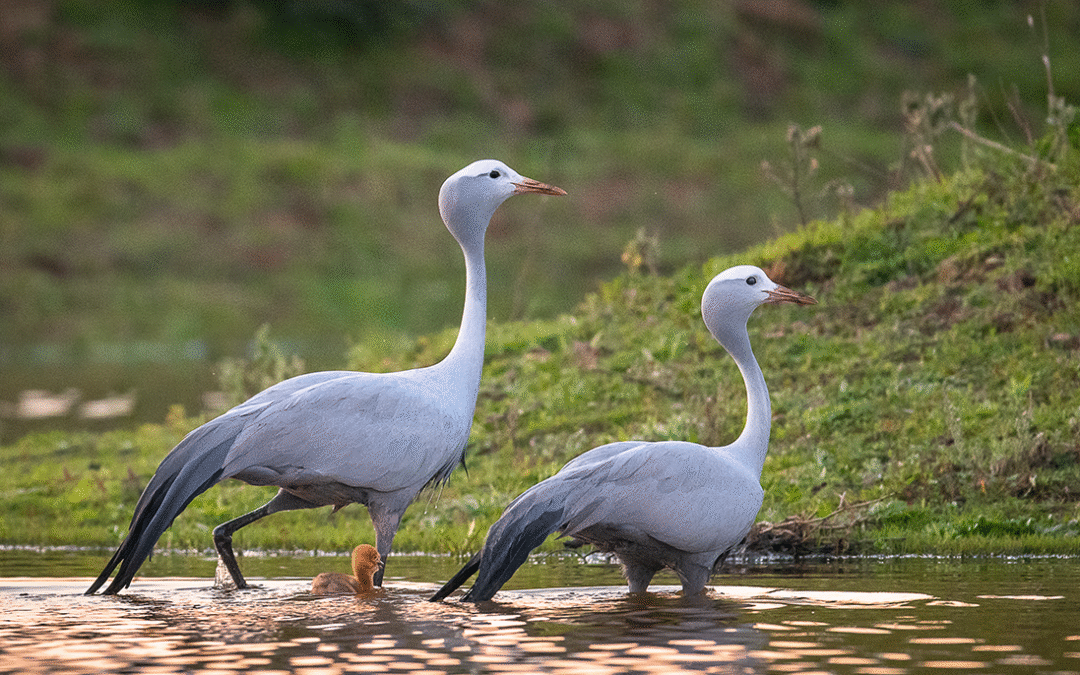
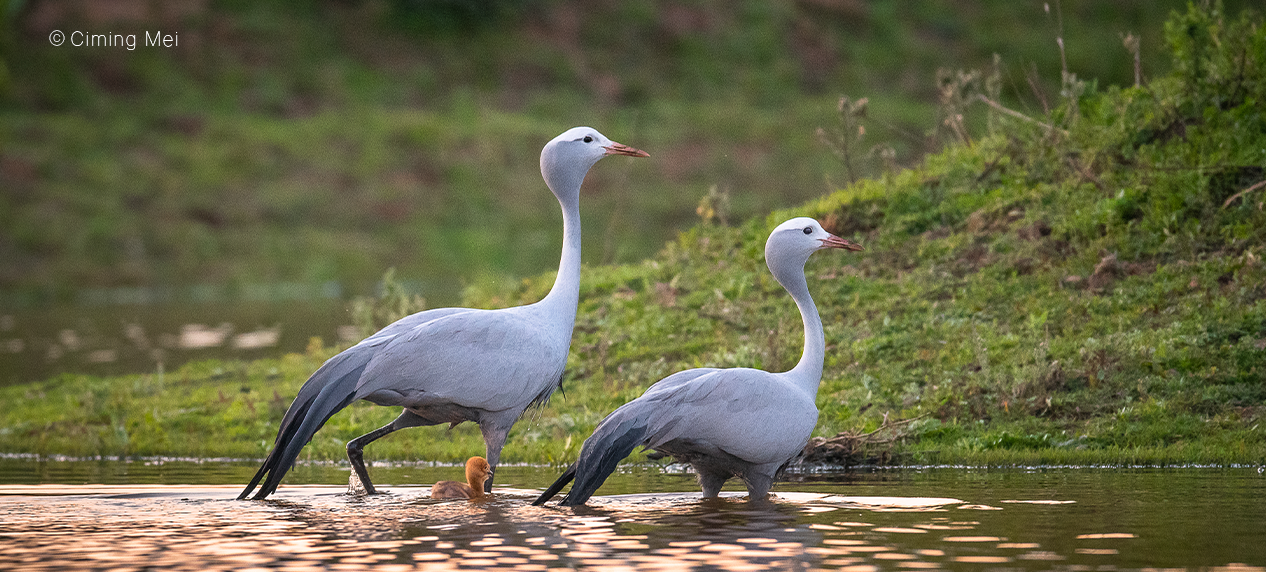
The Kafue Flats includes 6,500 hectares of wetlands, lagoons, grasslands, and floodplains including the Blue Lagoon and Lochinvar National Parks. This region is home to more than 470 bird species, among them the endangered Wattled Crane. Cranes and the lechwe antelope are key indicators of the health of the Kafue Flats ecosystem. More than 1.3 million people live in or around the Kafue Flats, and over 300,000 people rely on this area for freshwater, grazing, livelihoods, and cultural ceremonies.

Sadly, the floodplain is degrading under increasing pressure from unsustainable economic practices, population growth, and climate change. The 20-year agreement will tackle critical problems such as wildlife poaching, poor grazing, unsustainable fishing practices, unplanned settlements, and the impacts of flooding. The partnership will study these issues and manage the region by focusing on finding sustainable solutions that protect both the environment and the livelihoods of the local people.

At the launch, Minister of Tourism Rodney Sikumba emphasised the importance of balancing socio- economic needs with environmental protection of the Kafue Flats. This area is a wetland of international importance under the Convention on Wetlands, a key biodiversity area under Birdlife International, and a Man and Biosphere Reserve under the United Nations Education, Scientific and Cultural Organisation, UNESCO.

Recently, His Excellency, the President of Zambia, Mr. Hakainde Hichilima made a declaration during the Lwanza Traditional Ceremony in Bweengwa, Southern Province, outlining plans to boost cattle production through the establishment of cattle economic zones in the Kafue Flats south and north of the Kafue River. The focus on disease control and improved genetics is seen as a strategic move to enhance the quality of Zambian beef amid climate change challenges.

“We all know that climate change is real, hence the need for adequate adaptation and mitigation,” said Mr Sikumba. “Ecosystem based adaptation is an important option which implies that we manage the Kafue Flats especially in terms of the vegetation, water and fires, because we all know that a well-managed ecosystem is more resilient to the climate shocks such as drought and flood. Therefore, concerted efforts from all partners are needed to manage the Kafue Flats and I wish to reiterate the ministry’s support on this noble cause,”


“There is urgent need for sustainable solutions in the Kafue Flats for people and wildlife for a brighter future,” said Dr. Rich Beilfuss, President and CEO of the International Crane Foundation. “We must all work together to safeguard the future of the Kafue Flats and its incredible wildlife, including cranes and the endemic Kafue lechwes,”

The Kafue Flats Restoration Partnership will combine the efforts of these three institutions more vigorously with local communities to prevent further degradation in the Kafue Flats. The partnership’s vision will serve as a model for balancing ecological conservation and economic development in a protected area floodplain ecosystem for the benefit of both people and nature.


Rhino Peak Challenge

Rhino Peak Challenge


Rhino Peak Challenge – Highlights

A total of 48 invited ambassadors, including school participants and a mix representing WACT and EWT, set off at 6:30 am from the RPC start line on Saturday. It started as a misty cool morning, with the Rhino Peak hidden from sight, but still present in everyone’s minds. The weather soon cleared up with the Underberg in full colour and all its glory. You seldom escape the wind on the mountains, and this year was no different. If anything, one of the strongest winds I have ever experienced. But the escarpment and the summiting of the peak is always a special and humbling experience. Not to take on the mountain, but to be part of it. However brief. To be part of nature and something that has stood majestically and purposefully through millennia.

The intensity of the climb and the diversity of people that the challenge attracts was apparent in this years finishing times. With our fastest ambassador home in 3hours 19 minutes, and the longest day on the mountain closer to 14 hours!


But this is why our RPC ambassadors do what they do. To protect, appreciate and conserve. To realise that everything is connected. To be immersed in nature, and all of its harsh and beautiful elements, for a magical moment in time.


Thank you to Spurgeon Flemmington from RMA (Running Man Adventures) for knowing that this mountain and this event would raise millions for conservation.

To the event beneficiary partners, WACT and KZN Ezemvelo, whom we work with to protect this important heritage site and the species and people that rely on it.

To every ambassador that not only takes on the challenge of fundraising but of summiting the peak.

To all the EWT ambassadors and personal incredible donors such as the Ford Wildlife Foundation and Go2Africa for supporting our work. This event would not be possible without you, and conservation thanks you.


DCP showcasing Projects and “furries” with Funders

DCP showcasing Projects and “furries” with Funders


DCP showcasing Projects and “furries” with Funders.


On the weekend of 31 August and 1 September, the DCP team enjoyed the company of the Table Mountain Fund (TMF) Board and officials at Papkuilsfontein Farm in the Northern Cape. TMF is funding the project: Fynbos on the Edge, which is aimed at exploring and developing opportunities to diversify the farming income, through making the overall business model more sustainable from a financial, agricultural, and ecological perspective. Diversifying and growing income from a single agricultural income to a tourism income targeting a range of visitor profiles is aimed at taking pressure off the natural resources, particularly the natural rangeland. The Papkuilsfontein Farm is located on the Bokkeveld Plateau and is the stage for a phenomenal flower display during August and September. On arrival on the farm, the Board members were introduced to the Van Wyk family, who are the 6th generation who bravely took the step to sign a Protected Environment Stewardship Agreement and enter into diversifying their agricultural income through developing remarkable eco-tourism products such as mountain biking, hiking routes and the Via Ferrata on the farm. The group enjoyed hikes, the Via Ferrata and sundowners on the cliffs before returning to their respective destinations.

Esté and Delta mesmerized the Rainforest Trust Board on 8 September on the Worcester Geometric Reserve. Delta, being the star of the day, ensured that her nose and loving persona captured the imagination of the group of Board members before she was put to work to locate, and indicate, live geometric tortoises. This range restricted species is endemic to the winter rainfall region of the south-western Cape and is listed as one of the top 25 most endangered tortoises (and turtles) in the world. The species face threats such as habitat loss due to urban and agricultural expansion, fragmentation of existing habitat leading to isolated populations, invasive alien vegetation and animals, such as feral pigs, and too frequent fires. The risk of poaching of specimens from the wild is also a significant potential threat. Delta ensured that some of the guests on the day saw a Geometric tortoise for the first time in their lives.

Projects made possible by Table Mountain Fund and Rainforest Trust.


International Vulture Awareness Day, Cape Vulture Conservancy

International Vulture Awareness Day, Cape Vulture Conservancy


International Vulture Awareness Day, Cape Vulture Conservancy


Every year, people from all around the world, come together on the first Saturday of September to celebrate internation vulture awareness day. Originally started by the Endangered Wildlife Trust and the Hawk Conservancy Trust in 2006, it has grown since inception into a global platform to celebrate a group of birds that don’t always get the attention and publicity that they deserve. This year, the Endangered Wildlife Trust in the lowveld region of eastern South Africa, joined up with the Cape Vulture Conservancy, to share knowledge and education about vultures in general, along with the threats they face, and how we can collectively work together to create a better future where the skies are filled with vultures.

Cape Vulture Conservancy plays host to the second largest colony of Cape Vultures Gyps coprotheres globally, and as an organisation, they have prioritised the long-term conservation of the colony, and really making this the core of what they do. With over 700 breeding pairs nesting along the cliff faces of the Drakensberg escarpment, it makes for a wonderful backdrop, and a perfect venue for celebrating such an important event.


This year, one of the major aims was to include youth from surrounding areas and the greater Hoedspruit community and afford the chance to not only get to know the property better, but also educate people regarding the plight of these special birds. With roughly 300 school kids attending, and with some travelling from as far as Selwane, to the north-west of Phalaborwa, it undoubtedly was an event that stood out as one of the highlights of the year. The day started with a fun walk covering a 5km section of the property, after which everyone could explore the permaculture gardens, several stalls from organisations such as Daktari Bush School & Wildlife Orphanage, Moholoholo Wildlife and Rehabilitation Centre, and Animal Relief for Rural Communities. After some introductory presentations from Frikkie Kotze, the manager of Cape Vulture Conservancy, and John Davies from the Endangered Wildlife Trust, everyone got treated to a snake demonstration from the Hoedspruit Reptile Centre, which was a real hit and a great way of ending the day.

The Endangered Wildlife Trust would like to thank the wonderful team from Cape Vulture Conservancy for taking the initiative to not only host and drive this event, but also commit to the long term conservation of these magnificent birds within the region.

Conservation Canines Help to Combat Rhino Poaching

Conservation Canines Help to Combat Rhino Poaching


Conservation Canines Help to Combat Rhino Poaching


On 22 September, the Endangered Wildlife Trust’s joined countries around the world to mark World Rhino Day.

The Day has become synonymous with the plight of the white and black rhino as poachers decimated populations of this iconic member of the Big Five in the past 15 years.

It is during this onslaught that the EWT again sprang into action to save the pachyderms from extinction by founding and deploying our canine conservation unit to not only detect smuggled rhino horn, but also to track poachers within conservation areas.

World Rhino Day is marked annually to raise awareness of about the plight of the species, which has faced a poaching onslaught for more than a decade. South Africa is home to an estimated 79% of the world’s rhino population, of which approximately 2,056 black rhino and 12,968 white rhino are privately-owned. Since 2008, over 8,000 rhinos have been poached the country.
South Africa’s black rhino are listed as Critically Endangered and the white rhino as Near Threatened on the IUCN Red List of Threatened Species. Their biggest threat is the illegal wildlife trade.

The EWT’s Canine Conservation Unit (CCU) is a special project established to support the conservation efforts of the EWT through scent detection and tracking dog services. Our Conservation K9s are certified and specially trained to fulfil two critical roles. Firstly, to support anti-poaching initiatives in game reserves using tracking and detection dogs, and secondly, to detect wildlife contraband before it is smuggled out of the country.

Anti-poaching dogs are trained to track people, locate snares, find arms and ammunition, and help with the detection of spent cartridges at crime scenes. Our detection dogs are capable of detecting various plant and animal samples as well as poisons and thus have a wide range of possible conservation applications. We are continuously exploring new applications for our conservation canines to ensure that the EWT is recognised as an industry leader in the field of working dogs.

Our work began with the deployment of Rico, a Belgian Malinois and wildlife sniffer dog, at the O R Tambo International Airport’s baggage and car sections in 2012. This new member of the EWT pack was deployed to sniff ou rhino horn, ivory, abalone and other wildlife products.


The EWT’s Canine members have been deployed successfully in reserves across the country since…

The North West Province is a stronghold for Black and White Rhino conservation during these difficult days of declining national populations. With the support of funding from the U.S. Fish and Wildlife Service, we are assisting the provincial authorities to prevent poaching and grow their rhino populations for the species’ long-term survival.


Besides the use of cutting-edge technology to track rhinos remotely, and the use of real-time camera technology to strengthen surveillance of roads, fence lines and reserve areas to aid in the detection of poacher incursions, a key contribution is that of the EWTs conservation canine and handler team in the Pilanesberg Game Reserve to detect wildlife contraband and to track poachers.

Our conservation canines are stationed at reserve gates, screening vehicles for illegal wildlife products like ivory, rhino horn, pangolin scales, and ammunition. Since 2012, the EWT’s Conservation Canine unit has been a vital part of wildlife protection in reserves across South Africa. Focused on preventing illegal firearms from entering protected areas, our dogs have also been instrumental in stopping wildlife crime. Our canines have frequently been used to locate illegal arms and ammunitions and this year alone, one of our conservation canines flagged a suspicious vehicle, leading to the discovery of hidden rifles and the successful arrest of the suspects.

The Conservation Canine Unit team will assist Pilanesberg management until the end of September 2025. Having our scent detection dog, Kisha, at the gate will deter and prevent poachers from bringing weapons into the conservation area, and transporting illegal wildlife products out of the reserve if they have succeeded in poaching an animal. Weekends are very busy and the team search up to 60 vehicles in a day.

Tracking dog, Ruger, is specifically used to patrol fences and follow tracks of poachers when reserve boundaries have been breached. A key role for Ruger is to assist anti-poaching security to determine entry and exit points and routes taken by poachers, which is critical in guiding optimal placement of field rangers.


While the EWT is assisting Pilanesberg with a range of other anti-poaching activities, detection and tracking dogs are considered a crucial part of the anti-poaching arsenal to keep Rhinos and other wildlife safe.


In the nearby Madikwe Nature Reserve, the EWT has provided cutting-edge night vision scopes to the two canine teams, giving them a massive strategic advantage during anti-poaching patrols. We have also funded the installation of additional License Plate Recognition cameras at prominent intersections around the reserve. Any vehicles passing through these intersections with previous criminal ties will be flagged, with notifications sent to local law enforcement, as well as the North West Parks Board anti-poaching operations centre housed at Madikwe.

Combatting rhino poaching requires a coordinated, multi-pronged approach, the cost of which can be prohibitive in some situations. We are confident that our support to the North West Parks Board is having a tangible conservation impact, echoed by the reduction in reported poaching incidents in the province.

Saving Vultures from poisoning and other threats

Saving Vultures from poisoning and other threats

Saving Vultures from poisoning and other threats

By John Davies, Project Coordinator: Raptor Conservation & Research

International Vulture Awareness Day is marked annually in September to raise awareness about a species that is often maligned despite their vital contribution to maintaining the health of ecosystems.

Known as nature’s cleanup crew or garbage collectors, vultures play a crucial role preserve the balance of our environment by disposing of carcasses and likely preventing the spread of disease. The benefits they provide go even further.

Vulture populations have plummeted across their range in recent years, with some species now listed as Critically Endangered. To ensure the future survival of this key species, a Multi-species Action Plan to Conserve African-Eurasian Vultures (Vulture MsAP) was released under the Convention on the Conservation of Migratory Species of Wild Animals (CMS) in 2017. Its main aims are to identify and implement key conservation actions designed to reverse recent population trends and restore the conservation status of each species to a favourable level and to provide conservation management guidelines applicable to all Range States within the plan’s scope. This includes South Africa.

The Endangered Wildlife Trust plays an important role within South Africa, and Africa, to protect vultures for their most common threat – poisoning.

Through our work, we not only monitor and track all vulture species within the southern African region, but also implement a number of applied interventions to conserve the Old World Vulture Species found in South Africa. Of the 11 Old World Vultures found in Africa, seven are on the verge of extinction. These include the breeding resident White-backed Vulture, Hooded Vulture, White-headed Vulture, Cape Vulture, Lapet-faced and the vagrant, less common Egyptian Vulture, as well as the Rüppell’s Vulture.

Besides addressing the increasing threat of wildlife poisoning, our work keeps in mind the situation that arose in India in the 1990’s when the local vulture population plummeted by 95% after vultures fed on livestock carcasses that contained and anti-inflammatory drug used to treat pain and inflammation in animals and people. All vultures died soon after feeding on the tainted carcasses and local scientists attributed their deaths to kidney failure caused by the effects of the drug diclofenac.

The near extinction of vultures in this region led to the death of nearly half a million people in subsequent years, because without these natural scavengers, carcasses pile up, and diseases including rabies spread more prolifically.

In South Africa, wildlife poisoning has become an increasingly prevalent and destructive threat over the last decade. Although this has for a long time been an under-studied and poorly-known concern, more recently, the severity of this has become more topical, particularly with the impacts on large carnivore populations being more notable. With a shift to more targeted poisonings that have a higher impact on these the charismatic species, the conservation focus has shifted to a point where the need to respond and deal with these incidents is finally getting more attention.

A sad outcome of much of this is that many species of avian scavengers, such as vultures, Tawny Eagle and Bateleur, have become the innocent bystanders caught in the crossfire. For most of these species, wildlife poisoning has become the most significant threat to their long-term survival. Unlike many other forms of poaching, just a handful of large events may be enough to cause a sever reduction in the population, particularly if no interventions are put in place.

The EWT’s Birds of Prey and Vultures for Africa Programmes focusses much of their work on developing key interventions that assist in reducing the severity of these losses. Although these by no means represent an exhaustive approach to solving the issue, there is little doubt that each of these instances provides another tool to work towards the long-term protection of avian scavengers from poisoning.


Eye in The sky

One of the most crucial aspects is the early detection of poisoning events, something that historically has posed a significant challenge in most conservation areas. We developed a pioneering rapid poisoning detection system called Eye in the Sky that harnesses vultures’ natural sentinel and foraging behaviour and pairs it with novel GPS tracking technology. This system closely monitors the behavioural signatures in GPS-tracked vultures to remotely detect the presence of poison sources and feeding events associated with potentially poisoned-laced carcasses. This system was built to enhance law enforcement and response team capacity and efficiency, while reducing the impact of wildlife poisoning in southern Africa.

With our partners, including the North Carolina Zoological Society and Contemplate Wild, we are also developing monitoring and technology solutions to make our alert system practical on the frontline. The system has been programmed to send notifications and near real-time information to monitoring software platforms (e.g. EarthRanger, SMART Conservation) used by those on the ground. In concert with this, we have set up an ever-growing network of GPS-tracked vultures across poisoning hotspots in southern and East Africa, actively surveying extensive wilderness areas that would otherwise be impossible to monitor.


Rapid Response and Treatment

With this early detection, comes the need to have skilled individuals to assist in the treatment of any live animals that may be found at these sites. As such, we have embarked on developing several approaches to make this a much more effective and efficient intervention.

First and foremost has been the training of over 2000 individuals across Africa in wildlife poisoning response and the inclusion of wildlife veterinarians that are able to assist when needed with the treatment of live patients. A vast number of veterinarians have little to no real-world experience working with birds of prey, especially Vultures, and as such, their involvement with these situations has been limited previously. The EWT has embarked on a process of upskilling key veterinarians working in key focal areas to become another layer of support when needed. Many large poisoning events are spread out over a large geographic area and having several individuals able to treat live patients, greatly improves the outcome for patients, particularly considering the time constraints associated with this.

Perhaps one of the most significant limitations to this work has been the effective transport and housing of patients. That is why the EWT developed the first transport and treatment solution for these specific events, which we call our Vulture Ambulance, launched in 2023. This has been developed from the ground up to be a complete solution to teams working in the field, to not only house patients that have been found, but also additional equipment that may be needed in the field during assisting with these events.

By creating a single solution that is permanently kept ready to go, takes a large amount of the preparation and planning away from the responders. To date, this novel solution has been used to assist in excess of 30 vultures and has improved the survival of live patients found at poisoning sites to 98% over the last year. This is a significant improvement from previously, where some animals may have succumbed due to the ineffective housing and transport to a rehabilitation facility.

As a newer addition to this, we have developed emergency treatment kits that are specifically designed to have all needed items for the in-field treatment of birds at poisoning events. These kits contain all the materials necessary to effective respond to emergencies, including headlamps, backup batteries and radios. These are all items that we have found through field experience to be necessary for an effective and efficient response. We’re currently working towards expanding this equipment to more areas, adding yet another dimension to assisting people who respond to these events.

By understanding the process and having teams that understand how to work effectively, as well as having all the required equipment needed on site, we know that we can give vultures and other avian scavengers have a fighting chance. The only way to achieve this is through large-scale collaborations, and we look forward to developing these even further in future.