Each month, we bring you delicious, nutritious, and eco-friendly recipes that our staff members love! This month’s Earthly Eating recipe is recommended by the EWT’s Head of Marketing, Sizie Modise, and it is her sister in law, Tracey Heldenmuth’s,Chocolate-chip Mandel Bread
Chocolate-chip Mandel Bread fresh out the oven, Photo credit: Tracey Heldenmuth
What is it?
Like biscotti, Mandel bread is crunchy. However, it’s made with more fat than biscotti, so the resulting cookie is a bit richer and less dry. You don’t need to dip it in coffee or tea to enjoy it – it’s delicious all on its own.
Serving: 8–10
Preparation time: 20 minutes
Ingredients
2/3 cup of sugar
3/4 veg oil
Mini chocolate chips
2 eggs
1 tsp vanilla
2 cups of flour
1 tsp baking powder
Preparation:
Mix ingredients and flatten into a rectangle on a sheet pan lined with parchment paper
Bake at 180 degrees Celcius for 20-25 minutes. Take out for 10 minutes. Slice and turn slices on their sides and cook for another 10 minutes to crisp. Take out and enjoy
Each month, we will be bringing you delicious, nutritious, and eco-friendly recipes that our staff members love! This month’s Earthly Eating recipe is Gabi’s Sunchoke Showcase from Gabi Teren, the EWT’s National Biodiversity and Business Network Manager
This recipe, adapted from Jamie Oliver’s Potato and Mushroom Al Forno (in his book Veg!), is the best showcase for the sunflower tuber’s sweet, mushroomy, garlicky taste.
Jerusalem Artichokes. These delicious vegetables are neither artichokes nor from Jerusalem. Rather, they are sunflowers native to North America and historically cultivated by indigenous people of the Americas. They grow like weeds, are easy to harvest and cook, delicious, nutritious, and help bees!
Why are they wildlife friendly?
They make a great sustainable crop for small gardens – and trust me, you want to use a small contained planting space even though they grow into 2-meter tall sunflowers – they send long root runners out that produce the edible tubers you want to harvest, and they can get out of control if not restricted. And you can harvest as many as you want, and the rest can just be left in the soil to grow into plants the next year. They are water-hardy and flower late into the summer season, which helps the bees who visit them when there are very few other flowers around (in the Cape).
They are ready to harvest once finished flowering, and you yank out the main stem and then follow the long roots to get to the tubers. And yes, they are ugly- but delicious! Use as fresh as possible, but they do keep in the fridge for weeks- win!
Jerusalem Artichoke flower and bee
Freshly harvested tubers
Serves 4
Ingredients
Two handfuls Jerusalem artichoke tubers
600 g potatoes
Half a head of broccoli
4 garlic cloves
2 onions
500g mushrooms
1 bunch fresh chives
3 large free-range eggs
½ tub cottage cheese
Handful (or two) parmesan cheese
½ teaspoon truffle oil (worth it!)
Handful fresh rocket
Preparation
Preheat the oven to 200 degrees C
Scrub the artichokes and remove the fine roots
Roughly chop the potatoes, artichokes, garlic, and onion
Place in a large roasting pan, throw over 2 tablespoons of olive oil and salt and pepper and roast for 30-40 mins till golden and cooked through.
Toss in the roughly chopped mushrooms and broccoli and roast for another 10 mins
Beat eggs till pale and fluffy, add the chopped chives, and fold in the cottage cheese
Pour over the roasted veg and then grate parmesan over the top
Continue roasting for another 10-12 mins, or until the egg mixture has set and serve with a few drops of truffle oil and fresh rocket.
It’s a one-pan rustic wonder that offers so much flavour and a protein and iron-packed vegetarian dish. And the Jerusalem artichokes will just keep on producing, year after year.
(Pro-tip = the artichokes contain high amounts of inulin – a really beneficial fibre for gut health, but eat too many, and you may experience some err gassiness as a side-effect!)
(Pro-tip 2: Pairs well with a great Chenin Blanc such as a Ken Forrester Old Vine Chenin or Spier Organic Yellowwood White).
Caught on camera crossing the line: A rail ecology study in the Greater Kruger
Hannah de Villiers, MSc Student (University of the Witwatersrand)
The EWT has been working with partners to identify and address wildlife-rail-mortalities and animal behaviour adjacent to the railway line on the Balule Nature Reserve, which is part of the open system connecting to the Kruger National Park. This railway line extends over 45 km from Hoedspruit to Phalaborwa, transporting copper and phosphate deposits. For several years, trains have killed wildlife, including giraffes, lions, elephants, and zebras, on the section of the railway line that bisects the reserve. Recent research by a student studying at the University of Venda and the Swedish University of Agricultural Sciences, Siboniso Thela, examined the seasonal use and deaths of mammals on the Balule railway. This baseline work indicated that there could be over 1,000 vertebrates killed annually on this one line. We urgently need to address the threat these animals face and the costs of these collisions to the rail operator, Transnet.
My study aims to understand whether animals use culverts, viaducts, or underpasses to safely cross beneath the railway line. The railway line is unfenced, so herds of Kruger’s elephant, buffalo, and impala often walk right over it, putting them at risk of train collisions. Underpasses are a key mitigation measure for the habitat fragmentation and collision impacts a railway can typically impose upon an ecosystem. Understanding which species use (or don’t use) the underpasses and what factors influence this are important for conserving biodiversity in this reserve and informing future railway mitigation measures.
One of the benefits of using camera traps for data collection in your research is the opportunity to be a “fly on the wall” whilst wild animals go about their daily lives. Out of more than 400,000 images collected during this study (the majority of which were of grass blowing in the wind on a hot day!), we captured some incredibly exciting photos of wildlife using or passing by railway underpasses.
This study is still work-in-progress, but for now, enjoy this fascinating glimpse into the everyday lives of wild animals.
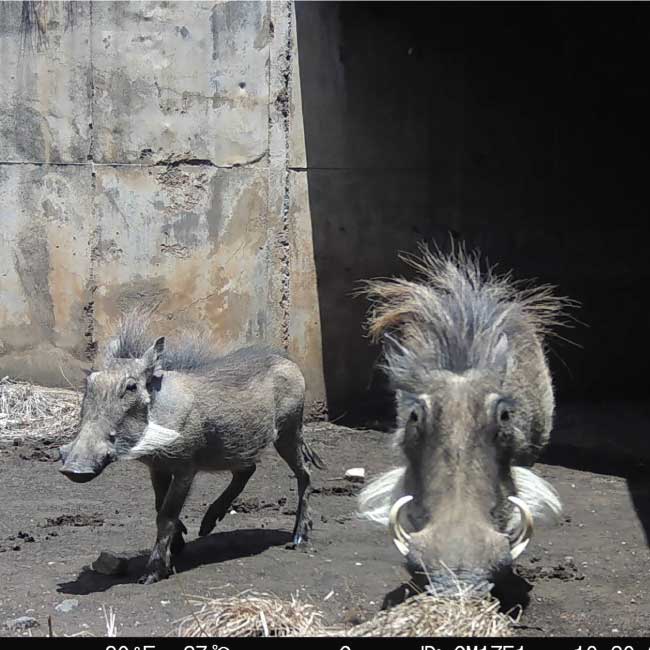
A Warthog with a bad hair day
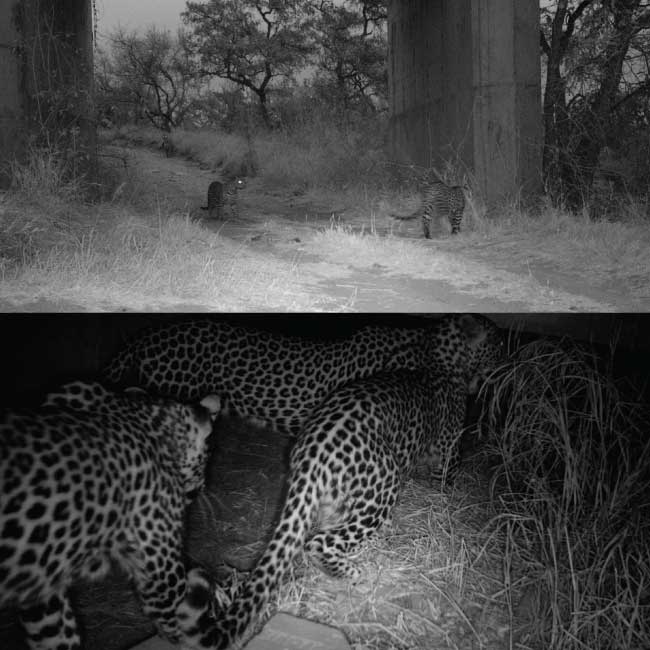
Three Leopards spotted twice
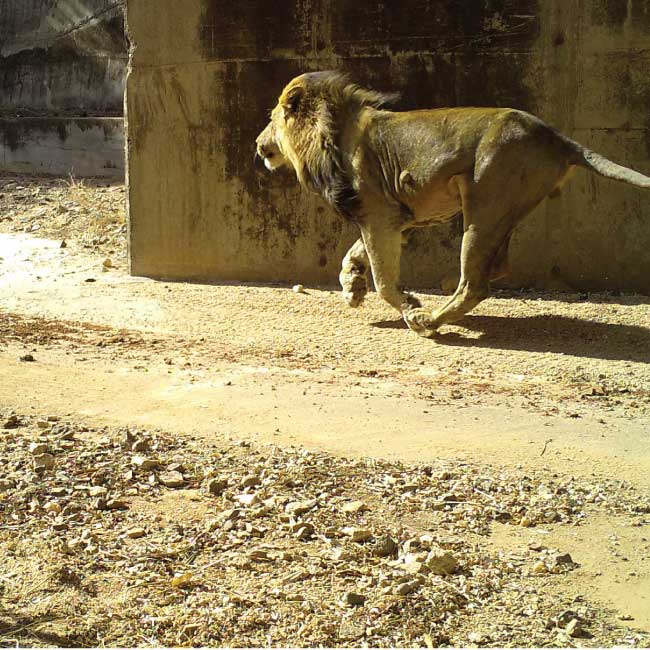
Male lion with mane blowing in the wind
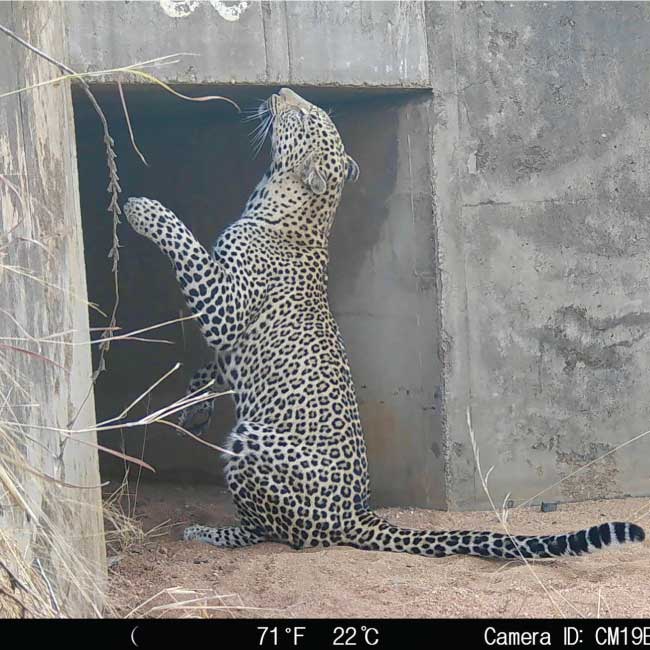
Leopard investigating scent marks at the mouth of the underpass
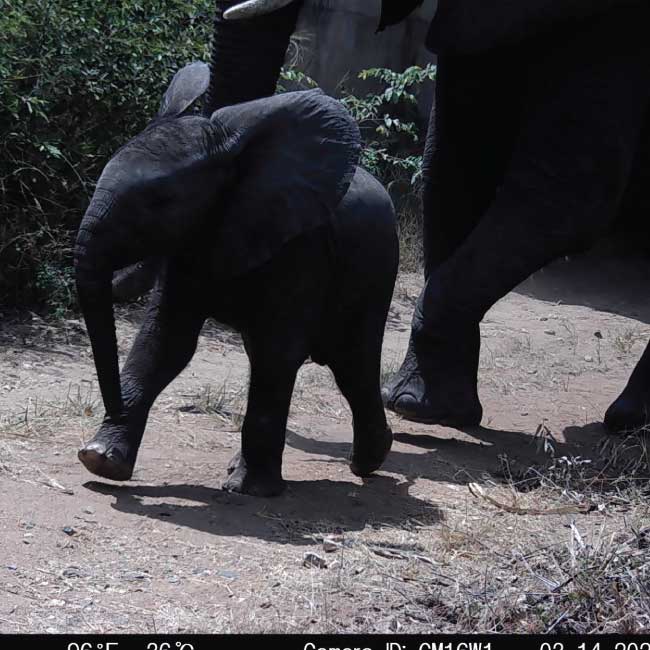
A young elephant calf ushered through by its mother
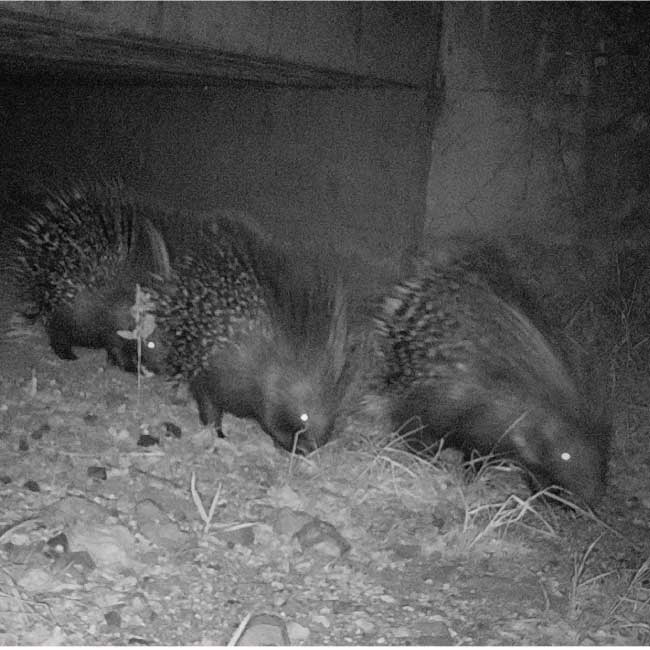
A family of Porcupines
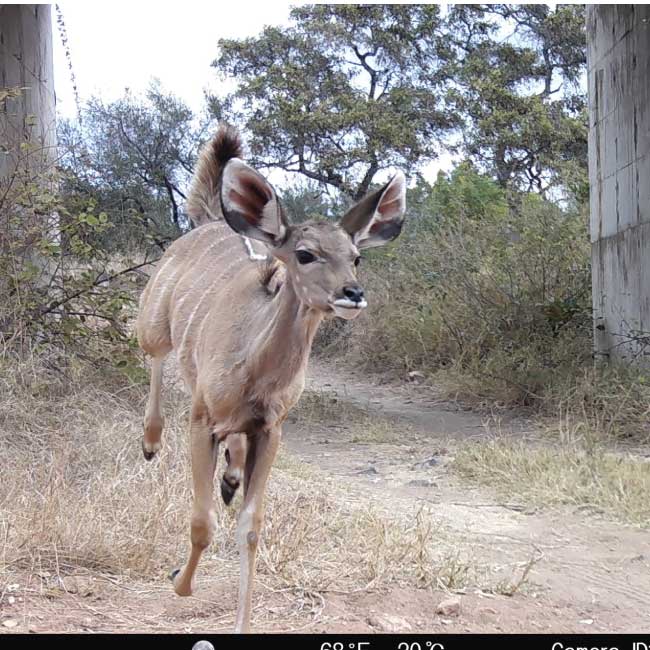
A graceful Kudu
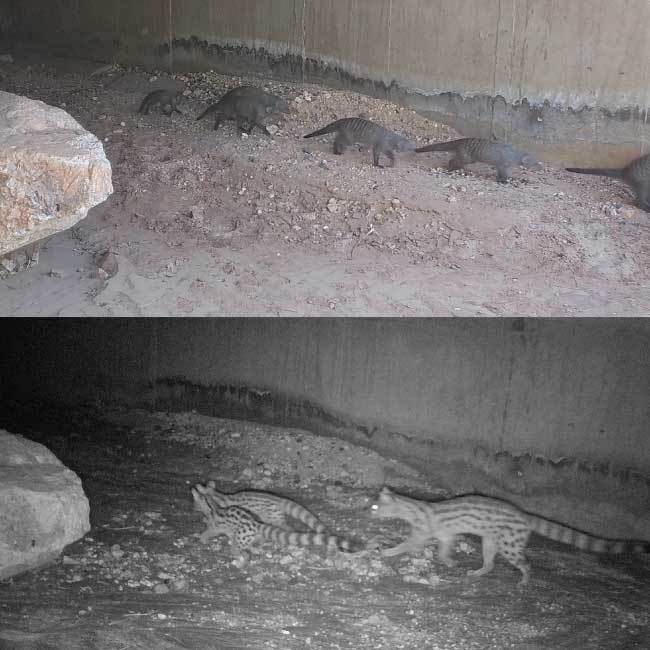
A family of Banded Mongooses (top) and a family of genets (bottom)
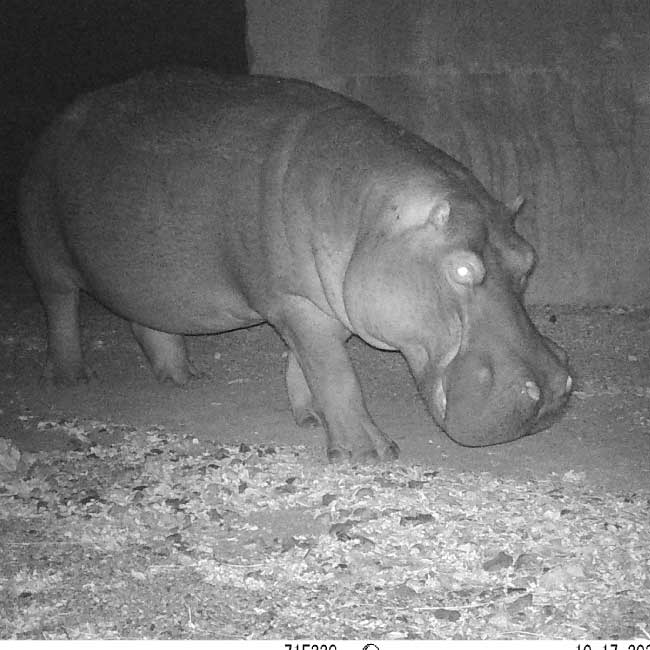
A hippo out for a stroll
Keep an eye out next month for more!
This work is made possible by the Swedish University of Agricultural Sciences, Transfrontier Africa, the University of Freiburg, the University of the Witwatersrand, the University of Venda, and the Ford Wildlife Foundation.
Careers in Conservation – Bringing conservation to life through storytelling
Kedibone Chauchau, the EWT’s Communications and Marketing Department
My name is Kedibone Jacqueline Chauchau. I am the last of five kids, born and bred in the West of Johannesburg. My mom owned an Early Childhood Development Centre that she operated from our garage at home. My dad started as an educator in rural Limpopo, about 5 km from the Kruger National Park’s Punda Maria gate and later became a truck driver at Spoornet (now known as Transet). They are both retired now and living in Malamulele, Saselamani.
I grew up in a bilingual household with a Pedi mom and a Tsonga dad. We have conversations in both languages, sometimes using them in a single sentence. Outside my household was a community speaking Tswana, Sotho, Zulu, Xhosa, and Venda, and I absorbed all of them, developing a passion for languages and now fluent in seven.
However, while I can speak in many tongues, I was a very quiet child in school, adopted by a group of extroverts, and surrounded by loud, outgoing friends who love the spotlight – I still am.
I first realised that I was terrible with numbers in high school, so when I finished my matric, I explored career paths aligned with my strengths and passion for writing and creativity. It took a while. I studied graphic design for a year at Damelin, then transferred to the Vaal University of Technology the following year. Though it was a good fit, it didn’t feel quite right. So, I took a gap year and applied for the BA (Media Studies) Degree at the University of Limpopo.
I started my career at an ad agency three months after completing my qualification. Having majored in several things, I had the opportunity to explore and enhance my skills without limitations before becoming a conservationist, which I hadn’t dreamed was even possible with my qualifications. But a while later, I stumbled upon a job advert for a communications position with the Endangered Wildlife Trust (EWT). I applied because I want my work (and life) to make a difference by effectively communicating the important conservation work of the EWT. None of the work conservationists do matters if it remains within their circles. I want to use my curiosity and the will to make sense of everything to tell complex conservation stories and show what people are doing to conserve our planet.
Conservation storytelling is most powerful when combining words and powerful visuals of our remarkable wildlife and ecosystems. I hope to build on my communication knowledge and experience by mastering the art of visual storytelling for conservation. Studies have shown that our brains retain and transmit much more information — and process it more quickly — when delivered visually. The human brain processes visuals 60,000 times faster than text. Visuals are important because people remember only 20% of what they read and 10% of what they hear. However, people remember about 80% of what they see and do. It’s one thing to tell people why Wild Dogs are also known as Painted Wolves and another to show them the vivid coat of a Wild Dog.
Another reason visual storytelling is important is that it breaks down complex ideas. Seeing something instead of reading about it enables the audience to connect to or relate to that thing or person on a deeper level and become invested in it. Visual storytelling conveys emotions and realities more effectively and inspires people to support and participate in conservation initiatives.
Too often, we work to benefit ourselves and show little interest in working to ensure the future of the planet and others. I urge the youth to explore a fulfilling career avenue that will secure our collective future.
Chickpea and Lentil Curry Chickpea and Lentil Curry Recipe
This month’s Earthly Eating recipe is a quick, easy, eco-friendly, and healthy vegetarian curry from Dr Jeanne Tarrant, our Threatened Amphibian Programme Manager
Preparation time: 15 minutes or less
Serves: 2-3
Ingredients
1 onion, finely chopped
2 large cloves crushed garlic
1 tablespoon oil
1 teaspoon chilli powder or salt to taste
½ teaspoon salt and black pepper, to taste
1 teaspoon turmeric
1 teaspoon hot paprika
1 tablespoon ground cumin
1 tablespoon ground coriander
2 x 439 g cans chickpeas, rinsed thoroughly under cold water and drained
2 x 440 g cans tomato pieces
¼ cup red lentils (optional – spinach also makes a nice addition)
1 teaspoon garam masala
Method
Heat oil in a medium pan
Add onion and garlic and sauté until onion is transparent, stirring constantly
Add chilli powder, salt, turmeric, paprika, cumin and coriander and cook for 2-3 minutes
Add chickpeas, undrained tomatoes, and lentils (optional), and stir until combined
Simmer, covered, over low heat for 20 minutes, stirring occasionally