Endangered Wildlife Trust welcomes new Board of Trustees Chairman

Endangered Wildlife Trust welcomes new Board of Trustees Chairman

Endangered Wildlife Trust welcomes new Board of Trustees Chairman


The Endangered Wildlife Trust welcomed Muhammad Seedat as the new chair of the Board of Trustees at the end of January.

Elected during the Board meeting, Seedat, enters a seat that will guide the organisation into the next 50 years of conservation and research excellence.

Seedat joined the EWT Board in 2015 and has served on the Audit and Risk Committee and

Remuneration Committee since its inception. A keen hiker, cyclist, social runner, and avid cricket supporter, he believes that the EWT is poised for exponential growth based on the strong and solid foundation built by the previous, and current, leadership and team.

“It is, and will, become a stronger global player and advocate for conservation,” said Seedat. “Speed of change in the world we live in is exponential and we need to embrace that speed to soak up the opportunities that lie before us.”

As the newly-elected chair, Seedat will embark on the EWT re-clarifying its strategy and ensure that, in simple terms, “we understand where we are going, how we are going, but, most importantly, why we are heading to the destination of conservation excellence”.

Seedat explains that Simon Sinek’s concept of the ‘Power of Why’ determines your purpose.

“Passion drives that purpose. In our pursuit of a better tomorrow, the EWT’s work is fundamental and critical to the protection of species and habitat so that those who come after us have the opportunity of experiencing what we have the ability to experience,” he said.

In his first 100 days, Seedat aims to set plans in place for a more efficient operation that is geared for growth and the execution of the many opportunities that lie before the EWT. He added that this again is based on the strong foundations that have already been laid.

Although funding remains an issue for non-government organisations, such as the EWT, he believed that the not-for-profit body is well placed to curb this due to the brand that has been built and will continue to strive and thrive.

“Sustainability will always be a concern, but the opportunity is to build diverse income stream.

Donor fatigue remains an international challenge, but it is our aim to become the donee of choice based on the value returns the EWT delivers in terms of its programs and the dream for a better tomorrow,” said Seedat.

He was drawn to the EWT through the work that was being done by the organisation and its “utter importance” within the context of the world of today.

Seedat believes in the need for a better tomorrow, for those who come after us, a better world for our children.

“It would be a travesty if we had to explain to our grandchildren why an animal and species was extinct when we had the ability to prevent such a disastrous case,” said the father of four. “It is of vital importance that we educate our children and make them aware and conscious of how we need to tread lightly on this beautiful planet, so we ensure that their children and grandchildren have the ability to experience what we experience. We also need to educate them as to what the repercussions will be should we not be consciously aware and do all that is possible to minimize the effects of climate change and resultant impact.”

To achieve greater involvement by young people in the environment, requires getting them into the wild so that they can experience the real world “rather than one in front of a screen”.

Working with communities is of vital importance, he said, especially because of the already visible effects of climate change.

“Food security will be one of the most important considerations of the future. No loss of life that is preventable is acceptable. This proves that the EWT’s community programmes play an important role in advocacy, awareness, and prevention of climate change and of further importance, preservation of our amazing world,” he said.

In every organisation he has got involved in, his aims have been simple – to leave the organisation better than he found it and to begin with the end in mind. His aim is to ensure that the EWT becomes the leading organisation and expert in conservation excellence internationally.

He firmly believes there is a need for scaling up building on the strong foundations that have been laid, and that opportunities multiply if executed efficiently and effectively.

“We need to be focused on excellence in all we do,” said Seedat. “We are on this train together and we need to be moving in the same direction. Culture eats strategy for breakfast, and I implore each and every employee to imbibe and further build the culture of the organisation.

“We need to all be working towards the common vision of the EWT. The Board and I stand behind Yolan as the leader of this organisation, having led and built it over the past years,” said Seedat.


Earthly Eating: Honey – roasted vegetables with hazelnut and goat’s cheese

Earthly Eating: Honey – roasted vegetables with hazelnut and goat’s cheese

EARTHLY EATING


We all know we should be doing our part to save the planet. But what does that mean when it comes to food? It can be easy to get overwhelmed with all the different eco-friendly choices. Each month, we bring you delicious, nutritious, and eco-friendly recipes that our staff members or followers love! This month’s recipe is Honey – roasted vegetables with hazelnut and goat’s cheese brought to you by our very own canine handler Shay.

Honey – roasted vegetables with hazelnut and goat’s cheese

20m prep time ·  40m cook ·  Serves 8

These honey-roasted vegetables are the perfect accompaniment for your festive meal.

Ingredients
  • 1/3 cup honey
  • 1/4 cup dry sherry
  • 4 small parsnips, peeled, halved lengthways
  • 2 bunches baby carrots, trimmed, scrubbed
  • 2 bunches small beetroot, peeled, halved
  • 1 tbsp extra virgin olive oil
  • 1/2 cup roughly chopped skinless hazelnuts, toasted
  • 50g goat’s cheese, crumbled
  • 1/2 tsp sumac
  • 1/4 cup chopped fresh parsley leaves
Instructions

Preheat oven to 200C. Line a baking tray with baking paper.

Place honey and sherry in a small bowl. Stir until honey has dissolved. Pour into a large roasting pan. Add parsnip and carrot. Turn to coat. Place beetroot on prepared baking tray. Drizzle beetroot with oil and season with salt and pepper. Roast vegetables, turning halfway through, for 40 minutes or until parsnip is golden and sticky.

Transfer vegetables to a serving platter. Sprinkle with hazelnuts,  goat’s cheesesumac and parsley. Season with salt and pepper.

Serve and Enjoy!

Earthly Eating: Honey – roasted vegetables with hazelnut and goat’s cheese

Earthly Eating: Healthy Air Fryer Eggplant And Chickpea Salad

EARTHLY EATING

Nachos


We all know we should be doing our part to save the planet. But what does that mean when it comes to food? It can be easy to get overwhelmed with all the different eco-friendly choices. Each month, we bring you delicious, nutritious, and eco-friendly recipes that our staff members or followers love! This month’s recipe is Air Fryer Eggplant and Chickpea Salad brought to you by our very own graphic designer Jo Bert.

Healthy Air Fryer Eggplant And Chickpea Salad

On the lookout for nutritious salads? You’re in the right place! This air fryer eggplant and chickpeas salad is jam-packed with wholesome ingredients like parsley, onion, cucumber and tomatoes. The best part? It’s high in protein and fibre.

Ingredients

Eggplant, Avocado oil, Salt,  Turmeric, Chickpeas,  Parsley,  Onion, Cucumber,  Tomatoes, Lemon, Sumac

Instructions

To be honest, most of the work goes into chopping, dicing and slicing the salad ingredients. I recommend doing all that prep work beforehand or while the eggplant is air frying to make your life easier. That way, everything is ready to go for assembly.

  • To begin with, cut the eggplant into small, even-sized cubes. I find it helpful first to cut the eggplant in quarters lengthwise and then slice it into small cubes.
  • To release the moisture from the eggplant, place the cubes on a large plate or bowl, season with salt, and let them sit for 30 minutes. This enables the salt to draw out the moisture from the eggplant.
  • After 30 minutes, you will actually notice the moisture droplets on the surface of the eggplant cubes. Use a clean dishcloth or paper towel to gently press and blot the eggplant cubes dry. This is a crucial step because if there’s too much moisture on them, they won’t air fry well – resulting in soggy eggplant.
  • Now it’s time to season! Add avocado oil and sprinkle the cubes with turmeric. Then, toss to coat thoroughly.
  • Next, place the eggplant in the air fryer baskets, making sure not to overcrowd the pieces. Air fry the eggplant at 400F for 15-20 minutes, shaking the basket halfway through cooking
  • Once the eggplant cubes are cooked, remove them from the air fryer and place them in a large bowl.
  • Now it’s time to assemble the chickpea salad. Begin by adding chickpeas, cucumber, tomatoes, parsley, onion, lemon and sumac to a large bowl and toss to combine.
Tips
  • When preparing eggplant, cut it into small cubes so that they cook evenly and don’t get soggy.
  • Season the eggplant with salt, avocado oil and turmeric (or your desired spices) for extra flavour.
  • You want to avoid overcrowding the air fryer basket. This will help ensure that they cook evenly and get crispy. You could either send the eggplant in two batches or if you have a dual air fryer, utilize both baskets for best results.
  • If you’re using canned chickpeas, drain and rinse them well before adding them to the salad.
  • Add fresh herbs like parsley, mint or cilantro (coriander) for extra flavour.

Earthly Eating: Honey – roasted vegetables with hazelnut and goat’s cheese

Earthly Eating: Ultimate Nachos

EARTHLY EATING

Nachos


Each month, we bring you delicious, nutritious, and eco-friendly recipes that our staff members or followers love! This month’s recipe is Ultimate Nachos from Shadi Henrico, our Conservation K9 expert.

Ultimate Nachos

For the vegetarians: Mexican favourites! Swap the ground beef for soya mince, or add spoon-fulls of fruity salsa for a refreshing twist. Treat this tray of nachos as a blank canvas and let your creative juices flow!

There’s nothing quite like a tray overflowing with nachos for an entertaining and playful appetiser. The base starts with everyone’s favourite – crunchy tortilla chips. The chips then get layered with all the savoury toppings you can imagine – spiced mince,  cheese, beans, pickled jalapenos, avocado chunks, salsa – you name it!

Preparation time: 15 minutes


Cook time: 15-20 mins

Ingredients

This recipe is a basic formula for a solid tray of loaded nachos – tortilla chips, meat, cheese, beans, and simple, fresh taco toppings. It may seem like a lot, but once you start adding everything onto the sheet pan, it’s a cinch. Here’s what you’ll need.

  • Mince: Beef is my default for a classic nachos recipe. But you can also use chicken or soya if you’re not big on beef.
  • Cheese: The key here is to use grated cheese for the perfect melted, gooey texture. But the type of cheese is up to you. I personally like a mix of cheddar and mozzarella.
  • Pickled Jalapenos: This is completely optional, but I do find that pickled jalapenos add a deliciously tart and moderately spicy contrast.
  • Fresh Toppings: I’m using a combination of diced tomatoes, red onion, avocados, and sour cream.
Instructions
  1. Some of the best appetisers don’t require a lot of effort. And this ultimate nachos is one of them. The only cooking you need to do is to saute the mince and refried beans. Then everything else goes into the oven for baking as you prep the fresh toppings. But first, get your oven preheated to 200°C.
  2. Cook the mince. Add the mince to a skillet over medium heat and cook for about 5 minutes. Then add the taco seasoning and cook for five extra minutes until it’s browned.
  3. Cook the refried beans. Add the refried beans and water to the skillet and stir everything until combined.
  4. Layer on a sheet pan. First, spread the tortillas on a rimmed sheet pan and layer on the mince mixture, cheese, and jalapenos. Bake for 10 to 15 minutes, until the cheese is melted and the edges of the tortilla chips are golden.
  5. Add the toppings. Immediately add the diced tomatoes, onion, avocado, sour cream, and cilantro. Your nachos recipe is ready to serve!
Earthly Eating: Honey – roasted vegetables with hazelnut and goat’s cheese

Earthly Eating: Red wine braised Mushrooms

EARTHLY EATING

Each month, we bring you delicious, nutritious, and eco-friendly recipes that our staff members or followers love! This month’s recipe is Red wine braised Mushrooms from our People in Conservation Specialist, Jenny Botha.

Red Wine Braised Mushrooms

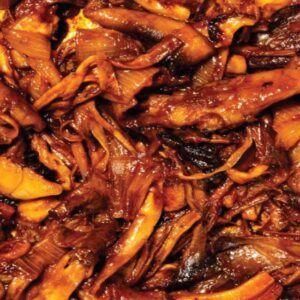
Braising is an easy, quick and approachable way of creating layers of flavour and texture – by searing (and therefore slightly caramelising) the exterior of a vegetable before cooking it through in a flavourful liquid. The easy process results in tender and deeply savoury vegetables that become buttery and silky in texture in under an hour. This recipe uses mushrooms which, once crisped and cooked in tomato, red wine and vegetable stock, mimic the richness and depth of meat-based ragout. I like to use a combination of portobello and oyster mushrooms, as I find they add texture and complexity to the dish, but you can also use shiitake or king oyster – make sure you shred (if using kind oyster) or slice them (if using shiitake) thinly.

Preparation time: 15 minutes

Cook time: 45 mins

Serves 4

Ingredients

  • 200 g portobello mushrooms
  • 200 g oyster mushrooms
  • 2 tbsp + 1 tbsp olive oil, separated
  • ½ tsp salt
  • 2 shallots, finely sliced
  • 2 cloves garlic, smashed
  • 50 g tomato paste
  • 60 g red wine
  • 200 ml vegetable stock
  • 1 bay leaf
  • ⅛ tsp freshly ground black pepper

To serve:

  • 10 g chives, finely sliced
  • Plant-based parmesan optional
  • Mashed potatoes, polenta, or crusty bread

Instructions

  • Start by preparing the mushrooms. Finely slice the portobello mushrooms and set them aside. Next, use your hands to pull the oyster mushrooms apart into shreds.
  • Heat 2 tbsp of olive oil in a large, heavy-set pot over medium heat. Add the mushrooms to the pot and stir to coat them in the oil. Let the mushrooms cook undisturbed, for 6-7 minutes, until golden brown on the heat-facing side.
  • Stir the mushrooms, then let them cook for 5-6 more minutes, undisturbed, until crisp and golden brown in most places. Stir in ¼ tsp salt, then transfer the mushrooms into a bowl. Set them aside.
  • Add the remaining tbsp oil to the pot and heat over medium heat. Add the finely sliced shallots, and sauté them for 7-8 minutes, until soft. Add the smashed cloves of garlic and continue sautéeing for 4-5 more minutes.
  • Add the cooked mushrooms back into the pot, and stir to coat them in the shallots. Stir in the tomato paste and cook it for 2-3 minutes – until it darkens in colour and starts sticking to the bottom of the pot.
  • Add the wine and stir to deglaze the pot. Cook the wine down for 2-3 minutes, then add the vegetable stock, ¼ tsp salt and the bay leaf.
  • Lower the heat to medium-low and simmer the mushrooms in the stock for 12-15 minutes – until the liquid has reduced and created a thick sauce.
  • Add the black pepper, then taste for seasoning and adjust to taste. Cover the pot and let the braised mushrooms sit for 5-10 minutes before serving. Remove the bay leaf and the cloves of garlic.
  • Serve the mushrooms with mashed potatoes, polenta or toasted bread, and top them with chopped chives and parmesan.
Earthly Eating: Honey – roasted vegetables with hazelnut and goat’s cheese

Earthly Eating: Chickpea and Spinach Curry

EARTHLY EATING

Chickpea and spinach curry

Each month, we bring you delicious, nutritious, and eco-friendly recipes that our staff members love!

This month’s recipe is a Chickpea and Spinach Curry recommended by Kedi Chauchau, the EWT’s PR and Marketing Coordinator

Preparation time: 30-45 minutes

Ingredients

  • 3 cups Baby spinach
  • 400 g Cherry tomatoes
  • 1 tsp Chilli flakes or diced green chillies to serve
  • 3 Garlic cloves
  • 1/2 tsp Ginger
  • 1 Onion, large
  • 200 ml Coconut milk
  • 1 tbsp Tomato paste
  • 3/4 cup Vegetable stock
  • 1/4 tsp Cardamom, ground
  • 1/2 tsp Cinnamon, ground
  • 1 tsp Curry powder
  • 1 tsp Garam masala
  • 1/2 tsp Sea salt plus more
  • 1/2 tsp Turmeric
  • 1 tbsp oil
  • 1/2 tsp Cumin, ground
  • 480 grams Chickpeas (cooked or 2 cans, drained)

Instructions

  • Steps 1: Melt oil in a heavy-based pot over medium heat and add the onion and cook until soft. Add the garlic and tomatoes.
  • Step 2: Stir in the spices, ginger, tomato paste and sea salt. Cook for 2-3 minutes.
  • Step 3: Add the chickpeas, coconut milk and vegetable stock and bring the mixture up to a boil.
  • Step 4: Reduce the heat to low and cook with the pot lid off until the sauce is thick and creamy. Stir in the baby spinach and allow it to wilt gently. Remove from the heat.
  • Step 5: You’re done. Serve your chickpea curry with rice or quinoa, naan or both. Yum

Recipe variations:

  • Chickpea and Potato Curry. Add peeled, cubed potatoes when you add the chickpeas. Cook until the potatoes are tender.
  • Chickpea and Sweet Potato Curry. Add cubed sweet potato with the chickpeas and cook until the sweet potato is tender.
  • Chickpea and Cauliflower Curry. Chop half a cauliflower into florets and add them to the curry with the chickpeas. Cook until the sauce is thickened and the cauliflower is tender.

 Find this recipe and more here