Going, going… Gone…  EWT working to reverse habitat loss in South Africa’s drylands

Going, going… Gone… EWT working to reverse habitat loss in South Africa’s drylands

Going, going… Gone… EWT working to reverse habitat loss in South Africa’s drylands

By Zanne Brink, Drylands Conservation Programme Manager
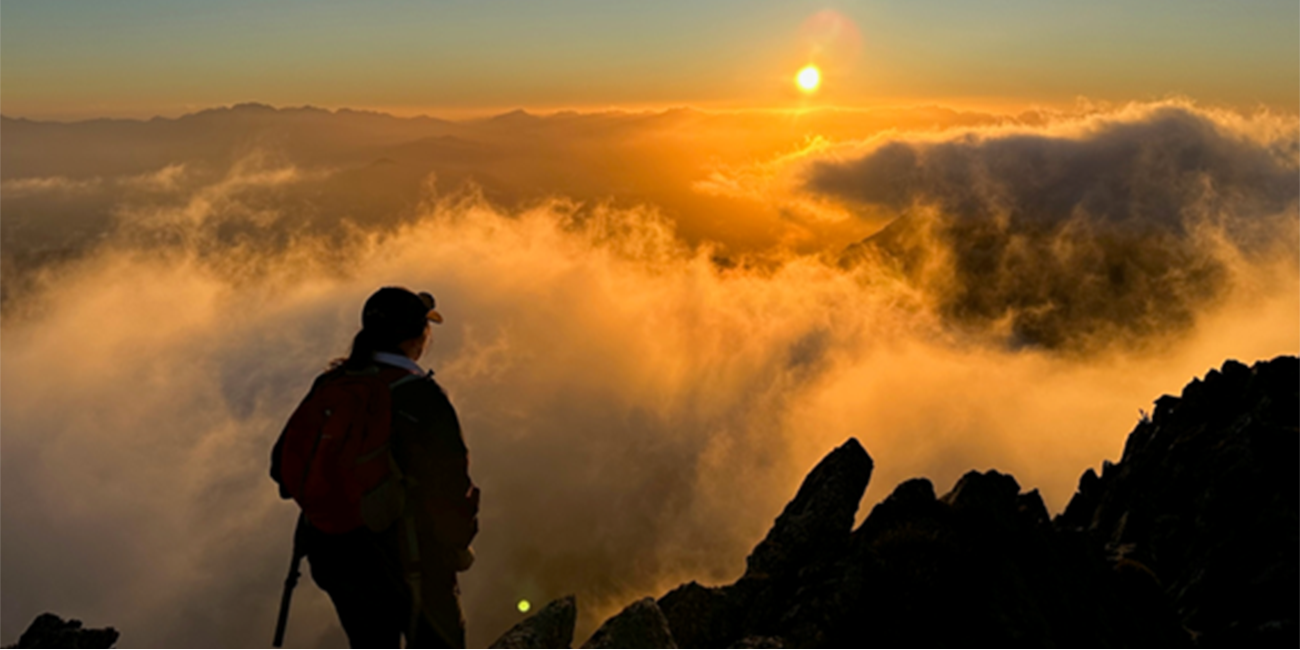
 

“The eye of the beholder” has always been an interesting emotional sense that has dictated a person’s view or outlook on the Dry Lands of South Africa, and further afield.  Those individuals drawn to vast open spaces with its unique endemic biodiversity and specialist species, versus those individuals who dread the “nothingness”.

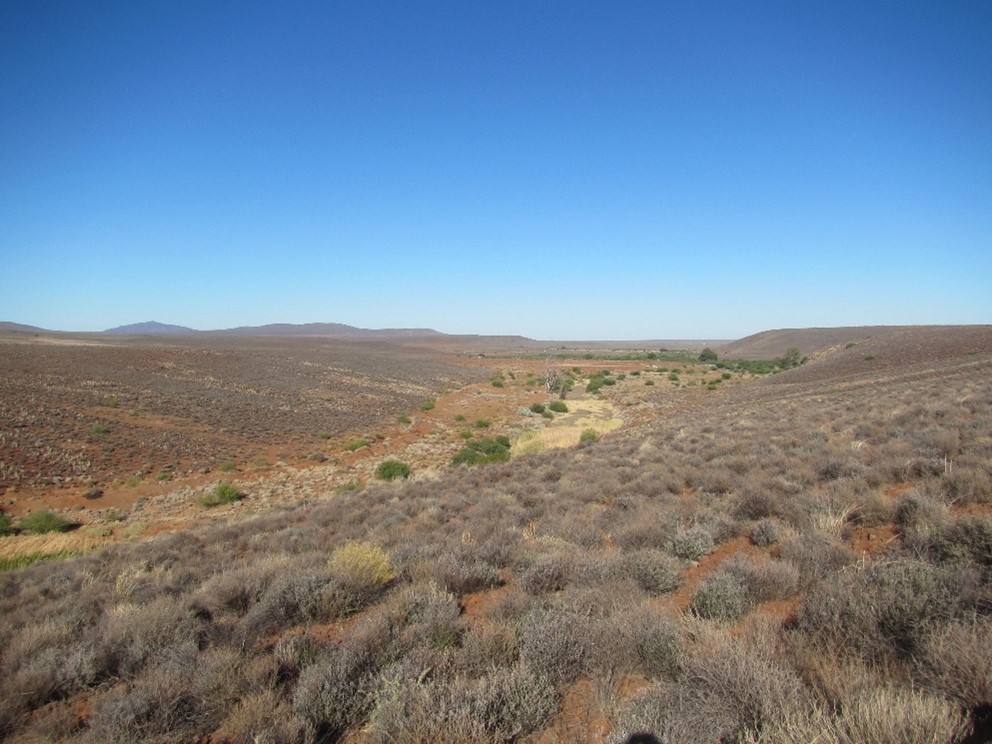
For the most part, “arid”, or “dry” areas are characterised by limited natural water resources and, to the layman, large open areas with plants growing relatively low to the ground, and very little cellphone reception. These arid areas receive on average between 50 to 300 mm of rain per annum, making the arid regions very sensitive to climate variability with big impacts on endemic plants and animals adapted to this environment. Survival is dependant on evading drought or harsh periods through migration or endurance in the form of soil, water and vegetation management.  No matter how you look at it, the arid areas are exposed to extreme weather and climatic occurrences, such as droughts and heatwaves. This results in these landscapes being vulnerable to rapid and devastating environmental change and land degradation.

The vast open landscapes of southern Namibia, the Western and the Northern Cape Provinces of South Africa are home to three significant arid biomes: the Namib Desert, Nama Karoo, and the Succulent Karoo. Despite the harsh conditions experienced in these biomes, it is a fact that not only species, but biodiversity, and dare I say communities living in these biomes, are highly adapted and diverse.

In arid environments, mobility is the most important adaptation to extreme conditions. Animals and people can move from one area to another when plants do not spread fast enough. Increasing temperatures, shifting rainfall patterns, and more frequent extreme weather events are altering ecosystems and placing additional stress on already vulnerable ecosystems and communities. Temperatures in southern Africa are expected to rise at a rate 1.5 to 2 times that of the rest of the world, exacerbating the possibility of biodiversity loss and climate change challenges for communities.  Arid areas are also known as the most sparsely populated areas of South Africa, and in recent years these communities have been shrinking due to socio-economic drivers.

Ongoing research allows us to understand these changes brought on by both short-term droughts and climate-induced shifts. This is very important, as natural and social responses to an ever-increasing changing environment due to increased frequencies in drought occurrences is vital.  South Africa’s meat and wool ‘breadbasket’ depends on changes implemented at a farm level and through legislation, to include a different style of farming to adapt to less water and increased temperatures over extended periods.

But, it must also be understood that arid regions have a slow response rate, with long-term monitoring over several years needed to understand impacts on fauna, flora, avians and invertebrates.  Even with stringent monitoring, it does not provide answers to feed into the need for livelihood protection for communities and biodiversity.  With growing economic needs, the search for renewable energies have started focussing on areas seen as low productivity areas, and slowly started desertification through development-related damage in a sensitive landscape.


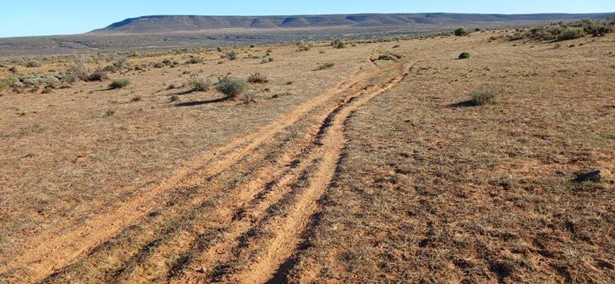
Traditionally, small livestock farming was the most widespread economic opportunity in the arid areas. However, rampant overgrazing in some areas has caused severe land degradation, leading to a compromise in the ecological resilience of the areas. Poor rural communities in these areas have a particularly high dependency on well-functioning ecosystems, and currently, their resilience to climate change impacts is very low. A recent surge in renewable energy production has fuelled development across much of the landscape, which, in most cases, has left a shameful legacy of environmental degradation in the form of vegetation clearing, water abstraction and pollution, soil compaction and road development, all in the name of growth.

There is an urgent need to manage the arid regions of South Africa more effectively, to benefit both the landscape and people living off it. This includes injecting much-needed support for ecologically based adaptation (EbA), sustainable land management (SLM) and climate-smart agricultural practices, while tackling the negative impacts of land degradation.

The EWT Drylands Conservation Programme is working with landowners to champion the conservation of this spectacular landscape. We collaborate with all stakeholders to promote alternative economies and sustainable agriculture over unsustainable developments, such as hydraulic fracturing and uranium mining.  We focus on enhancing habitat protection and improvement, and driving innovative research, to better understand the unique species in the Karoo. This has allowed us to “rediscover” lost species such as De Winton’s Golden Mole (Cryptochloris wintoni).

Through our work, it allows us to collaborate with the communities within the landscape and to undertake activities that achieve specific conservation goals in each of these. By providing guidance in Sustainable Land Management (SLM), the EWT ensures that communities in landscapes benefit along with the ecosystems and wildlife that share these spaces through the responsible use of the available natural resources.  The Karoo Forever website was developed for the Drylands of South Africa to provide a knowledge-sharing platform with downloadable resources focused on sustainable land management (Welcome to Karoo Forever).

It is not all doom and gloom, but a realistic look at our beloved fragile arid environments is crucial to allow for a united focus on how to balance nature and development.  As financial constraints impede the application and implementation of ecological practices across this arid landscape, industry and conservation along with all communities and stakeholders need to find common ground to benefit man and environment.

The need, and the potential to do things better, must be emphasised.  This can only be done through our own actions and allowing locally led research to show the way to sustainability, allowing nature to benefit, and does not limit people’s wellbeing.  We, as a community, must make climate change and associated concerns a part of our day to day thinking and planning to build resilience in livelihoods and economies, to reduce our vulnerabilities, and the associated conflict.

Give our arid regions a chance and break the cycle of nature loss. We do have huge potential to enable nature and people to thrive together in a changing climate.
 

EWT Vulture Safe Zone field officer teaches herself Xhosa to better communicate with local communities

EWT Vulture Safe Zone field officer teaches herself Xhosa to better communicate with local communities

EWT Vulture Safe Zone field officer teaches herself Xhosa to better communicate with local communities

By Danielle du Toit


I am of the strong opinion that ‘we only fear that which we do not know’.

Take spiders for example, I’m sure they give most people the heebie-jeebies, but read more about them and you’ll learn that South Africa has over 2,000 species of spiders, but only three of these species can cause major health issues from a bite (that piece of information didn’t help me either, but it did give me a small comfort knowing that the likelihood of a spider trying to kill me in my sleep is next to zero).  My point is that if we approach situations in which we allow fear to blind us then we miss out on, at the very least, a learning experience, and at the most, a chance to be more than what we thought we were capable of.

Since joining the Endangered Wildlife Trust’s Birds of Prey Program, I have worked extensively in remote areas, often on my own.  In a country where safety is often a concern about a woman working alone in the field, I’m often told to avoid being in areas with no network coverage (what if I get a flat tyre and can’t call someone?), places where I’m the only woman (what if there’s only men and they threaten me?) and where I’m far off the beaten track (how can anyone help me if I’m in the world’s armpit?).

I am quite aware of the threats to my safety, especially at a time when gender-based violence is a concern.  But,  these concerns are not going to stop me from doing my job. The day I let fear stop me from doing it, is the day I hang up my khakis. So, for those who are scared, I urge you to read further, because these are my experiences; encounters I wouldn’t trade for the world.

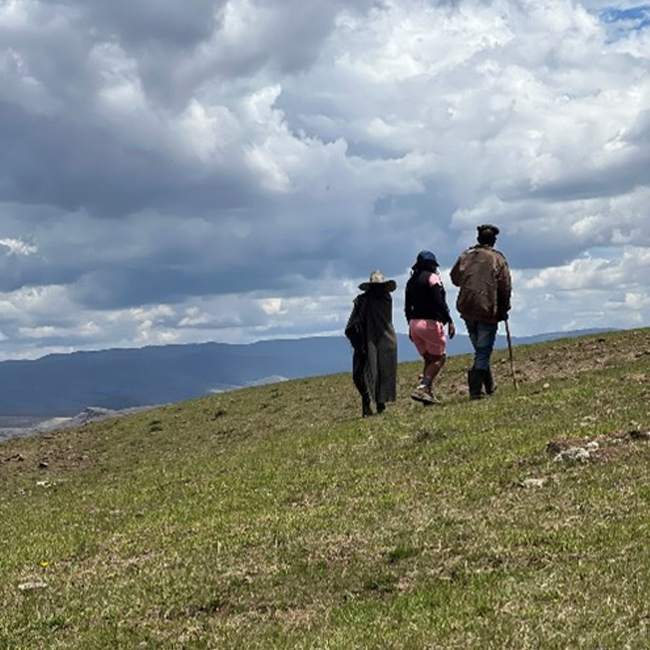
Among the  extreme remote areas I have visited and experienced include parts of the former Transkei region of the Eastern Cape, the Lesotho highlands and small towns in the Northern Cape.

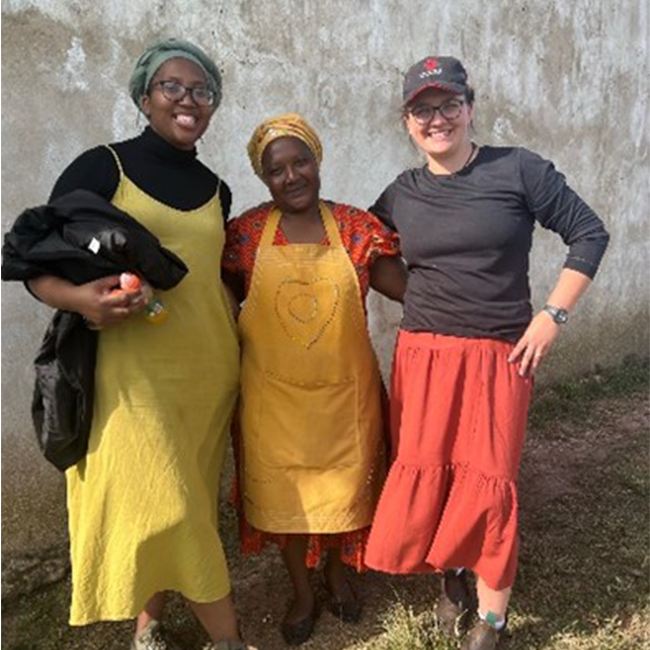
When I travelled to the Transkei for community outreach and vulture conservation awareness about birds of prey last year, I challenged myself to learn how to speak basic Xhosa so that I could better communicate with the local community.

Luckily, I have a friend that has kept me in line since Grade 6 and she taught me some ground rules about Xhosa. Most importantly is that Xhosa is a language of clicks. The ‘c’ sound is a click pronounced when the tip of the tongue is pressed against one’s teeth. The ‘x’ click is pronounced by pulling one’s tongue down from the back of your palate. The ‘q’ sound is pronounced with the tongue pulling down from middle of the palate and should make an echo sound in your skull, deafen you even, if you’re doing it right. After weeks of practicing and Hlumela sending me voice notes mostly consisting of her laughing at my ‘whiteness’ and coaching me, I was finally able to, with confidence, introduce myself to people: “Molweni. Igama lam nguDanielle. Niyawundi xolela ndyizama uthetha isiXhosa” (Hello, my name is Danielle. I must apologise to everyone; I’m trying to learn to speak Xhosa.)

Hlumela said I should add: “Ayihambi kakuhle”. It’s not going well.

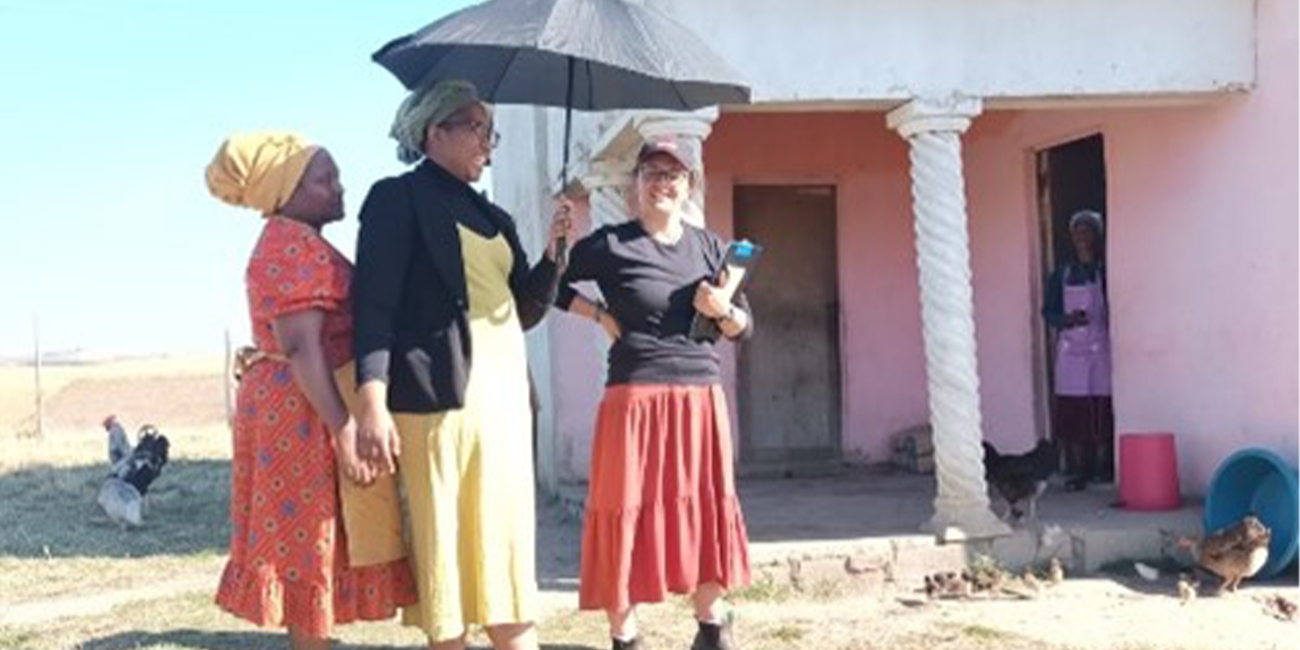
When the Endangered Wildlife Trust’s Birds of Prey team visited a local community and their chief in the former Transkei in July 2023, I was instructed to firstly, wear a skirt to the chief’s place, secondly, to listen intently while the chief or elders speak. Thirdly, I was told to NEVER say no to the bread. This was more of a private notation by one of our colleagues, Nosi, who was actually just telling me that the bread is so delicious you can’t possibly turn it down.

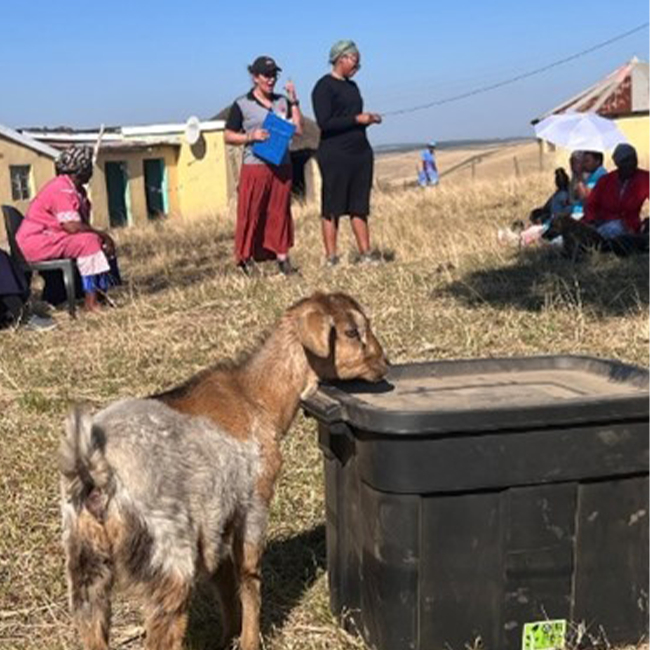
We were in the area to do community outreach and awareness raising about vulture conservation with the CEET (Conservation Exposure Education and Training) and Meat Naturally.

I was on my best behaviour until a fight broke out between the chief’s wife and one of her chickens.  The angry woman had proceeded to line that chicken up in her sights and kick it a good ten metres in a perfect arch off her stoep (verandah), her slipper following suite. I don’t know where the Springboks are recruiting their next flyhalf, but I could point them in the direction of her house. The chief, telling us to ‘hleka, hleka’ (laugh, laugh), followed this incident with an opening prayer before mentioning something about the presence of Mlungus (white people). My Xhosa is not advanced enough as yet to understand every word, but as it turned out, the chief was happy about our work in the area. In fact, he wanted us back as soon as possible.


The Northern Cape is a far cry from the highlands of Lesotho, or the rolling green hills of the Transkei. It is vast area known for its red sand and Camel Thorn trees. The roads are straight, cutting through an arid landscape, and the people are not to be trifled with.

My first trip to the Kalahari was with the EWT’s Ronelle ‘make a plan’ Visagie, who has been doing raptor conservation and extension work since long before I was born. We’d been monitoring White-Backed Vulture nests along the Molopo River and had time to pop in to see a local landowner she’d known for years. My first impression of Kallie had a lot more to do with the .38 revolver on his hip than anything else. He welcomed us into his kitchen for a cup of strong coffee.  There I was greeted by a black cat with half an ear and scars on his face; a CV of sorts.  Funny, I thought, how our animals so reflect their human owners. Kallie had a tough exterior. His face had been brutalised by the sun, giving it the look of weathered leather, but his eyes were laser focused. Although not a tall man, he carried himself in a manner that made him appear larger than life and, if I’m being perfectly honest, a little intimidating.

The reason we had gone to see Kallie was because he had threatened to shoot the vultures as they were a threat to his lambs. Ronelle simply said: “Ag Kallie, moenie die aasvoëls dood maak nie, asseblief” (“Oh Kallie, please don’t kill the vultures.”).  With those simple words,  that man melted like butter and it occurred to me then that as tough as someone may seem and as difficult as they may try to be, when Ronelle spoke to them in the way that she did, he felt heard and seen, and gave up the fight right there. I guess that’s what we all want.

Culturally speaking, I am a white woman who works in rural South Africa. In my line of work, I have met so many people, ranging from Xhosa Chiefs and Basotho shepherds to Kalahari boers.  The people I have met have one thing in common:  we all love nature and have a passion for its conservation and protection. South Africa is a rare place where diversity is the norm. We have 12 official languages, including sign language. This excludes the dialects, cultures and subcultures. We have a rich history that can fill libraries with tales from the lush Bushveld to the dry Kalahari, from the Cape of Good Hope to Egoli (Johannesburg). South Africa is not just one thing. Nor are South Africans. If we are so surrounded by differences in our everyday lives, why do we fear them?


The EWT calls for a revision and republication of a completed Draft Biodiversity Economy Strategy for public comment

The EWT calls for a revision and republication of a completed Draft Biodiversity Economy Strategy for public comment

The EWT calls for a revision and republication of a completed Draft Biodiversity Economy Strategy for public comment

By Eleanor Momberg


The Endangered Wildlife Trust (EWT) has called for a revision and the republication for public comment, for a period of 30 days, of the government’s National Biodiversity Economy Strategy (NBES).

The Strategy was published for a 14-day public comment period on 8 March 2024. The comment period was later extended to 16 April 2024.

The EWT submitted extensive comments in two parts to the Department of Forestry, Fisheries and the Environment (DFFE) on 16 April 2024 outlining its general arguments regarding the NBES and detailed comment on specific issues contained in the document.

An initial NBES was published for implementation by the Department in 2016 outlining the steps necessary to ensure the success of the commercial wildlife and bioprospecting industries, as well as the transformation of both sectors of the South African economy. The 14-year plan’s aim was to provide a basis for addressing constraints to growth, ensuring sustainability, identifying clear stakeholder’s responsibilities and monitoring progress of the Enabling Actions. In terms of the first NBES, the goal has been to achieve an average annualised GDP growth rate of 10% per annum by 2030 in the biodiversity economy.


The Draft National Biodiversity Economy Strategy gazetted in March 2024 (link to the gazette) is a revision of the existing NBES and aims to “optimise biodiversity-based business potentials” across most economic sectors “for thriving people and nature”.

“In reviewing the NBES, the Strategy has been broadened to respond to the White Paper on Conservation and Sustainable Use of South Africa ‘s Biodiversity (the White Paper) as well as the Kunming-Montreal Global Biodiversity Framework (GBF), whilst incorporating the outcomes of the National Operation Phakisa Oceans and Biodiversity Labs, and addressing opportunities associated with all ecosystems,” the NBES Executive Summary states.

By broadening the terms of the Strategy, it has been “completely reconceptualised as a broad strategy to guide the whole of the biodiversity economy”.

The EWT, in its comments on the latest iteration of the NBES (link to the laws document), recognises the value that ecological sustainable use of wildlife brings to South Africa, and supports conservation practices that, within the scope of the law in the country, promote the ecologically sustainable use of wild animals in natural free-living conditions to the benefit of all.


While the EWT upholds the provisions of the environmental right contained in the Constitution, it does not support the industrial-scale production and management of South Africa’s wildlife when these activities are not in line with the principles of ecologically sustainable use, animal well-being and do not benefit the conservation of the species in the wild.

“These practices may also result in environmental harm and wildlife well-being concerns,” the EWT submission states.

In welcoming the opportunity to play a constructive role in developing an appropriate and equitable biodiversity economy strategy as part of the broader development of a sustainable green economy, while ensuring the enhanced protection of the country’s biodiversity, the EWT submits that the NBES itself is lacking in both content and clarity. Unless revised, it risks impeding ecologically sustainable use.

More information is required on the business cases underpinning the actions listed, and the economic information that has been considered in motivation for these activities.

“Critically, the NBES as it stands lacks SMART objectives, objectives that are specific, measurable, achievable, realistic and time bound.”

Detailed comments by the EWT deal with the goals outlined in the NBES highlighting various shortcomings requiring attentions. In almost all instances, the EWT points out a lack of clarity on the goals proposed, whether these can be justified, or considered realistic.

The EWT’s response to the first goal related to leverage biodiversity-based features to scale inclusive ecotourism industry growth in seascapes and in sustainable conservation land-use, points out the lack of explanation to justify targets provided, as well as the lack of clarity on what type of ecotourism infrastructure is to be developed in the buffer zones.


Similarly, with the goal to prioritise infrastructure development and viable enterprises in community reserves and areas adjacent to fauna/ Biq 5 areas. Here the EWT states the prioritising infrastructure development on the edge of protected areas undermines the principles of establishing ecological buffers around protected areas, a core principle for retaining the integrity of these areas as illustrated by the spatial structure of biosphere reserves, as well as Ecological Support Areas surrounding Critical Biodiversity Areas. These projects in must comply with environmental regulations to mitigate potential negative impacts on ecosystems, habitats, or protected areas, ensuring compliance with relevant laws and regulations and avoiding residual impacts where possible.


The EWT points out that the second goal of consumptive use of game from extensive wildlife systems at scale that drives transformation and expanded sustainable conservation compatible land-use lacks clarity. It is unrealistic and could potentially undermine sustainable management efforts to expect consumptive use of game from extensive systems at scale to “drive” transformation.

Questioning how realistic the hunting targets proposed are, the EWT points out that the NBES is silent on whether there is in fact a market for the degree of hunting indicated, adding that the quota targets have not been justified with an economic motivation that explains their contribution towards national tourism and or socio-economic revenue. The same applies to the actions related to so-called traditional hunting. If these hunting methods are illegal, unsustainable or do not ensure the well-being of the animal, the EWT cannot supported the action, even if it is considered traditional.

Regarding legislation to guide the implementation of the game meat industry, the EWT states that while it supports initiatives to advance game meat consumption, “we are wholly opposed to the slaughter of wild animals in abattoirs as this fundamentally infringes on their well-being”.

Until the Game Meat Regulations are promulgated and the exception to section 11(1)(i) of the Meat Safety Act 40 of 2000 becomes effective, game meat production as an economic opportunity is not viable. Game meat production can only be commercialised if the legislation governing the slaughter, processing and sale is promulgated, implemented and enforced.

The NBES is also silent on how the well-being of the individual animals will be considered and ensured. It is critical that the well-being of the animals utilised have been addressed with respect to their nutritional, environmental, physical, behavioural and mental health, when placed within these areas for ecologically sustainable harvesting.


The EWT adds that while it recognises the importance of a more inclusive fisheries sector, most of the country’s commercial marine harvesting is already at capacity and there is very little room to sustainably expand this without compromising the stocks and detrimentally impacting vulnerable ecosystems and threatened species. Thus, any strategy developed around sustainable marine harvesting would also need to account for maintaining fish stocks at a viable level to sustain species dependant on them such as the African Penguin.

The organisation also argues that abalone poaching cannot be attributed to “non-transformation of the sector,” stating that enhanced regulation and stringent enforcement is required to curb these illegal activities.

With regard to identifying mechanisms to scale cultivation of indigenous medicinal plants for sustainable use within the traditional medicine sector, the EWT submits that without the inclusion of market evaluations and financial data, it is difficult to evaluate how the number of nurseries identified in the NBES is warranted and can be sustained.

With regard to the resolution of outstanding land claims, the EWT submits that this is a critical barrier to protected area exapansion and proposes that a target be included for provincial proclamations of protected areas It would be beneficial, the EWT statesm if all undeveloped governmentproperties are collated and published for more insight and a review into the realistic opportunity for long-term conservation security.

Clarity is sought to what the NBES regards as “large community owned conservation areas”, as without this it would not be possible to determine whether this objective has been achieved or not.

Commenting on the enabler related to financing of the biodiversity economy, the EWT expressed its concern with the suggestion that this action would pay for conservation alone, without an assessment of the contribution of the full value chain of biodiversity and for the value of all ecosystem services towards the national economy and for human well-being being considered.

Alternative and more creative means of finance needed to be sourced and implemented to ensure the success of the biodiversity economy, and related Strategy.

Although the EWT supports the intention of DFFE to explore and develop economic opportunities relating to the ecologically sustainable and ethical use of biodiversity resources, the draft NBES requires extensive amendment. It is hoped that through the public comments received the present draft NBES would be enhanced before being published for a new round of public participation.

“The NBES needs to be revised, fully completed and republished for public comment for a minimum of 30 days,” the EWT submission reads.

A word from the CEO – 50th Celebration

A word from the CEO – 50th Celebration

Word from the CEO

 
Yolan Friedmann, CEO

On behalf of the Endangered Wildlife Trust Board of Trustees may I welcome you all, on this chilly autumn evening, to this prestigious event, a celebration of 50 years of conservation in action.

Good evening Minister Creecy, Minister for Fisheries, Forests and the Environment. Welcome to David Freeman, First Secretary for Environment, Science, Technology, Health, and Minerals, U.S. Embassy Pretoria.

Good evening to the EWT founders that are here with us tonight Clive Walker and James Clarke and our previous CEOs Dr John Ledger and Prof Nick King, all the way from the United Kingdom.

To our Board of Trustees and the Chairman of the Board, Muhammad Seedat and

To all past Trustees who have played such a pivotal role in forming the EWT, some of whom have travelled many miles to be with us tonight.

Welcome to the many donors, associates, colleagues, friends, members of the media and our highly valued partners who are with us tonight.

And last but never ever least: welcome to the staff of the Endangered Wildlife Trust, past and present. Our greatest assets.

You are all welcome.

Tonight has been in the making for 50 years. I used to think that 50 years was an inordinate amount of time until I too turned 50 just before the EWT did. I can now assure you that 50 is the new 21 and this is not a celebration of a coming of age, but of a youthful spirit, blended with wisdom, a touch of maturity, a dash of streetsmarts, a helping of hope and a LOT of energy still to be spent to realise dreams that are still big enough to scare us, in the words of Ellen Johnson Sirleaf.

 Tonight has been a very special gathering of many remarkable people and a celebration of many remarkable achievements.

The EWT prides itself on instilling hope, and sharing a vision of what our future can be. We do not like to instil a sense of fear, loss or hopelessness when we talk about our natural world. Instead, we prefer to show, with evidence, the difference we can all make when we work together. You’ve seen firsthand how our work, and with your support, has turned South Africa into the only country in Africa with an increasing population of Cheetah. How Wild Dogs now flourish in Malawi and Mozambique where they had previously gone extinct. How lost species like the Amatola Toad and de Winton’s Golden Mole have been rediscovered and can now be protected. How rivers can flow when invasive plants are removed and how communities can use this water for their livelihoods, their crops and their general wellbeing.

How populations of Blue Cranes and Cape Vultures have been downlisted due to concerted and targeted conservation effort, and how the Brenton Blue Butterfly was the first species to trigger the declaration of a nature reserve to save just one species. How communities now run conservation-friendly enterprises on their land, and rangers, ecowarriors and businesswomen have been borne out of rural children and their mothers. How hundreds of thousands of hectares of critical habitat are now protected, spanning biomes from the Succulent Karoo to the Soutpansberg and covering the lifegiving rivers, grasslands, wetlands, forests and deserts in between.

In 1973, the world had a human population of 3.9 billion. We have now come to remember the 1970s as a time of activism and the birth of multiple social movements that galvanised action and created momentum for stimulating social change for the decades to come. The environmental movement benefited from this period of awakening and the United Nations Environmental Programme was born, as was CITES, the global wildlife trade convention, the RAMSAR convention for the protection of wetlands and the landmark Endangered Species Act that was passed in the USA. World Environment Day was kickstarted and of course the globally significant UN Conference on the Human Environment was held, catapulting the world towards a slew of environmental agreements that would attempt to safeguard our natural resources and our climate for decades to come.

President Richard Nixon said it for us all when he stated in 1973 that “Nothing is more priceless and more worthy of preservation than the rich array of animal life with which America has been blessed.” It was at this time that way down on the southern tip of Africa, the Endangered Wildlife Trust was born.

Despite all this activity, fast forward to 2024 and the WWF tells us that populations of globally monitored mammals, fish, birds, reptiles, and amphibians have declined by an average of 68%. In Africa alone, the percentage is 66. Our Freshwater systems show the worst, and most rapid decline in quality and species loss. 2023 was the hottest year on record, with extreme weather events causing devastation, globally.

And the world human population has reached 8.1 billion, and is still growing. That is a more than 200% increase in the number of humans and a more than 2 thirds decrease in the number of wild animals left on our planet today. The EWT has done well over the past 50 years. But we have to do more.  

Right now, in the safe havens of our national parks and in our remote wilderness areas and mountain ranges, snares are being set, poisons are being planted and rifles are being loaded. From the African savannahs and deep into our oceans, land is being ploughed up and plastic is being dumped. Rivers are being choked and skyways are stolen from the winged creatures that really do own them.

Every night the EWT staff go to bed dreaming up ways to do more to stop the harm and reverse the trends. Every day they get up and channel every heartbeat into actions that will fight extinction. For 50 years, we have pushing back the tide and finding solutions; this is the thread that binds us and which continues to blur the generational lines, to form one united EWT.

As you have witnessed, the EWT staff, volunteers and trustees have, for 50 years, been the most tenacious, innovative and energetic, and we are defined by an unbreakable spirit that binds us like a steel thread and ignites our purpose. We have literally saved species and changed lives.

To the EWT staff past and present: you are all a force of nature!  Thankyou for the years of unimaginable hard work, sacrifice and souldeep commitment that comes from place that makes you special people, and a privilege for me to serve. Having stepped into the EWT myself, around midway into its story, I look both backwards and forwards from this halfway mark and see many extraordinary people on both sides, that have not just shaped the EWT’s life but my own too. Thankyou to you all.

To those extraordinary EWTers that will come next and to what we have termed #TheNextFifty. The world will not be an easier place for much of the planet’s human and wildlife populations. The EWT needs to write a new chapter now, and this book will come with new challenges and opportunities. Many of us here tonight will not be here to witness the commemoration of the EWT’s centenary but our impact MUST still be felt. We owe it to the next generations of brilliant EWTers to continue in the footsteps of our giant founders and to stay connected to the dreams of what we know can be achieved tomorrow, as we sit here tonight.

This we can all do by leaving our future teams a legacy that goes beyond another doubling of the human population and the loss of more species, but through the establishment of a Fund for the Future that will secure the EWT, our people and our impact, for the wildlife and the communities that they will serve, for decades to still come and for generations not yet born.  

The EWT is launching – in its 50th year – our Fund for the Future to ensure that the EWT never faces the risk of shutting its doors and ending our story, which in many ways, has just begun. On behalf of the EWT’s FirstFifty founders, CEOs and Chairs of our Board, we invite you to join us to continue our story and make your pledge tonight to the Fund, to secure forever, together. Pledge cards are on your tables and can be handed to any EWT staff member.

Thankyou to the Meterman, The Elizabeth Wakeman Henderson Charitable Fund, Trappers and the Oppenheimer Family for already making their pledges to this fund.

A powerful, impactful conservation strategy, underpinned by financial security and implemented by high performing teams of the best talent. This is the three-pronged approach that will define the next few decades for the EWT and we are developing what we are calling our Future Fit strategy for the NextFifty. This strategy will ensure that we channel our efforts into achieving targets that stretch us and will achieve high impact; that will galvanise cohesive, collective action towards achieving global, and national conservation priorities and which will benefit a maximum range of species, and humans, realistically.

Our Future Fit strategy will simplify our approaches, catalyse new science, engage new partners and embrace a new way of thinking. It will take the EWT into new regions where we will support new partners, and scale our impact. And building on our strengths, our Future Fit strategy will remain firmly rooted in the core principles of the EWT which are to save species, conserve habitats and benefit people.

We will build resilient systems, and develop nature-friendly businesses; we will safeguard the habitats that protect all life, we will prevent more extinctions and we will bring peace to human-wildlife conflict. We WILL halt the loss of biodiversity. 

Our planet may be ailing, but our spirits are not. We are powerful, passionate and energetic. We have solutions and knowledge and we CAN turn the tide.

In the words of António Guterres, Solidarity is humanity. Solidarity is survival.

In the words of the EWT: together we CAN protect forever.

Thankyou for making our birthday so special and for being part of our story.


Yolan Friedmann,

CEO, Endangered Wildlife Trust


Earthly Eating: Gluten-free Cheesy Scones

Earthly Eating: Gluten-free Cheesy Scones

EARTHLY EATING

Image: You Magazine


We all know we should be doing our part to save the planet. But what does that mean when it comes to food? It can be easy to get overwhelmed with all the different eco-friendly choices. Each month, we bring you delicious, nutritious, and eco-friendly recipes that our staff members or followers love! This month’s recipe is Gluten-free Cheesy Scones!

Gluten-free Cheesy Scones


Ingredients
  • 1 ½ cups of gluten-free flour
  • 2t sugar
  • 1T baking powder
  • ½t salt
  • Pinch of Cayenne Pepper
  • 160ml grated cheese (mature Cheddar)
  • 2 eggs
  • 80ml oil
  • 100ml milk
Instructions
  • Preheat oven to 180oC (350oF)
  • Prepare your baking tray
  • Sift the flour, salt, sugar, baking powder and Cayenne Pepper together
  • Add grated cheese
  • Mix well
  • Whisk the eggs, milk and oil and add it to the dry mixture. Fold into the flour until the mixture is a stuff dough
  • Shape the dough into balls and place on baking sheet.
  • Bake for 25 minutes until done (golden brown)
  • Notes:  Sprinkle grated cheese and paprika onto the dough before baking.
  • Serve with butter or cream, and cheese.

Serve and Enjoy!

The Endangered Wildlife Trust Ex-Chairman looks back on 15 years of leadership

The Endangered Wildlife Trust Ex-Chairman looks back on 15 years of leadership

The Endangered Wildlife Trust Ex-Chairman looks back on 15 years of leadership


As the Endangered Wildlife Trust (EWT) bids farewell to Board of Trustees Chair Dirk Ackerman, we also welcome him as Deputy Chair of the Board.
In his new position, Ackerman will be supporting newly elected Board Chair Muhammad Seedat during a year-long transition.


Ackerman, who is by no means retiring from playing a key leadership role in one of South Africa’s most loved conservation NGOs, speaks with fondness of his time as Chair of the EWT Board, assuring all that he will always remain attached to the conservation cause that is close to his heart.

Ackerman, who served as Board Chair for almost 15 years has also been a member of the Board for two decades. His passion for the natural world was developed as a child playing in the bush and accompanying his conservationist neighbour on forays into the veld to identify and locate different species.

His first acquaintance with the EWT was when, as CEO of the Airports Company South Africa at the time, he reached out to erstwhile CEO, Dr John Ledger, a keen birder, about the concerns he had at the way the bird problem at airports was being handled. Ackerman was unhappy at the methods being used by the airports company to rid the runways of birds to reduce bird strikes by planes. This led to the EWT entering a Memorandum of Understanding with the Airports Company SA to employ a variety of environmentally friendly practices to deter birds and other wildlife from ACSA airfields, one of which was the pioneering use of dogs to scare birds away from the airfield. Similar projects were also undertaken by the EWT in collaboration with the SA Air Force at military airports.

Under the leadership of Ackerman and the Board, working closely with CEO Yolan Friedmann, the EWT is today a stable and thriving organisation marked by good governance. It is an organisation that can ably compete internationally through its conservation work, as well as in terms of its credible research and work with communities.

“As we move into the next 50 years of the EWT, the aim is to ensure that as we internationalise the EWT we keep ownership of the Endangered species profile,” Ackerman said.

Ackerman speaks with pride about the decision by the Board to acquire land for conservation. This includes the Soutpansberg Protected Area in Limpopo where more than 1,800 species are now being protected; and where eco-tourism, regenerative agriculture and community development projects are underway. Another land purchase includes the EWT’s Conservation Campus in Midrand which, as a conservation hub, is showcasing South Africa’s biomes and is an example of urban conservation to all who visit.

“The old and new EWT, the EWT of the future, is like chalk and cheese. Through hard work, we have improved the capacity of the organisation so that it is now at a point where it can expand and reach new heights, fully able to meet its three objectives: Saving Species, Conserving Habitats and Benefiting People.

“The EWT has proved that it can deliver, that it is proficient and an example of good corporate governance. We can deliver at the coalface of matters of environmental importance. Our objective is to be leaders in science and environmental matters.

Mahatma Gandhi once said: “The greatness of a nation can be judged by the way its animals are treated.”

“I will continue to put my entire heart and soul into making sure that our wildlife is respected; our environment is conserved and the communities that depend on both are thriving parts of our story,” said Ackerman.