A Secretary Bird’s flight to recovery

A Secretary Bird’s flight to recovery

A Secretary Bird’s flight to recovery

By Ronelle Visagie, EWT Birds of Prey Programme
 

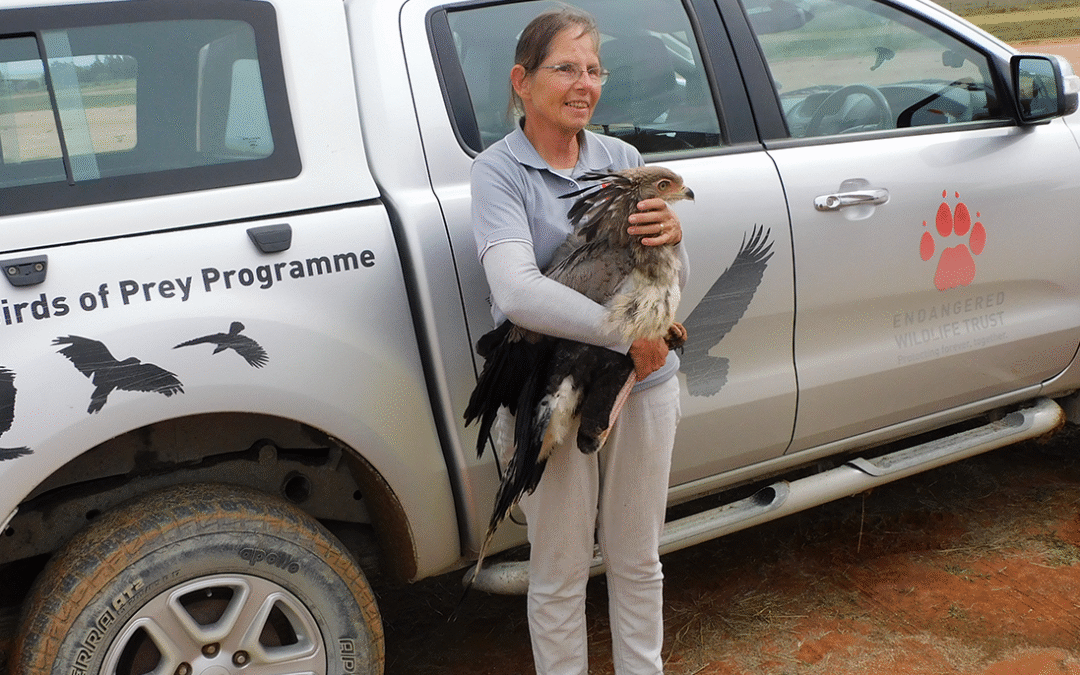
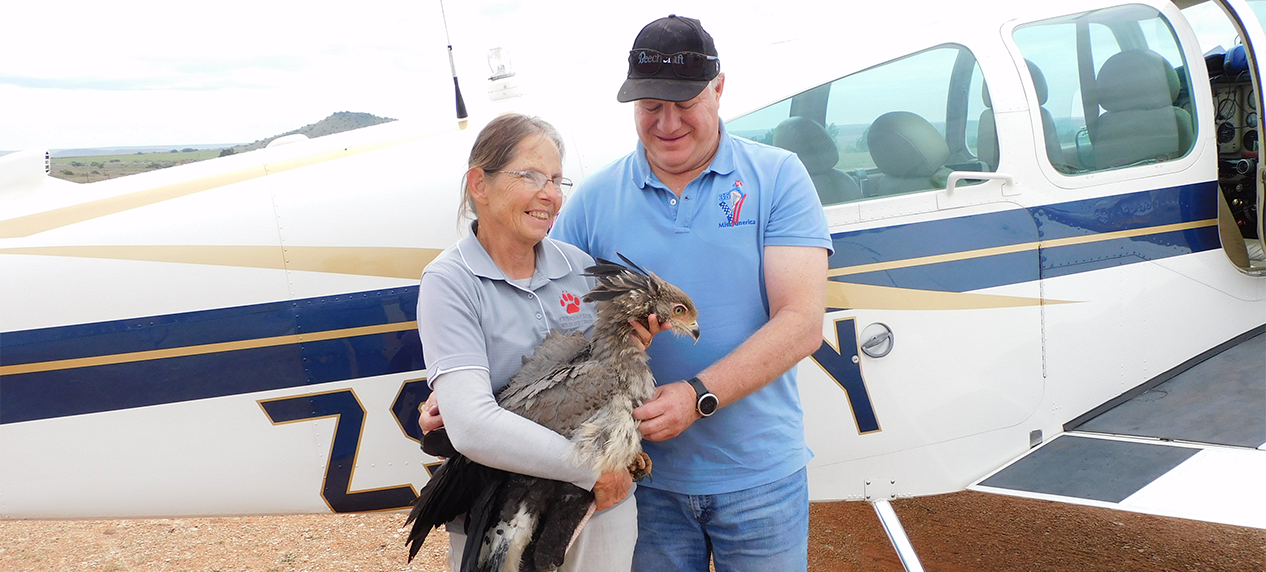
As most people settled down to enjoy the Easter Weekend this year, my husband, Stoffel, Bateleurs pilot Allan Thomson, co-pilot Nikki Bush, volunteer Abraham van Zyl, and I were watching the weather and embarking on a mission to ensure a juvenile Secretary Bird would receive the rehabilitation it needed.   It was a journey that took this young bird on a flight (by plane) from Orania in the Northern Cape to the Dullstroom Birds of Prey & Rehabilitation Centre in Mpumalanga.

It all started in February when I received a call from Megan Murgatroyd of HawkWatch International, who is doing raptor research on a farm in the Calvinia district.  She informed me about a Secretary Bird nestling that was in a deteriorating state and suffering from starvation. Birdlife SA PhD candidate, Wesley Gush, had installed a camera at the nest, which revealed that the nestling had not been fed for a minimum of nine days and had a weight of only 1.5 kg.

A day later, I retrieved the nestling from De Aar and started caring for it, observing its remarkable improvement and increasing strength with each passing day. The poor bird was so weak initially that it could not stand up or even lift its body.

Because this Secretary Bird would require training from a falconer to ensure it had the best possible opportunity for survival, a decision was made to transfer him to the closest falconer and rehabilitation centre–the Dullstroom Birds of Prey and Rehabilitation Centre.

All parties involved with the bird’s care agreed that this was the most beneficial course of action for its well-being. But, getting this Secretary Bird from the Northern Cape to Mpumalanga proved a large challenge as transporting him by road would take at least two days, and would prove very stressful for the bird, which would have to be kept in a box for the journey.

It was then that the Bataleurs stepped in.  After two months, the permits were in place and the bird was ready to go to a rehabilitation centre.   

On Sunday morning, 20 April, the sky was overcast, and rain was forecast for some time during the day.  Because I live around 70 km from the nearest airfield—in Orania—we had to wait for Allan Thomson to inform us when he would be able to depart from Johannesburg, which was also faced with bad weather.   As soon as we received the go-ahead, we carefully caught the bird and put it in a crate for the trip to Orania.  The first half of the road to Orania is a gravel road that is in poor condition and after the rain it is even worse!

This was Allan’s first ever Bateleur’s mission.   Stoffel and I arrived at the airfield about half an hour before Allan and Nikki arrived.  After a quick cup of tea, we took some pictures before loading the precious cargo on the plane. Finally, the bird was on its way to Dullstroom!

The team and the Secretary Bird were met at Walkerson’s airfield, where Magdali Theron and the team from the Dullstroom Bird of Prey & Rehabilitation Centre welcomed their new charge.

Once he has been trained to hunt and fend for itself, he will be returned to the same Karoo farm where he was rescued and released back into the wild. Before release, he will be fitted with a tracker so we will be able to follow the success of the rehabilitation.

** The EWT would like to thank the Charl van der Merwe Charitable Trust, Puy du Fou the Bateleurs for your support.

From Science to Storytelling: EWT’s Role at the NEWF Congress

From Science to Storytelling: EWT’s Role at the NEWF Congress

From Science to Storytelling: EWT’s Role at the NEWF Congress

By Esther Matthew and Insauf De Vries, Drylands Conservation Programme, Endangered Wildlife trust

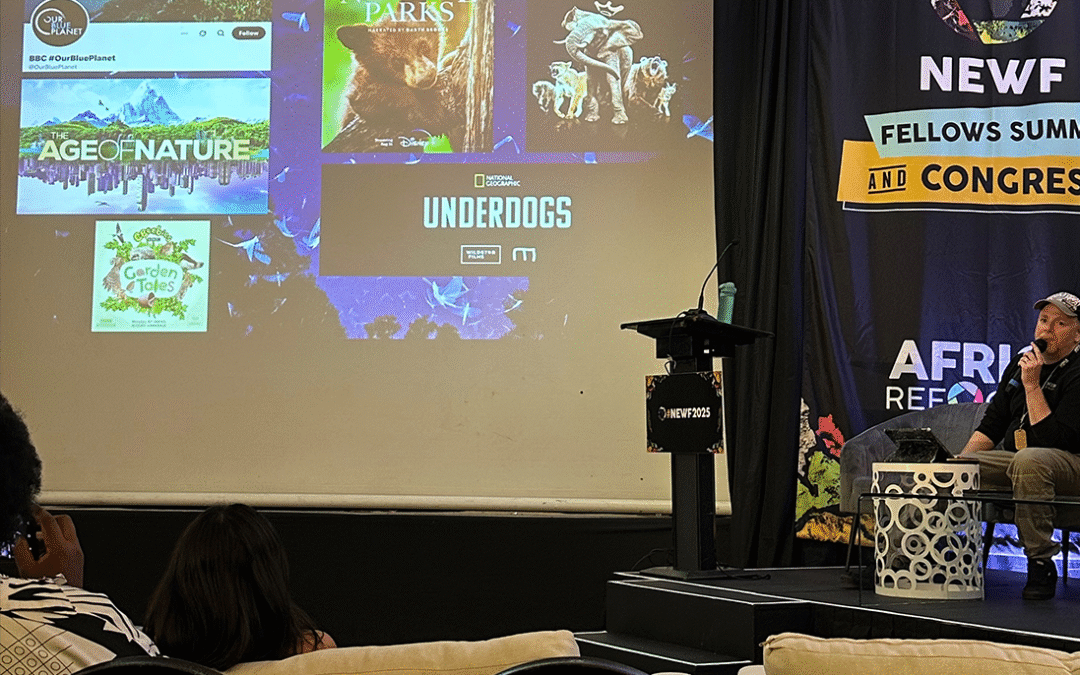
NEWF stands for Nature, Environment, Wildlife & Filmmaking. It is South African-based company working to change the narrative around wildlife documentaries and environmental storytelling to enable African stories to be told by African people. As such, the NEWF CONGRESS is the annual gathering and signature event which brings together emerging and experienced filmmakers, storytellers, scientists, conservationists, and media distributors. The perfect event to connect and engage to forge ahead on a shared mission to remove the barriers and build capacity to enable inclusion. So, this event, in partnership with the National Geographic Society, is where individuals working with nature, environment, wildlife & conservation storytellers, filmmakers, scientists, conservationists and broadcast media come together in Africa!

The NEWF Fellows Summit, which precedes the congress, is a closed event dedicated to networking, knowledge exchange and connection between attending fellows and other participants. Programming is designed to foster community and collaboration in-person.

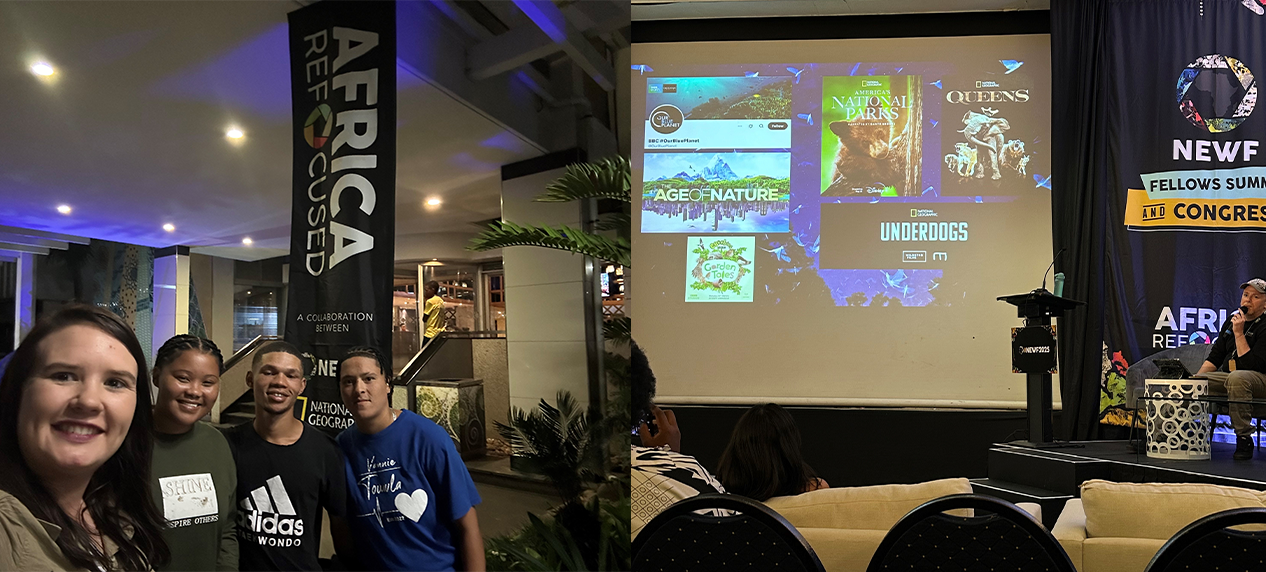
This year, the EWT’s Drylands Conservation team’s Esther Matthew and three of our nature-course students were invited to attend the NEWF fellows’ summit and congress in Durban. Our students are based in Touws River in the Western Cape and are working with the EWT to establish their own eco-tourism businesses in the area. As such, this was the perfect opportunity for them to learn from experts in the different fields and network to create valuable collaborations.

Furthermore, Esther was invited to join the Match Made in Science panel at the congress, to talk about her research using scent detection dogs for conservation projects. From finding Giant African Bullfrogs underground to helping train South Africa’s first succulent plant detection dogs, Esther’s work uses conservation dogs to uncover some of the country’s most threatened and elusive species. Her groundbreaking efforts have earned her recognition as a National Geographic Society Explorer. As such this opportunity to highlight our work was a brilliant match of science, conservation and storytelling.

Four Paws Against Poaching: Canines in Conservation at Pilanesberg

Four Paws Against Poaching: Canines in Conservation at Pilanesberg

Four Paws Against Poaching: Canines in Conservation at Pilanesberg

By Fudhail Marriday –  Canine Handler, Canine conservation unit, Endangered Wildlife trust

My name is Fudhail, and I’m proud to serve as a canine handler at Pilanesberg National Park, partnered with my four-legged colleague, Remi — a dedicated conservation dog with a nose for protecting wildlife. Together, we form part of the K9 conservation unit, using a mix of training, instinct, and a lot of dog hair to protect this beautiful reserve.

Life has a way of surprising you — and in my case, it came with paws, floppy ears, and an incredible skill set. What started as an unexpected opportunity turned into a passion. There’s something deeply rewarding about making a real difference, even if it means getting dirty, sweating buckets, or being outsmarted by a dog on occasion (Remi keeps me humble).

Our daily routine is anything but ordinary. From controlling access at the park’s four gates. Remi and I are constantly on the move. We conduct fence patrols, presence patrols, and work closely with rangers on stop-and-search missions inside the park. Remi’s nose is a powerful tool — capable of detecting hidden wildlife contraband long before any human could spot it.

We also do public demos, showing off the skills that make these dogs such valuable assets in conservation, from tracking scents to detecting hidden items with uncanny precision. These demonstrations aren’t just for show, they are an important tool for raising awareness about the threats our wildlife faces and the role working dogs play in combating them. Remi gets the spotlight; I just try to keep up.

At the end of the day, this work isn’t just about protecting wildlife — it’s about partnership, purpose, and sometimes picking ticks off your teammate. Remi and I wouldn’t have it any other way.

Taking Flight: Mpumalanga’s Cheetah Population Is Taking Shape

Taking Flight: Mpumalanga’s Cheetah Population Is Taking Shape

Taking Flight: Mpumalanga’s Cheetah Population Is Taking Shape

By Olivia Sievert, Cheetah Range Expansion Project Coordinator, Endangered Wildlife Trust


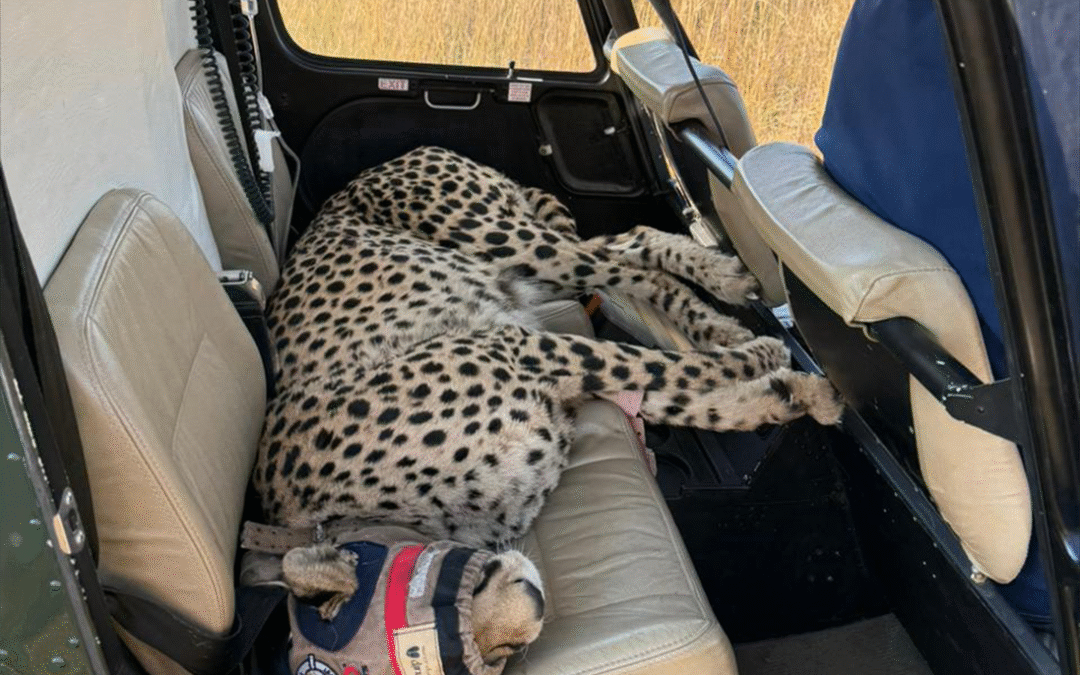
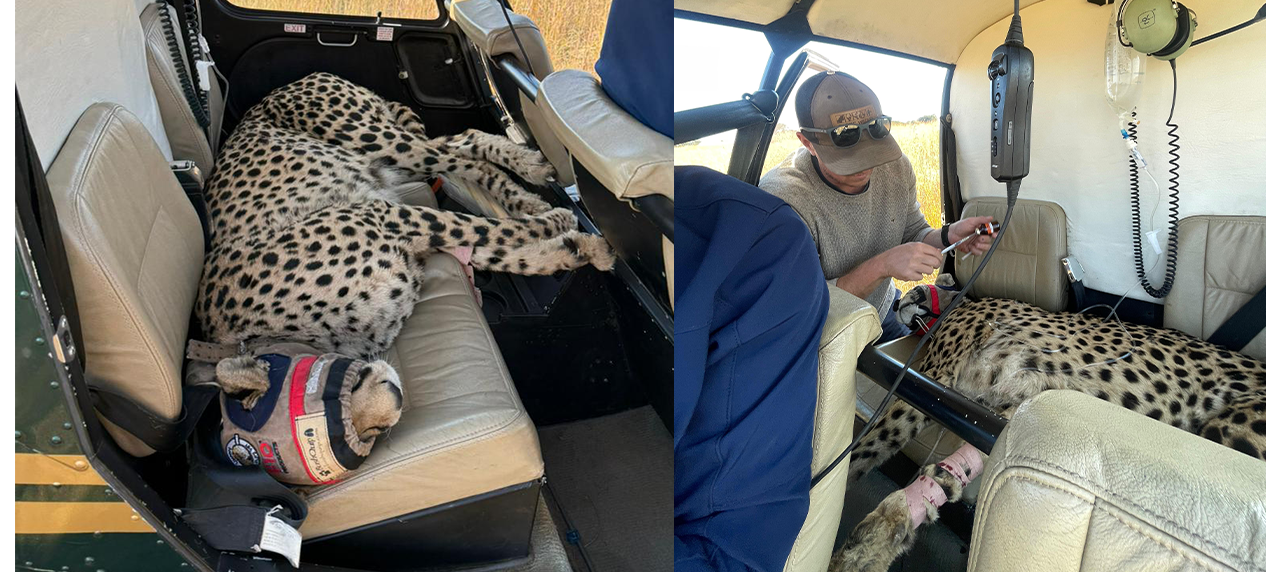
What would’ve been a gruelling 30-hour, 3,000km road trip turned into a smooth few hours in the sky, all thanks to the incredible support from The Bateleurs and volunteer pilot Nick Lincoln!The adventure kicked off over the Freedom Day long weekend. While most were soaking up the sun or enjoying time with family, myself and Bateleurs pilot, Nico were hard at work at Rand Airport in Gauteng, determined to figure out how to fit a cheetah crate into a Piper Cherokee. The mission? To relocate a female cheetah from Buffelsdrift Game Reserve near Oudtshoorn to Ukuzwana in Mpumalanga, a vital step in building a new breeding population there.

After hours of removing nearly every seat from the plane, we hit a snag: the crate would fit… but just not through the doors. A frustrating setback, but a lesson learned!

Enter hero of the day, The Bateleurs’ pilot Nick Lincoln, who quickly offered to help. Plans were reshuffled, vets and provincial officials rebooked, and by Tuesday, I was on a flight with Nick and the crate heading to Oudtshoorn via Durban.

Wednesday brought much-needed rain to the region, great for the Karoo, not so great for flying with a cheetah. But with a lucky break in the weather, we were able to safely sedate the female, load her up, and take off. The breathtaking flight over Lesotho was our reward for a hard day’s work, and within 5.5 hours of darting her, we were touching down at Piet Retief Airport, greeted by the waiting Ukuzwana team.

With both a coalition of males and a female now successfully reintroduced, the new breeding population in Mpumalanga is officially taking shape. This milestone would not have been possible without the incredible teamwork and dedication from so many. We are deeply grateful to Ikhala Veterinary Clinic and Wildest Vet for their expert care, to Buffelsdrift Game Reserve and Lalibela Game Reserve for generously donating cheetahs to the project, and to the various provincial offices, especially Mpumalanga Tourism and Parks Agency for their tireless efforts to restore cheetah to this region. Most importantly, our heartfelt thanks go to the Ukuzwana Witbad Foundation for creating the safe space these cheetahs so desperately need to thrive.

A very special thank you to The Bateleurs for your ongoing support of our work, especially of these critical translocations. We truly couldn’t have done this without you.

We’re filled with hope and excitement for what’s to come and look forward to sharing updates as this cheetah population settles and grows!


A Swing for Conservation: Recap of Our 4th Annual Stellenbosch Golf Day

A Swing for Conservation: Recap of Our 4th Annual Stellenbosch Golf Day


A Swing for Conservation:
Recap of Our 4th Annual Stellenbosch Golf Day

By Tammy Baker – Business Development Officer, Endangered Wildlife Trust

We hosted our 4th annual Stellenbosch golf day proudly sponsored by Alexforbes on the 11th of April 2025.

100 golfers enjoyed a fantastic day out on the greens at the Stellenbosch Golf Club. The weather was magic, the scenery, unbeatable, and the company, rejuvenating. We have forged some wonderfully rewarding relationships within the Stellenbosch community, and we are grateful to be in a position to host this event year after year. The day would not be possible without the incredibly generous support of Alexforbes, alongside over 70 sponsors who support the day.

The EWT hosts four golf days per year throughout the country as a way to raise funds for our conservation work, and as a way for individuals and companies to be part of and support the EWT and what we stand for. We are committed to conserving landscapes across Africa as well as the species and people who rely on them. These events offer an opportunity to network with like-minded individuals and to become involved in and support an organisation dedicated to conserving threatened species and habitats for the benefit of future generations.

A special thanks to our headline sponsors, Alexforbes, as well as go2africa, aha hotels and lodges, Dream Resorts and Hotels and the Peninsula Hotel and every single sponsor that contributed to making this day such an enormous success.

Next on our calendar, you can find us at the Copperleaf Golf Club on the 23rd of May for our Ford Wildlife Foundation and Hatfield Motor Group-sponsored day.

On the 17th of July, we head to KZN Ballito and the Simbithi Golf Club for another Ford Wildlife Foundation-supported event.

We end the golf calendar year off at Dainfern Golf Club on the 23rd of October with our Alexforbes-sponsored day.

To get involved in any way (prizes, sponsors, golfers, volunteers) please get in touch with Tammy Baker on tammyb@ewt.org. We would love to have you on board supporting these important events.


Cheetah range expanded into new Mpumalanga reserve

Cheetah range expanded into new Mpumalanga reserve

Cheetah range expanded into new Mpumalanga reserve

By Olivia Sievert – Coordinator of the Cheetah Range Expansion Project, Endangered Wildlife Trust

Left: Collaring. Right: Cheetah during transport


In March, members of the Carnivore Conservation team’s Cheetah Range Expansion Project embarked on a significant cheetah relocation from the Eastern Cape to Mpumalanga—but that’s just part of the story.

In collaboration with the Mpumalanga Tourism and Parks Agency (MTPA), we’ve been working for some time to expand the cheetah range across the province through the reintroduction of the species into suitable areas.

In 2023, the Ukuzwana reserve in Mpumalanga was identified as a key restoration site for this project—the first of many steps in this larger initiative.

Ukuzwana Witbad Foundation is a newly established initiative with conservation at its core. Its mission is to protect and preserve the entire ecosystem—from trees and insects to fish, antelope, and carnivores.

After over a year of tireless efforts by all involved, particularly the MTPA scientists and the Ukuzwana team, in December 2024, we were finally ready to select suitable cheetahs for reintroduction.

Around this time, Lalibela Game Reserve in the Eastern Cape had two male Cheetahs disperse. Born and raised in Lalibela, they were accustomed to open plains and had grown up hunting blesbok. However, they also posed a high risk of inbreeding, making it crucial for us to find them a new home and assist in their dispersal from their natal reserve via translocation. Ukuzwana, with its expansive grasslands and a population of over 1,500 blesbok, was clearly the perfect place for them.

When the time was right, I began the long journey to Lalibela to capture and relocate these males to Ukuzwana.

Fifteen hours, a few brief stops, and a couple of wrong turns later, the cheetahs arrived safely in Mpumalanga and were offloaded at their new home.


Cheetah leaving the boma


As with most translocations, they were first released into a boma. This allowed them to settle into their new surroundings, getting used to the sights and smells of their new home after the long journey.

But soon their restlessness set in—they were already attempting to hunt any bird that ventured into the boma. It was clear that the time for release had come! Four weeks after their arrival in Ukuzwana, the boma gates were opened, and within 30 minutes, the brothers eagerly set off to explore their new territory.

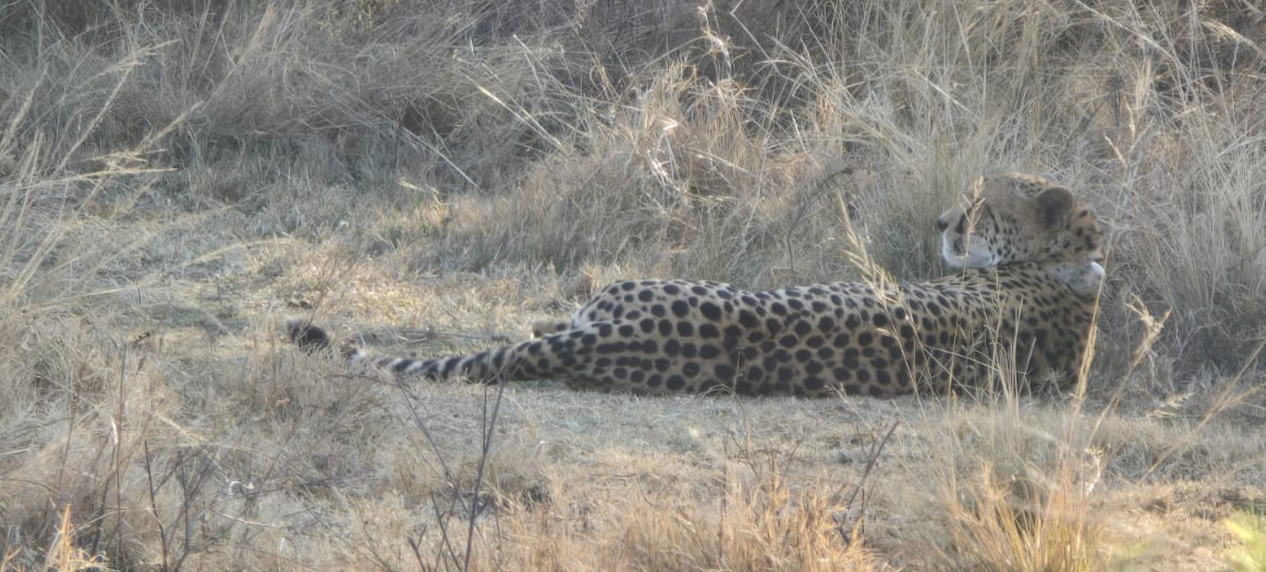
Since then, we’ve been keeping a close eye on them and are thrilled to report that both cheetahs have settled in wonderfully, successfully hunting within their first 12 hours of release!

Ukuzwana is now the second reserve in Mpumalanga, outside of the Greater Kruger area, to offer a safe haven for wild Cheetahs. This marks a significant milestone in the species’ restoration within the province.

“As a young organisation, we are honoured to be partnering with the Endangered Wildlife Trust through the Cheetah Range Expansion Project. Becoming only the second reserve in Mpumalanga to host cheetahs is a proud moment for us, and one that marks the beginning of our journey in supporting this critical conservation effort. We’re excited to walk this path together and contribute to a future where wildlife thrives,” the owners said shortly after the arrival of the cheetah.

The EWT are excited to continue its collaboration with MTPA and Ukuzwana on cheetah conservation and look forward to introducing a female soon to establish a breeding population. Together, we’re making crucial strides to ensure the Cheetah’s future in Mpumalanga and beyond.


Drone monitoring