FUTURE FIELD GUIDES FOR NIEUWOUDTVILLE
JP le Roux, EWT’s Drylands Conservation Programme Field Officer, jeanpierrel@ewt.org.za
The town of Nieuwoudtville is situated in South Africa’s Northern Cape, on the Bokkeveld Plateau. This region is known as the “bulb capital of the world” because it has the highest number of indigenous bulbous flower species on Earth. The Bokkeveld Plateau is also home to Papkuilsfontein, https://papkuilsfontein.com/, a farm in the process of being declared a Protected Environment. This initiative is part of the GEF 5 Sustainable Land Management (SLM) Project.
Although Papkuilsfontein is a commercial sheep and rooibos tea farm, the Van Wyk family farm has always put conservation at the forefront of farming activities. The family also diversified their income by venturing into tourism, renovating several historical buildings into quiet retreats for guests, and more recently developing hiking and mountain bike trails in collaboration with the EWT. While sustainable land management and biodiversity conservation are priorities, providing employment opportunities is also high on Papkuilsfontein’s agenda, as this is an important function in rural regions such as this, where employment opportunities are limited.
As part of the project, the EWT and Papkuilsfontein are training two local community members, Dustin Gouws and Jeraldo Skippers, as Apprentice Field Guides (NQF2) through FGASA. We have provided them with tablets and guiding books, are mentoring the aspiring guides to get their qualifications, and doing weekly contact sessions to ensure their studies stay on track.
Aside from the theory component, Apprentice Field Guides need to have sound knowledge of the history, geology, plants and animals in the specific area of their guiding operation. To achieve this, we assist the guides with various training events and take them on practical excursions in and around the Nieuwoudtville area. The trainee guides have had an action-packed year and completed a diverse range of training interventions, including their Introduction to Guiding, First Aid (Level 1 and 2), Plant Identification, photography, and planning guided tours.
On 5 August 2021, Bonnie Schumann, EWT’s Nama Karoo Coordinator, hosted a practical training session for the two trainee guides at Papkuilsfontein. The training focused on using camera traps to assess animal biodiversity in the area so that the aspiring guides can learn which mammals occur there. Camera traps are great as they offer an effective non-invasive monitoring method to assess the species richness of medium to large terrestrial mammals and capture images of elusive nocturnal species. The camera trap survey will be aimed at capturing images of the 36 mammal species that can be found on the farm, which include Leopards, Black-backed Jackals, Silver Foxes, Bat-eared Foxes, Smith’s Red Rock Rabbits, Porcupines, duikers, Cape-clawless Otters, Pole Cats, baboons, Rock Hyraxes, Klipspringer, and Aardvarks. The training started early at the Papkuilsfontein reception. The large and informative map details the vegetation types, topography found on the farm, points of interest, and the hiking and biking trails. Bonnie used this as an opportunity to discuss where best to place cameras, taking into account what animals might be found in the different habitats. It is important to cover all the different vegetation and habitat types when placing cameras as these determine which species occur where. After a quick cup of Outliers coffee, http://outlierscoffee.co.za/product/endangered/, an introduction to using a GPS and setting up a camera trap followed.
We spent the whole day on the farm placing ten cameras in the different areas. Being out in the field offered great opportunities to explore, interpret what we found, and discuss the patterns and processes such as nutrient cycling and the role of pioneer plants. A lucky sighting of a Black Spitting Cobra opened a great discussion on snakes, their role in the environment and relevant first aid. The cameras will be left for about eight weeks, after which the guides will assess the footage and learn to use Google Pro to plot their discoveries. The camera trap survey will also directly contribute to a better understanding of the biodiversity richness of the area. Stay tuned to find out what we capture. The GEF 5 Sustainable Land Management Project https://karooforever.org.za/ is implemented by the Endangered Wildlife Trust’s Dryland Conservation Programme (EWT) and is funded by the United Nations Development Programme in partnership with the Department of Environment, Forestry, and Fisheries and Department of Agriculture, Land Reform, and Rural Development. The GEF 5 SLM project promotes innovative approaches to protecting vulnerable ecosystems in dryland areas.
LATEST STORIES
Herpetological Surveys Limpopo Province: The Quest for ‘Extinct’ Reptiles
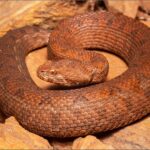
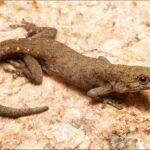
Recent herpetological surveys Limpopo Province conducted by the Endangered Wildlife Trust’s Conservation Science Unit have shed new light on the Woodbush region’s remarkable reptile and amphibian diversity. While the team’s primary goal – rediscovering the officially extinct Eastwood’s Long-tailed Seps (Tetradactylus eastwoodae) – remains unfulfilled, the expedition yielded significant findings that reshape our understanding of this ecological hotspot.
Expedition Highlights
- 50 species recorded (10 amphibians, 40 reptiles)
- Valuable DNA samples collected for 7 taxonomically uncertain species
- 208 new distribution records for the region
- Key species documented:
-
Vulnerable Methuen’s Dwarf Gecko (Lygodactylus methueni)
-
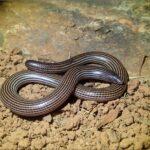
Near Threatened Woodbush Legless Skink (Acontias rieppeli)
-
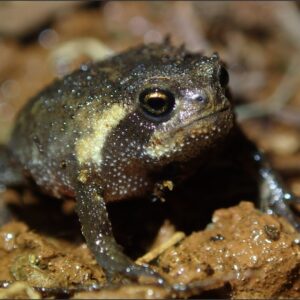
Northern Forest Rain Frog
Innovative Survey Methods
The team employed specialised trapping systems featuring:
- Drift fencing (30m per trap)
- Pitfall traps (5 per array)
- Funnel traps (6 per array)
- Daily monitoring following strict ethical protocols
“While we didn’t find our ‘Holy Grail’,” notes Dr Oliver Cowan, “we’ve significantly advanced knowledge of this understudied region and identified critical conservation priorities.”
Herpetological Surveys Limpopo Province: Conservation Implications
The surveys revealed:
-
New population data for threatened species
-
Potential cryptic species awaiting genetic confirmation
-
Habitat requirements for endemic herpetofauna
Supported by Rand Merchant Bank Foundation, this work underscores the importance of continued herpetological surveys to protect its unique biodiversity.
“Do Shrews Swim?” – A Field Diary from the Outeniqua Mountains
Do shrews swim? This unexpected question dominated my thoughts during recent fieldwork in the misty Outeniqua Mountains above George, where our team searched for the Endangered Long-tailed Forest Shrew (Myosorex longicaudatus) – not seen since the 1990s.
Dr Oliver Cowan, Conservation Science Unit, oliverc@ewt.org.za
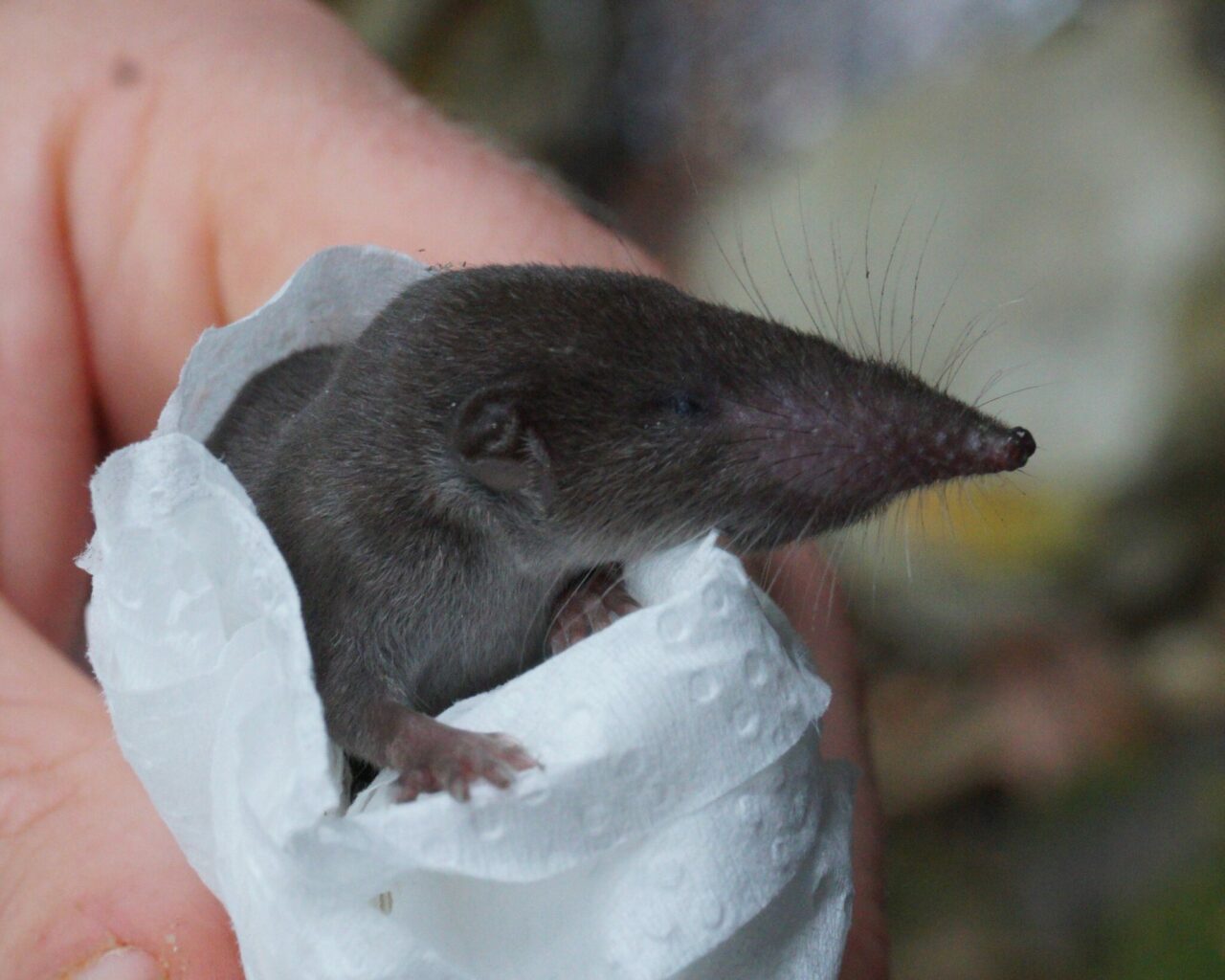 Musk Shrew after a swim. Photo credit: Oliver Cowan
Survey Methodology
Our team employed multiple techniques:
- 40+ Sherman live traps baited with peanut butter-Bovril-oats mix
- Camera traps placed along game trails
- Ultrasonic recorders for bat echolocation (Pettersson D500X)
- Microhabitat measurements (temperature, humidity, canopy cover)
- GIS mapping of all trap locations
Traps were checked at dawn and reset at dusk following strict ethical protocols. Each captured animal was:
-
Identified to species
-
Photographed for verification
-
Measured (weight, body/tail length)
-
Released unharmed at capture site
Notable Species Observations
Beyond the swimming shrew incident, we documented:
Mammals:
- Honey Badgers (Mellivora capensis) – First forest record via camera trap
- Cape Clawless Otter (Aonyx capensis) spraints along streams
- 4 bat species (new mountain records via ultrasonic analysis):
-
Cape Serotine (Neoromicia capensis)
-
Long-tailed Forest Bat (Myotis tricolor)
-
Egyptian Free-tailed Bat (Tadarida aegyptiaca)
-
Banana Bat (Neoromicia nanus)
Birds:
- Forest Buzzard (Buteo trizonatus) – Constant aerial observer
- Knysna Turaco (Tauraco corythaix) – Emerald flashes through canopy
- Olive Woodpecker (Dendropicos griseocephalus) – Drumming in yellowwoods
Herpetofauna:
- Table Mountain Ghost Frog (Heleophryne rosei) in streams
- Southern Adder (Bitis armata) coiled in leaf litter
Do Shrews Swim? The Swimming Shrew
The aquatic surprise occurred during a lunch break:
-
Heard splash in forest stream
-
Discovered flailing Lesser Dwarf Shrew (Suncus varilla)
-
Documented rare swimming behaviour (3 minutes observation)
-
Rescue via tail-lift to prevent hypothermia
-
15-minute rewarming in cotton shirt before release
“This challenges assumptions about shrew ecology,” noted Dr. Cowan. “Their aquatic capabilities may explain how they colonise isolated forest patches.”
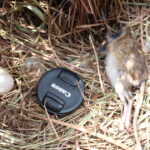
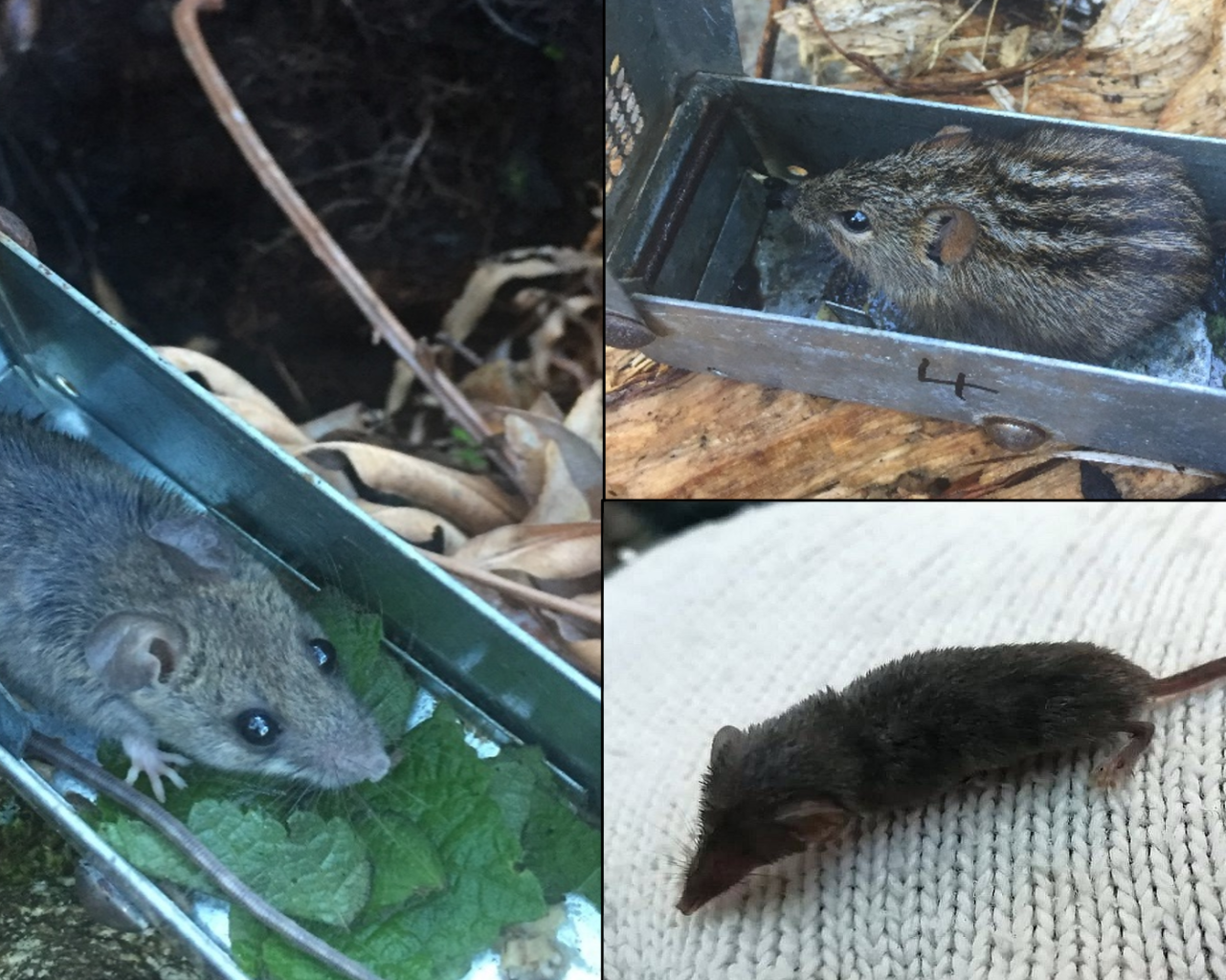 Verraux’s Mouse (left), Striped Mouse (top right), and Lesser Dwarf Shrew (bottom right). Photo credit: Oliver Cowan
Plans are underway for a 7-day expedition to survey this remote area:
Logistics:
- 15km hike-in with all equipment
- Base camp at 1,200m elevation
- Helicopter support for heavy gear (pending funding)
Target Species:
- Critically Endangered Boosmansbos Forest Shrew subpopulation
- Micro Frog (Microbatrachella capensis) in wetland areas
- Historical records of Acontias lizard species
Innovative Methods:
- Environmental DNA (eDNA) sampling of streams
- Thermal imaging cameras for nocturnal surveys
- Automated recording units for avian monitoring
Conservation Implications
These findings:
- Update species distributions for IUCN assessments
- Reveal forest connectivity patterns
- Highlight need for protection of isolated patches
- Demonstrate value of mixed-methodology surveys
As I write by headlamp, the Forest Buzzard’s final evening call echoes through Tonnelbos – a reminder that these mountains still hold secrets waiting to be uncovered.
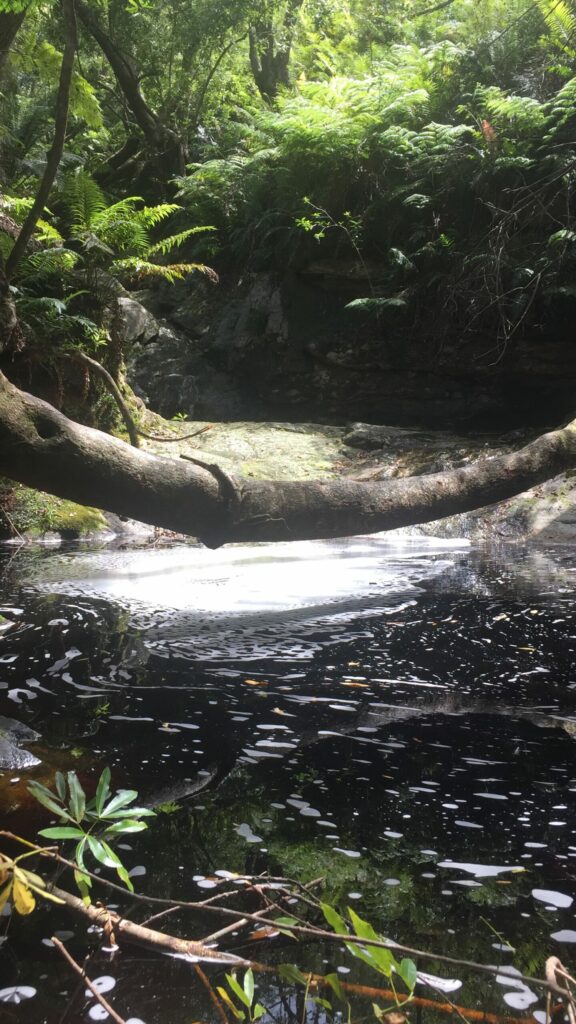 Our lunch spot in the Kloof. Photo credit: Oliver Cowan
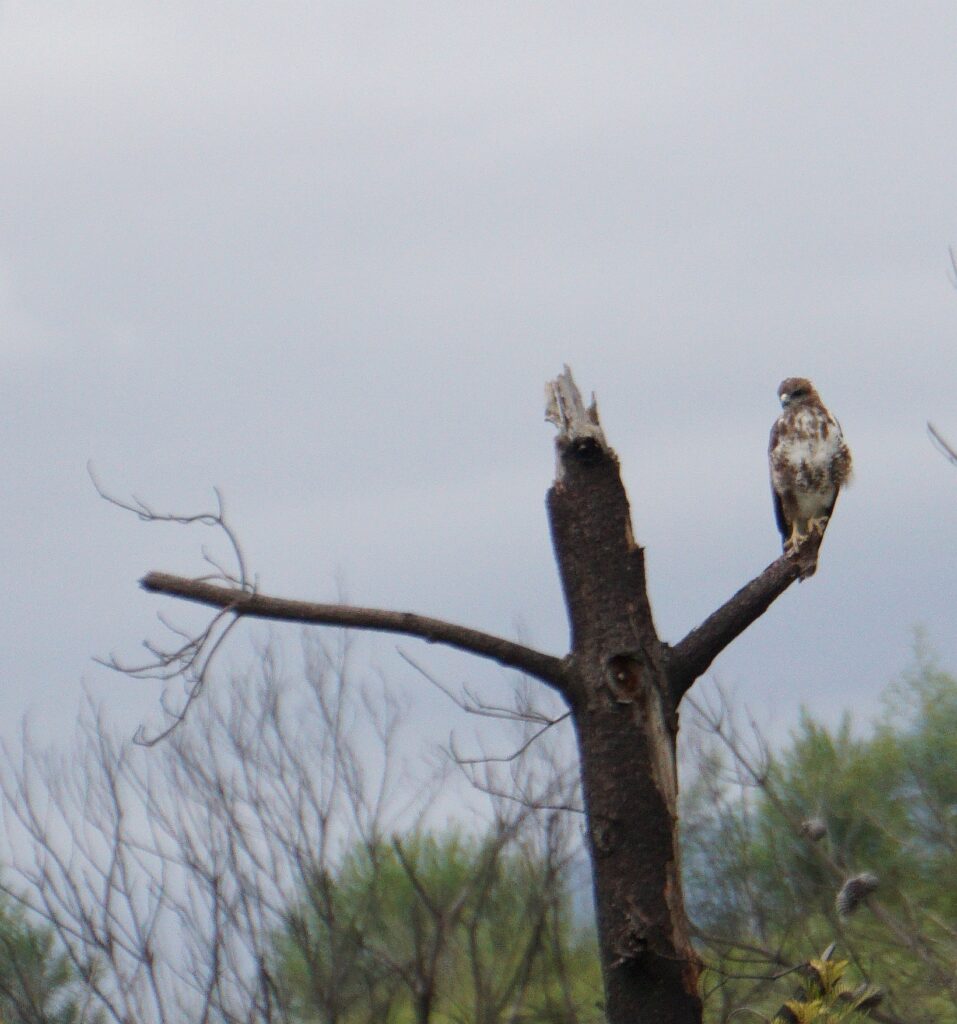 The ever-watchful Forest Buzzard. Photo credit: Oliver Cowan
CROUCHING ROCKS, HIDDEN RABBITS
Bonnie Schumann, EWT’s Drylands Conservation Programme, Senior Field Officer, bonnies@ewt.org.za
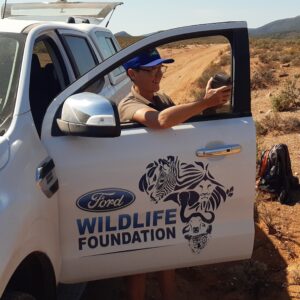
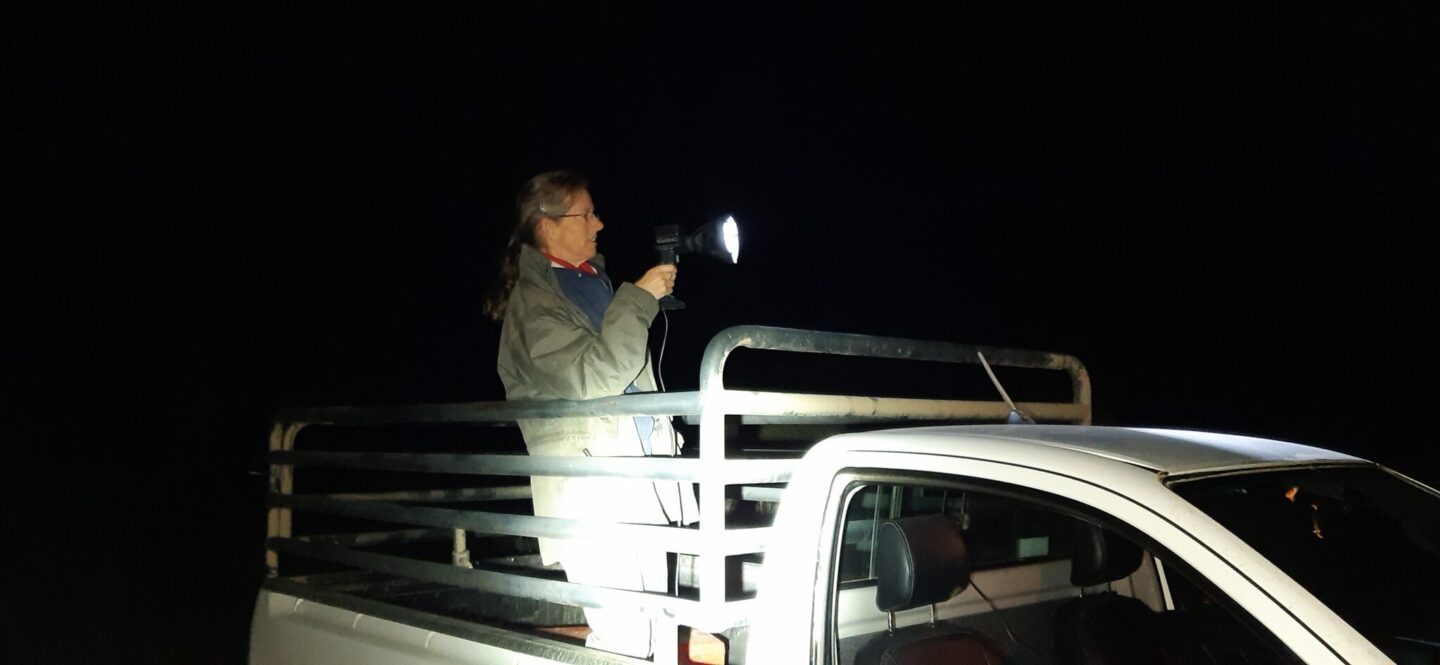
Searching for Critically Endangered Riverine Rabbits (Bunolagus monticularis) in the vast and rugged Karoo landscape is one of the hardest but most rewarding aspects of what we do. Marienne de Villiers, Faunal Ecologist with CapeNature, and I recently spotted a rabbit on a night drive on the Lettas Kraal Private Nature Reserve. This was a first for Marienne, who admitted that she was starting to doubt the existence of this mythical creature! When reflecting on our success, we realised that we had tallied up just over eight hours of searching on two rather freezing cold night drives before we got lucky and laid eyes on a live rabbit between the two of us. After a few hours of searching for all creatures great and small in the beam of a spotlight, from the back of a bakkie bumping along a dusty dirt track, one tends to get a bit cross-eyed. As a result, we had spotted many rabbits along the way, only to discover on closer inspection that they were rabbit-like rocks crouching in the veld, while the real rabbits remained safely hidden!
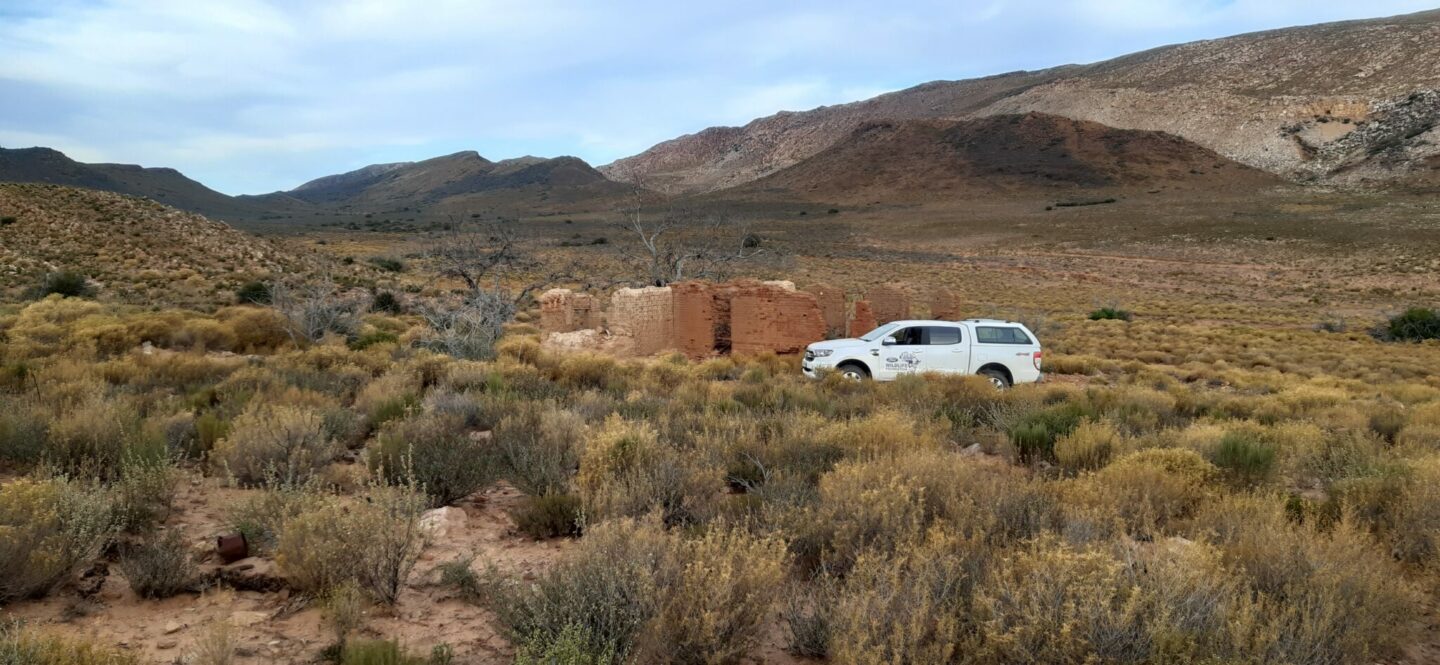
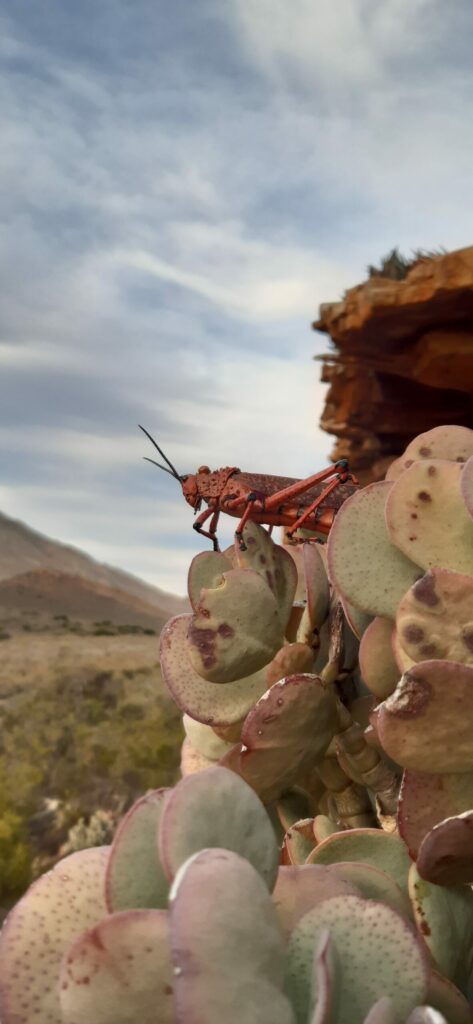
These bunnies are the ultimate masters of hiding in plain sight, so seeing a live Riverine Rabbit is somewhat of an achievement that few people can lay claim to. Although camera trap surveys in 2019 and 2020 revealed their presence, Riverine Rabbits had never actually been seen on Lettas Kraal. This trend is not unusual, given that the species managed to remain undetected, in two of the three landscapes in which it occurs, for over a hundred years! Following their initial discovery near Deelfontein in the Nama Karoo in 1901, they were only recorded in the Little Karoo, a distinct geographic region lying within the Succulent Karoo, for the first time in 2003. This southern population was in the Touwsriver area, and as recently as 2018, an eastern population was found in the Uniondale area. In both cases, the documenting of roadkill was what finally revealed their presence.
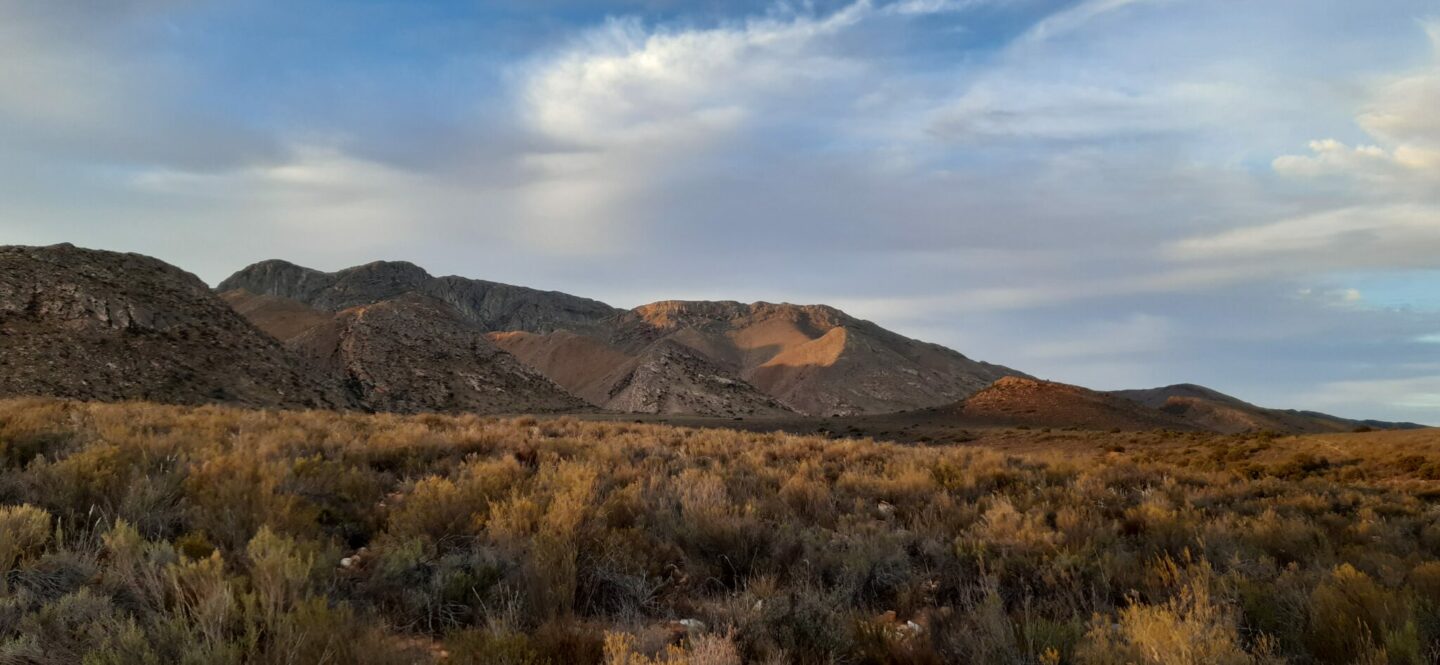
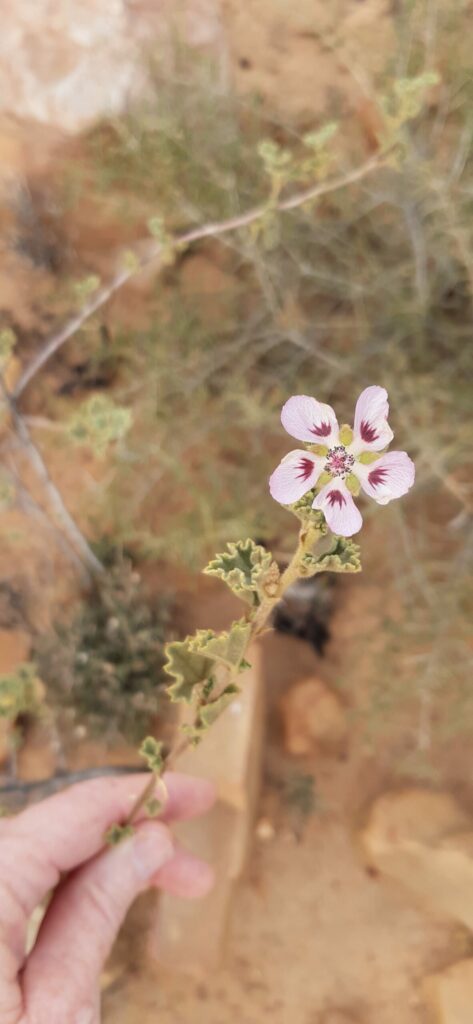
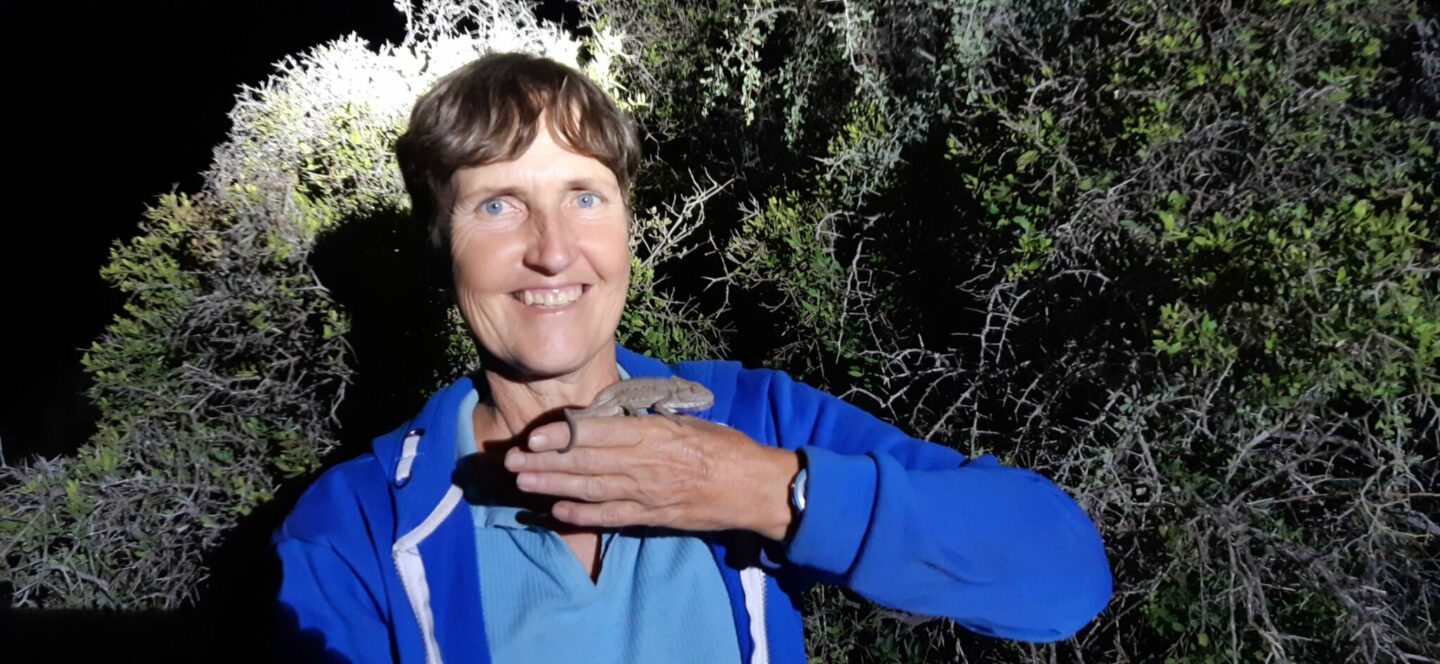
Lettas Kraal, home to many Little Karoo botanical gems, some of which have not even been described yet, is also home to a known population of Riverine Rabbits. This property is in the process of being declared a Contract Nature Reserve, which will ensure the safety and protection of the unique biodiversity there. The night drive was part of the process of documenting the biodiversity on this beautiful property. This process is already well underway, following detailed botanical and camera trap surveys in 2020. Three hours into this particular night drive, our persistence paid off when Marienne spotted a Karoo Chameleon (Bradypodium gutturale). This was an impressive demonstration of her ability to multitask, as between driving and batting (more on this later), she spotted this small creature nestled on its Gwarriebos perch as the beam of the weaving spotlight passed over the bush. Widespread habitat degradation and loss pose a severe risk to these ancient-looking little reptiles. Adding this species to the Lettas Kraal inventory was a rare feel-good moment, knowing that this species, too, is safe on Lettas Kraal, under the protective eye of Johan Roodt, the owner of Lettas Kraal. If you wondered what “batting” mentioned earlier is all about, this entails listening for and recording bat calls. Capturing recordings of bat calls is one of the most effective ways of documenting bat species presence – for which Marienne has quite a knack.
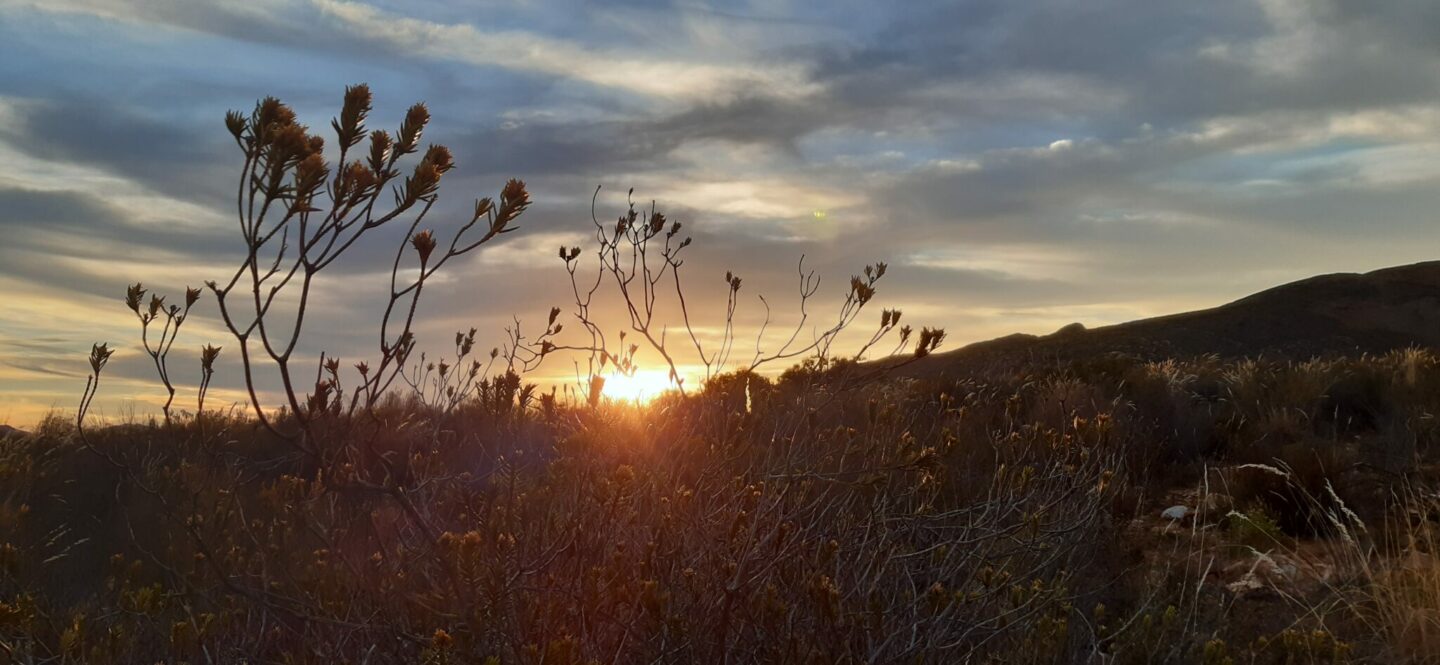
After our exciting rabbit show at the magic hour of midnight, we grabbed a few hours of sleep before we set off early again – this time with Jan Vlok, renowned Succulent Karoo botanist also working on Lettas Kraal. Jan was on a mission to supplement the botanical survey he did in Spring 2020 with what the autumn season had to offer. Despite telling us, “If it doesn’t photosynthesise, I’m not interested!” Jan is a veritable encyclopaedia on all things Karoo. Over 20 autumn species were added to the more than 800 species counted in spring.
Many more species await documenting, and getting the full picture will literally take years. Plants need to be particularly picky about when they expose themselves because expending energy and resources, particularly during the flowering and seeding process, is a risky business at the best of times. In a region where the rainfall varies between 100 mm and 450 mm per year, and summer temperatures can exceed 40⁰C, often accompanied by blistering berg winds, the risks are next level. It’s all about timing, and some species will wait years to put it all out there. It requires a lot of luck to have feet on the ground just when the conditions are, for an all too short time, favourable for plant reproduction. Having flowers and seeds makes the daunting job of identifying species accurately considerably easier. However, with over 3,200 species already recorded in the Little Karoo alone, you need to know your stuff! Jan Vlok, a co-author of “Plants of the Klein Karoo”, is one of the few people up to this task.
To put the value of biodiversity refuges, such as Lettas Kraal, into perspective, less than 0,5% of the Succulent Karoo biome is formally conserved. Under the guardianship of conservation-minded individuals such as Johan Roodt, properties such as this one add much-needed resource capital to the scant inventory of protected areas in this region. Riverine Rabbits find refuge here, in veld that is slowly recovering from over 200 years of being heavily impacted by livestock and ostrich farming. In some areas, diversity is lost forever. Lettas Kraal was lucky that much of its biodiversity has remained, and species very sensitive to grazing can still be found. Once abundant, these species are slowly emerging from the midst of thorny bushes and start to grow in the open again, reclaiming their space in this spectacular landscape, amongst the crouching rocks and hidden rabbits.
The biodiversity survey was funded by the Global Environment Facility and managed by the United Nations Development Programme, in partnership with the Department of Forestry, Fisheries, and Environment, and the Department of Agriculture, Land Reform and Rural Development.
GOING BOSSIES
Bonnie Schumann, EWT’s Drylands Conservation Programme, Senior Field Officer, bonnies@ewt.org.za
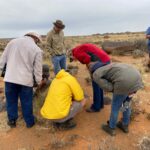
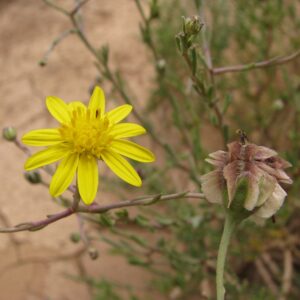
The EWT Drylands Conservation Programme, in partnership with the Grootfontein Agricultural Institute, held Karoo bossie (vegetation) identification days around Loxton this week. Altogether 32 people, mostly farmers, attended the sessions. Karoo veld generally appears rather grey and uninteresting to many passers-by, and getting to know the different species, mostly dwarf shrubs, can be very challenging at the best of times as they tend to look rather similar at first glance. For the novice, in order not to get demotivated on the first day, it is best to go in Spring and Autumn. At these times, if there has been rain, the bossies (little bushes) may be flowering and seeding, making it a lot easier to identify them. Once you spend time in the veld, you realise that there is actually a great deal of plant diversity, including over 3,000 species in the Nama Karoo. Not bad for a desert!
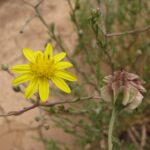
If you dare get up close and personal with the larger, thorny, rather formidable-looking bushes, you realise that they shelter a range of other fascinating species, which is why they are often called “mother bushes”. Despite the rather barren appearance of Karoo veld, when the veld is managed sustainably, the rangeland will provide fodder for wildlife and livestock year-round, as there is always something growing in every season. Grasses, which are less common as one travels west across the Karoo, are nonetheless an important component of the Karoo veld. Years of good early summer rainfall will result in a good grass component. On the other hand, the shrubs tend to prefer the cooler, wetter periods, providing valuable fodder during Autumn and Winter.
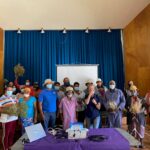
The plant identification sessions give farmers the opportunity to share their knowledge of the species growing in their area and encourage and facilitate more effective management of the veld, ensuring that the important palatable species are grazed with care, species diversity is promoted, and effective rest periods are implemented. These sessions formed part of the Karoo Forever Project, which focuses on promoting sustainable land management in the Karoo. The project is funded by the Global Environment Facility and managed by the United Nations Development Programme, in partnership with the Department of Environment, Forestry, and Fisheries, and the Department of Agriculture, Land Reform, and Rural Development.
FOLLOWING FLEDGELINGS
Rebotile Rachuene, African Grass-owl Project Coordinator, EWT’s Birds of Prey Programme (BOPP), tselaner@ewt.org.za
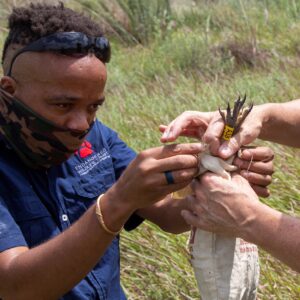
Five years ago, we embarked on a project to monitor African Grass-owl fledgelings once they leave their nests to understand their movement patterns and behaviour. To do so, we ring them so that we, and others, can identify individual owls when they are seen again.
Since 2017, we have ringed at least 30 individuals from both the Mpumalanga and Gauteng provinces. The majority of these individuals were fledgelings, and two were breeding adults. The ringing follows extensive field monitoring to ensure that the nests are not disturbed during the owls’ breeding and nesting periods. As soon as they reach fledgeling age, we go in and ring them
This month, we were fortunate enough to ring five fledgelings, about six weeks old, now from two different nests in Midrand, Gauteng, two siblings from one nest, and three from the other. Working together with our partner, the Greater Kyalami Conservancy (GEKCO), we have successfully safeguarded these nests and eventually successfully ringed our first clutch of fledgelings in the area since 2018. One nest is in a site destroyed by fire in the 2018/2019 season, and the other is in a new breeding site that we discovered had been occupied recently – very exciting news! The five chicks were released and will be monitored closely up until they fledge and find their own sites to nest in. In 2019, one of our ringed birds was found actively breeding 10 km away from where it was ringed, which was extremely valuable information, demonstrating how this form of monitoring can provide us with a better understanding of how far they can travel in search of new territories.