Help us  
 lost species

Donate today  

Finding the albany adder

Finding the albany adder

Tale from the Field: Finding the Albany Adder – Following in the footsteps of Dr John Hewitt

 
Alouise Lynch, Bionerds PTY Ltd
 

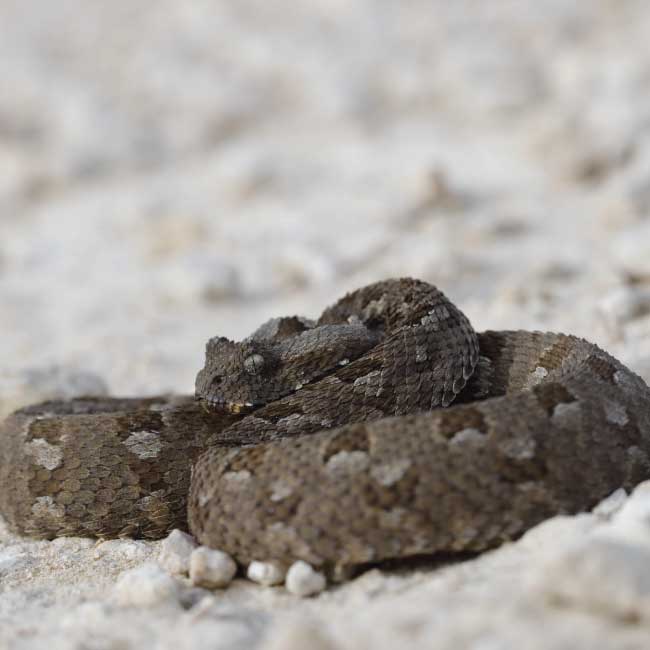
Albany Added on white sand

Dr John Hewitt was born in Dronfield, Derbyshire, England, on December 23, 1880. Between 1905 and 1908, he was the curator of the Sarawak Museum after studying natural sciences at Jesus College in Cambridge. In 1909, he was employed as an assistant curator at the Transvaal Museum in Pretoria, and in 1910, he was named Director of the Albany Museum in Grahamstown, Eastern Cape, South Africa. He was a skilled naturalist with a deep interest in herpetology, and he described, collected, and documented many of South Africa’s frogs and toads.

My husband and I recently spent a week retracing his steps on a farm outside of Grahamstown. We visited the area where he discovered, collected, and described the Albany Adder, Bitis albanica, South Africa’s most endangered snake species.

Most of us have a “bucket list,” a list of things we want to do or see before “kicking the bucket,” as it were. Some challenges are tricky, while others are as simple as trying tripe for the first (and usually last) time. Our bucket list is as nerdy as we are, a living list of 40 species we aim to see in a specific year. Discovering a needle in a haystack seems more likely than finding some of these species in the wild!

The Albany Adder, described as the holy grail of South African dwarf adders, had only been observed in the wild 12 times by 2017. That year, we collected a crew of nerds and embarked on our quest to find this uncommon snake. The Endangered Wildlife Trust discovered two specimens in the wild on a recent study trip, and we were hoping to be as fortunate as they were. NO PRESSURE!!!! We had five days to find this snake. It was cold and windy, and we had walked a long distance by day five. We had given up. We all agreed to return to the vehicles and try again the following year. I stepped around a bush to find a little brown and grey snake with tortoiseshell scallops on its back at my feet. The excitement was so great that we almost missed the snake making a “run” for it! We had discovered an Albany Adder. Number 13 in history! It was sheer enchantment.

The size of this species takes everyone we have ever shown them to by surprise. The largest adult female Albany Adder we have found was 34.6 cm long, a bit thicker than a pencil, with an extremely aggressive bity end on one end. When you are this small, you need a temper to survive in a world where everything is out to eat you. We still do not know where they shelter, how they breed, when or where they pup, or their general primary habitat use.

The Endangered Wildlife Trust allowed us to execute a research and monitoring project on the Albany Adder in 2018. We jumped at the chance and have been working on the “Averting Extinction – saving South Africa’s Most Threatened Snake” project for the last five years. The project has not only increased the known number of specimens from 13 to 43 over five years, but we have also proven that they exist in various habitat types and are working with landowners to safeguard this species in areas where we have confirmed their occurrence. This past week was a watershed point for this project.
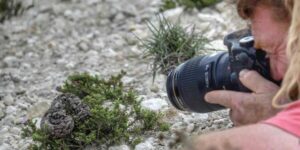
We eventually obtained our first confirmation of prey species – a very plump Variegated Lizard – after I gathered roadkill specimens from Addo Elephant National Park. And after many years of attempting, we finally acquired access to Dr Hewitt’s old haunts. We spent three days scoping for feasible habitat in the area where he initially discovered this beautiful species. The landowners are conservation-minded and fiercely protective of their property and its fauna, which is a great plus for us because baboon spiders and snakes are indiscriminately poached in this area. We are very excited to return to this location during their next peak activity period to see if we can rediscover this species where Dr Hewitt found the first Albany Adder.

We hope to relocate these snakes at this site. If we succeed, we can begin establishing a conservation corridor from Gqeberha to Makhanda, incorporating private nature reserves, national parks, and private farmland – affording Albany Adders and many other species and habitats long-term protection.

Thanks to People’s Trust for Endangered Species (PTES), Rainforest Trust, PPC, Eastern Cape Parks and Tourism Agency (ECPTA), and Bionerds for supporting this work.
 

Tale from the field – The impact of roads through Zululand’s protected areas

Tale from the field – The impact of roads through Zululand’s protected areas

TALE FROM THE FIELD

The impact of roads through Zululand’s protected areas: A two-year tale

Cameron Cormac, EWT’s Wildlife and Transport Programme and University of KwaZulu-Natal

The Zululand region of South Africa’s KwaZulu-Natal Province is home to several historically important game parks. South Africa’s conservation history has its origins in this region, with many of the country’s nature protection agencies stemming from the original parks board created to oversee South Africa’s original game parks. Rhino protection activities also originated from this area, with global rhino protection following the region’s example. Furthermore, these game parks are important to the Zulu people, as many house culturally significant locations. In addition to many of the reserves in Zululand being of historical and cultural importance, they act as a major source of income for this relatively poor region of South Africa.

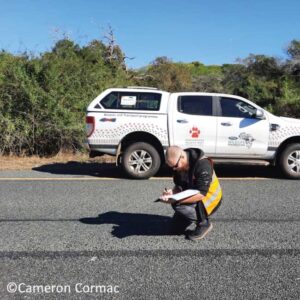
Collecting carcass information during road surveys.

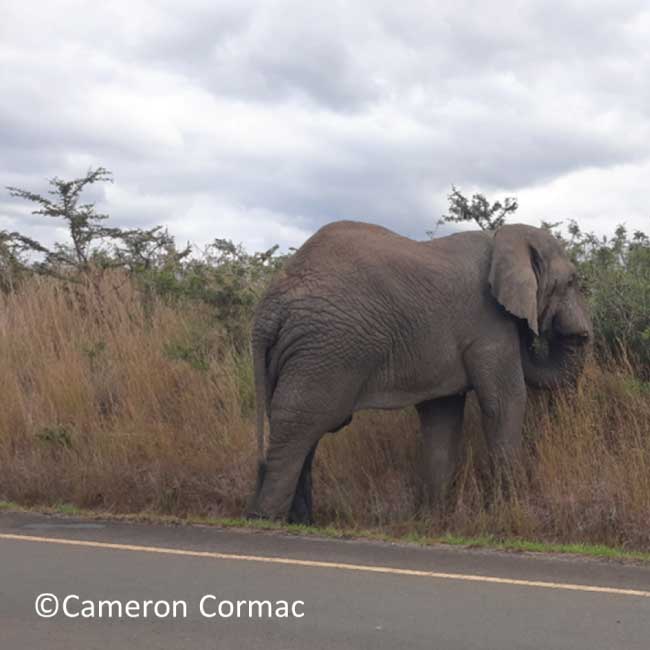
My PhD research, through the University of KwaZulu-Natal, working with the Endangered Wildlife Trust and Ezemvelo KwaZulu-Natal Wildlife, examined the effects of linear infrastructure on wildlife. I spent over 1,000 hours between February 2021 and April 2023 surveying two provincial roads that pass through Hluhluwe-iMfolozi Park (HIP) and iSimangaliso Wetland Park (ISWP). These surveys aimed to determine how animals were affected by these roads, to find out what species had the highest death tolls, and how the roads could be adapted to reduce the number of animals killed on the roads.

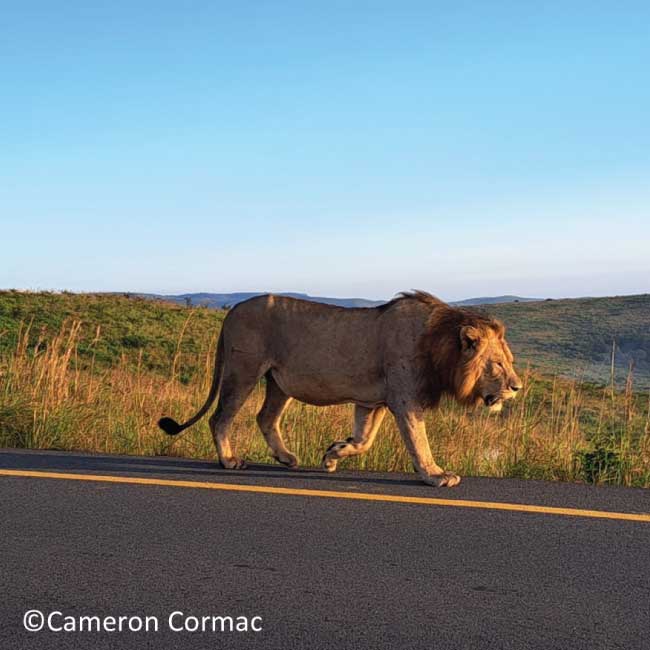
In HIP, South Africa’s oldest protected area, the R618 passes through the younger section of the reserve, which was created to serve as a corridor to conjoin the previously separate Hluhluwe and iMfolozi Parks. Currently, the road serves as the boundary between the two sections of the park, gaining the nickname ‘Corridor Road’. The R618 also joins the Zululand municipalities of Mtubatuba and Hlabisa and is the connection point for entry through HIP’s Nyalazi gate. Overall, approximately 18 km of the R618 falls within the park’s boundaries and experiences a relatively high frequency of vehicle traffic. When travelling on this road, motorists are regaled by the stunning landscapes within the mostly mountainous portion of HIP and have the chance to glimpse some of South Africa’s most iconic species, such as Lions (Panthera leo) and African Elephants (Loxodonta africana).

However, because the road is a man-made barrier across what would otherwise be a single continuous ecosystem, there are incidents of wildlife-vehicle collisions along its length. Most of these encountered during my surveys were vehicle collisions with small species (below 1 kg in body mass). However, the incidents did include animals of all sizes, from frogs as tiny as a thumbnail to fully grown bull Cape Buffalos (Syncerus caffer caffer). Over two years, I encountered many live animals on the ‘Corridor Road’, some slightly too close for comfort. However, I also found over 500 animal road mortalities. Thanks to road maintenance activities that ended in September of 2022, I saw first-hand how effective smartly placed speed bumps, a properly maintained road surface, and drivers being forced to obey speed limits can reduce animal mortalities.

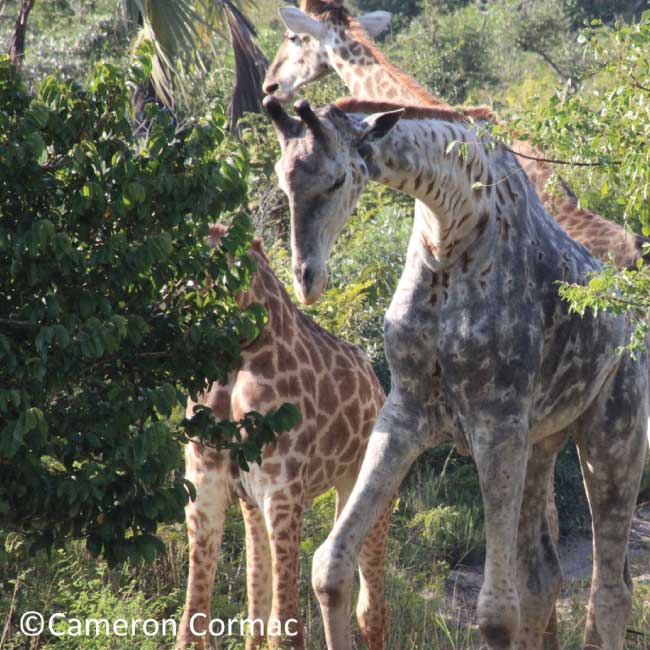
A very different tale unfolded in ISWP, one of South Africa’s largest reserves, a UNESCO World Heritage Site, and a wetland of global significance. The KwaJozana section of ISWP that borders Phinda Private Game Reserve is split by the R22, another important provincial road that is one of the main connection points between South Africa and Mozambique. Approximately 15 km of the R22 lies between the boundary fences of ISWP, although, unlike the road in HIP, there are no speed bumps, hills, scenic vistas, or large iconic mammals to entice drivers to slow down or pay attention to the road. However, a collection of various below-surface structures, such as culverts and bridges, do allow animals to cross safely and are placed roughly every 400 m. The route also passes next to, and straight through, multiple seasonal wetlands. Despite the road being monotonous in the surrounding habitat and devoid of easily visible wildlife, I had a few exciting animal sightings, such as a rare partially leucistic giraffe (Giraffa camelopardalis). However, I was often met with animal road mortalities. Over 1,000 animal mortalities were found, with multiple mass frog death events observed during the surveys in this area.

With over 1,500 collective wildlife-vehicle collisions recorded, there is an apparent need for intervention, particularly along the ISWSP section of the R22. The next step of my project is to collate all my data and determine what type of interventions would most effectively mitigate the threat of passing vehicles to animals when they attempt to cross these roads. Although the example of the newly placed speed bumps and resurfaced road in HIP provides hope, it does not take drastic enough measures to have a noticeable effect on the number of animals that die along the route. The simplest solution would be for all drivers to be more aware of their surroundings and obey the speed limit, giving crossing animals more time to avoid passing vehicles.

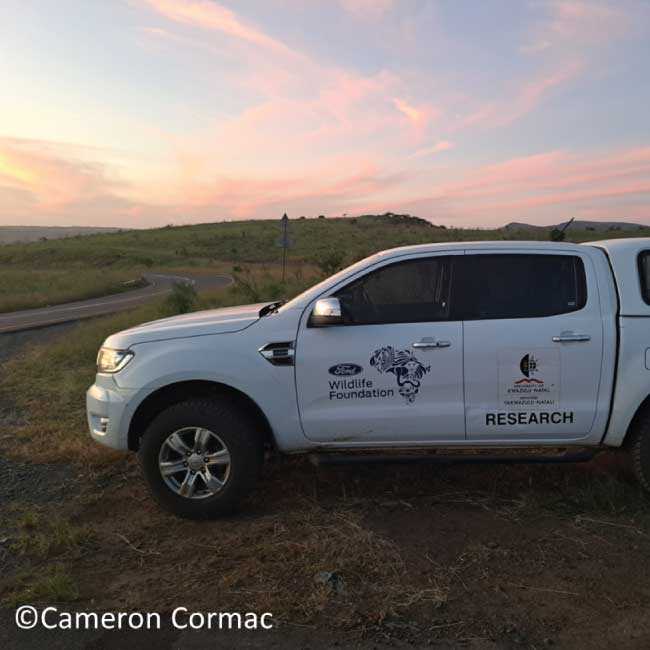
This project would not have been possible without the generous support from the Ford Wildlife Foundation and the National Research Foundation. Consider contributing to the Endangered Wildlife Trusts’ ongoing attempts to understand and reduce the threats posed by roads on South Africa’s wildlife using the EWT Road Watch South Africa app (found in the Google Play Store and the iStore). You can help conserve our wildlife by recording wildlife-vehicle collision events and uploading photographs and locations of roadkill you find along South Africa’s roads on the App.

Tale from the field – Training to save Endangered Species

Tale from the field – Training to save Endangered Species

TALE FROM THE FIELD

Training to save Endangered species

Rotondwa Sithagu, the EWT’s Soutpansberg Protected Area Ranger

There are few opportunities for rangers in the remote Soutpansberg Mountains to travel overseas and learn from highly acclaimed international conservationists, but I was recently fortunate enough to get this chance.

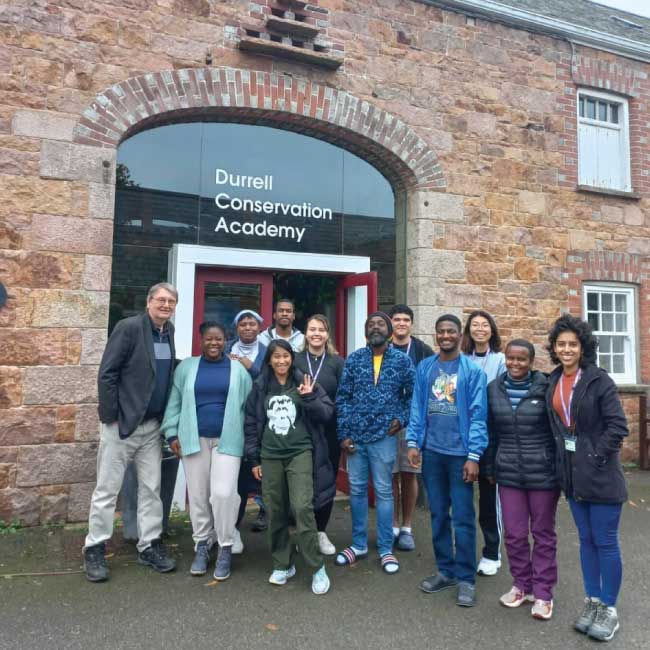
Each year, students from around the world are chosen and sponsored to attend the Durrell Conservation Academy’s DESMAN (Durrell Endangered Species Management) course in Jersey, the largest Channel Island between England and France. The academy is one of the world’s centres of excellence in conservation capacity development, and I was honoured and grateful for this once-in-a-lifetime experience.

I was the first to arrive and checked into a hotel called Dolphins – right under a medieval castle called Mont Orgueil Castle, which has been standing for over 800 years near the port at Gorey village. I had a chance to visit and see the inside of the castle as there was free entrance over the weekend. I was then moved to Durell Hostel for the remainder of the scholarship period. The first week was mainly introductions to the facilities and getting to know the staff and the team.

When school commenced, we had a week of learning facilitation and communication skills led by Dan Craven, a volunteer manager for Durrell. The course was designed to equip us with skills to facilitate meetings and workshops, develop and coordinate teams, deal with internal and external conflict, and improve our teamwork skills. At the beginning of October, we were taught how to effectively plan and manage conservation projects by applying the Conservation Standards, conducting a participatory situation analysis, identifying conservation strategies, and developing a strategy-oriented project plan. In November, we learned about population monitoring techniques such as distance sampling, camera trapping, and radio-tracking, which are especially valuable for our projects researching the species and ecology of the Soutpansberg mountains. We also learned how to integrate conservation and rural development, conservation education, and communication techniques, and this struck close to home for me because there is still a major need to teach young community members about the animals found on the mountain and the importance of the mountain in terms of what its ecosystems provide.

I also had a chance to present a project proposal to Durrell staff about our work in the Soutpansberg and what I would like to implement involving assessing the effects of snaring on Leopard ecology in the Soutpansberg and how to address this issue holistically, which involved engaging with local communities. The proposal was well received despite most of the audience not being from South Africa or my part of the country.

The highlight of my trip was the opportunity to live with and be taught by Carl G. Jones, one of the leading experts in zoo conservation. He was mentored by a renowned conservationist and author, Gerald Durrell, after whom the academy is named. I learned much from him, including principles of species recovery, understanding population limiting factors, and ecosystem restoration. It was a life-changing experience for me and one I intend to put into practice to build the capacity of my colleagues and community to protect our magical mountain.

Thank you to the Jersey Government and the Durrell Academy for awarding Rotandwa this once-in-a-lifetime opportunity.


Tale from the field – wetland restoration in Zambia

Tale from the field – wetland restoration in Zambia

TALE FROM THE FIELD

Wetland restoration in Zambia

Saziso Moyo, ICF/EWT African Crane Conservation Project Assistant

Wetlands are important food, materials, and freshwater sources and play various ecological functions. Important socioeconomic and cultural services are derived from wetlands, including pasture for livestock grazing; and traditional ceremonies such as the Kuomboka. Wetlands also provide other ecosystem services such as maintaining good water quality by acting as filters, recharging groundwater, storing carbon, recycling soil nutrients, and preventing soil erosion by acting as soil control. They are also important habitats for biological diversity.

For this reason, the International Crane Foundation/Endangered Wildlife Trust Partnership in Zambia (ICF/EWT) was part of this year’s wetlands day celebrations in Lochinvar National Park. The event was led by the Ministry of Lands and Natural Resources (MLNR) in collaboration with different stakeholders, including the Worldwide Fund for Nature (WWF), Bird Watch Zambia, the Department of National Parks and Wildlife (DNPW), and Zambia Sugar. The Minister for Lands and Natural Resources, Honorable Elijah Muchima, was the Guest of Honor and joined by four Traditional Leaders from the Kafue Flats namely Chief Nalubamba, Chief Hamusonde, Chief Choongo, and Chieftainess Muwezwa. Other senior Government officials included the Provincial Permanent Secretary, Dr Namani Moonze, the Permanent Secretary Ministry of Lands, Mrs Daphne Chabu, and representatives of the Departments of Forestry and Department of Climate Change. The national Focal Point for the Convention on Wetlands was also in attendance.

The event started with a courtesy call on His Royal Highness Chief Hamusonde at his palace, where all four chiefs gathered. A series of events followed, which included a march by the pupils from Lochinvar Primary School accompanied by their teachers and members of various organisations that attended the event. The hosting Chief, His Royal Highness Chief Hamusonde, gave the welcoming remarks, and in his speech, he expressed happiness that the four chiefs could come together and celebrate this important day.

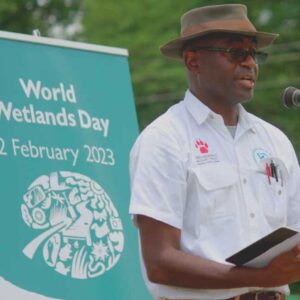
ICF/EWT Southern African Regional Manager, Mwape Sichilongo, speaking about the importance of the Kafue Flats and emphasised the need to act now to protect wetlands.

As one of a series of speeches that followed, ICF/EWT Southern African Regional Manager, Mwape Sichilongo, echoed the importance of the Kafue Flats and emphasised the need to act now to protect wetlands. He called upon the government to invest more in regulating the use of our environment so that our economic aspirations do not unnecessarily compromise environmental integrity and he also asked the government to maintain areas set aside for conservation to preserve their ecosystem services on which local livelihoods and other economic activities depend. Chief Nalubamba, as Chairperson of the Southern Province Chiefs Council, challenged the crowd to think of ways to balance the people’s competing needs and what the wetland needs for restoration to take place. He also asked the government to set aside US$ 2 million to restore the Kafue Flats as it was facing serious degradation and threatening the ecosystem and local livelihoods.

The Honorable Minister of Lands and Natural Resources spoke about the importance of the Government and traditional leaders working together to combat poaching that has been ongoing in the Flats for some time. He applauded ICF/EWT for their great work removing the invasive Mimosa Pigra to restore the Kafue Flats.

Traditional dancers from the Ila community of Choongo Chiefdom entertained the gathering. They performed educative dances and songs about conserving nature and its wonderful benefits, songs of praise for the traditional leaders, and many others. School children sang songs and presented poems about the conservation of wetlands, including the words, “the animals of the wild are free to move around. Please don’t stop patrolling the park and continue to support the patrols.” The peer educators also performed a play to educate people on the dangers of poaching.

Tale from the field: The first sighting of an Egyptian Vulture in Malawi

Tale from the field: The first sighting of an Egyptian Vulture in Malawi

TALE FROM THE FIELD

THE FIRST SIGHTING OF AN EGYPTIAN VULTURE IN MALAWI

ANDRÉ BOTHA, EWT’S VULTURES FOR AFRICA PROGRAMME MANAGER


Egyptian Vultures

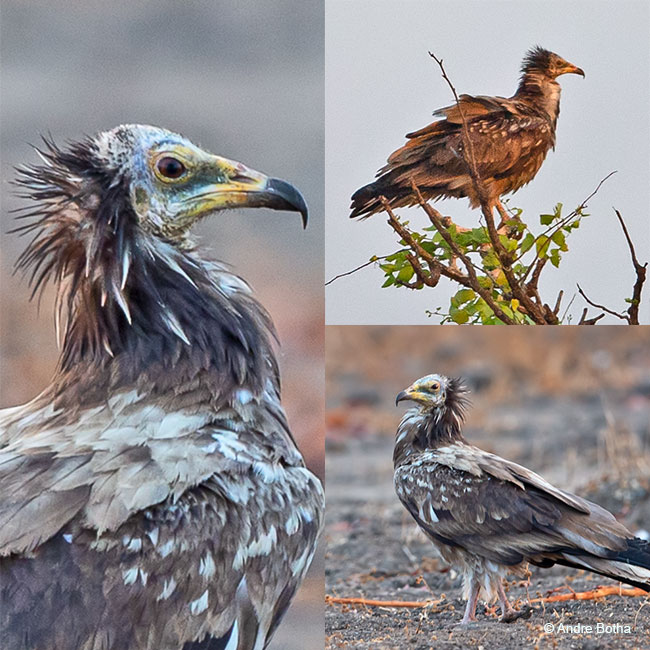
The first sightings of Egyptian Vultures in Malawi were recorded in November 2022

On 5 November 2022, my colleagues from the Lilongwe Wildlife Trust and African Parks and I were on our way to another day of vulture fieldwork in the Liwonde National Park in Malawi. At approximately 05:10 am, the team came across the carcass of an old Waterbuck ram that was one of the many casualties of the late dry season at this time of year. The carcass had attracted the attention of a handful of African White-backed Vultures, an adult Palm-nut Vulture, and another bird, all of whom flew off and out of sight as soon as the vehicle was in sight. Fortunately, this bird flew in a wide circle before returning to the carcass, where it was identified as a three-year-old Egyptian Vulture. Following an extensive literature search and input from various individuals working on the species, it seems this is the first reported record of this species for Malawi. The same bird was subsequently seen in the vicinity for another three days before the team moved their fieldwork site to a different location. Within the same timeframe, two more sightings of different individuals of this species were made in the South Luangwa- and Kafue National Parks in Zambia, indicating a small influx of this species into southern Africa, possibly by over-wintering birds that migrated from Eurasia. The Egyptian Vulture has been considered regionally extinct as a breeding species in southern Africa, and the last breeding record for this Endangered species in South Africa dates back to 1923, almost 100 years ago.


For more information about the Egyptian Vulture, please visit our Vultures for Africa page on the EWT website.

Predator Day – Ons praat ‘n jakkals uit ‘n bos

Predator Day – Ons praat ‘n jakkals uit ‘n bos

Predator Day – Ons praat ‘n jakkals uit ‘n bos

Mandy Schumann, Department of Agriculture, Environmental Affairs, Rural Development and Land Reform, and Bonnie Schumann, the EWT’s Drylands Conservation Programme

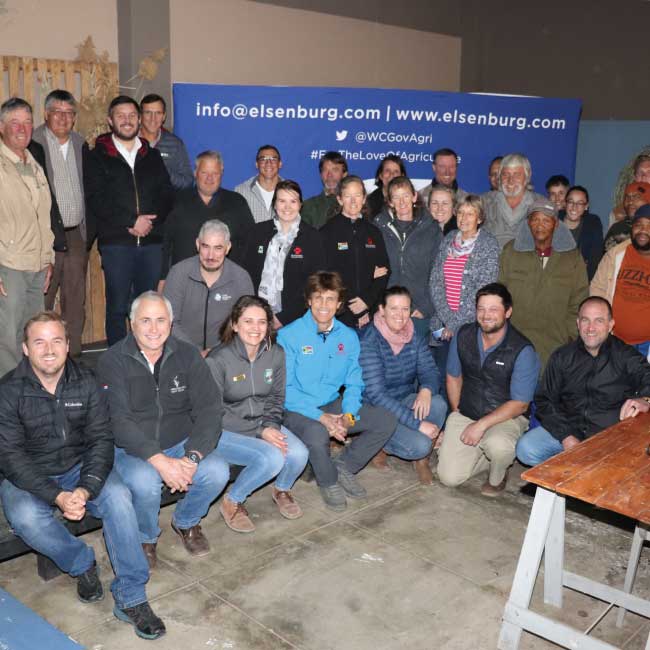
Farmers and conservationists recently got together in Prince Albert to discuss the issues around livestock predation in the Karoo. This event was organised after the Western Cape Department of Agriculture’s stakeholder meeting in May 2022, at which farmers indicated this challenge as one of the most important in the Karoo. In response to this, the Department partnered with the Endangered Wildlife Trust (EWT) to present a one-day workshop to unravel the challenge.

Predators and the problems caused by livestock predation typically produce a witches’ cauldron of emotions, and tensions invariably run high. To survive out there, farmers need to be tough and, as a result, have strong personalities and strong opinions. Conservationists are engaged in an almost impossible struggle to save what is left of our critical biodiversity in the face of an ever-increasing avalanche of threats. As such, conservationists also tend to have strong personalities and no-nonsense attitudes, which can be a recipe for potential conflict between the “greenies” and farmers.

This day, however, proved to be different. The event set the benchmark for addressing a hot topic without needing on-site referees or first aiders. It also highlighted the need for more opportunities to share lessons and to encourage interaction and discussion between conservation bodies, agricultural organisations, and farmers. Farmers are, after all, at the forefront of the efforts to provide food for the nation under ever-increasing challenging climatic and economic conditions. Farmers are out there to make a living from farming. They embrace the solitude and have a deeply ingrained love of the land, the job, and all it encompasses. Farming alongside nature, whether with crops or livestock, brings a host of challenges and almost insurmountable risks. Enter wildlife and predator conflict, the focus of the gathering in Prince Albert.

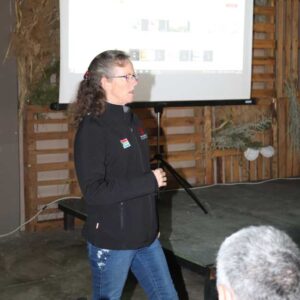
The EWT’s Bonnie Schumann presenting at Predator Day 2022 in Prince Albert

The presenters, a team from the Endangered Wildlife Trust, CapeNature, the Western Cape Department of Agriculture, The Predation Management Forum, the Cape Leopard Trust, and an agent from Virbac, were all exceptionally professional. The attitude from the outset was about sharing information and learning from one another. The farmers attending were engaging while the speakers shared their experiences, and it was a valuable learning exchange with the farmers communicating their valuable insights and opinions. Undoubtedly, participants departed with much food for thought on what could or could not be applied back home on the farm. Contact information was shared so discussions and support could continue following the event. This open approach made it a useful and positive networking experience for all involved. And as always, most people experienced that moment of “why don’t we get together and discuss this more often?”

No farmer wants to arrive at his livestock in the morning and find chaos and destruction, nor spend half of his time playing cat and mouse trying to chase down predators on his farm. The great thing is that the attitude towards wildlife on farms is slowly shifting in a positive direction. The discussions included approaches to sustainable land management and strengthening collaboration between stakeholders to find solutions. Small stock is most vulnerable during lambing season, but even healthy adult sheep can be preyed on by jackal and caracal. Over the years, a diverse toolbox of mitigation measures has been developed, ranging from using livestock guardian animals, including dogs and alpacas (yes, they guard as well as spit), to bells and whistles to protect livestock from predation. Besides protecting livestock, improving management focusing on superior genetic selection, such as selecting for strong maternal instincts and animals adapted to the environment, all of which help to reduce unnecessary losses. In addition, these measures help to make the production system much more resilient to predation and environmental risk factors such as the impacts of climate change. Robust, functioning ecosystems support both agricultural and ecological productivity and, if managed sustainably, will support biodiversity and livelihoods indefinitely. Where key indicator species, such as Riverine Rabbits, are present, farmers can give themselves a pat on the back. Iconic apex predators such as Leopards indicate a healthy intermediate and small mammal prey base, an even bigger pat on the back to farmers conserving them. Leopards can’t change their spots; it is the people that share space with wildlife that must do the changing.

Change takes time, knowledge, and some nudging, and we can celebrate each baby step towards a better, more holistic, and peaceful farming landscape. Livestock predation is not only the farmer’s problem; the problem belongs to us all. As such, we must join forces to find solutions to help support farmers in their role as the real guardians of this country’s spectacular biodiversity. This day was a celebration of cooperation and shared experiences, with a view to finding common ground and real solutions. The day was hosted by the Endangered Wildlife Trust and co-organised and funded by the Western Cape Department of Agriculture. Watch this space. The call for more such events will be heeded!

Predator Day in Prince Albert, 2022