Help us  
 lost species

Donate today  

Energy-saving cooking in Rwanda

Energy-saving cooking in Rwanda

Energy-saving cooking in Rwanda

By DR Adalbert Aineo-mucungizi
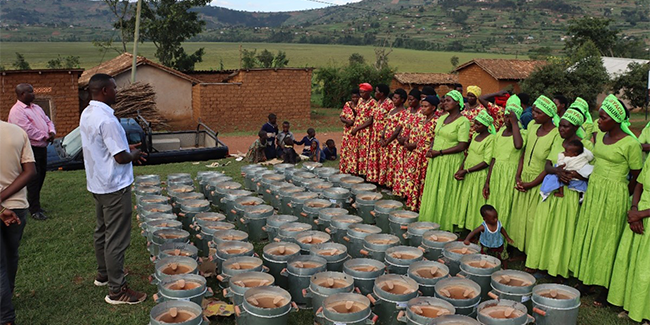
Energy-saving stoves being handed to households in Rwanda

With funding from Kansas City Zoo and Aquarium, International Crane Foundation/Endangered Wildlife Trust sourced and distributed 80 energy saving stoves for women from 40 households. Each household received two stoves.

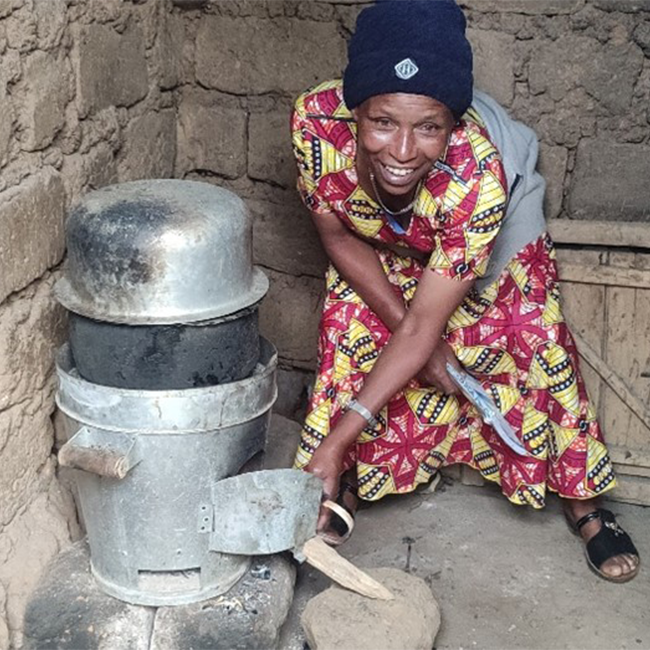
The energy-saving stoves are made of clay liners, a metal casing, and vermiculite cement, which maintains heat during cooking. These stoves were supplied to women who had been cooking using the traditional three-stone open fire system, which encourages the loss of heat into the atmosphere, resulting in the use of a lot of fuel wood. Just to cook a meal, it used to take a woman and her children several hours to search for wood for fuel.

Some beneficiaries have indicated that using the energy-saving stoves has reduced wood consumption from 15-20 kg to 2-3 kg per day. This is because the beneficiary households can use pruned branches instead of entire felled trees for their fires.

The families not only use considerably less firewood, but the food is also being prepared faster. For example, one of the beneficiaries has reported that she has reduced her cooking time for beans from three hours to one. With the time saved, the women are now able to spend more time working in their gardens growing food for their families, and even for sale. This has boosted their household income and reduced the demand for wood.

Our immediate plan is to raise substantial funding to scale up this intervention to reach an additional 500 households in order to reduce pressure on the Rugezi Marsh and its catchment.

Using an energy-saving stove supplied by the African Crane Conservation Programme

Energy-saving stoves being handed to households in Rwanda

Traditional cooking methods used by the women

Two rehabilitated Vultures released by the Birds of Prey Programme in Mokala National Park

Two rehabilitated Vultures released by the Birds of Prey Programme in Mokala National Park

Two rehabilitated Vultures released by the Birds of Prey Programme in Mokala National Park

By Ronelle Visagie, Birds of Prey Programme.

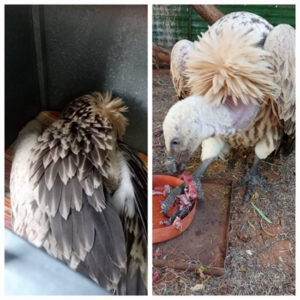
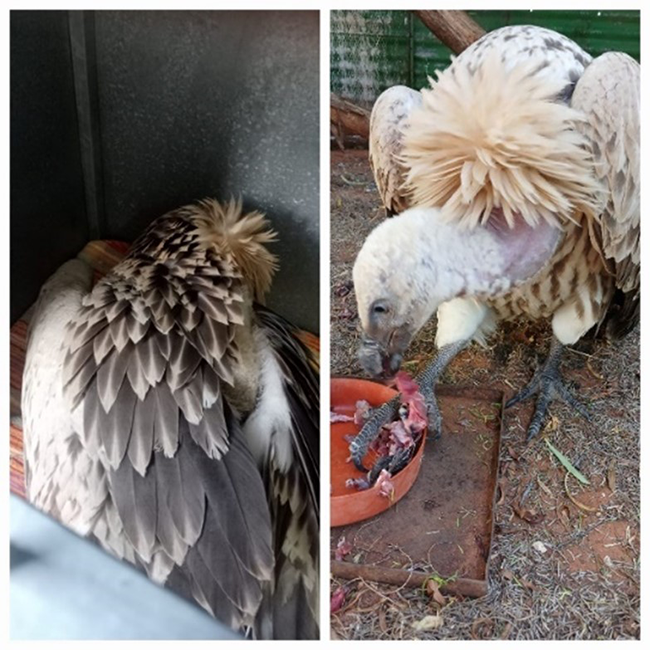
Neska on the day she was confiscated (13 January 2024) and a week later.

In December 2023, I fetched an injured White-backed Vulture from Kimberley Veterinary Clinic.  The bird was found somewhere in town and had a broken leg.  The bird was in an excellent condition and was eating well.  Its leg was pinned by Dr Burger.  From the start this vulture was very feisty so we decided to call her “Kwaaitjie” (bad girl).

Once home we put her in a deep crate as the orders from the vet were to keep her still. Two days later she was able to sit on the side of the crate and was ready to jump down so we moved her to a  small aviary where she could be on the ground and still not move too much.  Kwaaitjie must have decided it was too boring for her to be confined and not move around too much, so she took it upon herself to remove the pin from her leg – only eight days since the operation.

Because of this I contacted the Kimberley Vet Clinic and explained the situation.  Following a discussion, it was agreed that Kwaaitjie be left where she is as the risk of injury was too big if we transported or handled her.  I had also promised to take her to the Clinic if something happened to her leg.

An X-Ray of her leg two weeks later showed she was on the mend.  After being kept in a small enclosure for another two weeks, she was moved to the large aviary where she started to fly.

Barely a month later, in January 2024, I fetched a Cape Griffon from the Kimberley Veterinary Clinic that had been confiscated by police in a township near the Northern Cape town.  The police had taken the bird to Dronfield to be released. It was then that Aneska Almendro, working for De Beers at Dronfield, saw that the bird needed veterinary care and took her to the Clinic.  The Griffon was in a severely stressed condition, and the vets had to put her on at least two drips to save her life.


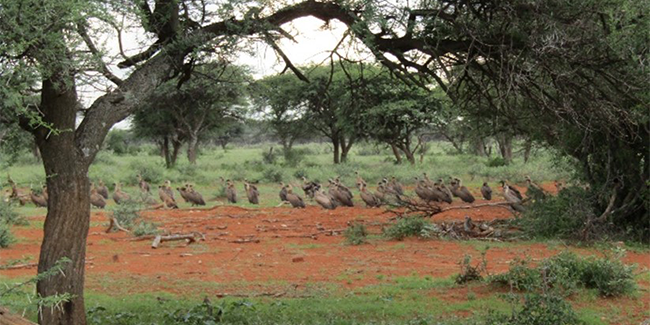
Part of a large group of vultures at the waterpoint.

Neska on the day she was confiscated (13 January 2024) and a week later.

After collecting her, I put the Griffon, which we had named Neska, in a large aviary so that she could walk and stretch her wings.  But, she refused to move for the first two days. This might be because of the way she was treated before she was confiscated.  It was exciting to see her finally start walking around and stretching her wings. She was also eating well after her ordeal.

Both vultures recovered very well prompting our decision to release them back into the wild as soon as possible.  Kwaaitjie and Neska were ringed before being transported to their new home —  Mokala National Park.

On our arrival at the watering hole where vultures usually bath and drink, we were met by more than 100 of raptors at the water and in the trees.  Most of them were White-backed Vultures and at least three Cape Griffons were also seen.

When we opened the transport crates, the two birds walked out, stood for a few minutes to take in their new surrounds and took flight.

** We would like to appeal to members of the public not to keep Birds of Prey as pets.  If you see an injured or poisoned bird, call your nearest veterinarian so they can receive the treatment needed.

Crane Festival Unites Communities to Safeguard Uganda’s Grey Crowned Cranes

Crane Festival Unites Communities to Safeguard Uganda’s Grey Crowned Cranes

Crane Festival Unites Communities to Safeguard Uganda’s Grey Crowned Cranes

By Patrick Engoru, Uganda Country Manager: African Crane Conservation Programme

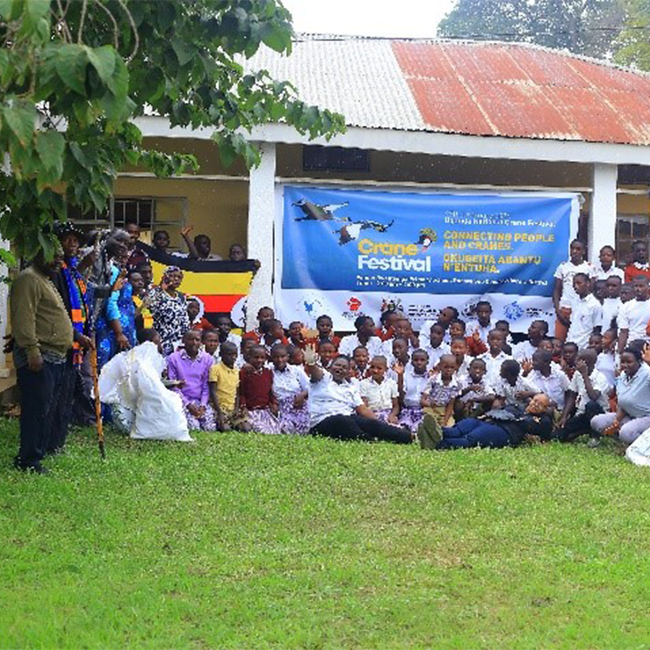
In a powerful display of unity and conservation, the annual Crane Festival brought together communities, conservationists, and policymakers to celebrate and protect Uganda’s iconic Grey Crowned Cranes. The event, held on February 27th, 2024, at Rwantsinga Primary School playground in Rubaya sub-county, Mbarara District, was a joint initiative by the International Crane Foundation (ICF) and the Endangered Wildlife Trust (EWT) in partnership with the Ministry of Tourism and Wildlife and Antiquities (MoTWA) and Mbarara District Local Government.

Expanding Reach, Amplifying Impact

This year’s festival marked a significant milestone as it made its debut in the Rwizi catchment area, a new area of operation for the ICF/EWT partnership. This expansion signifies the partnership’s growing conservation footprint across Uganda, building upon the success of previous editions in Rukiga, Ssembabule, and Lwengo districts, where solid interventions are now in place. The collaborative communication efforts of ICF and EWT teams in Uganda, South Africa, and the USA successfully propelled the event onto previously unreachable local and international platforms, inspiring audiences worldwide.

Dire Need for Intervention

Uganda’s wetlands, crucial for both human survival and Grey Crowned Crane habitats, face immense pressure from rapid population growth and agricultural expansion. Over the past 25 years, the crane population has plummeted by a staggering 80%, primarily due to habitat loss, human disturbance, and illegal trade. These endangered birds often found on private lands, struggle to breed successfully as they are forced into increasingly marginal habitats. The Crane Festival serves as a clarion call for urgent action to protect these majestic creatures and their fragile ecosystems.


Fostering Coexistence Through Engagement

The festival’s theme, “Connecting People and Cranes,” aligned perfectly with the national and global Wildlife Day theme, “Connecting People and the Planet: Exploring Digital Innovation in Wildlife Conservation.” By engaging diverse stakeholders – schools, communities, policymakers, conservationists, and the media – the event fostered a deeper understanding of the interdependence between humans and cranes.

A multitude of activities, including joint awareness campaigns with the Uganda Wildlife Education Centre (UWEC), Uganda Wildlife Authority (UWA), and the Ministry of Tourism and Wildlife and Antiquities (MoTWA), community cleaning events focusing on plastic waste, art competitions by schoolchildren, school drama and running competitions, brass band marches, music, dance, and drama by Crane Custodians and Community Conservation Groups, exhibitions, and speeches from dignitaries, captivated audiences and inspired them to become advocates for sustainable coexistence.

Hon. Col. Tom R. Butime, Minister of Tourism, Wildlife and Antiquities, delivered a powerful speech as the chief guest, emphasizing the urgency of reflecting on the impact of human actions on habitats and species. “If the current situation does not change, our grandchildren may never see cranes in the coming years,” he warned, underscoring the need for immediate and collective action.

A Beacon of Hope for Grey Crowned Cranes

The Crane Festival represents a beacon of hope for the survival of Uganda’s Grey Crowned Cranes and their vital wetland habitats. By uniting communities, fostering environmental stewardship, and harnessing the power of digital innovation, this annual celebration paves the way for a future where these majestic birds can thrive alongside human populations.

The EWT and ICF remain committed to this mission, working tirelessly to secure the future of Grey Crowned Cranes and the precious ecosystems they call home. Through events like the Crane Festival, these organizations are not only raising awareness but also inspiring action and cultivating a deep appreciation for the natural world that sustains us all.

**  The EWT/ICF Partnership would like to thank all our donors who contributed to a successful Crane Festival.   This includes the Mbarara District Local Government, Coca-Cola Beverages Uganda Limited, Brighter Smiles Dental Clinic, the Uganda Wildlife Education Centre (UWEC), Uganda Wildlife Authority (UWA) and the Ministry of Tourism and Wildlife and Antiquities (MoTWA)


Healthy wetlands are critical for crane conservation, says the Endangered Wildlife Trust

Healthy wetlands are critical for crane conservation, says the Endangered Wildlife Trust

Healthy wetlands are critical for crane conservation, says the Endangered Wildlife Trust

World Wetlands Day, celebrated annually on 2 February, provides an opportunity to celebrate wetlands, which are critical for people, the environment, and biodiversity – including South Africa’s National Bird, the Blue Crane.

Wetlands come in all shapes and forms, from estuaries along our beautiful coastlines and high-altitude inland wetlands within the grasslands of Mpumalanga, to the hard-working wetlands within our urban landscapes. Much of our conservation effort within the EWT is centred around the protection, restoration, and management of wetlands and the catchments that feed them, and we encourage South Africans to celebrate World Wetlands Day with us each year.

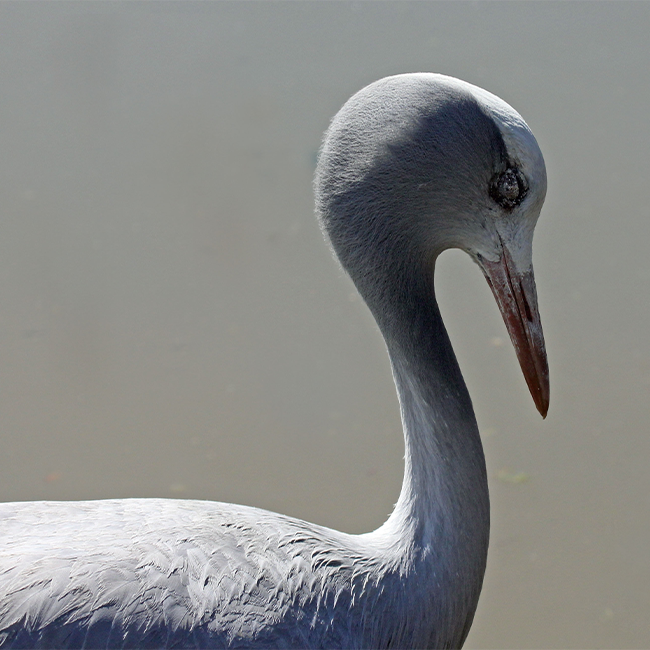
Two of South Africa’s three crane species, the Grey Crowned and Wattled Cranes, are completely dependent on wetlands for their survival – yet both are threatened with extinction. Their threatened status mirrors the loss of wetlands in our country, with an estimated 50% of wetlands completely transformed in South Africa. The African Crane Conservation Programme (ACCP), a partnership between the EWT and the International Crane Foundation (ICF), has used these charismatic, long-lived birds as “flagship” species for wetland protection, restoration, and management. By securing conservation attention for conserving cranes, we not only succeed in conserving the cranes, but we simultaneously conserve the wetlands that provide cranes, people, and other species, with essential ecosystem goods and services.

Cranes are large and long-lived, elegant, birds, and their trumpeting calls and carefree, bounding courtship dances are iconic and wonderful to watch. Some people see cranes as symbols of peace, happiness, and longevity because of their lifelong devotion to their mates. But sadly, despite the love that people have for cranes, crane populations have declined globally, and in South Africa, particularly in the face of habitat change and loss. Without careful management, many crane species are doomed to extinction. Ten of the world’s 15 crane species are threatened: all four of sub-Saharan Africa’s resident crane species – Blue Crane, Grey Crowned Crane, Wattled Crane, and Black Crowned Crane – are threatened by habitat loss and disturbance, illegal wildlife trade, collisions with power lines, electrocutions, and poisoning. If we can secure their wetlands, we can improve the prospects of these species and ensure they have a viable future.

In South Africa, numerous successful partnerships have been forged by the EWT with landowners, conservation authorities and other conservation NGOs to conserve wetlands. Examples of these are areas such as the Upper Wilge Protected Environment (UPWE), the Greater Lakenvlei Protected Environment and Cedarville Protected Environment as well as in the Karkloof and Hlatikhulu Valleys where the EWT/ICF African Crane Conservation Programme has had a long-term partnership with landowners.

The EWT/ICF partnership spans more than 30 years and spans beyond South Africa’s borders to southern and East Africa. While the ICF kickstarted community-based crane conservation work in East Africa and Zambia, the EWT focussed on cranes in South Africa. However, from around 1999, ICF and the EWT started collaborating more on crane conservation efforts across the continent, and in 2005 an official Memorandum of Understanding was concluded between the two organisations.


The EWT/ICF partnership is presently operational in the Kafue Flats of Zambia, and in the wetlands of western Kenya, in northern Rwanda, and across southern and southwestern Uganda, where human activity is also placing increasing pressure on wetlands.

In Zambia, for instance, the Kafue Flats in southern Zambia is not only an internationally recognised floodplain that has been designated a Wetland of International Importance (Ramsar Site) but is also a UNESCO Man and Biosphere Reserve in recognition of the human benefits drawn from its ecological condition. The Flats is home to 30% of the world’s population of Vulnerable Wattled Cranes, as well as Endangered Grey Crowned Cranes.

But the Kafue Flats is under severe and increasing pressure from wildlife poaching, human settlements deep inside the floodplain, unregulated livestock grazing and fishing, alien invasive vegetation, drought/water stress, and other threats. Thus, the importance of the work being done through the partnership to conserve not only threatened crane species, but also the wetlands through the clearance of invasive Mimosa pigra plants under the leadership of the EWT/ICF’s African Crane Conservation Programme. This has seen the Wattled and Grey Crowned Cranes and numerous other plants and animals starting to return to the area. We have also formed 20 Conservation Clubs, including 800 pupils and 82 teachers from 13 schools near the flats, and we are deploying newly trained community scouts to protect its wildlife and create jobs.

Further afield, the wetlands of Uganda are used as a critical nesting habitat by the Endangered Grey Crown Crane, Uganda’s National Bird. These wetlands are not only critical to prevent the extinction of Endangered species, but also necessary for the health and wellbeing of the people who live in and rely on the wetland for food and water security, livelihoods, and to slow the increasing number and scale of floods, a further impact of climate change.

You can join this valuable work for cranes and other wetland species, by making a difference to our wetlands all year round in a number of ways, including:

  1. Plan a wetland cleanup in your community with local schools and parents.
  2. Reducing your waste, reusing bottles and containers you would normally throw away, use reusable shopping bags, and recycle! Our water resources like rivers and wetlands are heavily impacted by litter and waste, so these small actions can make a huge difference.
  3. Reporting any illegal dumping in wetlands and rivers to your local municipality or police station.
  4. Supporting the efforts of organisations like the EWT in protecting wetlands on your behalf.

On 27 February 2024, Uganda will host a National Crane Festival to foster awareness and education about Crane Conservation. The event, led by the EWT and ICF is an important lead-up to World Wildlife Day on 3 March. The celebrations, being held under the theme “Connecting People and Cranes” will feature diverse activities, bringing together stakeholders from various sectors — schools, local communities, policymakers, the private sector, and the media. Key partners are the Uganda Wildlife Education Centre (UWEC), Uganda Wildlife Authority (UWA) and the Ministry of Tourism and Wildlife and Antiquities (MoTWA).


Tales from the Field:  EWT Conservation Campus Takes Bold Steps for Pompom Weed Eradication

Tales from the Field: EWT Conservation Campus Takes Bold Steps for Pompom Weed Eradication

EWT Conservation Campus Takes Bold Steps for Pompom Weed Eradication

Dr Kerushka Pillay, the EWT’s CONSERVATION PLANNING AND SCIENCE UNIT

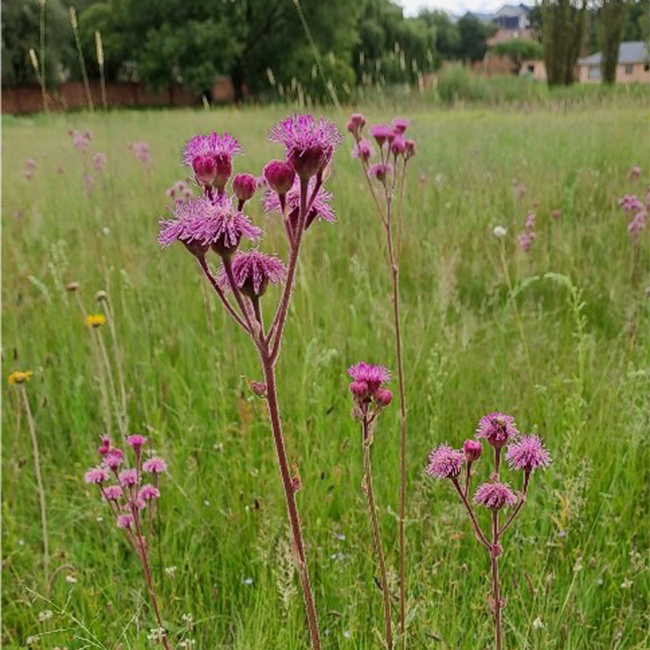
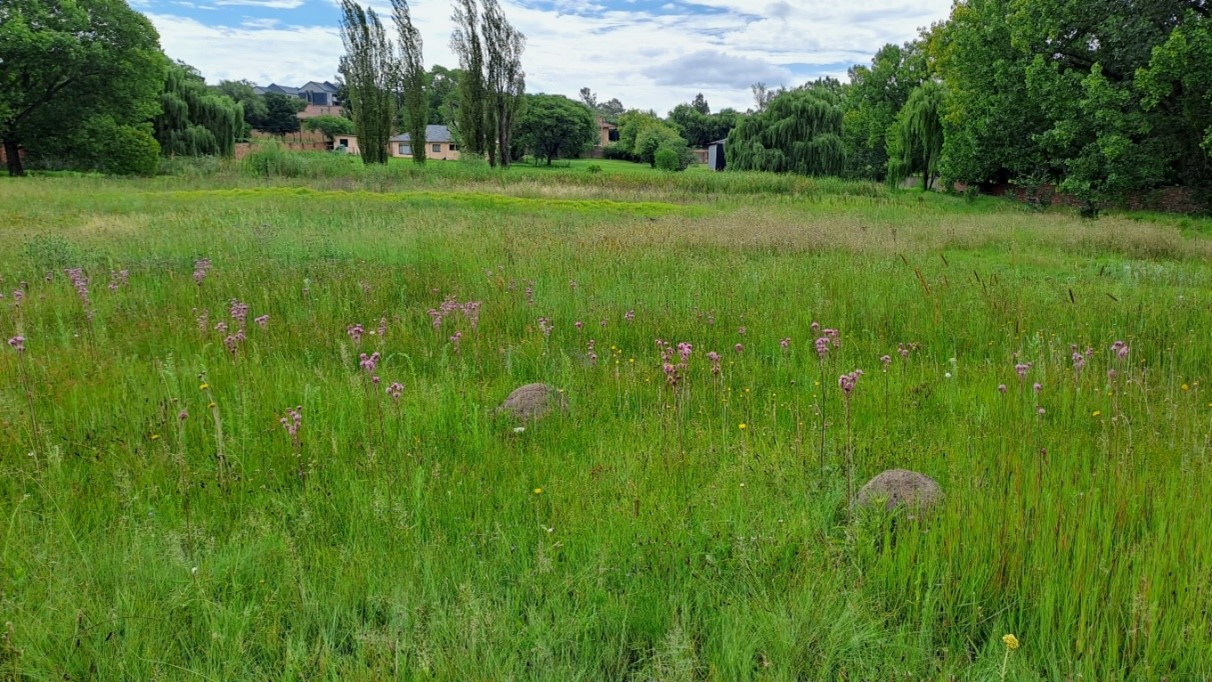
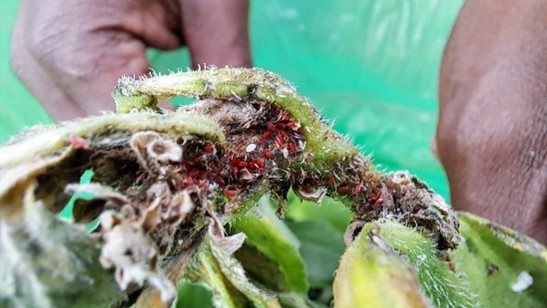
In the heart of Glen Austin, Midrand, the EWT Conservation Campus is leading the charge against the invasive Pompom weed (Campuloclinium macrocephalum), aligning with our commitment to biodiversity preservation and ecosystem health.

The Pompom weed, native to Central and South America, has become a significant concern in South Africa. The plant has been classified as invasive under stringent legislation such as the Conservation of Agricultural Resources Act (CARA), 2002, and the National Environmental Management Act (NEMBA).


The invasive Pompom poses a severe threat to our local ecosystem, particularly in grassland regions of Gauteng, KwaZulu-Natal, Limpopo, Mpumalanga, and the Eastern Cape Provinces. Leading by example in efforts to address this, the EWT Conservation Campus has implemented a comprehensive and innovative long-term eradication plan, focusing on the strategic removal of Pompom weed from our property.

As part of our commitment to sustainable practices, we have introduced a biocontrol strategy utilising the Pompom thrips (Liothrips tractabalis), tiny insects imported from Argentina. Carefully studied and proven to feed exclusively on Pompom weed, these thrips were released on our grasslands in December 2023. Thrips play a vital role by selectively feeding on Pompom, causing damage to its vital structures, and impeding its growth. This targeted approach minimises the impact on non-target species, promoting a balanced ecosystem.


In collaboration with the Agricultural Research Council (ARC), our team will conduct regular assessments to measure the thrips’ impact on Pompom populations and overall ecosystem health. This initiative not only showcases our dedication to biodiversity preservation but also highlights the strength of interdisciplinary collaboration.

In the past, the EWT team, under the leadership of Obeid Katumba (Wildlife in Trade Programme), commenced a physical, manual removal process to kickstart Pompom eradication efforts. This involved cutting seed-containing plant sections, placing them in bags, and uprooting remaining plants. Thorough disposal through incineration was done, emphasising the urgency for effective control, especially in highly infested areas.

Our ongoing efforts, including the introduction of eco-friendly biological control, signify our commitment to long-term environmental health and sustainability. We anticipate updates on the project’s success and encourage stakeholders to reach out with any questions or queries regarding the Pompom eradication plan. For further information, please contact Dr Kerushka Pillay at KerushkaP@ewt.org.za or on 0727193741.


Birds of Prey Programme co-hosts Veterinary Poisoning Response Training in Botswana

Birds of Prey Programme co-hosts Veterinary Poisoning Response Training in Botswana

Birds of Prey Programme co-hosts Veterinary Poisoning Response Training in Botswana

Wildlife poisoning, a pervasive and insidious threat, casts a dark shadow over ecosystems worldwide, exacting a toll on biodiversity, human health, and ecosystem integrity.

Defined as the deliberate or inadvertent use of toxic substances to kill or harm wildlife, this practice poses a significant challenge to conservation efforts and environmental sustainability. Although the impact of wildlife poisoning is vastly under recorded, its repercussions often extend far beyond the intended targets, affecting non-target species, ecological processes, and human communities.

The Birds of Prey Programme, for many years, has strived to reduce the toll this is having on not only birds of prey, but all species that are affected by this pervasive, yet under managed threat. One of the key shortfalls identified has been the inadequate response to these incidents by conservation staff, not only for reducing further exposure to wildlife but also relating to the veterinary treatment and management of live animals that may be found in these incidents. Considering that wildlife poisoning almost always presents as mass casualty scenarios, it is critical that the correct structures are already in place, all veterinarians understand the species-specific treatment regimen, and that this is followed by a timeline plan for patient recovery, assessment, and release.

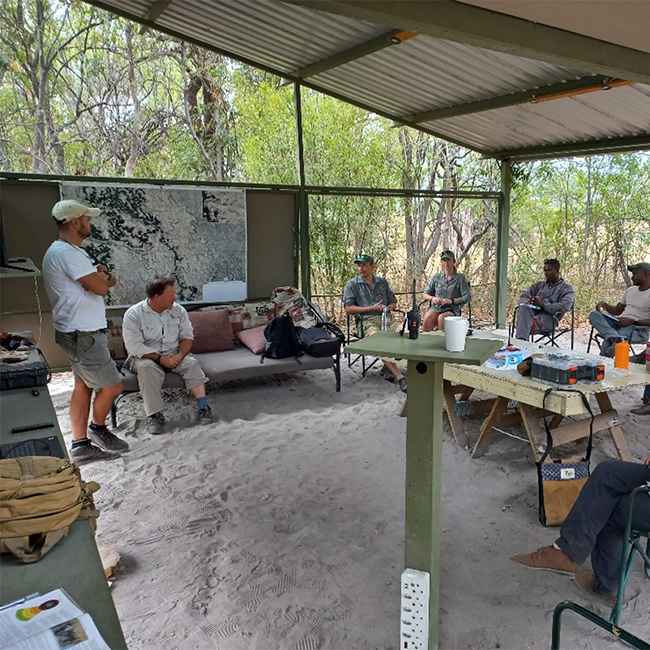
With all this in mind, Dr Gareth Tate and John Davies from the EWT’s Birds of Prey Programme, and Dr Jessica Briner from Briner Veterinary Services, teamed up with Dr Glyn Maude from Raptors Botswana, and Kyle Burger from Connect Trust, to host the first veterinary treatment workshop in Botswana.

The course was held over two days in the southern part of the world-renowned Okavango Delta and was attended by seven veterinarians, mostly from the Botswana Department of Wildlife and National Parks. The course focussed on three main areas: firstly, presenting a background to the current situation with wildlife poisoning; secondly, how to treat and manage patients in a practical and effective way; and thirdly, scene management to reduce any further exposure and ensure that these events are handled and managed in a controlled manner.

Overall, the course was very successful, and in particular, we would like to thank Kyle Burger from Connect Trust for all his work to get these veterinarians together and make this a success.
Although this was a first step in the process, there is little doubt that there is much more work to be done. Fortunately, with the support of our collaborators, there is little doubt that improving the current outcome around mass wildlife poisoning events is in reach. Hopefully, we can look forward to seeing a sky filled with vultures in the near future. Our hope is that vultures will one day be seen as one of nature’s critical species by all people.